
Partner and Co-Chair, Public Policy Group, Shook Hardy & Bacon LLP
Mark Behrens co-chairs Shook's Washington, DC-based Public Policy Practice Group and is a leading national expert on civil justice issues with over thirty years of experience. A substantial part of his practice is working to improve the civil litigation environment through state and federal legislation; in the courts through amicus curiae briefs; through legal scholarship and judicial education; and in the court of public opinion.
Mark is actively involved in civil justice reform efforts at the federal and state levels. He has testified before the U.S. Congress and most state legislatures on behalf of business and civil justice organizations. Mark also has an active amicus brief practice specializing in tort liability and civil justice issues. He has authored or co-authored over 150 amicus briefs in cases before the United States Supreme Court and federal and state appellate courts on behalf of business, civil justice, and defense lawyer organizations. In addition, Mark routinely files comments on behalf of business, civil justice, and defense lawyer organizations regarding potential changes to federal and state court rules. He chairs the International Association of Defense Counsel’s (IADC) Civil Justice Response Committee and serves on the Board of Directors of Lawyers for Civil Justice (LCJ).
Mark is a member of the American Law Institute (ALI). He received his J.D. in 1990 from Vanderbilt University Law School, where he was a member of the Vanderbilt Law Review. He received his B.A. in economics from the University of Wisconsin in 1987.
General Counsel, xAI and X
Commissioner, Federal Trade Commission
Andrew N. Ferguson was sworn in April 2, 2024 as a Commissioner of the Federal Trade Commission. President Joe Biden named Ferguson to a term that expires on September 25, 2030.
Ferguson most recently served as solicitor general of the Commonwealth of Virginia. Prior to that position, he served as chief counsel to U.S. Sen. Mitch McConnell of Kentucky, the Republican leader, and as a Republican counsel on the U.S. Senate Judiciary Committee. He also practiced law at several Washington, D.C. law firms. He earned his undergraduate degree and law degree from the University of Virginia. After law school, Ferguson clerked for Judge Karen L. Henderson on the U.S. Court of Appeals for the D.C. Circuit and U.S. Supreme Court Justice Clarence Thomas.
Partner, Keller Postman
Ashley Keller is one of the founding Partners of Keller Postman LLC. An experienced trial and appellate lawyer, Ashley helps set strategic direction across virtually all of the firm’s cases. He represents clients in a wide variety of practice areas and types of claims, including product-liability, antitrust, class action, and arbitration matters.
Ashley is one of the leaders of Keller Postman’s national product-liability practice. He leverages his ability to detangle complex concepts and develop novel legal theories to support individual client matters and as counsel on numerous product-liability multidistrict litigation matters. He chairs the plaintiffs’ Law & Briefing Committee in the Zantac (Ranitidine) Product Liability MDL in the U.S. District Court for the Southern District of Florida.
Ashley also litigates complex antitrust and class action matters. Among his notable cases, Ashley represents numerous States in antitrust litigation against Google for monopolizing products and services used by advertisers and publishers in online-display advertising.
Ashley also has played a central role in developing the firm’s pioneering arbitration practice, which includes pursuing individual arbitrations for clients whose claims are subject to arbitration clauses with class-action waivers. In part through managing the complexity of pursuing these individual claims simultaneously, the firm has secured millions in settlements for more than 500,000 employees and consumers.
Before launching Keller Postman, Ashley co-founded the litigation finance firm Gerchen Keller Capital, which grew to more than $1.3 billion in assets under management and was the world’s largest private investment manager focused on legal and regulatory risk prior to being acquired by Burford Capital in 2016.
Previously, Ashley was a partner at Bartlit Beck Herman Palenchar & Scott LLP, The American Lawyer’s litigation boutique of the year. While there, he handled various trial and appellate matters involving multi-billion-dollar securities and patent cases, contract disputes, mass torts, and class actions.
Ashley also worked as an analyst at Alyeska Investment Group, a Chicago-based market-neutral hedge fund, where he focused on investments in companies facing litigation and other complicated regulatory matters.
Ashley was named a 2021 Plaintiffs’ Lawyers Trailblazer by the National Law Journal. He is also listed on Lawdragon’s 500 Leading Lawyers in America, Lawdragon’s 500 Leading Plaintiff Consumer Lawyers, Lawdragon’s Leading Plaintiff Financial Lawyers, National Trial Lawyers’ Top 100, and Illinois Super Lawyers.
Ashley was a law clerk for Justice Anthony M. Kennedy at the Supreme Court of the United States and Judge Richard Posner at the U.S. Court of Appeals for the Seventh Circuit. He graduated magna cum laude from Harvard College, received his M.B.A. from the University of Chicago Booth School of Business and received his J.D. from the University of Chicago Law School, where he graduated first in his class.
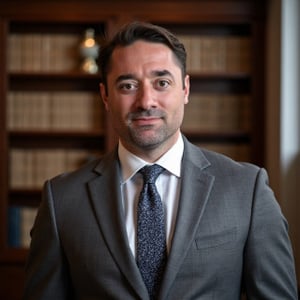
Partner, Holtzman Vogel Baran Torchinsky & Josefiak PLLC
Brandon Smith is a partner at Holtzman Vogel, based in Tennessee, where he focuses on government investigations, white collar matters, and specialty litigation. A seasoned government leader and legal strategist, Brandon has played a central role in shaping conservative policy and litigation at the highest levels of state government.
Before joining the firm, Brandon served as Chief of Staff and Assistant Solicitor General in the Tennessee Attorney General’s Office. In that role, he led multi-state litigation, high-profile constitutional challenges, and efforts to counter federal overreach and ESG-related corporate activism. He worked closely with nearly every Republican Attorney General’s Office in the country, coordinating litigation, strategy, and multi-state policy efforts.
Earlier in his career, Brandon served as Executive Director of Legislative and Regulatory Affairs for Kentucky Governor Matt Bevin and as Policy Director to Kansas Governor Sam Brownback, where he helped drive key legislative and budget initiatives. He also held roles as Deputy Director of the Federalist Society and as an adjunct professor at American University.
Brandon’s career has been defined by a commitment to defending federalism, advancing conservative governance, and shaping legal and policy fights that matter.
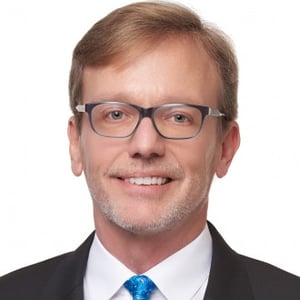
Managing Partner and Co-Founder, EducationCounsel
With extensive background in providing legal, policy, strategic planning, and advocacy services to educators throughout the country, Mr. Coleman focuses principally on issues of access, diversity, inclusion, and institutional quality in post-secondary education.
Mr. Coleman is a 1984 honors graduate of Duke University School of Law and a 1981 Phi Beta Kappa graduate of the University of Virginia. Mr. Coleman served as Deputy Assistant Secretary of the U.S. Department of Education’s Office for Civil Rights from June 1997 until January 2000, following his tenure as Senior Policy Advisor to the Assistant Secretary for Civil Rights. He has testified before the U.S. Senate and the U.S. Commission on Civil Rights; he has served as an adjunct professor at two law schools and at two graduate schools of education. He currently teaches at the USC Rossier School of Education.
He is a current member of GLSEN’s Board of Directors; a Board member of the National Council for State Authorization Reciprocity (NC-SARA); and a Board member of the Lab School of Washington, which serves students with learning differences. He is a past Chairperson of the Board of Directors for the Institute for Higher Education Policy. Mr. Coleman leads the legal and policy work of the College Board's Access and Diversity Collaborative that he helped establish in 2004, and has been a principal author of numerous amicus briefs filed in federal courts on issues associated with the educational benefits of student diversity and the consideration of race in admissions, as well as the rights of transgender students to a non-discriminatory school environments.
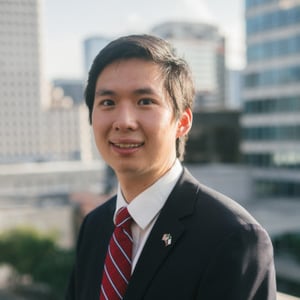
District Judge, State of Texas
Cory Liu is a state district judge in Austin, Texas. He previously served as assistant general counsel to Texas Governor Greg Abbott. Mr. Liu clerked for Judge Andrew Oldham on the U.S. Court of Appeals for the Fifth Circuit and Judge Danny Boggs on the U.S. Court of Appeals for the Sixth Circuit. He was Editor-in-Chief of the Harvard Journal of Law & Public Policy and is a graduate of Harvard Law School and the University of Chicago.
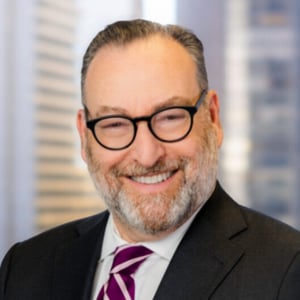
Founder, Chairman, and CEO, Louis D. Brandeis Center for Human Rights Under Law
Hon. Kenneth L. Marcus is an internationally recognized expert in civil and human rights, as well as a leader in the fight against anti-Semitism on and off university campuses. He is the Founder, Chairman, and CEO of The Louis D. Brandeis Center for Human Rights Under Law, the leading civil rights legal organization fighting against anti-Semitism. The New York Times has called him “The Man Who Helped Redefine Campus Anti-Semitism.” He been described, in that paper, as “the single most effective and respected force” to combat anti-Semitism.
During his public service career, Marcus served as Assistant U.S. Secretary of Education for Civil Rights; Staff Director at the U.S. Commission on Civil Rights; and General Deputy Assistant U.S. Secretary of Housing and Urban Development for Fair Housing and Equal Opportunity.
In academia, he serves as Professorial Lecturer in Law at George Washington University. He formerly held the Lillie and Nathan Ackerman Chair in Equality and Justice in America at the City University of New York’s Bernard M. Baruch College, served as Visiting Research Professor of Political Science at Yeshiva University, and was a Board of Visitors member George Mason University and Distinguished Senior Fellow at that university’s law school. He is a member of the editorial board of the Journal of Contemporary Antisemitism and previously served as Associate Editor of the Journal for the Study of Anti-Semitism.
Marcus is also author of The Definition of Anti-Semitism (Oxford University Press) and Jewish Identity and Civil Rights in America (Cambridge University Press). He has published widely in academic journals as well as in more popular venues such as The Wall Street Journal, Washington Post, Newsweek, USA Today, and Politico. He is a graduate of Williams College and the University of California at Berkeley School of Law.
Earlier in his career, he was a litigation partner in two major law firms, where he conducted complex commercial and constitutional litigation. He also serves as Chairman emeritus of the Executive Committee of the Federalist Society for Law & Public Policy Civil Rights Practice Group.
General Counsel, Mountain States Legal Foundation
William E. Trachman is General Counsel for Mountain States Legal Foundation, where he protects the rights of individuals to live freely and securely under the U.S. Constitution. Previously, he was appointed to serve in the Department of Education as Deputy Assistant Secretary in the Office for Civil Rights. Prior to his appointment, he served as General Counsel to the Douglas County School District, where he helped litigate the fight for school choice in the school district. Presently, Mr. Trachman serves as Chair of the Colorado Federalist Society and the Vice Chair of the U.S. Commission on Civil Rights’ Colorado Advisory Board. He previously taught as an Adjunct Professor at the University of Denver, Sturm College of Law. He attended U.C. Berkeley for both undergraduate and law school, and then clerked for the Honorable Harris Hartz on the 10th Circuit Court of Appeals. Mr. Trachman is licensed in Colorado, California, and Washington, D.C.
U.S. Attorney, Middle District of Tennessee, U.S. Department of Justice
Braden Boucek was sworn in on December 24, 2025, as the United States Attorney for the Middle District of Tennessee. Prior to becoming United States Attorney, Mr. Boucek served as the senior vice president of litigation at the Southeastern Legal Foundation having previously served as the vice president of legal affairs at the Beacon Center. Mr. Boucek has extensive experience as a prosecutor, starting his career at the Tennessee Attorney General’s Office before serving for two years as an Assistant District Attorney General in Williamson County. He was a federal prosecutor for ten years, first serving as an Assistant United States Attorney in the Western District of Tennessee from 2005 to 2011. From 2011 to 2015, Mr. Boucek was an Assistant United States Attorney in the Middle District of Tennessee, the district he now leads as the United States Attorney.

Professor, Cleveland State University College of Law
Professor Christa Laser comes to Cleveland Marshall after nearly a decade of practice experience as an intellectual property litigator at the law firms WilmerHale and Kirkland & Ellis LLP. She has deep expertise in patents, trademarks, copyrights, false advertising, pharmaceutical litigation and regulation, and technology law. She has represented leading life sciences and technology companies in all stages of trial and appellate matters and consulted on legislative changes to intellectual property laws.
Professor Laser's research focuses on intellectual property and innovation. Her patent law scholarship has been cited by numerous scholars, by judges of the U.S. Court of Appeals for the Federal Circuit, and in briefs to the U.S. Supreme Court. Her research envisions an intellectual property system that supports innovation, investment, and competition across all technology areas.
Professor Laser was the World Champion of the Lachs Space Law Moot Court Competition. Prior to law school, she worked as a scientific researcher, where her work studying protein dynamics of photosynthesis using genetically modified bacteria and laser spectroscopy was published in the prestigious journal Science.
Senior Associate, Intellectual Property Litigation, WilmerHale; Associate, Kirkland & Ellis LLP; judicial intern for Chief Judge Randall R. Rader, U.S. Court of Appeals for the Federal Circuit, and Judge Roger W. Titus, U.S. District Court for the District of Maryland; Scientific Researcher, The BioDesign Institute at Arizona State University, Department of BioOptical Nanotechnology.
J.D., The George Washington University Law School (World Champion, International & North American Lachs Space Law Moot Court Competition; Research Assistant, Professor Lawrence Cunningham; Notes Editor, American Intellectual Property Law Association Quarterly Journal); B.S., Arizona State University, Barrett Honors College (Beckman Scholar; Biochemistry Award).

Associate Attorney, Gibson, Dunn & Crutcher LLP
Laura Stanley is an associate in the Washington, D.C. office of Gibson, Dunn & Crutcher. She practices in the firm’s Litigation Department and is a member of the Environmental Litigation and Mass Tort Practice Group. Laura previously served as an economist at the U.S. Environmental Protection Agency where she developed regulations under the Resource Conservation and Recovery Act and the Comprehensive Environmental Response, Compensation, and Liability Act.
Laura graduated with high honors from The George Washington University Law School and was awarded Order of the Coif. Laura served as an Articles Editor of the George Washington Law Review, and she was awarded the ABA Gellhorn-Sargentich Award for the best student essay in administrative law. Laura received a Master of Arts degree in Economics from George Mason University and a Bachelor of Arts degree in Economics from James Madison University.
She previously served as a law clerk to the Honorable Ryan D. Nelson of the United States Court of Appeals for the Ninth Circuit and the Honorable Stephen S. Schwartz of the United States Court of Federal Claims.
She is admitted to practice law in the District of Columbia and before the United States Court of Appeals for the Ninth Circuit.
Senior Legal Fellow, Advancing American Freedom
Amy Swearer is a leading national expert on a wide range of public policy, legal, and constitutional issues, including the Second Amendment, criminal justice, and mental health policy. She has long been a respected conservative voice on gun policy and is routinely asked to testify before state and federal legislative bodies. Her work on birthright citizenship, meanwhile, has been featured extensively in litigation over the meaning of the Fourteenth Amendment’s Citizenship Clause.
Swearer was formerly a Senior Legal Fellow in the Edwin Meese III Center for Legal & Judicial Studies at the Heritage Foundation. At Heritage, she ran the Defensive Gun Use Database and was the primary author of the e-book “The Essential Second Amendment.” She was also a driving force behind the organization’s School Safety Initiative.
She was the 2022 recipient of the Heritage Foundation’s Joseph Shattan Award for “writing that presents conservative ideas in a powerful and compelling fashion to policymakers and the American people.” She was also named the Second Amendment Institute’s 2022 Gun Rights Champion.
Swearer received her law degree from the University of Nebraska College of Law and was a member of the Nebraska Law Review. She holds a B.S. in Criminology & Criminal Justice from the University of Nebraska, where she was a Chancellor’s Scholar and a goalkeeper on the women’s soccer team
Deputy Counsel, the President
Gary currently is the Deputy Counsel to the President. He was previously a partner at the Dhillon Law Group and worked at the Department of the Interior and Federal Election Commission. He is a native of Virginia, and earned his B.A. and J.D. from the University of Virginia.
Research Fellow, CATO Institute
Sahar Khan is a defense and foreign policy research fellow at the Cato Institute. Her research interests include state‐sponsored militancy/terrorism, counterterrorism policies, anti‐terrorism legal regimes, and private military and security contractors. Khan focuses on U.S. foreign policy in South Asia and Africa. She is also the editor at Inkstick Media.
Khan holds a PhD in political science from the University of California, Irvine; an MPP from the Harris School of Public Policy at the University of Chicago; and a BA in economics, international studies, and politics and government from Ohio Wesleyan University.
Director, South Asia Institute, Wilson Center
Michael Kugelman is the South Asia Institute Director at the Woodrow Wilson Center, where he is responsible for research, programming, and publications on the region. His main specialty is Pakistan, India, and Afghanistan and U.S. relations with each of them. Mr. Kugelman writes monthly columns for Foreign Policy’s South Asia Channel and monthly commentaries for War on the Rocks. He also contributes regular pieces to the Wall Street Journal’s Think Tank blog. He has published op-eds and commentaries in the New York Times, Los Angeles Times, Politico, CNN.com, Bloomberg View, The Diplomat, Al Jazeera, and The National Interest, among others. He has been interviewed by numerous major media outlets including the New York Times, Washington Post, Financial Times, Guardian, Christian Science Monitor, National Geographic, BBC, CNN, NPR, and Voice of America. He has also produced a number of longer publications on South Asia, including the edited volumes Pakistan’s Interminable Energy Crisis: Is There Any Way Out? (Wilson Center, 2015), Pakistan’s Runaway Urbanization: What Can Be Done? (Wilson Center, 2014), and India’s Contemporary Security Challenges (Wilson Center, 2013). He has published policy briefs, journal articles, and book chapters on issues ranging from Pakistani youth and social media to India’s energy security strategy and transboundary water management in South Asia.
Mr. Kugelman received his M.A. in law and diplomacy from the Fletcher School at Tufts University. He received his B.A. from American University’s School of International Service. Follow him on Twitter @michaelkugelman.
Judicial Law Clerk, U.S. District Court for the Southern District of Florida
Nitin is a recent graduate of Cornell Law School. Before his time in Ithaca, he majored in International Studies and Political Science at Johns Hopkins University and focused on power competition in South Asia during his graduate studies at the University of Oxford.
CEO, Asset Forfeiture Law, LLC
As a federal prosecutor, Stefan D. Cassella was one of the federal government’s leading experts on asset forfeiture and money laundering law for over thirty years. He now serves as an expert witness and consultant to law enforcement agencies and the private sector as the CEO of AssetForfeitureLaw, LLC.
As a Deputy Chief of the Justice Department’s Asset Forfeiture and Money Laundering Section and later as the Chief of the Asset Forfeiture and Money Laundering Section in the U.S. Attorney’s Office in Baltimore, Maryland, Mr. Cassella litigated some of the Government’s most significant forfeiture and money laundering cases and drafted many of the federal forfeiture and money laundering statutes.
He is the author of Asset Forfeiture Law in the United States, a one-volume resource designed to lead the practitioner, prosecutor, judge and policy maker through the labyrinth of statutes, rules and cases that govern this dynamic area of the law, and of more than 40 law review articles on money laundering and forfeiture. He has trained state and federal prosecutors and agents and their counterparts in numerous foreign countries, including over 200 lectures at the National Advocacy Center at the University of South Carolina.
Mr. Cassella is also the author and publisher of the Money Laundering and Forfeiture Digest, a monthly compendium of the forfeiture and money laundering cases decided by the federal courts that is circulated to hundreds of state, federal and foreign prosecutors and lawyers, law enforcement agents, academics and policy makers in the U.S. and abroad.
Trial Attorney, Civil Rights Division, United States Department of Justice (incoming)
Adam Griffin is a graduate of the University of North Carolina School of Law. During law school, he served as a research assistant to Professor Stephen E. Sachs and UNC Law Dean Martin Brinkley. After law school, he spent two years litigating for liberty at the Institute for Justice as an inaugural Law and Liberty Fellow. He served as a law clerk to Chief Judge Richard E. Myers in the United States District Court for the Eastern District of North Carolina, and is now a separation-of-powers attorney at Pacific Legal Foundation.
Senior Attorney, Institute for Justice
Rob Johnson is a senior attorney at the Institute for Justice, where he litigates to protect private property, free speech, and other individual rights. Rob is a nationally-recognized expert on civil forfeiture. He previously represented a series of small business owners who had their entire bank accounts seized by the IRS, and he launched an initiative that resulted in the IRS reopening hundreds of closed forfeiture cases and returning millions of dollars. He has also litigated cases challenging the constitutionality of civil forfeiture procedures, and he scored a victory striking down a forfeiture program as a violation of due process.
Beyond civil forfeiture, Rob has litigated cases defending a range of constitutional rights. He was part of teams that successfully challenged occupational licensing requirements for tour guides in Savannah and Charleston. He also developed a class action lawsuit fighting the NYPD’s use of a draconian “no-fault eviction” statute to coerce residents to waive their constitutional rights, which led New York City to reform the challenged law.
Rob’s writing has been published in the Wall Street Journal, Washington Post, Politico, and Reason, among other venues. Rob has testified about occupational licensing before the House and Senate Judiciary Committees and has twice testified about civil forfeiture before the House Ways & Means Oversight Subcommittee. He has also testified before state legislatures across the country.
From 2014-2017, Rob served as IJ’s first Elfie Gallun Fellow for Freedom and the Constitution. In that role, Rob wrote and spoke about the vital role the U.S. Constitution plays in protecting our most precious freedoms. He is currently at work on a book about the Fourteenth Amendment.
Rob studied literature and anthropology at Columbia University, and he studied law at Harvard Law School. Upon graduation, he clerked for Chief Judge Alex Kozinski on the Ninth Circuit and for Justice Anthony Kennedy on the Supreme Court.
Rob lives in Cleveland with his wife and two daughters—all named after characters in Shakespeare plays—and is an amateur large format photographer.
Consultant, American Edge Project and U.S. Chamber of Commerce
Professor of Clinical Law, Brooklyn Law School
Jodi S. Balsam is Professor of Clinical Law at Brooklyn Law School and a nationally recognized expert on Sports Law. She directs the BLS Sports Law Clinic and Sports Law Externship Program. She teaches Sports Law at both BLS and NYU School of Law, and has also taught the subject at New York Law School, University of New Hampshire School of Law, Bucerius Law School in Hamburg, Germany, Mathias Corvinus Collegium in Budapest, Hungary, and the MESGO Executive Masters Program in Global Sport Governance. Professor Balsam has served as an arbitrator for the National Collegiate Athletic Association on complex infractions cases, and now serves as a neutral for FAIR Sports, which hears cases involving college athletics.
Professor Balsam frequently writes and speaks on sports law topics, including as co-author of Weiler’s Sports and the Law, a leading casebook in the field. Her publications and presentations have addressed antitrust challenges to sports leagues and organizing bodies, sports trademarks, athletes’ rights of free expression and name/image/likeness exploitation, sports gambling and integrity, sports league governance, and the role of the sports agent. She frequently appears in the media on legal issues in sports, including NBC Sports/The Golf Channel, ESPN, Law360 Sports and Betting, The Athletic, Front Office Sports, USA Today, and the Wall Street Journal. She is on the editorial boards of Law360-Sports & Betting, the Journal of Legal Aspects of Sport, and the international sports law newsletter LawInSport.
Before joining academia, Professor Balsam was the National Football League's Counsel for Operations and Litigation, where she managed litigation in all areas of law, oversaw a variety of policy and operational matters, negotiated and drafted contracts for League special events including the Super Bowl, and administered the League's internal dispute resolution processes and compliance program. Prior to the NFL she was a litigator with the New York office of Simpson Thacher & Bartlett, where she represented sports and entertainment clients in antitrust matters and complex commercial litigation. She served as a law clerk for Judge Dennis Jacobs of the U.S. Court of Appeals for the Second Circuit and for Judge Charles Brieant of the U.S. District Court for the Southern District of New York. A graduate of Yale College, Professor Balsam received her law degree from NYU School of Law.
Deputy General Counsel – VP, Health, Regulatory & Commercial Operations, Biotechnology Innovation Organization
Director, Technology Policy, University of North Carolina at Chapel Hill
Matt Perault is the director of the Center on Technology Policy at the University of North Carolina at Chapel Hill, and a consultant on technology policy issues.

Professor of Law, University of Michigan Law School
Professor Nicholas Bagley teaches and writes in the areas of administrative law, regulatory theory, and health law. Prior to joining the Law School faculty, he was an attorney with the appellate staff in the Civil Division at the U.S. Department of Justice, where he argued a dozen cases before the U.S. Courts of Appeals and acted as lead counsel in many more. Professor Bagley also served as a law clerk to Justice John Paul Stevens of the U.S. Supreme Court and to the Hon. David S. Tatel of the U.S. Court of Appeals, District of Columbia Circuit. Professor Bagley holds a BA in English from Yale University and received his JD, summa cum laude, from New York University School of Law. Before entering law school, he joined Teach For America and taught eighth-grade English at a public school in South Bronx. Professor Bagley's work has appeared in the Harvard Law Review, the Columbia Law Review, the Georgetown Law Journal, the New England Journal of Medicine, and the Journal of Health Politics, Policy, and Law. In 2012, he was the recipient of the Law School's L. Hart Wright Award for Excellence in Teaching. He is a frequent contributor to The Incidental Economist, a prominent health policy blog.
Professor of Law, University of Michigan Law School
Christopher J. Walker is a Professor of Law at the University of Michigan. Prior to joining Michigan law faculty in 2022, he spent a decade teaching at The Ohio State University Moritz College of Law. He previously clerked for Justice Anthony Kennedy of the U.S. Supreme Court, worked on the Civil Appellate Staff at the U.S. Department of Justice, and served on the Senate Judiciary Committee staff for the Gorsuch Supreme Court confirmation. Professor Walker’s research focuses on administrative law, regulation, and law and policy at the agency level. Outside the law school, he chaired the American Bar Association’s Section of Administrative Law and Regulatory Practice in 2020-21 and served as one of forty Public Members of the Administrative Conference of the United States from 2016-2022, and he continues to serve in both organizations in various capacities. He also works of counsel at the U.S. Chamber Litigation Center. In 2022, he received the Federalist Society’s Joseph Story Award.
Professor, University of Minnesota Law School
Ilan Wurman is the Julius E. Davis Professor of Law at the University of Minnesota, where he teaches administrative law and constitutional law. He previously taught at Arizona State University. He writes primarily on the Fourteenth Amendment, administrative law, separation of powers, and constitutionalism. His academic writing has appeared in the Yale Law Journal, the Stanford Law Review, the University of Chicago Law Review, the University of Pennsylvania Law Review, the Virginia Law Review, the Duke Law Journal, the Minnesota Law Review, the Notre Dame Law Review, and the Texas Law Review among other journals.
Professor Wurman is the author of a casebook, Administrative Law Theory and Fundamentals: An Integrated Approach (Foundation Press 2d ed. 2024). He is also the author of A Debt Against the Living: An Introduction to Originalism (Cambridge 2017), and The Second Founding: An Introduction to the Fourteenth Amendment (Cambridge 2020). His next book, The Constitution of 1789: A New Introduction, is also forthcoming with Cambridge University Press.
Professor Wurman practices law with the firm Tully Bailey. He has litigated a variety of administrative law and constitutional law cases, including cases involving COVID-19 restrictions, transmission lines, and Appointments Clause challenges. He also devised winning public nuisance theories to force city governments to address the increasingly challenging public camping crises throughout the country.
Associate, Covington & Burling LLP
Eli Nachmany is an associate at Covington & Burling LLP in the Washington, DC, office. He clerked for Judge Steven J. Menashi of the U.S. Court of Appeals for the Second Circuit. Eli graduated magna cum laude from Harvard Law School, where he was Editor-in-Chief of the Harvard Journal of Law & Public Policy. Prior to law school, Eli served as the speechwriter to the U.S. Secretary of the Interior and as a domestic policy aide in the White House Office of American Innovation. He graduated summa cum laude from New York University with a B.S. in Sports Management. Eli’s scholarship on administrative law and executive power has appeared in the BYU Law Review, George Mason Law Review, Wake Forest Law Review, and Yale Law Journal Forum.

Founder, President, and General Counsel, Wisconsin Institute for Law & Liberty
Rick Esenberg is the founder and current President and General Counsel of the Wisconsin Institute for Law & Liberty, a rapidly expanding law and policy organization headquartered in Milwaukee. Under Rick’s leadership, WILL has grown into one of the more active state-based think tanks and litigation centers in the country. Rick is a frequent litigator in state and federal courts and nationally recognized scholar and commentator on constitutional law, particularly the First Amendment’s guarantees of freedom of speech and religion. He is one of the leading experts on the Wisconsin Constitution and a frequent advocate before the Wisconsin Supreme Court. Rick’s work seeks to advance the rule of law and individual liberty, formed by a robust civil society that forms individual and community character, preserving the wisdom of the past and an openness to the future.
Rick’s commentary has been featured in such outlets as the Wall Street Journal, National Review, Weekly Standard, Real Clear Politics, Milwaukee Journal Sentinel and Washington Examiner. Formerly on the faculty of Marquette University Law School, his scholarship has appeared in such publications as the Harvard Law Review, Harvard Journal of Law & Public Policy, Wake Forest Law Review and William & Mary Bill of Rights Journal. Back when they were a thing, he operated a blog called Shark and Shepherd where he tried to suggest something about the duality of man – “the Jungian thing.”
Rick holds a J.D., magna cum laude, from Harvard Law School, where he was an editor of the Harvard Law Review, and a B.A., summa cum laude, in political science from the University of Wisconsin-Milwaukee. In addition to service on the Marquette Faculty, he was formerly a litigation partner at Foley & Lardner and General Counsel of an international manufacturing firm headquartered in Wisconsin. He lives in Mequon Wisconsin with his wife Karen, golden retrievers Cooper and Riley and more books than he can find places for.
Partner, Quinn Emanuel
John F. Bash is an American attorney who served as the United States Attorney for the Western District of Texas from 2017 to 2020. After graduating from Harvard Law School, Mr. Bash clerked for Judge Kavanaugh during his first year on the bench and went on to clerk for Justice Antonin Scalia. He then served as an Assistant to the Solicitor General in the U.S. Department of Justice, where he argued ten cases in the United States Supreme Court. He also served briefly as Special Assistant to the President and Associate Counsel to the President before his appointment as United States Attorney.
Managing Attorney of the Washington Office, Institute for Justice
William R. Maurer is the Managing Attorney of the Washington state office of the Institute for Justice, which engages in litigation in the areas of economic liberty, private property rights, educational choice, & freedom of speech.
Maurer is an advocate against the criminalization of poverty and the governmental use of the criminal and civil enforcement systems to raise revenue. He was lead counsel in a class action challenging the use of tickets to raise revenue in the city of Pagedale, Missouri. The suit resulted in a federal consent decree that reformed the city’s ticketing and municipal court system. He regularly speaks, teaches, and writes about the abuse of fines and fees in the criminal justice system. He was a participant in summits on taxation by citation put on by the White House and Department of Justice during the Obama Administration. His work on the issue includes serving as an advisory board member of the Fines and Fees Justice Center.
In addition to his work on criminal and civil justice reform, Maurer is a First Amendment litigator. In 2011, he successfully argued before the U.S. Supreme Court that Arizona’s punitive campaign financing regime was unconstitutional. Before the Washington Supreme Court, he successfully argued against efforts to classify radio commentary as a contribution under the state’s campaign finance law.
His cases and advocacy have been covered in the Washington Post, the New York Times, the Economist, the Wall Street Journal, and other major media outlets.
Maurer was named a “Washington Superlawyer” by Washington Law & Politics Magazine for several years. He is a chapter author in numerous legal reference works and has written several articles for law reviews and legal publications across the country.
Prior to joining IJ-WA, Maurer clerked for Washington Supreme Court Justice Richard Sanders and then practiced law at Perkins Coie LLP. Maurer received his law degree in 1994 from the University of Wisconsin – Madison, where he was an editor of the Wisconsin Law Review. He received his BA from Bard College in 1989.
Partner, King & Spalding LLP
Former U.S. Attorney for the Eastern District of California, a 34-county district with an area that stretches from the Oregon border to Bakersfield, Greg Scott is an experienced trial lawyer who represents major companies facing government investigations and litigation, with a focus in the healthcare, retail, and construction industries. He has extensive knowledge on matters involving consumer protection, construction disputes, the Foreign Corrupt Practices Act (FCPA) and the False Claims Act (FCA).
Greg represents corporations under investigation by state district attorneys concerning potential violations of consumer protection laws, as well as corporations operating senior assisted livingfacilities under investigation by the state attorney general regarding potential violations of elder abuse laws. In addition, he represents construction companies under investigation by state district attorneys when employees are involved in serious accidents at worksites.
A retired Lieutenant Colonel after serving more than 20 years in the California Army National Guard & United States Army Reserve, Greg went on to become a deputy district attorney in Contra Costa County and twice-elected District Attorney of Shasta County. He also served as an Adjunct Professor of National Security Law at the University of the Pacific, McGeorge School of Law following his first term as U.S. Attorney for the E.D. of California. Between his two terms as U.S. Attorney for the E.D. of California, Greg was the vice chair of the white-collar defense and corporate investigations practice at an AmLaw 50 firm.
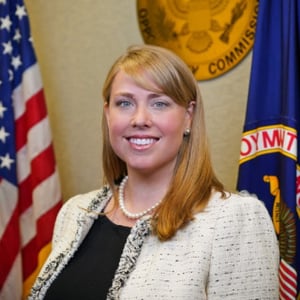
Chair, United States Equal Employment Opportunity Commission
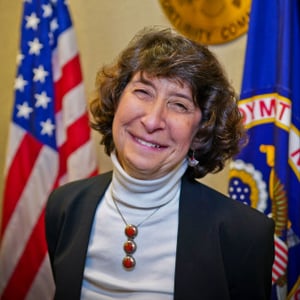
Vice Chair, Equal Employment Opportunity Commission
Jocelyn Samuels joined the U.S. Equal Employment Opportunity Commission (EEOC) as a Commissioner on October 14, 2020, and on July 14, 2021, was confirmed for a second term ending in 2026. Immediately prior to joining the Commission, she served as the Executive Director and Roberta A. Conroy Scholar of Law at the Williams Institute, focusing on legal strategies to attain equality for sexual and gender minorities. During the Obama administration, she served as the Director of the Office for Civil Rights at the U.S. Department of Health & Human Services and as the Acting Assistant Attorney General for Civil Rights at the U.S. Department of Justice. In these capacities, she supervised enforcement of civil rights laws through litigation, rulemaking and policy development, and public education and was an architect of numerous government policies applying federal law to remedy discrimination based on sexual orientation and gender identity. She previously served as a Vice President of the National Women’s Law Center, Labor Counsel to Senator Edward M. Kennedy, and a senior attorney at the EEOC in the Office of Legal Counsel. She received a J.D. from Columbia Law School and a B.A. from Middlebury College.

A discussion within the right: Why is there not a larger conservative plaintiffs' bar?
Mark A. Behrens, James M. Burnham, Andrew N. Ferguson, Ashley Keller, Brandon J. Smith
For decades, the plaintiffs' bar has been populated by liberal lawyers who support left-wing elected...
College Admissions After SFFA
Art Coleman, Cory R. Liu, Kenneth L. Marcus, William E. Trachman
On Thursday, June 29, 2023, the U.S. Supreme Court issued its decision in Students for...
A Seat at the Sitting - November 2023
Braden H. Boucek, Christa Laser, Laura Stanley, Amy E. Swearer, Gary Lawkowski
The November Docket in 90 Minutes or Less
Each month, a panel of constitutional experts convenes to discuss the Court’s upcoming docket sitting...
Pakistan at a Crossroads: Ports, Courts, and Power Games
Sahar Khan, Michael Kugelman, Nitin R. Nainani
Pakistan finds itself in yet another multi-faceted crisis. In response to numerous economic challenges, including...
Courthouse Steps Preview: Culley v. Marshall
Stefan D. Cassella, Adam F. Griffin, Robert E. Johnson
Which Test is it Anyway? Civil Asset Forfeiture and the Right to a Prompt Post-Seizure...
Live and Let LIV? The Golf Merger, Competition, and Human Rights
Asheesh Agarwal, Jodi S. Balsam, John T. Delacourt, Matt Perault
The proposed deal between the PGA Tour and LIV Golf has attracted scrutiny from antitrust...
Deep Dive Episode 285 - Loper Bright and the Next Steps for Chevron Deference at the Supreme Court
Nicholas Bagley, Christopher J. Walker, Ilan Wurman, Eli Nachmany
Regulatory Transparency Project's Fourth Branch Podcast
This Term, the Supreme Court will hear Loper Bright Enterprises v. Raimondo—a case concerning judicial...
Fabick v. Evers [The FedSoc Films Podcast]
Rick M. Esenberg
In this episode of the FedSoc Films Podcast, Rick Esenberg, Founder & President of the...
Courts as Police, Legislators, and “Homeless Policy Czars”? What are the Implications of Grants Pass on Local Policing and Public Safety?
John F. Bash, William R. Maurer, McGregor W. Scott
Communities across the country are grappling with the complex issues presented by growing homeless encampments...
DEIA Initiatives in the Workplace Post-SFFA
Andrea R. Lucas, Jocelyn Samuels, Kate Comerford Todd
In June, the Supreme Court held that consideration of applicants’ race in admissions decisions of...