Deep Dive Episode 213 – After California and Virginia, What’s Next? Examining the State of State Data Privacy Legislation
Regulatory Transparency Project's Fourth Branch Podcast

Data privacy and data security are tech policy concerns that resonate with many voters and policymakers. In the absence of federal data privacy legislation, some states have passed, and others are considering, their own legislation to deal with data privacy questions related to specific technologies including biometrics, among many others. While California had the first general data privacy law at a state level, Virginia and Colorado passed different laws last year. Now states ranging from Connecticut to Utah are considering data privacy laws often modeled after these two examples. What do these data privacy laws mean for consumers and companies, both large and small? What might the landscape of state data privacy laws look like after the 2022 legislative session?
Featuring:
Visit our website – www.RegProject.org – to learn more, view all of our content, and connect with us on social media.
*******
As always, the Federalist Society takes no position on particular legal or public policy issues; all expressions of opinion are those of the speaker.
Vice President and Director, Center for Data Innovation, Information Technology and Innovation Foundation
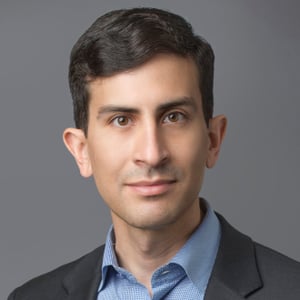
Daniel Castro is vice president at the Information Technology and Innovation Foundation (ITIF) and director of ITIF's Center for Data Innovation.
Castro writes and speaks on a variety of issues related to information technology and internet policy, including privacy, security, intellectual property, Internet governance, e-government, and accessibility for people with disabilities. His work has been quoted and cited in numerous media outlets, including The Washington Post, The Wall Street Journal, NPR, USA Today, Bloomberg News, and Bloomberg Businessweek. In 2013, Castro was named to FedScoop’s list of the “top 25 most influential people under 40 in government and tech.” In 2015, U.S. Secretary of Commerce Penny Pritzker appointed Castro to the Commerce Data Advisory Council.
Castro previously worked as an IT analyst at the Government Accountability Office (GAO) where he audited IT security and management controls at various government agencies. He contributed to GAO reports on the state of information security at a variety of federal agencies, including the Securities and Exchange Commission and the Federal Deposit Insurance Corporation. In addition, Castro was a visiting scientist at the Software Engineering Institute in Pittsburgh, PA, where he developed virtual training simulations to provide clients with hands-on training of the latest information security tools.
He has a B.S. in foreign service from Georgetown University and an M.S. in information security technology and management from Carnegie Mellon University.
Senior Counsel, Future of Privacy Forum
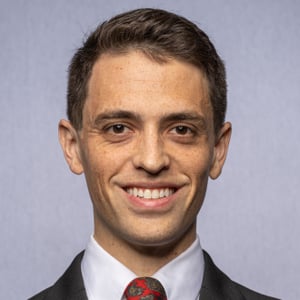
Keir Lamont, CIPP/US, is a Senior Counsel with the Future of Privacy Forum’s U.S. legislation team. In this role he supports policymaker education and independent analysis concerning federal, state, and local consumer privacy laws and regulations. Keir previously held positions at the Computer & Communications Industry Association and the Program on Data and Governance at Ohio State University. Keir holds a J.D. from Georgetown University Law Center and a B.A. in Political Science & Economics from the University of Florida.
Senior Fellow, Technology Policy, Cato Institute
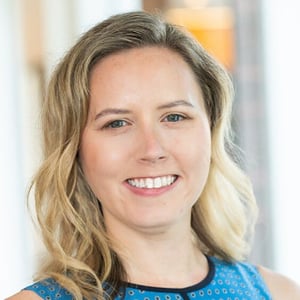
Jennifer’s research focuses on the intersection of emerging technology and law with a particular interest in the interactions between technology and the administrative state. Her work covers topics including judicial deference, liability protection for Internet platforms, autonomous vehicles and other disruptive transportation technologies, the regulation of data privacy, and the benefits of technology and innovation. Her work has appeared in USA Today, the Chicago Tribune, the New York Daily News, the Sacramento Bee, the Washington Times, Real Clear Policy, and U.S. News and World Report. Jennifer has a JD from the University of Alabama School of Law and a BA in political science at Wellesley College.