
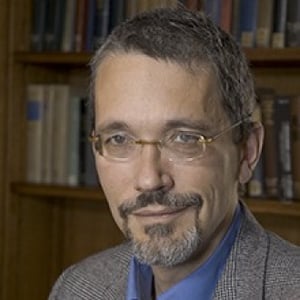
William K. Townsend Professor of Law, Yale Law School
Ian Ayres is a lawyer and an economist. He is the William K. Townsend Professor at Yale Law School, the Anne Urowsky Professorial Fellow in Law, and a Professor at Yale’s School of Management.
Professor Ayres has been a columnist for Forbes magazine, a commentator on public radio’s Marketplace, and a contributor to the New York Times’ Freakonomics Blog. His research has been featured on PrimeTime Live, Oprah and Good Morning America and in Time and Vogue magazines. Ian is a co-founder of stickK.com, a web site that helps you stick to your goals. In an Illinois post-conviction proceeding, Ayres helped convince a court to vacate his client’s death sentence.
In 2020, Harvard University Press will publish Ian’s twelfth book, “Disarmed By Choice: Liberating Individuals to Reduce Gun Violence” (with Fredrick Vars). Ian has also published over 100 articles on a wide range of topics including several empirical studies.
In 2006, he was elected to the American Academy of Arts and Sciences. His book with Greg Klass, Insincere Promises: The Law of Misrepresented Intent, won the 2006 Scribes book award “for the best work of legal scholarship published during the previous year.” Professor Ayres has been ranked as one of the most prolific and most-cited law professors of his generation. (See James Lindgren & Daniel Seltzer, The Most Prolific Law Professors and Faculties, 71 CHI.-KENT L. REV. 781 (1996); Fred R. Shapiro, The Most-Cited Legal Scholars, 29 J. LEGAL STUD. 409 (2000).) The Chronicle of Higher Education referred to Ayres as “a law-and-economics guru.”
He was born and raised in Kansas City, Missouri, received his B.A. (majoring in Russian studies and economics) and J.D. from Yale and his Ph.D in economics from M.I.T. Professor Ayres and clerked for the Honorable James K. Logan of the Tenth Circuit Court of Appeals. He has previously taught at Harvard, Illinois, Northwestern, Stanford and Virginia law schools and has been a research fellow of the American Bar Foundation and Columbia. From 2002 to 2009, he was the editor of the Journal of Law, Economics and Organization.
His two most cited law review articles are Fair Driving: Gender and Race Discrimination in Retail Car Negotiations, 104 Harvard Law Review 817 (1991) and Filling Gaps in Incomplete Contracts: An Economic Theory of Default Rules, 99 Yale Law Journal 87 (1989) (with Robert Gertner).
Excerpts of his publications as well as audio and video clips can be found on the internet at: www.ianayres.com.
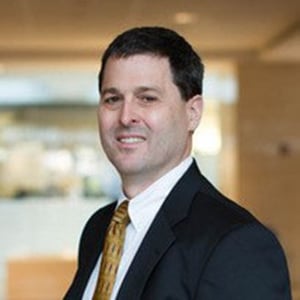
Scott K. Ginsburg Professor of Health Law & Policy, Georgetown University
David A. Hyman, M.D., J.D., is the Scott K. Ginsburg Professor of Health Law & Policy at Georgetown University. Professor Hyman focuses his research and writing on the regulation and financing of health care. He teaches or has taught health care regulation, civil procedure, insurance, medical malpractice, law & economics, professional responsibility, and tax policy.
While serving as Special Counsel to the Federal Trade Commission, Professor Hyman was principal author and project leader for the first joint report ever issued by the Federal Trade Commission and Department of Justice, “Improving Health Care: A Dose of Competition” (2004). He is also the author of Medicare Meets Mephistopheles, which was selected by the U.S. Chamber of Commerce/National Chamber Foundation as one of the top ten books of 2007, and the co-author (with Charles Silver) of Overcharged: Why Americans Pay Too Much for Health Care (2018). He has published widely in student-edited law reviews and peer-reviewed medical, health policy, law, and economics journals.
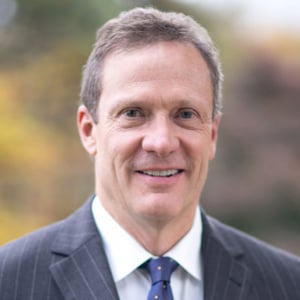
Blaine T. Phillips Distinguished Professor in Environmental Law, University of Virginia School of Law
Law and economics expert Jason Scott Johnston joined the Virginia Law faculty in 2010 and is the Blaine T. Phillips Distinguished Professor in Environmental Law. He formerly served as the the Nicholas E. Chimicles Research Professor in Business Law and Regulation at Virginia Law, and the Robert G. Fuller, Jr. Professor of Law and director of the Program on Law, Environment and Economy at the University of Pennsylvania Law School.
Johnston’s scholarship has examined subjects ranging from natural resources law to torts and contracts. He has published dozens of articles in law journals, such as the Yale Law Journal, and in peer-reviewed economics journals, such as the Journal of Law, Economics and Organization. He is currently working on a book that critically analyzes the foundations of global warming law and policy, a series of articles on the economics of regulatory science and another series of articles on various aspects of the law and economics of consumer protection. He has served on the Board of Directors of the American Law and Economics Association, on the National Science Foundation’s Law and Social Science grant review panel, and on the Board of the Searle Civil Justice Institute. He won Penn Law’s Robert A. Gorman Award for Teaching Excellence in 2003.
After earning his A.B. from Dartmouth College and both his J.D. and Ph.D. (economics) from the University of Michigan, Johnston clerked for Judge Gilbert S. Merritt on the U.S. Court of Appeals for the Sixth Circuit. He then taught at Vermont Law School and Vanderbilt Law School before joining Penn’s faculty. He has been a visiting professor or held fellowship appointments at Yale Law School, the University of Southern California Gould School of Law, the American Academy in Berlin and the Property and Environment Research Center.
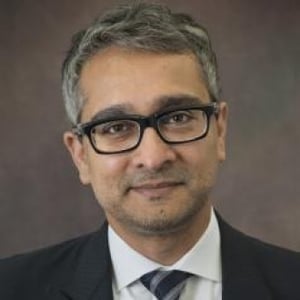
Lee and Brena Freeman Professor of Law, University of Chicago Law School
Anup Malani is the Lee and Brena Freeman Professor at the University of Chicago Law School and a Professor at the Pritzker School of Medicine. He is also a Research Associate at the National Bureau of Economic Research in Boston, a Senior Fellow at the Schaeffer Center at the University of Southern California, and an editor at the Journal of Law and Economics.
Malani is the co-founder and Faculty Director of the International Innovation Corps, a social service program that sends teams of University of Chicago and foreign university graduates to work on innovative development projects with government officials in India and Brazil.
Malani has a PhD in economics and a JD, both from University of Chicago. He clerked for Judge Stephen Williams on the US Court of Appeals for District of Columbia and Justice Sandra Day O’Connor on the US Supreme Court.
Malani conducts research in law and economics, health economics and development economics. His law and economics research focuses on judicial behavior, measuring the welfare impact of laws, and, recently legal implications of blockchain. His health economics research focuses on the value of medical innovation and health care insurance, control of infectious diseases, placebo effects, and conflicts of interest in medicine. Malani’s development economics work focuses on health care supply and financing in India and the growth of and quality of life in urban slums. He is the principal investigator on the Indian Health Insurance Experiment, an 11,000 household randomized controlled trial of health insurance in Karnataka, India, and on a large-scale impact evaluation of Mission Kakatiya, a major effort to expand rainfall capture as means of irrigation in Telangana, India. Malani’s research has been published in leading journals in a number of different fields, including the Proceedings of the National Academy of Sciences, the Journal of Political Economy, the Journal of Econometrics, the Harvard Law Review, the University of Chicago Law Review, the Archives of Internal Medicine, and Theoretical Population Biology. Malani teaches courses in commercial law, health law, the canons of American legal thought, law and economics and law and development in the Law School and a PhD course in law and economics in the Economics Department.

Former President & CEO, The Federalist Society for Law and Public Policy Studies
Eugene B. Meyer, former President and CEO of the Federalist Society, has served as Executive Director, CEO, and/or President of the organization for more than 40 years. He is responsible for shepherding the organization from a small group of law students to a community of 90,000 lawyers, law students, academics, judges, and others interested in the rule of law. The Society now includes a Student Chapter at nearly every ABA-accredited law school in the country and Lawyers Chapters in 220 major cities across the nation. Gene earned his B.A. in history at Yale in 1975 and his M.A. in political science from the London School of Economics in 1976. Gene currently serves on the boards of the U.S. Chess Center, the Holman Foundation, the Sarah Scaife Foundation, and the advisory board of the Adam Smith Society. He holds the title of International Chess Master.
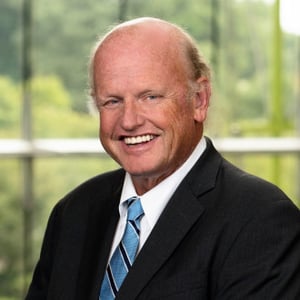
In his 35 years at the Justice Department and in private practice, Mike Carvin was one of the leading appellate and trial lawyers challenging state and federal regulations on constitutional and statutory grounds, with 10 Supreme Court arguments and numerous high-profile victories. In addition to his numerous cases in the United States Supreme Court, he argued in virtually every federal appeals court. His major cases include the recent constitutional challenge to the Affordable Care Act and the decisions invalidating Sarbanes-Oxley's accounting board, preventing the Justice Department from obtaining monetary relief against the tobacco industry under RICO, overturning the federal government's plan to statistically adjust the census, limiting the Justice Department's ability to create "majority-minority" districts, and upholding Proposition 209's ban on racial preferences in California.
Mike was one of the lead lawyers, and argued before the Florida Supreme Court, on behalf of George W. Bush in the 2000 presidential election Florida recount controversy. He also has represented state governments, financial institutions, telecommunications, and energy companies in "takings," First Amendment, civil rights, and statutory challenges to federal government actions.
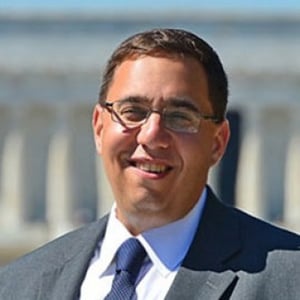
Partner, Consovoy McCarthy Park PLLC
Mr. Consovoy assists clients on a broad range of litigation and appellate issues primarily before the Supreme Court of the United States and federal appellate and district courts, as well as before federal agencies. Mr. Consovoy represents clients in cases involving constitutional issues, interpretation and enforcement of federal statutes, administrative law, civil rights disputes, and a variety of other civil litigation issues. Mr. Consovoy recently argued two cases—Spokeo v. Robbins and Evenwel v. Abbott—before the Supreme Court of the United States.
Mr. Consovoy is a former law clerk to Supreme Court Justice Clarence Thomas, Judge Edith H. Jones of the United States Court of Appeals for the Fifth Circuit, and the 17th Judicial Circuit of Virginia. Mr. Consovoy is a member of the Edward Coke Appellate Inn of Court and was named by Law360 as a “rising star” in appellate law for 2013. Since 2011, Mr. Consovoy has been the co-director of the Supreme Court Clinic at the Antonin Scalia Law School at George Mason University, where he also is the co-director of the Administrative Law Clinic.
Mr. Consovoy earned his B.A. from Monmouth University, and his J.D. magna cum laude from George Mason University School of Law. Mr. Consovoy is a member of the Virginia and District of Columbia bars.
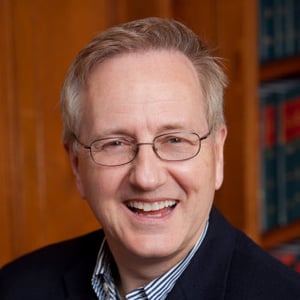
Alexander M. Bickel Professor of Public Law, Yale Law School
Degrees from Davidson College, B.A. summa cum laude, 1973; Harvard University, M.A., 1974; Yale Law School, J.D, 1978. Clerked for Edward Weinfeld, 1978-79; Attorney at Shea & Gardner, 1979-82; Law Professor since 1982, tenured at Georgetown and Yale, visiting professor at Stanford, NYU, Toronto, Harvard, Columbia, Penn, Fordham, Vanderbilt. Author of casebooks on legislation and sexuality, gender and law, as well as monographs on statutory interpretation and the rights of sexual and gender minorities. Author of dozens of articles, by one empirical count a top ten most cited law professors.
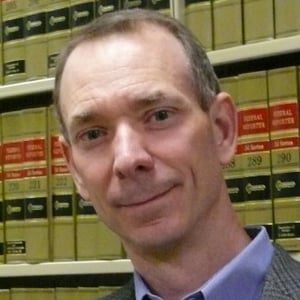
Professor of Law, Georgia State University College of Law
Neil Kinkopf is Professor of Law at the Georgia State University College of Law. He has also taught at the law schools at Case Western Reserve and Duke Universities. Neil teaches courses on constitutional law, civil procedure, and legislation. His research and writing focuses on separation of powers, with an emphasis on presidential power. The fourth edition of his book, Separation of Powers Law, (co-authored with Peter Shane and Harold Bruff) was published last winter. Professor Kinkopf has also held appointments in the Office of Legal Counsel and the Office of Legal Policy, both in the Department of Justice.

Distinguished University Professor, Antonin Scalia Law School, George Mason University
University Professor Nelson Lund is the author of Rousseau’s Rejuvenation of Political Philosophy: A New Introduction. He has also written widely in the field of constitutional law, including articles on constitutional interpretation, federalism, separation of powers, the Second Amendment, the Commerce Clause, the Speech or Debate Clause, the Equal Protection Clause, and the Uniformity Clause. In addition, he has published articles in the fields of employment discrimination and civil rights, the legal regulation of medical ethics, and the application of economic analysis to legal institutions and legal ethics.
Professor Lund graduated from St. John's College in Annapolis, Maryland, after which he received an MA in philosophy from the Catholic University of America and a PhD in political science from Harvard University. He left the faculty of the University of Chicago to attend its law school, where he served as executive editor of the University of Chicago Law Review and chapter chairman of the Federalist Society for Law and Public Policy Studies. After law school, he held positions at the United States Department of Justice in the Office of the Solicitor General and the Office of Legal Counsel. He also served as a law clerk to the Honorable Patrick E. Higginbotham of the United States Court of Appeals for the Fifth Circuit and to the Honorable Sandra Day O'Connor of the United States Supreme Court. Following his clerkship with Justice O'Connor, Professor Lund served in the White House as associate counsel to the president from 1989 to 1992.
Since joining the faculty at George Mason University's Antonin Scalia Law School, Professor Lund has taught Constitutional Law, Legislation, Federal Election Law, Employment Discrimination, State and Local Government, and seminars on the Second Amendment and on a variety of topics in Jurisprudence.
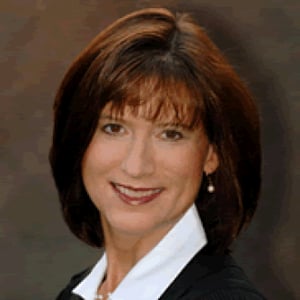
Judge, United States Court of Appeals, Seventh Circuit
Judge Sykes was nominated to the Seventh Circuit by President George W. Bush and confirmed by the Senate in 2004. Prior to her appointment to the federal bench, Judge Sykes served as a justice on the Wisconsin Supreme Court. Governor Tommy G. Thompson appointed her in September 1999 to fill a mid-term vacancy on the state supreme court, and she was elected to a full ten-year term in April 2000. From 1992-1999, Judge Sykes served on the state trial bench in Milwaukee County (elected in 1992 and re-elected in 1998). From 1985-1992, Judge Sykes practiced law with the Milwaukee firm of Whyte & Hirschboeck, S.C., and from 1984-1985, was a law clerk to Federal Judge Terence T. Evans.
Born and raised in the Milwaukee area, Judge Sykes earned a bachelor’s degree in journalism from Northwestern University in 1980 and a law degree from Marquette University Law School in 1984. Between college and law school, Judge Sykes worked as a reporter for The Milwaukee Journal.
Judge Sykes has two sons.
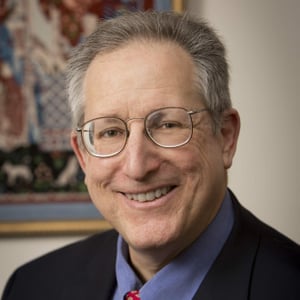
Knight Professor of Constitutional Law and the First Amendment, Yale Law School
Jack M. Balkin is Knight Professor of Constitutional Law and the First Amendment at Yale Law School. He is the founder and director of Yale’s Information Society Project, an interdisciplinary center that studies law and new information technologies. He also directs the Abrams Institute for Freedom of Expression, and the Knight Law and Media Program at Yale. Professor Balkin is a member of the American Academy of Arts and Sciences, and founded and edits the group blog Balkinization (http://balkin.blogspot.com/). He is the author of over 100 articles and the author or editor of eleven books. His scholarship ranges over many different subjects, including constitutional theory, technology and Internet law, freedom of speech, jurisprudence, cultural evolution, the theory of ideology, and musical and legal interpretation. His most recent books are Democracy and Dysfunction (University of Chicago Press, 2019)(with Sanford Levinson); Living Originalism (Harvard, Belknap Press, 2011), and Constitutional Redemption: Political Faith in an Unjust World (Harvard University Press 2011).
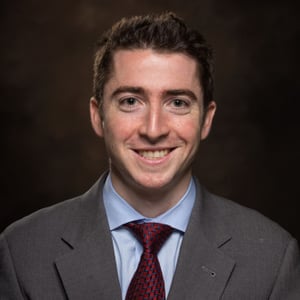
Associate Professor, Northern Illinois University
Evan Bernick joined the NIU Law faculty in 2021. He teaches courses in constitutional law, criminal law, criminal procedure, administrative law and legislation.
From 2020 to 2021, Professor Bernick was a visiting professor at the Georgetown University Law Center and the executive director of the Georgetown Center for the Constitution. Before that, he served as a clerk to Judge Diane S. Sykes of the United States Court of Appeals for the Seventh Circuit. From April 2017 to April 2019, he was a visiting lecturer at Georgetown and a resident fellow of the Center for the Constitution.
His scholarship covers a range of topics, from constitutional law, to philosophy of law, to social movements, to law enforcement. He has published with the Georgetown Law Journal, the Notre Dame Law Review, the William and Mary Law Review and the George Mason Law Review, among other journals. His book, The Original Meaning of the Fourteenth Amendment: Its Letter and Spirit (2021), with Randy E. Barnett, was published by Harvard University Press under its Belknap imprint "for books of long-lasting importance, superior in scholarship and physical production, chosen whether or not they might be profitable."
Professor Bernick received his bachelor's degree in 2008 from the University of Chicago, where he studied philosophy and graduated with honors. He received his juris doctorate in 2011 from the University of Chicago Law School.

George C. Dix Professor in Constitutional Law, Northwestern University Pritzker School of Law
John O. McGinnis is a graduate of Harvard College and Harvard Law School where he was an editor of the Harvard Law Review. He also has an MA degree from Balliol College, Oxford, in philosophy and theology. Professor McGinnis clerked on the U.S. Court of Appeals for the District of Columbia. From 1987 to 1991, he was deputy assistant attorney general in the Office of Legal Counsel at the Department of Justice. He is the author of Accelerating Democracy: Transforming Government Through Technology (Princeton 2013) and Originalism and the Good Constitution (Harvard 2013) (with M. Rappaport). He is a past winner of the Paul Bator award given by the Federalist Society to an outstanding academic under 40. He has been listed by the United States on the roster of panelists who may be called upon to decide World Trade Organization Disputes.
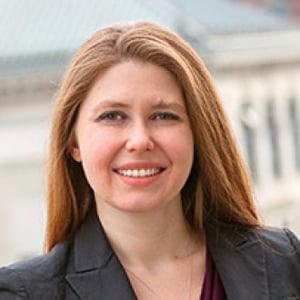
Professor of Law, Brooklyn Law School
Professor Mulligan teaches Internet law, intellectual property law, and trusts & estates. Her research addresses efforts to adapt intellectual property law for the digital age, the relationship between law and technology, and theories of constitutional interpretation. Recently, she has written about the Internet of Things, robot punishment, and early translations of the Constitution.
While at Brooklyn, Professor Mulligan researched as a visiting scholar at the Georgetown Center for the Constitution and taught as a visiting associate professor at Yale Law School. Previously, she taught at the University of Georgia and was a postdoctoral associate and lecturer in law at the Information Society Project at Yale Law School. Her scholarship has been published in a variety of journals and law reviews, including Georgia Law Review, SMU Law Review, and Constitutional Commentary.
Professor Mulligan earned her bachelor’s degree cum laude and her law degree cum laude from Harvard University, where she worked as a production and article editor for the Harvard Journal of Law & Technology. Before entering academia, she served as a law clerk for Judge Charles F. Lettow of the U.S. Court of Federal Claims.
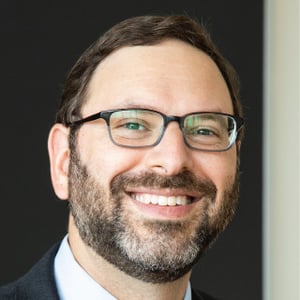
Antonin Scalia Professor of Law, Harvard Law School
Stephen E. Sachs is the Antonin Scalia Professor of Law at Harvard Law School, where he teaches civil procedure, conflict of laws, and seminars on constitutional law. His research focuses on the law and theory of constitutional interpretation, the jurisdiction of state and federal courts, the history of procedure and private law, and the role of the general common law in the U.S. legal system.
Sachs has authored numerous articles, essays, and book chapters. He is an elected member of the American Law Institute, an adviser to the ALI’s project on the Restatement of the Law (Third), Conflict of Laws, a former member of the Judicial Conference’s Advisory Committee on Appellate Rules, and a founding member of the Academic Freedom Alliance.
In 2020, Sachs received the Federalist Society’s Joseph Story Award, which recognizes a young academic who has demonstrated excellence in legal scholarship, a commitment to teaching, a concern for students, and who has made a significant public impact in a manner that advances the rule of law in a free society.
Sachs previously taught at Duke University School of Law and as a visiting professor at the University of Chicago Law School. Before entering academia, he practiced in the Washington, D.C., litigation group of Mayer Brown LLP, and he clerked for Chief Justice John G. Roberts Jr. as well as for Judge Stephen F. Williams of the U.S. Court of Appeals for the D.C. Circuit.
Sachs received his J.D. from Yale Law School, where he was executive editor of the Yale Law Journal and served both as executive editor and articles editor of the Yale Law & Policy Review. A Rhodes Scholar, he graduated from Oxford University with a first-class BA (Hons) degree in philosophy, politics, and economics. He received his A.B. degree summa cum laude in history from Harvard University, earning the Sophia Freund Prize.
Sachs is a licensed attorney in Massachusetts and the District of Columbia, and he is authorized to practice before the D.C. Circuit, the Second Circuit, the Seventh Circuit, and the Supreme Court of the United States.
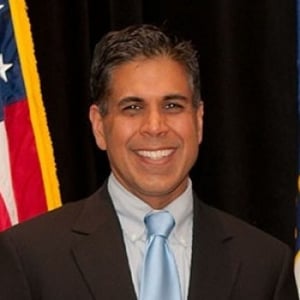
Judge, United States Court of Appeals, Sixth Circuit
Amul R. Thapar serves as a judge on the United States Court of Appeals for the Sixth Circuit. His judicial career began in 2007 when President George W. Bush nominated him to serve on the Eastern District of Kentucky, making him the first South Asian Article III judge in American history. In 2017, he became President Donald J. Trump’s first appellate court nominee.
Before joining the bench, Judge Thapar served as the United States Attorney for the Eastern District of Kentucky. While United States Attorney, Judge Thapar worked on the Attorney General’s Advisory Committee (“AGAC”) and chaired the AGAC’s Controlled Substances and Asset Forfeiture subcommittee. He also served on the Terrorism and National Security subcommittee, the Violent Crime subcommittee, and the Child Exploitation working group.
Judge Thapar has worked in private practice, at Williams & Connolly in Washington, D.C., and Squire, Sanders & Dempsey in Cincinnati, Ohio. He also served as an Assistant United States Attorney in both the Southern District of Ohio and the District of Columbia.
Judge Thapar received his undergraduate degree from Boston College and his law degree from the University of California, Berkeley. After graduating, Judge Thapar worked as a law clerk to the Honorable S. Arthur Spiegel of the United States District Court for the Southern District of Ohio, and the Honorable Nathaniel R. Jones of the United States Court of Appeals for the Sixth Circuit.
Judge Thapar has also published in the Yale Law Journal, Michigan Law Review, and Catholic University Law Review. He teaches courses on originalism, the Federalists and Anti-Federalists, and legal writing at Notre Dame Law School, the University of Virginia School of Law, and Vanderbilt Law School.
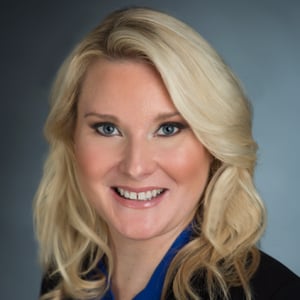
President, Constitutional Accountability Center
Elizabeth is Constitutional Accountability Center’s President. From 2008-2016, she served as CAC's Chief Counsel, representing the Center as well as clients including preeminent constitutional scholars and historians, state and local government organizations, and groups such as the League of Women Voters and the AARP. She frequently participates in Supreme Court litigation and her legal brief writing has been recognized as “exemplary” by the Green Bag Almanac & Reader. Elizabeth has also argued several important cases in the federal courts of appeals on a range of issues, including immigration law, habeas corpus, and sovereign immunity. She joined CAC from private practice at Quinn Emanuel Urquhart & Sullivan in San Francisco, where she was an attorney working with former Stanford Law School Dean Kathleen Sullivan in the firm’s Supreme Court/appellate practice. Previously, Elizabeth was a supervising attorney and teaching fellow at the Georgetown University Law Center appellate litigation clinic, a law clerk for Judge James R. Browning of the U.S. Court of Appeals for the Ninth Circuit, and a lawyer at Pillsbury Winthrop Shaw Pittman, a law firm in Washington. She has appeared as a legal expert for NBC, ABC, PBS, CNN, Fox News, the BBC, Current TV, and NPR, among other outlets. Elizabeth has been quoted extensively in the print media and is a regular contributor to the ABA’s Preview of United States Supreme Court Cases. Her writings have appeared in The New York Times, Reuters, USA Today, Politico, CNN.com, Slate, and on numerous political and legal blogs, such as Huffington Post, SCOTUSblog, and ACSblog. She has also published in the UCLA Journal of Environmental Law & Policy, Syracuse Law Review, The Cato Institute’s Supreme Court Review, and the Yale Journal of International Law. Elizabeth is a graduate of Yale Law School.
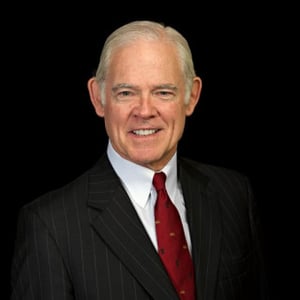
Founding Partner, Cooper & Kirk PLLC
Charles J. Cooper is a founding member and the chairman of Cooper & Kirk, PLLC, “one of the Nation’s leading litigation boutiques” (Above The Law 2017). The National Law Journal recently wrote that Mr. Cooper’s “brilliant legal career has so far spanned five decades and thrust Cooper into the spotlight in some of the most historic moments of the country’s modern history.” He has argued nine cases before the United States Supreme Court and scores of appeals before each of the 13 federal courts of appeals and several state supreme courts. He has been lead trial counsel in numerous complex, weeks-long trials in federal courts throughout the country. Named by the National Law Journal as one of the 10 best litigators in Washington D.C., Mr. Cooper’s work has been reported in numerous press accounts, and he has been called a “powerhouse attorney” (Fortune 2015), “a hard-nosed litigator” (Washington Post 2017), and “one of the country’s most in-demand civil litigators and a Washington legal institution unto himself” (The American Spectator 2014).
After graduating from the University of Alabama School of Law in 1977, where he ranked first in his class and served as Editor-in-Chief of the Alabama Law Review, Mr. Cooper began his career as a law clerk to Judge Paul Roney on the Fifth Circuit Court of Appeals and to Justice William H. Rehnquist in 1978–79. He then practiced law in Atlanta for two years before joining the Civil Rights Division of the U.S. Department of Justice, where he served as the Deputy Assistant Attorney General in charge of, among other things, appellate matters. In 1985 President Reagan appointed him to the position of Assistant Attorney General for the Office of Legal Counsel, which is the office responsible for providing legal opinions and advice to the White House, the Attorney General, and Executive Branch departments and agencies on issues covering the full spectrum of federal constitutional, statutory, and regulatory law.
In 1988 he returned to private practice as a litigation partner in the Washington, D.C. office of McGuireWoods. From 1990 until the founding of Cooper & Kirk in 1996, he was a partner at Shaw Pittman (now Pillsbury Winthrop Shaw Pittman), where he headed the firm’s Constitutional and Government Litigation Group.
Mr. Cooper has represented a wide range of public and private clients in highly complex constitutional, civil rights, antitrust, healthcare, banking, intellectual property, elections, campaign finance, administrative, commercial, and government contract cases. He has led trial teams in cases that have won judgments and settlements valued in the billions of dollars and that have established ground-breaking constitutional precedents.
Much of Mr. Cooper’s practice has involved representing high-profile clients in nationally prominent matters, including: the State of Florida in a First Amendment suit brought by the Disney Company concerning its autonomous regulatory authority over its Disney World property; the Commonwealth of Virginia in a suit seeking to enjoin the removal of noncitizens from its voter rolls; 38 members of the Duke Lacrosse team falsely accused of rape by officials of Duke University and the City of Durham; Harper Lee in a copyright dispute with the heirs of Gregory Peck; high-ranking former government officials such as former Attorneys General John Ashcroft, Jeff Sessions, and William Barr, and Ambassador John Bolton; several Governors and United States Senators; over 100 Members of Congress; and many state, territorial, and local government bodies and officials. He has also represented and advised government officials and public figures in connection with sensitive private issues that needed to be, and were, resolved discreetly without becoming matters of public record.
In 1998 Chief Justice Rehnquist appointed Mr. Cooper to the Standing Committee on Rules of Practice and Procedure of the Judicial Conference of the United States, where he served for three terms. He also served as a Public Member, appointed by President George H.W. Bush, of the National Commission on Judicial Discipline and Removal. He is a member of numerous professional associations, including the American Law Institute (since 1993) and the American Academy of Appellate Lawyers (since 1996). He is also an active member of the Federalist Society and the Republican National Lawyers Association, which in 2010 named him Republican Lawyer of the Year and in 2016 honored him with its Edwin Meese III Award.
Mr. Cooper has published scores of articles and spoken extensively on constitutional and legal policy topics. He has appeared before congressional committees on 26 occasions, testifying as an expert on a wide variety of legal issues, including the Chevron doctrine of judicial deference to administrative agencies, the diversity of citizenship jurisdiction of federal courts, statehood bills for Puerto Rico and the District of Columbia, and the impeachment of President Clinton.
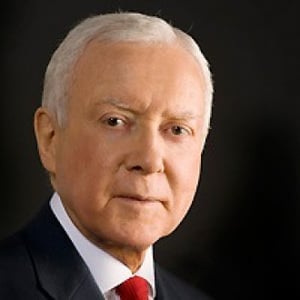
Former United States Senator, Utah
Over nearly four decades of public service, Senator Orrin Hatch established himself as a leading conservative voice in the United States Senate. As the upper chamber’s most senior Republican, he served as President Pro Tempore and as Chairman of the Senate Finance Committee. In this capacity, he fought to create jobs and strengthen the economy by repealing and replacing Obamacare, reforming the tax code, and opening up overseas markets to American exports.
As a long-time member and former Chairman of the Senate Judiciary Committee, Senator Hatch also fought to check judicial activism and protect our liberties. He was instrumental in confirming conservative judges to the federal bench and played an indispensable role in confirming Supreme Court Justices Antonin Scalia, Clarence Thomas, and Samuel Alito as well as scores of district and circuit court judges.
One of Senator Hatch’s particularly noteworthy achievements on the Judiciary Committee is the Religious Freedom Restoration Act of 1993—a bill he co-authored with the late Senator Ted Kennedy. This landmark legislation prohibits substantial government burdens on the free exercise of religion, allowing all Americans to live, work, and worship in accordance with their beliefs.
In addition to protecting our individual liberties, Senator Hatch was on the front lines of legislative battles to protect our free-market economy and system of limited government under the Constitution. His reputation as a statesman and his record of fiscal responsibility earned him the nickname “Mr. Balanced Budget” from President Reagan.
By virtually all measures, Senator Hatch was among the most effective and consequential legislators in history. Since he first came to Congress in 1977, no legislator alive today has authored more bills that have become law than Senator Hatch.
Of all Senator Hatch’s achievements, he is proudest of his family, and he credits the love of his wife and children as the key to his success. He and Elaine have been married for more than fifty years. Together, they are the parents of six children, twenty-three grandchildren, and sixteen great-grandchildren.
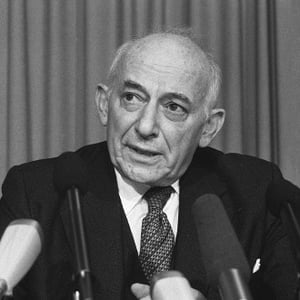
Former Dean, Yale Law School
Eugene Victor Debs Rostow (August 25, 1913 – November 25, 2002) was an American legal scholar and public servant. He was Dean of Yale Law School and served as Under Secretary of State for Political Affairs under President Lyndon B. Johnson. In the 1970s Rostow was a leader of the movement against détente with Russia and in 1981, President Ronald Reagan appointed him director of the Arms Control and Disarmament Agency.
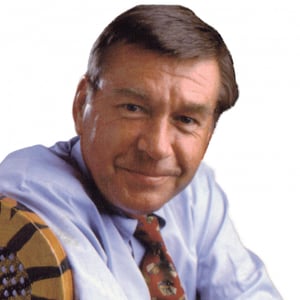
Professor Emeritus of the Practice of Law, Duke University School of Law; Professor Emeritus of Law, Washington College of Law, American University
Michael E. Tigar is Professor Emeritus of the Practice of Law at Duke University School of Law, and Professor Emeritus of Law at Washington College of Law, American University,Washington, D.C. He has held full-time positions at UCLA and The University of Texas. He has been a lecturer at dozens of law schools and bar associations in the United States, Europe, Africa, and Latin America, including service as Professeur Invité at the Faculty of Law of Université Paul-Cezanne, Aix-en-Provence. He is a 1966 graduate of Boalt Hall, University of California, Berkeley, where he was first in his class, Editor-in-Chief of the law review and Order of the Coif. He has authored or co-authored twelve books, three plays, and scores of articles and essays. He has argued seven cases in the U.S. Supreme Court, about 100 federal appeals, and has tried cases in all parts of the country in state and federal courts. His latest books are Trial Stories (2008) (edited with Angela Jordan Davis), and Thinking About Terrorism: The Threat to Civil Liberties in Times of National Emergency (2007). His clients have included Angela Davis, H. Rap Brown, John Connally, Kay Bailey Hutchison, the Washington Post, Mobil Oil, Fantasy Films, Terry Nichols, Allen Ginsberg, Leonard Peltier, the Charleston Five, Fernando Chavez and Lynne Stewart. He has been chair of the 60,000-member Section of Litigation of the American Bar Association, and chair of the board of directors of the Texas Resource Center for Capital Litigation. In his teaching, he has worked with law students in clinical programs where students are counsel or law clerks in significant human rights litigation. He has made several trips to South Africa, working with organizations of African lawyers engaged in the struggle to end apartheid, and, after the release of Nelson Mandela from prison, to lecture on human rights issues and to advise the African National Congress on issues in drafting a new constitution. He has been actively involved in efforts to bring to justice members of the Chilean junta, including former President Pinochet. Of Mr. Tigar's career, Justice William J. Brennan has written that his "tireless striving for justice stretches his arms towards perfection." In 1999, the California Attorneys for Criminal Justice held a ballot for "Lawyer of the Century." Mr. Tigar was third in the balloting, behind Clarence Darrow and Thurgood Marshall. In 2003, the Texas Civil Rights Project named its new building in Austin, Texas, (purchased with a gift from attorney Wayne Reaud) the "Michael Tigar Human Rights Center."
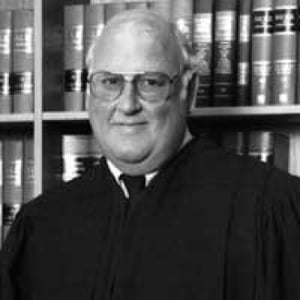
Judge, United States Court of Appeals, Second Circuit
Judge Winter was appointed United States Circuit Judge for the Second Circuit on December 10, 1981 and entered on duty January 5, 1982. He received a B.A. degree from Yale College in 1957 and an LL.B. degree from Yale Law School in 1960. He served as a law clerk to Judge Caleb M. Wright, Chief Judge, U.S. District Court, Delaware, 1960-61, and to Judge Thurgood Marshall, U.S. Court of Appeals, Second Circuit, 1961-62.
Judge Winter was a full-time member of the Yale Law School Faculty from 1962 until entering judicial service. At the time of his appointment, he was the William K. Townsend Professor of Law. He was also a Consultant to the Subcommittee of Separation of Powers, Committee on the Judiciary, U.S. Senate from 1968 to 1972, a Senior Fellow, The Brookings Institute, Washington, D.C. from 1968 to 1970, a John Simon Guggenheim Fellow from 1971 to 1972 and an Adjutant Scholar, American Enterprise Institute from 1972 to 1981.
He served from 1987 to 1992 as a member of the Judicial Conference Advisory Committee on Civil Rules. He served as Chair of the Judicial Conference Advisory Committee on the Rules of Evidence from 1992 to 1996. From July 1, 1997 to September 30, 2000, Judge Winter served as Chief Judge of the U.S. Court of Appeals for the Second Circuit. In April 1998, he was appointed to the Executive Committee of the U.S. Judicial Conference. From October 1999 to September 2000, he served as Chair of the Executive Committee. On October 1, 2000, he took Senior Judge status.
He served as Chair of the Committee to Review Circuit Council Conduct and Disability Orders from 2005 to 2008. He was a member of the United States Foreign Intelligence Surveillance Act Court of Review from 2003 to 2010.
Judge Winter has received the Connecticut Law Review Award, Honorary Doctors of Law from Brooklyn Law School and New York Law School, the Federal Bar Council's Learned Hand Award for Excellence in Federal Jurisprudence, and the Yale Law School's Association's Award of Merit. He is a Fellow of the American Academy of Arts and Sciences.
Founding Partner, Cooper & Kirk PLLC
Charles J. Cooper is a founding member and the chairman of Cooper & Kirk, PLLC, “one of the Nation’s leading litigation boutiques” (Above The Law 2017). The National Law Journal recently wrote that Mr. Cooper’s “brilliant legal career has so far spanned five decades and thrust Cooper into the spotlight in some of the most historic moments of the country’s modern history.” He has argued nine cases before the United States Supreme Court and scores of appeals before each of the 13 federal courts of appeals and several state supreme courts. He has been lead trial counsel in numerous complex, weeks-long trials in federal courts throughout the country. Named by the National Law Journal as one of the 10 best litigators in Washington D.C., Mr. Cooper’s work has been reported in numerous press accounts, and he has been called a “powerhouse attorney” (Fortune 2015), “a hard-nosed litigator” (Washington Post 2017), and “one of the country’s most in-demand civil litigators and a Washington legal institution unto himself” (The American Spectator 2014).
After graduating from the University of Alabama School of Law in 1977, where he ranked first in his class and served as Editor-in-Chief of the Alabama Law Review, Mr. Cooper began his career as a law clerk to Judge Paul Roney on the Fifth Circuit Court of Appeals and to Justice William H. Rehnquist in 1978–79. He then practiced law in Atlanta for two years before joining the Civil Rights Division of the U.S. Department of Justice, where he served as the Deputy Assistant Attorney General in charge of, among other things, appellate matters. In 1985 President Reagan appointed him to the position of Assistant Attorney General for the Office of Legal Counsel, which is the office responsible for providing legal opinions and advice to the White House, the Attorney General, and Executive Branch departments and agencies on issues covering the full spectrum of federal constitutional, statutory, and regulatory law.
In 1988 he returned to private practice as a litigation partner in the Washington, D.C. office of McGuireWoods. From 1990 until the founding of Cooper & Kirk in 1996, he was a partner at Shaw Pittman (now Pillsbury Winthrop Shaw Pittman), where he headed the firm’s Constitutional and Government Litigation Group.
Mr. Cooper has represented a wide range of public and private clients in highly complex constitutional, civil rights, antitrust, healthcare, banking, intellectual property, elections, campaign finance, administrative, commercial, and government contract cases. He has led trial teams in cases that have won judgments and settlements valued in the billions of dollars and that have established ground-breaking constitutional precedents.
Much of Mr. Cooper’s practice has involved representing high-profile clients in nationally prominent matters, including: the State of Florida in a First Amendment suit brought by the Disney Company concerning its autonomous regulatory authority over its Disney World property; the Commonwealth of Virginia in a suit seeking to enjoin the removal of noncitizens from its voter rolls; 38 members of the Duke Lacrosse team falsely accused of rape by officials of Duke University and the City of Durham; Harper Lee in a copyright dispute with the heirs of Gregory Peck; high-ranking former government officials such as former Attorneys General John Ashcroft, Jeff Sessions, and William Barr, and Ambassador John Bolton; several Governors and United States Senators; over 100 Members of Congress; and many state, territorial, and local government bodies and officials. He has also represented and advised government officials and public figures in connection with sensitive private issues that needed to be, and were, resolved discreetly without becoming matters of public record.
In 1998 Chief Justice Rehnquist appointed Mr. Cooper to the Standing Committee on Rules of Practice and Procedure of the Judicial Conference of the United States, where he served for three terms. He also served as a Public Member, appointed by President George H.W. Bush, of the National Commission on Judicial Discipline and Removal. He is a member of numerous professional associations, including the American Law Institute (since 1993) and the American Academy of Appellate Lawyers (since 1996). He is also an active member of the Federalist Society and the Republican National Lawyers Association, which in 2010 named him Republican Lawyer of the Year and in 2016 honored him with its Edwin Meese III Award.
Mr. Cooper has published scores of articles and spoken extensively on constitutional and legal policy topics. He has appeared before congressional committees on 26 occasions, testifying as an expert on a wide variety of legal issues, including the Chevron doctrine of judicial deference to administrative agencies, the diversity of citizenship jurisdiction of federal courts, statehood bills for Puerto Rico and the District of Columbia, and the impeachment of President Clinton.
Former United States Senator, Utah
Over nearly four decades of public service, Senator Orrin Hatch established himself as a leading conservative voice in the United States Senate. As the upper chamber’s most senior Republican, he served as President Pro Tempore and as Chairman of the Senate Finance Committee. In this capacity, he fought to create jobs and strengthen the economy by repealing and replacing Obamacare, reforming the tax code, and opening up overseas markets to American exports.
As a long-time member and former Chairman of the Senate Judiciary Committee, Senator Hatch also fought to check judicial activism and protect our liberties. He was instrumental in confirming conservative judges to the federal bench and played an indispensable role in confirming Supreme Court Justices Antonin Scalia, Clarence Thomas, and Samuel Alito as well as scores of district and circuit court judges.
One of Senator Hatch’s particularly noteworthy achievements on the Judiciary Committee is the Religious Freedom Restoration Act of 1993—a bill he co-authored with the late Senator Ted Kennedy. This landmark legislation prohibits substantial government burdens on the free exercise of religion, allowing all Americans to live, work, and worship in accordance with their beliefs.
In addition to protecting our individual liberties, Senator Hatch was on the front lines of legislative battles to protect our free-market economy and system of limited government under the Constitution. His reputation as a statesman and his record of fiscal responsibility earned him the nickname “Mr. Balanced Budget” from President Reagan.
By virtually all measures, Senator Hatch was among the most effective and consequential legislators in history. Since he first came to Congress in 1977, no legislator alive today has authored more bills that have become law than Senator Hatch.
Of all Senator Hatch’s achievements, he is proudest of his family, and he credits the love of his wife and children as the key to his success. He and Elaine have been married for more than fifty years. Together, they are the parents of six children, twenty-three grandchildren, and sixteen great-grandchildren.
Former Dean, Yale Law School
Eugene Victor Debs Rostow (August 25, 1913 – November 25, 2002) was an American legal scholar and public servant. He was Dean of Yale Law School and served as Under Secretary of State for Political Affairs under President Lyndon B. Johnson. In the 1970s Rostow was a leader of the movement against détente with Russia and in 1981, President Ronald Reagan appointed him director of the Arms Control and Disarmament Agency.
Professor Emeritus of the Practice of Law, Duke University School of Law; Professor Emeritus of Law, Washington College of Law, American University
Michael E. Tigar is Professor Emeritus of the Practice of Law at Duke University School of Law, and Professor Emeritus of Law at Washington College of Law, American University,Washington, D.C. He has held full-time positions at UCLA and The University of Texas. He has been a lecturer at dozens of law schools and bar associations in the United States, Europe, Africa, and Latin America, including service as Professeur Invité at the Faculty of Law of Université Paul-Cezanne, Aix-en-Provence. He is a 1966 graduate of Boalt Hall, University of California, Berkeley, where he was first in his class, Editor-in-Chief of the law review and Order of the Coif. He has authored or co-authored twelve books, three plays, and scores of articles and essays. He has argued seven cases in the U.S. Supreme Court, about 100 federal appeals, and has tried cases in all parts of the country in state and federal courts. His latest books are Trial Stories (2008) (edited with Angela Jordan Davis), and Thinking About Terrorism: The Threat to Civil Liberties in Times of National Emergency (2007). His clients have included Angela Davis, H. Rap Brown, John Connally, Kay Bailey Hutchison, the Washington Post, Mobil Oil, Fantasy Films, Terry Nichols, Allen Ginsberg, Leonard Peltier, the Charleston Five, Fernando Chavez and Lynne Stewart. He has been chair of the 60,000-member Section of Litigation of the American Bar Association, and chair of the board of directors of the Texas Resource Center for Capital Litigation. In his teaching, he has worked with law students in clinical programs where students are counsel or law clerks in significant human rights litigation. He has made several trips to South Africa, working with organizations of African lawyers engaged in the struggle to end apartheid, and, after the release of Nelson Mandela from prison, to lecture on human rights issues and to advise the African National Congress on issues in drafting a new constitution. He has been actively involved in efforts to bring to justice members of the Chilean junta, including former President Pinochet. Of Mr. Tigar's career, Justice William J. Brennan has written that his "tireless striving for justice stretches his arms towards perfection." In 1999, the California Attorneys for Criminal Justice held a ballot for "Lawyer of the Century." Mr. Tigar was third in the balloting, behind Clarence Darrow and Thurgood Marshall. In 2003, the Texas Civil Rights Project named its new building in Austin, Texas, (purchased with a gift from attorney Wayne Reaud) the "Michael Tigar Human Rights Center."
Judge, United States Court of Appeals, Second Circuit
Judge Winter was appointed United States Circuit Judge for the Second Circuit on December 10, 1981 and entered on duty January 5, 1982. He received a B.A. degree from Yale College in 1957 and an LL.B. degree from Yale Law School in 1960. He served as a law clerk to Judge Caleb M. Wright, Chief Judge, U.S. District Court, Delaware, 1960-61, and to Judge Thurgood Marshall, U.S. Court of Appeals, Second Circuit, 1961-62.
Judge Winter was a full-time member of the Yale Law School Faculty from 1962 until entering judicial service. At the time of his appointment, he was the William K. Townsend Professor of Law. He was also a Consultant to the Subcommittee of Separation of Powers, Committee on the Judiciary, U.S. Senate from 1968 to 1972, a Senior Fellow, The Brookings Institute, Washington, D.C. from 1968 to 1970, a John Simon Guggenheim Fellow from 1971 to 1972 and an Adjutant Scholar, American Enterprise Institute from 1972 to 1981.
He served from 1987 to 1992 as a member of the Judicial Conference Advisory Committee on Civil Rules. He served as Chair of the Judicial Conference Advisory Committee on the Rules of Evidence from 1992 to 1996. From July 1, 1997 to September 30, 2000, Judge Winter served as Chief Judge of the U.S. Court of Appeals for the Second Circuit. In April 1998, he was appointed to the Executive Committee of the U.S. Judicial Conference. From October 1999 to September 2000, he served as Chair of the Executive Committee. On October 1, 2000, he took Senior Judge status.
He served as Chair of the Committee to Review Circuit Council Conduct and Disability Orders from 2005 to 2008. He was a member of the United States Foreign Intelligence Surveillance Act Court of Review from 2003 to 2010.
Judge Winter has received the Connecticut Law Review Award, Honorary Doctors of Law from Brooklyn Law School and New York Law School, the Federal Bar Council's Learned Hand Award for Excellence in Federal Jurisprudence, and the Yale Law School's Association's Award of Merit. He is a Fellow of the American Academy of Arts and Sciences.
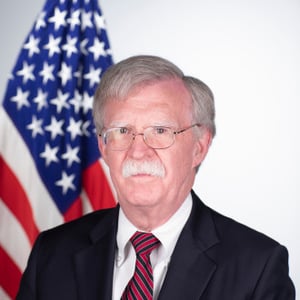
Former United States National Security Advisor
John R. Bolton served as Assistant to the President and National Security Advisor from April 2018 to September 2019.
Prior to his appointment, Ambassador Bolton served as a senior fellow at the American Enterprise Institute (AEI); of counsel at Kirkland & Ellis; a contributor to FOX News Channel and FOX Business Network; and his op-ed articles were regularly featured in major media publications.
Ambassador Bolton was appointed as United States Permanent Representative to the United Nations on August 1, 2005 and served until his resignation in December 2006. Prior to his appointment, Ambassador Bolton served as Under Secretary of State for Arms Control and International Security from May 2001 to May 2005.
Other positions he has previously held include Assistant Secretary for International Organization Affairs at the Department of State, 1989-1993; Assistant Attorney General, Department of Justice, 1985-1989; Assistant Administrator for Program and Policy Coordination, U.S. Agency for International Development, 1982-1983 and General Counsel, U.S. Agency for International Development, 1981-1982.
Ambassador Bolton is the author of Surrender is Not an Option: Defending America at the U.N. and Abroad, published by Simon and Shuster (November 2007) and How Barack Obama is Endangering our National Sovereignty, published by Encounter Books (April 2010).
Ambassador Bolton was born in Baltimore, Maryland. He graduated with a Bachelor of Arts degree, summa cum laude, Phi Beta Kappa, from Yale College in 1970, and received his Juris Doctor from Yale Law School in 1974. He currently resides in Maryland with his wife, Gretchen. They have one daughter, Jennifer Sarah, who also graduated from Yale College, and received her MBA and SM degrees from MIT in 2014 and is currently a senior manager at Nissan’s facility in Nashville.
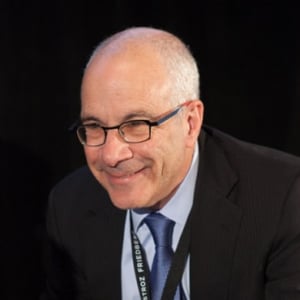
Senior Faculty, Arthur and Toni Rembe Rock Center for Corporate Governance, Stanford Law School
Joseph A. Grundfest, JD ’78, is a nationally prominent expert on capital markets, corporate governance, and securities litigation. His scholarship has been published in the Harvard, Yale, and Stanford law reviews, and he has been recognized as one of the most influential attorneys in the United States. Professor Grundfest founded the award-winning Stanford Securities Class Action Clearinghouse, which provides detailed, online information about the prosecution, defense, and settlement of federal class action securities fraud litigation. He launched Stanford Law School’s executive education programs and continues to co-direct Directors’ College, the nation’s leading venue for the continuing professional education of directors of publicly traded corporations. He is also a senior faculty member with the Arthur and Toni Rembe Rock Center for Corporate Governance. Additionally, he is co-founder and director of Financial Engines and a director of Kohlberg, Kravis, Roberts & Co.
Before joining the Stanford Law School faculty in 1990, Professor Grundfest was a commissioner of the Securities and Exchange Commission, served on the staff of the President’s Council of Economic Advisors as counsel and senior economist for legal and regulatory matters, and was an associate at Wilmer, Cutler & Pickering. Early in his career he was a research associate at the Brookings Institution and an economist and consultant with the RAND Corporation.
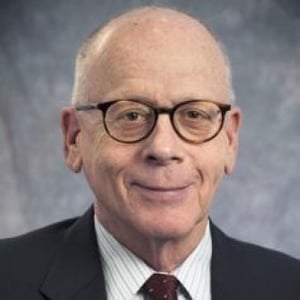
William B. Graham Distinguished Service Professor of Law, University of Chicago Law School
Saul Levmore came to the Law School from the University of Virginia. He was the Dean of the University of Chicago Law School from 2001 to 2009, and is the William B. Graham Distinguished Service Professor of Law. He has been a visiting professor at Yale, Harvard, Michigan, and Northwestern. He has taught and written about torts, corporations, copyright, non-profit organizations, comparative law, public choice, corporate tax, commercial law, insurance, and contracts. He is a member of the American Academy of Arts and Sciences, a past president of the American Law Deans Association, and a past trustee of the Law School Admissions Council and of the Skadden Foundation. He is currently the President of the American Law and Economics Association. Away from law, he has been an advisor on corporate governance issues and on development strategies and although his work continues to be related to law and economics, and especially public choice, across many fields he has also written books on aging and on games and puzzles.
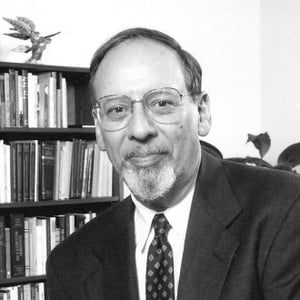
Dean Emeritus, George Mason School of Law
Lauded as a cultural laureate of the Commonwealth of Virginia, former Mason dean Henry G. Manne was the driving force behind the many innovations in legal education implemented at George Mason.
Professor Manne was designated one of the "founders" of the field of law and economics by the American Law and Economics Association. He launched the Law and Economics Center at Emory University and the University of Miami before bringing it to George Mason.
His monograph, An Intellectual History of the School of Law, George Mason University, traces the development of the law and economics movement and highlights the special contributions made by George Mason University School of Law to the movement. Professor Manne's other writings include such seminal works as Insider Trading and the Stock Market; Wall Street in Transition (with E. Solomon); and "Mergers and the Market for Corporate Control", Journal of Political Economy, April 1965. Professor Manne also designed and implemented at George Mason the nation's first system of fully integrated law school specialty track programs.
In August 2012, Dean Manne gave an oral history of his life, including his time at the Law and Economics Center, to the Securities and Exchange Commission Historical Society. An audio recording of the interview and transcript are available on the Society's website: audio (mp3); edited transcript (pdf).
He received a B.A. from Vanderbilt University (1950), J.D. from the University of Chicago (1952), J.S.D. from Yale University (1966), LL.D. from Seattle University (1987), and LL.D. from the Universidad Francesco Marroquin in Guatemala (1987).
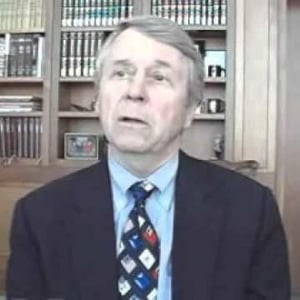
Judge, United States Court of Appeals, Eighth Circuit
Pasco Middleton Bowman II is a federal judge on senior status on the United States Court of Appeals for the 8th Circuit. He joined the court in 1983 after being nominated by President Ronald Reagan to a seat vacated by Jesse Smith Henley. Bowman assumed senior status on August 1, 2003.
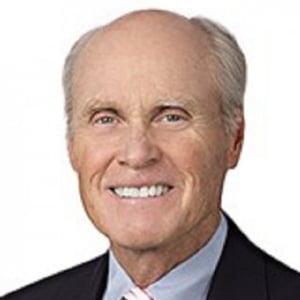
Former United States Assistant Attorney General, Civil Rights Division, United States Department of Justice
William Bradford served as the United States Assistant Attorney General for the Civil Rights Division from 1981 to 1988.
Reynolds was Senior Counsel in BakerBotts Antitrust and Competition division. He graduated with a LL.B. from Vanderbilt University Law School in 1967 where he was Order of the Coif and Editor-in-Chief of the Vanderbilt Law Review. In 1964, he received a B.A. from Yale University.
Reynolds passed away on September 14, 2019, in Seabrook Island, South Carolina at age 77.
In his 35 years at the Justice Department and in private practice, Mike Carvin was one of the leading appellate and trial lawyers challenging state and federal regulations on constitutional and statutory grounds, with 10 Supreme Court arguments and numerous high-profile victories. In addition to his numerous cases in the United States Supreme Court, he argued in virtually every federal appeals court. His major cases include the recent constitutional challenge to the Affordable Care Act and the decisions invalidating Sarbanes-Oxley's accounting board, preventing the Justice Department from obtaining monetary relief against the tobacco industry under RICO, overturning the federal government's plan to statistically adjust the census, limiting the Justice Department's ability to create "majority-minority" districts, and upholding Proposition 209's ban on racial preferences in California.
Mike was one of the lead lawyers, and argued before the Florida Supreme Court, on behalf of George W. Bush in the 2000 presidential election Florida recount controversy. He also has represented state governments, financial institutions, telecommunications, and energy companies in "takings," First Amendment, civil rights, and statutory challenges to federal government actions.
Partner, Consovoy McCarthy Park PLLC
Mr. Consovoy assists clients on a broad range of litigation and appellate issues primarily before the Supreme Court of the United States and federal appellate and district courts, as well as before federal agencies. Mr. Consovoy represents clients in cases involving constitutional issues, interpretation and enforcement of federal statutes, administrative law, civil rights disputes, and a variety of other civil litigation issues. Mr. Consovoy recently argued two cases—Spokeo v. Robbins and Evenwel v. Abbott—before the Supreme Court of the United States.
Mr. Consovoy is a former law clerk to Supreme Court Justice Clarence Thomas, Judge Edith H. Jones of the United States Court of Appeals for the Fifth Circuit, and the 17th Judicial Circuit of Virginia. Mr. Consovoy is a member of the Edward Coke Appellate Inn of Court and was named by Law360 as a “rising star” in appellate law for 2013. Since 2011, Mr. Consovoy has been the co-director of the Supreme Court Clinic at the Antonin Scalia Law School at George Mason University, where he also is the co-director of the Administrative Law Clinic.
Mr. Consovoy earned his B.A. from Monmouth University, and his J.D. magna cum laude from George Mason University School of Law. Mr. Consovoy is a member of the Virginia and District of Columbia bars.
Alexander M. Bickel Professor of Public Law, Yale Law School
Degrees from Davidson College, B.A. summa cum laude, 1973; Harvard University, M.A., 1974; Yale Law School, J.D, 1978. Clerked for Edward Weinfeld, 1978-79; Attorney at Shea & Gardner, 1979-82; Law Professor since 1982, tenured at Georgetown and Yale, visiting professor at Stanford, NYU, Toronto, Harvard, Columbia, Penn, Fordham, Vanderbilt. Author of casebooks on legislation and sexuality, gender and law, as well as monographs on statutory interpretation and the rights of sexual and gender minorities. Author of dozens of articles, by one empirical count a top ten most cited law professors.
Professor of Law, Georgia State University College of Law
Neil Kinkopf is Professor of Law at the Georgia State University College of Law. He has also taught at the law schools at Case Western Reserve and Duke Universities. Neil teaches courses on constitutional law, civil procedure, and legislation. His research and writing focuses on separation of powers, with an emphasis on presidential power. The fourth edition of his book, Separation of Powers Law, (co-authored with Peter Shane and Harold Bruff) was published last winter. Professor Kinkopf has also held appointments in the Office of Legal Counsel and the Office of Legal Policy, both in the Department of Justice.
Distinguished University Professor, Antonin Scalia Law School, George Mason University
University Professor Nelson Lund is the author of Rousseau’s Rejuvenation of Political Philosophy: A New Introduction. He has also written widely in the field of constitutional law, including articles on constitutional interpretation, federalism, separation of powers, the Second Amendment, the Commerce Clause, the Speech or Debate Clause, the Equal Protection Clause, and the Uniformity Clause. In addition, he has published articles in the fields of employment discrimination and civil rights, the legal regulation of medical ethics, and the application of economic analysis to legal institutions and legal ethics.
Professor Lund graduated from St. John's College in Annapolis, Maryland, after which he received an MA in philosophy from the Catholic University of America and a PhD in political science from Harvard University. He left the faculty of the University of Chicago to attend its law school, where he served as executive editor of the University of Chicago Law Review and chapter chairman of the Federalist Society for Law and Public Policy Studies. After law school, he held positions at the United States Department of Justice in the Office of the Solicitor General and the Office of Legal Counsel. He also served as a law clerk to the Honorable Patrick E. Higginbotham of the United States Court of Appeals for the Fifth Circuit and to the Honorable Sandra Day O'Connor of the United States Supreme Court. Following his clerkship with Justice O'Connor, Professor Lund served in the White House as associate counsel to the president from 1989 to 1992.
Since joining the faculty at George Mason University's Antonin Scalia Law School, Professor Lund has taught Constitutional Law, Legislation, Federal Election Law, Employment Discrimination, State and Local Government, and seminars on the Second Amendment and on a variety of topics in Jurisprudence.
Judge, United States Court of Appeals, Seventh Circuit
Judge Sykes was nominated to the Seventh Circuit by President George W. Bush and confirmed by the Senate in 2004. Prior to her appointment to the federal bench, Judge Sykes served as a justice on the Wisconsin Supreme Court. Governor Tommy G. Thompson appointed her in September 1999 to fill a mid-term vacancy on the state supreme court, and she was elected to a full ten-year term in April 2000. From 1992-1999, Judge Sykes served on the state trial bench in Milwaukee County (elected in 1992 and re-elected in 1998). From 1985-1992, Judge Sykes practiced law with the Milwaukee firm of Whyte & Hirschboeck, S.C., and from 1984-1985, was a law clerk to Federal Judge Terence T. Evans.
Born and raised in the Milwaukee area, Judge Sykes earned a bachelor’s degree in journalism from Northwestern University in 1980 and a law degree from Marquette University Law School in 1984. Between college and law school, Judge Sykes worked as a reporter for The Milwaukee Journal.
Judge Sykes has two sons.
Knight Professor of Constitutional Law and the First Amendment, Yale Law School
Jack M. Balkin is Knight Professor of Constitutional Law and the First Amendment at Yale Law School. He is the founder and director of Yale’s Information Society Project, an interdisciplinary center that studies law and new information technologies. He also directs the Abrams Institute for Freedom of Expression, and the Knight Law and Media Program at Yale. Professor Balkin is a member of the American Academy of Arts and Sciences, and founded and edits the group blog Balkinization (http://balkin.blogspot.com/). He is the author of over 100 articles and the author or editor of eleven books. His scholarship ranges over many different subjects, including constitutional theory, technology and Internet law, freedom of speech, jurisprudence, cultural evolution, the theory of ideology, and musical and legal interpretation. His most recent books are Democracy and Dysfunction (University of Chicago Press, 2019)(with Sanford Levinson); Living Originalism (Harvard, Belknap Press, 2011), and Constitutional Redemption: Political Faith in an Unjust World (Harvard University Press 2011).
Associate Professor, Northern Illinois University
Evan Bernick joined the NIU Law faculty in 2021. He teaches courses in constitutional law, criminal law, criminal procedure, administrative law and legislation.
From 2020 to 2021, Professor Bernick was a visiting professor at the Georgetown University Law Center and the executive director of the Georgetown Center for the Constitution. Before that, he served as a clerk to Judge Diane S. Sykes of the United States Court of Appeals for the Seventh Circuit. From April 2017 to April 2019, he was a visiting lecturer at Georgetown and a resident fellow of the Center for the Constitution.
His scholarship covers a range of topics, from constitutional law, to philosophy of law, to social movements, to law enforcement. He has published with the Georgetown Law Journal, the Notre Dame Law Review, the William and Mary Law Review and the George Mason Law Review, among other journals. His book, The Original Meaning of the Fourteenth Amendment: Its Letter and Spirit (2021), with Randy E. Barnett, was published by Harvard University Press under its Belknap imprint "for books of long-lasting importance, superior in scholarship and physical production, chosen whether or not they might be profitable."
Professor Bernick received his bachelor's degree in 2008 from the University of Chicago, where he studied philosophy and graduated with honors. He received his juris doctorate in 2011 from the University of Chicago Law School.
George C. Dix Professor in Constitutional Law, Northwestern University Pritzker School of Law
John O. McGinnis is a graduate of Harvard College and Harvard Law School where he was an editor of the Harvard Law Review. He also has an MA degree from Balliol College, Oxford, in philosophy and theology. Professor McGinnis clerked on the U.S. Court of Appeals for the District of Columbia. From 1987 to 1991, he was deputy assistant attorney general in the Office of Legal Counsel at the Department of Justice. He is the author of Accelerating Democracy: Transforming Government Through Technology (Princeton 2013) and Originalism and the Good Constitution (Harvard 2013) (with M. Rappaport). He is a past winner of the Paul Bator award given by the Federalist Society to an outstanding academic under 40. He has been listed by the United States on the roster of panelists who may be called upon to decide World Trade Organization Disputes.
Professor of Law, Brooklyn Law School
Professor Mulligan teaches Internet law, intellectual property law, and trusts & estates. Her research addresses efforts to adapt intellectual property law for the digital age, the relationship between law and technology, and theories of constitutional interpretation. Recently, she has written about the Internet of Things, robot punishment, and early translations of the Constitution.
While at Brooklyn, Professor Mulligan researched as a visiting scholar at the Georgetown Center for the Constitution and taught as a visiting associate professor at Yale Law School. Previously, she taught at the University of Georgia and was a postdoctoral associate and lecturer in law at the Information Society Project at Yale Law School. Her scholarship has been published in a variety of journals and law reviews, including Georgia Law Review, SMU Law Review, and Constitutional Commentary.
Professor Mulligan earned her bachelor’s degree cum laude and her law degree cum laude from Harvard University, where she worked as a production and article editor for the Harvard Journal of Law & Technology. Before entering academia, she served as a law clerk for Judge Charles F. Lettow of the U.S. Court of Federal Claims.
Antonin Scalia Professor of Law, Harvard Law School
Stephen E. Sachs is the Antonin Scalia Professor of Law at Harvard Law School, where he teaches civil procedure, conflict of laws, and seminars on constitutional law. His research focuses on the law and theory of constitutional interpretation, the jurisdiction of state and federal courts, the history of procedure and private law, and the role of the general common law in the U.S. legal system.
Sachs has authored numerous articles, essays, and book chapters. He is an elected member of the American Law Institute, an adviser to the ALI’s project on the Restatement of the Law (Third), Conflict of Laws, a former member of the Judicial Conference’s Advisory Committee on Appellate Rules, and a founding member of the Academic Freedom Alliance.
In 2020, Sachs received the Federalist Society’s Joseph Story Award, which recognizes a young academic who has demonstrated excellence in legal scholarship, a commitment to teaching, a concern for students, and who has made a significant public impact in a manner that advances the rule of law in a free society.
Sachs previously taught at Duke University School of Law and as a visiting professor at the University of Chicago Law School. Before entering academia, he practiced in the Washington, D.C., litigation group of Mayer Brown LLP, and he clerked for Chief Justice John G. Roberts Jr. as well as for Judge Stephen F. Williams of the U.S. Court of Appeals for the D.C. Circuit.
Sachs received his J.D. from Yale Law School, where he was executive editor of the Yale Law Journal and served both as executive editor and articles editor of the Yale Law & Policy Review. A Rhodes Scholar, he graduated from Oxford University with a first-class BA (Hons) degree in philosophy, politics, and economics. He received his A.B. degree summa cum laude in history from Harvard University, earning the Sophia Freund Prize.
Sachs is a licensed attorney in Massachusetts and the District of Columbia, and he is authorized to practice before the D.C. Circuit, the Second Circuit, the Seventh Circuit, and the Supreme Court of the United States.
Judge, United States Court of Appeals, Sixth Circuit
Amul R. Thapar serves as a judge on the United States Court of Appeals for the Sixth Circuit. His judicial career began in 2007 when President George W. Bush nominated him to serve on the Eastern District of Kentucky, making him the first South Asian Article III judge in American history. In 2017, he became President Donald J. Trump’s first appellate court nominee.
Before joining the bench, Judge Thapar served as the United States Attorney for the Eastern District of Kentucky. While United States Attorney, Judge Thapar worked on the Attorney General’s Advisory Committee (“AGAC”) and chaired the AGAC’s Controlled Substances and Asset Forfeiture subcommittee. He also served on the Terrorism and National Security subcommittee, the Violent Crime subcommittee, and the Child Exploitation working group.
Judge Thapar has worked in private practice, at Williams & Connolly in Washington, D.C., and Squire, Sanders & Dempsey in Cincinnati, Ohio. He also served as an Assistant United States Attorney in both the Southern District of Ohio and the District of Columbia.
Judge Thapar received his undergraduate degree from Boston College and his law degree from the University of California, Berkeley. After graduating, Judge Thapar worked as a law clerk to the Honorable S. Arthur Spiegel of the United States District Court for the Southern District of Ohio, and the Honorable Nathaniel R. Jones of the United States Court of Appeals for the Sixth Circuit.
Judge Thapar has also published in the Yale Law Journal, Michigan Law Review, and Catholic University Law Review. He teaches courses on originalism, the Federalists and Anti-Federalists, and legal writing at Notre Dame Law School, the University of Virginia School of Law, and Vanderbilt Law School.
President, Constitutional Accountability Center
Elizabeth is Constitutional Accountability Center’s President. From 2008-2016, she served as CAC's Chief Counsel, representing the Center as well as clients including preeminent constitutional scholars and historians, state and local government organizations, and groups such as the League of Women Voters and the AARP. She frequently participates in Supreme Court litigation and her legal brief writing has been recognized as “exemplary” by the Green Bag Almanac & Reader. Elizabeth has also argued several important cases in the federal courts of appeals on a range of issues, including immigration law, habeas corpus, and sovereign immunity. She joined CAC from private practice at Quinn Emanuel Urquhart & Sullivan in San Francisco, where she was an attorney working with former Stanford Law School Dean Kathleen Sullivan in the firm’s Supreme Court/appellate practice. Previously, Elizabeth was a supervising attorney and teaching fellow at the Georgetown University Law Center appellate litigation clinic, a law clerk for Judge James R. Browning of the U.S. Court of Appeals for the Ninth Circuit, and a lawyer at Pillsbury Winthrop Shaw Pittman, a law firm in Washington. She has appeared as a legal expert for NBC, ABC, PBS, CNN, Fox News, the BBC, Current TV, and NPR, among other outlets. Elizabeth has been quoted extensively in the print media and is a regular contributor to the ABA’s Preview of United States Supreme Court Cases. Her writings have appeared in The New York Times, Reuters, USA Today, Politico, CNN.com, Slate, and on numerous political and legal blogs, such as Huffington Post, SCOTUSblog, and ACSblog. She has also published in the UCLA Journal of Environmental Law & Policy, Syracuse Law Review, The Cato Institute’s Supreme Court Review, and the Yale Journal of International Law. Elizabeth is a graduate of Yale Law School.
Knight Professor of Constitutional Law and the First Amendment, Yale Law School
Jack M. Balkin is Knight Professor of Constitutional Law and the First Amendment at Yale Law School. He is the founder and director of Yale’s Information Society Project, an interdisciplinary center that studies law and new information technologies. He also directs the Abrams Institute for Freedom of Expression, and the Knight Law and Media Program at Yale. Professor Balkin is a member of the American Academy of Arts and Sciences, and founded and edits the group blog Balkinization (http://balkin.blogspot.com/). He is the author of over 100 articles and the author or editor of eleven books. His scholarship ranges over many different subjects, including constitutional theory, technology and Internet law, freedom of speech, jurisprudence, cultural evolution, the theory of ideology, and musical and legal interpretation. His most recent books are Democracy and Dysfunction (University of Chicago Press, 2019)(with Sanford Levinson); Living Originalism (Harvard, Belknap Press, 2011), and Constitutional Redemption: Political Faith in an Unjust World (Harvard University Press 2011).
Associate Professor, Northern Illinois University
Evan Bernick joined the NIU Law faculty in 2021. He teaches courses in constitutional law, criminal law, criminal procedure, administrative law and legislation.
From 2020 to 2021, Professor Bernick was a visiting professor at the Georgetown University Law Center and the executive director of the Georgetown Center for the Constitution. Before that, he served as a clerk to Judge Diane S. Sykes of the United States Court of Appeals for the Seventh Circuit. From April 2017 to April 2019, he was a visiting lecturer at Georgetown and a resident fellow of the Center for the Constitution.
His scholarship covers a range of topics, from constitutional law, to philosophy of law, to social movements, to law enforcement. He has published with the Georgetown Law Journal, the Notre Dame Law Review, the William and Mary Law Review and the George Mason Law Review, among other journals. His book, The Original Meaning of the Fourteenth Amendment: Its Letter and Spirit (2021), with Randy E. Barnett, was published by Harvard University Press under its Belknap imprint "for books of long-lasting importance, superior in scholarship and physical production, chosen whether or not they might be profitable."
Professor Bernick received his bachelor's degree in 2008 from the University of Chicago, where he studied philosophy and graduated with honors. He received his juris doctorate in 2011 from the University of Chicago Law School.
George C. Dix Professor in Constitutional Law, Northwestern University Pritzker School of Law
John O. McGinnis is a graduate of Harvard College and Harvard Law School where he was an editor of the Harvard Law Review. He also has an MA degree from Balliol College, Oxford, in philosophy and theology. Professor McGinnis clerked on the U.S. Court of Appeals for the District of Columbia. From 1987 to 1991, he was deputy assistant attorney general in the Office of Legal Counsel at the Department of Justice. He is the author of Accelerating Democracy: Transforming Government Through Technology (Princeton 2013) and Originalism and the Good Constitution (Harvard 2013) (with M. Rappaport). He is a past winner of the Paul Bator award given by the Federalist Society to an outstanding academic under 40. He has been listed by the United States on the roster of panelists who may be called upon to decide World Trade Organization Disputes.
Professor of Law, Brooklyn Law School
Professor Mulligan teaches Internet law, intellectual property law, and trusts & estates. Her research addresses efforts to adapt intellectual property law for the digital age, the relationship between law and technology, and theories of constitutional interpretation. Recently, she has written about the Internet of Things, robot punishment, and early translations of the Constitution.
While at Brooklyn, Professor Mulligan researched as a visiting scholar at the Georgetown Center for the Constitution and taught as a visiting associate professor at Yale Law School. Previously, she taught at the University of Georgia and was a postdoctoral associate and lecturer in law at the Information Society Project at Yale Law School. Her scholarship has been published in a variety of journals and law reviews, including Georgia Law Review, SMU Law Review, and Constitutional Commentary.
Professor Mulligan earned her bachelor’s degree cum laude and her law degree cum laude from Harvard University, where she worked as a production and article editor for the Harvard Journal of Law & Technology. Before entering academia, she served as a law clerk for Judge Charles F. Lettow of the U.S. Court of Federal Claims.
Antonin Scalia Professor of Law, Harvard Law School
Stephen E. Sachs is the Antonin Scalia Professor of Law at Harvard Law School, where he teaches civil procedure, conflict of laws, and seminars on constitutional law. His research focuses on the law and theory of constitutional interpretation, the jurisdiction of state and federal courts, the history of procedure and private law, and the role of the general common law in the U.S. legal system.
Sachs has authored numerous articles, essays, and book chapters. He is an elected member of the American Law Institute, an adviser to the ALI’s project on the Restatement of the Law (Third), Conflict of Laws, a former member of the Judicial Conference’s Advisory Committee on Appellate Rules, and a founding member of the Academic Freedom Alliance.
In 2020, Sachs received the Federalist Society’s Joseph Story Award, which recognizes a young academic who has demonstrated excellence in legal scholarship, a commitment to teaching, a concern for students, and who has made a significant public impact in a manner that advances the rule of law in a free society.
Sachs previously taught at Duke University School of Law and as a visiting professor at the University of Chicago Law School. Before entering academia, he practiced in the Washington, D.C., litigation group of Mayer Brown LLP, and he clerked for Chief Justice John G. Roberts Jr. as well as for Judge Stephen F. Williams of the U.S. Court of Appeals for the D.C. Circuit.
Sachs received his J.D. from Yale Law School, where he was executive editor of the Yale Law Journal and served both as executive editor and articles editor of the Yale Law & Policy Review. A Rhodes Scholar, he graduated from Oxford University with a first-class BA (Hons) degree in philosophy, politics, and economics. He received his A.B. degree summa cum laude in history from Harvard University, earning the Sophia Freund Prize.
Sachs is a licensed attorney in Massachusetts and the District of Columbia, and he is authorized to practice before the D.C. Circuit, the Second Circuit, the Seventh Circuit, and the Supreme Court of the United States.
Judge, United States Court of Appeals, Sixth Circuit
Amul R. Thapar serves as a judge on the United States Court of Appeals for the Sixth Circuit. His judicial career began in 2007 when President George W. Bush nominated him to serve on the Eastern District of Kentucky, making him the first South Asian Article III judge in American history. In 2017, he became President Donald J. Trump’s first appellate court nominee.
Before joining the bench, Judge Thapar served as the United States Attorney for the Eastern District of Kentucky. While United States Attorney, Judge Thapar worked on the Attorney General’s Advisory Committee (“AGAC”) and chaired the AGAC’s Controlled Substances and Asset Forfeiture subcommittee. He also served on the Terrorism and National Security subcommittee, the Violent Crime subcommittee, and the Child Exploitation working group.
Judge Thapar has worked in private practice, at Williams & Connolly in Washington, D.C., and Squire, Sanders & Dempsey in Cincinnati, Ohio. He also served as an Assistant United States Attorney in both the Southern District of Ohio and the District of Columbia.
Judge Thapar received his undergraduate degree from Boston College and his law degree from the University of California, Berkeley. After graduating, Judge Thapar worked as a law clerk to the Honorable S. Arthur Spiegel of the United States District Court for the Southern District of Ohio, and the Honorable Nathaniel R. Jones of the United States Court of Appeals for the Sixth Circuit.
Judge Thapar has also published in the Yale Law Journal, Michigan Law Review, and Catholic University Law Review. He teaches courses on originalism, the Federalists and Anti-Federalists, and legal writing at Notre Dame Law School, the University of Virginia School of Law, and Vanderbilt Law School.
President, Constitutional Accountability Center
Elizabeth is Constitutional Accountability Center’s President. From 2008-2016, she served as CAC's Chief Counsel, representing the Center as well as clients including preeminent constitutional scholars and historians, state and local government organizations, and groups such as the League of Women Voters and the AARP. She frequently participates in Supreme Court litigation and her legal brief writing has been recognized as “exemplary” by the Green Bag Almanac & Reader. Elizabeth has also argued several important cases in the federal courts of appeals on a range of issues, including immigration law, habeas corpus, and sovereign immunity. She joined CAC from private practice at Quinn Emanuel Urquhart & Sullivan in San Francisco, where she was an attorney working with former Stanford Law School Dean Kathleen Sullivan in the firm’s Supreme Court/appellate practice. Previously, Elizabeth was a supervising attorney and teaching fellow at the Georgetown University Law Center appellate litigation clinic, a law clerk for Judge James R. Browning of the U.S. Court of Appeals for the Ninth Circuit, and a lawyer at Pillsbury Winthrop Shaw Pittman, a law firm in Washington. She has appeared as a legal expert for NBC, ABC, PBS, CNN, Fox News, the BBC, Current TV, and NPR, among other outlets. Elizabeth has been quoted extensively in the print media and is a regular contributor to the ABA’s Preview of United States Supreme Court Cases. Her writings have appeared in The New York Times, Reuters, USA Today, Politico, CNN.com, Slate, and on numerous political and legal blogs, such as Huffington Post, SCOTUSblog, and ACSblog. She has also published in the UCLA Journal of Environmental Law & Policy, Syracuse Law Review, The Cato Institute’s Supreme Court Review, and the Yale Journal of International Law. Elizabeth is a graduate of Yale Law School.

Government vs. Private Decisionmaking
COVID-19 & the Law Conference
Government vs. Private Decisionmaking
Panel IV: What the Constitution Means by Executive Power [Archive Collection]
Charles J. Cooper, Orrin Hatch, Eugene V. Rostow, Michael Tigar, Ralph K. Winter
On November 6-7, 1987, The Federalist Society held a symposium at the Grand Hyatt Hotel...
Panel IV: What the Constitution Means by Executive Power [Archive Collection]
Charles J. Cooper, Orrin Hatch, Eugene V. Rostow, Michael Tigar, Ralph K. Winter
On November 6-7, 1987, The Federalist Society held a symposium at the Grand Hyatt Hotel...
Workshop on Problems of Insider Trading and Merger Regulations [Archive Collection]
John R. Bolton, Joseph A. Grundfest, Saul Levmore, Henry G. Manne, Pasco M. Bowman, Wm. Bradford Reynolds
On January 30-31, 1987, the Federalist Society hosted its annual National Lawyers Convention at the...
Stare Decisis in Civil Rights Cases
Michael A. Carvin, William S. Consovoy, William N. Eskridge, Neil J. Kinkopf, Nelson Lund, Diane S. Sykes
On November 15, 2019, the Federalist Society's Civil Rights Practice Group hosted a panel for...
Showcase Panel I: What is Originalism?
Jack M. Balkin, Evan D. Bernick, John O. McGinnis, Christina M. Mulligan, Stephen E. Sachs, Amul R. Thapar, Elizabeth B. Wydra
On November 14, 2019, the Federalist Society hosted a showcase panel for the 2019 National...
Showcase Panel I: What is Originalism?
Jack M. Balkin, Evan D. Bernick, John O. McGinnis, Christina M. Mulligan, Stephen E. Sachs, Amul R. Thapar, Elizabeth B. Wydra
On November 14, 2019, the Federalist Society hosted a showcase panel for the 2019 National...
Stare Decisis in Civil Rights Cases
2019 National Lawyers Convention
Washington, DCShowcase Panel I: What is Originalism?
2019 National Lawyers Convention
Washington, DC