

Partner, Clement & Murphy, PLLC
Paul served as the 43rd Solicitor General of the United States from June 2005 until June 2008. Before his confirmation as Solicitor General, he served as Acting Solicitor General for nearly a year and as Principal Deputy Solicitor General for over three years.
Paul has argued over 100 cases before the United States Supreme Court, including McConnell v. FEC, Tennessee v. Lane, United States v. Booker, MGM v. Grokster, Hobby Lobby v. Burwell, Epic Systems Corp. v. Lewis, Rucho v. Common Cause, Facebook v. Duguid, and TransUnion v. Ramirez. Paul has argued more Supreme Court cases since 2000 than any lawyer in or out of government. He has also argued many important cases in the lower courts, including Walker v. Cheney, United States v. Moussaoui and NFL v. Brady.
Paul’s practice focuses on appellate matters, constitutional litigation and strategic counseling. He represents a broad array of clients in the Supreme Court and in federal and state appellate courts. Last year, for example, he successfully argued Supreme Court cases involving significant issues of energy regulation, statutory interpretation, state sovereign immunity and Article III standing, and successfully argued a trademark appeal in the Fourth Circuit, and a constitutional appeal before the en banc Eleventh Circuit.
Paul focuses on high-stakes appeals. In recent years, he successfully defended a $1.2 billion jury verdict for clients in a Tenth Circuit case, while securing the reversal of an over $2 billion jury verdict for another client in the Seventh Circuit and the approval of a nearly $1 billion dollar class action settlement in the Third Circuit. He has initiated major administrative law challenges and constitutional litigation against the federal government, such as the successful challenge to the HHS drug-pricing rule and threatened challenges that led to the withdrawal of the Treasury Department’s proposed cryptocurrency regulations. He also counsels clients on a variety of strategic legal questions, whether arising from pending legislation, government inquiries or ongoing litigation.
Paul has undertaken substantial pro bono engagements in the Supreme Court, such as twice successfully representing the defendant in Bond v. United States and successfully representing the Omaha Tribe in Nebraska v. Parker, the guardian ad litem in Adoptive Couple v. Baby Girl, the defendant in Sekhar v. United States, a high school football coach in Kennedy v. Bremerton, and the Little Sisters of the Poor. Paul’s pro bono representation also precipitated the federal government’s confession of error in United States v. Rojas.
Following law school, Paul clerked for Judge Laurence H. Silberman of the U.S. Court of Appeals for the D.C. Circuit and for Associate Justice Antonin Scalia of the U.S. Supreme Court. After his clerkships, he went on to serve as Chief Counsel of the U.S. Senate Subcommittee on the Constitution, Federalism and Property Rights.
Paul is a Distinguished Lecturer in Law at the Georgetown University Law Center, where he has taught in various capacities since 1998. He also serves as a Senior Fellow of the Law Center’s Supreme Court Institute. He is the Justice Joseph Story Distinguished Practitioner in Residence at the Gray Center at Scalia Law School.
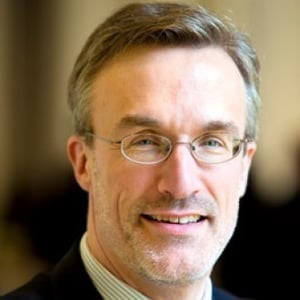
Edward B. Shils Professor of Law and Professor of Political Science; Director, Penn Program on Regulation, University of Pennsylvania Law School
Cary Coglianese is the Edward B. Shils Professor of Law and Professor of Political Science at the University of Pennsylvania, where he currently serves as the director of the Penn Program on Regulation and has served as the law school’s Deputy Dean for Academic Affairs. He specializes in the study of regulation and regulatory processes, with an emphasis on the empirical evaluation of alternative regulatory strategies and the role of public participation, negotiation, and business-government relations in policy making. His most recent books include: Achieving Regulatory Excellence; Does Regulation Kill Jobs?; Regulatory Breakdown: The Crisis of Confidence in U.S. Regulation; Import Safety: Regulatory Governance in the Global Economy; and Regulation and Regulatory Processes.
Prior to joining Penn Law, Coglianese spent a dozen years on the faculty at Harvard University’s John F. Kennedy School of Government. He also has taught as a visiting law professor at Stanford and Vanderbilt, founded the Law & Society Association’s international collaborative research network on regulatory governance, served as a founding editor of the peer-reviewed journal Regulation & Governance, and created and now advises the daily production of The Regulatory Review. The chair of the Administrative Conference of the United States' committee on rulemaking, he has led a National Science Foundation initiative on e-rulemaking, served on the ABA’s task force on improving Regulations.Gov, and chaired a task force on transparency and public participation in the regulatory process that offered a blueprint to the Obama Administration on open government. He is a co-chair of the American Bar Association’s administrative law section committee on e-government, past co-chair of the section's committee on rulemaking, and a past member of the section's Council. He currently serves as a member of a committee of the National Academies of Sciences, Engineering, and Medicine studying performance-based safety regulation and of an Aspen Institute dialogue on energy policy governance. He has served as a consultant to the Administrative Conference of the United States, Environment Canada, the Organization for Economic Cooperation and Development, the U.S. Department of Commerce, the U.S. Department of Transportation, and the U.S. Environmental Protection Agency.

Maurice and Hilda Friedman Professor of Law, Columbia Law School; CEO, New Civil Liberties Alliance
Philip Hamburger is the Maurice and Hilda Friedman Professor of Law at Columbia Law School, and Chief Executive Officer at the New Civil Liberties Alliance. Before coming to Columbia, he was the John P. Wilson Professor at the University of Chicago Law School.
He writes on constitutional law and its history—with particular emphasis on religious liberty, freedom of speech and the press, judicial office, administrative power, and unconstitutional conditions.
His books are Separation of Church and State (Harvard 2002), Law and Judicial Duty (Harvard 2008), Is Administrative Law Unlawful? (Chicago 2014), The Administrative Threat (Encounter 2017), and Liberal Suppression: Section 501(c)(3) and the Taxation of Speech (Chicago 2018). A forthcoming book is Purchasing Submission: Conditions, Power, and Freedom (Harvard 2021).
He is a member of the American Academy of Arts and Sciences, and he has served on the board of directors of the American Society for Legal History. He has twice received the Sutherland Prize for the most significant contribution to English legal history, and has been awarded the Henry Paolucci - Walter Bagehot Book Award, the Hayek Book Prize, and the Bradley Prize.
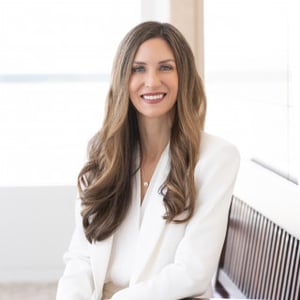
United States District Judge, United States District Court for the Middle District of Florida
In November 2020, the Senate confirmed Kathryn Kimball Mizelle as a United States District Judge for the Middle District of Florida. At age 33, she became the youngest Article III judge in the country. Prior to her confirmation, Judge Mizelle was in private practice at Jones Day, where she focused on complex civil and criminal litigation and appeals. Judge Mizelle previously served at the United States Department of Justice in the Office of the Associate Attorney General, in the Southern Criminal Enforcement Section of the Tax Division, and in the United States Attorney’s Office for the Eastern District of Virginia. Judge Mizelle has also taught as an adjunct professor of law at the University of Florida Levin College of Law and at George Mason University’s Antonin Scalia Law School.
Judge Mizelle earned her B.A., summa cum laude, from Covenant College, and her J.D., summa cum laude, from the University of Florida Levin College of Law. After graduation, Judge Mizelle served as a law clerk at every level of the federal judiciary: at the Supreme Court for Justice Clarence Thomas, at the D.C. Circuit for Judge Gregory G. Katsas, at the Eleventh Circuit for Chief Judge William H. Pryor Jr., and at the Middle District of Florida for Judge James S. Moody Jr.
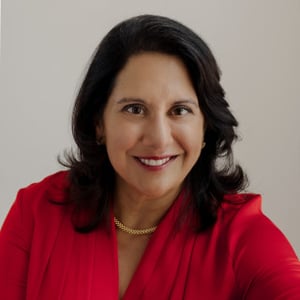
Judge, United States Court of Appeals, District of Columbia Circuit
Judge Rao was appointed to the United States Court of Appeals for the District of Columbia Circuit in March 2019. She graduated from Yale College in 1995 and the University of Chicago Law School in 1999. Following graduation, she served as a law clerk to Judge J. Harvie Wilkinson III of the U.S. Court of Appeals for the Fourth Circuit and, in the 2001 October Term, as law clerk to Justice Clarence Thomas of the U.S. Supreme Court. Between her clerkships, Judge Rao served as counsel for nominations and constitutional law to the U.S. Senate Committee on the Judiciary. In 2002, she joined the international arbitration group of Clifford Chance LLP in London, England. From 2005-2006, she served as Special Assistant and Associate White House Counsel to President George W. Bush. From 2006 to 2017, Judge Rao was a professor at the Antonin Scalia Law School at George Mason University, where she taught constitutional law, legislation and statutory interpretation, and the history and foundations of the administrative state. In 2014, she founded the Center for the Study of the Administrative State, a non-profit Center that promotes academic scholarship and public policy debates about administrative law. In July 2017, she was appointed to serve as the Administrator of the Office of Information and Regulatory Affairs in the Office of Management Budget. She served in this position until her appointment to the D.C. Circuit.
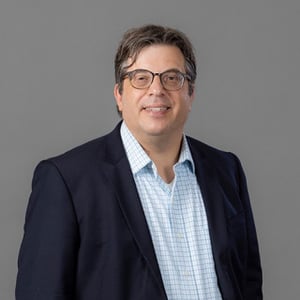
University Professor of Law and Executive Director, Liberty & Law Center, Antonin Scalia Law School, George Mason University
David Bernstein holds a University Professorship chair at the Antonin Scalia Law School, where he has been teaching since 1995. He has also been a visiting professor at the University of Michigan, Georgetown University, William & Mary, Brooklyn Law School, the University of Turin, and Hebrew University. Professor Bernstein teaches Constitutional Law, Evidence, and Products Liability.
A prolific author, Professor Bernstein often challenges the conventional wisdom with prodigious research and sharp, original analysis. He is the author of five books, and coauthor of two more. Professor Bernstein’s book Rehabilitating Lochner was praised across the political spectrum as “intellectual history in its highest form,” a “fresh perspective and a cogent analysis,” “delightful and informative,” “sharp and iconoclastic,” and “a terrific work of historical revisionism.” Columnist George Will praised Bernstein’s most recent book, Classified, The Untold Story of Racial Classification in America, as “perhaps the most consequential American book of 2022.”
Professor Bernstein has also written dozens of articles and essays published in major law reviews, including the California Law Review, Columbia Law Review, Michigan Law Review, and Yale Law Journal. An article he coauthored, Defending Daubert: It’s Time to Amend Federal Rule of Evidence 702, directly inspired a pending amendment to Rule 702.
Professor Bernstein blogs at the Instapundit.com, the Times of Israel, and the Volokh Conspiracy. He is a graduate of the Yale Law School, where he was senior editor of the Yale Law Journal and a John M. Olin Fellow in Law, Economics, and Public Policy.
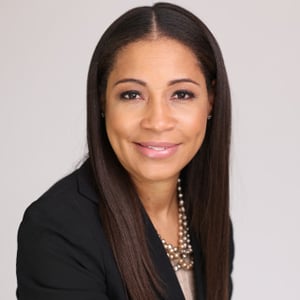
Professor of Law, Rutgers Law School
Stacy Hawkins is a frequent writer and sought-after speaker on the issue of employment law and diversity. She’s served on the Philadelphia Diversity Law Group and the Pennsylvania Bar Association Commission on Women in the Profession Diversity Task Force. She worked as a senior labor and employment attorney and as the director of diversity for major law firms.

Professor of Law, University of San Diego School of Law (Retired)
Gail Heriot is a recently retired law professor from the University of San Diego. She also served as a member of the U.S. Commission on Civil Rights from 2007 to 2025. She is also the chairman of the board of the American Civil Rights Project and the chair emerita of the Civil Rights practice group at the Federalist Society for Law & Public Policy.
Professor Heriot is a prolific writer in the area of civil rights. She is the author of many law review articles. She is also the editor (along with Maimon Schwarzschild) of the 2021 anthology, A Dubious Expediency: How Race Preferences Damage Higher Education. Her upcoming book is entitled, Why We Walk on Eggshell: How Our Civil Rights Laws Helped Bring About the Woke Era—And the Trump Era, Too.
Her writings for a general audience have appeared in the Wall Street Journal, the San Diego Union-Tribune, the National Review and many other newspapers and magazines.
In 1996, she co-chaired the successful “Yes on Proposition 209” campaign, which amended the California Constitution to prohibit state-sponsored discrimination or preferential treatment based on race, sex, color, ethnicity or national origin. In 2020, she co-chaired the “No on Proposition 16” campaign, which successfully prevented Proposition 209’s repeal.
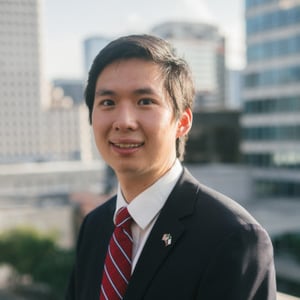
State District Judge, Austin, Texas
Cory Liu is a state district judge in Austin, Texas. He previously served as assistant general counsel to Texas Governor Greg Abbott. Mr. Liu clerked for Judge Andrew Oldham on the U.S. Court of Appeals for the Fifth Circuit and Judge Danny Boggs on the U.S. Court of Appeals for the Sixth Circuit. He was Editor-in-Chief of the Harvard Journal of Law & Public Policy and is a graduate of Harvard Law School and the University of Chicago.
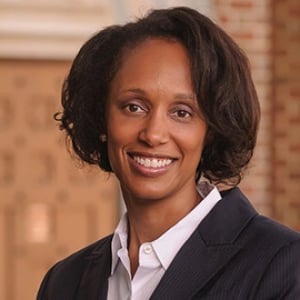
Austin E. Owen Research Scholar & Professor of Law, University of Richmond School of Law
Professor Kimberly Jenkins Robinson is a national expert who speaks domestically and internationally about educational equity, equal educational opportunity, civil rights and the federal role in education. Her scholarship has been published widely in leading journals and proposes innovative legal and policy solutions for ensuring that all children receive equal access to an excellent education. In 2019, New York University Press will publish her second edited book, tentatively titled Thoughts on a Federal Right to Education, which gathers leading constitutional and education law scholars to consider the challenging questions raised by recognizing a federal right to education in the United States. In 2015, Harvard Education Press published her book that was co-edited with Professor Charles Ogletree, Jr. of Harvard Law School titled The Enduring Legacy of Rodriguez: Creating New Pathways to Equal Educational Opportunity. Professor Robinson’s article, titled “Disrupting Education Federalism” in the Washington University Law Review, won the 2016 Steven S. Goldberg Award for Distinguished Scholarship in Education Law from the Education Law Association. This article argues that the United States should reconstruct its understanding of education federalism to support a national effort to ensure equal access to an excellent education.
Professor Robinson published “Fisher’s Cautionary Tale and the Urgent Need for Equal Access to an Excellent Education” in the November 2016 issue of the Harvard Law Review, which analyzes the legal and policy issues regarding the challenge to the affirmative action policy at the University of Texas in Fisher v. University of Texas at Austin. In 2016, she published an article in the Stanford Law and Policy Review titled “No Quick Fix for Equity and Excellence: The Virtues of Incremental Shifts in Education Federalism” that proposes how the federal government could incrementally increase its influence over education in ways that would promote equity and excellence in school funding. Her scholarship has appeared in the University of Chicago Law Review, Boston College Law Review, William and Mary Law Review, and UC Davis Law Review, among other venues.
Professor Robinson was a visiting professor at the George Washington University Law School in spring 2017 where she taught Race, Racism and the Law. Professor Robinson is a Senior Fellow at the Learning Policy Institute, a leading think tank on education policy, where she is working with Linda Darling-Hammond on issues related to educational access and equality.
Among her many service roles at the University of Richmond, Professor Robinson recently served as chair of the law school’s Diversity Committee and co-chair of a university-wide faculty learning community on reducing implicit bias in teaching. She previously served as co-chair of the Faculty Senate’s Sexual Assault Response and Prevention Committee, where she led the drafting of recommendations for strengthening the University’s sexual assault policy, including many recommendations that were incorporated into a revised sexual assault policy. Professor Robinson also served as chair of a university-wide faculty learning community on reducing stereotype threat in teaching.
Prior to joining the Richmond Law faculty in 2010, Professor Robinson was an Associate Professor at Emory University School of Law and a visiting fellow at George Washington University Law School. She also served in the General Counsel’s Office of the United States Department of Education, where she helped draft federal policy on issues of race, sex, and disability discrimination. In addition, Professor Robinson represented school districts in school finance and constitutional law litigation as an associate with Hogan & Hartson, LLP (now Hogan Lovells). Professor Robinson is a frequent lecturer on education law and policy issues, including serving as the Dean’s Distinguished Lecturer at the Harvard Graduate School of Education in March 2014 and the keynote speaker at the "Is Education a Civil Right?" conference at Harvard Law School in April 2013. She also has written editorials that address national education law and policy issues, including co-authoring with Professor Charles Ogletree, Jr. an article in 2017 in Education Next titled “Inequitable Schools Demand a Federal Remedy” and “Neglecting the Broken Foundation of K-12 Funding” in Education Week on May 18, 2016. Professor Robinson organized a conference to analyze the impact of the Supreme Court’s decision in San Antonio Independent School District v. Rodriguez in 2013.
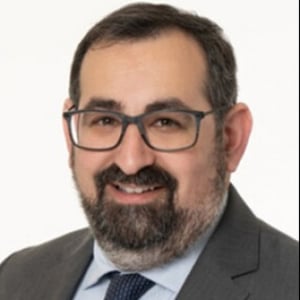
Research Scholar in Law and Executive Director, Center for Academic Freedom and Free Speech, Yale Law School
Joe Cohn is a research scholar in law at Yale Law school and the executive director of the Center for Academic Freedom and Free Speech (CAFFS).
Cohn has served as a staff attorney at the AIDS Law Project of Pennsylvania, a staff attorney for the Court of Appeals for the 3rd Circuit, an adjunct professor of law at the University of Pennsylvania Law School, where he supervised law students representing clients in litigation in state and federal courts, and as the interim legal director for ACLU affiliates in Nevada and Utah.
A majority of Cohn’s career has been dedicated to defending civil liberties on college campuses and free expression in society at large. As the Foundation for Individual Rights and Expression’s (FIRE’s) founding legislative and policy director, from 2012 to 2023, he testified on numerous occasions in legislatures across America and in Congress, drafted legislation on campus free speech, campus due process, and academic freedom that has been enacted in states across the country. Immediately before joining CAFFS, Cohn advocated for open inquiry, viewpoint diversity, and constructive disagreement in higher education as Heterodox Academy’s director of policy.
Cohn writes extensively on civil liberties, with articles published in a wide array of media outlets, including the Wall Street Journal, the Washington Post, Newsweek, the Hill, the New York Daily News, the Chicago Tribune, the Las Vegas Review Journal, the Minnesota Star Tribune, the Chronicle of Higher Education, Inside Higher Ed, and the Volokh Conspiracy.
He earned his bachelor of arts from the University of Nevada at Las Vegas in 2000. He is a 2004 graduate of the University of Pennsylvania Carey School of Law and the Fels Institute of Government Administration, where he earned his J.D. and M.A. in Government Administration.
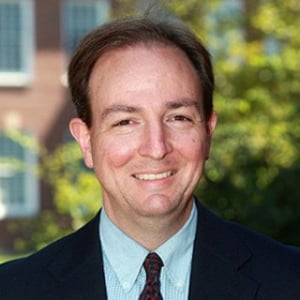
Political Science, Professor and Department Chair, University of Nebraska Omaha
Carson Holloway is Department Chair and Professor of Political Science at the University of Nebraska, Omaha and a Washington Fellow in the Claremont Institute’s Center for the American Way of Life. He is the author most recently of No Liberty to Libel: The Constitutional Case Against New York Times v. Sullivan (Encounter Books, 2026). He is co-editor, with Bradford P. Wilson, of The Political Writings of Alexander Hamilton (Cambridge University Press, 2017) and The Political Writings of George Washington (Cambridge University Press, 2023). He has held visiting fellowships in Princeton University’s James Madison Program in American Ideals and Institutions and at the Heritage Foundation. His scholarly articles have appeared in the Review of Politics, Interpretation, and Perspectives on Political Science, and he has written public commentary for The New Criterion, First Things, National Affairs, Public Discourse, National Review, Law and Liberty, The Federalist, the American Spectator, and the American Conservative.
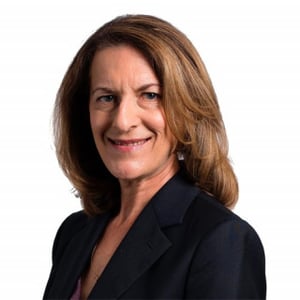
Partner, Thomas & LoCicero PL
Carol is the managing partner in TLo's Tampa office. She practices at the trial and appellate levels, handling litigation concerning defamation and privacy, the Public Records Act, the Government in the Sunshine Law, court access and cameras in the courtroom. She leads advocacy efforts on media issues, including cameras in the courtroom, and sealed court records.
Carol is a nationally-recognized media lawyer routinely sought after as a speaker on media issues at national and statewide conferences. She often leads statewide advocacy efforts on media issues, most recently involving access to Florida courts and Florida’s anti-SLAPP law. Carol regularly renders pre-and post-publication advice on investigative news stories. She handles issues concerning newsgathering and technology – including smartphones, social media and drones. Carol has litigated many cases resulting in published opinions. In addition to media law, Carol is experienced in marketing law, web law and intellectual property matters. She manages trademark portfolios, policing programs and litigation for sophisticated corporations.
Carol is the Immediate Past Chair for the First Amendment Foundation's Board of Trustees. She is a former board member of the Junior League of Tampa, former vice-chair of the Media Law Committee of The Florida Bar, and is a governing committee member of the ABA Forum on Communications Law. She has litigated capital habeas cases with other lawyers in the firm. Carol also serves as the Program Coordinator for End 68 Hours of Hunger – Tampa, a charity dedicated to eradicating hunger among school children. She is an active member of Hyde Park Presbyterian Church.
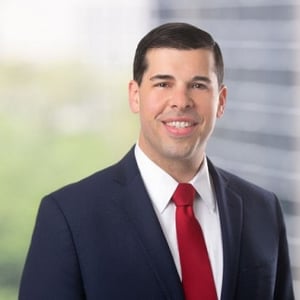
Partner, Boies Schiller Flexner LLP
Jesse, the former third-ranking official at the U.S. Department of Justice, helps clients with their most difficult litigation and regulatory issues─whether that means defending against an enforcement action, pursuing high-stakes litigation and appeals, navigating regulatory thickets at federal and state agencies, or crafting a comprehensive strategy to manage a crisis. He approaches these problems with the knowledge gained both from his broad private-practice experience and from having served at the highest levels of federal and state government.
Jesse has experience across a range of substantive and regulatory areas. He has sued the federal government and has also been one of its top law-enforcement officials; he has represented states and has also navigated their regulatory agencies on behalf of clients; and he has represented companies in business disputes, both as defendants and plaintiffs.
Before joining the firm, Jesse was the Acting Associate Attorney General at the United States Department of Justice. In that role, he oversaw the civil and criminal work of the Antitrust, Civil, Civil Rights, Environment and Natural Resources, and Tax Divisions. During Jesse’s tenure, the Associate’s office closely managed the Department’s most significant litigation, including matters involving large financial institutions, healthcare companies, automakers, energy companies, and state and local governments. In addition, Jesse served as Chair of DOJ’s Regulatory Reform Task Force and Vice Chair of DOJ’s Task Force on Market Integrity and Consumer Fraud. Jesse regularly provided legal and strategic advice to the highest-level decision makers in the federal government, including the Attorney General and Deputy Attorney General, general counsels across the spectrum of federal agencies, and White House officials.
Jesse served for three years as the secretary of Florida’s labor, economic-development, and land-use agency, the Florida Department of Economic Opportunity. Before that, he served as Governor (now Senator) Rick Scott’s general counsel.
Jesse maintains offices in both Washington D.C. and Florida. From Washington, he focuses on federal litigation and crisis management. In Florida, in addition to federal litigation, Jesse employs his knowledge of state government and regulation to help clients in courts across the state, from trial through the Florida Supreme Court.
Jesse currently serves on the Florida Supreme Court Judicial Nominating Commission, the body that provides the governor with nominees for appointment to the Florida Supreme Court. Jesse is also a fellow at the Center for the Study of the Administrative State at the Scalia Law School at George Mason University, where he writes and speaks about administrative law.
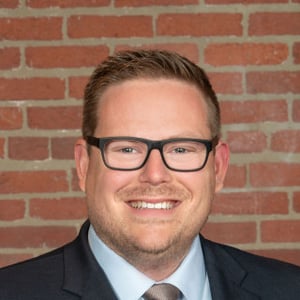
Counsel, Clare Locke
Jered is an experienced litigator relied upon by his clients to deliver practical and exacting legal advice guided by sound business judgment. He has spent his career representing clients ranging from Fortune 500 companies to controversial high-profile figures in sensitive and sometimes existential crises requiring extraordinary discretion.
Prior to joining Clare Locke, Jered was the chief legal officer of media non-profit Project Veritas, through which he managed a team of lawyers working on reputational risk. During his time at Veritas, Jered and his team obtained over five dozen corrections and retractions and avoided countless more inaccurate articles. Jered also oversaw a portfolio of defamation lawsuits, including Project Veritas’ lawsuit against The New York Times in which Clare Locke defeated The Times’ motion to dismiss – the first defamation case to survive New York’s newly-expanded anti-SLAPP law.
Jered has successfully represented clients in litigation and appeals in federal and state courts across the country. Throughout his career, Jered has handled a variety of matters, including media liability, fraud and deceptive trade practices, financial services, construction and real estate, bankruptcy, and harassment. Jered served as lead trial counsel in securing one of 2019’s top 50 highest bench awards in the United States in a real estate dispute, and in obtaining a first-of-its-kind national injunction and receivership over a fraudster leading to federal incarceration and a permanent restraining order.
Research Scholar in Law and Executive Director, Center for Academic Freedom and Free Speech, Yale Law School
Joe Cohn is a research scholar in law at Yale Law school and the executive director of the Center for Academic Freedom and Free Speech (CAFFS).
Cohn has served as a staff attorney at the AIDS Law Project of Pennsylvania, a staff attorney for the Court of Appeals for the 3rd Circuit, an adjunct professor of law at the University of Pennsylvania Law School, where he supervised law students representing clients in litigation in state and federal courts, and as the interim legal director for ACLU affiliates in Nevada and Utah.
A majority of Cohn’s career has been dedicated to defending civil liberties on college campuses and free expression in society at large. As the Foundation for Individual Rights and Expression’s (FIRE’s) founding legislative and policy director, from 2012 to 2023, he testified on numerous occasions in legislatures across America and in Congress, drafted legislation on campus free speech, campus due process, and academic freedom that has been enacted in states across the country. Immediately before joining CAFFS, Cohn advocated for open inquiry, viewpoint diversity, and constructive disagreement in higher education as Heterodox Academy’s director of policy.
Cohn writes extensively on civil liberties, with articles published in a wide array of media outlets, including the Wall Street Journal, the Washington Post, Newsweek, the Hill, the New York Daily News, the Chicago Tribune, the Las Vegas Review Journal, the Minnesota Star Tribune, the Chronicle of Higher Education, Inside Higher Ed, and the Volokh Conspiracy.
He earned his bachelor of arts from the University of Nevada at Las Vegas in 2000. He is a 2004 graduate of the University of Pennsylvania Carey School of Law and the Fels Institute of Government Administration, where he earned his J.D. and M.A. in Government Administration.
Political Science, Professor and Department Chair, University of Nebraska Omaha
Carson Holloway is Department Chair and Professor of Political Science at the University of Nebraska, Omaha and a Washington Fellow in the Claremont Institute’s Center for the American Way of Life. He is the author most recently of No Liberty to Libel: The Constitutional Case Against New York Times v. Sullivan (Encounter Books, 2026). He is co-editor, with Bradford P. Wilson, of The Political Writings of Alexander Hamilton (Cambridge University Press, 2017) and The Political Writings of George Washington (Cambridge University Press, 2023). He has held visiting fellowships in Princeton University’s James Madison Program in American Ideals and Institutions and at the Heritage Foundation. His scholarly articles have appeared in the Review of Politics, Interpretation, and Perspectives on Political Science, and he has written public commentary for The New Criterion, First Things, National Affairs, Public Discourse, National Review, Law and Liberty, The Federalist, the American Spectator, and the American Conservative.
Partner, Thomas & LoCicero PL
Carol is the managing partner in TLo's Tampa office. She practices at the trial and appellate levels, handling litigation concerning defamation and privacy, the Public Records Act, the Government in the Sunshine Law, court access and cameras in the courtroom. She leads advocacy efforts on media issues, including cameras in the courtroom, and sealed court records.
Carol is a nationally-recognized media lawyer routinely sought after as a speaker on media issues at national and statewide conferences. She often leads statewide advocacy efforts on media issues, most recently involving access to Florida courts and Florida’s anti-SLAPP law. Carol regularly renders pre-and post-publication advice on investigative news stories. She handles issues concerning newsgathering and technology – including smartphones, social media and drones. Carol has litigated many cases resulting in published opinions. In addition to media law, Carol is experienced in marketing law, web law and intellectual property matters. She manages trademark portfolios, policing programs and litigation for sophisticated corporations.
Carol is the Immediate Past Chair for the First Amendment Foundation's Board of Trustees. She is a former board member of the Junior League of Tampa, former vice-chair of the Media Law Committee of The Florida Bar, and is a governing committee member of the ABA Forum on Communications Law. She has litigated capital habeas cases with other lawyers in the firm. Carol also serves as the Program Coordinator for End 68 Hours of Hunger – Tampa, a charity dedicated to eradicating hunger among school children. She is an active member of Hyde Park Presbyterian Church.
Partner, Boies Schiller Flexner LLP
Jesse, the former third-ranking official at the U.S. Department of Justice, helps clients with their most difficult litigation and regulatory issues─whether that means defending against an enforcement action, pursuing high-stakes litigation and appeals, navigating regulatory thickets at federal and state agencies, or crafting a comprehensive strategy to manage a crisis. He approaches these problems with the knowledge gained both from his broad private-practice experience and from having served at the highest levels of federal and state government.
Jesse has experience across a range of substantive and regulatory areas. He has sued the federal government and has also been one of its top law-enforcement officials; he has represented states and has also navigated their regulatory agencies on behalf of clients; and he has represented companies in business disputes, both as defendants and plaintiffs.
Before joining the firm, Jesse was the Acting Associate Attorney General at the United States Department of Justice. In that role, he oversaw the civil and criminal work of the Antitrust, Civil, Civil Rights, Environment and Natural Resources, and Tax Divisions. During Jesse’s tenure, the Associate’s office closely managed the Department’s most significant litigation, including matters involving large financial institutions, healthcare companies, automakers, energy companies, and state and local governments. In addition, Jesse served as Chair of DOJ’s Regulatory Reform Task Force and Vice Chair of DOJ’s Task Force on Market Integrity and Consumer Fraud. Jesse regularly provided legal and strategic advice to the highest-level decision makers in the federal government, including the Attorney General and Deputy Attorney General, general counsels across the spectrum of federal agencies, and White House officials.
Jesse served for three years as the secretary of Florida’s labor, economic-development, and land-use agency, the Florida Department of Economic Opportunity. Before that, he served as Governor (now Senator) Rick Scott’s general counsel.
Jesse maintains offices in both Washington D.C. and Florida. From Washington, he focuses on federal litigation and crisis management. In Florida, in addition to federal litigation, Jesse employs his knowledge of state government and regulation to help clients in courts across the state, from trial through the Florida Supreme Court.
Jesse currently serves on the Florida Supreme Court Judicial Nominating Commission, the body that provides the governor with nominees for appointment to the Florida Supreme Court. Jesse is also a fellow at the Center for the Study of the Administrative State at the Scalia Law School at George Mason University, where he writes and speaks about administrative law.
Counsel, Clare Locke
Jered is an experienced litigator relied upon by his clients to deliver practical and exacting legal advice guided by sound business judgment. He has spent his career representing clients ranging from Fortune 500 companies to controversial high-profile figures in sensitive and sometimes existential crises requiring extraordinary discretion.
Prior to joining Clare Locke, Jered was the chief legal officer of media non-profit Project Veritas, through which he managed a team of lawyers working on reputational risk. During his time at Veritas, Jered and his team obtained over five dozen corrections and retractions and avoided countless more inaccurate articles. Jered also oversaw a portfolio of defamation lawsuits, including Project Veritas’ lawsuit against The New York Times in which Clare Locke defeated The Times’ motion to dismiss – the first defamation case to survive New York’s newly-expanded anti-SLAPP law.
Jered has successfully represented clients in litigation and appeals in federal and state courts across the country. Throughout his career, Jered has handled a variety of matters, including media liability, fraud and deceptive trade practices, financial services, construction and real estate, bankruptcy, and harassment. Jered served as lead trial counsel in securing one of 2019’s top 50 highest bench awards in the United States in a real estate dispute, and in obtaining a first-of-its-kind national injunction and receivership over a fraudster leading to federal incarceration and a permanent restraining order.
Partner, Clement & Murphy, PLLC
Paul served as the 43rd Solicitor General of the United States from June 2005 until June 2008. Before his confirmation as Solicitor General, he served as Acting Solicitor General for nearly a year and as Principal Deputy Solicitor General for over three years.
Paul has argued over 100 cases before the United States Supreme Court, including McConnell v. FEC, Tennessee v. Lane, United States v. Booker, MGM v. Grokster, Hobby Lobby v. Burwell, Epic Systems Corp. v. Lewis, Rucho v. Common Cause, Facebook v. Duguid, and TransUnion v. Ramirez. Paul has argued more Supreme Court cases since 2000 than any lawyer in or out of government. He has also argued many important cases in the lower courts, including Walker v. Cheney, United States v. Moussaoui and NFL v. Brady.
Paul’s practice focuses on appellate matters, constitutional litigation and strategic counseling. He represents a broad array of clients in the Supreme Court and in federal and state appellate courts. Last year, for example, he successfully argued Supreme Court cases involving significant issues of energy regulation, statutory interpretation, state sovereign immunity and Article III standing, and successfully argued a trademark appeal in the Fourth Circuit, and a constitutional appeal before the en banc Eleventh Circuit.
Paul focuses on high-stakes appeals. In recent years, he successfully defended a $1.2 billion jury verdict for clients in a Tenth Circuit case, while securing the reversal of an over $2 billion jury verdict for another client in the Seventh Circuit and the approval of a nearly $1 billion dollar class action settlement in the Third Circuit. He has initiated major administrative law challenges and constitutional litigation against the federal government, such as the successful challenge to the HHS drug-pricing rule and threatened challenges that led to the withdrawal of the Treasury Department’s proposed cryptocurrency regulations. He also counsels clients on a variety of strategic legal questions, whether arising from pending legislation, government inquiries or ongoing litigation.
Paul has undertaken substantial pro bono engagements in the Supreme Court, such as twice successfully representing the defendant in Bond v. United States and successfully representing the Omaha Tribe in Nebraska v. Parker, the guardian ad litem in Adoptive Couple v. Baby Girl, the defendant in Sekhar v. United States, a high school football coach in Kennedy v. Bremerton, and the Little Sisters of the Poor. Paul’s pro bono representation also precipitated the federal government’s confession of error in United States v. Rojas.
Following law school, Paul clerked for Judge Laurence H. Silberman of the U.S. Court of Appeals for the D.C. Circuit and for Associate Justice Antonin Scalia of the U.S. Supreme Court. After his clerkships, he went on to serve as Chief Counsel of the U.S. Senate Subcommittee on the Constitution, Federalism and Property Rights.
Paul is a Distinguished Lecturer in Law at the Georgetown University Law Center, where he has taught in various capacities since 1998. He also serves as a Senior Fellow of the Law Center’s Supreme Court Institute. He is the Justice Joseph Story Distinguished Practitioner in Residence at the Gray Center at Scalia Law School.
Edward B. Shils Professor of Law and Professor of Political Science; Director, Penn Program on Regulation, University of Pennsylvania Law School
Cary Coglianese is the Edward B. Shils Professor of Law and Professor of Political Science at the University of Pennsylvania, where he currently serves as the director of the Penn Program on Regulation and has served as the law school’s Deputy Dean for Academic Affairs. He specializes in the study of regulation and regulatory processes, with an emphasis on the empirical evaluation of alternative regulatory strategies and the role of public participation, negotiation, and business-government relations in policy making. His most recent books include: Achieving Regulatory Excellence; Does Regulation Kill Jobs?; Regulatory Breakdown: The Crisis of Confidence in U.S. Regulation; Import Safety: Regulatory Governance in the Global Economy; and Regulation and Regulatory Processes.
Prior to joining Penn Law, Coglianese spent a dozen years on the faculty at Harvard University’s John F. Kennedy School of Government. He also has taught as a visiting law professor at Stanford and Vanderbilt, founded the Law & Society Association’s international collaborative research network on regulatory governance, served as a founding editor of the peer-reviewed journal Regulation & Governance, and created and now advises the daily production of The Regulatory Review. The chair of the Administrative Conference of the United States' committee on rulemaking, he has led a National Science Foundation initiative on e-rulemaking, served on the ABA’s task force on improving Regulations.Gov, and chaired a task force on transparency and public participation in the regulatory process that offered a blueprint to the Obama Administration on open government. He is a co-chair of the American Bar Association’s administrative law section committee on e-government, past co-chair of the section's committee on rulemaking, and a past member of the section's Council. He currently serves as a member of a committee of the National Academies of Sciences, Engineering, and Medicine studying performance-based safety regulation and of an Aspen Institute dialogue on energy policy governance. He has served as a consultant to the Administrative Conference of the United States, Environment Canada, the Organization for Economic Cooperation and Development, the U.S. Department of Commerce, the U.S. Department of Transportation, and the U.S. Environmental Protection Agency.
Maurice and Hilda Friedman Professor of Law, Columbia Law School; CEO, New Civil Liberties Alliance
Philip Hamburger is the Maurice and Hilda Friedman Professor of Law at Columbia Law School, and Chief Executive Officer at the New Civil Liberties Alliance. Before coming to Columbia, he was the John P. Wilson Professor at the University of Chicago Law School.
He writes on constitutional law and its history—with particular emphasis on religious liberty, freedom of speech and the press, judicial office, administrative power, and unconstitutional conditions.
His books are Separation of Church and State (Harvard 2002), Law and Judicial Duty (Harvard 2008), Is Administrative Law Unlawful? (Chicago 2014), The Administrative Threat (Encounter 2017), and Liberal Suppression: Section 501(c)(3) and the Taxation of Speech (Chicago 2018). A forthcoming book is Purchasing Submission: Conditions, Power, and Freedom (Harvard 2021).
He is a member of the American Academy of Arts and Sciences, and he has served on the board of directors of the American Society for Legal History. He has twice received the Sutherland Prize for the most significant contribution to English legal history, and has been awarded the Henry Paolucci - Walter Bagehot Book Award, the Hayek Book Prize, and the Bradley Prize.
United States District Judge, United States District Court for the Middle District of Florida
In November 2020, the Senate confirmed Kathryn Kimball Mizelle as a United States District Judge for the Middle District of Florida. At age 33, she became the youngest Article III judge in the country. Prior to her confirmation, Judge Mizelle was in private practice at Jones Day, where she focused on complex civil and criminal litigation and appeals. Judge Mizelle previously served at the United States Department of Justice in the Office of the Associate Attorney General, in the Southern Criminal Enforcement Section of the Tax Division, and in the United States Attorney’s Office for the Eastern District of Virginia. Judge Mizelle has also taught as an adjunct professor of law at the University of Florida Levin College of Law and at George Mason University’s Antonin Scalia Law School.
Judge Mizelle earned her B.A., summa cum laude, from Covenant College, and her J.D., summa cum laude, from the University of Florida Levin College of Law. After graduation, Judge Mizelle served as a law clerk at every level of the federal judiciary: at the Supreme Court for Justice Clarence Thomas, at the D.C. Circuit for Judge Gregory G. Katsas, at the Eleventh Circuit for Chief Judge William H. Pryor Jr., and at the Middle District of Florida for Judge James S. Moody Jr.
Judge, United States Court of Appeals, District of Columbia Circuit
Judge Rao was appointed to the United States Court of Appeals for the District of Columbia Circuit in March 2019. She graduated from Yale College in 1995 and the University of Chicago Law School in 1999. Following graduation, she served as a law clerk to Judge J. Harvie Wilkinson III of the U.S. Court of Appeals for the Fourth Circuit and, in the 2001 October Term, as law clerk to Justice Clarence Thomas of the U.S. Supreme Court. Between her clerkships, Judge Rao served as counsel for nominations and constitutional law to the U.S. Senate Committee on the Judiciary. In 2002, she joined the international arbitration group of Clifford Chance LLP in London, England. From 2005-2006, she served as Special Assistant and Associate White House Counsel to President George W. Bush. From 2006 to 2017, Judge Rao was a professor at the Antonin Scalia Law School at George Mason University, where she taught constitutional law, legislation and statutory interpretation, and the history and foundations of the administrative state. In 2014, she founded the Center for the Study of the Administrative State, a non-profit Center that promotes academic scholarship and public policy debates about administrative law. In July 2017, she was appointed to serve as the Administrator of the Office of Information and Regulatory Affairs in the Office of Management Budget. She served in this position until her appointment to the D.C. Circuit.
University Professor of Law and Executive Director, Liberty & Law Center, Antonin Scalia Law School, George Mason University
David Bernstein holds a University Professorship chair at the Antonin Scalia Law School, where he has been teaching since 1995. He has also been a visiting professor at the University of Michigan, Georgetown University, William & Mary, Brooklyn Law School, the University of Turin, and Hebrew University. Professor Bernstein teaches Constitutional Law, Evidence, and Products Liability.
A prolific author, Professor Bernstein often challenges the conventional wisdom with prodigious research and sharp, original analysis. He is the author of five books, and coauthor of two more. Professor Bernstein’s book Rehabilitating Lochner was praised across the political spectrum as “intellectual history in its highest form,” a “fresh perspective and a cogent analysis,” “delightful and informative,” “sharp and iconoclastic,” and “a terrific work of historical revisionism.” Columnist George Will praised Bernstein’s most recent book, Classified, The Untold Story of Racial Classification in America, as “perhaps the most consequential American book of 2022.”
Professor Bernstein has also written dozens of articles and essays published in major law reviews, including the California Law Review, Columbia Law Review, Michigan Law Review, and Yale Law Journal. An article he coauthored, Defending Daubert: It’s Time to Amend Federal Rule of Evidence 702, directly inspired a pending amendment to Rule 702.
Professor Bernstein blogs at the Instapundit.com, the Times of Israel, and the Volokh Conspiracy. He is a graduate of the Yale Law School, where he was senior editor of the Yale Law Journal and a John M. Olin Fellow in Law, Economics, and Public Policy.
Professor of Law, Rutgers Law School
Stacy Hawkins is a frequent writer and sought-after speaker on the issue of employment law and diversity. She’s served on the Philadelphia Diversity Law Group and the Pennsylvania Bar Association Commission on Women in the Profession Diversity Task Force. She worked as a senior labor and employment attorney and as the director of diversity for major law firms.
Professor of Law, University of San Diego School of Law (Retired)
Gail Heriot is a recently retired law professor from the University of San Diego. She also served as a member of the U.S. Commission on Civil Rights from 2007 to 2025. She is also the chairman of the board of the American Civil Rights Project and the chair emerita of the Civil Rights practice group at the Federalist Society for Law & Public Policy.
Professor Heriot is a prolific writer in the area of civil rights. She is the author of many law review articles. She is also the editor (along with Maimon Schwarzschild) of the 2021 anthology, A Dubious Expediency: How Race Preferences Damage Higher Education. Her upcoming book is entitled, Why We Walk on Eggshell: How Our Civil Rights Laws Helped Bring About the Woke Era—And the Trump Era, Too.
Her writings for a general audience have appeared in the Wall Street Journal, the San Diego Union-Tribune, the National Review and many other newspapers and magazines.
In 1996, she co-chaired the successful “Yes on Proposition 209” campaign, which amended the California Constitution to prohibit state-sponsored discrimination or preferential treatment based on race, sex, color, ethnicity or national origin. In 2020, she co-chaired the “No on Proposition 16” campaign, which successfully prevented Proposition 209’s repeal.
State District Judge, Austin, Texas
Cory Liu is a state district judge in Austin, Texas. He previously served as assistant general counsel to Texas Governor Greg Abbott. Mr. Liu clerked for Judge Andrew Oldham on the U.S. Court of Appeals for the Fifth Circuit and Judge Danny Boggs on the U.S. Court of Appeals for the Sixth Circuit. He was Editor-in-Chief of the Harvard Journal of Law & Public Policy and is a graduate of Harvard Law School and the University of Chicago.
Austin E. Owen Research Scholar & Professor of Law, University of Richmond School of Law
Professor Kimberly Jenkins Robinson is a national expert who speaks domestically and internationally about educational equity, equal educational opportunity, civil rights and the federal role in education. Her scholarship has been published widely in leading journals and proposes innovative legal and policy solutions for ensuring that all children receive equal access to an excellent education. In 2019, New York University Press will publish her second edited book, tentatively titled Thoughts on a Federal Right to Education, which gathers leading constitutional and education law scholars to consider the challenging questions raised by recognizing a federal right to education in the United States. In 2015, Harvard Education Press published her book that was co-edited with Professor Charles Ogletree, Jr. of Harvard Law School titled The Enduring Legacy of Rodriguez: Creating New Pathways to Equal Educational Opportunity. Professor Robinson’s article, titled “Disrupting Education Federalism” in the Washington University Law Review, won the 2016 Steven S. Goldberg Award for Distinguished Scholarship in Education Law from the Education Law Association. This article argues that the United States should reconstruct its understanding of education federalism to support a national effort to ensure equal access to an excellent education.
Professor Robinson published “Fisher’s Cautionary Tale and the Urgent Need for Equal Access to an Excellent Education” in the November 2016 issue of the Harvard Law Review, which analyzes the legal and policy issues regarding the challenge to the affirmative action policy at the University of Texas in Fisher v. University of Texas at Austin. In 2016, she published an article in the Stanford Law and Policy Review titled “No Quick Fix for Equity and Excellence: The Virtues of Incremental Shifts in Education Federalism” that proposes how the federal government could incrementally increase its influence over education in ways that would promote equity and excellence in school funding. Her scholarship has appeared in the University of Chicago Law Review, Boston College Law Review, William and Mary Law Review, and UC Davis Law Review, among other venues.
Professor Robinson was a visiting professor at the George Washington University Law School in spring 2017 where she taught Race, Racism and the Law. Professor Robinson is a Senior Fellow at the Learning Policy Institute, a leading think tank on education policy, where she is working with Linda Darling-Hammond on issues related to educational access and equality.
Among her many service roles at the University of Richmond, Professor Robinson recently served as chair of the law school’s Diversity Committee and co-chair of a university-wide faculty learning community on reducing implicit bias in teaching. She previously served as co-chair of the Faculty Senate’s Sexual Assault Response and Prevention Committee, where she led the drafting of recommendations for strengthening the University’s sexual assault policy, including many recommendations that were incorporated into a revised sexual assault policy. Professor Robinson also served as chair of a university-wide faculty learning community on reducing stereotype threat in teaching.
Prior to joining the Richmond Law faculty in 2010, Professor Robinson was an Associate Professor at Emory University School of Law and a visiting fellow at George Washington University Law School. She also served in the General Counsel’s Office of the United States Department of Education, where she helped draft federal policy on issues of race, sex, and disability discrimination. In addition, Professor Robinson represented school districts in school finance and constitutional law litigation as an associate with Hogan & Hartson, LLP (now Hogan Lovells). Professor Robinson is a frequent lecturer on education law and policy issues, including serving as the Dean’s Distinguished Lecturer at the Harvard Graduate School of Education in March 2014 and the keynote speaker at the "Is Education a Civil Right?" conference at Harvard Law School in April 2013. She also has written editorials that address national education law and policy issues, including co-authoring with Professor Charles Ogletree, Jr. an article in 2017 in Education Next titled “Inequitable Schools Demand a Federal Remedy” and “Neglecting the Broken Foundation of K-12 Funding” in Education Week on May 18, 2016. Professor Robinson organized a conference to analyze the impact of the Supreme Court’s decision in San Antonio Independent School District v. Rodriguez in 2013.
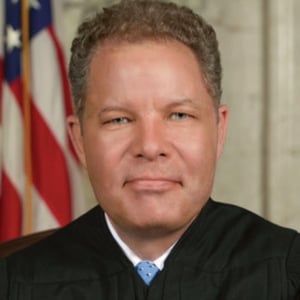
Former Justice, Wisconsin Supreme Court
Justice Daniel Kelly was appointed to the Supreme Court by Gov. Scott Walker in 2016 to fill the vacancy created by the retirement of Justice David T. Prosser, Jr.
A native of Santa Barbara, California, Kelly grew up in Arvada, Colorado. He came to Waukesha, Wisconsin to study at Carroll College (now Carroll University), where he earned a bachelor's degree in Political Science and Spanish in 1986. He earned his law degree from Regent University School of Law in Virginia Beach, Virginia in 1991.
Before joining the Court, Kelly had 19 years' experience as a private practice attorney in Wisconsin and represented clients in cases before the Wisconsin Supreme Court and the U.S. Supreme Court. Kelly spent most of his private practice career at one of the largest and oldest law firms in Wisconsin. Subsequently, he served as vice president and general counsel for a philanthropic foundation, and then practiced law at a firm he owned and founded in Waukesha.
Early in his legal career, Kelly was a law clerk and then staff attorney for the Office of Special Masters of the U.S. Court of Federal Claims, from 1992 to 1996. He worked as a law clerk for the late Wisconsin Court of Appeals Judge Ralph Adam Fine from 1991 to 1992.
Kelly is a member of the board of advisors and past president of the Milwaukee Lawyer's Chapter of the Federalist Society. He serves on the Carroll University President's Advisory Council and is a former member of the Wisconsin Advisory Committee of the U.S. Commission on Civil Rights.
Kelly is married and has five children. He lives in North Prairie, Wisconsin.
Research Scholar in Law and Executive Director, Center for Academic Freedom and Free Speech, Yale Law School
Joe Cohn is a research scholar in law at Yale Law school and the executive director of the Center for Academic Freedom and Free Speech (CAFFS).
Cohn has served as a staff attorney at the AIDS Law Project of Pennsylvania, a staff attorney for the Court of Appeals for the 3rd Circuit, an adjunct professor of law at the University of Pennsylvania Law School, where he supervised law students representing clients in litigation in state and federal courts, and as the interim legal director for ACLU affiliates in Nevada and Utah.
A majority of Cohn’s career has been dedicated to defending civil liberties on college campuses and free expression in society at large. As the Foundation for Individual Rights and Expression’s (FIRE’s) founding legislative and policy director, from 2012 to 2023, he testified on numerous occasions in legislatures across America and in Congress, drafted legislation on campus free speech, campus due process, and academic freedom that has been enacted in states across the country. Immediately before joining CAFFS, Cohn advocated for open inquiry, viewpoint diversity, and constructive disagreement in higher education as Heterodox Academy’s director of policy.
Cohn writes extensively on civil liberties, with articles published in a wide array of media outlets, including the Wall Street Journal, the Washington Post, Newsweek, the Hill, the New York Daily News, the Chicago Tribune, the Las Vegas Review Journal, the Minnesota Star Tribune, the Chronicle of Higher Education, Inside Higher Ed, and the Volokh Conspiracy.
He earned his bachelor of arts from the University of Nevada at Las Vegas in 2000. He is a 2004 graduate of the University of Pennsylvania Carey School of Law and the Fels Institute of Government Administration, where he earned his J.D. and M.A. in Government Administration.
Counsel, Clare Locke
Jered is an experienced litigator relied upon by his clients to deliver practical and exacting legal advice guided by sound business judgment. He has spent his career representing clients ranging from Fortune 500 companies to controversial high-profile figures in sensitive and sometimes existential crises requiring extraordinary discretion.
Prior to joining Clare Locke, Jered was the chief legal officer of media non-profit Project Veritas, through which he managed a team of lawyers working on reputational risk. During his time at Veritas, Jered and his team obtained over five dozen corrections and retractions and avoided countless more inaccurate articles. Jered also oversaw a portfolio of defamation lawsuits, including Project Veritas’ lawsuit against The New York Times in which Clare Locke defeated The Times’ motion to dismiss – the first defamation case to survive New York’s newly-expanded anti-SLAPP law.
Jered has successfully represented clients in litigation and appeals in federal and state courts across the country. Throughout his career, Jered has handled a variety of matters, including media liability, fraud and deceptive trade practices, financial services, construction and real estate, bankruptcy, and harassment. Jered served as lead trial counsel in securing one of 2019’s top 50 highest bench awards in the United States in a real estate dispute, and in obtaining a first-of-its-kind national injunction and receivership over a fraudster leading to federal incarceration and a permanent restraining order.
Political Science, Professor and Department Chair, University of Nebraska Omaha
Carson Holloway is Department Chair and Professor of Political Science at the University of Nebraska, Omaha and a Washington Fellow in the Claremont Institute’s Center for the American Way of Life. He is the author most recently of No Liberty to Libel: The Constitutional Case Against New York Times v. Sullivan (Encounter Books, 2026). He is co-editor, with Bradford P. Wilson, of The Political Writings of Alexander Hamilton (Cambridge University Press, 2017) and The Political Writings of George Washington (Cambridge University Press, 2023). He has held visiting fellowships in Princeton University’s James Madison Program in American Ideals and Institutions and at the Heritage Foundation. His scholarly articles have appeared in the Review of Politics, Interpretation, and Perspectives on Political Science, and he has written public commentary for The New Criterion, First Things, National Affairs, Public Discourse, National Review, Law and Liberty, The Federalist, the American Spectator, and the American Conservative.
Partner, Thomas & LoCicero PL
Carol is the managing partner in TLo's Tampa office. She practices at the trial and appellate levels, handling litigation concerning defamation and privacy, the Public Records Act, the Government in the Sunshine Law, court access and cameras in the courtroom. She leads advocacy efforts on media issues, including cameras in the courtroom, and sealed court records.
Carol is a nationally-recognized media lawyer routinely sought after as a speaker on media issues at national and statewide conferences. She often leads statewide advocacy efforts on media issues, most recently involving access to Florida courts and Florida’s anti-SLAPP law. Carol regularly renders pre-and post-publication advice on investigative news stories. She handles issues concerning newsgathering and technology – including smartphones, social media and drones. Carol has litigated many cases resulting in published opinions. In addition to media law, Carol is experienced in marketing law, web law and intellectual property matters. She manages trademark portfolios, policing programs and litigation for sophisticated corporations.
Carol is the Immediate Past Chair for the First Amendment Foundation's Board of Trustees. She is a former board member of the Junior League of Tampa, former vice-chair of the Media Law Committee of The Florida Bar, and is a governing committee member of the ABA Forum on Communications Law. She has litigated capital habeas cases with other lawyers in the firm. Carol also serves as the Program Coordinator for End 68 Hours of Hunger – Tampa, a charity dedicated to eradicating hunger among school children. She is an active member of Hyde Park Presbyterian Church.
Partner, Boies Schiller Flexner LLP
Jesse, the former third-ranking official at the U.S. Department of Justice, helps clients with their most difficult litigation and regulatory issues─whether that means defending against an enforcement action, pursuing high-stakes litigation and appeals, navigating regulatory thickets at federal and state agencies, or crafting a comprehensive strategy to manage a crisis. He approaches these problems with the knowledge gained both from his broad private-practice experience and from having served at the highest levels of federal and state government.
Jesse has experience across a range of substantive and regulatory areas. He has sued the federal government and has also been one of its top law-enforcement officials; he has represented states and has also navigated their regulatory agencies on behalf of clients; and he has represented companies in business disputes, both as defendants and plaintiffs.
Before joining the firm, Jesse was the Acting Associate Attorney General at the United States Department of Justice. In that role, he oversaw the civil and criminal work of the Antitrust, Civil, Civil Rights, Environment and Natural Resources, and Tax Divisions. During Jesse’s tenure, the Associate’s office closely managed the Department’s most significant litigation, including matters involving large financial institutions, healthcare companies, automakers, energy companies, and state and local governments. In addition, Jesse served as Chair of DOJ’s Regulatory Reform Task Force and Vice Chair of DOJ’s Task Force on Market Integrity and Consumer Fraud. Jesse regularly provided legal and strategic advice to the highest-level decision makers in the federal government, including the Attorney General and Deputy Attorney General, general counsels across the spectrum of federal agencies, and White House officials.
Jesse served for three years as the secretary of Florida’s labor, economic-development, and land-use agency, the Florida Department of Economic Opportunity. Before that, he served as Governor (now Senator) Rick Scott’s general counsel.
Jesse maintains offices in both Washington D.C. and Florida. From Washington, he focuses on federal litigation and crisis management. In Florida, in addition to federal litigation, Jesse employs his knowledge of state government and regulation to help clients in courts across the state, from trial through the Florida Supreme Court.
Jesse currently serves on the Florida Supreme Court Judicial Nominating Commission, the body that provides the governor with nominees for appointment to the Florida Supreme Court. Jesse is also a fellow at the Center for the Study of the Administrative State at the Scalia Law School at George Mason University, where he writes and speaks about administrative law.

Administrative Law and Regulation: What Is the Future of Administrative Law?
Paul D. Clement, Cary Coglianese, Philip A. Hamburger, Kathryn Kimball Mizelle, Neomi Rao
The Supreme Court's latest term was one of its most significant for administrative law. The...
Administrative Law and Regulation: What Is the Future of Administrative Law?
2024 National Lawyers Convention
Washington, DCPanel: Consideration of Race After SFFA v. Harvard
David Bernstein, Stacy Hawkins, Gail L. Heriot, Cory R. Liu, Kimberly J. Robinson
The Supreme Court’s SFFA v. Harvard decision signals a major change in university admissions and...
Panel: Consideration of Race After SFFA v. Harvard
Washington, DC25th Annual Federalist Society Faculty Conference
Washington, DCAmerican Conservatism and Free Speech
Montgomery Lawyers Chapter
Montgomery, AL2023 Judge Rudolph T. Randa Lecture and Award
Milwaukee Lawyers Chapter
Milwaukee, WIPanel I: New York Times v. Sullivan
Joe Cohn, Carson Holloway, Carol Jean Locicero, Jesse Panuccio, Jered Ede
In 1964, the U.S. Supreme Court issued its opinion in New York Times v. Sullivan...
Panel I: New York Times v. Sullivan
Joe Cohn, Carson Holloway, Carol Jean Locicero, Jesse Panuccio, Jered Ede
In 1964, the U.S. Supreme Court issued its opinion in New York Times v. Sullivan...
Panel I: New York Times v. Sullivan
2023 Florida Young Lawyers Summit
Coral Gables, FL