
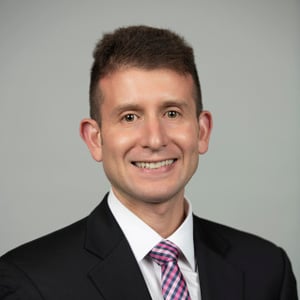
Professor of Political Science, Ohio State University
Professor Kogan is a Professor of Political Science at The Ohio State University, where his research focuses on American politics, public policy, and the intersection of political institutions and electoral behavior. He is widely recognized for his empirical work on political accountability, voter behavior, and institutional design, with research published in leading academic journals and cited in major policy discussions. Professor Kogan frequently provides policy analysis to state and national audiences, and his insights offer a data-driven perspective on the political and institutional dynamics.
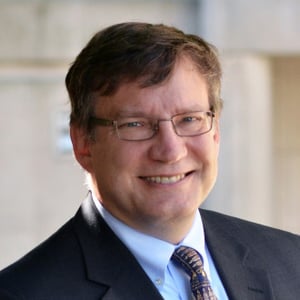
Chairman and Founder, Institute for Free Speech; Josiah H. Blackmore II/Shirley M. Nault Designated Professor of Law, Capital University Law School
Senior Fellow, Cato Institute
Doug Bandow is a senior fellow at the Cato Institute, specializing in foreign policy and civil liberties. He worked as special assistant to President Reagan and editor of the political magazine Inquiry. He writes regularly for leading publications such as Fortune magazine, National Interest, Wall Street Journal, and Washington Times. Bandow speaks frequently at academic conferences, on college campuses, and to business groups. Bandow has been a regular commentator on ABC, CBS, NBC, CNN, Fox News Channel, and MSNBC. He holds a J.D. from Stanford University.

General Partner, DT Global
John P. DeBlasio is DT Global's General Partner, Chairman of DT Institute, Founder of the Global Peace and Development (GPD) Charitable Trust, and Managing Director of Bootstrap Capital.
John is currently serving on the Board of Directors of the Chicago Council on Global Affairs, Illinois Joining Forces Foundation, the Crown Center for Middle East Studies at Brandeis University, the Social Science Foundation (Korbel School of International Affairs at Denver University), Nuestros Pequenos Hermanos International (NPHI), and The Rafik Hariri Center for the Middle East, and MVP Vets.
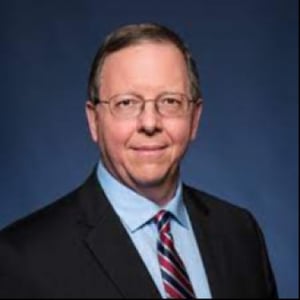
Professor of Political Science, University of Chicago, Department of Political Science
Robert A. Pape is Professor of Political Science at the University of Chicago specializing in international security affairs. His publications include Cutting the Fuse: The Explosion of Global Suicide Terrorism and How to Stop It (Chicago 2010) (with James Feldman); Dying to Win: The Strategic Logic of Suicide Terrorism (Random House 2005); Bombing to Win: Air Power and Coercion in War (Cornell 1996), "Why Economic Sanctions Do Not Work," International Security (1997), "The Determinants of International Moral Action," International Organization (1999); "The Strategic Logic of Suicide Terrorism," American Political Science Review (2003); and "Soft Balancing against the United States," International Security (2005). His commentary on international security policy has appeared in The New York Times, Washington Post, New Republic, Boston Globe, Los Angeles Times, and Bulletin of Atomic Scientists, as well as on Nightline, ABC News, CBS News, CNN, Fox News, and National Public Radio. Before coming to Chicago in 1999, he taught international relations at Dartmouth College for five years and air power strategy for the USAF's School of Advanced Airpower Studies for three years. He received his PhD from the University of Chicago in 1988 and graduated summa cum laude and Phi Beta Kappa from the University of Pittsburgh in 1982. His current work focuses on the causes of suicide terrorism and the politics of unipolarity. He is the director of the Chicago Project on Security and Threats.
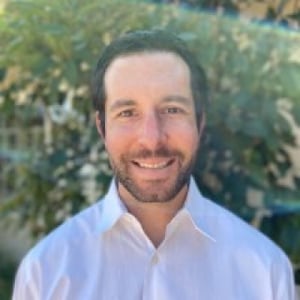
President, EmpiriLaw
Dr. Adam Feldman is the creator and author of the blog Empirical SCOTUS and the Substack Legalytics. He is also the statistics editor for SCOTUSblog. He also runs the legal analytics/AI consulting business Empiri-Law and teaches college courses in political science. He has a law degree from U.C. Berkeley's Boalt Hall School of Law and practiced law as a trial lawyer for several years before starting a Ph.D. in Political Science from the University of Southern California. Upon completion of the Ph.D. Adam pursued a postdoctoral fellowship through Columbia Law School. He has fifteen published articles in law and peer-reviewed journals.
President, EmpiriLaw
Dr. Adam Feldman is the creator and author of the blog Empirical SCOTUS and the Substack Legalytics. He is also the statistics editor for SCOTUSblog. He also runs the legal analytics/AI consulting business Empiri-Law and teaches college courses in political science. He has a law degree from U.C. Berkeley's Boalt Hall School of Law and practiced law as a trial lawyer for several years before starting a Ph.D. in Political Science from the University of Southern California. Upon completion of the Ph.D. Adam pursued a postdoctoral fellowship through Columbia Law School. He has fifteen published articles in law and peer-reviewed journals.
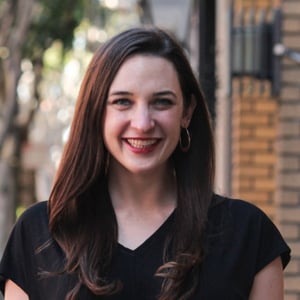
General Counsel, Strive
Before joining Strive, Alexandra served as the Director of Regulatory Affairs at River Financial, where she handled all regulatory and government matters and served as product counsel. Prior to her time at River, Alexandra worked at the U.S. Department of Treasury, first in the General Counsel’s office and then as the youngest-ever Executive Secretary, where she worked directly with Secretary Mnuchin. Alexandra previously worked as an associate in the Washington, D.C. office of Akin Gump. She clerked for then-Justice Allison Eid on the Colorado Supreme Court and Judge Jennifer Elrod on the U.S. Court of Appeals for the Fifth Circuit. She holds a J.D. from the University of Texas and a B.A. from The King’s College.
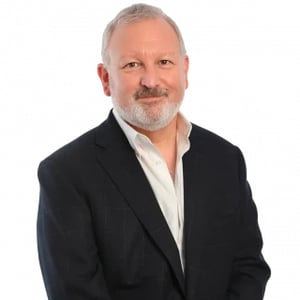
Senior Advisor to the Secretary, Nominee for General Counsel, U.S. Department of Commerce
Pierre is a Senior Advisor to the Secretary of Commerce. He is the nominee for General Counsel of the Commerce Department.
Before joining Commerce in February 2025, Pierre served for six years as Chief Legal Officer of McKinsey & Company. He was previously a partner at Cahill Gordon & Reindel, and was a Managing Director at Credit Suisse, where he served in senior legal and risk roles. Early in his career, Pierre was an Assistant U.S. Attorney for the Southern District of New York. Pierre has been active in academic life for three decades, including teaching law courses at Yale, Columbia and Fordham, as well as ethics courses at Wharton. He has served on numerous non-profit boards including Cambridge University’s Judge Business School, Princeton’s Center for Public Policy and Finance, the Practicing Law Institute, and the Touro Synagogue Foundation.
Pierre is a graduate of Princeton University and Columbia Law School.
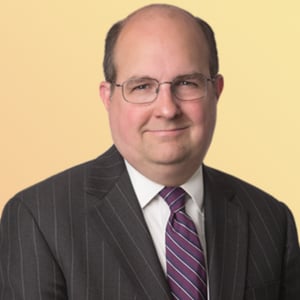
Partner, International Trade, King & Spalding LLP
Stephen P. Vaughn is a Partner in the International Trade Team of King & Spalding who works primarily on international trade litigation and policy matters. In April 2019, Stephen completed more than two years of service as the General Counsel for the Office of the United States Trade Representative (USTR). In that position, he managed a team of government attorneys representing U.S. interests in both trade negotiations and trade litigation. During two months in early 2017, Stephen also served as the acting U.S. Trade Representative. He is widely regarded as one of the world’s foremost authorities on current U.S. trade policy, as well as one of the most talented U.S. trade remedy litigators.
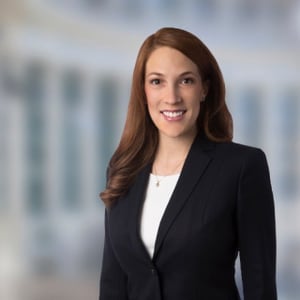
Former Associate, Office of White House Counsel, Office of White House Counsel
Annie Croslow is most recently the former Chief Special Counsel to Ranking Member Grassley on the Senate Judiciary Committee where she coordinated the Republican response to the Supreme Court nomination of Ketanji Brown Jackson. Before her time in the Senate, Annie served in the White House Counsel’s Office for President Trump during his first term, where she worked on numerous judicial and executive nominations including that of Justice Amy Coney Barrett and served as clearance counsel.
Before joining the White House, Annie was an associate for Debevoise & Plimpton where her practice focused on white collar defense and sensitive investigations. Annie earned her J.D. from Vanderbilt University Law School, her Masters in Accountancy from the University of Notre Dame, and her Bachelors in Business Administration from Belmont University. Annie holds her CPA license. Before attending law school, Annie worked as an auditor for Deloitte.
President, EmpiriLaw
Dr. Adam Feldman is the creator and author of the blog Empirical SCOTUS and the Substack Legalytics. He is also the statistics editor for SCOTUSblog. He also runs the legal analytics/AI consulting business Empiri-Law and teaches college courses in political science. He has a law degree from U.C. Berkeley's Boalt Hall School of Law and practiced law as a trial lawyer for several years before starting a Ph.D. in Political Science from the University of Southern California. Upon completion of the Ph.D. Adam pursued a postdoctoral fellowship through Columbia Law School. He has fifteen published articles in law and peer-reviewed journals.

Associate Professor of Law, Antonin Scalia Law School at George Mason University
Robert Luther III was appointed Associate Professor of Law in 2025 after serving as Distinguished Professor of Law from 2024-2025 and Adjunct Professor of Law from 2019-2024. He teaches and writes on the federal courts, legal and judicial ethics, political law, Congress, and professional sports. He has served at high levels in all three branches of the federal government and recently founded Constitutional Solutions PLLC—a law firm that navigates judicial candidates, judges, elected officials, professional athletes, and executives through high-stakes hearings, investigations, and reputational attacks.
Immediately before joining the Scalia Law faculty, Professor Luther spent over five years in the Washington, D.C. office of Jones Day, where his practice focused on strategic counseling, crisis management, and litigation. Prior to joining Jones Day, he served as Associate Counsel to the President of the United States in the White House Counsel’s Office. In the White House, he co-managed the judicial selection process and supervised the preparation of over 150 federal judicial nominees for their successful U.S. Senate confirmation hearings. The New York Times Magazine referred to his work on judicial selection during this period as “unique in White House history.” Before joining the White House, Professor Luther served as Counsel to then–U.S. Senator Jeff Sessions (R-Ala.) on the U.S. Senate Judiciary Committee, where he served as a core member of the team that prepared the Senator for confirmation as United States Attorney General. Professor Luther was also a law clerk to Judge Daniel A. Manion of the U.S. Court of Appeals for the Seventh Circuit. Earlier in his career, Professor Luther practiced civil and appellate litigation at a boutique firm in Williamsburg, Va. and taught at William & Mary Law School.
Professor Luther frequently speaks on the legal profession, political law, and federal judicial selection. His public work has been covered by or appeared in The New York Times, The Washington Post, The Wall Street Journal, Bloomberg, Fox News, The Hill, Politico, the Washington Examiner, National Law Journal, Law360, The Washington Reporter, and elsewhere, while his scholarship is published in the law journals of nearly twenty universities including three journals of Harvard University. He holds active law licenses in Virginia, the District of Columbia, the U.S. Supreme Court, and half of the U.S. Courts of Appeals.
In 2025, Virginia Governor Glenn Youngkin appointed Professor Luther to the Board of Visitors to Mount Vernon. He is an elected member of the American Law Institute (ALI) and serves on the Advisory Board of the Wilson Center for Leadership at Hampden-Sydney College. Since 2019, he has helped over 200 of his students secure clerkships with federal judges.
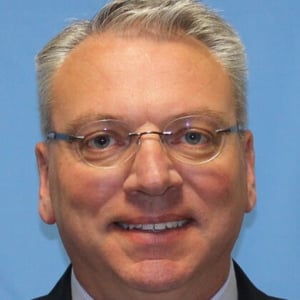
Judge, United States Court of Appeals, Third Circuit
David J. Porter is a judge on the United States Court of Appeals for the Third Circuit. He was nominated by President Donald Trump and confirmed on October 11, 2018. Before his appointment, he was a shareholder at Buchanan Ingersoll & Rooney PC, where he practiced commercial and civil litigation. Porter received his bachelor’s degree from Grove City College and his J.D. from the George Mason University School of Law. He clerked for Judge D. Brooks Smith on the United States District Court for the Western District of Pennsylvania.
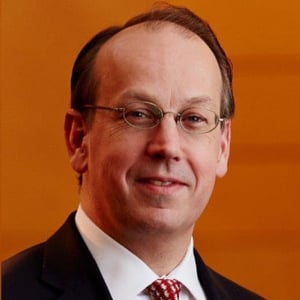
Partner, Clement & Murphy, PLLC
Paul served as the 43rd Solicitor General of the United States from June 2005 until June 2008. Before his confirmation as Solicitor General, he served as Acting Solicitor General for nearly a year and as Principal Deputy Solicitor General for over three years.
Paul has argued over 100 cases before the United States Supreme Court, including McConnell v. FEC, Tennessee v. Lane, United States v. Booker, MGM v. Grokster, Hobby Lobby v. Burwell, Epic Systems Corp. v. Lewis, Rucho v. Common Cause, Facebook v. Duguid, and TransUnion v. Ramirez. Paul has argued more Supreme Court cases since 2000 than any lawyer in or out of government. He has also argued many important cases in the lower courts, including Walker v. Cheney, United States v. Moussaoui and NFL v. Brady.
Paul’s practice focuses on appellate matters, constitutional litigation and strategic counseling. He represents a broad array of clients in the Supreme Court and in federal and state appellate courts. Last year, for example, he successfully argued Supreme Court cases involving significant issues of energy regulation, statutory interpretation, state sovereign immunity and Article III standing, and successfully argued a trademark appeal in the Fourth Circuit, and a constitutional appeal before the en banc Eleventh Circuit.
Paul focuses on high-stakes appeals. In recent years, he successfully defended a $1.2 billion jury verdict for clients in a Tenth Circuit case, while securing the reversal of an over $2 billion jury verdict for another client in the Seventh Circuit and the approval of a nearly $1 billion dollar class action settlement in the Third Circuit. He has initiated major administrative law challenges and constitutional litigation against the federal government, such as the successful challenge to the HHS drug-pricing rule and threatened challenges that led to the withdrawal of the Treasury Department’s proposed cryptocurrency regulations. He also counsels clients on a variety of strategic legal questions, whether arising from pending legislation, government inquiries or ongoing litigation.
Paul has undertaken substantial pro bono engagements in the Supreme Court, such as twice successfully representing the defendant in Bond v. United States and successfully representing the Omaha Tribe in Nebraska v. Parker, the guardian ad litem in Adoptive Couple v. Baby Girl, the defendant in Sekhar v. United States, a high school football coach in Kennedy v. Bremerton, and the Little Sisters of the Poor. Paul’s pro bono representation also precipitated the federal government’s confession of error in United States v. Rojas.
Following law school, Paul clerked for Judge Laurence H. Silberman of the U.S. Court of Appeals for the D.C. Circuit and for Associate Justice Antonin Scalia of the U.S. Supreme Court. After his clerkships, he went on to serve as Chief Counsel of the U.S. Senate Subcommittee on the Constitution, Federalism and Property Rights.
Paul is a Distinguished Lecturer in Law at the Georgetown University Law Center, where he has taught in various capacities since 1998. He also serves as a Senior Fellow of the Law Center’s Supreme Court Institute. He is the Justice Joseph Story Distinguished Practitioner in Residence at the Gray Center at Scalia Law School.
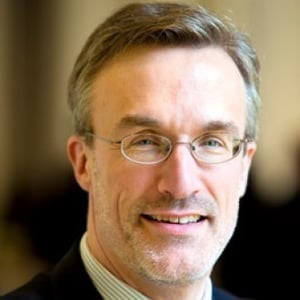
Edward B. Shils Professor of Law and Professor of Political Science; Director, Penn Program on Regulation, University of Pennsylvania Law School
Cary Coglianese is the Edward B. Shils Professor of Law and Professor of Political Science at the University of Pennsylvania, where he currently serves as the director of the Penn Program on Regulation and has served as the law school’s Deputy Dean for Academic Affairs. He specializes in the study of regulation and regulatory processes, with an emphasis on the empirical evaluation of alternative regulatory strategies and the role of public participation, negotiation, and business-government relations in policy making. His most recent books include: Achieving Regulatory Excellence; Does Regulation Kill Jobs?; Regulatory Breakdown: The Crisis of Confidence in U.S. Regulation; Import Safety: Regulatory Governance in the Global Economy; and Regulation and Regulatory Processes.
Prior to joining Penn Law, Coglianese spent a dozen years on the faculty at Harvard University’s John F. Kennedy School of Government. He also has taught as a visiting law professor at Stanford and Vanderbilt, founded the Law & Society Association’s international collaborative research network on regulatory governance, served as a founding editor of the peer-reviewed journal Regulation & Governance, and created and now advises the daily production of The Regulatory Review. The chair of the Administrative Conference of the United States' committee on rulemaking, he has led a National Science Foundation initiative on e-rulemaking, served on the ABA’s task force on improving Regulations.Gov, and chaired a task force on transparency and public participation in the regulatory process that offered a blueprint to the Obama Administration on open government. He is a co-chair of the American Bar Association’s administrative law section committee on e-government, past co-chair of the section's committee on rulemaking, and a past member of the section's Council. He currently serves as a member of a committee of the National Academies of Sciences, Engineering, and Medicine studying performance-based safety regulation and of an Aspen Institute dialogue on energy policy governance. He has served as a consultant to the Administrative Conference of the United States, Environment Canada, the Organization for Economic Cooperation and Development, the U.S. Department of Commerce, the U.S. Department of Transportation, and the U.S. Environmental Protection Agency.

Maurice and Hilda Friedman Professor of Law, Columbia Law School; CEO, New Civil Liberties Alliance
Philip Hamburger is the Maurice and Hilda Friedman Professor of Law at Columbia Law School, and Chief Executive Officer at the New Civil Liberties Alliance. Before coming to Columbia, he was the John P. Wilson Professor at the University of Chicago Law School.
He writes on constitutional law and its history—with particular emphasis on religious liberty, freedom of speech and the press, judicial office, administrative power, and unconstitutional conditions.
His books are Separation of Church and State (Harvard 2002), Law and Judicial Duty (Harvard 2008), Is Administrative Law Unlawful? (Chicago 2014), The Administrative Threat (Encounter 2017), and Liberal Suppression: Section 501(c)(3) and the Taxation of Speech (Chicago 2018). A forthcoming book is Purchasing Submission: Conditions, Power, and Freedom (Harvard 2021).
He is a member of the American Academy of Arts and Sciences, and he has served on the board of directors of the American Society for Legal History. He has twice received the Sutherland Prize for the most significant contribution to English legal history, and has been awarded the Henry Paolucci - Walter Bagehot Book Award, the Hayek Book Prize, and the Bradley Prize.
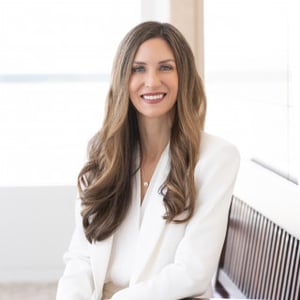
United States District Judge, United States District Court for the Middle District of Florida
In November 2020, the Senate confirmed Kathryn Kimball Mizelle as a United States District Judge for the Middle District of Florida. At age 33, she became the youngest Article III judge in the country. Prior to her confirmation, Judge Mizelle was in private practice at Jones Day, where she focused on complex civil and criminal litigation and appeals. Judge Mizelle previously served at the United States Department of Justice in the Office of the Associate Attorney General, in the Southern Criminal Enforcement Section of the Tax Division, and in the United States Attorney’s Office for the Eastern District of Virginia. Judge Mizelle has also taught as an adjunct professor of law at the University of Florida Levin College of Law and at George Mason University’s Antonin Scalia Law School.
Judge Mizelle earned her B.A., summa cum laude, from Covenant College, and her J.D., summa cum laude, from the University of Florida Levin College of Law. After graduation, Judge Mizelle served as a law clerk at every level of the federal judiciary: at the Supreme Court for Justice Clarence Thomas, at the D.C. Circuit for Judge Gregory G. Katsas, at the Eleventh Circuit for Chief Judge William H. Pryor Jr., and at the Middle District of Florida for Judge James S. Moody Jr.
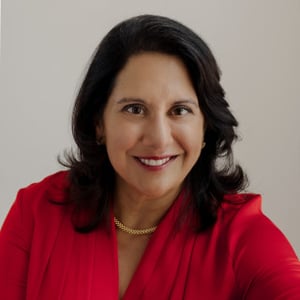
Judge, United States Court of Appeals, District of Columbia Circuit
Judge Rao was appointed to the United States Court of Appeals for the District of Columbia Circuit in March 2019. She graduated from Yale College in 1995 and the University of Chicago Law School in 1999. Following graduation, she served as a law clerk to Judge J. Harvie Wilkinson III of the U.S. Court of Appeals for the Fourth Circuit and, in the 2001 October Term, as law clerk to Justice Clarence Thomas of the U.S. Supreme Court. Between her clerkships, Judge Rao served as counsel for nominations and constitutional law to the U.S. Senate Committee on the Judiciary. In 2002, she joined the international arbitration group of Clifford Chance LLP in London, England. From 2005-2006, she served as Special Assistant and Associate White House Counsel to President George W. Bush. From 2006 to 2017, Judge Rao was a professor at the Antonin Scalia Law School at George Mason University, where she taught constitutional law, legislation and statutory interpretation, and the history and foundations of the administrative state. In 2014, she founded the Center for the Study of the Administrative State, a non-profit Center that promotes academic scholarship and public policy debates about administrative law. In July 2017, she was appointed to serve as the Administrator of the Office of Information and Regulatory Affairs in the Office of Management Budget. She served in this position until her appointment to the D.C. Circuit.

January Luncheon with Minister Kentaro Fujimoto
Montgomery Lawyer Chapter
Montgomery, AL7 Minute Presentations of Works in Progress Panel 1-A
New Orleans, LA27th Annual Faculty Conference
New Orleans, LANRSC v. FEC: The Future of Campaign Finance
Columbus Lawyer Chapter
Columbus, OHThe World Aflame - How Executive Power is Reshaping the World and Responding to Domestic Instability
Chicago Lawyer Chapter
Chicago, IL2024-2025 Supreme Court Wrap Up - Las Vegas Chapter
Las Vegas Lawyers Chapter
Las Vegas, NVLunch & Plenary Panel 1: The Effect of the New Administration on Business, and What’s Still to Come
Chicago, ILFourth Annual In-House Counsel Network Conference
Chicago, ILLuncheon & Session 2: The Road to the Bench Within the Third Circuit
2025 Third Circuit Chapters Conference
Philadelphia, PAAdministrative Law and Regulation: What Is the Future of Administrative Law?
Paul D. Clement, Cary Coglianese, Philip A. Hamburger, Kathryn Kimball Mizelle, Neomi Rao
The Supreme Court's latest term was one of its most significant for administrative law. The...