

Sterling Professor of Law and Political Science, Yale Law School
Akhil Reed Amar is Sterling Professor of Law and Political Science at Yale University, where he teaches constitutional law in both Yale College and Yale Law School. After graduating from Yale College, summa cum laude, in 1980 and from Yale Law School in 1984, and clerking for Judge (later Justice) Stephen Breyer, Amar joined the Yale faculty in 1985 at the age of 26. He is Yale’s only living professor to have won the University’s unofficial triple crown — the Sterling Chair for scholarship, the DeVane Medal for teaching, and the Lamar Award for alumni service.
Amar’s work has won awards from both the American Bar Association and the Federalist Society, and he has been cited by Supreme Court justices across the spectrum in more than 50 cases — tops among scholars under age 70. According to both Fred Shapiro’s landmark 2021 study of lifetime scholarly citations and Heinonline’s most recent tabulation of lifetime law-review citations, Amar is America’s second most-cited legal scholar still under age 70. He is a member of the American Academy of Arts and Sciences and has written widely for popular publications, including The New York Times, The Washington Post, The Wall Street Journal, Time, and The Atlantic. He was an informal consultant to the popular TV show The West Wing and his scholarship has been showcased on many broadcasts, including The Colbert Report, Morning Joe, AC360, Velshi, Fox News @ Night with Shannon Bream, Fareed Zakaria GPS, Erin Burnett Outfront, and Constitution USA with Peter Sagal.
He is the author of more than a hundred law review articles and several books, including The Bill of Rights (1998 — winner of the Yale University Press Governors’ Award), America’s Constitution (2005 — winner of the ABA’s Silver Gavel Award), America’s Unwritten Constitution (2012 — named one of the year’s 100 best nonfiction books by The Washington Post), and The Constitution Today (2016 — named one of the year’s top ten nonfiction books by Time magazine). The first volume of his ambitious trilogy on American constitutional history from the Founding to the present, The Words That Made Us: America’s Constitutional Conversation, 1760-1840, came out in May 2021. The second volume, Born Equal: Remaking America’s Constitution, 1840-1920, will be published in September 2025 and is already available for pre-order. All together, his nonfiction books have won two starred reviews from Publishers Weekly and three starred reviews from Kirkus—tops, it is believed, among legal scholars under age 70. Together with Vikram David Amar (YLS ’88), he has a bi-weekly column on the Supreme Court on the distinguished website SCOTUSblog. Along with Andy Lipka, he co-hosts a popular and free weekly podcast, Amarica’s Constitution, whose listeners are eligible for CLE credit in most American jurisdictions. A wide assortment of his articles and op-eds and video links to many of his public lectures and free online courses may be found at akhilamar.com.

Judge, United States Court of Appeals, Eleventh Circuit
On March 20, 2018, Judge Elizabeth L. Branch (Lisa) was sworn in as a United States Circuit Judge for the Eleventh Circuit.
Judge Branch attended and graduated from Davidson College in North Carolina (B.A., cum laude, 1990), and Emory University School of Law (J.D., with distinction, 1994).
After graduating from law school, Judge Branch served as a federal law clerk to The Honorable J. Owen Forrester of the U.S. District Court for the Northern District of Georgia from 1994 to 1996. Following her clerkship, Judge Branch joined the litigation department of Smith, Gambrell & Russell, LLP in Atlanta as an associate and then a partner.
From 2004 to 2008, Judge Branch was a senior official in the Administration of President George W. Bush in Washington, D.C. She served first as the Associate General Counsel for Rules and Legislation at the U.S. Department of Homeland Security and then as the Counselor to the Administrator of the Office of Information and Regulatory Affairs at the U. S. Office of Management and Budget.
She returned to Smith Gambrell in 2008 as a litigation partner. Judge Branch then was appointed to the Court of Appeals of Georgia by Governor Nathan Deal, taking office on September 4, 2012, where she served until March 19, 2018.
Judge Branch is a member of the Board of Advisors of the Atlanta Lawyers Chapter for the Federalist Society for Law and Public Policy Studies.
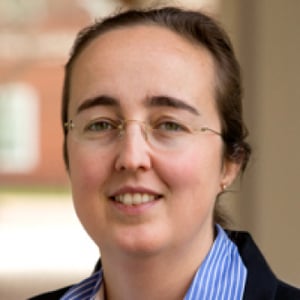
Assistant Professor of Political Science, Old Dominion University
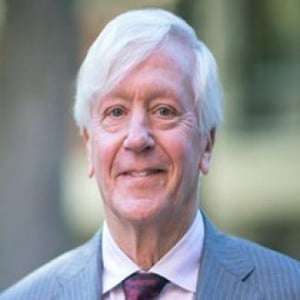
David and Mary Harrison Distinguished Professor of Law, University of Virginia School of Law
G. Edward White joined the Virginia law faculty in 1972 after a clerkship with Chief Justice Earl Warren of the Supreme Court of the United States and a year as visiting scholar at the American Bar Foundation. He was appointed John B. Minor Professor of Law and History in 1987, and held that chair until 2003, when he became David and Mary Harrison Distinguished Professor of Law. In 1992, he was appointed to a University Professorship, which he held until 2003. From 1990 until 1992 and from 2001-03, he was the Sullivan & Cromwell Research Professor; from 1994-97 the E. James Kelly Research Professor; and from 1999-2001 the Class of 1963 Research Professor. He has held visiting appointments at New York Law School, William & Mary School of Law, Brooklyn Law School, Arizona College of Law, the London School of Economics and Political Science, and Harvard Law School. He has been a Guggenheim Fellow, and twice a senior fellow of the National Endowment for the Humanities. He is a fellow of the American Academy of Arts & Sciences, a fellow of the Society of American Historians, and a member of the American Law Institute.He received the Roger and Madeleine Traynor Faculty Achievement Award in 2008.
White's 14 published books have won numerous honors and awards. These include final listing for the Pulitzer Prize in history, the Silver Gavel Award from the American Bar Association, the James Willard Hurst Prize from the Law & Society Association, the Littleton-Griswold Prize from the American Historical Association, the Scribes Award and the Association of American Law Schools' Triennial Coif Award. White's books have garnered 15 such honors and awards since 1976.
White was editor of the Studies in Legal History series for the North Carolina Press from 1980-85, and advisor on law manuscripts for Oxford University Press from 1986-96. He was on the editorial board of the Virginia Quarterly Review from 1980-2002. He has served on the Commission for Undergraduate Education in Law and the Humanities, and has taught summer humanities seminars for lawyers and judges under the auspices of the National Endowment for the Humanities.
White has delivered several endowed lectures, including the inaugural John Marshall Lecture, sponsored by the Boston Bar Association; the inaugural Jerome Hall Lecture at Hastings College of Law; the Swinford Lecture, sponsored by the University of Kentucky School of Law and the Kentucky Bar Association; the Keck Lecture at Amherst College, the Rosenthal Lectures at Northwestern University School of Law; the Neesima Lectures at Doshisha University, Japan; the Fulton Lecture at the University of Chicago School of Law and the Knowlton Distinguished Lecture at the University of South Carolina School of Law. His most recent lecture was the 2010 Hendricks Law and History Lecture at Washington & Lee Law School.
White's 1996 book, Creating the National Pastime: Baseball Transforms Itself, 1903-1953, reflects his life-long participation and interest in athletics. He lettered in four sports in college, formerly coached the Charlottesville High School girls soccer team, and has won a number of state- and citywide tournaments in doubles squash.
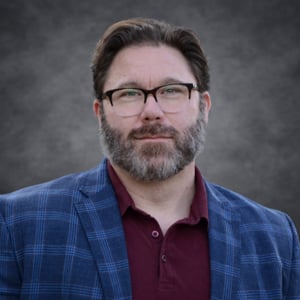
Founder, Consilia Law, PLLC
Phil Gordon is the founder of Consilia Law, PLLC, in Waco, Texas. He practices election and political law and regulatory compliance, and advises businesses in regulated industries.
Phil began his career as Associate Counsel to the 58th Presidential Inaugural Committee. He then spent nearly a decade at a nationally recognized political law firm in Washington, D.C. and built a litigation practice centered on election law, redistricting, and constitutional litigation. He has been author or co-author of nine briefs before the Supreme Court of the United States, including as counsel for parties in Moore v. Harper and Upstate Jobs Party v. Kosinski, and as amicus counsel in Alexander v. South Carolina State Conference of the NAACP, Trump v. Anderson, Gill v. Whitford, and Public Interest Legal Foundation v. Benson, among others.
Beyond the Supreme Court, Phil has tried redistricting cases before three-judge federal panels in Pennsylvania, Michigan, and Louisiana, including as trial counsel for the State of Louisiana in Robinson v. Callais. He has briefed appeals in the D.C., Second, Sixth, and Eleventh Circuits, including victories for the NRSC and RGA in the Eleventh Circuit and for New Republican PAC in the D.C. Circuit. His broader practice covers campaign finance compliance, FARA, and regulatory counsel for political committees, officeholders, advocacy organizations, and businesses operating in regulated environments.
Phil holds a J.D. from Baylor Law School, an M.S. in Community and Regional Planning from the University of Texas at Austin, and a B.A. in Philosophy from California State University, Los Angeles. He is licensed in Texas, Virginia, and the District of Columbia, and is admitted to practice before the Supreme Court of the United States, multiple federal courts of appeals, and several federal district courts.
Professor of Political Science, University of Florida
Dr. Michael P. McDonald is Professor of Political Science at University of Florida. He received his Ph.D. in Political Science from University of California, San Diego and B.S. in Economics from California Institute of Technology. He held a one-year post-doc fellowship at Harvard University and previously taught at Vanderbilt University; University of Illinois, Springfield; and George Mason University.
His research interests are in the areas of elections and methodology. His voter turnout research shows that turnout is not declining, the ineligible population is rising. He is a co-principle investigator on the Public Mapping Project, a project to encourage public participation in redistricting. He is co-author with Micah Altman of The Public Mapping Project: How Public Participation Can Revolutionize Redistricting; co-author with Micah Altman and Jeff Gill of Numerical Issues in Statistical Computing for the Social Scientist,and is co-editor with John Samples of The Marketplace of Democracy: Electoral Competition and American Politics. His research appears in several edited volumes and in scholarly journals including American Political Science Review, American Journal of Political Science, Journal of Politics, Public Opinion Quarterly, Political Behavior, Political Analysis, Political Geography, State Politics and Policy Quarterly, PS: Political Science and Politics, Sociological Methods and Research, Social Science Computing Review, The Election Law Journal, Política y Gobierno, and the law review journals of New York University Journal of Legislation and Public Policy, Duke J. Constitutional Law and Public Policy, University of Richmond Law Review, Case Western Law Review and the Georgetown Law Review.
On the practical side of politics, Dr. McDonald has worked for the national exit poll organization; consulted to the U.S. Election Assistance Commission; consulted to the Pew Center for the States; served on campaign staff for state legislative campaigns in California and Virginia; has worked for national polling firms; has been an expert witness for election lawsuits in Florida, Georgia, Indiana, Kansas, Massachusetts, Rhode Island, and Washington; and has worked as a redistricting consultant or expert witness in Alaska, Arizona, California, Georgia, Maryland, Michigan, New Jersey, New York, Ohio, Oklahoma, Texas, and Virginia. He has worked as a media consultant to the Associated Press, ABC, and NBC, and is frequently quoted in the media regarding United States elections. His opinion editorials have appeared in The Washington Post, USA Today, The Politico, The Hill, The Milwaukee Journal-Sentinel, The American Prospect, and Roll Call.
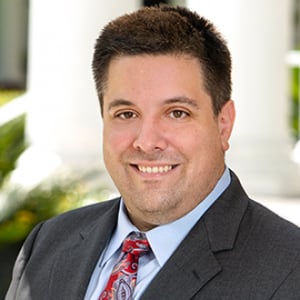
Sheila M. McDevitt Professor of Law and Faculty Director of the Election Law Center, Florida State University College of Law
Professor Morley joined FSU Law in 2018, and teaches and writes in the areas of election law, constitutional law, remedies, and the federal courts. He is best known for his work on election emergencies and post-election litigation, nationwide and other defendant-oriented injunctions, the jurisdiction of the federal courts and their equitable powers more generally. He has testified before congressional committees, made presentations to election officials for the U.S. Election Assistance Commission and participated in bipartisan blue-ribbon groups to develop election reforms. The governor of Florida also appointed Professor Morley to the Criminal Punishment Code Task Force, to propose potential revisions to the legislature.
The U.S. Supreme Court has cited several of his articles, and he was counsel of record for the successful Petitioner in a landmark campaign finance case. Professor Morley has appeared on C-SPAN, Court TV, Fox News and numerous local news programs, and has been quoted in the Washington Post, Los Angeles Times, Roll Call, Politico, U.S. News and World Report, and a wide range of other national publications. His work has been published in many of the nation’s top law reviews, including the Georgetown Law Journal, Northwestern University Law Review, Boston University Law Review and Emory Law Journal.
Before joining FSU Law, Professor Morley was a Climenko Fellow and Lecturer in Law at Harvard Law School. Prior to his experience in academia, he served in government as special assistant to the General Counsel of the Army at the Pentagon, as well as a law clerk for Judge Gerald B. Tjoflat of the U.S. Court of Appeals for the Eleventh Circuit. During his tenure with the Army General Counsel’s office, he was awarded the Meritorious Civilian Service Award and the Army Staff Lapel Pin. He also worked as an associate at Williams & Connolly LLP and the Supreme Court & Appellate group of Winston & Strawn, LLP, both in Washington, D.C.
Professor Morley earned his J.D. from Yale Law School in 2003, where he was a senior editor on the Yale Law Journal; served on the moot court board; and received the Thurman Arnold Prize for Best Oralist in the Morris Tyler Moot Court of Appeals.
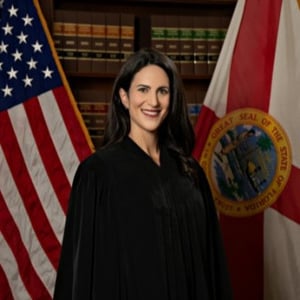
Justice, Florida Supreme Court
On May 23, 2023, Governor Ron DeSantis appointed Justice Meredith L. Sasso to be the 93rd justice of the Supreme Court of Florida.
Justice Sasso was raised in Tallahassee. She received her undergraduate degree from the University of Florida in 2005 and her law degree from the University of Florida in 2008, where she was a member of the Justice Campbell Thornal Moot Court Board. She began her career in private practice, representing clients in large loss general liability, auto negligence, and complex commercial claims in state and federal courts at trial and on appeal. She also served as guardian ad litem, representing abused or neglected children.
In August 2016, Justice Sasso joined the Office of the General Counsel to Governor Rick Scott, serving as Chief Deputy General Counsel. In this role, she represented the Governor in litigation before the Florida Supreme Court, the First District Court of Appeal, and state and federal trial courts, among other duties. In January 2019, Governor Rick Scott appointed her to the Fifth District Court of Appeal. Governor Ron DeSantis recommissioned her to the newly created Sixth District Court of Appeal on January 1, 2023, where she was elected by her colleagues to serve as its first Chief Judge.
She is an appointed member of the Florida Bar Appellate Court Rules Committee. She is also a member of the American Enterprise Institute Leadership Network and the Federalist Society.
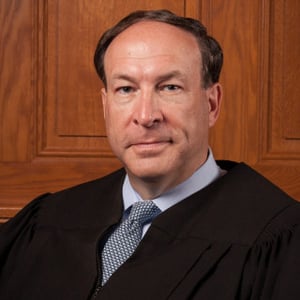
Judge, United States Court of Appeals, Seventh Circuit
Michael B. Brennan was confirmed and sworn in as a Circuit Judge for the U.S. Court of Appeals for the Seventh Circuit in May 2018.
He previously worked as a partner in the Milwaukee law firm of Gass Weber Mullins LLC, where he tried cases and handled appeals in federal and state courts, as a judge on the Milwaukee County Circuit, where he presided over a variety of criminal and civil calendars, and as an assistant district attorney in the Milwaukee County District Attorney’s office.
Brennan’s undergraduate degree is from the University of Notre Dame, and his law degree from Northwestern University School of Law, where he was an editor on the law review and the moot court champion. He served as a law clerk on the U.S. District Court for the Eastern District of Wisconsin and the U.S. Court of Appeals for the Seventh Circuit.
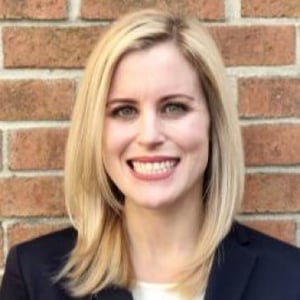
Lecturer in Law, University of Chicago Law School
Madeline Lansky is Lecturer in Law at the University of Chicago Law School. She received her B.A. in Political Science from the University of Southern California and her J.D. from the University of Chicago Law School. Since graduation, she has served as a law clerk to Judge William H. Pryor Jr. on the U.S. Court of Appeals for the Eleventh Circuit and Justices Clarence Thomas and Amy Coney Barrett on the U.S. Supreme Court.
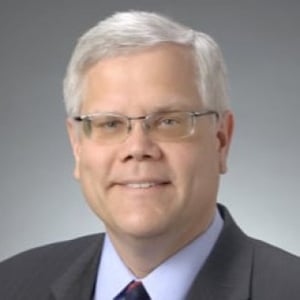
Partner and Business Lawyer, Foley & Lardner LLP
Eric Nelson is a partner and business lawyer with Foley & Lardner LLP, where he focuses his practice on contractual and distribution issues, including those involving manufacturers, service providers, utilities and energy marketers. Mr. Nelson received his bachelor’s degree in business administration in 1989 from the University of Wisconsin – Madison (where he received the School of Business Distinguished Student Award), and his J.D. degree in 1992 from Yale Law School. A member of the State Bar of Wisconsin, he served judicial clerkships with both the Hon. Clarence Thomas, Associate Justice of the U.S. Supreme Court (1993-1994), and the Hon. J. Michael Luttig, U.S. Court of Appeals for the Fourth Circuit (1992-1993), before joining the firm.
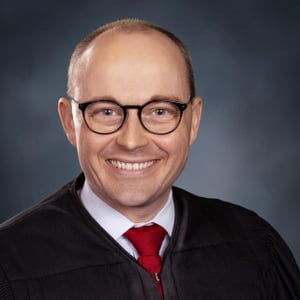
Judge, Illinois 18th Judicial Circuit
Judge Kenton Skarin serves on the Illinois 18th Judicial Circuit, a trial court of general jurisdiction that serves almost one million people in the western suburbs of Chicago.
Judge Skarin graduated first in his class from Northwestern University School of Law and summa cum laude from North Central College in Naperville, Illinois.
Earlier in his career, Judge Skarin clerked for Associate Justice Clarence Thomas at the United States Supreme Court and for Judge J. Harvie Wilkinson III at the United States Court of Appeals for the Fourth Circuit. Judge Skarin also practiced appellate law in the Chicago office of Jones Day and served as Deputy General Counsel to the Governor of Illinois.
Judge Skarin is a lifelong native of Wheaton, Illinois, where he lives with his wife and children.

President, Cass & Associates, PC
Ronald A. Cass is Dean Emeritus of Boston University School of Law (where he was Dean from 1990-2004), President of Cass & Associates, PC, former Vice-Chairman and Commissioner of the U.S. International Trade Commission, former faculty member at Boston University School of Law and the University of Virginia Law School, and Distinguished Senior Fellow at the C. Boyden Gray Center for the Study of the Administrative State. Dean Cass also sits as an arbitrator for commercial, international, and intellectual property rights disputes, and is a former United States member of the Panel of Conciliators of the International Centre for Settlement of Investment Disputes. He is a member of the Council of the Administrative Conference of the United States and has received seven presidential appointments, spanning Presidents Ronald Reagan to Donald J. Trump.
As a law professor, lecturer, and scholar, Dean Cass has been teaching and writing about a wide array of legal issues on topics such as administrative law and regulation, antitrust, constitutional law, communications, intellectual property, international trade, separation of powers, and legal process. He has published more than 160 scholarly books, chapters, articles, and papers, including a leading casebook on administrative law. Dean Cass has taught judges as well as students in schools of law, economics, business, and public policy and has held academic appointments in the United States, Europe, and Latin America.
In addition to his academic work, Dean Cass has participated in numerous important legal cases as an amicus, consultant, or expert, and has advised businesses, law firms, investment funds, and government agencies on a range of trade, antitrust, intellectual property, and regulatory issues. He has a broad range of affiliations with professional groups, and has received numerous honors, fellowships and awards.
Dean Cass is a graduate of the University of Virginia and the University of Chicago Law School.
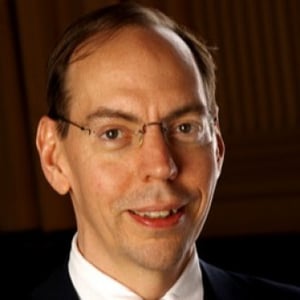
Stephen A. Cozen Professor of Law & Professor of Political Science; Director, Center for East Asian Studies, Penn Law
Jacques deLisle’s research and teaching focus on contemporary Chinese law and politics, including: legal reform and its relationship to economic reform and political change in China, the international status of Taiwan and cross-Strait relations, China’s engagement with the international order, legal and political issues in Hong Kong under Chinese rule, and U.S.-China relations. His writings on these subjects appear in a variety of fora, including international relations journals, edited volumes of multidisciplinary scholarship, and Asian studies journals, as well as law reviews. DeLisle is also professor of political science, director of the Center for East Asian Studies at Penn, deputy director of the Center for the Study of Contemporary China and director of the Asia Program at the Foreign Policy Research Institute. He has served frequently as an expert witness on issues of P.R.C. law and government policies and is a consultant, lecturer and advisor to legal reform, development and education programs, primarily in China.
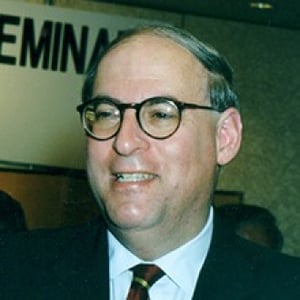
Partner, Law Offices of Gary N. Horlick
Mr. Horlick is one of the highest-ranked international trade lawyers in the world in the only two rankings, Euromoney/Institutional Investor and Who’s Who Legal, and is in the top tier of Chambers (which does not list individual rankings).
Mr. Horlick has worked in senior positions in the U.S. Congress (International Trade Counsel, U.S. Senate Finance Committee) and the Executive Branch (Head of Import Administration, U.S. Department of Commerce), where he was responsible for all U.S. antidumping and countervailing duty cases, Foreign Trade Zones, Special Import Programs, and the negotiation of the U.S.-EU Steel Agreement.
He has been Chairman of WTO and Mercosur panels, and has litigated in U.S. courts and administrative agencies; GATT and WTO tribunals; NAFTA Chapters 19 and 20 tribunals; and anti-dumping cases in more than 20 countries. He has worked on issues involving climate change, textile quotas and monitoring, Generalized System of Preferences, non-market economy status, customs and tariff classification and valuation, export controls, CFIUS and investor-state disputes.
Mr. Horlick has served as counsel to businesses in the U.S. (IBM, Cargill, Arch Chemicals and others) and other countries (Pemex, Noranda, Barilla and others); the U.S. Government and other governments (UK, Canada, Mexico, Chile, South Africa, the European Union, Peru, Australia, New Zealand, and others); and trade associations (National Cattlemen’s and Beef Association, Federation of the German Chemical Industry, American Forrest and Paper Association, and others).
He has written numerous articles and delivered speeches on international trade and investment. He has served as first Chairman of the WTO Permanent Group of Experts on Subsidies; Chairman of the International Section of the DC Bar; Vice Chairman of the Trade Committee of the International Bar Association; and is a member of the Council of Foreign Relations. He teaches international trade law at Yale, Georgetown, Columbia, and Berne Universities.
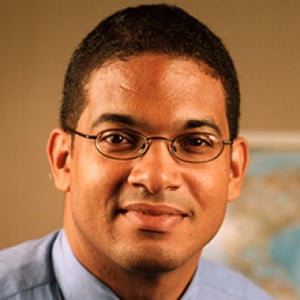
Benjamin Mazur Summer Research Professor of Law Affiliated Faculty, Ford Motor Company Center for Global Citizenship, Northwestern University School of Law
Jide Nzelibe joined Northwestern's faculty as an assistant professor in 2004 became a full Professor in 2008. He served as the Bigelow Teaching Fellow and Lecturer in Law at the University of Chicago before joining Northwestern Law. In addition to his JD from Yale Law School, he also holds an MPA in international relations from Princeton University, where he was awarded a fellowship from the Woodrow Wilson Foundation and a pre-doctoral fellowship from the Ford Foundation. His research and teaching interests include international trade, foreign relations law, public and private international law and contracts.

Deputy Secretary of Agriculture, U.S. Department of Agriculture
Judge Stephen Alexander Vaden was appointed as the Deputy Secretary of the U.S. Department of Agriculture on July 7, 2025. Alongside Secretary Brooke L. Rollins, Deputy Secretary Vaden leads the Department’s operations and implements policies that support America’s food and farm systems. A native of Union City, Tennessee, Deputy Secretary Vaden brings expertise in agricultural policy, law, and rural development. Previously, he served as a judge on the U.S. Court of International Trade and as General Counsel of USDA. Throughout Deputy Secretary Vaden’s time as General Counsel, he led successful Supreme Court litigation, advanced regulatory reform, and supported the implementation of the 2018 Farm Bill. He is a graduate of Yale Law School and Vanderbilt University. A public servant with strong agricultural roots, Deputy Secretary Vaden is committed to revitalizing rural America and ensuring an abundant, affordable, and safe U.S. food supply.
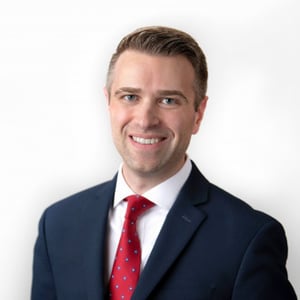
Managing Partner, Cramer Multhauf LLP
Attorney Matthew Fernholz focuses his practice on commercial litigation, trust and fiduciary disputes, business torts, trade secrets, non-compete agreements, defamation, and appellate work. In addition, he has developed one of the preeminent political and election law practices in the State of Wisconsin, and has handled several high-profile matters, from representing candidates for statewide office, successfully challenging the Governor’s emergency powers, arguing before the Wisconsin Elections Commission, and representing the Speaker of the Assembly.
Matthew frequently and successfully tries cases to verdict, and believes a lawyer unwilling to try a case should not take on a client in a litigation matter. In addition to this trial work, he has handled dozens of appeals, and countless dispositive motions.
His work has also been published in law review journals and newspapers alike.
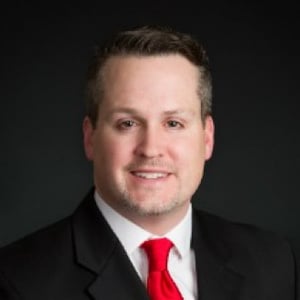
Professor of Political Science, University of Wisconsin - Madison
Ryan Owens is a Professor of Political Science and Affiliate Faculty in the Law School. He also is an Honorary Fellow in the Institute for Legal Studies. Owens studies law and courts and American political institutions. His work analyzes the United States Supreme Court, the United States Courts of Appeals, legal institutions, and judicial behavior. Professor Owens's work has appeared in the American Journal of Political Science, Journal of Politics, Political Research Quarterly, the Georgetown Law Journal, the William & Mary Law Review, the University of Illinois Law Review, Law & Society Review, and the Journal of Law and Courts.
Owens received grants from the National Science Foundation, the Harvard Provost, the University of Wisconsin Graduate School, the Center for Empirical Research in the Law, and the George H.W. Bush Library Foundation. He also received the first undergraduate mentoring award given by the Office of the Provost.
Between 2008 and 2011, Owens was Assistant Professor of Government at Harvard University, where he taught undergraduates and graduate students and seminars in the law school. From 2003-2008, Owens earned his Ph.D. at Washington University in Saint Louis. Prior to graduate school, Owens practiced law.
Professor Owens grew up in Kronenwetter, Wisconsin. He is co-owner of the Green Bay Packers, along with roughly 360,760 others.
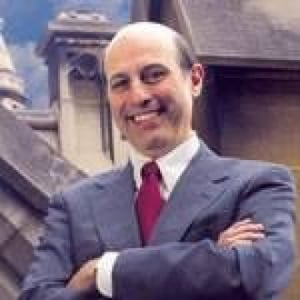
Garwood Visiting Professor and Visiting Fellow, James Madison Pr, Cleveland-Marshall College of Law
David F. Forte is Professor of Law at Cleveland State University, where he was the inaugural holder of the Charles R. Emrick, Jr.- Calfee Halter & Griswold Endowed Chair. This fall, Professor Forte will be the Garwood Visiting Professor at Princeton University in the Department of Politics, and Visiting Fellow at the James Madison Program in American Ideals and Institutions. He holds degrees from Harvard College, Manchester University, England, the University of Toronto and Columbia University.
During the Reagan administration, Professor Forte served as chief counsel to the United States delegation to the United Nations and alternate delegate to the Security Council. He has authored a number of briefs before the United States Supreme Court, and has frequently testified before the United States Congress and consulted with the Department of State on human rights and international affairs issues. His advice was specifically sought on the approval of the Genocide Convention, on world-wide religious persecution, and Islamic extremism. He has appeared and spoken frequently on radio and television, both nationally and internationally. In 2002, the Department of State sponsored a speaking tour for Professor Forte in Amman, Jordan, and he was also a featured speaker to the Meeting of Peoples in Rimini, Italy, a meeting which gathers over 500,000 people from all over Europe. He has also been called to testify before the state legislatures of Ohio, Kansas, and Idaho as well as the New York City Council. He has assisted in drafting a number of pieces of legislation for the Ohio General Assembly dealing with abortion, international trade, and federalism. He has sat as acting judge on the municipal court of Lakewood Ohio and was chairman of Professional Ethics Committee of the Cleveland Bar Association. He has received a number of awards for his public service, including the Cleveland Bar Association’s President’s Award, the Cleveland State University Award for Distinguished Service, the Cleveland State University Distinguished Teaching Award, and the Cleveland-Marshall College of Law Alumni Award for Faculty Excellence. He served as Consultor to the Pontifical Council for the Family under Pope St. John Paul II and Pope Benedict XVI. In 2003, Dr. Forte was a Distinguished Fulbright Chair at the University of Trento and returned there in 2004 as a Visiting Professor. For the academic year, 2008-2009, Professor Forte was Senior Visiting Scholar at the Center for the Study of Religion and the Constitution in at the Witherspoon Institute in Princeton, New Jersey. He was the Robert E. Henderson Constitution Day Lecturer at the Ashbrook Center at Ashland University, and he has given over 300 invited addresses and papers at more than 100 academic institutions. His work has been cited by the U.S. Supreme Court.
Professor Forte was a Bradley Scholar at the Heritage Foundation, and Visiting Scholar at the Liberty Fund. He has been President of the Ohio Association of Scholars, was on the Board of Directors of the Philadelphia Society, and is also adjunct Scholar at the Ashbrook Center. He has been appointed to the Ohio State Advisory Committee to the U.S. Commission on Civil Rights. He has also been a Civil War re-enactor and a Merit Badge Counselor for the Boy Scouts.
He writes and speaks nationally on topics such as constitutional law, religious liberty, Islamic law, the rights of families, and international affairs. He served as book review editor for the American Journal of Jurisprudence and has edited a volume entitled, Natural Law and Contemporary Public Policy, published by Georgetown University Press. His book, Islamic Law Studies: Classical and Contemporary Applications, has been published by Austin & Winfield. He is Senior Editor of The Heritage Guide to the Constitution (2006), 2d edition (2014), published by Regnery & Co, a clause by clause analysis of the Constitution of the United States.
His teaching competencies include Constitutional Law, the First Amendment, Islamic Law, Jurisprudence, Natural Law, International Law, International Human Rights, the Presidency, and Constitutional History.
President, Cass & Associates, PC
Ronald A. Cass is Dean Emeritus of Boston University School of Law (where he was Dean from 1990-2004), President of Cass & Associates, PC, former Vice-Chairman and Commissioner of the U.S. International Trade Commission, former faculty member at Boston University School of Law and the University of Virginia Law School, and Distinguished Senior Fellow at the C. Boyden Gray Center for the Study of the Administrative State. Dean Cass also sits as an arbitrator for commercial, international, and intellectual property rights disputes, and is a former United States member of the Panel of Conciliators of the International Centre for Settlement of Investment Disputes. He is a member of the Council of the Administrative Conference of the United States and has received seven presidential appointments, spanning Presidents Ronald Reagan to Donald J. Trump.
As a law professor, lecturer, and scholar, Dean Cass has been teaching and writing about a wide array of legal issues on topics such as administrative law and regulation, antitrust, constitutional law, communications, intellectual property, international trade, separation of powers, and legal process. He has published more than 160 scholarly books, chapters, articles, and papers, including a leading casebook on administrative law. Dean Cass has taught judges as well as students in schools of law, economics, business, and public policy and has held academic appointments in the United States, Europe, and Latin America.
In addition to his academic work, Dean Cass has participated in numerous important legal cases as an amicus, consultant, or expert, and has advised businesses, law firms, investment funds, and government agencies on a range of trade, antitrust, intellectual property, and regulatory issues. He has a broad range of affiliations with professional groups, and has received numerous honors, fellowships and awards.
Dean Cass is a graduate of the University of Virginia and the University of Chicago Law School.
Stephen A. Cozen Professor of Law & Professor of Political Science; Director, Center for East Asian Studies, Penn Law
Jacques deLisle’s research and teaching focus on contemporary Chinese law and politics, including: legal reform and its relationship to economic reform and political change in China, the international status of Taiwan and cross-Strait relations, China’s engagement with the international order, legal and political issues in Hong Kong under Chinese rule, and U.S.-China relations. His writings on these subjects appear in a variety of fora, including international relations journals, edited volumes of multidisciplinary scholarship, and Asian studies journals, as well as law reviews. DeLisle is also professor of political science, director of the Center for East Asian Studies at Penn, deputy director of the Center for the Study of Contemporary China and director of the Asia Program at the Foreign Policy Research Institute. He has served frequently as an expert witness on issues of P.R.C. law and government policies and is a consultant, lecturer and advisor to legal reform, development and education programs, primarily in China.
Partner, Law Offices of Gary N. Horlick
Mr. Horlick is one of the highest-ranked international trade lawyers in the world in the only two rankings, Euromoney/Institutional Investor and Who’s Who Legal, and is in the top tier of Chambers (which does not list individual rankings).
Mr. Horlick has worked in senior positions in the U.S. Congress (International Trade Counsel, U.S. Senate Finance Committee) and the Executive Branch (Head of Import Administration, U.S. Department of Commerce), where he was responsible for all U.S. antidumping and countervailing duty cases, Foreign Trade Zones, Special Import Programs, and the negotiation of the U.S.-EU Steel Agreement.
He has been Chairman of WTO and Mercosur panels, and has litigated in U.S. courts and administrative agencies; GATT and WTO tribunals; NAFTA Chapters 19 and 20 tribunals; and anti-dumping cases in more than 20 countries. He has worked on issues involving climate change, textile quotas and monitoring, Generalized System of Preferences, non-market economy status, customs and tariff classification and valuation, export controls, CFIUS and investor-state disputes.
Mr. Horlick has served as counsel to businesses in the U.S. (IBM, Cargill, Arch Chemicals and others) and other countries (Pemex, Noranda, Barilla and others); the U.S. Government and other governments (UK, Canada, Mexico, Chile, South Africa, the European Union, Peru, Australia, New Zealand, and others); and trade associations (National Cattlemen’s and Beef Association, Federation of the German Chemical Industry, American Forrest and Paper Association, and others).
He has written numerous articles and delivered speeches on international trade and investment. He has served as first Chairman of the WTO Permanent Group of Experts on Subsidies; Chairman of the International Section of the DC Bar; Vice Chairman of the Trade Committee of the International Bar Association; and is a member of the Council of Foreign Relations. He teaches international trade law at Yale, Georgetown, Columbia, and Berne Universities.
Benjamin Mazur Summer Research Professor of Law Affiliated Faculty, Ford Motor Company Center for Global Citizenship, Northwestern University School of Law
Jide Nzelibe joined Northwestern's faculty as an assistant professor in 2004 became a full Professor in 2008. He served as the Bigelow Teaching Fellow and Lecturer in Law at the University of Chicago before joining Northwestern Law. In addition to his JD from Yale Law School, he also holds an MPA in international relations from Princeton University, where he was awarded a fellowship from the Woodrow Wilson Foundation and a pre-doctoral fellowship from the Ford Foundation. His research and teaching interests include international trade, foreign relations law, public and private international law and contracts.
Deputy Secretary of Agriculture, U.S. Department of Agriculture
Judge Stephen Alexander Vaden was appointed as the Deputy Secretary of the U.S. Department of Agriculture on July 7, 2025. Alongside Secretary Brooke L. Rollins, Deputy Secretary Vaden leads the Department’s operations and implements policies that support America’s food and farm systems. A native of Union City, Tennessee, Deputy Secretary Vaden brings expertise in agricultural policy, law, and rural development. Previously, he served as a judge on the U.S. Court of International Trade and as General Counsel of USDA. Throughout Deputy Secretary Vaden’s time as General Counsel, he led successful Supreme Court litigation, advanced regulatory reform, and supported the implementation of the 2018 Farm Bill. He is a graduate of Yale Law School and Vanderbilt University. A public servant with strong agricultural roots, Deputy Secretary Vaden is committed to revitalizing rural America and ensuring an abundant, affordable, and safe U.S. food supply.
Professor of Political Science, Northeastern University
Professor of Law Emeritus, Brooklyn Law
Henry Mark Holzer received his B.A. degree from New York University where he studied Russian and political science. After graduation in 1954 he served in South Korea with United States Army intelligence, holding top secret clearance as chief order of battle analyst (Chinese Communist Forces) at Eighth Army Headquarters in Seoul. Following Professor Holzer’s military service he earned his Juris Doctor degree at New York University School of Law. After his admission to the New York bar in December 1959 he practiced constitutional and appellate law.
From 1972 to 1993 he taught full time at Brooklyn Law School, and for two years was an associate dean. His courses included Constitutional Law, Administrative Law, Civil Liberties, First Amendment and Appellate Advocacy. In the fall of 1993, he taught as a visiting professor at the University of New Mexico School of Law in Albuquerque.
He is author of approximately 300 articles, essays, and reviews. He has published legal and political commentary on current issues in print and electronic media, and has often been interviewed on radio and television.
Several of his out-of-print books are The Gold Clause: Government’s Money Monopoly; Sweet Land of Liberty? The Supreme Court and Individual Rights; Speaking Freely: The Case Against Speech Codes; Why Not Call it Treason? Korea, Vietnam, Afghanistan and Today. With his wife, Erika Holzer, he is co-author of “Aid and Comfort”: Jane Fonda in North Vietnam; and Fake Warriors: Identifying, Exposing, and Punishing Those Who Falsify Their Military Service.
His book The Supreme Court Opinions of Clarence Thomas, 1919-2006, was published in 2007. The second edition, covering the years 1991-2011 was published in 2012. Also published in 2012, in a print edition and eBook, was Professor Holzer’s book The American Constitution and Ayn Rand’s “Inner Contradiction.”

Richard and Frances Mallery Professor of Law and Faculty Director, Constitutional Law Center, Stanford Law School
Michael W. McConnell is the Richard and Frances Mallery Professor and Faculty Director of the Constitutional Law Center at Stanford Law School, and a Senior Fellow at the Hoover Institution. From 2002 to 2009, he served as a Circuit Judge on the United States Court of Appeals for the Tenth Circuit. He was nominated by President George W. Bush, a Republican, and confirmed by a Democratic Senate by unanimous consent. McConnell has previously held chaired professorships at the University of Chicago and the University of Utah, and visiting professorships at Harvard and NYU. He teaches courses on constitutional law, constitutional history, First Amendment, and interpretive theory. He has published widely in the fields of constitutional law and theory, especially church and state, equal protection, and separation of powers. His book, “The President Who Would Not Be King: Executive Power Under the Constitution,” was published by Princeton University Press in 2020, based on the Tanner Lectures in Human Values, which he delivered at Princeton in 2019. His latest book, co-authored with Nathan Chapman, “Agreeing to Disagree: How the Establishment Clause Protects Religious Diversity and Freedom of Conscience,” was published by Oxford University Press in mid-2023. McConnell has argued sixteen cases in the United States Supreme Court, most recently Carney v. Adams (2020). defending a provision of the Delaware Constitution requiring political balance on that state’s courts. More recently, he was co-counsel in Gonzalez v. Google. He earned his B.A. from Michigan State University and his J.D. from the University of Chicago, and has received honorary degrees from Notre Dame University and Michigan State. He served as law clerk to Supreme Court Justice William J. Brennan, Jr. and D.C. Circuit Chief Judge J. Skelly Wright. He has been Assistant General Counsel of the Office of Management & Budget, Assistant to the Solicitor General of the Department of Justice, and a member of the President’s Intelligence Oversight Board. He is Senior of Counsel to the law firm Wilson, Sonsini, Goodrich & Rosati, and is co-chair of Meta’s Oversight Review Board.
Senior Judge, United States Court of Appeals, Ninth Circuit
John T. Noonan, Jr. was a federal judge on senior status with the United States Court of Appeals for the 9th Circuit. He joined the court in 1985 after being nominated by President Ronald Reagan. He assumed senior status on December 27, 1996, and served as a senior judge until his death on April 17, 2017.
Senior Counsel, American Civil Liberties Union
Arthur B. Spitzer was the Legal Director of the ACLU of the District of Columbia from April Fool’s Day, 1980 until April 2020, when he became Senior Counsel. His work has spanned the range of ACLU issues, including freedom of speech and religion, police misconduct, national security, due process, privacy, prisoners’ rights, the rights of government employees, freedom of information, discrimination based on race, sex, religion, sexual orientation and gender preference, and more.
He has represented such varied clients as Mohamedou Ould Slahi (a Guantánamo detainee held without charge for 14 years), Louis Farrakhan (when he was barred from attending then-D.C. Mayor Marion Barry’s criminal trial), the Ku Klux Klan (when it was denied a permit to march in D.C.), the National Black Police Association (challenging ultra-low D.C. election campaign contribution limits), the White House Vigil for the Equal Rights Amendment (challenging restrictive regulations for demonstrating near the White House), People for the Ethical Treatment of Animals (when its design for an abused circus elephant was rejected from a public art display), Milo Yiannopoulos (whose advertisement for his new book was denied advertising by the D.C. transit authority), and both John and Jane Doe.
In Abbate v. Ramsey, Art represented some of the nearly 400 protestors arrested at an anti-World Bank demonstration in Pershing Park in 2002, challenging their illegal arrest and inhumane detention, and resulting in a settlement that included major changes in D.C. police practices in demonstration situations. He also had a major hand in crafting the legislation that created the D.C. police civilian review board (now known as the Office of Police Complaints) and the First Amendment Rights and Police Practices Act, a model statute governing D.C. police conduct during the peaceful exercise of free speech rights.
Other cases include Harmon v. Thornburgh (challenging random drug testing of Justice Department employees), Walsh v. Montrose Christian School (representing longtime school secretaries and a cafeteria worker at a Christian School who were fired because they were not members of the church), Schroer v. Billington (representing a trans woman who was fired by the Library of Congress when she disclosed her status), Center for National Security Studies v. U.S. Department of Justice (challenging the secret detention of immigrants after 9/11), Wimberly v. D.C. Board of Elections and Ethics (blocking a proposed ballot initiative to permit organized group prayer in D.C. public schools), and LaShawn A. v. Bowser (a still-ongoing class action filed in 1989 to reform D.C.’s dysfunctional foster care system).
In the Supreme Court, Art successfully argued Ake v. Oklahoma, which ruled that poor criminal defendants are entitled to free expert witnesses when needed for their defense, just as they’re entitled to free lawyers.
Art was born in Brooklyn (yay!), raised in Queens, and educated at Cornell University and Yale Law School. Before ascending to the ACLU, he practiced for several years at the law firm now known as WilmerHale. He has taught a course in “Demonstration Law” at the University of the District of Columbia School of Law.
His dog is Taxi; his cats are Tigris and Euphrates. He is not and has never been related to former New York governor Elliot Spitzer.

II: The Anti-Federalists: Planting Seeds of American Populism (Panel)
2022 National Student Symposium
Charlottesville, VAPanel One: Redistricting in Florida: 2010s vs. 2020s
Eighth Annual Florida Chapters Conference
Lake Buena Vista, FLJames Madison And The Fight For The Constitution
Colleen Sheehan, David F. Forte
Discover the story of James Madison, the Founding Father who gave us the Constitution and...
The Legacy of Justice Clarence Thomas
A Panel Discussion Moderated by the Honorable Michael B. Brennan
Milwaukee, WIPanel II: Trade and Sovereignty
2021 National Student Symposium
Panel II: Trade and Sovereignty
Ronald A. Cass, Jacques deLisle, Gary N. Horlick, Jide Okechuku Nzelibe, Stephen Alexander Vaden
International trade has been a cornerstone of the postwar liberal order. Multilateral trade institutions, like...
2011 Wisconsin Act 21 and What it Means Today
Milwaukee Lawyers Chapter
Panel II: The Freedom of Religion [Archive Collection]
Robert L. Cord, Mitchell L. Edwards, Henry Mark Holzer, Michael W. McConnell, John T. Noonan, Arthur B. Spitzer
On March 7-8, 1986, The Federalist Society hosted its annual National Student Symposium at Stanford...
Topics
Why Did California's Prop 16 Fail? A County-by-County Assessment
By a margin of 57% to 43%, California voters in 2020 rejected Proposition 16, which...
Frederick Douglass: Critical Race Theorist?
Milwaukee Lawyers Chapter