
Harry Elwood Warren Scholar and Professor of Law, Boston University Law School
Jack Beermann’s scholarship focuses on two areas: civil rights litigation and administrative law. He is an authority on the circumstances under which state and local officials, and local governments, should be held liable for their constitutional violations. “What particularly fascinates me is studying the values underlying our public law system and how social movements and history have affected those values,” he says.
Professor Beermann has authored or co-authored four books on administrative law, including a widely-used casebook and the Emanuel Law Outline on the subject. He has also written extensively on the degree to which federal courts should defer to the legal determinations of federal agencies, on the problem of midnight rulemaking, in which outgoing administrations promulgate dozens of regulations at the end of their administrations and on the legal aspects of the funding crisis facing public employee pension funds in the United States.
His articles have appeared in prominent American journals such as the Stanford Law Review, UCLA Law Review, Duke Law Journal, and Boston University Law Review, and in foreign law journals including Germany’s Rechtstheorie and China’s Administrative Law Review. Recent articles include “The Public Pension Crisis” in the Washington & Lee Law Review, “Congressional Administration” in the San Diego Law Review and the “Constitutional Law of Presidential Transition” in the North Carolina Law Review. In 1998, he co-authored an article that examined civil rights violations in the popular television drama NYPD Blue and in 1993 he wrote “The Supreme Court’s Narrow View on Civil Rights” for the prestigious Supreme Court Review.
Before joining the Boston University faculty in 1984, Professor Beermann clerked for Judge Richard Cudahy of the United States Court of Appeals for the Seventh Circuit. In 2017, he was appointed as a public member of the Administrative Conference of the United States. In 2008, 2011 and 2014 he was visiting professor at Harvard Law School and in 1997, he was distinguished visiting professor at DePaul Law School. In 2004, 2005 and 2007, he taught at the Interdisciplinary Center in Herzliya, Israel, and in 2002, he taught at the China University of Political Science and Law in Beijing. He has lectured in Israel, Germany, Australia, Morocco, Portugal and Canada. At BU Law, Professor Beermann teaches administrative law, civil rights litigation, and constitutional law. In recent years, he has also taught introduction to American law (for foreign LLM students) and local government law.
Partner, Gibson, Dunn & Crutcher LLP
Thomas G. Hungar is a partner in the Washington, D.C., office of Gibson Dunn. His practice focuses on appellate litigation, and he assists clients with congressional investigations and complex trial court litigation matters as well. He has presented oral argument before the Supreme Court of the United States in 28 cases, including some of the Court’s most important patent, antitrust, securities, and environmental law decisions, and he has also appeared before numerous lower federal and state courts.
Thomas served as General Counsel to the U.S. House of Representatives from July 2016 until January 2019. As General Counsel, he provided legal advice and litigation representation on a non-partisan basis to the House and its leadership, members, officers, and staff, and he worked closely with numerous House committees in connection with their oversight and investigative activities. Previously, he served as a Deputy Solicitor General of the United States. In that position, he supervised business-related appellate litigation for the federal government, with particular emphasis on patent, antitrust, securities, and environmental appellate cases, and he also oversaw appellate litigation in banking, bankruptcy, tax, government contracts, communications, copyright, labor, trademark, and international trade matters. In private practice, Thomas’s appellate experience has encompassed those areas as well as class actions, constitutional law, employment law, product liability, administrative procedure, insurance coverage and bad faith, and general commercial litigation. He has handled scores of business-related appeals in the Supreme Court and lower appellate courts, and has briefed and argued many high-profile matters.
Thomas is a Fellow of the American Academy of Appellate Lawyers and is a frequent lecturer in his areas of expertise. While at the Department of Justice, he served as Appellate Counsel to the Intellectual Property Task Force Executive Staff, and he was awarded the John Marshall Award for Outstanding Legal Achievement, the Department’s highest award presented to attorneys for contributions and excellence in legal performance, in recognition of his handling of patent-law matters before the Supreme Court.
Most recently, Thomas has garnered national recognition for his Appellate Practice in The Legal 500 – United States, Best Lawyers in America, and in Chambers USA, which has repeatedly highlighted Thomas for his “expertise in appellate litigation” and experience with employment and antitrust disputes, as well as Congressional Investigations. Thomas was also recently named a “Litigation Star” by Benchmark Litigation.
Thomas served as an Assistant to the Solicitor General of the United States from 1992-1994. He also served as a law clerk to Justice Anthony M. Kennedy of the Supreme Court and to Circuit Judge Alex Kozinski of the United States Court of Appeals for the Ninth Circuit. He received his law degree from Yale Law School in 1987, where he was a Senior Editor of the Yale Law & Policy Review. He received his Bachelor of Science degree magna cum laude in mathematics/computer science and economics from Willamette University in 1984.
Thomas is admitted to practice in the District of Columbia.
Trustee Professor of Law, New York Law School
From 1972-79, Schoenbrod served as one of the leaders of the Natural Resources Defense Council, where he campaigned to reduce lead in gasoline, resurrect the then-decrepit New York City subway, and protect the environment of Puerto Rico. Previously, he was Director of Program Development at the community development project that Senator Robert Kennedy established in Bedford Stuyvesant. He has also been a senior fellow at the Cato Institute and the American Enterprise Institute.
His books include
D.C. Confidential: Inside the Five Tricks of Washington (Encounter Books, 2017) with forewords by Governor Howard Dean and Senator Mike Lee;
Breaking the Logjam: Environmental Protection That Will Work (Yale University Press, 2010)(with Richard B. Stewart and Katrina M. Wyman);
Saving Our Environment from Washington: How Congress Grabs Power, Shirks Responsibility, and Shortchanges the People (Yale University Press, 2005);
Democracy by Decree: What Happens When Courts Run Government (Yale University Press, 2003) (with Ross Sandler); and
Power Without Responsibility: How Congress Abuses the People Through Delegation (Yale University Press, 1993).
In addition to writing scholarly articles, he has frequently contributed opinion pieces to the Wall Street Journal, The Hill, the New York Times, and other publications.
He has an undergraduate degree from Yale College, a graduate degree in economics from Oxford University, which he attended as a Marshall Scholar, and a law degree from Yale Law School.

Professor of Law, University of Michigan Law School
Christopher J. Walker is a Professor of Law at the University of Michigan. Prior to joining Michigan law faculty in 2022, he spent a decade teaching at The Ohio State University Moritz College of Law. He previously clerked for Justice Anthony Kennedy of the U.S. Supreme Court, worked on the Civil Appellate Staff at the U.S. Department of Justice, and served on the Senate Judiciary Committee staff for the Gorsuch Supreme Court confirmation. Professor Walker’s research focuses on administrative law, regulation, and law and policy at the agency level. Outside the law school, he chaired the American Bar Association’s Section of Administrative Law and Regulatory Practice in 2020-21 and served as one of forty Public Members of the Administrative Conference of the United States from 2016-2022, and he continues to serve in both organizations in various capacities. He also works of counsel at the U.S. Chamber Litigation Center. In 2022, he received the Federalist Society’s Joseph Story Award.
Hugh and Hazel Darling Foundation Professor of Law; Director, Center for the Study of Constitutional Originalism, University of San Diego School of Law

Executive Vice President, The Federalist Society
Dean Reuter is Executive Vice President at the Federalist Society for Law and Public Policy Studies. He has served in two federal government agency Offices of the Inspector General, as Counsel to the Inspector General and Deputy Inspector General, responsible for policing the use of federal funds granted and contracted through those agencies. As such, he helped conduct and oversee criminal investigations across the country. He is the principal author of the non-fiction book, The Hidden Nazi: The Untold Story of America's Deal with the Devil, and editor of Liberty’s Nemesis: The Unchecked Expansion of the State and Confronting Terror: 9/11 and the Future of American National Security. He was appointed by the President and served as Vice-Chairman of the Board of Directors of the Corporation for National and Community Service, and recently served as an appointee on the U.S. Commission on Presidential Scholars. He is a graduate of Hood College (BA with Honors) and the University of Maryland School of Law.
Harry Elwood Warren Scholar and Professor of Law, Boston University Law School
Jack Beermann’s scholarship focuses on two areas: civil rights litigation and administrative law. He is an authority on the circumstances under which state and local officials, and local governments, should be held liable for their constitutional violations. “What particularly fascinates me is studying the values underlying our public law system and how social movements and history have affected those values,” he says.
Professor Beermann has authored or co-authored four books on administrative law, including a widely-used casebook and the Emanuel Law Outline on the subject. He has also written extensively on the degree to which federal courts should defer to the legal determinations of federal agencies, on the problem of midnight rulemaking, in which outgoing administrations promulgate dozens of regulations at the end of their administrations and on the legal aspects of the funding crisis facing public employee pension funds in the United States.
His articles have appeared in prominent American journals such as the Stanford Law Review, UCLA Law Review, Duke Law Journal, and Boston University Law Review, and in foreign law journals including Germany’s Rechtstheorie and China’s Administrative Law Review. Recent articles include “The Public Pension Crisis” in the Washington & Lee Law Review, “Congressional Administration” in the San Diego Law Review and the “Constitutional Law of Presidential Transition” in the North Carolina Law Review. In 1998, he co-authored an article that examined civil rights violations in the popular television drama NYPD Blue and in 1993 he wrote “The Supreme Court’s Narrow View on Civil Rights” for the prestigious Supreme Court Review.
Before joining the Boston University faculty in 1984, Professor Beermann clerked for Judge Richard Cudahy of the United States Court of Appeals for the Seventh Circuit. In 2017, he was appointed as a public member of the Administrative Conference of the United States. In 2008, 2011 and 2014 he was visiting professor at Harvard Law School and in 1997, he was distinguished visiting professor at DePaul Law School. In 2004, 2005 and 2007, he taught at the Interdisciplinary Center in Herzliya, Israel, and in 2002, he taught at the China University of Political Science and Law in Beijing. He has lectured in Israel, Germany, Australia, Morocco, Portugal and Canada. At BU Law, Professor Beermann teaches administrative law, civil rights litigation, and constitutional law. In recent years, he has also taught introduction to American law (for foreign LLM students) and local government law.
Partner, Gibson, Dunn & Crutcher LLP
Thomas G. Hungar is a partner in the Washington, D.C., office of Gibson Dunn. His practice focuses on appellate litigation, and he assists clients with congressional investigations and complex trial court litigation matters as well. He has presented oral argument before the Supreme Court of the United States in 28 cases, including some of the Court’s most important patent, antitrust, securities, and environmental law decisions, and he has also appeared before numerous lower federal and state courts.
Thomas served as General Counsel to the U.S. House of Representatives from July 2016 until January 2019. As General Counsel, he provided legal advice and litigation representation on a non-partisan basis to the House and its leadership, members, officers, and staff, and he worked closely with numerous House committees in connection with their oversight and investigative activities. Previously, he served as a Deputy Solicitor General of the United States. In that position, he supervised business-related appellate litigation for the federal government, with particular emphasis on patent, antitrust, securities, and environmental appellate cases, and he also oversaw appellate litigation in banking, bankruptcy, tax, government contracts, communications, copyright, labor, trademark, and international trade matters. In private practice, Thomas’s appellate experience has encompassed those areas as well as class actions, constitutional law, employment law, product liability, administrative procedure, insurance coverage and bad faith, and general commercial litigation. He has handled scores of business-related appeals in the Supreme Court and lower appellate courts, and has briefed and argued many high-profile matters.
Thomas is a Fellow of the American Academy of Appellate Lawyers and is a frequent lecturer in his areas of expertise. While at the Department of Justice, he served as Appellate Counsel to the Intellectual Property Task Force Executive Staff, and he was awarded the John Marshall Award for Outstanding Legal Achievement, the Department’s highest award presented to attorneys for contributions and excellence in legal performance, in recognition of his handling of patent-law matters before the Supreme Court.
Most recently, Thomas has garnered national recognition for his Appellate Practice in The Legal 500 – United States, Best Lawyers in America, and in Chambers USA, which has repeatedly highlighted Thomas for his “expertise in appellate litigation” and experience with employment and antitrust disputes, as well as Congressional Investigations. Thomas was also recently named a “Litigation Star” by Benchmark Litigation.
Thomas served as an Assistant to the Solicitor General of the United States from 1992-1994. He also served as a law clerk to Justice Anthony M. Kennedy of the Supreme Court and to Circuit Judge Alex Kozinski of the United States Court of Appeals for the Ninth Circuit. He received his law degree from Yale Law School in 1987, where he was a Senior Editor of the Yale Law & Policy Review. He received his Bachelor of Science degree magna cum laude in mathematics/computer science and economics from Willamette University in 1984.
Thomas is admitted to practice in the District of Columbia.
Hugh and Hazel Darling Foundation Professor of Law; Director, Center for the Study of Constitutional Originalism, University of San Diego School of Law
Executive Vice President, The Federalist Society
Dean Reuter is Executive Vice President at the Federalist Society for Law and Public Policy Studies. He has served in two federal government agency Offices of the Inspector General, as Counsel to the Inspector General and Deputy Inspector General, responsible for policing the use of federal funds granted and contracted through those agencies. As such, he helped conduct and oversee criminal investigations across the country. He is the principal author of the non-fiction book, The Hidden Nazi: The Untold Story of America's Deal with the Devil, and editor of Liberty’s Nemesis: The Unchecked Expansion of the State and Confronting Terror: 9/11 and the Future of American National Security. He was appointed by the President and served as Vice-Chairman of the Board of Directors of the Corporation for National and Community Service, and recently served as an appointee on the U.S. Commission on Presidential Scholars. He is a graduate of Hood College (BA with Honors) and the University of Maryland School of Law.
Trustee Professor of Law, New York Law School
From 1972-79, Schoenbrod served as one of the leaders of the Natural Resources Defense Council, where he campaigned to reduce lead in gasoline, resurrect the then-decrepit New York City subway, and protect the environment of Puerto Rico. Previously, he was Director of Program Development at the community development project that Senator Robert Kennedy established in Bedford Stuyvesant. He has also been a senior fellow at the Cato Institute and the American Enterprise Institute.
His books include
D.C. Confidential: Inside the Five Tricks of Washington (Encounter Books, 2017) with forewords by Governor Howard Dean and Senator Mike Lee;
Breaking the Logjam: Environmental Protection That Will Work (Yale University Press, 2010)(with Richard B. Stewart and Katrina M. Wyman);
Saving Our Environment from Washington: How Congress Grabs Power, Shirks Responsibility, and Shortchanges the People (Yale University Press, 2005);
Democracy by Decree: What Happens When Courts Run Government (Yale University Press, 2003) (with Ross Sandler); and
Power Without Responsibility: How Congress Abuses the People Through Delegation (Yale University Press, 1993).
In addition to writing scholarly articles, he has frequently contributed opinion pieces to the Wall Street Journal, The Hill, the New York Times, and other publications.
He has an undergraduate degree from Yale College, a graduate degree in economics from Oxford University, which he attended as a Marshall Scholar, and a law degree from Yale Law School.
Professor of Law, University of Michigan Law School
Christopher J. Walker is a Professor of Law at the University of Michigan. Prior to joining Michigan law faculty in 2022, he spent a decade teaching at The Ohio State University Moritz College of Law. He previously clerked for Justice Anthony Kennedy of the U.S. Supreme Court, worked on the Civil Appellate Staff at the U.S. Department of Justice, and served on the Senate Judiciary Committee staff for the Gorsuch Supreme Court confirmation. Professor Walker’s research focuses on administrative law, regulation, and law and policy at the agency level. Outside the law school, he chaired the American Bar Association’s Section of Administrative Law and Regulatory Practice in 2020-21 and served as one of forty Public Members of the Administrative Conference of the United States from 2016-2022, and he continues to serve in both organizations in various capacities. He also works of counsel at the U.S. Chamber Litigation Center. In 2022, he received the Federalist Society’s Joseph Story Award.
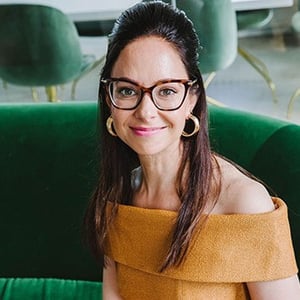
Founder, C. A. Goldberg PLLC
Carrie Goldberg is a victims’ rights attorney who has built a team that provides cutting edge legal help for clients under attack by pervs, assholes, psychos, and trolls. Her book Nobody’s Victim was published in August 2019.
Carrie’s work includes:
Carrie is admitted to practice law in New York State, 1st Appellate Department and the Eastern and Southern New York Districts of United States District Court. She is also admitted to The Supreme Court of the United States, US Court of Appeals for the Second Circuit, Eastern District of New York, Southern District of New York and has been admitted pro hac vice in California, Florida, and Massachusetts. She is also a member of the bar in New York State.
She is the recipient of 2017’s Privacy Champion Award from Electronic Privacy Information Center.
Education:
Background:
Prior to opening her firm in 2014, Carrie was the Associate Director of Legal Services at The Vera Institute of Justice, Inc. Guardianship Project and was a case manager for Nazi victims and Holocaust survivors with Selfhelp Community Services in Manhattan.
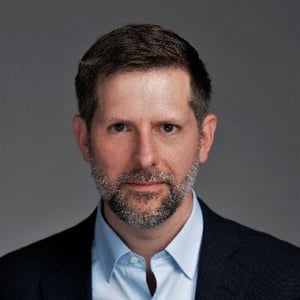
Head of AI Policy, Abundance Institute
Neil Chilson is the Head of AI Policy at the Abundance Institute. Prior to this position, he served as a Senior Research Fellow at the Center for Growth and Opportunity. Chilson is a lawyer, computer scientist, and author of the book “Getting Out of Control: Emergent Leadership in a Complex World.”
Chilson was previously the senior research fellow for Technology and Innovation at Stand Together, where he guided efforts to understand and promote the legal and cultural paradigms that best enable people to discover, innovate, and improve all our lives.
Before Stand Together, Chilson was the Chief Technologist at the Federal Trade Commission, where he focused on the economics of privacy and blockchain-related issues. Previously, he was an attorney advisor to Acting FTC Chairman Maureen K. Ohlhausen. In both roles he advised Chairman Ohlhausen and worked with staff on nearly every major technology-related case, report, workshop, or other FTC proceeding since January 2014. Neil joined the FTC from telecom firm Wilkinson Barker Knauer. Neil is frequently quoted by the press and his work has appeared in numerous news outlets, including The Wall Street Journal, The Washington Post, USAToday, and Newsweek. Neil has a J.D. from The George Washington Law School, a M.S. in computer science from University of Illinois, Urbana-Champaign, and a B.S. in computer science from Harding University.
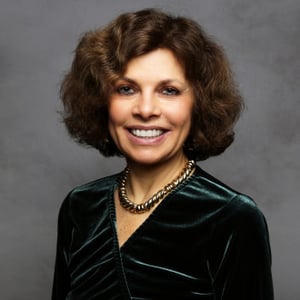
John Marshall Harlan II Professor of Law Emerita, New York Law School; Former President, American Civil Liberties Union
Nadine Strossen, New York Law School Professor Emerita and Senior Fellow at FIRE (the Foundation for Individual Rights and Expression), was national President of the American Civil Liberties Union from 1991 to 2008. An internationally acclaimed free speech scholar and advocate, who regularly addresses diverse audiences and provides media commentary around the world, Strossen is also the Host and Project Consultant for Free To Speak, a 3-hour documentary film series distributed on public television in 2023. Her books about free speech include: Free Speech: What Everyone Needs to Know® (Oxford University Press 2023); HATE: Why We Should Resist It with Free Speech, Not Censorship (Oxford University Press 2018); and Defending Pornography: Free Speech, Sex, and the Fight for Women’s Rights (Scribner 1995), which was republished with a new Preface in 2024 as part of the NYU Classics Series. Her many honors and awards include the National Coalition Against Censorship’s Judy Blume Lifetime Achievement Award for Free Speech. She serves on the Advisory Boards of several organizations that do free speech work, including: ACLU, Academic Freedom Alliance, Foundation Against Intolerance and Racism (FAIR), Heterodox Academy, National Coalition Against Censorship, and the University of Austin.
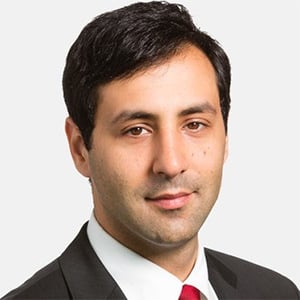
The Heritage Foundation, Associate Director and Research Fellow, B. Kenneth Simon Center for American Studies
Arthur Milikh conducts research on America’s founding principles. As associate director of The Heritage Foundation’s B. Kenneth Simon Center for American Studies, he oversees the center’s research portfolio and gives talks on the tenets of the American political tradition to policymakers, political leaders, and the public.
Before joining Heritage in 2014, Milikh worked for the House Armed Services Committee and at the Hudson Institute, a conservative think tank. He has published articles in a variety of outlets.
He received a bachelor of arts degree in political science and philosophy from Emory University and a master’s degree in political theory from University of Chicago. He is a doctoral candidate at the Catholic University of America.
Milikh currently resides in Washington with his wife.
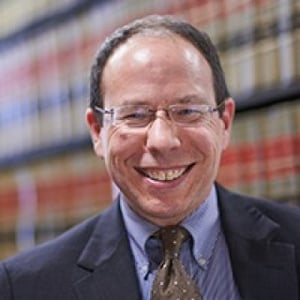
Professor of Law, Michigan State University (currently serving as FCC General Counsel)
Professor Candeub joined the MSU Law faculty in fall 2004. He is also a Fellow with MSU's Institute of Public Utilities. Prior to joining MSU, he served as an advisor at the Federal Communications Commission (FCC). From 1998 to 2000, Professor Candeub was a litigation associate for the Washington D.C. firm of Jones, Day, Reavis & Pogue and also has served as a corporate associate with Cleary, Gottlieb, Steen & Hamilton, also in Washington, D.C. Immediately following law school, he clerked for Chief Judge J. Clifford Wallace, U.S. Court of Appeals for the Ninth Circuit. While in law school, Professor Candeub was an articles editor for the University of Pennsylvania Law Review.
Professor Candeub's scholarly interests focus on the law and regulation of communications, internet, technology. His numerous law review articles and scholarly papers have placed him at the center of legal and policy controversies, and he often writes for popular outlets such as the Wall Street Journal and US News. Federal courts, including the U.S. Supreme Court, have cited and relied upon his work.
He joined the Trump administration in 2019 as Deputy Assistant Secretary of Commerce for Telecommunications and Information and assumed the role of Acting Assistant Secretary. He later joined the Department of Justice as Deputy Associate Attorney General.
Professor Candeub is a senior fellow at the D.C.-based Center of Renewing America.
Professor of Law, Michigan State University (currently serving as FCC General Counsel)
Professor Candeub joined the MSU Law faculty in fall 2004. He is also a Fellow with MSU's Institute of Public Utilities. Prior to joining MSU, he served as an advisor at the Federal Communications Commission (FCC). From 1998 to 2000, Professor Candeub was a litigation associate for the Washington D.C. firm of Jones, Day, Reavis & Pogue and also has served as a corporate associate with Cleary, Gottlieb, Steen & Hamilton, also in Washington, D.C. Immediately following law school, he clerked for Chief Judge J. Clifford Wallace, U.S. Court of Appeals for the Ninth Circuit. While in law school, Professor Candeub was an articles editor for the University of Pennsylvania Law Review.
Professor Candeub's scholarly interests focus on the law and regulation of communications, internet, technology. His numerous law review articles and scholarly papers have placed him at the center of legal and policy controversies, and he often writes for popular outlets such as the Wall Street Journal and US News. Federal courts, including the U.S. Supreme Court, have cited and relied upon his work.
He joined the Trump administration in 2019 as Deputy Assistant Secretary of Commerce for Telecommunications and Information and assumed the role of Acting Assistant Secretary. He later joined the Department of Justice as Deputy Associate Attorney General.
Professor Candeub is a senior fellow at the D.C.-based Center of Renewing America.
Head of AI Policy, Abundance Institute
Neil Chilson is the Head of AI Policy at the Abundance Institute. Prior to this position, he served as a Senior Research Fellow at the Center for Growth and Opportunity. Chilson is a lawyer, computer scientist, and author of the book “Getting Out of Control: Emergent Leadership in a Complex World.”
Chilson was previously the senior research fellow for Technology and Innovation at Stand Together, where he guided efforts to understand and promote the legal and cultural paradigms that best enable people to discover, innovate, and improve all our lives.
Before Stand Together, Chilson was the Chief Technologist at the Federal Trade Commission, where he focused on the economics of privacy and blockchain-related issues. Previously, he was an attorney advisor to Acting FTC Chairman Maureen K. Ohlhausen. In both roles he advised Chairman Ohlhausen and worked with staff on nearly every major technology-related case, report, workshop, or other FTC proceeding since January 2014. Neil joined the FTC from telecom firm Wilkinson Barker Knauer. Neil is frequently quoted by the press and his work has appeared in numerous news outlets, including The Wall Street Journal, The Washington Post, USAToday, and Newsweek. Neil has a J.D. from The George Washington Law School, a M.S. in computer science from University of Illinois, Urbana-Champaign, and a B.S. in computer science from Harding University.
Founder, C. A. Goldberg PLLC
Carrie Goldberg is a victims’ rights attorney who has built a team that provides cutting edge legal help for clients under attack by pervs, assholes, psychos, and trolls. Her book Nobody’s Victim was published in August 2019.
Carrie’s work includes:
Carrie is admitted to practice law in New York State, 1st Appellate Department and the Eastern and Southern New York Districts of United States District Court. She is also admitted to The Supreme Court of the United States, US Court of Appeals for the Second Circuit, Eastern District of New York, Southern District of New York and has been admitted pro hac vice in California, Florida, and Massachusetts. She is also a member of the bar in New York State.
She is the recipient of 2017’s Privacy Champion Award from Electronic Privacy Information Center.
Education:
Background:
Prior to opening her firm in 2014, Carrie was the Associate Director of Legal Services at The Vera Institute of Justice, Inc. Guardianship Project and was a case manager for Nazi victims and Holocaust survivors with Selfhelp Community Services in Manhattan.
The Heritage Foundation, Associate Director and Research Fellow, B. Kenneth Simon Center for American Studies
Arthur Milikh conducts research on America’s founding principles. As associate director of The Heritage Foundation’s B. Kenneth Simon Center for American Studies, he oversees the center’s research portfolio and gives talks on the tenets of the American political tradition to policymakers, political leaders, and the public.
Before joining Heritage in 2014, Milikh worked for the House Armed Services Committee and at the Hudson Institute, a conservative think tank. He has published articles in a variety of outlets.
He received a bachelor of arts degree in political science and philosophy from Emory University and a master’s degree in political theory from University of Chicago. He is a doctoral candidate at the Catholic University of America.
Milikh currently resides in Washington with his wife.
John Marshall Harlan II Professor of Law Emerita, New York Law School; Former President, American Civil Liberties Union
Nadine Strossen, New York Law School Professor Emerita and Senior Fellow at FIRE (the Foundation for Individual Rights and Expression), was national President of the American Civil Liberties Union from 1991 to 2008. An internationally acclaimed free speech scholar and advocate, who regularly addresses diverse audiences and provides media commentary around the world, Strossen is also the Host and Project Consultant for Free To Speak, a 3-hour documentary film series distributed on public television in 2023. Her books about free speech include: Free Speech: What Everyone Needs to Know® (Oxford University Press 2023); HATE: Why We Should Resist It with Free Speech, Not Censorship (Oxford University Press 2018); and Defending Pornography: Free Speech, Sex, and the Fight for Women’s Rights (Scribner 1995), which was republished with a new Preface in 2024 as part of the NYU Classics Series. Her many honors and awards include the National Coalition Against Censorship’s Judy Blume Lifetime Achievement Award for Free Speech. She serves on the Advisory Boards of several organizations that do free speech work, including: ACLU, Academic Freedom Alliance, Foundation Against Intolerance and Racism (FAIR), Heterodox Academy, National Coalition Against Censorship, and the University of Austin.
John Marshall Harlan II Professor of Law Emerita, New York Law School; Former President, American Civil Liberties Union
Nadine Strossen, New York Law School Professor Emerita and Senior Fellow at FIRE (the Foundation for Individual Rights and Expression), was national President of the American Civil Liberties Union from 1991 to 2008. An internationally acclaimed free speech scholar and advocate, who regularly addresses diverse audiences and provides media commentary around the world, Strossen is also the Host and Project Consultant for Free To Speak, a 3-hour documentary film series distributed on public television in 2023. Her books about free speech include: Free Speech: What Everyone Needs to Know® (Oxford University Press 2023); HATE: Why We Should Resist It with Free Speech, Not Censorship (Oxford University Press 2018); and Defending Pornography: Free Speech, Sex, and the Fight for Women’s Rights (Scribner 1995), which was republished with a new Preface in 2024 as part of the NYU Classics Series. Her many honors and awards include the National Coalition Against Censorship’s Judy Blume Lifetime Achievement Award for Free Speech. She serves on the Advisory Boards of several organizations that do free speech work, including: ACLU, Academic Freedom Alliance, Foundation Against Intolerance and Racism (FAIR), Heterodox Academy, National Coalition Against Censorship, and the University of Austin.
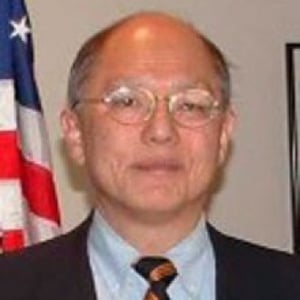
Senior Fellow, Claremont Institute and Adjunct Professor, John Hopkins University
Ken Masugi, non-resident Senior Fellow at the Claremont Institute, has had diverse careers in academia, think-tanks, and government. He teaches graduate courses for Johns Hopkins University’s Center for Advanced Studies in American Government in Washington, DC. He has held positions at a variety of universities and college programs, including a federal prison and Princeton University. He taught for three years at the U.S. Air Force Academy, where he was John M. Olin Distinguished Visiting Professor.
Masugi has also served in the federal government for ten years, as a special assistant and speechwriter to the heads of the Departments of Labor and Justice and the U.S. Equal Employment Opportunity Commission. He is the co-author, co-editor, or editor of 10 books on American politics and author of over 100 articles and reviews on American politics, political philosophy, constitutional development, and films. He is a regular columnist for the web magazine American Greatness. He has recorded CDs of lectures on American presidential rhetoric and Tocqueville’s Democracy in America. He has helped develop the Claremont Institute as Director of the Bicentennial of the Constitution project, Editor of The Claremont Review of Books, and inaugural director of the Center for Local Government.
Masugi is currently preparing a monograph on Alexis de Tocqueville’s Democracy in America and a series of studies on Aristotle’s political philosophy. He is working on a book on the Declaration of Independence and changing American diversity. He is the recipient of several academic honors, including a Fulbright scholarship to the University of Cologne, Germany (1975-76), and has lectured at a variety of American and international institutions. He holds his B.A., with honors, from Claremont McKenna College and his Ph.D. from The New School for Social Research.
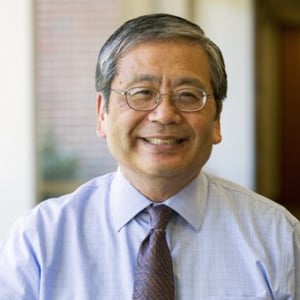
Associate Professor, Boston College Law School
The scholarship of Dean Hashimoto focuses on the interface of law, science and medicine, especially in the areas of health care policy and the role of scientific evidence in the courtroom. Educated as both an attorney and physician, he teaches torts, environmental litigation, health care law, and evidence. He has also studied the internment of citizens and aliens of Japanese heritage in World War II and written about the constitutional law cases decided in that era. Professor Hashimoto is the faculty director for the Boston College Law School's JD/MPH dual degree program with Tufts School of Medicine.
Professor Hashimoto served as a Notes Editor on the Yale Law Journal and, after graduating from law school, as a law clerk to Justice William Brennan of the U.S. Supreme Court and Judge David Bazelon of the U.S. Court of Appeals in Washington, D.C. He also practiced as a litigator for the Williams & Connolly law firm in Washington, D.C. and as a health care attorney for Ropes & Gray in Boston before joining the Boston College faculty.
Professor Hashimoto received his postgraduate medical training at the Brigham and Women's Hospital and the Harvard School of Public Health. He is a board-certified specialist in occupational and environmental medicine and serves as the chief of this specialty at the Massachusetts General Hospital and the Brigham and Women's Hospital.

President, Cass & Associates, PC
Ronald A. Cass is Dean Emeritus of Boston University School of Law (where he was Dean from 1990-2004), President of Cass & Associates, PC, former Vice-Chairman and Commissioner of the U.S. International Trade Commission, former faculty member at Boston University School of Law and the University of Virginia Law School, and Distinguished Senior Fellow at the C. Boyden Gray Center for the Study of the Administrative State. Dean Cass also sits as an arbitrator for commercial, international, and intellectual property rights disputes, and is a former United States member of the Panel of Conciliators of the International Centre for Settlement of Investment Disputes. He is a member of the Council of the Administrative Conference of the United States and has received seven presidential appointments, spanning Presidents Ronald Reagan to Donald J. Trump.
As a law professor, lecturer, and scholar, Dean Cass has been teaching and writing about a wide array of legal issues on topics such as administrative law and regulation, antitrust, constitutional law, communications, intellectual property, international trade, separation of powers, and legal process. He has published more than 160 scholarly books, chapters, articles, and papers, including a leading casebook on administrative law. Dean Cass has taught judges as well as students in schools of law, economics, business, and public policy and has held academic appointments in the United States, Europe, and Latin America.
In addition to his academic work, Dean Cass has participated in numerous important legal cases as an amicus, consultant, or expert, and has advised businesses, law firms, investment funds, and government agencies on a range of trade, antitrust, intellectual property, and regulatory issues. He has a broad range of affiliations with professional groups, and has received numerous honors, fellowships and awards.
Dean Cass is a graduate of the University of Virginia and the University of Chicago Law School.
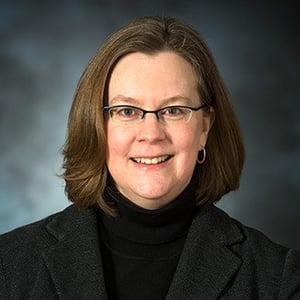
Associate Dean for Research and Intellectual Life, McKnight Presidential Professor in Law, Distinguished McKnight University Professor, Harlan Albert Rogers Professor in Law, Associate Director, Corporate Institute, University of Minnesota Law School
Professor Kristin E. Hickman is the McKnight Presidential Professor in Law, a Distinguished McKnight University Professor, and Harlan Albert Rogers Professor in Law at the University of Minnesota Law School. She also has taught at Harvard Law School and Northwestern University School of Law. Professor Hickman teaches and writes primarily in the areas of administrative law, tax administration, and statutory interpretation. Her articles on these topics have appeared in the Columbia Law Review, Cornell Law Review, Virginia Law Review, Duke Law Journal, and other publications. She also co-authors the Administrative Law Treatise with Richard J. Pierce, Jr., and a casebook on federal administrative law with Pierce and Christopher J. Walker. Her scholarly work has been cited several times in opinions of the United States Supreme Court as well as regularly in lower court judicial opinions and court briefs.
In 2018-19, Professor Hickman served as Special Adviser to the Administrator of the Office of Information and Regulatory Affairs in Washington, D.C. She presently serves as a Senior Fellow, and previously served as a public member and chair of the judicial review committee, for the Administrative Conference of the United States. She also is a Fellow of the American College of Tax Counsel.
Professor Hickman received her B.S. degree in business administration with a concentration in accounting and a secondary major in history from Trinity University in San Antonio, Texas. After practicing for several years as a certified public accountant, Professor Hickman earned her J.D. degree, magna cum laude, from Northwestern University School of Law, where she was awarded the Raoul Berger Prize and the Lowden Wigmore Prize for her scholarly writings. Following law school, Professor Hickman clerked for The Honorable David B. Sentelle of the United States Court of Appeals for the District of Columbia Circuit and practiced law as an associate with the Chicago office of Skadden, Arps, Slate, Meagher & Flom, concentrating on corporate and international tax transactions and matters.
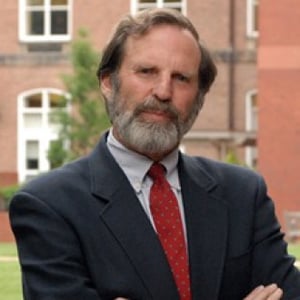
Adjunct Professor, George Washington University Law School
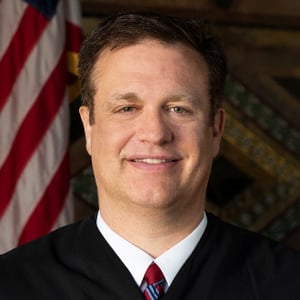
Judge, United States Court of Appeals, Ninth Circuit
Judge Nelson was confirmed to the Ninth Circuit in October 2018, as the youngest Circuit Judge to serve from Idaho and he has chambers in his hometown of Idaho Falls. Prior to his confirmation, Judge Nelson served for nine years as General Counsel of Idaho Falls-based Melaleuca, Inc., a consumer goods company. He previously worked in Washington, DC, where he served in all three branches of the federal government, including as Special Counsel for Supreme Court nominations to the Ranking Member of the Senate Judiciary Committee; Deputy General Counsel to the White House Office of Management and Budget; Deputy Assistant Attorney General in the Environment and Natural Resources Division of the United States Department of Justice; and a law clerk to Judge Henderson of the United States Court of Appeals for the D.C. Circuit. He has argued in most of the federal courts of appeals and worked on dozens of Supreme Court briefs. He started in the Washington, DC office of Sidley Austin as an appellate lawyer, after clerking for Judges Mosk and Brower of the Iran-U.S. Claims Tribunal at The Hague, and for now-Judge Tom Griffith, then-Senate Legal Counsel, during the impeachment trial of President Clinton. Judge Nelson earned his B.A. from Brigham Young University and his J.D., with honors, from BYU Law School. Judge Nelson has been a member of the Federalist Society since 1998.
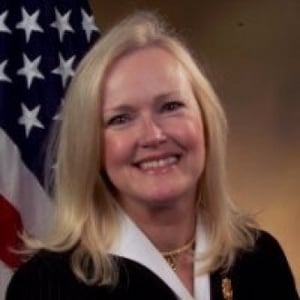
Founder, Law Office of Eileen J. O'Connor PLLC
After nearly 30 years as a national tax specialist with the IRS and major accounting firms, Eileen J. O’Connor, now an attorney in private practice, was Assistant Attorney General for the Justice Department’s Tax Division for six years during the administration of President George W. Bush and a member of then-President-elect Trump’s Treasury Department Transition Team. She focuses on federal administrative and tax law.
Trustee Professor of Law, New York Law School
From 1972-79, Schoenbrod served as one of the leaders of the Natural Resources Defense Council, where he campaigned to reduce lead in gasoline, resurrect the then-decrepit New York City subway, and protect the environment of Puerto Rico. Previously, he was Director of Program Development at the community development project that Senator Robert Kennedy established in Bedford Stuyvesant. He has also been a senior fellow at the Cato Institute and the American Enterprise Institute.
His books include
D.C. Confidential: Inside the Five Tricks of Washington (Encounter Books, 2017) with forewords by Governor Howard Dean and Senator Mike Lee;
Breaking the Logjam: Environmental Protection That Will Work (Yale University Press, 2010)(with Richard B. Stewart and Katrina M. Wyman);
Saving Our Environment from Washington: How Congress Grabs Power, Shirks Responsibility, and Shortchanges the People (Yale University Press, 2005);
Democracy by Decree: What Happens When Courts Run Government (Yale University Press, 2003) (with Ross Sandler); and
Power Without Responsibility: How Congress Abuses the People Through Delegation (Yale University Press, 1993).
In addition to writing scholarly articles, he has frequently contributed opinion pieces to the Wall Street Journal, The Hill, the New York Times, and other publications.
He has an undergraduate degree from Yale College, a graduate degree in economics from Oxford University, which he attended as a Marshall Scholar, and a law degree from Yale Law School.
President, Cass & Associates, PC
Ronald A. Cass is Dean Emeritus of Boston University School of Law (where he was Dean from 1990-2004), President of Cass & Associates, PC, former Vice-Chairman and Commissioner of the U.S. International Trade Commission, former faculty member at Boston University School of Law and the University of Virginia Law School, and Distinguished Senior Fellow at the C. Boyden Gray Center for the Study of the Administrative State. Dean Cass also sits as an arbitrator for commercial, international, and intellectual property rights disputes, and is a former United States member of the Panel of Conciliators of the International Centre for Settlement of Investment Disputes. He is a member of the Council of the Administrative Conference of the United States and has received seven presidential appointments, spanning Presidents Ronald Reagan to Donald J. Trump.
As a law professor, lecturer, and scholar, Dean Cass has been teaching and writing about a wide array of legal issues on topics such as administrative law and regulation, antitrust, constitutional law, communications, intellectual property, international trade, separation of powers, and legal process. He has published more than 160 scholarly books, chapters, articles, and papers, including a leading casebook on administrative law. Dean Cass has taught judges as well as students in schools of law, economics, business, and public policy and has held academic appointments in the United States, Europe, and Latin America.
In addition to his academic work, Dean Cass has participated in numerous important legal cases as an amicus, consultant, or expert, and has advised businesses, law firms, investment funds, and government agencies on a range of trade, antitrust, intellectual property, and regulatory issues. He has a broad range of affiliations with professional groups, and has received numerous honors, fellowships and awards.
Dean Cass is a graduate of the University of Virginia and the University of Chicago Law School.
Associate Dean for Research and Intellectual Life, McKnight Presidential Professor in Law, Distinguished McKnight University Professor, Harlan Albert Rogers Professor in Law, Associate Director, Corporate Institute, University of Minnesota Law School
Professor Kristin E. Hickman is the McKnight Presidential Professor in Law, a Distinguished McKnight University Professor, and Harlan Albert Rogers Professor in Law at the University of Minnesota Law School. She also has taught at Harvard Law School and Northwestern University School of Law. Professor Hickman teaches and writes primarily in the areas of administrative law, tax administration, and statutory interpretation. Her articles on these topics have appeared in the Columbia Law Review, Cornell Law Review, Virginia Law Review, Duke Law Journal, and other publications. She also co-authors the Administrative Law Treatise with Richard J. Pierce, Jr., and a casebook on federal administrative law with Pierce and Christopher J. Walker. Her scholarly work has been cited several times in opinions of the United States Supreme Court as well as regularly in lower court judicial opinions and court briefs.
In 2018-19, Professor Hickman served as Special Adviser to the Administrator of the Office of Information and Regulatory Affairs in Washington, D.C. She presently serves as a Senior Fellow, and previously served as a public member and chair of the judicial review committee, for the Administrative Conference of the United States. She also is a Fellow of the American College of Tax Counsel.
Professor Hickman received her B.S. degree in business administration with a concentration in accounting and a secondary major in history from Trinity University in San Antonio, Texas. After practicing for several years as a certified public accountant, Professor Hickman earned her J.D. degree, magna cum laude, from Northwestern University School of Law, where she was awarded the Raoul Berger Prize and the Lowden Wigmore Prize for her scholarly writings. Following law school, Professor Hickman clerked for The Honorable David B. Sentelle of the United States Court of Appeals for the District of Columbia Circuit and practiced law as an associate with the Chicago office of Skadden, Arps, Slate, Meagher & Flom, concentrating on corporate and international tax transactions and matters.
Adjunct Professor, George Washington University Law School
Judge, United States Court of Appeals, Ninth Circuit
Judge Nelson was confirmed to the Ninth Circuit in October 2018, as the youngest Circuit Judge to serve from Idaho and he has chambers in his hometown of Idaho Falls. Prior to his confirmation, Judge Nelson served for nine years as General Counsel of Idaho Falls-based Melaleuca, Inc., a consumer goods company. He previously worked in Washington, DC, where he served in all three branches of the federal government, including as Special Counsel for Supreme Court nominations to the Ranking Member of the Senate Judiciary Committee; Deputy General Counsel to the White House Office of Management and Budget; Deputy Assistant Attorney General in the Environment and Natural Resources Division of the United States Department of Justice; and a law clerk to Judge Henderson of the United States Court of Appeals for the D.C. Circuit. He has argued in most of the federal courts of appeals and worked on dozens of Supreme Court briefs. He started in the Washington, DC office of Sidley Austin as an appellate lawyer, after clerking for Judges Mosk and Brower of the Iran-U.S. Claims Tribunal at The Hague, and for now-Judge Tom Griffith, then-Senate Legal Counsel, during the impeachment trial of President Clinton. Judge Nelson earned his B.A. from Brigham Young University and his J.D., with honors, from BYU Law School. Judge Nelson has been a member of the Federalist Society since 1998.
Trustee Professor of Law, New York Law School
From 1972-79, Schoenbrod served as one of the leaders of the Natural Resources Defense Council, where he campaigned to reduce lead in gasoline, resurrect the then-decrepit New York City subway, and protect the environment of Puerto Rico. Previously, he was Director of Program Development at the community development project that Senator Robert Kennedy established in Bedford Stuyvesant. He has also been a senior fellow at the Cato Institute and the American Enterprise Institute.
His books include
D.C. Confidential: Inside the Five Tricks of Washington (Encounter Books, 2017) with forewords by Governor Howard Dean and Senator Mike Lee;
Breaking the Logjam: Environmental Protection That Will Work (Yale University Press, 2010)(with Richard B. Stewart and Katrina M. Wyman);
Saving Our Environment from Washington: How Congress Grabs Power, Shirks Responsibility, and Shortchanges the People (Yale University Press, 2005);
Democracy by Decree: What Happens When Courts Run Government (Yale University Press, 2003) (with Ross Sandler); and
Power Without Responsibility: How Congress Abuses the People Through Delegation (Yale University Press, 1993).
In addition to writing scholarly articles, he has frequently contributed opinion pieces to the Wall Street Journal, The Hill, the New York Times, and other publications.
He has an undergraduate degree from Yale College, a graduate degree in economics from Oxford University, which he attended as a Marshall Scholar, and a law degree from Yale Law School.
Founder, Law Office of Eileen J. O'Connor PLLC
After nearly 30 years as a national tax specialist with the IRS and major accounting firms, Eileen J. O’Connor, now an attorney in private practice, was Assistant Attorney General for the Justice Department’s Tax Division for six years during the administration of President George W. Bush and a member of then-President-elect Trump’s Treasury Department Transition Team. She focuses on federal administrative and tax law.
Professor of Law, Michigan State University (currently serving as FCC General Counsel)
Professor Candeub joined the MSU Law faculty in fall 2004. He is also a Fellow with MSU's Institute of Public Utilities. Prior to joining MSU, he served as an advisor at the Federal Communications Commission (FCC). From 1998 to 2000, Professor Candeub was a litigation associate for the Washington D.C. firm of Jones, Day, Reavis & Pogue and also has served as a corporate associate with Cleary, Gottlieb, Steen & Hamilton, also in Washington, D.C. Immediately following law school, he clerked for Chief Judge J. Clifford Wallace, U.S. Court of Appeals for the Ninth Circuit. While in law school, Professor Candeub was an articles editor for the University of Pennsylvania Law Review.
Professor Candeub's scholarly interests focus on the law and regulation of communications, internet, technology. His numerous law review articles and scholarly papers have placed him at the center of legal and policy controversies, and he often writes for popular outlets such as the Wall Street Journal and US News. Federal courts, including the U.S. Supreme Court, have cited and relied upon his work.
He joined the Trump administration in 2019 as Deputy Assistant Secretary of Commerce for Telecommunications and Information and assumed the role of Acting Assistant Secretary. He later joined the Department of Justice as Deputy Associate Attorney General.
Professor Candeub is a senior fellow at the D.C.-based Center of Renewing America.
Head of AI Policy, Abundance Institute
Neil Chilson is the Head of AI Policy at the Abundance Institute. Prior to this position, he served as a Senior Research Fellow at the Center for Growth and Opportunity. Chilson is a lawyer, computer scientist, and author of the book “Getting Out of Control: Emergent Leadership in a Complex World.”
Chilson was previously the senior research fellow for Technology and Innovation at Stand Together, where he guided efforts to understand and promote the legal and cultural paradigms that best enable people to discover, innovate, and improve all our lives.
Before Stand Together, Chilson was the Chief Technologist at the Federal Trade Commission, where he focused on the economics of privacy and blockchain-related issues. Previously, he was an attorney advisor to Acting FTC Chairman Maureen K. Ohlhausen. In both roles he advised Chairman Ohlhausen and worked with staff on nearly every major technology-related case, report, workshop, or other FTC proceeding since January 2014. Neil joined the FTC from telecom firm Wilkinson Barker Knauer. Neil is frequently quoted by the press and his work has appeared in numerous news outlets, including The Wall Street Journal, The Washington Post, USAToday, and Newsweek. Neil has a J.D. from The George Washington Law School, a M.S. in computer science from University of Illinois, Urbana-Champaign, and a B.S. in computer science from Harding University.
Founder, C. A. Goldberg PLLC
Carrie Goldberg is a victims’ rights attorney who has built a team that provides cutting edge legal help for clients under attack by pervs, assholes, psychos, and trolls. Her book Nobody’s Victim was published in August 2019.
Carrie’s work includes:
Carrie is admitted to practice law in New York State, 1st Appellate Department and the Eastern and Southern New York Districts of United States District Court. She is also admitted to The Supreme Court of the United States, US Court of Appeals for the Second Circuit, Eastern District of New York, Southern District of New York and has been admitted pro hac vice in California, Florida, and Massachusetts. She is also a member of the bar in New York State.
She is the recipient of 2017’s Privacy Champion Award from Electronic Privacy Information Center.
Education:
Background:
Prior to opening her firm in 2014, Carrie was the Associate Director of Legal Services at The Vera Institute of Justice, Inc. Guardianship Project and was a case manager for Nazi victims and Holocaust survivors with Selfhelp Community Services in Manhattan.
The Heritage Foundation, Associate Director and Research Fellow, B. Kenneth Simon Center for American Studies
Arthur Milikh conducts research on America’s founding principles. As associate director of The Heritage Foundation’s B. Kenneth Simon Center for American Studies, he oversees the center’s research portfolio and gives talks on the tenets of the American political tradition to policymakers, political leaders, and the public.
Before joining Heritage in 2014, Milikh worked for the House Armed Services Committee and at the Hudson Institute, a conservative think tank. He has published articles in a variety of outlets.
He received a bachelor of arts degree in political science and philosophy from Emory University and a master’s degree in political theory from University of Chicago. He is a doctoral candidate at the Catholic University of America.
Milikh currently resides in Washington with his wife.
John Marshall Harlan II Professor of Law Emerita, New York Law School; Former President, American Civil Liberties Union
Nadine Strossen, New York Law School Professor Emerita and Senior Fellow at FIRE (the Foundation for Individual Rights and Expression), was national President of the American Civil Liberties Union from 1991 to 2008. An internationally acclaimed free speech scholar and advocate, who regularly addresses diverse audiences and provides media commentary around the world, Strossen is also the Host and Project Consultant for Free To Speak, a 3-hour documentary film series distributed on public television in 2023. Her books about free speech include: Free Speech: What Everyone Needs to Know® (Oxford University Press 2023); HATE: Why We Should Resist It with Free Speech, Not Censorship (Oxford University Press 2018); and Defending Pornography: Free Speech, Sex, and the Fight for Women’s Rights (Scribner 1995), which was republished with a new Preface in 2024 as part of the NYU Classics Series. Her many honors and awards include the National Coalition Against Censorship’s Judy Blume Lifetime Achievement Award for Free Speech. She serves on the Advisory Boards of several organizations that do free speech work, including: ACLU, Academic Freedom Alliance, Foundation Against Intolerance and Racism (FAIR), Heterodox Academy, National Coalition Against Censorship, and the University of Austin.
President, Cass & Associates, PC
Ronald A. Cass is Dean Emeritus of Boston University School of Law (where he was Dean from 1990-2004), President of Cass & Associates, PC, former Vice-Chairman and Commissioner of the U.S. International Trade Commission, former faculty member at Boston University School of Law and the University of Virginia Law School, and Distinguished Senior Fellow at the C. Boyden Gray Center for the Study of the Administrative State. Dean Cass also sits as an arbitrator for commercial, international, and intellectual property rights disputes, and is a former United States member of the Panel of Conciliators of the International Centre for Settlement of Investment Disputes. He is a member of the Council of the Administrative Conference of the United States and has received seven presidential appointments, spanning Presidents Ronald Reagan to Donald J. Trump.
As a law professor, lecturer, and scholar, Dean Cass has been teaching and writing about a wide array of legal issues on topics such as administrative law and regulation, antitrust, constitutional law, communications, intellectual property, international trade, separation of powers, and legal process. He has published more than 160 scholarly books, chapters, articles, and papers, including a leading casebook on administrative law. Dean Cass has taught judges as well as students in schools of law, economics, business, and public policy and has held academic appointments in the United States, Europe, and Latin America.
In addition to his academic work, Dean Cass has participated in numerous important legal cases as an amicus, consultant, or expert, and has advised businesses, law firms, investment funds, and government agencies on a range of trade, antitrust, intellectual property, and regulatory issues. He has a broad range of affiliations with professional groups, and has received numerous honors, fellowships and awards.
Dean Cass is a graduate of the University of Virginia and the University of Chicago Law School.
Associate Dean for Research and Intellectual Life, McKnight Presidential Professor in Law, Distinguished McKnight University Professor, Harlan Albert Rogers Professor in Law, Associate Director, Corporate Institute, University of Minnesota Law School
Professor Kristin E. Hickman is the McKnight Presidential Professor in Law, a Distinguished McKnight University Professor, and Harlan Albert Rogers Professor in Law at the University of Minnesota Law School. She also has taught at Harvard Law School and Northwestern University School of Law. Professor Hickman teaches and writes primarily in the areas of administrative law, tax administration, and statutory interpretation. Her articles on these topics have appeared in the Columbia Law Review, Cornell Law Review, Virginia Law Review, Duke Law Journal, and other publications. She also co-authors the Administrative Law Treatise with Richard J. Pierce, Jr., and a casebook on federal administrative law with Pierce and Christopher J. Walker. Her scholarly work has been cited several times in opinions of the United States Supreme Court as well as regularly in lower court judicial opinions and court briefs.
In 2018-19, Professor Hickman served as Special Adviser to the Administrator of the Office of Information and Regulatory Affairs in Washington, D.C. She presently serves as a Senior Fellow, and previously served as a public member and chair of the judicial review committee, for the Administrative Conference of the United States. She also is a Fellow of the American College of Tax Counsel.
Professor Hickman received her B.S. degree in business administration with a concentration in accounting and a secondary major in history from Trinity University in San Antonio, Texas. After practicing for several years as a certified public accountant, Professor Hickman earned her J.D. degree, magna cum laude, from Northwestern University School of Law, where she was awarded the Raoul Berger Prize and the Lowden Wigmore Prize for her scholarly writings. Following law school, Professor Hickman clerked for The Honorable David B. Sentelle of the United States Court of Appeals for the District of Columbia Circuit and practiced law as an associate with the Chicago office of Skadden, Arps, Slate, Meagher & Flom, concentrating on corporate and international tax transactions and matters.
Adjunct Professor, George Washington University Law School
Judge, United States Court of Appeals, Ninth Circuit
Judge Nelson was confirmed to the Ninth Circuit in October 2018, as the youngest Circuit Judge to serve from Idaho and he has chambers in his hometown of Idaho Falls. Prior to his confirmation, Judge Nelson served for nine years as General Counsel of Idaho Falls-based Melaleuca, Inc., a consumer goods company. He previously worked in Washington, DC, where he served in all three branches of the federal government, including as Special Counsel for Supreme Court nominations to the Ranking Member of the Senate Judiciary Committee; Deputy General Counsel to the White House Office of Management and Budget; Deputy Assistant Attorney General in the Environment and Natural Resources Division of the United States Department of Justice; and a law clerk to Judge Henderson of the United States Court of Appeals for the D.C. Circuit. He has argued in most of the federal courts of appeals and worked on dozens of Supreme Court briefs. He started in the Washington, DC office of Sidley Austin as an appellate lawyer, after clerking for Judges Mosk and Brower of the Iran-U.S. Claims Tribunal at The Hague, and for now-Judge Tom Griffith, then-Senate Legal Counsel, during the impeachment trial of President Clinton. Judge Nelson earned his B.A. from Brigham Young University and his J.D., with honors, from BYU Law School. Judge Nelson has been a member of the Federalist Society since 1998.
Founder, Law Office of Eileen J. O'Connor PLLC
After nearly 30 years as a national tax specialist with the IRS and major accounting firms, Eileen J. O’Connor, now an attorney in private practice, was Assistant Attorney General for the Justice Department’s Tax Division for six years during the administration of President George W. Bush and a member of then-President-elect Trump’s Treasury Department Transition Team. She focuses on federal administrative and tax law.
Trustee Professor of Law, New York Law School
From 1972-79, Schoenbrod served as one of the leaders of the Natural Resources Defense Council, where he campaigned to reduce lead in gasoline, resurrect the then-decrepit New York City subway, and protect the environment of Puerto Rico. Previously, he was Director of Program Development at the community development project that Senator Robert Kennedy established in Bedford Stuyvesant. He has also been a senior fellow at the Cato Institute and the American Enterprise Institute.
His books include
D.C. Confidential: Inside the Five Tricks of Washington (Encounter Books, 2017) with forewords by Governor Howard Dean and Senator Mike Lee;
Breaking the Logjam: Environmental Protection That Will Work (Yale University Press, 2010)(with Richard B. Stewart and Katrina M. Wyman);
Saving Our Environment from Washington: How Congress Grabs Power, Shirks Responsibility, and Shortchanges the People (Yale University Press, 2005);
Democracy by Decree: What Happens When Courts Run Government (Yale University Press, 2003) (with Ross Sandler); and
Power Without Responsibility: How Congress Abuses the People Through Delegation (Yale University Press, 1993).
In addition to writing scholarly articles, he has frequently contributed opinion pieces to the Wall Street Journal, The Hill, the New York Times, and other publications.
He has an undergraduate degree from Yale College, a graduate degree in economics from Oxford University, which he attended as a Marshall Scholar, and a law degree from Yale Law School.

Restoring the Legislative Power to Congress: The Role of the Nondelegation Doctrine and Legislative Vetoes
Jack Beermann, Thomas G. Hungar, David S. Schoenbrod, Christopher J. Walker, Michael B. Rappaport, Dean Reuter
The Eighth Annual Executive Branch Review Conference was held on April 28, 2020 via an...
Restoring the Legislative Power to Congress: The Role of the Nondelegation Doctrine and Legislative Vetoes
Jack Beermann, Thomas G. Hungar, Michael B. Rappaport, Dean Reuter, David S. Schoenbrod, Christopher J. Walker
The Eighth Annual Executive Branch Review Conference was held on April 28, 2020 via an...
Deep Dive Episode 106 – Should Big Tech Platforms Be Viewpoint Neutral? Should the Government Care?
Carrie Goldberg, Neil Chilson, Nadine Strossen, Arthur Milikh, Adam Candeub
On March 4, 2020, the Regulatory Transparency Project sponsored a symposium with the University of...
Should Big Tech Platforms Be Viewpoint Neutral? Should the Government Care?
Adam Candeub, Neil Chilson, Carrie Goldberg, Arthur Milikh, Nadine Strossen
On March 4, 2020, the Regulatory Transparency Project sponsored a symposium with the University of...
Should Big Tech Platforms Be Viewpoint Neutral? Should the Government Care?
Penn Law Federalist Society Symposium: Regulating Big Tech
Philadelphia, PAKOREMATSU VERSUS US
Nadine Strossen, Ken Masugi, Dean M. Hashimoto
Seventy-five years ago, the Supreme Court issued one of its most controversial decisions--in Korematsu v....
Nondelegation after Gundy — Are we Waiting for Godot?
Ronald A. Cass, Kristin E. Hickman, Alan B. Morrison, Ryan D. Nelson, Eileen J. O'Connor, David S. Schoenbrod
On November 14, 2019, the Federalist Society's Administrative Law & Regulation Practice Group hosted a...
Nondelegation after Gundy — Are we Waiting for Godot?
Ronald A. Cass, Kristin E. Hickman, Alan B. Morrison, Ryan D. Nelson, David S. Schoenbrod, Eileen J. O'Connor
On November 14, 2019, the Federalist Society's Administrative Law & Regulation Practice Group hosted a...
Nondelegation after Gundy — Are we Waiting for Godot?
2019 National Lawyers Convention
Washington, DCTopics
Nondelegation After Gundy
While the Supreme Court repeatedly has proclaimed that Congress cannot delegate its law-making power, in...