

Patrick Hotung Professor of Constitutional Law, Georgetown University Law Center
Randy Barnett is the Patrick Hotung Professor of Constitutional Law at Georgetown University Law Center. He has argued before the United States Supreme Court, tried murder cases to juries as a prosecutor in Chicago, and appeared as a prosecutor in the feature film Inalienable. He is the author of numerous books, including Restoring the Lost Constitution, The Structure of Liberty, Our Republican Constitution, and The Original Meaning of the Fourteenth Amendment. He has published two memoirs, A Life for Liberty: The Making of an American Originalist, and Felony Review: Tales of True Crime and Corruption in Chicago. He is currently working on a new book, Freedom and Flourishing: Libertarianism for the Real World.
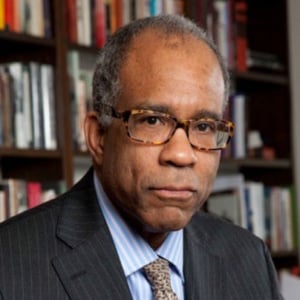
Michael R. Klein Professor of Law, Harvard Law School
Randall Kennedy is Michael R. Klein Professor at Harvard Law School where he teaches courses on contracts, criminal law, and the regulation of race relations. He was born in Columbia, South Carolina. For his education he attended St. Albans School, Princeton University, Oxford University, and Yale Law School. He served as a law clerk for Judge J. Skelly Wright of the United States Court of Appeals and for Justice Thurgood Marshall of the United States Supreme Court. He is a member of the bar of the District of Columbia and the Supreme Court of the United States. Awarded the 1998 Robert F. Kennedy Book Award for Race, Crime, and the Law, Mr Kennedy writes for a wide range of scholarly and general interest publications. His other books are For Discrimination: Race, Affirmative Action, and the Law (2013), The Persistence of the Color Line: Racial Politics and the Obama Presidency (2011), Sellout: The Politics of Racial Betrayal (2008), Interracial Intimacies: Sex, Marriage, Identity, and Adoption (2003), and Nigger: The Strange Career of a Troublesome Word (2002). A member of the American Law Institute, the American Academy of Arts and Sciences, and the American Philosophical Association, Mr. Kennedy is also a Trustee emeritus of Princeton University.
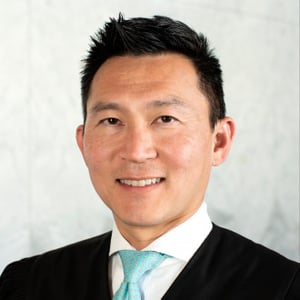
Judge, United States Court of Appeals, Ninth Circuit
Kenneth Kiyul Lee is a judge on the U.S. Court of Appeals for the Ninth Circuit. He was appointed in June 2019 and is based in San Diego, California.
Prior to his appointment, he was a partner at the law firm of Jenner & Block in Los Angeles. Judge Lee previously served as an Associate Counsel to President George W. Bush and as Special Counsel to Senator Arlen Specter, then-chair of the Senate Judiciary Committee. He started his legal career at Wachtell, Lipton, Rosen & Katz in New York.
Judge Lee received his J.D. from Harvard Law School, magna cum laude, and his A.B. from Cornell University, summa cum laude. He clerked for Judge Emilio M. Garza of the U.S. Court of Appeals for the Fifth Circuit.

George C. Dix Professor in Constitutional Law, Northwestern University Pritzker School of Law
John O. McGinnis is a graduate of Harvard College and Harvard Law School where he was an editor of the Harvard Law Review. He also has an MA degree from Balliol College, Oxford, in philosophy and theology. Professor McGinnis clerked on the U.S. Court of Appeals for the District of Columbia. From 1987 to 1991, he was deputy assistant attorney general in the Office of Legal Counsel at the Department of Justice. He is the author of Accelerating Democracy: Transforming Government Through Technology (Princeton 2013) and Originalism and the Good Constitution (Harvard 2013) (with M. Rappaport). He is a past winner of the Paul Bator award given by the Federalist Society to an outstanding academic under 40. He has been listed by the United States on the roster of panelists who may be called upon to decide World Trade Organization Disputes.

Former President & CEO, The Federalist Society for Law and Public Policy Studies
Eugene B. Meyer, former President and CEO of the Federalist Society, has served as Executive Director, CEO, and/or President of the organization for more than 40 years. He is responsible for shepherding the organization from a small group of law students to a community of 90,000 lawyers, law students, academics, judges, and others interested in the rule of law. The Society now includes a Student Chapter at nearly every ABA-accredited law school in the country and Lawyers Chapters in 220 major cities across the nation. Gene earned his B.A. in history at Yale in 1975 and his M.A. in political science from the London School of Economics in 1976. Gene currently serves on the boards of the U.S. Chess Center, the Holman Foundation, the Sarah Scaife Foundation, and the advisory board of the Adam Smith Society. He holds the title of International Chess Master.
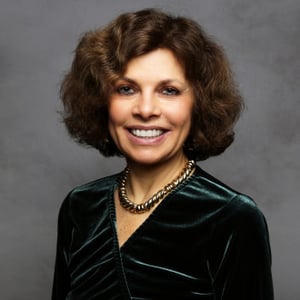
John Marshall Harlan II Professor of Law Emerita, New York Law School; Former President, American Civil Liberties Union
Nadine Strossen, New York Law School Professor Emerita and Senior Fellow at FIRE (the Foundation for Individual Rights and Expression), was national President of the American Civil Liberties Union from 1991 to 2008. An internationally acclaimed free speech scholar and advocate, who regularly addresses diverse audiences and provides media commentary around the world, Strossen is also the Host and Project Consultant for Free To Speak, a 3-hour documentary film series distributed on public television in 2023. Her books about free speech include: Free Speech: What Everyone Needs to Know® (Oxford University Press 2023); HATE: Why We Should Resist It with Free Speech, Not Censorship (Oxford University Press 2018); and Defending Pornography: Free Speech, Sex, and the Fight for Women’s Rights (Scribner 1995), which was republished with a new Preface in 2024 as part of the NYU Classics Series. Her many honors and awards include the National Coalition Against Censorship’s Judy Blume Lifetime Achievement Award for Free Speech. She serves on the Advisory Boards of several organizations that do free speech work, including: ACLU, Academic Freedom Alliance, Foundation Against Intolerance and Racism (FAIR), Heterodox Academy, National Coalition Against Censorship, and the University of Austin.
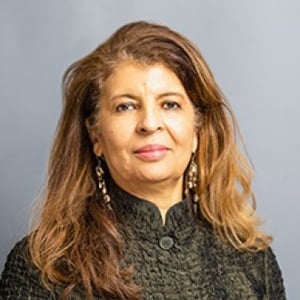
Professor of Law and Co-Director, Racial Justice Project, New York Law School
Penelope Andrews joined NYLS in January 2019 and teaches comparative and international law courses. She also serves as Co-Director of NYLS’s Racial Justice Project, focusing on international and South African issues.
Professor Andrews was the 2018–19 Sabbatical Scholar at the Center for the Study of Law and Culture at Columbia Law School. She previously completed two terms as Dean: From 2016 to 2018 as the first Black dean at the University of Cape Town Faculty of Law, and from 2012 to 2015 as the first female dean of Albany Law School in New York. She was previously the Associate Dean for Academic Affairs at the City University of New York (CUNY) School of Law and Director of International Programs at Valparaiso Law School.
She began her teaching career at La Trobe University in Melbourne, Australia, where she taught for eight years before moving to CUNY, where she was on the faculty for 15 years, teaching public international law, gender and law, race and law, comparative law, torts, and lawyering. She has also held visiting appointments at several law schools in the U.S. and internationally, including in South Africa, Canada and Australia. Professor Andrews received her B.A. and. LL.B. degrees from the University of KwaZulu-Natal (formerly University of Natal) in South Africa and an LL.M. from Columbia Law School.
Professor Andrews is active in international collaborative research and mentoring networks and is particularly committed to ensuring the relevance of law and society scholarship to academic communities in the global south and global north. She is an editor of the International Journal of Law in Context, the Human Rights and the Global Economy E-Journal, and the African Law E-Journal.
She has also published several books and articles that focus on comparative constitutional law, gender and racial equality, human rights—particularly the tension between respect for indigenous law and implementing broader human rights norms—the judiciary, and legal education. Her book From Cape Town to Kabul: Rethinking Strategies for Pursuing Women’s Human Rights was published in 2012. She publishes regularly in the popular media and on social media, focusing on issues of race, poverty, legal education, public interest litigation, and the ongoing challenges of transforming an economically unequal and racially divided society.
Professor Andrews’s focus on the judiciary in South Africa seeks to bridge the divide between theory and practice. She is a trainer for the Judicial Institute for Africa, focusing on opinion writing and communications skills for new and experienced judges. She also served as an Acting Judge of the North Gauteng High Court in Pretoria for the 2018 third term, presiding over criminal appeals, motion court, and civil trials. She has served as an arbitrator in hearings on racial discrimination in South Africa.
She has served on significant law school committees and the boards of public interest and human rights organizations, including the Africa Section of Human Rights Watch, South Africa Partners, the Legal Resources Center, and the National Center for Law and Economic Justice. Professor Andrews has received many awards for her work, including, in 2015, the National Bar Association’s International Award for her global human rights advocacy. In recognition of her human rights work, the University of KwaZulu-Natal provides an annual award in her name.
She will start her two-year term as the President of the Law and Society Association in June 2019.
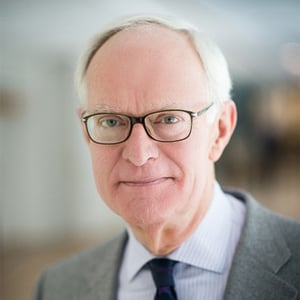
Distinguished Fellow, Hudson Institute
Christopher DeMuth is a distinguished fellow at Hudson Institute. He was president of the American Enterprise Institute for Public Policy Research (AEI) from 1986 to 2008 and was the D.C. Searle Senior Fellow at AEI from 2008 to 2011.
Mr. DeMuth was raised in Kenilworth, Illinois, and attended the Lawrenceville School (1964), Harvard College (A.B. 1968), and the University of Chicago Law School (J.D. 1973). He served as staff assistant to President Richard M. Nixon from 1969 to 1970, working first for Daniel P. Moynihan (then assistant to the President for Urban Affairs) on urban policy matters and then as chairman of the White House Task Force on Environmental Policy. Following law school, he practiced regulatory, antitrust, and general corporate law with Sidley & Austin in Chicago (1973-1976) and was associate general counsel of the Consolidated Rail Corporation (Conrail) in Philadelphia (1976-1977).
From 1977 to 1981, Mr. DeMuth was lecturer in public policy at the Kennedy School of Government at Harvard University, and director of the Harvard Faculty Project on Regulation. There he taught courses on law, economics, and regulatory policy and conducted and sponsored research on health, safety, environmental, and economic regulation.
Returning to Washington in 1981, Mr. DeMuth served as administrator for information and regulatory affairs in the U.S. Office of Management and Budget, and as executive director of the Presidential Task Force on Regulatory Relief during President Ronald Reagan’s first term of office. From 1984 to 1986, he was managing director of Lexecon Inc., a law-and-economics consulting firm; in 1986, he was also publisher and editor-in-chief of Regulation magazine. He was elected president of the American Enterprise Institute in December 1986.
Many of Mr. DeMuth’s articles, lectures, and occasional talks are posted on his website (https://www.ccdemuth.com).
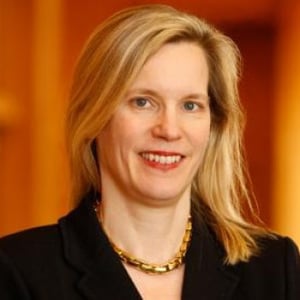
John S. Battle Professor of Law, University of Virginia School of Law
Julia D. Mahoney teaches courses in property, government finance, constitutional law and nonprofit organizations. A graduate of Yale Law School, she joined the University of Virginia faculty as an associate professor in 1999 and is now John S. Battle Professor of Law. She has also taught at the University of Southern California Law School and the University of Chicago Law School, and before entering the legal academy, practiced law at the New York firm Wachtell, Lipton, Rosen & Katz. Her scholarly articles include works on land preservation, eminent domain, health care reform and property rights in human biological materials.
John Marshall Harlan II Professor of Law Emerita, New York Law School; Former President, American Civil Liberties Union
Nadine Strossen, New York Law School Professor Emerita and Senior Fellow at FIRE (the Foundation for Individual Rights and Expression), was national President of the American Civil Liberties Union from 1991 to 2008. An internationally acclaimed free speech scholar and advocate, who regularly addresses diverse audiences and provides media commentary around the world, Strossen is also the Host and Project Consultant for Free To Speak, a 3-hour documentary film series distributed on public television in 2023. Her books about free speech include: Free Speech: What Everyone Needs to Know® (Oxford University Press 2023); HATE: Why We Should Resist It with Free Speech, Not Censorship (Oxford University Press 2018); and Defending Pornography: Free Speech, Sex, and the Fight for Women’s Rights (Scribner 1995), which was republished with a new Preface in 2024 as part of the NYU Classics Series. Her many honors and awards include the National Coalition Against Censorship’s Judy Blume Lifetime Achievement Award for Free Speech. She serves on the Advisory Boards of several organizations that do free speech work, including: ACLU, Academic Freedom Alliance, Foundation Against Intolerance and Racism (FAIR), Heterodox Academy, National Coalition Against Censorship, and the University of Austin.
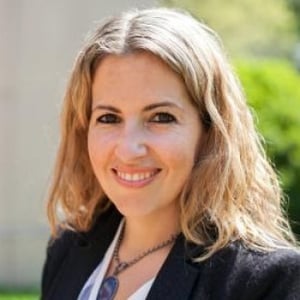
Martha Lubin Karsh and Bruce A. Karsh Bicentennial Professor of Law; Director, Human Rights Program; Senior Fellow, Miller Center, University of Virginia School of Law
Mila Versteeg joined the Law School in 2011. Her research and teaching interests include comparative constitutional law, public international law and empirical legal studies. Most of her research deals with the origins, evolution and effectiveness of provisions in the world’s constitutions. Her publications have, amongst others, appeared in the California Law Review, the New York University Law Review, the University of Chicago Law Review, the American Political Science Review, the American Journal of Political Science, the Journal of Legal Studies, the Journal of Law and Economics, the American Journal of International Law, and the Journal of Law, Economics and Organizations. A number of her works have been translated into Chinese, Portuguese and Turkish.
In 2017, Versteeg was named an Andrew Carnegie Fellow, which provided her with a $200,000 award to expand her research into the world's constitutions to better understand how constitutional rights are enforced in different countries.
Versteeg earned her B.A. in public administration and first law degree from Tilburg University in the Netherlands in 2006. She earned her LL.M. from Harvard Law School in 2007 and a D.Phil. in socio-legal studies in 2011 from the University of Oxford, where she was a Gregory Kulkes Scholar at Balliol College and recipient of an Arts and the Humanities Research Council Award.
Prior to joining the Law School, Versteeg was an Olin Fellow and lecturer in law at the University of Chicago Law School. Versteeg previously worked at the U.N. Interregional Crime and Justice Research Institute in Turin and at the Southern Africa Litigation Centre in Johannesburg. While at UVA, Versteeg has been a visiting associate professor at the University of Chicago Law School (fall 2013) and Columbia Law School (spring 2016), and a visiting professor at the law schools of Hebrew University, the University of Hamburg (summer 2015) and Tel Aviv University (spring 2017).

Thomas M. Siebel Senior Fellow, The Hoover Institution, Stanford University; Gary T. Schwartz Distinguished Professor of Law Emeritus, UCLA School of Law
Eugene Volokh is the Thomas M. Siebel Senior Fellow at the Hoover Institution (Stanford), as well as the Gary T. Schwartz Distinguished Professor of Law Emeritus and Distinguished Research Professor at UCLA School of Law. He recently retired from teaching at UCLA, after 30 years there, and is now focusing on research.
Volokh is the author of the textbooks The First Amendment and Related Statutes (8th ed. 2023), and Academic Legal Writing (5th ed. 2016), as well as over 100 academic law journal articles, mostly on First Amendment law. He is a member of The American Law Institute; the editor-in-chief of the Journal of Free Speech Law; and the creator and coauthor of The Volokh Conspiracy, a leading legal blog founded in 2002 (hosted at the Washington Post from 2014 to 2017 and now at Reason Magazine).
Distinguished Fellow, Hudson Institute
Christopher DeMuth is a distinguished fellow at Hudson Institute. He was president of the American Enterprise Institute for Public Policy Research (AEI) from 1986 to 2008 and was the D.C. Searle Senior Fellow at AEI from 2008 to 2011.
Mr. DeMuth was raised in Kenilworth, Illinois, and attended the Lawrenceville School (1964), Harvard College (A.B. 1968), and the University of Chicago Law School (J.D. 1973). He served as staff assistant to President Richard M. Nixon from 1969 to 1970, working first for Daniel P. Moynihan (then assistant to the President for Urban Affairs) on urban policy matters and then as chairman of the White House Task Force on Environmental Policy. Following law school, he practiced regulatory, antitrust, and general corporate law with Sidley & Austin in Chicago (1973-1976) and was associate general counsel of the Consolidated Rail Corporation (Conrail) in Philadelphia (1976-1977).
From 1977 to 1981, Mr. DeMuth was lecturer in public policy at the Kennedy School of Government at Harvard University, and director of the Harvard Faculty Project on Regulation. There he taught courses on law, economics, and regulatory policy and conducted and sponsored research on health, safety, environmental, and economic regulation.
Returning to Washington in 1981, Mr. DeMuth served as administrator for information and regulatory affairs in the U.S. Office of Management and Budget, and as executive director of the Presidential Task Force on Regulatory Relief during President Ronald Reagan’s first term of office. From 1984 to 1986, he was managing director of Lexecon Inc., a law-and-economics consulting firm; in 1986, he was also publisher and editor-in-chief of Regulation magazine. He was elected president of the American Enterprise Institute in December 1986.
Many of Mr. DeMuth’s articles, lectures, and occasional talks are posted on his website (https://www.ccdemuth.com).
John S. Battle Professor of Law, University of Virginia School of Law
Julia D. Mahoney teaches courses in property, government finance, constitutional law and nonprofit organizations. A graduate of Yale Law School, she joined the University of Virginia faculty as an associate professor in 1999 and is now John S. Battle Professor of Law. She has also taught at the University of Southern California Law School and the University of Chicago Law School, and before entering the legal academy, practiced law at the New York firm Wachtell, Lipton, Rosen & Katz. Her scholarly articles include works on land preservation, eminent domain, health care reform and property rights in human biological materials.
John Marshall Harlan II Professor of Law Emerita, New York Law School; Former President, American Civil Liberties Union
Nadine Strossen, New York Law School Professor Emerita and Senior Fellow at FIRE (the Foundation for Individual Rights and Expression), was national President of the American Civil Liberties Union from 1991 to 2008. An internationally acclaimed free speech scholar and advocate, who regularly addresses diverse audiences and provides media commentary around the world, Strossen is also the Host and Project Consultant for Free To Speak, a 3-hour documentary film series distributed on public television in 2023. Her books about free speech include: Free Speech: What Everyone Needs to Know® (Oxford University Press 2023); HATE: Why We Should Resist It with Free Speech, Not Censorship (Oxford University Press 2018); and Defending Pornography: Free Speech, Sex, and the Fight for Women’s Rights (Scribner 1995), which was republished with a new Preface in 2024 as part of the NYU Classics Series. Her many honors and awards include the National Coalition Against Censorship’s Judy Blume Lifetime Achievement Award for Free Speech. She serves on the Advisory Boards of several organizations that do free speech work, including: ACLU, Academic Freedom Alliance, Foundation Against Intolerance and Racism (FAIR), Heterodox Academy, National Coalition Against Censorship, and the University of Austin.
Martha Lubin Karsh and Bruce A. Karsh Bicentennial Professor of Law; Director, Human Rights Program; Senior Fellow, Miller Center, University of Virginia School of Law
Mila Versteeg joined the Law School in 2011. Her research and teaching interests include comparative constitutional law, public international law and empirical legal studies. Most of her research deals with the origins, evolution and effectiveness of provisions in the world’s constitutions. Her publications have, amongst others, appeared in the California Law Review, the New York University Law Review, the University of Chicago Law Review, the American Political Science Review, the American Journal of Political Science, the Journal of Legal Studies, the Journal of Law and Economics, the American Journal of International Law, and the Journal of Law, Economics and Organizations. A number of her works have been translated into Chinese, Portuguese and Turkish.
In 2017, Versteeg was named an Andrew Carnegie Fellow, which provided her with a $200,000 award to expand her research into the world's constitutions to better understand how constitutional rights are enforced in different countries.
Versteeg earned her B.A. in public administration and first law degree from Tilburg University in the Netherlands in 2006. She earned her LL.M. from Harvard Law School in 2007 and a D.Phil. in socio-legal studies in 2011 from the University of Oxford, where she was a Gregory Kulkes Scholar at Balliol College and recipient of an Arts and the Humanities Research Council Award.
Prior to joining the Law School, Versteeg was an Olin Fellow and lecturer in law at the University of Chicago Law School. Versteeg previously worked at the U.N. Interregional Crime and Justice Research Institute in Turin and at the Southern Africa Litigation Centre in Johannesburg. While at UVA, Versteeg has been a visiting associate professor at the University of Chicago Law School (fall 2013) and Columbia Law School (spring 2016), and a visiting professor at the law schools of Hebrew University, the University of Hamburg (summer 2015) and Tel Aviv University (spring 2017).
Thomas M. Siebel Senior Fellow, The Hoover Institution, Stanford University; Gary T. Schwartz Distinguished Professor of Law Emeritus, UCLA School of Law
Eugene Volokh is the Thomas M. Siebel Senior Fellow at the Hoover Institution (Stanford), as well as the Gary T. Schwartz Distinguished Professor of Law Emeritus and Distinguished Research Professor at UCLA School of Law. He recently retired from teaching at UCLA, after 30 years there, and is now focusing on research.
Volokh is the author of the textbooks The First Amendment and Related Statutes (8th ed. 2023), and Academic Legal Writing (5th ed. 2016), as well as over 100 academic law journal articles, mostly on First Amendment law. He is a member of The American Law Institute; the editor-in-chief of the Journal of Free Speech Law; and the creator and coauthor of The Volokh Conspiracy, a leading legal blog founded in 2002 (hosted at the Washington Post from 2014 to 2017 and now at Reason Magazine).
Patrick Hotung Professor of Constitutional Law, Georgetown University Law Center
Randy Barnett is the Patrick Hotung Professor of Constitutional Law at Georgetown University Law Center. He has argued before the United States Supreme Court, tried murder cases to juries as a prosecutor in Chicago, and appeared as a prosecutor in the feature film Inalienable. He is the author of numerous books, including Restoring the Lost Constitution, The Structure of Liberty, Our Republican Constitution, and The Original Meaning of the Fourteenth Amendment. He has published two memoirs, A Life for Liberty: The Making of an American Originalist, and Felony Review: Tales of True Crime and Corruption in Chicago. He is currently working on a new book, Freedom and Flourishing: Libertarianism for the Real World.
Michael R. Klein Professor of Law, Harvard Law School
Randall Kennedy is Michael R. Klein Professor at Harvard Law School where he teaches courses on contracts, criminal law, and the regulation of race relations. He was born in Columbia, South Carolina. For his education he attended St. Albans School, Princeton University, Oxford University, and Yale Law School. He served as a law clerk for Judge J. Skelly Wright of the United States Court of Appeals and for Justice Thurgood Marshall of the United States Supreme Court. He is a member of the bar of the District of Columbia and the Supreme Court of the United States. Awarded the 1998 Robert F. Kennedy Book Award for Race, Crime, and the Law, Mr Kennedy writes for a wide range of scholarly and general interest publications. His other books are For Discrimination: Race, Affirmative Action, and the Law (2013), The Persistence of the Color Line: Racial Politics and the Obama Presidency (2011), Sellout: The Politics of Racial Betrayal (2008), Interracial Intimacies: Sex, Marriage, Identity, and Adoption (2003), and Nigger: The Strange Career of a Troublesome Word (2002). A member of the American Law Institute, the American Academy of Arts and Sciences, and the American Philosophical Association, Mr. Kennedy is also a Trustee emeritus of Princeton University.
Judge, United States Court of Appeals, Ninth Circuit
Kenneth Kiyul Lee is a judge on the U.S. Court of Appeals for the Ninth Circuit. He was appointed in June 2019 and is based in San Diego, California.
Prior to his appointment, he was a partner at the law firm of Jenner & Block in Los Angeles. Judge Lee previously served as an Associate Counsel to President George W. Bush and as Special Counsel to Senator Arlen Specter, then-chair of the Senate Judiciary Committee. He started his legal career at Wachtell, Lipton, Rosen & Katz in New York.
Judge Lee received his J.D. from Harvard Law School, magna cum laude, and his A.B. from Cornell University, summa cum laude. He clerked for Judge Emilio M. Garza of the U.S. Court of Appeals for the Fifth Circuit.
George C. Dix Professor in Constitutional Law, Northwestern University Pritzker School of Law
John O. McGinnis is a graduate of Harvard College and Harvard Law School where he was an editor of the Harvard Law Review. He also has an MA degree from Balliol College, Oxford, in philosophy and theology. Professor McGinnis clerked on the U.S. Court of Appeals for the District of Columbia. From 1987 to 1991, he was deputy assistant attorney general in the Office of Legal Counsel at the Department of Justice. He is the author of Accelerating Democracy: Transforming Government Through Technology (Princeton 2013) and Originalism and the Good Constitution (Harvard 2013) (with M. Rappaport). He is a past winner of the Paul Bator award given by the Federalist Society to an outstanding academic under 40. He has been listed by the United States on the roster of panelists who may be called upon to decide World Trade Organization Disputes.
Former President & CEO, The Federalist Society for Law and Public Policy Studies
Eugene B. Meyer, former President and CEO of the Federalist Society, has served as Executive Director, CEO, and/or President of the organization for more than 40 years. He is responsible for shepherding the organization from a small group of law students to a community of 90,000 lawyers, law students, academics, judges, and others interested in the rule of law. The Society now includes a Student Chapter at nearly every ABA-accredited law school in the country and Lawyers Chapters in 220 major cities across the nation. Gene earned his B.A. in history at Yale in 1975 and his M.A. in political science from the London School of Economics in 1976. Gene currently serves on the boards of the U.S. Chess Center, the Holman Foundation, the Sarah Scaife Foundation, and the advisory board of the Adam Smith Society. He holds the title of International Chess Master.
John Marshall Harlan II Professor of Law Emerita, New York Law School; Former President, American Civil Liberties Union
Nadine Strossen, New York Law School Professor Emerita and Senior Fellow at FIRE (the Foundation for Individual Rights and Expression), was national President of the American Civil Liberties Union from 1991 to 2008. An internationally acclaimed free speech scholar and advocate, who regularly addresses diverse audiences and provides media commentary around the world, Strossen is also the Host and Project Consultant for Free To Speak, a 3-hour documentary film series distributed on public television in 2023. Her books about free speech include: Free Speech: What Everyone Needs to Know® (Oxford University Press 2023); HATE: Why We Should Resist It with Free Speech, Not Censorship (Oxford University Press 2018); and Defending Pornography: Free Speech, Sex, and the Fight for Women’s Rights (Scribner 1995), which was republished with a new Preface in 2024 as part of the NYU Classics Series. Her many honors and awards include the National Coalition Against Censorship’s Judy Blume Lifetime Achievement Award for Free Speech. She serves on the Advisory Boards of several organizations that do free speech work, including: ACLU, Academic Freedom Alliance, Foundation Against Intolerance and Racism (FAIR), Heterodox Academy, National Coalition Against Censorship, and the University of Austin.
Distinguished Fellow, Hudson Institute
Christopher DeMuth is a distinguished fellow at Hudson Institute. He was president of the American Enterprise Institute for Public Policy Research (AEI) from 1986 to 2008 and was the D.C. Searle Senior Fellow at AEI from 2008 to 2011.
Mr. DeMuth was raised in Kenilworth, Illinois, and attended the Lawrenceville School (1964), Harvard College (A.B. 1968), and the University of Chicago Law School (J.D. 1973). He served as staff assistant to President Richard M. Nixon from 1969 to 1970, working first for Daniel P. Moynihan (then assistant to the President for Urban Affairs) on urban policy matters and then as chairman of the White House Task Force on Environmental Policy. Following law school, he practiced regulatory, antitrust, and general corporate law with Sidley & Austin in Chicago (1973-1976) and was associate general counsel of the Consolidated Rail Corporation (Conrail) in Philadelphia (1976-1977).
From 1977 to 1981, Mr. DeMuth was lecturer in public policy at the Kennedy School of Government at Harvard University, and director of the Harvard Faculty Project on Regulation. There he taught courses on law, economics, and regulatory policy and conducted and sponsored research on health, safety, environmental, and economic regulation.
Returning to Washington in 1981, Mr. DeMuth served as administrator for information and regulatory affairs in the U.S. Office of Management and Budget, and as executive director of the Presidential Task Force on Regulatory Relief during President Ronald Reagan’s first term of office. From 1984 to 1986, he was managing director of Lexecon Inc., a law-and-economics consulting firm; in 1986, he was also publisher and editor-in-chief of Regulation magazine. He was elected president of the American Enterprise Institute in December 1986.
Many of Mr. DeMuth’s articles, lectures, and occasional talks are posted on his website (https://www.ccdemuth.com).
John S. Battle Professor of Law, University of Virginia School of Law
Julia D. Mahoney teaches courses in property, government finance, constitutional law and nonprofit organizations. A graduate of Yale Law School, she joined the University of Virginia faculty as an associate professor in 1999 and is now John S. Battle Professor of Law. She has also taught at the University of Southern California Law School and the University of Chicago Law School, and before entering the legal academy, practiced law at the New York firm Wachtell, Lipton, Rosen & Katz. Her scholarly articles include works on land preservation, eminent domain, health care reform and property rights in human biological materials.
John Marshall Harlan II Professor of Law Emerita, New York Law School; Former President, American Civil Liberties Union
Nadine Strossen, New York Law School Professor Emerita and Senior Fellow at FIRE (the Foundation for Individual Rights and Expression), was national President of the American Civil Liberties Union from 1991 to 2008. An internationally acclaimed free speech scholar and advocate, who regularly addresses diverse audiences and provides media commentary around the world, Strossen is also the Host and Project Consultant for Free To Speak, a 3-hour documentary film series distributed on public television in 2023. Her books about free speech include: Free Speech: What Everyone Needs to Know® (Oxford University Press 2023); HATE: Why We Should Resist It with Free Speech, Not Censorship (Oxford University Press 2018); and Defending Pornography: Free Speech, Sex, and the Fight for Women’s Rights (Scribner 1995), which was republished with a new Preface in 2024 as part of the NYU Classics Series. Her many honors and awards include the National Coalition Against Censorship’s Judy Blume Lifetime Achievement Award for Free Speech. She serves on the Advisory Boards of several organizations that do free speech work, including: ACLU, Academic Freedom Alliance, Foundation Against Intolerance and Racism (FAIR), Heterodox Academy, National Coalition Against Censorship, and the University of Austin.
Martha Lubin Karsh and Bruce A. Karsh Bicentennial Professor of Law; Director, Human Rights Program; Senior Fellow, Miller Center, University of Virginia School of Law
Mila Versteeg joined the Law School in 2011. Her research and teaching interests include comparative constitutional law, public international law and empirical legal studies. Most of her research deals with the origins, evolution and effectiveness of provisions in the world’s constitutions. Her publications have, amongst others, appeared in the California Law Review, the New York University Law Review, the University of Chicago Law Review, the American Political Science Review, the American Journal of Political Science, the Journal of Legal Studies, the Journal of Law and Economics, the American Journal of International Law, and the Journal of Law, Economics and Organizations. A number of her works have been translated into Chinese, Portuguese and Turkish.
In 2017, Versteeg was named an Andrew Carnegie Fellow, which provided her with a $200,000 award to expand her research into the world's constitutions to better understand how constitutional rights are enforced in different countries.
Versteeg earned her B.A. in public administration and first law degree from Tilburg University in the Netherlands in 2006. She earned her LL.M. from Harvard Law School in 2007 and a D.Phil. in socio-legal studies in 2011 from the University of Oxford, where she was a Gregory Kulkes Scholar at Balliol College and recipient of an Arts and the Humanities Research Council Award.
Prior to joining the Law School, Versteeg was an Olin Fellow and lecturer in law at the University of Chicago Law School. Versteeg previously worked at the U.N. Interregional Crime and Justice Research Institute in Turin and at the Southern Africa Litigation Centre in Johannesburg. While at UVA, Versteeg has been a visiting associate professor at the University of Chicago Law School (fall 2013) and Columbia Law School (spring 2016), and a visiting professor at the law schools of Hebrew University, the University of Hamburg (summer 2015) and Tel Aviv University (spring 2017).
Thomas M. Siebel Senior Fellow, The Hoover Institution, Stanford University; Gary T. Schwartz Distinguished Professor of Law Emeritus, UCLA School of Law
Eugene Volokh is the Thomas M. Siebel Senior Fellow at the Hoover Institution (Stanford), as well as the Gary T. Schwartz Distinguished Professor of Law Emeritus and Distinguished Research Professor at UCLA School of Law. He recently retired from teaching at UCLA, after 30 years there, and is now focusing on research.
Volokh is the author of the textbooks The First Amendment and Related Statutes (8th ed. 2023), and Academic Legal Writing (5th ed. 2016), as well as over 100 academic law journal articles, mostly on First Amendment law. He is a member of The American Law Institute; the editor-in-chief of the Journal of Free Speech Law; and the creator and coauthor of The Volokh Conspiracy, a leading legal blog founded in 2002 (hosted at the Washington Post from 2014 to 2017 and now at Reason Magazine).

Showcase Panel I: Law, Social Justice, Wokeness and the Protests: Where Do We Go From Here?
Randy E. Barnett, Randall Kennedy, Kenneth Kiyul Lee, John O. McGinnis, Eugene B. Meyer, Nadine Strossen
On November 12, 2020, the Federalist Society hosted a virtual panel for the 2020 National...
Showcase Panel I: Law, Social Justice, Wokeness and the Protests: Where Do We Go From Here?
2020 National Lawyers Convention
2020 National Lawyers Convention
Law, Social Justice, Wokeness and the Protests: Where Do We Go from Here?
2020 National Lawyers Convention
The Rule of Law and the Current Crisis
Is Social Justice Just? The Moral Obligations of Social Justice [POLICYbrief]
Penelope Andrews
Social justice is a disputed concept in law and philosophy. In this episode of POLICYbrief,...
Civil Liberties and COVID-19
Christopher C. DeMuth, Julia D. Mahoney, Nadine Strossen, Mila Versteeg, Eugene Volokh
The Federalist Society's COVID-19 & the Law Conference concluded with a panel on "Civil Liberties...
Civil Liberties and COVID-19
Christopher C. DeMuth, Julia D. Mahoney, Nadine Strossen, Mila Versteeg, Eugene Volokh
The Federalist Society's COVID-19 & the Law Conference concluded with a panel on "Civil Liberties...
Civil Liberties and COVID-19
COVID-19 & the Law Conference
Civil Liberties and COVID-19
COVID-19 & the Law Conference
Virtual Conference