
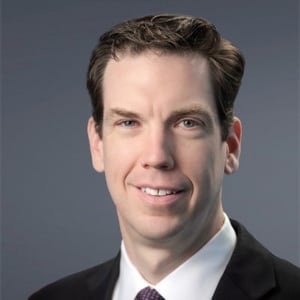
Partner, Fusion Law, PLLC
Paul is the founding partner of Fusion Law, PLLC. He has extensive experience with state, federal, and global regulators building coalitions and implementing policies to promote innovation in financial services. He is responsible for designing and implementing the first state (Arizona) and federal (CFPB) FinTech sandboxes in the United States. He also designed the CFPB no-action letter and trial disclosure policies. He helped found the first global regulatory innovation coalition (Global Financial Innovation Network) and led the founding of the first U.S. regulatory innovation coalition (American Consumer Financial Innovation Network). He served on the Financial Stability Oversight Council subcommittee on digital assets. He also has drafted state-level laws on blockchain and utility tokens.
Paul also has significant enforcement and litigation experience. He led many multi-state consumer protection enforcement matters as Civil Litigation Division Chief at the Arizona Attorney General’s Office.
Prior to his government service, Paul practiced law in the areas of securities litigation and transactional work for approximately six years at two well-known law firms. He also clerked on the U.S. Court of Appeals for the Fourth Circuit.
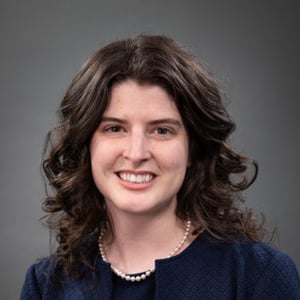
Legal Counsel, Alliance Defending Freedom
Kathleen Barceleau serves as legal counsel for Allied Legal Affairs and Advocacy Strategy at Alliance Defending Freedom. In that role, she works to coordinate and deploy network attorneys to further ADF’s mission and conducts research in support of ADF’s strategic plans.
Before joining ADF, Barceleau was Of Counsel at Fusion Law, where she focused on financial regulation and policy issues. Previously, she served as an Assistant Attorney General for the State of Kansas, where she represented Kansas and its officials in civil rights and constitutional litigation in both state and federal courts. She also served as a law clerk to the Hon. Robert H. Cleland on the U.S. District Court for the Eastern District of Michigan.
Barceleau received her J.D. summa cum laude from Ave Maria School of Law. She is a 2016 Blackstone Fellow. Before law school, Barceleau graduated summa cum laude from Ave Maria University with a Bachelor of Arts in Classics and Early Christian Literature and Economics. Barceleau is admitted to the state bar of Michigan.
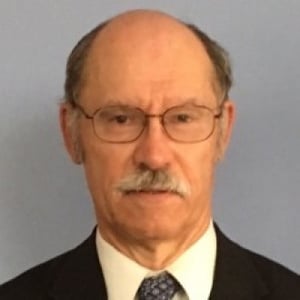
Professorial Lecturer in Law, George Washington University Law School
Theodore C. (Ted) Hirt was an attorney in the Department of Justice's Civil Division from August 1979 to March 2016. He was in its Federal Programs Branch from 1979 to 2008 (trial attorney, senior trial counsel, assistant director), and then in its Office of Immigration Litigation from 2008 to 2016 (trial attorney and senior litigation counsel). Among his responsibilities (September 2001 to March 2016) was being an advisor to the Assistant Attorneys General for the Civil Division, who serve ex officio on the Civil Rules Advisory Committee. Mr. Hirt’s areas of specialization include First Amendment issues, internet and telecommunications law, and electronic discovery. From 1976 to 1979, he was an associate at Fried, Frank, Harris, Shriver & Kampelman. From 1975 to 1976 he was an attorney in the Prehearing Division of the Michigan Court of Appeals.
Professorial Lecturer in Law, George Washington University Law School
Theodore C. (Ted) Hirt was an attorney in the Department of Justice's Civil Division from August 1979 to March 2016. He was in its Federal Programs Branch from 1979 to 2008 (trial attorney, senior trial counsel, assistant director), and then in its Office of Immigration Litigation from 2008 to 2016 (trial attorney and senior litigation counsel). Among his responsibilities (September 2001 to March 2016) was being an advisor to the Assistant Attorneys General for the Civil Division, who serve ex officio on the Civil Rules Advisory Committee. Mr. Hirt’s areas of specialization include First Amendment issues, internet and telecommunications law, and electronic discovery. From 1976 to 1979, he was an associate at Fried, Frank, Harris, Shriver & Kampelman. From 1975 to 1976 he was an attorney in the Prehearing Division of the Michigan Court of Appeals.

Vice President, Edwin Meese III Institute for the Rule of Law, Advancing American Freedom
John G. Malcolm oversees Advancing American Freedom’s work to increase understanding of the Constitution and the rule of law as Vice President of the organization’s Edwin Meese III Institute for the Rule of Law. Malcolm brings to the challenge a wealth of legal expertise and experience in both the public and private sectors.
Prior to joining Advancing American Freedom in 2025, Malcolm was the Vice President of the Institute for Constitutional Government and the Director of the Meese Center for Legal and Judicial Studies at the Heritage Foundation. Prior to joining Heritage in 2012, Malcolm was general counsel at the U.S. Commission on International Religious Freedom, as well as a distinguished practitioner in residence at Pepperdine Law School. From 2004 to 2009, Malcolm was executive vice president and director of worldwide anti-piracy operations for the Motion Picture Association.
Malcolm served as a deputy assistant attorney general in the Department of Justice’s Criminal Division from 2001 to 2004, where he oversaw sections on computer crime and intellectual property, domestic security, child exploitation and obscenity, and special investigations. Immediately prior to that, he was a founding partner in the Atlanta law firm of Malcolm & Schroeder, LLP.
From 1990 to 1997, Malcolm was an assistant U.S. attorney in Atlanta, assigned to the fraud and public corruption section, and also an associate independent counsel, investigating fraud and abuse in the Department of Housing and Urban Development. He was honored with the Director’s Award for Superior Performance for his work in connection with the successful prosecution of Walter Leroy Moody Jr., who assassinated an 11th Circuit judge and the head of the Savannah chapter of the NAACP.
A graduate of Harvard Law School and Columbia College, Malcolm began his career as a law clerk to a federal district court judge and a federal appellate court judge, and as an associate at the Atlanta-based law firm of Sutherland, Asbill & Brennan (new Eversheds Sutherland).
Malcolm, who resides in Washington, D.C., serves on the Board of Trustees of the Washington National Opera and is a Senate-confirmed member of the Board of Directors of the Legal Services Corporation, the largest funder of civil legal aid in the United States.

Plenary Session 1: Congressional Primacy at the Founding and Today
Featuring: Dr. Nicholas P. Cole, Senior Research Fellow, University of Oxford Mr. Yuval Levin, Senior Fellow, American Enterprise Institute...
Topics
Trump 2.0 Antitrust Policy: The First Major Test
In less than two months, the Trump administration has reversed Biden-era policies across nearly every...
Topics
Navigating the Rules of “The People’s House”
Despite its obscurity, the House rules package is essential to the operations of the House...
The 30-Year History of Diluting ERISA’s Fiduciary Duty
Paul N. Watkins, Kathleen Barceleau
Under the Employee Retirement Income Security Act of 1974 (ERISA), fiduciaries have a strict duty...
Is Congress a Salvageable Institution?
Ted Hirt
A review of Philip A. Wallach, Why Congress (Oxford University Press 2023) Constitutional law...
Rebuilding Congress’ Policy Capacity
Earlier this month, the Select Committee on the Modernization of Congress held a hearing on...
Have the American People Irrevocably Ceded Control of Their Government to the Modern Administrative State?
Ted Hirt
A review of Unmasking the Administrative State: The Crisis of American Politics in the Twenty-First...
Book Review: The War on Cops
John G. Malcolm
Note from the Editor: This book review supports the basic contentions of Heather Mac Donald’s...
A Speaker Must Be a Member of the House
Since 1377 when the Rolls of Parliament noted that the House of Commons had a...
Topics
A Response to Bill Otis's "Baker's Dozen"
My longtime good friend Bill Otis has written a very clever “quick-hitter” baker’s dozen reasons...