
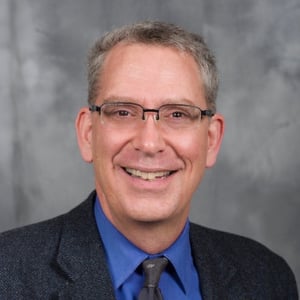
Professor of History, Hillsdale College
Bradley J. Birzer is Russell Amos Kirk Chair in American Studies and Professor of History, Hillsdale College. Co-founder and senior contributor of The Imaginative Conservative, he is also the author of several critically-acclaimed biographies, including those of Russell Kirk, Christopher Dawson, J.R.R. Tolkien, and Charles Carroll of Carrollton. He is also proudly a member of Tom Woods’s Liberty Classroom. Birzer and his wife, Dedra (also a professional historian), have seven children and divide their time between Michigan and South Dakota.
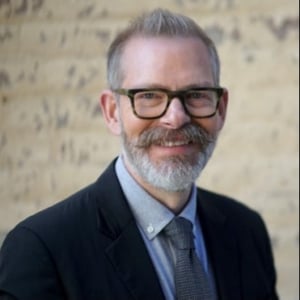
President, Free the People
Matt Kibbe is Co-founder and President at Free the People, an educational foundation which uses cutting-edge technology, video production and storytelling in order to turn on the next generation — “the liberty curious” to the values of liberty and cooperation. Kibbe functions as the team’s Yoda, ensuring that issues and projects don’t succumb to the dark side. He is an Executive Producer at BlazeTV where he produces the Kibbe on Liberty podcast, a Distinguished Senior Fellow at the Austrian Economics Center in Vienna, and Co-Founder and Partner at Fight the Power Productions, a strategic communications firm focused on video production, social media branding, and compelling storytelling.
In 2015 he served as Senior Advisor to a Rand Paul SuperPAC, and in 2016, created AlternativePAC to support liberty candidates. In 2004 Kibbe founded FreedomWorks, where he served as President and CEO for 11 years. Steve Forbes said, “Kibbe has been to FreedomWorks what Steve Jobs was to Apple.” Previously, Kibbe worked as a Chief of Staff on Capitol Hill, as Budget Director at the U.S. Chamber of Commerce, and Senior Economist at the Republican National Committee. Dubbed “The Scribe” by the New York Daily News, Kibbe is the author of three books, most recently of the #2 New York Times bestseller Don’t Hurt People and Don’t Take Their Stuff: A Libertarian Manifesto.
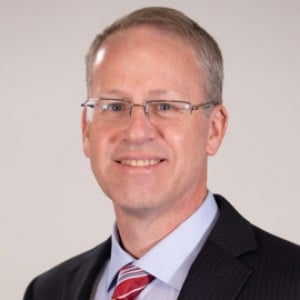
Senior Attorney, DC, Pacific Legal Foundation
Steve Simpson joined PLF in 2019 to head up its Separation of Powers practice group.
Steve’s career in public interest law started at the Institute for Justice in 2001, where he litigated free speech, campaign finance, and economic liberty cases. Among other high-profile cases in which Steve was involved, he was co-counsel in Arizona Free Enterprise Club’s Freedom Club PAC v. Bennett, IJ’s successful Supreme Court challenge to Arizona’s public financing law for political campaigns. He was the lead litigator in SpeechNow.org v. FEC, a joint effort between IJ and the Institute for Free Speech that led to the creation of super PACs. And he was co-counsel in Swedenburg v. Kelly, IJ’s successful Supreme Court challenge to New York’s ban on the interstate shipping of wine.
In 2013, Steve moved into the policy arena as the Ayn Rand Institute’s director of Legal Studies, where he spent five years writing and speaking on a wide variety of legal and cultural issues. From there, he moved back into law as senior litigation counsel at the New Civil Liberties Alliance in Washington, D.C.
Steve has spoken and written on a wide variety of legal and policy issues. He has testified in Congress and briefed congressional staffers. He has been interviewed on scores of television and radio programs, including PBS News Hour, Stossel, and The Rubin Report. His writings have appeared in many publications, including The Wall Street Journal and The Washington Post. In 2014, Steve was a Lincoln Fellow at the Claremont Institute. He is the editor of Defending Free Speech (ARI Press, 2016).
Steve earned his law degree magna cum laude from New York Law School in 1994. Following law school, he clerked for a federal district judge in the Southern District of Florida and spent several years as a litigator at Shearman & Sterling.
When he’s not at work or spending time with his wife and three daughters, Steve can usually be found mucking around in the woods at his cabin on Shenandoah Mountain.

Professor of Law, Stanford Law School
Orin S. Kerr is a Professor of Law at Stanford Law School, where he teaches and writes in the areas of criminal procedure and computer crime law. Kerr earned mechanical engineering degrees from Princeton University and Stanford University before graduating with a J.D. from Harvard Law School. He is a former law clerk to Justice Anthony M. Kennedy at the United States Supreme Court and Judge Leonard I. Garth of the U.S. Court of Appeals for the Third Circuit.
Co-Founder, Trustee, and Legal Advisor, Reason Foundation and Ge, Individual Rights Foundation
Manuel "Manny" Klausner was one of the founding partners in Reason Enterprises, which began publishing Reason magazine in 1971, three years after the publication's creation. He became editor in the summer of 1972 and a senior editor in June 1978. In 1978 he co-founded the Reason Foundation with Tibor Machan and Bob Poole. He remains on the board of the Reason Foundation today, is a stalwart supporter of the Federalist Society, and a libertarian lawyer extraordinaire.
Executive Director, Society for the Rule of Law
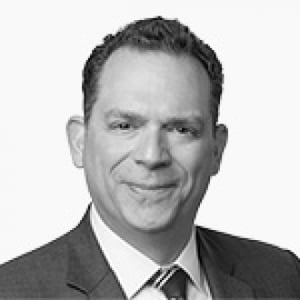
Partner, Norton Rose Fulbright US LLP
Samuel Romero Ramer, who has served at the highest levels of the Executive and Legislative Branches of the United States Government and held many positions relevant to federal investigations of businesses, is a partner in Norton Rose Fulbright's regulations, investigations, securities, compliance and white collar crime teams in Washington, DC. Mr. Ramer guides clients through all aspects of criminal and civil investigations and congressional inquiries. He also represents individuals facing criminal investigation.
Mr. Ramer's government experience includes, most recently, serving as Senior Associate Counsel to the President of the United States. In that capacity, he provided advice to senior White House policymakers on the most important issues facing the Nation and guided them through congressional and other inquiries. He also led one of the Department of Justice's 12 major divisions as Acting Assistant Attorney General. Among his responsibilities was serving as the Department's principal liaison with Congress, guiding the most senior officials in the Department through the Senate confirmation process, and consulting with the Attorney General and Deputy Attorney General on the Department's policy positions and enforcement priorities.
From 2011 to 2014, Mr. Ramer served as Senior Majority Counsel to the Judiciary Committee of the House of Representatives. In that position, he was responsible for oversight of all matters regarding the Department of Justice and led several of the Committee's most important legal reform initiatives. Previously, he served as counsel to the Senate Judiciary Committee, where he also played a key role in oversight of the Department of Justice.
Prior to his time serving in the Legislative Branch, Mr. Ramer was an accomplished prosecutor. As an assistant United States attorney in Washington, DC and an assistant district attorney in the Bronx and Manhattan, he tried dozens of cases to jury verdict, and conducted a large number of complex investigations.
Mr. Ramer's in-house industry experience includes being the General Counsel and VP of Government Relations at Symplicity, a cutting-edge software company. During his tenure, he successfully guided the company through debarment proceedings, multiple investigations, and a government monitor program. As part of the management team, he directed the development of a best-in-class compliance program, culminating in the successful sale of the company to a large private investment fund.
Ramer is an active member of the Hispanic Bar Association of the District of Columbia, and a member of the prestigious Edward Bennett Williams American Inn of Court. He is licensed in New York and the District of Columbia.
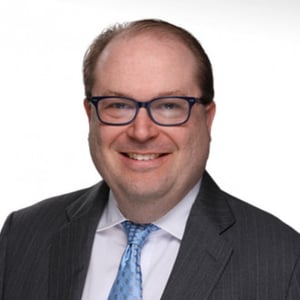
Partner, Horvitz & Levy LLP
Jeremy Rosen is nationally renowned for his proficiency in numerous issues arising under the First Amendment and California’s anti-SLAPP law. Using that knowledge, Jeremy has helped a wide variety of clients – including churches, private businesses, and individuals – defeat lawsuits that seek to impose liability on clients for exercising their rights of petition, free speech, and free exercise of religion. He has also handled hundreds of appeals in numerous appellate courts, including the Ninth Circuit Court of Appeals, the California Supreme Court, and California’s intermediate appellate courts. In addition to First Amendment and anti-SLAPP cases, his cases have involved numerous important issues regarding anti-trust, class actions, wage and hour law, employment law, breach of contract, California’s Unfair Competition Law, CEQA, the enforceability of arbitration clauses, hospital peer review, the scope of public employee whistleblower protection, and the application of the primary assumption of risk doctrine.
Jeremy is a partner at the firm, which he joined in 2001. He is a California State Bar Certified Appellate Specialist and a member of the California Academy of Appellate Lawyers.
Jeremy directed the Pepperdine University School of Law Ninth Circuit Appellate Advocacy Clinic for 6 years. The Clinic represents individuals in the Ninth Circuit who are identified by the court as needing pro bono counsel. Jeremy also previously served a three-year term where he was appointed by the Ninth Circuit to serve as one of 18 appellate lawyer representatives to the court.
Jeremy is a member of the National Chamber Litigation Center’s California Litigation Advisory Committee. Before joining the firm, Jeremy was a Litigation Associate with Munger, Tolles & Olson.

Judge, United States Court of Appeals, Eleventh Circuit
On March 20, 2018, Judge Elizabeth L. Branch (Lisa) was sworn in as a United States Circuit Judge for the Eleventh Circuit.
Judge Branch attended and graduated from Davidson College in North Carolina (B.A., cum laude, 1990), and Emory University School of Law (J.D., with distinction, 1994).
After graduating from law school, Judge Branch served as a federal law clerk to The Honorable J. Owen Forrester of the U.S. District Court for the Northern District of Georgia from 1994 to 1996. Following her clerkship, Judge Branch joined the litigation department of Smith, Gambrell & Russell, LLP in Atlanta as an associate and then a partner.
From 2004 to 2008, Judge Branch was a senior official in the Administration of President George W. Bush in Washington, D.C. She served first as the Associate General Counsel for Rules and Legislation at the U.S. Department of Homeland Security and then as the Counselor to the Administrator of the Office of Information and Regulatory Affairs at the U. S. Office of Management and Budget.
She returned to Smith Gambrell in 2008 as a litigation partner. Judge Branch then was appointed to the Court of Appeals of Georgia by Governor Nathan Deal, taking office on September 4, 2012, where she served until March 19, 2018.
Judge Branch is a member of the Board of Advisors of the Atlanta Lawyers Chapter for the Federalist Society for Law and Public Policy Studies.
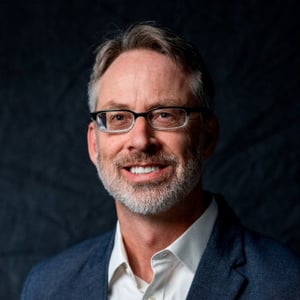
Professor of Philosophy and Religion, Hillsdale College
Nathan Schlueter is Professor of Philosophy and Religion at Hillsdale College. He has a B.A. in History from Miami University of Ohio (1993) and an M.A. and Ph.D. in Politics from the University of Dallas (1999). His articles have appeared in First Things, Touchstone, Logos, Communio, Public Discourse and Perspectives in Political Science. He has been a fellow of the National Endowment for the Humanities (2005) and the James Madison Program in American Ideals and Institutes at Princeton University (2011). He and his wife Elizabeth, who is a homemaker and homeschooler, have eight children.
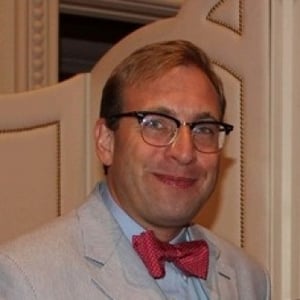
L.V. Hackley Chair for the Study of Capitalism and Free Enterprise, and Distinguished Professor of Economics, Fayetteville State University
Nikolai G. Wenzel is the L.V. Hackley Chair for the Study of Capitalism and Free Enterprise, and Distinguished Professor of Economics at Fayetteville State University (Fayetteville, NC). He is a Research Fellow of the Institut Economique Molinari (Paris France); from 2008 to 2019, he was a Research Fellow at the University of Paris Law School (Center for Law & Economics). Dr. Wenzel has held appointments as Associate Professor at Flagler College, Visiting Assistant Professor at Florida Gulf Coast University, and Wallace and Marion Reemelin Chair in Free-Market Economics (Assistant Professor) at Hillsdale College.
Dr. Wenzel has a Ph.D. in economics from George Mason University (where he was an H.B. Earhart fellow) and a BSFS cum laude in international affairs from the School of Foreign Service at Georgetown University.
Dr. Wenzel is a former Foreign Service Officer with the US State Department; for two years, he worked at the US Embassy in Mexico City, where he was vice consul and special assistant to the US ambassador. He subsequently worked for various free-market think tanks while completing his doctoral coursework.
Dr. Wenzel is a member of the Mont Pelerin Society, the Society for the Development of Austrian Economics, and the Association of Private Enterprise Education. He sat for four years on the Executive Committee of the Association of Private Enterprise Education and is currently on the Board of Scholars of the Foundation for Economic Education. From 2014 to 2019, he taught political economy for the Asia Institute of Political Economy, co-sponsored by George Mason University and the Fund for American Studies at Hong Kong University.
Dr. Wenzel has published more than fifty scholarly articles and book chapters, and is the co-author of a book on the libertarian-conservative debate (Stanford University Press, 2016). He is on the editorial board of Cosmos and Taxis and the Journal des Libertés. Since January 2020, he has been the editor of the Journal of Entrepreneurship and Public Policy.
When not writing on political economy, Dr. Wenzel dabbles in wine economics. He is a member of the Georgetown Chimes, Georgetown University's male a cappella singing group, and a novice bluegrass guitar picker and singer. He has traveled to 61 countries in the Americas, Asia and Europe, and to 49 US states. He is fluent in English, French, and Spanish, with conversational German and Italian.
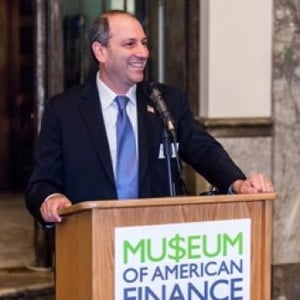
President/CEO, Museum of American Finance
David Cowen, the Museum's President/CEO, has over 20 years experience as a trader on Wall Street, including in the foreign exchange groups at Bankers Trust and Deutsche Bank. The founder of Quasar Capital Partners, a macro hedge fund, Mr. Cowen holds a BA in American history from Columbia College, an MBA from the Wharton School of Business, and an MA and Ph.D. in American history from NYU. He has written extensively on US financial history and is the co-author of Alexander Hamilton on Finance, Credit, and Debt (Columbia University Press, 2018) and Financial Founding Fathers: The Men Who Made America Rich (University of Chicago Press, 2006). He is a founding co-chair of the International Federation of Finance Museums (IFFM) and has served on the Smithsonian Affiliates Advisory Council and the Federal Reserve Board's Centennial Advisory Council.
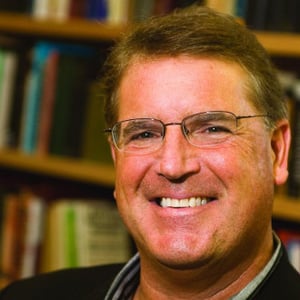
Professor of Economics, Loyola University Maryland
Thomas DiLorenzo is professor of economics at Loyola University Maryland and a member of the senior faculty of the Mises Institute. He is the author of The Real Lincoln; How Capitalism Saved America; Lincoln Unmasked; Hamilton's Curse; Organized Crime: The Unvarnished Truth About Government; and The Problem with Socialism.

Ronald Reagan Distinguished Fellow Emeritus, The Heritage Foundation
Edwin Meese III, the prominent conservative leader, thinker and elder statesman, continues a quarter-century formal association with The Heritage Foundation as the leading think tank’s Ronald Reagan Distinguished Fellow Emeritus.
In that capacity, Meese oversees special projects and acts as an ambassador for Heritage within the conservative movement.
Meese was chairman of Heritage’s Center for Legal and Judicial Studies from its founding in 2001 until what he calls his “semi-retirement” on Feb. 1, 2013.
He joined Heritage in 1988 as the think tank's first Ronald Reagan Distinguished Fellow -- the only policy chair in the country to be officially named for the 40th president. His work focused on keeping President Reagan’s legacy of conservative principles alive in public debate and discourse.
The legal center now bears his name, in recognition of Meese’s contributions to the rule of law and the nation’s understanding of constitutional law. Its mission is to educate government officials, the media and the public about the Constitution and legal principles -- and how they affect public policy.
Perhaps best known as U.S. attorney general during Reagan’s second term, Meese’s service to the conservative icon stretched from the California governor’s mansion in 1966 to the White House in 1981 before he went to the Department of Justice four years later.
His Heritage “hats” kept Meese among the major conservative voices in national policy debates at an age when most men and women enjoyed quiet retirements.
In 2006, for example, Meese was named to the Iraq Study Group, a special presidential commission dedicated to examining the best resolutions for America's involvement in Iraq. In the past few years he wrote and spoke about constitutional topics ranging from religious liberty to the responsibility of Supreme Court justices.
Immediately after Reagan's death in 2004, and in the years since, Meese often agreed to major media appearances to discuss the lasting impact of his old friend, mentor and boss. He has summarized the Reagan legacy in three accomplishments: Reagan cut taxes and kept them low. He worked to defeat and end the Soviet Union and its worldwide push for communism. And he restored America's faith in itself after years of failure and "malaise."
"I admired him as a leader and cherish his friendship," Meese wrote in a 2004 essay for Heritage members and supporters. "Ronald Reagan had strong convictions. He was committed to the principles that had led to the founding of our nation. And he had the courage to follow his convictions against all odds." <[>Edwin Meese III was born Dec. 2, 1931, to Edwin Jr. and Leone Meese in Oakland, Calif. He graduated from Yale University in 1953 and holds a law degree from the University of California-Berkeley.
Meese spent much of his adult life working for Reagan, first after the former actor, sports announcer and athlete was elected as California’s governor in 1966 and then when he sought and won the presidency in 1980.
Reagan never forgot Meese's loyalty and hard work. During a press conference at which reporters questioned Meese's actions at the Justice Department, Reagan replied: "If Ed Meese is not a good man, there are no good men."
During the Reagan governorship, Meese served as executive assistant and chief of staff from 1969 through 1974 and as legal affairs secretary from 1967 through 1968. He previously was deputy district attorney in Alameda County, Calif.
From January 1981 to February 1985, Meese held the position of counsellor to the president -- the senior job on the White House staff -- and functioned as Reagan's chief policy adviser. In 1985, he received Government Executive magazine's annual award for excellence in management.
Meese served as the 75th attorney general of the United States from February 1985 to August 1988. As the nation's chief law enforcement officer, he directed the Justice Department and led international efforts to combat terrorism, drug trafficking and organized crime.
Meese’s relationship with Heritage began when he met with senior management to discuss the think tank's landmark policy guide, Mandate for Leadership, prepared for the incoming administration. Meese later recalled that Reagan personally handed out copies of the 1,093-page book to members of his Cabinet and asked them to read it. Nearly two-thirds of Mandate's 2,000 recommendations would be adopted or attempted by the Reagan administration.
More than a decade after joining Heritage, Meese assumed the chairmanship of its Center for Legal and Judicial Studies. Under his guidance, the center counseled White House staffers, Justice Department officials and Senate Judiciary Committee members on the importance of filling judicial vacancies with qualified men and women who are committed to interpreting the Constitution according to the founding document's original meaning.
The center became known for hosting "moot court" practice sessions to sharpen the arguments of attorneys slated to bring important cases before the Supreme Court. Those cases addressed constitutional issues ranging from property rights to racial preferences in primary and secondary schools to restrictions on free speech in campaign finance law.
Meese headed the legal center's Advisory Board for the writing and editing of the best-selling book, The Heritage Guide to the Constitution (Regnery, 2005). In it, 109 experts walked readers through a clause-by-clause analysis of the Constitution. Sen. Tom Coburn (R-Okla.) was among those keeping the reference work handy during Judiciary Committee hearings on Supreme Court nominees.
Meese's other books include “Leadership, Ethics and Policing” (Prentice Hall, 2004); “Making America Safer” (Heritage, 1997); and “With Reagan: The Inside Story” (Regnery Gateway, 1992).He wrote the Introduction to a well-received 2010 book on the “overcriminalization” trend, “One Nation Under Arrest,” by Heritage veterans Paul Rosenzweig and Brian W. Walsh.
He also is a distinguished visiting fellow at the Hoover Institution at Stanford University in California and lectures, writes and consults throughout the United States on a variety of subjects.
As both attorney general and counsellor to Reagan, Meese was a member of the Cabinet and the National Security Council. He served as chairman of the Domestic Policy Council and the National Drug Policy Board. After Reagan won the White House in the 1980 election, Meese headed the transition team. During the campaign, he was the Reagan-Bush Committee's senior official.
Meese had a career outside government and politics. From 1977 to 1981, he was a law professor at the University of San Diego, where he also directed the Center for Criminal Justice Policy and Management.
He was an executive in the aerospace and transportation industry as vice president for administration of Rohr Industries Inc. in Chula Vista, Calif. He left Rohr to return to the practice of law, doing corporate and general work in San Diego County.
A retired colonel in the Army Reserve, Meese remains active in numerous civic and educational organizations.
He and his wife, Ursula, have two grown children and reside in McLean, Va.

Clayton J. and Henry R. Barber Professor of Law, Northwestern University Pritzker School of Law and Co-Chairman, Board of Directors, The Federalist Society
STEVEN GOW CALABRESI is the Clayton J. & Henry R. Barber Professor at Northwestern Pritzker School of Law. He has also co-taught in the Fall semester at Yale Law School from 2013 to the present. Calabresi clerked for Justice Antonin Scalia and Judges Robert H. Bork and Ralph K. Winter. He was a Special Assistant to Attorney General Meese from 1985 to 1987 and worked with Ken Cribb as his deputy in 1987 on the second floor of the West Wing of the Reagan White House. Calabresi has written books on presidential power and comparative constitutional law and the origins of judicial review. He and Gary Lawson are the co-editors of a casebook on U.S. Constitutional Law, and Calabresi is also the co-editor of a casebook on comparative constitutional law. He has written over seventy law review articles since 1990.
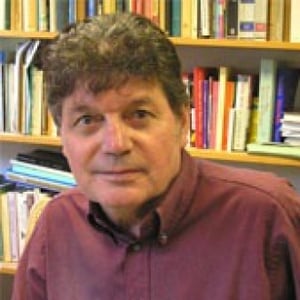
Professor of Social and Political Theory, University of Buckingham
Norman Patrick Barry was an English political philosopher best known as an exponent of classical liberalism. For much of his career he was a professor of social and political theory at the University of Buckingham. He passed away in October 2008.

Laurence A. Tisch Professor of Law and Director, Classical Liberal Institute, New York University School of Law; Senior Fellow, The Civitas Institute, University of Texas at Austin
Richard A. Epstein is the inaugural Laurence A. Tisch Professor of Law at NYU School of Law. Prior to his joining the faculty, he was a visiting law professor at NYU from 2007 through 2009. He served as the Peter and Kirstin Bedford Senior Fellow at the Hoover Institution from 2000 to 2024. Since 2024 to the present he is a senior lecturer at the Civitas Institute at the University of Texas—Austin. Epstein is also the James Parker Hall Distinguished Service Professor of Law Emeritus and a senior lecturer at the University of Chicago. His initial law school appointment was at the University of Southern California from 1968 to 1972. Epstein received an LL.D., h.c. from the University of Ghent, 2003. He has been a member of the American Academy of Arts and Sciences since 1985 and was a Senior Fellow of the Center for Clinical Medical Ethics at the University of Chicago Division of Biological Sciences, also from 1983. to 2022 He served as editor of the Journal of Legal Studies from 1981 to 1991, and of the Journal of Law and Economics from 1991-2001. From 2001 to 2010 he was a director of the John M. Olin Program in Law and Economics at the University of Chicago.
His newest book, The Myth of Birthright Citizenship: What the Fourteenth Amendment Really Says was published in 2026 (Encounter Books). Prior to that he has published many books including, The Dubious Morality of the Modern Administrative State (Roman & Littlefield 2020).Earlier he published th Classical Liberal Constitution: The Uncertain Quest for Limited Government (Harvard 2014) iHis previous books include Design for Liberty: Private Property, Public Administration and the Rule of Law (Harvard 2011); The Case Against the Employee Free Choice Act (Hoover 2009); Supreme Neglect: How to Revive the Constitutional Protection of Property Rights (Oxford 2008); Antitrust Decrees in Theory and Practice: Why Less is More (AEI 2007); Overdose: How Excessive Government Regulation Stifles Pharmaceutical Innovation (Yale University Press. 2006); How Progressives Rewrote the Constitution (Cato 2006); Cases and Materials on Torts (Aspen Law & Business; 8th ed. 2004); Skepticism and Freedom: A Modern Case for Classical Liberalism (University of Chicago, 2003); Torts (Aspen Law & Business 1999); Principles for a Free Society: Reconciling Individual Liberty with the Common Good (Perseus Books, 1998): Mortal Peril: Our Inalienable Rights to Health Care (Addison-Wesley, 1997); Simple Rules for a Complex World (Harvard, 1995); Bargaining With the State (Princeton, 1993); Forbidden Grounds: The Case Against Employment Discrimination Laws (Harvard , 1992); Takings: Private Property and the Power of Eminent Domain (Harvard, 1985); and Modern Products Liability Law (Greenwood Press, 1980). He has also edited(with Catherine M. Sharkey) Cases and Materials on the Law of Torts (10th edition 2012).
Professor Epstein has written numerous articles on a wide range of legal and interdisciplinary subjects. He has taught courses in administrative law, antitrust law, civil procedure, communications, constitutional law, contracts, corporations, criminal law, employment discrimination law, environmental law, food and drug law health law and policy, legal history, labor law, property, real estate development and finance, jurisprudence, labor law; land use planning, patents, individual, estate and corporate taxation, Roman Law; torts, and workers' compensation.
Professor Epstein also writes a regular column for Civitas Institute, which also sponsors his podcast, The Libertarian with Charles C.W. Cooke, and Law Talk, with Cooke and John Yoo. He also does a podcast with John Batchelor. And appears regularly on the Freedom File with Judge Andrew Napolitano.
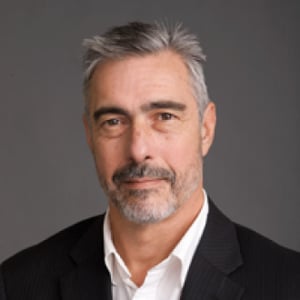
Professor of Law, Georgetown Law
After graduating from law school, where he served on the Harvard Law Review and won the Sears Prize, Professor Peller clerked for the Honorable Morris Lasker of the U.S. District Court for the Southern District of New York. He was a member of the University of Virginia Law faculty from 1982-1988 prior to joining the Georgetown faculty. He has taught Constitutional Law, Contracts, Torts, Civil Rights, Bargain, Exchange & Liability, Criminal Procedure, Radical Legal Thought, and Jurisprudence at Georgetown. His writings are primarily in the field of legal theory and legal history. His most recent book is Critical Race Consciousness: Reconsidering American Ideologies of Racial Justice (Paradigm 2012).
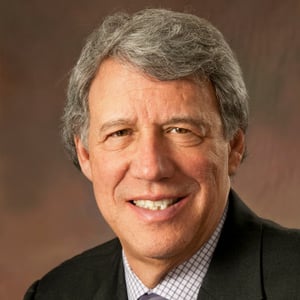
Edward H. Levi Distinguished Service Professor of Law, University of Chicago Law School
Geoffrey R. Stone is the Edward H. Levi Distinguished Service Professor at the University of Chicago. Mr. Stone joined the faculty in 1973, after serving as a law clerk to Supreme Court Justice William J. Brennan, Jr. He later served as Dean of the Law School (1987-1994) and Provost of the University of Chicago (1994-2002).
Stone is the author of many books on constitutional law, including Sex and the Constitution: Sex, Religion and Law from America’s Origins to the Twenty-First Century (2017); Speaking Out: Reflections of Law, Liberty and Justice (2010 & 2016); Top Secret: When Our Government Keeps Us in the Dark (2007), War and Liberty: An American Dilemma (2007), Perilous Times: Free Speech in Wartime (2004), and Eternally Vigilant: Free Speech in the Modern Era(Chicago 2002). He is also an editor of two leading casebooks, Constitutional Law (7th ed. 2013) and The First Amendment (5th ed. 2016). Stone is an editor of The Supreme Court Reviewand chief editor of a twenty-volume series, Inalienable Rights, which is being published by the Oxford University Press.
Stone was appointed by President Obama to serve on the President’s Review Group on Intelligence and Communications Technologies, which evaluated the government’s foreign intelligence surveillance programs in the wake of Edward Snowden’s leaks. He is a Fellow of the American Academy of Arts and Sciences, a member of the America Law Institute, the National Advisory Council of the American Civil Liberties Union, a member of the American Philosophical Society, and a member of the Board of Advisors of the Council for Democracy and Technology. He has served as Chair of the Board of the American Constitution Society and Chair of the Board of the Chicago Children’s Choir.
Stone has also written amicus briefs for constitutional scholars in a number of Supreme Court cases, including Obergefell v. Hodges, Whole Woman’s Heath v. Hellerstadt, Lawrence v. Texas, United States v. Windsor, United States v. Stevens, and Rasul v. Bush. He was also one of the lawyers who represented President Bill Clinton in the Supreme Court in Clinton v. Jones.
Assistant Professor, Savannah Law School
Professor D’Agostino is an Assistant Professor teaching Torts and Evidence. He also has interests in contracts, international business law, law and philosophy, and law and science, particularly the effects of modern science on law. Formerly a Legal Fellow in the D.C. office of Congressman Tom Price of Georgia, a Researcher at Georgetown University Law Center, and a Visiting Scholar at the Southeastern Legal Foundation, he also served as a U.S. Senate Judiciary Committee Law Clerk for Senator Tom Coburn of Oklahoma and as a Legal Intern for the U.S. Attorney’s Office for the District of Columbia, Civil Division.
Professor D’Agostino was a member of the Editorial Board of the Virginia Law Review and Executive Editor of the Virginia Journal of International Law. In 2010, he served on the National Symposium Editorial Board of the Harvard Journal of Law & Public Policy and as a pro bono researcher for the U.N. Special Rapporteur on Violence Against Women. He helped to organize the Federalist Society’s 2011 National Student Symposium held at the University of Virginia School of Law and keynoted by U.S. Supreme Court Justice Clarence Thomas, a Savannah area native.

David and Mary Harrison Distinguished Professor of Law, University of Virginia School of Law
Paul G. Mahoney is a David and Mary Harrison Distinguished Professor and served as dean of the Law School from 2008-16. Mahoney's teaching and research areas are securities regulation, law and economic development, corporate finance, financial derivatives and contracts. He has published widely in law reviews and peer-reviewed finance and law and economics journals. His book, “Wasting a Crisis: Why Securities Regulation Fails,” was published by the University of Chicago Press in 2015.
Mahoney joined the Law School faculty in 1990 after practicing law with the New York firm of Sullivan & Cromwell and clerking for Judge Ralph K. Winter, Jr. of the U.S. Court of Appeals for the Second Circuit and Justice Thurgood Marshall of the U.S. Supreme Court. He served as academic associate dean at the Law School from 1999 to 2004 and has held the Albert C. BeVier Research Chair and the Brokaw Chair in Corporate Law. He has been a visiting professor at the University of Chicago Law School, the University of Southern California Law School and the University of Toronto Faculty of Law. He has also worked on legal reform projects in Kazakhstan, Kyrgyzstan, Mongolia and Nepal.
Mahoney is a member of the Council on Foreign Relations and a fellow of the American Academy of Arts and Sciences. In 2018 he joined Securities and Exchange Commission’s Investor Advisory Committee. He served as an associate editor of the Journal of Economic Perspectives from 2004 to 2007 and as a director of the American Law and Economics Association from 2002 to 2004. He is a past recipient of the All-University Outstanding Teacher Award and the Law School's Traynor Award for excellence in faculty scholarship.
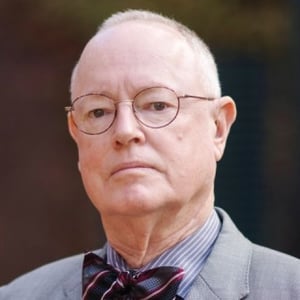
John C. Jeffries, Jr., Distinguished Professor of Law, University of Virginia School of Law
Paul B. Stephan is an expert on international business, international dispute resolution and comparative law, with an emphasis on Soviet and post-Soviet legal systems. In addition to writing prolifically in these fields, Stephan has advised governments and international organizations, taken part in cases in the Supreme Court of the United States, the federal courts, and various foreign judicial and arbitral proceedings, and lectured to professionals and scholarly groups around the world on issues raised by the globalization of the world economy. During 2006-07, he served as counselor on international law in the U.S. Department of State, and in 2020-21 as special counsel to the general counsel in the Department of Defense. He was a coordinating reporter for the American Law Institute’s Restatement (Fourth) of the Foreign Relations Law of the United States.
Stephan received his B.A. and M.A. from Yale University in 1973 and 1974, respectively, and his J.D. from the University of Virginia in 1977. Before returning to Virginia, he clerked for Judge Levin Campbell of the U.S. Court of Appeals for the First Circuit and for U.S. Supreme Court Justice Lewis F. Powell Jr. He has taught as a visiting professor at the Moscow State Institute for International Relations, the University of Vienna, Münster University, Lausanne University, Melbourne University, University of Pantheon-Assas (Paris II), Sciences Po, Paris I, the Interdisciplinary Centre Herzliya, Sydney University, the Peking University School of Transnational Law in Shenzhen, China, the University of Tartu’s Pärna College, and Liverpool University. He also has visited at Columbia Law School and Duke Law School, and served as a scholar in residence in the London office of Wilmer Hale.
After the collapse of the Soviet Union, Stephan took part in a variety of projects involving law reform in former socialist states. He worked in Russia, Georgia, Ukraine, Albania and Slovakia on behalf of the U.S. Treasury and in Kazakhstan and Azerbaijan on behalf of the International Monetary Fund. He also organized training programs for tax administrators and judges from all of the formerly socialist countries under the auspices of the Organization for Economic Cooperation and Development. His casebooks on international business, international trade and investment, and Doing Business in Emerging Markets are used at law schools both in the United States and abroad. He is the co-author, with Robert Scott, of The Limits of Leviathan: Contract Theory and the Enforcement of International Law (Cambridge University Press, 2006), and the author of The World Crisis and International Law: The Knowledge Economy and the Battle for the Future (2023). His current research focuses on the legal issues related to the Russian invasion of Ukraine and legal responses to the rise of big data.

Judge, United States Court of Appeals, Seventh Circuit
Judge Sykes was nominated to the Seventh Circuit by President George W. Bush and confirmed by the Senate in 2004. Prior to her appointment to the federal bench, Judge Sykes served as a justice on the Wisconsin Supreme Court. Governor Tommy G. Thompson appointed her in September 1999 to fill a mid-term vacancy on the state supreme court, and she was elected to a full ten-year term in April 2000. From 1992-1999, Judge Sykes served on the state trial bench in Milwaukee County (elected in 1992 and re-elected in 1998). From 1985-1992, Judge Sykes practiced law with the Milwaukee firm of Whyte & Hirschboeck, S.C., and from 1984-1985, was a law clerk to Federal Judge Terence T. Evans.
Born and raised in the Milwaukee area, Judge Sykes earned a bachelor’s degree in journalism from Northwestern University in 1980 and a law degree from Marquette University Law School in 1984. Between college and law school, Judge Sykes worked as a reporter for The Milwaukee Journal.
Judge Sykes has two sons.

George Mason University Foundation Professor of Law, Antonin Scalia Law School, George Mason University
TODD J. ZYWICKI is George Mason University Foundation Professor of Law at Antonin Scalia Law School at George Mason University and Research Fellow of the George Mason Law and Economics Center. During the Fall 2023 semester he served as the Visiting Scholar in Conservative Thought and Policy for the Bruce Benson Center for the Study of Western Civilization at the University of Colorado-Boulder. From 2020-2021 he was Chair of the Consumer Financial Protection Bureau Taskforce on Federal Consumer Financial Law. In 2021 he was inducted to the American College of Consumer Financial Services Lawyers. He is also a Senior Fellow of the F.A. Hayek Program for the Advanced Study of Politics, Philosophy, and Economics at George Mason University and a former Senior Fellow of the Cato Institute. From 2015-2017 he was Executive Director of the George Mason Law and Economics Center. He served as Co-Editor of the Supreme Court Economic Review from 2006-2017. From 2003-2004, Professor Zywicki served as the Director of the Office of Policy Planning at the Federal Trade Commission. He has also taught at Vanderbilt University Law School, Georgetown University Law Center, Boston College Law School, Mississippi College School of Law, and China University of Political Science and Law.
Professor Zywicki clerked for Judge Jerry E. Smith of the U.S. Court of Appeals for the Fifth Circuit and worked as an associate at Alston & Bird in Atlanta, Georgia, where he practiced bankruptcy and commercial law. He received his J.D. from the University of Virginia, where he was executive editor of the Virginia Tax Review and John M. Olin Scholar in Law and Economics. Professor Zywicki also received an M.A. in Economics from Clemson University and an A.B. cum Laude with high honors in his major from Dartmouth College.
Professor Zywicki is also a Lone Mountain Fellow of the Property and Environment Research Center, a Fellow of the International Centre for Economic Research in Turin, Italy, and a former Senior Fellow of the Goldwater Institute. During the Fall 2008 Semester Professor Zywicki was the Searle Fellow of the George Mason University School of Law and was a 2008-09 W. Glenn Campbell and Rita Ricardo-Campbell National Fellow and the Arch W. Shaw National Fellow at the Hoover Institution on War, Revolution and Peace. He has lectured and consulted with government officials around the world, including Iceland, Italy, Japan, and Guatemala. In 2006 Professor Zywicki served as a Member of the United States Department of Justice Study Group on “Identifying Fraud, Abuse and Errors in the United States Bankruptcy System.”
Professor Zywicki is the author of more than 130 articles in leading law reviews and peer-reviewed economics journals. He is one of the Top 10 most-cited law professors in the field of Commercial Law and one of the Top 25 law professors on Twitter as measured by engagement levels. He is one of the Top 50 Most Downloaded Law Authors at the Social Science Research Network. He has testified multiple times before Congress on issues of consumer bankruptcy law and consumer credit and is a frequent commentator on legal issues in the print and broadcast media, including the Wall Street Journal, New York Times, The Washington Post, The Washington Times, Nightline, The Newshour with Jim Lehrer, Neil Cavuto Show, Fox & Friends, Smerconish, Fox News @ Night with Shannon Bream, Fox Business, CNN, CNBC, Bloomberg News, BBC, The Diane Rehm Show, Lou Dobbs Show, Jerry Doyle Show, and The Laura Ingraham Show.
Professor Zywicki is former Chairman and a current member of the Board of Directors of the Competitive Enterprise Institute, and is a member of the Board of Directors of the Institute for Humane Studies, Bill of Rights Institute, the Executive Committee for the Federalist Society's Financial Institutions and E-Commerce Practice Group, the Board of Trustees of the Foundation for Research on Economics and the Environment. He formerly served on the Governing Board and the Advisory Council for the Financial Services Research Program at George Washington University School of Business. He is currently the Chair of the Academic Advisory Council for the following organizations: The Bill of Rights Institute, the film “We the People in IMAX,” and the McCormick-Tribune Foundation “Freedom Museum” in Chicago, Illinois. He is a member of the Board of Visitors of Ralston College and was a member of the Board of Trustees of Yorktown University. From 2005-2009 he served as an elected Alumni Trustee of the Dartmouth College Board of Trustees.

Topics
From Whom Is the Fed Independent? To Whom Is It Accountable?
The Federal Reserve and its supporters constantly declare that the Fed is and should be...
Topics
The Fed’s Remarkable ‘Independence’ Claim
This post originally appeared in The Daily Economy. In the course of human events, the...
FS-2112
Brad Birzer, Matt Kibbe, Steve Simpson
The Federalist Society's Student Division &The Northwestern Law Student Chapter Present You Don't Get Freedom...
The Trump Presidency’s Impact on the Future of the Conservative/Libertarian Legal Movement
Orin S. Kerr, Manuel S. Klausner, Gregg Thomas Nunziata, Samuel Ramer, Jeremy B. Rosen
Five leading conservative and libertarian lawyers assess the impact of the Trump presidency on the...
Feddie Night Fusionism: I Love You, You're Perfect, Now Change!
Lisa Branch, Nathan W. Schlueter, Nikolai G. Wenzel
The Federalist Society's Student Division &Pepperdine Student Chapter Present Feddie Night Fusionism:I Love You, You're Perfect,...
Hamilton v. Jefferson: The Central Bank Debate [POLICYbrief]
David Cowen, Thomas J. DiLorenzo
In 1791, two great minds clashed over an issue of constitutional and historical significance. Alexander...
Excerpts from an Interview with Hon. Edwin Meese III
Edwin Meese, Steven G. Calabresi
Congratulations to Hon. Edwin Meese III, 75th United States Attorney General and member of the...
Panel I: The Classical Theory of Law [Archive Collection]
Norman P. Barry, Janice L. Calabresi, Richard A. Epstein, Gary Peller, Geoffrey R. Stone
On April 3, 1987, the University of Chicago chapter hosted the Sixth Annual National Student...
Panel IV: Economic Uncertainty and the Role of the Courts
Joseph D'Agostino, Paul G. Mahoney, Paul B. Stephan, Diane S. Sykes, Todd J. Zywicki
This panel will assess the role of the courts in an uncertain economic climate. Given...
Did the Fed Avert a Second Great Depression? Hayekian and Neo-Keynesian Views