
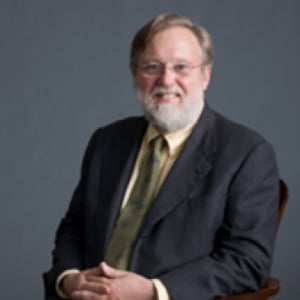
John Hampton Baumgartner, Jr. Professor of Real Property Law; Faculty Director, Georgetown Environmental Law and Policy Program; Faculty Director, Georgetown Climate Resource Center, Georgetown Law Center
Professor Byrne joined the Law Center faculty in 1985. After graduation from the University of Virginia law school, he served as a law clerk to Judge Frank Coffin and U.S. Supreme Court Justice Lewis Powell and then worked as an associate with the D.C. firm of Covington & Burling. He teaches and writes in the areas of Property, Land Use, Constitutional Law, and Higher Education Law and Policy. He served as Associate Dean for the JD Program from 1997 to 2000. He was John Carroll Research Professor in 1996-97.
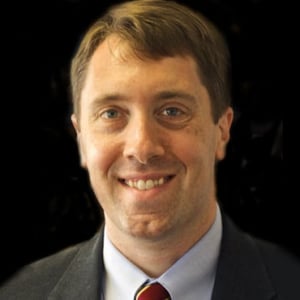
Professor of Law, Antonin Scalia Law School, George Mason University
Eric R. Claeys is Professor of Law at the Antonin Scalia Law School, George Mason University. He has written widely in the fields of property, private law, and constitutional law. Professor Claeys’s current research interests focus on flourishing- and labor-based natural rights justifications for property—in American property theory, in intellectual property, and in contemporary regulation of shale gas exploration and hydraulic fracturing. He is a member of the American Law Institute, he serves on the ALI’s Members’ Consultative Group for the first Restatement of Copyright, and he also serves as an adviser to the Restatement (Fourth) of the Law of Property.
Professor Claeys received his JD from the University of Southern California Gould School of Law. He received his AB from Princeton University, and he is a former visiting fellow and current member of Princeton’s Politics Department’s James Madison Program in American Ideals and Institutions. After law school, Professor Claeys clerked for the Hon. Melvin Brunetti, U.S. Court of Appeals for the Ninth Circuit, and the Hon. William H. Rehnquist, Chief Justice of the United States.
Professor Claeys’s main teaching interests include Property, Torts, Jurisprudence, and Intellectual Property. In recent years, he has also taught Water Law, Remedies, Estates and Trusts, Trade Secrecy, Constitutional Law, Torts, and Oil and Gas law. Spring 2018, he is teaching Torts and Jurisprudence as a Visiting Professor at Harvard Law School.
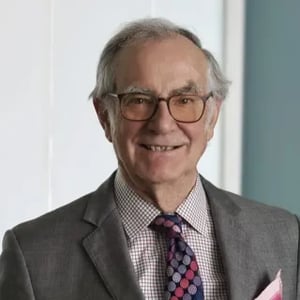
Of Counsel, McElroy, Deutsch, Mulvaney & Carpenter, LLP
WESLEY W. HORTON is Of Counsel in the Firm’s Hartford, Connecticut office. Mr. Horton’s appellate practice covers a wide variety of legal issues, from constitutional matters, to domestic relations, insurance, personal injury, and land use. He began his law career as the law clerk to Justice Charles House of the Connecticut Supreme Court (1970 to 1971). Building on that experience, he has participated in some of the most notable cases in Connecticut, representing individuals and corporations. The list of cases on which he appears as counsel, either at argument or on the brief, spans 50 years and numbers in the hundreds. He has argued more than 135 cases to the Connecticut Supreme Court and is well-known for representing the City of New London in Kelo v. New London before the U.S. Supreme Court in 2005.
Mr. Horton consults with counsel at the trial level to assist with complicated legal matters or in preparation for possible appellate issues. Such cases include representation of insurers and plaintiffs, contract questions, coverage issues and divorce litigation involving multi-million dollar estates.
He has been a Fellow of the American Academy of Appellate Lawyers since 1991. Membership in the Academy is by invitation only. Mr. Horton served as President of the American Counsel Association (2008-2009), of which he has been a member since 1991. He has been President of the Connecticut Supreme Court Historical Society since its founding in 2005.
Mr. Horton represents lawyers on ethical matters. He also testifies as an expert witness in Connecticut trial courts on ethical and malpractice matters as well as with regard to attorney’s fees. He served as the Chair of the Connecticut Bar Association’s Professional Ethics Committee (1997 through 2007), and has been a member of the Committee since 1976.
Mr. Horton is a graduate of Harvard College and the University of Connecticut School of Law, and the author or co-author of several scholarly publications and articles on legal topics. He is the recipient of many professional awards, including the University of Connecticut Law School Alumni Association’s Medal of Excellence; and currently serves on the Board of Editors for the Connecticut Law Tribune, and as a Lecturer and Adjunct Professor at the University of Connecticut School of Law . He has been co-author since 1978 of the annually published Connecticut Appellate Rules Annotated and the Connecticut Superior Court Rules Annotated, both published by Thomson/West. He also co-authored the “Connecticut Appellate Review,” an annual review of Connecticut Supreme and appellate Court cases, from1980 to 2022. Mr. Horton authored the History of the Connecticut Supreme Court, published by West Publishing. He also wrote The Connecticut State Constitution, an in-depth study of each provision of the Connecticut Constitution. Mr. Horton taught Appellate advocacy at the University of Connecticut School of Law most years from 1980 to 2023 and frequently lectures on constitutional and appellate issues.
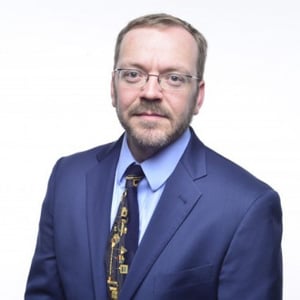
Vice President for Legal Affairs, Goldwater Institute

Professor of Law, Antonin Scalia Law School, George Mason University
ILYA SOMIN is Professor of Law at George Mason University and the B. Kenneth Simon Chair in Constitutional Studies at the Cato Institute. His research focuses on constitutional law, property law, democratic theory, federalism, and migration rights. He is the author of Free to Move: Foot Voting, Migration, and Political Freedom (Oxford University Press, revised and expanded edition, 2022), Democracy and Political Ignorance: Why Smaller Government is Smarter (Stanford University Press, revised and expanded second edition, 2016), and The Grasping Hand: Kelo v. City of New London and the Limits of Eminent Domain (University of Chicago Press, 2015, rev. paperback ed., 2016), coauthor of A Conspiracy Against Obamacare: The Volokh Conspiracy and the Health Care Case (Palgrave Macmillan, 2013), and co-editor of Eminent Domain: A Comparative Perspective (Cambridge University Press, 2017). Democracy and Political Ignorance has been translated into Italian and Japanese.
Somin’s work has appeared in numerous scholarly journals, including the Yale Law Journal, Stanford Law Review, Northwestern University Law Review, Georgetown Law Journal, Critical Review, and others. Somin has also published articles in a variety of popular press outlets, including the New York Times, Washington Post, Wall Street Journal, Los Angeles Times, CNN, NBC, The Atlantic, USA Today, Boston Globe, US News and World Report, South China Morning Post, National Law Journal and Reason. He has been quoted or interviewed by the New York Times, Washington Post, Wall Street Journal, Time, Newsweek, The Economist, the Christian Science Monitor, the Financial Times, The Guardian, the Associated Press, CBS, MSNBC, NPR, BBC, Reuters, the Canadian Broadcasting Corporation, the Australian Broadcasting Corporation, Radio Free Europe/Radio Liberty, Al Jazeera, and the Voice of America, among other media.
Somin’s writings have been cited in decisions by the United States Supreme Court, multiple state supreme courts and lower federal courts, and the Supreme Court of Israel. He is co-counsel for the plaintiffs in VOS Selections, Inc. v. Trump, a case challenging the constitutionality of President Trump’s “Liberation Day” tariffs. Somin has testified on the use of drones for targeted killing in the War on Terror before the US Senate Judiciary Subcommittee on the Constitution, Civil Rights, and Human Rights. In 2009, he testified on property rights issues at the United States Senate Judiciary Committee confirmation hearings for Supreme Court Justice Sonia Sotomayor. Somin writes regularly for the popular Volokh Conspiracy law and politics blog, now affiliated with Reason magazine (previously affiliated with the Washington Post from 2014 to 2017). From 2006 to 2013, he served as Co-Editor of the Supreme Court Economic Review, one of the country’s top-rated law and economics journals.
Somin has served as a visiting professor at the University of Pennsylvania Law School. He has also been a visiting professor or scholar at the Georgetown University Law Center, the University of Hamburg, Germany, the University of Torcuato Di Tella in Buenos Aires, Argentina, Uriel Reichman University in Israel, and Zhengzhou University in China. He is a University Affiliate of the Schar School of Policy and Government at George Mason University, and an affiliated faculty member of the George Mason University Institute for Immigration Research. Before joining the faculty at George Mason, Somin was the John M. Olin Fellow in Law at Northwestern University Law School in 2002-2003. In 2001-2002, he clerked for the Hon. Judge Jerry E. Smith of the U.S. Court of Appeals for the Fifth Circuit. Professor Somin earned his B.A., Summa Cum Laude, at Amherst College, M.A. in Political Science from Harvard University, and J.D. from Yale Law School.
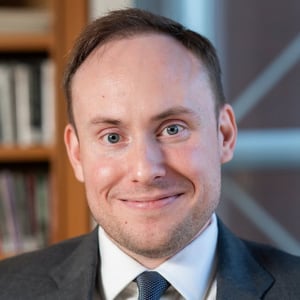
Director, Robert A. Levy Center for Constitutional Studies, Cato Institute
Thomas Berry is the director in the Cato Institute’s Robert A. Levy Center for Constitutional Studies and editor in chief of the Cato Supreme Court Review. Before joining Cato, he was an attorney at Pacific Legal Foundation and clerked for Judge E. Grady Jolly of the U.S. Court of Appeals for the Fifth Circuit. His academic work has appeared in NYU Journal of Law and Liberty, Washington and Lee Law Review Online, and Federalist Society Review. His popular writing has appeared in The Wall Street Journal, National Law Journal, Investor’s Business Daily, National Review Online, and The Hill Online. He has testified before the U.S. Senate, and his work has been cited by the U.S. District Court for the District of Columbia.
Berry holds a J.D. from Stanford Law School, where he was a senior editor on the Stanford Law and Policy Review and a Bradley Student Fellow in the Stanford Constitutional Law Center. He graduated with a B.A. in Liberal Arts from St. John’s College, Santa Fe.
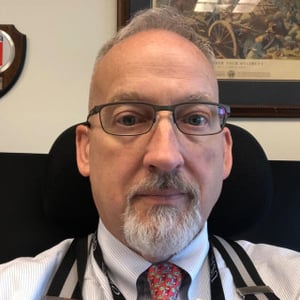
Appellate Counsel, Theodore Cooperstein PLLC
Theodore Cooperstein currently is an appellate attorney in the boutique law firm of Theodore Cooperstein PLLC, available for criminal and civil appeals in both state and federal courts. A former career prosecutor with twenty five years of service in the US Department of Justice, he was an Assistant United States Attorney for the Southern District of Florida and the Southern District of Mississippi, and has served as a Military Intelligence Officer in the Army Reserves from 1989 to 2011, retiring with the rank of Lieutenant Colonel. During the Trump Administration, he was appointed and served as the General Counsel of the U.S. Office of Personnel Management. Prior to joining the Southern District of Florida, Mr. Cooperstein served as a Special Assistant U.S. Attorney in the U.S. Attorney's Office for the District of Maryland. He previously had served as Counsel to the Deputy Attorney General at the Department of Justice, and as Assistant General Counsel in the FBI Office of the General Counsel.
A.B., Dartmouth College; J.D., Stanford University; LL.M., Comparative and International Law, Georgetown University Law Center; Masters of Strategic Studies, U.S. Army War College
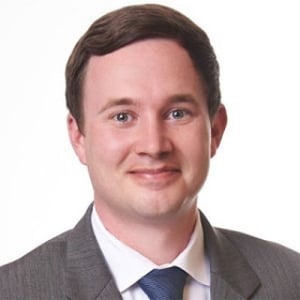
Regulatory Counsel, Americans for Prosperity Foundation
Mike Pepson is regulatory counsel at Americans for Prosperity Foundation, which frequently files amicus briefs in the U.S. Supreme Court, U.S. Courts of Appeals, and state Supreme Courts, as well as public comments in various federal and state regulatory proceedings. Mike assists AFPF with its efforts involving separation of powers, administrative process, criminal justice reform, tech and innovation, and other issues.
He is also Special Counsel for Administrative Law at Cause of Action Institute, where he has been involved in complex civil and criminal litigation in federal district and appellate courts and administrative litigation before federal agencies in a variety of matters, including agency enforcement actions, statutory and constitutional challenges to federal regulations and agency decisions, and Section 1983 challenges to state statutes.
He received his LL.M. from Columbia Law School, J.D. from The Catholic University of America, Columbus School of Law, and B.A. from Loyola College in Baltimore, Maryland.
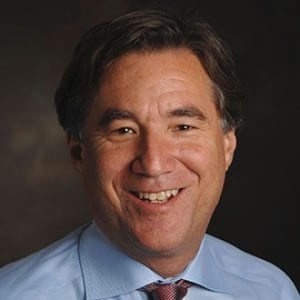
Ashe Family Chair Professor of Law, Georgia State University College of Law
Eric J. Segall graduated from Emory University, Phi Beta Kappa and summa cum laude, and from Vanderbilt Law School, where he was the research editor for the Law Review and member of Order of the Coif. He clerked for the Chief Judge Charles Moye Jr. for the Northern District of Georgia, and Albert J. Henderson of the 11th Circuit Court of Appeals. After his clerkships, Segall worked for Gibson, Dunn & Crutcher and the U.S. Department of Justice, before joining the Georgia State faculty in 1991.
Segall teaches federal courts and constitutional law I and II. He is the author of the books Originalism as Faith and Supreme Myths: Why the Supreme Court is not a Court and its Justices are not Judges. His articles on constitutional law have appeared in, among others, the Harvard Law Review Forum, the Stanford Law Review On Line, the UCLA Law Review, the George Washington Law Review, the Washington University Law Review, the University of Pennsylvania Journal of Constitutional Law, the Northwestern University Law Review Colloquy, and Constitutional Commentary among many others.
Segall’s op-eds and essays have appeared in the New York Times, the LA Times, The Atlantic, SLATE, Vox, Salon, and the Daily Beast, among others. He has appeared on CNN, Fox News, MSNBC, and France 24 and all four of Atlanta’s local television stations. He has also appeared on numerous local and national radio shows.
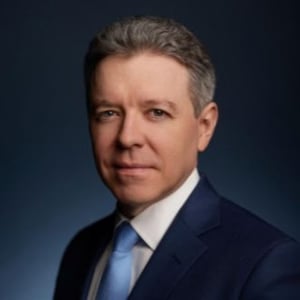
Former Solicitor General of Texas
Jonathan F. Mitchell is Principal at Mitchell Law PLLC. He received his law degree with high honors from the University of Chicago Law School, where he was an articles editor of The University of Chicago Law Review and a member of the Order of the Coif.
After graduating from law school, Mr. Mitchell clerked for Judge J. Michael Luttig of the U.S. Court of Appeals for the Fourth Circuit and for Justice Antonin Scalia of the Supreme Court of the United States. He then served as an Attorney-Adviser in the Office of Legal Counsel of the United States Department of Justice from 2003 through 2006. After leaving the Department of Justice, Mr. Mitchell served as a Visiting Researcher at Georgetown University Law Center, a Visiting Assistant Professor at the University of Chicago Law School from 2006 through 2008, and an Assistant Professor of Law at George Mason University from 2008 through 2010.
In 2010, Mr. Mitchell was appointed Solicitor General of Texas, a position he held until January 2015. After leaving the Texas Solicitor General’s office, Mr. Mitchell served as the Searle Visiting Professor of Law at the University of Texas School of Law before joining the Hoover Institution as a Visiting Fellow from 2015 to 2016. Mr. Mitchell also served as a Visiting Professor of Law at Stanford Law School before opening his own law firm in 2018.
Mr. Mitchell has published numerous works of scholarship in top-10 law journals, and he has written articles on textualism, national-security law, criminal law and procedure, judicial review and judicial federalism, and the legality of stare decisis in constitutional adjudication.
Mr. Mitchell has argued eight times before the Supreme Court of the United States, and more than 20 times in the federal courts of appeals. He has also argued before Supreme Court of Texas and in numerous trial courts. Mr. Mitchell has authored the principal merits brief in 11 Supreme Court cases, and has written and submitted more than 20 amicus curiae briefs in the Supreme Court.
Mr. Mitchell devised the novel enforcement mechanism in the Texas Heartbeat Act, also known as Senate Bill 8, which avoids pre-enforcement judicial review by prohibiting government officials from enforcing the statute and empowering private citizens to bring lawsuits against those who violate it. This produced an end-run around Roe v. Wade and allowed Texas and other states to impose pre-viability abortion bans despite the continued existence of Roe.
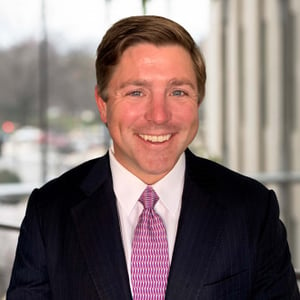
General Counsel, xAI and X

Patrick Hotung Professor of Constitutional Law, Georgetown University Law Center; Faculty Director, Georgetown Center for the Constitution
Randy E. Barnett is the Patrick Hotung Professor of Constitutional Law at the Georgetown University Law Center and is the Faculty Director of the Georgetown Center for the Constitution. After graduating from Northwestern University and Harvard Law School, he tried many felony cases as a prosecutor in the Cook County States’ Attorney’s Office in Chicago. A recipient of a Guggenheim Fellowship in Constitutional Studies and the Bradley Prize, Professor Barnett has been a visiting professor at Penn, Northwestern and Harvard Law School.
Professor Barnett’s publications includes thirteen books, more than one hundred articles and reviews, as well as numerous op-eds. His most recent book is Felony Review: Tales of True Crime and Corruption in Chicago (2026). His other books on the Constitution include: A Life for Liberty: The Making of an American Originalist (2024); The Original Meaning of the Fourteenth Amendment: Its Letter and Spirit (2021) (with Evan Bernick); An Introduction to Constitutional Law: 100 Supreme Court Cases Everyone Should Know (2019) (with Josh Blackman); Restoring the Lost Constitution: The Presumption of Liberty (2nd ed. 2013); Our Republican Constitution: Securing the Liberty and Sovereignty of We the People (2016); and Constitutional Law: Cases in Context (5th ed. forthcoming 2027) (with Josh Blackman). His books on contracts are The Oxford Introductions to U.S. Law: Contracts (2010) and Contracts: Cases and Doctrine (7th ed. 2021) (with Nate Oman). And he is the author of The Structure of Liberty: Justice and the Rule of Law (2nd ed. 2014).
In 2004, he argued the medical marijuana case of Gonzalez v. Raich before the U.S. Supreme Court. In 2012, he was one of the lawyers representing the National Federation of Independent Business in its constitutional challenge to the Affordable Care Act in NFIB v. Sebelius. He’s appeared in numerous documentaries and portrayed a prosecutor in the 2010 science-fiction feature film, InAlienable: The Movie. On X he is @RandyEBarnett

Professor of Law and Centennial Chair, South Texas College of Law Houston
Josh Blackman is a national thought leader on constitutional law and the United States Supreme Court. Josh’s work was quoted during two presidential impeachment trials. He has testified before Congress and advises federal and state lawmakers. Josh regularly appears on TV, including NBC, CBS, ABC, Fox, and the BBC. Josh is also a frequent guest on NPR and other syndicated radio programs. He has published commentaries in the New York Times, Wall Street Journal, Washington Post, and leading national publications.
Since 2012, Josh has served as a professor at the South Texas College of Law Houston. He holds the Centennial Chair of Constitutional Law. Josh is an Adjunct Fellow at the Manhattan Institute. Josh has written more than seven dozen law review articles that have been cited more than a thousand times. Josh was selected as the Jurist of the Year by the Texas Journal of Law & Public Policy, received the inaugural Meese III Originalism Award, and was awarded the Inaugural Joseph Story Award. Josh was selected by Forbes Magazine for the “30 Under 30” in Law and Policy. Josh is the President of the Harlan Institute, and founded FantasySCOTUS, the Internet’s Premier Supreme Court Fantasy League. He blogs at the Volokh Conspiracyand posts@JoshMBlackman.
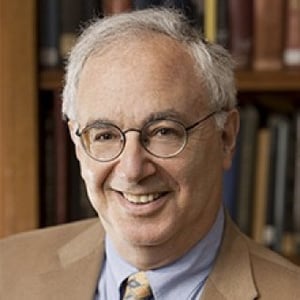
Sterling Professor of Law and Political Science, Yale Law School
Bruce Ackerman is Sterling Professor of Law and Political Science at Yale, and the author of nineteen books in political philosophy, constitutional law, and public policy. He is a Commander of the French Order of Merit, a member of the American Law Institute and the American Academy of Arts and Sciences. The American Philosophical Society has awarded him the Henry Phillips Prize for lifetime achievement in Jurisprudence, especially noting his exploration of the great turning points in American constitutional history in his three volume series, We the People. His award-winning early work, Social Justice in the Liberal State, continues to provoke contemporary controversy.
His scholarship has had a global impact. He has been named a Leading Global Thinker by Foreign Policy magazine, and has been awarded an Honorary Doctorate from the University of Trieste, Italy, for his contributions to comparative constitutional law. Before the Next Attack (2006) served as a basis for the reform of the French constitution dealing with emergency powers. The Stakeholder Society (with Anne Alstott) has served as the basis for reform initiatives in Brazil, Britain, and elsewhere that guarantee every person a fair share of the nation’s wealth by providing them with a “citizen stake” consisting of a substantial cash grant as they reach maturity.
His most recent book, Revolutionary Constitutions, puts the world-wide constitutional crisis in historical perspective by comparing the post-war experience of countries as different as France, India, Iran, Italy, Israel, Poland, South Africa, and the United States — and demonstrating that these nations have a good deal to learn from one another in confronting the current assault on checks-and-balances.
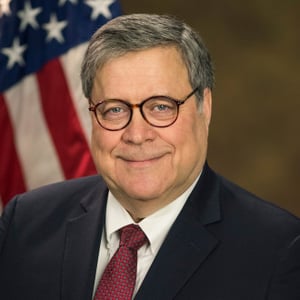
Former United States Attorney General
William P. Barr was born on May 23, 1950 in New York City. Mr. Barr received his A.B. in government from Columbia University in 1971 and his M.A. in government and Chinese studies in 1973. From 1973 to 1977, he served in the Central Intelligence Agency before receiving his J.D. with highest honors from George Washington University Law School in 1977.
In 1978, Mr. Barr served as a law clerk under Judge Malcolm Wilkey of the U.S. Court of Appeals for the District of Columbia Circuit. Following his clerkship, Mr. Barr joined the Washington, D.C. office of the law firm of Shaw, Pittman, Potts & Trowbridge as an associate. He left the firm to work in the White House under President Ronald Reagan from 1982 to 1983 on the domestic policy staff, then returned to the law firm and became a partner in 1985.
Under President George H.W. Bush, Mr. Barr served as the Deputy Attorney General from 1990 to 1991; the Assistant Attorney General of the Office of Legal Counsel from 1989 to 1990; and the 77th Attorney General of the United States from 1991 to 1993. While serving at the Department, Mr. Barr helped create programs and strategies to reduce violent crime and was responsible for establishing new enforcement policies in a number of areas including financial institutions, civil rights, and antitrust merger guidelines. Mr. Barr also led the Department’s response to the Savings & Loan crisis; oversaw the investigation of the Pan Am 103 bombing; directed the successful response to the Talladega prison uprising and hostage taking; and coordinated counter-terrorism activities during the First Gulf War.
From 1994 to 2000, Mr. Barr served as Executive Vice President and General Counsel for GTE Corporation. Mr. Barr then served as Executive Vice President and General Counsel of Verizon from 2000 to 2008. At both GTE and Verizon, Mr. Barr led the legal, regulatory, and government affairs activities of the companies.
After retiring from Verizon in 2008, Mr. Barr advised major corporations on government enforcement matters, as well as regulatory litigation. Mr. Barr served as Of Counsel at Kirkland & Ellis LLP in 2009 and rejoined the firm in 2017.
President Donald Trump announced his intention to nominate Mr. Barr on December 7, 2018, and he was confirmed as the 85th Attorney General of the United States by the U.S. Senate on February 14, 2019. U.S. Supreme Court Chief Justice John Roberts administered the oath of office. Mr. Barr joins John Crittenden (1841 and 1850-1853) as one of only two people in U.S. history to serve twice as Attorney General.
Walter E. Meyer Professor Emeritus of Property and Urban Law and Professorial Lecturer in Law, Yale Law School
Robert C. Ellickson was appointed Walter E. Meyer Professor of Property and Urban Law at Yale Law School in 1988. He has published numerous articles in legal and public policy journals on topics such as land use and housing policy, land tenure systems, social norms, homelessness, and the organization of households, community associations, and cities. Professor Ellickson’s books include Order Without Law: How Neighbors Settle Disputes (1991) (awarded the Order of the Coif Triennial Book Award in 1996), The Household: Informal Order Around the Hearth (2008), Land Use Controls: Cases and Materials (4th edition 2013, with Vicki Been, Roderick M. Hills, Jr. and Christopher Serkin), and Perspectives on Property Law (4th edition 2014, with Carol M. Rose and Henry E. Smith). He has written about ancient systems of land tenure and also periodically teaches a seminar on the history of development of the City of New Haven. Robert Ellickson was a member of the USC Law Faculty in 1970–1981, and the Stanford Law Faculty in 1981–88. He also has been a visiting professor at the Harvard and University of Chicago Law Schools. He was a founding member and later a director of the American Law and Economics Association, and served as its President in 2000–01. In 2016, the Association awarded him the Ronald H. Coase Medal in recognition of his scholarly contributions. Professor Ellickson served as an adviser during the American Law Institute’s preparation of the Restatement, Third, Property—Servitudes, and currently serves in the same capacity for the Restatement (Fourth) of Property. He is a fellow of the American Academy of Arts and Sciences, and, in 2008, received the William & Mary Law School’s Brigham-Kanner Property Rights Prize for Property Scholarship. At Yale Law School he has served as Deputy Dean (1991–92) and, during the reconstruction of the Sterling Law buildings, as chairman of the Building Committee. Prior to entering teaching in 1970, he worked for a Presidential commission on housing policy and then for Levitt & Sons, the homebuilding firm. Professor Ellickson is married to Lynn Hammer and has two children. For many decades he competed in competitive Scrabble tournaments and, during intervals when fortune smiled, was ranked as one of the top 20 players in the United States.

Laurence A. Tisch Professor of Law and Director, Classical Liberal Institute, New York University School of Law; Senior Fellow, The Civitas Institute, University of Texas at Austin
Richard A. Epstein is the inaugural Laurence A. Tisch Professor of Law at NYU School of Law. Prior to his joining the faculty, he was a visiting law professor at NYU from 2007 through 2009. He served as the Peter and Kirstin Bedford Senior Fellow at the Hoover Institution from 2000 to 2024. Since 2024 to the present he is a senior lecturer at the Civitas Institute at the University of Texas—Austin. Epstein is also the James Parker Hall Distinguished Service Professor of Law Emeritus and a senior lecturer at the University of Chicago. His initial law school appointment was at the University of Southern California from 1968 to 1972. Epstein received an LL.D., h.c. from the University of Ghent, 2003. He has been a member of the American Academy of Arts and Sciences since 1985 and was a Senior Fellow of the Center for Clinical Medical Ethics at the University of Chicago Division of Biological Sciences, also from 1983. to 2022 He served as editor of the Journal of Legal Studies from 1981 to 1991, and of the Journal of Law and Economics from 1991-2001. From 2001 to 2010 he was a director of the John M. Olin Program in Law and Economics at the University of Chicago.
His newest book, The Myth of Birthright Citizenship: What the Fourteenth Amendment Really Says was published in 2026 (Encounter Books). Prior to that he has published many books including, The Dubious Morality of the Modern Administrative State (Roman & Littlefield 2020).Earlier he published th Classical Liberal Constitution: The Uncertain Quest for Limited Government (Harvard 2014) iHis previous books include Design for Liberty: Private Property, Public Administration and the Rule of Law (Harvard 2011); The Case Against the Employee Free Choice Act (Hoover 2009); Supreme Neglect: How to Revive the Constitutional Protection of Property Rights (Oxford 2008); Antitrust Decrees in Theory and Practice: Why Less is More (AEI 2007); Overdose: How Excessive Government Regulation Stifles Pharmaceutical Innovation (Yale University Press. 2006); How Progressives Rewrote the Constitution (Cato 2006); Cases and Materials on Torts (Aspen Law & Business; 8th ed. 2004); Skepticism and Freedom: A Modern Case for Classical Liberalism (University of Chicago, 2003); Torts (Aspen Law & Business 1999); Principles for a Free Society: Reconciling Individual Liberty with the Common Good (Perseus Books, 1998): Mortal Peril: Our Inalienable Rights to Health Care (Addison-Wesley, 1997); Simple Rules for a Complex World (Harvard, 1995); Bargaining With the State (Princeton, 1993); Forbidden Grounds: The Case Against Employment Discrimination Laws (Harvard , 1992); Takings: Private Property and the Power of Eminent Domain (Harvard, 1985); and Modern Products Liability Law (Greenwood Press, 1980). He has also edited(with Catherine M. Sharkey) Cases and Materials on the Law of Torts (10th edition 2012).
Professor Epstein has written numerous articles on a wide range of legal and interdisciplinary subjects. He has taught courses in administrative law, antitrust law, civil procedure, communications, constitutional law, contracts, corporations, criminal law, employment discrimination law, environmental law, food and drug law health law and policy, legal history, labor law, property, real estate development and finance, jurisprudence, labor law; land use planning, patents, individual, estate and corporate taxation, Roman Law; torts, and workers' compensation.
Professor Epstein also writes a regular column for Civitas Institute, which also sponsors his podcast, The Libertarian with Charles C.W. Cooke, and Law Talk, with Cooke and John Yoo. He also does a podcast with John Batchelor. And appears regularly on the Freedom File with Judge Andrew Napolitano.
Sterling Professor Emeritus of Law, Yale Law School
Owen Fiss is Sterling Professor Emeritus of Law and Professorial Lecturer in Law of Yale University. He was educated at Dartmouth, Oxford, and Harvard. He clerked for Thurgood Marshall (when Marshall was a judge of the United States Court of Appeals for the Second Circuit) and later for Justice William J. Brennan, Jr. He also served in the Civil Rights Division of the Department of Justice from 1966 to 1968. Before coming to Yale, Professor Fiss taught at the University of Chicago. At Yale he teaches procedure, legal theory, and constitutional law.
Professor Fiss is the author of many articles and books, including The Civil Rights Injunction, Troubled Beginnings of the Modern State, The Structure of Procedure (with Robert Cover), Liberalism Divided, The Irony of Free Speech, A Community of Equals, A Way Out: America’s Ghettos and the Legacy of Racism, Adjudication and its Alternatives (with Judith Resnik), The Law as it Could Be, The Dictates of Justice: Essays on Law and Human Rights, and A War Like No Other: The Constitution in a Time of Terror. In a 2012 study, four of his articles were named as among the top 100 most-cited law review articles of all time. His most recent book is Pillars of Justice: Lawyers and the Liberal Tradition.
Professor Fiss is one of the founders of the Law School programs in Latin America and the Middle East and, along with Anthony Kronman, directs the Abdallah S. Kamel Center for the Study of Islamic Law and Civilization. Professor Fiss is a member of the American Academy of Arts and Sciences and has received honorary doctorates from the University of Toronto, Universidad de Chile, Universidad de Buenos Aires, and Universidad de Palermo (Buenos Aires). He was also awarded La distinción Sócrates from Universidad de Los Andes (Bogotá) and was appointed honorary visiting professor at Instituto Tecnológico Autónomo de México. Most recently, Professor Fiss was awarded the 2020 Henry M. Phillips Prize in Jurisprudence by the American Philosophical Society, becoming only the 26th recipient of the prize since it was established in 1888.

John Marshall Harlan II Professor of Law Emerita, New York Law School; Former President, American Civil Liberties Union
Nadine Strossen, New York Law School Professor Emerita and Senior Fellow at FIRE (the Foundation for Individual Rights and Expression), was national President of the American Civil Liberties Union from 1991 to 2008. An internationally acclaimed free speech scholar and advocate, who regularly addresses diverse audiences and provides media commentary around the world, Strossen is also the Host and Project Consultant for Free To Speak, a 3-hour documentary film series distributed on public television in 2023. Her books about free speech include: Free Speech: What Everyone Needs to Know® (Oxford University Press 2023); HATE: Why We Should Resist It with Free Speech, Not Censorship (Oxford University Press 2018); and Defending Pornography: Free Speech, Sex, and the Fight for Women’s Rights (Scribner 1995), which was republished with a new Preface in 2024 as part of the NYU Classics Series. Her many honors and awards include the National Coalition Against Censorship’s Judy Blume Lifetime Achievement Award for Free Speech. She serves on the Advisory Boards of several organizations that do free speech work, including: ACLU, Academic Freedom Alliance, Foundation Against Intolerance and Racism (FAIR), Heterodox Academy, National Coalition Against Censorship, and the University of Austin.
Judge, United States Court of Appeals, Second Circuit
Judge Winter was appointed United States Circuit Judge for the Second Circuit on December 10, 1981 and entered on duty January 5, 1982. He received a B.A. degree from Yale College in 1957 and an LL.B. degree from Yale Law School in 1960. He served as a law clerk to Judge Caleb M. Wright, Chief Judge, U.S. District Court, Delaware, 1960-61, and to Judge Thurgood Marshall, U.S. Court of Appeals, Second Circuit, 1961-62.
Judge Winter was a full-time member of the Yale Law School Faculty from 1962 until entering judicial service. At the time of his appointment, he was the William K. Townsend Professor of Law. He was also a Consultant to the Subcommittee of Separation of Powers, Committee on the Judiciary, U.S. Senate from 1968 to 1972, a Senior Fellow, The Brookings Institute, Washington, D.C. from 1968 to 1970, a John Simon Guggenheim Fellow from 1971 to 1972 and an Adjutant Scholar, American Enterprise Institute from 1972 to 1981.
He served from 1987 to 1992 as a member of the Judicial Conference Advisory Committee on Civil Rules. He served as Chair of the Judicial Conference Advisory Committee on the Rules of Evidence from 1992 to 1996. From July 1, 1997 to September 30, 2000, Judge Winter served as Chief Judge of the U.S. Court of Appeals for the Second Circuit. In April 1998, he was appointed to the Executive Committee of the U.S. Judicial Conference. From October 1999 to September 2000, he served as Chair of the Executive Committee. On October 1, 2000, he took Senior Judge status.
He served as Chair of the Committee to Review Circuit Council Conduct and Disability Orders from 2005 to 2008. He was a member of the United States Foreign Intelligence Surveillance Act Court of Review from 2003 to 2010.
Judge Winter has received the Connecticut Law Review Award, Honorary Doctors of Law from Brooklyn Law School and New York Law School, the Federal Bar Council's Learned Hand Award for Excellence in Federal Jurisprudence, and the Yale Law School's Association's Award of Merit. He is a Fellow of the American Academy of Arts and Sciences.
Henry R. Silverman Professor of Law and Professor of Philosophy, University of Pennsylvania Carey Law School
Anita L. Allen is the Henry R. Silverman Professor of Law and Professor of Philosophy. A graduate of Harvard Law School with a PhD from the University of Michigan in Philosophy, Allen is internationally renown as an expert on philosophical dimensions of privacy and data protection law, ethics, bioethics, legal philosophy, women’s rights, and diversity in higher education. She was Penn’s Vice Provost for Faculty from 2013-2020, and chaired the Provost's Arts Advisory Council. Allen is an elected member of the National Academy of Medicine, the American Law Institute and a fellow of the American Academy of Arts and Sciences. In 2018-19 she served as President of the Eastern Division of the American Philosiphical Association.
From 2010 to 2017, Allen served on President Obama’s Presidential Commission for the Study of Bioethical Issues. She was presented the Lifetime Achievement Award of the Electronic Privacy Information Center in 2015, and chaired its Board, 2019-2022. Allen has served on the faculty of the School of Criticism and Theory at Cornell, for which she is an advisor. A two-year term as an Associate of the Johns Hopkins Humanities Center concluded in 2018. She has been a visiting Professor at Tel Aviv University, Waseda University, Villanova, the University of Arizona, Harvard and Yale, and a Law and Public Affairs Fellow at Princeton. She was awarded an honorary Doctorate from Tilburg University (Netherlands) in 2019. She has written over a hundred articles and chapters, and her books include Unpopular Privacy: What Must We Hide (Oxford, 2011); Privacy Law and Society (Thomson/West, 2017); The New Ethics: A Guided Tour of the 21st Century Moral Landscape (Miramax/Hyperion, 2004); Why Privacy Isn’t Everything: Feminist Reflections on Personal Accountability (Rowman and Littlefield, 2003), and Uneasy Access: Privacy of Women in a Free Society (1988). Allen has given hundreds of talks all over the world and appeared on television, radio and written for major media. She currently serves on the Board of the National Constitution Center, and has served on numerous other boards and professional advisory boards, including the Pennsylvania Board of Continuing Judicial Education, the Association for Practical and Professional Ethics, the Bazelon Center for Mental Health Law, the AALS Executive Committee, the Maternity Care Coalition and the West Philadelphia Alliance for Children. She is a member of the Pennsylvania and New York bars, and formerly taught at Georgetown University Law Center for ten years and the University of Pittsburgh, after practicing briefly at Carvath, Swaine & Moore.
Chauncey Stillman Professor of Law, University of Michigan Law School
Carl E. Schneider, '79, the Chauncey Stillman Professor of Law and Professor of Internal Medicine, teaches courses on law and medicine, regulating research, property, law and morals, the sociology and ethics of the legal profession, and writing briefs. He holds a joint appointment in U-M’s Medical School.
A central theme in his scholarship criticizes some dominant regulatory ideas, particularly those in the law of medicine. For example, his book The Censor's Hand: The Misregulation of Human Subject Research (MIT Press, 2015), examines a regulatory system whose usefulness is widely assumed but quite unproved and argues that that system is so perversely constructed that it cannot help doing more harm than good. Another example is More Than You Wanted to Know: The Failure of Mandated Disclosure (Princeton University Press, 2014), coauthored with Omri Ben-Shahar. It explains why government-mandated disclosure may be the most adored, most used, and least successful regulatory method in our time. His The Practice of Autonomy: Patients, Doctors, and Medical Decisions (Oxford University Press, 1998), which analyzes the malign effects of making patient autonomy the regulatory summum bonum, is another example of the project.
Professor Schneider is also the coauthor of two innovative casebooks: With Marsha Garrison, he wrote The Law of Bioethics: Individual Autonomy and Social Regulation (West, 2015, 3rd edition), a pioneering casebook in what was then a new field. With Margaret F. Brinig, he wrote An Invitation to Family Law (West, 2007, 3rd edition). This casebook approaches family law conceptually: Each chapter discusses an area of family law, and each chapter introduces students to a systematic discussion of a recurring jurisprudential issue (like the problem of rules and discretion, or the legal principle of autonomy).
Professor Schneider served two terms on the President's Bioethics Council. He has been a visiting professor at Cambridge University, the University of Tokyo, Kyoto University, and the United States Air Force Academy (twice).
Simeon E. Baldwin Professor Emeritus of Law, Yale Law School
Peter H. Schuck is the Simeon E. Baldwin Professor Emeritus of Law and Professor (Adjunct) of Law at Yale Law School where he has held the chair since 1984. He has also served as Deputy Dean. His major fields of teaching and research are tort law; immigration, citizenship, and refugee law; groups, diversity, and law; and administrative law. His most recent books include Targeting in Social Programs: Avoiding Bad Bets, Removing Bad Apples; Meditations of a Militant Moderate: Cool Views on Hot Topics; Immigration Stories; Foundations of Administrative Law; Diversity in America: Keeping Government at a Safe Distance; and The Limits of Law: Essays on Democratic Governance. He is also co-editor, with James Q. Wilson, of Understanding America. He is a member of the American Law Institute's advisory committee for the Restatement of Torts (Third), Basic Principles, and a contributing editor to The American Lawyer. Prior to joining Yale, he was Principal Deputy Assistant Secretary for Planning and Evaluation in the U.S. Department of Health, Education, and Welfare. Professor Schuck holds a B.A. from Cornell, a J.D. from Harvard Law School, an LL.M. in International Law from N.Y.U., and an M.A. in Government from Harvard.
Senior Litigation Counsel, American Center for Law and Justice
Walter M. Weber is Senior Counsel for the ACLJ in the Washington, D.C. office. A highly regarded legal writer, Weber received his bachelor’s degree from Princeton University and his law degree from Yale Law School.
Weber emphasizes First Amendment law and has written briefs in many landmark cases at the Supreme Court including NOW v. Scheidler, Lamb’s Chapel v. Center Moriches School District and Bray v. Alexandria Women’s Health Clinic.
Weber has argued more than a dozen times in appeals before federal and state courts. Prior to joining the ACLJ, Weber served as a staff attorney with the Catholic League for Religious and Civil Rights.
Professor of Law, Dean Emerita, and Co-Director, Sports Law Track - Graduate Program in Entertainment, Arts and Sports Law LL.M., University of Miami School of Law
Patricia D. White is a Professor of Law and was the University of Miami School of Law's eleventh dean from 2009-2019. Her legal career spans over four decades as an attorney and educator. She was the first woman law school dean in Arizona and the longest serving one in the history of Arizona State University’s Sandra Day O’Connor College of Law. Her prominence in the field of legal education has led to her being recognized as one of the most influential and innovative people in legal education by National Jurist magazine in 2016, 2015, 2014, 2013 and in the 2012 ranking she was named the top woman on the list.
White chairs the ABA's Commission on the Future of Legal Education, which aims to influence dramatic changes in the legal profession over the next decade. Under White’s leadership, Miami Law has also been recognized by Pre-Law Magazine as one the “20 Most Innovative Law Schools” in 2017. Similarly, Innovation 800, published in 2017 by Cambridge University, included Miami Law as a "Leader in Learning" and one of the most innovative law schools. The London-based Financial Times, considered one of the premiere international daily newspapers with a special emphasis on business and economic news, has also tipped its hat to Miami Law’s innovation. In its “FT Special Report on Innovative Law Schools”, it ranked Miami Law as one of the most innovative law schools in the world in 2015 and 2016. Innovation accolades also came for Miami Law's specialty areas, such as the Billboard Magazine 2017 ranking of Miami Law as a top school for music law in the U.S. The Legal Services Innovation Index ranked the University of Miami Law in the top four for law schools delivering innovation and technology programs in 2017.
After becoming the dean of Miami Law in 2009, White continued her longstanding commitment to students, the transformation of legal education and public service. She transformed Miami Law’s student services program, including adding the unique Student Development Program, the AskUs Fellows initiative, Academic Achievement Program and the Office of Professionalism to name a few. She established the LawWithoutWalls program, linking students and faculty from over 30 academic institutions around the world to examine issues and develop new solutions in legal education and practice; and Legal Corps a novel fellowship program that placed new law school graduates in not for profit and public sector organizations across the nations and the globe.
Under White's leadership, the number of clinics at Miami Law more than doubled, bringing the total to 10. In 2011 Miami Law was honored by the American Bar Association Law Student Division with the Judy M. Weightman Memorial Public Interest Award, in recognition of the law school's strong commitment to public interest through the HOPE Public Interest Resource Center. She has won many awards, including the 2012 Equal Justice Leadership Award, given by Legal Services of Greater Miami for her commitment to public service, and the Judge Learned Hand Award for distinguished public service, from the Arizona chapter of the American Jewish Committee.
White received degrees in philosophy and law (B.A. 1971, J.D. 1974, M.A. 1974) from the University of Michigan. While attending law school, she was also a graduate student in philosophy and an associate editor of the law review. She began her legal practice in Washington, D.C., at Steptoe & Johnson and then moved to Caplin & Drysdale. Georgetown University Law hired White onto the faculty in 1979, and in 1988 she joined her alma mater, the University of Michigan. While at Michigan, she was of counsel to the Detroit firm Bodman, Longley & Dahling, and served for a year as tax advisor to the Economic Study Committee of Major League Baseball. In 1994, she joined the law faculty at the University of Utah, and was of counsel to Parsons, Behle & Latimer. She is a member of the bars of the District of Columbia, Michigan, and Utah, and is an elected Fellow of the American College of Tax Counsel.
During her career, White has worked in the areas of tax law, torts, bioethics, philosophy of law, and trusts and estates, and has published in prominent law and bioethics journals.
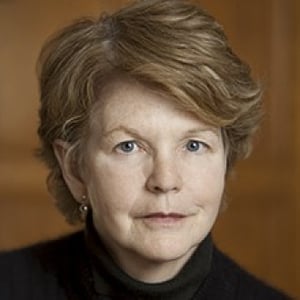
Howard M. Holtzmann Professor of International Law, Yale Law School
Lea Brilmayer is the Howard M. Holtzmann Professor of International Law at Yale Law School. In addition to teaching Contracts to first-year students, she also teaches Conflict of Laws and International Courts and Tribunals, as well as seminars on the laws of war and on African current affairs. Her degrees include a B.A. in mathematics and a J.D. from the University of California at Berkeley, as well as an LL.M. from Columbia Law School. Brilmayer has taught at a number of different law schools as either a professor or visiting professor, including the University of Texas, the University of Chicago, the University of Michigan, Columbia Law School, Harvard Law School, and the New York University School of Law (where she led a weekly seminar on International Jurisprudence.) She is a member of the Texas and Supreme Court bars. She has given numerous endowed lectures at other American law schools and has also taught twice at the summer session of the Hague Academy of International Law.
During her first decade of teaching, her writing interests mainly concerned conflict of laws (in particular, personal jurisdiction and choice of law); federal jurisdiction; and jurisprudence. Her conflict of laws writings have included one theoretical book on the subject and a leading casebook (in the more recent editions, co-authored with Jack Goldsmith). Together with a group of Yale student contributors, she published An Introduction to Jurisdiction in the American Federal System. Her writings on the conflict of laws have resulted in her being asked on a number of occasions to testify before Congressional committees, most recently on the Full Faith and Credit implications of same sex marriage. More recently, her interests have gradually turned to international law and international relations, and she is frequently cited for her academic writings about nationalism and the international legal status of secessionist movements. Her research in international jurisprudence has also led to two books, Justifying International Acts and American Hegemony: Political Morality in a One-Superpower World.
In addition to her academic interests, Brilmayer carries on an active life in interstate and international adjudication. In addition to contributing to amicus briefs, she has served as counsel of record before the United States Supreme Court and has been an expert consultant on many lower and intermediate appellate court cases. For the last decade she has served as lead counsel in several international public (state-to-state) arbitrations dealing with island sovereignty, maritime delimitation, land boundaries, and mass claims for violations of the laws of war.

Founding Partner, Cooper & Kirk PLLC
Charles J. Cooper is a founding member and the chairman of Cooper & Kirk, PLLC, “one of the Nation’s leading litigation boutiques” (Above The Law 2017). The National Law Journal recently wrote that Mr. Cooper’s “brilliant legal career has so far spanned five decades and thrust Cooper into the spotlight in some of the most historic moments of the country’s modern history.” He has argued nine cases before the United States Supreme Court and scores of appeals before each of the 13 federal courts of appeals and several state supreme courts. He has been lead trial counsel in numerous complex, weeks-long trials in federal courts throughout the country. Named by the National Law Journal as one of the 10 best litigators in Washington D.C., Mr. Cooper’s work has been reported in numerous press accounts, and he has been called a “powerhouse attorney” (Fortune 2015), “a hard-nosed litigator” (Washington Post 2017), and “one of the country’s most in-demand civil litigators and a Washington legal institution unto himself” (The American Spectator 2014).
After graduating from the University of Alabama School of Law in 1977, where he ranked first in his class and served as Editor-in-Chief of the Alabama Law Review, Mr. Cooper began his career as a law clerk to Judge Paul Roney on the Fifth Circuit Court of Appeals and to Justice William H. Rehnquist in 1978–79. He then practiced law in Atlanta for two years before joining the Civil Rights Division of the U.S. Department of Justice, where he served as the Deputy Assistant Attorney General in charge of, among other things, appellate matters. In 1985 President Reagan appointed him to the position of Assistant Attorney General for the Office of Legal Counsel, which is the office responsible for providing legal opinions and advice to the White House, the Attorney General, and Executive Branch departments and agencies on issues covering the full spectrum of federal constitutional, statutory, and regulatory law.
In 1988 he returned to private practice as a litigation partner in the Washington, D.C. office of McGuireWoods. From 1990 until the founding of Cooper & Kirk in 1996, he was a partner at Shaw Pittman (now Pillsbury Winthrop Shaw Pittman), where he headed the firm’s Constitutional and Government Litigation Group.
Mr. Cooper has represented a wide range of public and private clients in highly complex constitutional, civil rights, antitrust, healthcare, banking, intellectual property, elections, campaign finance, administrative, commercial, and government contract cases. He has led trial teams in cases that have won judgments and settlements valued in the billions of dollars and that have established ground-breaking constitutional precedents.
Much of Mr. Cooper’s practice has involved representing high-profile clients in nationally prominent matters, including: the State of Florida in a First Amendment suit brought by the Disney Company concerning its autonomous regulatory authority over its Disney World property; the Commonwealth of Virginia in a suit seeking to enjoin the removal of noncitizens from its voter rolls; 38 members of the Duke Lacrosse team falsely accused of rape by officials of Duke University and the City of Durham; Harper Lee in a copyright dispute with the heirs of Gregory Peck; high-ranking former government officials such as former Attorneys General John Ashcroft, Jeff Sessions, and William Barr, and Ambassador John Bolton; several Governors and United States Senators; over 100 Members of Congress; and many state, territorial, and local government bodies and officials. He has also represented and advised government officials and public figures in connection with sensitive private issues that needed to be, and were, resolved discreetly without becoming matters of public record.
In 1998 Chief Justice Rehnquist appointed Mr. Cooper to the Standing Committee on Rules of Practice and Procedure of the Judicial Conference of the United States, where he served for three terms. He also served as a Public Member, appointed by President George H.W. Bush, of the National Commission on Judicial Discipline and Removal. He is a member of numerous professional associations, including the American Law Institute (since 1993) and the American Academy of Appellate Lawyers (since 1996). He is also an active member of the Federalist Society and the Republican National Lawyers Association, which in 2010 named him Republican Lawyer of the Year and in 2016 honored him with its Edwin Meese III Award.
Mr. Cooper has published scores of articles and spoken extensively on constitutional and legal policy topics. He has appeared before congressional committees on 26 occasions, testifying as an expert on a wide variety of legal issues, including the Chevron doctrine of judicial deference to administrative agencies, the diversity of citizenship jurisdiction of federal courts, statehood bills for Puerto Rico and the District of Columbia, and the impeachment of President Clinton.

U.S. Court of Appeals, Seventh Circuit
Frank H. Easterbrook is a judge of the United States Court of Appeals for the Seventh Circuit and a Senior Lecturer at the Law School of the University of Chicago. He was Chief Judge from 2006–2013. Before joining the court in 1985, he was the Lee andBrena Freeman Professor of Law at the University of Chicago, where he taught and wrote in antitrust, securities, corporate law, jurisprudence, and criminal procedure. He has published The Economic Structure of Corporate Law (with Daniel R. Fischel) and about 100 scholarly articles. He served as Co-Editor of the Journal of Law and Economics from 1982 to 1991 and as a member of the Judicial Conference’s Standing Committee on Rules of Practice and Procedure from 1991 to 1997. Before joining the faculty of the Law School in 1979, Judge Easterbrook was Deputy Solicitor General of the United States. He holds degrees from Swarthmore College (B.A. with high honors, 1970) and the University of Chicago (J.D. cum laude, 1973), and is a member of the American Academy of Arts and Sciences, the American Law Institute, the Mont Pelerin Society, Phi Beta Kappa, and the Order of the Coif.
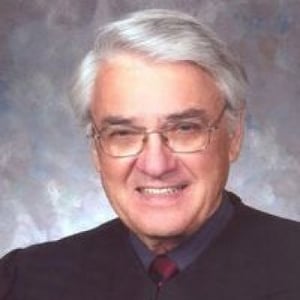
Senior Judge, United States Court of Appeals, Fifth Circuit
Patrick Errol Higginbotham is a federal judge on senior status with the United States Court of Appeals for the 5th Circuit. He joined the court in 1982 after being nominated by President Ronald Reagan.
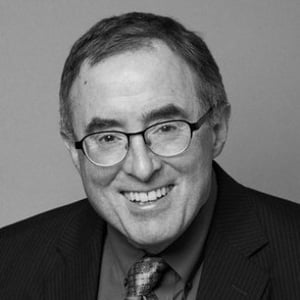
Contributing Writer, Vanity Fair
Michael Kinsley is a Contributing Writer for Vanity Fair, where his column appears monthly. Over a long career in the media, he has been Managing Editor of the Washington Monthly, Editor of the New Republic, and Editorial and Opinion Editor of the Los Angeles Times. He was the Founding Editor of Slate, one of the first on-line magazines. For over six years Kinsley was the liberal host of Crossfire, a CNN show where he sparred with Pat Buchanan five days a week. He played a similar role for many years with William F. Buckley on PBS’s Firing Line. He has written for The New Yorker, Conde Nast Traveler, and other publications.
U.S. Court of Appeals, Ninth Circuit
Stephen Roy Reinhardt is a federal appeals judge with the United States Court of Appeals for the Ninth Circuit in San Francisco. He joined the Court in 1980 after being nominated by President Jimmy Carter.
Born in New York City, New York, Reinhardt graduated from Pomona College with his Bachelor's degree in 1951 and later received a Bachelors of Laws degree, LL.B, from Yale Law School in 1954. Reinhardt served in the U.S. Air Force from 1954 to 1956 before becoming a law clerk for the Honorable Luther Youngdahl in the United States District Court for the District of Columbia until 1957. Reinhardt was a private practice attorney in the State of California from 1957 to 1980. Reinhardt was nominated to the United States Court of Appeals for the Ninth Circuit by President Jimmy Carter on November 30, 1979, to a new seat created by 92 Stat. 1629, which was approved by Congress. Reinhardt was confirmed by the U.S. Senate on September 11, 1980 and received commission on September 11, 1980.
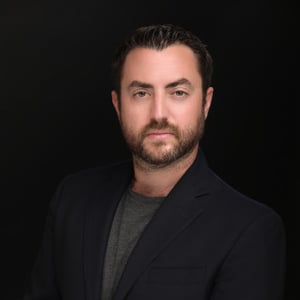
Newsweek Senior Editor-at-Large, Syndicated Columnist, Host of "The Josh Hammer Show," Article III Project Senior Counsel, Newsweek, Salem Media, Article III Project, David Horowitz Freedom Center
Josh Hammer is the senior editor-at-large of Newsweek and host of "The Josh Hammer Show," a podcast, a syndicated radio show, and TV program on Salem News Channel. A syndicated columnist through Creators Syndicate, Josh is a frequent pundit and essayist on political, legal, and cultural issues. He is also senior counsel for the Article III Project and Internet Accountability Project, as well as a Shillman Fellow with the David Horowitz Freedom Center and a fellow with the Palm Beach Freedom Institute.
An outspoken conservative, Josh opines on conservative intellectual trends, contemporary domestic and foreign policy debates, constitutional and legal issues, and the intersection of law, politics and culture. He has been published by many leading outlets, including the Los Angeles Times, the New York Post, Daily Mail, Newsweek, the Claremont Review of Books, National Affairs, American Affairs, The New Criterion, The National Interest, National Review, RealClearPolitics, First Things, City Journal, Public Discourse, Law & Liberty, Tablet Magazine, Deseret Magazine, Compact Magazine, Chronicles Magazine, The Spectator, The American Mind, The American Conservative, The European Conservative, American Greatness, American Compass, The Federalist, Blaze Media, TomKlingenstein.com, Townhall, The Daily Wire, The Daily Signal, The Daily Caller, The Epoch Times, Anchoring Truths, Fortune, Fox Business, The Jerusalem Post, The Times of Israel, The Forward, Jewish Telegraphic Agency and the Jewish Journal. He has also had legal scholarship published by the Harvard Journal of Law & Public Policy and the University of St. Thomas Law Journal.
Josh is a college campus speaker through Young America's Foundation and the Intercollegiate Studies Institute, and a law school campus speaker through the Federalist Society. Prior to Newsweek and The Daily Wire, where he was an editor, Josh worked at Kirkland & Ellis LLP and clerked for the Hon. James C. Ho on the U.S. Court of Appeals for the Fifth Circuit. Josh has also served as a John Marshall Fellow with the Claremont Institute and as a Fellow with the James Wilson Institute. He is the former host of "America on Trial with Josh Hammer," a one-season daily podcast with The First that covered the unique legal issues surrounding the 2024 presidential election.
Josh graduated from Duke University, where he majored in economics, and from the University of Chicago Law School. He lives in Florida, but remains an active member of the State Bar of Texas.
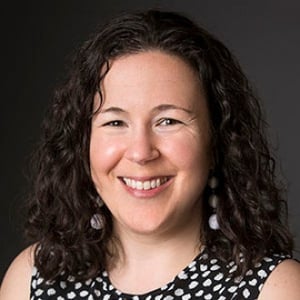
Attorney, Allen Harris Law
Samantha Harris is a nationally recognized attorney advising students and faculty on issues of campus due process, Title IX, free speech, and academic freedom. Drawing on more than 15 years at the Foundation for Individual Rights in Education (FIRE), where she served as Vice President for Policy Research, she guides students, faculty, administrators, and attorneys through complex disciplinary and constitutional issues involving free speech, fair hearings, and faculty-student rights.
A graduate of Princeton University and the University of Pennsylvania Law School (Articles Editor, Journal of Constitutional Law), Samantha clerked for the Hon. Jay C. Waldman in the U.S. District Court for the Eastern District of Pennsylvania and began her legal career at Pepper Hamilton LLP. At FIRE, she led efforts to reform campus policies and defended individuals in high-profile Title IX and free speech disputes.
Now at Allen Harris PLLC, a firm focused on Title IX and campus defense, Samantha represents students and professors in investigations, hearings, appeals, and related litigation. Samantha’s practice emphasizes strategic advocacy in campus disciplinary systems and litigation-ready defense in federal court. Her blend of policy experience, legal skill, and media visibility positions her as a leading resource for issues at the intersection of education law and constitutional rights.
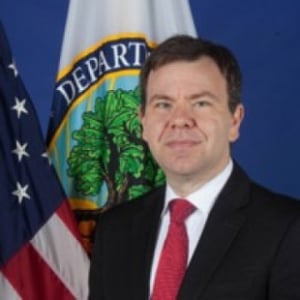
General Counsel, Mountain States Legal Foundation
William E. Trachman is General Counsel for Mountain States Legal Foundation, where he protects the rights of individuals to live freely and securely under the U.S. Constitution. Previously, he was appointed to serve in the Department of Education as Deputy Assistant Secretary in the Office for Civil Rights. Prior to his appointment, he served as General Counsel to the Douglas County School District, where he helped litigate the fight for school choice in the school district. Presently, Mr. Trachman serves as Chair of the Colorado Federalist Society and the Vice Chair of the U.S. Commission on Civil Rights’ Colorado Advisory Board. He previously taught as an Adjunct Professor at the University of Denver, Sturm College of Law. He attended U.C. Berkeley for both undergraduate and law school, and then clerked for the Honorable Harris Hartz on the 10th Circuit Court of Appeals. Mr. Trachman is licensed in Colorado, California, and Washington, D.C.
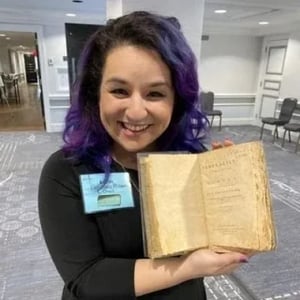
Director, Digital Media, Communications and Fellow, R Street Institute
Shoshana Weissmann manages R Street’s social media, email marketing and other digital assets. She also works on occupational licensing reform, social media regulatory policy, Section 230 and other issues, and has written for various publications, including The Wall Street Journal and USA Today.
Shoshana most recently managed digital communications for Opportunity Lives, a group that highlighted positive stories and policy solutions. Before that, she managed social media and wrote for The Weekly Standard. Earlier in her career, she managed digital communications for the America Rising PAC, where her strategy was highlighted in a piece that appeared in The New York Times.
She is on the board of The Conservation Coalition and a member of the Federalist Society’s Regulatory Transparency Project’s state and local and emerging technology working groups.
She lives in Washington, D.C. and has a stuffed sloth named James Madisloth, and she enjoys the Snapchat hot dog.
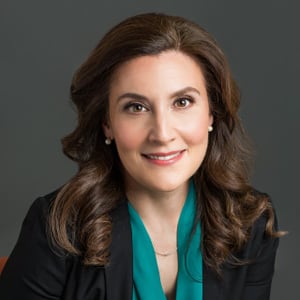
Board Member, U.S. Privacy and Civil Liberties Oversight Board
Beth A. Williams is a Board Member of the United States Privacy and Civil Liberties Oversight Board, an agency whose mission is to ensure that the federal government's efforts to prevent terrorism are balanced with the need to protect privacy and civil liberties.
Prior to her Board service, Ms. Williams was the Assistant Attorney General for the Office of Legal Policy at the United States Department of Justice from August 2017 to December 2020. In that role, she served as the primary policy advisor to the Attorney General and the Deputy Attorney General, and as the Chief Regulatory Officer for the Department. Ms. Williams also led the judicial nomination process for the Department, assisting in the selection and confirmation of more than 230 Article III judges to the bench.
Prior to becoming Assistant Attorney General, Ms. Williams was a litigation and appellate partner at a national law firm, where her practice focused on complex commercial, securities, appellate, and First Amendment litigation. From 2005-2006, Ms. Williams served as Special Counsel to the United States Senate Committee on the Judiciary, where she assisted with the confirmation of Chief Justice John G. Roberts, Jr. and Associate Justice Samuel A. Alito, Jr. to the United States Supreme Court.
Ms. Williams clerked for the Hon. Richard C. Wesley on the United State Court of Appeals for the Second Circuit. She graduated from Harvard College magna cum laude, with a degree in History and Literature, and she earned her law degree from Harvard Law School, where she served as Executive Editor of the Harvard Journal of Law and Public Policy.
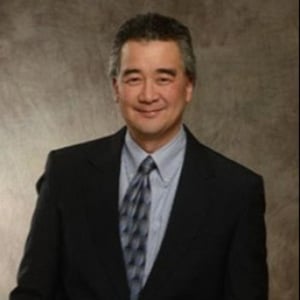
Professor, University of Denver, Sturm College of Law

Sterling Professor of Law and Political Science, Yale Law School
Akhil Reed Amar is Sterling Professor of Law and Political Science at Yale University, where he teaches constitutional law in both Yale College and Yale Law School. After graduating from Yale College, summa cum laude, in 1980 and from Yale Law School in 1984, and clerking for Judge (later Justice) Stephen Breyer, Amar joined the Yale faculty in 1985 at the age of 26. He is Yale’s only living professor to have won the University’s unofficial triple crown — the Sterling Chair for scholarship, the DeVane Medal for teaching, and the Lamar Award for alumni service.
Amar’s work has won awards from both the American Bar Association and the Federalist Society, and he has been cited by Supreme Court justices across the spectrum in more than 50 cases — tops among scholars under age 70. According to both Fred Shapiro’s landmark 2021 study of lifetime scholarly citations and Heinonline’s most recent tabulation of lifetime law-review citations, Amar is America’s second most-cited legal scholar still under age 70. He is a member of the American Academy of Arts and Sciences and has written widely for popular publications, including The New York Times, The Washington Post, The Wall Street Journal, Time, and The Atlantic. He was an informal consultant to the popular TV show The West Wing and his scholarship has been showcased on many broadcasts, including The Colbert Report, Morning Joe, AC360, Velshi, Fox News @ Night with Shannon Bream, Fareed Zakaria GPS, Erin Burnett Outfront, and Constitution USA with Peter Sagal.
He is the author of more than a hundred law review articles and several books, including The Bill of Rights (1998 — winner of the Yale University Press Governors’ Award), America’s Constitution (2005 — winner of the ABA’s Silver Gavel Award), America’s Unwritten Constitution (2012 — named one of the year’s 100 best nonfiction books by The Washington Post), and The Constitution Today (2016 — named one of the year’s top ten nonfiction books by Time magazine). The first volume of his ambitious trilogy on American constitutional history from the Founding to the present, The Words That Made Us: America’s Constitutional Conversation, 1760-1840, came out in May 2021. The second volume, Born Equal: Remaking America’s Constitution, 1840-1920, will be published in September 2025 and is already available for pre-order. All together, his nonfiction books have won two starred reviews from Publishers Weekly and three starred reviews from Kirkus—tops, it is believed, among legal scholars under age 70. Together with Vikram David Amar (YLS ’88), he has a bi-weekly column on the Supreme Court on the distinguished website SCOTUSblog. Along with Andy Lipka, he co-hosts a popular and free weekly podcast, Amarica’s Constitution, whose listeners are eligible for CLE credit in most American jurisdictions. A wide assortment of his articles and op-eds and video links to many of his public lectures and free online courses may be found at akhilamar.com.
U.S. Court of Appeals, Seventh Circuit
Frank H. Easterbrook is a judge of the United States Court of Appeals for the Seventh Circuit and a Senior Lecturer at the Law School of the University of Chicago. He was Chief Judge from 2006–2013. Before joining the court in 1985, he was the Lee andBrena Freeman Professor of Law at the University of Chicago, where he taught and wrote in antitrust, securities, corporate law, jurisprudence, and criminal procedure. He has published The Economic Structure of Corporate Law (with Daniel R. Fischel) and about 100 scholarly articles. He served as Co-Editor of the Journal of Law and Economics from 1982 to 1991 and as a member of the Judicial Conference’s Standing Committee on Rules of Practice and Procedure from 1991 to 1997. Before joining the faculty of the Law School in 1979, Judge Easterbrook was Deputy Solicitor General of the United States. He holds degrees from Swarthmore College (B.A. with high honors, 1970) and the University of Chicago (J.D. cum laude, 1973), and is a member of the American Academy of Arts and Sciences, the American Law Institute, the Mont Pelerin Society, Phi Beta Kappa, and the Order of the Coif.

Justice, Michigan Supreme Court
Stephen Markman was appointed Justice of the Michigan Supreme Court on October 1, 1999. He served as the Chief Justice from 2017-2019. Before his appointment, he served as Judge on the Michigan Court of Appeals from 1995-1999. Prior to this, he practiced law with the firm of Miller, Canfield, Paddock & Stone in Detroit.
From 1989-1993, Justice Markman served as United States Attorney, or federal prosecutor, in Michigan, after having been nominated by President George H. W. Bush and confirmed by the United States Senate. From 1985-1989, he served as Assistant Attorney General of the United States, after having been nominated by President Ronald Reagan and confirmed by the United States Senate. In that position, he headed the Department of Justice’s Office of Legal Policy, which served as the principal policy development office within the Department, and which coordinated the federal judicial selection process. Prior to this, he served for seven years as Chief Counsel of the United States Senate Subcommittee on the Constitution, and as Deputy Chief Counsel of the United States Senate Judiciary Committee.
Justice Markman has authored articles for such publications as the University of Michigan Journal of Law Reform, the Detroit College of Law Review, the Stanford Law Review, the University of Chicago Law Review, the American Criminal Justice Law Review, the Barrister’s Law Journal, the Harvard Journal of Law & Public Policy, and the American University Law Review. He has also served as a contributing editor of National Review magazine, and has authored chapters in such books as “In the Name of Justice: The Aims of the Criminal Law,” “Still the Law of the Land,” and “Originalism: A Quarter Century of Debate.”
Justice Markman has taught constitutional law at Hillsdale College since 1993. He has served on the Board of Directors of the Western Michigan University Thomas M. Cooley Law School. He traveled to Ukraine on two occasions on behalf of the State Department, to provide assistance in the development of that nation’s post-Soviet constitution. He is a Fellow of the Michigan Bar Foundation, a Master of the Bench of the Inns of Court, and a member of the One Hundred Club. He has spoken before hundreds of youth, civic, charitable, and legal groups throughout Michigan and nationally, and has coached Little League baseball and basketball. He lives with his wife Mary Kathleen in Mason, and has two sons, James and Charles.
Justice Markman was re-elected to the Supreme Court in 2000, 2004, and 2012. His present term expires January 1, 2021.
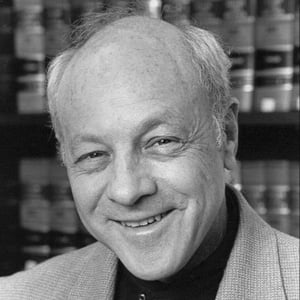
Herbert W. Armstrong Professor of Constitutional Law, Emeritus, University of San Diego Gould School of Law
Larry Simon joined the USC Law faculty in 1975. Specializing in constitutional law and theory, he taught Constitutional Law, Legal Profession and Insurance.
Simon is the author of “The Supreme Court’s Independence: Accountability, Majoritarianism, and Justification; Comments on Seidman” (Symposium: Judicial Election, Selection, and Accountability, Southern California Law Review, 1988), “The New Republicanism: Generosity of Spirit in Search of Something to Say” (William and Mary Law Review, 1987) and “Access to Higher Education and the Law” in Access Policy and Procedures and the Law in U.S. Higher Education (Interbook, Inc., 1978).
A summa cum laude graduate of Hobart College, Simon earned his LLB from Yale Law School, where he was an editor of the Yale Law Journal. His graduate study was at University of Rochester. Simon clerked for Judge Edward Weinfeld, U.S. District Judge, Southern District, New York, and Chief Justice Earl Warren, U.S. Supreme Court. He taught at Yale Law School, where he was associate dean from 1990-95, prior to joining USC Gould.
Sterling Professor of Law and Political Science, Yale Law School
Bruce Ackerman is Sterling Professor of Law and Political Science at Yale, and the author of nineteen books in political philosophy, constitutional law, and public policy. He is a Commander of the French Order of Merit, a member of the American Law Institute and the American Academy of Arts and Sciences. The American Philosophical Society has awarded him the Henry Phillips Prize for lifetime achievement in Jurisprudence, especially noting his exploration of the great turning points in American constitutional history in his three volume series, We the People. His award-winning early work, Social Justice in the Liberal State, continues to provoke contemporary controversy.
His scholarship has had a global impact. He has been named a Leading Global Thinker by Foreign Policy magazine, and has been awarded an Honorary Doctorate from the University of Trieste, Italy, for his contributions to comparative constitutional law. Before the Next Attack (2006) served as a basis for the reform of the French constitution dealing with emergency powers. The Stakeholder Society (with Anne Alstott) has served as the basis for reform initiatives in Brazil, Britain, and elsewhere that guarantee every person a fair share of the nation’s wealth by providing them with a “citizen stake” consisting of a substantial cash grant as they reach maturity.
His most recent book, Revolutionary Constitutions, puts the world-wide constitutional crisis in historical perspective by comparing the post-war experience of countries as different as France, India, Iran, Italy, Israel, Poland, South Africa, and the United States — and demonstrating that these nations have a good deal to learn from one another in confronting the current assault on checks-and-balances.
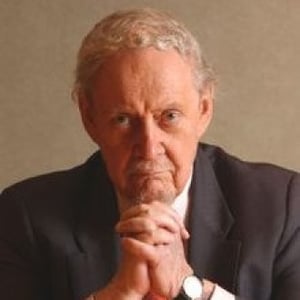
Former Judge, U.S. Court of Appeals, DC Circuit
Robert Heron Bork served as Solicitor General, acting Attorney General, and judge for the United States Court of Appeals for the District of Columbia Circuit. Judge Bork passed away in December 2012.
Tribute to Judge Robert Bork by John McGinnis - Event Audio/Video
Celebration of the Life of Robert Heron Bork 1927-2012
Judge Robert H. Bork: His Life and Legacy - Practice Group Podcast
A Conference Discussing the Contributions of Judge Robert H. Bork - June 26, 2007
Former United States Deputy Attorney General
Arnold Irwin Burns served as the United States Deputy Attorney General from 1986 to 1988 under President Ronald Reagan and U.S. Attorney General Edwin Meese.
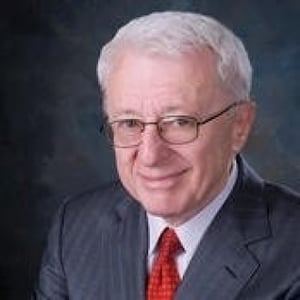
Director, Project for International Religious Liberty, Hudson Institute
Michael J. Horowitz is director of Hudson Institute's Project for Civil Justice Reform and Project for International Religious Liberty. He served as general counsel for the Office of Management and Budget (OMB) under the Reagan Administration, and has taught law at the University of Mississippi and Georgetown. He has also practiced private law as a partner at national law firms. Horowitz joined Hudson Institute as a Senior Fellow where he has put together left-right coalitions on a wide variety of foreign and domestic issues. He has written frequently and is regularly called to testify and consult with Congress.
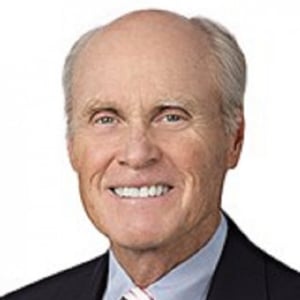
Former United States Assistant Attorney General, Civil Rights Division, United States Department of Justice
William Bradford served as the United States Assistant Attorney General for the Civil Rights Division from 1981 to 1988.
Reynolds was Senior Counsel in BakerBotts Antitrust and Competition division. He graduated with a LL.B. from Vanderbilt University Law School in 1967 where he was Order of the Coif and Editor-in-Chief of the Vanderbilt Law Review. In 1964, he received a B.A. from Yale University.
Reynolds passed away on September 14, 2019, in Seabrook Island, South Carolina at age 77.
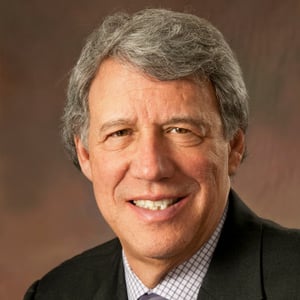
Edward H. Levi Distinguished Service Professor of Law, University of Chicago Law School
Geoffrey R. Stone is the Edward H. Levi Distinguished Service Professor at the University of Chicago. Mr. Stone joined the faculty in 1973, after serving as a law clerk to Supreme Court Justice William J. Brennan, Jr. He later served as Dean of the Law School (1987-1994) and Provost of the University of Chicago (1994-2002).
Stone is the author of many books on constitutional law, including Sex and the Constitution: Sex, Religion and Law from America’s Origins to the Twenty-First Century (2017); Speaking Out: Reflections of Law, Liberty and Justice (2010 & 2016); Top Secret: When Our Government Keeps Us in the Dark (2007), War and Liberty: An American Dilemma (2007), Perilous Times: Free Speech in Wartime (2004), and Eternally Vigilant: Free Speech in the Modern Era(Chicago 2002). He is also an editor of two leading casebooks, Constitutional Law (7th ed. 2013) and The First Amendment (5th ed. 2016). Stone is an editor of The Supreme Court Reviewand chief editor of a twenty-volume series, Inalienable Rights, which is being published by the Oxford University Press.
Stone was appointed by President Obama to serve on the President’s Review Group on Intelligence and Communications Technologies, which evaluated the government’s foreign intelligence surveillance programs in the wake of Edward Snowden’s leaks. He is a Fellow of the American Academy of Arts and Sciences, a member of the America Law Institute, the National Advisory Council of the American Civil Liberties Union, a member of the American Philosophical Society, and a member of the Board of Advisors of the Council for Democracy and Technology. He has served as Chair of the Board of the American Constitution Society and Chair of the Board of the Chicago Children’s Choir.
Stone has also written amicus briefs for constitutional scholars in a number of Supreme Court cases, including Obergefell v. Hodges, Whole Woman’s Heath v. Hellerstadt, Lawrence v. Texas, United States v. Windsor, United States v. Stevens, and Rasul v. Bush. He was also one of the lawyers who represented President Bill Clinton in the Supreme Court in Clinton v. Jones.

20 Years Later: Kelo v. City of New London
J. Peter Byrne, Eric R. Claeys, Wesley W. Horton, Timothy Sandefur, Ilya Somin
In June of 2005, the U.S. Supreme Court held in Kelo v. City of New...
Can the Federal Government Ban At-Home Distilling?
Thomas Berry, Theodore Cooperstein, Michael D. Pepson, Eric J. Segall
After the U.S. Supreme Court in Morrison v. Olson (1988) and U.S. v. Lopez (1995)...
Open Minds with Jonathan Mitchell and James Burnham - Part I
Jonathan Mitchell, James M. Burnham
In the first part of this interview, James Burnham and Jonathan Mitchell discuss his unusual...
Talks with Authors: An Introduction to Constitutional Law: 100+ Supreme Court Cases Everyone Should Know
Randy E. Barnett, Josh Blackman
Professors Randy Barnett and Josh Blackman will discuss the most important Supreme Court cases of...
Panel I: Should the Bill of Rights Fully Protect Fundamental Freedoms? [Archive Collection]
Bruce Ackerman, William P. Barr, Robert C. Ellickson, Richard A. Epstein, Owen M. Fiss, Nadine Strossen, Ralph K. Winter
On March 1-2, 1991, the Federalist Society's Yale Law School student chapter hosted the annual...
Panel V: Ownership of Life
Anita L. Allen, Carl E. Schneider, Peter H. Schuck, Walter M. Weber, Patricia D. White
On March 10-11, 1989, the Federalist Society's University of Michigan student chapter hosted the eighth...
Panel V: The Conflict Between Text and Precedent in Constitutional Adjudication [Archive Collection]
Lea Brilmayer, Charles J. Cooper, Frank H. Easterbrook, Patrick E. Higginbotham, Michael Kinsley, Stephen Reinhardt
On April 3-5, 1987, the Federalist Society's Chicago Student Chapter hosted the sixth annual National...
Reviewing The Supreme Court’s 2019/20 Term: A Panel Discussion
Josh Hammer, Samantha Harris, William E. Trachman, Shoshana Weissmann, Beth A. Williams, Alan Chen
The Colorado Lawyers Chapter held a virtual review of the 2019-20 Supreme Court term on...
Panel V: The Role and Relevance of the Amendment Process [Archive Collection]
Akhil Reed Amar, Frank H. Easterbrook, Steve J. Markman, Larry Simon
On March 4-5, 1988, The Federalist Society's University of Virginia student chapter hosted the National...
Panel III: Precedent, The Amendment Process, and Evolution in Constitutional Doctrine [Archive Collection]
Bruce Ackerman, Robert H. Bork, Arnold Burns, Michael J. Horowitz, Wm. Bradford Reynolds, Geoffrey R. Stone
On January 30-31, 1987, the Federalist Society hosted its annual National Lawyers Convention at the...