*****
A person listed on this page has spoken or otherwise participated in Federalist Society events, publications, or multimedia presentations. A person's appearance on this list does not imply any other endorsement or relationship between the person and the Federalist Society. In most cases, the biographical information on a person's bio page is provided directly by the person, and the Federalist Society does not edit or otherwise endorse that information. The Federalist Society takes no position on particular legal or public policy issues. All expressions of opinion by a speaker or author are those of the individual.
Did the Constitution Lay the Groundwork for Abolition?
The Founders Gave Us the Tools Series

Proclaiming Liberty with Timothy Sandefur - NM
New Mexico Lawyer Chapter
Indian Pueblo Cultural Center2401 12th Street Northwest, Silver Room
Albuquerque, NM 87104
How Did State Constitutions Shape the American Founding?
The Founders Gave Us the Tools Series

Unpacking Learning Resources, Inc. v. Trump
Phoenix Lawyer Chapter
Tombstone Brewing Company3935 East Thomas Road
Phoenix, AZ 85018
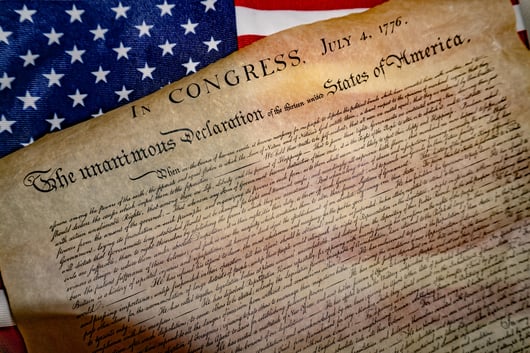
Proclaiming Liberty with Tim Sandefur
As America celebrates the 250th anniversary of the Declaration of Independence, Proclaiming Liberty by Timothy...
Proclaiming Liberty with Tim Sandefur
As America celebrates the 250th anniversary of the Declaration of Independence, Proclaiming Liberty by Timothy...
.png)
How Did State Constitutions Shape the American Founding?
The Founders Gave Us the Tools Series
In this Federalist Society America 250 series, experts analyze modern legal and policy debates through...
How Did State Constitutions Shape the American Founding?
The Founders Gave Us the Tools Series
In this Federalist Society America 250 series, experts analyze modern legal and policy debates through...
The Federalist’s Quill: A Mighty Tool—But Only If You Know How to Use It! A Mini-Session on Legal Writing
2026 National Student Symposium
Featuring: Prof. Tessa L. Dysart, Assistant Director of Legal Writing and Clinical Professor of Law, James...