
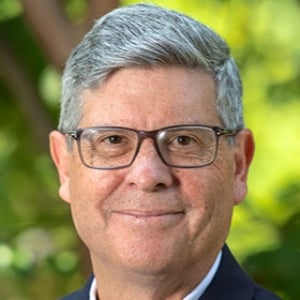
E. Claiborne Robins Distinguished Chair in Law, University of Richmond School of Law
Professor Kurt Lash teaches and writes about constitutional law. Founder and director of the Richmond Program on the American Constitution, Professor Lash has published widely on the subjects of constitutional law and constitutional history, including The Fourteenth Amendment and the Privileges or Immunities of American Citizenship (Cambridge University Press, 2014), The Lost History of the Ninth Amendment (Oxford University Press, 2009), and The American First Amendment in the Twenty-first Century: Cases and Materials(with William W. Van Alstyne) (5th ed., Foundation Press, 2014). An elected member of the American Law Institute, Professor Lash’s work has appeared in numerous legal journals including the Stanford Law Journal, Georgetown Law Journal, Virginia Law Review, andNotre Dame Law Review. He has been a visiting professor at Northwestern University School of Law and is the former director of the University of Illinois College of Law Program in Constitutional Theory, History, and Law.
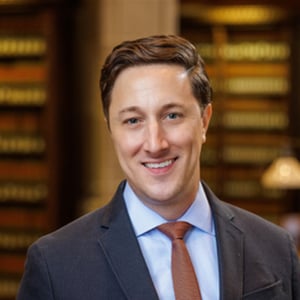
Professor of Law, Notre Dame Law School
Professor Derek Muller is a nationally-recognized scholar in the field of election law. His research focuses on the role of states in the administration of federal elections, the constitutional contours of voting rights and election administration, the limits of judicial power in the domain of elections, and the Electoral College.
He has published more than two dozen academic works, and his op-eds have appeared in the New York Times, the Los Angeles Times, and the Wall Street Journal. He has testified before Congress, and he is a contributor at the Election Law Blog. He is a co-author on a Federal Courts casebook published by Carolina Academic Press. He is also the co-reporter on a new Restatement of the Law, Election Litigation, an effort led by the American Law Institute.
Professor Muller teaches Election Law, Civil Procedure, and Evidence.

Professor of Law, Antonin Scalia Law School, George Mason University
ILYA SOMIN is Professor of Law at George Mason University and the B. Kenneth Simon Chair in Constitutional Studies at the Cato Institute. His research focuses on constitutional law, property law, democratic theory, federalism, and migration rights. He is the author of Free to Move: Foot Voting, Migration, and Political Freedom (Oxford University Press, revised and expanded edition, 2022), Democracy and Political Ignorance: Why Smaller Government is Smarter (Stanford University Press, revised and expanded second edition, 2016), and The Grasping Hand: Kelo v. City of New London and the Limits of Eminent Domain (University of Chicago Press, 2015, rev. paperback ed., 2016), coauthor of A Conspiracy Against Obamacare: The Volokh Conspiracy and the Health Care Case (Palgrave Macmillan, 2013), and co-editor of Eminent Domain: A Comparative Perspective (Cambridge University Press, 2017). Democracy and Political Ignorance has been translated into Italian and Japanese.
Somin’s work has appeared in numerous scholarly journals, including the Yale Law Journal, Stanford Law Review, Northwestern University Law Review, Georgetown Law Journal, Critical Review, and others. Somin has also published articles in a variety of popular press outlets, including the New York Times, Washington Post, Wall Street Journal, Los Angeles Times, CNN, NBC, The Atlantic, USA Today, Boston Globe, US News and World Report, South China Morning Post, National Law Journal and Reason. He has been quoted or interviewed by the New York Times, Washington Post, Wall Street Journal, Time, Newsweek, The Economist, the Christian Science Monitor, the Financial Times, The Guardian, the Associated Press, CBS, MSNBC, NPR, BBC, Reuters, the Canadian Broadcasting Corporation, the Australian Broadcasting Corporation, Radio Free Europe/Radio Liberty, Al Jazeera, and the Voice of America, among other media.
Somin’s writings have been cited in decisions by the United States Supreme Court, multiple state supreme courts and lower federal courts, and the Supreme Court of Israel. He is co-counsel for the plaintiffs in VOS Selections, Inc. v. Trump, a case challenging the constitutionality of President Trump’s “Liberation Day” tariffs. Somin has testified on the use of drones for targeted killing in the War on Terror before the US Senate Judiciary Subcommittee on the Constitution, Civil Rights, and Human Rights. In 2009, he testified on property rights issues at the United States Senate Judiciary Committee confirmation hearings for Supreme Court Justice Sonia Sotomayor. Somin writes regularly for the popular Volokh Conspiracy law and politics blog, now affiliated with Reason magazine (previously affiliated with the Washington Post from 2014 to 2017). From 2006 to 2013, he served as Co-Editor of the Supreme Court Economic Review, one of the country’s top-rated law and economics journals.
Somin has served as a visiting professor at the University of Pennsylvania Law School. He has also been a visiting professor or scholar at the Georgetown University Law Center, the University of Hamburg, Germany, the University of Torcuato Di Tella in Buenos Aires, Argentina, Uriel Reichman University in Israel, and Zhengzhou University in China. He is a University Affiliate of the Schar School of Policy and Government at George Mason University, and an affiliated faculty member of the George Mason University Institute for Immigration Research. Before joining the faculty at George Mason, Somin was the John M. Olin Fellow in Law at Northwestern University Law School in 2002-2003. In 2001-2002, he clerked for the Hon. Judge Jerry E. Smith of the U.S. Court of Appeals for the Fifth Circuit. Professor Somin earned his B.A., Summa Cum Laude, at Amherst College, M.A. in Political Science from Harvard University, and J.D. from Yale Law School.
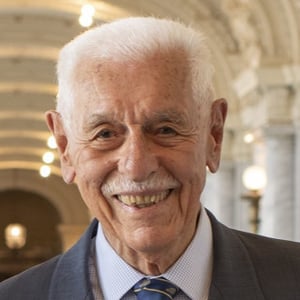
Judge, United States Court of Appeals, Ninth Circuit
Judge Carlos Bea serves as a judge on the United States Court of Appeals for the Ninth Circuit. He received his Bachelor's Degree from Stanford University in 1956 and his J.D. from Stanford Law School in 1958. Judge Bea was born in San Sebastian, Spain, and immigrated with his family to Cuba in 1939. In 1952, he represented Cuba on the Cuban National basketball team in the Helsinki Olympics. Judge Bea became a naturalized citizen of the United States in 1958. He engaged in private practice in San Francisco, principally in the area of civil trials (jury and non-jury), from 1959-75 at Dunne, Phelps & Mills and from 1975-90 at Carlos Bea, A Law Corporation. He taught courses in civil litigation advocacy at Hastings College of Law and Stanford Law School. From 1990 to 2003, Judge Bea served as a judge of the San Francisco Superior Court. He was nominated by President George W. Bush to the United States Court of Appeals for the Ninth Circuit and was confirmed in 2003.
Judge Bea and his wife Louise reside in San Francisco, where they raised their four sons, Sebastian, Alexander, Nicholas, and Dominic.
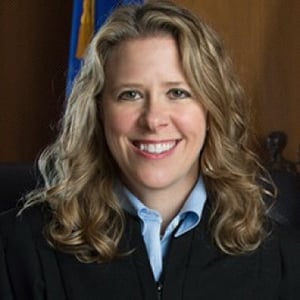
Justice, Wisconsin Supreme Court
Justice Rebecca Grassl Bradley, a Milwaukee native, was elected to the Supreme Court in 2016 after being appointed by Gov. Scott Walker in 2015. She is the first Wisconsin Supreme Court Justice to have served as an intermediate appellate court judge as well as a circuit court judge. Before joining the Supreme Court, Justice Bradley served as a District I Court of Appeals judge (appointed 2015), a Milwaukee County Circuit Court Judge (appointed 2012, elected 2013) and worked as an attorney in private practice (1996-2012), including serving as vice president of legal operations for a global software company.
Justice Bradley graduated from Marquette University in 1993 with an honors B.S. in Business Administration and Business Economics and received her juris doctor from the University of Wisconsin Law School in 1996.
Justice Bradley is a member of the Supreme Court Finance Committee and chairs the Supreme Court Legislative Committee as the Chief Justice's designee. She is a member of the Board of Advisors and past president of the Milwaukee Lawyers Chapter of the Federalist Society; serves on the Wisconsin State Advisory Committee of the U.S. Commission on Civil Rights; and is a member of the Bench and Bar Committee of the Wisconsin State Bar. She previously served on the Board of Governors of the St. Thomas More Lawyers Society; the Wisconsin Juvenile Jury Instructions Committee; the Wisconsin Juvenile Benchbook Committee; and as a member of the Milwaukee Trial Judges Association and the Wisconsin Trial Judges Association. While in private practice, Justice Bradley served as an American Arbitration Association Arbitrator and Chairman of the State Bar Business Law Section.
Justice Bradley's current term expires July 31, 2026.

Justice, Supreme Court of Pennsylvania
David N. Wecht is a Pennsylvania Supreme Court justice. Wecht is one of three Democrats elected to the Pennsylvania Supreme Court in November 2015. He was sworn in to office on January 7, 2016, for a term that expires on January 4, 2026.
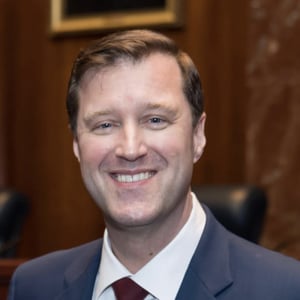
Justice, Texas Supreme Court
Evan Young is a Justice of the Supreme Court of Texas. Governor Greg Abbott, who appointed Young to fill an unexpired term, swore him into office on November 10, 2021. Justice Young was elected to a full term in November 2022.
Young graduated summa cum laude from Duke University in 1999, where he was inducted into Phi Beta Kappa. He was a British Marshall Scholar at Oxford University, where he completed his studies in 2001 and earned a First Class Honours degree in Modern History, focusing on British constitutional history. He earned his law degree from Yale Law School in 2004.
Young then worked as a lawyer in the judicial and executive branches of the federal government. He first served as a law clerk to Judge J. Harvie Wilkinson III of the U.S. Court of Appeals for the Fourth Circuit, and then to Justice Antonin Scalia at the U.S. Supreme Court. In 2006, after his clerkship with Justice Scalia ended, Justice Young became Counsel to the Attorney General at the U.S. Department of Justice, serving in the Office of the Attorney General under Attorneys General Alberto R. Gonzales and Michael B. Mukasey. While on the Attorney General’s staff, he accepted a detail to the U.S. Embassy in Baghdad, Iraq, where he was the Deputy Rule of Law Coordinator. In that position he worked to assist the Iraqi government in its efforts to strengthen its legal regime, including, for example, its courts and prison system.
Young returned to Texas and joined the Austin office of Baker Botts L.L.P. in 2009. His practice focused on trial and appellate litigation. He argued cases before both the Supreme Court of the United States and the Supreme Court of Texas, as well as many federal and state appellate courts. He represented clients across the country before every level of the state and federal judiciary.
Before joining the Texas Supreme Court, Young was appointed in 2017 by Governor Abbott and confirmed by the Texas Senate to serve as a member of the Texas Judicial Council, which is the policy-making body for the Texas Judiciary. In 2015, the Texas Supreme Court appointed him to the Supreme Court Advisory Committee, which assists the Court in drafting the rules that govern litigation in Texas courts. He served on both until his elevation to the bench.
Justice Young is an elected member of the American Law Institute and a member of the Texas Philosophical Society. He has been an adjunct law professor for many years at the University of Texas School of Law, where he has frequently taught the Federal Courts and Religious Liberty courses. He also has been an adjunct professor at the University of Mississippi School of Law, where he has taught multiple courses involving U.S. Supreme Court history. He served as Chair of the State Bar of Texas Business Law Section, Chair of the National Center for Missing and Exploited Children's Texas Regional Office, and Trustee of the Texas Supreme Court Historical Society.
Justice Young and his wife, Tobi, live in Austin with their daughter.
Judge, United States Court of Appeals, Ninth Circuit
Judge Carlos Bea serves as a judge on the United States Court of Appeals for the Ninth Circuit. He received his Bachelor's Degree from Stanford University in 1956 and his J.D. from Stanford Law School in 1958. Judge Bea was born in San Sebastian, Spain, and immigrated with his family to Cuba in 1939. In 1952, he represented Cuba on the Cuban National basketball team in the Helsinki Olympics. Judge Bea became a naturalized citizen of the United States in 1958. He engaged in private practice in San Francisco, principally in the area of civil trials (jury and non-jury), from 1959-75 at Dunne, Phelps & Mills and from 1975-90 at Carlos Bea, A Law Corporation. He taught courses in civil litigation advocacy at Hastings College of Law and Stanford Law School. From 1990 to 2003, Judge Bea served as a judge of the San Francisco Superior Court. He was nominated by President George W. Bush to the United States Court of Appeals for the Ninth Circuit and was confirmed in 2003.
Judge Bea and his wife Louise reside in San Francisco, where they raised their four sons, Sebastian, Alexander, Nicholas, and Dominic.
Justice, Wisconsin Supreme Court
Justice Rebecca Grassl Bradley, a Milwaukee native, was elected to the Supreme Court in 2016 after being appointed by Gov. Scott Walker in 2015. She is the first Wisconsin Supreme Court Justice to have served as an intermediate appellate court judge as well as a circuit court judge. Before joining the Supreme Court, Justice Bradley served as a District I Court of Appeals judge (appointed 2015), a Milwaukee County Circuit Court Judge (appointed 2012, elected 2013) and worked as an attorney in private practice (1996-2012), including serving as vice president of legal operations for a global software company.
Justice Bradley graduated from Marquette University in 1993 with an honors B.S. in Business Administration and Business Economics and received her juris doctor from the University of Wisconsin Law School in 1996.
Justice Bradley is a member of the Supreme Court Finance Committee and chairs the Supreme Court Legislative Committee as the Chief Justice's designee. She is a member of the Board of Advisors and past president of the Milwaukee Lawyers Chapter of the Federalist Society; serves on the Wisconsin State Advisory Committee of the U.S. Commission on Civil Rights; and is a member of the Bench and Bar Committee of the Wisconsin State Bar. She previously served on the Board of Governors of the St. Thomas More Lawyers Society; the Wisconsin Juvenile Jury Instructions Committee; the Wisconsin Juvenile Benchbook Committee; and as a member of the Milwaukee Trial Judges Association and the Wisconsin Trial Judges Association. While in private practice, Justice Bradley served as an American Arbitration Association Arbitrator and Chairman of the State Bar Business Law Section.
Justice Bradley's current term expires July 31, 2026.
Justice, Supreme Court of Pennsylvania
David N. Wecht is a Pennsylvania Supreme Court justice. Wecht is one of three Democrats elected to the Pennsylvania Supreme Court in November 2015. He was sworn in to office on January 7, 2016, for a term that expires on January 4, 2026.
Justice, Texas Supreme Court
Evan Young is a Justice of the Supreme Court of Texas. Governor Greg Abbott, who appointed Young to fill an unexpired term, swore him into office on November 10, 2021. Justice Young was elected to a full term in November 2022.
Young graduated summa cum laude from Duke University in 1999, where he was inducted into Phi Beta Kappa. He was a British Marshall Scholar at Oxford University, where he completed his studies in 2001 and earned a First Class Honours degree in Modern History, focusing on British constitutional history. He earned his law degree from Yale Law School in 2004.
Young then worked as a lawyer in the judicial and executive branches of the federal government. He first served as a law clerk to Judge J. Harvie Wilkinson III of the U.S. Court of Appeals for the Fourth Circuit, and then to Justice Antonin Scalia at the U.S. Supreme Court. In 2006, after his clerkship with Justice Scalia ended, Justice Young became Counsel to the Attorney General at the U.S. Department of Justice, serving in the Office of the Attorney General under Attorneys General Alberto R. Gonzales and Michael B. Mukasey. While on the Attorney General’s staff, he accepted a detail to the U.S. Embassy in Baghdad, Iraq, where he was the Deputy Rule of Law Coordinator. In that position he worked to assist the Iraqi government in its efforts to strengthen its legal regime, including, for example, its courts and prison system.
Young returned to Texas and joined the Austin office of Baker Botts L.L.P. in 2009. His practice focused on trial and appellate litigation. He argued cases before both the Supreme Court of the United States and the Supreme Court of Texas, as well as many federal and state appellate courts. He represented clients across the country before every level of the state and federal judiciary.
Before joining the Texas Supreme Court, Young was appointed in 2017 by Governor Abbott and confirmed by the Texas Senate to serve as a member of the Texas Judicial Council, which is the policy-making body for the Texas Judiciary. In 2015, the Texas Supreme Court appointed him to the Supreme Court Advisory Committee, which assists the Court in drafting the rules that govern litigation in Texas courts. He served on both until his elevation to the bench.
Justice Young is an elected member of the American Law Institute and a member of the Texas Philosophical Society. He has been an adjunct law professor for many years at the University of Texas School of Law, where he has frequently taught the Federal Courts and Religious Liberty courses. He also has been an adjunct professor at the University of Mississippi School of Law, where he has taught multiple courses involving U.S. Supreme Court history. He served as Chair of the State Bar of Texas Business Law Section, Chair of the National Center for Missing and Exploited Children's Texas Regional Office, and Trustee of the Texas Supreme Court Historical Society.
Justice Young and his wife, Tobi, live in Austin with their daughter.

Director, Independent Women's Law Center, Independent Women's
Jennifer C. Braceras, a member of the Federalist Society Board of Visitors, is the director of Independent Women’s Law Center and a former member of the U.S. Commission on Civil Rights.
Ms. Braceras is a graduate of the Harvard Law School, where she served as an editor of the Law Review. After law school, she clerked for two federal judges and practiced labor and employment law with the Boston law firm Ropes & Gray.
A long time political columnist and editor, Ms. Braceras's writing has appeared in a variety of publications, including the Wall Street Journal, the Boston Globe, the Hill, and National Review Online. She co-hosts At the Bar, a bimonthly virtual happy hour discussion about issues at the intersection of law, politics, and culture.
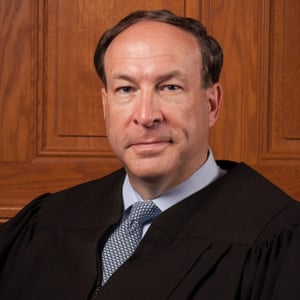
Judge, United States Court of Appeals, Seventh Circuit
Michael B. Brennan was confirmed and sworn in as a Circuit Judge for the U.S. Court of Appeals for the Seventh Circuit in May 2018.
He previously worked as a partner in the Milwaukee law firm of Gass Weber Mullins LLC, where he tried cases and handled appeals in federal and state courts, as a judge on the Milwaukee County Circuit, where he presided over a variety of criminal and civil calendars, and as an assistant district attorney in the Milwaukee County District Attorney’s office.
Brennan’s undergraduate degree is from the University of Notre Dame, and his law degree from Northwestern University School of Law, where he was an editor on the law review and the moot court champion. He served as a law clerk on the U.S. District Court for the Eastern District of Wisconsin and the U.S. Court of Appeals for the Seventh Circuit.
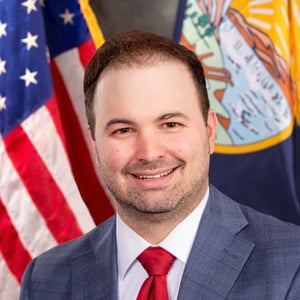
Solicitor General, Montana Attorney General's Office
Christian is currently Solicitor General of Montana, where he serves as the chief litigator and principal legal advisor to Montana Attorney General Austin Knudsen. In that capacity, he manages litigation before the federal district courts, courts of appeal, and the United States Supreme Court, as well as the Montana Supreme Court. He previously served in the Trump Administration as Senior Counsel to the Assistant Secretary for Civil Rights at the U.S. Department of Education. Prior to government service, he was a public interest constitutional litigator at Mountain States Legal Foundation and a fellow at the Institute for Justice. He clerked for Justice Caleb Stegall on the Kansas Supreme Court. He also served as Director of Publications for the Federalist Society's national headquarters.
Christian earned his B.A. in Political Science in 2009 from the University of Pennsylvania before attending the University of Kansas School of Law. Christian is admitted to practice law in Kansas and Montana. A Kansas native, he is a die-hard fan of the Kansas Jayhawks, Kansas City Chiefs, and Kansas City Royals.
Christian is a member of the Federalism & Separation of Powers Practice Group's Executive Committee.
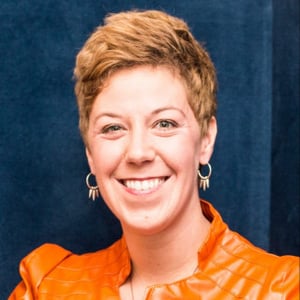
Senior Vice President for Social Policy, Education, & Politics, Third Way
Lanae Erickson is the Senior Vice President for Social Policy, Education, and Politics at Thirdway, where she aims to help policymakers and advocates better understand the complexities of how voters in the middle approach topics that are often perceived politically as black and white, including immigration, crime, abortion, and guns, as well as driving crucial policy conversations like how we can ensure our higher education system is delivering for students and taxpayers. Working closely with leaders in the LGBT movement, she led Third Way’s Commitment Campaign, which mobilized moderate Americans to support marriage for gay couples by changing the conversation from legal rights and benefits to the importance of making a lifetime commitment in front of family and friends.
Lanae served as a member of President Obama's third Advisory Council on Faith-Based and Neighborhood Partnerships. Before coming to Third Way, she was Legislative Counsel at Alliance for Justice, where she investigated the backgrounds of federal judicial nominees on civil and human rights and advocated for progress on issues from detention and interrogation policy to equal pay. Her analysis has been featured in a variety of news outlets, including The Washington Post, The New York Times, USA Today, Politico, The New Yorker, and PBS News Hour. She has also appeared on MSNBC, NPR, Fox News, CSPAN’s Washington Journal, CNN, and her home state’s Minnesota Public Radio. She earned her J.D. magna cum laude from the University of Minnesota, and her Bachelor's degree as a first generation college student and Pell grant recipient at Mount Holyoke College.
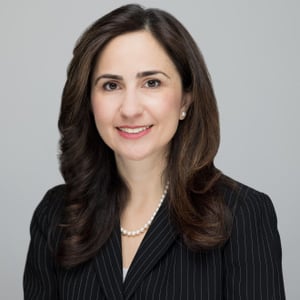
Partner, McGuireWoods LLP
Farnaz is a skilled litigator with extensive experience in representing employers and institutions of higher education, including academic medical centers, in breach of contract, constitutional, discrimination, and tort litigation. She has conducted investigations, advised clients on employment and education laws, and represented them before federal agencies, including the U.S. Department of Labor and U.S. Department of Education.
Farnaz successfully has defended employers, state agencies, government officials, and institutions of higher education in over 30 civil actions as first chair before federal and state courts as well as trial and appellate courts. Farnaz also has advised clients on investigations under civil rights laws such as Title VI of the Civil Rights Act of 1964 (discrimination based on race, color, or national origin), Title VII of the Civil Rights Act of 1964 (discrimination based on race, color, religion, sex, and national origin), and Title IX of the Education Amendments of 1972 (discrimination based on sex). Her deep knowledge of education laws and regulations includes the Higher Education Act of 1965, as amended; accreditation; borrower defense to repayment; gainful employment; financial responsibility standards; FERPA and other privacy laws; the Clery Act; and the Violence Against Women Act (VAWA).
Farnaz is experienced with student and employee disciplinary issues, including under Title IX, and has represented institutions in such matters in several of her previous roles. Representing institutions in Title IX cases requires a nuanced approach, as the institution must balance legal compliance with compassion and care, supporting victims while providing a fair process for both parties, including the accused. Farnaz strikes this balance and is a trusted resource for her clients.
Prior to joining McGuireWoods, Farnaz served as the Deputy General Counsel for Postsecondary Education at the U.S. Department of Education and also as in-house counsel at the University of Virginia. She advised the U.S. Department of Education on litigation strategy and worked closely with the U.S. Department of Justice in cases arising under federal antidiscrimination laws and the Administrative Procedure Act. Government officials also relied on her close counsel in preparation for congressional investigations and hearings. At the University of Virginia, she advised University officials on federal education and employment laws and represented the University and its academic medical center in litigation. She also drafted the University’s antidiscrimination and conduct policies, including free speech policies.
She began her legal career as a law clerk to the Honorable Eric G. Bruggink, Senior Judge, U.S. Court of Federal Claims, and later as a law clerk to the Honorable Leroy Rountree Hassell, Sr., the former Chief Justice, Supreme Court of Virginia.
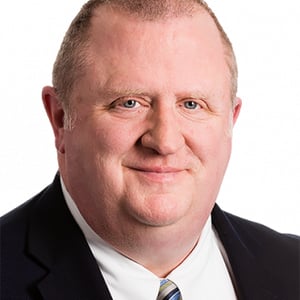
Senior Legal Fellow, Edwin Meese III Center for Legal and Judicial Studies, The Heritage Foundation
Thomas L. Jipping is a Senior Legal Fellow for the Edwin Meese III Center for Legal and Judicial Studies and a senior legal fellow in the Center, which is part of the Institute for Constitutional Government at Heritage.
Tom joined Heritage in May 2018 after 15 years on the staff of U.S. Senator Orrin Hatch (R-Utah), including several as his chief counsel on the Senate Judiciary Committee. He spent the previous 13 years at two public policy organizations: Concerned Women for America, where he was senior fellow in legal studies; and the Free Congress Foundation, where Tom served as Vice President for Policy and Director of the Center for Law and Democracy.
Tom’s scholarship includes articles in law and public policy journals as well as hundreds of op-eds and articles in both print and online publications. He has presented papers at conferences including the American Political Science Association and testified before legislative committees in the U.S. Senate and House and in several states.
Tom received a B.A. with honors from Calvin College and both an M.A. in political science and a J.D., cum laude, from the State University of New York at Buffalo. While at SUNY-Buffalo Law School, Tom was a founding member of the Buffalo Federalist Society and served as the Head Note and Comment Editor of the Buffalo Law Review. Before coming to Washington, Tom clerked for Judge William D. Hutchinson on the U.S. Court of Appeals for the Third Circuit.
Tom lives in Fairfax, Virginia, and is an active member of New Hope Presbyterian Church.

President, March for Life Education and Defense Fund
Jennie Bradley Lichter is President of the March for Life Education and Defense Fund, the iconic organization committed to restoring a culture of life in the United States most notably through the annual March for Life in Washington, D.C. – the world’s largest annual human rights event – and through the growing State March for Life program.
Jennie has wide-ranging legal and policy experience in the public, private, and nonprofit sectors, including at the highest levels of the federal government. In the first Trump Administration, she served in the White House as a Deputy Assistant to the President and Deputy Director of the White House Domestic Policy Council (DPC). In that role she supervised rulemaking and policy efforts on a vast array of issues arising from the Departments of Education, Labor, Health & Human Services, Justice, Housing & Urban Development, Interior, and others. Jennie led policy initiatives across the federal government to protect religious liberty, encourage faith-based partnerships, and defend the dignity of life. She also led DPC’s work on regulatory and administrative state reform.
Prior to her White House service, Jennie worked on policy issues and federal judicial (including Supreme Court) confirmation efforts in the Office of Legal Policy at the U.S. Department of Justice.
Jennie has worked in higher education as Deputy General Counsel for The Catholic University of America, where was also a Fellow at the Center for Religious Liberty in the University’s Columbus School of Law. She previously served as in-house counsel for the Archdiocese of Washington, and as an associate at Jones Day.
Jennie clerked for Judge David B. Sentelle on the D.C. Circuit and for Judge Steven M. Colloton on the Eighth Circuit in Des Moines. She graduated from the University of Notre Dame and from Harvard Law School. Prior to law school she was a research assistant in Bioethics at a D.C. think tank, and earned a graduate degree in Theology & Religious Studies from the University of Cambridge.
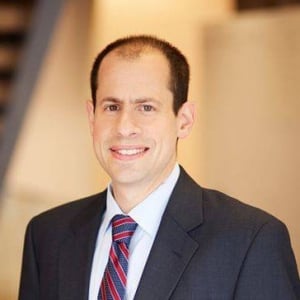
Partner, Jenner & Block LLP
Adam Unikowsky is a partner in Jenner & Block LLP’s Appellate & Supreme Court Practice Group, where he has worked since 2011.
Prior to his time at Jenner & Block, Mr. Unikowsky served as a Judicial Law Clerk to former Justice Antonin Scalia. He also previously clerked for Judge Douglas Ginsberg at the U.S. Courts of Appeals for the D.C. Circuit.
Mr. Unikowsky got his JD from Harvard University, following achieving his Masters of Engineering & Bachelors of Science from Massachusetts Institute of Technology.
Senior Legal Fellow, Edwin Meese III Center for Legal and Judicial Studies, The Heritage Foundation
Thomas L. Jipping is a Senior Legal Fellow for the Edwin Meese III Center for Legal and Judicial Studies and a senior legal fellow in the Center, which is part of the Institute for Constitutional Government at Heritage.
Tom joined Heritage in May 2018 after 15 years on the staff of U.S. Senator Orrin Hatch (R-Utah), including several as his chief counsel on the Senate Judiciary Committee. He spent the previous 13 years at two public policy organizations: Concerned Women for America, where he was senior fellow in legal studies; and the Free Congress Foundation, where Tom served as Vice President for Policy and Director of the Center for Law and Democracy.
Tom’s scholarship includes articles in law and public policy journals as well as hundreds of op-eds and articles in both print and online publications. He has presented papers at conferences including the American Political Science Association and testified before legislative committees in the U.S. Senate and House and in several states.
Tom received a B.A. with honors from Calvin College and both an M.A. in political science and a J.D., cum laude, from the State University of New York at Buffalo. While at SUNY-Buffalo Law School, Tom was a founding member of the Buffalo Federalist Society and served as the Head Note and Comment Editor of the Buffalo Law Review. Before coming to Washington, Tom clerked for Judge William D. Hutchinson on the U.S. Court of Appeals for the Third Circuit.
Tom lives in Fairfax, Virginia, and is an active member of New Hope Presbyterian Church.
President, March for Life Education and Defense Fund
Jennie Bradley Lichter is President of the March for Life Education and Defense Fund, the iconic organization committed to restoring a culture of life in the United States most notably through the annual March for Life in Washington, D.C. – the world’s largest annual human rights event – and through the growing State March for Life program.
Jennie has wide-ranging legal and policy experience in the public, private, and nonprofit sectors, including at the highest levels of the federal government. In the first Trump Administration, she served in the White House as a Deputy Assistant to the President and Deputy Director of the White House Domestic Policy Council (DPC). In that role she supervised rulemaking and policy efforts on a vast array of issues arising from the Departments of Education, Labor, Health & Human Services, Justice, Housing & Urban Development, Interior, and others. Jennie led policy initiatives across the federal government to protect religious liberty, encourage faith-based partnerships, and defend the dignity of life. She also led DPC’s work on regulatory and administrative state reform.
Prior to her White House service, Jennie worked on policy issues and federal judicial (including Supreme Court) confirmation efforts in the Office of Legal Policy at the U.S. Department of Justice.
Jennie has worked in higher education as Deputy General Counsel for The Catholic University of America, where was also a Fellow at the Center for Religious Liberty in the University’s Columbus School of Law. She previously served as in-house counsel for the Archdiocese of Washington, and as an associate at Jones Day.
Jennie clerked for Judge David B. Sentelle on the D.C. Circuit and for Judge Steven M. Colloton on the Eighth Circuit in Des Moines. She graduated from the University of Notre Dame and from Harvard Law School. Prior to law school she was a research assistant in Bioethics at a D.C. think tank, and earned a graduate degree in Theology & Religious Studies from the University of Cambridge.
Partner, Jenner & Block LLP
Adam Unikowsky is a partner in Jenner & Block LLP’s Appellate & Supreme Court Practice Group, where he has worked since 2011.
Prior to his time at Jenner & Block, Mr. Unikowsky served as a Judicial Law Clerk to former Justice Antonin Scalia. He also previously clerked for Judge Douglas Ginsberg at the U.S. Courts of Appeals for the D.C. Circuit.
Mr. Unikowsky got his JD from Harvard University, following achieving his Masters of Engineering & Bachelors of Science from Massachusetts Institute of Technology.
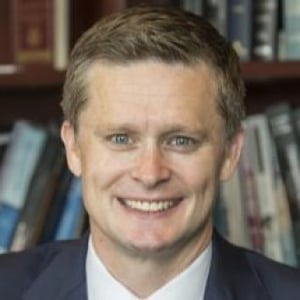
Donald M. Ephraim Professor of Law and Economics, University of Chicago Law School
Tony Casey is an expert on business law, finance, and corporate bankruptcy. His research—which has been published in the Yale Law Journal, the Columbia Law Review, the Supreme Court Review, and the University of Chicago Law Review—examines the intersection of finance and law. He has also written about the role of intellectual property law in the organization and financing of creative projects and about how technological innovation is changing the foundations of our legal system more generally.
Before entering academics, Professor Casey was a partner at Kirkland and Ellis, LLP. Before joining Kirkland & Ellis, he was an associate at Wachtell, Lipton, Rosen & Katz. His legal practice focused on corporate bankruptcy, merger litigation, white-collar investigations, securities litigation, and complex class actions. Casey also served as a law clerk for Chief Judge Joel M. Flaum of the United States Court of Appeals for the Seventh Circuit.
Professor Casey received his JD with High Honors in 2002 from the University of Chicago Law School. He received the John M. Olin Prize for the outstanding student of law and economics.
Professor Casey teaches courses and seminars in corporate governance, business law, bankruptcy and reorganization, finance, litigation strategy, civil procedure, and law and technology.
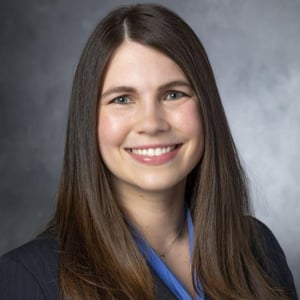
Associate Professor of Law, Emory University School of Law
Lindsey Simon is an associate professor at the Emory University School of Law.
Her research focuses on the bankruptcy system, drawing concepts from bankruptcy structure and procedure to address broader institutional design challenges. Simon’s articles have been published in the Administrative Law Review, the Cardozo Law Review, the Indiana Law Journal and the North Carolina Law Review. Simon’s most recent scholarship addresses the intersection between mass torts and bankruptcy, including an article on non-debtor relief in Chapter 11 forthcoming in the Yale Law Journal. She has assisted academics, judges, members of Congress and many other stakeholders on the subject of mass tort bankruptcies, and her commentary in connection with the Purdue Pharma, Boy Scouts of America and USA Gymnastics bankruptcies has appeared in various media outlets, including The Wall Street Journal, The New York Times, Forbes, The Economist, NPR and Reuters.
Before joining the Emory Law faculty in 2023, Professor Simon served as the Robert Cotten Alston Associate Chair in Corporate Law at the University of Georgia School of Law. Prior to becoming a professor, Simon was an associate at Kilpatrick Townsend & Stockton, where her practice involved a mix of commercial litigation and corporate restructuring matters. She represented corporations, committees and individuals in state and federal litigation, both in and out of the bankruptcy context. Simon also practiced at a litigation boutique in Chicago, Illinois, and served as a judicial clerk for Judge Beverly B. Martin on the U.S. Court of Appeals for the Eleventh Circuit. Additionally, she taught as an adjunct professor at the Georgia State University College of Law.
Simon earned her law degree magna cum laude from the Northwestern University Pritzker School of Law and obtained her Bachelor of Music magna cum laude and her Master of Education from Vanderbilt University.
She is an active member of the American Bankruptcy Institute, where she serves as a member of the ABI Diversity Working Group. She previously served as vice chair and community service co-chair for the Georgia Network of the International Women's Insolvency & Restructuring Confederation and as vice president of the board of directors of the Georgia Latino Law Foundation.

Courthouse Steps Preview: Trump v. Anderson
Kurt T. Lash, Derek T. Muller, Ilya Somin
On February 8, 2024, the Supreme Court will hear Oral Argument in Trump v. Anderson....
Topics
A Brief Guide to the 2023 Amendments to the Federal Rules of Evidence
Amendments to Federal Rules of Evidence 702, 106, and 615 took effect on December 1,...
Topics
Rounding Error: The Eighth Circuit Invalidates a Longstanding Rule on Workplace Timekeeping
The Fair Labor Standards Act (FLSA) is more than 80 years old, a legacy...
Topics
Two Quirky Appellate Decisions on Section 2 of the Voting Rights Act
Two federal circuit courts of appeal recently handed down a pair of quirky opinions regarding...
The Judiciary's Federalist Revival
Carlos T. Bea, Rebecca Bradley, David N. Wecht, Evan A. Young
2023 National Lawyers Convention
In recent years, the U.S. Supreme Court has emphasized the federalist nature of our national...
The Judiciary's Federalist Revival
Carlos T. Bea, Rebecca Bradley, David N. Wecht, Evan A. Young
2023 National Lawyers Convention
In recent years, the U.S. Supreme Court has emphasized the federalist nature of our national...
Plenary Session #3 U.S. Department of Education Rulemaking: Hiding Regulatory Elephants in Statutory Mouseholes?
Jennifer C. Braceras, Michael B. Brennan, Christian Corrigan, Lanae Erickson, Farnaz F. Thompson, Jed Shugerman
2023 Education Law & Policy Conference
The Supreme Court’s recent decision in Biden v. Nebraska has not ended questions about regulatory...
Dueling Decisions on the Regulation and Distribution of Mifepristone: AHM v. FDA & WA v. FDA
Thomas Jipping, Jennie Bradley Lichter, Adam Unikowsky
Two cases concerning the FDA’s approval of Mifepristone, Alliance for Hippocratic Medicine v. United States...
Dueling Decisions on the Regulation and Distribution of Mifepristone: AHM v. FDA & WA v. FDA
Thomas Jipping, Jennie Bradley Lichter, Adam Unikowsky
Two cases concerning the FDA’s approval of Mifepristone, Alliance for Hippocratic Medicine v. United States...
Chapter 11 Bankruptcy & Mass Torts: A Review of the Third Circuit’s LTL Opinion
Anthony J. Casey, Lindsey Simon
In 2021, LTL Management LLC (LTL), a newly created and separate subsidiary of Johnson &...