Facts of the Case
The Trump administration repealed the 2015 Clean Power Plan, which established guidelines for states to limit carbon dioxide emissions from power plants, and issued in its place the Affordable Clean Energy (ACE) Rule, which eliminated or deferred the guidelines. However, the U.S. Court of Appeals for the D.C. Circuit vacated the ACE Rule as arbitrary and capricious. One of the challengers, North American Coal Corporation, challenged the Environmental Protection Agency’s authority to so broadly regulate greenhouse gas emissions.
Questions
Does the Environmental Protection Agency have the authority to regulate greenhouse gas emissions in virtually any industry, so long as it considers cost, non-air impacts, and energy requirements?
Conclusions
-
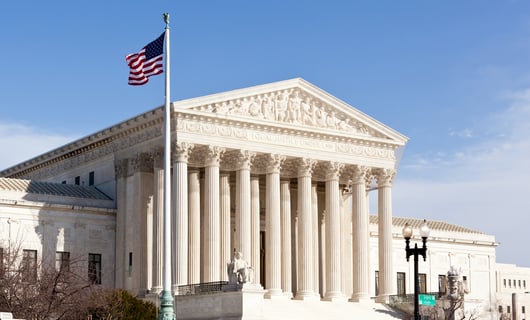
Congress did not grant the Environmental Protection Agency in Section 111(d) of the Clean Air Act the authority to devise emissions caps based on the generation shifting approach the Agency took in the Clean Power Plan.
Under the “major questions doctrine,” there are “extraordinary cases” in which the “history and the breadth of the authority that [the agency] has asserted,” and the “economic and political significance” of that assertion, provide a “reason to hesitate before concluding that Congress” meant to confer such authority. This is one such case, so the EPA must point to “clear congressional authorization” for the authority it claims. It cannot do so.
The EPA has admitted that issues of electricity transmission, distribution, and storage are not within its traditional expertise, yet it claims that Congress implicitly tasked it with the regulation of how Americans get their energy. Without “clear congressional authorization” for the EPA to regulate in such a manner, the agency lacks authority to implement the Clean Power Plan under the Clean Air Act.
Justice Neil Gorsuch filed a concurring opinion, in which Justice Samuel Alito joined.
Justice Elena Kagan filed a dissenting opinion, in which Justices Stephen Breyer and Sonia Sotomayor joined.
From Pork Producers to Suncor: Extraterritoriality and Our Constitutional Structure
How far can states go in regulating conduct that has effects outside their borders?At the...
Panel 2: New Frontiers for Traditional Fuels: Deregulation or Lawfare?
Energy in the AI Age
CLE credit for this event is available at On-Demand CLE. Coal, oil, and natural gas...
From Chambers to the Front Page: Supreme Court Leaks and Judicial Integrity
What happens when confidential Supreme Court deliberations make their way into the press—most recently through...

Major Questions Doctrine: From West Virginia v. EPA to Learning Resources
The Supreme Court's decision in Learning Resources, Inc. v. Trump produced at least four distinct visions of...
Suncor Energy v. Boulder County: Federalism, Judicial Power, and the Future of Climate Litigation
In Suncor Energy, Inc., v. Commissioners of Boulder County, the Supreme Court will consider whether...
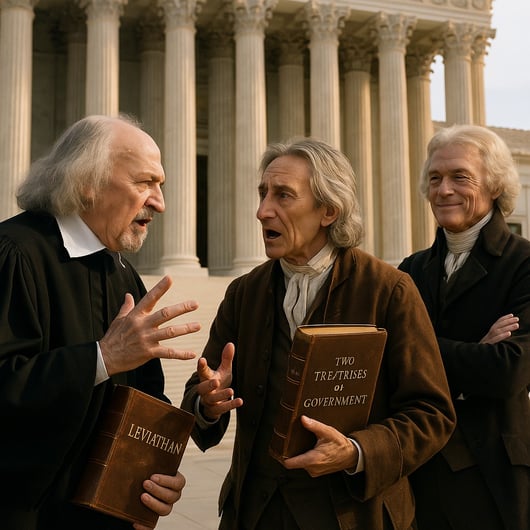
What Will the New Lockean Revolution of Limiting the Power of the Regulatory State Mean for Businesses?
A new Lockean revolution is going on in the Supreme Court. In recent years, the...

A Constitutional Crisis Narrowly Averted: The Biden-Harris CFPB’s Digital Payments Rule Threatened Constitutional Balance
Even after Joe Biden became a lame duck and Kamala Harris lost the 2024...
Panel: The Future of Administrative Statutes
This panel will explore the Court’s recent decision in Loper Bright as well as its...

Seven County Infrastructure Coalition v. Eagle County: What’s at Stake in the Supreme Court’s First Major NEPA Case in 20 Years
On Tuesday, the Supreme Court hears Seven County Infrastructure Coalition v. Eagle County, a case...
In-House Counsel Network: The Litigation Environment - Public Nuisance, Market-Share, and Consumer Protection Liability
2024 National Lawyers Convention
Theories of nuisance, market-share, and consumer protection liability have become increasingly popular among plaintiffs who...
Environmental Law & Property Rights: Environmental Law in a Post-Chevron World— How Should Congress, Agencies, and States Respond?
2024 National Lawyers Convention
This year, in a pair of decisions known as Loper Bright, the Supreme Court overruled...
Federalism & Separation of Powers: A Revival of the Separation of Powers at the Supreme Court?
2024 National Lawyers Convention
The Supreme Court’s most recent term was one of significance with respect to the separation...
Federalism & Separation of Powers: A Revival of the Separation of Powers at the Supreme Court?
2024 National Lawyers Convention
The Supreme Court’s most recent term was one of significance with respect to the separation...
Sauce for the Goose: The FCC Lacks Authority to Interpret Section 230 Post-Loper Bright
Frustrated by a perceived political bias against their views, several conservatives have called for government...

Murthy Provides a Teachable Moment About the “Vast Power” of the Administrative State
Digital platforms, as private entities, enjoy First Amendment protection. Indeed, the Supreme Court said last...
The Curtain Falls on Chevron: Will the Chevron Two-Step Give Way to a Simpler Loper Bright-Line Rule?
Federalist Society Review, Volume 25
Traditionally, administrative law cases don’t make news. Instead, they make snooze. They can be exciting...

The Sixth Circuit Stays the FCC’s Latest Net Neutrality Flip-Flop
At last! There’s now a good chance the two decades-old “net neutrality” wars may be...
West Virginia v. EPA, Two Years Later: Updates on the Major Questions Doctrine
Experts will examine the major questions doctrine, its role in regulatory litigation, and its place...

Major Questions About the FTC’s Junk Fee Rule
The Federal Trade Commission (FTC) is due to vote on the so-called “junk fee” rule by the...
A Response to the Constitution's Critics
Federalist Society Review, Volume 25
A review of Dennis Hale and Marc Landy, Keeping the Republic: A Defense of American...

The Broadband Economy – $42 Billion Infusion and a Newly-Minted Biden FCC: What lies ahead?
Registration is now CLOSED. Join us on Tuesday, June 11th at 4:00 PM ET for...
Panel III: The Judicial Power and Evaluating Judicial Supremacy
2024 National Student Symposium
New presidential administrations start with a flurry of administrative actions. These fresh rules, guidelines, and...
Panel II: The Executive Power, the Legislative Power, and the Administrative State
2024 National Student Symposium
Many critics of modern administrative law want a world where Congress does more things, and...
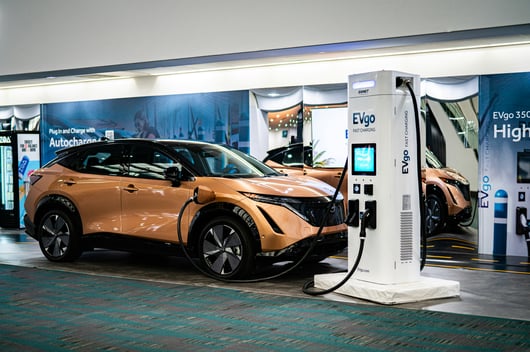
Major Questions Raised by EPA’s EV Mandates
In hopes of shoring up its aggressive anti-fossil-fuel policy agenda against a possible electoral loss...
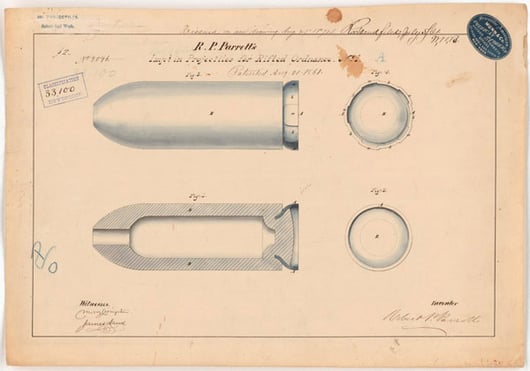
The Bayh-Dole Act and the Debate Over “Reasonable Price” March-In Rights
In 1980, Congress passed the bipartisan Patent and Trademark Law Amendments Act—better known as the...

Navigating the Capital Adequacy Rule: Legal and Policy Perspectives
Registration to attend this event in person is now closed. Join us on April 10, 2024,...

Pushing Pause on Liquified Natural Gas Exports: Can the Department of Energy Halt LNG Exports to Save the Planet?
Federalist Society Review, Volume 25
The Biden-Harris Administration recently interrupted the normal, export-friendly operation of the Natural Gas Act, triggering...
A Deeper Originalism: From Court-Centered Jurisprudence to Constitutional Self-Government
Federalist Society Review, Volume 24
Originalism has substantially reoriented constitutional discourse since it first reemerged in response to the Warren...
The Ascertainable Standards that Define the Boundaries of the SEC’s Rulemaking Authority
In March 2022, prior to the publication of the SEC’s proposed rule on climate-related disclosures––The...
The FCC Returns to the Law and Economics Free Zone
Relatively speaking, the last several years have been pretty good for the U.S. broadband industry....
Originalism and the Communications Act of 1934
2023 National Lawyers Convention
In recent months, the U.S. Senate confirmed a third Democratic Commissioner at the Federal Communications...
Defend the Constitution, Save the Planet: The Role of Public Interest Groups in Shaping Environmental Law
2023 National Lawyers Convention
The United States adopted its modern environmental statutes in the 1970s. Among other innovations, Congress...
The Major Questions Doctrine Is Not About Delegation, but Usurpation—And That Matters
This post was originally published at the Yale Journal on Regulation’s Notice & Comment blog....
Panel II: U.S. Supreme Court Review
2023 Florida Young Lawyers Summit
Featuring: Zack Smith, Legal Fellow and Manager, Supreme Court and Appellate Advocacy Program, Meese Center, The...
What Does West Virginia v. EPA Mean for the Agency’s New Proposed Clean Power Rule?
We don’t always hear what happens next after the Supreme Court hands down a big...
The Major Questions Doctrine and the Tech and Telecom Sectors After West Virginia v. EPA
Last year, the Supreme Court issued its landmark decision in West Virginia v. EPA in...

Artificial Intelligence and Administrative Law
The Federalist Society recently hosted a webinar entitled New Voices in Administrative Law: The Emerging...
Major Questions Doctrine and the Tech and Telecom Sectors After West Virginia v. EPA
Last year, the Supreme Court issued a landmark decision in West Virginia v. EPA, in...
The Administrative State on Trial?
EBRXI
The Supreme Court continues to accept for review cases that challenge agency authority on separation...
Originalism Carries On
Federalist Society Review, Volume 24
A review of Erwin Chemerinsky, A Momentous Year in the Supreme Court: October Term 2021...

The SEC’s ESG Reporting Rule: Understanding the Debate over Climate-Risk Disclosure Requirements
A Regulatory Transparency Project Webinar
In March 2022, the Securities and Exchange Commission proposed a new rule that would establish...
AI & Antidiscrimination: AI Entering the Arena of Labor & Employment Law
Regulatory Transparency Project
Artificial Intelligence (AI), once the stuff of science fiction, is now more than ever a...
What Happened in the Student Loan Forgiveness Oral Arguments?
On March 1, 2023, Mark Chenoweth, the President and General Counsel of the New Civil...

Title IX and the Major Questions Doctrine
In West Virginia v. EPA, the Supreme Court held that the major questions doctrine requires...
Examining the CFPB’s Targeting of Discrimination in Consumer Finance Through UDAAP
A Regulatory Transparency Project Webinar
Under the Biden Administration, Consumer Financial Protection Bureau Director Rohit Chopra has dramatically increased the...
A Critique of the ‘Congressional Dysfunction’ Critique of the Major Questions Doctrine
In an essay, “A Major Ruling on Major Questions,” published in The Regulatory Review in...

Supreme Court to Hear Two Challenges to President Biden’s Student Loan Forgiveness Program
In December, the Supreme Court granted certiorari in two cases challenging the student loan forgiveness...

Luncheon Debate: Resolved: The Major Questions Doctrine Has No Place in Statutory Interpretation
24th Annual Federalist Society Faculty Conference
In West Virginia v. EPA, decided this last term, the Supreme Court invoked the major...
Deep Dive Episode 248 - Creatures of Statute III: Congress’ Responsibility to Answer the Major Questions
Regulatory Transparency Project's Fourth Branch Podcast
The Federalist Society’s Regulatory Transparency Project and Capitol Hill Chapter hosted the third in a...
A Trio of "Sleeper" Nondelegation Doctrine Challenges
For those, like me, who harbor hopes that abuses of authority by administrative agencies might...
The Judge’s Role in Choosing a Successor
2022 National Lawyer's Convention
Under the Constitution, two branches of government are formally involved in the selection of federal...
Showcase Panel III: Lawyers, the Adversarial System, and Social Justice
2022 National Lawyers Convention
ABA Model Rule of Professional Responsibility 1.2(b) states: “A lawyer's representation of a client, including...

The Major Questions Doctrine: West Virginia v. EPA
National Lawyers Conference 2022
Supreme Court actions during the 2021-2022 term - opinions, grants and denials of petitions for...
The Major Questions Doctrine: West Virginia v. EPA
National Lawyers Conference 2022
Supreme Court actions during the 2021-2022 term - opinions, grants and denials of petitions for...

Regulatory Elephants in Statutory Mouse Holes?
2022 National Lawyers Convention
When an agency claims “a merely plausible textual basis” for asserting “extravagant statutory power over...
Regulatory Elephants in Statutory Mouse Holes?
2022 National Lawyers Convention
When an agency claims “a merely plausible textual basis” for asserting “extravagant statutory power over...

Necessary & Proper Episode 81: Creatures of Statute III: Congress’ Responsibility to Answer the Major Questions
On October 17, 2022, the Federalist Society’s Regulatory Transparency Project and Capitol Hill Chapter hosted...
Render Law Unto Congress and Execution Unto the Executive: The Supreme Court Rebalances Constitutional Power
2022 National Lawyers Convention
The Roberts Court is recasting the administrative state according to its view of the separation...
And the Walls Came Tumbling Down: The Liberation of Civil Society
As anyone who has seen a building collapse or a bridge buckle can attest, it...
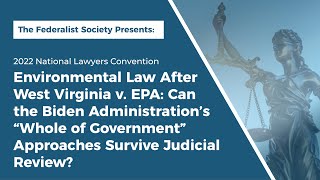
Environmental Law After West Virginia v. EPA: Can the Biden Administration’s “Whole of Government” Approaches Survive Judicial Review?
2022 National Lawyers Convention
The Biden Administration began with executive orders on an environmental policy agenda, directing a “whole...
Environmental Law After West Virginia v. EPA: Can the Biden Administration’s “Whole of Government” Approaches Survive Judicial Review?
2022 National Lawyers Convention
The Biden Administration began with executive orders on an environmental policy agenda, directing a “whole...

Environmental Law After West Virginia v. EPA: Can the Biden Administration’s “Whole of Government” Approaches Survive Judicial Review?
On Saturday morning, a panel of distinguished scholars and practitioners will debate whether the Biden...

Litigation Update: Garrison v. U.S. Dept. of Ed.: A Challenge to Biden’s Student Loan Forgiveness
In August 2022, the Biden administration announced plans to cancel up to $20,000 in student...
Deep Dive Episode 242 - A Global Energy Crisis and the FERC [Panel Discussion]
Regulatory Transparency Project's Fourth Branch Podcast
In the last few years, the Federal Energy Regulatory Commission (FERC) has emerged from relative...
Deep Dive Episode 241 - A Global Energy Crisis and the FERC [Keynote Address]
Regulatory Transparency Project's Fourth Branch Podcast
In the last few years, the Federal Energy Regulatory Commission (FERC) has emerged from relative...
A Global Energy Crisis and the FERC: A Discussion of Challenges and Opportunities [Panel Discussion]
In the last few years, the Federal Energy Regulatory Commission (FERC) has emerged from relative...
State Court Docket Watch: Roberts v. Arizona
Arizona's highest court rules that a state agency overstepped their bounds
Important issues of federalism and administrative law almost always boil down to one simple yet...
Creatures of Statute III: Congress’ Responsibility to Answer the Major Questions
Join the Federalist Society’s Regulatory Transparency Project and Capitol Hill Chapter for the third in...
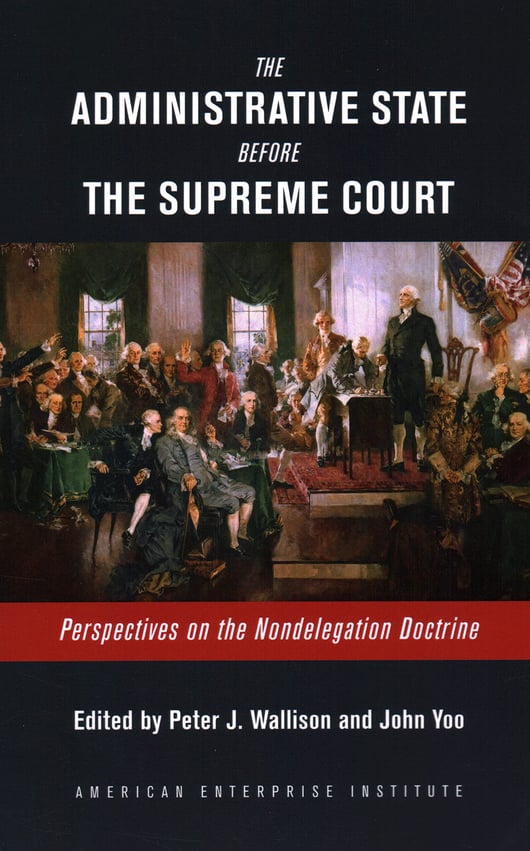
Revitalizing the Nondelegation Doctrine
Federalist Society Review, Volume 23
A Review of The Administrative State Before the Supreme Court: Perspectives on the Nondelegation Doctrine (Peter...

Title IX NPRM: Due Process and Potential Challenges
The U.S. Department of Education’s (ED) proposed rulemaking (NPRM) pursuant to Title IX’s anti-sex discrimination...

Deep Dive Episode 231 - West Virginia v. EPA and the Major Questions Doctrine
Regulatory Transparency Project's Fourth Branch Podcast
In the historic decision of West Virginia v. EPA, the Supreme Court held that the Clean...
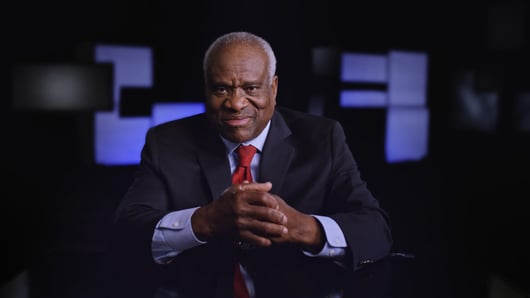
Talks with Authors: Created Equal: Clarence Thomas in His Own Words
Mark Paoletta and Michael Pack have co-edited a new book, Created Equal: Clarence Thomas in His...

The Future of Chevron Deference at the Supreme Court
The Supreme Court decided multiple administrative law cases this term, but in no majority opinion...

Consumers' Research v. FCC and the Legality of the Universal Service Fund Contribution Regime
With billions of dollars allocated to broadband funding in the Infrastructure Investment and Jobs Act,...
Consumers' Research v. FCC and the Legality of the Universal Service Fund Contribution Regime
With billions of dollars allocated to broadband funding in the Infrastructure Investment and Jobs Act,...
Courthouse Steps Decision Webinar: West Virginia v. EPA
On June 30, 2022, the Supreme Court decided West Virginia v. EPA. In a 6-3...

WV v. EPA: Some Answers about Major Questions (But Not All the Answers We Need)
Originally published at the Volokh Conspiracy In West Virginia v. Environmental Protection Agency, the Supreme...

The Future of Homemade Firearms: The Legal and Political Implications of ATF Final Rule 2021R-05F
Americans have been privately manufacturing and assembling firearms since before this country’s founding. Now, thanks...
Courthouse Steps Decision: Vega v. Tekoh
On June 23, 2022, the Supreme Court decided Vega v. Tekoh. In a 6-3 decision, the...
What May Be Lurking in the Future of Environmental Law After West Virginia v. EPA
In West Virginia v. EPA, decided in June, the Supreme Court struck down EPA’s attempt...

Originalism’s Still Around, No Matter What Adrian Vermeule Says
I was taken aback when I read Adrian Vermeule’s recent Washington Post op-ed, which alleges...

Chevron and the States: A Conversation with Governors' General Counsel about Judicial Deference to State Administrative Agency Interpretations of State Laws
Deference doctrines utilized by the federal Judiciary when federal agencies act is the subject of...

A Seat at the Sitting - April 2022
The April Docket in 90 Minutes or Less
Each month, a panel of constitutional experts convenes to discuss the Court’s upcoming docket sitting by...

Citizen Suits, Separation of Powers, and the Future of the Supreme Court's Standing Jurisprudence
Internal tensions in the Supreme Court's standing doctrine have led to some unexpected fractures. Last...
Courthouse Steps Oral Argument: West Virginia v. EPA
On February 28, 2022, the U.S. Supreme Court will hear West Virginia v. EPA, one...
Courthouse Steps Oral Argument: West Virginia v. EPA
On February 28, 2022, the U.S. Supreme Court will hear West Virginia v. EPA, one...
Go Ahead, You Do It For Us
Rule of Law or Rule of Experts? Almost exactly 9 years ago, I spoke...
A Seat at the Sitting - February 2022
The February-March Docket in 90 Minutes or Less
Each month, a panel of constitutional experts convenes to discuss the Court’s upcoming docket sitting by...
A Seat at the Sitting - February 2022
The February-March Docket in 90 Minutes or Less
Each month, a panel of constitutional experts convenes to discuss the Court’s upcoming docket sitting by...
Courthouse Steps Oral Argument Litigation Update: American Hospital Association v. Becerra
On Tuesday, November 30, 2021, the Supreme Court heard oral argument in American Hospital Association...
Climate and the Courts: Juliana Oral Arguments
How much can the federal courts do on a climate change? If you want more...
Clean Power Plan Litigation Update - Podcast
Environmental Law & Property Rights Practice Group Podcast
On Tuesday, September 27, the D.C. Circuit Court of Appeals will hear West Virginia v....
Does EPA’s Clean Power Plan Proposal Violate the States’ Sovereign Rights?
Engage Volume 16, Issue 1
Note from the Editor: This article discusses the Environmental Protection Agency’s Clean Power Plan under...
Federalism & Separation of Powers: A Revival of the Separation of Powers at the Supreme Court?
2024 National Lawyers Convention
The Washington Hilton1919 Connecticut Ave NW
Washington, DC 20009


Deference to Whom? A Discussion on Chevron Doctrine after West Virginia v. EPA
Belmont Student Chapter
Randall and Sadie Baskin Center1901 15th Avenue South Room 144
Nashville, TN 37212