Necessary & Proper Episode 81: Creatures of Statute III: Congress’ Responsibility to Answer the Major Questions
On October 17, 2022, the Federalist Society’s Regulatory Transparency Project and Capitol Hill Chapter hosted part III in a lecture series on the administrative state. This discussion covered the major questions doctrine and how Congress may respond to the Supreme Court’s decision in West Virginia v. EPA.
Arguably unenforced for some time, recent federal court cases have once again raised the specter of nondelegation doctrine. In so doing, cases such as West Virginia v. EPA at the Supreme Court, and the 5th Circuit’s decision in Jarkesy v. SEC, arguably throws into question the status quo under which administrative agencies have heretofore operated.
This final event in the co-sponsored luncheon series on the administrative state investigated the impact such cases may have on Congress in terms of lawmaking delegation, and forecasted what Congress can expect if SCOTUS continues to enforce the nondelegation doctrine while moving away from former deference doctrines.
Featuring:
*******
As always, the Federalist Society takes no position on particular legal or public policy issues; all expressions of opinion are those of the speaker.

Senior Fellow, Governance Studies, Brookings Institution
Sarah Binder is senior fellow in Governance Studies at the Brookings Institution and professor of political science at George Washington University, where she specializes in Congress and legislative politics. Binder’s current research explores the historical and contemporary relationship between Congress and the Federal Reserve, and she is the co-author with Mark Spindel of The Myth of Independence: How Congress Governs the Federal Reserve (Princeton University Press, 2017). She is also an associate editor of The Washington Post’s Monkey Cage blog.
Binder is a former co-editor of Legislative Studies Quarterly, a co-author with Forrest Maltzman of Advice and Dissent: The Struggle to Shape the Federal Judiciary (Brookings, 2009), author of Stalemate: Causes and Consequences of Legislative Gridlock (Brookings, 2003), Minority Rights, Majority Rule: Partisanship and the Development of Congress (Cambridge University Press, 1997), and co-author with Steven S. Smith of Politics or Principle? Filibustering in the United States Senate (Brookings, 1997). Her other work on Congressional politics has appeared in the American Political Science Review, American Journal of Political Science, and elsewhere.
Her book on legislative gridlock was awarded the 2003 Richard F. Fenno, Jr. Prize by the American Political Science Association for the best book published on legislative politics, and she was elected to the American Academy of Arts and Sciences in 2015.
Binder received her Ph.D. in political science from the University of Minnesota in 1995 and B.A. from Yale University in 1986. She joined Brookings in 1995 and George Washington University in 1999. Between 1986 and 1990, she served as legislative aide and press secretary to Rep. Lee Hamilton (D-Indiana).
Senior Counsel, Committee on Oversight and Accountability, U.S. House of Representatives
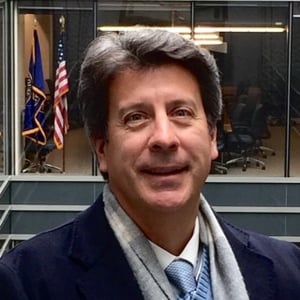
Daniel Flores is a Senior Counsel on the Republican staff of the Committee on Oversight and Accountability, U.S. House of Representatives. Prior to his current position, he served in the House as Chief Counsel for the House Judiciary Committee's Subcommittee on Regulatory Reform, Commercial and Antitrust Law. Before coming to the House, he served as an Acting Associate Deputy General Counsel for the U.S. Environmental Protection Agency and in other roles in EPA's Office of General Counsel, as a Senior Trial Attorney for the U.S. Department of Justice, Environment and Natural Resources Division, and as an attorney in private practice in Washington, D.C. He serves as a House liaison to the Administrative Conference of the United States and has served on the Council of the American Bar Association’s Section on Administrative Law & Regulatory Practice
Judge, United States District Court, District of Columbia
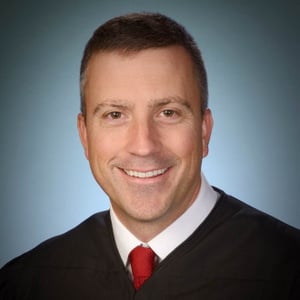
Judge Trevor N. McFadden was appointed to the United States District Court for the District of Columbia in 2017. He received his B.A. in 2001 from Wheaton College, IL, magna cum laude. In 2006, he received his J.D. from the University of Virginia School of Law, where he graduated Order of the Coif and was an editor for the Virginia Law Review.
Following graduation from law school, Judge McFadden clerked for Judge Steven Colloton, U.S. Court of Appeals for the Eighth Circuit. He then joined the U.S. Department of Justice, where he served as Counsel to the Deputy Attorney General and as Assistant U.S. Attorney in the District of Columbia. Judge McFadden subsequently became a partner at Baker & McKenzie LLP in Washington, DC, where he focused on white collar investigations. He is also co-author of a treatise, Corporate Settlement Tools: DPAs, NPAs, and Cooperation Agreements.
After four years in private practice, Judge McFadden returned to the U.S. Department of Justice, where he was Deputy Assistant Attorney General and acted as the second-in-command of the Department's Criminal Division. As Deputy Assistant Attorney General, he managed the Division's Fraud and Appellate Sections.
Judge McFadden also has extensive experience in law enforcement. He served as an officer with the Fairfax County, VA, Police Department and as a deputy sheriff in Madison County, VA.