
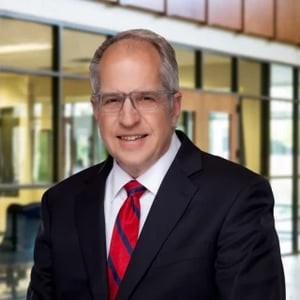
Senior Counsel, First Liberty Institute
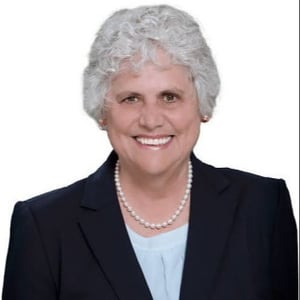
Jordan Lorence is Senior Counsel in FLI’s Washington, D.C. office, where he represents First Liberty in strategic efforts promoting religious liberty, and works on important First Amendment projects and litigation, including those at the U.S. Supreme Court.
Lorence has a long career of litigating religious liberty cases since 1984. He has worked for many public interest law firms, including Alliance Defending Freedom, Home School Legal Defense Association, the North Star Legal Center and Concerned Women for America.
He has worked on important religious liberty cases. Lorence worked on school choice cases at the Supreme Court, such as Witters v. Washington Department of Services for the Blind (1986), and Trinity Lutheran (2016), which laid the foundation for First Liberty’s crucial win in Carson v. Makin (2022), requiring Maine to include religious schools in its school choice program.
Lorence argued before the U.S. Supreme Court in Regents of the University of Wisconsin v. Southworth (2000). He represented prolife Christian law students from the University of Wisconsin Law School who objected to the University’s requirement that they pay a mandatory student fee that funded the advocacy of student pro-abortion groups. Other Supreme Court cases Lorence has worked on include NIFLA v. Becerra (2018), protecting prolife pregnancy centers from a California statute requiring them to post signs explaining how pregnant women could obtain state-funded abortions; Masterpiece Cakeshop (2017), involving a Christian cake artist sued by the State of Colorado for declining to design a case celebrating the wedding of a same-sex couple and other cases such as Christian Legal Society v. Martinez (2012), Rosenberger v. University of Virginia (1995), Hurley v. GLIB (1995) and Lamb’s Chapel v. Center Moriches Center Moriches School District (1993).
Churches and other religious groups in New York City obtained the right to rent vacant public schools on weekends to conduct worship services after Lorence’s tenacious 20 years of litigation in Bronx Household of Faith. Lorence won protection for churches facing eviction from discriminatory zoning ordinances in Minnesota in Cornerstone Bible Church v. City of Hastings, Minnesota (1991). He also argued at the New Mexico Supreme Court one of the first cases in the nation defending a Christian wedding photographer charged by the State of New Mexico with discrimination for declining to create photos celebrating the commitment ceremony of a lesbian couple in Elane Photography v. Willock (2013).
Lorence defended home schooling families from intrusive school officials during his time working at Home School Legal Defense Association (HSLDA) in the 1980s and 1990s. HSLDA also tasked Lorence with establishing a sister organization in Canada to protect home schooling families there. He traveled extensively in Canada from British Columbia to Prince Edward Island speaking to families how they could protect their right to home school under relevant Canadian law.
Lorence earned his undergraduate degree in journalism from Stanford University and his law degree from the University of Minnesota, his home state. Lorence was born and raised in Minnesota, where he worked one summer building Mighty Dump trucks at Tonka Toys in Mound, Minnesota. For two years immediately after he graduated from law school, Lorence served as the head administrator for a Minnesota Senate committee.
He speaks extensively on First Amendment and other legal issues. Lorence has spoken at least 75 law schools and many legal conferences. Prominent publications such as the Wall Street Journal, the Washington Post and others have printed his opinion pieces on key legal issues involving religious liberty and freedom of speech. He has appeared on such media outlets as Fox News, CNN, National Public Radio, NBC’s Today Show, BBC radio and many others.
Lorence and his wife Marilyn have been married 40 years. They live in the Washington, D.C. area where they raised their seven children.
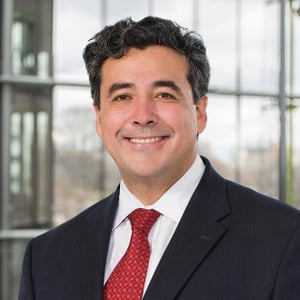
Partner-in-Charge Washington, Jones Day
Noel Francisco served as the 47th Solicitor General of the United States in the Trump Administration, from 2017 to 2020. He has argued some of the most important cases the Supreme Court has heard in recent years on a wide array of issues.
For example, as Solicitor General, he argued Trump v. Hawaii, where he successfully defended the president's orders restricting travel from countries deemed to present security risks; Janus v. AFSCME, which upheld the First Amendment rights of public employees who decline to join labor unions; Kisor v. Wilkie, which adopted his argument that the "Auer deference doctrine" should be significantly curtailed but retained in its core applications; Apple Inc. v. Pepper, which addressed whether Apple's App Store customers had standing to sue the company for antitrust violations; Knick v. Township of Scott, which held that property owners could sue state and local governments in federal court to vindicate Fifth Amendment takings claims; and Seila Law LLC v. CFPB, which invalidated restrictions on the president's authority to remove the director of the Consumer Financial Protection Bureau.
He also spearheaded the government's general strategy to seek emergency relief in the appellate courts and the Supreme Court when lower courts issued nationwide injunctions against important government programs.
Noel's service as Solicitor General built on his previous tenure at Jones Day, during which he argued McDonnell v. United States, which reversed the federal bribery conviction of the governor of Virginia; NLRB v. Noel Canning, which limited the president's constitutional recess appointments power; and Zubik v. Burwell, which challenged federal insurance coverage regulations that violated Catholic organizations' religious beliefs.
Michael Fox is a Legal Fellow in the Cato Institute's Project on Criminal Justice.
Michael Poon is an attorney in the Pacific Legal Foundation's Separation of Powers practice.
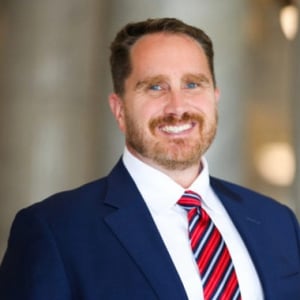
Criminal Deputy Attorney General, Utah Attorney General's Office
While in the U.S. Attorney’s Office in Utah, Stewart Young served as Senior Litigation Counsel and Training Officer. He also worked in the Financial Fraud Section, the Violent Crime Section, and the Narcotics Section. He has been lead or co-counsel on twenty felony jury trials and 22 appellate briefs. Young recently returned from Amman, Jordan, where he served as a counterterrorism prosecutor with the U.S. Department of Justice.
Young has investigated and prosecuted public corruption, bribery, mail/wire fraud, Ponzi schemes, criminal tax violations, narcotics trafficking, and continuing criminal enterprise. He has also trained federal prosecutors at the National Advocacy Center and been responsible for large-scale investigations involving multiple defendants relating to complex white-collar and securities violations, narcotics trafficking, and violent street gang-affiliated conspiracies.
Young, a Stanford Law School and Princeton University graduate, started his prosecutorial career as an Assistant U.S. Attorney in the Southern District of California. He spent several years as a tenure-track law professor at the University of Wyoming College of Law, teaching classes on criminal procedure, criminal adjudication, and border crimes. He also clerked at the U.S. Court of Appeals for the Ninth Circuit and for Judge Paul Cassell at the United States District Court for the District of Utah.
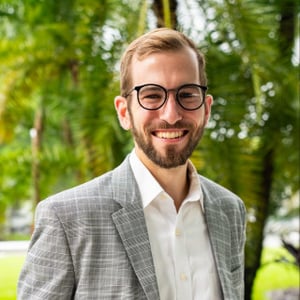
AI Innovation and Law Fellow, University of Texas School of Law
Kevin Frazier is an AI Innovation and Law Fellow with University of Texas School of Law.
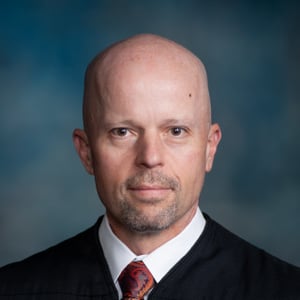
Justice, North Dakota Supreme Court
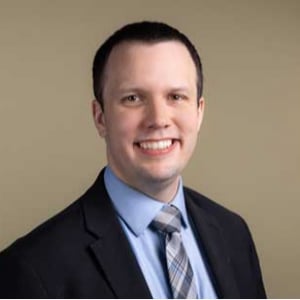
Partner, Consovoy McCarthy
Mr. Dickey represents clients in trial and appellate courts, with a focus on constitutional issues and complex litigation. He has argued multiple times in both federal and state appellate courts. He has also served as lead counsel in high-profile challenges to state law. Recently, Mr. Dickey served as court-assigned amicus in the U.S. Court of Appeals for the Fourth Circuit to present a novel challenge to Article III jurisdiction to enforce agency orders.
Before joining Consovoy McCarthy, Mr. Dickey worked at a major international law firm, where he was elected partner. He also served as an Associate White House Counsel. In that role, he assisted with the confirmation proceedings for Justice Amy Coney Barrett. Earlier in his career, Mr. Dickey was an Assistant Solicitor General in the West Virginia Attorney General’s office, where he assisted with key appellate matters for the state and served as lead trial counsel defending the state’s right-to-work law.
Mr. Dickey served as a law clerk to Justice Clarence Thomas of the U.S. Supreme Court and Judge William H. Pryor Jr. of the U.S. Court of Appeals for the Eleventh Circuit. He graduated with high honors from the University of Chicago Law School, where he was selected to the Order of the Coif. He earned his B.A., magna cum laude, from Samford University. Mr. Dickey is a member of the Virginia, Alabama, District of Columbia, North Carolina, and West Virginia bars.
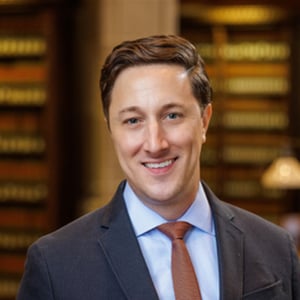
Professor of Law, Notre Dame Law School
Professor Derek Muller is a nationally-recognized scholar in the field of election law. His research focuses on the role of states in the administration of federal elections, the constitutional contours of voting rights and election administration, the limits of judicial power in the domain of elections, and the Electoral College.
He has published more than two dozen academic works, and his op-eds have appeared in the New York Times, the Los Angeles Times, and the Wall Street Journal. He has testified before Congress, and he is a contributor at the Election Law Blog. He is a co-author on a Federal Courts casebook published by Carolina Academic Press. He is also the co-reporter on a new Restatement of the Law, Election Litigation, an effort led by the American Law Institute.
Professor Muller teaches Election Law, Civil Procedure, and Evidence.
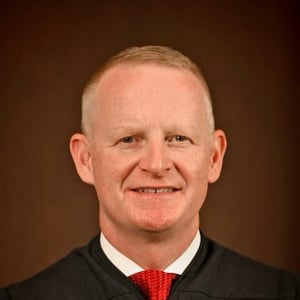
Judge, North Carolina Court of Appeals
Judge Murry brings a wealth of experience to the Court. He has served as an assistant district attorney and held executive leadership roles within the North Carolina Judicial Branch. During his tenure in the North Carolina General Assembly, Judge Murry served two terms in the House of Representatives, where he co-chaired the Appropriations Subcommittee responsible for budgets for the Department of Environment and Natural Resources, Department of Commerce, Department of Agriculture, and Department of Labor. Before his legislative service, he was elected to two terms as an at-large member of the Morrisville Town Council.
In addition to his judicial and legislative experience, Judge Murry is both an attorney and a licensed pharmacist. He earned his Doctor of Pharmacy degree from the University of Arkansas College of Pharmacy and his Juris Doctor degree from Campbell University School of Law. Judge Murry also serves in the North Carolina National Guard as a Judge Advocate General.
Judge Murry resides in Cary, North Carolina with his wife, Tamara, and their three children.
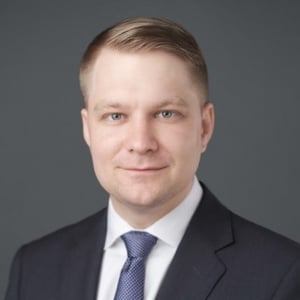
Principal Deputy Solicitor General, Alabama Office of the Attorney General
Robert M. Overing is the Principal Deputy Solicitor General for the State of Alabama and Adjunct Professor at Faulkner University's Jones School of Law. He previously served as a law clerk to Judge Diarmuid F. O'Scannlain on the U.S. Courts of Appeals for the Ninth Circuit and as Special Counsel to the U.S. Senate Judiciary Committee. He received his J.D. from Yale Law School and graduated summa cum laude from the University of Southern California with a masters degree in Philosophy and Law.
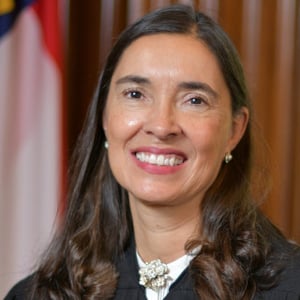
Senior Associate Justice, Supreme Court of North Carolina
Justice Anita Earls currently serves as the Senior Associate Justice on the North Carolina
Supreme Court. Her professional background combines over thirty years of high-stakes civil
rights litigation with more than seven years of direct judicial experience. She has participated in
hundreds of cases on the bench and has authored numerous major constitutional opinions
across civil, criminal, and regulatory matters.
Before serving on the Court, Earls spent three decades trying civil and criminal cases in state
and federal courts. She began her career as an associate and then partner at the Ferguson
Stein law firm in Charlotte, practicing civil rights, criminal defense, and employment law
alongside legends Julius Chambers and James Ferguson. She later served as Deputy Assistant
Attorney General in the Civil Rights Division of the U.S. Department of Justice under President
Clinton, where she oversaw the Voting, Coordination and Review, Educational Opportunities,
and Disability Rights sections. Following her federal service, Earls directed the Voting Rights
Project for the Lawyers' Committee for Civil Rights Under Law, served as Director of Advocacy at the UNC Center for Civil Rights, and in 2007 founded and directed the Southern Coalition for Social Justice.
Her extensive litigation experience includes over thirty federal cases at the trial level, trials
before Superior Court juries on serious felony charges, appellate arguments in state courts and
in the First, Fourth, and Eleventh Circuits. She also served as a member of the North Carolina
State Board of Elections and as Secretary of the North Carolina Equal Access to Justice
Commission. She has taught as an adjunct professor at Duke University and currently teaches
as an adjunct at the UNC School of Law. She lives in Durham with her husband and has two
children and three grandchildren.
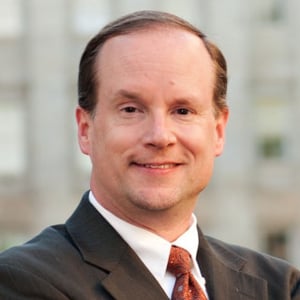
President, John William Pope Foundation
John Hood is president of the John William Pope Foundation. Hood also serves on the board of the John Locke Foundation, the state policy think tank he helped found in 1989 and led as its president for more than two decades.
Since 1986, Hood has written a syndicated column on politics and public policy for North Carolina newspapers. It appears regularly in more than 50 papers across the state. A frequent radio and television commentator, Hood is the author of seven nonfiction books on such subjects as business, advertising, public policy, and political history. His latest three books — Mountain Folk, Forest Folk, and Water Folk — are historical-fantasy novels set in early America.
A former Bradley Fellow at the Heritage Foundation, Hood teaches at Duke University’s Sanford School of Public Policy. His articles have appeared in magazines such as Readers’ Digest, The New Republic, National Review, Military History, and Reason as well as newspapers such as The Wall Street Journal and USA Today. His broadcast appearances include CNN, NBC News, National Public Radio, and Fox News.
At Locke, Hood created the E.A. Morris Fellowship for Emerging Leaders, which prepares young North Carolinians for leadership roles in the public and private sectors. He also serves on the faculty and as board chair of the NC Institute of Public Leadership; as co-chair of the North Carolina Leadership Forum, based at Duke University; as vice-chair of the James G. Martin Center for Academic Renewal, State Policy Network, and the Carolina Liberty Foundation; and on the board the Student Free Press Association.
Hood received his BA in journalism from the University of North Carolina at Chapel Hill, where he serves as vice chair of North Carolina Public Radio-WUNC and on the foundation board of the Hussman School of Journalism and Media. He earned a MA in liberal studies and a graduate certificate in nonprofit management from UNC-Greensboro.
A native of Mecklenburg County, Hood now resides in Wake County with his wife, two sons, and a stepdaughter.
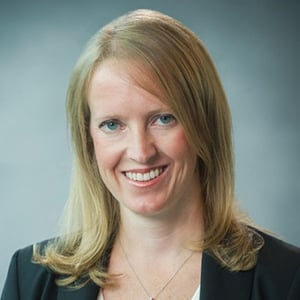
Partner, Clement & Murphy, PLLC
Erin Murphy is founding partner of Clement & Murphy, PLLC. She is widely recognized as one of the nation’s leading Supreme Court and appellate advocates. She has argued dozens of cases in appellate and trial courts throughout the country, including the Supreme Court and nearly all of the federal courts of appeals. Erin has long been ranked by Chambers & Partners rankings as a leading appellate practitioner, and the National Law Journal has named her one of the nation’s “Outstanding Women Lawyers.” Erin also has an active pro bono practice, through which she has successfully represented many religious organizations and adherents, criminal defendants, asylum applicants, adoptive parents, and more.
Erin is an adjunct professor at her alma mater the Georgetown University Law Center, a member and former officer of the Edward Coke Appellate Inn of Court, and a frequent speaker on topics relating to the Supreme Court and appellate advocacy. In her spare time, Erin serves on the board of directors of Street Law.
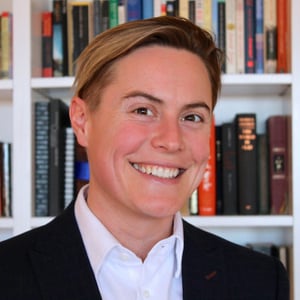
Associate Professor of Legal Studies & Business Ethics, The University of Pennsylvania Wharton School of Business
Amanda Shanor is an Assistant Professor at the University of Pennsylvania Wharton School, where her scholarship focuses on constitutional and administrative law, and in particular the First Amendment.
Shanor is a graduate of Yale Law School and Yale College, and a PhD candidate in law at Yale University. She served as a law clerk to Judges Cornelia T.L. Pillard and Judith W. Rogers on the D.C. Circuit, and Judge Robert W. Sweet in the Southern District of New York. She has taught at both Yale and Georgetown law schools and has published in the New York University Law Review, the Harvard Law Review Forum, and the Yale Law Journal Forum, among others. She is a contributor to Take Care and the co-author of a textbook on counterterrorism law.
Prior to joining the academy, Amanda worked in the National Legal Department of the American Civil Liberties Union on the organization’s Supreme Court litigation, including Masterpiece Cakeshop. Previously, she litigated a number of constitutional and national security cases with Professor David Cole, including Humanitarian Law Project v. Holder, while a fellow at Georgetown.
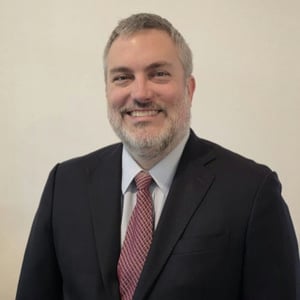
Host, The Prosecutors Podcast; Partner, Culper Law
Brett J. Talley is former a federal prosecutor (appellate chief in the Middle District of Alabama) and host of the true crime podcast "The Prosecutors." Brett has served as nominations chief and deputy assistant attorney general at the US Department of Justice, Advisor to the White House Counsel, speechwriter to Senator Rob Portman, a political and legal communications professional, deputy state solicitor general, staff writer for a presidential campaign, award-nominated horror fiction author (possibly related to the previous items on the list), US District and 11th Circuit judicial clerk, and adjunct law school professor. He is currently a partner ar Culper Law. Along the way, Brett has been involved at some level in the confirmation of a full majority of the sitting justices on the U.S. Supreme Court and scores of U.S. district and appellate court judges. A native Alabamian, Brett earned his undergraduate degree in History and Philosophy from the University of Alabama and JD from Harvard Law School. He lives in Montgomery with his wife Annie and their three small kids.
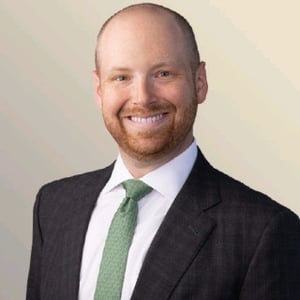
Solicitor General, Iowa Office of the Attorney General
Eric Wessan serves as Iowa’s Solicitor General in the Iowa Attorney General’s Office. In that role, Wessan leads Iowa’s litigation before State and federal appellate courts, including the Iowa and U.S. Supreme Courts. Before that role, Wessan worked on complex commercial litigation at two large law firms in Chicago. Wessan also served as a law clerk for the Honorable James C. Ho on the U.S. Court of Appeals for the Fifth Circuit and for the Honorable John F. Kness on the U.S. District Court for the Northern District of Illinois. Wessan is a graduate of the University of Chicago Law School, with honors, and of the University of Chicago.
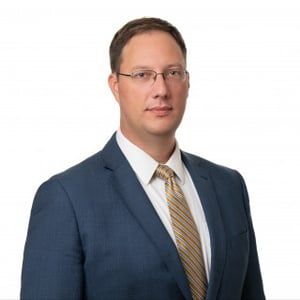
Laurence H. Silberman Chair in Constitutional Governance, American Enterprise Institute; Executive Director, Antonin Scalia Law School’s C. Boyden Gray Center for the Study of the Administrative State
Adam J. White is the Laurence H. Silberman Chair in Constitutional Governance and senior fellow at the American Enterprise Institute, where he focuses on the Supreme Court and the administrative state. He also directs the Antonin Scalia Law School’s C. Boyden Gray Center for the Study of the Administrative State.
He writes on regulation and constitutional government for a variety of publications. He practiced law in Washington, D.C., after clerking for the D.C. Circuit's Judge David Sentelle. He also has been chairman of the ABA's Administrative Law Section.
In 2021, he served on the Presidential Commission on the Supreme Court of the United States, where he criticized “Court packing” and other efforts to restructure the Supreme Court.

Senior Fellow, Civitas Institute, University of Texas, Austin
Linda Denno is a senior fellow at the Civitas Institute. She is also Associate Dean of the University of Arizona, College of Applied Science and Technology headquartered at the branch campus in Sierra Vista, Arizona. Dr. Denno’s strategic vision and commitment to academic excellence is demonstrated by the fact that two of the College’s academic programs—Cyber Operations and Intelligence & Information Operations—have been designated as National Centers of Academic Excellence.
Dr. Denno has earned numerous awards for teaching and for university and community service in her more than 35 years in higher education, including multiple outstanding teaching awards. She was awarded the Silver Rose for Outstanding Contributions to the US Army Military Intelligence Corps; and the Meritorious Public Service Medal, the highest civilian award given by the US Army.

Deputy Editor-in-Chief, Harvard Journal of Law & Public Policy
Solicitor General, Iowa Office of the Attorney General
Eric Wessan serves as Iowa’s Solicitor General in the Iowa Attorney General’s Office. In that role, Wessan leads Iowa’s litigation before State and federal appellate courts, including the Iowa and U.S. Supreme Courts. Before that role, Wessan worked on complex commercial litigation at two large law firms in Chicago. Wessan also served as a law clerk for the Honorable James C. Ho on the U.S. Court of Appeals for the Fifth Circuit and for the Honorable John F. Kness on the U.S. District Court for the Northern District of Illinois. Wessan is a graduate of the University of Chicago Law School, with honors, and of the University of Chicago.
Emanuel S. Heller Professor of Law, University of California at Berkeley; Thomas Smith Senior Research Fellow, Civitas Institute, University of Texas at Austin
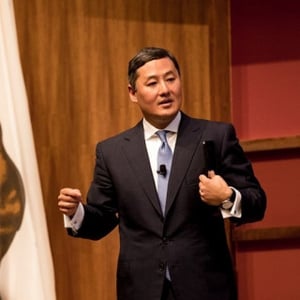
John Yoo is the Emanuel Heller Professor of Law at the University of California at Berkeley. He is also the Thomas Smith Senior Research Fellow, Civitas Institute, at the University of Texas at Austin. He is also a Nonresident Senior Fellow at the American Enterprise Institute.
His most recent book, The Politically Incorrect Guide to the Supreme Court, co-authored with Robert Delahunty, was published in 2023. Professor Yoo’s other books include Defender-in-Chief: Trump’s Fight for Presidential Power; Striking Power: How Cyber, Robots, and Space Weapons Change the Rules for War; Point of Attack: Preventive War, International Law, and Global Welfare; and Crisis and Command: A History of Executive Power from George Washington to George Bush.
He is a co-author of volumes 1 and 2 of R. Rossum, G. Tarr, V. Munoz & J. Yoo American Constitution Law (Routledge, 2026), and a co-editor of the eight-volume series on the 250th anniversary of the American Revolution, We Hold These Truths, with Yuval Levin and Adam White of the American Enterprise Institute.
Professor Yoo has published more than 100 articles in academic journals on subjects including national security, constitutional law, international law, and the Supreme Court. He also regularly contributes to the editorial pages of the Wall Street Journal, New York Times, Washington Post, Los Angeles Times, and National Review, among others.
Professor Yoo has served in all three branches of government. He was an official in the U.S. Department of Justice, where he worked on national security and terrorism issues after the 9/11 attacks. He served as general counsel of the U.S. Senate Judiciary Committee. He has been a law clerk for Supreme Court Justice Clarence Thomas and federal appeals Judge Laurence Silberman. He has been a visiting professor at the University of Texas at Austin’s School of Civic Leadership, Seoul National University, the Interdisciplinary Center Herzliya, Keio University, Trento University, the University of Chicago, and the Free University of Amsterdam.
Professor Yoo supervises the Public Law and Policy Program and the California Constitution Center. He also serves on the boards of Founding Forward, the Washington Legal Foundation, the Pacific Legal Foundation, the Ulysses Grant Institute, the Federalist Society’s Separation of Powers and Federalism Division, the Universidad Cientifica del Sur Law School, and the Asia-Pacific Law Institute at Seoul National University. He is a winner of the Federalist Society’s Paul Bator award and the Heritage Foundation’s Edwin Meese III Originalism Lectureship.
Professor Yoo graduated from Yale Law School and summa cum laude from Harvard College.
Senior Fellow, Civitas Institute, University of Texas, Austin
Linda Denno is a senior fellow at the Civitas Institute. She is also Associate Dean of the University of Arizona, College of Applied Science and Technology headquartered at the branch campus in Sierra Vista, Arizona. Dr. Denno’s strategic vision and commitment to academic excellence is demonstrated by the fact that two of the College’s academic programs—Cyber Operations and Intelligence & Information Operations—have been designated as National Centers of Academic Excellence.
Dr. Denno has earned numerous awards for teaching and for university and community service in her more than 35 years in higher education, including multiple outstanding teaching awards. She was awarded the Silver Rose for Outstanding Contributions to the US Army Military Intelligence Corps; and the Meritorious Public Service Medal, the highest civilian award given by the US Army.
Deputy Editor-in-Chief, Harvard Journal of Law & Public Policy
Solicitor General, Iowa Office of the Attorney General
Eric Wessan serves as Iowa’s Solicitor General in the Iowa Attorney General’s Office. In that role, Wessan leads Iowa’s litigation before State and federal appellate courts, including the Iowa and U.S. Supreme Courts. Before that role, Wessan worked on complex commercial litigation at two large law firms in Chicago. Wessan also served as a law clerk for the Honorable James C. Ho on the U.S. Court of Appeals for the Fifth Circuit and for the Honorable John F. Kness on the U.S. District Court for the Northern District of Illinois. Wessan is a graduate of the University of Chicago Law School, with honors, and of the University of Chicago.
Emanuel S. Heller Professor of Law, University of California at Berkeley; Thomas Smith Senior Research Fellow, Civitas Institute, University of Texas at Austin
John Yoo is the Emanuel Heller Professor of Law at the University of California at Berkeley. He is also the Thomas Smith Senior Research Fellow, Civitas Institute, at the University of Texas at Austin. He is also a Nonresident Senior Fellow at the American Enterprise Institute.
His most recent book, The Politically Incorrect Guide to the Supreme Court, co-authored with Robert Delahunty, was published in 2023. Professor Yoo’s other books include Defender-in-Chief: Trump’s Fight for Presidential Power; Striking Power: How Cyber, Robots, and Space Weapons Change the Rules for War; Point of Attack: Preventive War, International Law, and Global Welfare; and Crisis and Command: A History of Executive Power from George Washington to George Bush.
He is a co-author of volumes 1 and 2 of R. Rossum, G. Tarr, V. Munoz & J. Yoo American Constitution Law (Routledge, 2026), and a co-editor of the eight-volume series on the 250th anniversary of the American Revolution, We Hold These Truths, with Yuval Levin and Adam White of the American Enterprise Institute.
Professor Yoo has published more than 100 articles in academic journals on subjects including national security, constitutional law, international law, and the Supreme Court. He also regularly contributes to the editorial pages of the Wall Street Journal, New York Times, Washington Post, Los Angeles Times, and National Review, among others.
Professor Yoo has served in all three branches of government. He was an official in the U.S. Department of Justice, where he worked on national security and terrorism issues after the 9/11 attacks. He served as general counsel of the U.S. Senate Judiciary Committee. He has been a law clerk for Supreme Court Justice Clarence Thomas and federal appeals Judge Laurence Silberman. He has been a visiting professor at the University of Texas at Austin’s School of Civic Leadership, Seoul National University, the Interdisciplinary Center Herzliya, Keio University, Trento University, the University of Chicago, and the Free University of Amsterdam.
Professor Yoo supervises the Public Law and Policy Program and the California Constitution Center. He also serves on the boards of Founding Forward, the Washington Legal Foundation, the Pacific Legal Foundation, the Ulysses Grant Institute, the Federalist Society’s Separation of Powers and Federalism Division, the Universidad Cientifica del Sur Law School, and the Asia-Pacific Law Institute at Seoul National University. He is a winner of the Federalist Society’s Paul Bator award and the Heritage Foundation’s Edwin Meese III Originalism Lectureship.
Professor Yoo graduated from Yale Law School and summa cum laude from Harvard College.
Partner, Clement & Murphy, PLLC
Erin Murphy is founding partner of Clement & Murphy, PLLC. She is widely recognized as one of the nation’s leading Supreme Court and appellate advocates. She has argued dozens of cases in appellate and trial courts throughout the country, including the Supreme Court and nearly all of the federal courts of appeals. Erin has long been ranked by Chambers & Partners rankings as a leading appellate practitioner, and the National Law Journal has named her one of the nation’s “Outstanding Women Lawyers.” Erin also has an active pro bono practice, through which she has successfully represented many religious organizations and adherents, criminal defendants, asylum applicants, adoptive parents, and more.
Erin is an adjunct professor at her alma mater the Georgetown University Law Center, a member and former officer of the Edward Coke Appellate Inn of Court, and a frequent speaker on topics relating to the Supreme Court and appellate advocacy. In her spare time, Erin serves on the board of directors of Street Law.
Associate Professor of Legal Studies & Business Ethics, The University of Pennsylvania Wharton School of Business
Amanda Shanor is an Assistant Professor at the University of Pennsylvania Wharton School, where her scholarship focuses on constitutional and administrative law, and in particular the First Amendment.
Shanor is a graduate of Yale Law School and Yale College, and a PhD candidate in law at Yale University. She served as a law clerk to Judges Cornelia T.L. Pillard and Judith W. Rogers on the D.C. Circuit, and Judge Robert W. Sweet in the Southern District of New York. She has taught at both Yale and Georgetown law schools and has published in the New York University Law Review, the Harvard Law Review Forum, and the Yale Law Journal Forum, among others. She is a contributor to Take Care and the co-author of a textbook on counterterrorism law.
Prior to joining the academy, Amanda worked in the National Legal Department of the American Civil Liberties Union on the organization’s Supreme Court litigation, including Masterpiece Cakeshop. Previously, she litigated a number of constitutional and national security cases with Professor David Cole, including Humanitarian Law Project v. Holder, while a fellow at Georgetown.
Host, The Prosecutors Podcast; Partner, Culper Law
Brett J. Talley is former a federal prosecutor (appellate chief in the Middle District of Alabama) and host of the true crime podcast "The Prosecutors." Brett has served as nominations chief and deputy assistant attorney general at the US Department of Justice, Advisor to the White House Counsel, speechwriter to Senator Rob Portman, a political and legal communications professional, deputy state solicitor general, staff writer for a presidential campaign, award-nominated horror fiction author (possibly related to the previous items on the list), US District and 11th Circuit judicial clerk, and adjunct law school professor. He is currently a partner ar Culper Law. Along the way, Brett has been involved at some level in the confirmation of a full majority of the sitting justices on the U.S. Supreme Court and scores of U.S. district and appellate court judges. A native Alabamian, Brett earned his undergraduate degree in History and Philosophy from the University of Alabama and JD from Harvard Law School. He lives in Montgomery with his wife Annie and their three small kids.
Solicitor General, Iowa Office of the Attorney General
Eric Wessan serves as Iowa’s Solicitor General in the Iowa Attorney General’s Office. In that role, Wessan leads Iowa’s litigation before State and federal appellate courts, including the Iowa and U.S. Supreme Courts. Before that role, Wessan worked on complex commercial litigation at two large law firms in Chicago. Wessan also served as a law clerk for the Honorable James C. Ho on the U.S. Court of Appeals for the Fifth Circuit and for the Honorable John F. Kness on the U.S. District Court for the Northern District of Illinois. Wessan is a graduate of the University of Chicago Law School, with honors, and of the University of Chicago.
Laurence H. Silberman Chair in Constitutional Governance, American Enterprise Institute; Executive Director, Antonin Scalia Law School’s C. Boyden Gray Center for the Study of the Administrative State
Adam J. White is the Laurence H. Silberman Chair in Constitutional Governance and senior fellow at the American Enterprise Institute, where he focuses on the Supreme Court and the administrative state. He also directs the Antonin Scalia Law School’s C. Boyden Gray Center for the Study of the Administrative State.
He writes on regulation and constitutional government for a variety of publications. He practiced law in Washington, D.C., after clerking for the D.C. Circuit's Judge David Sentelle. He also has been chairman of the ABA's Administrative Law Section.
In 2021, he served on the Presidential Commission on the Supreme Court of the United States, where he criticized “Court packing” and other efforts to restructure the Supreme Court.

2026 Supreme Court Preview with Jordan Lorence
Montgomery Lawyer Chapter
Montgomery, ALThe Future of Birthright Citizenship: What’s Next After Trump v. Barbara (Part Two)
Linda Denno, Will Randolph, Eric Wessan, John C. Yoo
On June 30, the Supreme Court held in Trump v. Barbara that nearly all children...
The Future of Birthright Citizenship: What’s Next After Trump v. Barbara (Part Two)
Linda Denno, Will Randolph, Eric Wessan, John C. Yoo
On June 30, the Supreme Court held in Trump v. Barbara that nearly all children...
Supreme Court Roundup & Preview - Wichita
Wichita Lawyer Chapter
Wichita, KSFederal Overcriminalization and Originalism
Salt Lake City, UTLive Recording of Scaling Laws Podcast with Kevin Frazier and North Dakota Supreme Court Justice Jerod Tufte
North Dakota Lawyer Chapter & UND Student Chapter
Grand Forks, NDPanel II: The Supreme Court and Election Law: Redistricting, Voting Rights, and Election Integrity
2026 North Carolina Conference
Raleigh, NCPanel I: Supreme Court Candidate Forum
2026 North Carolina Conference
Raleigh, NCSupreme Court Preview: What Is in Store for October Term 2026?
Erin E. Murphy, Amanda Shanor, Brett J. Talley, Eric Wessan, Adam White
Registration is now closed No registration is needed to view the live stream, which will be...
Supreme Court Preview: What Is in Store for October Term 2026?
Washington, DC