
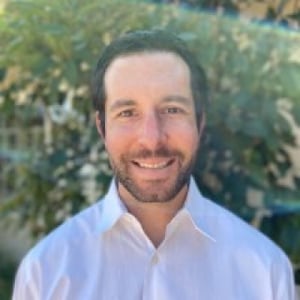
President, EmpiriLaw
Dr. Adam Feldman is the creator and author of the blog Empirical SCOTUS and the Substack Legalytics. He is also the statistics editor for SCOTUSblog. He also runs the legal analytics/AI consulting business Empiri-Law and teaches college courses in political science. He has a law degree from U.C. Berkeley's Boalt Hall School of Law and practiced law as a trial lawyer for several years before starting a Ph.D. in Political Science from the University of Southern California. Upon completion of the Ph.D. Adam pursued a postdoctoral fellowship through Columbia Law School. He has fifteen published articles in law and peer-reviewed journals.
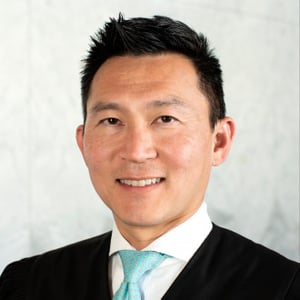
Judge, United States Court of Appeals, Ninth Circuit
Kenneth Kiyul Lee is a judge on the U.S. Court of Appeals for the Ninth Circuit. He was appointed in June 2019 and is based in San Diego, California.
Prior to his appointment, he was a partner at the law firm of Jenner & Block in Los Angeles. Judge Lee previously served as an Associate Counsel to President George W. Bush and as Special Counsel to Senator Arlen Specter, then-chair of the Senate Judiciary Committee. He started his legal career at Wachtell, Lipton, Rosen & Katz in New York.
Judge Lee received his J.D. from Harvard Law School, magna cum laude, and his A.B. from Cornell University, summa cum laude. He clerked for Judge Emilio M. Garza of the U.S. Court of Appeals for the Fifth Circuit.
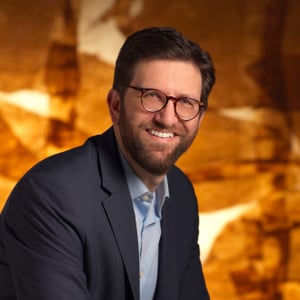
Joseph Tartakovsky, Author of The Lives of the Constitution: Ten Exceptional Minds that Shaped America's Supreme Law.
Joseph Tartakovsky is author of The Lives of the Constitution: Ten Exceptional Minds that Shaped America’s Supreme Law (2018) and the former Deputy Solicitor General of Nevada. His writing has appeared in the New York Times, Wall Street Journal, and Los Angeles Times.
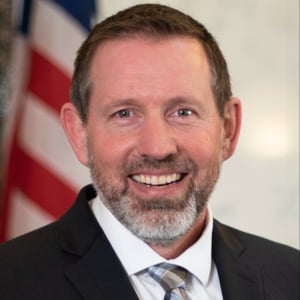
Judge, United States Court of Appeals, Ninth Circuit
Lawrence VanDyke serves as a circuit judge on the U.S. Court of Appeals for the Ninth Circuit. Prior to that appointment in January 2020, he served as a Deputy Assistant Attorney General in the Environment and Natural Resources Division of the United States Department of Justice. Before that, he served consecutively as the Solicitor General of two western states – Nevada and Montana. At the beginning of his legal career, he worked as an attorney in the Appellate and Constitutional Issues practice group at Gibson Dunn & Crutcher, LLP.
Judge VanDyke received his law degree magna cum laude from Harvard Law School, where he was an editor on the Harvard Law Review. He has engineering and theology undergraduate degrees and a masters degree in engineering management. He served as a law clerk to the Honorable Janice Rogers Brown of the United States Court of Appeals for the District of Columbia Circuit. Judge VanDyke and his wife Cheryl live in Reno, Nevada, and they have three children.
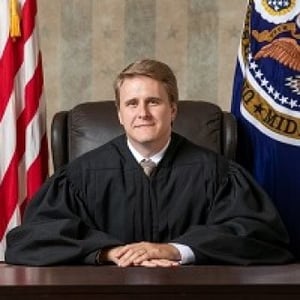
Judge, United States Court of Appeals for the Eleventh Circuit
Andrew Brasher served as a United States District Judge for the Middle District of Alabama. Before taking the bench in May 2019, Judge Brasher was the Solicitor General of the State of Alabama, where he argued cases before the United States Supreme Court, the United States Court of Appeals for the Eleventh Circuit, and the Alabama Supreme Court. He previously served for several years as the Deputy Solicitor General and practiced in the litigation and white-collar criminal defense practice groups in the Birmingham, Alabama office of Bradley Arant Boult Cummings LLP. Upon graduation from law school, Judge Brasher served as a law clerk to Judge William H. Pryor Jr. of the United States Court of Appeals for the Eleventh Circuit. Judge Brasher earned his B.A., summa cum laude, from Samford University and his J.D., cum laude, from Harvard Law School, where he was a member of the Harvard Law Review.
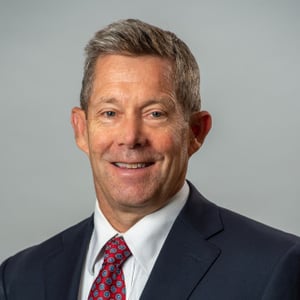
Chief Judge, United States Court of Appeals, Sixth Circuit
JEFFREY S. SUTTON is the Chief Judge of the United States Court of Appeals for the Sixth Circuit. He has served as Chair of the Federal Judicial Conference Committee on Rules of Practice and Procedure, Chair of the Advisory Committee on Appellate Rules, and Chair of the Supreme Court Fellows Commission. He currently serves as Chair of the Executive Committee of the Judicial Conference of the United States. Since 1993, Chief Judge Sutton has been an adjunct professor at The Ohio State University College of Law, where he teaches seminars on State Constitutional Law, the United States Supreme Court, and Appellate Advocacy. He also teaches a class on State Constitutional Law at Harvard Law School. Among other publications, he is the author of Who Decides? States as Laboratories of Constitutional Experimentation and 51 Imperfect Solutions: States and the Making of American Constitutional Law. He is the co-author of a casebook, State Constitutional Law: The Modern Experience, as well as The Law of Judicial Precedent. He is also the co-editor of The Essential Scalia: On the Constitution, the Courts, and the Rule of Law. In 2006, Chief Judge Sutton was elected to the American Law Institute, and in 2017 he was elected to its Council.
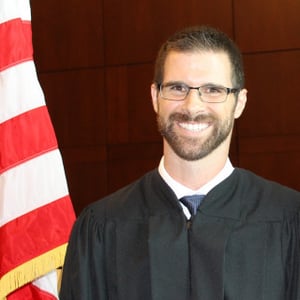
Judge, U.S. District Court, Eastern and Western Districts of Missouri
Josh Divine was most recently the Solicitor General of Missouri, where he oversaw the office's appellate and special litigation divisions. As Solicitor General, Mr. Divine led Missouri's trial and appellate teams to some of its most significant victories. Mr. Divine was lead counsel in blocking $700 billion in student loan bailouts attempted by the federal government. He was lead counsel in obtaining a $25 billion judgment against China for antitrust violations. And he was lead counsel in successfully defending the Missouri law that prohibits gender transition interventions in minors, making Missouri the only state in the nation to prevail at trial against an equal protection challenge to one of these laws. In addition, Mr. Divine's work at the trial court in Missouri v. Biden (restyled Murthy v. Missouri) helped expose systemic violations of the First Amendment by the federal government, which the trial court found was unconstitutionally pressuring social media companies to suppress millions of free speech posts.
Before serving as Solicitor General, Mr. Divine was Chief Counsel to U.S. Senator Josh Hawley, where he oversaw all legal issues, managed matters related to the Judiciary Committee, and developed tech policy. Mr. Divine clerked on the Supreme Court for Justice Thomas and on the Eleventh Circuit for Judge William Pryor. He received a J.D. from Yale Law School and a Bachelor of Science degree in mathematics from the University of Northern Colorado. His recent legal scholarship has appeared in the Virginia Law Review and the Hastings Law Journal.
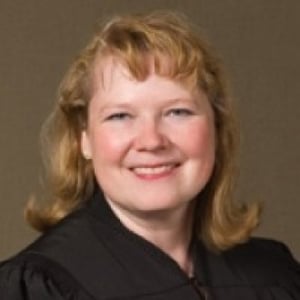
U.S. Court of Appeals, 10th Circuit
Allison Hartwell Eid is a judge on the United States Court of Appeals for the 10th Circuit. She joined the court in 2017 after a nomination from President Donald Trump.
Prior to her service on the Tenth Circuit, Judge Eid was a justice on the Colorado Supreme Court. She was the 95th justice to serve on the court, serving from 2006 to 2017. Before joining the Court, Judge Eid was the Solicitor General of the State of Colorado, serving as the chief legal officer to the Colorado Attorney General and representing Colorado officials and agencies in state and federal court. She was also a tenured Associate Professor of Law at the University of Colorado School of Law, teaching Constitutional Law, Legislation, and Torts, and writing on the topic of constitutional federalism.
Prior to joining the faculty of the University of Colorado School of Law, Judge Eid practiced commercial and appellate litigation with the Denver office of the national law firm of Arnold & Porter. She clerked for the Honorable Clarence Thomas, Associate Justice of the United States Supreme Court, and for Judge Jerry E. Smith of the United States Court of Appeals for the Fifth Circuit in Houston, Texas.
Judge Eid earned her bachelor’s degree in American Studies (With Distinction and Phi Beta Kappa) from Stanford University in 1987. She then served as a Special Assistant and Speechwriter to U.S. Secretary of Education William J. Bennett. In 1991, she graduated with High Honors from The University of Chicago Law School, where she was Articles Editor of The University of Chicago Law Review and was elected to the Order of the Coif. In 2002, President George W. Bush appointed her to serve on the Permanent Committee for the Oliver Wendell Holmes Devise, established by Congress in 1955 to prepare the history of the U.S. Supreme Court. She is a member of the American Law Institute and studied comparative law in London as a Temple Bar Scholar.
Judge Eid grew up in Spokane, Washington. She and her husband Troy, an attorney, have two children.
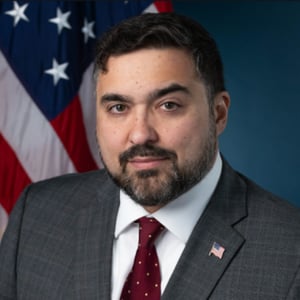
United States Attorney, Southern District of Texas
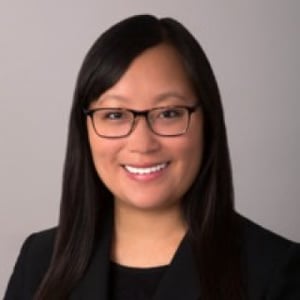
Director, Senior Mountain Resorts Counsel, Vail Resorts
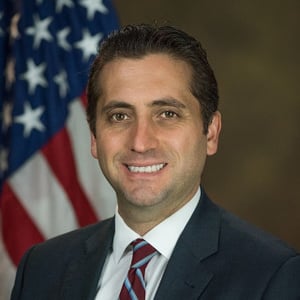
Judge, United States District Court, Southern District of New York

Judge, United States Court of Appeals, Sixth Circuit
Judge Readler earned his undergraduate and law degrees from the University of Michigan. After graduating, he served as a law clerk to Judge Alan Norris of the United States Court of Appeals for the Sixth Circuit. Judge Readler then began practicing law in the Columbus office of the international law firm Jones Day, eventually spending ten years as a partner in the firm’s Issues and Appeals Practice Group. While at Jones Day, Judge Readler appeared in state and federal trial and appellate courts around the country, most frequently the Supreme Court of Ohio and the Sixth Circuit. Judge Readler also successfully argued before the United States Supreme Court in McQuiggin v. Perkins on behalf of an inmate claiming actual innocence. His other pro bono representations include representing capital defendants before the Tenth Circuit and the Supreme Court of Ohio, as well as representing defendants sentenced to life in prison before the Sixth Circuit. While at Jones Day, Judge Readler traveled to Nairobi with Lawyers Without Borders to train Kenyan lawyers in prosecuting domestic violence cases, and he was also a recipient of the American Marshall Memorial Fellowship awarded by the German Marshall Fund of the United States. Following his career in private practice, Judge Readler served as Acting Assistant Attorney General for the Civil Division of the United States Department of Justice from 2017 to 2019. In that role, Judge Readler led and supervised over 1,000 lawyers in the Department’s largest litigating division, briefing and arguing several cases on behalf of the United States in federal courts across the country, including high-profile cases significant to the Administration and the Department. In March 2019, Judge Readler was confirmed to serve as a Circuit Judge on the Sixth Circuit. He resides in Columbus.
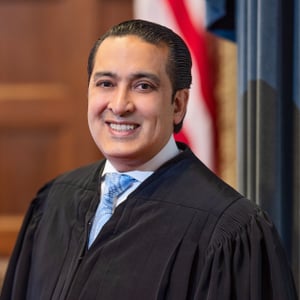
Judge, United States Court of Appeals, Sixth Circuit
John B. Nalbandian serves as a United States Circuit Judge from Kentucky on the U.S. Court of Appeals for the Sixth Circuit. He was nominated and confirmed to that position in 2018. Prior to that, Judge Nalbandian was a partner in the litigation practice group of Taft Stettinius & Hollister LLP in Cincinnati, where he served as the firm’s lead appellate lawyer and also practiced complex litigation in state and federal courts. Judge Nalbandian was board certified by the Ohio State Bar Association as a specialist in appellate law. Prior to joining Taft, Judge Nalbandian practiced for five years in the appellate section of Jones Day in Washington, DC. Upon graduation from law school, Judge Nalbandian clerked for the Honorable Jerry E. Smith of the U.S. Court of Appeals for the Fifth Circuit in Houston. While in private practice, he also served as a board member of the State Justice Institute, a nonprofit organization established by the federal government to improve the administration of justice in state courts. He served as President of the Cincinnati Lawyers Chapter of the Federalist Society. He has also been involved in his community as a board member of the Greater Cincinnati Minority Counsel Program, and as a board member of the Asian Pacific Bar Association of Southwest Ohio. Judge Nalbandian earned his B.S., magna cum laude, from the Wharton School at the University of Pennsylvania and his J.D. from the University of Virginia School of Law, where he was inducted into the Order of the Coif and served as managing editor of the Virginia Law Review.
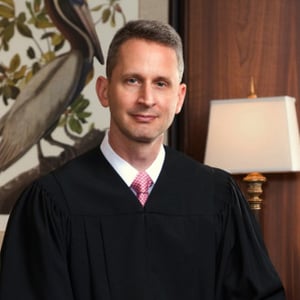
Judge, United States Court of Appeals, Fifth Circuit
Judge Duncan received his B.A. from Louisiana State University in 1994, his J.D. from the Paul M. Hebert Law Center at Louisiana State University in 1997, and his LL.M. from Columbia Law School in 2004.
After graduating from law school, he clerked for Louisiana-based Circuit Judge John Malcolm Duhé Jr. of the United States Court of Appeals for the Fifth Circuit.
From 2008–2012, Duncan served as Appellate Chief for Louisiana's Attorney General's office. From 2012–2014, he served as general counsel of the Becket Fund for Religious Liberty. From 2004-2008, he was an assistant professor of law at the University of Mississippi School of Law.
Before becoming a judge, Duncan practiced at the Washington, D.C. firm of Schaerr Duncan LLP, where he was a founding partner. He was appointed by President Trump to the United States Court of Appeals for the Fifth Circuit on May 1, 2018.
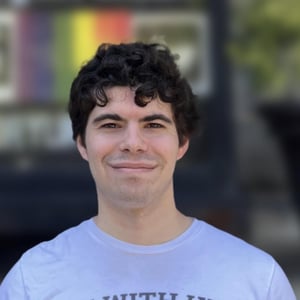
Reporter, Washington Free Beacon
Aaron Sibarium is a reporter at the Washington Free Beacon where he covers law, education, and institutional capture. He has broken stories on corporate race discrimination, the race-based allocation of COVID drugs, the American Academy of Pediatrics, Princeton University, and Yale Law School. Aaron previously worked as an editor at the American Interest and earned a B.A. in Ethics, Politics, and Economics, magna cum laude, from Yale University.

Data, Supreme Court, and the 2023 Term
Los Angeles Lawyers Chapter
Los Angeles, CA2024 Education Law & Policy Conference
A New Civil Rights Movement in Education?
Washington, DCA Conversation with Judge Lawrence VanDyke
San Francisco Lawyers Chapter
San Francisco, CAOpening Remarks
2024 Alabama Chapters Conference
Homewood, ALThe Role of Federal Agencies and State Courts in American Law Circa 2024
Sacramento Lawyers Chapter
Sacramento, CASupreme Court Roundup: The 2024 Term in Review
Colorado Lawyers Chapter
Denver, COTopics
How President Biden Is Impacting the Judiciary Despite a Changed Appointment Process
Appointments to the federal bench are among a president’s most profound long-term legacies. Judges serve...
Public Service and the Department of Justice
New York City Young Lawyers Chapter
New York, NYArtificial Intelligence and the Future of Judging
DC Young Lawyers Chapter
Washington, DCColumbia and Penn Summer Alumni Reception
Washington, DC