
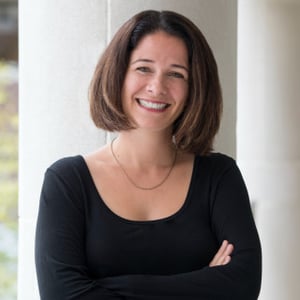
Anne Shea Ransdell and William Garland "Buck" Ransdell, Jr. Distinguished Professor of Law, University of North Carolina School of Law
Carissa Byrne Hessick joined the Carolina Law faculty in 2016. She serves as the Anne Shea Ransdell and William Garland “Buck” Ransdell, Jr. Distinguished Professor of Law and as the director of the Prosecutors and Politics Project. Her teaching and research interests include criminal law, the structure of the criminal justice system, criminal sentencing, and child pornography crimes. Hessick is the author of multiple law review articles, essays, and op eds on plea bargaining, the powers and selection of prosecutors, Sixth Amendment sentencing rights, and criminal statutes. Her work has appeared in the California Law Review, the Cornell Law Review, the L.A. Times, the UCLA Law Review, and the Virginia Law Review, among others. She founded the Prosecutors and Politics Project in 2018. And she currently serves as the Reporter for the ABA Criminal Justice Section’s Sentencing Standards Task Force.
Hessick attended Yale Law School, where she was an editor of the Yale Law Journal and winner of the Potter Stewart Prize for the Morris Tyler Moot Court of Appeals. After graduating from law school, she clerked for Judge Barbara S. Jones on the Southern District of New York and for Judge A. Raymond Randolph on the D.C. Circuit. She also worked as a litigation associate at Wachtell, Lipton, Rosen & Katz in New York City. Before joining the faculty at Carolina Law, Hessick taught on the faculties at Arizona State University’s Sandra Day O’Connor College of Law and the University of Utah’s S.J. Quinney College of Law. She also spent two years as a Climenko Fellow at Harvard Law School.
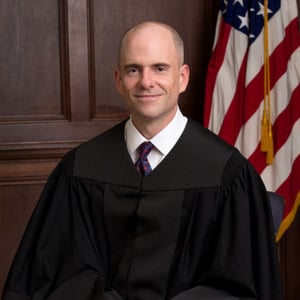
Judge, United States Court of Appeals, Eleventh Circuit
Judge Kevin C. Newsom is a member of the United States Court of Appeals for the Eleventh Circuit. He sits in Birmingham, Alabama.
Before his appointment to the bench, Judge Newsom was the head of the appellate practice group at Bradley Arant Boult Cummings LLP and, before that, the Solicitor General of Alabama. As a practicing lawyer, Judge Newsom argued four cases in the Supreme Court of the United States, and nearly 40 more in the United States Courts of Appeals and state supreme and appellate courts.
Judge Newsom graduated summa cum laude from Samford University and magna cum laude from Harvard Law School, where he was an articles editor on the Harvard Law Review. Following law school, Judge Newsom clerked for Judge Diarmuid F. O’Scannlain of the United States Court of Appeals for the Ninth Circuit and Justice David H. Souter of the Supreme Court of the United States.
Judge Newsom teaches at Harvard Law School, Yale Law School, Stanford Law School, and the University of Chicago Law School. His published work has appeared in the Yale Law Journal and the Harvard Law Review.
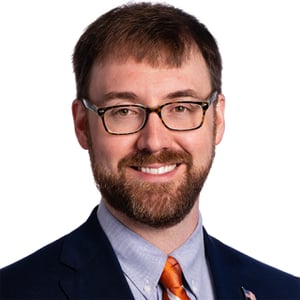
Senior Legal Fellow, Courts and the Constitution, Legal Policy Center, The Heritage Foundation
Zack is a Senior Legal Fellow of Courts and the Constitution at The Heritage Foundation.
He previously served for several years as an Assistant United States Attorney in the Northern District of Florida. Prior to that, he spent two years as an associate in the Washington, D.C. office of Cleary Gottlieb Steen & Hamilton, which he joined after clerking for the Hon. Emmett R. Cox on the United States Court of Appeals for the Eleventh Circuit.
Smith received his undergraduate, master’s, and law degrees from the University of Florida. During law school, Smith served as the Editor in Chief of the Florida Law Review and served on the executive boards of several student organizations, including the UF Chapter of the Federalist Society.
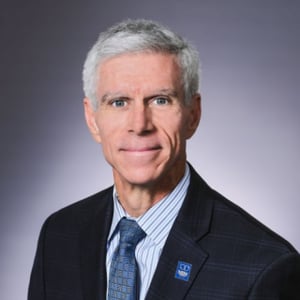
Professor of Law and Former President and Dean, South Texas College of Law Houston
Michael F. Barry was the 11th president and dean of Houston’s oldest law school, South Texas College of Law Houston.
For more than two decades, he has provided confident leadership, innovative strategies, actionable recommendations, and practical management to Fortune 200 clients, in higher education, and in community service.
Barry joined South Texas in fall 2019 after serving as assistant dean and practitioner in residence at St. Mary’s University School of Law in San Antonio, Texas. Among his responsibilities were developing new programs; increasing outreach to partners, donors, employers, and alumni; supporting and fundraising for initiatives that benefited St. Mary’s University and its students and alumni; managing law school operations to support faculty and student needs; and developing and teaching courses and extracurricular programs. Bringing business acumen, budgeting, change management, and leadership skills from his years in legal practice and in business, Barry initially designed St. Mary’s University School of Law’s comprehensive Law Success academic support program, became a leader in using data to support student success, and directed operations and budget for the School of Law. An engaged teacher, Barry excels at bringing real-world experiences into the legal classroom.
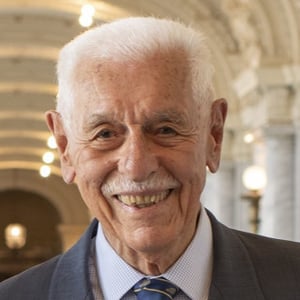
Judge, United States Court of Appeals, Ninth Circuit
Judge Carlos Bea serves as a judge on the United States Court of Appeals for the Ninth Circuit. He received his Bachelor's Degree from Stanford University in 1956 and his J.D. from Stanford Law School in 1958. Judge Bea was born in San Sebastian, Spain, and immigrated with his family to Cuba in 1939. In 1952, he represented Cuba on the Cuban National basketball team in the Helsinki Olympics. Judge Bea became a naturalized citizen of the United States in 1958. He engaged in private practice in San Francisco, principally in the area of civil trials (jury and non-jury), from 1959-75 at Dunne, Phelps & Mills and from 1975-90 at Carlos Bea, A Law Corporation. He taught courses in civil litigation advocacy at Hastings College of Law and Stanford Law School. From 1990 to 2003, Judge Bea served as a judge of the San Francisco Superior Court. He was nominated by President George W. Bush to the United States Court of Appeals for the Ninth Circuit and was confirmed in 2003.
Judge Bea and his wife Louise reside in San Francisco, where they raised their four sons, Sebastian, Alexander, Nicholas, and Dominic.
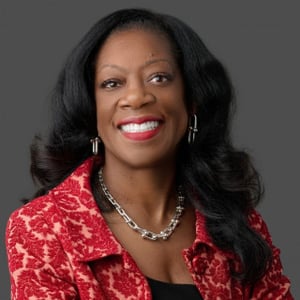
Dean and Harold H. Greene Professor of Law, George Washington University
Dean Matthew joined GW Law in August 2020, to become the first woman to lead the law school as dean in the school’s 158-year history.
Prior to her tenure at UVA, she served as professor of law, vice dean and associate dean of academic affairs at the University of Colorado Law School, where she co-founded and directed The Colorado Health Equity Project, an incubator for medical-legal partnerships that removed legal barriers to good health for underrepresented patients.
Dean Matthew has once again founded her third research organization – a new research institute at GW. She is the founder and inaugural faculty director of GW’s newly chartered Equity Institute, an interdisciplinary research hub dedicated to addressing racial, ethnic, and socioeconomic injustice in the United States and globally.
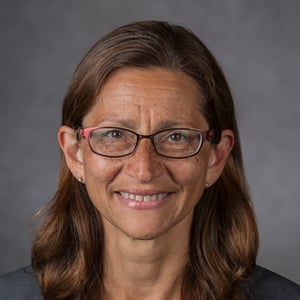
Managing Director, Accreditation and Legal Education, ABA
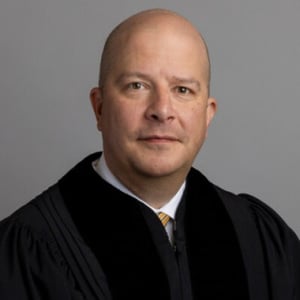
Chief Justice, Supreme Court of Georgia
Chief Justice Nels Peterson was appointed to the Georgia Supreme Court in 2016, and was elected to full six-year terms in 2018 and 2024. He previously served in a variety of other roles in Georgia state government, including as judge on the Georgia Court of Appeals, general counsel for the University System of Georgia, Georgia’s first solicitor general in the Attorney General’s Office, and executive counsel to the Governor.
Before entering state government, Nels practiced at King & Spalding LLP in Atlanta and clerked for Chief Judge William H. Pryor Jr. of the United States Court of Appeals for the Eleventh Circuit. He is a graduate of Kennesaw State University and Harvard Law School. Nels and his wife Jennifer have two children and live in Cobb County, where they teach adult Sunday school at Johnson Ferry Baptist Church.
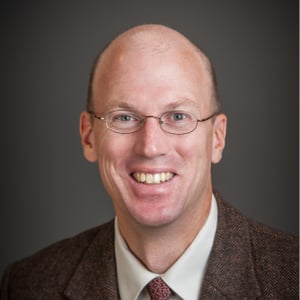
Professor of Law, Villanova University
Todd Aagaard joined the Villanova Law School faculty in 2008. He served as vice dean of the Law School from 2015 to 2019. His scholarship focuses on environmental law, energy law, and administrative law. His publications include Energy-Environment Policy Alignments, 90 Wash. L. Rev. 1517 (2015); Environmental Law Outside the Canon, 89 Ind. L.J. 1239 (2014); Environmental Harms, Use Conflicts, and Neutral Baselines in Environmental Law, 60 Duke L.J. 1505 (2011); Environmental Law as a Legal Field: An Inquiry in Legal Taxonomy, 95 Cornell L. Rev. 221 (2010); and Factual Premises of Statutory Interpretation in Agency Review Cases, 77 Geo. Wash. L. Rev. (2009). In addition, he is a co-author of Practicing Environmental Law, a practice-based environmental law casebook published in 2017 by Foundation Press.
Aagaard received his BA with honors from Pomona College, his MS from the University of Michigan School of Natural Resources and the Environment, and his JD magna cum laude from the University of Michigan Law School. While at Michigan, he was the editor-in-chief of the Michigan Law Review and an executive editor of the Michigan Journal of Race & Law. Following completion of his JD and MS degrees, he clerked for Second Circuit Judge Guido Calabresi, before joining the Environment and Natural Resources Division of the U.S. Department of Justice as an attorney in the Appellate Section. At the Justice Department, he briefed and argued civil and criminal cases in federal courts of appeals in the areas of environmental law, natural resources law, Indian law and administrative law.

Judge, United States Court of Appeals, Third Circuit
Judge Hardiman was appointed to the United States Court of Appeals for the Third Circuit on January 9, 2007 and was confirmed by the Senate (95-0) on March 15, 2007. Prior to becoming an appellate judge, Judge Hardiman served as a trial judge on the United States District Court for the Western District of Pennsylvania as of November 1, 2003. In 2008, Chief Justice John Roberts appointed Judge Hardiman to the Information Technology Committee of the Judicial Conference of the United States. Judge Hardiman was appointed Chairman of the IT Committee in 2013 and served in that capacity until September 2021. In 2021 he was appointed by the Director of the Administrative Office of the United States Courts to serve as Chair of the Judiciary IT Security Task Force, which completed its work in fall 2023. Chief Justice Roberts appointed Judge Hardiman to the Board of the Federal Judicial Center to serve from March 2020 until March 2024. As part of his work with the Center, Judge Hardiman now serves as Editor in Chief for the Manual for Complex Civil Litigation, Fifth.
Before entering judicial service, Judge Hardiman handled a wide variety of litigation matters in state and federal trial and appellate courts as a partner at Reed Smith LLP (1999-2003), a partner at Titus & McConomy LLP (1996-1999), and as an associate with its predecessor firm, Cindrich & Titus (1992-1996). Judge Hardiman began his legal career as an associate in the Washington, D.C. office of Skadden, Arps, Slate, Meagher & Flom (1990-1992).
A 1987 honors graduate of the University of Notre Dame, Judge Hardiman received his law degree in 1990 from the Georgetown University Law Center, where he served as a Notes and Comments Editor on the Georgetown Law Journal. In 2012, Judge Hardiman was elected as a member of the American Law Institute and was elected to its Council in 2019 and its Executive Committee in 2025. Judge Hardiman regularly teaches a seminar on Advanced Constitutional Law at Duquesne University School of Law and a one-week course entitled “Constitutional Law: the First and Second Amendments” at Georgetown University Law Center.
A native of Waltham, Massachusetts, Judge Hardiman has chambers in Pittsburgh, Pennsylvania. He and his wife Lori married in 1992 and have three children.
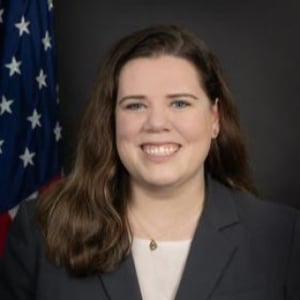
Commissioner, Federal Energy Regulatory Commission
Lindsay S. See joined the Federal Energy Regulatory Commission as a Commissioner in June 2024. Before her current role, Commissioner See served as the Solicitor General of West Virginia, where she managed appellate and high-stakes litigation for the State. With a particular focus on energy and administrative law, her work included leading multi-state and multi-interest coalitions on a variety of national issues. She argued twice before the U.S. Supreme Court, filed multi-state comments in dozens of agency rulemakings, and routinely appeared before the Supreme Court of Appeals of West Virginia and the federal courts of appeals.
Commissioner See previously practiced appellate and administrative law for several years with Gibson, Dunn & Crutcher in Washington, D.C. She graduated magna cum laude from Harvard Law School and clerked for the Hon. Thomas B. Griffith on the U.S. Court of Appeals for the D.C. Circuit. Originally from Michigan, See now considers herself both a proud Michigander and Mountaineer.
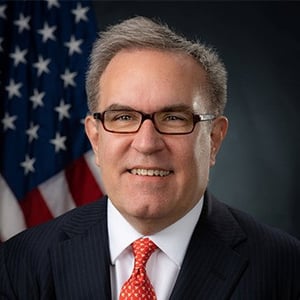
Holland & Hart, Partner
On February 28, 2019, the U.S. Senate confirmed Andrew Wheeler as the fifteenth Administrator of the Environmental Protection Agency. President Donald J. Trump had announced his appointment as the Acting EPA Administrator on July 5, 2018. Mr. Wheeler had previously been confirmed by the U.S. Senate as the EPA Deputy Administrator on April 12, 2018.
Mr. Wheeler has dedicated his career to advancing sound environmental policies. He began his career during the George H. W. Bush Administration as a Special Assistant in EPA’s Pollution Prevention and Toxics office.
He was a Principal and the team leader of the Energy and Environment Practice Group at FaegreBD Consulting, as well as Counsel at Faegre Baker Daniels law firm, where he practiced since 2009. He also served as the Co-chair of the Energy and Natural Resources Industry team across the entire firm.
Prior to his work with the firm, Mr. Wheeler served for six years as the Majority Staff Director and Chief Counsel, as well as the Minority Staff Director, of the Senate Committee on Environment and Public Works. Before his time at the full Senate EPW Committee, Mr. Wheeler served in a similar capacity for six years for the Subcommittee on Clean Air, Climate Change, Wetlands and Nuclear Safety.
Mr. Wheeler is the past Chairman of the National Energy Resource Organization (NERO) and a Stennis Fellow. Mr. Wheeler is also an Eagle Scout.
Mr. Wheeler is from Fairfield, Ohio. He completed his law degree at Washington University in St. Louis, his MBA at George Mason University, and his undergraduate work at Case Western Reserve University in English and Biology.
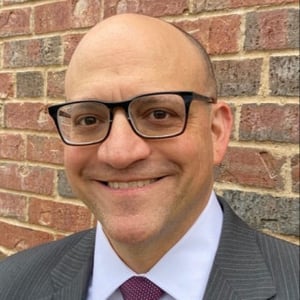
Executive Director & Secretary, American Civil Rights Project
Dan Morenoff is the executive director at the American Civil Rights Project and an adjunct fellow at the Manhattan Institute.
His work focuses on protecting and, where necessary, restoring the primacy of all Americans' shared civil rights against the identitarian alternative.
Before practicing law, Morenoff served on the legislative staff of Sen. Phil Gramm (R-TX). Morenoff holds a B.A. from Columbia College of Columbia University in the City of New York and a J.D. from the University of Chicago Law School. He has also served as an officer or director of several community organizations in Dallas, Texas.
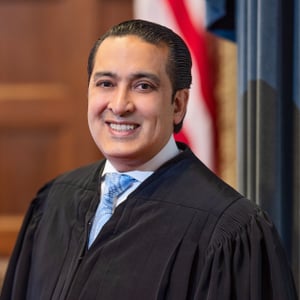
Judge, United States Court of Appeals, Sixth Circuit
John B. Nalbandian serves as a United States Circuit Judge from Kentucky on the U.S. Court of Appeals for the Sixth Circuit. He was nominated and confirmed to that position in 2018. Prior to that, Judge Nalbandian was a partner in the litigation practice group of Taft Stettinius & Hollister LLP in Cincinnati, where he served as the firm’s lead appellate lawyer and also practiced complex litigation in state and federal courts. Judge Nalbandian was board certified by the Ohio State Bar Association as a specialist in appellate law. Prior to joining Taft, Judge Nalbandian practiced for five years in the appellate section of Jones Day in Washington, DC. Upon graduation from law school, Judge Nalbandian clerked for the Honorable Jerry E. Smith of the U.S. Court of Appeals for the Fifth Circuit in Houston. While in private practice, he also served as a board member of the State Justice Institute, a nonprofit organization established by the federal government to improve the administration of justice in state courts. He served as President of the Cincinnati Lawyers Chapter of the Federalist Society. He has also been involved in his community as a board member of the Greater Cincinnati Minority Counsel Program, and as a board member of the Asian Pacific Bar Association of Southwest Ohio. Judge Nalbandian earned his B.S., magna cum laude, from the Wharton School at the University of Pennsylvania and his J.D. from the University of Virginia School of Law, where he was inducted into the Order of the Coif and served as managing editor of the Virginia Law Review.
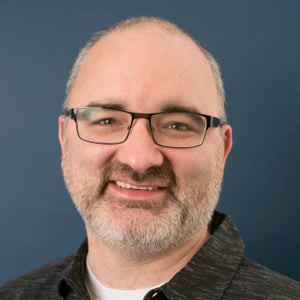
Director of Equality and Opportunity Litigation, Pacific Legal Foundation
Joshua directs the litigation for PLF’s Equality and Opportunity Program, where he fights to dismantle unconstitutional barriers to opportunity, freeing individuals to rise based on their choices, character, and ability.
Joshua joined PLF as an attorney in 2007. His litigation practice has covered all PLF subject areas with a particular focus on equality and opportunity. Joshua argued PLF’s 13th case before the United States Supreme Court, Cedar Point Nursery v. Hassid, where the court ruled that a California regulation that allowed union organizers onto private property violated the Fifth Amendment’s Takings Clause. Other litigation highlights of his include ending a decades-long racial quota in Hartford, Connecticut, lifting a ban on boys’ dancing in Minnesota, and vindicating an entrepreneur’s right to start a moving business in Kentucky.
Joshua’s writings have been published by the USA Today, Wall Street Journal, and Washington Post. And his research has been published in journals such as Texas Review of Law & Politics, Alabama Civil Rights & Civil Liberties Law Review, Journal of Civil Rights & Economic Development, and Northern Illinois University Law Review. He has appeared on national television and radio, including PBS Newshour, NPR’s All things Considered, Stossel, and Univision.
Joshua earned his BA with distinction from the University of Wisconsin-Madison with a triple major in political science, international relations, and German. He earned his JD cum laude from Michigan State College of Law where he was on the law review and trial practice institute. Joshua lives in Sacramento, California with his wife and three children. He loves playing chess and rooting for Wisconsin sports teams.
Joshua is a member of the bar only in the state of California.
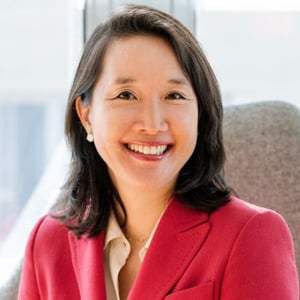
Adjunct Professor of Law, New York University School of Law
Jenny R. Yang served in the White House, Domestic Policy Council as a Deputy Assistant to the President for Racial Justice and Equity until March 2024. From the first day of the Biden-Harris Administration until March 2023, she served as the Director of the Office of Federal Contracts Compliance Programs at the U.S. Department of Labor. Before that she served on the Biden-Harris Labor Transition Team. Ms. Yang served as Chair, Vice-Chair, and Commissioner of the U.S. Equal Employment Opportunity Commission from 2013 to 2018.
Ms. Yang is currently teaching Employment Law at New York University School of Law. She previously served as a Senior Fellow at the Urban Institute and a consultant with Working Ideal from 2019-2020. She spent a decade representing workers in complex nationwide employment discrimination and wage and hour actions as a partner and Chair of the Diversity Committee at Cohen Milstein. Before that, she served as a Senior Trial Attorney with the U.S. Department of
Justice, Civil Rights Division, Employment Litigation Section. She began her career at the National Employment Law Project protecting the rights of garment workers. Prior to that she clerked for Judge Edmund Ludwig of the U.S. District Court for the Eastern District of Pennsylvania. Ms. Yang served a co-chair of the first national board of the National Asian Pacific American Women’s Forum. A graduate of Cornell University, she earned a B.A. in Government. She earned a J.D. from NYU School of Law where she was a Root-Tilden Public Interest scholar and served as Notes Editor of the Law Review.
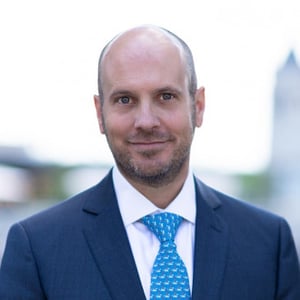
Executive Vice President, General Counsel & Chief Operations Officer, Bank Policy Institute
John Court is Executive Vice President, General Counsel and Chief Operations Officer at the Bank Policy Institute, where he manages the Regulatory Affairs Department and is responsible for overseeing all of BPI’s legal and regulatory advocacy initiatives.
Previously, Mr. Court served as Managing Director and Deputy General Counsel for The Clearing House Association, a predecessor organization to BPI. Prior to joining The Clearing House in 2012, Mr. Court spent 10 years in private practice advising clients on various financial regulatory and enforcement matters, most recently as a member of the Financial Institutions Regulatory and Enforcement group at Skadden, Arps, Slate, Meagher & Flom LLP. Mr. Court holds a B.A. from Cornell University and J.D. from George Washington University School of Law. Since 2015, he has served as co-chair of the Legislation & Regulation Subcommittee of the American Bar Association’s Banking Law Committee.
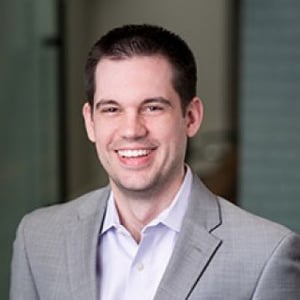
Executive Director, Consumers’ Research
Will Hild is the Executive Director of Consumers’ Research. Will has a decade of non-profit, legal and public policy experience. Prior to joining CR, Will served as the Deputy Director of the Regulatory Transparency Project. Before that, he worked at the Philanthropy Roundtable as the Director of External Affairs for the Culture of Freedom Initiative, and as the Chief Operating Officer of that Initiative when it grew to become a separate organization. He helped co-found the public interest law firm, Cause of Action, and served as the firm’s acting communications director for nearly a year.
Will received his J.D. from Georgetown University Law Center, and a B.A. in Political Science from the University of Florida. He is licensed to practice law in the Commonwealth of Virginia.
Will resides in Bethesda, MD, with his wife Cheryl, a practicing OB/GYN, and their son Liam.
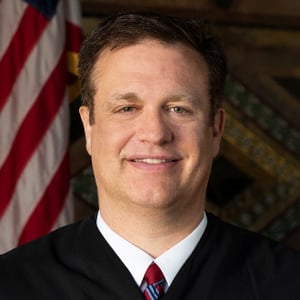
Judge, United States Court of Appeals, Ninth Circuit
Judge Nelson was confirmed to the Ninth Circuit in October 2018, as the youngest Circuit Judge to serve from Idaho and he has chambers in his hometown of Idaho Falls. Prior to his confirmation, Judge Nelson served for nine years as General Counsel of Idaho Falls-based Melaleuca, Inc., a consumer goods company. He previously worked in Washington, DC, where he served in all three branches of the federal government, including as Special Counsel for Supreme Court nominations to the Ranking Member of the Senate Judiciary Committee; Deputy General Counsel to the White House Office of Management and Budget; Deputy Assistant Attorney General in the Environment and Natural Resources Division of the United States Department of Justice; and a law clerk to Judge Henderson of the United States Court of Appeals for the D.C. Circuit. He has argued in most of the federal courts of appeals and worked on dozens of Supreme Court briefs. He started in the Washington, DC office of Sidley Austin as an appellate lawyer, after clerking for Judges Mosk and Brower of the Iran-U.S. Claims Tribunal at The Hague, and for now-Judge Tom Griffith, then-Senate Legal Counsel, during the impeachment trial of President Clinton. Judge Nelson earned his B.A. from Brigham Young University and his J.D., with honors, from BYU Law School. Judge Nelson has been a member of the Federalist Society since 1998.
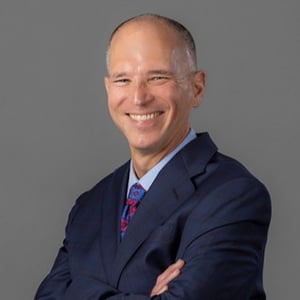
George Mason University Foundation Professor of Law, Antonin Scalia Law School, George Mason University
TODD J. ZYWICKI is George Mason University Foundation Professor of Law at Antonin Scalia Law School at George Mason University and Research Fellow of the George Mason Law and Economics Center. During the Fall 2023 semester he served as the Visiting Scholar in Conservative Thought and Policy for the Bruce Benson Center for the Study of Western Civilization at the University of Colorado-Boulder. From 2020-2021 he was Chair of the Consumer Financial Protection Bureau Taskforce on Federal Consumer Financial Law. In 2021 he was inducted to the American College of Consumer Financial Services Lawyers. He is also a Senior Fellow of the F.A. Hayek Program for the Advanced Study of Politics, Philosophy, and Economics at George Mason University and a former Senior Fellow of the Cato Institute. From 2015-2017 he was Executive Director of the George Mason Law and Economics Center. He served as Co-Editor of the Supreme Court Economic Review from 2006-2017. From 2003-2004, Professor Zywicki served as the Director of the Office of Policy Planning at the Federal Trade Commission. He has also taught at Vanderbilt University Law School, Georgetown University Law Center, Boston College Law School, Mississippi College School of Law, and China University of Political Science and Law.
Professor Zywicki clerked for Judge Jerry E. Smith of the U.S. Court of Appeals for the Fifth Circuit and worked as an associate at Alston & Bird in Atlanta, Georgia, where he practiced bankruptcy and commercial law. He received his J.D. from the University of Virginia, where he was executive editor of the Virginia Tax Review and John M. Olin Scholar in Law and Economics. Professor Zywicki also received an M.A. in Economics from Clemson University and an A.B. cum Laude with high honors in his major from Dartmouth College.
Professor Zywicki is also a Lone Mountain Fellow of the Property and Environment Research Center, a Fellow of the International Centre for Economic Research in Turin, Italy, and a former Senior Fellow of the Goldwater Institute. During the Fall 2008 Semester Professor Zywicki was the Searle Fellow of the George Mason University School of Law and was a 2008-09 W. Glenn Campbell and Rita Ricardo-Campbell National Fellow and the Arch W. Shaw National Fellow at the Hoover Institution on War, Revolution and Peace. He has lectured and consulted with government officials around the world, including Iceland, Italy, Japan, and Guatemala. In 2006 Professor Zywicki served as a Member of the United States Department of Justice Study Group on “Identifying Fraud, Abuse and Errors in the United States Bankruptcy System.”
Professor Zywicki is the author of more than 130 articles in leading law reviews and peer-reviewed economics journals. He is one of the Top 10 most-cited law professors in the field of Commercial Law and one of the Top 25 law professors on Twitter as measured by engagement levels. He is one of the Top 50 Most Downloaded Law Authors at the Social Science Research Network. He has testified multiple times before Congress on issues of consumer bankruptcy law and consumer credit and is a frequent commentator on legal issues in the print and broadcast media, including the Wall Street Journal, New York Times, The Washington Post, The Washington Times, Nightline, The Newshour with Jim Lehrer, Neil Cavuto Show, Fox & Friends, Smerconish, Fox News @ Night with Shannon Bream, Fox Business, CNN, CNBC, Bloomberg News, BBC, The Diane Rehm Show, Lou Dobbs Show, Jerry Doyle Show, and The Laura Ingraham Show.
Professor Zywicki is former Chairman and a current member of the Board of Directors of the Competitive Enterprise Institute, and is a member of the Board of Directors of the Institute for Humane Studies, Bill of Rights Institute, the Executive Committee for the Federalist Society's Financial Institutions and E-Commerce Practice Group, the Board of Trustees of the Foundation for Research on Economics and the Environment. He formerly served on the Governing Board and the Advisory Council for the Financial Services Research Program at George Washington University School of Business. He is currently the Chair of the Academic Advisory Council for the following organizations: The Bill of Rights Institute, the film “We the People in IMAX,” and the McCormick-Tribune Foundation “Freedom Museum” in Chicago, Illinois. He is a member of the Board of Visitors of Ralston College and was a member of the Board of Trustees of Yorktown University. From 2005-2009 he served as an elected Alumni Trustee of the Dartmouth College Board of Trustees.
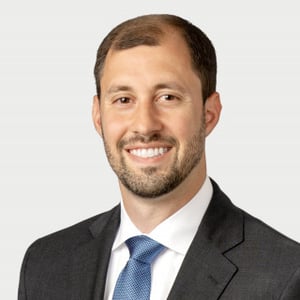
Partner, Gibson, Dunn & Crutcher LLP
Russell Balikian is a partner in the Washington, D.C. office of Gibson, Dunn & Crutcher. He practices in the firm’s Appellate & Constitutional Law Group and Administrative Law & Regulatory Practice Group. He represents clients in high-stakes litigation before the Supreme Court of the United States and other federal and state courts across the country, as well as in major proceedings before administrative agencies. Russell was named “One to Watch” in Appellate Practice by Best Lawyers in 2023 and a “Rising Star” in Telecommunications by Law360 in 2024.
Russell has extensive experience in administrative law, especially in the telecom and technology sectors. He regularly represents clients challenging or supporting agency rules and orders, and he defends companies against enforcement actions by federal regulators, such as the Federal Communications Commission (FCC) and the Consumer Financial Protection Bureau (CFPB). Russell brings the capabilities of an appellate attorney to all stages of the case, from building the record before the agency to litigating the case in court.
Russell also has nationwide experience litigating appeals and dispositive motions in high-profile matters, including putative class actions, major commercial disputes, and mass-tort cases. He has represented clients at every level of the federal and state judiciary. Russell also advises clients on appellate strategy and critical legal issues.
Russell clerked for Justice Clarence Thomas on the Supreme Court of the United States, Judge Gregory G. Katsas of the U.S. Court of Appeals for the D.C. Circuit, and Judge Diane S. Sykes of the U.S. Court of Appeals for the Seventh Circuit. He received his law degree from Yale Law School, where he was Co-Editor-in-Chief of the Yale Law & Policy Review. He graduated summa cum laude from Taylor University with a bachelor’s degree in both Political Science and Biblical Literature.
Russell is admitted to practice law in the District of Columbia.
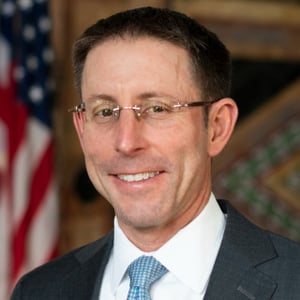
Judge, United States Court of Appeals, Ninth Circuit
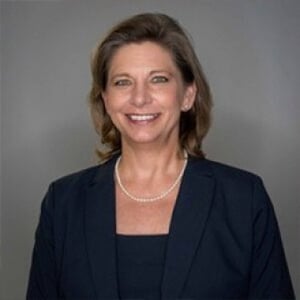
General Counsel, Senior Litigation Counsel, New Civil Liberties Alliance
Zhonette brings a quarter-century of litigation experience to NCLA. After a federal clerkship, she spent many years litigating at large law firms in Washington, D.C., and Denver, Colorado, before beginning public interest litigation in 2018.
Zhonette has litigated in state, federal, and international venues and in matters ranging from pro bono custody issues to multi-district and class action cases for Fortune 100 companies. Zhonette spent the first part of her career focused on high-stakes complex commercial litigation and white-collar defense. Since changing her legal practice to taming the Administrative State, Zhonette has focused on the Administrative Procedure Act, natural resources, takings issues and other constitutional claims.
Zhonette is a graduate of Georgetown University Law Center and is admitted to practice in the District of Columbia, the State of Colorado, the Commonwealth of Virginia, and various federal courts.
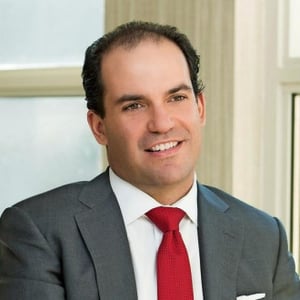
Partner, Latham & Watkins LLP
Roman Martinez is a partner in the Washington, D.C. office of Latham & Watkins. As a member of the firm’s Supreme Court and Appellate Practice, he focuses primarily on appeals in the Supreme Court of the United States, the United States Courts of Appeals, and state appellate courts. Mr. Martinez has handled civil and criminal matters involving a wide range of constitutional, statutory, and administrative law issues, and he has argued cases in the Supreme Court and the D.C., Sixth, Ninth, and Federal Circuits, among other courts.
Mr. Martinez’s appellate practice encompasses civil and criminal matters spanning virtually all areas of law. He recently rejoined Latham after serving as an Assistant to the Solicitor General at the US Department of Justice. In that role, he represented the United States in litigation before the Supreme Court and advised the Solicitor General on the government’s appellate litigation throughout the country.
Mr. Martinez has personally argued seven cases in the Supreme Court, including important cases in the fields of patent law, criminal law, civil rights, and civil procedure. He has filed over 75 briefs in the Supreme Court involving a wide range of legal issues, including administrative, tax, securities, intellectual property, criminal, environmental, education, civil rights, immigration, and First Amendment law.
Over the past year, Mr. Martinez has led Latham appellate teams in cases involving the Administrative Procedure Act, securities, ERISA, products liability, and employment law. Earlier this year, he successfully persuaded the Supreme Court to reject the State of Connecticut’s high-profile effort to reinstate the murder conviction of Michael Skakel. He frequently consults with clients to develop creative approaches to difficult legal questions that arise in and out of litigation.
Mr. Martinez’s extensive pro bono practice focuses chiefly on administrative law challenges to unlawful agency action by the Department of Veterans Affairs, as well as on criminal defense appeals. In 2018, he persuaded the Supreme Court to grant certiorari on behalf of a veteran seeking judicial review of an unlawful regulation promulgated by the Department of Veterans Affairs.
Before joining Latham, Mr. Martinez served as a law clerk to Chief Justice John G. Roberts of the Supreme Court of the United States and to then Judge Brett M. Kavanaugh of the D.C. Circuit.
From 2002 to 2005, Mr. Martinez served as an advisor on the Iraqi political and constitutional process, in various roles at the White House, at the US Embassy and Coalition Provisional Authority in Iraq, and at the Department of Defense. He received the Secretary of Defense Medal for the Global War on Terrorism and the US Department of Defense Distinguished Public Service Award for his service in Iraq.
Mr. Martinez is a member of the Edward Coke Appellate Inn of Court, and he serves on the US Chamber of Commerce's Administrative Law & Government Litigation Advisory Committee. He previously served as a member of the D.C. Circuit’s Advisory Committee on Procedures, and he now serves on the US District Court for the District of Columbia’s Committee on Grievances. His writing has appeared in The Wall Street Journal, The Washington Post, and other publications. He has appeared as a guest on the PBS NewsHour and other television programs to discuss the Supreme Court.
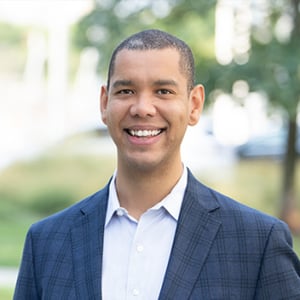
Partner, Williams & Connolly
Luke McCloud’s practice focuses on complex civil matters, with an emphasis on patent litigation. Luke has tried cases to judgment in federal and state courts. His clients have included global pharmaceutical and medical device manufacturers, leading technology companies, financial institutions, law firms, and individuals. In 2023, Luke was recognized as a “Leading Lawyer” by The Legal 500, a “Rising Star” by Law360 and The National Law Journal, and among Bloomberg Law’s “40 Under 40” list. He has also been named a “Rising Star—General Commercial Disputes” by The Legal 500 (2020-2022), and a Managing IP “Rising Star” (2020).
Luke is also an experienced appellate advocate. He has argued twice in the U.S. Supreme Court and in multiple federal courts of appeals, and has filed dozens of briefs in high-stakes cases throughout the federal system. His appellate oral advocacy was praised by The Recorder as “poised and polished.” In the October Term 2014, Luke served as a law clerk to Justice Sonia M. Sotomayor on the Supreme Court of the United States. He previously clerked for then Judge Brett M. Kavanaugh of the United States Court of Appeals for the District of Columbia Circuit and Judge Paul V. Niemeyer of the United States Court of Appeals for the Fourth Circuit.
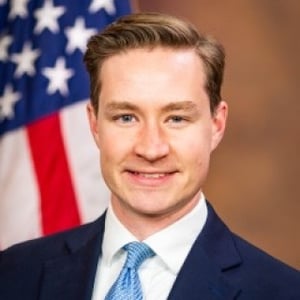
Assistant Attorney General, Office of Legal Counsel, U.S. Department of Justice
T. Elliot Gaiser is the Office of Legal Counsel’s 27th Assistant Attorney General. He was nominated by President Donald Trump on April 29, 2025, confirmed by the United States Senate on July 30, 2025, and sworn in as AAG by Attorney General Pam Bondi on August 4, 2025.
Prior to joining the Office of Legal Counsel, Mr. Gaiser served as the 11th Solicitor General of Ohio. In that role, he represented his home state and its agencies before the Supreme Court of the United States, the United States Court of Appeals for the Sixth Circuit, the Supreme Court of Ohio, and other state and federal courts. He also advised Ohio Attorney General Dave Yost on significant legal and constitutional matters important to the people of Ohio.
Mr. Gaiser clerked for Justice Samuel A. Alito, Jr. of the Supreme Court of the United States, Judge Neomi Rao of the United States Court of Appeals for the D.C. Circuit, and Judge Edith H. Jones of the United States Court of Appeals for the Fifth Circuit. In the private sector, Mr. Gaiser worked at the law firms Jones Day, Boyden Gray, and Gibson Dunn. He graduated from the University of Chicago Law School and Hillsdale College. He is also a husband and father.
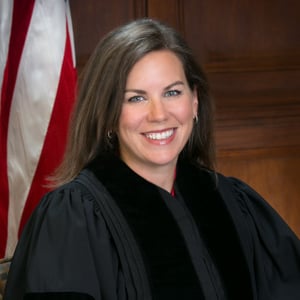
Judge, United States Court of Appeals, Eleventh Circuit
Britt C. Grant is a judge on the U.S. Court of Appeals for the Eleventh Circuit. Judge Grant was appointed to the federal bench in August 2018 after serving as a Justice on the Supreme Court of Georgia. Prior to her judicial appointment, she served as the Solicitor General of Georgia and practiced in the Washington, D.C. office of Kirkland & Ellis. Upon graduation from law school, Judge Grant served as a law clerk to then-Judge Brett M. Kavanaugh of the U.S. Court of Appeals for the District of Columbia Circuit. She earned her J.D., with distinction, from Stanford Law School, where she was the Co-Founder of the Stanford National Security and the Law Society, and the President of the Stanford Law chapter of the Federalist Society. Before enrolling in law school, Judge Grant served in The White House in a variety of domestic policy roles as well as on the staff of Congressman Nathan Deal. Judge Grant earned her B.A., summa cum laude, from Wake Forest University, where she was inducted into Phi Beta Kappa. She now lives in Atlanta, Georgia with her husband and three children.
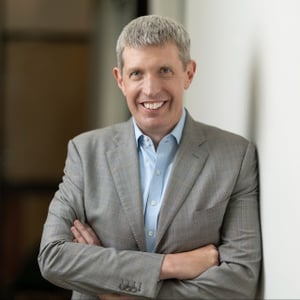
Partner, Olson Grimsley Kawanabe Hinchcliff & Murray LLC
At Olson Grimsley, Eric has co-led a trial team that obtained a $20 million antitrust verdict against Johns Manville, a construction material company owned by Berkshire Hathaway; co-leads a team seeking to secure the fair share for college athletes of the revenue they create; and fights for workers who built the Qatar stadiums who claim they are victims of human trafficking.
Before co-founding Olson Grimsley, Eric served as the Solicitor General of Colorado, where he was lead counsel on five merits cases at the U.S. Supreme Court. He led investigations of the Aurora Police and Fire Departments after the killing of Elijah McClain that resulted in one of the first state consent decrees in the country and the Catholic Church for child sex abuse. Eric also designed and executed settlement strategies with McKinsey that led to a $573 million, 49-state settlement for its work contributing to the opioid crisis and separately with local governments for a first-in-the-country agreement that brought $740 million in opioid settlements to Colorado. Eric received the Attorney General’s Award for Exceptional Performance and the Mentor of the Year Award.
Eric previously was a trial lawyer at Bartlit Beck for 16 years where he tried cases to verdict in seven states, served in leadership roles in three major MDLs including trying an MDL class action case to verdict and arguing before the Judicial Panel on Multidistrict Litigation, and recovered over $900 million for plaintiffs in patent, antitrust, and employment cases.
Eric has also served as a mediator in complex business disputes, bringing his diverse experience representing both plaintiffs and defendants to help parties resolve complicated cases.
Eric was first ranked by Chambers in 2013 and is currently ranked in Appellate and Litigation. He was recently selected as one of Denver Business Journal’s Power Book of 45 Business Leaders to Watch and, along with all five founders of Olson Grimsley, Lawdragon’s 500 Leading Plaintiffs Financial Lawyers.
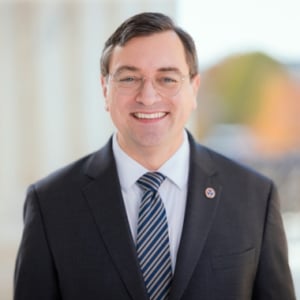
Attorney General of Tennessee
Jonathan Skrmetti was sworn in to an eight-year term as Tennessee’s Attorney General and Reporter on September 1, 2022.
Prior to his current role, General Skrmetti served as Chief Counsel to Governor Bill Lee and as Chief Deputy Attorney General to his predecessor, Tennessee Attorney General Herbert Slatery.
Before working for the State of Tennessee, General Skrmetti was a partner at Butler Snow LLP in Memphis. His legal career began with nearly a decade as a federal prosecutor. He worked at the Civil Rights Division at Main Justice and then at the Memphis U.S. Attorney’s Office and prosecuted sex traffickers, corrupt government officials, and violent white supremacists. In addition, General Skrmetti taught cyberlaw as an adjunct professor at the University of Memphis.
General Skrmetti earned honors degrees from George Washington University, the University of Oxford, and Harvard Law School, where he was editor-in-chief of the Harvard Journal of Law & Public Policy. Following law school, Jonathan clerked for Judge Steven Colloton on the U.S. Court of Appeals for the Eighth Circuit. He lives in Franklin, Tennessee, with his wife and four children.
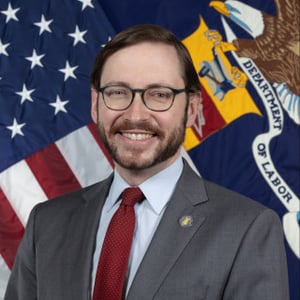
Solicitor, U.S. Department of Labor
Jonathan Berry is Solicitor at the U.S. Department of Labor, in service to President Trump’s agenda to put American workers first. He leads the Department’s lawyers in advising the Secretary and agency leadership on all aspects of law and in representing the Department in court. He was previously managing partner at Boyden Gray PLLC, where he provided strategic counsel and litigated on issues at the intersection of law, politics, and public policy. Earlier, he headed the regulatory office at Labor, and also served at the Department of Justice, in the first Trump Administration. Mr. Berry served as a law clerk to Judge Jerry E. Smith of the United States Court of Appeals for the Fifth Circuit, and to Associate Justice Samuel A. Alito, Jr., of the Supreme Court of the United States.
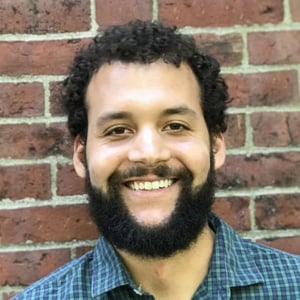
Assistant Professor of Environmental Studies, Bates College
Tyler Austin Harper is a literary scholar working at the intersection of the history of science, philosophy, and environmental studies. His book, “The Paranoid Animal: Human Extinction Before the Bomb,” is under contract with Princeton University Press. It examines how British literary figures, scientists, and social theorists engaged with the concept of human extinction prior to the nuclear age. Specifically, his work argues that the period between 1800 and 1945 witnessed a shift from fatalistic visions of the end of humanity—dominant during the Romantic Era and influenced by theories of geological catastrophism—toward a new, post-Darwinian conception of human extinction in which threats to the species were reimagined as risks that could be mitigated by technological intervention, prefiguring current debates about AI, nuclear war, and climate change. His scholarly work has been published in Modern Language Quarterly, Science Fiction Studies, Syndicate, and Paradoxa.
Harper is a contributing writer at The Atlantic. His public writing on politics, culture, race, and technology has appeared in The Atlantic, The New York Times, The Washington Post, The Boston Globe, Jacobin, and other outlets.
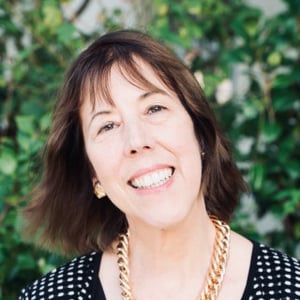
Professor of Law, University of San Diego School of Law (Retired)
Gail Heriot is a recently retired law professor from the University of San Diego. She also served as a member of the U.S. Commission on Civil Rights from 2007 to 2025. She is also the chairman of the board of the American Civil Rights Project and the chair emerita of the Civil Rights practice group at the Federalist Society for Law & Public Policy.
Professor Heriot is a prolific writer in the area of civil rights. She is the author of many law review articles. She is also the editor (along with Maimon Schwarzschild) of the 2021 anthology, A Dubious Expediency: How Race Preferences Damage Higher Education. Her upcoming book is entitled, Why We Walk on Eggshell: How Our Civil Rights Laws Helped Bring About the Woke Era—And the Trump Era, Too.
Her writings for a general audience have appeared in the Wall Street Journal, the San Diego Union-Tribune, the National Review and many other newspapers and magazines.
In 1996, she co-chaired the successful “Yes on Proposition 209” campaign, which amended the California Constitution to prohibit state-sponsored discrimination or preferential treatment based on race, sex, color, ethnicity or national origin. In 2020, she co-chaired the “No on Proposition 16” campaign, which successfully prevented Proposition 209’s repeal.
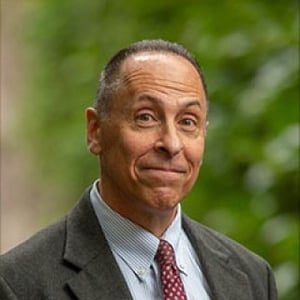
John Paul Stevens Professor of Law, Northwestern University School of Law
Andrew Koppelman is John Paul Stevens Professor of Law, Professor (by courtesy) of Political Science, and Philosophy Department Affiliated Faculty at Northwestern University. He received the Walder Award for Research Excellence from Northwestern, the Hart-Dworkin award in legal philosophy from the Association of American Law Schools, and the Edward S. Corwin Prize from the American Political Science Association. His scholarship focuses on issues at the intersection of law and political philosophy. He has written more than 100 scholarly articles and eight books, most recently Burning Down the House: How Libertarian Philosophy Was Corrupted by Delusion and Greed, (St. Martin’s Press). His column appears regularly at The Hill. You can find his recent work at andrewkoppelman.com.
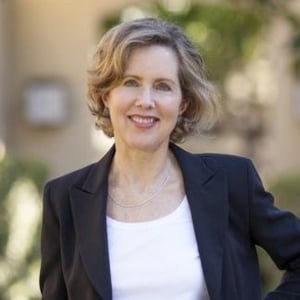
Thomas W. Smith Fellow; Contributing Editor, City Journal, Manhattan Institute
Heather Mac Donald is the Thomas W. Smith Fellow at the Manhattan Institute, a contributing editor of City Journal, and a New York Times bestselling author. She is a recipient of the 2005 Bradley Prize. Mac Donald’s work at City Journal has covered a range of topics, including higher education, immigration, policing, homelessness and homeless advocacy, criminal-justice reform, and race relations. Her writing has appeared in the Wall Street Journal, Washington Post, New York Times, Los Angeles Times, The New Republic, and The New Criterion. Mac Donald's newest book, The Diversity Delusion: How Race and Gender Pandering Corrupt the University and Undermine Our Culture (2018), argues that toxic ideas first spread by higher education have undermined humanistic values, fueled intolerance, and widened divisions in our larger culture.
Mac Donald’s The War on Cops (2016), a New York Times bestseller, warns that raced-based attacks on the criminal-justice system, from the White House on down, are eroding the authority of law and putting lives at risk. Other previous works include The Burden of Bad Ideas (2001), a collection of Mac Donald’s City Journal essays, details the effects of the 1960s counterculture’s destructive march through America’s institutions. In The Immigration Solution: A Better Plan than Today’s (2007), coauthored with Victor Davis Hanson and Steven Malanga, she chronicles the effects of broken immigration laws and proposes a practical solution to securing the country’s porous borders. In Are Cops Racist? (2010), another City Journal anthology, Mac Donald investigates the workings of the police, the controversy over so-called racial profiling, and the anti-profiling lobby’s harmful effects on black Americans.
A nonpracticing lawyer, Mac Donald clerked for the Honorable Stephen Reinhardt, U.S. Court of Appeals for the Ninth Circuit, and was an attorney-advisor in the Office of the General Counsel of the U.S. Environmental Protection Agency and a volunteer with the Natural Resources Defense Council. She has frequently testified before U.S. House and Senate Committees. In 1998, Mac Donald was appointed to Mayor Rudolph Giuliani’s task force on the City University of New York. She has received numerous awards for her writing:
A frequent guest on Fox News and other TV and radio programs, Mac Donald holds a B.A. in English from Yale University, graduating with a Mellon Fellowship to Cambridge University, where she earned an M.A. in English and studied in Italy through a Clare College study grant. She holds a J.D. from Stanford University Law School.
At the Criminal Justice Legal Foundation's 2018 annual meeting in downtown Los Angeles, U.S. Attorney General Jeff Sessions called Mac Donald, “the greatest thinker on criminal justice in America today.”
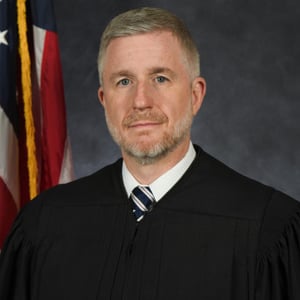
Judge, United States Court of Appeals, Third Circuit
Judge Paul Matey was appointed to the United States Court of Appeals for the Third Circuit in 2019 by President Trump.
Before his judicial service, Judge Matey was a partner at Lowenstein Sandler in New Jersey where he practiced complex commercial litigation and criminal defense. Earlier, Judge Matey was the Senior Vice President, General Counsel and Secretary for University Hospital Newark, an academic medical center and teaching hospital.
He also served as the Deputy Chief Counsel to Governor Chris Christie, and as an Assistant United States Attorney in the District of New Jersey, where he was awarded the Justice Department’s Director’s Award for Superior Performance. He also practiced at the Washington D.C. firm of Kellogg, Hansen, Todd, Figel & Frederick, and served as a law clerk to judges on the United States Court of Appeals for the Third Circuit and the United States District Court for the District of New Jersey.
He earned his bachelor’s degree from the University of Scranton, a Jesuit University, in 1993, and his juris doctorate, summa cum laude, from Seton Hall University School of Law in 2001, where he served as Editor-in-Chief of the Seton Hall Law Review.
In 2019, Judge Matey was elected to membership in the American Law Institute and, since 2020, has lectured on administrative law and the American legal history at Seton Hall.
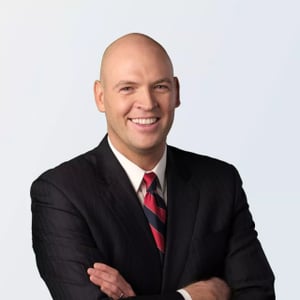
Chairman & Founding Partner, Cooper Law Partners
Davis Cooper is chairman and founding partner of Cooper Law Partners and is an award-winning personal injury attorney. Fueled by a family tragedy, he dedicated his life to forming a law firm made up of highly accomplished lawyers who are obsessed with client satisfaction and outstanding client outcomes. Cooper Law Partners has grown into a nationally recognized injury firm. Mr. Cooper has been appointed by two governors, awarded six Top 100 Trial Lawyer awards, and awarded five 40 Under 40 awards.
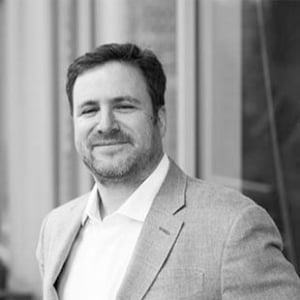
Founder & CEO, Edelson PC
Jay Edelson is the founder of Edelson PC. He is considered one of the nation’s leading plaintiff’s lawyers, with his firm having helped secure over $45 billion in settlements and verdicts on behalf of classes, individuals, and governmental entities. Law360 described Jay as a “Titan of the Plaintiff’s Bar.” Jay has been recognized as one of “America’s top trial lawyers” in the mass action arena. LawDragon named him one of the top Plaintiff Financial Lawyers in the country. He has been called “probably the best known, and most innovative, consumer privacy lawyer on the planet,” with he and his firm holding records for the largest trial verdict in a consumer privacy case ($925m), the largest consumer privacy settlement ($650m) and the largest TCPA settlement ($76m).
Jay has been appointed to represent state and local regulators on some of the largest issues of the day, ranging from opioids suits against pharmaceutical companies, to environmental actions against polluters, to breaches of trust against energy companies and for-profit hospitals, to privacy suits against Google, Facebook, and others.
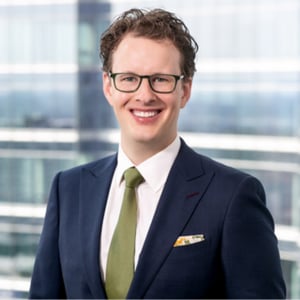
Associate, Keller Postman LLC
Noah Heinz is an Associate at Keller Postman LLC. Apart from product liability cases, Noah drafts some of the firm’s highest profile appellate advocacy. Supporting Partner Ashley Keller, he assists in briefing cases at the certiorari and merits stage at the United States Supreme Court. He also drafted briefs defending the first two plaintiff bellwether trial victories in the 3M Combat Arms earplug litigation.
Some of his practice focuses on mass arbitrations, for example, working on the Keller Postman team that successfully represented almost 200,000 taxpayers who brought consumer deception claims against Intuit after paying for TurboTax services that they were eligible to receive for free.
Before joining Keller Postman, Noah was an associate at Latham & Watkins LLP in Washington, D.C., where he represented plaintiffs and defendants in federal and state courts, with a focus on law and briefing at the trial and appellate levels.
Noah served as a law clerk for Judge J. Harvie Wilkinson III of the U.S. Court of Appeals for the Fourth Circuit. He graduated magna cum laude from Harvard Law School, where he was an articles editor on the Harvard Law Review and an editor of the Harvard Journal of Law and Public Policy. He was first in his class at The King’s College in New York, with a degree in politics, philosophy, and economics.
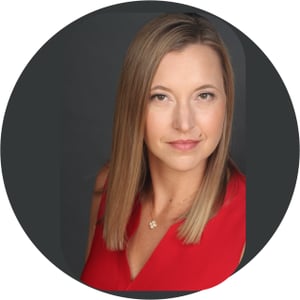
Partner, Clare Locke LLP
Libby is one of the country’s most sought-after libel lawyers. She is a trusted counselor and fierce advocate for Fortune 100 companies and high-profile individuals facing existential reputational attacks from the national media and other influential publishers, achieving remarkable results for her clients both in and outside the courtroom. Court watchers have called her “as good as they get,” “aggressive and not afraid to litigate,” and someone who has the media savvy to handle high profile matters in the public eye.
After co-founding Clare Locke LLP in 2014, Libby rapidly rose to national prominence for a highly-publicized multi-million dollar trial victory against Rolling Stone magazine about a fabricated gang rape at a University of Virginia fraternity. In 2019, she was lead trial counsel and won a $26 million federal jury verdict on behalf of a successful North Carolina businessman who was defamed by a public company during a proxy fight. A commentator opined that “she was excellent in trial and she eviscerated the other side,” and the federal judge concluded that her vigorous cross-examination “exposed [Defendant’s] CEO as a non-credible witness.” A skilled appellate advocate and former federal circuit clerk, in 2019 Libby achieved a rare win against The New York Times on behalf of former Gov. Sarah Palin in the U.S. Court of Appeals for the Second Circuit arising out of a false and defamatory editorial. She is actively litigating matters against a variety of mainstream news outlets, including CNN and The New York Times.
Libby’s success in the courtroom gets her results in the newsroom. She regularly advises clients and their PR counsel in dealing with the national media in crisis situations, and some of her biggest wins are the false stories the public will never hear about. She has killed flawed articles, storylines, and broadcast segments in outlets including in The New York Times, The Washington Post, Vanity Fair, The National Enquirer, and on Bloomberg, CBS and The Dr. Oz Show. Libby has also vindicated her clients’ reputations by obtaining myriad retractions of false publications. Examples include securing a $3.375 million settlement and video apology from the Southern Poverty Law Center, a complete retraction of a Bloomberg podcast, a multi-article correction from The Chicago Tribune, and the removal of a paperback edition book from publication by Simon & Schuster.
Recognized as an expert in libel law and the First Amendment, Libby has been ranked as a Band 1 global defamation/reputation management provider in Chambers & Partners HNW directory every year since its inception in 2016, and a Band 1 First Amendment Litigator in Chambers & Partners USA in 2020. She has numerous national awards and accolades from the National Law Journal, including being named as one of D.C.’s 40 Under 40 in 2019. She is regularly asked to speak on issues involving the First Amendment, media, and reputation, including publishing multiple op-eds in The Wall Street Journal and appearing as a guest on Fox News, CNN, and ABC’s 20/20. Libby has also served as an adjunct professor at Georgetown University Law Center and George Washington University Law School.
Libby graduated from NYU’s College of Arts and Science with a degree in Politics and Economics, and she received her J.D. from Georgetown University Law Center. After law school, she clerked on the U.S. Court of Appeals for the Fifth Circuit, and then began her career in private practice at Kirkland & Ellis. Perhaps the accomplishment of which she is most proud, Libby is a mom of five. She lives in Alexandria, Virginia with her husband and law partner, Tom Clare, their children, and the world’s most spoiled Labrador Retriever, Gipper.
Judge, United States Court of Appeals, Third Circuit
Judge Paul Matey was appointed to the United States Court of Appeals for the Third Circuit in 2019 by President Trump.
Before his judicial service, Judge Matey was a partner at Lowenstein Sandler in New Jersey where he practiced complex commercial litigation and criminal defense. Earlier, Judge Matey was the Senior Vice President, General Counsel and Secretary for University Hospital Newark, an academic medical center and teaching hospital.
He also served as the Deputy Chief Counsel to Governor Chris Christie, and as an Assistant United States Attorney in the District of New Jersey, where he was awarded the Justice Department’s Director’s Award for Superior Performance. He also practiced at the Washington D.C. firm of Kellogg, Hansen, Todd, Figel & Frederick, and served as a law clerk to judges on the United States Court of Appeals for the Third Circuit and the United States District Court for the District of New Jersey.
He earned his bachelor’s degree from the University of Scranton, a Jesuit University, in 1993, and his juris doctorate, summa cum laude, from Seton Hall University School of Law in 2001, where he served as Editor-in-Chief of the Seton Hall Law Review.
In 2019, Judge Matey was elected to membership in the American Law Institute and, since 2020, has lectured on administrative law and the American legal history at Seton Hall.

Criminal Law & Procedure: Evaluating the Progressive Prosecutor Experiment
2024 National Lawyers Convention
Washington, DCProfessional Responsibility: Oversight or Micromanagement? The ABA & Law Schools
2024 National Lawyers Convention
Washington, DCEnvironmental Law & Property Rights: Environmental Law in a Post-Chevron World— How Should Congress, Agencies, and States Respond?
2024 National Lawyers Convention
Washington, DCCivil Rights: Developments in Disparate Impact Law & Policy
2024 National Lawyers Convention
Washington, DCFinancial Services & E-Commerce: Have National Bank Charters Become Unworkable?
2024 National Lawyers Convention
Washington, DCFederalism & Separation of Powers: A Revival of the Separation of Powers at the Supreme Court?
2024 National Lawyers Convention
Washington, DCPractice Groups: Special Solicitude— Lawsuits Against the Executive Branch and Their Futures
2024 National Lawyers Convention
Washington, DCShowcase Panel I: The Age of Group Identity: What is it? How Did We Get Here? How Do We Move Beyond It?
2024 National Lawyers Convention
Washington, DC[Construction] 2024 NLC
Working as a Conservative on the Other Side of the V