
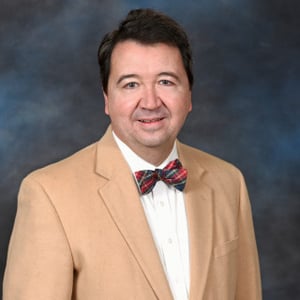
Judge, United States Court of Appeals, Sixth Circuit
John K. Bush is a Circuit Judge on the United States Court of Appeals for the Sixth Circuit.
His chambers are in Louisville, Kentucky. Prior to joining the court, Judge Bush was a partner in the
Louisville office of the firm Bingham Greenebaum Doll (now Dentons Bingham Greenebaum),
where he also was co-chair of the firm’s litigation department. He began his legal practice in the
Washington, D.C. office of Gibson Dunn & Crutcher.
Judge Bush served as a law clerk for Judge J. Smith Henley of the United States Court of
Appeals for the Eighth Circuit. He was graduated summa cum laude from Vanderbilt University,
and cum laude from Harvard Law School. He is an adjunct lecturer at The George Washington
University Law School and the Brandeis School of Law at the University of Louisville.
Judge, United States Court of Appeals, Sixth Circuit
John K. Bush is a Circuit Judge on the United States Court of Appeals for the Sixth Circuit.
His chambers are in Louisville, Kentucky. Prior to joining the court, Judge Bush was a partner in the
Louisville office of the firm Bingham Greenebaum Doll (now Dentons Bingham Greenebaum),
where he also was co-chair of the firm’s litigation department. He began his legal practice in the
Washington, D.C. office of Gibson Dunn & Crutcher.
Judge Bush served as a law clerk for Judge J. Smith Henley of the United States Court of
Appeals for the Eighth Circuit. He was graduated summa cum laude from Vanderbilt University,
and cum laude from Harvard Law School. He is an adjunct lecturer at The George Washington
University Law School and the Brandeis School of Law at the University of Louisville.
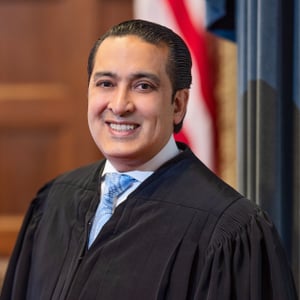
Judge, United States Court of Appeals, Sixth Circuit
John B. Nalbandian serves as a United States Circuit Judge from Kentucky on the U.S. Court of Appeals for the Sixth Circuit. He was nominated and confirmed to that position in 2018. Prior to that, Judge Nalbandian was a partner in the litigation practice group of Taft Stettinius & Hollister LLP in Cincinnati, where he served as the firm’s lead appellate lawyer and also practiced complex litigation in state and federal courts. Judge Nalbandian was board certified by the Ohio State Bar Association as a specialist in appellate law. Prior to joining Taft, Judge Nalbandian practiced for five years in the appellate section of Jones Day in Washington, DC. Upon graduation from law school, Judge Nalbandian clerked for the Honorable Jerry E. Smith of the U.S. Court of Appeals for the Fifth Circuit in Houston. While in private practice, he also served as a board member of the State Justice Institute, a nonprofit organization established by the federal government to improve the administration of justice in state courts. He served as President of the Cincinnati Lawyers Chapter of the Federalist Society. He has also been involved in his community as a board member of the Greater Cincinnati Minority Counsel Program, and as a board member of the Asian Pacific Bar Association of Southwest Ohio. Judge Nalbandian earned his B.S., magna cum laude, from the Wharton School at the University of Pennsylvania and his J.D. from the University of Virginia School of Law, where he was inducted into the Order of the Coif and served as managing editor of the Virginia Law Review.
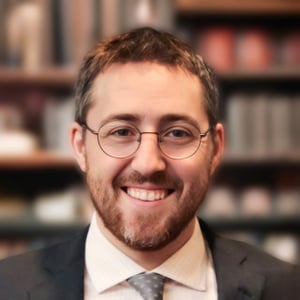
Senior Attorney, Institute for Free Speech
Brett Nolan is a Senior Attorney at the Institute for Free Speech, a public interest law firm that defends the First Amendment rights of those engaged in political speech and advocacy around the country.
Before joining the Institute, Brett served as the Principal Deputy Solicitor General of Kentucky, where he represented the Commonwealth in a wide variety of high-stakes litigation at every level of state and federal court. In that role, Brett led a successful challenge against the Department of Treasury over the constitutionality of a federal law limiting the ability of states to modify their tax codes, and he helped secure a U.S. Supreme Court victory that upheld a state’s constitutional right to defend its interests in federal court.
Prior to that, Brett served as the Deputy General Counsel to the former Governor of Kentucky, where he advised the governor and other executive branch officials on legal and policy issues and represented them in litigation. Brett clerked for Judge John Nalbandian of the U.S. Court of Appeals for the Sixth Circuit and Judge Karen K. Caldwell of the U.S. District Court for the Eastern District of Kentucky. Between clerkships, he worked in private practice. Brett received his law degree from the University of Chicago Law School, where he graduated with High Honors and was an editor of The University of Chicago Law Review.
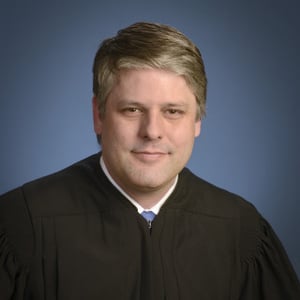
Judge, U.S. Court of Appeals, District of Columbia Circuit
Judge Walker was appointed to the United States Court of Appeals in September 2020. A graduate of Duke University and Harvard Law School, he clerked for then-Judge Brett Kavanaugh and Justice Anthony Kennedy. In 2019, he was appointed to the U.S. District Court for the Western District of Kentucky. Prior to that, he practiced at Gibson Dunn & Crutcher (D.C.) and Dinsmore & Shohl (Louisville). He has taught law in several states and foreign countries.
U.S. Court of Appeals, Sixth Circuit
Danny Julián Boggs is a Judge on the United States Court of Appeals for the Sixth Circuit. He was appointed to a newly created seat on that court on January 29, 1986 by President Ronald Reagan, confirmed by the U.S. Senate on March 3, and received his commission on March 25. He served as the Chief Judge of the Sixth Circuit from 2003 to 2009.
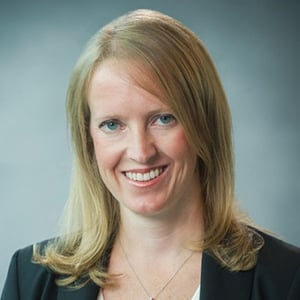
Partner, Clement & Murphy, PLLC
Erin Murphy is founding partner of Clement & Murphy, PLLC. She is widely recognized as one of the nation’s leading Supreme Court and appellate advocates. She has argued dozens of cases in appellate and trial courts throughout the country, including the Supreme Court and nearly all of the federal courts of appeals. Erin has long been ranked by Chambers & Partners rankings as a leading appellate practitioner, and the National Law Journal has named her one of the nation’s “Outstanding Women Lawyers.” Erin also has an active pro bono practice, through which she has successfully represented many religious organizations and adherents, criminal defendants, asylum applicants, adoptive parents, and more.
Erin is an adjunct professor at her alma mater the Georgetown University Law Center, a member and former officer of the Edward Coke Appellate Inn of Court, and a frequent speaker on topics relating to the Supreme Court and appellate advocacy. In her spare time, Erin serves on the board of directors of Street Law.
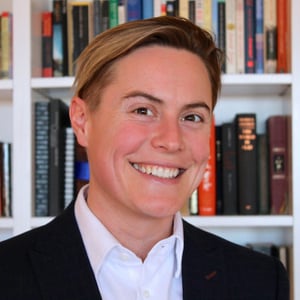
Associate Professor of Legal Studies & Business Ethics, The University of Pennsylvania Wharton School of Business
Amanda Shanor is an Assistant Professor at the University of Pennsylvania Wharton School, where her scholarship focuses on constitutional and administrative law, and in particular the First Amendment.
Shanor is a graduate of Yale Law School and Yale College, and a PhD candidate in law at Yale University. She served as a law clerk to Judges Cornelia T.L. Pillard and Judith W. Rogers on the D.C. Circuit, and Judge Robert W. Sweet in the Southern District of New York. She has taught at both Yale and Georgetown law schools and has published in the New York University Law Review, the Harvard Law Review Forum, and the Yale Law Journal Forum, among others. She is a contributor to Take Care and the co-author of a textbook on counterterrorism law.
Prior to joining the academy, Amanda worked in the National Legal Department of the American Civil Liberties Union on the organization’s Supreme Court litigation, including Masterpiece Cakeshop. Previously, she litigated a number of constitutional and national security cases with Professor David Cole, including Humanitarian Law Project v. Holder, while a fellow at Georgetown.
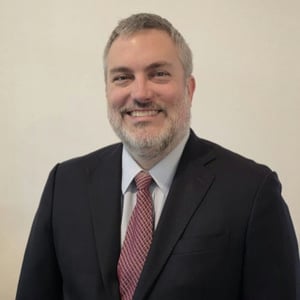
Host, The Prosecutors Podcast; Partner, Culper Law
Brett J. Talley is former a federal prosecutor (appellate chief in the Middle District of Alabama) and host of the true crime podcast "The Prosecutors." Brett has served as nominations chief and deputy assistant attorney general at the US Department of Justice, Advisor to the White House Counsel, speechwriter to Senator Rob Portman, a political and legal communications professional, deputy state solicitor general, staff writer for a presidential campaign, award-nominated horror fiction author (possibly related to the previous items on the list), US District and 11th Circuit judicial clerk, and adjunct law school professor. He is currently a partner ar Culper Law. Along the way, Brett has been involved at some level in the confirmation of a full majority of the sitting justices on the U.S. Supreme Court and scores of U.S. district and appellate court judges. A native Alabamian, Brett earned his undergraduate degree in History and Philosophy from the University of Alabama and JD from Harvard Law School. He lives in Montgomery with his wife Annie and their three small kids.
Solicitor General, Iowa Office of the Attorney General
Eric Wessan serves as Iowa’s Solicitor General in the Iowa Attorney General’s Office. In that role, Wessan leads Iowa’s litigation before State and federal appellate courts, including the Iowa and U.S. Supreme Courts. Before that role, Wessan worked on complex commercial litigation at two large law firms in Chicago. Wessan also served as a law clerk for the Honorable James C. Ho on the U.S. Court of Appeals for the Fifth Circuit and for the Honorable John F. Kness on the U.S. District Court for the Northern District of Illinois. Wessan is a graduate of the University of Chicago Law School, with honors, and of the University of Chicago.

Laurence H. Silberman Chair in Constitutional Governance, American Enterprise Institute; Executive Director, Antonin Scalia Law School’s C. Boyden Gray Center for the Study of the Administrative State
Adam J. White is the Laurence H. Silberman Chair in Constitutional Governance and senior fellow at the American Enterprise Institute, where he focuses on the Supreme Court and the administrative state. He also directs the Antonin Scalia Law School’s C. Boyden Gray Center for the Study of the Administrative State.
He writes on regulation and constitutional government for a variety of publications. He practiced law in Washington, D.C., after clerking for the D.C. Circuit's Judge David Sentelle. He also has been chairman of the ABA's Administrative Law Section.
In 2021, he served on the Presidential Commission on the Supreme Court of the United States, where he criticized “Court packing” and other efforts to restructure the Supreme Court.
Managing Partner, Boyden Gray PLLC
Michael Buschbacher is the managing partner of Boyden Gray PLLC. He represents public and private companies, trade associations, non-profits, and individuals in high-stakes litigation and administrative proceedings, with a particular focus on environmental and energy matters.
In addition to trial-level work, Mr. Buschbacher maintains an active appellate practice, both as merits counsel and as counsel for amici curiae. He has written amicus briefs quoted by the Seventh and Ninth Circuits. And his Supreme Court advocacy has been cited by The New Yorker, The New York Times, and E&E News. Mr. Buschbacher’s commentary on legal issues has been published in The Wall Street Journal, Newsweek, and The American Conservative.
Before joining the firm, Mr. Buschbacher served at the U.S. Department of Justice as counsel to the Assistant Attorney General for the Environment and Natural Resources Division. There, he advised senior Department leadership, served as the lead attorney on several lawsuits, and helped draft policy memoranda for the Department on the proper scope and procedure for environmental enforcement. Prior to serving in the government, Mr. Buschbacher was an associate in the D.C. office of Sidley Austin.
Mr. Buschbacher is a former clerk to Judge Alice M. Batchelder of the U.S. Court of Appeals for the Sixth Circuit and to Magistrate Judge Paul R. Cherry of the U.S. District Court for the Northern District of Indiana.
Mr. Buschbacher holds a B.A. in Music and Germanic Studies from Indiana University and a J.D., magna cum laude, from Notre Dame Law School.
Counsel, Sen. Schmitt and the Senate Judiciary Committee
Senior Counsel, Committee on Oversight and Government Reform, U.S. House of Representatives
Daniel Flores is a Senior Counsel on the Republican staff of the Committee on Oversight and Government Reform, U.S. House of Representatives. Prior to his current position, he served in the House as Chief Counsel for the House Judiciary Committee's Subcommittee on Regulatory Reform, Commercial and Antitrust Law. Before coming to the House, he served as an Acting Associate Deputy General Counsel for the U.S. Environmental Protection Agency and in other roles in EPA's Office of General Counsel, as a Senior Trial Attorney for the U.S. Department of Justice, Environment and Natural Resources Division, and as an attorney in private practice in Washington, D.C. He serves as a House liaison to the Administrative Conference of the United States and has served on the Council of the American Bar Association’s Section on Administrative Law & Regulatory Practice.
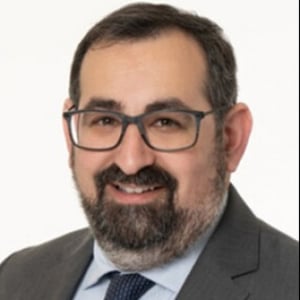
Research Scholar in Law and Executive Director, Center for Academic Freedom and Free Speech, Yale Law School
Joe Cohn is a research scholar in law at Yale Law school and the executive director of the Center for Academic Freedom and Free Speech (CAFFS).
Cohn has served as a staff attorney at the AIDS Law Project of Pennsylvania, a staff attorney for the Court of Appeals for the 3rd Circuit, an adjunct professor of law at the University of Pennsylvania Law School, where he supervised law students representing clients in litigation in state and federal courts, and as the interim legal director for ACLU affiliates in Nevada and Utah.
A majority of Cohn’s career has been dedicated to defending civil liberties on college campuses and free expression in society at large. As the Foundation for Individual Rights and Expression’s (FIRE’s) founding legislative and policy director, from 2012 to 2023, he testified on numerous occasions in legislatures across America and in Congress, drafted legislation on campus free speech, campus due process, and academic freedom that has been enacted in states across the country. Immediately before joining CAFFS, Cohn advocated for open inquiry, viewpoint diversity, and constructive disagreement in higher education as Heterodox Academy’s director of policy.
Cohn writes extensively on civil liberties, with articles published in a wide array of media outlets, including the Wall Street Journal, the Washington Post, Newsweek, the Hill, the New York Daily News, the Chicago Tribune, the Las Vegas Review Journal, the Minnesota Star Tribune, the Chronicle of Higher Education, Inside Higher Ed, and the Volokh Conspiracy.
He earned his bachelor of arts from the University of Nevada at Las Vegas in 2000. He is a 2004 graduate of the University of Pennsylvania Carey School of Law and the Fels Institute of Government Administration, where he earned his J.D. and M.A. in Government Administration.
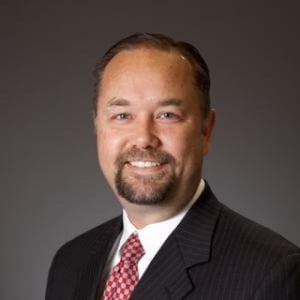
Senior Counsel, Director of Center for Academic Freedom, Alliance Defending Freedom
Tyson Langhofer serves as senior counsel and director of the Center for Academic Freedom with Alliance Defending Freedom.
Langhofer represents students and faculty at public high schools and colleges in defending their First Amendment rights. For example, in Denton v. Hecht, he successfully defended a Florida State University student after he was removed as Student Senate President simply for sharing his Catholic views in a private group chat. In Cross v. Loudoun County Public Schools, he successfully defended an elementary school gym teacher after the school suspended him for peacefully sharing his views on a proposed policy at a public school board meeting.
Langhofer has extensive experience in civil litigation and constitutional law. Before joining ADF, Langhofer was a partner with Stinson LLP, where he worked as a commercial litigation attorney from 2000 until he joined ADF in 2015.
Langhofer is Peer Review Rated AV® Preeminent in Martindale-Hubbell. He is a sought-after speaker on legal and cultural issues. He regularly comments on free speech issues in television, radio, and print media. He has appeared as a guest and written pieces for numerous major media outlets, including The Washington Post, The Washington Times, USA Today, Townhall, The Federalist, and The Daily Wire.
Langhofer earned his Juris Doctor from Regent University School of Law in 1999, graduating cum laude. Langhofer is admitted to practice in multiple states, the Supreme Court, and numerous federal district and appellate courts.

Director, Independent Women's Law Center; Owner, MPL Strategies
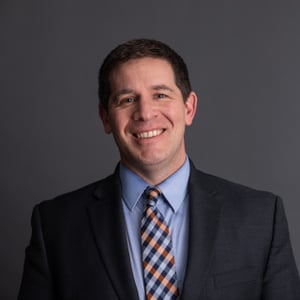
Vice President for Legal Strategy, Stand Together
Casey Mattox is Vice President for Legal Strategy at Stand Together and Senior Advisor at
Americans for Prosperity. In these roles he advocates for and creates strategies and
partnerships to ensure a constitutionally limited government that protects the civil liberties of all
Americans. Prior to joining Stand Together and AFP Casey’s legal career focused on defending
the First Amendment rights of students, faculty, healthcare workers and religious organizations.
Casey has a J.D. from Boston College School of Law and an undergraduate degree from the
University of Virginia. You can find him on Twitter at @CaseyMattox_ and on LinkedIn at
@Casey-Mattox-ST.
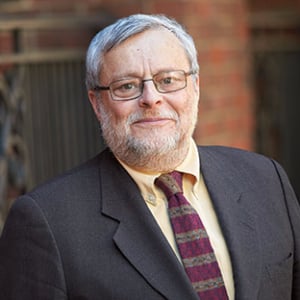
Dwight D. Opperman Professor of Law; Director, Center for Labor, New York University School of Law
Samuel Estreicher is a nationally preeminent scholar in US and international-comparative labor and employment law and arbitration law. He has authored more than a dozen books, including Beyond Elite Law: Access to Civil Justice in America (with Joy Radice, Cambridge Univ. 2016); leading casebooks on legislation and regulatory state, labor law and employment discrimination and employment law; and published more than 200 articles in professional and academic journals. He served as Chief Reporter for the American Law Institute’s Restatement of Employment Law (2015). After clerking for Judge Harold Leventhal of the US Court of Appeals for the DC Circuit, practicing in a labor law firm, and clerking for Justice Lewis F. Powell Jr. of the US Supreme Court, Prof. Estreicher joined the NYU School of Law faculty in 1978. In addition to serving as counsel to major law firms, he is the former secretary of the Labor and Employment Law Section of the American Bar Association, a former chair of the Committee on Labor and Employment Law of the Association of the Bar of the City of New York.15). He maintains an active appellate and ADR practice. The Labor and Employment Research Association awarded him its 2010 Susan C. Eaton Award for Outstanding Scholar-Practitioner. In recent years, Estreicher also has published work in public international law and authored several briefs in the Supreme Court and US courts of appeals on employment and US foreign relations law issues. Prof. Estreicher received his BA from Columbia College, his MS in industrial relations from Cornell University, and his JD from Columbia Law School, where he was editor-in-chief of the Columbia Law Review. He is a member of the College of Labor and Employment Lawyers and was appointed in 2016 by the UN Secretary General as a member of the UN’s Internal Justice Commission.
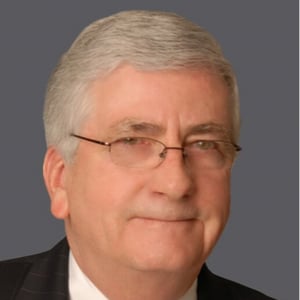
Shareholder, Ogletree Deakins
Brian Hayes is a Shareholder in the Washington, DC office of Ogletree Deakins and serves as Co-Chair of the law firm’s Traditional Labor Practice Group. Immediately prior to his joining the firm he was a Member of the National Labor Relations Board. He was confirmed to that post by the United States Senate in 2010 and his term ended in December of 2012. He is currently a Member of the U.S. Chamber of Commerce Litigation Advisory Committee and was recently named Chairman of the U.S. Chamber’s Subcommittee on the National Labor Relations Act. He also serves as editor in chief for The Practical NLRB Advisor.
Prior to his nomination and confirmation to the NLRB, Brian Hayes served as the Republican Labor Policy Director for the United States Senate Committee on Health, Education, Labor and Pensions. He came to Capitol Hill in 2005 after nearly thirty years in private legal practice devoted exclusively to representing management clients in labor and employment matters. While in private practice he represented clients in scores of cases before NLRB, state and federal courts, and a host of other federal agencies such as the EEOC, OFCCP, OSHA, the Department of Labor and their state counterparts. He also has had extensive private practice experience representing employers in collective-bargaining negotiations, arbitrations and other forms of dispute resolution. In addition to his private practice, he served as Counsel to the Employers’ Association of the Northeast, editor-in-chief and contributor to The Health Care Labor Manual, and also served on the adjunct faculty of Western New England Law School teaching courses in labor law, and collective-bargaining, arbitration and employment litigation. Before entering private practice he began his legal career at the NLRB working as a law clerk to the Chief Administrative Law Judge while in law school and subsequently as counsel to the then-Board Chairman. He is a graduate of Boston College and of Georgetown University Law School.
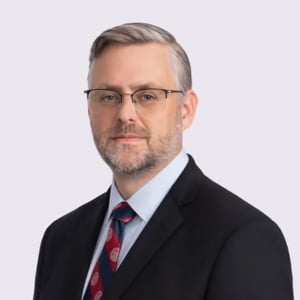
Principal, JacksonLewis
Marvin Kaplan is a principal in the New York City, New York, office of Jackson Lewis P.C.
Marvin, a former Chairman of the National Labor Relations Board (NLRB), advises clients on labor and employment issues, focusing on union organizing and labor-management relations. Over his eight years on the NLRB, Marvin participated in over 900 decisions, including decisions addressing the lawfulness of captive audience speeches and work rules, and the standards for determining the composition of a bargaining unit and whether an individual is an independent contractor, and several rulemakings, defining a joint-employer and laying out procedures governing representation elections.
Prior to his time on the NLRB, he served as Chief Counsel at the Occupational Safety and Health Review Commission and a Special Assistant at U.S. Department of Labor. His cross-disciplinary experience makes Marvin particularly well-suited to advise clients on strategic business planning.
His experience at all levels of government in different agencies and branches, including the U.S. House of Representatives, provides a unique perspective on Congressional oversight, legislation, regulations and federal investigations—enabling him to help clients navigate complex compliance challenges and anticipate regulatory developments that could impact their organizations.
He is a graduate of Cornell University and Washington University in St. Louis Law School.
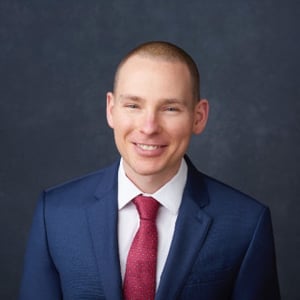
Shareholder & Co-Chair of the Workplace Policy Institute, Littler Mendelson P.C.
Alexander T. MacDonald advises employers on all aspects of the employment and labor landscape, focusing on emerging legislation and regulation. He has extensive experience advising businesses on worker classification, arbitration, the administrative and regulatory process, and the future of work. He frequently writes, publishes, and speaks on these subjects. His work has been cited by scholars and appellate courts. He is a recognized voice for the management perspective.
Alexander is a co-chair of the Workplace Policy Institute (WPI) team. With WPI, he advises employers on legislative, administrative, and regulatory developments at the state and federal level. He advocates for employers in the regulatory and administrative process. He also helps employers protect their businesses by understanding and anticipating cutting-edge legal developments.
Alexander also has extensive experience in traditional labor law. He represents management in all aspects of labor-management relations, including unfair labor practice charges, grievance arbitrations, representation elections, contract negotiations, and related litigation, including litigation in the U.S. courts of appeals.
Before joining Littler, Alexander served as the director, future of work, for a major technology company. He also worked in a national labor and employment law firm and a major public-sector general counsel’s office. He was a law clerk to the senior judges in the District of Columbia Court of Appeals.
He is also a veteran of the U.S. Air Force. He served in Operations Enduring Freedom and Iraqi Freedom. In law school, he graduated first in his class
Dwight D. Opperman Professor of Law; Director, Center for Labor, New York University School of Law
Samuel Estreicher is a nationally preeminent scholar in US and international-comparative labor and employment law and arbitration law. He has authored more than a dozen books, including Beyond Elite Law: Access to Civil Justice in America (with Joy Radice, Cambridge Univ. 2016); leading casebooks on legislation and regulatory state, labor law and employment discrimination and employment law; and published more than 200 articles in professional and academic journals. He served as Chief Reporter for the American Law Institute’s Restatement of Employment Law (2015). After clerking for Judge Harold Leventhal of the US Court of Appeals for the DC Circuit, practicing in a labor law firm, and clerking for Justice Lewis F. Powell Jr. of the US Supreme Court, Prof. Estreicher joined the NYU School of Law faculty in 1978. In addition to serving as counsel to major law firms, he is the former secretary of the Labor and Employment Law Section of the American Bar Association, a former chair of the Committee on Labor and Employment Law of the Association of the Bar of the City of New York.15). He maintains an active appellate and ADR practice. The Labor and Employment Research Association awarded him its 2010 Susan C. Eaton Award for Outstanding Scholar-Practitioner. In recent years, Estreicher also has published work in public international law and authored several briefs in the Supreme Court and US courts of appeals on employment and US foreign relations law issues. Prof. Estreicher received his BA from Columbia College, his MS in industrial relations from Cornell University, and his JD from Columbia Law School, where he was editor-in-chief of the Columbia Law Review. He is a member of the College of Labor and Employment Lawyers and was appointed in 2016 by the UN Secretary General as a member of the UN’s Internal Justice Commission.
Shareholder, Ogletree Deakins
Brian Hayes is a Shareholder in the Washington, DC office of Ogletree Deakins and serves as Co-Chair of the law firm’s Traditional Labor Practice Group. Immediately prior to his joining the firm he was a Member of the National Labor Relations Board. He was confirmed to that post by the United States Senate in 2010 and his term ended in December of 2012. He is currently a Member of the U.S. Chamber of Commerce Litigation Advisory Committee and was recently named Chairman of the U.S. Chamber’s Subcommittee on the National Labor Relations Act. He also serves as editor in chief for The Practical NLRB Advisor.
Prior to his nomination and confirmation to the NLRB, Brian Hayes served as the Republican Labor Policy Director for the United States Senate Committee on Health, Education, Labor and Pensions. He came to Capitol Hill in 2005 after nearly thirty years in private legal practice devoted exclusively to representing management clients in labor and employment matters. While in private practice he represented clients in scores of cases before NLRB, state and federal courts, and a host of other federal agencies such as the EEOC, OFCCP, OSHA, the Department of Labor and their state counterparts. He also has had extensive private practice experience representing employers in collective-bargaining negotiations, arbitrations and other forms of dispute resolution. In addition to his private practice, he served as Counsel to the Employers’ Association of the Northeast, editor-in-chief and contributor to The Health Care Labor Manual, and also served on the adjunct faculty of Western New England Law School teaching courses in labor law, and collective-bargaining, arbitration and employment litigation. Before entering private practice he began his legal career at the NLRB working as a law clerk to the Chief Administrative Law Judge while in law school and subsequently as counsel to the then-Board Chairman. He is a graduate of Boston College and of Georgetown University Law School.
Principal, JacksonLewis
Marvin Kaplan is a principal in the New York City, New York, office of Jackson Lewis P.C.
Marvin, a former Chairman of the National Labor Relations Board (NLRB), advises clients on labor and employment issues, focusing on union organizing and labor-management relations. Over his eight years on the NLRB, Marvin participated in over 900 decisions, including decisions addressing the lawfulness of captive audience speeches and work rules, and the standards for determining the composition of a bargaining unit and whether an individual is an independent contractor, and several rulemakings, defining a joint-employer and laying out procedures governing representation elections.
Prior to his time on the NLRB, he served as Chief Counsel at the Occupational Safety and Health Review Commission and a Special Assistant at U.S. Department of Labor. His cross-disciplinary experience makes Marvin particularly well-suited to advise clients on strategic business planning.
His experience at all levels of government in different agencies and branches, including the U.S. House of Representatives, provides a unique perspective on Congressional oversight, legislation, regulations and federal investigations—enabling him to help clients navigate complex compliance challenges and anticipate regulatory developments that could impact their organizations.
He is a graduate of Cornell University and Washington University in St. Louis Law School.
Shareholder & Co-Chair of the Workplace Policy Institute, Littler Mendelson P.C.
Alexander T. MacDonald advises employers on all aspects of the employment and labor landscape, focusing on emerging legislation and regulation. He has extensive experience advising businesses on worker classification, arbitration, the administrative and regulatory process, and the future of work. He frequently writes, publishes, and speaks on these subjects. His work has been cited by scholars and appellate courts. He is a recognized voice for the management perspective.
Alexander is a co-chair of the Workplace Policy Institute (WPI) team. With WPI, he advises employers on legislative, administrative, and regulatory developments at the state and federal level. He advocates for employers in the regulatory and administrative process. He also helps employers protect their businesses by understanding and anticipating cutting-edge legal developments.
Alexander also has extensive experience in traditional labor law. He represents management in all aspects of labor-management relations, including unfair labor practice charges, grievance arbitrations, representation elections, contract negotiations, and related litigation, including litigation in the U.S. courts of appeals.
Before joining Littler, Alexander served as the director, future of work, for a major technology company. He also worked in a national labor and employment law firm and a major public-sector general counsel’s office. He was a law clerk to the senior judges in the District of Columbia Court of Appeals.
He is also a veteran of the U.S. Air Force. He served in Operations Enduring Freedom and Iraqi Freedom. In law school, he graduated first in his class
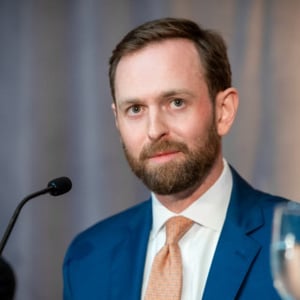
Commissioner, Federal Trade Commission
Andrew N. Ferguson was sworn in April 2, 2024 as a Commissioner of the Federal Trade Commission. President Joe Biden named Ferguson to a term that expires on September 25, 2030.
Ferguson most recently served as solicitor general of the Commonwealth of Virginia. Prior to that position, he served as chief counsel to U.S. Sen. Mitch McConnell of Kentucky, the Republican leader, and as a Republican counsel on the U.S. Senate Judiciary Committee. He also practiced law at several Washington, D.C. law firms. He earned his undergraduate degree and law degree from the University of Virginia. After law school, Ferguson clerked for Judge Karen L. Henderson on the U.S. Court of Appeals for the D.C. Circuit and U.S. Supreme Court Justice Clarence Thomas.
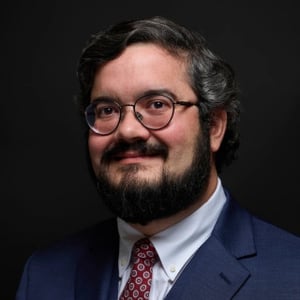
Partner, Torridon Law PLLC
Mike Fragoso is an experienced legal and policy strategist who represents clients before all three branches of the federal government. Most recently he served as chief counsel to the Senate Republican Leader, Mitch McConnell (R-KY). He has negotiated consequential legislation, managed successful congressional oversight, and prepared individuals for the most contentious Senate hearings.
As chief counsel to Leader McConnell, Mike was the Leader’s primary legal advisor and managed the “last mile” of any legislation touching on the Senate Judiciary Committee. He ran the 2024 reauthorization of FISA Section 702 and was involved at the highest levels of the appropriations and budget-reconciliation processes. Mike also repeatedly represented Leader McConnell as counsel of record at the Supreme Court. Leader McConnell said of Mike that he’s “equally at home in the high-minded philosophical discourse of the legal community and the urgent pragmatism of congressional dealmaking,” and that he “maintains a firm grasp on the realm of the possible” but “knows which screws to twist.” He observed that Mike “is so exceptionally competent that he often produces from his desk the work that would normally require, literally, teams of outside counsel.”
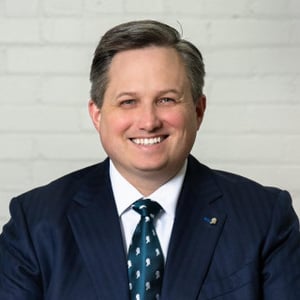
President and CEO, The Federalist Society
Sheldon Gilbert is the President and CEO of The Federalist Society. Gilbert has been involved in the conservative and libertarian legal movement since law school, and has served in prominent roles at both nonprofit organizations as well as corporate America.
A longtime constitutional litigator, Gilbert has represented clients through amicus and party briefs in nearly a hundred cases at the U.S. Supreme Court, at both the certiorari and merits stages. Most recently, Gilbert served as Senior Lead Counsel for Strategic Initiatives at Walmart, the world’s largest company, where he led teams providing legal advice related to government enforcement, internal investigations, government relations, public relations, and special projects at the center of law and policy.
Before joining Walmart, Gilbert served as Vice President for Content and Development and Senior Fellow for Constitutional Studies at the National Constitution Center, a congressionally chartered non-partisan center for constitutional education and debate, where he led both fundraising and programming efforts. While at the NCC, Gilbert helped ensure that the Center’s programming and exhibits incorporated constitutional perspectives from experts on both the right and the left, including the launch of the Center’s landmark permanent exhibit on the Civil War and the Reconstruction Amendments.
Prior to the National Constitution Center, Gilbert served as the director of the Institute for Justice’s Center for Judicial Engagement (CJE), where he educated the public about the role of the courts and the Constitution, where he frequently hosted discussions and debates on constitutional issues, and often spoke at Federalist Society lawyer and student chapters across the country.
He was also a litigator with the U.S. Chamber Litigation Center, the litigation arm of the U.S. Chamber of Commerce, where he represented the U.S. Chamber in over 400 cases in federal and state courts addressing a wide range of legal issues, from free speech to property rights.
Gilbert is a graduate of the George Washington University Law School where he helped found a first-of-its-kind National Religious Freedom Moot Court, which hosted law students from across the country to debate important, emerging religious liberty issues. After graduating from GWU, he also taught as a professorial lecturer at the school.
A graduate of the University of Utah, Gilbert is a child of the Mountain West, where he was born in a coal mining town in Utah and raised in Idaho near the Grand Tetons. Before going to law school, Gilbert’s diverse interests led him to work in a wide range of roles, from software development project management for a nonprofit, to working in his University’s radiobiology research lab, to volunteer service in Rio de Janeiro, Brazil for his church.
Gilbert is married with four children.
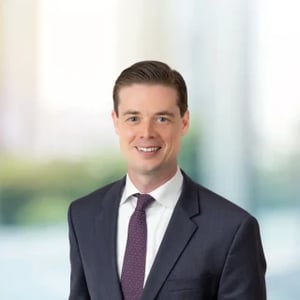
Shareholder, D.C. Office Managing Shareholder
Lee is a former Chief Counsel and Staff Director of the Senate Judiciary Committee for then-Chairman Lindsey Graham, Deputy Counsel to Vice President J.D. Vance, and federal prosecutor who serves as Managing Shareholder of Maynard Nexsen’s Washington, D.C. office. He has deep experience in all three branches of the federal government, stand-up courtroom experience, and extensive knowledge of Washington, D.C.
While serving on the Senate Judiciary Committee, Lee played a central role in some of the most consequential legislative, nominations, and oversight efforts in recent years. He led Supreme Court and Attorney General confirmation hearings, guided politically charged negotiations on the First Step Act, police reform, the CARES Act, and the Justice Against Sponsors of Terrorism Act, and oversaw the Committee’s work on the Crossfire Hurricane Investigation. Lee also helped advance the CLOUD Act and major intellectual property legislation, including the Defend Trade Secrets Act, the Music Modernization Act, and the CASE Act. Over his seven-year Senate career, he handled the Committee’s authorization of subpoenas, participated in transcribed interviews, managed public communications campaigns, and prepared witnesses and nominees for high-profile hearings—culminating in his service as a key advisor to Republican Senators during both impeachments of President Donald Trump.
As a federal prosecutor with the U.S. Department of Justice, Lee managed a diverse criminal and civil litigation docket, including first chair of a felony trial, briefing appeals, and arguing in the Fourth Circuit. Lee defended the United States in civil suits under the Administrative Procedure Act (APA) and the Federal Tort Claims Act (FTCA), and also served as the Computer Hacking and Intellectual Property (CHIP) prosecutor for the South Carolina U.S. Attorney's Office. Before joining Maynard Nexsen, Lee served in the White House, where he provided strategic and legal advice to the Office of the Vice President.
Lee earned his law degree at the Vanderbilt University Law School and a Bachelor of Arts in Economics and International Affairs from Florida State University. He clerked for the Honorable Joseph F. Anderson, Jr. on the United States District Court for the District of South Carolina and briefly on the Fourth Circuit when Judge Anderson sat on that court by designation.
Senior Director, Microsoft, Former Staff Director and Chief Counsel, U.S. Senate Committee on the Judiciary
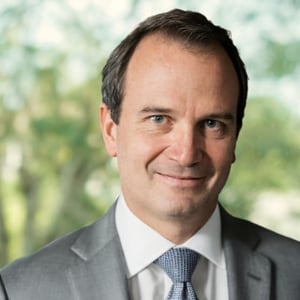
Judge, United States Court of Appeals, Fourth Circuit
Judge Julius “Jay” Richardson serves on the United States Court of Appeals for the Fourth Circuit. Jay grew up in Barnwell, South Carolina. After graduating from Vanderbilt University, Jay moved to Hawaii and worked at a pool-side bar-and-grill. Jay later earned his law degree from the University of Chicago Law School, where he served as Articles Editor for the Law Review and right fielder for the law school’s championship softball team. Following law school, Jay clerked for Judge Richard A. Posner and for Chief Justice William H. Rehnquist. He then practiced with Kellogg Hansen in Washington, DC before returning to South Carolina as an Assistant United States Attorney. Along with prosecuting violent crime, gangs, terrorism, public corruption, civil rights, and narcotics trafficking, he led the prosecution of Dylann Roof, who was convicted and sentenced to death for his racist massacre of nine Black worshippers during a Bible study at Mother Emanuel AME Church in Charleston. He and his wife Macon are blessed with four daughters.
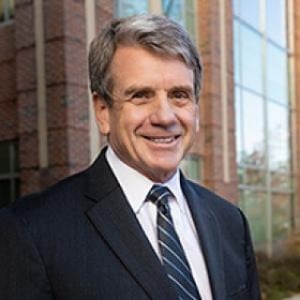
General Counsel, NRB
Dr. Michael P. Farris is a litigator, educator, public advocate, and communicator, and is widely recognized for his successful work on both the national and international stage.
He is the founding president of both the Home School Legal Defense Association (1983) and Patrick Henry College (2000) and continues to serve as Chairman of the Board of HSLDA and Chancellor Emeritus of PHC. Dr. Farris served as the President and CEO of Alliance Defending Freedom and continues to serve in a part-time capacity as Counselor to the President. He currently serves as General Counsel for National Religious Broadcasters.
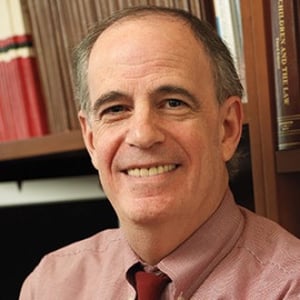
Fiorello LaGuardia Professor of Clinical Law Emeritus, New York University School of Law
Prof. Martin Guggenheim ’71 has taught at NYU School of Law, where he now co-directs the Family Defense Clinic, since 1973. From 1998 to 2002, he was director of Clinical and Advocacy Programs. Guggenheim has been an active litigator in the area of children and the law and has argued leading cases on juvenile delinquency and termination of parental rights in the US Supreme Court. He is also a well-known scholar, having published more than 50 articles and book chapters, plus six books, including What’s Wrong with Children’s Rights (2005). His research has focused on adolescent abortion, First Amendment rights in schools, the role of counsel for children in court proceedings, and empirical research on child welfare practice, juvenile justice, and family law.
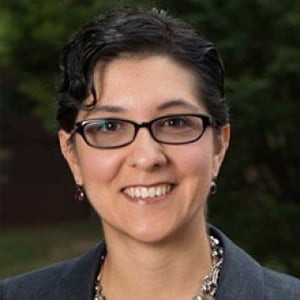
Professor of the Practice, Philosophy, McGrath Institute for Church Life, University of Notre Dame
Melissa Moschella is Professor of the Practice in Philosophy at the University of Notre Dame’s McGrath Institute for Church Life. Her work spans the fields of ethics, political philosophy, and law, and her areas of special expertise include natural law theory, biomedical ethics, and the family (especially parental rights). She is the author of To Whom Do Children Belong? Parental Rights, Civic Education and Children’s Autonomy (Cambridge University Press, 2016), and Ethics, Politics, and Natural Law: Principles for Human Flourishing (University of Notre Dame Press, forthcoming Spring 2025). Professor Moschella has also published numerous articles in scholarly journals as well as popular media outlets, including Notre Dame Law Review, The American Journal of Jurisprudence, The Journal of Law and Religion, Bioethics, The Journal of Medical Ethics, The New York Times, USA Today, The Washington Post, The Federalist, and First Things. She was recently awarded the Heritage Foundation’s Freedom and Opportunity Prize. She graduated magna cum laude from Harvard College, earned a Licentiate in Philosophy summa cum laude from the Pontifical University of the Holy Cross, and received her Ph.D. in Political Philosophy from Princeton University.
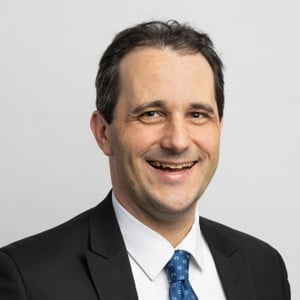
Director, Center for Judicial Engagement, Institute for Justice
Anthony Sanders is the Director of the Center for Judicial Engagement (CJE) at the Institute for Justice and a senior attorney. He joined IJ in 2010. As CJE’s director, he educates the public about the proper role of judges in enforcing constitutional limits on the size and scope of government. As a senior attorney he litigates cutting-edge constitutional cases protecting economic liberty, private property, freedom of speech and other individual liberties in both federal and state courts across the country.
One area of Anthony’s expertise is on using state constitutions to protect individual rights. He is the author of the book, published by University of Michigan Press, Baby Ninth Amendments: How Americans Embraced Unenumerated Rights and Why It Matters. He has also written several law review articles on state constitutional law, unenumerated rights, judicial review, economic liberty, property rights, international law, and other subjects. His work has appeared in publications such as the Iowa Law Review, Minnesota Law Review, American University Law Review, and Rutgers Law Review, and he has published opinion pieces in leading media outlets across the country. Further, he frequently speaks to various audiences on these matters and others, including judicial engagement, free speech, civil forfeiture, and the continuing importance of Magna Carta. Additionally, he hosts the weekly Short Circuit podcast, which often records live in front of law student audiences.
Anthony has litigated several cases in various state courts on state constitutional protections, as well as in federal courts on matters such as economic liberty, free speech, administrative law, and fines and fees abuse. Prior to joining IJ, Anthony served as a law clerk to Justice W. William Leaphart on the Montana Supreme Court. Anthony also worked for several years in private practice in Chicago where he was an active member of the Chicago Bar Association and chaired its Civil Rights Committee.
Anthony received his law degree cum laude from the University of Minnesota Law School in 2004, where he served as an articles submission editor for the Minnesota Law Review. He received his undergraduate degree from Hamline University in St. Paul, Minnesota, and his master’s degree from the University of Wisconsin-Madison. A dual U.S. and U.K. citizen, Anthony grew up on the islands of Vashon in Washington State, and Alderney in the British Channel Islands.
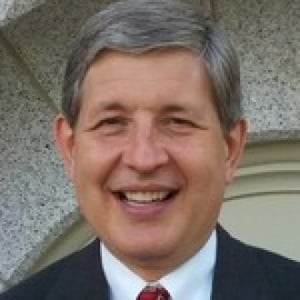
Partner, Schaerr Jaffe LLP
Gene Schaerr specializes in handling—and usually winning—civil appeals, writ proceedings and similar matters, both in appellate courts and in the law-focused proceedings at the trial-court or agency level that often determine success or failure on appeal. He has argued and won dozens of cases in a variety of forums—including the U.S. Supreme Court (where he has argued six cases), every federal circuit, and numerous federal district courts and state appellate courts. His win rate in the dozens of federal appeals he has argued in the past six years is over 75 percent.
He was a coordinator of Sidley Austin's appellate practice from 1993 until 2005, and from 2005 until 2014 was the chair of the nationwide appellate practice at Winston & Strawn—a practice he led to numerous recognitions in such publications as the Appellate Hot List. His personal practice successes have won him repeated recognition in such publications as Best Lawyers in Washington, D.C., Legal 500, D.C. Superlawyers, and Best Lawyers in America. In January 2014, Mr. Schaerr formed his own boutique litigation firm so that he could serve his clients without the conflicts and inefficiencies inherent in big-firm law practice.
Substantively, Mr. Schaerr's experience includes not only virtually every area of federal law, defamation, higher education law, immigration, insurance coverage, labor and employment, patent and trademark, privacy, product liability and warranty, statutory interpretation and tax.He has represented clients in virtually every sector, including automotive, communications, energy, financial services, health care, higher education, insurance, maritime, pharmaceuticals, technology and state and local government. He also teaches courses in Supreme Court litigation, religious freedom litigation and advanced litigation skills as an adjunct professor of law at the Brigham Young University law school.
Mr. Schaerr began law practice in 1987 following clerkships on the U.S. Supreme Court (for Chief Justice Warren Burger and Justice Antonin Scalia) and on the U.S. Court of Appeals for the D.C. Circuit (for then- Judge Kenneth Starr). He graduated in 1985 from the Yale Law School, where he was Editor-in-Chief of the Yale Journal on Regulation and Senior Editor of the Yale Law Journal. From 1991 to 1993, he served in the White House as Associate Counsel to the President, where he had responsibility for a wide range of constitutional and administrative-law issues, including those involving economic regulation, higher education, separation of powers, federalism and religious freedom. He serves as Chairman of the Constitutional Sources Project, a digital resource providing free public access to historical materials relevant to the U.S. Constitution.

The Other 250th Anniversary and Its Impact on Tech, Tariffs and Textualism: Have a Wee Dram While I Explain
Fresno Lawyer Chapter
Fresno, CASupreme Court Preview: What Is in Store for October Term 2026?
Erin E. Murphy, Amanda Shanor, Brett J. Talley, Eric Wessan, Adam White
Registration is now closed No registration is needed to view the live stream, which will be...
Panel I: America 250: The Enduring Constitution: Ordered Liberty and the Rule of Law
2026 Kentucky Chapters Conference
Lexington, KYCalifornia v. EPA: Using the Congressional Review Act to Roll Back State Waivers
Michael Buschbacher, Andrew Ceonzo, Daniel M. Flores
In September 2026, the U.S. District Court for the District of Columbia preliminarily enjoined the...
Supreme Court Roundup At Sea with Hon. Danny J. Boggs
Maine Lawyer Chapter
Bailey Island, MEAcademic Freedom and the First Amendment: Who Decides What Is Taught?
Joe Cohn, Tyson Langhofer, May Mailman, Casey Mattox
In 2022, Florida enacted the Stop WOKE (Wrongs to Our Kids and Employees) Act,...
Adjudication versus Rulemaking: A Look at How NLRB Sets Labor Policy
Samuel Estreicher, Brian E. Hayes, Marvin Kaplan, Alexander T. MacDonald
The National Labor Relations Board is responsible for developing national labor policy, but it has...
Adjudication versus Rulemaking: A Look at How NLRB Sets Labor Policy
Samuel Estreicher, Brian E. Hayes, Marvin Kaplan, Alexander T. MacDonald
The National Labor Relations Board is responsible for developing national labor policy, but it has...
Lindsey Graham and the Judiciary: A Senate Legacy
Andrew N. Ferguson, Michael Fragoso, Sheldon Gilbert, Lee Holmes, Katherine Nikas, Julius N. Richardson
Hon. Lindsey Graham (1955-2026) For more than two decades, Senator Lindsey Graham was a consequential...
Parental Rights from the Founding to Present Day
Michael P. Farris, Martin Guggenheim, Melissa Moschella, Anthony Sanders, Gene C. Schaerr
CLE credit for this event is available at On-Demand CLE. Parental rights have long occupied...