
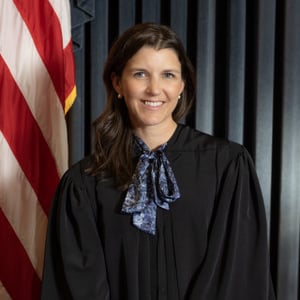
Judge, United States Court of Appeals, Sixth Circuit
The Honorable Whitney Hermandorfer is a judge on the United States Court of Appeals for the Sixth Circuit. She was nominated to the court by President Donald Trump (R) on May 12, 2025, and confirmed by the United States Senate on July 14, 2025.
Prior to her appointment, she worked in the Office of the Tennessee Attorney General as Director of the Strategic Litigation Unit. In that role, Whitney focused on leading constitutional, statutory, and administrative-law challenges to federal agency action, as well as on defending the State in complex matters at the trial and appellate level.
Whitney previously worked at Williams & Connolly LLP in Washington, DC, where she focused on appellate and administrative-law litigation. Whitney clerked for Justice Samuel Alito in the OT 2018 Supreme Court term and for Justice Amy Coney Barrett during her inaugural OT 2020 term. Prior to that, Whitney clerked for then-Judge Kavanaugh on the D.C. Circuit, and Judge Richard Leon on the U.S. District Court for D.C. Whitney is a graduate of Princeton University and George Washington University Law School.
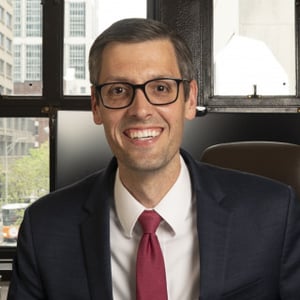
Solicitor General, Tennessee Attorney General's Office
Matt Rice serves as the Solicitor General of Tennessee. Before joining the State, Matt worked in private practice at Williams & Connolly LLP. He clerked for Justice Clarence Thomas on the United States Supreme Court as well as Judge Sandra Ikuta on the United States Court of Appeals for the Ninth Circuit. Before his legal career, Matt played professional baseball in the Tampa Bay Rays organization.

Judge, United States Court of Appeals, Sixth Circuit
Judge Readler earned his undergraduate and law degrees from the University of Michigan. After graduating, he served as a law clerk to Judge Alan Norris of the United States Court of Appeals for the Sixth Circuit. Judge Readler then began practicing law in the Columbus office of the international law firm Jones Day, eventually spending ten years as a partner in the firm’s Issues and Appeals Practice Group. While at Jones Day, Judge Readler appeared in state and federal trial and appellate courts around the country, most frequently the Supreme Court of Ohio and the Sixth Circuit. Judge Readler also successfully argued before the United States Supreme Court in McQuiggin v. Perkins on behalf of an inmate claiming actual innocence. His other pro bono representations include representing capital defendants before the Tenth Circuit and the Supreme Court of Ohio, as well as representing defendants sentenced to life in prison before the Sixth Circuit. While at Jones Day, Judge Readler traveled to Nairobi with Lawyers Without Borders to train Kenyan lawyers in prosecuting domestic violence cases, and he was also a recipient of the American Marshall Memorial Fellowship awarded by the German Marshall Fund of the United States. Following his career in private practice, Judge Readler served as Acting Assistant Attorney General for the Civil Division of the United States Department of Justice from 2017 to 2019. In that role, Judge Readler led and supervised over 1,000 lawyers in the Department’s largest litigating division, briefing and arguing several cases on behalf of the United States in federal courts across the country, including high-profile cases significant to the Administration and the Department. In March 2019, Judge Readler was confirmed to serve as a Circuit Judge on the Sixth Circuit. He resides in Columbus.
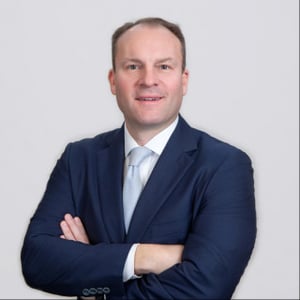
Partner, Wiley Rein LLP
Caleb focuses on advising participants in the political process on compliance with all aspects of political law, including campaign finance, government ethics, and lobbying. His clients include Fortune 50 corporations, trade associations and other business organizations, non-profit and tax exempt 501(c) advocacy organizations, federal officeholders, political candidates and committees, and private individuals. He has particular experience with the Federal Election Campaign Act (FECA), the Lobbying Disclosure Act (LDA), the Foreign Agents Registration Act (FARA), as well as analogous state and local laws regulating campaign finance, government ethics, and lobbying. Caleb frequently represents clients subject to these laws in matters before the Federal Election Commission (FEC), other federal and state administrative agencies, and in federal and state courts.
Chambers USA ranks Caleb in Band 1 as one of the nation’s leading lawyers in Political Law and notes: “In a word, he is exceptional. Caleb is able to quickly distill issues to their essence, is a true expert as well as being creative and pragmatic to consistently provide reliable and ethical advice." In addition, Caleb has appeared as a nationally broadcast commentator on CBS, Fox News, and National Public Radio. He is regularly cited and quoted on political law topics in The New York Times, The Washington Post, ABC News, Bloomberg Government, Time, Politico, The Huffington Post, The Daily Beast, Yahoo News, Salon, Roll Call, The Hill, Law360, The Washington Times, Washington Business Journal, and Washington Examiner.
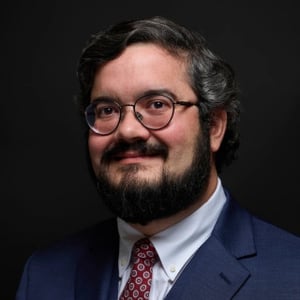
Partner, Torridon Law PLLC
Mike Fragoso is an experienced legal and policy strategist who represents clients before all three branches of the federal government. Most recently he served as chief counsel to the Senate Republican Leader, Mitch McConnell (R-KY). He has negotiated consequential legislation, managed successful congressional oversight, and prepared individuals for the most contentious Senate hearings.
As chief counsel to Leader McConnell, Mike was the Leader’s primary legal advisor and managed the “last mile” of any legislation touching on the Senate Judiciary Committee. He ran the 2024 reauthorization of FISA Section 702 and was involved at the highest levels of the appropriations and budget-reconciliation processes. Mike also repeatedly represented Leader McConnell as counsel of record at the Supreme Court. Leader McConnell said of Mike that he’s “equally at home in the high-minded philosophical discourse of the legal community and the urgent pragmatism of congressional dealmaking,” and that he “maintains a firm grasp on the realm of the possible” but “knows which screws to twist.” He observed that Mike “is so exceptionally competent that he often produces from his desk the work that would normally require, literally, teams of outside counsel.”

Former Cincinnati City Councilman
P.G. Sittenfeld is a writer based in Cincinnati, Ohio, where he lives with his wife, Sarah, an oncologist, and their three young sons. Sittenfeld’s writing has appeared in America Magazine, The New York Times, The Princeton Alumni Weekly, Slate, and Cincinnati Magazine. Sittenfeld also serves as a storytelling collaborator on narrative projects for CEOs, lawyers, doctors, startup founders, and school administrators. He is a graduate of Princeton University and Oxford University in England, where he was a Marshall Scholar.
Previously, Sittenfeld served for nearly a decade on Cincinnati’s City Council, where he became the city’s highest vote-getter through a record of fostering economic growth and innovation as well as supporting the community’s most marginalized members. He was widely expected to become the city’s next and youngest-ever mayor when he was prosecuted on public corruption charges in 2020, stemming from an FBI sting operation later likened in court to a “prosecutorial Truman Show.”
Following Sittenfeld’s acquittal on four counts and conviction on two counts, Jones Day’s Issues and Appeals group took on his entire appeal pro bono, calling it “the most extreme prosecution based on lawful campaign donations in U.S. history.” A nearly unprecedented bi-partisan group of top White House, DOJ, and Judicial officials spanning the past four decades submitted amicus briefs in support of Sittenfeld’s innocence.
For four-and-a-half months in 2024, Sittenfeld was Inmate Number 18085-509 at the Federal Correctional Institution in Ashland, Kentucky, before the U.S. Sixth Circuit Court of Appeals took the highly unusual step of ordering his early release pending the final outcome of his appeal. In May 2025, Sittenfeld and Jones Day were just days away from submitting a petition for writ of certiorari to the U.S. Supreme Court when Sittenfeld was granted a full and unconditional Presidential pardon.
Concerned about the far-reaching First Amendment implications of his prosecution and wanting to halt similarly misguided cases from being brought against other candidates or donors in the future, Sittenfeld and Jones Day decided to move forward with his appeal - marking the first known instance of an individual receiving a Presidential pardon and still being in a position to and choosing to move forward petitioning the Supreme Court. Sittenfeld regularly gives talks at law schools, faith forums, and in private sector settings on topics ranging from faith and resilience to American politics, personal liberties and government overreach, and the U.S. criminal justice system.
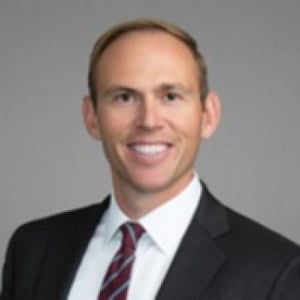
Associate, Gibson, Dunn & Crutcher LLP
Stephen Hammer is a litigation associate in the Dallas office of Gibson, Dunn & Crutcher.
Before joining the firm, Mr. Hammer served as a law clerk to Chief Justice John G. Roberts, Jr. of the Supreme Court of the United States, Judge Gregory G. Katsas of the United States Court of Appeals for the District of Columbia Circuit, and Judge Jeffrey S. Sutton of the United States Court of Appeals for the Sixth Circuit.
Mr. Hammer graduated magna cum laude from Harvard Law School, where he served as managing editor of the Harvard Journal of Law and Public Policy. Before law school, Mr. Hammer served as an infantry officer in the 82nd Airborne Division of the United States Army. His military decorations include the Bronze Star. Mr. Hammer received an M.Phil. in theology from the University of Oxford, where he studied on a Rhodes scholarship. He received an A.B. summa cum laude in classics from Princeton University and graduated as Latin salutatorian.
Mr. Hammer is a member of the Texas and District of Columbia bars.
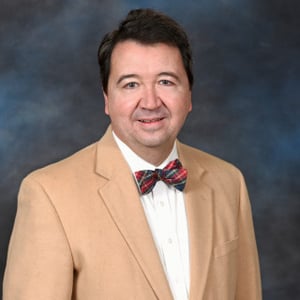
Judge, United States Court of Appeals, Sixth Circuit
John K. Bush is a Circuit Judge on the United States Court of Appeals for the Sixth Circuit.
His chambers are in Louisville, Kentucky. Prior to joining the court, Judge Bush was a partner in the
Louisville office of the firm Bingham Greenebaum Doll (now Dentons Bingham Greenebaum),
where he also was co-chair of the firm’s litigation department. He began his legal practice in the
Washington, D.C. office of Gibson Dunn & Crutcher.
Judge Bush served as a law clerk for Judge J. Smith Henley of the United States Court of
Appeals for the Eighth Circuit. He was graduated summa cum laude from Vanderbilt University,
and cum laude from Harvard Law School. He is an adjunct lecturer at The George Washington
University Law School and the Brandeis School of Law at the University of Louisville.
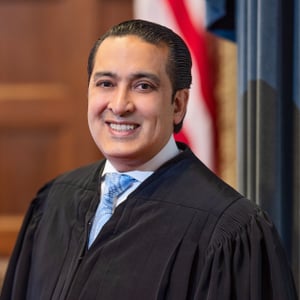
Judge, United States Court of Appeals, Sixth Circuit
John B. Nalbandian serves as a United States Circuit Judge from Kentucky on the U.S. Court of Appeals for the Sixth Circuit. He was nominated and confirmed to that position in 2018. Prior to that, Judge Nalbandian was a partner in the litigation practice group of Taft Stettinius & Hollister LLP in Cincinnati, where he served as the firm’s lead appellate lawyer and also practiced complex litigation in state and federal courts. Judge Nalbandian was board certified by the Ohio State Bar Association as a specialist in appellate law. Prior to joining Taft, Judge Nalbandian practiced for five years in the appellate section of Jones Day in Washington, DC. Upon graduation from law school, Judge Nalbandian clerked for the Honorable Jerry E. Smith of the U.S. Court of Appeals for the Fifth Circuit in Houston. While in private practice, he also served as a board member of the State Justice Institute, a nonprofit organization established by the federal government to improve the administration of justice in state courts. He served as President of the Cincinnati Lawyers Chapter of the Federalist Society. He has also been involved in his community as a board member of the Greater Cincinnati Minority Counsel Program, and as a board member of the Asian Pacific Bar Association of Southwest Ohio. Judge Nalbandian earned his B.S., magna cum laude, from the Wharton School at the University of Pennsylvania and his J.D. from the University of Virginia School of Law, where he was inducted into the Order of the Coif and served as managing editor of the Virginia Law Review.

Associate, MoloLamken LLP
James Barta’s practice focuses on complex civil litigation, white-collar matters, and appellate litigation.
Before joining MoloLamken, Mr. Barta clerked for the Honorable Raymond M. Kethledge of the U.S. Court of Appeals for the Sixth Circuit. He also clerked for the Honorable Stephen J. Murphy, III, of the U.S. District Court for the Eastern District of Michigan. During law school, Mr. Barta interned at the Indiana Solicitor General’s Office and the U.S. Department of Justice.
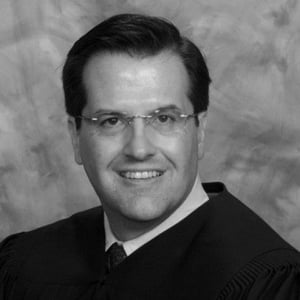
Judge, U.S. District Court for the Eastern District of Michigan
Stephen J. Murphy, III, joined the United States District Court for the Eastern District of Michigan after presidential appointment and confirmation by the United States Senate on June 24, 2008. He assumed the bench on August 18, 2008.
Previously, Judge Murphy served as the presidentially appointed United States Attorney for the Eastern District of Michigan after he was confirmed by unanimous consent of the United States Senate on June 8, 2005. Prior to confirmation, Judge Murphy had taken the oath of office and served continuously as United States Attorney from March 8, 2005 until his appointment as a district judge.
As United States Attorney, Judge Murphy oversaw one of the largest and busiest United States Attorney's offices in America, with operations in Detroit, Flint and Bay City, more than 100 Assistant United States Attorneys and a similar number of support staff.
Prior to his service as United States Attorney, Judge Murphy was an attorney with the General Motors Legal Staff in Detroit, where he specialized in litigation, internal investigations, counseling on various business law issues and other "white collar" matters. He served during that period as a public arbitrator for the National Association of Securities Dealers.
Judge Murphy also served with the United States Department of Justice for more than twelve years: first as a trial attorney with the Civil and Tax Divisions in Washington, D.C. (hired under the prestigious Attorney General's Honors Program), in which positions he defended various federal agencies and prosecuted criminal tax cases in federal district courts throughout the United States. Then, as an Assistant United States Attorney in Detroit from 1992-2000, Judge Murphy prosecuted and tried various violent, narcotics and several high profile white-collar criminal cases in Detroit's Federal Court.
A 1987 graduate of the St. Louis University School of Law (where he edited the law review), Judge Murphy has also been active in legal and community affairs. He has served on the boards of the Hospice of Michigan, Brighton Hospital, and the Historical Society of the U.S. District Court for the Eastern District of Michigan. He was also appointed by his Court to serve as a member of the State Bar of Michigan's Standing Committee on United States Courts. He is presently a member of the Advisory Committee on Appellate Rules of Judicial Conference of the United States.
Judge Murphy is also an experienced appellate lawyer who, while in private practice, handled indigent criminal appointments in the United States Court of Appeals. He is a published legal author and he has served as an adjunct professor at the Ave Maria, Thomas M. Cooley, University of Detroit Mercy, and University of Toledo schools of law, where he has taught Business/White Collar Crimes, Evidence, Tax Fraud and Trial Practice.
Judge, United States Court of Appeals, Sixth Circuit
Judge Readler earned his undergraduate and law degrees from the University of Michigan. After graduating, he served as a law clerk to Judge Alan Norris of the United States Court of Appeals for the Sixth Circuit. Judge Readler then began practicing law in the Columbus office of the international law firm Jones Day, eventually spending ten years as a partner in the firm’s Issues and Appeals Practice Group. While at Jones Day, Judge Readler appeared in state and federal trial and appellate courts around the country, most frequently the Supreme Court of Ohio and the Sixth Circuit. Judge Readler also successfully argued before the United States Supreme Court in McQuiggin v. Perkins on behalf of an inmate claiming actual innocence. His other pro bono representations include representing capital defendants before the Tenth Circuit and the Supreme Court of Ohio, as well as representing defendants sentenced to life in prison before the Sixth Circuit. While at Jones Day, Judge Readler traveled to Nairobi with Lawyers Without Borders to train Kenyan lawyers in prosecuting domestic violence cases, and he was also a recipient of the American Marshall Memorial Fellowship awarded by the German Marshall Fund of the United States. Following his career in private practice, Judge Readler served as Acting Assistant Attorney General for the Civil Division of the United States Department of Justice from 2017 to 2019. In that role, Judge Readler led and supervised over 1,000 lawyers in the Department’s largest litigating division, briefing and arguing several cases on behalf of the United States in federal courts across the country, including high-profile cases significant to the Administration and the Department. In March 2019, Judge Readler was confirmed to serve as a Circuit Judge on the Sixth Circuit. He resides in Columbus.

Dinner and Keynote Address
2025 Tennessee Chapters Conference
Nashville, TNSOC! SIDEBAR: Travel
Campaign Contributions as Crimes? … Convicted, Pardoned, and Seeking Cert in Sittenfeld v. United States
DC Young Lawyers
Washington, DCSupreme Court Roundup (OT2024)
Dallas Lawyers Chapter
Dallas, TXSupreme Court Roundup At Sea with Hon. John K. Bush
Maine Lawyers Chapter
Bailey Island, MEU.S. Supreme Court Roundup - Austin 2025
Austin Lawyers Chapter
Austin, TXNorthern Kentucky Lawyers Chapter Summer Social
Northern Kentucky Lawyers Chapter
Covington, KYTopics
Judge or Jury: Who Decides Threshold Exhaustion Questions Under the PLRA?
Who decides? The answer to this fundamental question matters not only for the allocation of...
Topics
Democracy Affirmed: United States v. Skrmetti and the Return to Self-Government
The Supreme Court chose democracy in United States v. Skrmetti. By upholding Tennessee’s authority to...
Luncheon and Keynote Discussion
2025 Midwestern Chapters Conference
Detroit, MI