
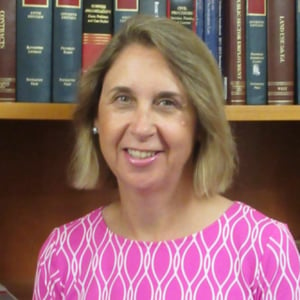
Associate Clinical Professor of Law, Rutgers Law School
Kelly J. Deere is a graduate of Northwestern University School of law and Cornell University. Prof. Deere currently is a full-time faculty member at Rutgers teaching Legal Analysis, Writing, Research and Skills (LAWRS). Prof. Deere taught as a part-time instructor in both the day and evening program teaching both LAWRS and Advanced Legal Writing.
Prof. Deere was an adjunct instructor at Seton Hall University School of Law from 2011-2014. From 2010-2018, Ms. Deere was Of Counsel to the firm Kates, Nussman, Rapone, Ellis & Farhi in Hackensack, N.J. Ms. Deere was brought in as an experienced attorney to assist the firm in its litigation and zoning cases.
Prof. Deere began her legal career at the firm of Donovan Leisure Newton & Irvine in New York where she practiced commercial litigation and bankruptcy. Prof. Deere also worked as a trial attorney for the Administration for Children’s services handling hundreds of abuse and neglect cases from inception through trial. Prof. Deere transitioned to GMHC, Inc. – the largest private AIDS organization in the world where she was initially responsible for managing its family law practice and eventually supervised the majority of the legal department including family law, housing rights, social security law, trusts and estates and bankruptcy.
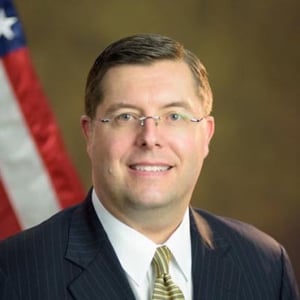
Chief Deputy Attorney General
Ryan Newman is currently Chief Deputy Attorney General for Florida Office of the Attorney General.
During the first Trump Administration, he served as Counselor to the United States Attorney General for national security and international affairs, Deputy General Counsel (Legal Counsel) for the Department of Defense, and Acting Assistant Attorney General for the Office of Legal Policy at the Department of Justice. Prior to serving in the Executive Branch, Ryan was Chief Counsel to United States Senator Ted Cruz during the 114th Congress.
Ryan served as a law clerk to the Honorable Samuel A. Alito, Jr. on the United States Supreme Court, the Honorable Richard J. Leon on the United States District Court for the District of Columbia, and the Honorable J.L. Edmondson on the United States Court of Appeals for the Eleventh Circuit.
Prior to law school, Ryan was an armor officer in the United States Army assigned to the 1st Squadron, 10th U.S. Cavalry Regiment (Buffalo Soldiers). He deployed to Iraq in 2003 for Operation Iraqi Freedom.
Ryan graduated from the United States Military Academy at West Point in 1998. He earned his law degree with high honors from The University of Texas School of Law in 2007.
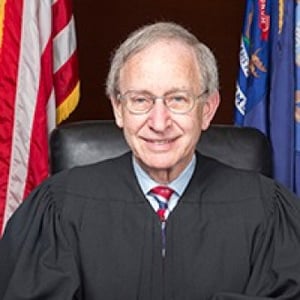
Justice, Michigan Supreme Court
Stephen Markman was appointed Justice of the Michigan Supreme Court on October 1, 1999. He served as the Chief Justice from 2017-2019. Before his appointment, he served as Judge on the Michigan Court of Appeals from 1995-1999. Prior to this, he practiced law with the firm of Miller, Canfield, Paddock & Stone in Detroit.
From 1989-1993, Justice Markman served as United States Attorney, or federal prosecutor, in Michigan, after having been nominated by President George H. W. Bush and confirmed by the United States Senate. From 1985-1989, he served as Assistant Attorney General of the United States, after having been nominated by President Ronald Reagan and confirmed by the United States Senate. In that position, he headed the Department of Justice’s Office of Legal Policy, which served as the principal policy development office within the Department, and which coordinated the federal judicial selection process. Prior to this, he served for seven years as Chief Counsel of the United States Senate Subcommittee on the Constitution, and as Deputy Chief Counsel of the United States Senate Judiciary Committee.
Justice Markman has authored articles for such publications as the University of Michigan Journal of Law Reform, the Detroit College of Law Review, the Stanford Law Review, the University of Chicago Law Review, the American Criminal Justice Law Review, the Barrister’s Law Journal, the Harvard Journal of Law & Public Policy, and the American University Law Review. He has also served as a contributing editor of National Review magazine, and has authored chapters in such books as “In the Name of Justice: The Aims of the Criminal Law,” “Still the Law of the Land,” and “Originalism: A Quarter Century of Debate.”
Justice Markman has taught constitutional law at Hillsdale College since 1993. He has served on the Board of Directors of the Western Michigan University Thomas M. Cooley Law School. He traveled to Ukraine on two occasions on behalf of the State Department, to provide assistance in the development of that nation’s post-Soviet constitution. He is a Fellow of the Michigan Bar Foundation, a Master of the Bench of the Inns of Court, and a member of the One Hundred Club. He has spoken before hundreds of youth, civic, charitable, and legal groups throughout Michigan and nationally, and has coached Little League baseball and basketball. He lives with his wife Mary Kathleen in Mason, and has two sons, James and Charles.
Justice Markman was re-elected to the Supreme Court in 2000, 2004, and 2012. His present term expires January 1, 2021.
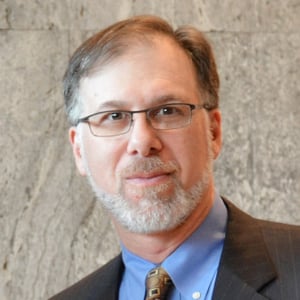
Partner, Schaerr | Jaffe LLP
Erik Jaffe has been involved in appeals on a broad range of legal issues, including First Amendment challenges to campaign finance reform, Commerce Clause challenges to Health Care Reform and other federal legislation, Equal Protection Clause challenges to affirmative action in education, First Amendment challenges to school vouchers, Fifth Amendment challenges to takings of property, Second Amendment challenges to restrictions on gun ownership, and a wide variety of cases involving patents, copyrights, ERISA, securities fraud, federal preemption, environmental regulation, and other state and federal constitutional and statutory matters. He has represented businesses and non-profit groups, Judges, Senators, former government officials, Nobel Prize winners, and a broad cross-section of private individuals. Mr. Jaffe has been involved in over 120 Supreme Court matters, including filing over 30 cert. petitions, representing half-a-dozen parties on the merits, and filing over 70 amicus briefs at both the cert. and merits stages.
A 1990 graduate of the Columbia University School of Law, Mr. Jaffe was a law clerk to Judge Douglas H. Ginsburg of the United States Court of Appeals for the District of Columbia Circuit from 1990 to 1991. Following that clerkship he spent five years in litigation practice with the Washington, D.C. law firm of Williams & Connolly. In the summer of 1996 he left Williams & Connolly to clerk for Supreme Court Justice Clarence Thomas. At the end of that clerkship he started his own practice, and he was a sole practitioner from 1997 to 2018. He joined the firm of Schaerr | Jaffe LLP in 2018.
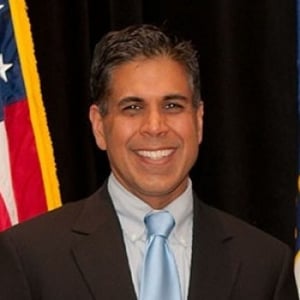
Judge, United States Court of Appeals, Sixth Circuit
Amul R. Thapar serves as a judge on the United States Court of Appeals for the Sixth Circuit. His judicial career began in 2007 when President George W. Bush nominated him to serve on the Eastern District of Kentucky, making him the first South Asian Article III judge in American history. In 2017, he became President Donald J. Trump’s first appellate court nominee.
Before joining the bench, Judge Thapar served as the United States Attorney for the Eastern District of Kentucky. While United States Attorney, Judge Thapar worked on the Attorney General’s Advisory Committee (“AGAC”) and chaired the AGAC’s Controlled Substances and Asset Forfeiture subcommittee. He also served on the Terrorism and National Security subcommittee, the Violent Crime subcommittee, and the Child Exploitation working group.
Judge Thapar has worked in private practice, at Williams & Connolly in Washington, D.C., and Squire, Sanders & Dempsey in Cincinnati, Ohio. He also served as an Assistant United States Attorney in both the Southern District of Ohio and the District of Columbia.
Judge Thapar received his undergraduate degree from Boston College and his law degree from the University of California, Berkeley. After graduating, Judge Thapar worked as a law clerk to the Honorable S. Arthur Spiegel of the United States District Court for the Southern District of Ohio, and the Honorable Nathaniel R. Jones of the United States Court of Appeals for the Sixth Circuit.
Judge Thapar has also published in the Yale Law Journal, Michigan Law Review, and Catholic University Law Review. He teaches courses on originalism, the Federalists and Anti-Federalists, and legal writing at Notre Dame Law School, the University of Virginia School of Law, and Vanderbilt Law School.
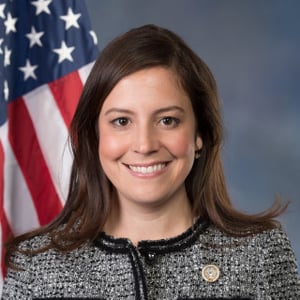
US Representative, 21st District of New York
Congresswoman Elise Stefanik proudly represents New York’s 21st District in her fifth term and serves as the House Republican Conference Chair and most senior Republican in New York.
At the time of her first election in 2014, Elise was the youngest woman ever elected to Congress in United States history. She continued this historic rise and she is currently the youngest woman ever to serve in top elected House leadership. Elise is known for her tireless work ethic, policy leadership, media savvy, genuine grassroots connection with constituents, and laser focus on delivering real results to Upstate New York and North Country. Elise has consistently won historic re-election victories, often by the largest margin of any Republican in the Northeast, and consistently earning the most votes in history for any congressional candidate in the North Country.
Elise is a senior member of the Armed Services Committee, the Committee on Education and the Workforce, the House Permanent Select Committee on Intelligence, and the Select Subcommittee on the Weaponization of the Federal Government. Elise has been rated as one of the most effective and bipartisan Members of Congress. She is a well-respected national policy leader on issues ranging from economic policy impacting small businesses and manufacturers to national security, intelligence reform and oversight, rural broadband, rural healthcare, constitutional protections, conservation, life, K-12 & higher education, cyber security, artificial intelligence, law enforcement, battlefield preservation, northern border issues, border security, & government accountability and transparency.
Elise was born and raised in Upstate New York. Prior to serving in Congress, she worked at her family’s small business. Growing up in a small business family, Elise learned, lived, and understands the values of hard work, perseverance, determination, and grit. As the first member of her immediate family to have the opportunity to earn a college degree, Elise graduated with Honors from Harvard. From 2006 to 2009, Elise served in the West Wing of the White House on President George W. Bush’s Domestic Policy Council Staff and the Chief of Staff’s office where she assisted in overseeing the policy development process on all economic and domestic policy issues.
It is the highest and most humbling honor of Elise’s life to represent Upstate New York and the North Country in Congress. She is proud to work tirelessly every day to bring a new generation of leadership to Washington on behalf of her district’s hardworking families, small businesses, farmers, students, seniors, service members, military families, law enforcement officers, and veterans. She is unapologetic about fighting every day to give her constituents a seat at the absolute highest levels of government.
Elise lives in Schuylerville with her husband Matt and their young son Sam. They are proud to call Upstate New York – the cradle of the American Revolution – home.
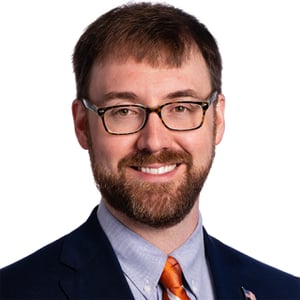
Senior Legal Fellow, Courts and the Constitution, Legal Policy Center, The Heritage Foundation
Zack is a Senior Legal Fellow of Courts and the Constitution at The Heritage Foundation.
He previously served for several years as an Assistant United States Attorney in the Northern District of Florida. Prior to that, he spent two years as an associate in the Washington, D.C. office of Cleary Gottlieb Steen & Hamilton, which he joined after clerking for the Hon. Emmett R. Cox on the United States Court of Appeals for the Eleventh Circuit.
Smith received his undergraduate, master’s, and law degrees from the University of Florida. During law school, Smith served as the Editor in Chief of the Florida Law Review and served on the executive boards of several student organizations, including the UF Chapter of the Federalist Society.
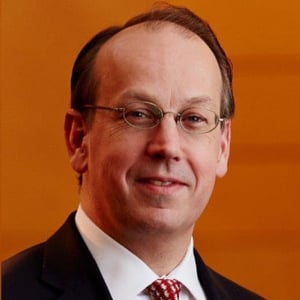
Partner, Clement & Murphy, PLLC
Paul served as the 43rd Solicitor General of the United States from June 2005 until June 2008. Before his confirmation as Solicitor General, he served as Acting Solicitor General for nearly a year and as Principal Deputy Solicitor General for over three years.
Paul has argued over 100 cases before the United States Supreme Court, including McConnell v. FEC, Tennessee v. Lane, United States v. Booker, MGM v. Grokster, Hobby Lobby v. Burwell, Epic Systems Corp. v. Lewis, Rucho v. Common Cause, Facebook v. Duguid, and TransUnion v. Ramirez. Paul has argued more Supreme Court cases since 2000 than any lawyer in or out of government. He has also argued many important cases in the lower courts, including Walker v. Cheney, United States v. Moussaoui and NFL v. Brady.
Paul’s practice focuses on appellate matters, constitutional litigation and strategic counseling. He represents a broad array of clients in the Supreme Court and in federal and state appellate courts. Last year, for example, he successfully argued Supreme Court cases involving significant issues of energy regulation, statutory interpretation, state sovereign immunity and Article III standing, and successfully argued a trademark appeal in the Fourth Circuit, and a constitutional appeal before the en banc Eleventh Circuit.
Paul focuses on high-stakes appeals. In recent years, he successfully defended a $1.2 billion jury verdict for clients in a Tenth Circuit case, while securing the reversal of an over $2 billion jury verdict for another client in the Seventh Circuit and the approval of a nearly $1 billion dollar class action settlement in the Third Circuit. He has initiated major administrative law challenges and constitutional litigation against the federal government, such as the successful challenge to the HHS drug-pricing rule and threatened challenges that led to the withdrawal of the Treasury Department’s proposed cryptocurrency regulations. He also counsels clients on a variety of strategic legal questions, whether arising from pending legislation, government inquiries or ongoing litigation.
Paul has undertaken substantial pro bono engagements in the Supreme Court, such as twice successfully representing the defendant in Bond v. United States and successfully representing the Omaha Tribe in Nebraska v. Parker, the guardian ad litem in Adoptive Couple v. Baby Girl, the defendant in Sekhar v. United States, a high school football coach in Kennedy v. Bremerton, and the Little Sisters of the Poor. Paul’s pro bono representation also precipitated the federal government’s confession of error in United States v. Rojas.
Following law school, Paul clerked for Judge Laurence H. Silberman of the U.S. Court of Appeals for the D.C. Circuit and for Associate Justice Antonin Scalia of the U.S. Supreme Court. After his clerkships, he went on to serve as Chief Counsel of the U.S. Senate Subcommittee on the Constitution, Federalism and Property Rights.
Paul is a Distinguished Lecturer in Law at the Georgetown University Law Center, where he has taught in various capacities since 1998. He also serves as a Senior Fellow of the Law Center’s Supreme Court Institute. He is the Justice Joseph Story Distinguished Practitioner in Residence at the Gray Center at Scalia Law School.

Executive Vice President, The Federalist Society
Dean Reuter is Executive Vice President at the Federalist Society for Law and Public Policy Studies. He has served in two federal government agency Offices of the Inspector General, as Counsel to the Inspector General and Deputy Inspector General, responsible for policing the use of federal funds granted and contracted through those agencies. As such, he helped conduct and oversee criminal investigations across the country. He is the principal author of the non-fiction book, The Hidden Nazi: The Untold Story of America's Deal with the Devil, and editor of Liberty’s Nemesis: The Unchecked Expansion of the State and Confronting Terror: 9/11 and the Future of American National Security. He was appointed by the President and served as Vice-Chairman of the Board of Directors of the Corporation for National and Community Service, and recently served as an appointee on the U.S. Commission on Presidential Scholars. He is a graduate of Hood College (BA with Honors) and the University of Maryland School of Law.
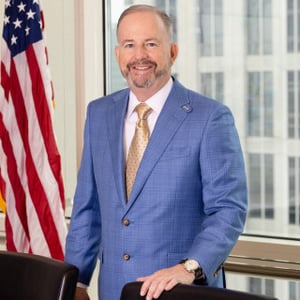
Chairman of the Board, Gunster Law Firm
George S. LeMieux is a trusted advisor and advocate for significant businesses, including Fortune 500 companies, their officers and boards, as well as high profile individuals in Florida and throughout the country. He focuses his practice on resolving business, and governmental disputes, and advising CEOs and C-suite executives on business, law and government from a local, state and national perspective.
George advocates for clients before state and federal trial and appellate courts, as well as governmental agencies and regulatory bodies. He defends clients in enforcement matters brought by state attorneys general, advocates for clients in administrative law proceedings including bid protests, and counsels governmental bodies on public records and public meeting requirements. He has successfully litigated intellectual property and business disputes to verdict.
George leads internal corporate investigations representing boards of directors and has experience in representing independent committees of boards in related party transactions. Because of his breadth of legal experience, his practice also includes professional liability defense.
George served as Florida's 34th United States Senator in the 111th Congress. He also served as Florida's deputy attorney general and as the governor's chief of staff overseeing all state agencies and operations.
George serves as the chairman of the board of Gunster law firm. He is the founder of the LeMieux Center for Public Policy at Palm Beach Atlantic University. He is the author of two books along with Laura Mize on the history of Florida: Florida Made and Florida Heritage Kids.
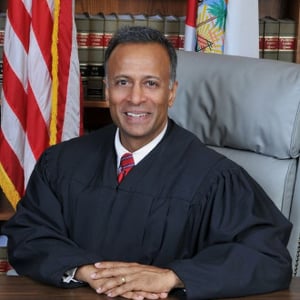
United States District Judge, United States District Court for the Southern District of Florida
On December 20, 2019, Raag Singhal received his judicial commission to serve on the United States District Court for the Southern District of Florida. Judge Singhal is the first Asian American in history to serve as an Article III judge in the jurisdiction of the Eleventh Circuit (Alabama, Georgia and Florida).
Immediately prior to becoming a federal judge, Judge Singhal spent eight years as a State Circuit Court Judge in Broward County, Florida, having been appointed by then-Governor Rick Scott in 2011. During that period of time, Singhal served, at times, in the Criminal, Civil and Mental Health divisions and was fortunate enough to sit as an Associate Judge on Florida’s Fourth District Court of Appeal on four occasions.
As a lawyer, Singhal gained experience at a civil litigation firm followed by three years as an Assistant State Attorney. After that, Singhal ran a successful criminal defense practice in Fort Lauderdale for eighteen years. During that time, he handled more than two hundred jury trials including thirty first-degree murder cases.
Judge Singhal has had leadership roles in many law-related groups. He is past-President of the Broward Association of Criminal Defense Lawyers and the Stephen H. Booher Chapter of the American Inns of Court. He was on the Board of Directors of the Broward County Bar Association, and is a frequent speaker at events for various local Bar groups such as the Asian Pacific American Bar Association and the Federalist Society. Singhal was also Associate Dean of the Florida College for Advanced Judicial Studies upon his elevation to the federal court system.
Judge Singhal received his law degree from Wake Forest University School of Law in 1989 where he was very active in Moot Court activities, and was on the winning team of the J. Braxton Craven National Moot Court Competition (4th Amendment). He received his undergraduate degree in Political Science from Rice University in 1986.

Emergency Powers in the Pandemic [The FedSoc Films Podcast]
Kelly Deere
In this episode of the FedSoc Films Podcast, Kelly Deere, Professor of Law at Rutgers...
An Evening With Hon. Amul Thapar
Montana Lawyers Chapter
Helena, MTMay 2024 DC Lunch with Congresswoman Elise Stefanik
Washington, DCOpen Minds: Concentrated Control, Acceptable Opinions, and Corporate Influence Part 2
Ryan Dean Newman
In Part 2 of Open Minds with Ryan Newman, we discuss government and private coercion...
Toward a More Confident State Constitutionalism
Steve J. Markman
This article is adapted from a speech Justice Markman delivered to the Florida Annual Education...
DEI in the Courts: What to Do When Courts Discriminate?
Montgomery Lawyers Chapter
Montgomery, ALFireside Chat With Paul Clement
Washington, DCPower, Persuasion, or Propaganda? [The FedSoc Films Podcast]
Erik S. Jaffe
In this episode of the FedSoc Films Podcast, Erik Jaffe, a partner at Schaerr Jaffe,...
The U.S. Constitution is Good: A Discussion with Hon. Raag Singhal and Hon. George LeMieux
Broward County Lawyers Chapter
Fort Lauderdale, FLTopics
Call for Papers on “The Future of Law in an AI World”
The Federalist Society is proud to issue a call for papers on “The Future of...