
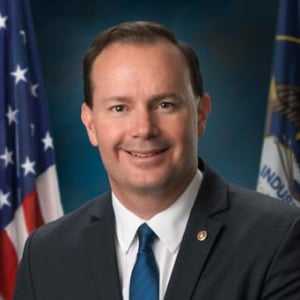
United States Senator, Utah
Elected in 2010 as Utah's 16th Senator, Mike Lee has spent his career defending the basic liberties of Americans and Utahns as a tireless advocate for our founding constitutional principles.
Senator Lee acquired a deep respect for the Constitution early on. His father, Rex Lee, who served as the Solicitor General under President Ronald Reagan, would often discuss varied aspects of judicial and constitutional doctrine around the kitchen table, from Due Process to the uses of Executive Plenary Power. He attended most of his father's arguments before the U.S. Supreme Court, giving him a unique, hands-on experience and understanding of government up close.
Lee graduated from Brigham Young University with a Bachelor of Science in Political Science, and served as BYU's Student Body President in his senior year. He graduated from BYU's Law School in 1997 and went on to serve as law clerk to Judge Dee Benson of the U.S. District Court for the District of Utah, and then with future Supreme Court Justice Judge Samuel A. Alito, Jr. on the U.S. Court of Appeals for the Third Circuit.
Lee spent several years as an attorney with the law firm Sidley & Austin specializing in appellate and Supreme Court litigation, and then served as an Assistant U.S. Attorney in Salt Lake City arguing cases before the U.S. Court of Appeals for the Tenth Circuit.
Lee served the state of Utah as Governor Jon Huntsman's General Counsel and was later honored to reunite with Justice Alito, now on the Supreme Court, for a one-year clerkship. He returned to private practice in 2007.
Throughout his career, Lee earned a reputation as an outstanding practitioner of the law based on his sound judgment, abilities in the courtroom, and thorough understanding of the Constitution.
Today, Lee fights to preserve America's proud founding document in the United States Senate. He advocates efforts to support constitutionally limited government, fiscal responsibility, individual liberty, and economic prosperity.
Lee is a member of the Judiciary Committee, and serves as Chairman of the Antitrust, Competition Policy and Consumer Rights Subcommittee protecting business competition and personal freedom.
He also oversees issues critical to Utah as the Chairman of the Water and Power Subcommittee of the Energy and Natural Resources Committee. He serves on the Commerce Committee and the Joint Economic Committee, as well.
In the 114th Congress, Lee also began his tenure as Chairman of the Senate Steering Committee, where he works with his Republican colleagues in the Senate to introduce bold and innovative solutions to issues facing the American people.
Lee and his wife Sharon live in Alpine, Utah, with their three children. He is a member of The Church of Jesus Christ of Latter-day Saints and served a two-year mission for the Church in the Texas Rio Grande Valley.
United States Senator, Utah
Elected in 2010 as Utah's 16th Senator, Mike Lee has spent his career defending the basic liberties of Americans and Utahns as a tireless advocate for our founding constitutional principles.
Senator Lee acquired a deep respect for the Constitution early on. His father, Rex Lee, who served as the Solicitor General under President Ronald Reagan, would often discuss varied aspects of judicial and constitutional doctrine around the kitchen table, from Due Process to the uses of Executive Plenary Power. He attended most of his father's arguments before the U.S. Supreme Court, giving him a unique, hands-on experience and understanding of government up close.
Lee graduated from Brigham Young University with a Bachelor of Science in Political Science, and served as BYU's Student Body President in his senior year. He graduated from BYU's Law School in 1997 and went on to serve as law clerk to Judge Dee Benson of the U.S. District Court for the District of Utah, and then with future Supreme Court Justice Judge Samuel A. Alito, Jr. on the U.S. Court of Appeals for the Third Circuit.
Lee spent several years as an attorney with the law firm Sidley & Austin specializing in appellate and Supreme Court litigation, and then served as an Assistant U.S. Attorney in Salt Lake City arguing cases before the U.S. Court of Appeals for the Tenth Circuit.
Lee served the state of Utah as Governor Jon Huntsman's General Counsel and was later honored to reunite with Justice Alito, now on the Supreme Court, for a one-year clerkship. He returned to private practice in 2007.
Throughout his career, Lee earned a reputation as an outstanding practitioner of the law based on his sound judgment, abilities in the courtroom, and thorough understanding of the Constitution.
Today, Lee fights to preserve America's proud founding document in the United States Senate. He advocates efforts to support constitutionally limited government, fiscal responsibility, individual liberty, and economic prosperity.
Lee is a member of the Judiciary Committee, and serves as Chairman of the Antitrust, Competition Policy and Consumer Rights Subcommittee protecting business competition and personal freedom.
He also oversees issues critical to Utah as the Chairman of the Water and Power Subcommittee of the Energy and Natural Resources Committee. He serves on the Commerce Committee and the Joint Economic Committee, as well.
In the 114th Congress, Lee also began his tenure as Chairman of the Senate Steering Committee, where he works with his Republican colleagues in the Senate to introduce bold and innovative solutions to issues facing the American people.
Lee and his wife Sharon live in Alpine, Utah, with their three children. He is a member of The Church of Jesus Christ of Latter-day Saints and served a two-year mission for the Church in the Texas Rio Grande Valley.
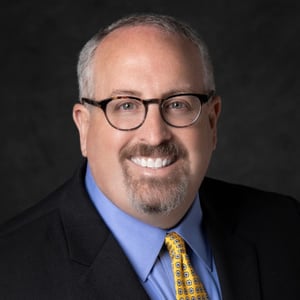
Partner/Member, Hinkle Law Firm
Brad Schlozman is a partner at Hinkle Law Firm in Wichita, KS, where his practice is primarily concentrated on Employee Benefits/ERISA law, as well as government investigations. In his employee benefits work, Brad represents plans, employers, third-party administrators, record-keepers, investment advisors, financial institutions, insurance brokers, and various fiduciaries, helping them to achieve and maintain compliance with the array of laws, regulations, and guidance governing qualified and welfare benefit issues. In his government investigations practice, Brad represents states, municipalities, and law enforcement organizations around the country that are being investigated by the U.S. Department of Justice and state regulatory agencies on various civil rights issues. Representations typically cover voting rights issues, disability matters, as well as a range of policing and law enforcement issues.
Prior to joining the firm, Brad held a series of high-level posts in the Department of Justice, including United States Attorney for the Western District of Missouri, Acting Assistant Attorney General of the Civil Rights Division, and Counsel to the Deputy Attorney General.
Brad graduated from the University of Pennsylvania and received his juris doctor from the George Washington University Law School. After law school, Brad completed a two-year federal judicial clerkship with Chief U.S. District Judge G. Thomas VanBebber of the District of Kansas. He then clerked for an additional year for U.S. Circuit Judge Mary Beck Briscoe of the U.S. Court of Appeals for the Tenth Circuit.
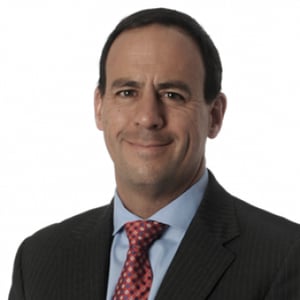
Shareholder, Greenberg Traurig LLP
Troy A. Eid focuses his litigation, mediation and transactional practice on government enforcement, investigations and compliance, environmental law, energy and natural resource development, and Federal Indian law and Native American and Alaska Native tribal law. Troy is a trusted advocate and mediator in the Rocky Mountain West and in federal, state and tribal trial and appellate courtrooms across the country.
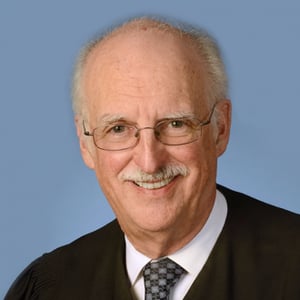
Senior Judge, United States Court of Appeals, District of Columbia Circuit
Circuit Judge Douglas H. Ginsburg was appointed to the United States Court of Appeals for the District of Columbia in 1986. After receiving his B.S. from Cornell University in 1970, and his J.D. from the University of Chicago Law School in 1973, he clerked on the D.C. Circuit and for Justice Thurgood Marshall on the United States Supreme Court. Thereafter, Judge Ginsburg was a professor at the Harvard Law School, the Deputy Assistant and then Assistant Attorney General for the Antitrust Division of the Department of Justice, as well as the Administrator of the Office of Information and Regulatory Affairs in the Office of Management and Budget. Concurrent with his service as a federal judge, Judge Ginsburg has taught at the University of Chicago Law School and the New York University School of Law. Judge Ginsburg is currently a Professor of Law at the George Mason University and a visiting professor at University College London, Faculty of Laws.
Judge Ginsburg is the Chairman of the International Advisory Board of the Global Antitrust Institute at the Law and Economics Center of the George Mason University School of Law. He also serves on the Advisory Boards of: Competition Policy International; the Harvard Journal of Law and Public Policy; the Journal of Competition Law and Economics; the Journal of Law, Economics & Policy; the Supreme Court Economic Review; the University of Chicago Law Review; the New York University Journal of Law and Liberty; and, at University College London, both the Centre for Law, Economics and Society and the Jevons Institute for Competition Law and Economics.
In 2020, Judge Ginsburg was the 11th recipient of the John Sherman Award, presented by the Antitrust Division of the Department of Justice in recognition of the awardee’s Lifetime Contributions to Antitrust Law and Policy.
In 2014, Judge Ginsburg received the Lifetime Achievement Award given annually by the Global Competition Review.
He is the author or co-author of several books and more than 100 articles on competition and regulation, including, most recently, Growing Convergence: The Limited Role of Antitrust in Standard Essential Patent Disputes, in CPI Antitrust Chronicle, Summer 2021, Vol. 1, No. 2.
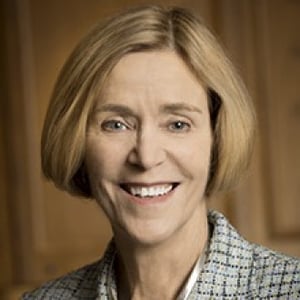
Lafayette S. Foster Professor of Law, Yale Law School
Kate Stith, Lafayette S. Foster Professor of Law at Yale Law School, teaches and writes in the areas of criminal law, criminal procedure, and constitutional law. Prior to joining the faculty at Yale, Professor Stith was an Assistant United States Attorney for the Southern District of New York, where she prosecuted white-collar and organized-crime cases. Professor Stith is serving or has served as an Adviser for the American Law Institute project Model Penal Code Sentencing; on the Committee on Law and Justice of the National Research Council; on the Professional Ethics Committee in the State of Connecticut; as a Commissioner of the Permanent Commission on the Status of Women in Connecticut; as President of the Connecticut Bar Foundation; on the Dartmouth College Board of Trustees; as faculty sponsor and director of the Women's Campaign School at Yale; as Deputy Dean of Yale Law School; and, by appointment of the Chief Justice of the United States, on the Advisory Committee for the Federal Rules of Criminal Procedure. Her book on the federal sentencing guidelines, Fear of Judging (with J.A. Cabranes), was awarded a Certificate of Merit by the ABA in 1999. A graduate of Dartmouth College, the Kennedy School of Government, and Harvard Law School, she clerked for Judge Carl McGowan of the U.S. Court of Appeals for the District of Columbia and for Supreme Court Justice Byron R.White.
Emeritus Professor of Political Economy, Claremont McKenna College
Wm. Craig Stubblebine, Emeritus Professor of Political Economy at the Claremont McKenna College (formerly Claremont Men’s College), is a native of Texas. He holds a B.S. degree from the University of Delaware, and a Ph.D. degree in Economics from the University of Virginia. He is married to the former Carol Ann Wiebe and has two children, Julia and Erik.
Stubblebine taught Economics on the faculty of the University of Virginia from 1961 to 1963, and on the faculty of the University of Delaware from 1963 to 1966. During 1965-66, he was a National Science Foundation Faculty Fellow at the Massachusetts Institute of Technology.
From 1966 to 2003, Stubblebine was a member of the faculties of Claremont McKenna College and Claremont Graduate School. He now is an emeritus professor. He was on leave from Claremont during 1967-68, when he served as a Fulbright Lecturer in Welfare Economics at the University of Turin, Italy; and during 1971-72, when he served as Associate Professor of Economics at Southern Methodist University, and Visiting Scholar in Public Choice and Professor of Economics at Virginia Polytechnic Institute and State University. Stubblebine was appointed Professor of Economics in 1976 and received the Von Tobel Chair of Political Economy in 1979. He was appointed founding Director of the Center for the Study of Law Structures in 1977, serving in that capacity until he became Chairman of the Department of Economics during 1984-87.
Stubblebine has served as President of the Western Tax Association, as President of the Faculty Senate of the Claremont Colleges, and has held various offices at Laws-atWork, including Vice-Chairman. He also has served as a Director and Senior Associate of Public Associates Incorporated, as a Senior Associate of JurEcon, and as a founding Director of the National Tax Limitation Committee. He was a founding director of the YES Fund and a director of Seapointe Savings and Loan. He chaired the national committee which drafted the proposed Federal tax/spending limitation amendment adopted by the U. S. Senate in 1982 and has served as a consultant to various state limitation drafting committees.
Author of articles on property rights and public finance, Stubblebine is a member of several professional societies and has participated in governmental and business consulting activities. With R. T. Smith, he is co-author of Maintaining the Legacy of Proposition 13 (1991). He is an editor of and contributor to Reaganomics: a Mid-Term Report (1983). He has lectured widely, has participated in many economic conferences, and served on a variety of task forces. He has been listed in various “Who’s Who ....” including “Who’s Who in America” and “Who’s Who in Economics”.
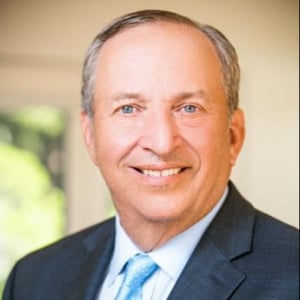
President Emeritus, Harvard University
Lawrence H. Summers is President Emeritus of Harvard University. During the past two decades he has served in a series of senior policy positions, including Vice President of development economics and chief economist of the World Bank, Undersecretary of the Treasury for International Affairs, Director of the National Economic Council for the Obama Administration from 2009 to 2011, and Secretary of the Treasury of the United States, from 1999 to 2001.
He received a bachelor of science degree from the Massachusetts Institute of Technology in 1975 and was awarded a Ph.D. from Harvard in 1982. In 1983, he became one of the youngest individuals in recent history to be named as a tenured member of the Harvard University faculty. In 1987 Mr. Summers became the first social scientist ever to receive the annual Alan T. Waterman Award of the National Science Foundation (NSF) and in 1993, he was awarded the John Bates Clark Medal, given every two years to the outstanding American economist under the age of 40.
He is currently the Charles W. Eliot University Professor at Harvard University. He and his wife Elisa New, a professor of English at Harvard, reside in Brookline with their six children.
Senior Judge, United States Court of Appeals, District of Columbia Circuit
Circuit Judge Douglas H. Ginsburg was appointed to the United States Court of Appeals for the District of Columbia in 1986. After receiving his B.S. from Cornell University in 1970, and his J.D. from the University of Chicago Law School in 1973, he clerked on the D.C. Circuit and for Justice Thurgood Marshall on the United States Supreme Court. Thereafter, Judge Ginsburg was a professor at the Harvard Law School, the Deputy Assistant and then Assistant Attorney General for the Antitrust Division of the Department of Justice, as well as the Administrator of the Office of Information and Regulatory Affairs in the Office of Management and Budget. Concurrent with his service as a federal judge, Judge Ginsburg has taught at the University of Chicago Law School and the New York University School of Law. Judge Ginsburg is currently a Professor of Law at the George Mason University and a visiting professor at University College London, Faculty of Laws.
Judge Ginsburg is the Chairman of the International Advisory Board of the Global Antitrust Institute at the Law and Economics Center of the George Mason University School of Law. He also serves on the Advisory Boards of: Competition Policy International; the Harvard Journal of Law and Public Policy; the Journal of Competition Law and Economics; the Journal of Law, Economics & Policy; the Supreme Court Economic Review; the University of Chicago Law Review; the New York University Journal of Law and Liberty; and, at University College London, both the Centre for Law, Economics and Society and the Jevons Institute for Competition Law and Economics.
In 2020, Judge Ginsburg was the 11th recipient of the John Sherman Award, presented by the Antitrust Division of the Department of Justice in recognition of the awardee’s Lifetime Contributions to Antitrust Law and Policy.
In 2014, Judge Ginsburg received the Lifetime Achievement Award given annually by the Global Competition Review.
He is the author or co-author of several books and more than 100 articles on competition and regulation, including, most recently, Growing Convergence: The Limited Role of Antitrust in Standard Essential Patent Disputes, in CPI Antitrust Chronicle, Summer 2021, Vol. 1, No. 2.
Lafayette S. Foster Professor of Law, Yale Law School
Kate Stith, Lafayette S. Foster Professor of Law at Yale Law School, teaches and writes in the areas of criminal law, criminal procedure, and constitutional law. Prior to joining the faculty at Yale, Professor Stith was an Assistant United States Attorney for the Southern District of New York, where she prosecuted white-collar and organized-crime cases. Professor Stith is serving or has served as an Adviser for the American Law Institute project Model Penal Code Sentencing; on the Committee on Law and Justice of the National Research Council; on the Professional Ethics Committee in the State of Connecticut; as a Commissioner of the Permanent Commission on the Status of Women in Connecticut; as President of the Connecticut Bar Foundation; on the Dartmouth College Board of Trustees; as faculty sponsor and director of the Women's Campaign School at Yale; as Deputy Dean of Yale Law School; and, by appointment of the Chief Justice of the United States, on the Advisory Committee for the Federal Rules of Criminal Procedure. Her book on the federal sentencing guidelines, Fear of Judging (with J.A. Cabranes), was awarded a Certificate of Merit by the ABA in 1999. A graduate of Dartmouth College, the Kennedy School of Government, and Harvard Law School, she clerked for Judge Carl McGowan of the U.S. Court of Appeals for the District of Columbia and for Supreme Court Justice Byron R.White.
Emeritus Professor of Political Economy, Claremont McKenna College
Wm. Craig Stubblebine, Emeritus Professor of Political Economy at the Claremont McKenna College (formerly Claremont Men’s College), is a native of Texas. He holds a B.S. degree from the University of Delaware, and a Ph.D. degree in Economics from the University of Virginia. He is married to the former Carol Ann Wiebe and has two children, Julia and Erik.
Stubblebine taught Economics on the faculty of the University of Virginia from 1961 to 1963, and on the faculty of the University of Delaware from 1963 to 1966. During 1965-66, he was a National Science Foundation Faculty Fellow at the Massachusetts Institute of Technology.
From 1966 to 2003, Stubblebine was a member of the faculties of Claremont McKenna College and Claremont Graduate School. He now is an emeritus professor. He was on leave from Claremont during 1967-68, when he served as a Fulbright Lecturer in Welfare Economics at the University of Turin, Italy; and during 1971-72, when he served as Associate Professor of Economics at Southern Methodist University, and Visiting Scholar in Public Choice and Professor of Economics at Virginia Polytechnic Institute and State University. Stubblebine was appointed Professor of Economics in 1976 and received the Von Tobel Chair of Political Economy in 1979. He was appointed founding Director of the Center for the Study of Law Structures in 1977, serving in that capacity until he became Chairman of the Department of Economics during 1984-87.
Stubblebine has served as President of the Western Tax Association, as President of the Faculty Senate of the Claremont Colleges, and has held various offices at Laws-atWork, including Vice-Chairman. He also has served as a Director and Senior Associate of Public Associates Incorporated, as a Senior Associate of JurEcon, and as a founding Director of the National Tax Limitation Committee. He was a founding director of the YES Fund and a director of Seapointe Savings and Loan. He chaired the national committee which drafted the proposed Federal tax/spending limitation amendment adopted by the U. S. Senate in 1982 and has served as a consultant to various state limitation drafting committees.
Author of articles on property rights and public finance, Stubblebine is a member of several professional societies and has participated in governmental and business consulting activities. With R. T. Smith, he is co-author of Maintaining the Legacy of Proposition 13 (1991). He is an editor of and contributor to Reaganomics: a Mid-Term Report (1983). He has lectured widely, has participated in many economic conferences, and served on a variety of task forces. He has been listed in various “Who’s Who ....” including “Who’s Who in America” and “Who’s Who in Economics”.
President Emeritus, Harvard University
Lawrence H. Summers is President Emeritus of Harvard University. During the past two decades he has served in a series of senior policy positions, including Vice President of development economics and chief economist of the World Bank, Undersecretary of the Treasury for International Affairs, Director of the National Economic Council for the Obama Administration from 2009 to 2011, and Secretary of the Treasury of the United States, from 1999 to 2001.
He received a bachelor of science degree from the Massachusetts Institute of Technology in 1975 and was awarded a Ph.D. from Harvard in 1982. In 1983, he became one of the youngest individuals in recent history to be named as a tenured member of the Harvard University faculty. In 1987 Mr. Summers became the first social scientist ever to receive the annual Alan T. Waterman Award of the National Science Foundation (NSF) and in 1993, he was awarded the John Bates Clark Medal, given every two years to the outstanding American economist under the age of 40.
He is currently the Charles W. Eliot University Professor at Harvard University. He and his wife Elisa New, a professor of English at Harvard, reside in Brookline with their six children.
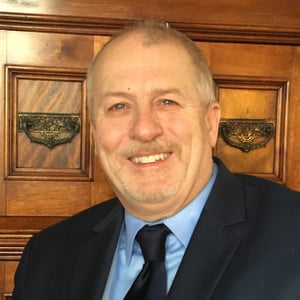
Founder, President, and General Counsel, Wisconsin Institute for Law & Liberty
Rick Esenberg is the founder and current President and General Counsel of the Wisconsin Institute for Law & Liberty, a rapidly expanding law and policy organization headquartered in Milwaukee. Under Rick’s leadership, WILL has grown into one of the more active state-based think tanks and litigation centers in the country. Rick is a frequent litigator in state and federal courts and nationally recognized scholar and commentator on constitutional law, particularly the First Amendment’s guarantees of freedom of speech and religion. He is one of the leading experts on the Wisconsin Constitution and a frequent advocate before the Wisconsin Supreme Court. Rick’s work seeks to advance the rule of law and individual liberty, formed by a robust civil society that forms individual and community character, preserving the wisdom of the past and an openness to the future.
Rick’s commentary has been featured in such outlets as the Wall Street Journal, National Review, Weekly Standard, Real Clear Politics, Milwaukee Journal Sentinel and Washington Examiner. Formerly on the faculty of Marquette University Law School, his scholarship has appeared in such publications as the Harvard Law Review, Harvard Journal of Law & Public Policy, Wake Forest Law Review and William & Mary Bill of Rights Journal. Back when they were a thing, he operated a blog called Shark and Shepherd where he tried to suggest something about the duality of man – “the Jungian thing.”
Rick holds a J.D., magna cum laude, from Harvard Law School, where he was an editor of the Harvard Law Review, and a B.A., summa cum laude, in political science from the University of Wisconsin-Milwaukee. In addition to service on the Marquette Faculty, he was formerly a litigation partner at Foley & Lardner and General Counsel of an international manufacturing firm headquartered in Wisconsin. He lives in Mequon Wisconsin with his wife Karen, golden retrievers Cooper and Riley and more books than he can find places for.
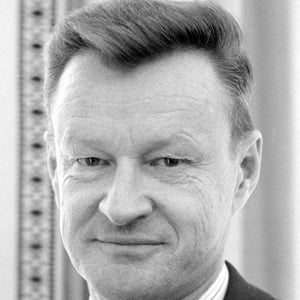
Former United States National Security Advisor
Zbigniew Brzezinski (born 1928) was assistant to the president of the United States for national security affairs during the Carter administration (1977-1980). Later he was associated with the Center for Strategic and International Studies in Washington D.C. He authored several books through which he expounded his philosophies as well as his political beliefs and ideals.
David McIntosh is a leader for the principles of limited constitutional government and individual freedom. He is president of the Club for Growth, the leading advocate for economic liberty.
Former Congressman David McIntosh represented Indiana's 2nd Congressional District in the United States Congress from 1995-2001. As a Freshman, David chaired the Subcommittee on Regulatory Relief. He passed the Congressional Review Act and held extensive oversight and field hearings to build a record of public support for regulatory relief initiatives in energy, biotechnology, pharmaceutical, healthcare, transportation and technology sectors. Another issue that he championed was the elimination of the marriage penalty in the Federal Tax Code.
David served during the Reagan administration as special assistant to Attorney General Edwin Meese III, and as special assistant to President Reagan for Domestic Affairs. During the first Bush administration, he served as executive director of the President's Council on Competitiveness and assistant to the Vice President. The Competitiveness Council coordinated the cost/benefit review of major regulations and promoted legal reform measures.
David is a co-founder of the Federalist Society for Law and Public Policy and serves on the Board of Directors. He remains active with several free market and conservative think tanks and grassroots organizations. David has also had stints at the Hudson Institute and as a Professor of Economics at Ball State School of Business.
Prior to the Club for Growth, David was a partner at Mayer Brown, LLP in Washington, DC.
David graduated from the University of Chicago Law School in 1983, and Yale University, BA, cum laude, in 1980. He and his wife, Ruthie, are the proud parents of Ellie age 17 and Davey age 13.
Former United States Secretary of Defense
Caspar Weinberger (August 18, 1917 – March 28, 2006) was an American politician and businessman. As a prominent Republican, he served in a variety of state and federal positions for three decades, including Chairman of the California Republican Party, 1962–68. Most notably he was Secretary of Defense under President Ronald Reagan from 1981 to 1987.
Former United States National Security Advisor
Zbigniew Brzezinski (born 1928) was assistant to the president of the United States for national security affairs during the Carter administration (1977-1980). Later he was associated with the Center for Strategic and International Studies in Washington D.C. He authored several books through which he expounded his philosophies as well as his political beliefs and ideals.
David McIntosh is a leader for the principles of limited constitutional government and individual freedom. He is president of the Club for Growth, the leading advocate for economic liberty.
Former Congressman David McIntosh represented Indiana's 2nd Congressional District in the United States Congress from 1995-2001. As a Freshman, David chaired the Subcommittee on Regulatory Relief. He passed the Congressional Review Act and held extensive oversight and field hearings to build a record of public support for regulatory relief initiatives in energy, biotechnology, pharmaceutical, healthcare, transportation and technology sectors. Another issue that he championed was the elimination of the marriage penalty in the Federal Tax Code.
David served during the Reagan administration as special assistant to Attorney General Edwin Meese III, and as special assistant to President Reagan for Domestic Affairs. During the first Bush administration, he served as executive director of the President's Council on Competitiveness and assistant to the Vice President. The Competitiveness Council coordinated the cost/benefit review of major regulations and promoted legal reform measures.
David is a co-founder of the Federalist Society for Law and Public Policy and serves on the Board of Directors. He remains active with several free market and conservative think tanks and grassroots organizations. David has also had stints at the Hudson Institute and as a Professor of Economics at Ball State School of Business.
Prior to the Club for Growth, David was a partner at Mayer Brown, LLP in Washington, DC.
David graduated from the University of Chicago Law School in 1983, and Yale University, BA, cum laude, in 1980. He and his wife, Ruthie, are the proud parents of Ellie age 17 and Davey age 13.
Former United States Secretary of Defense
Caspar Weinberger (August 18, 1917 – March 28, 2006) was an American politician and businessman. As a prominent Republican, he served in a variety of state and federal positions for three decades, including Chairman of the California Republican Party, 1962–68. Most notably he was Secretary of Defense under President Ronald Reagan from 1981 to 1987.
Stuyvesant P. Comfort Professor of Law; Director, Center for Financial Institutions; and Co-Director, Center for Civil Justice, New York University School of Law
Geoffrey Miller is an author or editor of a dozen books and more than 200 articles in the fields of financial institutions, contract law, corporate and securities law, constitutional law, civil procedure, legal history, jurisprudence, and ancient law. He has taught a wide range of subjects including law and economics, corporations, compliance and risk management, property, regulation of financial institutions, land development, securities law, the legal profession, and legal theory. Miller received his BA magna cum laude from Princeton in 1973 and his JD from Columbia in 1978, where he was a Stone Scholar and editor-in-chief of the Columbia Law Review. He clerked for Judge Carl McGowan of the US Court of Appeals for the District of Columbia Circuit and Justice Byron White of the US Supreme Court. After two years as an attorney adviser at the Office of Legal Counsel of the US Department of Justice and one year with a Washington, DC, law firm, he joined the faculty of the University of Chicago Law School in 1983 and NYU School of Law in 1995.
Miller has been a visiting professor or visiting scholar at Columbia University, Harvard University, University of Minnesota, University of Basel (Switzerland), University of Genoa (Italy), Collegio Carlo Alberto (Italy), Study Center Gerzensee (Switzerland), Vanderbilt University, University of St. Gallen (Switzerland), University of Frankfurt (Germany), University of Sydney (Australia), University of Auckland (New Zealand), and the Bank of Japan. Miller is a founder of the Society for Empirical Legal Studies, a scholarly organization devoted to promoting statistical and other empirical techniques in the study of legal institutions. He is founder and director of NYU School of Law’s Center for Financial Institutions, co-director of the Center for Civil Justice, co-founder of and Senior Academic Fellow at NYU's Program on Corporate Compliance and Enforcement, co-convener of the Global Economic Policy Forum, a member of the board of directors of State Farm Bank, and a fellow in the American Academy of Arts and Sciences.
Former United States Assistant Attorney General, Civil Rights Division, United States Department of Justice
William Bradford served as the United States Assistant Attorney General for the Civil Rights Division from 1981 to 1988.
Reynolds was Senior Counsel in BakerBotts Antitrust and Competition division. He graduated with a LL.B. from Vanderbilt University Law School in 1967 where he was Order of the Coif and Editor-in-Chief of the Vanderbilt Law Review. In 1964, he received a B.A. from Yale University.
Reynolds passed away on September 14, 2019, in Seabrook Island, South Carolina at age 77.
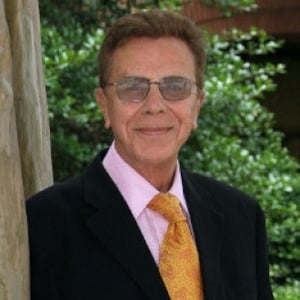
Professor of Law, Emeritus, Marshall-Wythe Law School at the College of William and Mary
William W. Van Alstyne, one of the nation's foremost constitutional law scholars, and William & Mary’s Lee Professor of Law from 2004 to 2012, died on January 29, 2019, in Southern California.
Professor Van Alstyne was appointed Lee Professor of Law at the Marshall-Wythe Law School at the College of William and Mary in 2004. He is a graduate of the University of Southern California (B.A. in philosophy, magna cum laude) and Stanford University Law School (J.D., Articles and Book Review Editor of The Stanford Law Review). Following his admission to the California Bar and brief service as Deputy Attorney General of California, he joined the Civil Rights Division of the U. S. Department of Justice handling voting rights cases in the South. After active duty with the U. S. Air Force, he was appointed to the law faculty of the Ohio State University, advancing to full professor in three years. Appointed to the Duke law faculty shortly thereafter, he was named to the William R. & Thomas S. Perkins Chair of Law in 1974.
Professor Van Alstyne’s professional writings have appeared during four decades in the principal law journals in the United States, with frequent republication in foreign journals. They address virtually every major subject in the field of constitutional law. His work has been cited in a large number of judicial opinions including those of the Supreme Court. The Journal of Legal Studies for January, 2000, named Professor Van Alstyne in the top forty most frequently cited legal scholars in the United States of the preceding half-century.
Professor Van Alstyne has also taught and given professional papers internationally, in Germany, Austria, and Denmark, in Chile, the former Soviet Union, China, Japan, Canada, and Australia. He has been a visiting faculty member on the law faculties of the University of Chicago, Stanford, California (Berkeley and UCLA), Pennsylvania, Michigan, and Illinois, a Fulbright Lecturer in Chile, a Senior Fellow at the Yale Law School, and a faculty fellow at the Hague International Court of Justice. He has appeared as counsel and as amicus curiae in constitutional litigation in the federal courts, including the Supreme Court. He has also appeared in numerous hearings before Senate and House Committees, on legislation affecting the separation of powers, war powers, constitutional amendments, impeachments, legislation affecting civil rights and civil liberties, and nominations to the Supreme Court.
In 1987, Professor Van Alstyne was selected in a poll of federal judges, lawyers, and academics by the New York Law Journal as one of three academics among "the ten most qualified" persons in the country for appointment to the Supreme Court, a distinction repeated in a similar poll by The American Lawyer, in 1991. Past National President of the American Association of University Professors, and former member of the National Board of Directors of the A.C.L.U., he was elected into the American Academy of Arts and Sciences in 1994.
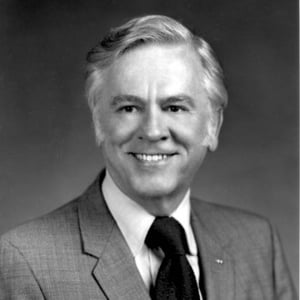
Former United States Representative, Florida
Charles Edward Bennett was a member of the United States House of Representatives from Jacksonville from 1949 to 1993. He was a Democrat.
He was born December 2, 1910 in Canton, New York and moved to Jacksonville by the end of his childhood. Bennett was an Eagle Scout and recipient of the Distinguished Eagle Scout Award from the Boy Scouts of America. He was a lawyer and a member of the United States Army during World War II before being elected to Congress from what was then the 2nd District. He was reelected 21 more times from this Jacksonville-based district. He rarely faced serious opposition even as Jacksonville fell under increasing Republican influence.
In 1951, he began proposing a code of ethics for government employees, nicknamed The Ten Commandments. After the Sherman-Adams Affair, the code was adopted as the first Code of ethics for Government Service in 1958. In 1954, he sponsored the bill that added the words “In God We Trust” to both the nation’s coins and currency.
Bennett died in Jacksonville on September 6, 2003 and is buried at Arlington National Cemetery. He is still the longest-serving member of either house of Congress in Florida’s history. The Charles E. Bennett Federal Building is named after him.
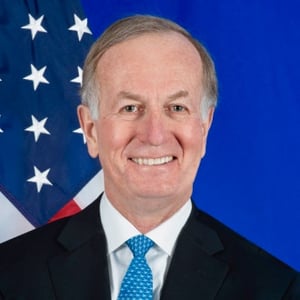
United States Ambassador to Australia
President Donald J. Trump nominated Ambassador Arthur B. (A.B.) Culvahouse Jr. to be the United States Ambassador to Australia on November 6, 2018. Confirmed by the U.S. Senate on January 2, 2019 by unanimous consent, he was formally sworn in by Vice President Mike Pence on February 19, 2019 and presented his credentials to the Governor-General, Sir Peter Cosgrove, on March 13, 2019.
Ambassador Culvahouse serves as the President’s personal representative to the government and people of Australia. He leads the U.S. Mission to Australia, which is comprised of the embassy in Canberra and three consulates in Melbourne, Sydney, and Perth.
Ambassador Culvahouse has a long and distinguished career. He is the former Chair of O’Melveny & Myers, an international law firm he was associated with for more than four decades. He began his career as Chief Legislative Assistant to United States Senator Howard H. Baker, Jr. and later served as White House Counsel to President Ronald Reagan. In 1989, President Reagan awarded Ambassador Culvahouse the Presidential Citizens’ Medal, an award to “recognize citizens who performed exemplary deeds of service for the country or their fellow citizens.” In December 1992, then-Secretary of Defense Dick Cheney awarded Ambassador Culvahouse the Defense Medal for Distinguished Public Service for his work on the Federal Advisory Committee on Nuclear Failsafe and Risk Reduction.
Both President Trump and the late-Senator John McCain tapped Ambassador Culvahouse to head the search to select their running mates.
Ambassador Culvahouse was raised in Ten Mile, Tennessee and attended the University of Tennessee and the New York University School of Law. He is the proud father of three accomplished daughters.

The Constitution Line By Line: Article I, Section 2 [Article I Initiative]
Mike S. Lee
Short video featuring Mike Lee
Article I Section 2 of The Constitution is the focus of Episode 2 of The...
The Constitution Line By Line: Article I, Section 1 [Article I Initiative]
Mike S. Lee
Short video featuring Mike Lee
In the first episode of The Constitution Line By Line, U.S. Senator Mike Lee discusses...
State Court Docket Watch: Kelly v. Legislative Coordinating Council
Brad Schlozman
State Court Docket Watch: 2020 Edition
Since the November 2018 election of Democrat Laura Kelly as governor of Kansas, the state’s...
McGirt v. Oklahoma: The Decision [SCOTUSbrief]
Troy A. Eid
Short video featuring Troy Eid
Under the Major Crimes Act, Indian tribes have concurrent jurisdiction in their reservation territories for...
Panel IV: Federal Spending and the Deficit: Is a Constitutional Remedy Necessary? [Archive Collection]
Douglas H. Ginsburg, Kate Stith, William Craig Stubblebine, Lawrence H. Summers
A Symposium in Celebration of the Bicentennial of the Constitution
On October 16-17, 1987, the Federalist Society hosted a symposium in celebration of the bicentennial...
Panel IV: Federal Spending and the Deficit: Is a Constitutional Remedy Necessary? [Archive Collection]
Douglas H. Ginsburg, Kate Stith, William Craig Stubblebine, Lawrence H. Summers
A Symposium in Celebration of the Bicentennial of the Constitution
On October 16-17, 1987, the Federalist Society hosted a symposium in celebration of the bicentennial...
State Court Docket Watch: Wisconsin Legislature v. Palm
Rick M. Esenberg
State Court Docket Watch: 2020 Edition
In May, Wisconsin became the only state to emerge from a gubernatorial “stay-at-home” order by...
Address by Secretary of Defense Caspar Weinberger [Archive Collection]
Zbigniew Brzezinski, David M. McIntosh, Caspar W. Weinberger
Foreign Affairs and the Constitution
On November 6-7, 1987, The Federalist Society held a symposium at the Grand Hyatt Hotel...
Address by Secretary of Defense Caspar Weinberger [Archive Collection]
Zbigniew Brzezinski, David M. McIntosh, Caspar W. Weinberger
Foreign Affairs and the Constitution
On November 6-7, 1987, The Federalist Society held a symposium at the Grand Hyatt Hotel...
Panel I: The President's Powers as Commander-in-Chief vs. Congress's War Power and Appropriations Power [Archive Collection]
Geoffrey P. Miller, Wm. Bradford Reynolds, William Van Alstyne, Charles E. Bennett, A.B. Culvahouse
Foreign Affairs and the Constitution
On November 6-7, 1987, The Federalist Society held a symposium at the Grand Hyatt Hotel...