
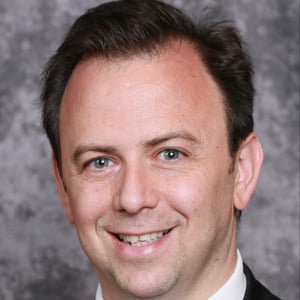
Stevenson Bernard Professor, George Washington University Law School
The Honorable F. Scott Kieff is the Stevenson Bernard Professor at George Washington University Law School and a Visiting Fellow at Stanford University’s Hoover Institution.
He served as Commissioner of the U.S. International Trade Commission from 2013-2017. He also served during the Bush, Obama, and Trump Administrations in the part-time leadership of the national security defense-intelligence community.
He was previously a professor of law and medicine at Washington University in Saint Louis and a Senior Fellow at Hoover. A former law clerk to U.S. Circuit Judge Giles S. Rich, he is a graduate of Penn Law School and MIT, where he studied molecular biology and microeconomics. He was elected to the European Academy of Sciences and Arts in 2012 and the Academia Europaea in 2024.
His private sector work through Kieff Strategies LLC (www.kieffstrategies.com) provides neutral services including mediation and compliance, and expert services including crisis management, advising, and testimony.
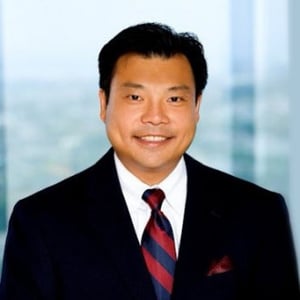
Attorney and Legal Commentator
John Shu is an attorney and legal commentator. His focus areas include constitutional law, securities & corporate law, antitrust law, administrative law, politics, and international affairs. Mr. Shu has lectured and published on a wide variety of issues.
Mr. Shu served President George H.W. Bush and President George W. Bush. He also served Judge Stanley Sporkin, U.S. District Court for the District of Columbia, who was Director of Enforcement at the U.S. Securities & Exchange Commission and General Counsel at the Central Intelligence Agency, and Judge Paul Roney, U.S. Court of Appeals for the Eleventh Circuit, who was Presiding Judge of the Foreign Intelligence Surveillance Court of Review.
Mr. Shu is a member of the National Committee on U.S. - China Relations, the Pacific Council on International Policy, and the Foreign Policy Association.
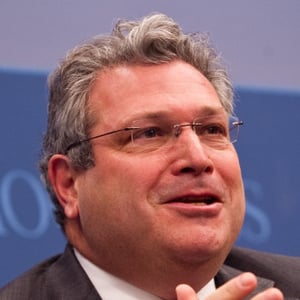
Stephen & Barbara Friedman Senior Fellow, The Brookings Institution
Robert Kagan is the Stephen & Barbara Friedman Senior Fellow with the Project on International Order and Strategy in the Foreign Policy program at Brookings. He is a contributing columnist at The Washington Post. His new book is The Jungle Grows Back: America and Our Imperiled World (Knopf, 2018). His previous book was The New York Times bestseller, The World America Made (Knopf, 2012).
He is also the author of Return of History and the End of Dreams (Knopf, 2008), Dangerous Nation: America’s Place in the World from its Earliest Days to the Dawn of the 20th Century (Knopf 2006), Of Paradise and Power (Knopf 2003), and A Twilight Struggle: American Power and Nicaragua, 1977-1990 (Free Press, 1996).
For his writings, Politico Magazine named Kagan one of the “Politico 50” in 2016, the “thinkers, doers and visionaries transforming American politics in 2016.” His most recent pieces include “The Twilight of the Liberal World Order” in “Brookings Big Ideas for America” and “Backing into World War III” in Foreign Policy.
He served in the State Department from 1984 to 1988 as a member of the policy planning staff, as principal speechwriter for Secretary of State George P. Shultz, and as deputy for policy in the Bureau of Inter-American Affairs. He is a graduate of Yale University and Harvard University’s Kennedy School of Government and holds a doctorate in American history from American University.

Professor Emeritus of Law, Antonin Scalia Law School, George Mason University
Jeremy A. Rabkin is a Professor Emeritus of Law at the Antonin Scalia Law School, George Mason University. Before joining the faculty in June 2007, he was for over two decades a professor in the Department of Government at Cornell University. Professor Rabkin serves on the board of directors of the Center for Individual Rights, a public interest law firm based in Washington, D.C. Previously he was a board member of the U.S. Institute of Peace and the board of academic advisors of the American Enterprise Institute.
Professor Rabkin’s books include Law Without Nations? (Princeton University Press, 2005). He authored “If You Need a Friend, Don’t Call a Cosmopolitan,” a chapter in Varieties of Sovereignty and Citizenship (Sigal R. Ben-Porath & Rogers M. Smith eds., University of Pennsylvania Press, 2012). His articles have appeared in major law reviews and political science journals and his journalistic contributions in a range of magazines and newspapers, including the Washington Post and the Wall Street Journal.
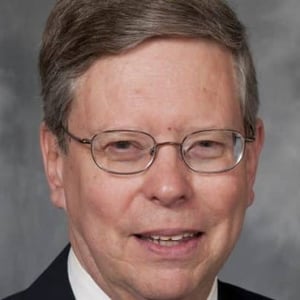
Professor of History and Charles O. Lee and Louise K. Lee Chair in the Western Heritage, Hillsdale College
After reading Litterae Humaniores at Wadham College, Oxford, on a Rhodes Scholarship from 1971-1974, Paul A. Rahe completed a Ph.D. in ancient history at Yale University under the direction of Donald Kagan in 1977. In subsequent years, he taught at Cornell University, Franklin and Marshall College, and the University of Tulsa, where he spent twenty-four years before accepting a position at Hillsdale College, where he is Professor of History and Political Science and holds The Charles O. Lee and Louise K. Lee Chair in the Western Heritage.
Professor Rahe’s entire scholarly career has been focused on studying the origins and evolution of self-government within the West. His range is considerable. His first book, Republics Ancient and Modern: Classical Republicanism and the American Revolution (1992), was 1200 pages in length and surveyed the origins and development of self-government in ancient Greece and Rome, its re-emergence in a new form in the Middle Ages, the transformation it underwent at the hands of the political philosophers of early modernity, and the statesmanship of the American Founding Fathers. Within the first thirteen months of publication, the hardback edition sold out. Thereafter, it reappeared as an alternative selection of the History Book Club. In 1994, it was reissued in a three-volume paperback edition by the University of North Carolina Press, and it remains in print.
In the course of his career, Professor Rahe has published dozens of chapters on related subjects in edited books and scholarly articles in journals such as The American Journal of Philology, Historia, The American Journal of Archaeology, The American Historical Review, The Review of Politics, The American Journal of Business and Professional Ethics, The Journal of the Historical Society, The National Interest, The Woodrow Wilson Quarterly, and History of Political Thought. He spent two years in Istanbul, Turkey in the mid-1980s as a fellow of the Institute of Current World Affairs; he has been awarded research fellowships by the National Endowment for the Humanities and the Earhart Foundation; and he has held research fellowships at the Center for Hellenic Study, the National Humanities Center, the Woodrow Wilson International Center for Scholars in Washington, D. C. , Clare College at Cambridge University, All Souls College at Oxford University, and the American Academy in Berlin; and he has given a host of public lectures at universities in the United States and abroad – most recently at the Hebrew University and at Al-Quds University in Jerusalem, at the Sorbonne in Paris, at the Royal Military Academy at Sandhurst in England and the Free University in Berlin. In 1997-98, he was named to the Templeton Honor Rolls for Education in a Free Society by The John M. Templeton Foundation, and in 2006 the Society for French Historical Studies awarded him the Koren Prize for the Best Article Published in French History the preceding year.
Professor Rahe co-edited Montesquieu’s Science of Politics: Essays on the Spirit of Laws(2001) with David W. Carrithers and Michael A. Mosher, and he edited Machiavelli’s Liberal Republican Legacy (2006). His second book, Against Throne and Altar: Machiavelli and Political Theory under the English Republic, which examines the political thought inspired by the abortive republican experiment that took place in England in the period stretching from 1649 to 1660, was published by Cambridge University Press in April, 2008. His third and fourth books, Montesquieu and the Logic of Liberty: War, Religion, Commerce, Climate, Terrain, Technology, Uneasiness of Mind, the Spirit of Political Vigilance, and the Foundations of the Modern Republic and Soft Despotism, Democracy’s Drift: Montesquieu, Rousseau, and Tocqueville on the Modern Prospect, were published by Yale University Press in 2009. For his fifth book, The Spartan Way of War, which he hopes to have finished by the end of 2010, Professor Rahe has received a contract from Yale University Press.
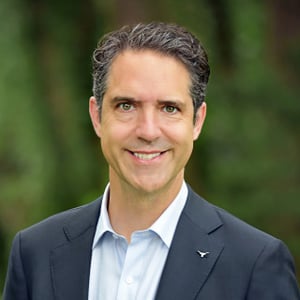
James A. Baker III Chair in the Rule of Law and World Affairs and Associate Dean for Academic Affairs, The University of Texas at Austin School of Law
Bobby Chesney holds the James Baker Chair and also serves as the Associate Dean for Academic Affairs at the University of Texas School of Law. In addition, he is the Director of the Robert S. Strauss Center for International Security and Law, a University-wide research unit bridging across disciplines to improve understanding of international security issues.
In 2009, Professor Chesney served in the Justice Department in connection with the Detention Policy Task Force created by Executive Order 13493. He also previously served the Intelligence Community as an associate member of the Intelligence Science Board and as a member of the Advanced Technology Board. In addition to his current positions at the University of Texas, he is a member of the American Law Institute, and a senior editor for the Journal of National Security Law & Policy, and a former non-resident Senior Fellow of the Brookings Institution.
Professor Chesney is a co-founder and contributor to www.lawfareblog.com, the leading source for analysis, commentary, and news relating to law and national security. In addition to his blogging at Lawfare, those interested in national security law should consider following Professor Chesney on Twitter (@bobbychesney) as well as subscribing to the National Security Law Podcast (which he co-hosts with his colleague Steve Vladeck). Professor Chesney's scholarship focuses on U.S. national security policies and institutions, encompassing both domestic and international law issues. His articles may be downloaded from SSRN here.
Professor Chesney is a magna cum laude graduate of both Texas Christian University and Harvard Law School. After law school he clerked for the Honorable Lewis A. Kaplan of the United States District Court for the Southern District of New York and the Honorable Robert D. Sack of the United States Court of Appeals for the Second Circuit. He then practiced with the firm Davis Polk & Wardwell in New York (litigation), before beginning his academic career with Wake Forest University School of Law. There he received a teacher of the year award from the student body in one year, and from the school's dean in another. In 2008 he came to the University of Texas School of Law as a visiting professor, and then joined UT on a permanent basis in 2009. He became the Associate Dean for Academic Affairs in 2011.
Professor Chesney teaches a variety of courses, including: Constitutional Law, National Security Law, Foundations of Cybersecurity: Law, Institutions, and Policy; Law of the Intelligence Community; History of U.S. Counterterrorism Law & Policy: 1970 to Present; Evidence, Civil Procedure, and an array of seminars. He is from San Antonio.
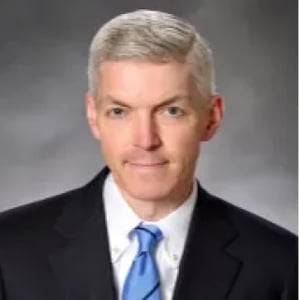
Executive Vice President, Chief Legal Officer, Gates Corporation
Matthew R. A. Heiman joined the Company in May 2026 and has served as the Company’s Chief Legal Officer and Corporate Secretary since June 2026. As Chief Legal Officer, Mr. Heiman is responsible for all legal functions for Gates, including securities and corporate governance, M&A, litigation, commercial, regulatory, compliance, patents and trademarks, real estate, employment and labor, sustainability and environmental matters. Prior to joining Gates, Mr. Heiman held senior legal leadership roles at Waystar, where he served as Chief Legal & Administrative Officer from 2023 to 2025 and as General Counsel and Corporate Secretary from 2020 to 2023. Prior to that, he was with Johnson Controls, where he served as Vice President, Corporate Secretary, and Associate General Counsel. Mr. Heiman has been a Senior Fellow for the National Security Institute at George Mason University’s Antonin Scalia School of Law since 2018.
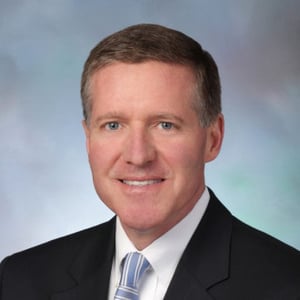
Partner, Davis Polk & Wardwell LLP
Kenneth Wainstein is a partner at Davis Polk & Wardwell, where he focuses his practice on corporate internal investigations and civil and criminal enforcement proceedings. Ken spent over 20 years in a variety of law enforcement and national security positions in the government. Between 1989 and 2001, Ken served as an Assistant U.S. Attorney in both the Southern District of New York and the District of Columbia, where he handled criminal prosecutions ranging from public corruption to gang prosecution cases and held a variety of supervisory positions, including Acting United States Attorney. In 2001, he was appointed Director of the Executive Office for U.S. Attorneys, where he provided oversight and support to the 94 U.S. Attorneys’ Offices. Between 2002 and 2004, Ken served as General Counsel of the Federal Bureau of Investigation and then as Chief of Staff to Director Robert S. Mueller III. In 2004, Ken was appointed and then confirmed as United States Attorney for the District of Columbia, where he had the privilege to lead the largest United States Attorney’s Office in the country. In 2006, the U.S. Senate confirmed Ken as the first Assistant Attorney General for National Security. In that position, Ken established and led the new National Security Division, which consolidated DOJ’s law enforcement and intelligence activities on counterterrorism and counterintelligence matters. In 2008, after 19 years at the Justice Department, Ken was named Homeland Security Advisor by President George W. Bush. In this capacity, he coordinated the nation’s counterterrorism, homeland security, infrastructure protection, and disaster response and recovery efforts. He advised the President, convened and chaired meetings of the Cabinet Officers on the Homeland Security Council, and oversaw the inter-agency coordination process for homeland security and counterterrorism programs.

Partner, Arnold & Porter LLP
John Bellinger heads the firm's Global Law and Public Policy practice. He joined the firm in 2009, after holding several senior Presidential appointments in the US government, including as the Senate-confirmed Legal Adviser to the Department of State and Senior Associate Counsel to the President and Legal Adviser to the National Security Council (NSC) at the White House in the George W. Bush Administration.
Mr. Bellinger represents individuals, corporations, and sovereign governments in litigation in US courts and before international institutions. He has extensive experience in US foreign relations litigation involving the Alien Tort Statute, the Foreign Sovereign Immunities Act, the Anti-Terrorism Act, and the diplomatic and official immunities of foreign governments and government officials. He advises clients on other public international law matters, including treaties and international agreements as well as international humanitarian law and human rights law. He also counsels US and foreign clients on national security legal and policy issues, including US and multilateral financial sanctions and asset controls, the extraterritorial application of US criminal and civil laws, and transactions reviewed by the Committee on Foreign Investment in the United States (CFIUS).
Chambers Global ranks Mr. Bellinger among the best international lawyers in the world, reporting that he has "second-to-none experience in public international law, international litigation and foreign sovereign immunity" and that his "experience at the highest levels of the Executive branch...gives him a distinct and important vantage point on legal issues." Chambers adds: "For any cross border work he's just extraordinary, he knows the area inside-out."
Mr. Bellinger was the State Department Legal Adviser–the most senior international lawyer in the US Government–from 2005 to 2009, serving under Secretary of State Condoleezza Rice. He directed more than 170 lawyers on domestic and international law matters affecting US foreign relations. Before joining the State Department, Mr. Bellinger managed Secretary Rice's Senate confirmation process and co-directed her State Department transition team. In 2009, Mr. Bellinger received the Secretary of State's Distinguished Service Award.
Mr. Bellinger has argued cases before the International Court of Justice (Mexico v. United States–(Medellin)) and the Iran-United States Claims Tribunal in The Hague. He has appeared on numerous briefs in US federal courts, including the Supreme Court, in litigation involving international law issues.
As Legal Adviser to the NSC from 2001 to 2005, Mr. Bellinger advised President Bush, Cabinet officials, National Security Advisor Rice, and NSC staff on a wide range of national security and international law issues, including counterterrorism issues after the 9-11 attacks. He was one of the principal drafters of the legislation that created the Director of National Intelligence.
Prior to his service in the Bush Administration, Mr. Bellinger served as Counsel for National Security Matters in the Criminal Division at the US Department of Justice (1997-2001); Of Counsel to the Senate Select Committee on Intelligence (1996); General Counsel of the Commission on the Roles and Capabilities of the US Intelligence Community (1995-1996); and Special Assistant to Director of Central Intelligence William Webster (1988-1991). Mr. Bellinger is an Adjunct Senior Fellow in International and National Security Law at the Council on Foreign Relations. He has testified before Congress on numerous occasions, is quoted regularly in the media on international and national security law matters, and has lectured at numerous US and foreign universities and law schools. He is the author of many law review articles and op-eds on international law, including op-eds in The Washington Post, The New York Times, and The Wall Street Journal. Mr. Bellinger is a senior contributor to the Lawfare blog.
Mr. Bellinger is a member of the Secretary of State's Advisory Committee on International Law. He served from 2005-2019 as one of four US Members of the Permanent Court of Arbitration in The Hague and a member of the US "National Group", which nominates judges to the International Court of Justice. He is also a member of the Council on Foreign Relations and the American Society of International Law. He is a member of the Council of the American Law Institute; the boards of directors of the American Ditchley Foundation, the Salzburg Global Seminar, and the Stimson Center; and the advisory committee of Foreign Affairs magazine.
Mr. Bellinger is a graduate of Princeton University's Woodrow Wilson School of Public and International Affairs, and he holds an MA in Foreign Affairs from the University of Virginia and a JD from Harvard Law School, where he was an editor of the Harvard International Law Journal.

Emanuel S. Heller Professor of Law, University of California at Berkeley; Senior Research Fellow, School of Civic Leadership, Civitas Institute, University of Texas at Austin; Nonresident Senior Fellow, American Enterprise Institute
John Yoo is the Emanuel Heller Professor of Law. He is also Distinguished Visiting Scholar, School of Civic Leadership and Senior Research Fellow, Civitas Institute, at the University of Texas at Austin. He is also a Nonresident Senior Fellow at the American Enterprise Institute.
His most recent book, The Politically Incorrect Guide to the Supreme Court, co-authored with Robert Delahunty, was published in 2023. Professor Yoo’s other books include Defender-in-Chief: Trump’s Fight for Presidential Power; Striking Power: How Cyber, Robots, and Space Weapons Change the Rules for War, Point of Attack: Preventive War, International Law, and Global Welfare, and Crisis and Command: A History of Executive Power from George Washington to George Bush.
Professor Yoo has published more than 100 articles in academic journals on subjects including national security, constitutional law, international law, and the Supreme Court. He also regularly contributes to the editorial pages of the Wall Street Journal, New York Times, Washington Post, Los Angeles Times, and National Review, among others.
Professor Yoo has served in all three branches of government. He was an official in the U.S. Department of Justice, where he worked on national security and terrorism issues after the 9/11 attacks. He served as general counsel of the U.S. Senate Judiciary Committee. He has been a law clerk for Supreme Court Justice Clarence Thomas and federal appeals Judge Laurence Silberman. He has been a visiting professor at Seoul National University in South Korea, the Interdisciplinary Center in Israel, Keio University in Japan, Trento University in Italy, the University of Chicago, and the Free University of Amsterdam.
Professor Yoo supervises the Public Law and Policy Program and the California Constitution Center. He also serves on the boards of the Pacific Legal Foundation, the Federalist Society’s Separation of Powers and Federalism Division, the Universidad Cientifica del Sur Law School, and the Asia-Pacific Law Institute at Seoul National University. He is a winner of the Federalist Society’s Paul Bator award and been the Edwin Meese III Originalism Lecturer at the Heritage Foundation.
Professor Yoo graduated from Yale Law School and summa cum laude from Harvard College.
Partner, Arnold & Porter LLP
John Bellinger heads the firm's Global Law and Public Policy practice. He joined the firm in 2009, after holding several senior Presidential appointments in the US government, including as the Senate-confirmed Legal Adviser to the Department of State and Senior Associate Counsel to the President and Legal Adviser to the National Security Council (NSC) at the White House in the George W. Bush Administration.
Mr. Bellinger represents individuals, corporations, and sovereign governments in litigation in US courts and before international institutions. He has extensive experience in US foreign relations litigation involving the Alien Tort Statute, the Foreign Sovereign Immunities Act, the Anti-Terrorism Act, and the diplomatic and official immunities of foreign governments and government officials. He advises clients on other public international law matters, including treaties and international agreements as well as international humanitarian law and human rights law. He also counsels US and foreign clients on national security legal and policy issues, including US and multilateral financial sanctions and asset controls, the extraterritorial application of US criminal and civil laws, and transactions reviewed by the Committee on Foreign Investment in the United States (CFIUS).
Chambers Global ranks Mr. Bellinger among the best international lawyers in the world, reporting that he has "second-to-none experience in public international law, international litigation and foreign sovereign immunity" and that his "experience at the highest levels of the Executive branch...gives him a distinct and important vantage point on legal issues." Chambers adds: "For any cross border work he's just extraordinary, he knows the area inside-out."
Mr. Bellinger was the State Department Legal Adviser–the most senior international lawyer in the US Government–from 2005 to 2009, serving under Secretary of State Condoleezza Rice. He directed more than 170 lawyers on domestic and international law matters affecting US foreign relations. Before joining the State Department, Mr. Bellinger managed Secretary Rice's Senate confirmation process and co-directed her State Department transition team. In 2009, Mr. Bellinger received the Secretary of State's Distinguished Service Award.
Mr. Bellinger has argued cases before the International Court of Justice (Mexico v. United States–(Medellin)) and the Iran-United States Claims Tribunal in The Hague. He has appeared on numerous briefs in US federal courts, including the Supreme Court, in litigation involving international law issues.
As Legal Adviser to the NSC from 2001 to 2005, Mr. Bellinger advised President Bush, Cabinet officials, National Security Advisor Rice, and NSC staff on a wide range of national security and international law issues, including counterterrorism issues after the 9-11 attacks. He was one of the principal drafters of the legislation that created the Director of National Intelligence.
Prior to his service in the Bush Administration, Mr. Bellinger served as Counsel for National Security Matters in the Criminal Division at the US Department of Justice (1997-2001); Of Counsel to the Senate Select Committee on Intelligence (1996); General Counsel of the Commission on the Roles and Capabilities of the US Intelligence Community (1995-1996); and Special Assistant to Director of Central Intelligence William Webster (1988-1991). Mr. Bellinger is an Adjunct Senior Fellow in International and National Security Law at the Council on Foreign Relations. He has testified before Congress on numerous occasions, is quoted regularly in the media on international and national security law matters, and has lectured at numerous US and foreign universities and law schools. He is the author of many law review articles and op-eds on international law, including op-eds in The Washington Post, The New York Times, and The Wall Street Journal. Mr. Bellinger is a senior contributor to the Lawfare blog.
Mr. Bellinger is a member of the Secretary of State's Advisory Committee on International Law. He served from 2005-2019 as one of four US Members of the Permanent Court of Arbitration in The Hague and a member of the US "National Group", which nominates judges to the International Court of Justice. He is also a member of the Council on Foreign Relations and the American Society of International Law. He is a member of the Council of the American Law Institute; the boards of directors of the American Ditchley Foundation, the Salzburg Global Seminar, and the Stimson Center; and the advisory committee of Foreign Affairs magazine.
Mr. Bellinger is a graduate of Princeton University's Woodrow Wilson School of Public and International Affairs, and he holds an MA in Foreign Affairs from the University of Virginia and a JD from Harvard Law School, where he was an editor of the Harvard International Law Journal.
Emanuel S. Heller Professor of Law, University of California at Berkeley; Senior Research Fellow, School of Civic Leadership, Civitas Institute, University of Texas at Austin; Nonresident Senior Fellow, American Enterprise Institute
John Yoo is the Emanuel Heller Professor of Law. He is also Distinguished Visiting Scholar, School of Civic Leadership and Senior Research Fellow, Civitas Institute, at the University of Texas at Austin. He is also a Nonresident Senior Fellow at the American Enterprise Institute.
His most recent book, The Politically Incorrect Guide to the Supreme Court, co-authored with Robert Delahunty, was published in 2023. Professor Yoo’s other books include Defender-in-Chief: Trump’s Fight for Presidential Power; Striking Power: How Cyber, Robots, and Space Weapons Change the Rules for War, Point of Attack: Preventive War, International Law, and Global Welfare, and Crisis and Command: A History of Executive Power from George Washington to George Bush.
Professor Yoo has published more than 100 articles in academic journals on subjects including national security, constitutional law, international law, and the Supreme Court. He also regularly contributes to the editorial pages of the Wall Street Journal, New York Times, Washington Post, Los Angeles Times, and National Review, among others.
Professor Yoo has served in all three branches of government. He was an official in the U.S. Department of Justice, where he worked on national security and terrorism issues after the 9/11 attacks. He served as general counsel of the U.S. Senate Judiciary Committee. He has been a law clerk for Supreme Court Justice Clarence Thomas and federal appeals Judge Laurence Silberman. He has been a visiting professor at Seoul National University in South Korea, the Interdisciplinary Center in Israel, Keio University in Japan, Trento University in Italy, the University of Chicago, and the Free University of Amsterdam.
Professor Yoo supervises the Public Law and Policy Program and the California Constitution Center. He also serves on the boards of the Pacific Legal Foundation, the Federalist Society’s Separation of Powers and Federalism Division, the Universidad Cientifica del Sur Law School, and the Asia-Pacific Law Institute at Seoul National University. He is a winner of the Federalist Society’s Paul Bator award and been the Edwin Meese III Originalism Lecturer at the Heritage Foundation.
Professor Yoo graduated from Yale Law School and summa cum laude from Harvard College.
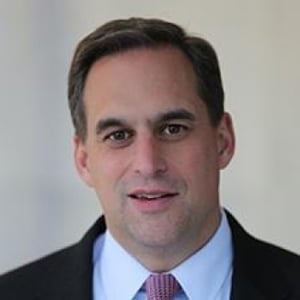
Harold Brown Chair; Director, Transnational Threats Project; and Senior Adviser, International Security Program, Center for Strategic and International Studies
Seth G. Jones holds the Harold Brown Chair, is director of the Transnational Threats Project, and is a senior adviser to the International Security Program at the Center for Strategic and International Studies (CSIS). He teaches at Johns Hopkins University’s School of Advanced International Studies (SAIS) and the Center for Homeland Defense and Security (CHDS) at the U.S. Naval Postgraduate School.
Prior to joining CSIS, Dr. Jones was the director of the International Security and Defense Policy Center at the RAND Corporation. He also served as representative for the commander, U.S. Special Operations Command, to the assistant secretary of defense for special operations. Before that, he was a plans officer and adviser to the commanding general, U.S. Special Operations Forces, in Afghanistan (Combined Forces Special Operations Component Command–Afghanistan). In 2014, Dr. Jones served on a congressionally mandated panel that reviewed the FBI’s implementation of counterterrorism recommendations contained in the 9/11 Commission Report.
Dr. Jones specializes in counterterrorism, counterinsurgency, unconventional warfare, and covert action, including a focus on al Qaeda and ISIS. He is the author of A Covert Action: Reagan, the CIA, and the Cold War Struggle in Poland (W.W. Norton, 2018), Waging Insurgent Warfare (Oxford University Press, 2016), Hunting in the Shadows: The Pursuit of al Qa'ida after 9/11 (W.W. Norton, 2012), and In the Graveyard of Empires: America’s War in Afghanistan (W.W. Norton, 2009). Dr. Jones has published articles in a range of journals, such as Foreign Affairs, Foreign Policy, and International Security, as well as newspapers and magazines like the New York Times, Washington Post, and Wall Street Journal. Dr. Jones is a graduate of Bowdoin College and received his M.A. and Ph.D. from the University of Chicago.
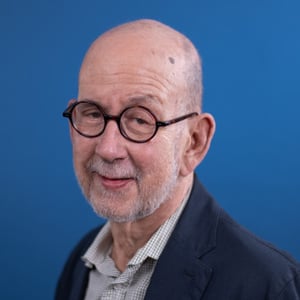
Freedom Scholar, Foundation for Defense of Democracies
Dr. Michael Ledeen is freedom scholar at FDD, and is an internationally-renowned scholar on Iran, Iraq, terrorism, and international security, and a world-renowned Italianist and expert on fascism. Ledeen has served as a consultant to the National Security Council and the Departments of State and Defense, and as a special advisor to the Secretary of State.
He is the author of more than 35 books, including Field of Fight: How to Win the War Against Radical Islam and its Allies, co-authored with General Michael T. Flynn (St. Martin’s Press, 2016). His previous books include Accomplice to Evil: Iran and the War Against the West; The War Against the Terror Masters; The Iranian Time Bomb; Tocqueville on American Character; and Freedom Betrayed: How America Led a Global Democratic Revolution, Won the Cold War, and Walked Away.
Ledeen regularly appears on cable news and talk radio programs, blogs at Forbes, The Hill, and PJ Media, and contributes periodically to The Wall Street Journal. Michael holds a PhD in Modern European History and Philosophy from the University of Wisconsin, and has taught at Washington University in St. Louis and the University of Rome.
Lieutenant Colonel (Retired), Venezuelan Army
José Gustavo Arocha is a retired lieutenant colonel from the Venezuelan army and a former political prisoner. Following his resignation from the army in 2009, Arocha founded a political consultancy company, GeoFenix, to provide advice and logistical services to high-profile Venezuelan dissidents and regime critics. In 2014, he was detained by government security services on treason charges and imprisoned for a period of eight months, during which time he was physically and mentally abused in an underground prison where he was kept in solitary confinement and tortured. A confession coerced from Arocha during this detainment was subsequently submitted as evidence against leading opposition figures. Since escaping captivity in March 2015, Arocha has resided in the US where he is an incoming Kennedy School Mason Fellow at Harvard University. His current research focuses on developing a systematic process for tracking the actions of individual judges, prosecutors, and security officials in authoritarian regimes who subvert local laws to persecute political enemies or dissidents.
President, Un Mundo Sin Mordaza (A World Without Censorship)
Rodrigo Diamanti founded international NGO Un Mundo Sin Mordaza (A World Without Censorship) with activists in 200 cities around the globe and presence in 52 countries. Rodrigo has created powerful and meaningful campaigns like #SOSVenezuela and #TuVozEstuPoder (Your Voice is Your Power). He received the recognition of the World Economic Forum as a Global Shaper in 2012 and by the City Council of Rome in 2013 with the "Medal of Rome" for his actions to improve human rights. Rodrigo graduated from Harvard Kennedy School’s MPA program in 2017. He also holds a master's degree in international diplomacy at Universidad Ortega y Gasset in Madrid and a bachelor's degree in economics from the Universidad Catolica Andres Bello in Venezuela.
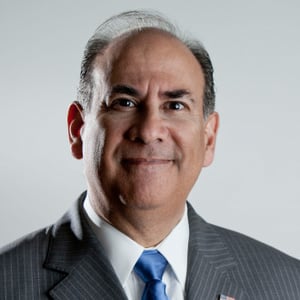
Visiting Fellow, American Enterprise Institute
Ambassador Roger F. Noriega has more than two decades of public policy experience focusing on U.S. interests in the Western Hemisphere. Twice appointed by President George W. Bush (and confirmed by the U.S. Senate) and with 10-year career on Capitol Hill, Ambassador Noriega's breadth of experience and contacts offer strategic vision and practical insight on U.S. foreign policy and aid programs. Noriega is the founder and managing director of VisiónAméricas LLC, which advises U.S. and foreign clients on international business issues, and also is a visiting fellow at the prestigious American Enterprise Institute for Public Policy Research. He serves as Vice Chairman of the Board of Directors of the Congressional Award Foundation and as a member of the advisory boards of the Canadian American Border Trade Partnership and The Americano, an online forum reaching out to Latino voters.
As Assistant Secretary of State for Western Hemisphere Affairs (July 2003 to October 2005), Ambassador Noriega managed a 3,000-person team of professionals in Washington and 50 diplomatic posts to design and implement political and economic strategies in Canada, Latin America, and the Caribbean. He was a leader in an inter-agency team that actively expanded trade and investment opportunities to spur economic growth and to create opportunities for U.S. companies and consumers. He also helped design and execute an annual plan for the effective use of $1.7 billion in U.S. economic assistance in two dozen countries.
As U.S. Ambassador to the Organization of American States (OAS) (August 2001 to July 2003), Noriega coordinated complex and sensitive multilateral diplomacy in a 34-member international organization to bolster OAS efforts to promote trade, fight illicit drugs, and defend democracy.
On Capitol Hill, Noriega counseled powerful Congressional leaders on all aspects of U.S. interests in the Americas, drafted historic legislation, and oversaw U.S. aid programs, the Peace Corps, and international narcotics affairs. From July 1997 to August 2001, he was a member of the Senate Foreign Relations Committee staff of Chairman Jesse A. Helms (R-NC), and from July 1994 to July 1997, he served on the House International Relations Committee staff of Chairman Benjamin A. Gilman (R-NY).
Other experiences include: senior advisor, OAS (July 1993 to July 1994); senior policy advisor, U.S. Mission to the OAS (August 1990 to January 1993); various program management and public affairs positions, U.S. Agency for International Development and U.S. Department of State (November 1986 to July 1990); press secretary and foreign policy advisor, U.S. Representative Robert Whittaker (R-KS) (May 1983 to October 1986); and research assistant, Kansas Secretary of State (December 1981 to April 1983). He has a Bachelor of Arts degree from Washburn University of Topeka, Kansas. Ambassador Noriega has been decorated by Governments of Nicaragua and of Peru and has received numerous awards for public service from organizations committed to the promotion of democracy in the Americas. He serves as Vice Chairman of the Board of Directors of the Congressional Award Foundation and as a member of the advisory boards of the Hispanic Community for Policy, the Canadian American Border Trade Partnership, and the Hispanic American Civics Foundation.
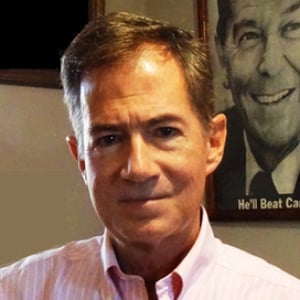
Former General Counsel of the U.S. Immigration and Naturalization, Former United States Ambassador to East Timor
Grover Joseph Rees is a Louisiana native whose family has lived in the Breaux Bridge/Lafayette area since the 1700s.
His first job after college was as an assistant to Congressman Dave Treen (R-LA3), who had just been elected as the first Republican Congressman from Louisiana since Reconstruction.
Rees graduated with honors from LSU Law School, where he served as Editor-in-Chief of the Louisiana Law Review. While in law school he worked on Ronald Reagan’s 1976 presidential campaign and was a Reagan delegate from Louisiana to the Republican National Convention. He also served as a member of the Lafayette Parish Republican Executive Committee and as a board member of Acadiana Right to Life.
In 1979, when Congressman Treen ran successfully for Governor, he asked Rees to write his authorized biography. The book, Dave Treen of Louisiana, was read and discussed widely during the campaign and after Treen’s election.
In 1985-86 Rees served as Special Counsel for Judicial Selection in President Reagan’s Justice Department, working closely with Attorney General Ed Meese to reorganize the judicial selection process to make it more philosophically oriented. These efforts resulted in the appointment of over 100 federal judges and were widely credited with transforming the federal judiciary.
From 1986 through 1991 Rees served as Chief Justice of the High Court of American Samoa, an Article I federal judicial position.
From 1991 through 1993 he was General Counsel of the U.S. Immigration and Naturalization Service.
In 1995 Rees went to work for the new Republican Congress as staff director and chief counsel of the Subcommittee on International Operations and Human Rights. He worked with subcommittee chairman Chris Smith (R.-N.J.) to cut U.S. funding for the International Planned Parenthood Federation and other organizations that perform and promote abortions overseas. Rees also worked on the drafting and enactment of the International Religious Freedom Act, the Trafficking Victims Protection Act, and other legislation that has helped to bring U.S. foreign policy into closer alignment not only with our national interests but also with our values.
In 2001-2002 Rees worked for Congressman Henry Hyde (R.-Ill.), who was then serving as Chairman of the House International Relations Committee.
From 2002 until 2006 Rees served as the first United States Ambassador to newly independent East Timor.
From 2006 until 2009 Ambassador Rees was the United States Special Representative for Social Issues, responsible for representing the United States on issues relating to vulnerable persons and the family within the United Nations system.
Ambassador Rees retired from government service in January 2009 and returned to Lafayette. He is married to Lan Dai Nguyen Rees and is a member of St. Genevieve’s Catholic parish in Lafayette. He was recently elected to serve as a member of the Louisiana Republican State Central Committee.
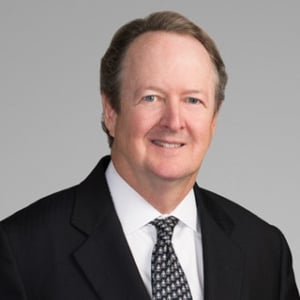
Of Counsel, Liskow & Lewis
Don Haycraft is of counsel at the firm of Liskow & Lewis in the New Orleans office. He has been a maritime attorney for almost 35 years. He is also an adjunct professor of maritime law at the Loyola Law School in New Orleans, teaching maritime personal injury and wrongful death. He is a 1983 Order of the Coif graduate of Virginia Law School where he served as an editor of the Law Review. He clerked for Judge James Michael, Western District of Virginia. Notably, he served as a trial counsel for BP in the multi-district litigation arising out of the Deepwater Horizon oil spill in 2010. He authored an amicus brief in the Batterton case and attended the oral argument on March 25, 2019.

Litigation Update: FTC v. Qualcomm
F. Scott Kieff, John Shu
On May 21, 2019, the U.S. District Court for the Northern District of California ruled...
Book Review: The Jungle Grows Back: America and Our Imperiled World
Robert Kagan, Jeremy A. Rabkin, Paul Rahe
So many international developments vie for America’s attention. Dr. Robert Kagan’s book, The Jungle Grows...
Tragedy in El Paso: Is This Domestic Terrorism, And Do We Need New Laws?
Robert Chesney, Matthew R. A. Heiman, Kenneth L. Wainstein
The recent mass murder of 22 people in El Paso, Texas has been described as...
Topics
Human Rights in American Foreign Policy
Early last month, Secretary Pompeo announced the formation at the State Department of an advisory...
The Authorization for Use of Military Force (AUMF)
John B. Bellinger, John C. Yoo
Nearly 18 years after its overwhelming enactment by Congress, the 2001 Authorization to Use Military...
The Authorization for Use of Military Force (AUMF)
John B. Bellinger, John C. Yoo
Nearly 18 years after its overwhelming enactment by Congress, the 2001 Authorization to Use Military...
Topics
A Covert Action: The Cold War Struggle in Poland
With the benefit of historical perspective and recently declassified documents, it is now possible to...
Book Review: A Covert Action: Reagan, the CIA, and the Cold War Struggle in Poland
Seth Jones, Michael Ledeen
In his book, A Covert Action: Reagan, the CIA, and the Cold War Struggle in...
Venezuela: The Road Forward
José Gustavo Arocha, Rodrigo Diamanti, Roger F. Noriega, Grover Joseph Rees
Although the de facto government of Venezuela headed by Nicolas Maduro regime is no longer...
Courthouse Steps Decision Teleforum: The Dutra Group v. Batterton
Don Haycraft
On June 24, 2019, the Supreme Court, in an opinion written by Justice Alito, decided...