

Emanuel S. Heller Professor of Law, University of California at Berkeley; Senior Research Fellow, School of Civic Leadership, Civitas Institute, University of Texas at Austin; Nonresident Senior Fellow, American Enterprise Institute
John Yoo is the Emanuel Heller Professor of Law. He is also Distinguished Visiting Scholar, School of Civic Leadership and Senior Research Fellow, Civitas Institute, at the University of Texas at Austin. He is also a Nonresident Senior Fellow at the American Enterprise Institute.
His most recent book, The Politically Incorrect Guide to the Supreme Court, co-authored with Robert Delahunty, was published in 2023. Professor Yoo’s other books include Defender-in-Chief: Trump’s Fight for Presidential Power; Striking Power: How Cyber, Robots, and Space Weapons Change the Rules for War, Point of Attack: Preventive War, International Law, and Global Welfare, and Crisis and Command: A History of Executive Power from George Washington to George Bush.
Professor Yoo has published more than 100 articles in academic journals on subjects including national security, constitutional law, international law, and the Supreme Court. He also regularly contributes to the editorial pages of the Wall Street Journal, New York Times, Washington Post, Los Angeles Times, and National Review, among others.
Professor Yoo has served in all three branches of government. He was an official in the U.S. Department of Justice, where he worked on national security and terrorism issues after the 9/11 attacks. He served as general counsel of the U.S. Senate Judiciary Committee. He has been a law clerk for Supreme Court Justice Clarence Thomas and federal appeals Judge Laurence Silberman. He has been a visiting professor at Seoul National University in South Korea, the Interdisciplinary Center in Israel, Keio University in Japan, Trento University in Italy, the University of Chicago, and the Free University of Amsterdam.
Professor Yoo supervises the Public Law and Policy Program and the California Constitution Center. He also serves on the boards of the Pacific Legal Foundation, the Federalist Society’s Separation of Powers and Federalism Division, the Universidad Cientifica del Sur Law School, and the Asia-Pacific Law Institute at Seoul National University. He is a winner of the Federalist Society’s Paul Bator award and been the Edwin Meese III Originalism Lecturer at the Heritage Foundation.
Professor Yoo graduated from Yale Law School and summa cum laude from Harvard College.

Dr. John Eastman is the former Henry Salvatori Professor of Law & Community Service and former Dean at Chapman University's Dale E. Fowler School of Law, where he had been a member of the faculty since 1999, specializing in Constitutional Law, Legal History, and Property. He is a founding director of the Center for Constitutional Jurisprudence, a public interest law firm affiliated with the Claremont Institute that he founded in 1999. He has a Ph.D. in Government from the Claremont Graduate School and a J.D. from the University of Chicago Law School, and a B.A. in Politics and Economics from the University of Dallas. He serves as the Chairman of the Board of the National Organization for Marriage.
Prior to joining the Chapman law faculty, Dr. Eastman served as a law clerk to the Honorable Clarence Thomas, Associate Justice, Supreme Court of the United States, and to the Honorable J. Michael Luttig, Judge, United States Court of Appeals for the Fourth Circuit and practiced law with the national law firm of Kirkland & Ellis. Dr. Eastman has also represented numerous clients in important constitutional law matters and has argued before the Supreme Court. On behalf of the Claremont Institute Center for Constitutional Jurisprudence, he has participated as amicus curiae before the Supreme Court of the United States, U.S. Courts of Appeals, and State Supreme Courts in more than one hundred cases of constitutional significance, including Boy Scouts of America v. Dale, Zelman v. Simmons-Harris (the school vouchers case), Kelo v. New London, Ct. (eminent domain), and Van Orden v. Perry (the 10 Commandments case). He has also appeared as an expert legal commentator on numerous television and radio programs, including C-SPAN, Fox News, PBS, NewsHour, and The O'Reilly Factor.
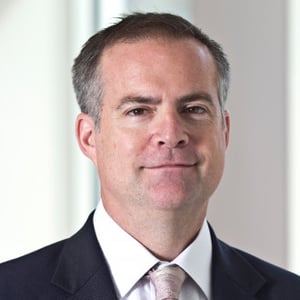
Director, Herbert A. Stiefel Center for Trade Policy Studies, Cato Institute
Dan Ikenson is director of Cato's Herbert A. Stiefel Center for Trade Policy Studies, where he coordinates and conducts research on all manner of international trade and investment policy. Since joining Cato in 2000, Ikenson has authored dozens of papers on various aspects of trade policy, focusing his research on U.S.-China trade relations; bilateral and multilateral trade agreements and institutions; globalization; U.S. manufacturing issues; trade politics; and trade remedies, such as the antidumping regime.
Ikenson has been involved in international trade since 1990. Before joining the Cato Institute in 2000, he was director of international trade planning for an international accounting and business advisory firm. In 1997 he cofounded and was a principal at an international trade consulting firm in Washington,.and from 1990 to 1997 he was a trade policy and antidumping analyst at a few international trade law practices. In addition to his many studies and articles, Ikenson is coauthor of the book Antidumping Exposed: The Devilish Details of Unfair Trade Law. He has testified before congressional committees on a variety of policy matter and has appeared on numerous television news programs and networks, including PBS, CNN, CNBC, Bloomberg TV, MSNBC, ABC News, Fox News, Fox Business News, and NPR. His articles have been published in widely circulated newspapers and magazines, including the Wall Street Journal, the Los Angeles Times, USA Today, the Chicago Tribune, the Washington Times, the Detroit News, Forbes, and National Review.
Ikenson holds a MA in economics from George Washington University.
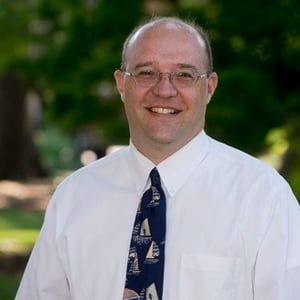
Associate Professor of History, Campbell University
Courses Taught: Western Civilization, U.S. History, Civil War, American Military Experience, and World Maritime History
Fields of Interest: Military and Maritime History; Maritime Industry Policy, and World History
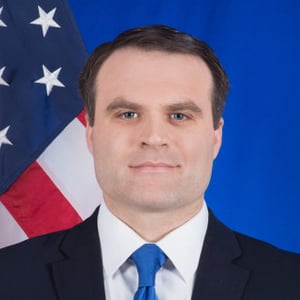
Deputy Coordinator for Countering Violent Extremism, U.S. Department of State
Christopher K. Harnisch is the Deputy Coordinator for Countering Violent Extremism. In this capacity, he is responsible for developing and implementing strategies to counter terrorist messaging and recruitment, including terrorists’ use of the Internet. He also oversees terrorist detention policy.
Prior to his appointment to the Bureau of Counterterrorism, Harnisch served as the Director for Transnational Threats and the Director for Afghanistan at the National Security Council. A Virginia native, he returned to the area following several years in Silicon Valley where he served as a Strategic Sourcing and Operations Product Development Manager at Apple. Before his time in the private sector, Harnisch worked in the public policy and defense arenas. From 2011 to 2012, he served as an Army Intelligence Officer on NATO’s counter-corruption task force in Afghanistan. Previous to that, he worked on the Critical Threats Project at the American Enterprise Institute, where he researched and wrote about al-Qa’ida’s emerging safe havens, focusing especially on those in Yemen and Somalia. He served on the staff of Vice President Dick Cheney.
Chris earned a B.A. in International Studies from Middlebury College and an MBA and M.A. in International Relations from Yale University.
He has published pieces on foreign policy in numerous publications, including The Wall Street Journal, Washington Post, and National Review Online, and he has appeared as a guest analyst on various public panels and television and radio broadcasts. Recently, he has worked on initiatives aimed at bridging the civil-military divide, including co-chairing the Veterans Summit at Yale University. He is a Term Member at the Council on Foreign Relations.
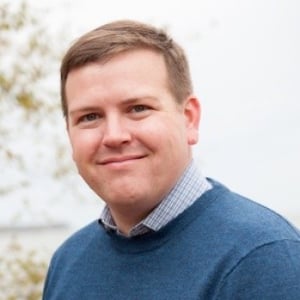
Deputy Director, Program on Extremism, George Washington University
Seamus Hughes is the Deputy Director of the Program on Extremism at George Washington University. He is an expert on terrorism, homegrown violent extremism, and countering violent extremism (CVE). Hughes has authored numerous reports for the Program including ‘ISIS in America: From Retweets to Raqqa’ and ‘The Travelers: American Jihadists in Syria and Iraq.’ He regularly provides commentary to media outlets, including the New York Times, The Washington Post, The Wall Street Journal, Los Angeles Times, The Atlantic, CNN, MSNBC, FoxNews, BBC, PBS, and CBS’ 60 Minutes. He has testified before the U.S. Congress on multiple occasions.
Hughes previously worked at the National Counterterrorism Center (NCTC), serving as a lead staffer on U.S. government efforts to implement a national CVE strategy. He regularly led engagements with Muslim American communities across the country, provided counsel to civic leaders after high-profile terror-related incidents, and met with families of individuals who joined terrorist organizations. Hughes created a groundbreaking intervention program to help steer individuals away from violence through non-law enforcement means, and worked closely with the FBI Joint Terrorism Task Force, Fusion Centers, and U.S. Attorney Offices.
Prior to NCTC, Hughes served as the Senior Counterterrorism Advisor for the U.S. Senate Homeland Security and Governmental Affairs Committee. He organized over a dozen congressional hearings on the threat of homegrown violent extremism, and led fact-finding delegations to the various European and Middle Eastern countries. He authored two reports for the Senate: “A Ticking Time Bomb: Counterterrorism Lessons from the U.S. Government’s Failure to Prevent the Fort Hood Attack” and “Zachary Chesser: A Case Study in Online Islamist Radicalization and Its Meaning for the Threat of Homegrown Terrorism.”
Hughes has authored numerous legislative bills, including sections of the 9/11 Commission Recommendations Act and the Special Agent Samuel Hicks Families of Fallen Heroes Act. He is a graduate of the University of Maryland, and a recipient of the National Security Council Outstanding Service Award and two NCTC Director’s Awards for outstanding service. He teaches classes at George Washington University and Georgetown University.
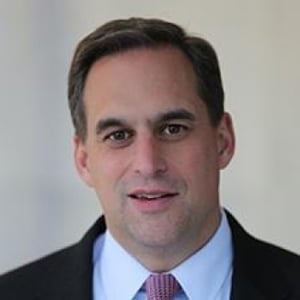
Harold Brown Chair; Director, Transnational Threats Project; and Senior Adviser, International Security Program, Center for Strategic and International Studies
Seth G. Jones holds the Harold Brown Chair, is director of the Transnational Threats Project, and is a senior adviser to the International Security Program at the Center for Strategic and International Studies (CSIS). He teaches at Johns Hopkins University’s School of Advanced International Studies (SAIS) and the Center for Homeland Defense and Security (CHDS) at the U.S. Naval Postgraduate School.
Prior to joining CSIS, Dr. Jones was the director of the International Security and Defense Policy Center at the RAND Corporation. He also served as representative for the commander, U.S. Special Operations Command, to the assistant secretary of defense for special operations. Before that, he was a plans officer and adviser to the commanding general, U.S. Special Operations Forces, in Afghanistan (Combined Forces Special Operations Component Command–Afghanistan). In 2014, Dr. Jones served on a congressionally mandated panel that reviewed the FBI’s implementation of counterterrorism recommendations contained in the 9/11 Commission Report.
Dr. Jones specializes in counterterrorism, counterinsurgency, unconventional warfare, and covert action, including a focus on al Qaeda and ISIS. He is the author of A Covert Action: Reagan, the CIA, and the Cold War Struggle in Poland (W.W. Norton, 2018), Waging Insurgent Warfare (Oxford University Press, 2016), Hunting in the Shadows: The Pursuit of al Qa'ida after 9/11 (W.W. Norton, 2012), and In the Graveyard of Empires: America’s War in Afghanistan (W.W. Norton, 2009). Dr. Jones has published articles in a range of journals, such as Foreign Affairs, Foreign Policy, and International Security, as well as newspapers and magazines like the New York Times, Washington Post, and Wall Street Journal. Dr. Jones is a graduate of Bowdoin College and received his M.A. and Ph.D. from the University of Chicago.
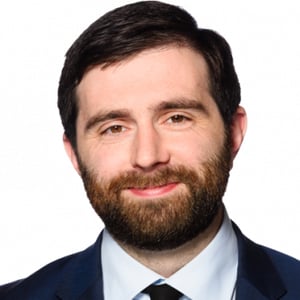
Margaret Thatcher Fellow, Margaret Thatcher Center for Freedom, The Heritage Foundation
Robin Simcox is the Margaret Thatcher Fellow at The Heritage Foundation’s Margaret Thatcher Center for Freedom, where he specializes in counter-terrorism and national security policy.
Simcox has testified before Congress on multiple occasions on issues related to ISIS, al-Qaeda and associated movements. He has also provided oral evidence to a committee of Parliament established to examine British intelligence policy.
Simcox’s commentary has been published in newspapers such as The Washington Post, The Wall Street Journal, Los Angeles Times, The (London) Telegraph, and The Guardian. It also has appeared in magazines and journals such as Foreign Affairs, Foreign Policy, The Atlantic, West Point’s CTC Sentinel, and The Weekly Standard. He regularly appears on a variety of broadcast and cable news outlets, including Fox News Channel, MSNBC, CNN, CBS, BBC, and Sky News.
Prior to arriving at Heritage in January 2016, Simcox was a research fellow at the Henry Jackson Society, a foreign policy think tank in London. While there, he authored several important works on the terrorist group al-Qaeda, including "Al-Qaeda in the United States," a 728-page monograph profiling every known court conviction in America linked to al-Qaeda.
In joining Heritage’s Thatcher Center for Freedom and assuming the fellowship that bears the name of the former British prime minister, he became part of the leading policy center in Washington dedicated to strengthening the Anglo-American “special relationship” as well as U.S. and British leadership of the broader transatlantic alliance. Established in 2005, the Thatcher Center is the only public policy center in the world dedicated to advancing the vision and ideals of Lady Thatcher, who died in 2013.
Robin received a master of science degree in U.S. foreign policy from the Institute for the Study of the Americas, University of London, and a bachelor of arts degree in international history from the University of Leeds. He studied for a year at the University of Newcastle, Australia.
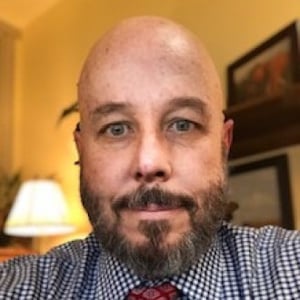
Deputy Policy Director, U.S. Senate Committee on Commerce, Science, & Transportation
Dan Ball is a Deputy Policy Director with the Senate Committee on Commerce, Science, and Transportation, where he handles the Communications, Technology, Innovation, and Internet portfolio. He has previously practiced telecommunications law at law firms and at the FCC.
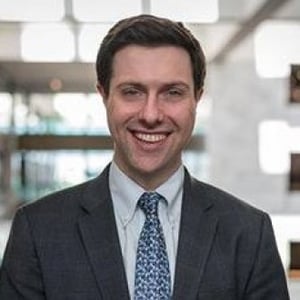
Senior Policy Advisor and Senior Technology Counsel, Senator Mark Warner
Rafi Martina currently serves as Senior Policy Advisor for Senator Mark Warner (D-Virginia). In this capacity, he acts as the senator’s principal advisor on cybersecurity, technology, telecommunications, competition, and consumer protection issues. Mr. Martina serves as Senator Warner’s principal cybersecurity and technology advisor across his committee assignments, including the Senate Banking Committee and Senate Select Committee on Intelligence, along with the Senator's work as Co-Chair of the Senate Cybersecurity Caucus.
He has spearheaded the Senator’s work on addressing social media disinformation, including by authoring the Honest Ads Act, authored numerous pieces of legislation the Senator has led on information security, including the IoT Cybersecurity Improvement Act of 2017, and drafted the Senator’s influential white paper developing policy proposals for the regulation of social media and technology firms.
Prior to joining Senator Warner’s staff, Mr. Martina served as regulatory counsel for Sprint Corp. from 2011-2015, where he represented Sprint in major rulemaking proceedings, mergers and acquisitions, and cases before the Federal Communications Commission, the National Telecommunications and Information Administration, the Department of Justice, and federal courts.
Before joining Sprint, Mr. Martina was the recipient of a post-graduate fellowship from the University of Virginia School of Law Foundation. Under the auspices of his fellowship, he acted as a legal fellow and staff attorney for FCC Commissioner Meredith Attwell Baker from 2010-2011.
Mr. Martina graduated from the University of Virginia School of Law. He received his Bachelors of Arts (with high honors) in Political Science from the University of Michigan and was a visiting scholar at Oxford University (Worcester College).
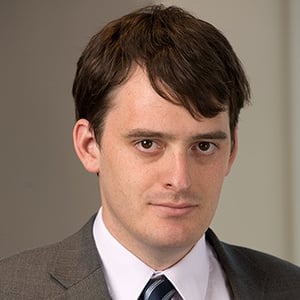
Head of Tech & Innovation, Centre for Policy Studies
Matthew Feeney is Head of Tech & Innovation at Centre for Policy Studies. Before joining CPS, Matthew was the director of Cato Institute’s Project on Emerging Technologies. His writing has appeared in The New York Times, The Washington Post, City A.M., and others. He received both his BA and MA in philosophy from the University of Reading.
Head of Tech & Innovation, Centre for Policy Studies
Matthew Feeney is Head of Tech & Innovation at Centre for Policy Studies. Before joining CPS, Matthew was the director of Cato Institute’s Project on Emerging Technologies. His writing has appeared in The New York Times, The Washington Post, City A.M., and others. He received both his BA and MA in philosophy from the University of Reading.
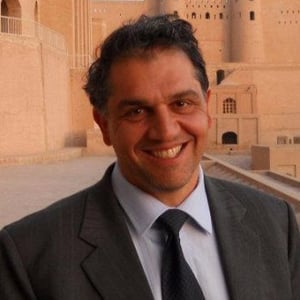
Senior Fellow, International Security Program, New America
As a Senior Fellow with the International Security Program at New America, Ioannis "Gianni" Koskinas focuses on foreign policy issues with an emphasis on Afghanistan, Pakistan, Iraq, and the Levant. He is the CEO of the Hoplite Group, a company focused on sustainable and innovative solutions to complex problems, in the most challenging environments and harshest conditions. Previously he was the Executive Vice President of the Asia Africa Projects Group and the President of the Global Initiatives Group, focusing on natural resources development and national security projects, respectively. Gianni retired from the U.S. Air Force in 2011 after a twenty-year career in Special Operations. He has a B.S. in Biology from the University of Connecticut, as well as three Master's degrees in Operational Art, Strategy, and International Relations. He is also a candidate for a Ph.D. in War Studies from King's College, London.
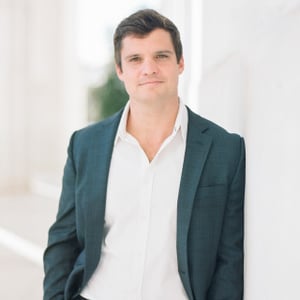
Managing Director, SCF Partners
Daniel G. West invests in energy services, equipment, and technology companies at SCF Partners in Houston, Texas. He provides equity capital and strategic growth assistance to entrepreneurs and leaders of both start-up ventures and established, growing businesses.
Prior to joining the private sector, Mr. West served as an infantry officer in the United States Marine Corps. As a platoon commander with the 22nd Marine Expeditionary Unit aboard the USS Mesa Verde, he led the Tactical Recovery of Aircraft and Personnel force in support of the NATO aerial campaign over Libya. He then served as executive officer of India Company, 3rd Battalion, 9th Marines as it mentored Afghan forces to assume lead security responsibility and executed counter-narcotics missions in Marjah, Helmand Province, Afghanistan. He also served as a clerk for Judge Laurence H. Silberman on the U.S. Court of Appeals for the D.C. Circuit.
Mr. West holds degrees in law, business administration, and economics from Harvard University, where he served as an editor of the Harvard Law Review and taught undergraduate courses in economics and government. He is a member of the Executive Committee of the International & National Security Law Practice Group of the Federalist Society and a term member of the Council on Foreign Relations.

Topics
Presidential Use of Social Media as a Means of Formulating Military Policy
There is ample historical precedent for a president, pursuant to his authority as commander-in-chief, to...
Does the Fourteenth Amendment Guarantee Birthright Citizenship? [POLICYbrief]
John C. Yoo, John C. Eastman
Short video featuring John Yoo and John Eastman
What does the text of the Constitution say about United States citizenship? Does the Fourteenth...
Is It Time to Repeal the Jones Act? [POLICYbrief]
Daniel J. Ikenson, Sal Mercogliano
Short video featuring Daniel J. Ikenson and Salvatore Mercogliano
The Merchant Marine Act of 1920, also known as the Jones Act, has governed the...
Necessary & Proper Episode 51: National Security and Executive Power
A discussion of National Security and Executive Power, recorded on October 10 at the Georgetown...
Topics
Economic Law & Policy as a Tool of National Security
Economic policy traditionally focused on employment, wages, GDP growth, regulations, and taxes. In recent years,...
ISIS Today: Prisoners, Escapees, Returnees, and Resurgent Fighters
Christopher K. Harnisch, Seamus Hughes, Seth Jones, Robin Simcox
What is the current status of ISIS worldwide? Some European countries have cancelled ISIS-travelers’ citizenship...
Supply Chain Issues: Huawei and ZTE
Dan Ball, Rafi Martina
Huawei and ZTE, two large Chinese telecommunications companies, have received considerable scrutiny from the Trump...
Martinez-Fuerte: 40 Years Later [Landmark Edition]
Matthew Feeney
Short video featuring Matthew Feeney
In 1976, the Supreme Court decided United States v. Martinez-Fuerte, a case that examined “fixed,...
Can Border Patrol Search Your Phone Without a Warrant? [POLICYbrief]
Matthew Feeney
Short video featuring Matthew Feeney
The long-standing “Border Search Exception” to the Fourth Amendment allows Customs and Border Protection to...
The Stakes: Reinstating Afghanistan Withdrawal?
Ioannis "Gianni" Koskinas, Daniel G. West
Whether an Afghanistan “peace accord” process that includes negotiations with Taliban agents is resumed, or...