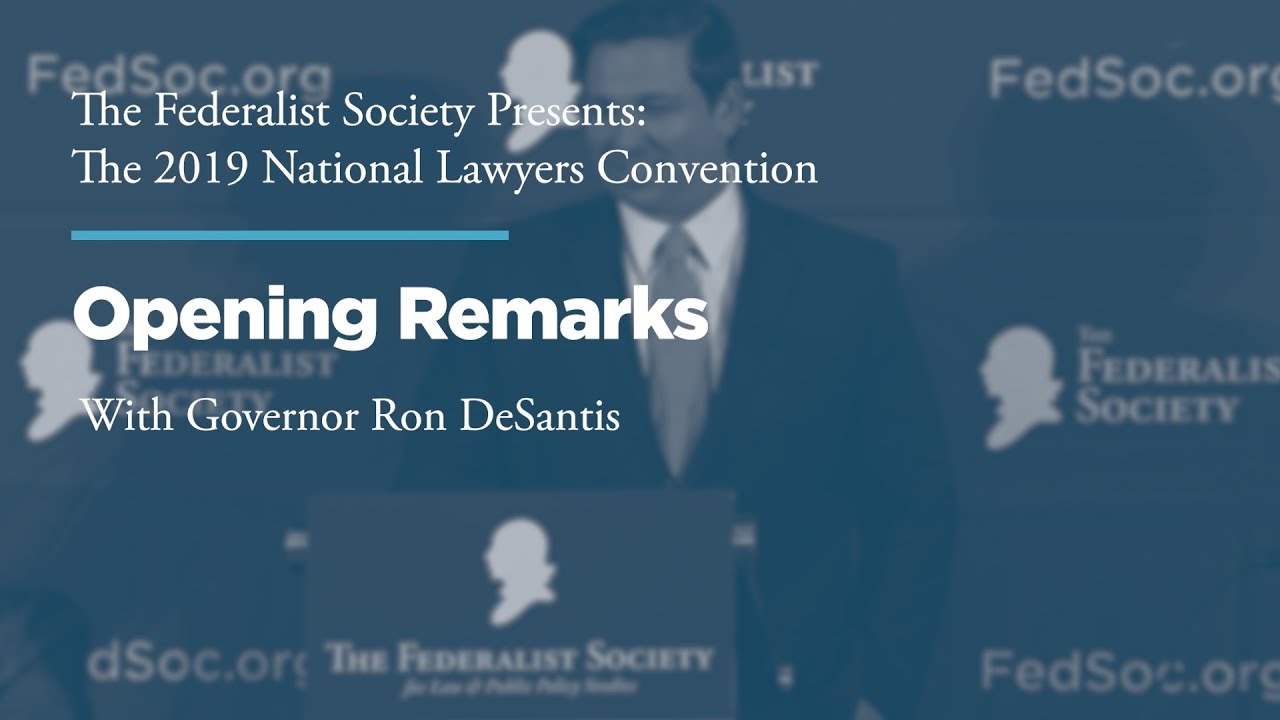
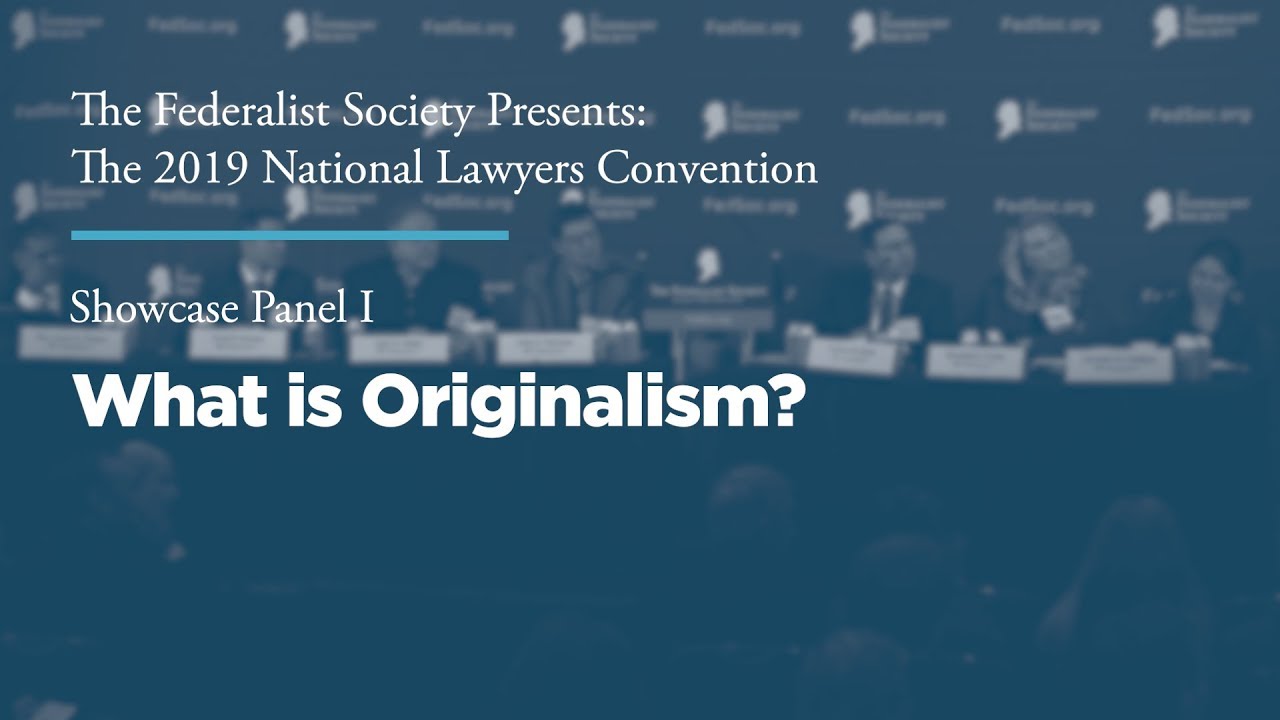
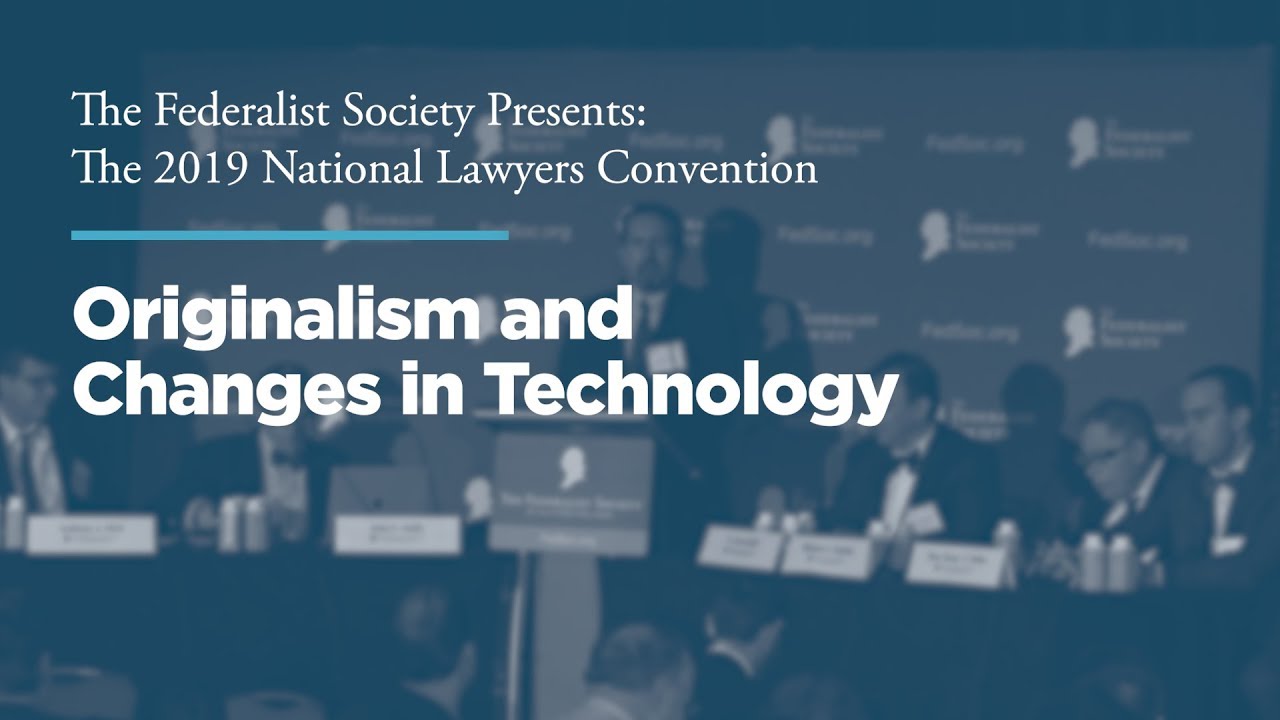
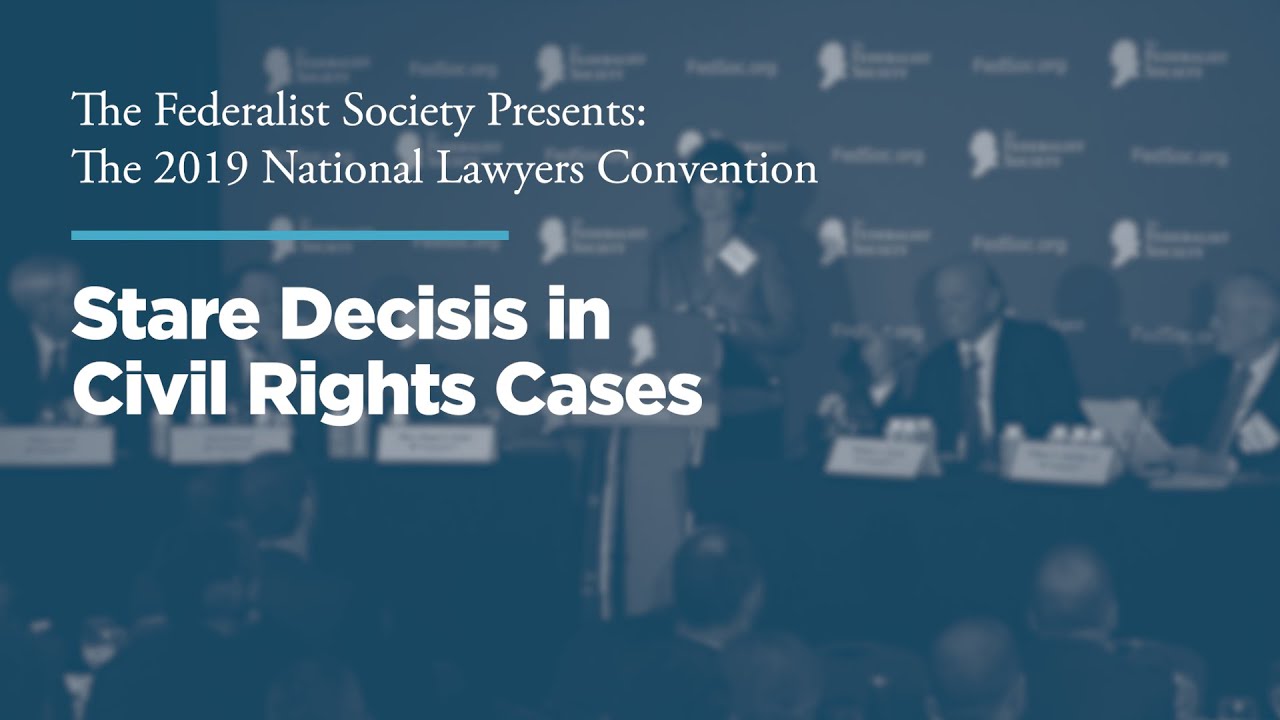
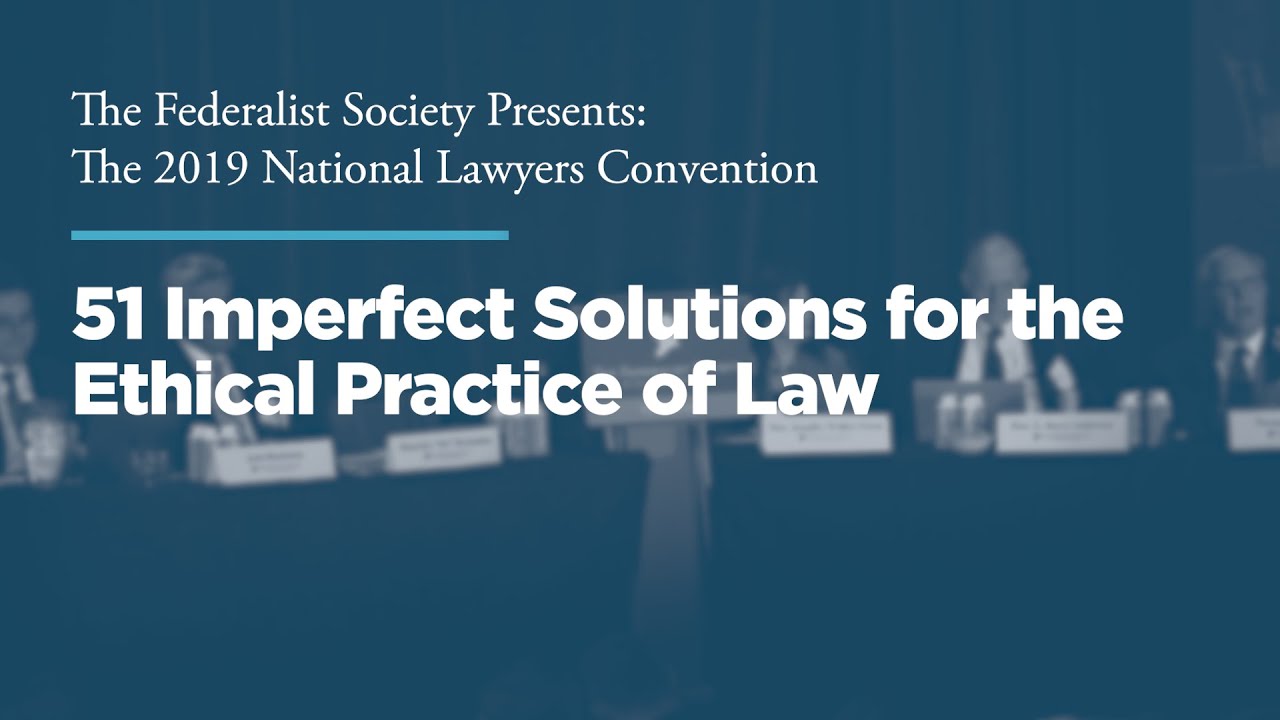
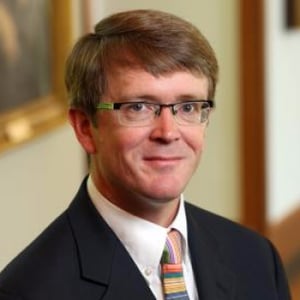
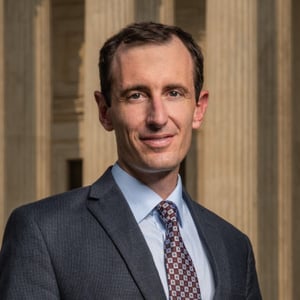
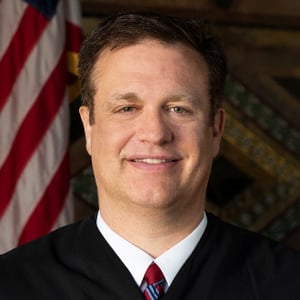
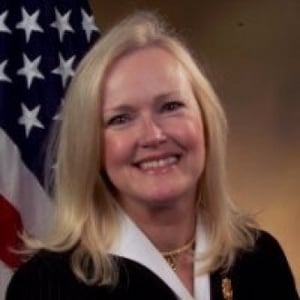
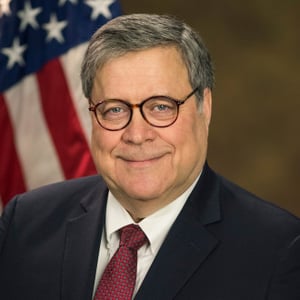
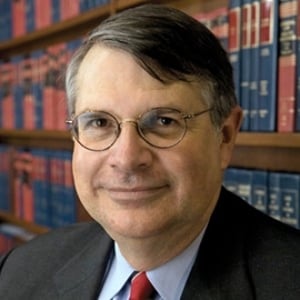
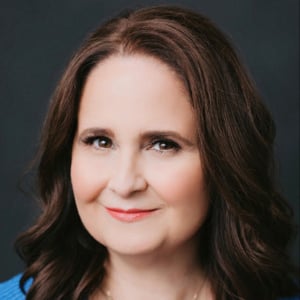
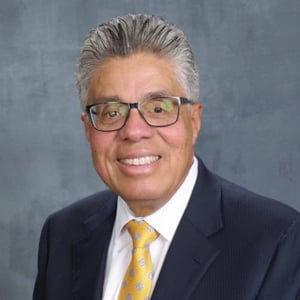
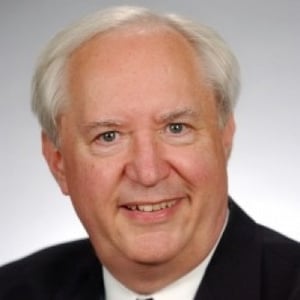
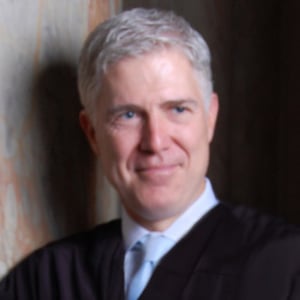
On November 15, 2019, the Federalist Society's Financial Services & E-Commerce Practice Group hosted a panel for the 2019 National Lawyers Convention at the Mayflower Hotel in Washington, DC. The panel covered "Money and the Constitution".
Money. We all use it, for exchange, for store of value, for identifying prices, and many other purposes and exercises. In the United States, and under our Constitution, what is money, how is it created, what is its value, who gets to decide, and to whom are such decision makers accountable? Is it an instrument of freedom, or a tool of government policy to affect that freedom? These questions, which touch all of us, will be the topic of discussion of our panelists.
Wayne Abernathy: Good afternoon. Thank you, ladies and gentlemen. We appreciate you being here for this session. We understand that you have many different choices. We appreciate you flying with this particular airline. Appreciate you being here.
My name is Wayne Abernathy. I’m the Executive Vice President for Financial Institutions Policy and Regulatory Affairs at the American Bankers Association. For today, I’m honored to be the Chairman of the Executive Committee of the Financial Services & E-Commerce Practice Group at The Federalist Society, which is sponsoring this particular panel today, and we really appreciate you being here because, frankly, you do have many different choices.
We presume that by being here, you’ll take the opportunity this next week to be able to view the various other sessions that are concurrently taking place. They’re all being recording, so you won’t be missing anything. You’re just getting this one live. Appreciate you being here.
One thing about the practice group I want to mention, that do contact me or other members of The Federalist Society if you have an interest in participating, at some point, in the work of the Financial Services & E-Commerce Practice Group. We’d love to have you involved. That’s how we’re able to keep our thoughts and ideas fresh as well as meet the needs of members of the society.
Our panel will be examining today something that should be very familiar to you: money, and more related to money. They will be considering the Constitution, the constitutional nest in which our money policies rest, including just what is money in the United States, how much there is, at what interest rates it is traded, and who gets to decide all of that, and how are they accountable?
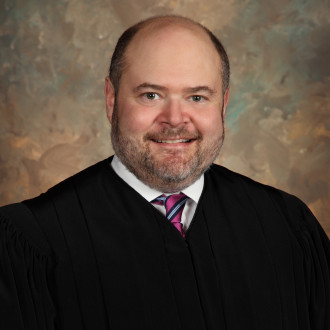
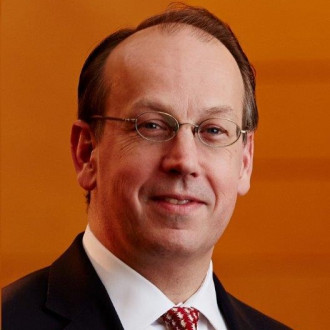
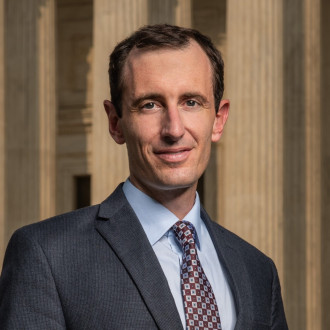
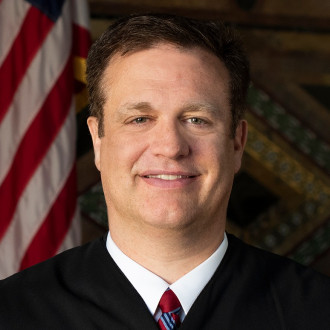
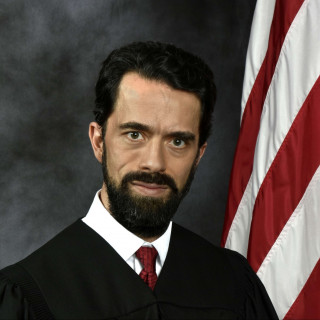
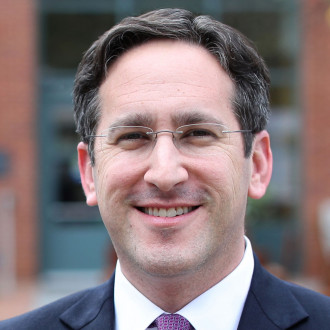
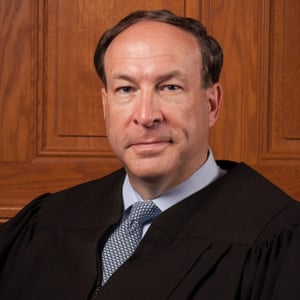
Our panel moderator today is the distinguished and honorable Paul Matey, a United States circuit judge for the United States Circuit Court of the Third Circuit Court of Appeals. Judge Matey will introduce the members of the panel. Please join me in welcoming our moderator, Judge Matey.
[Applause]
Hon. Paul B. Matey: Thank you, Wayne. Well, Wayne, on behalf of the panel, thank you for that kind introduction, and I’m delighted to welcome everyone to this lunch and discussion.
I’d like to start by perhaps setting the stage because a national crisis looms. Scarred by years of internal conflict and bitterly contested national elections, our public teeters on the verge of collapse. At stake, a fragile economy poised to expand further into the emerging international market, the independence of the judiciary against encroachments by the coordinate branches, and most ominously, calls to embrace the spirit and intent of the Constitution to fulfill new populist desires, all in sharp opposition to the barely questioned evidence of the Framer’s understanding of the limited and divided nature of the federal government.
If it all sounds familiar, well, it should because it all happened in the tumultuous and consequential period between 1860 and 1872. And as our reconstructing republic sought to finance its newly forged national character, the Supreme Court began down a path of interpretation built on deference to an expanding federal government. But recall the text. Article I, Section 10 takes the states out of the money game, prohibiting them from issuing bills of credit or promissory notes and making new forms of legal tender. Article I, Section 8 puts Congress in charge of borrowing money, but it grants it only the power to coin money and regulate its value.
So what about all that paper? It’s a question that Secretary of the Treasury Chase would ask, and that Chief Justice Chase would answer firmly, “Paper money is a power the Constitution does not provide.” So might a committed originalist then question this scarcely doubted textual foundation but running counter to the widespread and populist understanding of the Congress’s power, or did Judge Bork have it right when he said that any judge who thought that today ought to be accompanied by a guardian rather than sitting on a bench? Either way, the battle over greenbacks foreshadowed a willingness to find unenumerated powers.
True, paralyzing debt was defeated, at least for a time. But at what cost to the philosophical grounding of a nation built, it was thought, on a system of finite and predictable laws? And what would Chase, the administrator of the nation’s treasurer, or Chase, the interpreter of its laws, say about money that is neither coin nor paper, but only a string of digital values purporting to represent trillions in wealth?
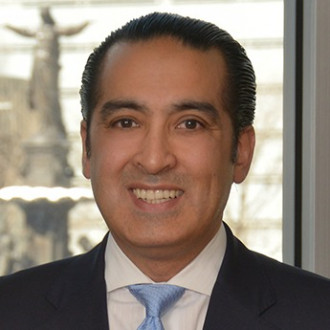
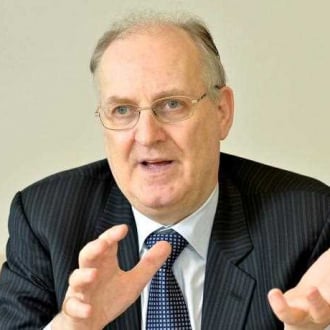
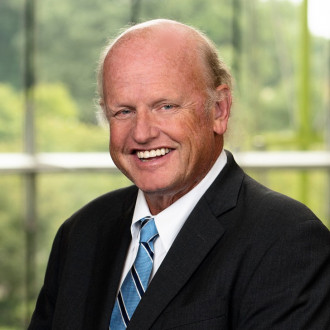
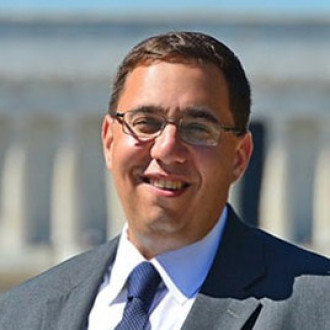
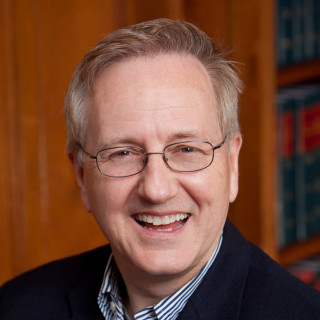
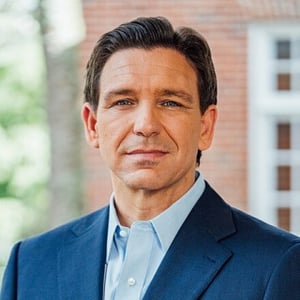
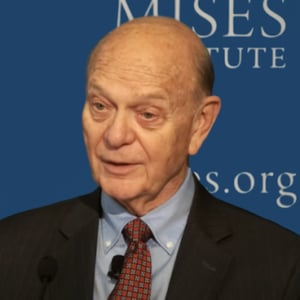
We are fortunate to have four experienced voices to discuss these issues today, beginning with Mr. Alex Pollock, currently a Distinguished Senior Fellow at the R Street Institute in Washington. He was a Resident Fellow at the American Enterprise Institute from 2004 to 2015, the President and Chief Executive Officer of the Federal Home and Loan Bank of Chicago from 1991 to 2004. His many works include the books Boom and Bust and Finance and Philosophy.
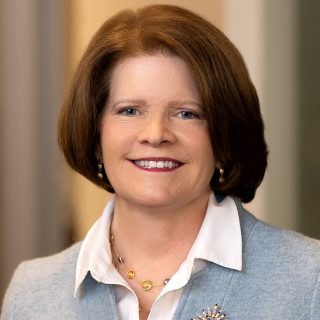
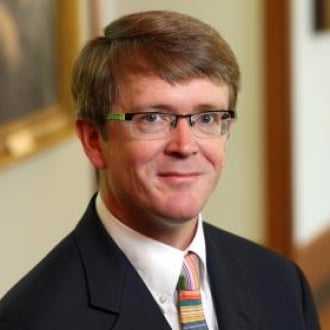
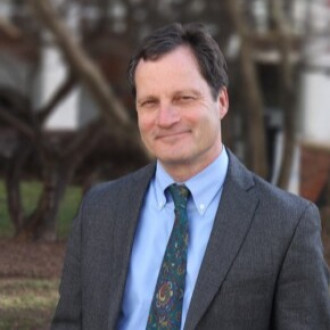
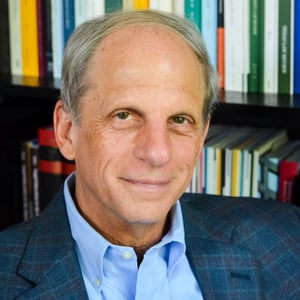
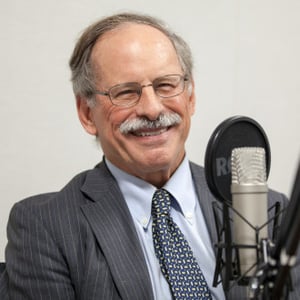
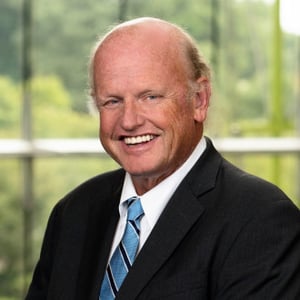
Dick Sylla joins us as well. He is a Professor Emeritus of Economics at New York University where for 25 years he served as the Henry Kaufman Professor of the History of Financial Institutions and Markets and a Professor of Economics. His specialty is United States financial history, with a long-standing interest in the Federalist Financial Revolution, implemented chiefly by Alexander Hamilton as our first Secretary of the Treasurer. And his works include the recent book Alexander Hamilton on Finance, Credit and Debt.
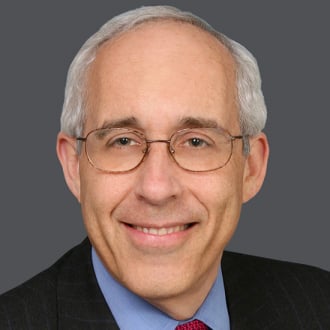
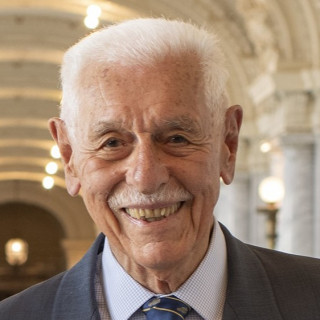
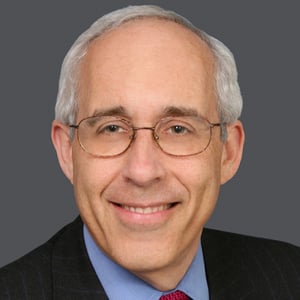
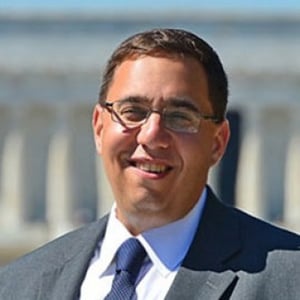
Mr. Don Kohn is a 40-year veteran of the Federal Reserve, serving his last four years as the Chairman under Ben Bernanke during the financial crisis. He is currently the Robert V. Roosa Chair in International Economics at Brookings and a member of the Financial Policy Committee at the Bank of England, which is responsible for maintaining the financial stability of the United Kingdom.
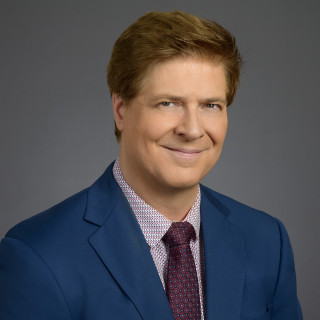
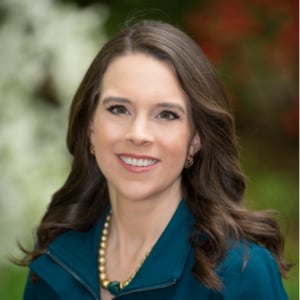
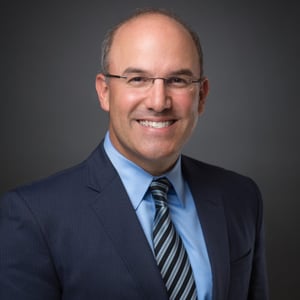
And, finally, Dr. Paul Sheard. Paul is a veteran central bank watcher, having been Chief Economist at Lehman Brothers, Nomura Securities, at S&P. He is currently Senior Fellow at the Center for Business and Government at the Harvard Kennedy School.
We’ll hear from each today, beginning with Alex. And after what I am sure will be a lively exchange, we will turn to the audience for your questions. So with that, I turn it over to Alex.
Alex J. Pollock: Thank you, Judge Matey, ladies and gentlemen. The question of money, which I try to say with a capital “M” is always political. What is the definition of money, what is its nature, how is it created, and how debts are settled are all debated over time. I recall how hot this debate can become. As William Jennings Bryan’s famous and burning rhetoric of 1896 had it, “You shall not press down upon the brow of labor this crown of thorns. You shall not crucify mankind upon a cross of gold,” as you remember, and he was addressing the definition of money in that speech.
Turning to the Constitution, what it says about the definition of money is succinct as Judge Matey suggested. Article I, Section 8 gives an expressed power to coin money and regulate the value of, and as writers on the subject have pointed out innumerable times, “to coin” is obviously not the same as “to print.” So what about the national governments issuing irredeemable fiat paper money, the only kind we have today? The Constitution, as was said, expressly prohibits states from issuing such money, but is silent about the national government on this point.
Looking at the history of the Constitutional Convention and its debates, the Founding Fathers were nearly unanimously opposed to paper money, as the notes of the debates and the federal convention made completely clear. In general, they shared the view later expressed by James Madison about “the rage for paper money or any other improper or wicked project,” like paper money. But they considered and refused to include a prohibition of federal paper money in the Constitution.
In the debate, George Mason pointed out that, “Though he had a mortal hatred to paper money, yet he could not foresee all the emergencies of the future and was unwilling to tie the hands of the legislature.” The constitutional result was the expressed power to coin and silence on “to print.” Should we conclude there is an implied power for the government to print pure paper money, and even more, to make it legal tender for the settlement of debts, even if those debts have been contracted for and expressly required by contract payment, for example, in gold coin? A lot of supreme judicial ink would later be devoted to debating and ultimately deciding this question.
Back to the Constitutional Convention for a moment: Gouverneur Morris, say the notes, recited the history of paper emissions and the perseverance of legislative assemblies in repeating them with all the distressing effects. He continued, “If a war was to break out with this prediction, if war was to break out, this ruinous expedient would again be resorted to.” And this prediction of a national paper money was fulfilled when the Civil War did break out, and the Lincoln administration soon turned to paper money to pay the huge costs of the Union Army.
By 1861, faced with the staggering expenses of the war, Congress authorized the issuance of paper money, or greenbacks, as they were called. In 1862, they added the provision that these greenbacks were legal tender which must be accepted as all payments. Predictably, these greenbacks went to a large discount versus gold. And their exchange value fluctuated, as you would expect, with the military fortunes of the union.
After the war, this expedient of paper, legal tender, resulted in a series of legal tender cases and Supreme Court judgments, in which first, making paper money a legal tender for debts previously contracted in gold was found to be unconstitutional in a 4-3 decision. Then, soon after, the Court reversed itself 5-4, declaring it was constitutional, after all. It was thought to be a scandal that two new justices had been added to make up the five majority. And the majority stressed, in this decision, that the nation had a sovereign right to preserve itself, and thus the government power in monetary affairs.
Now, these opinions make very interesting reading, and I’m sorry we don’t have time for some good quotes from them. But about them, it was said, “Measured by the intensity of the public debate at the time, it is one of the leading constitutional controversies in American history that they’re now largely forgotten.” In one of these series of decisions, one later overruled, the Court wrote: “Expressed contracts to pay in coined dollars can only be satisfied by the payment of coined dollars, not by United States notes.”
That this decision did not stand was handy for the United States government later in 1933 when the U.S. government defaulted on its expressed promise to pay U.S. Treasury gold bonds in gold coin and instead paid in paper money, exactly the reverse of the previous Supreme Court dictum. This action in 1935, the Supreme Court upheld by 5-4, although no one doubted the clarity of the promise that was broken. Among the majority’s key arguments was the sovereign right of the government to default if it wanted to, and the sovereign right to regulate money.
Well, what about today? As we all know, we have a pure fiat money system of the paper Federal Reserve Notes in your wallet and mere bookkeeping entries on the books of the Fed, which are at the center of the banking and financial system. This pure paper currency, the Federal Reserve, on its own, has committed to depreciate by two percent a year forever. This is in spite of the fact that the Federal Reserve Act instructs the Fed to pursue “stable prices.” By promising perpetual two percent inflation, the Fed promises to make average prices quintuple in a normal lifetime. That’s just the math of compound interest, but it’s staggering.
I’d like to point out that the Fed made this momentous, inherently political decision about the nature of money on its own, without the consent of Congress. It didn’t even ask Congress for an opinion on this policy, let alone for approval. And I want to ask—and I think it’s a great panel to ask it on—where under the Constitution did the Fed get the right to proceed in this matter without Congress? And that the Fed presumed to do this on its own authority was quite a remarkable act by what we know as the administrative state. And with all due respect to the Fed and my honor to colleague Don Kohn on this panel, I think one could argue that this action by the Federal Reserve, was an unconstitutional violation of Article I, Section 8 in the express power of the Congress to regulate the value of money. Well, unfortunately, we have no lawsuits about it, so we can only observe it.
In conclusion, as one close student of the legal tender cases of the 1860s and 1870s concluded, he said, “There remains the intriguing question of the constitutional basis for today’s legal tender paper fiat money.” There remains the constitutional question, indeed there does, but the political basis rules, and life goes on. Thank you.
[Applause]
Prof. Richard E. Sylla: I suppose I should feel a bit uncomfortable here because I think I’m in a room with a whole lot of lawyers and very few economists. In my teaching career at NYU, it was just the opposite. I had 25 or 30 economists and MBA students in my class, but I also had a few lawyers wandering over from the NYU law school, and I developed an admiration for them because in my course, called The Development of Financial Institutions in Markets—so it was about the history of finance—I would at some point read them a statement from a letter that Alexander Hamilton wrote to James Duane in September 1780. Hamilton, then, was a lieutenant colonel in the Continental Army. James Duane, I think, was a member of the Congress.
And what Hamilton said in this letter is that “Congress should have complete sovereignty in all that relates to war, peace, trade, finance, and to the management of foreign affairs, the right of declaring war, of raising armies, officering, paying them, directing their motions in every respect, of equipping fleets, and doing the same with them, of building fortifications, arsenals, magazines, etc., etc.; of making peace on such conditions as they think proper”—remember, this is all what Congress should have the power to do—"regulating trade, determining with what countries it should be carried on, granting indulgences, laying prohibitions in all the articles of export and import, imposing duties, granting bounties, and premiums for the raising, exporting, importing, and applying to their own use the product of these duties, only giving credit to the states on whom they are raised in the general account of revenues and expenses, instituting admiralty courts, etc.; of coining money, establishing banks on such terms and with such privileges as they think proper, appropriating funds, and doing whatever else relates to the operations of finance, transacting everything with foreign nations, making alliances, offences, defenses, treaties of commerce, etc., etc.”
And so, then, the question I would ask the students in this group of mostly economists and MBA students, but with a few lawyers, I’d say, “Did you ever encounter those similar lists of things that you’ve heard of before?” And the MBAs and the economists would look stony, like “I hope he doesn’t call on me.” And the lawyers would raise their hands, and they would say, “Yes. That has certain parallels with Article I, Section 8 of the U.S. Constitution,” which was written sever years later. And, if you know the history of this era, Hamilton was, of course, a spearhead of the movement for the Constitution. So that passage of his letter of 1780 and Article I, Section 8 of the Constitution have an eerie parallel. Well, he did say that Congress should have the power to coin money, and he mentioned banks too, but the Constitution doesn’t have the word banks in it, which has been a product of certain controversies in U.S. history.
There are basically three monetary clauses in the Constitution. And as Bray Hammond, in a famous book of 70 years ago called Banks and Politics in America, pointed out, the monetary clauses have one authorization and four prohibitions. And the authorization, as Alex has already mentioned, Article I, Section 8 says, “Congress has the power to coin money, regulate the value thereof in a foreign coin, and fix the standard of weights and measures.” The prohibitions come in Article I, Section 10, where it says, “No State shall… coin Money; emit Bills of Credit;”—meaning paper money—"make any Thing but gold and silver Coin a Tender in Payment of Debts; and no State shall pass any Law impairing the Obligation of Contracts.” So those are the monetary clauses. There are not very many words to them, but those are the monetary clauses.
And as Alex noted, the federal government has the power to regulate money, but the states could not print paper money. But it said nothing. The great silences are the state shall not print paper money, but it doesn’t say what the federal government might do. And with respect to legal tender and contractual obligations, the states are forbidden to interfere with either of those, but nothing is said about what the federal government might do. These are these kind of interesting silences. And Alex noted that all this was discussed in the Convention. And the records of the Constitutional Convention show, under the Articles of Confederation, the national government did have the power to print paper money.
And so this was debated, and should they put this same power from the Articles into the federal Constitution. And they voted by states then, and it was defeated by a vote of 9-2 to give the national government the power to print paper money. But the delegates were strongly against an explicit authorization of Congress to issue paper money. They didn’t say, though, that they couldn’t. That’s the interesting thing about the Constitution. And I think the -- so it’s kind of restrictive on states but doesn’t really say much about what the federal government can do. And a lot of these later legal cases, some of which Alex referred to, were partly because of the silence of the Constitution.
Now, why did the states go along with this? Well, it turns out that while the states could not print paper money, as they had been doing earlier, they could charter banks. And the Constitution doesn’t mention banks, and Hamilton argued that we should have a national bank, and he won that argument in the year 1791 Congress. But the states, who might’ve been inconvenienced by not being able to issue paper money, found that not only could they charter banks, but they could take ownership stakes in them. So the state bank money replaced the paper money that the states themselves used to issue.
Now, the background to this, I think, is that they had some bad experiences. The Constitution’s written just a decade earlier. You’re in the middle of the American Revolution, and Congress is issuing paper money called Continentals. It basically becomes worthless because Congress issues, and overissues it, and so that was a bad experience they had. And then in the 1780s, before the Constitution, the states continued to issue paper money, and there were some egregious cases. One was Rhode Island, which wasn’t at the Constitutional Convention because they didn’t even send delegates, I think, and they were the last state to ratify the Constitution. And Rhode Island, a sort of agrarian farmer faction, took over the state government and proceeded to issue a lot of paper money and pay off all their debts to the bondholders in depreciated paper money.
And this is -- Alex quoted James Madison as talking about this being wicked. This was some wicked thing. You had to prevent it. So I think the reason the Constitution has these prohibitions is that they had very bad experiences with paper money, and they wanted to make sure that didn’t happen again. But there is the strange silence. Well, the states couldn’t do these things. Nothing is said about whether the federal government can do that. And I think that’s an interesting aspect of the Constitution.
The states aren’t supposed to interfere with the application of contracts, but they’re just -- it doesn’t say the federal government can’t do it. So, in some sense, when Alex talks about the 1930s and the abrogation of the Gold Clauses, in some sense, that might’ve been allowed under the Constitution. At least, that’s what, I guess, the people who were for it claimed, that they had a constitutional basis for doing that. So, anyway, I think if you study the history of that period in the early days, they had a real reason to be suspicious of paper money, but they were not willing to go far enough to say the federal government could never do that.
Hamilton in 1791 in his report on the banks said the Constitution wisely prohibits the states from printing paper money, and the federal government might take it -- it doesn’t say the federal government can’t, but Hamilton thought it might be a good idea for the federal government to adopt the same policy of not printing paper money. But I think later on, he may have changed his mind when he thought the country didn’t have enough money.
0But, anyway, there is a -- the Constitution is the words on paper, and we live by them today, but they were particularly directed at problems of that time. I think that’s -- originalism ought to always look at what were the things that the people who wrote the Constitution were reacting to, and one was this fear of paper money. Thank you.
[Applause]
Dr. Don Kohn: Thank you. I appreciate the opportunity to be on this panel with terrific historians, and colleagues, and economics, and law. I am not a lawyer, or a constitutional scholar, or even an historian. I’m a central banker, as Paul noted, and I’ll reflect -- I want to spend a few minutes reflecting on the position of the Federal Reserve in the government. So reflecting on independence from short-term political pressure and the accountability that comes with that independence.
So I think it’s interesting that from the get-go, from 1913, Congress limited its influence on the Federal Reserve. It made fixed terms. I think there were 10-year terms for board members in the 1913 Act, and, of course, it created the Federal Reserve Banks, which were privately owned and had private boards of directors who selected the presidents of those reserve banks. Of course, there was no real monetary policy and any -- there was seasonal fluctuations in currency and in interest rates that Congress was focused on. The first clause of the preamble is to create an elastic currency to deal with that. But there was no real monetary policy because we were on the gold standard at the time.
By 1935, as we’ve heard, after 1933, there was monetary policy, or there was room for monetary policy, and there were some important amendments to the Federal Reserve Act in 1935. But I think, interestingly, those amendments, more on balance, strengthened the independence of the Federal Reserve from the short-term political pressures. So it removed the controller of the currency and the secretary of the treasury from the board of governors. So the two people from the administration that had been sitting on the board were removed from the administration. It lengthened board member’s terms from 12 to 14 years. It kept the budgetary independence of the Federal Reserve through the seigniorage that the Fed does through its Federal Reserve notes, so not subject to congressional oversight. Congress didn’t do anything with that.
It did establish the board as a dominant influence on a revamped Federal Open Market Committee dominating the presidents, so giving it more democratic input from that perspective, since the President would appoint the majority of the FOMC, subject to senate confirmation. Actually, there hasn’t been a majority of the FOMC from the board of governors in many years, but it’s there in theory. But they’re still fixed terms for the members of the board.
By the mid-1970s, Congress was, for very good reason, quite dissatisfied with the performance of the Federal Reserve, so it took a number of steps. Number one, it made the targets more explicit for what monetary policy was supposed to do; still kind of vague. And Alex referred to this, and we come back, perhaps, in the discussion the goals of our maximum employment stable prices and moderate long-term interest rates for monetary policy, but, at least, there’s something established by Congress. There was nothing there before.
It increased transparency and accountability for the Federal Reserve by mandating monetary money supply targets that the Fed choose and publish money supply targets based on economic forecast that the Fed made public. How did it choose these targets that needed to justify them with its forecast for the economy and inflation? And it established semi-annual monetary policy reports and testimony by the Chair of the Federal Reserve on those reports. So it regularized a process of oversight through Congress, both the senate and the house.
Notably, it did not reduce the ability of policymakers to set monetary policy instruments free of short-term political influence. It authorized GAO. At that point, I think it was called General Accountability Office audits, but not specifically exempted monetary policy from those audits, so it gave monetary policy more of an arms-length relationship to the Congress than other forms of Federal Reserve Policy. And I think this is important to bear in mind, the independence -- the Fed is bifurcated. It’s much stronger for monetary policy than it is for regulatory policy, and that’s fine.
There have been lots of discussions since the mid and late ‘70s about potential legislation which would affect the independence of the Federal Reserve. There were some in the Reagan administration where they were unhappy with the Volcker disinflation. There were some from -- the Democrats, in the ‘90s, talked about removing the presidents from the voting on the FOMC because they weren’t appointed by the President and confirmed by the Senate. The Republicans in Congress, in 2010 to 2016, had this Audit the Fed bill, which was going to take away that GAO exemption that I talked about for monetary policy. And they were trying to put into law a rule to make monetary policy perform by a rule, and they favored a particular rule in that regard. But in the end, there were no changes. So we are left where we were, really, in 1977, 1978.
So why did Congress tie its hands in this way? The traditional view is that Congress recognized that they really couldn’t be trusted to run monetary policy for the common good. A short-term focus of people running for office interacting with a tendency for easy monetary policy to affect growth first and inflation later would give rise to an inflationary bias in monetary policy run by elected politicians. And we’ve seen this in a number of countries and across time in that when politicians do have their hands on the levers, it tends to produce more inflation.
The politicians should set goals, appoint knowledgeable technicians, hold the technicians accountable for landing the plane but keep their hands off the landing controls if they really wanted the plane to land. From the perspective of the late 1970s, when the last major reform was done, you could see why this concern about meddling by politicians was relevant. Lyndon Johnson famously leaned all over Bill Martin to ease monetary policy, or not to tighten monetary policy, as inflation was getting going. And Richard Nixon leaned all over Arthur Burns to keep policy easy, especially in election years. And that combined -- unfortunately, Martin, and especially Burns, were not sufficiently resistant to this kind of pressure, and that was one underlying cause of the inflation of the 1970s.
I think this predilection for easy monetary policy, leading up to elections, we can see in the Twitter account of our current President. And this will lead to -- any erosion of independence will lead to stop-go policies, as we’ve seen recently, and procyclical policies, stepping on the gas when the economy’s already doing well, as we’ve seen recently for fiscal policy. But do the arguments for independence hold even when we’re in a disinflationary world? No one’s really worried too much about inflation reasonably. And I think they still do, and I would give two reasons. One is inflation. Maybe I lived through the 1970s and the Federal Reserve, and that’s in my DNA, but I can’t believe that inflation will be dead forever and that there isn’t some irresponsible monetary policy that could get it going again.
Secondly, I think there’s the issue of expertise. So monetary policy is hard and technical. We need to utilize all available evidence and good analysis to achieve good public policy outcomes. Congress recognized they’re not capable of having that technical expertise, so they appoint technicians and then hold them accountable for the outcomes. What does the Fed need to do to preserve the current level of independence against attacks that are occurring? One is produce good results. Examples of, I think, pressures on Fed independence, after the global financial crisis and the sluggish recovery from that crisis, that’s what give rise -- to some extent, that’s what gave rise to the attempts to roll back or limit independence in the Congress of the 2010 to 2016 year. I think there are other reasons, but that’s one of them.
So I think it’s not always under the Federal Reserve’s control, the outcomes. The trade war effects on business uncertainty and capital spending are a great example right now. But they’ve got to do the best they can. I think the Fed -- second point is the Fed always has to focus on achieving its legislative mandates as expeditiously and quickly as possible without regard to what party is in power anywhere. They’ve got to stay focused and non-political. It’s absolutely critical. It’s something that Chair Powell has emphasized in response to the current tax.
And thirdly, I think they’ve got to be as transparent as possible with achieving these mandates. They’ve got to explain themselves, as well as possible, in terms of how their actions will foster the mandates, the goals that Congress has set for them. They’ve got to engage with responsible critics and alter their behavior where that can be demonstrated to achieve goals. And I think if they follow those guidelines, their independence can be preserved. Thank you.
[Applause]
Dr. Paul Sheard: My wife and I became naturalized U.S. citizens in January of this year, so to be invited to a panel on money and the Constitution at The Federalist Society makes me feel that the invisible hand is at work in some shape or form. Like many of the other panelists, I’m an economist not a lawyer. Although, I do have my copy of the Constitution handy here. But I’m going to reach for something else in a moment.
But what I’d like to do is dig a little bit deeper, as an economist, into this issue of how money is created and what are some of the implications of that. So I will reach for the $20 bill in my pocket and start here with this paper money that has been referenced, and, of course, I hardly need to remind this audience that this must be the most ironically designed bank note in the world, adorned as it is by Andrew Jackson’s face.
But it’s a very interesting thing, a dollar note. It is, of course, a Federal Reserve note, but the Federal Reserve Act makes clear that this is an obligation of the U.S. government. And Don has already referred to the fact that the Federal Reserve itself considers itself to be not independent of the government but independent within the government. But, interestingly, the Federal Reserve notes are not signed by the Chairman of the Board of the Federal Reserve but rather by the Secretary of the Treasury, and another treasury official, the U.S. Treasurer. Easy to confuse those two, but they’re separate.
This money, of course, this paper money, is only a small fraction of the money, again, that’s been referred to already. It’s about, I think, about 10 percent or so of the money supply, maybe about 8 percent relative to nominal GDP. So it’s a relatively small $1.6 or $1.7 trillion of this stuff, relative to a $20-trillion, $21-, $22-trillion economy. But already, from that brief description of what a Federal Reserve note looks like, you get one of my major points that money is very much a joint product of the government that we normally consider and the Federal Reserve, although they’ve been somewhat separated over time.
The interesting thing though is to think about where this dollar bill came from. Now, I got it from somebody else, but, ultimately, to come into circulation, it had to be taken out of a bank. And that’s a very – I guess, everyone does this. But, when you think about it, it’s a very interesting thing that happens then because when you take that $20 note out of the bank or out of the ATM, out of the bank account, it’s turning from a debt of a private bank into a debt obligation of the federal government.
And, of course, behind that is the fact that when you take that $20 bill out of the bank, out of the ATM, the bank is taking $20 out of its reserve account at the Federal Reserve. And that $20 reserve now turns into a $20 bank note, so there’s a shift in the liability composition of the central bank’s balance sheet as money turns from a private bank liability into a federal government liability. Quite a fascinating little plumbing there.
That sort of joining at the hip, if you like, of the fiscal and the monetary is seen in the banking system, all three operating together to produce funny stuff called money. I think you see more clearly when we ask the next question. Well, if that $20 note came out of a bank account, a deposit in the bank, where did that bank deposit come from? So where does that fundamental money actually come from? And I would identify three places, and I’ll list them in order of importance, my sense of what the importance is.
The first one, again, has been briefly mentioned by Professor Sylla, which is a large chunk of money, of course, comes into existence when banks engage in lending, credit creation. The act of lending is the act of a bank creating money supply, as we call it, M2 or M1; that is, bank deposits. So that’s the banking system itself, not mentioned in the Constitution, is really very front and central in money creation. The second place that money comes from, although we’re not always used to thinking about it in these terms, is when a government runs a budget deficit. The federal government, or any government, running a budget deficit is an act of injecting more purchasing power into the economy through its spending than it simultaneously withdraws through its taxation.
Now, typically, the way these things work in the modern architecture of a monetary and fiscal system is that the government sterilizes or changes the form, changes the nature of that purchasing power, that net purchasing power, which I’m implicitly defining as money, by issuing government debt securities, and now that purchasing power resides in that form. But when the federal government and the U.S. has got about a stock of debt of about $20 trillion, that’s an awful lot of purchasing power that has been created through the government running budget deficits. So, again, you see that key point of fiscal and monetary policy being very much joined at the hip. I’ll develop that theme as I go along.
And the third place that money comes from—you may be wondering where the central banks fit into this—is the central bank purchasing assets, usually those government debt securities that they have been created in order to absorb or sterilize the budget deficits from the non-banking system public, so think of households, hedge funds, mutual funds, corporations, whoever happens to be holding those debt securities. Central bank, through so-called open-market operations, buys those things, turns them into bank deposits and reserves in the banking system. But I put that third because quantitatively, even though this is the model that we learn in the textbooks, and that the central bank controls the money supply, and that’s monetary policy, quantitatively is a relatively small part of the overall monetary action. It’s certainly dwarfed by bank credit creation and government debt issuance.
So pre-crisis, for example, the Federal Reserve’s balance sheet was about $900 billion. It’s now $4 trillion, but even $4 trillion is not all that big in terms of the whole monetary scheme. So, again, we see this point: banking system and the government very much jointly engaged in money creation, and also, therefore, jointly engaged, if you like, in the transmission of what we call monetary and fiscal policy, the macroeconomic policy levers that are so important.
So with that somewhat analytical perspective on the plumbing of the monetary and fiscal system, let me just turn briefly in my conclusion of my introductory remarks to two contemporary policy issues. I’ve been in the markets for the best part of the last quarter of a century, a lot of central bank watching, interaction with clients. So what are policymakers thinking about now, and what are the market debates? Well, one big issue, in the last 10 years, is a so-called quantitative easing, which the Fed has ceased, although it’s started up under a -- well, debatable. It started to expand its balance sheet again since October 11, around about $60 billion per month for a while.
But the Fed’s balance sheet, after all that QE that it did after the big crisis -- and by the way, I’m kind of big fan of QE. I’m not here to criticize QE, but I want to point something out about it that’s interesting. Its balance sheet is now $4 trillion. Without that QE, it would probably, on my estimation, be around about $2 trillion if hadn’t engaged in QE. So it’s already bloated by the stock of past quantitative easing. But what is QE? Of course, the Federal Reserve called it LSAPs. I have to say, Don, I never liked that term. QE rolls off the tongue a little bit easier than large scale asset purchases.
But quantitative easing—let me just say this slowly—I think to understand what it is, inasmuch as it involves the purchase of government debt securities, or securities like MBS, they’re guaranteed by the government. It is a debt refinancing operation of the consolidated government, the consolidated government being the government and the central bank, with a twist. But the debt refinancing is done via the central bank going into the market and purchasing and retiring government debt securities, those things that were created to absorb the money that was created by budget deficits in the first place, retiring those and refinancing them, dollar for dollar, into central bank money or central bank reserves.
So viewed from that perspective -- most people don’t talk about it this way. But if you think of the consolidated balance sheet of the U.S. government, quantitative easing is just, if you like, a switching around of the form of the liabilities. But I would regard all of those liabilities as in some sense being money or purchasing power that’s created by the government, one way or another. When you think about quantitative easing this way, it clearly blurs the lines. You can see that the lines between what we think of as monetary policy and fiscal policy are blurred. This being a debt refinancing operation sounds a little bit more like something you’d expect the treasury to do, as very much revolving around the amount of government debt that sits in private sector hands.
But I would point out that I don’t see that as necessarily a problem because I don’t think actually the lines between fiscal and monetary affairs and things are as bright as they are drawn in contemporary policy discussions. And I suspect, although I’m no expert on this, that that monetary fiscal distinction is pretty blurred, if it’s there at all, in the Constitution, but I’ll let others be the judge of that. And QE is still alive and well, and we may see more of it coming. Certainly, the Bank of Japan, the ECB are still doing big QE. The Fed has started up the engine a little bit under a different kind of guise, but balance sheets are expanding.
The second big debate, which is gripping people in the markets in the policy world at the moment, is this concern about whether policymakers will have enough ammunition in the next downturn when it comes. Hopefully, it won’t come, but everybody says, “Well, eventually you do get these recessions.” So, even in the U.S., for example, obviously, the debt levels have blown out over the last 10 years. Debt to GDP ratio is around about 100 percent now. I don’t think that’s such a big problem, but most people do.
The Fed, as I said, has already got an expanded balance sheet to begin with. It’s now cut its interest rate three times to just 150 to 175 basis points. Typically, the Fed, to deal with a recession in the postwar period, has needed and used about 500 basis points of interest rate ammunition. So if a big shock at the economy right now, it would only have about 150, 175 basis points of interest rate ammunition. And, if you look at the rest of the world, I mentioned the Eurozone, Japan, etc., those metrics look much worse. You’ve got negative interest rates in those areas and much more QE having taken place.
There’s a lot of talk in the markets about secular stagnation. It’s a funny word. Basically, it’s low R-star. There’s probably only half a dozen people understand that. But, sorry, what that means is this idea that economists have come onto that the natural rate of interest, or the real equilibrium rate of interest, which happens to be a very important invisible variable for central bankers, to where the real rate of interest would be when the economy is where the Fed and the government wants it to be, full employment, low stable inflation, is very, very low, close to zero, or maybe half a percent max, maybe one percent. And what do you do, how do you manage the economy with money, with monetary and fiscal policy, in such a world?
So the thought I’d like to leave you with is that my view, having looked at the development of these issues over the last couple of decades, starting in Japan, where they really came onto the radar screen first, is that it is time to rethink the standard macroeconomic policy model. Don talked about this a little bit from the monetary policy perspective, but what if monetary policy alone is just not enough firepower to deal with the next recession? Then you do need to think about monetary and fiscal policy coming together, coordinating, cooperating, maybe acting more jointly. Goes against the grain a little bit of this idea of central bank independence, but it may be something that we need to think about structuring a framework that actually allows that to happen. And I think that that may be the legal scholars, if we go in that direction, will turn to the Constitution for some guidance, but we economists have got a few ideas.
I’ll just leave it there for the moment. Thank you very much.
[Applause]
Hon. Paul B. Matey: Well, I want to thank everyone for those introductory remarks, and I’m going to turn this over to discussion of the panel in a just moment. When I was asked to moderate this discussion on money and the Constitution, I thought, “Well, that’s interesting. I know nothing about money, other than I don’t make as much of it now as I am a judge.” But I thought, “Well, there must be something that is significant here.” And, when you dive into the rich history that the panel has begun to explore today, you begin to see a story of policy, governance, and philosophical foundational principles that’s really unmatched in American history.
If you think about it for a moment, Lincoln needs to finance the debt coming out of the war, so he goes to Salmon Chase, the Secretary of the Treasury, and says, “We’re going to print money.” Salmon Chase says, “Well, I don’t see anything in the Constitution that allows us to do that.” Lincoln writes back an extraordinary note saying, “Not to worry. I have the Constitution right here, and I’m keeping it safe and sound.”
[Laughter]
So Chase relents. Except Lincoln then puts him on the Supreme Court, where Chase says, “No. I’ve rethought it, and, in fact, it’s unconstitutional.” And then Grant comes into office, and he puts in two new justices who, one year later, overturn that decision, leading to the creation of an entire administrative state. Can you imagine how this would play out in the media today? It is an extraordinary story of developing government powers in response to a crisis in a way that defied popular notions of what this new federal government should be.
So with that, I think, I’ll start with Alex by asking how would you perhaps translate into modern language this concept of paper money being wicked, this prevalent concept that was around at the framing? And what might current commentators say about that notion to that?
Alex J. Pollock: I think current commentators would -- all of us, even supporters of pure fiat systems run by governments, as Paul rightly said, some combination of government and central bank, it’s really a highly related entity. All would agree that the paper money out of control, as has happened often in history, and, as Don said, it happened here in the 1970s. We had paper money out of control with terrible results for the people. And, in fact, that out-of-control paper money of the ‘70s created, in my judgement, the amazing financial crisis of the 1980s, which, although we don’t perhaps remember them as well as we should, the ‘80s had a whole series of intense financial collapses really coming out of the paper money experience.
And we all know of -- there have been a lot of hyper inflations in history and now, like Venezuela, Argentina, Zimbabwe, as famous. I have a little joke, which is what people call modern monetary theory, which is unbridled printing of money, is really not MMT. It’s really ZMT, namely Zimbabwe monetary theory. And I think everybody would agree that that’s bad and that you can’t have a situation where you get out-of-control money creation. We say printing, but of course most of it is bookkeeping, not printing, but out-of-control money creation.
So now, the discussion becomes, well, in that case, how do you control it? The members of the Constitutional Convention, almost all of them—not all of them, but almost all of them—thought you controlled it by defining money as gold and silver coinage, hence the constitutional expressed power to coin money, regulate the value thereof. Regulate the value meant define how many ounces of gold or silver would be legally a dollar, and then how that weight of coin related to foreign coins.
Modern thoughts of regulating the value thereof, of course, have come a long way from there. And when the Supreme Court, in 1935, in these really fastening Gold Clause Cases -- if you don’t know them, may I recommend for any good lawyer as spare time great reading, those Gold Clause Cases are really fun, 5-4. By then, regulate the value meant something completely different from what was in the Constitution.
So would you want a gold coin standard? My answer is no, as almost all economists agree with that and, certainly, almost all central bankers who manage fiat currencies agree with it. But how, at the same time, do you avoid the runaway inflation that everybody agrees is wicked and terrible, just like Madison said and just like they experienced in the runaway inflations during the Revolutionary War, and many societies since have experienced? Now, how do you put a constitutional structure around controlling this money, which I believe is fundamentally a political -- it’s a political and political philosophical issue.
And that’s where I may differ from some of the other panelists. I believe that the Congress, exactly as envisioned in the Constitution, should be much more active, should make itself -- Don mentioned maybe it doesn’t know enough, but I believe the Congress has the responsibility to make itself expert in these matters and be more involved, which actually was the idea behind the 1977 Federal Reserve Reform Acts, which were Democratic party bills enacted in democratic congresses to try to make the Congress more involved in central banking. I’m sorry for the rambling answer there, Judge, but it’s -- the wicked potentiality is clear, and how do you control it well is not so clear.
Hon. Paul B. Matey: Responses?
Prof. Richard E. Sylla: Well, I would just say that I agree that there are people around who think we should go back on the gold standard, but the gold standard is a very expensive form of money. Keynes made fun of it the sense that people work very hard digging down in the ground, and digging up the gold and ore, and then spending a lot of money to refine it into pure gold and make it into gold bricks, which are then taken to Fort Knox and buried in the ground. The point is that if somebody came in from Mars, they would think people were crazy on this planet Earth for doing that.
And another great thinker, as I’m mentioning people like Keynes, John Law, who was a Scottish guy who tried to reform the finances of France back in 1720, he said, “It’s crazy to base money on gold and silver,” for probably the same reasons Keynes said. And so he was for paper money. He issued too much of the paper money, and the whole thing blew up on him in the Mississippi bubble of 1720 and the related South Sea bubble in England.
But I think the great issue is, could we have some sort of -- right now, the Federal Reserve’s a creature of the Congress, and it has certain things to do. And Don mentioned that it has mandates, and they should focus on their mandates, one of which is stable value of money. But we also know that we’ve had periods like the 1970s when the value of money wasn’t stable.
But what can we do to constitutionalize price stability or something? How can we do that? The people who want us to go back on gold think that’ll guarantee it. They’re right. The country was on gold standard from the 1790s, actually, to the 1930s, but let’s say World War I, during that period, the price level didn’t change long-term in the U.S. So the price index, it’d show the prices weren’t too different in 1815 than they were in 1914.
0The 20th century, basically, it’s a three-percent inflation century. A lot of that came with higher inflation during wartimes in the 1970s. But one of the raps on the Federal Reserve is that it came in in 1914, and since then, we’ve had a much higher rate of inflation than we did in the first century of our history. I don’t think we can blame the Fed for that. The Fed didn’t cause World War I or World War II. The Fed was implicated in the 1970s --
Alex J. Pollock: -- But they financed both of them.
Prof. Richard E. Sylla: Yeah. But I do think that there’s that chance that we’ll have inflation again. I’m glad that Don Kohn said this. He saw we had it once, and there’s a chance we’ll have it again. But can we do anything to make it less likely that we have runaway inflation again?
Dr. Don Kohn: So I think I agree with Alex’s point that 1977 was about Congress involving itself more in the Fed’s business by setting goals and holding hearings. I think what they did was they established this stable price goal for the Federal Reserve in order to avoid that happening again, but it’s up to Congress to hold the Fed accountable to that goal.
And I would say, I sat behind Alan Greenspan as a staff member through 15 years of congressional hearings, and I’ve been up there myself, and look at Wayne -- I don't know. I think Congress does a terrible job of holding the Federal Reserve accountable for its monetary policy. They don’t ask --
Alex J. Pollock: -- Could I jump in and say I fully agree with that.
[Laughter]
Dr. Don Kohn: They don’t ask good questions. They don’t know what they’re talking about, most of them, most of the time. Phil Graham was an exception. Barney Frank was an exception, so both sides. But they can’t ask followup questions, and they use those appearances by the chairman to score political points on the other party, 95 percent of the time unrelated—and this is true of both parties; this is a bipartisan, nonpartisan critique that’s at most times—unrelated to monetary policy. Often, fiscal policy gets in there, but -- so I think they could do a much better job.
And I would say I have experience now in Parliament in the U.K., and those guys do a much better job of asking. I testified on financial stability. I’ve actually read our reports. They can ask a followup question. I don’t know why the difference is, but it’s a much better hearing.
Can I take the opportunity to respond a little bit to Alex on the two percent, because this comes back to Congress? So Alex said, “The Fed adopted this two percent target.” That’s not really price stability. Prices double every 35 years, or whatever, 36 years. I think a couple of points here. One is that Ben Bernanke did consult with Congress and talks about going up and talking to both the Senate in the House, and both parties in the Senate in the House, and tell them what the Fed was going to do.
I think it would’ve been a great idea for one of those chambers to hold hearings and talk about this, but they didn’t. They had an opportunity. They knew it was coming. There’s been no pushback whatsoever on that. And in fact, the Republican bills to embody monetary rules are based on a Taylor rule which starts at two percent inflation as the goal for the Federal Reserve. So the Republicans in the House of Financial Services Committee themselves are trying to write bills that embody the two percent inflation.
I think one way of thinking about this is the dual mandate, the inflation plus full employment mandate, and it goes to Paul’s point about ammunition. How much ammunition you have is based on the real interest rate plus the inflation expectations on top of it. And when real interest rates are very low, if you don’t have any inflation expectations, you’ll have even less ammunition. So the two percent target is an attempt to reconcile to find the optimum combination of targets that will help them fulfill their legislative mandate.
There’s a lot of dispute about that, and a number of academics think it should be higher because of the ammunition problem. But I think that’s where that’s coming out. And the Fed is running a program now to relook at its framework, but they explicitly said -- because of the ammunition problem, they said, “We are not going to question the two percent target.”
Alex J. Pollock: Could I just jump in there? We’re going to have too much fun if he lets us go, Don. These are all arguments, highly theoretical, in fact. No one really knows how all this works, in my opinion. But they are highly political about the government, and the Congress should have held hearings and should have acted. In other countries who also set a two percent inflation goal, the actions were joint. The government entered, like in -- New Zealand was the inventor of the two percent inflation target. And the point of two percent inflation in New Zealand was to get inflation down to two percent from its runaway four, or five, or six, and in other places.
So now we’re in an Alice in Wonderland world of trying to get inflation up. But the point I want to get to is, these were agreements. It’s also true in Canada, between the government and the central bank, a clearly outright public decision about the nature of money, about the definition of money, and the nature of money. Okay. We’re going to have a money which perpetually depreciates at some rate. That’s a political decision. And they should have done that.
I’m really interested by Don’s point about the difference with Britain. Paul Tucker, whom you know, of course, has written this very fat book, which I agreed to review before I knew it was 600 pages long, but subsequently read and reviewed. And he makes a strong argument in there, which I think is correct, and it’s clearly influenced by his British experience with the Parliament and the Bank of England, that the legislature has to be strongly involved in the fundamental strategies of money.
I think that’s constitutionally right. And I think to say the Federal Reserve could do it—even after some informal conversations—by itself, is in my opinion, is fundamentally wrong. I think Tucker’s right. But it does mean that the legislature has to make itself a serious --
Dr. Don Kohn: -- Yeah. They have to do a better --
Alex J. Pollock: -- a serious interlocular.
Dr. Don Kohn: They should do a better job. Absolutely. And it’s in their power, authority.
Alex J. Pollock: Yes. No, I agree with that. And we know in other areas, you can get long-time committee members in Congress and chairmen of committees who know a lot about their domain of jurisdiction, and it should be that way with the Fed and with monetary policy.
Dr. Paul Sheard: Judge Matey, can I just come in on this? I just again would point out that, in general, if we’re thinking about a robust framework here, it’s a two-sided problem, this issue of price stability, if you operationalize it as two percent, which is you can be trying to fight against too much inflation, or you can be trying to fight against too little inflation. And the problem that emerged in Japan has now spread to Europe, and also, it’s spread to the U.S., post the financial crisis, is the challenge of what happens if you slip too far below.
And I think that that’s a world in which you do need to start thinking about bringing the arms of monetary and fiscal policy perhaps together. And of course, that runs counter to the DNA of the independent central bank, which is there to put a check on excessive government spending. But I think that needs to be considered.
And I just relate that to this discussion about the Fed’s monetary policy review. I’ve been a little bit critical of this because the Fed launched in November of last year what is going to be more than a yearlong review of its monetary policy, tools, strategy, and communication. And it’s been on a so-called listening tour, and had about 14 events where they listened to the public, and went out to the communities, etc. Part of the motivation for that review is the concern that there will not be enough ammunition come the next downturn, and so they should be thinking about it now. And I applaud all of that, but I think the review is much too narrowly focused that it should be what’s required, I think, is a much -- that can be one component of a much broader review of the overall macroeconomic policy framework, including fiscal policy, banking policy, structural policy; you could include that as well in.
So I think from that perspective, this conversation about the point that Alex is making and Don is agreeing with, that perhaps the Fed should try to engage Congress more, I think, is very germane because as far as I can tell, and I asked this question to senior officials in public a couple of times, there doesn’t seem to be any formal consultation process going on—correct if I’m wrong—between the Fed and the government and the Congress, the administration and the Congress, seeking their input, listening to them because come the next downturn, if it’s a serious shock to the U.S. economy, you can bet your bottom dollar—excuse the pun—that fiscal policy will need to be front and center. Have that discussion now rather than in the crisis in reaction to it, if there is one.
Alex J. Pollock: Is one more comment allowed? Combining fiscal and monetary policy, of course, is what always happens in a war. In a war, in a big war, the central bank becomes the servant of the Treasury, and this Treasury tells them how many bonds they’re going to buy, and they buy them. And this happened all during the Second World War, the Treasury just said, “You buy this much, and you have to buy enough to keep the rate at two and a half percent.”
Going on after the Second World War, we get into the Korean War, and here’s where President Truman, Paul, would be in complete agreement with you, only this is the Executive branch, to coordinate fiscal and monetary policy. And the dispute between President Truman and the Fed, as Don well knows, and Dick of course, is there is the origin of the current theory of Federal Reserve independence. Truman said to the Fed, “You want to raise rates. I’m fighting a war, the Korean War.” At that moment, the American Army was losing, was going backwards down the Korean peninsula under the onslaught of the Chinese Army, and here’s the Fed going to screw up the game by raising rates.
So Truman—I think this was unique in Federal Reserve history—invited the entire Federal Reserve Open Market Committee, and they went to the Whitehouse to meet with the President, who told them what he wanted, which is, “You keep buying all the bonds that I need to sell at two and a half percent yield to finance this Korean War (that I’m losing), and I need to keep fighting.” But the Fed didn’t agree in the end, and they had this big, very public, very nasty dispute. Now, that was between the Executive and the Fed.
So here’s a constitutional question: Is the real discussion about monetary policy and what the central bank should do between the Executive and the Federal Reserve or the central bank, or between the Congress? And I think the Constitution is completely clear. It’s a discussion with the Congress, not with the Executive, although, of course, the Executive discussions informally are going to happen.
Hon. Paul B. Matey: I think Alex’s comment --
Alex J. Pollock: -- Sorry, Judge. Thanks.
Hon. Paul B. Matey: No, of course. And I think your comments regarding the wartime necessity that often drives these decisions hearken back to Chief Justice Chase’s comment in Hepburn v. Griswold where he found the Legal Tender Act to be unconstitutional, where he commented that power assumed from patriotic movements should be questioned.
Alex J. Pollock: We’re having a little trouble hearing this over here. Yeah.
Hon. Paul B. Matey: So it’s an interesting observation that this question regarding what the motivations are for political necessities has always been part of the judicial and executive dialogue.
I want to return now to two things that Dick said. You mentioned that the great silences in the Constitution perhaps provide some support for the creation of the monetary system that the United States pursued, and that originalism ought to look at the factors that policymakers, or legislatures in this case, were reacting to. I suspect some in the room might question those assertions. So I welcome you to elaborate on them and perhaps defend.
Prof. Richard E. Sylla: What am I supposed to defend?
[Laughter]
Prof. Richard E. Sylla: Remember I’m an economist, not a lawyer.
[Laughter]
Hon. Paul B. Matey: You made what I think is a very interesting comment that originalism or perhaps theories of judicial review ought to look at factors that are being responded to in the creation of legislation or perhaps policy. How do you think that courts should go about that and, what might that example teach judges that are encountering cases in the financial sector?
Prof. Richard E. Sylla: Oh, well, I think the -- well, it’s deliberate, I think, on the part of the people who wrote the Constitution to not take a strong stand. Under the Articles of Confederation, the national government had the power to print paper money. And they discussed that at the convention, and they said, “No, no, no, we don’t want to give the new government that sort of power,” because they think it’s met.
But then they didn’t want to be explicit about it, and I think it’s because some of the counterpoint at the convention was, “You know, there might be a thing like a Korean War, or like World War II.” World War I was the same thing, where the Fed helped the government finance itself, mainly by liquifying the banking system so that the banks and the public could buy a lot of government bonds.
I think that that was the counterpoint at the convention when people said, “We don’t want to authorize the government to issue paper money, but we don’t want to say that it can never do that.” The people who -- like Luther Martin was one of them, and there were some others at the Convention that said, “It’s going too far to take this power away.” So they were silent on it. And that means that you can’t really go back today, from our point of view, you can’t go back and look at what they said and say, “We’re not doing it the way they wanted to now.”
And in fact, they sort of punted on it. They prevented the states from doing it. They had the example of Rhode Island, and they thought that was very bad. By the way, I would just say that the problem today is, what did they do in Rhode Island in the late 1780s? Well, a sort of debtor farmer faction took over the government. They had a lot of debts, and so they printed a lot of money and paid off the legal tender you had. If you were a creditor of Rhode Island, you had to take this paper money, which was depreciating, and that was the way it was.
Who’s the biggest debtor today? The United States government is the biggest debtor today. We talked about -- Don Kohn mentioned, and I kind of agreed with him that we’ve seen inflation in our lifetime. Maybe some of you are too young to have seen really high inflation, but old guys like Don and me have seen it. And the government’s the biggest debtor, and the government -- I think that we don’t really seem to pay much attention now to the rapid rise of our debt.
At some point, it’ll become -- the U.S. will be in a situation like Rhode Island was in 1790, where, “What’s the way out of this now?” And what’ll happen is that, “Well, we’ll find some way to print a lot of money and pay off the debtors with cheaper --”. We’ve done this in some ways in the past, and I think that may be in the future. I live in New York and New Hampshire, and I don’t quite understand why people in this town don’t really seem to be more concerned about the rapid rise of our debt. What’s going on here? You tell me.
Hon. Paul B. Matey: Don, you had mentioned that expertise in this area is critical, which sometimes runs into objections regarding growth of the administrative state. Do you see this as an area where better government is necessary, or will more government suffice?
Dr. Don Kohn: Well, I think the dialogue that Alex and I have been having about -- I think you need the expertise, and people need to see, to have confidence in your institution, that you are using the best available expertise in an objective, nonpartisan way, if you’re not an elected official. So this has been delegated to the nonelected official. And I think there are things that the Congress can’t do, that it creates a civil service, it creates a Federal Reserve to carry out technical tasks.
But it’s important that these technicians be held accountable, and I think it’s most important they be held accountable for the results that they produce and explain why the results aren’t what they should be, and what they’re going to do to fix it. And that’s up to Congress to do that. So I think the expertise is really important to bring to bear, but—and this goes to the Paul Tucker point, I think, to some extent—within bounds, within bounds.
Dr. Paul Sheard: Perhaps just come in on that, and again just develop this idea of maybe a review of the broader macroeconomic policy framework again, if you look at monitoring fiscal policy, I think at the moment that the framework is actually somewhat suboptimal and maybe a little bit incoherent. In the following sense, that what economists are concerned about is making sure that there’s sufficient aggregate demand but that we’re at full employment and low stable inflation. And there is an aggregate -- clearly an aggregate demand management component of monetary policy, but there is an aggregate demand management component of fiscal policy as well.
And the way that things happen, at the moment, is there’s no coordination between those two things, or very little. And while the aggregate demand management component of monetary policy is in the hands of experts, the other component of aggregate demand management policy, the fiscal part, is given to the politicians, and the Congress, and whatnot. And the reason for that-- so I think that’s a little bit incoherent.
So one thing that I’ve suggested is—and wrote a piece in 2018 on this—is maybe we could think about -- we do want, in some sense, the question of making sure that we’re at full employment with low stable inflation to be managed, you could argue, by the technical experts that the Fed has at the moment. But maybe we need to conceive of that in a different entity, maybe an agency of aggregate demand management, which includes a central bank, but also includes components of fiscal policy.
Now, the argument on the fiscal side is often made that while fiscal policy, all of fiscal policy -- so fiscal policy has two components: aggregate demand management, but also all the redistribution, setting the rules of the game, the real political part, in particular. And so it’s often said that well, that has to stay with the politicians and the polity. But I think one of the things that, we, people, economists have slowly come to realize in the last 10 years, particularly when monetary policy is being operated at the zero bound, or beyond zero interest rates, quantitative easing, that that also can have -- because it operates mainly through asset prices, particularly, stock markets, credit spreads, bond prices, that could also have great impacts on distribution as well.
So there’s a political component there that the central banks don’t try to address. It would touch that like a hot potato, but nobody’s really looking at it. So I think, again, my view is two ways to approach this macroeconomic framework issue. One is to have a broader perspective and try to separate out the redistributional political elements from the aggregate demand elements and line up the institutions more coherently around that, maybe an agency of aggregate demand management.
The other way to do it would be some kind of switching regime where you said there are two problems here: too high inflation, and sometimes—and maybe it’s on the horizon in the U.S.—too low inflation. We know when we’re in one or other of those regimes, and, when we know we’re going from one to the other, we sort of switch the regime so that in the too low inflation, outright deflation kind of environment, everybody knows that fiscal and monetary policy will coordinate much more closely.
You could have something like helicopter money, monetization of deficits. Why? Because that’s a good policy to achieve your macroeconomic policy targets, but that’s a lousy policy when you’re in the other world, which is a world that the U.S. has been in for most of the last 50 years of inflationary pressures.
Dr. Don Kohn: But that implies that Congress give up the authority to cut taxes and raise spending. And I think there are a lot of -- I agree with Paul, actually. If Paul and I were the benign dictators—we would be benign, of course—
[Laughter]
And we could set policy -- we can sit here and do the fiscal monetary stuff. And there are a number of proposals similar to Paul’s that, at least, in the second thing, where there’s very little ammunition, monetary policy is played out. It’s got be more fiscal policy. In fact, this the point Jay Powell made, just yesterday or the day before, to Congress, that more is going to be on them, that somehow you set up a separate way of making those decisions. But it does imply that Congress isn’t going to be able to take credit for tax cuts and this sort of thing. I think --
Dr. Paul Sheard: -- Well, you’d separate it. You’d find a way of separating out the two that this agency of aggregate demand management would be focused much more on making judgements about where you are relative to where you need to be, what kind of -- how much stimulus you would need, and maybe some menu of suggestions about the composition. But of course, the Congress would be at liberty to -- anything to do with over redistributional political decisions relating to fiscal policy would obviously --
Alex J. Pollock: -- I would say, Paul and Don, if you’re a politician, and you’re in office, and to stay in office, what you wish to do is increase expenditures and cut taxes, the thing you want the most is a bond buying central bank to finance your ability to do exactly that. And this is deep in the reasons why central banks exist.
Hon. Paul B. Matey: I want to turn this discussion over to the audience right after one last question. As judges and lawyers, one of the more interesting interpretive debates we have is how to handle new examples or problems. What do we do when the law isn’t clearly written and perhaps doesn’t directly contemplate on a legal issue that has come before us? And so we’ve talked much about gold, and silver, and paper. Much money today, though, seems to exist in an altogether new format, and we can certainly be sure that the Framers were not thinking about cryptocurrency, directly, when they wrote Article I. So for anyone on the panel, were do you see these emerging technologies intersecting with some of the challenges you’ve already discussed?
Alex J. Pollock: I think cryptocurrencies are just another form of bookkeeping currency, and bookkeeping currency is what most money is, either on the books of private banks or the books of central banks. So it’s a method of changing the process, but the underlying money are debits and credits on bank and central bank books in either case.
Dr. Paul Sheard: I don’t think anybody today has actually rehearsed the normal thing that you hear on these panels, which is money is a unit of account, a medium of exchange, and a store of value. That’s the three things that money has to satisfy to be a good money because at the end of the day, what passes as money is something that has to be accepted by the community. So you’ll have these stories of prisoners of war using cigarettes in the prisoner of war camps because that worked for them. It’s not going to work for us.
And I think similarly with cryptocurrency, I think cryptocurrencies and bitcoin, in particular, they seem to have a place in the emerging financial ecosystem. Some people think of bitcoin as potentially being a digital gold asset. And there’s clearly a big element here of fintech, financial innovation. The more you dig into bitcoin and cryptocurrencies, the more you run into blockchain, which does seem to be potentially quite a transformative technology. But the idea that any of these cryptocurrencies, first of all, will be denominating our prices in cryptocurrencies, will be transacting in cryptocurrencies, they’ll be using them as a store of value, I think, is very stretched.
When you talk to some of these cryptocurrency kind of people, it’s a very evangelical kind of world. They really believe in their stuff. They say, “But look at the price of bitcoin. It’s going up, and up, and up.” And I say, “Yeah. That makes it a lousy store of value,” because essentially it’s an exchange rate against the dollar of a virtual currency, and, if it has wild swings, by definition—unless you are in that world where everybody’s using that cryptocurrency, which we’re not, and I doubt we’ll ever get there—then it’s not a good store of value. A very good speculative asset, but not a good store of value.
Alex J. Pollock: A different way of making the absolutely correct point you just made is you would not like to be a debtor denominated in bitcoin when it’s going up, and up, and up.
Prof. Richard E. Sylla: I would say that my financial historian’s perspective is before the Civil War in the United States where we had about 1,500, 1,600 banks, each of which was issuing its own several denominations of bank notes, of $1 bills, $3 bills, $5 bills, $10 bills. So you had about 9,000 different pieces of paper all claiming to be U.S. dollars, and that seemed to be a bit of a chaotic system. And so the Civil War, the Union government decided to clean it up a little bit by banning state banks from issuing all of these notes, and basically making our currency a liability of the federal government in terms of these greenbacks that we talked about and the national bank notes. They all looked the same, and the national bank notes were backed by government bonds, so they became a liability of the federal government, in effect.
What I see today is a whole bunch of people coming up with IPOs for the new bitcoin. And what kind of world are we going to have if there’s bitcoin plus several hundred other types of digital currency? It’ll be the same sort of chaos we had in this country before the Civil War.
So my conclusion is that if there’s something to this technology, and they’re probably is, because the bankers charge us too much to move money internationally now, if there’s something to this technology, it’ll be taken over by the governments and the central banks. And that’s probably a good thing because instead of having 500 different digital currencies, we’ll have one issued by the government. And of course, it’ll be subject to the same sorts of inflation as others, but I think that’s what’s really going to happen. If it is a promising technology, we will find that the central banks and governments take it over.
Dr. Paul Sheard: And that’s exactly what’s happening at the moment. Every central bank on the planet does have a blockchain or cryptocurrency research group. They’re all looking into this. There are some central banks that have actually either prototyped or issued some digital currency. And, just recently, the G7 issued a paper on stablecoins, which is a central bank version, if you like, of Libra. So I think that train, Don, has left the station, tentatively.
Dr. Don Kohn: Maybe. So I think Libra has been an interesting example where it’s fine -- the sort of initial payment offering of small coins, or bitcoins, or even large -- it’s really a -- it’s a commodity, I think, one of you called it, like gold, and I agree. When you have Facebook—with how many billion users? Two and a half or something like that—all of a sudden, putting out a means of payment, then that raised a lot of questions.
This is really to Dick’s point about government getting involved. So the government has an interest that terrorists not be able to use this to fund their activities. The government has an interest that its citizens understand what they’re getting and how they’re getting it. The government has an interest that something that’s funding a -- could fund a vast number of transactions not be subject to cyberattack so that hostile countries take it over, etc.
So there’s a point at which these little promising technologies become threats to the public interest, and that’s the point at which governments have stepped in on Libra. It’s been fascinating to see that thing announced, have it not be very well developed, when it’s announced, and every government in the world jump in, and say, “No, no. Wait. We’ve got to set the rules to the road before you can proceed.”
Hon. Paul B. Matey: I think now would be a great time to open it up to questions. I see some hands. I don't know if we have microphones, but there’s microphones towards the back there, but -- okay, we’ll come around. So right here.
Bernie Lee: Thank you. Bernie Lee, banking consultant. A key function of the Fed is manipulating interest rates or effectively the price of credit. And it’s been mentioned specifically with regard to quantitative easing. My question is, what provision in the Constitution sanctions what essentially is a government price fixing activity, i.e., manipulating the price of credit?
Prof. Richard E. Sylla: I would say there is none.
Dr. Don Kohn: But the Congress clearly -- that’s the way monetary policy has operated for decades. There was a period in the 1970s when Milton Friedman became more prominent, and there was monetarism, so he said, “Well, instead of manipulating the price of credit of interest rates --” because they didn’t think the central banks could ever do that in a responsible way. That’s control the quantity of money. But that was control over something else. So I don't know. I leave it to the Judge to tell me there.
[Laughter]
But I think when something’s been going on since 1933, and hasn’t been found illegal, I guess I was comfortable at the Federal Reserve using that in order to accomplish legislative goals.
Dr. Paul Sheard: Let me just add to that that the price of credit that the Fed is controlling, at least at the moment, is still just the overnight rate of interest. And, of course, the whole yield curve, and the asset price structure, and the whole economy, it’s priced off that through the term structure theory, the idea that if you control the overnight rate, you can control it forever. That’s going to influence the expectations of longer-term asset prices. But, technically, if you wanted to have a defense against, you could say, “Well, we only just fiddled with one little price there, and everything else is left to the market.” But there is a central bank in the world at the moment that goes beyond that, which is the Bank of Japan, which actually does target the 10-year rate, a little bit like the Fed did back in the ’43 to ’51 period.
Keith Rothfus: Keith Rothfus from Pittsburg, Pennsylvania. I just want to defend the work of the Financial Services Committee over the last six years, since I was a member of that committee. I guess I’d maybe put in the context of a couple of things. Sovereignty in our country is in the people, and it’s exercised through the Congress. Also, I’d like to talk a little bit about hubris and what we saw post-financial crisis, which I would contend was pretty much an ad hoc monetary policy.
I remember having those conversations with the chairs, and I argued at one point that the Fed was trying to do with monetary policy what should’ve been done with fiscal policy. And so you had bad fiscal policy during the Obama administration, whether it was higher taxes, more regulation, and these were things that were real drags on the economy. I talked about manmade or anthropogenic headwinds that the Obama administration was putting on the economy.
The whole idea of the Taylor rule -- look, to do a mandate is a political mandate telling the Fed what to do. The Taylor rule did not mandate any action by the Fed other than to explain its monetary policy moves. And so, again, my concern continues to be this idea of who is the sovereign in this country? We’ve delegated to these administrative elites, whether it’s in whatever space across the government, and seeking ways for the people, the sovereign in this country, to have some oversight of what is happening at these agencies.
And with respect to the Taylor rule, just explain what you’re doing because it has been ad hoc, and we have yet to see the real ramifications of blowing up the balance sheet the way they did. And who knows whether the issues that they’ve been having other the last couple of months, with the repos, and trying to unwind that balance sheet. So I just posit it out there for consideration.
Dr. Don Kohn: So I agree that policy was ad hoc in the crisis. We had never ever been in this situation before where, at least not since World War II anyhow, or not since 1933, been in a situation which interest rates had to be reduced to zero to keep the economy from being even more depressed. When we got into that situation, there was some reference to history books. I mean, people tried to learn. So we said how can we stop the loss of jobs that was happening, get interest rates down to encourage spending, get them down across the yield curve by buying securities, by giving guidance about future interest rates. But there was no rulebook for this. I totally agree that there was no rulebook.
I think the Fed -- I think I’m in agreement with you that the Fed could have been doing a better job explaining what it was doing and why. I think following the Taylor rule would’ve been disastrous, would have had an even deeper -- would’ve taken a deep recession and created a depression in the middle of this thing. But we could’ve had that discussion. And I think the Fed has, by including more information about rules and its monetary policy report, has moved a bit in the direction of trying to satisfy that need. But it is, as Alex and I have been saying, I think it’s partly up to Congress to ask the tough questions, demand the answers, respond to the answers in a way -- I think growing the balance sheet was difficult. It wasn’t unprecedented.
When I went to conferences in the spring of 2009 at Hoover Institution and other places, I heard Zimbabwe, Weimar -- so there was fear, concern, that was going to result in a lot of inflation. That was the thing. The Republican primary, the 2012, this was about the Fed debasing the currency. Well, that was bad analysis. It didn’t debase the currency. The currency rose in 2013, 2014, and 2015. Inflation was low in 2013, 2014, 2015, and 2016. So there were difficulties growing the balance sheet. I felt that some people weren’t willing to listen to the reasons as well as they might have. And so I was not persuaded that we were going to end up in Zimbabwe.
Keith Rothfus: We have yet to see the difficulties.
Dr. Don Kohn: Yes. Allan Meltzer used to say that to me. He said it’s not whether but when you’re going to produce inflation. But that was 10 years ago, so I’m still waiting. I think we just need more of a reasoned discussion of these things, and people have got to get out of their corners and listen to each other. But that’s true, monetary policy is a tiny point in that broader issue in the United States today.
Dr. Paul Sheard: Judge, can I just come in? Can I just second Don’s point there that that was bad analysis? People who thought that the expansion of the Fed’s balance sheet back in 2008, 2009, was going to lead to a burst of inflation at some point had a money multiplier model of credit creation and monetary affairs in their head.
To cut a long story short, that does not work that way. That’s why, when in my comments, to say that what QE is, it’s not creating a whole lot of monetary base that is going to multiply into a massive credit creation. It is changing slightly—I would say just slightly, frankly speaking, when you’re in a very low interest rate environment, or a little bit—the composition of the consolidated government’s debt. QE does not inject $1 of purchasing power into the economy that was not there already. It’s just a swap of one form of debt for another form of debt. From a proper economic analysis of it, you would not expect it to be very inflationary. It’s supposed to help inflation up a little bit, but it doesn’t work that way. So I’m pretty confident that we’re not going to get the hyperinflation that those folks predicted because of that. You might get it for another reason.
But can I just -- but on the type of one issue that hasn’t really come up today, which I do worry about with this excessive reliance on monetary policy in all circumstances, is that monetary—and I don’t think this was sufficiently recognized in the past—that monetary policy works indirectly on the real economy through financial conditions, that is through the financial sector. And essentially, banks and other financial system elements, members of the trading community, investors, everybody out there, they’re all obsessively watching the Fed and other central banks. Monetary policy is a joint activity of the central banks and the financial markets to transmit to the real economy.
And I do think there is a question that needs to be asked and looked at more carefully in some of these reviews and other discussions of is this framework leading inadvertently to excessive financialization of the economy and, essentially, activities that really amount to little more than zero-sum game rent-seeking activities. And I think that a little bit more weight in certain circumstances on fiscal policy could actually correct for that.
Questioner 3: Hi. I was originally sitting back there, but I moved here just so you all could see me when I ask my question. So cryptocurrency is a very interesting field for me, and one key question that I had about the cryptocurrency was it’s very similar to our standard paper currency in that it’s used for exchange, it’s used to transfer, it has its own unit of value. However, one issue with cryptocurrency is that it fluctuates very rapidly, and it’s very easy to create your own cryptocurrency as opposed to printing your own paper currency and getting it to be accepted by the general public.
So I guess my question with cryptocurrency is do you believe that there are merits to implement the gold standard on our cryptocurrency? That’s been a key issue in the industry recently where proponents have argued that implementing the gold standard will allow cryptocurrency to become a more mainstream currency instead of just an alternate form of monetary exchange that’s using the blockchain spectrum right now. So I wanted to see what your thoughts were on the topic, basically. Thank you.
Alex J. Pollock: As the, I think, only former banker on the panel, I’ll answer that. If by a gold standard, you mean that for every unit of currency there is some defined amount of gold, then you have a gold standard where the currency is, upon demand by the holder, redeemable in something real, that is to say, gold coins. Notice that one thing that a bitcoin is not is a coin. It’s the exact opposite of a physical coin. But, if you have a system that’s basically a warehouse receipt for gold coins, well, then you just have a classic original bank.
Now, as soon as you have that, somebody will figure out, just like the goldsmiths did in banking history, that I don’t really have to have a gold coin for all of my liabilities. I can just have some of them, and probably people won’t be around asking me for all the gold coins. Now, you have fractional reserve banking, and you are just a bank. And the next thing is, well, what do you have? What are you doing with these funds, what kind of assets are you accumulating, and are they any good, are they sound, are they safe? Or are they speculative investments, are they bad loans, are they a subprime somethings?
And so that direction really is talking about a classic evolution of banks in a fractional reserve world. If it’s 100 percent reserves, then you have a narrow bank, then you have a warehouse receipt. And then the answer is are the gold coins really there? You say they’re there. We’ve already had experience with cryptocurrencies where it’s discovered that the assets which are claimed to be there, in fact, don’t exist. Well, that’s just fraud.
There’s an old story, in the gold standard days, that in the wildcat banks of the West, as the examiner went around to count the gold that the banks had to have on reserve, that the banks would cooperate to send, by rapid horse, the gold ahead of the examiner so that the same gold got to -- I don’t know if this story is true. It’s just an illustrative story. So the gold got to the next bank ahead of the examiner so he could count the same cold coins over again. And these are classic construction of financial system problems, and I assume they would occur in a cryptocurrency world, like they have many times before.
Prof. Richard E. Sylla: Just to add that we have an example of this in history. There was a bank once in Amsterdam called the Bank of Amsterdam, which was actually run by the City of Amsterdam. It was founded in the year 1609. The same year, I think, the Dutch sent Henry Hudson sailing up the Hudson river. And the Bank of Amsterdam was a great bank. It just took in gold coins, and often the coins of that time were not really full-bodied. They’d been clipped and things like that. And the Bank of Amsterdam would weigh them and give receipts, which were full-valued money, and so the bank money turned out to be better than the hard money coins.
And the bank was basically a bank that had 100 percent reserves for about 150 years. But then as Alex said, there was a temptation to say, “Well, gee, people really like our bank receipts. Why don’t we just issue some of the receipts that don’t have gold behind them?” And that was the beginning of the downfall of the Bank of Amsterdam. By 1780 or ’90, it was caput because it had the temptation to do that. The same thing might happen with your kind of gold standard cryptocoins that whoever’s got the gold, at some point they’ll say, “Well, maybe we could issue some of the coins without having any gold behind them.” And what’s to guarantee that won’t happen? Something like Libra? I mean, basically, it’s a bank. It would probably have to be regulated as other banks are.
Dr. Paul Sheard: Can I just make a comment on that? I don’t think we have to go back to the gold standard in any shape or form. I think the fiat money system actually is -- we’re learning as we go along, but it’s working reasonably well. On this cryptocurrencies, one thing that always gets left out of the discussion, it seems to me, is how do the cryptocurrencies get into circulation? And I talked about it before in my remarks that there are well-defined ways that credit creation, budget deficits, central banks buying assets, creates the money in the first place.
The solution for bitcoin, of course, is this convoluted mining system, and this algorithm, and decentralized ledger, and everything else, which is it tries to mimic in some sense a gold standard in the sense that there’s finite gold in the world, and we go out and discover it and mine it. But it doesn’t seem to be a very robust illusion, and the people who are concerned about climate change should be worried about the energy costs of running that system.
And then a lot of it is this ICOs and tokens and things, which seem to be really tied to these start-up business models, and, to me, look much more like equity than they do like real currency. And then finally, Libra. It’s a little bit ironic in the context of this conversation. I think that the whole idea of Libra is it would be backed by a basket of sovereign debt of government bonds, so we’re back with Libra to the conventional system. And when I looked at Libra, I thought, my conscience, Don, is this Keynes’s bancor at last coming into the world, an idea that he had back in the Bretton Woods Conference of 1944.
Hon. Paul B. Matey: I think there’s some questions at the back.
Coach Weinhaus: Hello. Coach Weinhaus, UCLA Anderson. And I did teach University of Chicago Booth’s first cryptocurrency and blockchain course. So, as Judge Matey anticipated, that would be a first question here. I want to ask a little bit more about things that maybe the lawyers in the room understand better than things like the Taylor rule, which is this agency theory of government.
Vice Chairman Kohn, you had mentioned that Congress does a lousy job, I believe, of regulating the Federal Reserve. And I think on the other hand, you talked about some of the excuses, reasons, and justifications for regulating cryptocurrency. My question is, is cryptocurrency and people’s exit of the financial system, as individuals, is that the best way to regulate the Fed if Congress is not doing its job up to your standard?
Alex J. Pollock: I think the question was is competition for the Fed with other currencies a good way of regulating the central bank. Of course, there’s a famous essay by Friedrich Hayek called “Competition in Currencies,” which is a great essay which suggests just that, that if you have multiple denominations of a currency, and the people have the right to choose which ones they use, that is a control of the central banks monopoly by making it competitive. I think a lot of the cryptocurrency enthusiasts either read that essay or subscribe to the theory. It’s a highly attractive theory but very hard to make real, I would say.
Hon. Paul B. Matey: A question in the back too.
David Murley (sp): Hi. David Murley. I’m a 3L at Memphis Law. It’s a fascinating time to be in law school. And I was in legislation in the spring watching Nancy Pelosi and the President debate the spending bill over immigration and the border security wall. Is there a way to conceptualize -- so we learn Article II President’s power to veto makes him like, in effect, a de facto chief legislator. So, if you conceive him as he, being representing Congress, he, being the only nationally elected officer, he’s holding his -- I don't know. I think he believes he can fire Mr. Powell at any time, and he also has the duty to take care. So can you conceive his Twitter account as holding the Federal Reserve accountable and then also him implementing this policy of deficits not mattering anymore? The King of Debts. We’re at highest wartime spending.
Hon. Paul B. Matey: Yeah, the audio is a little bit bad.
David Murley: Sorry.
Dr. Don Kohn: This room was not built for people with hearing aids.
David Murley: Forgive me.
Hon. Paul B. Mater: I think the question centers on what is the Executive’s role and this particular President, given ultimately that these oversight --
Dr. Don Kohn: -- Could you speak up?
Hon. Paul B. Mater: Oh, sure. What is the role of the President in the Executive Branch above the administrative infrastructure that sets monetary policy except for that of the Congress, and could we see more vibrant Executive oversight in this area?
Dr. Don Kohn: Well, certainly the President appoints the members of the board. So in a sense the President has the ultimate control. It’s just that it takes time. This President has actually appointed all, all but one. So there are five members of the board.
Dr. Paul Sheard: [Whispers to Dr. Don Kohn]
Dr. Don Kohn: Well, but he chose Jay as the chair. He says he has regrets, but he chose it. So he has actually chosen four of the members of the board. So I think that’s really the control. The ultimate control on the democratic accountability has established Constitution and the laws about presidential appointment and Senate approval. I would also say my experience has been there’s always very close -- lots of conversations between the administration and the Federal Reserve, usually carried through the Treasury Department.
I don't know what happens now, but there were weekly breakfasts. They were always over a meal or something. So there were weekly breakfasts between the secretary, the treasury, and the chairman of the Fed, and that carried through many chairs, as far as I know. I don’t know what’s happening now. And monthly lunches. The Council of Economic Advisors came over. So there are a lot of -- and then there was a lot of conversation between. There are many, many channels for the administration to make its views known and to convince the Fed that what it’s doing is not the way to achieve its legislative mandates.
That’s really, really what has to happen because, ultimately, it’s Congress that set those mandates. The President signed the bill, so the argument is how can you best achieve these mandates, and that’s the way the argument has to be framed. Too often, it’s framed in terms of election years, that’s sitting in the back.
So Paul Volcker, in his book, tells a story about being invited to the White House in 1984, into the library of the White House, which he presumes is -- because there wasn’t any recording equipment there. And Jim Baker and Ronald Reagan are sitting there, and Jim Baker says to Paul Volcker, “The President orders you not to raise interest rates this year.”
Prof. Richard E. Sylla: Before the election.
Dr. Don Kohn: Right. 1984.
Prof. Richard E. Sylla: Yeah. It was the summer of ’84 before the election.
Dr. Don Kohn: So there’s that. Thankfully, Volcker walked out. So it’s up to the administration to make the argument, I think, and to appoint the people. In the Reagan administration, by the time Reagan had appointed -- well, he reappointed Volcker, but then he appointed four more people in the spring of 1986. The first time they had the four people, they voted to lower interest rates against Paul Volcker’s view. So there is a way for the President to work, both by reason and by appointment.
Alex J. Pollock: I understand that Wright Patman, the populist democratic congressman from Texas who became very prominent in central bank discussions and banking discussions generally in the course of his career, agreed with your suggestion and with President Truman that the Federal Reserve should be part of the executive branch and should be doing what the President wanted, but that’s not what the Constitution says.
Dr. Paul Sheard: Can I just say, I think in these discussions, there needs be a distinction between preserving the autonomy of the decision making of the Fed and its current independence, if you like, and the question about the communication between the administration, maybe the Congress, but let’s just focus on the Executive, the administration, and the Fed, which is part of the Executive as an independent agency. And that seems to be completely lacking in terms of formal mechanisms.
So what Don said, you often hear, is “Well, there are back channels, and breakfasts, and informal mechanisms.” But I think that, maybe a bit of a flamethrower here, certainly consideration should be given to whether -- again, the institutional framework shouldn’t be looked at with a view to ensuring that there are some kind of channels whereby the Executive, the administration, can communicate to the Fed its views on the economy and its own signal of what it’s intending to do with economic policy so that the Fed hears that in a formal kind of setting rather than this backdoor room thing.
Now, that sort of framework exists in many other countries. There are many different models for this. And I, for example, suggested why not think about the chairman of the Fed being a member in terms of the organizational structure of the natural economic council, for example, so that you’re in the framework. This happens in Japan in a parallel kind of way. And I think—and I’ll be really contentious here—that it should be looked at whether the Executive should not have some kind of ex officio representation on the FRMC, maybe non-voting. The voting versus non-voting issue needs to be looked at, as, of course, was the case up until 1935.
So I, for one, think that the pendulum has actually swung too far, and the whole notion of Fed independence and central bank independence has become too much of an end rather than a means to an end. I’m not suggesting that the independence be eroded, but I think we need to make a distinction between the institutional framework, communication, coordination, and who has the decision rights.
And I think the question was also -- and I think that would actually -- this attack on the Fed’s independence by Twitter potentially could go away and could be diffused then. What is the administration’s official view about monetary policy? The Fed might want to listen to that. What they do with that information is completely up to the Fed.
I think there was also a question there about can the President just sack Jay at will? He definitely can appoint Jay Powell. Can he sack Jay Powell? And as I understand it—and I’m getting out of my comfort zone as an economist—there is employment at will and firing for cause. And, under the Federal Reserve Act, the President can only terminate Board of Governors positions if there is cause. And I understand that has a pretty strict legal interpretation. So that if it did happen via a tweet one day, I suspect the next morning, you would see Fed counsel or somebody in one of these circuit courts, wherever you go for these things, putting a stay on that decision.
Alex J. Pollock: And on the first issue, under the original Federal Reserve Act of 1913, speaking of the role of the Executive, the Secretary of the Treasury was automatically, by virtue of his office, Chairman of the Federal Reserve Board. That was the view of the authors of the Federal Reserve Act.
Hon. Paul B. Matey: And having reached this specter of litigation, it’s a perfect place to end. I want to thank all the members of the panel. I want to thank the audience for that great participation, and certainly thank Wayne and the Financial Services and Financial Committee for assembling today’s conversation. I thank you all for being here and look forward to seeing you the rest of the week.
[Applause]