Facts of the Case
Trinity Lutheran Church of Columbia, Inc. (Trinity) operates a licensed preschool and daycare called The Learning Center that was initially opened as a non-profit corporation but merged with Trinity in 1985. The Learning Center has an open admissions policy and incorporates daily religious instruction into its programs. The Missouri Department of Natural Resources (DNR) offers Playground Scrap Tire Surface Material Grants that provide funds for qualifying organizations to purchase recycled tires to resurface playgrounds. Trinity applied for such a grant but was denied because Article I, Section 7 of the Missouri Constitution states, “no money shall ever be taken from the public treasury, directly or indirectly, in aid of any church, section or denomination of religion.” Trinity sued and argued that the denial of its application violated the Equal Protection Clause of the Fourteenth Amendment as well as the First Amendment’s protections of freedom of religion and speech. The district court granted Missouri DNR Director Pauley’s motion to dismiss for failure to state a claim, and Trinity moved for reconsideration and to amend its complaint to include allegations that such grants had previously been given to religious organizations. The district court denied the motions, and the U.S. Court of Appeals for the Eighth Circuit affirmed the dismissal and the denial of the motions to reconsider and amend the complaint.
Questions
Does the exclusion of churches from an otherwise neutral and secular aid program violate the First Amendment’s guarantee of free exercise of religion and the Fourteenth Amendment's Equal Protection Clause?
Conclusions
-
The exclusion of churches from an otherwise neutral and secular aid program violates the First Amendment’s guarantee of free exercise of religion. Chief Justice John G. Roberts, Jr. delivered the opinion of the 7-2 majority. The Court held that the Free Exercise Clause of the First Amendment protected the freedom to practice religion and subjects laws that burden religious practice to strict scrutiny. First Amendment precedent had established that laws that deny an otherwise generally available benefit because of religious status are unconstitutional, though laws that are neutral and generally applicable may be upheld even if they hamper religion. The distinction was whether the law in question discriminates against some or all religious beliefs. In this case, the Missouri Department of Natural Resources’ policy of denying religious organizations from its Playground Scrap Tire Surface Material Grants violated the First Amendment’s Free Exercise Clause because it discriminated against otherwise eligible organizations based solely on their religious character. The law did not need to prevent the religious organization from practicing its religious; it was sufficient that the law denied a religious organization the same opportunity to compete for a benefit that is otherwise available to all secular organizations. Because the state’s interest in using this policy was simply to draw a wide berth around religious establishment concerns, it was not a sufficiently compelling interest.
In his opinion concurring in part, Justice Clarence Thomas wrote that the Free Exercise Clause of the First Amendment clearly prohibited laws that facially discriminate against religion. To the extent that precedent suggested that a state may “disfavor” religion by placing minor burdens on religion in order to avoid state entanglement with religion, that precedent should be construed narrowly and did not apply in this case. Justice Neil Gorsuch joined in the opinion concurring in part. Justice Gorsuch wrote a separate opinion concurring in part in which he argued that the majority opinion’s suggested distinction between laws that discriminate based on religious status and those that do so based on religious use was untenable and unsupported by the Free Exercise Clause. Additionally, the majority opinion’s footnote that limited the opinion to addressing “express discrimination based on religious identity with respect to playground resurfacing” risked making the opinion too case-specific and not based on general principles. Justice Thomas joined in the opinion concurring in part. In his separate opinion concurring in the judgment, Justice Stephen G. Breyer wrote that the First Amendment was clearly not meant to prevent religious organizations from accessing government-provided benefits such as police and fire services. The benefit here was for the health and safety of children and therefore was in the same class of government-provided services that religious organizations should be able to access.
Justice Sonia Sotomayor wrote a dissent in which she argued that this case raised serious Establishment Clause concerns. The majority opinion required a state to directly fund a religious organization in a manner that assisted the spread of its religious message and views. This was precisely the sort of direct connection between church and state that the Establishment Clause was intended to prevent, as shown by extensive history of state disestablishment. Therefore, a prophylactic rule to prevent state funding of religious organizations was permissible, and many states had one. The majority opinion erroneously called this decision discriminatory, when it was actually a legitimate choice for states to make to avoid entanglement with religion. Even under the Free Exercise Clause, the doctrine allowed states to make exceptions to generally applicable laws based on an organization’s status as religious. Justice Ruth Bader Ginsburg joined in the dissent.
Is Locke the Next Supreme Court Decision the Lower Courts Should Ignore?
I observed in a recent blog that the Supreme Court has begun to chide the...

Tracking and Ending Religious Discrimination
A new project sponsored by a coalition of organizations seeks to track the various ways...
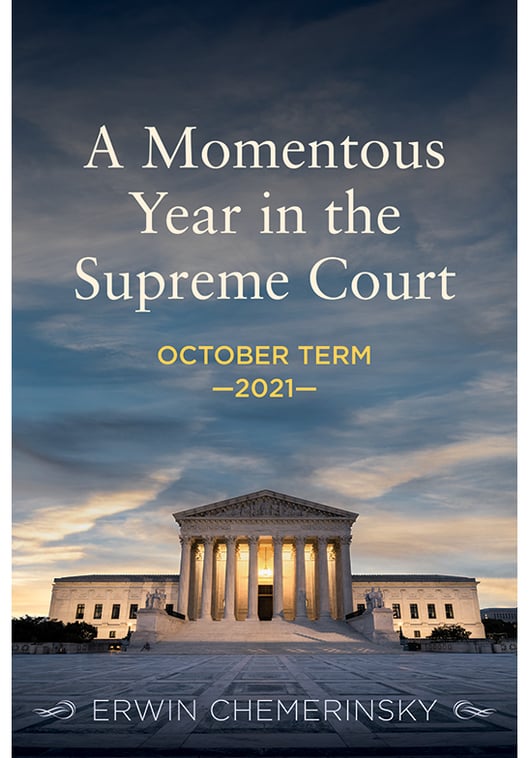
Originalism Carries On
Federalist Society Review, Volume 24
A review of Erwin Chemerinsky, A Momentous Year in the Supreme Court: October Term 2021...
Nine Agencies Propose Regulations for Partnerships with Faith-Based and Neighborhood Organizations
On January 13, 2023, nine agencies issued a notice of proposed rulemaking (NPRM) titled “Partnerships...
Religious Liberty and Education: Kennedy, Carson, and Parental Rights
2022 National Lawyers Convention
This panel discussion will examine public and private education, with a focus on the relationship—and...
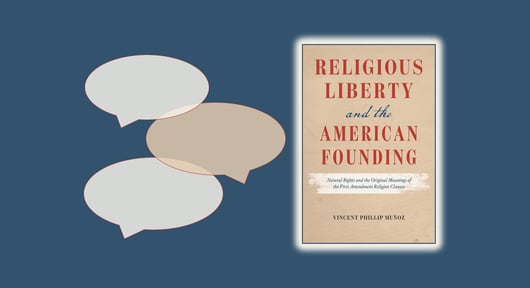
Talks with Authors: Vincent Phillip Munoz on Religious Liberty and the American Founding
What did the American Founders mean when they declared religious liberty to be an “inherent,”...
Religious Liberty at the Supreme Court 2022
Please join these experts as they review religious liberty at the Supreme Court in 2022. Featuring:...
Courthouse Steps Decision: Carson v. Makin
On June 21, 2022, the Supreme Court decided Carson v. Makin. In a 6-3 opinion, the...
Panel Two: U.S. Supreme Court Review
Featuring: Prof. Christopher W. Schmidt, Professor of Law & Co-Director of ISCOTUS, Chicago-Kent College of Law Daniel...
Justice Breyer: His Legacy and Thoughts on His Replacement
Minnesota Lawyers Chapter
The Minnesota Lawyers Chapter of the Federalist Society held a Zoom webinar discussing Justice Breyer, his...
A Seat at the Sitting - December 2021
The December Docket in 90 Minutes or Less
Join us for the third episode of the Federalist Society's Supreme Court Show: A Seat at...
Panel 3: Supreme Court Preview
Fifth Annual Kentucky Chapters Conference
This panel discussed the upcoming Supreme Court term, which began on October 4, 2021....
Panel Two: School Choice and Education Reforms During COVID-19
2021 Third Circuit Chapters Conference
The COVID-19 pandemic resulted in over a year of virtual public schooling in some parts...
2021 Supreme Court Preview
Jacksonville Lawyers Chapter - Online Event
On September 29, 2021, the Federalist Society's Jacksonville Lawyers Chapter hosted a virtual discussion giving...
From Employment Division v. Smith to Fulton v. City of Philadelphia: The Free Exercise Clause in 2021
Chattanooga and Nashville Lawyers Chapter - Online Event
On May 19, 2021 the Nashville and Chattanooga Lawyers Chapters co-hosted a discussion on the...
Last Hurrah for the Minimalist Court?
Federalist Society Review, Volume 22
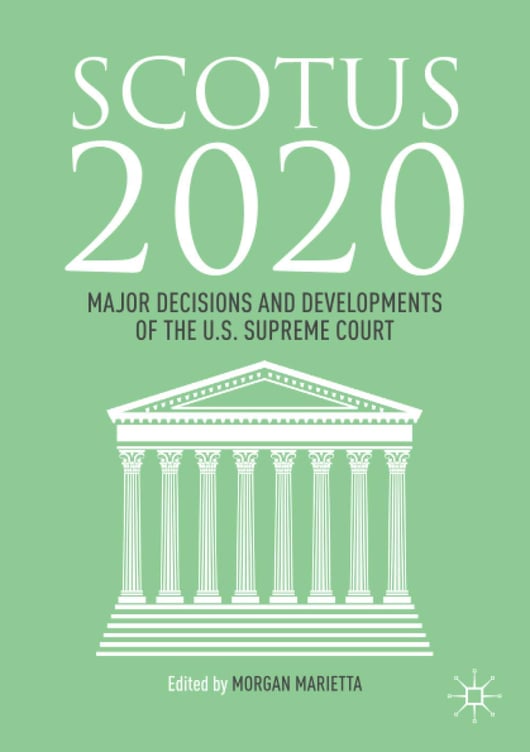
A review of SCOTUS 2020: Major Decisions and Developments of the U.S. Supreme Court, edited...
Panel I: The Future of the Missouri Constitution: Constitutional Convention? Initiative Petition Reform?
2021 Federalist Society Missouri State Conference
On March 8, 2021, the Federalist Society's Missouri lawyers chapters held a statewide conference via...
Courthouse Steps Oral Argument Teleforum: Fulton v. City of Philadelphia
This teleforum reviews the November 4 oral argument in Fulton v. City of Philadelphia. In March...
Capital Conversations: Hon. Beth A. Williams, Assistant Attorney General, United States Department of Justice
Practice Groups Teleforum
Join us as Beth Williams, the U.S. Assistant Attorney General for the Office of Legal...
Special Topics in Religious Liberty Series #1: Recent and Upcoming Supreme Court Cases
In the 2019 Term, the U.S. Supreme Court issued three decisions with major implications for...
Recent Trends in the Roberts Court
Milwaukee Lawyers Chapter
On August 18, 2020, the Federalist Society's Milwaukee Lawyers Chapter hosted a virtual event on...
2020 Annual Supreme Court Round Up
Webinar & Live Stream
On August 10, 2020, the Federalist Society's Washington, D.C. Lawyers Chapter will present its annual...
Reviewing The Supreme Court’s 2019/20 Term: A Panel Discussion
Colorado Lawyers Chapter - Online Event
The Colorado Lawyers Chapter held a virtual review of the 2019-20 Supreme Court term on...
Religious Liberty at the Supreme Court: The 2020 Term and Beyond
This summer, the Supreme Court decided several high-profile religious liberty cases. In Espinoza v. Montana Department...

Courthouse Steps Decision Teleforum: Espinoza v. Montana Department of Revenue
On June 30, the Supreme Court released its decision in the case of Espinoza v....

Drive-In Churches and the Constitution: Balancing the Religious Belief in Corporate Worship and Health Concerns Related to COVID-19
Almost every religious institution closed its doors in mid-March in response to requests and then...
Religious Freedom in a Pandemic
Shut-down orders issued by state governors amid the COVID-19 pandemic and federal responses to the...

Courthouse Steps Oral Argument Teleforum: Espinoza v. Montana Department of Revenue
This teleforum addresses the January 22 Supreme Court argument in Espinoza v. Montana Department of...
Supreme Court Preview: What Is in Store for October Term 2019?
Co-Sponsored by the Faculty Division and Practice Groups
On October 2, 2019, the Federalist Society hosted a panel discussing the current composition and...

Litigation Update: BLinC v. U Iowa and the Future of CLS v. Martinez
Last week a federal judge issued a ruling for Business Leaders in Christ (“BLinC”), a...
Religious Liberty and Conscience Rights in the Trump Era
2018 Texas Chapters Conference
On September 7-8, 2018, the Federalist Society's Fort Worth Lawyers Chapter hosted the fourth annual...
Courthouse Steps: Trump v. Hawaii Decided
International & National Security Law and Religious Liberties Practice Group Teleforum
Trump v. Hawaii is the latest iteration of Hawaii’s challenge to President Trump’s Executive Order suspending...
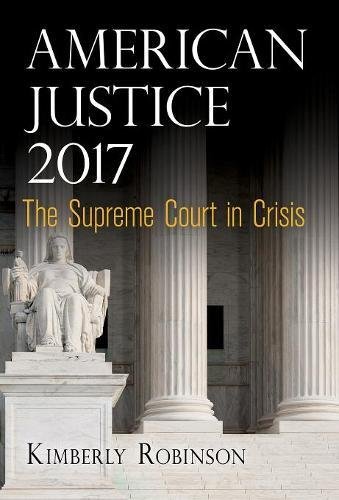
The Supreme Court in Crisis: A Good Read, But No Crisis
Federalist Society Review, Volume 19
A review of: American Justice 2017: The Supreme Court in Crisis, by Kimberly Robinson (University...
Litigation Update: Harvest Family Church v. FEMA
Religious Liberties Practice Group Teleforum
On January 2, 2018 the Federal Emergency Management Agency (FEMA) announced that it would expand...

The Administrative State and Religious Freedom
2017 National Lawyers Convention
At both the federal and state levels, bureaucrats wield power to make decisions that substantially...

Docket Watch: The Constitutionality of School Choice Tax Credits (Gaddy v. Georgia Department of Revenue)
The Georgia Supreme Court’s unanimous decision in Gaddy v. Georgia Department of Revenue continues the...
The Constitutionality of School Choice Tax Credits (Gaddy v. Georgia Department of Revenue)
The Georgia Supreme Court’s unanimous decision in Gaddy v. Georgia Department of Revenue continues the unbroken record...
2017 Annual Supreme Court Round Up
Washington, DC Lawyers Chapter
On July 13, 2017, Miguel Estrada of Gibson Dunn & Crutcher LLP delivered the Annual...
Trinity Lutheran Church of Columbia v. Comer - Post-Decision SCOTUScast
SCOTUScast 7-18-17 featuring David A. Cortman
On June 26, 2017, the Supreme Court decided Trinity Lutheran Church of Columbia v. Comer....
Courthouse Steps: Trinity Lutheran Church of Columbia, Inc. v. Comer - Decided - Podcast
Religious Liberties Practice Group Podcast
The Missouri Department of Natural Resources (DNR) denied a Learning Center run by Trinity Lutheran...
Immigration Moratorium in the Supreme Court - Podcast
International & National Security Law Practice Group Podcast
On Monday, June 26, the Supreme Court granted certiorari in Trump v. International Refugee Assistance...
Trinity Lutheran Church of Columbia v. Comer - Post-Argument SCOTUScast
SCOTUScast 4-28-17 featuring Hannah C. Smith
On April 19, 2017, the Supreme Court heard oral argument in Trinity Lutheran Church of...
Rubber playground material, state constitutions, and choices in education
My Goldwater Institute colleague Jonathan Butcher writes over at See Thru Edu about how SCOTUS's...
Courthouse Steps: Trinity Lutheran Church of Columbia v. Comer - Podcast
Religious Liberties Practice Group Podcast
The Missouri Department of Natural Resources (DNR) denied a Learning Center run by Trinity Lutheran...
Consumer Financial Protection Bureau Update - April 2017 - Podcast
Financial Services & E-Commerce Practice Group Podcast
Members of the Federalist Society’s Financial Services & E-Commerce Practice Group Executive Committee provided an...
Debate—State Blaine Amendments
2017 Annual Western Chapters Conference
The Supreme Court has agreed to hear oral arguments in Trinity Lutheran Church of Columbia, Inc. v....
The Future of Religious Liberties under the New Administration - Podcast
Religious Liberties Practice Group Podcast
What is ahead for religious liberties under the Trump administration? Will churches be granted a...
Supreme Court Preview: What Is in Store for October Term 2016?
Co-Sponsored by the Faculty Division and the Practice Groups
October 4th will mark the first day of oral arguments for the 2016 Supreme Court...
Church Playgrounds & Blaine Amendments - Podcast
Religious Liberties Practice Group Podcast
The Supreme Court has agreed to hear Trinity Lutheran Church of Columbia, Inc. v. Pauley....
A Conversation with Richard W. Garnett & Andrew M. Koppelman
Chicago Lawyers Chapter
Jenner & Block, 45 Floor353 N Clark St.
Chicago , IL 60654
The Impact of Trinity Lutheran and Matal on Free Exercise and Free Speech
Salt Lake City Lawyers Chapter
Stoel Rives201 S Main Street, Suite 1100
Salt Lake City , UT 84111