

Associate Professor of Law, Antonin Scalia Law School at George Mason University
Robert Luther III was appointed Associate Professor of Law in 2025 after serving as Distinguished Professor of Law from 2024-2025 and Adjunct Professor of Law from 2019-2024. He teaches and writes on the federal courts, legal and judicial ethics, political law, Congress, and professional sports. He has served at high levels in all three branches of the federal government and recently founded Constitutional Solutions PLLC—a law firm that navigates judicial candidates, judges, elected officials, professional athletes, and executives through high-stakes hearings, investigations, and reputational attacks.
Immediately before joining the Scalia Law faculty, Professor Luther spent over five years in the Washington, D.C. office of Jones Day, where his practice focused on strategic counseling, crisis management, and litigation. Prior to joining Jones Day, he served as Associate Counsel to the President of the United States in the White House Counsel’s Office. In the White House, he co-managed the judicial selection process and supervised the preparation of over 150 federal judicial nominees for their successful U.S. Senate confirmation hearings. The New York Times Magazine referred to his work on judicial selection during this period as “unique in White House history.” Before joining the White House, Professor Luther served as Counsel to then–U.S. Senator Jeff Sessions (R-Ala.) on the U.S. Senate Judiciary Committee, where he served as a core member of the team that prepared the Senator for confirmation as United States Attorney General. Professor Luther was also a law clerk to Judge Daniel A. Manion of the U.S. Court of Appeals for the Seventh Circuit. Earlier in his career, Professor Luther practiced civil and appellate litigation at a boutique firm in Williamsburg, Va. and taught at William & Mary Law School.
Professor Luther frequently speaks on the legal profession, political law, and federal judicial selection. His public work has been covered by or appeared in The New York Times, The Washington Post, The Wall Street Journal, Bloomberg, Fox News, The Hill, Politico, the Washington Examiner, National Law Journal, Law360, The Washington Reporter, and elsewhere, while his scholarship is published in the law journals of nearly twenty universities including three journals of Harvard University. He holds active law licenses in Virginia, the District of Columbia, the U.S. Supreme Court, and half of the U.S. Courts of Appeals.
In 2025, Virginia Governor Glenn Youngkin appointed Professor Luther to the Board of Visitors to Mount Vernon. He is an elected member of the American Law Institute (ALI) and serves on the Advisory Board of the Wilson Center for Leadership at Hampden-Sydney College. Since 2019, he has helped over 200 of his students secure clerkships with federal judges.
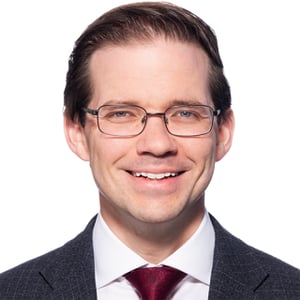
Of Counsel, Covington & Burling LLP
The Honorable Paul J. Ray is currently Of Counsel at Covington & Burling LLP where he advises clients on regulatory opportunities and challenges and helps them formulate and execute advocacy strategies for their regulatory policy priorities before the executive branch and Congress.
During the first Trump Administration, Paul held various senior positions at the Office of Information and Regulatory Affairs (OIRA) within the White House’s Office of Management and Budget, including as acting, and then Senate-confirmed, head of the office. As OIRA Administrator (the "regulations czar"), Paul supervised the review of hundreds of regulations from across the government, drafted numerous executive orders governing the regulatory process, and led the Administration’s regulatory reform effort. As a result of this experience, Paul is well-positioned to help clients understand and achieve regulatory policy priorities in the context of the government’s regulatory agenda and ongoing reform efforts.
Most recently, Paul was also the Director of the Roe Institute for Economic Policy Studies at The Heritage Foundation. In that role, he supervised the formulation of the Foundation’s economic and regulatory policy recommendations and provided technical assistance to congressional committees and staff regarding legislative changes to the regulatory process. In addition to his role at The Heritage Foundation, Paul also served as a Senior Advisor at a strategic advisory firm. Before his time in government, Paul practiced law at a law firm in Washington, specializing in administrative law matters.
Prior to his role at the White House, Paul was Counselor to the Secretary at the U.S. Department of Labor. There he led departmental efforts in high-profile rulemakings and helped formulate the Department’s legal positions and strategy.
Paul served as a law clerk to Supreme Court Justice Samuel Alito and as a law clerk to the Honorable Debra Livingston of the U.S. Court of Appeals for the Second Circuit.
Paul is a thought leader in the conservative legal movement and is a frequent commentator and speaker on regulatory policy and reform matters, including at law schools, professional gatherings, and other venues. He is the Chairman of Innovations in Peacebuilding International and the Regulatory Process Working Group of the Federalist Society’s Regulatory Transparency Project and a public member of the Administrative Conference of the United States. Paul is also an adjunct lecturer at the Hillsdale College School of Government.
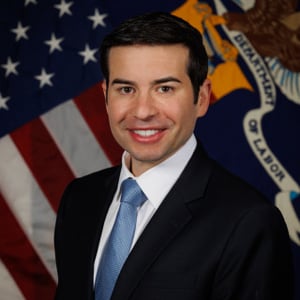
Deputy Secretary of Labor, U.S. Department of Labor
Keith E. Sonderling was confirmed by the U.S. Senate on March 12, 2025 to be the 38th United States Deputy Secretary of Labor.
As the United States Deputy Secretary of Labor, Sonderling is the second-highest-ranking official and serves as the Department's Chief Operating Officer, overseeing the agency’s $14 billion dollar budget and 16,000 employees. The Deputy Secretary oversees key operational functions such as: strategic planning; budget formulation; financial management; information technology; and human resource management. Additionally, the Deputy Secretary provides the leadership and management of DOL’s agencies necessary to support the Secretary and the Department’s mission.
Prior to becoming Deputy Secretary, he was previously confirmed by the United States Senate to serve as the Commissioner of the U.S. Equal Employment Opportunity Commission (EEOC) from September 2020 until August 2024. He also served as the Commission’s Vice-Chair from 2020-2021.
During his tenure at the EEOC, one of Sonderling’s highest priorities was ensuring that artificial intelligence and workplace technologies are designed and deployed consistent with long-standing laws. He published numerous articles on the benefits and potential harms of using artificial intelligence-based technology in the workplace and spoke globally on artificial intelligence’s impact on the workplace.
Sonderling previously served at the US Department of Labor as the Acting and Deputy Administrator of the U.S. Department of Labor’s Wage and Hour Division from 2017-2020. During his tenure, the Division accomplished back-to-back record-breaking enforcement collections and educational outreach events. Sonderling also oversaw the development and publication of large-scale deregulatory rules and authored numerous Opinion Letters, Field Assistance Bulletins, and All Agency Memorandums. Additionally, he was instrumental in developing the Division’s first comprehensive self-audit program, which collected more than $7 million for nearly eleven thousand workers.
Before his government service, Sonderling was a partner at one of Florida’s oldest and largest law firms, Gunster. At Gunster, he counseled employers and litigated labor and employment disputes. In 2012, then-Governor Rick Scott appointed Sonderling to serve as the Chair of the Judicial Nominating Committee for appellate courts in South Florida. Sonderling was also active in the community, serving on the Board of Directors for Morse Life Health System, the Boca Raton Chamber of Commerce, and Leadership Florida.
Sonderling also serves as a Professional Lecturer in the Law (Adjunct Professor) at George Washington University Law School, teaching employment discrimination.
Sonderling received his B.S., magna cum laude, from the University of Florida and his J.D., magna cum laude, from Nova Southeastern University.
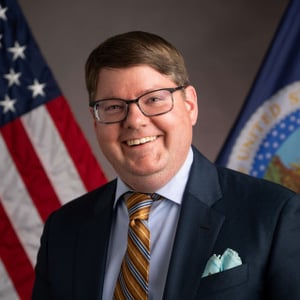
Deputy Secretary of Agriculture, U.S. Department of Agriculture
Judge Stephen Alexander Vaden was appointed as the Deputy Secretary of the U.S. Department of Agriculture on July 7, 2025. Alongside Secretary Brooke L. Rollins, Deputy Secretary Vaden leads the Department’s operations and implements policies that support America’s food and farm systems. A native of Union City, Tennessee, Deputy Secretary Vaden brings expertise in agricultural policy, law, and rural development. Previously, he served as a judge on the U.S. Court of International Trade and as General Counsel of USDA. Throughout Deputy Secretary Vaden’s time as General Counsel, he led successful Supreme Court litigation, advanced regulatory reform, and supported the implementation of the 2018 Farm Bill. He is a graduate of Yale Law School and Vanderbilt University. A public servant with strong agricultural roots, Deputy Secretary Vaden is committed to revitalizing rural America and ensuring an abundant, affordable, and safe U.S. food supply.
Partner, Torridon Law
Pat Cipollone most recently served as Counsel to the President for President Donald J. Trump, where he managed and led legal strategy on matters throughout the Administration and provided counsel on issues of highest national importance in the federal government.
Pat has a distinguished record of service as counsel in a broad variety of complex legal matters. For most of his career, Pat was a senior partner in the Washington, D.C. office of Kirkland & Ellis LLP. After Kirkland & Ellis, Pat became a member of the Management Committee and head of the litigation practice at Stein Mitchell Cipollone Beato & Missner LLP, a leading litigation firm based in Washington, D.C.
Throughout his career, Pat has served as counsel in a broad variety of cases including complex litigation matters and class actions; significant investigations and regulatory disputes involving state and federal agencies; consumer fraud and insurance litigation and investigations; product liability cases; constitutional cases; complex contract and commercial disputes; business torts; campaign finance; corporate crisis matters; health care matters; and large construction disputes. Most recently, Pat served as lead counsel for the defense in the third presidential impeachment trial in U.S. history.
Pat graduated from the University of Chicago Law School, where he was managing editor of the Chicago Law Review. He received his undergraduate degree from Fordham University.
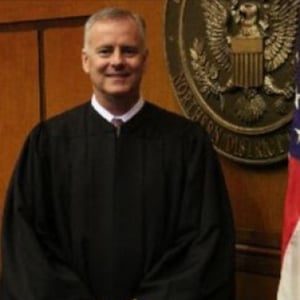
U.S. District Court for the Northern District of Texas
Reed Charles O'Connor is a federal judge on the United States District Court for the Northern District of Texas. He joined the court in 2007 after being nominated by President George W. Bush.
A native of Houston, Texas, O'Connor graduated from the University of Houston with his bachelor's degree in 1986 and from South Texas College of Law with his J.D. in 1989.
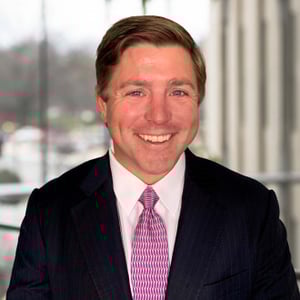
General Counsel, xAI and X
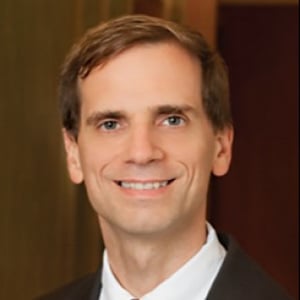
Judge, United States Court of Appeals, District of Columbia Circuit
Judge Katsas was appointed to the D.C. Circuit in December 2017. He graduated from Princeton University and Harvard Law School, where he was an executive editor on the Harvard Law Review. Between 1989 and 1992, he served as a law clerk to Judge Edward Becker on the Third Circuit, to then-Judge Clarence Thomas on the D.C. Circuit, and to Justice Thomas on the Supreme Court. Between 1992 and 2001, he was an associate and then partner in the Washington office of Jones Day, where he specialized in appellate and complex civil litigation. Between 2001 and 2009, he served in many senior positions in the Department of Justice, including as Assistant Attorney General for the Civil Division and as Acting Associate Attorney General. In 2009, he returned to Jones Day. From January to December 2017, he served as Deputy Assistant to the President and Deputy Counsel to the President.
Before joining the bench, Judge Katsas argued more than 75 appeals, including three cases in the Supreme Court, 13 cases in the D.C. Circuit, and cases in every other federal court of appeals. By appointment of the Chief Justice, he served on the Advisory Committee on Appellate Rules from 2013 to 2017. In 2016, he was elected to membership in the American Academy of Appellate Lawyers.
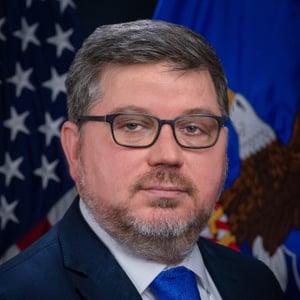
Associate Attorney General, Department of Justice
Stanley E. Woodward, Jr. was nominated by President Donald J. Trump and confirmed by the U.S. Senate to serve as the Associate Attorney General of the United States in October 2025. As the third highest-ranking official at the Department of Justice, Mr. Woodward assists the Attorney General and Deputy Attorney General with overseeing DOJ civil matters and components, including the Antitrust, Civil, Civil Rights, and Environmental and Natural Resources Divisions, as well as the Department’s grant-making components. Prior to his confirmation as Associate Attorney General, Mr. Woodward served as Counselor to Attorney General Pam Bondi. Before his tenure at the Department of Justice, Mr. Woodward served as Assistant to the President and Senior Counselor to President Donald J. Trump at the White House. Prior to entering federal service, Mr. Woodward was in private practice as a high-profile litigator and co-founder of Brand Woodward Law, LP where he represented numerous prestigious clients in complex, high-stakes litigation, including multiple federal jury trials. Previously, he worked at a top international law firm where his experience included the representation of multiple international corporations in defense of alleged violations of the U.S. Foreign Corrupt Practices Act as well as serving as coordinating counsel to companies involved in nationwide federal litigation.
Mr. Woodward has served as an adjunct professor with The Catholic University of America, Columbus School of Law, where he taught labor and employment law, trial advocacy, and complex civil litigation. Mr. Woodward began his legal career clerking for multiple judges on the D.C. Court of Appeals and the D.C. Superior Court. Mr. Woodward obtained his Juris Doctor from the Catholic University of America Columbus School of Law and earned a Bachelor of Arts and a Master of Science from American University.
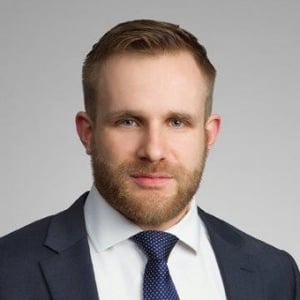
Deputy Assistant to the President for Economic Policy, The White House
Ryan Baasch serves as the Deputy Director of President Trump's National Economic Council (NEC), and as Deputy Assistant to the President on Economic Policy, where he focuses on cutting-edge technology issues at the frontier of AI regulation, space commercialization, and telecommunications networks. Before joining NEC, Ryan occupied multiple positions in the Texas Attorney General's office where he supervised all of the office's offensive civil litigation and maintained a heavy appellate caseload touching First Amendment and technology issues. Ryan began his career as a law clerk to Judge Karen LeCraft Henderson and spent five years at a large law firm in Washington D.C. and New York.
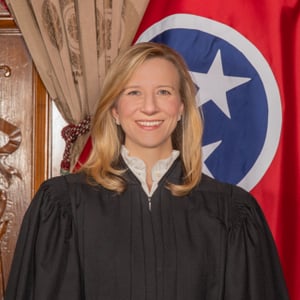
Justice, Supreme Court of Tennessee
Justice Sarah Campbell was confirmed to the Tennessee Supreme Court in 2022. She previously served as an Associate Solicitor General in the Tennessee Attorney General’s Office and as an associate at the law firm of Williams & Connolly LLP in Washington, DC. Justice Campbell earned her law degree from Duke University School of Law, a Master of Public Policy degree from Duke University, and her undergraduate degree from the University of Tennessee, where she received the Torchbearer Award. She served as a law clerk for Justice Samuel A. Alito, Jr. on the United States Supreme Court and Judge William H. Pryor Jr. on the U.S. Court of Appeals for the Eleventh Circuit.
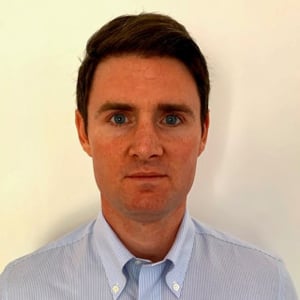
Deputy General Counsel for Administrative Law, Federal Communications Commission (FCC)
Michael Carlson is Senior Corporate Counsel at Amazon’s Project Kuiper, where he leads a legal team advising on regulatory issues and strategic initiatives related to satellite communications and broadband deployment. Prior to joining Amazon, he served as Deputy General Counsel at the Federal Communications Commission, overseeing the Office of General Counsel’s Administrative Law Division.
Mr. Carlson has also served as an attorney in the U.S. intelligence community, advising on legal and policy issues related to national security, and as a corporate strategist at Microsoft, where he focused on emerging technologies and global regulatory trends. He teaches Communications Law at George Mason University’s Antonin Scalia Law School.
He earned his J.D. from the University of Pennsylvania Law School, and clerked for Judge Deborah Cook on the U.S. Court of Appeals for the Sixth Circuit. He lives in Arlington, VA with his wife and four children.
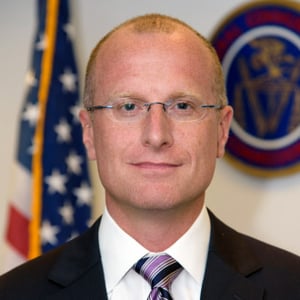
Chairman, Federal Communications Commission
Brendan Carr is the Chairman of the Federal Communications Commission. He previously served as the senior Republican Commissioner and as the FCC’s General Counsel. Nominated by both President Trump and President Biden, Carr has been confirmed unanimously by the Senate three times.
Described by Axios as “the FCC’s 5G crusader,” Carr has led the FCC’s work to modernize its infrastructure rules and accelerate the buildout of high-speed networks. His reforms cut billions of dollars in red tape, enabled the private sector to construct high-speed networks in communities across the country, and extended America’s global leadership in 5G.
Chairman Carr is also focused on expanding America’s skilled workforce—the tower climbers and construction crews needed to build next-gen networks. His jobs initiative promotes community colleges and apprenticeships as a pipeline for good-paying 5G jobs. He is recognizing America’s talented tower crews through a series of “5G Ready” Hard Hat presentations.
Chairman Carr leads a groundbreaking telehealth initiative at the FCC. The Connected Care Pilot Program supports the delivery of high-quality care to low-income Americans and veterans.
Chairman Carr’s time outside of Washington helps inform his approach to the job. He regularly hits the road to hear directly from community members and learn how changes in federal policies could help improve their lives.
Chairman Carr brings nearly 20 years of private and public sector experience in communications and tech policy to his position. Before joining the FCC as a staffer back in 2012, he worked as an attorney at Wiley Rein LLP in the firm’s appellate, litigation, and telecom practices. Previously, Chairman Carr clerked on the U.S. Court of Appeals for the Fourth Circuit for Judge Dennis Shedd. After attending Georgetown University for his undergrad, Chairman Carr earned his J.D. magna cum laude from the Catholic University of America’s Columbus School of Law where he served as an editor of the Catholic University Law Review.
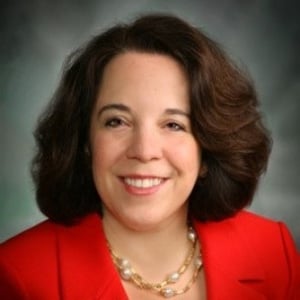
Vice President, Technology Policy & Regulation, Lockheed Martin Government Affairs
Jennifer A. Warren is currently Vice President, Global Regulatory Affairs & Public Policy for Lockheed Martin Corporation. In this capacity, she is responsible for leading the corporate team’s engagement and strategy across the Executive Branch, Independent Agencies and Intergovernmental Bodies across a broad business, regulatory and public policy portfolio.
Her responsibilities also include leading corporate relationships with Intergovernmental Bodies, such as ITU, CITEL, ICAO, UN Office of Outer Space Affairs, and major trade associations; Ms. Warren is the former Chair (twice) of the Satellite Industry Association (SIA), and currently serves on the Boards of the SIA, US ITU Association, and the Professional Services Corporation, and as the co-chair of the U.S. Chamber of Commerce’s Telecommunications and E-Commerce Committee. She also participates on the ITI Space Enterprise Council and the US Chamber Space Council.
Ms. Warren has broad private sector engagement across government, having been a member of the Department of Commerce Spectrum Management Advisory Committee (CSMAC), FAA Commercial Space Transportation Advisory Committee, Department of State International Telecommunications Advisory Committee (now International Digital Economy & Telecommunications Advisory Committee), and NASA Advisory Committee/Regulatory Policy Committee, as well as served on the FCC’s WRC Advisory Committee.
From 1991-1996, Ms. Warren held several senior roles in the U.S. Federal Communications Commission, including as Assistant Chief in the Wireless Telecommunications Bureau and Senior Legal Advisor in the International Bureau. In 1991, she graduated from Georgetown University Law Center (J.D.), where she subsequently served as an Adjunct Professor in International Communications Regulation and Policy for close to 20 years. She is also a graduate of Georgetown University (B.S. in Languages), and a member of the Illinois State and D.C. Bars, the Federal Communications Bar Association, and American Bar Association. Her civic activities include the Boards of the George Washington Legacy Foundation and Gadsby Tavern Museum Society in Old Town Alexandria, and the Foundation of the National Archives & Records Administration.
Ms. Warren lives in Old Town Alexandria, Virginia, with her husband Ed, and their puppy - Madison.
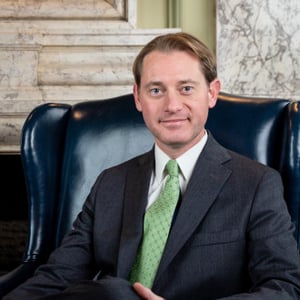
Secretary of State, Commonwealth of Kentucky
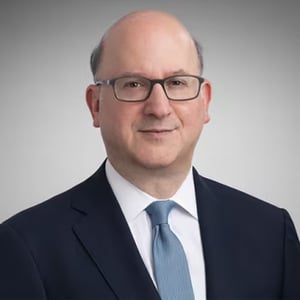
Partner, Covington & Burling LLP
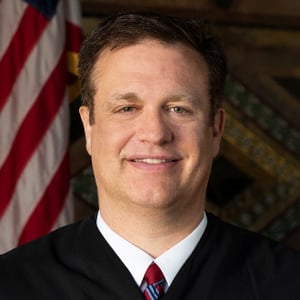
Judge, United States Court of Appeals, Ninth Circuit
Judge Nelson was confirmed to the Ninth Circuit in October 2018, as the youngest Circuit Judge to serve from Idaho and he has chambers in his hometown of Idaho Falls. Prior to his confirmation, Judge Nelson served for nine years as General Counsel of Idaho Falls-based Melaleuca, Inc., a consumer goods company. He previously worked in Washington, DC, where he served in all three branches of the federal government, including as Special Counsel for Supreme Court nominations to the Ranking Member of the Senate Judiciary Committee; Deputy General Counsel to the White House Office of Management and Budget; Deputy Assistant Attorney General in the Environment and Natural Resources Division of the United States Department of Justice; and a law clerk to Judge Henderson of the United States Court of Appeals for the D.C. Circuit. He has argued in most of the federal courts of appeals and worked on dozens of Supreme Court briefs. He started in the Washington, DC office of Sidley Austin as an appellate lawyer, after clerking for Judges Mosk and Brower of the Iran-U.S. Claims Tribunal at The Hague, and for now-Judge Tom Griffith, then-Senate Legal Counsel, during the impeachment trial of President Clinton. Judge Nelson earned his B.A. from Brigham Young University and his J.D., with honors, from BYU Law School. Judge Nelson has been a member of the Federalist Society since 1998.

Thomas M. Siebel Senior Fellow, The Hoover Institution, Stanford University; Gary T. Schwartz Distinguished Professor of Law Emeritus, UCLA School of Law
Eugene Volokh is the Thomas M. Siebel Senior Fellow at the Hoover Institution (Stanford), as well as the Gary T. Schwartz Distinguished Professor of Law Emeritus and Distinguished Research Professor at UCLA School of Law. He recently retired from teaching at UCLA, after 30 years there, and is now focusing on research.
Volokh is the author of the textbooks The First Amendment and Related Statutes (8th ed. 2023), and Academic Legal Writing (5th ed. 2016), as well as over 100 academic law journal articles, mostly on First Amendment law. He is a member of The American Law Institute; the editor-in-chief of the Journal of Free Speech Law; and the creator and coauthor of The Volokh Conspiracy, a leading legal blog founded in 2002 (hosted at the Washington Post from 2014 to 2017 and now at Reason Magazine).
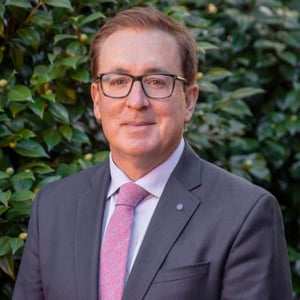
John Marshall Professor of Government and Citizenship, William & Mary Law School
Tim Zick is the John Marshall Professor of Government & Citizenship at William & Mary Law School, where he teaches First Amendment and other constitutional law courses. Professor Zick is the author of five university press books on the First Amendment and co-author of a First Amendment casebook. His most recent book, TRUMP 2.0: EXECUTIVE POWER AND THE FIRST AMENDMENT, is forthcoming with Carolina Academic Press. Professor Zick is a frequent commentator on First Amendment issues in local, national, and international media and has published commentaries on free speech and other issues in The Atlantic, Slate, and other media. He testified before the United States House of Representatives regarding the First Amendment and public protest.
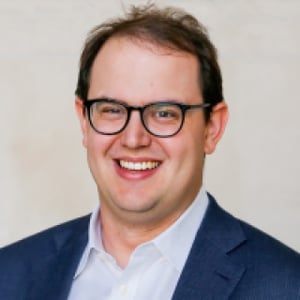
Dmitri Alperovitch Assistant Professor, Johns Hopkins School of Advanced International Studies
Ben Buchanan is a Dmitri Alperovitch Assistant Professor at Johns Hopkins School of Advanced International Studies. Prior to coming to Hopkins, he worked in the White House from 2021-2025, including as White House Special Advisor for Artificial Intelligence, where he was responsible for coordinating the Biden Administration actions on AI. He is the author of three books on AI, cybersecurity, and national security.
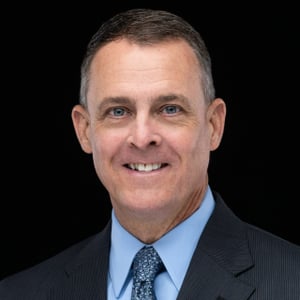
Nonresident Senior Fellow, Sowcroft Center for Strategy and Security
Michael served over 37 years in the U.S. Marine Corps, culminating his career as the Director of the Joint Artificial Intelligence Center, and the senior executive for AI in the Department of Defense. He previously served at the National Security Agency, overseeing global network operations and as the Director of Intelligence for the Chairman and the Joint Staff. In that position he worked closely with the Chairman of the Joint Chiefs, Secretary of Defense and Senior Leaders across the Department. Groen is an experienced Marine commander and multi-tour combat veteran. He was the Intelligence Officer for the 1st Marine Division in Operation Iraqi Freedom for both OIF I and II. He is the author of With the First Marine Division in Iraq, No Greater Friend, No Worse Enemy. His awards include the Defense Distinguished Service Award, the Legion of Merit, the Bronze Star and the Combat Action Ribbon.
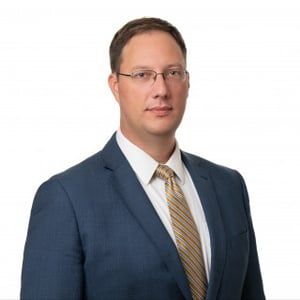
Laurence H. Silberman Chair in Constitutional Governance, American Enterprise Institute; Executive Director, Antonin Scalia Law School’s C. Boyden Gray Center for the Study of the Administrative State
Adam J. White is the Laurence H. Silberman Chair in Constitutional Governance and senior fellow at the American Enterprise Institute, where he focuses on the Supreme Court and the administrative state. He also directs the Antonin Scalia Law School’s C. Boyden Gray Center for the Study of the Administrative State.
He writes on regulation and constitutional government for a variety of publications. He practiced law in Washington, D.C., after clerking for the D.C. Circuit's Judge David Sentelle. He also has been chairman of the ABA's Administrative Law Section.
In 2021, he served on the Presidential Commission on the Supreme Court of the United States, where he criticized “Court packing” and other efforts to restructure the Supreme Court.
Deputy Assistant to the President for Economic Policy, The White House
Ryan Baasch serves as the Deputy Director of President Trump's National Economic Council (NEC), and as Deputy Assistant to the President on Economic Policy, where he focuses on cutting-edge technology issues at the frontier of AI regulation, space commercialization, and telecommunications networks. Before joining NEC, Ryan occupied multiple positions in the Texas Attorney General's office where he supervised all of the office's offensive civil litigation and maintained a heavy appellate caseload touching First Amendment and technology issues. Ryan began his career as a law clerk to Judge Karen LeCraft Henderson and spent five years at a large law firm in Washington D.C. and New York.
Justice, Supreme Court of Tennessee
Justice Sarah Campbell was confirmed to the Tennessee Supreme Court in 2022. She previously served as an Associate Solicitor General in the Tennessee Attorney General’s Office and as an associate at the law firm of Williams & Connolly LLP in Washington, DC. Justice Campbell earned her law degree from Duke University School of Law, a Master of Public Policy degree from Duke University, and her undergraduate degree from the University of Tennessee, where she received the Torchbearer Award. She served as a law clerk for Justice Samuel A. Alito, Jr. on the United States Supreme Court and Judge William H. Pryor Jr. on the U.S. Court of Appeals for the Eleventh Circuit.
Deputy General Counsel for Administrative Law, Federal Communications Commission (FCC)
Michael Carlson is Senior Corporate Counsel at Amazon’s Project Kuiper, where he leads a legal team advising on regulatory issues and strategic initiatives related to satellite communications and broadband deployment. Prior to joining Amazon, he served as Deputy General Counsel at the Federal Communications Commission, overseeing the Office of General Counsel’s Administrative Law Division.
Mr. Carlson has also served as an attorney in the U.S. intelligence community, advising on legal and policy issues related to national security, and as a corporate strategist at Microsoft, where he focused on emerging technologies and global regulatory trends. He teaches Communications Law at George Mason University’s Antonin Scalia Law School.
He earned his J.D. from the University of Pennsylvania Law School, and clerked for Judge Deborah Cook on the U.S. Court of Appeals for the Sixth Circuit. He lives in Arlington, VA with his wife and four children.
Chairman, Federal Communications Commission
Brendan Carr is the Chairman of the Federal Communications Commission. He previously served as the senior Republican Commissioner and as the FCC’s General Counsel. Nominated by both President Trump and President Biden, Carr has been confirmed unanimously by the Senate three times.
Described by Axios as “the FCC’s 5G crusader,” Carr has led the FCC’s work to modernize its infrastructure rules and accelerate the buildout of high-speed networks. His reforms cut billions of dollars in red tape, enabled the private sector to construct high-speed networks in communities across the country, and extended America’s global leadership in 5G.
Chairman Carr is also focused on expanding America’s skilled workforce—the tower climbers and construction crews needed to build next-gen networks. His jobs initiative promotes community colleges and apprenticeships as a pipeline for good-paying 5G jobs. He is recognizing America’s talented tower crews through a series of “5G Ready” Hard Hat presentations.
Chairman Carr leads a groundbreaking telehealth initiative at the FCC. The Connected Care Pilot Program supports the delivery of high-quality care to low-income Americans and veterans.
Chairman Carr’s time outside of Washington helps inform his approach to the job. He regularly hits the road to hear directly from community members and learn how changes in federal policies could help improve their lives.
Chairman Carr brings nearly 20 years of private and public sector experience in communications and tech policy to his position. Before joining the FCC as a staffer back in 2012, he worked as an attorney at Wiley Rein LLP in the firm’s appellate, litigation, and telecom practices. Previously, Chairman Carr clerked on the U.S. Court of Appeals for the Fourth Circuit for Judge Dennis Shedd. After attending Georgetown University for his undergrad, Chairman Carr earned his J.D. magna cum laude from the Catholic University of America’s Columbus School of Law where he served as an editor of the Catholic University Law Review.
Vice President, Technology Policy & Regulation, Lockheed Martin Government Affairs
Jennifer A. Warren is currently Vice President, Global Regulatory Affairs & Public Policy for Lockheed Martin Corporation. In this capacity, she is responsible for leading the corporate team’s engagement and strategy across the Executive Branch, Independent Agencies and Intergovernmental Bodies across a broad business, regulatory and public policy portfolio.
Her responsibilities also include leading corporate relationships with Intergovernmental Bodies, such as ITU, CITEL, ICAO, UN Office of Outer Space Affairs, and major trade associations; Ms. Warren is the former Chair (twice) of the Satellite Industry Association (SIA), and currently serves on the Boards of the SIA, US ITU Association, and the Professional Services Corporation, and as the co-chair of the U.S. Chamber of Commerce’s Telecommunications and E-Commerce Committee. She also participates on the ITI Space Enterprise Council and the US Chamber Space Council.
Ms. Warren has broad private sector engagement across government, having been a member of the Department of Commerce Spectrum Management Advisory Committee (CSMAC), FAA Commercial Space Transportation Advisory Committee, Department of State International Telecommunications Advisory Committee (now International Digital Economy & Telecommunications Advisory Committee), and NASA Advisory Committee/Regulatory Policy Committee, as well as served on the FCC’s WRC Advisory Committee.
From 1991-1996, Ms. Warren held several senior roles in the U.S. Federal Communications Commission, including as Assistant Chief in the Wireless Telecommunications Bureau and Senior Legal Advisor in the International Bureau. In 1991, she graduated from Georgetown University Law Center (J.D.), where she subsequently served as an Adjunct Professor in International Communications Regulation and Policy for close to 20 years. She is also a graduate of Georgetown University (B.S. in Languages), and a member of the Illinois State and D.C. Bars, the Federal Communications Bar Association, and American Bar Association. Her civic activities include the Boards of the George Washington Legacy Foundation and Gadsby Tavern Museum Society in Old Town Alexandria, and the Foundation of the National Archives & Records Administration.
Ms. Warren lives in Old Town Alexandria, Virginia, with her husband Ed, and their puppy - Madison.
Secretary of State, Commonwealth of Kentucky
Partner, Covington & Burling LLP
Judge, United States Court of Appeals, Ninth Circuit
Judge Nelson was confirmed to the Ninth Circuit in October 2018, as the youngest Circuit Judge to serve from Idaho and he has chambers in his hometown of Idaho Falls. Prior to his confirmation, Judge Nelson served for nine years as General Counsel of Idaho Falls-based Melaleuca, Inc., a consumer goods company. He previously worked in Washington, DC, where he served in all three branches of the federal government, including as Special Counsel for Supreme Court nominations to the Ranking Member of the Senate Judiciary Committee; Deputy General Counsel to the White House Office of Management and Budget; Deputy Assistant Attorney General in the Environment and Natural Resources Division of the United States Department of Justice; and a law clerk to Judge Henderson of the United States Court of Appeals for the D.C. Circuit. He has argued in most of the federal courts of appeals and worked on dozens of Supreme Court briefs. He started in the Washington, DC office of Sidley Austin as an appellate lawyer, after clerking for Judges Mosk and Brower of the Iran-U.S. Claims Tribunal at The Hague, and for now-Judge Tom Griffith, then-Senate Legal Counsel, during the impeachment trial of President Clinton. Judge Nelson earned his B.A. from Brigham Young University and his J.D., with honors, from BYU Law School. Judge Nelson has been a member of the Federalist Society since 1998.
Thomas M. Siebel Senior Fellow, The Hoover Institution, Stanford University; Gary T. Schwartz Distinguished Professor of Law Emeritus, UCLA School of Law
Eugene Volokh is the Thomas M. Siebel Senior Fellow at the Hoover Institution (Stanford), as well as the Gary T. Schwartz Distinguished Professor of Law Emeritus and Distinguished Research Professor at UCLA School of Law. He recently retired from teaching at UCLA, after 30 years there, and is now focusing on research.
Volokh is the author of the textbooks The First Amendment and Related Statutes (8th ed. 2023), and Academic Legal Writing (5th ed. 2016), as well as over 100 academic law journal articles, mostly on First Amendment law. He is a member of The American Law Institute; the editor-in-chief of the Journal of Free Speech Law; and the creator and coauthor of The Volokh Conspiracy, a leading legal blog founded in 2002 (hosted at the Washington Post from 2014 to 2017 and now at Reason Magazine).
John Marshall Professor of Government and Citizenship, William & Mary Law School
Tim Zick is the John Marshall Professor of Government & Citizenship at William & Mary Law School, where he teaches First Amendment and other constitutional law courses. Professor Zick is the author of five university press books on the First Amendment and co-author of a First Amendment casebook. His most recent book, TRUMP 2.0: EXECUTIVE POWER AND THE FIRST AMENDMENT, is forthcoming with Carolina Academic Press. Professor Zick is a frequent commentator on First Amendment issues in local, national, and international media and has published commentaries on free speech and other issues in The Atlantic, Slate, and other media. He testified before the United States House of Representatives regarding the First Amendment and public protest.
Dmitri Alperovitch Assistant Professor, Johns Hopkins School of Advanced International Studies
Ben Buchanan is a Dmitri Alperovitch Assistant Professor at Johns Hopkins School of Advanced International Studies. Prior to coming to Hopkins, he worked in the White House from 2021-2025, including as White House Special Advisor for Artificial Intelligence, where he was responsible for coordinating the Biden Administration actions on AI. He is the author of three books on AI, cybersecurity, and national security.
Nonresident Senior Fellow, Sowcroft Center for Strategy and Security
Michael served over 37 years in the U.S. Marine Corps, culminating his career as the Director of the Joint Artificial Intelligence Center, and the senior executive for AI in the Department of Defense. He previously served at the National Security Agency, overseeing global network operations and as the Director of Intelligence for the Chairman and the Joint Staff. In that position he worked closely with the Chairman of the Joint Chiefs, Secretary of Defense and Senior Leaders across the Department. Groen is an experienced Marine commander and multi-tour combat veteran. He was the Intelligence Officer for the 1st Marine Division in Operation Iraqi Freedom for both OIF I and II. He is the author of With the First Marine Division in Iraq, No Greater Friend, No Worse Enemy. His awards include the Defense Distinguished Service Award, the Legion of Merit, the Bronze Star and the Combat Action Ribbon.
Laurence H. Silberman Chair in Constitutional Governance, American Enterprise Institute; Executive Director, Antonin Scalia Law School’s C. Boyden Gray Center for the Study of the Administrative State
Adam J. White is the Laurence H. Silberman Chair in Constitutional Governance and senior fellow at the American Enterprise Institute, where he focuses on the Supreme Court and the administrative state. He also directs the Antonin Scalia Law School’s C. Boyden Gray Center for the Study of the Administrative State.
He writes on regulation and constitutional government for a variety of publications. He practiced law in Washington, D.C., after clerking for the D.C. Circuit's Judge David Sentelle. He also has been chairman of the ABA's Administrative Law Section.
In 2021, he served on the Presidential Commission on the Supreme Court of the United States, where he criticized “Court packing” and other efforts to restructure the Supreme Court.

Behind the Scenes Look At The Federal Judicial Selection Process
Dayton Lawyer Chapter
Dayton, OHRegulatory Coordination and the Role of the Deputy Secretary
DC Young Lawyer Chapter
Washington, DCA Conversation with Former White House Counsel Pat Cipollone
Dallas Lawyer Chapter
Dallas, TXA Conversation on Lawyering in the White House and Justice Department
DC Young Lawyer Chapter
The FCC and the U.S. Space Agenda
Ryan Baasch, Sarah Keeton Campbell, Michael Carlson, Brendan Carr, Jeff Schwarz, Jennifer Warren
America’s technological leadership faces growing challenges from international rivals, especially from China, in critical areas...
The FCC and the U.S. Space Agenda
Communications & Technology Practice Group
Washington, DCForeign Free Speech: Rights at the Water’s Edge
Michael G. Adams, Robert Kelner, Ryan D. Nelson, Eugene Volokh, Tim Zick
It is well-established that the First Amendment protects speech on U.S. soil, whether undertaken by...
Foreign Free Speech: Rights at the Water’s Edge
Free Speech Practice Group
Washington, DCPanel III: AI and Military Power in U.S.-China Competition
Ben Buchanan, Michael Groen, Adam White, McDaniel Wicker
Featuring: Dr. Ben Buchanan, former White House Special Advisor on AI; Assistant Professor, Johns Hopkins University...
Panel III: AI and Military Power in U.S.-China Competition
2025 AI and National Security Symposium
Washington, DC