
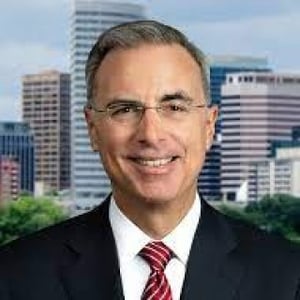
Partner, Torridon Law
Pat Cipollone most recently served as Counsel to the President for President Donald J. Trump, where he managed and led legal strategy on matters throughout the Administration and provided counsel on issues of highest national importance in the federal government.
Pat has a distinguished record of service as counsel in a broad variety of complex legal matters. For most of his career, Pat was a senior partner in the Washington, D.C. office of Kirkland & Ellis LLP. After Kirkland & Ellis, Pat became a member of the Management Committee and head of the litigation practice at Stein Mitchell Cipollone Beato & Missner LLP, a leading litigation firm based in Washington, D.C.
Throughout his career, Pat has served as counsel in a broad variety of cases including complex litigation matters and class actions; significant investigations and regulatory disputes involving state and federal agencies; consumer fraud and insurance litigation and investigations; product liability cases; constitutional cases; complex contract and commercial disputes; business torts; campaign finance; corporate crisis matters; health care matters; and large construction disputes. Most recently, Pat served as lead counsel for the defense in the third presidential impeachment trial in U.S. history.
Pat graduated from the University of Chicago Law School, where he was managing editor of the Chicago Law Review. He received his undergraduate degree from Fordham University.
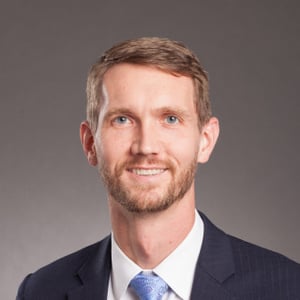
Senior Counsel for Environmental and Regulatory Affairs, Boeing
Adam Gustafson is a Senior Counsel for Environmental and Regulatory Affairs at Boeing.
Prior to joining Boeing, he served as Deputy General Counsel at the Environmental Protection Agency. Prior to that, he was a partner at Boyden Gray & Associates, where he represented States, federal judges, environmental groups, biofuel producers, agricultural interests, and public policy organizations, on such issues as the constitutional separation of powers, the First Amendment, automotive regulations, environmental computer models, healthcare regulation, and judicial deference to federal agencies.
Mr. Gustafson received his J.D. in 2009 from Yale Law School, where he was an editor of the Yale Law Journal, a managing editor of the Yale Journal of Law & the Humanities, and an executive editor of the symposium issue of the Harvard Journal of Law & Public Policy.
Mr. Gustafson served as a Vice President of the Yale Law School Federalist Society. He was a Coker Fellow, and his legal writing won the Joseph A. Chubb Competition Prize and the Edward D. Robbins Memorial Prize.
Mr. Gustafson graduated with high distinction in 2005 from the University of Virginia, where he was an Echols Scholar, a member of the Raven Society, a member of the rowing team, and a Lawn resident.
Before joining Boyden Gray & Associates, Mr. Gustafson was an associate at Cooper & Kirk, where he specialized in appellate litigation. Mr. Gustafson served as a law clerk to Judge Richard R. Clifton of the U.S. Court of Appeals for the Ninth Circuit, and to Judge Janice Rogers Brown of the U.S. Court of Appeals for the D.C. Circuit.
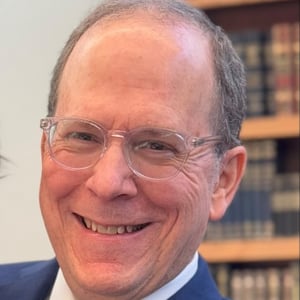
Executive Counsel - Issues and Advocacy, Exxon Mobil Corporation Law Department
Robert Levy serves as Executive Counsel at ExxonMobil, where he leads the company’s legal strategy on advocacy and civil justice reform. His work includes representing ExxonMobil in state and national organizations dedicated to improving the legal system and the rule of law, coordinating amicus support on key policy and litigation matters, and advising on data privacy and information governance. He previously oversaw the company’s eDiscovery compliance and cybersecurity law initiatives.
Robert currently chairs the Board of the American Tort Reform Association and previously served as President of the Civil Justice Reform Group. He is Treasurer of Lawyers for Civil Justice (LCJ), chairs its Discovery Committee, and serves on its Amicus Committee. He is also actively involved with the U.S. Chamber of Commerce’s Institute for Legal Reform and Litigation Center and sits on the Executive Committee of the Texas Civil Justice League. Additionally, he is an active member of the Federalist Society and its In-House Counsel Network.
A long-standing member of the Texas Supreme Court Advisory Committee, Robert has served for over 14 years and currently chairs one of its subcommittees. He also sits on the Advisory Councils of the Atlantic Legal Foundation, the Center for Law & Public Policy, and the Mountain States Legal Foundation. In recognition of his leadership, LCJ awarded him with the Al Cortese Award for his contributions to civil justice reform. Texans for Lawsuit Reform and the Texas Civil Justice League have honored Robert for his years of service to TCJL and Texas civil justice reform.
He has also been deeply engaged in community and bar activities, serving for over a decade on the board of Houston Volunteer Lawyers and on the board of the Houston Jewish Federation. He is a former Chair of the Board of Robert M. Beren Academy, where he was honored with the Dena and Baruch Brody Award for his leadership and service. Additionally, he served as President of United Orthodox Synagogues, reflecting his longstanding commitment to faith-based and civic leadership.
Robert is a frequent speaker at legal conferences and continuing legal education (CLE) programs. Early in his career, he served as a briefing attorney for the Honorable Judge Robert Parker of the U.S. District Court for the Eastern District of Texas. He has practiced law for over 39 years and earned his J.D. with honors from the University of Texas School of Law in 1986.
Before joining ExxonMobil, Robert was a partner at Haynes and Boone, LLP for over 14 years, where he practiced in the Business Litigation Section. He also held positions at Johnson & Gibbs and Weil, Gotshal & Manges.
Robert and his wife Barbara reside in Houston, Texas, where they raised four children and now enjoy their role as proud grandparents to three grandchildren.
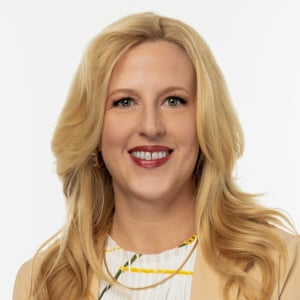
General Counsel, Saronic Technologies
Tobi Young is the General Counsel of Saronic Technologies. Her responsibilities include managing global legal affairs, regulatory compliance, litigation, risk management, and government security, and corporate governance.
Tobi brings over 20 years of experience with sophisticated legal, regulatory, and compliance issues through leadership roles in all three branches of the federal government and in Fortune 500 companies. Among other governmental positions, she has been an attorney in the U.S. Department of Justice and in the Office of the White House Counsel; a law clerk to U.S. Supreme Court Justice Neil M. Gorsuch; and a press secretary for Congressman J.C. Watts. Tobi also currently serves as the Chair of the Nominating and Governance Committee on the Halliburton Board of Directors (NYSE: HAL).
Tobi grew up in Oklahoma and is a proud member of the Chickasaw Nation. She recently became the youngest inductee into the Chickasaw Hall of Fame. Tobi now lives in Austin with her husband Evan, a Justice on the Texas Supreme Court, and their daughter Romilly.

Associate Professor of Law, Antonin Scalia Law School at George Mason University
Robert Luther III was appointed Associate Professor of Law in 2025 after serving as Distinguished Professor of Law from 2024-2025 and Adjunct Professor of Law from 2019-2024. He teaches and writes on the federal courts, legal and judicial ethics, political law, Congress, and professional sports. He has served at high levels in all three branches of the federal government and recently founded Constitutional Solutions PLLC—a law firm that navigates judicial candidates, judges, elected officials, professional athletes, and executives through high-stakes hearings, investigations, and reputational attacks.
Immediately before joining the Scalia Law faculty, Professor Luther spent over five years in the Washington, D.C. office of Jones Day, where his practice focused on strategic counseling, crisis management, and litigation. Prior to joining Jones Day, he served as Associate Counsel to the President of the United States in the White House Counsel’s Office. In the White House, he co-managed the judicial selection process and supervised the preparation of over 150 federal judicial nominees for their successful U.S. Senate confirmation hearings. The New York Times Magazine referred to his work on judicial selection during this period as “unique in White House history.” Before joining the White House, Professor Luther served as Counsel to then–U.S. Senator Jeff Sessions (R-Ala.) on the U.S. Senate Judiciary Committee, where he served as a core member of the team that prepared the Senator for confirmation as United States Attorney General. Professor Luther was also a law clerk to Judge Daniel A. Manion of the U.S. Court of Appeals for the Seventh Circuit. Earlier in his career, Professor Luther practiced civil and appellate litigation at a boutique firm in Williamsburg, Va. and taught at William & Mary Law School.
Professor Luther frequently speaks on the legal profession, political law, and federal judicial selection. His public work has been covered by or appeared in The New York Times, The Washington Post, The Wall Street Journal, Bloomberg, Fox News, The Hill, Politico, the Washington Examiner, National Law Journal, Law360, The Washington Reporter, and elsewhere, while his scholarship is published in the law journals of nearly twenty universities including three journals of Harvard University. He holds active law licenses in Virginia, the District of Columbia, the U.S. Supreme Court, and half of the U.S. Courts of Appeals.
In 2025, Virginia Governor Glenn Youngkin appointed Professor Luther to the Board of Visitors to Mount Vernon. He is an elected member of the American Law Institute (ALI) and serves on the Advisory Board of the Wilson Center for Leadership at Hampden-Sydney College. Since 2019, he has helped over 200 of his students secure clerkships with federal judges.
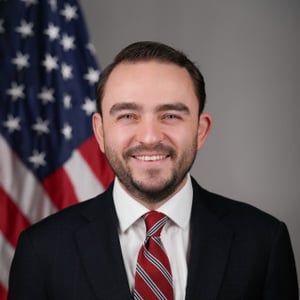
Associate Counsel to the President, White House Counsel's Office
Samuel Adkisson serves as Associate Counsel to the President in the White House Counsel’s Office.
Mr. Adkisson previously practiced law at Cooper & Kirk PLLC, where he focused on high-stakes civil-rights, political, and constitutional disputes. His matters included class actions challenging the FAA’s race-based air traffic controller hiring practices and the University of Oklahoma’s financial aid policies; appellate work on behalf of X Corp.; and the successful defense of Florida’s actions during a 2024 abortion referendum. Before joining Cooper & Kirk, he worked on the landmark case challenging Harvard’s affirmative action policies and helped launch a successful challenge to the State Bar of Texas’s membership policies.
Mr. Adkisson clerked for Chief Justice of the United States John G. Roberts, Jr., Judge Amul R. Thapar of the U.S. Court of Appeals for the Sixth Circuit, and Judge Gregory G. Katsas of the U.S. Court of Appeals for the D.C. Circuit. During Justice Kavanaugh’s confirmation hearings, he worked for Chairman of the Senate Judiciary Committee Charles E. Grassley.
Mr. Adkisson received his J.D. from Yale Law School, where he was President of the Yale Law School Federalist Society and an editor of the Yale Law Journal. He graduated summa cum laude from Vanderbilt University. Prior to joining the Trump Administration in January 2025, he lived on Signal Mountain, TN, with his wife and three children.
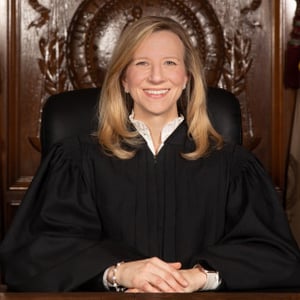
Justice, Supreme Court of Tennessee
Justice Sarah Campbell was confirmed to the Tennessee Supreme Court in 2022. She previously served as an Associate Solicitor General in the Tennessee Attorney General’s Office and as an associate at the law firm of Williams & Connolly LLP in Washington, DC. Justice Campbell earned her law degree from Duke University School of Law, a Master of Public Policy degree from Duke University, and her undergraduate degree from the University of Tennessee, where she received the Torchbearer Award. She served as a law clerk for Justice Samuel A. Alito, Jr. on the United States Supreme Court and Judge William H. Pryor Jr. on the U.S. Court of Appeals for the Eleventh Circuit.
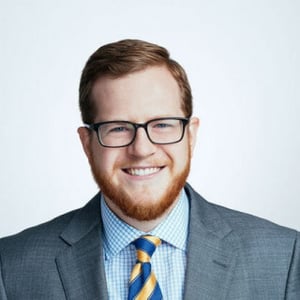
General Counsel, Senator Bill Haggerty
Special Assistant to the President and Senior Adviser for Policy, The White House
Clark Milner serves as Special Assistant to the President and Senior Advisor for Policy, focusing primarily on domestic policy. Milner formerly served as Deputy Chief of Staff for Policy and Chief Counsel to Senator Bill Hagerty. Prior to that, Milner served as Deputy Counsel to Governor Bill Lee and Associate Deputy Counsel to Governor Bill Haslam, was an associate with Bass, Berry, and Sims PLC in Nashville, and was a law clerk to Judge Thomas A. Varlan of the U.S. District Court for the Eastern District of Tennessee. Milner received his law degree from the University of Tennessee and his undergraduate degree from the University of Georgia. He is from Knoxville, Tennessee.
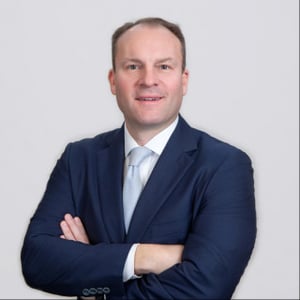
Partner, Wiley Rein LLP
Caleb focuses on advising participants in the political process on compliance with all aspects of political law, including campaign finance, government ethics, and lobbying. His clients include Fortune 50 corporations, trade associations and other business organizations, non-profit and tax exempt 501(c) advocacy organizations, federal officeholders, political candidates and committees, and private individuals. He has particular experience with the Federal Election Campaign Act (FECA), the Lobbying Disclosure Act (LDA), the Foreign Agents Registration Act (FARA), as well as analogous state and local laws regulating campaign finance, government ethics, and lobbying. Caleb frequently represents clients subject to these laws in matters before the Federal Election Commission (FEC), other federal and state administrative agencies, and in federal and state courts.
Chambers USA ranks Caleb in Band 1 as one of the nation’s leading lawyers in Political Law and notes: “In a word, he is exceptional. Caleb is able to quickly distill issues to their essence, is a true expert as well as being creative and pragmatic to consistently provide reliable and ethical advice." In addition, Caleb has appeared as a nationally broadcast commentator on CBS, Fox News, and National Public Radio. He is regularly cited and quoted on political law topics in The New York Times, The Washington Post, ABC News, Bloomberg Government, Time, Politico, The Huffington Post, The Daily Beast, Yahoo News, Salon, Roll Call, The Hill, Law360, The Washington Times, Washington Business Journal, and Washington Examiner.
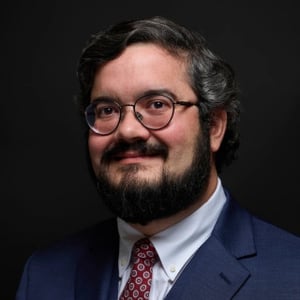
Partner, Torridon Law PLLC
Mike Fragoso is an experienced legal and policy strategist who represents clients before all three branches of the federal government. Most recently he served as chief counsel to the Senate Republican Leader, Mitch McConnell (R-KY). He has negotiated consequential legislation, managed successful congressional oversight, and prepared individuals for the most contentious Senate hearings.
As chief counsel to Leader McConnell, Mike was the Leader’s primary legal advisor and managed the “last mile” of any legislation touching on the Senate Judiciary Committee. He ran the 2024 reauthorization of FISA Section 702 and was involved at the highest levels of the appropriations and budget-reconciliation processes. Mike also repeatedly represented Leader McConnell as counsel of record at the Supreme Court. Leader McConnell said of Mike that he’s “equally at home in the high-minded philosophical discourse of the legal community and the urgent pragmatism of congressional dealmaking,” and that he “maintains a firm grasp on the realm of the possible” but “knows which screws to twist.” He observed that Mike “is so exceptionally competent that he often produces from his desk the work that would normally require, literally, teams of outside counsel.”
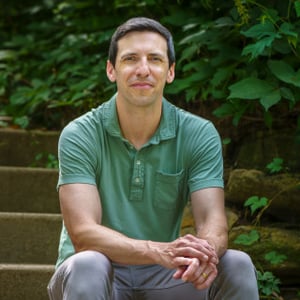
Former Cincinnati City Councilman
P.G. Sittenfeld is a writer based in Cincinnati, Ohio, where he lives with his wife, Sarah, an oncologist, and their three young sons. Sittenfeld’s writing has appeared in America Magazine, The New York Times, The Princeton Alumni Weekly, Slate, and Cincinnati Magazine. Sittenfeld also serves as a storytelling collaborator on narrative projects for CEOs, lawyers, doctors, startup founders, and school administrators. He is a graduate of Princeton University and Oxford University in England, where he was a Marshall Scholar.
Previously, Sittenfeld served for nearly a decade on Cincinnati’s City Council, where he became the city’s highest vote-getter through a record of fostering economic growth and innovation as well as supporting the community’s most marginalized members. He was widely expected to become the city’s next and youngest-ever mayor when he was prosecuted on public corruption charges in 2020, stemming from an FBI sting operation later likened in court to a “prosecutorial Truman Show.”
Following Sittenfeld’s acquittal on four counts and conviction on two counts, Jones Day’s Issues and Appeals group took on his entire appeal pro bono, calling it “the most extreme prosecution based on lawful campaign donations in U.S. history.” A nearly unprecedented bi-partisan group of top White House, DOJ, and Judicial officials spanning the past four decades submitted amicus briefs in support of Sittenfeld’s innocence.
For four-and-a-half months in 2024, Sittenfeld was Inmate Number 18085-509 at the Federal Correctional Institution in Ashland, Kentucky, before the U.S. Sixth Circuit Court of Appeals took the highly unusual step of ordering his early release pending the final outcome of his appeal. In May 2025, Sittenfeld and Jones Day were just days away from submitting a petition for writ of certiorari to the U.S. Supreme Court when Sittenfeld was granted a full and unconditional Presidential pardon.
Concerned about the far-reaching First Amendment implications of his prosecution and wanting to halt similarly misguided cases from being brought against other candidates or donors in the future, Sittenfeld and Jones Day decided to move forward with his appeal - marking the first known instance of an individual receiving a Presidential pardon and still being in a position to and choosing to move forward petitioning the Supreme Court. Sittenfeld regularly gives talks at law schools, faith forums, and in private sector settings on topics ranging from faith and resilience to American politics, personal liberties and government overreach, and the U.S. criminal justice system.
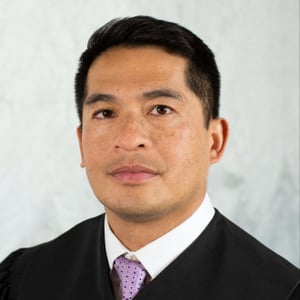
Judge, United States Court of Appeals, Ninth Circuit
Patrick J. Bumatay was confirmed as a U.S. Circuit Judge for the U.S. Court of Appeals for the Ninth Circuit in December 2019. He is based in San Diego, California.
Prior to his appointment, Judge Bumatay served as an Assistant United States Attorney in the U.S. Attorney’s Office for the Southern District of California, where he was a member of the Appellate and Narcotics Sections. He also served as a Counselor to the Attorney General on criminal law issues, including on national opioid strategy and combating transnational organized crime. Judge Bumatay has also worked in the Office of the Deputy Attorney General, the Office of the Associate Attorney General, and the Office of Legal Policy at the U.S. Department of Justice. Judge Bumatay has twice received the Attorney General’s Distinguished Service Award.
Judge Bumatay previously worked as an associate at Morvillo, Abramowitz, Grand, Iason, and Bohrer in New York, New York. Judge Bumatay clerked for the Honorable Timothy M. Tymkovich of the U.S. Court of Appeals for the Tenth Circuit and the Honorable Sandra L. Townes of the U.S. District Court for the Eastern District of New York. Judge Bumatay earned his B.A., cum laude, from Yale University and his J.D. from Harvard Law School.
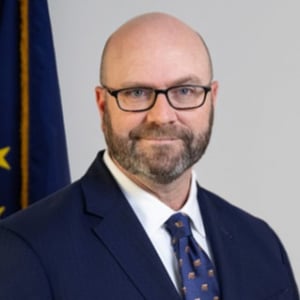
Attorney General, Alaska
Stephen J. Cox serves as the 28th Attorney General of the State of Alaska, where he oversees the state’s legal affairs and serves as the chief prosecutor with oversight of all district attorneys, general counsel to the Governor and executive branch, and represents the State in all civil and criminal cases in federal and state court. He brings to the role a proven record of public service at the highest levels of the U.S. Department of Justice, combined with deep experience in Alaska’s private sector and community life.
Before his appointment, he was Senior Vice President, Chief Legal and Strategy Officer of Bristol Bay Industrial—an investment platform of the Bristol Bay Native Corporation—acting as the chief legal officer for the industrial services portfolio on behalf of the Alaska Native shareholders in the Bristol Bay region. In that role, he led legal, compliance, and strategic planning for major energy, infrastructure, and utility projects across the State and in the Lower 48.
Earlier in his career, beginning in 2011, Cox served as in-house counsel for Apache Corporation, where he was the principal attorney for Apache Alaska and focused on new ventures and exploratory work in Cook Inlet, including seismic initiatives and ongoing regulatory coordination with state agencies.
Cox is deeply rooted in Anchorage’s community and faith life. He and his family attend Holy Family Old Cathedral in downtown Anchorage and support Mission Alaska, the Dominican friars’ outreach ministry under the Western Dominican Province. He was the founding board president and chairman of a new classical school in South Anchorage.
On the national stage, Cox held senior leadership roles in the U.S. Department of Justice under the Trump Administration. As Deputy Associate Attorney General, he co-chaired the DOJ’s Regulatory Reform Task Force and the Working Group on Corporate Enforcement and Accountability, and helped implement landmark policies aimed at curbing regulatory overreach and aligning enforcement with fairness and oversight. Later, as U.S. Attorney for the Eastern District of Texas, he oversaw prosecutions and civil litigation spanning 43 counties, prioritizing healthcare fraud, elder fraud, and violent crime while ensuring enforcement remained transparent and fair.
Earlier in his career, Cox practiced complex litigation at a major international law firm, served as counselor to the Director of U.S. Immigration and Customs Enforcement, and helped lead the William H. Webster Commission, which reviewed FBI counterterrorism intelligence and operations following the Fort Hood tragedy.
He began his legal career with a clerkship for Judge J. L. Edmondson of the U.S. Court of Appeals for the Eleventh Circuit. Cox earned a B.S. in Computer Science from Texas A&M University and a J.D., summa cum laude, from the University of Houston Law Center. He and his wife, Cristina, are raising their three children in Anchorage, and have made Alaska their home.

Judge, United States Court of Appeals, Sixth Circuit
Judge Readler earned his undergraduate and law degrees from the University of Michigan. After graduating, he served as a law clerk to Judge Alan Norris of the United States Court of Appeals for the Sixth Circuit. Judge Readler then began practicing law in the Columbus office of the international law firm Jones Day, eventually spending ten years as a partner in the firm’s Issues and Appeals Practice Group. While at Jones Day, Judge Readler appeared in state and federal trial and appellate courts around the country, most frequently the Supreme Court of Ohio and the Sixth Circuit. Judge Readler also successfully argued before the United States Supreme Court in McQuiggin v. Perkins on behalf of an inmate claiming actual innocence. His other pro bono representations include representing capital defendants before the Tenth Circuit and the Supreme Court of Ohio, as well as representing defendants sentenced to life in prison before the Sixth Circuit. While at Jones Day, Judge Readler traveled to Nairobi with Lawyers Without Borders to train Kenyan lawyers in prosecuting domestic violence cases, and he was also a recipient of the American Marshall Memorial Fellowship awarded by the German Marshall Fund of the United States. Following his career in private practice, Judge Readler served as Acting Assistant Attorney General for the Civil Division of the United States Department of Justice from 2017 to 2019. In that role, Judge Readler led and supervised over 1,000 lawyers in the Department’s largest litigating division, briefing and arguing several cases on behalf of the United States in federal courts across the country, including high-profile cases significant to the Administration and the Department. In March 2019, Judge Readler was confirmed to serve as a Circuit Judge on the Sixth Circuit. He resides in Columbus.
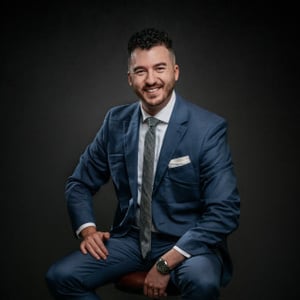
Associate, Stone Hilton PLLC
Alex has personal experience handling all aspects of litigation, from drafting initial pleadings, managing discovery, taking depositions, writing dispositive motions, and actually trying the case to a jury. He joined Stone Hilton from an elite commercial trial boutique based in Houston, Texas. Within the last year alone, he participated in two jury trials, a bench trial, and two preliminary injunction hearings. His most recent accomplishments included delivering the opening statement in a victorious jury trial defending a breach of contract case that was heavily covered by Law360. He also successfully received a temporary injunction preventing a debtor from fraudulently transferring collateral in a secured credit case after directing witnesses for the plaintiff.
Other experience includes defending a jury trial in the Central District of California in a trade secret and patent case, prosecuting a preliminary injunction hearing in the Southern District of Texas in a trademark case, prosecuting a jury trial in Travis County in a tortious interference with contract case, and spearheading bankruptcy hearings in the Eastern District of Pennsylvania. Alex’s experience also includes employment disputes, business torts, and disputes in the oil and gas industry.
Alex received his bachelor’s degrees from the University of Buffalo in Mathematics and Economics, while minoring in History. He went on to study law at the Columbia Law School, graduating with Stone Scholar honors each year. There he also served as the Columbia Federalist Society’s Chair of the Madison (Judicial) Lecture Series and as the Vice-President of Devinimus, the law school’s wine society.
After graduating, Alex worked at a top international law firm in New York, before leaving to clerk for the Honorable Charles Eskridge in the Southern District of Texas. As an inaugural law clerk, Alex had the privilege to help Judge Eskridge set up his chambers all while working through some of the most challenging cases the District saw fit for reassignment.
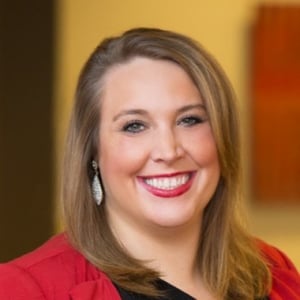
Director, Office of Federal Contract Compliance Programs, U.S. Department of Labor
Catherine Eschbach most recently worked as an appellate attorney for six years at Morgan, Lewis & Bockius, where she honed her knowledge on complex constitutional, statutory and administrative law issues. Eschbach led the firm’s efforts to ensure the federal government’s practices adhered to constitutional limits, including those affecting OFCCP.
Earlier in her career, Eschbach worked as a judicial law clerk for Chief Judge Jennifer Walker Elrod of the U.S. Court of Appeals for the Fifth Circuit. She served the same role for Judge David Hittner of the U.S. District Court for the Southern District of Texas.
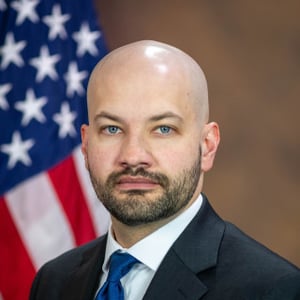
Deputy Assistant Attorney General, U.S. Department of Justice
Eric Hamilton serves as the Deputy Assistant Attorney General for the Federal Programs Branch of the Civil Division. He previously served as the Solicitor General for the State of Nebraska and as an Assistant Solicitor General in the Texas Attorney General’s Office. During the first Trump Administration, Eric worked as an Associate Counsel to the President in the Office of White House Counsel. Earlier in his career, he was in private practice in Washington, D.C. and clerked for Judge Thomas M. Hardiman on the U.S. Court of Appeals for the Third Circuit.
Eric is a graduate of Stanford Law School, where he served on the Stanford Law Review. He holds an undergraduate degree from the University of Nebraska-Lincoln.
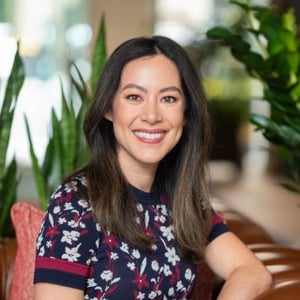
Director, Independent Women's Law Center; Owner, MPL Strategies
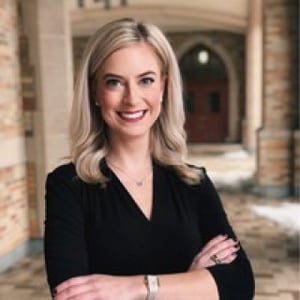
Executive Secretary, U.S. Department of Treasury
Rachel Miller is the Executive Secretary at the U.S. Department of the Treasury. She joins the Treasury Department from her role as Senior Vice President, Counsel, and Corporate Secretary at Chain Bridge Bank, N.A. where she advised the bank on its initial public offering and listing on the New York Stock Exchange. She previously served as an Associate in the Government Regulation practice at Jones Day where she counseled clients on matters relating to corporate governance and political and election law compliance. After law school, Rachel served as a law clerk to Judge Chad A. Readler of the U.S. Court of Appeals for the Sixth Circuit. Rachel received her BA from the University of Texas at Austin and her JD from the University of Notre Dame Law School.
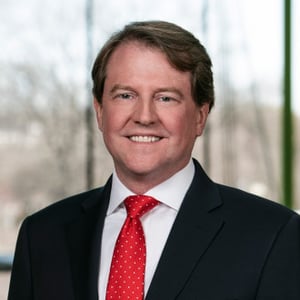
Partner, Jones Day
Don McGahn represents clients before government agencies, in enforcement matters, and in court disputes arising from government regulation or action. He handles litigation, crisis management, regulatory compliance, and political issues.
Prior to rejoining Jones Day in 2019, Don served as Counsel to the President of the United States, advising Donald J. Trump on all legal issues concerning the President and his administration, including constitutional and statutory authority, executive orders, international agreements, tariffs, trade, administrative law, and national security. Don also managed the judicial selection process for the President. During Don's tenure, a historic number of judges were appointed to the federal bench, including two Supreme Court justices. In addition, he spearheaded President Trump's deregulation efforts, which resulted in deregulation at record rates. Following Don's departure from the White House, the President appointed him to the Council of the Administrative Conference of the United States, a nonpartisan, independent agency dedicated to promoting improvement to administrative agency processes.
Don's accomplishments have been recognized at the highest levels of government. Senate Majority Leader Mitch McConnell stated that Don concluded his tenure "not only as the best White House Counsel I've seen on the job, but more broadly, as one of the most successful and consequential aides to any President in recent memory."
Don was nominated by President George W. Bush in 2008, and confirmed in the Senate by unanimous consent, to serve as a member of the Federal Election Commission. He also served as outside Counsel to the Committee on House Administration during the 113th and 114th Congresses and as general counsel to the National Republican Congressional Committee.
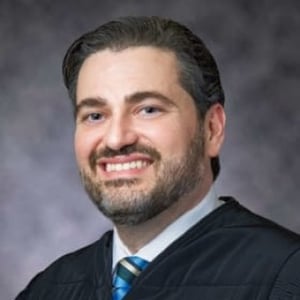
Judge, Florida Third District Court of Appeal
Judge Alexander S. Bokor began his service on the Third District Court of Appeal on September 1, 2020 after his appointment by Governor Ron DeSantis. Previously, Judge Bokor served as a trial judge for four years, most recently as a circuit judge in the civil division of the Eleventh Judicial Circuit from 2018, and before that as a county judge for Miami-Dade County since 2016. Judge Bokor was appointed to both trial court positions by Governor (now Senator) Rick Scott, and subsequently retained without opposition for each seat.
As a circuit judge, in addition to managing a full civil trial docket, Judge Bokor served as part of the Chief Judge’s task force charged with pandemic planning, responsible for enabling and implementing remote video appearances and remote evidentiary procedures for all of circuit and county court. Judge Bokor also served as a visiting Associate Judge on the Fourth District Court of Appeal in March 2020 and has served on multiple circuit appellate panels. As a county judge, Judge Bokor served in North Dade, South Dade, and downtown Miami, primarily in civil divisions. He also served in a criminal misdemeanor/traffic branch division.
Prior to taking the bench, Judge Bokor served in both the private and public sectors. From 2008 to 2016, he served as an Assistant Miami-Dade County Attorney focusing on transportation issues, public private partnerships, transit-oriented developments, complex commercial litigation, and property tax issues. From 2002 to 2008, he was a commercial litigator in private practice at prominent state and national firms in both New York and Florida. Judge Bokor also clerked for now-Chief Judge Steven D. Merryday of the U.S. District Court for the Middle District of Florida. Judge Bokor is a proud graduate of Southern Methodist University, where he obtained a B.A. in history, Foreign Languages (Spanish and German), and Latin American Studies, and the University of Pennsylvania Law School, where he earned his J.D. and served as an editor on the Journal of Constitutional Law.
Associate Professor of Law, Antonin Scalia Law School at George Mason University
Robert Luther III was appointed Associate Professor of Law in 2025 after serving as Distinguished Professor of Law from 2024-2025 and Adjunct Professor of Law from 2019-2024. He teaches and writes on the federal courts, legal and judicial ethics, political law, Congress, and professional sports. He has served at high levels in all three branches of the federal government and recently founded Constitutional Solutions PLLC—a law firm that navigates judicial candidates, judges, elected officials, professional athletes, and executives through high-stakes hearings, investigations, and reputational attacks.
Immediately before joining the Scalia Law faculty, Professor Luther spent over five years in the Washington, D.C. office of Jones Day, where his practice focused on strategic counseling, crisis management, and litigation. Prior to joining Jones Day, he served as Associate Counsel to the President of the United States in the White House Counsel’s Office. In the White House, he co-managed the judicial selection process and supervised the preparation of over 150 federal judicial nominees for their successful U.S. Senate confirmation hearings. The New York Times Magazine referred to his work on judicial selection during this period as “unique in White House history.” Before joining the White House, Professor Luther served as Counsel to then–U.S. Senator Jeff Sessions (R-Ala.) on the U.S. Senate Judiciary Committee, where he served as a core member of the team that prepared the Senator for confirmation as United States Attorney General. Professor Luther was also a law clerk to Judge Daniel A. Manion of the U.S. Court of Appeals for the Seventh Circuit. Earlier in his career, Professor Luther practiced civil and appellate litigation at a boutique firm in Williamsburg, Va. and taught at William & Mary Law School.
Professor Luther frequently speaks on the legal profession, political law, and federal judicial selection. His public work has been covered by or appeared in The New York Times, The Washington Post, The Wall Street Journal, Bloomberg, Fox News, The Hill, Politico, the Washington Examiner, National Law Journal, Law360, The Washington Reporter, and elsewhere, while his scholarship is published in the law journals of nearly twenty universities including three journals of Harvard University. He holds active law licenses in Virginia, the District of Columbia, the U.S. Supreme Court, and half of the U.S. Courts of Appeals.
In 2025, Virginia Governor Glenn Youngkin appointed Professor Luther to the Board of Visitors to Mount Vernon. He is an elected member of the American Law Institute (ALI) and serves on the Advisory Board of the Wilson Center for Leadership at Hampden-Sydney College. Since 2019, he has helped over 200 of his students secure clerkships with federal judges.
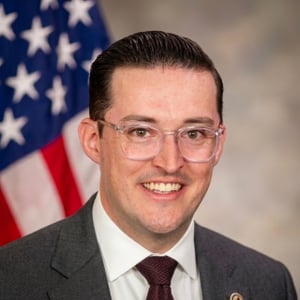
General Counsel and Senior Advisor, White House Task Force to Eliminate Fraud
Jason Manion has high-level legal experience in all three branches of federal government, in Ohio state government, and in private practice.
Since January 20, 2025, Jason has served in senior legal roles in the Trump-Vance Administration. He currently serves as General Counsel and Senior Advisor for the White House Task Force to Eliminate Fraud, a whole-of-government effort chaired by Vice President J.D. Vance to eliminate fraud, waste, and abuse within federal benefit programs.
Before joining the White House, Jason served as part of the senior leadership team at the U.S. Department of Justice, where he was Counselor to the Attorney General and Counselor and Chief of Staff to the Associate Attorney General. At the Justice Department, he oversaw a broad portfolio that included matters and issues arising out of the Civil, Civil Rights, Criminal, and National Security Divisions.
Previously, Jason was an award-winning federal prosecutor and accomplished appellate attorney. He worked as an appellate Assistant United States Attorney, a deputy Ohio solicitor general, and an appellate associate at Gibson, Dunn & Crutcher. In these various roles, he handled dozens of civil and criminal appeals (primarily in the U.S. Supreme Court, the U.S. Court of Appeals for the Sixth Circuit, and the Ohio Supreme Court) and presented eighteen oral arguments (in the Sixth Circuit, the D.C. Circuit, the Ohio Supreme Court, and federal district courts in Ohio and D.C.).
Jason has also worked on the confirmations of several of President Donald J. Trump’s Executive Branch and judicial nominees, including serving on the U.S. Senate Committee on the Judiciary as Special Counsel to Senator Ted Cruz for the confirmation of Justice Amy Coney Barrett.
Jason graduated from Harvard Law School and clerked for two Ohio-based Sixth Circuit judges, Judges Alice M. Batchelder and Eric E. Murphy. He has been an active member of the Federalist Society since law school and has served in multiple leadership roles in the Society.

2025 National Security and AI Symposium
Washington, DCClimate Crises? From Public Nuisance, to Plastics, to Climate Homicide, to Preemption and the Endangerment Finding
Businesses in the Courts Conference
Las Vegas, NVA Modern Look at Federal Judicial Selection
Michigan Lawyers Chapter
Detroit, MIPanel 3: Pennsylvania Avenue Counsels
2025 Tennessee Chapters Conference
Nashville, TNThe Federalist Society Adds Four New Members To Board of Directors
The Federalist Society is pleased to welcome Thomas Bell, Stephen Sachs, Annie Talley, and Michael...
Campaign Contributions as Crimes? … Convicted, Pardoned, and Seeking Cert in Sittenfeld v. United States
DC Young Lawyers
Washington, DCFirst Annual Alaska Federalist Society Summer Social
Alaska Lawyers Chapter
Anchorage, AKPanel 1: Opportunities for Public Service
2025 Texas Young Lawyers Summit
Houston, TXAn Evening with Former White House Counsel Don McGahn
Wichita Lawyers Chapter
Wichita, KSThe White House v. The Courthouse: Nationwide Injunctions and the Limits of Judicial Power
Miami Lawyers Chapter
Coral Gables, FL