
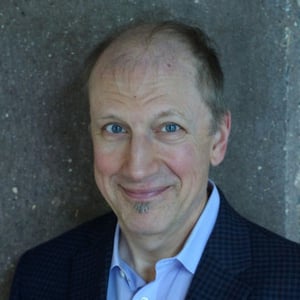
James L. Oberstar Professor of Law and Public Policy, University of St. Thomas School of Law
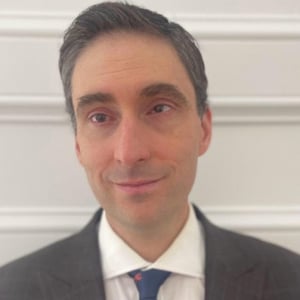
Senior Litigation Counsel, Washington Legal Foundation
Zac joined WLF in 2025 as Senior Litigation Counsel. In that role, he regularly represents WLF and other clients as counsel of record in cases before the U.S. Supreme Court and the federal appellate courts. Before arriving at WLF, Zac served as counsel to Commissioner Allen Dickerson of the Federal Election Commission. Zac also spent eight years litigating First Amendment cases as a staff attorney for the Institute for Free Speech, where he represented clients in federal and state cases across the country. He received his J.D. from George Mason University’s School of Law, where he participated in GMU’s Wiley Rein Supreme Court clinic.
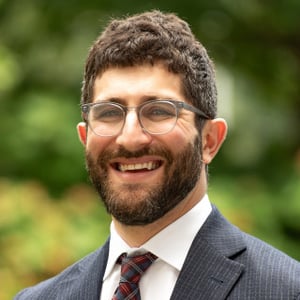
Associate Professor of Law, Temple University Beasley School of Law
Jacob Schuman is an Associate Professor at Temple University Beasley School of Law, where he teaches Constitutional Law, Evidence, and the Law of the Police. His scholarship focuses on the law of community supervision and has been published or is forthcoming in the Stanford Law Review, New York University Law Review, Michigan Law Review, Virginia Law Review, American Criminal Law Review, Philadelphia Inquirer, and New Republic.
Professor Schuman’s scholarship is regularly cited by courts, scholars, journalists, and advocates, including by federal judges on the Second, Fourth, and Seventh Circuit U.S. Courts of Appeals. It has also won plaudits across the ideological spectrum, from the American Constitution Society to the Federalist Society. He has filed amicus briefs based on his work on behalf of clients such as the National Association of Federal Defenders and the National Association of Criminal Defense Lawyers.
Prior to joining Temple Law, Professor Schuman served in the appellate unit of the Federal Community Defender Office in Philadelphia, where he represented indigent criminal defendants before the U.S. Court of Appeals for the Third Circuit. He also worked as a white-collar criminal defense lawyer in Washington, D.C. After graduating magna cum laude from Harvard Law School, he clerked for the Honorable Michael Boudin on the U.S. Court of Appeals for the First Circuit and the Honorable James Boasberg on the U.S. District Court for the District of Columbia.
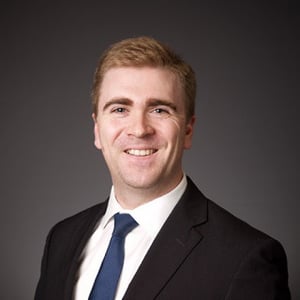
Legal Counsel, Center for Free Speech, Alliance Defending Freedom
Logan Spena serves as legal counsel for the Center for Free Speech at Alliance Defending Freedom, where he works to defend free speech and combat global censorship and coercion.
Before joining ADF, Spena served as Deputy Policy Director in the Missouri governor’s office where he oversaw the state’s regulatory reform efforts and worked to approve legislation on many issues including education, foster care, and protecting the unborn.
Spena graduated from the University of Virginia School of Law in 2016, where he served on the Editorial Board of the Virginia Law Review. Spena earned his B.A. in Government: Political Theory from Patrick Henry College in 2012. Spena is a member of the bars of Virginia and Missouri.
Director of Clinical and Experiential Learning, Clinical Professor of Law & Director of the Criminal and Juvenile Justice Clinic, University of Chicago Law School
Erica Zunkel is a Clinical Professor of Law and directs the Criminal and Juvenile Justice Clinic. Under Professor Zunkel’s supervision, law students represent indigent individuals in criminal trial courts, on appeal, and in post-conviction proceedings, and pursue policy and impact projects to effect system change. Professor Zunkel’s Excessive Sentences Project is an initiative that aims to free prisoners serving lengthy sentences through the use of second look mechanisms such as compassionate release, parole, and clemency. Zunkel and her clinic students have secured the early release of 17 individuals, resulting in hundreds of years in prison saved for their clients. In recognition of her post-conviction work, Zunkel received the 2024 Excellence in Pro Bono Service Award from the United States Northern District of Illinois District Court and the Federal Bar Association.
Zunkel’s case and research interests include post-conviction remedies for excessive sentences in the federal and state systems, mandatory minimums, and sentencing. In 2022, Illinois Governor J.B. Pritzker appointed Professor Zunkel to be a Commissioner on the Illinois Torture Inquiry and Relief Commission, which examines claims of police torture.
Before coming to the Law School in 2012, Professor Zunkel was a federal public defender in San Diego, California and a law clerk for U.S. District Court Judge Martha Vázquez in Santa Fe, New Mexico. She received her B.A. from Cornell University and her J.D. from the University of California-Berkeley School of Law.
Professor of Law, University of Michigan Law School
Professor Nicholas Bagley teaches and writes in the areas of administrative law, regulatory theory, and health law. Prior to joining the Law School faculty, he was an attorney with the appellate staff in the Civil Division at the U.S. Department of Justice, where he argued a dozen cases before the U.S. Courts of Appeals and acted as lead counsel in many more. Professor Bagley also served as a law clerk to Justice John Paul Stevens of the U.S. Supreme Court and to the Hon. David S. Tatel of the U.S. Court of Appeals, District of Columbia Circuit. Professor Bagley holds a BA in English from Yale University and received his JD, summa cum laude, from New York University School of Law. Before entering law school, he joined Teach For America and taught eighth-grade English at a public school in South Bronx. Professor Bagley's work has appeared in the Harvard Law Review, the Columbia Law Review, the Georgetown Law Journal, the New England Journal of Medicine, and the Journal of Health Politics, Policy, and Law. In 2012, he was the recipient of the Law School's L. Hart Wright Award for Excellence in Teaching. He is a frequent contributor to The Incidental Economist, a prominent health policy blog.
Professor of Law, University of Notre Dame Law School
Emily Bremer teaches and writes in the areas of administrative law, regulatory process, and civil procedure. Her scholarship focuses primarily on matters of procedural design, with a recent focus on the history and interpretation of the Administrative Procedure Act (APA). She is a recipient of the AALS’s award for the year’s best administrative law scholarship by a junior scholar and the AALL’s Joseph L. Andrew’s Legal Literature Award for her contribution to the Bremer-Kovacs Collection of Historical Documents Related to the APA (HeinOnline). Bremer’s articles include a defense forthcoming in the Virginia Law Review of the constitutionality of the APA’s regime for ensuring the competence and impartiality of Administrative Law Judges; a plea in the Yale Journal on Regulation for administrative law to take greater account of the on-the-ground reality of administration; twin articles uncovering the intellectual foundation and meaning of the APA’s adjudication and rulemaking provisions; and three separate studies that served as the basis of recommendations of the Administrative Conference of the United States (ACUS) on the subjects of agency declaratory orders, incorporation by reference, and statutory limitations on the jurisdiction of the Court of Federal Claims. Bremer serves as a Senior Fellow of ACUS, a co-editor of the administrative law section of Jotwell, and a regular contributor to the Yale Journal on Regulation’s Notice & Comment blog.
Professor of Law, University of Chicago Law School
Jennifer Nou is Professor of Law at the University of Chicago Law School. Nou’s main research interests are in administrative law, executive branch dynamics, regulatory policy, and constitutional separation-of-powers. Prior to joining the faculty, she was a Public Law Fellow at the Law School and also worked as a policy analyst and special assistant at the Office of Information and Regulatory Affairs. Nou is a graduate of Yale College and Yale Law School, and received an MPhil in Politics from Oxford University as a Marshall Scholar. After law school, she was a law clerk to Judge Richard Posner of the US Court of Appeals for the Seventh Circuit and then to Justice Stephen Breyer of the US Supreme Court. She is currently a public member of the Administrative Conference of the United States.
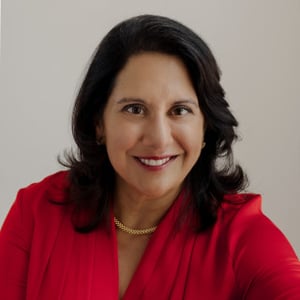
Judge, United States Court of Appeals, District of Columbia Circuit
Judge Rao was appointed to the United States Court of Appeals for the District of Columbia Circuit in March 2019. She graduated from Yale College in 1995 and the University of Chicago Law School in 1999. Following graduation, she served as a law clerk to Judge J. Harvie Wilkinson III of the U.S. Court of Appeals for the Fourth Circuit and, in the 2001 October Term, as law clerk to Justice Clarence Thomas of the U.S. Supreme Court. Between her clerkships, Judge Rao served as counsel for nominations and constitutional law to the U.S. Senate Committee on the Judiciary. In 2002, she joined the international arbitration group of Clifford Chance LLP in London, England. From 2005-2006, she served as Special Assistant and Associate White House Counsel to President George W. Bush. From 2006 to 2017, Judge Rao was a professor at the Antonin Scalia Law School at George Mason University, where she taught constitutional law, legislation and statutory interpretation, and the history and foundations of the administrative state. In 2014, she founded the Center for the Study of the Administrative State, a non-profit Center that promotes academic scholarship and public policy debates about administrative law. In July 2017, she was appointed to serve as the Administrator of the Office of Information and Regulatory Affairs in the Office of Management Budget. She served in this position until her appointment to the D.C. Circuit.
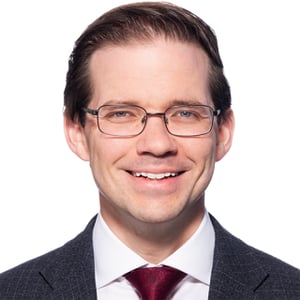
Of Counsel, Covington & Burling LLP
The Honorable Paul J. Ray is currently Of Counsel at Covington & Burling LLP where he advises clients on regulatory opportunities and challenges and helps them formulate and execute advocacy strategies for their regulatory policy priorities before the executive branch and Congress.
During the first Trump Administration, Paul held various senior positions at the Office of Information and Regulatory Affairs (OIRA) within the White House’s Office of Management and Budget, including as acting, and then Senate-confirmed, head of the office. As OIRA Administrator (the "regulations czar"), Paul supervised the review of hundreds of regulations from across the government, drafted numerous executive orders governing the regulatory process, and led the Administration’s regulatory reform effort. As a result of this experience, Paul is well-positioned to help clients understand and achieve regulatory policy priorities in the context of the government’s regulatory agenda and ongoing reform efforts.
Most recently, Paul was also the Director of the Roe Institute for Economic Policy Studies at The Heritage Foundation. In that role, he supervised the formulation of the Foundation’s economic and regulatory policy recommendations and provided technical assistance to congressional committees and staff regarding legislative changes to the regulatory process. In addition to his role at The Heritage Foundation, Paul also served as a Senior Advisor at a strategic advisory firm. Before his time in government, Paul practiced law at a law firm in Washington, specializing in administrative law matters.
Prior to his role at the White House, Paul was Counselor to the Secretary at the U.S. Department of Labor. There he led departmental efforts in high-profile rulemakings and helped formulate the Department’s legal positions and strategy.
Paul served as a law clerk to Supreme Court Justice Samuel Alito and as a law clerk to the Honorable Debra Livingston of the U.S. Court of Appeals for the Second Circuit.
Paul is a thought leader in the conservative legal movement and is a frequent commentator and speaker on regulatory policy and reform matters, including at law schools, professional gatherings, and other venues. He is the Chairman of Innovations in Peacebuilding International and the Regulatory Process Working Group of the Federalist Society’s Regulatory Transparency Project and a public member of the Administrative Conference of the United States. Paul is also an adjunct lecturer at the Hillsdale College School of Government.
Professor of Law, University of Michigan Law School
Professor Nicholas Bagley teaches and writes in the areas of administrative law, regulatory theory, and health law. Prior to joining the Law School faculty, he was an attorney with the appellate staff in the Civil Division at the U.S. Department of Justice, where he argued a dozen cases before the U.S. Courts of Appeals and acted as lead counsel in many more. Professor Bagley also served as a law clerk to Justice John Paul Stevens of the U.S. Supreme Court and to the Hon. David S. Tatel of the U.S. Court of Appeals, District of Columbia Circuit. Professor Bagley holds a BA in English from Yale University and received his JD, summa cum laude, from New York University School of Law. Before entering law school, he joined Teach For America and taught eighth-grade English at a public school in South Bronx. Professor Bagley's work has appeared in the Harvard Law Review, the Columbia Law Review, the Georgetown Law Journal, the New England Journal of Medicine, and the Journal of Health Politics, Policy, and Law. In 2012, he was the recipient of the Law School's L. Hart Wright Award for Excellence in Teaching. He is a frequent contributor to The Incidental Economist, a prominent health policy blog.
Professor of Law, University of Notre Dame Law School
Emily Bremer teaches and writes in the areas of administrative law, regulatory process, and civil procedure. Her scholarship focuses primarily on matters of procedural design, with a recent focus on the history and interpretation of the Administrative Procedure Act (APA). She is a recipient of the AALS’s award for the year’s best administrative law scholarship by a junior scholar and the AALL’s Joseph L. Andrew’s Legal Literature Award for her contribution to the Bremer-Kovacs Collection of Historical Documents Related to the APA (HeinOnline). Bremer’s articles include a defense forthcoming in the Virginia Law Review of the constitutionality of the APA’s regime for ensuring the competence and impartiality of Administrative Law Judges; a plea in the Yale Journal on Regulation for administrative law to take greater account of the on-the-ground reality of administration; twin articles uncovering the intellectual foundation and meaning of the APA’s adjudication and rulemaking provisions; and three separate studies that served as the basis of recommendations of the Administrative Conference of the United States (ACUS) on the subjects of agency declaratory orders, incorporation by reference, and statutory limitations on the jurisdiction of the Court of Federal Claims. Bremer serves as a Senior Fellow of ACUS, a co-editor of the administrative law section of Jotwell, and a regular contributor to the Yale Journal on Regulation’s Notice & Comment blog.
Professor of Law, University of Chicago Law School
Jennifer Nou is Professor of Law at the University of Chicago Law School. Nou’s main research interests are in administrative law, executive branch dynamics, regulatory policy, and constitutional separation-of-powers. Prior to joining the faculty, she was a Public Law Fellow at the Law School and also worked as a policy analyst and special assistant at the Office of Information and Regulatory Affairs. Nou is a graduate of Yale College and Yale Law School, and received an MPhil in Politics from Oxford University as a Marshall Scholar. After law school, she was a law clerk to Judge Richard Posner of the US Court of Appeals for the Seventh Circuit and then to Justice Stephen Breyer of the US Supreme Court. She is currently a public member of the Administrative Conference of the United States.
Judge, United States Court of Appeals, District of Columbia Circuit
Judge Rao was appointed to the United States Court of Appeals for the District of Columbia Circuit in March 2019. She graduated from Yale College in 1995 and the University of Chicago Law School in 1999. Following graduation, she served as a law clerk to Judge J. Harvie Wilkinson III of the U.S. Court of Appeals for the Fourth Circuit and, in the 2001 October Term, as law clerk to Justice Clarence Thomas of the U.S. Supreme Court. Between her clerkships, Judge Rao served as counsel for nominations and constitutional law to the U.S. Senate Committee on the Judiciary. In 2002, she joined the international arbitration group of Clifford Chance LLP in London, England. From 2005-2006, she served as Special Assistant and Associate White House Counsel to President George W. Bush. From 2006 to 2017, Judge Rao was a professor at the Antonin Scalia Law School at George Mason University, where she taught constitutional law, legislation and statutory interpretation, and the history and foundations of the administrative state. In 2014, she founded the Center for the Study of the Administrative State, a non-profit Center that promotes academic scholarship and public policy debates about administrative law. In July 2017, she was appointed to serve as the Administrator of the Office of Information and Regulatory Affairs in the Office of Management Budget. She served in this position until her appointment to the D.C. Circuit.
Of Counsel, Covington & Burling LLP
The Honorable Paul J. Ray is currently Of Counsel at Covington & Burling LLP where he advises clients on regulatory opportunities and challenges and helps them formulate and execute advocacy strategies for their regulatory policy priorities before the executive branch and Congress.
During the first Trump Administration, Paul held various senior positions at the Office of Information and Regulatory Affairs (OIRA) within the White House’s Office of Management and Budget, including as acting, and then Senate-confirmed, head of the office. As OIRA Administrator (the "regulations czar"), Paul supervised the review of hundreds of regulations from across the government, drafted numerous executive orders governing the regulatory process, and led the Administration’s regulatory reform effort. As a result of this experience, Paul is well-positioned to help clients understand and achieve regulatory policy priorities in the context of the government’s regulatory agenda and ongoing reform efforts.
Most recently, Paul was also the Director of the Roe Institute for Economic Policy Studies at The Heritage Foundation. In that role, he supervised the formulation of the Foundation’s economic and regulatory policy recommendations and provided technical assistance to congressional committees and staff regarding legislative changes to the regulatory process. In addition to his role at The Heritage Foundation, Paul also served as a Senior Advisor at a strategic advisory firm. Before his time in government, Paul practiced law at a law firm in Washington, specializing in administrative law matters.
Prior to his role at the White House, Paul was Counselor to the Secretary at the U.S. Department of Labor. There he led departmental efforts in high-profile rulemakings and helped formulate the Department’s legal positions and strategy.
Paul served as a law clerk to Supreme Court Justice Samuel Alito and as a law clerk to the Honorable Debra Livingston of the U.S. Court of Appeals for the Second Circuit.
Paul is a thought leader in the conservative legal movement and is a frequent commentator and speaker on regulatory policy and reform matters, including at law schools, professional gatherings, and other venues. He is the Chairman of Innovations in Peacebuilding International and the Regulatory Process Working Group of the Federalist Society’s Regulatory Transparency Project and a public member of the Administrative Conference of the United States. Paul is also an adjunct lecturer at the Hillsdale College School of Government.

Harry Kalven, Jr. Professor of Law & Faculty Director, Constitutional Law Institute, University of Chicago Law School
William Baude is a Professor of Law and the Faculty Director of the Constitutional Law Institute at the University of Chicago Law School, where he teaches federal courts, constitutional law, and conflict of laws. His current research interests include different aspects of the Fourteenth Amendment (particularly both Section One and Section Three) and the nature of judicial discretion.
Among his other activities Baude is: the co-editor of two textbooks, The Constitution of the United States and Hart & Wechsler's Federal Courts in the Federal System; an Affiliated Scholar at the Center for the Study of Constitutional Originalism; a founding member of the Academic Freedom Alliance; a member of the American Law Institute; an occasional blogger at The Volokh Conspiracy; and a podcaster on Divided Argument. He also recently served on the Presidential Commission on the Supreme Court of the United States.
Professor Baude received his BS in Mathematics from the University of Chicago and his JD from Yale Law School. He then clerked for then-Judge Michael McConnell on the United States Court of Appeals, and Chief Justice John Roberts on the United States Supreme Court. Before joining the Chicago faculty, he was a fellow at the Stanford Constitutional Law Center, and a lawyer in Washington, DC.
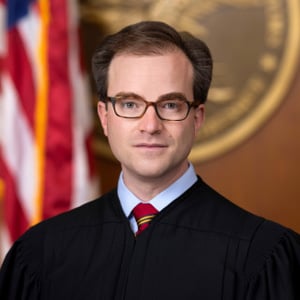
Judge, United States Court of Federal Claims
Judge Schwartz was nominated to the U.S. Court of Federal Claims on June 7, 2017, confirmed on December 8, 2020, and received his commission on December 22, 2020.
Judge Schwartz graduated from Yale College in 2005. He received his J.D. from the University of Chicago Law School, where he was Online Editor of the University of Chicago Law Review and a Hinton Moot Court finalist. He clerked for Judge Jerry E. Smith on the U.S. Court of Appeals for the Fifth Circuit.
Following his clerkship, Judge Schwartz was a litigation associate at D.C. law firm, focusing his practice on appellate and administrative law matters. He then joined a non-profit where he litigated cases related to federal government transparency and administrative agency discretion. In 2016 he joined a D.C. litigation boutique where he represented state and local governments in complex trial court and appellate proceedings, becoming a partner in 2017.
A native of Winona, Minnesota, he lives with his family in Arlington, Virginia.
Harry Kalven, Jr. Professor of Law & Faculty Director, Constitutional Law Institute, University of Chicago Law School
William Baude is a Professor of Law and the Faculty Director of the Constitutional Law Institute at the University of Chicago Law School, where he teaches federal courts, constitutional law, and conflict of laws. His current research interests include different aspects of the Fourteenth Amendment (particularly both Section One and Section Three) and the nature of judicial discretion.
Among his other activities Baude is: the co-editor of two textbooks, The Constitution of the United States and Hart & Wechsler's Federal Courts in the Federal System; an Affiliated Scholar at the Center for the Study of Constitutional Originalism; a founding member of the Academic Freedom Alliance; a member of the American Law Institute; an occasional blogger at The Volokh Conspiracy; and a podcaster on Divided Argument. He also recently served on the Presidential Commission on the Supreme Court of the United States.
Professor Baude received his BS in Mathematics from the University of Chicago and his JD from Yale Law School. He then clerked for then-Judge Michael McConnell on the United States Court of Appeals, and Chief Justice John Roberts on the United States Supreme Court. Before joining the Chicago faculty, he was a fellow at the Stanford Constitutional Law Center, and a lawyer in Washington, DC.

Laurence A. Tisch Professor of Law and Director, Classical Liberal Institute, New York University School of Law; Director, Classical Liberal Institute, Civitas Institute University of Texas at Austin
Richard A. Epstein is the Laurence A. Tisch Professor of Law, at New York University, a senior research fellow at the Civitas Institute at the University of Texas Austin, and a senior Lecturer, the University of Chicago. He received an LL.D., h.c . from the University of Ghent, 2003 , and an LLD h.c . from the University of Siegen in 2018 and the Bradley Prize in 2011. He has been a member of the American Academy of Arts and Sciences since 1985. He has edited both the Journal of Legal Studies (1981-1991) and the Journal of Law and Economics (1991-2001). He is also a founder and director of the Classical Liberal Institute at NYU Law School. His most recent book is The Classical Liberal Constitution: The Uncertain Quest for Limited Government (2014). His other books include Takings: Private Property and the Power of Eminent Domain ( 1985); Bargaining with the State (1993); Simple Rules for a Complex World (1995); Principles for a Free Society: Reconciling Individual Liberty and the Common Good (1998); Skepticism and Freedom: A Modern Theory of Classical Liberalism (2003); Design for Liberty: Private Property, Public Administration and the Rule of Law (2011), and most recently, The Myth of Birthright citizenship—and Beyond (2026). He has taught courses in , administrative law, antitrust, constitutional, contracts, environmental law, land use planning; real property, torts and water law. He has written and spoken extensively on a wide range of topics, and is writes a regular column for Defining Ideas.
Professor of Law, University of Michigan Law School
Professor Nicholas Bagley teaches and writes in the areas of administrative law, regulatory theory, and health law. Prior to joining the Law School faculty, he was an attorney with the appellate staff in the Civil Division at the U.S. Department of Justice, where he argued a dozen cases before the U.S. Courts of Appeals and acted as lead counsel in many more. Professor Bagley also served as a law clerk to Justice John Paul Stevens of the U.S. Supreme Court and to the Hon. David S. Tatel of the U.S. Court of Appeals, District of Columbia Circuit. Professor Bagley holds a BA in English from Yale University and received his JD, summa cum laude, from New York University School of Law. Before entering law school, he joined Teach For America and taught eighth-grade English at a public school in South Bronx. Professor Bagley's work has appeared in the Harvard Law Review, the Columbia Law Review, the Georgetown Law Journal, the New England Journal of Medicine, and the Journal of Health Politics, Policy, and Law. In 2012, he was the recipient of the Law School's L. Hart Wright Award for Excellence in Teaching. He is a frequent contributor to The Incidental Economist, a prominent health policy blog.
Professor of Law, University of Notre Dame Law School
Emily Bremer teaches and writes in the areas of administrative law, regulatory process, and civil procedure. Her scholarship focuses primarily on matters of procedural design, with a recent focus on the history and interpretation of the Administrative Procedure Act (APA). She is a recipient of the AALS’s award for the year’s best administrative law scholarship by a junior scholar and the AALL’s Joseph L. Andrew’s Legal Literature Award for her contribution to the Bremer-Kovacs Collection of Historical Documents Related to the APA (HeinOnline). Bremer’s articles include a defense forthcoming in the Virginia Law Review of the constitutionality of the APA’s regime for ensuring the competence and impartiality of Administrative Law Judges; a plea in the Yale Journal on Regulation for administrative law to take greater account of the on-the-ground reality of administration; twin articles uncovering the intellectual foundation and meaning of the APA’s adjudication and rulemaking provisions; and three separate studies that served as the basis of recommendations of the Administrative Conference of the United States (ACUS) on the subjects of agency declaratory orders, incorporation by reference, and statutory limitations on the jurisdiction of the Court of Federal Claims. Bremer serves as a Senior Fellow of ACUS, a co-editor of the administrative law section of Jotwell, and a regular contributor to the Yale Journal on Regulation’s Notice & Comment blog.
Professor of Law, University of Chicago Law School
Jennifer Nou is Professor of Law at the University of Chicago Law School. Nou’s main research interests are in administrative law, executive branch dynamics, regulatory policy, and constitutional separation-of-powers. Prior to joining the faculty, she was a Public Law Fellow at the Law School and also worked as a policy analyst and special assistant at the Office of Information and Regulatory Affairs. Nou is a graduate of Yale College and Yale Law School, and received an MPhil in Politics from Oxford University as a Marshall Scholar. After law school, she was a law clerk to Judge Richard Posner of the US Court of Appeals for the Seventh Circuit and then to Justice Stephen Breyer of the US Supreme Court. She is currently a public member of the Administrative Conference of the United States.
Judge, United States Court of Appeals, District of Columbia Circuit
Judge Rao was appointed to the United States Court of Appeals for the District of Columbia Circuit in March 2019. She graduated from Yale College in 1995 and the University of Chicago Law School in 1999. Following graduation, she served as a law clerk to Judge J. Harvie Wilkinson III of the U.S. Court of Appeals for the Fourth Circuit and, in the 2001 October Term, as law clerk to Justice Clarence Thomas of the U.S. Supreme Court. Between her clerkships, Judge Rao served as counsel for nominations and constitutional law to the U.S. Senate Committee on the Judiciary. In 2002, she joined the international arbitration group of Clifford Chance LLP in London, England. From 2005-2006, she served as Special Assistant and Associate White House Counsel to President George W. Bush. From 2006 to 2017, Judge Rao was a professor at the Antonin Scalia Law School at George Mason University, where she taught constitutional law, legislation and statutory interpretation, and the history and foundations of the administrative state. In 2014, she founded the Center for the Study of the Administrative State, a non-profit Center that promotes academic scholarship and public policy debates about administrative law. In July 2017, she was appointed to serve as the Administrator of the Office of Information and Regulatory Affairs in the Office of Management Budget. She served in this position until her appointment to the D.C. Circuit.
Of Counsel, Covington & Burling LLP
The Honorable Paul J. Ray is currently Of Counsel at Covington & Burling LLP where he advises clients on regulatory opportunities and challenges and helps them formulate and execute advocacy strategies for their regulatory policy priorities before the executive branch and Congress.
During the first Trump Administration, Paul held various senior positions at the Office of Information and Regulatory Affairs (OIRA) within the White House’s Office of Management and Budget, including as acting, and then Senate-confirmed, head of the office. As OIRA Administrator (the "regulations czar"), Paul supervised the review of hundreds of regulations from across the government, drafted numerous executive orders governing the regulatory process, and led the Administration’s regulatory reform effort. As a result of this experience, Paul is well-positioned to help clients understand and achieve regulatory policy priorities in the context of the government’s regulatory agenda and ongoing reform efforts.
Most recently, Paul was also the Director of the Roe Institute for Economic Policy Studies at The Heritage Foundation. In that role, he supervised the formulation of the Foundation’s economic and regulatory policy recommendations and provided technical assistance to congressional committees and staff regarding legislative changes to the regulatory process. In addition to his role at The Heritage Foundation, Paul also served as a Senior Advisor at a strategic advisory firm. Before his time in government, Paul practiced law at a law firm in Washington, specializing in administrative law matters.
Prior to his role at the White House, Paul was Counselor to the Secretary at the U.S. Department of Labor. There he led departmental efforts in high-profile rulemakings and helped formulate the Department’s legal positions and strategy.
Paul served as a law clerk to Supreme Court Justice Samuel Alito and as a law clerk to the Honorable Debra Livingston of the U.S. Court of Appeals for the Second Circuit.
Paul is a thought leader in the conservative legal movement and is a frequent commentator and speaker on regulatory policy and reform matters, including at law schools, professional gatherings, and other venues. He is the Chairman of Innovations in Peacebuilding International and the Regulatory Process Working Group of the Federalist Society’s Regulatory Transparency Project and a public member of the Administrative Conference of the United States. Paul is also an adjunct lecturer at the Hillsdale College School of Government.

A Seat at the Sitting - November 2025
Thomas C. Berg, Zac Morgan, Jacob Schuman, Logan Spena, Erica Zunkel
Each month, a panel of constitutional experts convenes to discuss the Court’s upcoming docket sitting...
Why You Should Care About the Court of Federal Claims
Dallas Lawyers Chapter
Dallas, TXU.S. Supreme Court Roundup - Austin 2025
Austin Lawyers Chapter
Austin, TXPanel III: Congress and the Administrative State: Prospects for Regulatory Reform
Nicholas Bagley, Emily Bremer, Jennifer Nou, Neomi Rao, Paul J. Ray
Featuring: Prof. Nicholas Bagley, Thomas G. Long Professor of Law, University of Michigan Law School...
Panel III: Congress and the Administrative State: Prospects for Regulatory Reform
Nicholas Bagley, Emily Bremer, Jennifer Nou, Neomi Rao, Paul J. Ray
Featuring: Prof. Nicholas Bagley, Thomas G. Long Professor of Law, University of Michigan Law School...
Introduction: Originalism and the General Law
William Baude
Does constitutional interpretation require more than just text? What happens when the text runs out?...
Introduction: Originalism and the General Law
6th Annual UVA Originalism Symposium
Charlottesville, VAUVA Law's 6th Annual Originalism Symposium
Unwritten Law: Bridging Originalism and the General Law
Charlottesville, VAClassic Liberal Thought: The World According to Richard Epstein
Austin Lawyers Chapter
Austin, TXPanel III: Congress and the Administrative State: Prospects for Regulatory Reform
2025 National Student Symposium
Ann Arbor, MI