
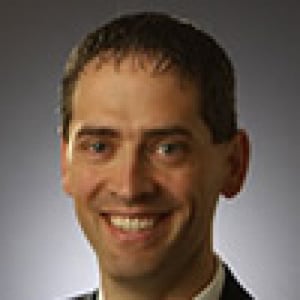
Jeremy Kidd graduated in 2007 with honors from George Mason University School of Law, where he was Executive Editor for the Journal of Law, Economics & Policy. He holds a BA in economics and political science and a Ph.D. in economics from Utah State University.
After law school, he practiced as a real estate associate with Ballard Spahr Andrews & Ingersoll in Washington, D.C. and later as a litigation associate with Strong & Hanni in Salt Lake City, Utah. He clerked for the Honorable Ted Stewart on the U.S. District Court for the District of Utah and the Honorable Alice Batchelder, Chief Judge of the U.S. Court of Appeals for the Sixth Circuit.
Professor Kidd's primary teaching interests are in the areas of business associations, torts, contracts, and law and economics. He was a Visiting Assistant Professor at George Mason University School of Law and has taught courses in business law and economics at Utah State University and Weber State University.

Professor, Cleveland State University College of Law
Professor Christa Laser comes to Cleveland Marshall after nearly a decade of practice experience as an intellectual property litigator at the law firms WilmerHale and Kirkland & Ellis LLP. She has deep expertise in patents, trademarks, copyrights, false advertising, pharmaceutical litigation and regulation, and technology law. She has represented leading life sciences and technology companies in all stages of trial and appellate matters and consulted on legislative changes to intellectual property laws.
Professor Laser's research focuses on intellectual property and innovation. Her patent law scholarship has been cited by numerous scholars, by judges of the U.S. Court of Appeals for the Federal Circuit, and in briefs to the U.S. Supreme Court. Her research envisions an intellectual property system that supports innovation, investment, and competition across all technology areas.
Professor Laser was the World Champion of the Lachs Space Law Moot Court Competition. Prior to law school, she worked as a scientific researcher, where her work studying protein dynamics of photosynthesis using genetically modified bacteria and laser spectroscopy was published in the prestigious journal Science.
Senior Associate, Intellectual Property Litigation, WilmerHale; Associate, Kirkland & Ellis LLP; judicial intern for Chief Judge Randall R. Rader, U.S. Court of Appeals for the Federal Circuit, and Judge Roger W. Titus, U.S. District Court for the District of Maryland; Scientific Researcher, The BioDesign Institute at Arizona State University, Department of BioOptical Nanotechnology.
J.D., The George Washington University Law School (World Champion, International & North American Lachs Space Law Moot Court Competition; Research Assistant, Professor Lawrence Cunningham; Notes Editor, American Intellectual Property Law Association Quarterly Journal); B.S., Arizona State University, Barrett Honors College (Beckman Scholar; Biochemistry Award).
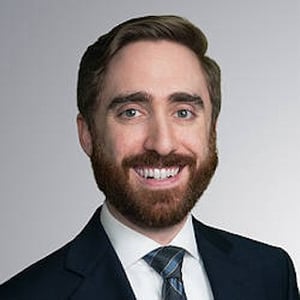
Harry A. Bigelow Teaching Fellow and Lecturer in Law, University of Chicago Law School
Brian Lipshutz is a Harry A. Bigelow Teaching Fellow and Lecturer in Law at the University of Chicago Law School. He studies administrative law and statutory interpretation. His current projects explore agencies' refusal to consider constitutional challenges to statutory provisions and judicial deference to contemporaneous and consistent administrative interpretations of statutes. His past work has examined the ability of plaintiffs to bypass agency adjudication by challenging presidential and non-final agency actions in court, as well as the intersection between originalism and administrative law. His scholarship has been published or is forthcoming in the University of Chicago Law Review, the Washington University Law Review, and the Yale Law Journal Forum.
Brian was previously a member of the Supreme Court and Appellate Practice at Paul, Weiss, Rifkind, Wharton & Garrison LLP, where he worked on a variety of statutory interpretation, administrative law, and constitutional law matters. He also served as a law clerk to the Honorable Clarence Thomas of the Supreme Court of the United States, the Honorable Gregory G. Katsas of the U.S. Court of Appeals for the D.C. Circuit, and the Honorable William H. Pryor Jr. of the U.S. Court of Appeals for the Eleventh Circuit.
Brian received his JD from Yale Law School, where he was a comments editor on the Yale Law Journal. He received his AB in Politics with highest honors from Princeton University.
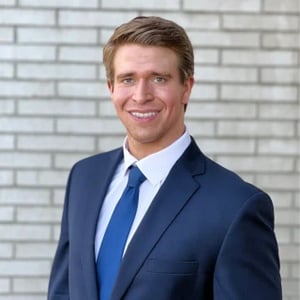
Olin-Searle-Smith Fellow in Law, Harvard Law School
Brad Niederschulte is the Olin-Searle-Smith Fellow at Harvard Law School. He is a scholar of antitrust, securities, and public law, and a litigator of diverse practice experience. His current research explores ways of enhancing antitrust doctrine through the use of common-law methods for interpreting legal texts.
Before coming to Harvard, Brad was an attorney at Cravath, Swaine & Moore, where he successfully litigated antitrust, securities, and other cases, and advised the U.S. District Court for the Southern District of New York on constitutional reform of the New York City Police Department.
Brad received his JD from Stanford Law School, where he was an articles editor of the Stanford Law Review. He received his AB from Washington University in St. Louis with highest honors.
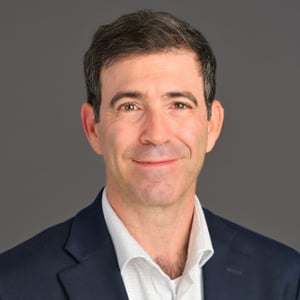
DeMuth Chair of Business Law, University of Colorado Law School
Andrew A. Schwartz joined the Colorado Law faculty in 2008 and was promoted to full professor in 2017. He teaches and publishes on corporate, securities and contract law, and has become an internationally recognized expert on investment crowdfunding. In 2017, Professor Schwartz served as a Fulbright Research Scholar and visiting professor at the University of Auckland Law School in New Zealand.
Professor Schwartz earned an Sc.B. in Civil Engineering from Brown University and a J.D. from Columbia University, where he served on the Columbia Law Review and was named a James Kent Scholar (top honors) all three years. Before entering academia, he clerked for Judge William A. Fletcher of the U.S. Court of Appeals for the Ninth Circuit and Judge Naomi Reice Buchwald of the U.S. District Court for the Southern District of New York. Following his clerkships, Professor Schwartz practiced corporate law in New York at Wachtell, Lipton, Rosen & Katz.
Professor Schwartz is the author of one book, Investment Crowdfunding, forthcoming from the Oxford University Press, as well as more than forty scholarly publications. His major articles have appeared in leading flagship law reviews including the UCLA Law Review, Minnesota Law Review, and Notre Dame Law Review, top specialty journals such as the Yale Journal on Regulation and Harvard Business Law Review, and peer-reviewed journals like the New Zealand Law Review.
Professor Schwartz has won numerous national awards for his scholarship, including the AALS Scholarly Paper Competition and the Federalist Society Young Legal Scholars Paper Competition. At Colorado Law, Professor Schwartz has received the Provost's Award for Faculty Achievement, the Gilbert Goldstein Faculty Fellowship, and the Outstanding New Faculty Award. His research is frequently cited and relied upon by courts and commentators across the country and around the world, including numerous citations by the Delaware Court of Chancery, the nation's leading venue for corporate law.
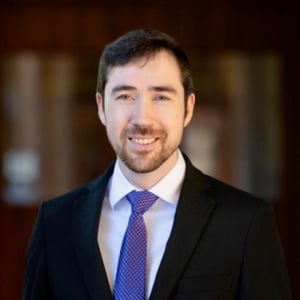
Visiting Assistant Professor, Notre Dame Law School
Daniel Slate teaches data privacy law at Notre Dame Law School and writes on law and technology, emergency powers, and constitutional history. He holds a J.D., Ph.D. (Political Science), and B.A. (Philosophy, with honors and distinction) from Stanford University. He previously worked at Palantir with the product management, business development, and privacy and civil liberties teams and is co-author of The Architecture of Privacy. He is also a Faculty Affiliate of the AI Trust and Reliability Lab at Notre Dame's Lucy Family Institute for Data & Society.
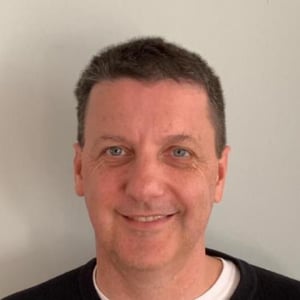
William Henry Glasson Distinguished Professor of Economics, Duke University
Peter Arcidiacono is the William Henry Glasson Professor of Economics at Duke University. He received his PhD from the University of Wisconsin-Madison in 1999 and has taught at Duke University ever since. He is a fellow of the Econometric Society, the International Association of Applied Econometricians, and a senior fellow at the Manhattan Institute. He is best known for his work in three areas: college major choice, affirmative action in higher education, and structural estimation of dynamic discrete choice models. He served as an expert witness for the plaintiffs in the Supreme Court cases SFFA v. Harvard and SFFA v. UNC, examining the role race played in the admissions process at both institutions.
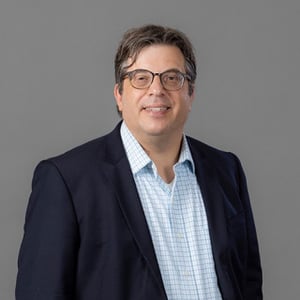
University Professor of Law and Executive Director, Liberty & Law Center, Antonin Scalia Law School, George Mason University
David Bernstein holds a University Professorship chair at the Antonin Scalia Law School, where he has been teaching since 1995. He has also been a visiting professor at the University of Michigan, Georgetown University, William & Mary, Brooklyn Law School, the University of Turin, and Hebrew University. Professor Bernstein teaches Constitutional Law, Evidence, and Products Liability.
A prolific author, Professor Bernstein often challenges the conventional wisdom with prodigious research and sharp, original analysis. He is the author of five books, and coauthor of two more. Professor Bernstein’s book Rehabilitating Lochner was praised across the political spectrum as “intellectual history in its highest form,” a “fresh perspective and a cogent analysis,” “delightful and informative,” “sharp and iconoclastic,” and “a terrific work of historical revisionism.” Columnist George Will praised Bernstein’s most recent book, Classified, The Untold Story of Racial Classification in America, as “perhaps the most consequential American book of 2022.”
Professor Bernstein has also written dozens of articles and essays published in major law reviews, including the California Law Review, Columbia Law Review, Michigan Law Review, and Yale Law Journal. An article he coauthored, Defending Daubert: It’s Time to Amend Federal Rule of Evidence 702, directly inspired a pending amendment to Rule 702.
Professor Bernstein blogs at the Instapundit.com, the Times of Israel, and the Volokh Conspiracy. He is a graduate of the Yale Law School, where he was senior editor of the Yale Law Journal and a John M. Olin Fellow in Law, Economics, and Public Policy.
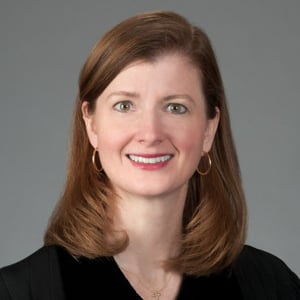
Judge, United States Court of Appeals, Eleventh Circuit
On March 20, 2018, Judge Elizabeth L. Branch (Lisa) was sworn in as a United States Circuit Judge for the Eleventh Circuit.
Judge Branch attended and graduated from Davidson College in North Carolina (B.A., cum laude, 1990), and Emory University School of Law (J.D., with distinction, 1994).
After graduating from law school, Judge Branch served as a federal law clerk to The Honorable J. Owen Forrester of the U.S. District Court for the Northern District of Georgia from 1994 to 1996. Following her clerkship, Judge Branch joined the litigation department of Smith, Gambrell & Russell, LLP in Atlanta as an associate and then a partner.
From 2004 to 2008, Judge Branch was a senior official in the Administration of President George W. Bush in Washington, D.C. She served first as the Associate General Counsel for Rules and Legislation at the U.S. Department of Homeland Security and then as the Counselor to the Administrator of the Office of Information and Regulatory Affairs at the U. S. Office of Management and Budget.
She returned to Smith Gambrell in 2008 as a litigation partner. Judge Branch then was appointed to the Court of Appeals of Georgia by Governor Nathan Deal, taking office on September 4, 2012, where she served until March 19, 2018.
Judge Branch is a member of the Board of Advisors of the Atlanta Lawyers Chapter for the Federalist Society for Law and Public Policy Studies.
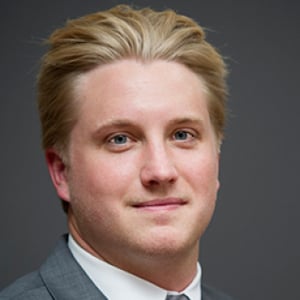
Professor of Law, Northwestern University
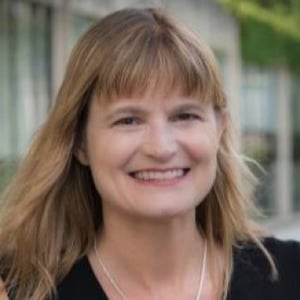
Julius Kreeger Professor of Law & Criminology, University of Chicago Law School
Sonja Starr joined the University of Chicago law faculty after eleven years teaching at the University of Michigan, where she was the Henry M. Butzel Professor of Law. She previously taught at the University of Maryland and Harvard Law School after graduating from Yale Law. She also clerked for Judges Merrick Garland of the DC Circuit and Mohamed Shahabuddeen of the International Criminal Tribunals for Rwanda and the Former Yugoslavia.
Professor Starr's research focuses on the criminal justice system and on discrimination and disparity (in the criminal process and in other contexts, including employment, education, and health care). Her research blends quantitative empirical work with more traditional legal scholarship. Topics include the use of predictive algorithms in sentencing and bail, legal and empirical analyses of statistical discrimination, racialized medical algorithms, educational diversity and race-conscious policymaking, racial and other disparities in prosecution and sentencing, policies designed to expand employment opportunities for people with criminal records, and how neighborhoods affect employment discrimination patterns. Professor Starr’s work has appeared in, for example, the Quarterly Journal of Economics, the Journal of Political Economy, the Yale Law Journal, and the Stanford and Harvard Law Reviews. She has been the Law and Economics Section Chair of the American Association of Law Schools, a past co-president of the Society for Empirical Legal Studies, and a board member of the American Law and Economics Association. She teaches Criminal Law, the Constitutional Law Workshop, Race and Criminal Justice Policy, and Collateral Consequences of Criminal Convictions.
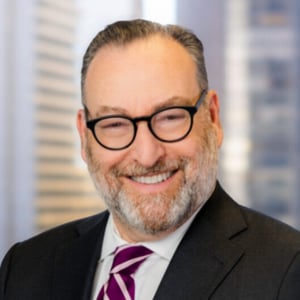
Founder, Chairman, and CEO, Louis D. Brandeis Center for Human Rights Under Law
Hon. Kenneth L. Marcus is an internationally recognized expert in civil and human rights, as well as a leader in the fight against anti-Semitism on and off university campuses. He is the Founder, Chairman, and CEO of The Louis D. Brandeis Center for Human Rights Under Law, the leading civil rights legal organization fighting against anti-Semitism. The New York Times has called him “The Man Who Helped Redefine Campus Anti-Semitism.” He been described, in that paper, as “the single most effective and respected force” to combat anti-Semitism.
During his public service career, Marcus served as Assistant U.S. Secretary of Education for Civil Rights; Staff Director at the U.S. Commission on Civil Rights; and General Deputy Assistant U.S. Secretary of Housing and Urban Development for Fair Housing and Equal Opportunity.
In academia, he serves as Professorial Lecturer in Law at George Washington University. He formerly held the Lillie and Nathan Ackerman Chair in Equality and Justice in America at the City University of New York’s Bernard M. Baruch College, served as Visiting Research Professor of Political Science at Yeshiva University, and was a Board of Visitors member George Mason University and Distinguished Senior Fellow at that university’s law school. He is a member of the editorial board of the Journal of Contemporary Antisemitism and previously served as Associate Editor of the Journal for the Study of Anti-Semitism.
Marcus is also author of The Definition of Anti-Semitism (Oxford University Press) and Jewish Identity and Civil Rights in America (Cambridge University Press). He has published widely in academic journals as well as in more popular venues such as The Wall Street Journal, Washington Post, Newsweek, USA Today, and Politico. He is a graduate of Williams College and the University of California at Berkeley School of Law.
Earlier in his career, he was a litigation partner in two major law firms, where he conducted complex commercial and constitutional litigation. He also serves as Chairman emeritus of the Executive Committee of the Federalist Society for Law & Public Policy Civil Rights Practice Group.
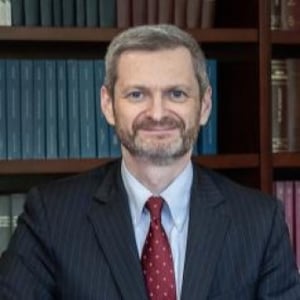
Dean & Clifton R. Musser Professor of Law and Economics, University of Chicago Law School
Thomas J. Miles is the Dean and Clifton R. Musser Professor of Law and Economics at the University of Chicago Law School. As its 14th Dean, Miles has deepened the Law School’s distinctive commitment to path-breaking scholarship and transformative education since 2015. Under his leadership, the Law School recruited more than a dozen academic and clinical faculty members and inaugurated the category of professor from practice. The scholarly ideas of the faculty have been supported and shared more widely through the launch of three new centers: the Center on Law and Finance, the Constitutional Law Institute, and the Malyi Center for the Study of Institutional and Legal Integrity. The clinical program expanded with the addition of three new clinics: the Innovation Clinic, the Jenner & Block Supreme Court and Appellate Clinic, and the Immigrants’ Rights Clinic. During Miles’s deanship, the Law School recruited highly talented and diverse cohorts of students. He steered the Law School through the COVID-19 pandemic. The Law School undertook the first significant revision to the 1L curriculum since 1977 and introduced the accelerated JD/MBA program. The Law School’s vibrant student life was enhanced with new programs in the areas of freedom of expression and diversity and inclusion, including the introduction of a pre-orientation program. The placement of graduates into clerkships nearly doubled. These activities have been supported by generous philanthropy, including a completion of the Inquiry & Impact Campaign with a record amount for the Law School and the highest participation rate within the University. Six new named professorships, including the first named clinical professorship, have been deployed, and financial aid for students reached a new high. As a scholar, Miles makes creative use of the methods of law and economics to investigate legal questions not conventionally thought to fall within that field. For example, he has written on judicial behavior and immigration enforcement. Miles has taught a wide variety of courses at the Law School, including securities regulation, torts, first-year criminal law, economic analysis of law, and federal criminal law. In 2009, he received the Graduating Students Award for Outstanding Teaching. Miles received a PhD in economics from the University of Chicago, a JD from Harvard Law School, and a BA from Tufts University. He clerked for the Hon. Jay S. Bybee of the U.S. Court of Appeals for the Ninth Circuit, and from 2005 to 2013, he was a Co-Editor of the Journal of Legal Studies.
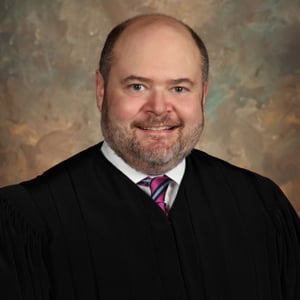
Judge, United States Court of Appeals, Eighth Circuit
David Stras became a judge on the United States Court of Appeals for the Eighth Circuit on January 31, 2018. Before serving on the Eighth Circuit, Judge Stras was an Associate Justice of the Minnesota Supreme Court, a position he occupied from July 1, 2010 until his appointment to the Eighth Circuit.
Prior to becoming a judge, Stras was a member of the faculty of the University of Minnesota Law School from 2004 through 2010. He taught and wrote in the areas of federal courts and jurisdiction, constitutional law, criminal law, and law and politics.
Judge Stras received his Bachelor of Arts degree, with highest distinction, in 1995 and his Master of Business Administration in 1999, both from the University of Kansas. He also received his law degree from the University of Kansas School of Law in 1999, where he served as Editor-in-Chief of the Criminal Procedure Edition of the Kansas Law Review.
Following law school, Stras clerked for The Honorable Melvin Brunetti of the United States Court of Appeals for the Ninth Circuit and then for The Honorable J. Michael Luttig of the United States Court of Appeals for the Fourth Circuit.
From 2001 to 2002, he practiced white-collar criminal and appellate litigation with the Washington, D.C., office of Sidley Austin Brown & Wood. Following his year in practice, he clerked for The Honorable Clarence Thomas of the Supreme Court of the United States.
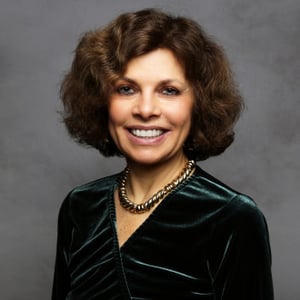
John Marshall Harlan II Professor of Law Emerita, New York Law School; Former President, American Civil Liberties Union
Nadine Strossen, New York Law School Professor Emerita and Senior Fellow at FIRE (the Foundation for Individual Rights and Expression), was national President of the American Civil Liberties Union from 1991 to 2008. An internationally acclaimed free speech scholar and advocate, who regularly addresses diverse audiences and provides media commentary around the world, Strossen is also the Host and Project Consultant for Free To Speak, a 3-hour documentary film series distributed on public television in 2023. Her books about free speech include: Free Speech: What Everyone Needs to Know® (Oxford University Press 2023); HATE: Why We Should Resist It with Free Speech, Not Censorship (Oxford University Press 2018); and Defending Pornography: Free Speech, Sex, and the Fight for Women’s Rights (Scribner 1995), which was republished with a new Preface in 2024 as part of the NYU Classics Series. Her many honors and awards include the National Coalition Against Censorship’s Judy Blume Lifetime Achievement Award for Free Speech. She serves on the Advisory Boards of several organizations that do free speech work, including: ACLU, Academic Freedom Alliance, Foundation Against Intolerance and Racism (FAIR), Heterodox Academy, National Coalition Against Censorship, and the University of Austin.

Thomas M. Siebel Senior Fellow, The Hoover Institution, Stanford University; Gary T. Schwartz Distinguished Professor of Law Emeritus, UCLA School of Law
Eugene Volokh is the Thomas M. Siebel Senior Fellow at the Hoover Institution (Stanford), as well as the Gary T. Schwartz Distinguished Professor of Law Emeritus and Distinguished Research Professor at UCLA School of Law. He recently retired from teaching at UCLA, after 30 years there, and is now focusing on research.
Volokh is the author of the textbooks The First Amendment and Related Statutes (8th ed. 2023), and Academic Legal Writing (5th ed. 2016), as well as over 100 academic law journal articles, mostly on First Amendment law. He is a member of The American Law Institute; the editor-in-chief of the Journal of Free Speech Law; and the creator and coauthor of The Volokh Conspiracy, a leading legal blog founded in 2002 (hosted at the Washington Post from 2014 to 2017 and now at Reason Magazine).
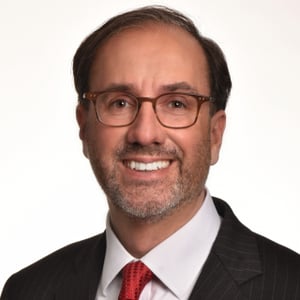
President and CEO, The Buckeye Institute
Robert Alt is the President and Chief Executive Officer of The Buckeye Institute where he has catalyzed exponential growth since he took the organization’s helm in 2012. He has since founded Buckeye’s renowned Economic Research Center and established its impactful Legal Center.
Alt is a distinguished scholar and attorney with particular expertise in legal policy, criminal justice, national security, and constitutional law. He previously worked for former U.S. Attorney General Edwin Meese III, regularly provides commentary on television and radio programs, and his writings have appeared in countless outlets.
In 2004, Alt spent five months in Iraq as an embedded war correspondent.
Alt has testified before Congress multiple times—including at the confirmation hearings for U.S. Supreme Court Justice Elena Kagan—the Federal Election Commission regarding matters of constitutional and administrative law, and numerous state legislatures.
Alt serves as an officer on the boards of The Philadelphia Society and the Federalist Society’s Columbus Lawyers Chapter. He taught national security law, criminal law, and legislation at Case Western Reserve University School of Law, as well as constitutional law and political parties and interest groups at Ashland University.
Alt earned his Doctor of Law degree from The University of Chicago Law School, where he was Symposium Editor and the winner of the Mulroy Prize for Excellence in Appellate Advocacy as well as research assistant to Professor Richard Epstein. Following law school, he clerked for Judge Alice Batchelder on the U.S. Court of Appeals for the Sixth Circuit. Alt graduated with his Bachelor of Arts in philosophy and political science magna cum laude from Azusa Pacific University where he also won the Outstanding Senior Award in Political Science.
Alt is an accomplished high-altitude alpinist and endurance athlete who has successfully climbed 6.75 of the famed Seven Summits of the World including Mount Everest. He is the creator of PROFOUND CLIMBING™ and a frequent speaker across the country and around the world on legal and public policy topics as well as effective leadership, management, decision-making, and teamwork in contexts ranging from extraordinary life/death situations to ordinary professional/business settings.
William Henry Glasson Distinguished Professor of Economics, Duke University
Peter Arcidiacono is the William Henry Glasson Professor of Economics at Duke University. He received his PhD from the University of Wisconsin-Madison in 1999 and has taught at Duke University ever since. He is a fellow of the Econometric Society, the International Association of Applied Econometricians, and a senior fellow at the Manhattan Institute. He is best known for his work in three areas: college major choice, affirmative action in higher education, and structural estimation of dynamic discrete choice models. He served as an expert witness for the plaintiffs in the Supreme Court cases SFFA v. Harvard and SFFA v. UNC, examining the role race played in the admissions process at both institutions.
University Professor of Law and Executive Director, Liberty & Law Center, Antonin Scalia Law School, George Mason University
David Bernstein holds a University Professorship chair at the Antonin Scalia Law School, where he has been teaching since 1995. He has also been a visiting professor at the University of Michigan, Georgetown University, William & Mary, Brooklyn Law School, the University of Turin, and Hebrew University. Professor Bernstein teaches Constitutional Law, Evidence, and Products Liability.
A prolific author, Professor Bernstein often challenges the conventional wisdom with prodigious research and sharp, original analysis. He is the author of five books, and coauthor of two more. Professor Bernstein’s book Rehabilitating Lochner was praised across the political spectrum as “intellectual history in its highest form,” a “fresh perspective and a cogent analysis,” “delightful and informative,” “sharp and iconoclastic,” and “a terrific work of historical revisionism.” Columnist George Will praised Bernstein’s most recent book, Classified, The Untold Story of Racial Classification in America, as “perhaps the most consequential American book of 2022.”
Professor Bernstein has also written dozens of articles and essays published in major law reviews, including the California Law Review, Columbia Law Review, Michigan Law Review, and Yale Law Journal. An article he coauthored, Defending Daubert: It’s Time to Amend Federal Rule of Evidence 702, directly inspired a pending amendment to Rule 702.
Professor Bernstein blogs at the Instapundit.com, the Times of Israel, and the Volokh Conspiracy. He is a graduate of the Yale Law School, where he was senior editor of the Yale Law Journal and a John M. Olin Fellow in Law, Economics, and Public Policy.
Judge, United States Court of Appeals, Eleventh Circuit
On March 20, 2018, Judge Elizabeth L. Branch (Lisa) was sworn in as a United States Circuit Judge for the Eleventh Circuit.
Judge Branch attended and graduated from Davidson College in North Carolina (B.A., cum laude, 1990), and Emory University School of Law (J.D., with distinction, 1994).
After graduating from law school, Judge Branch served as a federal law clerk to The Honorable J. Owen Forrester of the U.S. District Court for the Northern District of Georgia from 1994 to 1996. Following her clerkship, Judge Branch joined the litigation department of Smith, Gambrell & Russell, LLP in Atlanta as an associate and then a partner.
From 2004 to 2008, Judge Branch was a senior official in the Administration of President George W. Bush in Washington, D.C. She served first as the Associate General Counsel for Rules and Legislation at the U.S. Department of Homeland Security and then as the Counselor to the Administrator of the Office of Information and Regulatory Affairs at the U. S. Office of Management and Budget.
She returned to Smith Gambrell in 2008 as a litigation partner. Judge Branch then was appointed to the Court of Appeals of Georgia by Governor Nathan Deal, taking office on September 4, 2012, where she served until March 19, 2018.
Judge Branch is a member of the Board of Advisors of the Atlanta Lawyers Chapter for the Federalist Society for Law and Public Policy Studies.
Julius Kreeger Professor of Law & Criminology, University of Chicago Law School
Sonja Starr joined the University of Chicago law faculty after eleven years teaching at the University of Michigan, where she was the Henry M. Butzel Professor of Law. She previously taught at the University of Maryland and Harvard Law School after graduating from Yale Law. She also clerked for Judges Merrick Garland of the DC Circuit and Mohamed Shahabuddeen of the International Criminal Tribunals for Rwanda and the Former Yugoslavia.
Professor Starr's research focuses on the criminal justice system and on discrimination and disparity (in the criminal process and in other contexts, including employment, education, and health care). Her research blends quantitative empirical work with more traditional legal scholarship. Topics include the use of predictive algorithms in sentencing and bail, legal and empirical analyses of statistical discrimination, racialized medical algorithms, educational diversity and race-conscious policymaking, racial and other disparities in prosecution and sentencing, policies designed to expand employment opportunities for people with criminal records, and how neighborhoods affect employment discrimination patterns. Professor Starr’s work has appeared in, for example, the Quarterly Journal of Economics, the Journal of Political Economy, the Yale Law Journal, and the Stanford and Harvard Law Reviews. She has been the Law and Economics Section Chair of the American Association of Law Schools, a past co-president of the Society for Empirical Legal Studies, and a board member of the American Law and Economics Association. She teaches Criminal Law, the Constitutional Law Workshop, Race and Criminal Justice Policy, and Collateral Consequences of Criminal Convictions.
Professor of Law, Northwestern University
William Henry Glasson Distinguished Professor of Economics, Duke University
Peter Arcidiacono is the William Henry Glasson Professor of Economics at Duke University. He received his PhD from the University of Wisconsin-Madison in 1999 and has taught at Duke University ever since. He is a fellow of the Econometric Society, the International Association of Applied Econometricians, and a senior fellow at the Manhattan Institute. He is best known for his work in three areas: college major choice, affirmative action in higher education, and structural estimation of dynamic discrete choice models. He served as an expert witness for the plaintiffs in the Supreme Court cases SFFA v. Harvard and SFFA v. UNC, examining the role race played in the admissions process at both institutions.
University Professor of Law and Executive Director, Liberty & Law Center, Antonin Scalia Law School, George Mason University
David Bernstein holds a University Professorship chair at the Antonin Scalia Law School, where he has been teaching since 1995. He has also been a visiting professor at the University of Michigan, Georgetown University, William & Mary, Brooklyn Law School, the University of Turin, and Hebrew University. Professor Bernstein teaches Constitutional Law, Evidence, and Products Liability.
A prolific author, Professor Bernstein often challenges the conventional wisdom with prodigious research and sharp, original analysis. He is the author of five books, and coauthor of two more. Professor Bernstein’s book Rehabilitating Lochner was praised across the political spectrum as “intellectual history in its highest form,” a “fresh perspective and a cogent analysis,” “delightful and informative,” “sharp and iconoclastic,” and “a terrific work of historical revisionism.” Columnist George Will praised Bernstein’s most recent book, Classified, The Untold Story of Racial Classification in America, as “perhaps the most consequential American book of 2022.”
Professor Bernstein has also written dozens of articles and essays published in major law reviews, including the California Law Review, Columbia Law Review, Michigan Law Review, and Yale Law Journal. An article he coauthored, Defending Daubert: It’s Time to Amend Federal Rule of Evidence 702, directly inspired a pending amendment to Rule 702.
Professor Bernstein blogs at the Instapundit.com, the Times of Israel, and the Volokh Conspiracy. He is a graduate of the Yale Law School, where he was senior editor of the Yale Law Journal and a John M. Olin Fellow in Law, Economics, and Public Policy.
Judge, United States Court of Appeals, Eleventh Circuit
On March 20, 2018, Judge Elizabeth L. Branch (Lisa) was sworn in as a United States Circuit Judge for the Eleventh Circuit.
Judge Branch attended and graduated from Davidson College in North Carolina (B.A., cum laude, 1990), and Emory University School of Law (J.D., with distinction, 1994).
After graduating from law school, Judge Branch served as a federal law clerk to The Honorable J. Owen Forrester of the U.S. District Court for the Northern District of Georgia from 1994 to 1996. Following her clerkship, Judge Branch joined the litigation department of Smith, Gambrell & Russell, LLP in Atlanta as an associate and then a partner.
From 2004 to 2008, Judge Branch was a senior official in the Administration of President George W. Bush in Washington, D.C. She served first as the Associate General Counsel for Rules and Legislation at the U.S. Department of Homeland Security and then as the Counselor to the Administrator of the Office of Information and Regulatory Affairs at the U. S. Office of Management and Budget.
She returned to Smith Gambrell in 2008 as a litigation partner. Judge Branch then was appointed to the Court of Appeals of Georgia by Governor Nathan Deal, taking office on September 4, 2012, where she served until March 19, 2018.
Judge Branch is a member of the Board of Advisors of the Atlanta Lawyers Chapter for the Federalist Society for Law and Public Policy Studies.
Professor of Law, Northwestern University
Julius Kreeger Professor of Law & Criminology, University of Chicago Law School
Sonja Starr joined the University of Chicago law faculty after eleven years teaching at the University of Michigan, where she was the Henry M. Butzel Professor of Law. She previously taught at the University of Maryland and Harvard Law School after graduating from Yale Law. She also clerked for Judges Merrick Garland of the DC Circuit and Mohamed Shahabuddeen of the International Criminal Tribunals for Rwanda and the Former Yugoslavia.
Professor Starr's research focuses on the criminal justice system and on discrimination and disparity (in the criminal process and in other contexts, including employment, education, and health care). Her research blends quantitative empirical work with more traditional legal scholarship. Topics include the use of predictive algorithms in sentencing and bail, legal and empirical analyses of statistical discrimination, racialized medical algorithms, educational diversity and race-conscious policymaking, racial and other disparities in prosecution and sentencing, policies designed to expand employment opportunities for people with criminal records, and how neighborhoods affect employment discrimination patterns. Professor Starr’s work has appeared in, for example, the Quarterly Journal of Economics, the Journal of Political Economy, the Yale Law Journal, and the Stanford and Harvard Law Reviews. She has been the Law and Economics Section Chair of the American Association of Law Schools, a past co-president of the Society for Empirical Legal Studies, and a board member of the American Law and Economics Association. She teaches Criminal Law, the Constitutional Law Workshop, Race and Criminal Justice Policy, and Collateral Consequences of Criminal Convictions.
Founder, Chairman, and CEO, Louis D. Brandeis Center for Human Rights Under Law
Hon. Kenneth L. Marcus is an internationally recognized expert in civil and human rights, as well as a leader in the fight against anti-Semitism on and off university campuses. He is the Founder, Chairman, and CEO of The Louis D. Brandeis Center for Human Rights Under Law, the leading civil rights legal organization fighting against anti-Semitism. The New York Times has called him “The Man Who Helped Redefine Campus Anti-Semitism.” He been described, in that paper, as “the single most effective and respected force” to combat anti-Semitism.
During his public service career, Marcus served as Assistant U.S. Secretary of Education for Civil Rights; Staff Director at the U.S. Commission on Civil Rights; and General Deputy Assistant U.S. Secretary of Housing and Urban Development for Fair Housing and Equal Opportunity.
In academia, he serves as Professorial Lecturer in Law at George Washington University. He formerly held the Lillie and Nathan Ackerman Chair in Equality and Justice in America at the City University of New York’s Bernard M. Baruch College, served as Visiting Research Professor of Political Science at Yeshiva University, and was a Board of Visitors member George Mason University and Distinguished Senior Fellow at that university’s law school. He is a member of the editorial board of the Journal of Contemporary Antisemitism and previously served as Associate Editor of the Journal for the Study of Anti-Semitism.
Marcus is also author of The Definition of Anti-Semitism (Oxford University Press) and Jewish Identity and Civil Rights in America (Cambridge University Press). He has published widely in academic journals as well as in more popular venues such as The Wall Street Journal, Washington Post, Newsweek, USA Today, and Politico. He is a graduate of Williams College and the University of California at Berkeley School of Law.
Earlier in his career, he was a litigation partner in two major law firms, where he conducted complex commercial and constitutional litigation. He also serves as Chairman emeritus of the Executive Committee of the Federalist Society for Law & Public Policy Civil Rights Practice Group.
Dean & Clifton R. Musser Professor of Law and Economics, University of Chicago Law School
Thomas J. Miles is the Dean and Clifton R. Musser Professor of Law and Economics at the University of Chicago Law School. As its 14th Dean, Miles has deepened the Law School’s distinctive commitment to path-breaking scholarship and transformative education since 2015. Under his leadership, the Law School recruited more than a dozen academic and clinical faculty members and inaugurated the category of professor from practice. The scholarly ideas of the faculty have been supported and shared more widely through the launch of three new centers: the Center on Law and Finance, the Constitutional Law Institute, and the Malyi Center for the Study of Institutional and Legal Integrity. The clinical program expanded with the addition of three new clinics: the Innovation Clinic, the Jenner & Block Supreme Court and Appellate Clinic, and the Immigrants’ Rights Clinic. During Miles’s deanship, the Law School recruited highly talented and diverse cohorts of students. He steered the Law School through the COVID-19 pandemic. The Law School undertook the first significant revision to the 1L curriculum since 1977 and introduced the accelerated JD/MBA program. The Law School’s vibrant student life was enhanced with new programs in the areas of freedom of expression and diversity and inclusion, including the introduction of a pre-orientation program. The placement of graduates into clerkships nearly doubled. These activities have been supported by generous philanthropy, including a completion of the Inquiry & Impact Campaign with a record amount for the Law School and the highest participation rate within the University. Six new named professorships, including the first named clinical professorship, have been deployed, and financial aid for students reached a new high. As a scholar, Miles makes creative use of the methods of law and economics to investigate legal questions not conventionally thought to fall within that field. For example, he has written on judicial behavior and immigration enforcement. Miles has taught a wide variety of courses at the Law School, including securities regulation, torts, first-year criminal law, economic analysis of law, and federal criminal law. In 2009, he received the Graduating Students Award for Outstanding Teaching. Miles received a PhD in economics from the University of Chicago, a JD from Harvard Law School, and a BA from Tufts University. He clerked for the Hon. Jay S. Bybee of the U.S. Court of Appeals for the Ninth Circuit, and from 2005 to 2013, he was a Co-Editor of the Journal of Legal Studies.
Judge, United States Court of Appeals, Eighth Circuit
David Stras became a judge on the United States Court of Appeals for the Eighth Circuit on January 31, 2018. Before serving on the Eighth Circuit, Judge Stras was an Associate Justice of the Minnesota Supreme Court, a position he occupied from July 1, 2010 until his appointment to the Eighth Circuit.
Prior to becoming a judge, Stras was a member of the faculty of the University of Minnesota Law School from 2004 through 2010. He taught and wrote in the areas of federal courts and jurisdiction, constitutional law, criminal law, and law and politics.
Judge Stras received his Bachelor of Arts degree, with highest distinction, in 1995 and his Master of Business Administration in 1999, both from the University of Kansas. He also received his law degree from the University of Kansas School of Law in 1999, where he served as Editor-in-Chief of the Criminal Procedure Edition of the Kansas Law Review.
Following law school, Stras clerked for The Honorable Melvin Brunetti of the United States Court of Appeals for the Ninth Circuit and then for The Honorable J. Michael Luttig of the United States Court of Appeals for the Fourth Circuit.
From 2001 to 2002, he practiced white-collar criminal and appellate litigation with the Washington, D.C., office of Sidley Austin Brown & Wood. Following his year in practice, he clerked for The Honorable Clarence Thomas of the Supreme Court of the United States.
John Marshall Harlan II Professor of Law Emerita, New York Law School; Former President, American Civil Liberties Union
Nadine Strossen, New York Law School Professor Emerita and Senior Fellow at FIRE (the Foundation for Individual Rights and Expression), was national President of the American Civil Liberties Union from 1991 to 2008. An internationally acclaimed free speech scholar and advocate, who regularly addresses diverse audiences and provides media commentary around the world, Strossen is also the Host and Project Consultant for Free To Speak, a 3-hour documentary film series distributed on public television in 2023. Her books about free speech include: Free Speech: What Everyone Needs to Know® (Oxford University Press 2023); HATE: Why We Should Resist It with Free Speech, Not Censorship (Oxford University Press 2018); and Defending Pornography: Free Speech, Sex, and the Fight for Women’s Rights (Scribner 1995), which was republished with a new Preface in 2024 as part of the NYU Classics Series. Her many honors and awards include the National Coalition Against Censorship’s Judy Blume Lifetime Achievement Award for Free Speech. She serves on the Advisory Boards of several organizations that do free speech work, including: ACLU, Academic Freedom Alliance, Foundation Against Intolerance and Racism (FAIR), Heterodox Academy, National Coalition Against Censorship, and the University of Austin.
Thomas M. Siebel Senior Fellow, The Hoover Institution, Stanford University; Gary T. Schwartz Distinguished Professor of Law Emeritus, UCLA School of Law
Eugene Volokh is the Thomas M. Siebel Senior Fellow at the Hoover Institution (Stanford), as well as the Gary T. Schwartz Distinguished Professor of Law Emeritus and Distinguished Research Professor at UCLA School of Law. He recently retired from teaching at UCLA, after 30 years there, and is now focusing on research.
Volokh is the author of the textbooks The First Amendment and Related Statutes (8th ed. 2023), and Academic Legal Writing (5th ed. 2016), as well as over 100 academic law journal articles, mostly on First Amendment law. He is a member of The American Law Institute; the editor-in-chief of the Journal of Free Speech Law; and the creator and coauthor of The Volokh Conspiracy, a leading legal blog founded in 2002 (hosted at the Washington Post from 2014 to 2017 and now at Reason Magazine).
Founder, Chairman, and CEO, Louis D. Brandeis Center for Human Rights Under Law
Hon. Kenneth L. Marcus is an internationally recognized expert in civil and human rights, as well as a leader in the fight against anti-Semitism on and off university campuses. He is the Founder, Chairman, and CEO of The Louis D. Brandeis Center for Human Rights Under Law, the leading civil rights legal organization fighting against anti-Semitism. The New York Times has called him “The Man Who Helped Redefine Campus Anti-Semitism.” He been described, in that paper, as “the single most effective and respected force” to combat anti-Semitism.
During his public service career, Marcus served as Assistant U.S. Secretary of Education for Civil Rights; Staff Director at the U.S. Commission on Civil Rights; and General Deputy Assistant U.S. Secretary of Housing and Urban Development for Fair Housing and Equal Opportunity.
In academia, he serves as Professorial Lecturer in Law at George Washington University. He formerly held the Lillie and Nathan Ackerman Chair in Equality and Justice in America at the City University of New York’s Bernard M. Baruch College, served as Visiting Research Professor of Political Science at Yeshiva University, and was a Board of Visitors member George Mason University and Distinguished Senior Fellow at that university’s law school. He is a member of the editorial board of the Journal of Contemporary Antisemitism and previously served as Associate Editor of the Journal for the Study of Anti-Semitism.
Marcus is also author of The Definition of Anti-Semitism (Oxford University Press) and Jewish Identity and Civil Rights in America (Cambridge University Press). He has published widely in academic journals as well as in more popular venues such as The Wall Street Journal, Washington Post, Newsweek, USA Today, and Politico. He is a graduate of Williams College and the University of California at Berkeley School of Law.
Earlier in his career, he was a litigation partner in two major law firms, where he conducted complex commercial and constitutional litigation. He also serves as Chairman emeritus of the Executive Committee of the Federalist Society for Law & Public Policy Civil Rights Practice Group.
Dean & Clifton R. Musser Professor of Law and Economics, University of Chicago Law School
Thomas J. Miles is the Dean and Clifton R. Musser Professor of Law and Economics at the University of Chicago Law School. As its 14th Dean, Miles has deepened the Law School’s distinctive commitment to path-breaking scholarship and transformative education since 2015. Under his leadership, the Law School recruited more than a dozen academic and clinical faculty members and inaugurated the category of professor from practice. The scholarly ideas of the faculty have been supported and shared more widely through the launch of three new centers: the Center on Law and Finance, the Constitutional Law Institute, and the Malyi Center for the Study of Institutional and Legal Integrity. The clinical program expanded with the addition of three new clinics: the Innovation Clinic, the Jenner & Block Supreme Court and Appellate Clinic, and the Immigrants’ Rights Clinic. During Miles’s deanship, the Law School recruited highly talented and diverse cohorts of students. He steered the Law School through the COVID-19 pandemic. The Law School undertook the first significant revision to the 1L curriculum since 1977 and introduced the accelerated JD/MBA program. The Law School’s vibrant student life was enhanced with new programs in the areas of freedom of expression and diversity and inclusion, including the introduction of a pre-orientation program. The placement of graduates into clerkships nearly doubled. These activities have been supported by generous philanthropy, including a completion of the Inquiry & Impact Campaign with a record amount for the Law School and the highest participation rate within the University. Six new named professorships, including the first named clinical professorship, have been deployed, and financial aid for students reached a new high. As a scholar, Miles makes creative use of the methods of law and economics to investigate legal questions not conventionally thought to fall within that field. For example, he has written on judicial behavior and immigration enforcement. Miles has taught a wide variety of courses at the Law School, including securities regulation, torts, first-year criminal law, economic analysis of law, and federal criminal law. In 2009, he received the Graduating Students Award for Outstanding Teaching. Miles received a PhD in economics from the University of Chicago, a JD from Harvard Law School, and a BA from Tufts University. He clerked for the Hon. Jay S. Bybee of the U.S. Court of Appeals for the Ninth Circuit, and from 2005 to 2013, he was a Co-Editor of the Journal of Legal Studies.
Judge, United States Court of Appeals, Eighth Circuit
David Stras became a judge on the United States Court of Appeals for the Eighth Circuit on January 31, 2018. Before serving on the Eighth Circuit, Judge Stras was an Associate Justice of the Minnesota Supreme Court, a position he occupied from July 1, 2010 until his appointment to the Eighth Circuit.
Prior to becoming a judge, Stras was a member of the faculty of the University of Minnesota Law School from 2004 through 2010. He taught and wrote in the areas of federal courts and jurisdiction, constitutional law, criminal law, and law and politics.
Judge Stras received his Bachelor of Arts degree, with highest distinction, in 1995 and his Master of Business Administration in 1999, both from the University of Kansas. He also received his law degree from the University of Kansas School of Law in 1999, where he served as Editor-in-Chief of the Criminal Procedure Edition of the Kansas Law Review.
Following law school, Stras clerked for The Honorable Melvin Brunetti of the United States Court of Appeals for the Ninth Circuit and then for The Honorable J. Michael Luttig of the United States Court of Appeals for the Fourth Circuit.
From 2001 to 2002, he practiced white-collar criminal and appellate litigation with the Washington, D.C., office of Sidley Austin Brown & Wood. Following his year in practice, he clerked for The Honorable Clarence Thomas of the Supreme Court of the United States.
John Marshall Harlan II Professor of Law Emerita, New York Law School; Former President, American Civil Liberties Union
Nadine Strossen, New York Law School Professor Emerita and Senior Fellow at FIRE (the Foundation for Individual Rights and Expression), was national President of the American Civil Liberties Union from 1991 to 2008. An internationally acclaimed free speech scholar and advocate, who regularly addresses diverse audiences and provides media commentary around the world, Strossen is also the Host and Project Consultant for Free To Speak, a 3-hour documentary film series distributed on public television in 2023. Her books about free speech include: Free Speech: What Everyone Needs to Know® (Oxford University Press 2023); HATE: Why We Should Resist It with Free Speech, Not Censorship (Oxford University Press 2018); and Defending Pornography: Free Speech, Sex, and the Fight for Women’s Rights (Scribner 1995), which was republished with a new Preface in 2024 as part of the NYU Classics Series. Her many honors and awards include the National Coalition Against Censorship’s Judy Blume Lifetime Achievement Award for Free Speech. She serves on the Advisory Boards of several organizations that do free speech work, including: ACLU, Academic Freedom Alliance, Foundation Against Intolerance and Racism (FAIR), Heterodox Academy, National Coalition Against Censorship, and the University of Austin.
Thomas M. Siebel Senior Fellow, The Hoover Institution, Stanford University; Gary T. Schwartz Distinguished Professor of Law Emeritus, UCLA School of Law
Eugene Volokh is the Thomas M. Siebel Senior Fellow at the Hoover Institution (Stanford), as well as the Gary T. Schwartz Distinguished Professor of Law Emeritus and Distinguished Research Professor at UCLA School of Law. He recently retired from teaching at UCLA, after 30 years there, and is now focusing on research.
Volokh is the author of the textbooks The First Amendment and Related Statutes (8th ed. 2023), and Academic Legal Writing (5th ed. 2016), as well as over 100 academic law journal articles, mostly on First Amendment law. He is a member of The American Law Institute; the editor-in-chief of the Journal of Free Speech Law; and the creator and coauthor of The Volokh Conspiracy, a leading legal blog founded in 2002 (hosted at the Washington Post from 2014 to 2017 and now at Reason Magazine).
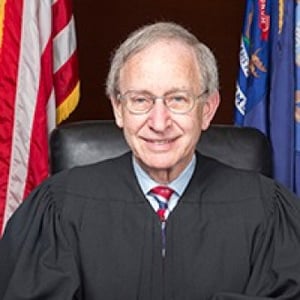
Justice, Michigan Supreme Court
Stephen Markman was appointed Justice of the Michigan Supreme Court on October 1, 1999. He served as the Chief Justice from 2017-2019. Before his appointment, he served as Judge on the Michigan Court of Appeals from 1995-1999. Prior to this, he practiced law with the firm of Miller, Canfield, Paddock & Stone in Detroit.
From 1989-1993, Justice Markman served as United States Attorney, or federal prosecutor, in Michigan, after having been nominated by President George H. W. Bush and confirmed by the United States Senate. From 1985-1989, he served as Assistant Attorney General of the United States, after having been nominated by President Ronald Reagan and confirmed by the United States Senate. In that position, he headed the Department of Justice’s Office of Legal Policy, which served as the principal policy development office within the Department, and which coordinated the federal judicial selection process. Prior to this, he served for seven years as Chief Counsel of the United States Senate Subcommittee on the Constitution, and as Deputy Chief Counsel of the United States Senate Judiciary Committee.
Justice Markman has authored articles for such publications as the University of Michigan Journal of Law Reform, the Detroit College of Law Review, the Stanford Law Review, the University of Chicago Law Review, the American Criminal Justice Law Review, the Barrister’s Law Journal, the Harvard Journal of Law & Public Policy, and the American University Law Review. He has also served as a contributing editor of National Review magazine, and has authored chapters in such books as “In the Name of Justice: The Aims of the Criminal Law,” “Still the Law of the Land,” and “Originalism: A Quarter Century of Debate.”
Justice Markman has taught constitutional law at Hillsdale College since 1993. He has served on the Board of Directors of the Western Michigan University Thomas M. Cooley Law School. He traveled to Ukraine on two occasions on behalf of the State Department, to provide assistance in the development of that nation’s post-Soviet constitution. He is a Fellow of the Michigan Bar Foundation, a Master of the Bench of the Inns of Court, and a member of the One Hundred Club. He has spoken before hundreds of youth, civic, charitable, and legal groups throughout Michigan and nationally, and has coached Little League baseball and basketball. He lives with his wife Mary Kathleen in Mason, and has two sons, James and Charles.
Justice Markman was re-elected to the Supreme Court in 2000, 2004, and 2012. His present term expires January 1, 2021.
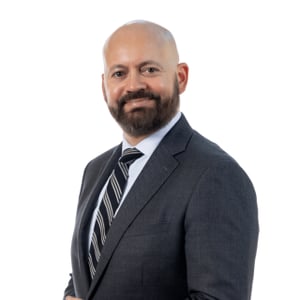
Milton R. Underwood Chair in Free Enterprise, Vanderbilt University Law School
Brian Fitzpatrick is the Milton R. Underwood Chair in Free Enterprise and Professor of Law at Vanderbilt Law School, where his research focuses on class action litigation, federal courts, judicial selection, and constitutional law. He is best known for his empirical studies of class action settlements as well as his book The Conservative Case for Class Actions (University of Chicago Press, 2019). Professor Fitzpatrick joined Vanderbilt's law faculty in 2007 after serving as the John M. Olin Fellow at New York University School of Law. He graduated first in his class from Harvard Law School and went on to clerk for Judge Diarmuid O'Scannlain on the U.S. Court of Appeals for the Ninth Circuit and Justice Antonin Scalia on the U.S. Supreme Court. After his clerkships, Professor Fitzpatrick practiced commercial and appellate litigation for several years at Sidley Austin in Washington, D.C., and served as Special Counsel for Supreme Court Nominations to U.S. Senator John Cornyn. Before earning his law degree, Fitzpatrick graduated summa cum laude with a bachelor's of science in chemical engineering from the University of Notre Dame. He has received the Hall-Hartman Outstanding Professor Award, which recognizes excellence in classroom teaching, for his Civil Procedure and Federal Courts courses.
Director of Housing Policy and the American Identity Project, Progressive Policy Institute
Richard D. Kahlenberg is the Director of Housing Policy at the Progressive Policy Institute, and the Director of the American Identity Project, where he is working on to strengthen American identity through public education. The author or editor of seventeen books, he has expertise in education, civil rights, and equal opportunity. Kahlenberg has been called “the intellectual father of the economic integration movement” in K–12 schooling and “arguably the nation’s chief proponent of class-based affirmative action in higher education admissions.” He is also an authority on teachers’ unions, charter schools, community colleges, housing segregation, and labor organizing.
Kahlenberg’s articles have been published in the New York Times, the Washington Post, the Wall Street Journal, The New Republic, and elsewhere. He has appeared on ABC, CBS, CNN, FOX, C-SPAN, MSNBC, and NPR.
Previously, Kahlenberg was a senior fellow at The Century Foundation. a fellow at the Center for National Policy, a visiting associate professor of constitutional law at George Washington University, and a legislative assistant to Senator Charles S. Robb (D-VA). He also serves on the advisory board of the Pell Institute, and the Albert Shanker Institute, and as a professorial lecturer at George Washington University’s Trachtenberg School of Public Policy and Public Administration. In addition, he is the winner of the William A. Kaplin Award for Excellence in Higher Education Law and Policy Scholarship. Reflecting on Kahlenberg’s work on higher education, William G. Bowen and Michael S. McPherson wrote that he “deserves more credit than anyone else for arguing vigorously and relentlessly for stronger efforts to address disparities by socioeconomic status.” He graduated from Harvard College and Harvard Law School and was a rotary scholar at the University of Nairobi School of Journalism.
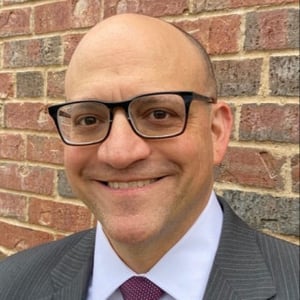
Executive Director & Secretary, American Civil Rights Project
Dan Morenoff is the executive director at the American Civil Rights Project and an adjunct fellow at the Manhattan Institute.
His work focuses on protecting and, where necessary, restoring the primacy of all Americans' shared civil rights against the identitarian alternative.
Before practicing law, Morenoff served on the legislative staff of Sen. Phil Gramm (R-TX). Morenoff holds a B.A. from Columbia College of Columbia University in the City of New York and a J.D. from the University of Chicago Law School. He has also served as an officer or director of several community organizations in Dallas, Texas.
Julius Kreeger Professor of Law & Criminology, University of Chicago Law School
Sonja Starr joined the University of Chicago law faculty after eleven years teaching at the University of Michigan, where she was the Henry M. Butzel Professor of Law. She previously taught at the University of Maryland and Harvard Law School after graduating from Yale Law. She also clerked for Judges Merrick Garland of the DC Circuit and Mohamed Shahabuddeen of the International Criminal Tribunals for Rwanda and the Former Yugoslavia.
Professor Starr's research focuses on the criminal justice system and on discrimination and disparity (in the criminal process and in other contexts, including employment, education, and health care). Her research blends quantitative empirical work with more traditional legal scholarship. Topics include the use of predictive algorithms in sentencing and bail, legal and empirical analyses of statistical discrimination, racialized medical algorithms, educational diversity and race-conscious policymaking, racial and other disparities in prosecution and sentencing, policies designed to expand employment opportunities for people with criminal records, and how neighborhoods affect employment discrimination patterns. Professor Starr’s work has appeared in, for example, the Quarterly Journal of Economics, the Journal of Political Economy, the Yale Law Journal, and the Stanford and Harvard Law Reviews. She has been the Law and Economics Section Chair of the American Association of Law Schools, a past co-president of the Society for Empirical Legal Studies, and a board member of the American Law and Economics Association. She teaches Criminal Law, the Constitutional Law Workshop, Race and Criminal Justice Policy, and Collateral Consequences of Criminal Convictions.
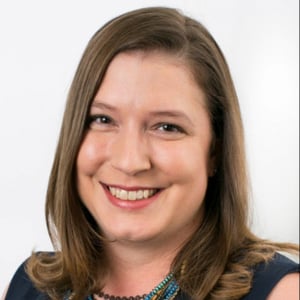
Attorney, Pacific Legal Foundation
Erin Wilcox joined PLF in 2018 and works primarily from Austin, Texas. She litigates cases around the country to secure the inalienable rights of all Americans to live responsibly and productively in their pursuit of happiness.
After graduating from law school, Erin defended the individual rights of employees as a litigator for the National Right to Work Legal Defense Foundation, was an attorney-advisor for the D.C. Public Employee Relations Board, and most recently fought for liberty in the Lone Star State as an attorney with the Texas Public Policy Foundation. During law school, Erin clerked at the Institute for Justice and was a Charles Koch Summer Fellow.
A native Texan, Erin ventured east after high school to earn a B.A. in history and political science from Wake Forest University and a J.D. from the Wake Forest University School of Law. In addition to liberty, Erin’s loves include college football, Texas barbecue, and a well-made Old Fashioned.

7 Minute Presentations of Works in Progress Panel 1-B
San Francisco, CAShowcase Panel IV: Race in the Law After SFFA
Peter Arcidiacono, David Bernstein, Lisa Branch, Sonja B. Starr, Kyle Rozema
Students for Fair Admission v. Harvard was the most important decision on affirmative action in...
Showcase Panel IV: Race in the Law After SFFA
Peter Arcidiacono, David Bernstein, Lisa Branch, Kyle Rozema, Sonja B. Starr
Students for Fair Admission v. Harvard was the most important decision on affirmative action in...
Campus Chaos: Protected Speech or Unprotected Conduct?
Kenneth L. Marcus, Thomas J. Miles, David R. Stras, Nadine Strossen, Eugene Volokh
Over the past year, college campuses have been filled with student protests and demonstrations. A...
Campus Chaos: Protected Speech or Unprotected Conduct?
Kenneth L. Marcus, Thomas J. Miles, David R. Stras, Nadine Strossen, Eugene Volokh
Over the past year, college campuses have been filled with student protests and demonstrations. A...
Showcase Panel IV: Race in the Law After SFFA
2024 National Lawyers Convention
Washington, DCCampus Chaos: Protected Speech or Unprotected Conduct?
2024 National Lawyers Convention
Washington, DCLeadership Lessons from Mountaineering: A Discussion with Robert Alt
Maine Lawyers Chapter
Bangor, METoward a More Confident State Constitutionalism
Steve J. Markman
This article is adapted from a speech Justice Markman delivered to the Florida Annual Education...
Discrimination By Proxy?: Arlington Heights Cases in the Post Students for Fair Admissions Era
Brian T. Fitzpatrick, Richard D. Kahlenberg, Dan Morenoff, Sonja B. Starr, Erin Wilcox
In the consolidated Students for Fair Admissions cases, the Supreme Court held unlawful the use of race...