
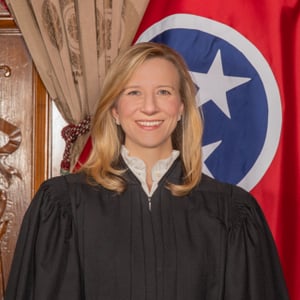
Justice, Supreme Court of Tennessee
Justice Sarah Campbell was confirmed to the Tennessee Supreme Court in 2022. She previously served as an Associate Solicitor General in the Tennessee Attorney General’s Office and as an associate at the law firm of Williams & Connolly LLP in Washington, DC. Justice Campbell earned her law degree from Duke University School of Law, a Master of Public Policy degree from Duke University, and her undergraduate degree from the University of Tennessee, where she received the Torchbearer Award. She served as a law clerk for Justice Samuel A. Alito, Jr. on the United States Supreme Court and Judge William H. Pryor Jr. on the U.S. Court of Appeals for the Eleventh Circuit.
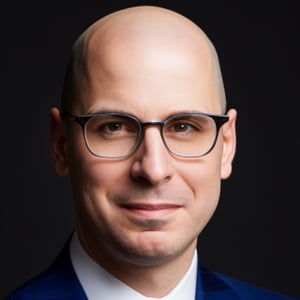
Partner and Lecturer
Adam Mortara graduated from the University of Chicago in 1996 with a B.Sc. in chemistry. He then attended Magdalene College, Cambridge, where he received a masters degree in astrophysics on a British Marshall Scholarship.
Mr. Mortara graduated from the University of Chicago Law School with highest honors in 2001. Following graduation, he clerked for Judge Patrick Higginbotham of the U.S. Court of Appeals for the Fifth Circuit and then for Justice Clarence Thomas of the Supreme Court of the United States. After his clerkships, he was a Temple Bar Scholar of the American Inns of Court.
From 2003 to 2020, Mr. Mortara was with Bartlit Beck LLP where he tried high stakes intellectual property cases and, more notably, Students For Fair Admissions v. Harvard. He retired from Bartlit Beck and founded Lawfair LLC, a civil and voting rights firm. He has been a Lecturer in Law at the University of Chicago Law School since 2007, where he teaches Federal Habeas Corpus, Federal Jurisdiction, Criminal Procedure, and Writing for the Judiciary.

Judge, United States Court of Appeals, Sixth Circuit
Amul R. Thapar serves as a judge on the United States Court of Appeals for the Sixth Circuit. His judicial career began in 2007 when President George W. Bush nominated him to serve on the Eastern District of Kentucky, making him the first South Asian Article III judge in American history. In 2017, he became President Donald J. Trump’s first appellate court nominee.
Before joining the bench, Judge Thapar served as the United States Attorney for the Eastern District of Kentucky. While United States Attorney, Judge Thapar worked on the Attorney General’s Advisory Committee (“AGAC”) and chaired the AGAC’s Controlled Substances and Asset Forfeiture subcommittee. He also served on the Terrorism and National Security subcommittee, the Violent Crime subcommittee, and the Child Exploitation working group.
Judge Thapar has worked in private practice, at Williams & Connolly in Washington, D.C., and Squire, Sanders & Dempsey in Cincinnati, Ohio. He also served as an Assistant United States Attorney in both the Southern District of Ohio and the District of Columbia.
Judge Thapar received his undergraduate degree from Boston College and his law degree from the University of California, Berkeley. After graduating, Judge Thapar worked as a law clerk to the Honorable S. Arthur Spiegel of the United States District Court for the Southern District of Ohio, and the Honorable Nathaniel R. Jones of the United States Court of Appeals for the Sixth Circuit.
Judge Thapar has also published in the Yale Law Journal, Michigan Law Review, and Catholic University Law Review. He teaches courses on originalism, the Federalists and Anti-Federalists, and legal writing at Notre Dame Law School, the University of Virginia School of Law, and Vanderbilt Law School.
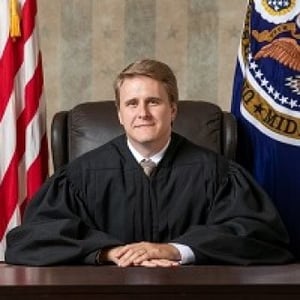
Judge, United States Court of Appeals for the Eleventh Circuit
Andrew Brasher served as a United States District Judge for the Middle District of Alabama. Before taking the bench in May 2019, Judge Brasher was the Solicitor General of the State of Alabama, where he argued cases before the United States Supreme Court, the United States Court of Appeals for the Eleventh Circuit, and the Alabama Supreme Court. He previously served for several years as the Deputy Solicitor General and practiced in the litigation and white-collar criminal defense practice groups in the Birmingham, Alabama office of Bradley Arant Boult Cummings LLP. Upon graduation from law school, Judge Brasher served as a law clerk to Judge William H. Pryor Jr. of the United States Court of Appeals for the Eleventh Circuit. Judge Brasher earned his B.A., summa cum laude, from Samford University and his J.D., cum laude, from Harvard Law School, where he was a member of the Harvard Law Review.
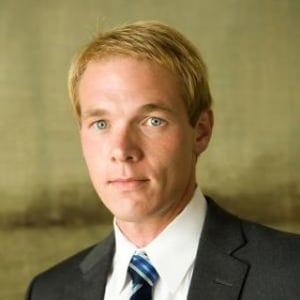
Judge, United States District Court, Northern District of Alabama
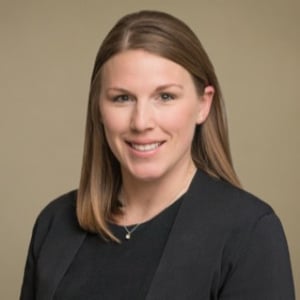
Partner, Consovoy McCarthy PLLC
Ms. Meehan’s practice focuses on constitutional litigation, election law matters, and complex federal statutes. She has represented states, state legislatures, and individual clients in the U.S. Supreme Court, state supreme courts, federal courts of appeals, and federal district courts. She has served as trial and appellate counsel for disputes about legislative privilege for state legislators and has successfully appealed to federal appellate courts to halt subpoenas targeting high-ranking public officials. She has served as trial and appellate counsel in recent redistricting litigation in Alabama, Florida, Texas, Utah, and Wisconsin. And she has had the privilege of defending other state laws in every stage of litigation, including in state supreme courts and the U.S. Supreme Court.
In 2022, Ms. Meehan served as counsel of record for the Wisconsin Legislature in Wisconsin Legislature v. Wisconsin Elections Commission, 595 U.S. 398 (2022). The U.S. Supreme Court granted the legislature’s request to summarily reverse the state supreme court’s redistricting decision, which would have racially gerrymandered electoral districts on the eve of elections. In 2021, the U.S. Supreme Court appointed Ms. Meehan to brief and argue Patel v. Garland, 596 U.S. 328 (2022), and the court adopted the position she was appointed to argue. Years earlier, the en banc Eleventh Circuit Court of Appeals appointed Ms. Meehan to brief and argue a federal habeas case as the court-appointed amicus curiae, and the en banc court adopted the position she was appointed to argue. Before joining Consovoy, Ms. Meehan was a partner at Bartlit Beck, where she served as a trial lawyer for high-stakes commercial disputes and constitutional litigation.
Ms. Meehan is a former law clerk to Justice Antonin Scalia and Justice Clarence Thomas of the U.S. Supreme Court and Chief Judge William H. Pryor Jr. of the U.S. Court of Appeals for the Eleventh Circuit. She graduated with high honors from the University of Chicago Law School, where she was selected for Order of the Coif and served as Managing Editor of the Law Review. Before law school, Ms. Meehan graduated first in her class from the University of Missouri School of Journalism. Her first writing job was bylining a human-interest column inspired by Studs Terkel for her Indiana hometown paper.
Partner and Lecturer
Adam Mortara graduated from the University of Chicago in 1996 with a B.Sc. in chemistry. He then attended Magdalene College, Cambridge, where he received a masters degree in astrophysics on a British Marshall Scholarship.
Mr. Mortara graduated from the University of Chicago Law School with highest honors in 2001. Following graduation, he clerked for Judge Patrick Higginbotham of the U.S. Court of Appeals for the Fifth Circuit and then for Justice Clarence Thomas of the Supreme Court of the United States. After his clerkships, he was a Temple Bar Scholar of the American Inns of Court.
From 2003 to 2020, Mr. Mortara was with Bartlit Beck LLP where he tried high stakes intellectual property cases and, more notably, Students For Fair Admissions v. Harvard. He retired from Bartlit Beck and founded Lawfair LLC, a civil and voting rights firm. He has been a Lecturer in Law at the University of Chicago Law School since 2007, where he teaches Federal Habeas Corpus, Federal Jurisdiction, Criminal Procedure, and Writing for the Judiciary.
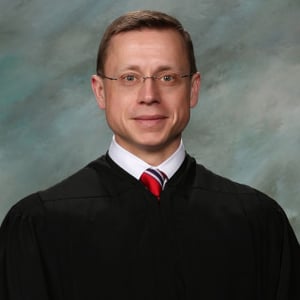
Judge, United States Court of Appeals, Fifth Circuit
Andrew Oldham is a Circuit Judge on the United States Court of Appeals for the Fifth Circuit. Before ascending to the bench, Judge Oldham served as General Counsel to Texas Governor Greg Abbott, where he advised the Governor on a range of issues under federal and state law and managed litigation in which the Governor was an interested party. Before that he served as Deputy Solicitor General for the State of Texas, where he represented Texas in federal courts across the country, including twice before the United States Supreme Court. Before moving to Texas, Judge Oldham was an attorney at Kellogg Hansen Todd Figel & Frederick in Washington, D.C. His practice focused on appellate litigation in federal courts of appeals throughout the country. Before entering private practice, Judge Oldham served as a law clerk to Justice Samuel A. Alito, Jr., at the Supreme Court of the United States and to Judge David B. Sentelle of the U.S. Court of Appeals for the District of Columbia Circuit. He also worked as an attorney-adviser in the Office of Legal Counsel at the U.S. Department of Justice from 2006 to 2008. Judge Oldham earned a B.A. from the University of Virginia with highest honors, a Truman Scholarship for graduate school, an M. Phil., first class (with distinction), from Cambridge University, and a J.D., magna cum laude, from Harvard Law School.
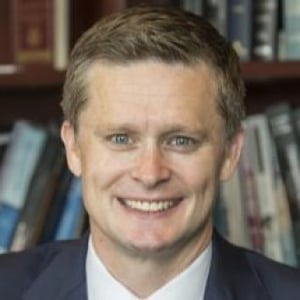
Donald M. Ephraim Professor of Law and Economics, University of Chicago Law School
Tony Casey is an expert on business law, finance, and corporate bankruptcy. His research—which has been published in the Yale Law Journal, the Columbia Law Review, the Supreme Court Review, and the University of Chicago Law Review—examines the intersection of finance and law. He has also written about the role of intellectual property law in the organization and financing of creative projects and about how technological innovation is changing the foundations of our legal system more generally.
Before entering academics, Professor Casey was a partner at Kirkland and Ellis, LLP. Before joining Kirkland & Ellis, he was an associate at Wachtell, Lipton, Rosen & Katz. His legal practice focused on corporate bankruptcy, merger litigation, white-collar investigations, securities litigation, and complex class actions. Casey also served as a law clerk for Chief Judge Joel M. Flaum of the United States Court of Appeals for the Seventh Circuit.
Professor Casey received his JD with High Honors in 2002 from the University of Chicago Law School. He received the John M. Olin Prize for the outstanding student of law and economics.
Professor Casey teaches courses and seminars in corporate governance, business law, bankruptcy and reorganization, finance, litigation strategy, civil procedure, and law and technology.
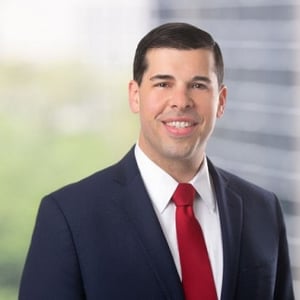
Partner, Boies Schiller Flexner LLP
Jesse, the former third-ranking official at the U.S. Department of Justice, helps clients with their most difficult litigation and regulatory issues─whether that means defending against an enforcement action, pursuing high-stakes litigation and appeals, navigating regulatory thickets at federal and state agencies, or crafting a comprehensive strategy to manage a crisis. He approaches these problems with the knowledge gained both from his broad private-practice experience and from having served at the highest levels of federal and state government.
Jesse has experience across a range of substantive and regulatory areas. He has sued the federal government and has also been one of its top law-enforcement officials; he has represented states and has also navigated their regulatory agencies on behalf of clients; and he has represented companies in business disputes, both as defendants and plaintiffs.
Before joining the firm, Jesse was the Acting Associate Attorney General at the United States Department of Justice. In that role, he oversaw the civil and criminal work of the Antitrust, Civil, Civil Rights, Environment and Natural Resources, and Tax Divisions. During Jesse’s tenure, the Associate’s office closely managed the Department’s most significant litigation, including matters involving large financial institutions, healthcare companies, automakers, energy companies, and state and local governments. In addition, Jesse served as Chair of DOJ’s Regulatory Reform Task Force and Vice Chair of DOJ’s Task Force on Market Integrity and Consumer Fraud. Jesse regularly provided legal and strategic advice to the highest-level decision makers in the federal government, including the Attorney General and Deputy Attorney General, general counsels across the spectrum of federal agencies, and White House officials.
Jesse served for three years as the secretary of Florida’s labor, economic-development, and land-use agency, the Florida Department of Economic Opportunity. Before that, he served as Governor (now Senator) Rick Scott’s general counsel.
Jesse maintains offices in both Washington D.C. and Florida. From Washington, he focuses on federal litigation and crisis management. In Florida, in addition to federal litigation, Jesse employs his knowledge of state government and regulation to help clients in courts across the state, from trial through the Florida Supreme Court.
Jesse currently serves on the Florida Supreme Court Judicial Nominating Commission, the body that provides the governor with nominees for appointment to the Florida Supreme Court. Jesse is also a fellow at the Center for the Study of the Administrative State at the Scalia Law School at George Mason University, where he writes and speaks about administrative law.
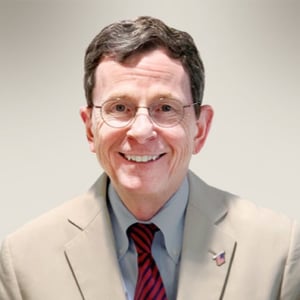
Executive Vice President for Bankruptcy Compliance, AIS
Cliff assists clients in effectively administering their portfolios of default loans and implementing systems that meet the highest standards of excellence and legal compliance. For 17 years, White led the United States Trustee Program (USTP), the Department of Justice's "watchdog" of the bankruptcy system. He retired March 2022, after 42 years of federal service. He is the recipient of two Presidential Rank Awards - the highest recognition accorded to senior career executives - by President George W. Bush and President Barack Obama. As Director of the USTP, his accomplishments include the implementation of key provisions of the Bankruptcy Abuse Prevention and Consumer Protection Act of 2005 and the Small Business Reorganization Act of 2019.
Partner and Lecturer
Adam Mortara graduated from the University of Chicago in 1996 with a B.Sc. in chemistry. He then attended Magdalene College, Cambridge, where he received a masters degree in astrophysics on a British Marshall Scholarship.
Mr. Mortara graduated from the University of Chicago Law School with highest honors in 2001. Following graduation, he clerked for Judge Patrick Higginbotham of the U.S. Court of Appeals for the Fifth Circuit and then for Justice Clarence Thomas of the Supreme Court of the United States. After his clerkships, he was a Temple Bar Scholar of the American Inns of Court.
From 2003 to 2020, Mr. Mortara was with Bartlit Beck LLP where he tried high stakes intellectual property cases and, more notably, Students For Fair Admissions v. Harvard. He retired from Bartlit Beck and founded Lawfair LLC, a civil and voting rights firm. He has been a Lecturer in Law at the University of Chicago Law School since 2007, where he teaches Federal Habeas Corpus, Federal Jurisdiction, Criminal Procedure, and Writing for the Judiciary.
Partner and Lecturer
Adam Mortara graduated from the University of Chicago in 1996 with a B.Sc. in chemistry. He then attended Magdalene College, Cambridge, where he received a masters degree in astrophysics on a British Marshall Scholarship.
Mr. Mortara graduated from the University of Chicago Law School with highest honors in 2001. Following graduation, he clerked for Judge Patrick Higginbotham of the U.S. Court of Appeals for the Fifth Circuit and then for Justice Clarence Thomas of the Supreme Court of the United States. After his clerkships, he was a Temple Bar Scholar of the American Inns of Court.
From 2003 to 2020, Mr. Mortara was with Bartlit Beck LLP where he tried high stakes intellectual property cases and, more notably, Students For Fair Admissions v. Harvard. He retired from Bartlit Beck and founded Lawfair LLC, a civil and voting rights firm. He has been a Lecturer in Law at the University of Chicago Law School since 2007, where he teaches Federal Habeas Corpus, Federal Jurisdiction, Criminal Procedure, and Writing for the Judiciary.
Judge, United States Court of Appeals for the Eleventh Circuit
Andrew Brasher served as a United States District Judge for the Middle District of Alabama. Before taking the bench in May 2019, Judge Brasher was the Solicitor General of the State of Alabama, where he argued cases before the United States Supreme Court, the United States Court of Appeals for the Eleventh Circuit, and the Alabama Supreme Court. He previously served for several years as the Deputy Solicitor General and practiced in the litigation and white-collar criminal defense practice groups in the Birmingham, Alabama office of Bradley Arant Boult Cummings LLP. Upon graduation from law school, Judge Brasher served as a law clerk to Judge William H. Pryor Jr. of the United States Court of Appeals for the Eleventh Circuit. Judge Brasher earned his B.A., summa cum laude, from Samford University and his J.D., cum laude, from Harvard Law School, where he was a member of the Harvard Law Review.
Judge, United States District Court, Northern District of Alabama
Partner, Consovoy McCarthy PLLC
Ms. Meehan’s practice focuses on constitutional litigation, election law matters, and complex federal statutes. She has represented states, state legislatures, and individual clients in the U.S. Supreme Court, state supreme courts, federal courts of appeals, and federal district courts. She has served as trial and appellate counsel for disputes about legislative privilege for state legislators and has successfully appealed to federal appellate courts to halt subpoenas targeting high-ranking public officials. She has served as trial and appellate counsel in recent redistricting litigation in Alabama, Florida, Texas, Utah, and Wisconsin. And she has had the privilege of defending other state laws in every stage of litigation, including in state supreme courts and the U.S. Supreme Court.
In 2022, Ms. Meehan served as counsel of record for the Wisconsin Legislature in Wisconsin Legislature v. Wisconsin Elections Commission, 595 U.S. 398 (2022). The U.S. Supreme Court granted the legislature’s request to summarily reverse the state supreme court’s redistricting decision, which would have racially gerrymandered electoral districts on the eve of elections. In 2021, the U.S. Supreme Court appointed Ms. Meehan to brief and argue Patel v. Garland, 596 U.S. 328 (2022), and the court adopted the position she was appointed to argue. Years earlier, the en banc Eleventh Circuit Court of Appeals appointed Ms. Meehan to brief and argue a federal habeas case as the court-appointed amicus curiae, and the en banc court adopted the position she was appointed to argue. Before joining Consovoy, Ms. Meehan was a partner at Bartlit Beck, where she served as a trial lawyer for high-stakes commercial disputes and constitutional litigation.
Ms. Meehan is a former law clerk to Justice Antonin Scalia and Justice Clarence Thomas of the U.S. Supreme Court and Chief Judge William H. Pryor Jr. of the U.S. Court of Appeals for the Eleventh Circuit. She graduated with high honors from the University of Chicago Law School, where she was selected for Order of the Coif and served as Managing Editor of the Law Review. Before law school, Ms. Meehan graduated first in her class from the University of Missouri School of Journalism. Her first writing job was bylining a human-interest column inspired by Studs Terkel for her Indiana hometown paper.
Partner and Lecturer
Adam Mortara graduated from the University of Chicago in 1996 with a B.Sc. in chemistry. He then attended Magdalene College, Cambridge, where he received a masters degree in astrophysics on a British Marshall Scholarship.
Mr. Mortara graduated from the University of Chicago Law School with highest honors in 2001. Following graduation, he clerked for Judge Patrick Higginbotham of the U.S. Court of Appeals for the Fifth Circuit and then for Justice Clarence Thomas of the Supreme Court of the United States. After his clerkships, he was a Temple Bar Scholar of the American Inns of Court.
From 2003 to 2020, Mr. Mortara was with Bartlit Beck LLP where he tried high stakes intellectual property cases and, more notably, Students For Fair Admissions v. Harvard. He retired from Bartlit Beck and founded Lawfair LLC, a civil and voting rights firm. He has been a Lecturer in Law at the University of Chicago Law School since 2007, where he teaches Federal Habeas Corpus, Federal Jurisdiction, Criminal Procedure, and Writing for the Judiciary.
Judge, United States Court of Appeals, Fifth Circuit
Andrew Oldham is a Circuit Judge on the United States Court of Appeals for the Fifth Circuit. Before ascending to the bench, Judge Oldham served as General Counsel to Texas Governor Greg Abbott, where he advised the Governor on a range of issues under federal and state law and managed litigation in which the Governor was an interested party. Before that he served as Deputy Solicitor General for the State of Texas, where he represented Texas in federal courts across the country, including twice before the United States Supreme Court. Before moving to Texas, Judge Oldham was an attorney at Kellogg Hansen Todd Figel & Frederick in Washington, D.C. His practice focused on appellate litigation in federal courts of appeals throughout the country. Before entering private practice, Judge Oldham served as a law clerk to Justice Samuel A. Alito, Jr., at the Supreme Court of the United States and to Judge David B. Sentelle of the U.S. Court of Appeals for the District of Columbia Circuit. He also worked as an attorney-adviser in the Office of Legal Counsel at the U.S. Department of Justice from 2006 to 2008. Judge Oldham earned a B.A. from the University of Virginia with highest honors, a Truman Scholarship for graduate school, an M. Phil., first class (with distinction), from Cambridge University, and a J.D., magna cum laude, from Harvard Law School.
Donald M. Ephraim Professor of Law and Economics, University of Chicago Law School
Tony Casey is an expert on business law, finance, and corporate bankruptcy. His research—which has been published in the Yale Law Journal, the Columbia Law Review, the Supreme Court Review, and the University of Chicago Law Review—examines the intersection of finance and law. He has also written about the role of intellectual property law in the organization and financing of creative projects and about how technological innovation is changing the foundations of our legal system more generally.
Before entering academics, Professor Casey was a partner at Kirkland and Ellis, LLP. Before joining Kirkland & Ellis, he was an associate at Wachtell, Lipton, Rosen & Katz. His legal practice focused on corporate bankruptcy, merger litigation, white-collar investigations, securities litigation, and complex class actions. Casey also served as a law clerk for Chief Judge Joel M. Flaum of the United States Court of Appeals for the Seventh Circuit.
Professor Casey received his JD with High Honors in 2002 from the University of Chicago Law School. He received the John M. Olin Prize for the outstanding student of law and economics.
Professor Casey teaches courses and seminars in corporate governance, business law, bankruptcy and reorganization, finance, litigation strategy, civil procedure, and law and technology.
Partner, Boies Schiller Flexner LLP
Jesse, the former third-ranking official at the U.S. Department of Justice, helps clients with their most difficult litigation and regulatory issues─whether that means defending against an enforcement action, pursuing high-stakes litigation and appeals, navigating regulatory thickets at federal and state agencies, or crafting a comprehensive strategy to manage a crisis. He approaches these problems with the knowledge gained both from his broad private-practice experience and from having served at the highest levels of federal and state government.
Jesse has experience across a range of substantive and regulatory areas. He has sued the federal government and has also been one of its top law-enforcement officials; he has represented states and has also navigated their regulatory agencies on behalf of clients; and he has represented companies in business disputes, both as defendants and plaintiffs.
Before joining the firm, Jesse was the Acting Associate Attorney General at the United States Department of Justice. In that role, he oversaw the civil and criminal work of the Antitrust, Civil, Civil Rights, Environment and Natural Resources, and Tax Divisions. During Jesse’s tenure, the Associate’s office closely managed the Department’s most significant litigation, including matters involving large financial institutions, healthcare companies, automakers, energy companies, and state and local governments. In addition, Jesse served as Chair of DOJ’s Regulatory Reform Task Force and Vice Chair of DOJ’s Task Force on Market Integrity and Consumer Fraud. Jesse regularly provided legal and strategic advice to the highest-level decision makers in the federal government, including the Attorney General and Deputy Attorney General, general counsels across the spectrum of federal agencies, and White House officials.
Jesse served for three years as the secretary of Florida’s labor, economic-development, and land-use agency, the Florida Department of Economic Opportunity. Before that, he served as Governor (now Senator) Rick Scott’s general counsel.
Jesse maintains offices in both Washington D.C. and Florida. From Washington, he focuses on federal litigation and crisis management. In Florida, in addition to federal litigation, Jesse employs his knowledge of state government and regulation to help clients in courts across the state, from trial through the Florida Supreme Court.
Jesse currently serves on the Florida Supreme Court Judicial Nominating Commission, the body that provides the governor with nominees for appointment to the Florida Supreme Court. Jesse is also a fellow at the Center for the Study of the Administrative State at the Scalia Law School at George Mason University, where he writes and speaks about administrative law.
Executive Vice President for Bankruptcy Compliance, AIS
Cliff assists clients in effectively administering their portfolios of default loans and implementing systems that meet the highest standards of excellence and legal compliance. For 17 years, White led the United States Trustee Program (USTP), the Department of Justice's "watchdog" of the bankruptcy system. He retired March 2022, after 42 years of federal service. He is the recipient of two Presidential Rank Awards - the highest recognition accorded to senior career executives - by President George W. Bush and President Barack Obama. As Director of the USTP, his accomplishments include the implementation of key provisions of the Bankruptcy Abuse Prevention and Consumer Protection Act of 2005 and the Small Business Reorganization Act of 2019.
Donald M. Ephraim Professor of Law and Economics, University of Chicago Law School
Tony Casey is an expert on business law, finance, and corporate bankruptcy. His research—which has been published in the Yale Law Journal, the Columbia Law Review, the Supreme Court Review, and the University of Chicago Law Review—examines the intersection of finance and law. He has also written about the role of intellectual property law in the organization and financing of creative projects and about how technological innovation is changing the foundations of our legal system more generally.
Before entering academics, Professor Casey was a partner at Kirkland and Ellis, LLP. Before joining Kirkland & Ellis, he was an associate at Wachtell, Lipton, Rosen & Katz. His legal practice focused on corporate bankruptcy, merger litigation, white-collar investigations, securities litigation, and complex class actions. Casey also served as a law clerk for Chief Judge Joel M. Flaum of the United States Court of Appeals for the Seventh Circuit.
Professor Casey received his JD with High Honors in 2002 from the University of Chicago Law School. He received the John M. Olin Prize for the outstanding student of law and economics.
Professor Casey teaches courses and seminars in corporate governance, business law, bankruptcy and reorganization, finance, litigation strategy, civil procedure, and law and technology.
Partner, Boies Schiller Flexner LLP
Jesse, the former third-ranking official at the U.S. Department of Justice, helps clients with their most difficult litigation and regulatory issues─whether that means defending against an enforcement action, pursuing high-stakes litigation and appeals, navigating regulatory thickets at federal and state agencies, or crafting a comprehensive strategy to manage a crisis. He approaches these problems with the knowledge gained both from his broad private-practice experience and from having served at the highest levels of federal and state government.
Jesse has experience across a range of substantive and regulatory areas. He has sued the federal government and has also been one of its top law-enforcement officials; he has represented states and has also navigated their regulatory agencies on behalf of clients; and he has represented companies in business disputes, both as defendants and plaintiffs.
Before joining the firm, Jesse was the Acting Associate Attorney General at the United States Department of Justice. In that role, he oversaw the civil and criminal work of the Antitrust, Civil, Civil Rights, Environment and Natural Resources, and Tax Divisions. During Jesse’s tenure, the Associate’s office closely managed the Department’s most significant litigation, including matters involving large financial institutions, healthcare companies, automakers, energy companies, and state and local governments. In addition, Jesse served as Chair of DOJ’s Regulatory Reform Task Force and Vice Chair of DOJ’s Task Force on Market Integrity and Consumer Fraud. Jesse regularly provided legal and strategic advice to the highest-level decision makers in the federal government, including the Attorney General and Deputy Attorney General, general counsels across the spectrum of federal agencies, and White House officials.
Jesse served for three years as the secretary of Florida’s labor, economic-development, and land-use agency, the Florida Department of Economic Opportunity. Before that, he served as Governor (now Senator) Rick Scott’s general counsel.
Jesse maintains offices in both Washington D.C. and Florida. From Washington, he focuses on federal litigation and crisis management. In Florida, in addition to federal litigation, Jesse employs his knowledge of state government and regulation to help clients in courts across the state, from trial through the Florida Supreme Court.
Jesse currently serves on the Florida Supreme Court Judicial Nominating Commission, the body that provides the governor with nominees for appointment to the Florida Supreme Court. Jesse is also a fellow at the Center for the Study of the Administrative State at the Scalia Law School at George Mason University, where he writes and speaks about administrative law.
Executive Vice President for Bankruptcy Compliance, AIS
Cliff assists clients in effectively administering their portfolios of default loans and implementing systems that meet the highest standards of excellence and legal compliance. For 17 years, White led the United States Trustee Program (USTP), the Department of Justice's "watchdog" of the bankruptcy system. He retired March 2022, after 42 years of federal service. He is the recipient of two Presidential Rank Awards - the highest recognition accorded to senior career executives - by President George W. Bush and President Barack Obama. As Director of the USTP, his accomplishments include the implementation of key provisions of the Bankruptcy Abuse Prevention and Consumer Protection Act of 2005 and the Small Business Reorganization Act of 2019.
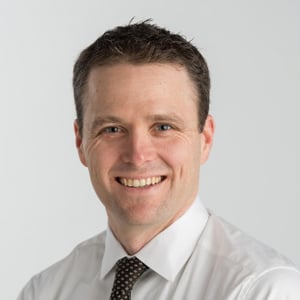
Professor of Law, University of Michigan Law School
Professor Nicholas Bagley teaches and writes in the areas of administrative law, regulatory theory, and health law. Prior to joining the Law School faculty, he was an attorney with the appellate staff in the Civil Division at the U.S. Department of Justice, where he argued a dozen cases before the U.S. Courts of Appeals and acted as lead counsel in many more. Professor Bagley also served as a law clerk to Justice John Paul Stevens of the U.S. Supreme Court and to the Hon. David S. Tatel of the U.S. Court of Appeals, District of Columbia Circuit. Professor Bagley holds a BA in English from Yale University and received his JD, summa cum laude, from New York University School of Law. Before entering law school, he joined Teach For America and taught eighth-grade English at a public school in South Bronx. Professor Bagley's work has appeared in the Harvard Law Review, the Columbia Law Review, the Georgetown Law Journal, the New England Journal of Medicine, and the Journal of Health Politics, Policy, and Law. In 2012, he was the recipient of the Law School's L. Hart Wright Award for Excellence in Teaching. He is a frequent contributor to The Incidental Economist, a prominent health policy blog.
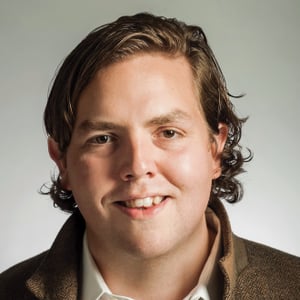
Harry Kalven, Jr. Professor of Law & Faculty Director, Constitutional Law Institute, University of Chicago Law School
William Baude is a Professor of Law and the Faculty Director of the Constitutional Law Institute at the University of Chicago Law School, where he teaches federal courts, constitutional law, and conflict of laws. His current research interests include different aspects of the Fourteenth Amendment (particularly both Section One and Section Three) and the nature of judicial discretion.
Among his other activities Baude is: the co-editor of two textbooks, The Constitution of the United States and Hart & Wechsler's Federal Courts in the Federal System; an Affiliated Scholar at the Center for the Study of Constitutional Originalism; a founding member of the Academic Freedom Alliance; a member of the American Law Institute; an occasional blogger at The Volokh Conspiracy; and a podcaster on Divided Argument. He also recently served on the Presidential Commission on the Supreme Court of the United States.
Professor Baude received his BS in Mathematics from the University of Chicago and his JD from Yale Law School. He then clerked for then-Judge Michael McConnell on the United States Court of Appeals, and Chief Justice John Roberts on the United States Supreme Court. Before joining the Chicago faculty, he was a fellow at the Stanford Constitutional Law Center, and a lawyer in Washington, DC.
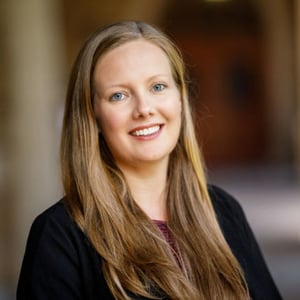
Professor of Law, University of Notre Dame Law School
Emily Bremer teaches and writes in the areas of administrative law, regulatory process, and civil procedure. Her scholarship focuses primarily on matters of procedural design, with a recent focus on the history and interpretation of the Administrative Procedure Act (APA). She is a recipient of the AALS’s award for the year’s best administrative law scholarship by a junior scholar and the AALL’s Joseph L. Andrew’s Legal Literature Award for her contribution to the Bremer-Kovacs Collection of Historical Documents Related to the APA (HeinOnline). Bremer’s articles include a defense forthcoming in the Virginia Law Review of the constitutionality of the APA’s regime for ensuring the competence and impartiality of Administrative Law Judges; a plea in the Yale Journal on Regulation for administrative law to take greater account of the on-the-ground reality of administration; twin articles uncovering the intellectual foundation and meaning of the APA’s adjudication and rulemaking provisions; and three separate studies that served as the basis of recommendations of the Administrative Conference of the United States (ACUS) on the subjects of agency declaratory orders, incorporation by reference, and statutory limitations on the jurisdiction of the Court of Federal Claims. Bremer serves as a Senior Fellow of ACUS, a co-editor of the administrative law section of Jotwell, and a regular contributor to the Yale Journal on Regulation’s Notice & Comment blog.

Judge, United States Court of Appeals, District of Columbia Circuit
Judge Katsas was appointed to the D.C. Circuit in December 2017. He graduated from Princeton University and Harvard Law School, where he was an executive editor on the Harvard Law Review. Between 1989 and 1992, he served as a law clerk to Judge Edward Becker on the Third Circuit, to then-Judge Clarence Thomas on the D.C. Circuit, and to Justice Thomas on the Supreme Court. Between 1992 and 2001, he was an associate and then partner in the Washington office of Jones Day, where he specialized in appellate and complex civil litigation. Between 2001 and 2009, he served in many senior positions in the Department of Justice, including as Assistant Attorney General for the Civil Division and as Acting Associate Attorney General. In 2009, he returned to Jones Day. From January to December 2017, he served as Deputy Assistant to the President and Deputy Counsel to the President.
Before joining the bench, Judge Katsas argued more than 75 appeals, including three cases in the Supreme Court, 13 cases in the D.C. Circuit, and cases in every other federal court of appeals. By appointment of the Chief Justice, he served on the Advisory Committee on Appellate Rules from 2013 to 2017. In 2016, he was elected to membership in the American Academy of Appellate Lawyers.

Professor of Law, University of Michigan Law School
Christopher J. Walker is a Professor of Law at the University of Michigan. Prior to joining Michigan law faculty in 2022, he spent a decade teaching at The Ohio State University Moritz College of Law. He previously clerked for Justice Anthony Kennedy of the U.S. Supreme Court, worked on the Civil Appellate Staff at the U.S. Department of Justice, and served on the Senate Judiciary Committee staff for the Gorsuch Supreme Court confirmation. Professor Walker’s research focuses on administrative law, regulation, and law and policy at the agency level. Outside the law school, he chaired the American Bar Association’s Section of Administrative Law and Regulatory Practice in 2020-21 and served as one of forty Public Members of the Administrative Conference of the United States from 2016-2022, and he continues to serve in both organizations in various capacities. He also works of counsel at the U.S. Chamber Litigation Center. In 2022, he received the Federalist Society’s Joseph Story Award.
Professor of Law, University of Michigan Law School
Professor Nicholas Bagley teaches and writes in the areas of administrative law, regulatory theory, and health law. Prior to joining the Law School faculty, he was an attorney with the appellate staff in the Civil Division at the U.S. Department of Justice, where he argued a dozen cases before the U.S. Courts of Appeals and acted as lead counsel in many more. Professor Bagley also served as a law clerk to Justice John Paul Stevens of the U.S. Supreme Court and to the Hon. David S. Tatel of the U.S. Court of Appeals, District of Columbia Circuit. Professor Bagley holds a BA in English from Yale University and received his JD, summa cum laude, from New York University School of Law. Before entering law school, he joined Teach For America and taught eighth-grade English at a public school in South Bronx. Professor Bagley's work has appeared in the Harvard Law Review, the Columbia Law Review, the Georgetown Law Journal, the New England Journal of Medicine, and the Journal of Health Politics, Policy, and Law. In 2012, he was the recipient of the Law School's L. Hart Wright Award for Excellence in Teaching. He is a frequent contributor to The Incidental Economist, a prominent health policy blog.
Harry Kalven, Jr. Professor of Law & Faculty Director, Constitutional Law Institute, University of Chicago Law School
William Baude is a Professor of Law and the Faculty Director of the Constitutional Law Institute at the University of Chicago Law School, where he teaches federal courts, constitutional law, and conflict of laws. His current research interests include different aspects of the Fourteenth Amendment (particularly both Section One and Section Three) and the nature of judicial discretion.
Among his other activities Baude is: the co-editor of two textbooks, The Constitution of the United States and Hart & Wechsler's Federal Courts in the Federal System; an Affiliated Scholar at the Center for the Study of Constitutional Originalism; a founding member of the Academic Freedom Alliance; a member of the American Law Institute; an occasional blogger at The Volokh Conspiracy; and a podcaster on Divided Argument. He also recently served on the Presidential Commission on the Supreme Court of the United States.
Professor Baude received his BS in Mathematics from the University of Chicago and his JD from Yale Law School. He then clerked for then-Judge Michael McConnell on the United States Court of Appeals, and Chief Justice John Roberts on the United States Supreme Court. Before joining the Chicago faculty, he was a fellow at the Stanford Constitutional Law Center, and a lawyer in Washington, DC.
Professor of Law, University of Notre Dame Law School
Emily Bremer teaches and writes in the areas of administrative law, regulatory process, and civil procedure. Her scholarship focuses primarily on matters of procedural design, with a recent focus on the history and interpretation of the Administrative Procedure Act (APA). She is a recipient of the AALS’s award for the year’s best administrative law scholarship by a junior scholar and the AALL’s Joseph L. Andrew’s Legal Literature Award for her contribution to the Bremer-Kovacs Collection of Historical Documents Related to the APA (HeinOnline). Bremer’s articles include a defense forthcoming in the Virginia Law Review of the constitutionality of the APA’s regime for ensuring the competence and impartiality of Administrative Law Judges; a plea in the Yale Journal on Regulation for administrative law to take greater account of the on-the-ground reality of administration; twin articles uncovering the intellectual foundation and meaning of the APA’s adjudication and rulemaking provisions; and three separate studies that served as the basis of recommendations of the Administrative Conference of the United States (ACUS) on the subjects of agency declaratory orders, incorporation by reference, and statutory limitations on the jurisdiction of the Court of Federal Claims. Bremer serves as a Senior Fellow of ACUS, a co-editor of the administrative law section of Jotwell, and a regular contributor to the Yale Journal on Regulation’s Notice & Comment blog.
Judge, United States Court of Appeals, District of Columbia Circuit
Judge Katsas was appointed to the D.C. Circuit in December 2017. He graduated from Princeton University and Harvard Law School, where he was an executive editor on the Harvard Law Review. Between 1989 and 1992, he served as a law clerk to Judge Edward Becker on the Third Circuit, to then-Judge Clarence Thomas on the D.C. Circuit, and to Justice Thomas on the Supreme Court. Between 1992 and 2001, he was an associate and then partner in the Washington office of Jones Day, where he specialized in appellate and complex civil litigation. Between 2001 and 2009, he served in many senior positions in the Department of Justice, including as Assistant Attorney General for the Civil Division and as Acting Associate Attorney General. In 2009, he returned to Jones Day. From January to December 2017, he served as Deputy Assistant to the President and Deputy Counsel to the President.
Before joining the bench, Judge Katsas argued more than 75 appeals, including three cases in the Supreme Court, 13 cases in the D.C. Circuit, and cases in every other federal court of appeals. By appointment of the Chief Justice, he served on the Advisory Committee on Appellate Rules from 2013 to 2017. In 2016, he was elected to membership in the American Academy of Appellate Lawyers.
Professor of Law, University of Michigan Law School
Christopher J. Walker is a Professor of Law at the University of Michigan. Prior to joining Michigan law faculty in 2022, he spent a decade teaching at The Ohio State University Moritz College of Law. He previously clerked for Justice Anthony Kennedy of the U.S. Supreme Court, worked on the Civil Appellate Staff at the U.S. Department of Justice, and served on the Senate Judiciary Committee staff for the Gorsuch Supreme Court confirmation. Professor Walker’s research focuses on administrative law, regulation, and law and policy at the agency level. Outside the law school, he chaired the American Bar Association’s Section of Administrative Law and Regulatory Practice in 2020-21 and served as one of forty Public Members of the Administrative Conference of the United States from 2016-2022, and he continues to serve in both organizations in various capacities. He also works of counsel at the U.S. Chamber Litigation Center. In 2022, he received the Federalist Society’s Joseph Story Award.

Banquet
Inaugural Tennessee Chapters Conference
Nashville, TNPanel Two: Post-Conviction Relief: The Proper Roles of State and Federal Courts
Andrew Brasher, Lee Kovarksy, Corey Maze, Taylor Meehan, Adam K. Mortara, Andrew Oldham
When state prisoners seek federal habeas corpus relief, they are effectively asking federal courts to...
Panel Two: Post-Conviction Relief: The Proper Roles of State and Federal Courts
Birmingham, ALCourthouse Steps Preview: Harrington v. Purdue Pharma
Anthony J. Casey, Jesse Panuccio, Clifford J. White
The Supreme Court is scheduled to hear Harrington v. Purdue Pharma in December 2023. The case...
Courthouse Steps Preview: Harrington v. Purdue Pharma
Anthony J. Casey, Jesse Panuccio, Clifford J. White
The Supreme Court is scheduled to hear Harrington v. Purdue Pharma in December 2023. The case...
Courthouse Steps Preview: Harrington v. Purdue Pharma
Our Colorblind Constitution: Ending Racial Discrimination in College Admissions
Dallas Lawyers Chapter
Dallas, TXThe Lawyers Who Litigated SFFA v. Harvard
Nashville Lawyers Chapter
Nashville, TNWhat is the Future of Textualism?
Nicholas Bagley, William Baude, Emily Bremer, Gregory G. Katsas, Christopher J. Walker
Recently, the application of Textualism by the Supreme Court of the United States--the predominant method...
What is the Future of Textualism?
Nicholas Bagley, William Baude, Emily Bremer, Gregory G. Katsas, Christopher J. Walker
Recently, the application of Textualism by the Supreme Court of the United States--the predominant method...