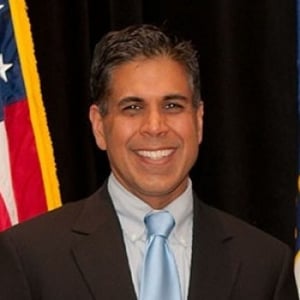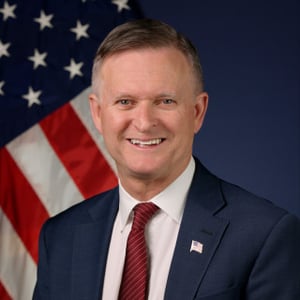
Emily Bremer teaches and writes in the areas of administrative law, regulatory process, and civil procedure. Her scholarship focuses primarily on matters of procedural design, with a recent focus on the history and interpretation of the Administrative Procedure Act (APA). She is a recipient of the AALS’s award for the year’s best administrative law scholarship by a junior scholar and the AALL’s Joseph L. Andrew’s Legal Literature Award for her contribution to the Bremer-Kovacs Collection of Historical Documents Related to the APA (HeinOnline). Bremer’s articles include a defense forthcoming in the Virginia Law Review of the constitutionality of the APA’s regime for ensuring the competence and impartiality of Administrative Law Judges; a plea in the Yale Journal on Regulation for administrative law to take greater account of the on-the-ground reality of administration; twin articles uncovering the intellectual foundation and meaning of the APA’s adjudication and rulemaking provisions; and three separate studies that served as the basis of recommendations of the Administrative Conference of the United States (ACUS) on the subjects of agency declaratory orders, incorporation by reference, and statutory limitations on the jurisdiction of the Court of Federal Claims. Bremer serves as a Senior Fellow of ACUS, a co-editor of the administrative law section of Jotwell, and a regular contributor to the Yale Journal on Regulation’s Notice & Comment blog.
*****
A person listed on this page has spoken or otherwise participated in Federalist Society events, publications, or multimedia presentations. A person's appearance on this list does not imply any other endorsement or relationship between the person and the Federalist Society. In most cases, the biographical information on a person's bio page is provided directly by the person, and the Federalist Society does not edit or otherwise endorse that information. The Federalist Society takes no position on particular legal or public policy issues. All expressions of opinion by a speaker or author are those of the individual.

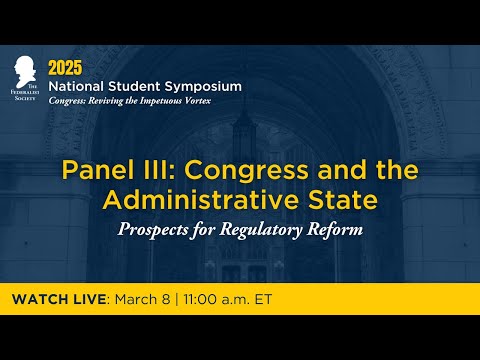
Panel III: Congress and the Administrative State: Prospects for Regulatory Reform
2025 National Student Symposium
Michigan Law Hutchins Hall625 S State St
Ann Arbor, MI 48109
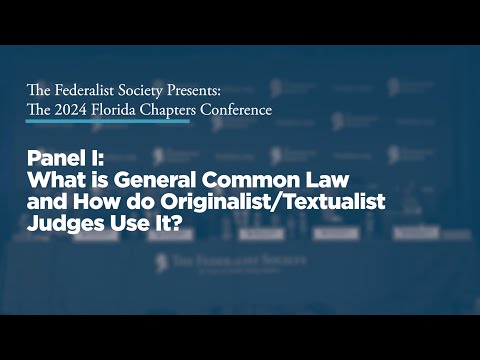
Panel I: What is General Common Law and How do Originalist/Textualist Judges Use It?
2024 Florida Chapters Conference
Gaylord Palms Resort6000 W Osceola Pkwy
Kissimmee, FL 34746
The Administrative State, Its Supporters and Its Discontents
2023 National Lawyers Convention
The Mayflower Hotel1127 Connecticut Avenue NW
Washington, DC 20006

What is the Future of Textualism?
Teleforum
No One Can Own the Law? The Third Circuit's Review of Whether Publishing ASTM Standards is Fair Use
Join us for a webinar examining the Third Circuit’s ongoing review of a decision holding...
No One Can Own the Law? The Third Circuit's Review of Whether Publishing ASTM Standards is Fair Use
Join us for a webinar examining the Third Circuit’s ongoing review of a decision holding...
Panel III: Congress and the Administrative State: Prospects for Regulatory Reform
2025 National Student Symposium
Featuring: Prof. Nicholas Bagley, Thomas G. Long Professor of Law, University of Michigan Law School...
Panel III: Congress and the Administrative State: Prospects for Regulatory Reform
2025 National Student Symposium
Featuring: Prof. Nicholas Bagley, Thomas G. Long Professor of Law, University of Michigan Law School...
Panel I: What is General Common Law and How do Originalist/Textualist Judges Use It?
2024 Florida Chapters Conference
Justice Antonin Scalia succeeded in making textualism the predominant method of legal interpretation. But now...