
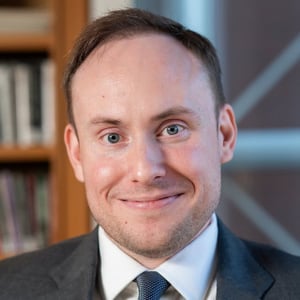
Director, Robert A. Levy Center for Constitutional Studies, Cato Institute
Thomas Berry is the director in the Cato Institute’s Robert A. Levy Center for Constitutional Studies and editor in chief of the Cato Supreme Court Review. Before joining Cato, he was an attorney at Pacific Legal Foundation and clerked for Judge E. Grady Jolly of the U.S. Court of Appeals for the Fifth Circuit. His academic work has appeared in NYU Journal of Law and Liberty, Washington and Lee Law Review Online, and Federalist Society Review. His popular writing has appeared in The Wall Street Journal, National Law Journal, Investor’s Business Daily, National Review Online, and The Hill Online. He has testified before the U.S. Senate, and his work has been cited by the U.S. District Court for the District of Columbia.
Berry holds a J.D. from Stanford Law School, where he was a senior editor on the Stanford Law and Policy Review and a Bradley Student Fellow in the Stanford Constitutional Law Center. He graduated with a B.A. in Liberal Arts from St. John’s College, Santa Fe.
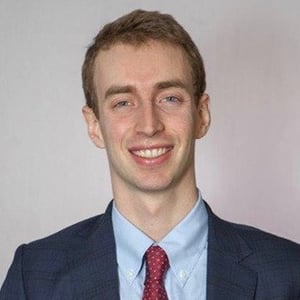
Partner, Boyden Gray PLLC
Jimmy Conde is partner at Boyden Gray PLLC, specializing in energy, environmental, and administrative law, with particular expertise in the Clean Air Act. He has protected clients against agency overreach in cutting-edge and complex legal proceedings, including challenges to EPA, DOE, DOT, and California rules seeking to compel electrification of motor vehicles, the FCC’s universal service fund, Department of Labor Wage & Hour Division rules, and HHS rules interfering with the practice of medicine and sound insurance practices. His written commentary has been published and referenced in the Wall Street Journal, the Washington Examiner, Concurrences (an antitrust publication), and Newsweek, among others.
Mr. Conde began his legal career as an associate with Boyden Gray PLLC. He clerked for Judge Douglas H. Ginsburg in the U.S. Court of Appeals for the D.C. Circuit and Judge David J. Porter in the U.S. Court of Appeals for the Third Circuit.
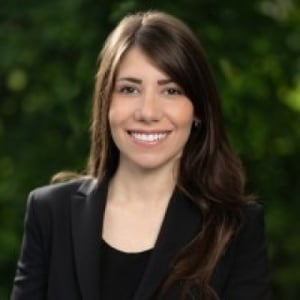
Associate Chief Counsel, U.S. Chamber Litigation Center, U.S. Chamber of Commerce
Maria C. Monaghan is associate chief counsel at the U.S. Chamber Litigation Center, the litigation arm of the U.S. Chamber of Commerce. In this capacity, she handles a variety of litigation matters for the Chamber.
Before joining the Litigation Center, Monaghan practiced as an associate in the D.C. office of Gibson, Dunn & Crutcher LLP. She represented clients in the telecommunications, energy, transportation, and e-commerce sectors, with a focus on appellate litigation and regulatory matters.
Monaghan served as a law clerk to the Honorable Samuel A. Alito of the United States Supreme Court, the Honorable Ed Carnes of the U.S. Court of Appeals for the Eleventh Circuit, and the Honorable Amul R. Thapar of the U.S. Court of Appeals for the Sixth Circuit. She graduated Order of the Coif from the University of Virginia School of Law, where she served as Articles Development Editor for the Virginia Law Review and participated in the Supreme Court Litigation Clinic. She received her undergraduate degree in Human Resource Management and Labor Studies from Rutgers University.
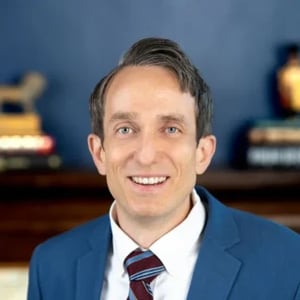
Senior Counsel, America First Legal Foundation
James Rogers is Senior Counsel at America First Legal Foundation, where he litigates in a number of areas, including border security, election integrity, parental rights, and administrative and constitutional law. Before joining America First Legal, from 2021 to 2022, he was Senior Litigation Counsel at the Solicitor General’s Office of the Arizona Attorney General’s Office. While there, he spearheaded lawsuits against the Biden Administration’s destructive open borders policies and its COVID19 vaccine mandates. From 2015 to 2021, James was a Foreign Service Officer at the U.S. Department of State, where he worked in the Office of the Assistant Legal Advisor for Consular Affairs, at the U.S. Consulate in Porto Alegre, Brazil, and at the U.S. Embassy in Windhoek, Namibia.
Prior to joining the Department of State, he was a commercial litigation partner at Osborn Maledon, a Phoenix-based firm with a #1 litigation ranking from Chambers and Partners. James earned a J.D. from Harvard Law School in 2009, an L.L.M. in International Law from the University of Cambridge in 2008, and a B.A., with honors, in International Studies from Brigham Young University in 2005. He is a sixth-generation Arizonan and lives in Mesa, Arizona, with his four children.
Partner, Marshall, Gerstein & Borun LLP
Ryan Schermerhorn is a registered patent attorney in the firm's Industrial & Mechanical Technologies Practice Group. His engineering background provides him with an understanding of clients’ technologies and enables him to effectively and efficiently provide a range of patent procurement services. He also leverages his experience to assist on intellectual property litigation as well as develop strategies for acquiring and protecting intellectual property.
Since 2017, Ryan has been listed as an "Emerging Lawyer" by Emerging Lawyers Magazine and has been selected for inclusion in the Illinois Rising Stars® lists. Ryan was recognized in Chicago Daily Law Bulletin's 2023 40 Under Forty list. Since 2024, Ryan has been selected for inclusion in The Best Lawyers in America© list in the practice areas of Litigation - Patent and Patent Law. In 2025, Ryan was selected by the Law Bulletin Publishing Company’s Leading Lawyer Network as a “Leading Lawyer.”

Former Acting Deputy Director of the EPA; Partner, Holland & Hart
Doug brings a sophisticated understanding of environmental policy and compliance from his high-level leadership roles at federal and state agencies, including serving as the EPA Acting Deputy Administrator and the EPA Region 8 Administrator. Doug also worked in the United States Congress where he worked on major environmental and infrastructure legislation. He draws on this expertise and strong working relationships with regulators across the Mountain West and in Washington, DC to advocate for client solutions through policy, regulatory, legal and legislative avenues.
Doug guides companies to understand and respond to the cutting edge regulatory impacts energy and environmental issues like climate change, emerging contaminants like PFAS, environmental justice, and other enforcement and regulatory challenges. As the former Executive Director of the Colorado Department of Public Health and Environment, clients turn to Doug for his public health background and ability to proactively identify and develop solutions. He is also currently serving as President of Douglas County, Colorado Board of Health.
His role as a senior executive at Xcel Energy, gives him valuable insight into the challenges corporations face navigating with complex regulatory regimes, myriad regulations. He counsels companies from diverse sectors in the development of permitting and compliance strategies, and represents clients in enforcement actions and rulemaking proceedings before state and federal agencies.

Former Acting Assistant Attorney General, United States Department of Justice; Partner, Winston & Strawn LLP
Jonathan “Jon” Brightbill is a trial and appellate lawyer in Winston’s Washington, D.C. office, and a partner in the firm’s Litigation and White Collar, Regulatory Defense, and Investigations Practices. He represents public and private companies, corporate officers, and other individuals across white collar, regulatory defense, and government and internal investigation matters and rulemaking challenges, as well as complex commercial disputes, citizen suits, and class actions. His commercial litigation experience encompasses business disputes, false advertising, consumer protection and fraud, FCA, and extensive class action defense work; antitrust and unfair competition matters; and intellectual property litigation, such as trademarks, patents, and trade secrets.
Jon served as the Nation’s lead environmental civil and criminal enforcement official and litigator, as Acting Assistant Attorney General for the Environment & Natural Resources Division (“ENRD”) of the U.S. Department of Justice (DOJ). Jon led ENRD’s 425 lawyers, overseeing 6,500 active matters and managing an annual budget of more than $150 million. Jon brings highly experienced executive leadership from among the most senior level of DOJ on white collar and regulatory enforcement, as well as on federal policymaking and rulemaking development and challenges. He speaks with authority on government decision-making processes, and the arguments and perspectives that move regulators and enforcers, best advising and positioning clients to deal with challenges.
Jon argued many of the government’s most significant cases during his time with the DOJ. This included the Navigable Waters Protection Rule and Clean Water Rule Repeal (10th Cir., district courts), the Affordable Clean Energy Rule and Clean Power Plan Repeal (D.C. Cir), defense of EPA actions on pesticide tolerances under FIFRA and the FDCA (9th Cir. en banc), among numerous others. Jon represented the United States in trial courts in both enforcement and defensive cases, including federal enforcement action against Jeffrey Lowe and the Tiger King Park, of Netflix fame, securing a first-of-its-kind injunction for violations of the Endangered Species Act and Animal Welfare Act. Jon directed the litigation and briefing of scores of additional federal cases nationwide, covering all of the major environmental and natural resources statutes, such as the Clean Air Act, the Clean Water Act, FIFRA (pesticides), FDCA (food safety), TSCA (toxics), CERCLA (land remediation), RCRA (waste), National Environmental Policy Act, Federal Land Policy and Management Act, and numerous other land- and resource-management statutes.
Jon has unmatched experience litigating legal and technical issues relating to climate change. He argued in the courts of appeals, including the D.C. Circuit, regarding the most significant climate change regulations by EPA, as well as the preemptive scope of the Clean Air Act. Jon also litigated climate change-related credit and trading schemes and international agreements in district court. During Jon’s time in leadership at ENRD, it successfully defeated one of the most wide-ranging lawsuits regarding climate change to date—obtaining a stay pending interlocutory appeal and dismissal just weeks before a scheduled three-month trial on federal government liability for climate change.
An accomplished trial lawyer, prior to working at DOJ, Jon was a partner in the Washington, D.C. office of another global law firm. He not only represents clients in court, but creatively counsels corporations on balancing business needs and realities with a broad range of litigation risks and compliance obligations. Jon is also an Adjunct Professor at Georgetown University Law Center. He served on the American Bar Association’s E-Discovery Working Group for Bankruptcy Practice, and was a frequent lecturer for District of Columbia Bar Association Continuing Legal Education Programs.
Jon served as an appellate clerk for the Honorable D. Brooks Smith, U.S. Court of Appeals for the Third Circuit, after graduating magna cum laude from the Georgetown University Law Center. He worked in state government as an Executive Policy Specialist for air, waste, land remediation, and radiation matters at the Pennsylvania Department of Environmental Protection.

Laurence A. Tisch Professor of Law and Director, Classical Liberal Institute, New York University School of Law; Director, Classical Liberal Institute, Civitas Institute University of Texas at Austin
Richard A. Epstein is the Laurence A. Tisch Professor of Law, at New York University, a senior research fellow at the Civitas Institute at the University of Texas Austin, and a senior Lecturer, the University of Chicago. He received an LL.D., h.c . from the University of Ghent, 2003 , and an LLD h.c . from the University of Siegen in 2018 and the Bradley Prize in 2011. He has been a member of the American Academy of Arts and Sciences since 1985. He has edited both the Journal of Legal Studies (1981-1991) and the Journal of Law and Economics (1991-2001). He is also a founder and director of the Classical Liberal Institute at NYU Law School. His most recent book is The Classical Liberal Constitution: The Uncertain Quest for Limited Government (2014). His other books include Takings: Private Property and the Power of Eminent Domain ( 1985); Bargaining with the State (1993); Simple Rules for a Complex World (1995); Principles for a Free Society: Reconciling Individual Liberty and the Common Good (1998); Skepticism and Freedom: A Modern Theory of Classical Liberalism (2003); Design for Liberty: Private Property, Public Administration and the Rule of Law (2011), and most recently, The Myth of Birthright citizenship—and Beyond (2026). He has taught courses in , administrative law, antitrust, constitutional, contracts, environmental law, land use planning; real property, torts and water law. He has written and spoken extensively on a wide range of topics, and is writes a regular column for Defining Ideas.
Emmett Visiting Assistant Clinical Professor of Law in Environmental Law, Harvard Law School
Andrew Mergen is a Visiting Assistant Clinical Professor of Law and Faculty Director of the Emmett Environmental Law & Policy Clinic. Prior to joining the Harvard Law School faculty, Andrew Mergen served in the Appellate Section of the Environment & Natural Resources Division (ENRD) at the United States Department of Justice. Professor Mergen began his career at the Justice Department in the Honors Program and concluded his career as Chief of ENRD’s Appellate Section. He has presented oral arguments in all 13 federal courts of appeals, including two en banc courts, and before several state intermediate and supreme courts. He has also worked on over a dozen merits cases in the Supreme Court of the United States. In addition, in 2009, Professor Mergen assisted the Office of White House Counsel on the confirmation of the Honorable Sonia Sotomayor as Associate Justice of the Supreme Court. During his career at the Justice Department, Professor Mergen received the Attorney General’s Award for Distinguished Service three times. He also received ENRD’s Muskee-Chafee Award, honoring his work’s significant contribution to protecting the environment.
Before entering clinical teaching, Professor Mergen taught at several law schools including, Harvard Law School (Advanced Environmental Law), the University of Michigan Law School (Natural Resources Law) and the William S. Richardson School of Law, University of Hawaii-Manoa (Administrative Law). Professor Mergen has written about federal water rights in “A Misplaced Sensitivity: The Draft Opinions in Wyoming v. United States” (68 Colo. L. Rev. 683 (1997), with Sylvia F. Liu); energy development on public lands in “Surface Tension: The Problem of Federal Private Split Estates” (33 Land & Water L. Rev. 419 (1998)); climate change and the Endangered Species Act in “The Role of Climate Change in ESA Listing Decisions” (53 Rocky Mt. Min. L. Fdn. 67 (2016), with Murray Feldman) and the accommodation of Native American sacred sites on federal land in “Finding the Path Forward for Indigenous Sacred and Cultural Spaces on Federal Public Land,” 68 Nat. Resources & Energy L. Inst. 32-1 (2022). Professor Mergen is a graduate of the University of Wisconsin—Madison and the George Washington University Law School.
Robert F. Stanton Professor of Law, University of Maryland Carey School of Law
Robert V. Percival is the Robert F. Stanton Professor of Law and the Director of the Environmental Law Program at the University of Maryland School of Law. He received a B.A. summa cum laude from Macalester College, a J.D. from Stanford Law School and an M.A. in economics from Stanford University. At Stanford Percival was named the Nathan Abbott Scholar for graduating first in his law school class. Following graduation, he served as a law clerk for Judge Shirley M. Hufstedler of the U.S. Court of Appeals for the Ninth Circuit and for U.S. Supreme Court Justice Byron R. White. He joined the Maryland faculty in 1987 after serving as a senior attorney for the Environmental Defense Fund. Percival has served as a visiting professor of law at Harvard Law School, Georgetown University Law Center, the China University of Political Science and Law (Beijing), and Comenius University (Bratislava). He is the principal author of a leading environmental law casebook, now in its 9th edition, and the author of several articles about the Supreme Court and presidential authority over executive agencies. Percival wrote one of the first articles on the propriety of consent decrees to effectuate and enforce federal law “The Bounds of Consent: Consent Decrees, Settlements and Federal Environmental Policymaking,” 1987 Univ. Chic. Leg. F. 327 (1987). He also is the author of the first comprehensive analyses of what the papers of the late Justices Thurgood Marshall and Harry Blackmun reveal about the Supreme Court’s handling of environmental cases (“Environmental Law in the Supreme Court: Highlights from the Blackmun Papers,” 35 ELR 10637 (2005), and “Environmental Law in the Supreme Court: Highlights from the Marshall Papers,” 13 ELR 10606 (Oct. 1993)).
Auditor of Public Accounts, Commonwealth of Kentucky
Allison Ball is the 48th Auditor of Public Accounts for the Commonwealth of Kentucky. Prior to being elected Auditor, Ball served two terms as Kentucky State Treasurer. Before that, she spent four years as Assistant Floyd County Attorney, prosecuting child abuse and juvenile delinquency cases. When first appointed to office, Ball was the youngest statewide elected official in the country.
Ball has a rich Kentucky history; her family has been in Eastern Kentucky since the 1790s, and she holds a degree from the University of Kentucky College of Law.
She is a fierce watchdog for Kentucky taxpayer dollars. As Auditor, Ball protects against waste, fraud, and abuse.
As Treasurer, she returned more unclaimed property than any Treasurer in state history and established a savings and investment program for people with disabilities. She has been a national leader for improved financial literacy; Ball established the Kentucky Financial Empowerment Commission, and she successfully advocated for a financial literacy high school graduation requirement.
A Floyd County native, Ball and her husband, Dr. Asa James Swan, have two children, Levi and Marigold. Upon birth of her son, she was the first Kentucky Constitutional Officer to give birth while in office.

Attorney General, Commonwealth of Kentucky
Daniel Cameron is the CEO of the 1792 Exchange, working to protect free exercise, free speech, and free enterprise and help American corporations return to the winning formula of producing great products and services, not pushing agendas.
Daniel previously served as the 51st Attorney General of Kentucky from 2019 to 2023. He was the first black American elected to a standalone statewide office in Kentucky’s history. Daniel then went on to win the Republican nomination for governor of Kentucky.
He grew up in Elizabethtown, Kentucky and attended the University of Louisville, where he played football for the Cardinals. After graduating from Brandeis School of Law, he clerked for a federal judge. Daniel later served as legal counsel to United States Senator Mitch McConnell.
Daniel and his wife are blessed with two sons: Theodore and Bennett. They reside in Louisville, Kentucky, a place they proudly call home.
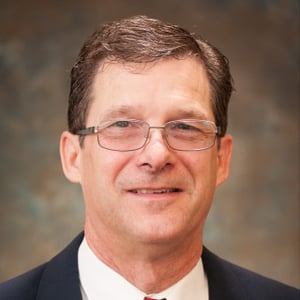
Professor of Accountancy, University of Louisville School of Business
Dr. Foster, CPA, CMA, CGMA, received his PhD in accounting from the University of Tennessee, an MBA from Murray State University, and a BA in accounting from Kentucky Wesleyan College. He has also taught at Eastern Kentucky University and Heilbronn University in Heilbronn, Germany. Dr. Foster has published in a wide variety of professional and academic accounting journals on various topics including financial distress prediction, costs and costing methods in organizations, and diversity and corporate value. He served as vice president and controller of a small business, and initially worked with local CPA firms.
Dr. Foster currently serves on the Hosporus Finance Committee and as President of the Kentucky Association of Scholars.

General Counsel, Strive
Before joining Strive, Alexandra served as the Director of Regulatory Affairs at River Financial, where she handled all regulatory and government matters and served as product counsel. Prior to her time at River, Alexandra worked at the U.S. Department of Treasury, first in the General Counsel’s office and then as the youngest-ever Executive Secretary, where she worked directly with Secretary Mnuchin. Alexandra previously worked as an associate in the Washington, D.C. office of Akin Gump. She clerked for then-Justice Allison Eid on the Colorado Supreme Court and Judge Jennifer Elrod on the U.S. Court of Appeals for the Fifth Circuit. She holds a J.D. from the University of Texas and a B.A. from The King’s College.
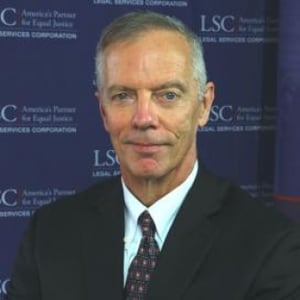
Counsel to the Attorney General for Special Litigation, Office of the Kentucky Attorney General
Vic litigates matters involving strategically important policy and constitutional issues affecting the lives of Kentuckians across the Commonwealth. Previously, he served as Deputy Attorney General. Prior to joining the Attorney General’s office, Vic was engaged in the private practice of law for 38 years. He also served as a trial attorney with the Civil Division of the United States Department of Justice and served as Counsel on the United States Senate Judiciary Committee for Senator Mitch McConnell, where he provided legal and policy advice to the Senator.
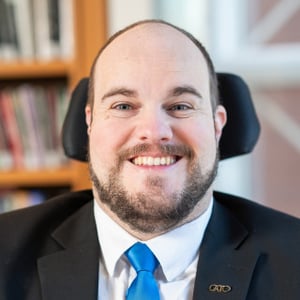
Director, Project on Criminal Justice, Cato Institute
Matthew Cavedon is the Director of the Cato Institute’s Project on Criminal Justice. He focuses on reforming plea-driven mass adjudication, ensuring police accountability, and defending constitutional criminal originalism. Cavedon’s scholarship has been published (or is forthcoming in) publications including the Arizona State Law Journal, Cato Supreme Court Review, Seattle University Law Review, and Georgetown Journal of Law and Public Policy. Formerly a Georgia public defender and fellow at the Institute for Justice, Cavedon has taught law school courses on criminal law and procedure, as well as the First Amendment. Cavedon clerked for a U.S. district court and the Supreme Court of Georgia. He came to Cato following a fellowship at the Emory University Center for the Study of Law and Religion.

Chief Counsel, Legal Policy, Koch Capabilities, LLC
Sarah Field is Chief Counsel, Legal Policy at Koch Capabilities, LLC, where she develops and scales Koch-wide strategic policy initiatives on a variety of legal, judicial, and regulatory topics.
Sarah specializes in leading initiatives that require rapid vision development, start-up, and scaling expertise. This has included leading criminal justice reform and constitutionally limited government initiatives for the Stand Together community, overseeing the comprehensive portfolio of the Stand Together community’s issue areas, driving Americans for Prosperity’s long-term vision and strategy for addressing the country’s political environment, and leading judicial engagement strategy at Americans for Prosperity.
Before that, Sarah served as Executive Director of the Center for Shared Services, which provided compliance, talent development, and operational support for the Stand Together community. Previously, Sarah held roles at the Charles Koch Foundation, the Federalist Society, and a variety of other nonprofit organizations.
Sarah serves on the board of Americans for Public Safety, an organization dedicated to public safety, justice, and the rule of law.
Sarah received her B.A. from Grove City College, her law degree from Case Western Reserve University School of Law, and is an alumna of the Koch Associate Program.
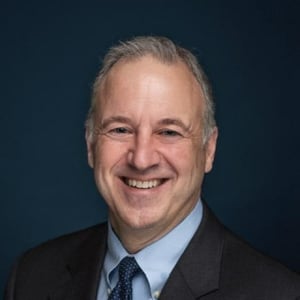
Senior Counsel, Litigation, Defense of Freedom Institute
Don Daugherty is Senior Counsel, Litigation, at the Defense of Freedom Institute for Policy Studies. He previously served as a Senior Counsel at the Institute for Free Speech and the Wisconsin Institute for Law & Liberty. Before that, he was a partner at three of Wisconsin’s largest firms, with nearly 30 years of trial and appellate litigation experience. He has been consistently recognized as among the “Best Lawyers in America,” as well as Wisconsin’s “Super Lawyers.” He received his B.A. from the University of Virginia and his J.D. from Northwestern University Law School. After law school, he served as a clerk to the Honorable Roger J. Miner of the United States Court of Appeals for the Second Circuit.
Don is on the Board of Advisors for the Milwaukee Lawyers’ Chapter of the Federalist Society, and on the Executive Committee of the Federalist Society’s Litigation Practice Group.
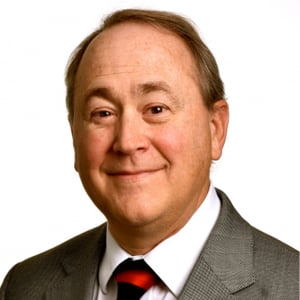
David C. Tryon is the director of litigation at The Buckeye Institute. In this role, he supervises all litigation and outside litigation counsel and actively participates in Buckeye’s cases in both state and federal court.
Immediately prior to joining Buckeye, Tryon served as deputy solicitor general in the West Virginia Attorney General’s office, where he handled both trials and appellate matters, including preparing amicus curiae briefs. Many of the matters either challenged federal laws and regulations that infringed on state’s rights or defended the validity of West Virginia laws against constitutional challenges.
Tryon served as the deputy assistant secretary for policy and development in the Office for Civil Rights in the U.S. Department of Education from 2019-2020. While there, he assisted with developing and implementing new policies and guidance and was responsible for the Civil Rights Data Collection, which covers all primary and secondary schools receiving federal funds.
Nominated as the chief counsel for advocacy at the U.S. Small Business Administration, Tryon was favorably voted out of the Senate Committee on Small Business and Entrepreneurship. In connection with his nomination, he had numerous meetings with small business organizations to learn the concerns and needs of small businesses.
Tryon has had more than 30 years of commercial litigation experience in state and federal courts, including trials and appeals. Several of these cases involved the U.S. Constitution or the Ohio Constitution. In Arnold v. City of Cleveland, he was successful in having the Ohio Supreme Court declare the right to bear arms a fundamental right under the Ohio Constitution.
Tryon has dedicated much of his time to civic affairs. He served on the local school board for four years, two of those as school board president. During his nine years on the Executive Board for the Greater Cleveland Council of the Boy Scouts of America, he organized two major parades, created a personnel committee for leadership training of professional staff, and was involved in restructuring the Council. From 2015 to 2020, he served on the Ohio Advisory Committee to the United States Commission on Civil Rights. He was part of a select group to participate in Leadership Cleveland, Class of 2016. He also led the Cleveland Lawyers Chapter of the Federalist Society for nearly 20 years.
Tryon received a Bachelor of Science Degree (magna cum laude) from Brigham Young University and his Juris Doctorate (cum laude) from the University of Michigan.
Former Acting Assistant Attorney General, United States Department of Justice; Partner, Winston & Strawn LLP
Jonathan “Jon” Brightbill is a trial and appellate lawyer in Winston’s Washington, D.C. office, and a partner in the firm’s Litigation and White Collar, Regulatory Defense, and Investigations Practices. He represents public and private companies, corporate officers, and other individuals across white collar, regulatory defense, and government and internal investigation matters and rulemaking challenges, as well as complex commercial disputes, citizen suits, and class actions. His commercial litigation experience encompasses business disputes, false advertising, consumer protection and fraud, FCA, and extensive class action defense work; antitrust and unfair competition matters; and intellectual property litigation, such as trademarks, patents, and trade secrets.
Jon served as the Nation’s lead environmental civil and criminal enforcement official and litigator, as Acting Assistant Attorney General for the Environment & Natural Resources Division (“ENRD”) of the U.S. Department of Justice (DOJ). Jon led ENRD’s 425 lawyers, overseeing 6,500 active matters and managing an annual budget of more than $150 million. Jon brings highly experienced executive leadership from among the most senior level of DOJ on white collar and regulatory enforcement, as well as on federal policymaking and rulemaking development and challenges. He speaks with authority on government decision-making processes, and the arguments and perspectives that move regulators and enforcers, best advising and positioning clients to deal with challenges.
Jon argued many of the government’s most significant cases during his time with the DOJ. This included the Navigable Waters Protection Rule and Clean Water Rule Repeal (10th Cir., district courts), the Affordable Clean Energy Rule and Clean Power Plan Repeal (D.C. Cir), defense of EPA actions on pesticide tolerances under FIFRA and the FDCA (9th Cir. en banc), among numerous others. Jon represented the United States in trial courts in both enforcement and defensive cases, including federal enforcement action against Jeffrey Lowe and the Tiger King Park, of Netflix fame, securing a first-of-its-kind injunction for violations of the Endangered Species Act and Animal Welfare Act. Jon directed the litigation and briefing of scores of additional federal cases nationwide, covering all of the major environmental and natural resources statutes, such as the Clean Air Act, the Clean Water Act, FIFRA (pesticides), FDCA (food safety), TSCA (toxics), CERCLA (land remediation), RCRA (waste), National Environmental Policy Act, Federal Land Policy and Management Act, and numerous other land- and resource-management statutes.
Jon has unmatched experience litigating legal and technical issues relating to climate change. He argued in the courts of appeals, including the D.C. Circuit, regarding the most significant climate change regulations by EPA, as well as the preemptive scope of the Clean Air Act. Jon also litigated climate change-related credit and trading schemes and international agreements in district court. During Jon’s time in leadership at ENRD, it successfully defeated one of the most wide-ranging lawsuits regarding climate change to date—obtaining a stay pending interlocutory appeal and dismissal just weeks before a scheduled three-month trial on federal government liability for climate change.
An accomplished trial lawyer, prior to working at DOJ, Jon was a partner in the Washington, D.C. office of another global law firm. He not only represents clients in court, but creatively counsels corporations on balancing business needs and realities with a broad range of litigation risks and compliance obligations. Jon is also an Adjunct Professor at Georgetown University Law Center. He served on the American Bar Association’s E-Discovery Working Group for Bankruptcy Practice, and was a frequent lecturer for District of Columbia Bar Association Continuing Legal Education Programs.
Jon served as an appellate clerk for the Honorable D. Brooks Smith, U.S. Court of Appeals for the Third Circuit, after graduating magna cum laude from the Georgetown University Law Center. He worked in state government as an Executive Policy Specialist for air, waste, land remediation, and radiation matters at the Pennsylvania Department of Environmental Protection.
Laurence A. Tisch Professor of Law and Director, Classical Liberal Institute, New York University School of Law; Director, Classical Liberal Institute, Civitas Institute University of Texas at Austin
Richard A. Epstein is the Laurence A. Tisch Professor of Law, at New York University, a senior research fellow at the Civitas Institute at the University of Texas Austin, and a senior Lecturer, the University of Chicago. He received an LL.D., h.c . from the University of Ghent, 2003 , and an LLD h.c . from the University of Siegen in 2018 and the Bradley Prize in 2011. He has been a member of the American Academy of Arts and Sciences since 1985. He has edited both the Journal of Legal Studies (1981-1991) and the Journal of Law and Economics (1991-2001). He is also a founder and director of the Classical Liberal Institute at NYU Law School. His most recent book is The Classical Liberal Constitution: The Uncertain Quest for Limited Government (2014). His other books include Takings: Private Property and the Power of Eminent Domain ( 1985); Bargaining with the State (1993); Simple Rules for a Complex World (1995); Principles for a Free Society: Reconciling Individual Liberty and the Common Good (1998); Skepticism and Freedom: A Modern Theory of Classical Liberalism (2003); Design for Liberty: Private Property, Public Administration and the Rule of Law (2011), and most recently, The Myth of Birthright citizenship—and Beyond (2026). He has taught courses in , administrative law, antitrust, constitutional, contracts, environmental law, land use planning; real property, torts and water law. He has written and spoken extensively on a wide range of topics, and is writes a regular column for Defining Ideas.
Emmett Visiting Assistant Clinical Professor of Law in Environmental Law, Harvard Law School
Andrew Mergen is a Visiting Assistant Clinical Professor of Law and Faculty Director of the Emmett Environmental Law & Policy Clinic. Prior to joining the Harvard Law School faculty, Andrew Mergen served in the Appellate Section of the Environment & Natural Resources Division (ENRD) at the United States Department of Justice. Professor Mergen began his career at the Justice Department in the Honors Program and concluded his career as Chief of ENRD’s Appellate Section. He has presented oral arguments in all 13 federal courts of appeals, including two en banc courts, and before several state intermediate and supreme courts. He has also worked on over a dozen merits cases in the Supreme Court of the United States. In addition, in 2009, Professor Mergen assisted the Office of White House Counsel on the confirmation of the Honorable Sonia Sotomayor as Associate Justice of the Supreme Court. During his career at the Justice Department, Professor Mergen received the Attorney General’s Award for Distinguished Service three times. He also received ENRD’s Muskee-Chafee Award, honoring his work’s significant contribution to protecting the environment.
Before entering clinical teaching, Professor Mergen taught at several law schools including, Harvard Law School (Advanced Environmental Law), the University of Michigan Law School (Natural Resources Law) and the William S. Richardson School of Law, University of Hawaii-Manoa (Administrative Law). Professor Mergen has written about federal water rights in “A Misplaced Sensitivity: The Draft Opinions in Wyoming v. United States” (68 Colo. L. Rev. 683 (1997), with Sylvia F. Liu); energy development on public lands in “Surface Tension: The Problem of Federal Private Split Estates” (33 Land & Water L. Rev. 419 (1998)); climate change and the Endangered Species Act in “The Role of Climate Change in ESA Listing Decisions” (53 Rocky Mt. Min. L. Fdn. 67 (2016), with Murray Feldman) and the accommodation of Native American sacred sites on federal land in “Finding the Path Forward for Indigenous Sacred and Cultural Spaces on Federal Public Land,” 68 Nat. Resources & Energy L. Inst. 32-1 (2022). Professor Mergen is a graduate of the University of Wisconsin—Madison and the George Washington University Law School.
Robert F. Stanton Professor of Law, University of Maryland Carey School of Law
Robert V. Percival is the Robert F. Stanton Professor of Law and the Director of the Environmental Law Program at the University of Maryland School of Law. He received a B.A. summa cum laude from Macalester College, a J.D. from Stanford Law School and an M.A. in economics from Stanford University. At Stanford Percival was named the Nathan Abbott Scholar for graduating first in his law school class. Following graduation, he served as a law clerk for Judge Shirley M. Hufstedler of the U.S. Court of Appeals for the Ninth Circuit and for U.S. Supreme Court Justice Byron R. White. He joined the Maryland faculty in 1987 after serving as a senior attorney for the Environmental Defense Fund. Percival has served as a visiting professor of law at Harvard Law School, Georgetown University Law Center, the China University of Political Science and Law (Beijing), and Comenius University (Bratislava). He is the principal author of a leading environmental law casebook, now in its 9th edition, and the author of several articles about the Supreme Court and presidential authority over executive agencies. Percival wrote one of the first articles on the propriety of consent decrees to effectuate and enforce federal law “The Bounds of Consent: Consent Decrees, Settlements and Federal Environmental Policymaking,” 1987 Univ. Chic. Leg. F. 327 (1987). He also is the author of the first comprehensive analyses of what the papers of the late Justices Thurgood Marshall and Harry Blackmun reveal about the Supreme Court’s handling of environmental cases (“Environmental Law in the Supreme Court: Highlights from the Blackmun Papers,” 35 ELR 10637 (2005), and “Environmental Law in the Supreme Court: Highlights from the Marshall Papers,” 13 ELR 10606 (Oct. 1993)).
Former Acting Assistant Attorney General, United States Department of Justice; Partner, Winston & Strawn LLP
Jonathan “Jon” Brightbill is a trial and appellate lawyer in Winston’s Washington, D.C. office, and a partner in the firm’s Litigation and White Collar, Regulatory Defense, and Investigations Practices. He represents public and private companies, corporate officers, and other individuals across white collar, regulatory defense, and government and internal investigation matters and rulemaking challenges, as well as complex commercial disputes, citizen suits, and class actions. His commercial litigation experience encompasses business disputes, false advertising, consumer protection and fraud, FCA, and extensive class action defense work; antitrust and unfair competition matters; and intellectual property litigation, such as trademarks, patents, and trade secrets.
Jon served as the Nation’s lead environmental civil and criminal enforcement official and litigator, as Acting Assistant Attorney General for the Environment & Natural Resources Division (“ENRD”) of the U.S. Department of Justice (DOJ). Jon led ENRD’s 425 lawyers, overseeing 6,500 active matters and managing an annual budget of more than $150 million. Jon brings highly experienced executive leadership from among the most senior level of DOJ on white collar and regulatory enforcement, as well as on federal policymaking and rulemaking development and challenges. He speaks with authority on government decision-making processes, and the arguments and perspectives that move regulators and enforcers, best advising and positioning clients to deal with challenges.
Jon argued many of the government’s most significant cases during his time with the DOJ. This included the Navigable Waters Protection Rule and Clean Water Rule Repeal (10th Cir., district courts), the Affordable Clean Energy Rule and Clean Power Plan Repeal (D.C. Cir), defense of EPA actions on pesticide tolerances under FIFRA and the FDCA (9th Cir. en banc), among numerous others. Jon represented the United States in trial courts in both enforcement and defensive cases, including federal enforcement action against Jeffrey Lowe and the Tiger King Park, of Netflix fame, securing a first-of-its-kind injunction for violations of the Endangered Species Act and Animal Welfare Act. Jon directed the litigation and briefing of scores of additional federal cases nationwide, covering all of the major environmental and natural resources statutes, such as the Clean Air Act, the Clean Water Act, FIFRA (pesticides), FDCA (food safety), TSCA (toxics), CERCLA (land remediation), RCRA (waste), National Environmental Policy Act, Federal Land Policy and Management Act, and numerous other land- and resource-management statutes.
Jon has unmatched experience litigating legal and technical issues relating to climate change. He argued in the courts of appeals, including the D.C. Circuit, regarding the most significant climate change regulations by EPA, as well as the preemptive scope of the Clean Air Act. Jon also litigated climate change-related credit and trading schemes and international agreements in district court. During Jon’s time in leadership at ENRD, it successfully defeated one of the most wide-ranging lawsuits regarding climate change to date—obtaining a stay pending interlocutory appeal and dismissal just weeks before a scheduled three-month trial on federal government liability for climate change.
An accomplished trial lawyer, prior to working at DOJ, Jon was a partner in the Washington, D.C. office of another global law firm. He not only represents clients in court, but creatively counsels corporations on balancing business needs and realities with a broad range of litigation risks and compliance obligations. Jon is also an Adjunct Professor at Georgetown University Law Center. He served on the American Bar Association’s E-Discovery Working Group for Bankruptcy Practice, and was a frequent lecturer for District of Columbia Bar Association Continuing Legal Education Programs.
Jon served as an appellate clerk for the Honorable D. Brooks Smith, U.S. Court of Appeals for the Third Circuit, after graduating magna cum laude from the Georgetown University Law Center. He worked in state government as an Executive Policy Specialist for air, waste, land remediation, and radiation matters at the Pennsylvania Department of Environmental Protection.
Laurence A. Tisch Professor of Law and Director, Classical Liberal Institute, New York University School of Law; Director, Classical Liberal Institute, Civitas Institute University of Texas at Austin
Richard A. Epstein is the Laurence A. Tisch Professor of Law, at New York University, a senior research fellow at the Civitas Institute at the University of Texas Austin, and a senior Lecturer, the University of Chicago. He received an LL.D., h.c . from the University of Ghent, 2003 , and an LLD h.c . from the University of Siegen in 2018 and the Bradley Prize in 2011. He has been a member of the American Academy of Arts and Sciences since 1985. He has edited both the Journal of Legal Studies (1981-1991) and the Journal of Law and Economics (1991-2001). He is also a founder and director of the Classical Liberal Institute at NYU Law School. His most recent book is The Classical Liberal Constitution: The Uncertain Quest for Limited Government (2014). His other books include Takings: Private Property and the Power of Eminent Domain ( 1985); Bargaining with the State (1993); Simple Rules for a Complex World (1995); Principles for a Free Society: Reconciling Individual Liberty and the Common Good (1998); Skepticism and Freedom: A Modern Theory of Classical Liberalism (2003); Design for Liberty: Private Property, Public Administration and the Rule of Law (2011), and most recently, The Myth of Birthright citizenship—and Beyond (2026). He has taught courses in , administrative law, antitrust, constitutional, contracts, environmental law, land use planning; real property, torts and water law. He has written and spoken extensively on a wide range of topics, and is writes a regular column for Defining Ideas.
Emmett Visiting Assistant Clinical Professor of Law in Environmental Law, Harvard Law School
Andrew Mergen is a Visiting Assistant Clinical Professor of Law and Faculty Director of the Emmett Environmental Law & Policy Clinic. Prior to joining the Harvard Law School faculty, Andrew Mergen served in the Appellate Section of the Environment & Natural Resources Division (ENRD) at the United States Department of Justice. Professor Mergen began his career at the Justice Department in the Honors Program and concluded his career as Chief of ENRD’s Appellate Section. He has presented oral arguments in all 13 federal courts of appeals, including two en banc courts, and before several state intermediate and supreme courts. He has also worked on over a dozen merits cases in the Supreme Court of the United States. In addition, in 2009, Professor Mergen assisted the Office of White House Counsel on the confirmation of the Honorable Sonia Sotomayor as Associate Justice of the Supreme Court. During his career at the Justice Department, Professor Mergen received the Attorney General’s Award for Distinguished Service three times. He also received ENRD’s Muskee-Chafee Award, honoring his work’s significant contribution to protecting the environment.
Before entering clinical teaching, Professor Mergen taught at several law schools including, Harvard Law School (Advanced Environmental Law), the University of Michigan Law School (Natural Resources Law) and the William S. Richardson School of Law, University of Hawaii-Manoa (Administrative Law). Professor Mergen has written about federal water rights in “A Misplaced Sensitivity: The Draft Opinions in Wyoming v. United States” (68 Colo. L. Rev. 683 (1997), with Sylvia F. Liu); energy development on public lands in “Surface Tension: The Problem of Federal Private Split Estates” (33 Land & Water L. Rev. 419 (1998)); climate change and the Endangered Species Act in “The Role of Climate Change in ESA Listing Decisions” (53 Rocky Mt. Min. L. Fdn. 67 (2016), with Murray Feldman) and the accommodation of Native American sacred sites on federal land in “Finding the Path Forward for Indigenous Sacred and Cultural Spaces on Federal Public Land,” 68 Nat. Resources & Energy L. Inst. 32-1 (2022). Professor Mergen is a graduate of the University of Wisconsin—Madison and the George Washington University Law School.
Robert F. Stanton Professor of Law, University of Maryland Carey School of Law
Robert V. Percival is the Robert F. Stanton Professor of Law and the Director of the Environmental Law Program at the University of Maryland School of Law. He received a B.A. summa cum laude from Macalester College, a J.D. from Stanford Law School and an M.A. in economics from Stanford University. At Stanford Percival was named the Nathan Abbott Scholar for graduating first in his law school class. Following graduation, he served as a law clerk for Judge Shirley M. Hufstedler of the U.S. Court of Appeals for the Ninth Circuit and for U.S. Supreme Court Justice Byron R. White. He joined the Maryland faculty in 1987 after serving as a senior attorney for the Environmental Defense Fund. Percival has served as a visiting professor of law at Harvard Law School, Georgetown University Law Center, the China University of Political Science and Law (Beijing), and Comenius University (Bratislava). He is the principal author of a leading environmental law casebook, now in its 9th edition, and the author of several articles about the Supreme Court and presidential authority over executive agencies. Percival wrote one of the first articles on the propriety of consent decrees to effectuate and enforce federal law “The Bounds of Consent: Consent Decrees, Settlements and Federal Environmental Policymaking,” 1987 Univ. Chic. Leg. F. 327 (1987). He also is the author of the first comprehensive analyses of what the papers of the late Justices Thurgood Marshall and Harry Blackmun reveal about the Supreme Court’s handling of environmental cases (“Environmental Law in the Supreme Court: Highlights from the Blackmun Papers,” 35 ELR 10637 (2005), and “Environmental Law in the Supreme Court: Highlights from the Marshall Papers,” 13 ELR 10606 (Oct. 1993)).

A Seat at the Sitting - April 2026
Courthouse Steps Decision: Ellingburg v. United States
Matthew P. Cavedon, Sarah Field
Ellingburg v. United States concerned whether forced restitution under the Mandatory Victims Restitution Act of 1996...
Structure Over Spectacle: The Supreme Court's 2024 Term
Donald A. Daugherty, David C. Tryon
After several years of headline-grabbing decisions that reshaped national political debate—from abortion and affirmative action...
Topics
EPA’s FY 2024 Enforcement Results
EPA’s Office of Enforcement and Compliance Assurance (OECA) recently issued its annual results for FY...
The Future of the EPA Under a Second Trump Administration
Colorado Lawyers Chapter
Denver, COWhat Does "New" Mean? Agency Action Post-Chevron
Jonathan Brightbill, Richard A. Epstein, Andrew Mergen, Robert V. Percival
Last term, the Supreme Court handed down its ruling in Loper Bright Enterprises v. Raimondo. ...
What Does "New" Mean? Agency Action Post-Chevron
Jonathan Brightbill, Richard A. Epstein, Andrew Mergen, Robert V. Percival
Last term, the Supreme Court handed down its ruling in Loper Bright Enterprises v. Raimondo. ...
What Does "New" Mean? Agency Action Post-Chevron
Topics
Schadenfreude at the Supreme Court: San Francisco takes on the EPA
San Francisco is the Josef K. of the modern era of the administrative state. In...
Panel Three: Woke, Smoke, or Smart? A Landscape of ESG
2024 Kentucky Chapters Conference
Frankfort, KY