
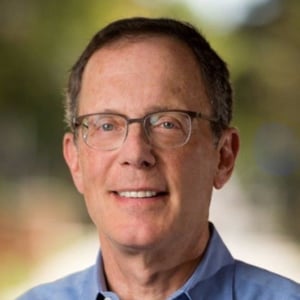
Professor of the Practice of Law, Stanford Law School
Doug Melamed practiced law for 43 years before spending the 2014-15 academic year at the Law School as the Herman Phleger Visiting Professor of Law. He was appointed Professor of the Practice of Law in 2015.
From 2009 until 2014, Professor Melamed was Senior Vice President and General Counsel of Intel Corporation and was responsible for overseeing Intel’s legal, government affairs and corporate affairs departments. Prior to joining Intel in 2009, he was a partner in the Washington, D.C., office of WilmerHale, a global law firm in which he served as a chair of the Antitrust and Competition Practice Group. His practice included appellate and trial court litigation, counseling, and representing clients in matters before government law enforcement and regulatory agencies. He joined WilmerHale’s predecessor in 1971. From 1996 to 2001, Professor Melamed served in the U.S. Department of Justice as Acting Assistant Attorney General in charge of the Antitrust Division and, before that, as Principal Deputy Assistant Attorney General.
Professor Melamed has received numerous professional awards and honors. He has been the Distinguished Visitor from Practice and an adjunct professor at the Georgetown University Law Center, and he has authored numerous articles on antitrust and on law and economics. He is a member of the boards of directors of the Nasdaq exchanges and the American Law Institute and a Contributing Editor of the Antitrust Law Journal. He was for many years a member of the Yale University Council and a member of the board of trustees of Sidwell Friends School in Washington, D.C. After graduating from law school, he clerked for Judge Charles M. Merrill of the U.S. Court of Appeals for the Ninth Circuit.
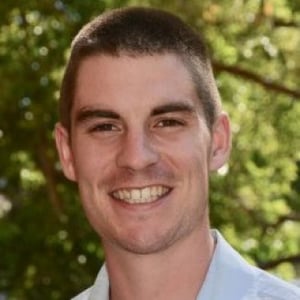
JD Candidate, Stanford Law School
Austin Peters is a J.D. candidate and a Ph.D. student in Political Science at Stanford University. He earned a B.A. in political science magna cum laude from U.C.S.D., where he also minored in economics. Following graduation, he worked as a Research Assistant for Dr. Arthur Brooks at the American Enterprise Institute. His research interests include state administrative law, empirical legal studies, and judicial politics. After completing his studies at Stanford, he will clerk for Judge Kevin Newsom on the 11th Circuit Court of Appeals.

Managing Director, Econ One
Hal Singer is an expert in antitrust, consumer protection, and regulation. He has researched, published, and testified on competition-related issues in a wide variety of industries, including media, pharmaceuticals, sports, and finance. He has extensive experience providing expert economic and policy advice to regulatory agencies in the United States and Canada, as well as before congressional committees.
Dr. Singer is also a Senior Fellow at the George Washington Institute of Public Policy and an Adjunct Professor at Georgetown University, McDonough School of Business, where he teaches advanced pricing to MBA candidates. In 2018, the American Antitrust Institute honored Dr. Singer with an antitrust enforcement award for his work in the Lidoderm antitrust litigation.
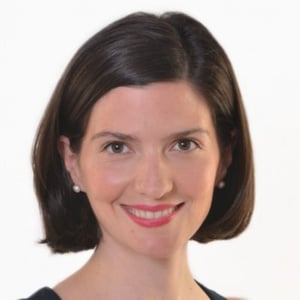
Fellow, Thurman Arnold Project, Yale University
Dina Srinivasan is a researcher, lawyer, and entrepreneur. She’s also a Fellow with the Thurman Arnold Project at Yale University.
Most recently, Ms. Srinivasan’s research and economic analysis of new, tech markets provided the foundation for government enforcement of antitrust laws against two of the largest market cap companies in the world. Her 2020 research, "Why Google Dominates Advertising Markets: Competition Policy Should Lean on the Principles of Financial Market Regulation", explains how Google distorts electronically traded ad markets by engaging in conduct that lawmakers normally prohibit (e.g., conduct analogous to insider trading and front running). Her research instigated a shift in the House and Senate and a coalition of U.S. States subsequently filed suit against the company relying on the architecture of Ms. Srinivasan’s thinking. "The Antitrust Case Against Facebook", published in 2019, laid out the correlation between privacy and economics. Congress called on the U.S. Federal Trade Commission to open an investigation; and in 2020, the Federal Trade Commission and a coalition of 48 Attorneys General filed actions against Facebook. She’s been profiled by The New York Times and The Wall Street Journal. Her research and commentary on tech and competition are regularly covered in the domestic and global media.
Previously, Ms. Srinivasan founded an ad technology company whose technology was acquired by a division of WPP, Kantar Media SRDS (NASDAQ). She spent four years as an executive at WPP. In the late 1990s, she founded iMSGu, a text messaging platform that allowed users to send messages across different mobile spectrum networks (CDMA, TDMA, GSM); the company folded in 2002. Ms. Srinivasan holds a J.D. from Yale Law School, where she studied law & economics and was an Olin Fellow with the Kauffman Program in Law, Economics and Entrepreneurship. She lives in the Bay Area with her husband and their four children.
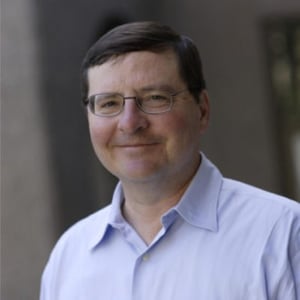
Professor of Law and Warren Christopher Professor in the Practice of International Law and Diplomacy, Stanford Law School
Alan O. Sykes is a leading expert on the application of economics to legal problems whose most recent scholarship is focused on international economic relations. His writing and teaching have encompassed international trade, torts, contracts, insurance, antitrust, international investment law and economic analysis of law. In 2010, he founded Stanford Law School’s LLM program in International Economic Law, Business and Policy (IELBP). Professor Sykes has been a member of the executive committee and the board of the American Law and Economics Association, and served as reporter for the American Law Institute Project on Principles of Trade Law: The World Trade Organization. He is on the Board of Editors for the Journal of International Economic Law, the World Trade Review, and a member of the editorial board of the American Journal of International Law. He formerly served as an editor of the Journal of Legal Studies and the Journal of Law and Economics. He is also a former National Science Foundation graduate fellow in the Department of Economics at Yale University.
Before joining the Stanford Law School faculty again in 2015 (he was on the faculty from 2005 – 2012), Professor Sykes was the Robert A. Kindler Professor of Law at NYU Law School and, prior to 2005, he was the Frank and Bernice J. Greenberg Professor of Law at the University of Chicago Law School, where he also served as faculty director of curriculum.
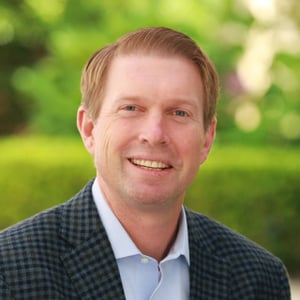
Executive Vice President and General Counsel, National Football League
Ted Ullyot serves as Executive Vice President and General Counsel for the National Football League and is the founder of Highway 50 Ventures, LLC, an investment and advisory firm. A lawyer by background, Ullyot was General Counsel of Facebook from 2008 to 2013. He served in the administration of President George W. Bush, including in the White House as an Associate Counsel and as Deputy Staff Secretary, and in the Justice Department as Chief of Staff to Attorney General Gonzales.
Ullyot began his career as a law clerk, first for Judge J. Michael Luttig of the U.S. Court of Appeals for the Fourth Circuit and then for U.S. Supreme Court Justice Antonin Scalia. He was a litigation partner in the Washington, D.C., office of Kirkland & Ellis LLP.
At other points in his career, Ullyot served as General Counsel of ESL Investments, Inc.; as General Counsel of AOL Time Warner Europe; as a board member at AutoZone Inc.; and as a partner in the venture capital firm Andreessen Horowitz.
He is a member of the board of visitors of the Federalist Society; a member of the University of Chicago Law School Council; and a board member of the U.S. Supreme Court Historical Society.
Ullyot graduated from the University of Chicago Law School, after doing his undergraduate work at Harvard. He and his family live in Northern California.
Professor of the Practice of Law, Stanford Law School
Doug Melamed practiced law for 43 years before spending the 2014-15 academic year at the Law School as the Herman Phleger Visiting Professor of Law. He was appointed Professor of the Practice of Law in 2015.
From 2009 until 2014, Professor Melamed was Senior Vice President and General Counsel of Intel Corporation and was responsible for overseeing Intel’s legal, government affairs and corporate affairs departments. Prior to joining Intel in 2009, he was a partner in the Washington, D.C., office of WilmerHale, a global law firm in which he served as a chair of the Antitrust and Competition Practice Group. His practice included appellate and trial court litigation, counseling, and representing clients in matters before government law enforcement and regulatory agencies. He joined WilmerHale’s predecessor in 1971. From 1996 to 2001, Professor Melamed served in the U.S. Department of Justice as Acting Assistant Attorney General in charge of the Antitrust Division and, before that, as Principal Deputy Assistant Attorney General.
Professor Melamed has received numerous professional awards and honors. He has been the Distinguished Visitor from Practice and an adjunct professor at the Georgetown University Law Center, and he has authored numerous articles on antitrust and on law and economics. He is a member of the boards of directors of the Nasdaq exchanges and the American Law Institute and a Contributing Editor of the Antitrust Law Journal. He was for many years a member of the Yale University Council and a member of the board of trustees of Sidwell Friends School in Washington, D.C. After graduating from law school, he clerked for Judge Charles M. Merrill of the U.S. Court of Appeals for the Ninth Circuit.
JD Candidate, Stanford Law School
Austin Peters is a J.D. candidate and a Ph.D. student in Political Science at Stanford University. He earned a B.A. in political science magna cum laude from U.C.S.D., where he also minored in economics. Following graduation, he worked as a Research Assistant for Dr. Arthur Brooks at the American Enterprise Institute. His research interests include state administrative law, empirical legal studies, and judicial politics. After completing his studies at Stanford, he will clerk for Judge Kevin Newsom on the 11th Circuit Court of Appeals.
Managing Director, Econ One
Hal Singer is an expert in antitrust, consumer protection, and regulation. He has researched, published, and testified on competition-related issues in a wide variety of industries, including media, pharmaceuticals, sports, and finance. He has extensive experience providing expert economic and policy advice to regulatory agencies in the United States and Canada, as well as before congressional committees.
Dr. Singer is also a Senior Fellow at the George Washington Institute of Public Policy and an Adjunct Professor at Georgetown University, McDonough School of Business, where he teaches advanced pricing to MBA candidates. In 2018, the American Antitrust Institute honored Dr. Singer with an antitrust enforcement award for his work in the Lidoderm antitrust litigation.
Fellow, Thurman Arnold Project, Yale University
Dina Srinivasan is a researcher, lawyer, and entrepreneur. She’s also a Fellow with the Thurman Arnold Project at Yale University.
Most recently, Ms. Srinivasan’s research and economic analysis of new, tech markets provided the foundation for government enforcement of antitrust laws against two of the largest market cap companies in the world. Her 2020 research, "Why Google Dominates Advertising Markets: Competition Policy Should Lean on the Principles of Financial Market Regulation", explains how Google distorts electronically traded ad markets by engaging in conduct that lawmakers normally prohibit (e.g., conduct analogous to insider trading and front running). Her research instigated a shift in the House and Senate and a coalition of U.S. States subsequently filed suit against the company relying on the architecture of Ms. Srinivasan’s thinking. "The Antitrust Case Against Facebook", published in 2019, laid out the correlation between privacy and economics. Congress called on the U.S. Federal Trade Commission to open an investigation; and in 2020, the Federal Trade Commission and a coalition of 48 Attorneys General filed actions against Facebook. She’s been profiled by The New York Times and The Wall Street Journal. Her research and commentary on tech and competition are regularly covered in the domestic and global media.
Previously, Ms. Srinivasan founded an ad technology company whose technology was acquired by a division of WPP, Kantar Media SRDS (NASDAQ). She spent four years as an executive at WPP. In the late 1990s, she founded iMSGu, a text messaging platform that allowed users to send messages across different mobile spectrum networks (CDMA, TDMA, GSM); the company folded in 2002. Ms. Srinivasan holds a J.D. from Yale Law School, where she studied law & economics and was an Olin Fellow with the Kauffman Program in Law, Economics and Entrepreneurship. She lives in the Bay Area with her husband and their four children.
Professor of Law and Warren Christopher Professor in the Practice of International Law and Diplomacy, Stanford Law School
Alan O. Sykes is a leading expert on the application of economics to legal problems whose most recent scholarship is focused on international economic relations. His writing and teaching have encompassed international trade, torts, contracts, insurance, antitrust, international investment law and economic analysis of law. In 2010, he founded Stanford Law School’s LLM program in International Economic Law, Business and Policy (IELBP). Professor Sykes has been a member of the executive committee and the board of the American Law and Economics Association, and served as reporter for the American Law Institute Project on Principles of Trade Law: The World Trade Organization. He is on the Board of Editors for the Journal of International Economic Law, the World Trade Review, and a member of the editorial board of the American Journal of International Law. He formerly served as an editor of the Journal of Legal Studies and the Journal of Law and Economics. He is also a former National Science Foundation graduate fellow in the Department of Economics at Yale University.
Before joining the Stanford Law School faculty again in 2015 (he was on the faculty from 2005 – 2012), Professor Sykes was the Robert A. Kindler Professor of Law at NYU Law School and, prior to 2005, he was the Frank and Bernice J. Greenberg Professor of Law at the University of Chicago Law School, where he also served as faculty director of curriculum.
Executive Vice President and General Counsel, National Football League
Ted Ullyot serves as Executive Vice President and General Counsel for the National Football League and is the founder of Highway 50 Ventures, LLC, an investment and advisory firm. A lawyer by background, Ullyot was General Counsel of Facebook from 2008 to 2013. He served in the administration of President George W. Bush, including in the White House as an Associate Counsel and as Deputy Staff Secretary, and in the Justice Department as Chief of Staff to Attorney General Gonzales.
Ullyot began his career as a law clerk, first for Judge J. Michael Luttig of the U.S. Court of Appeals for the Fourth Circuit and then for U.S. Supreme Court Justice Antonin Scalia. He was a litigation partner in the Washington, D.C., office of Kirkland & Ellis LLP.
At other points in his career, Ullyot served as General Counsel of ESL Investments, Inc.; as General Counsel of AOL Time Warner Europe; as a board member at AutoZone Inc.; and as a partner in the venture capital firm Andreessen Horowitz.
He is a member of the board of visitors of the Federalist Society; a member of the University of Chicago Law School Council; and a board member of the U.S. Supreme Court Historical Society.
Ullyot graduated from the University of Chicago Law School, after doing his undergraduate work at Harvard. He and his family live in Northern California.
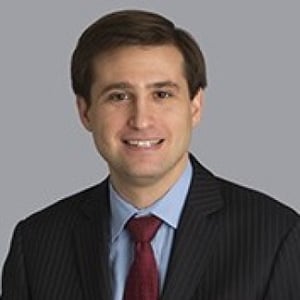
Associate Attorney, Gibson, Dunn & Crutcher
Matthew Rozen is an associate in the Washington, D.C. office of Gibson, Dunn & Crutcher. He practices in the firm’s Litigation Department and Appellate and Constitutional Law practice.
Before joining the firm, Mr. Rozen served as a law clerk to the Honorable Richard A. Posner of the United States Court of Appeals for the Seventh Circuit. Mr. Rozen graduated with highest honors from the University of Chicago Law School, where he served as an Articles Editor on the University of Chicago Law Review. Mr. Rozen holds a master’s degree in Comparative Literature from the University of California, Irvine, and received his undergraduate degree in Literature from Harvard University, where he graduated magna cum laude.
Mr. Rozen is admitted to practice in Virginia and the District of Columbia. He is fluent in Spanish and proficient in French.
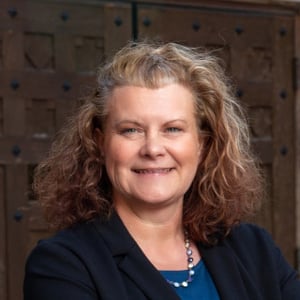
Associate Dean for Academic Affairs, Austin E. Owen Research Scholar & Professor of Law, The University of Richmond School of Law
Dean Kristen Jakobsen Osenga teaches and writes in the areas of patent law, antitrust, and legislation and regulation. Some of her recent scholarship focuses on standard development organizations, patent eligible subject matter, patent licensing firms, litigation and remedies for patent infringement, and patent law reform. She has written numerous law review articles on these and other topics, as well as book chapters and op eds on various aspects of patent law. Additionally, she has spoken on these issues at many academic conferences and bar events. Dean Osenga is Chief Policy Counselor for the Inventors Defense Alliance, as well as an active member of the Federal Circuit Bar Association and the American Intellectual Property Law Association.
Dean Osenga received a B.S. degree in Biomedical Engineering from the University of Iowa, an M.S. degree in Electrical Engineering from Southern Illinois University – Carbondale, and a J.D. from the University of Illinois College of Law, where she graduated magna cum laude. After law school, she practiced at the law firm of Finnegan, Henderson, Farabow, Garrett, & Dunner LLP, (now Finnegan) where she did patent prosecution and litigation. She then clerked for the Judge Richard Linn of the U.S. Court of Appeals for the Federal Circuit. After clerking, she entered academia, teaching first at Chicago-Kent College of Law and then at the University of Richmond, where she has been since 2006. She has also been a Visiting Professor at Emory University School of Law and at William & Mary School of Law.
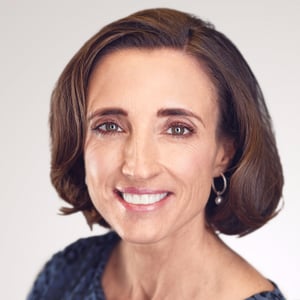
Senior Vice President, Strand Consult
Roslyn Layton, PhD is a leading international expert on technology policy. She is Senior Vice President of Strand Consult, an independent consultancy serving the global mobile telecom industry. She is also a Visiting Researcher at Aalborg University Copenhagen where she earned a doctoral thesis on network neutrality by measuring the outcome of the policy across 53 countries over 5 years. She served on the Presidential Transition Team for the Federal Communications Commission (FCC), and her work was critical to the FCC’s defense for the Restoring Internet Freedom Order. She has testified to the United States Senate and House on multiple topics including spectrum, broadband, mobile mergers, competition, and privacy. She founded the think tank China Tech Threat to study the problems of technology produced by the People’s Republic of China. She serves as the Program Chair for the Telecom Policy Research Conference, the leading interdisciplinary academic gathering. Her recent paper on rural broadband describes the empirical case for policy reform to recover network infrastructure costs from streaming video entertainment providers. She is a Senior Contributor to Forbes.
Technology Policy Manager, R Street Institute
Professor of the Practice of Law, Stanford Law School
Doug Melamed practiced law for 43 years before spending the 2014-15 academic year at the Law School as the Herman Phleger Visiting Professor of Law. He was appointed Professor of the Practice of Law in 2015.
From 2009 until 2014, Professor Melamed was Senior Vice President and General Counsel of Intel Corporation and was responsible for overseeing Intel’s legal, government affairs and corporate affairs departments. Prior to joining Intel in 2009, he was a partner in the Washington, D.C., office of WilmerHale, a global law firm in which he served as a chair of the Antitrust and Competition Practice Group. His practice included appellate and trial court litigation, counseling, and representing clients in matters before government law enforcement and regulatory agencies. He joined WilmerHale’s predecessor in 1971. From 1996 to 2001, Professor Melamed served in the U.S. Department of Justice as Acting Assistant Attorney General in charge of the Antitrust Division and, before that, as Principal Deputy Assistant Attorney General.
Professor Melamed has received numerous professional awards and honors. He has been the Distinguished Visitor from Practice and an adjunct professor at the Georgetown University Law Center, and he has authored numerous articles on antitrust and on law and economics. He is a member of the boards of directors of the Nasdaq exchanges and the American Law Institute and a Contributing Editor of the Antitrust Law Journal. He was for many years a member of the Yale University Council and a member of the board of trustees of Sidwell Friends School in Washington, D.C. After graduating from law school, he clerked for Judge Charles M. Merrill of the U.S. Court of Appeals for the Ninth Circuit.
JD Candidate, Stanford Law School
Austin Peters is a J.D. candidate and a Ph.D. student in Political Science at Stanford University. He earned a B.A. in political science magna cum laude from U.C.S.D., where he also minored in economics. Following graduation, he worked as a Research Assistant for Dr. Arthur Brooks at the American Enterprise Institute. His research interests include state administrative law, empirical legal studies, and judicial politics. After completing his studies at Stanford, he will clerk for Judge Kevin Newsom on the 11th Circuit Court of Appeals.
Managing Director, Econ One
Hal Singer is an expert in antitrust, consumer protection, and regulation. He has researched, published, and testified on competition-related issues in a wide variety of industries, including media, pharmaceuticals, sports, and finance. He has extensive experience providing expert economic and policy advice to regulatory agencies in the United States and Canada, as well as before congressional committees.
Dr. Singer is also a Senior Fellow at the George Washington Institute of Public Policy and an Adjunct Professor at Georgetown University, McDonough School of Business, where he teaches advanced pricing to MBA candidates. In 2018, the American Antitrust Institute honored Dr. Singer with an antitrust enforcement award for his work in the Lidoderm antitrust litigation.
Fellow, Thurman Arnold Project, Yale University
Dina Srinivasan is a researcher, lawyer, and entrepreneur. She’s also a Fellow with the Thurman Arnold Project at Yale University.
Most recently, Ms. Srinivasan’s research and economic analysis of new, tech markets provided the foundation for government enforcement of antitrust laws against two of the largest market cap companies in the world. Her 2020 research, "Why Google Dominates Advertising Markets: Competition Policy Should Lean on the Principles of Financial Market Regulation", explains how Google distorts electronically traded ad markets by engaging in conduct that lawmakers normally prohibit (e.g., conduct analogous to insider trading and front running). Her research instigated a shift in the House and Senate and a coalition of U.S. States subsequently filed suit against the company relying on the architecture of Ms. Srinivasan’s thinking. "The Antitrust Case Against Facebook", published in 2019, laid out the correlation between privacy and economics. Congress called on the U.S. Federal Trade Commission to open an investigation; and in 2020, the Federal Trade Commission and a coalition of 48 Attorneys General filed actions against Facebook. She’s been profiled by The New York Times and The Wall Street Journal. Her research and commentary on tech and competition are regularly covered in the domestic and global media.
Previously, Ms. Srinivasan founded an ad technology company whose technology was acquired by a division of WPP, Kantar Media SRDS (NASDAQ). She spent four years as an executive at WPP. In the late 1990s, she founded iMSGu, a text messaging platform that allowed users to send messages across different mobile spectrum networks (CDMA, TDMA, GSM); the company folded in 2002. Ms. Srinivasan holds a J.D. from Yale Law School, where she studied law & economics and was an Olin Fellow with the Kauffman Program in Law, Economics and Entrepreneurship. She lives in the Bay Area with her husband and their four children.
Professor of Law and Warren Christopher Professor in the Practice of International Law and Diplomacy, Stanford Law School
Alan O. Sykes is a leading expert on the application of economics to legal problems whose most recent scholarship is focused on international economic relations. His writing and teaching have encompassed international trade, torts, contracts, insurance, antitrust, international investment law and economic analysis of law. In 2010, he founded Stanford Law School’s LLM program in International Economic Law, Business and Policy (IELBP). Professor Sykes has been a member of the executive committee and the board of the American Law and Economics Association, and served as reporter for the American Law Institute Project on Principles of Trade Law: The World Trade Organization. He is on the Board of Editors for the Journal of International Economic Law, the World Trade Review, and a member of the editorial board of the American Journal of International Law. He formerly served as an editor of the Journal of Legal Studies and the Journal of Law and Economics. He is also a former National Science Foundation graduate fellow in the Department of Economics at Yale University.
Before joining the Stanford Law School faculty again in 2015 (he was on the faculty from 2005 – 2012), Professor Sykes was the Robert A. Kindler Professor of Law at NYU Law School and, prior to 2005, he was the Frank and Bernice J. Greenberg Professor of Law at the University of Chicago Law School, where he also served as faculty director of curriculum.
Executive Vice President and General Counsel, National Football League
Ted Ullyot serves as Executive Vice President and General Counsel for the National Football League and is the founder of Highway 50 Ventures, LLC, an investment and advisory firm. A lawyer by background, Ullyot was General Counsel of Facebook from 2008 to 2013. He served in the administration of President George W. Bush, including in the White House as an Associate Counsel and as Deputy Staff Secretary, and in the Justice Department as Chief of Staff to Attorney General Gonzales.
Ullyot began his career as a law clerk, first for Judge J. Michael Luttig of the U.S. Court of Appeals for the Fourth Circuit and then for U.S. Supreme Court Justice Antonin Scalia. He was a litigation partner in the Washington, D.C., office of Kirkland & Ellis LLP.
At other points in his career, Ullyot served as General Counsel of ESL Investments, Inc.; as General Counsel of AOL Time Warner Europe; as a board member at AutoZone Inc.; and as a partner in the venture capital firm Andreessen Horowitz.
He is a member of the board of visitors of the Federalist Society; a member of the University of Chicago Law School Council; and a board member of the U.S. Supreme Court Historical Society.
Ullyot graduated from the University of Chicago Law School, after doing his undergraduate work at Harvard. He and his family live in Northern California.

Panel II: Antitrust in the the Age of the Trillion-Dollar Company
A. Douglas Melamed, Austin Peters, Aaron Schur, Hal Singer, Dina Srinivasan, Alan O. Sykes, Theodore W. Ullyot
Featuring: A. Douglas Melamed, Professor, Stanford Law School, and ex-General Counsel, Intel Aaron Schur, Deputy General...
Panel II: Antitrust in the the Age of the Trillion-Dollar Company
A. Douglas Melamed, Austin Peters, Aaron Schur, Hal Singer, Dina Srinivasan, Alan O. Sykes, Theodore W. Ullyot
Featuring: A. Douglas Melamed, Professor, Stanford Law School, and ex-General Counsel, Intel Aaron Schur, Deputy General...
Panel II: Antitrust in the the Age of the Trillion-Dollar Company
A National Symposium on Law and Technology
Stanford, CATopics
How the FCC Can Encourage Innovation Through Unlicensed Spectrum
As Americans work from home to promote social distancing and comply with stay-at-home orders, the...
Intel Corp. Investment Policy Committee v. Sulyma - Post-Argument SCOTUScast
Matthew S. Rozen
On Dec. 4, 2019, the U.S. Supreme Court heard argument in Intel Corp. Investment Policy...
Topics
A Bargaining Model v. Reality in FTC v. Qualcomm: A Reply to Kattan & Muris
Introduction In a recent article[1] Joe Kattan and Tim Muris (K&M) criticize our article[2] on...
Topics
FTC v. Qualcomm: Innovation and Competition
Just days before leaving office, the outgoing Obama FTC left what should have been an...
What Happened to the Public’s Interest in Patent Law?
Kristen Osenga
Note from the Editor: This article discusses the role of the concept of the public...
Topics
The Taiwan Fair Trade Commission’s Problematic Qualcomm Decision Highlights the Urgent Need for U.S. Leadership in International Antitrust
In his inaugural policy speech as Assistant Attorney General and head of the Antitrust...
Net Neutrality Without the FCC?: Why the FTC Can Regulate Broadband Effectively
Roslyn Layton, Tom W. Struble
Note from the Editor: This article argues that the FTC has jurisdiction over broadband and the...