

Tazewell Taylor Professor of Law and William H. Cabell Research Professor, William & Mary Law School
Jonathan H. Adler joined the William & Mary law faculty as the Tazwell Taylor Professor of Law and William H. Cabell Research Professor in 2025. Prior to joining the faculty, he was the inaugural Johan Verheij Memorial Professor of Law and the founding Director of the Coleman P. Burke Center for Environmental Law at the Case Western Reserve University School of Law.
Professor Adler is the author or editor of seven books, including Climate Liberalism: Perspectives on Liberty, Property and Pollution (Palgrave, 2023), Marijuana Federalism: Uncle Sam and Mary Jane (Brookings Institution Press, 2020), Business and the Roberts Court (Oxford University Press, 2016) and Rebuilding the Ark: New Perspectives on Endangered Species Act Reform (AEI Press, 2011).
His articles have appeared in publications ranging from the Harvard Environmental Law Review and Yale Journal on Regulation to the Wall Street Journal, New York Times, and Washington Post. He has testified before Congress a dozen times, and his work has been cited in the U.S. Supreme Court. A 2024 study identified Professor Adler as the seventh most cited legal academic in administrative and environmental law from 2019 to 2023.
Professor Adler is a contributing editor to Civitas Outlook and a regular contributor to the popular legal blog, The Volokh Conspiracy. A regular commentator on constitutional and regulatory issues, he has appeared on numerous radio and television programs, ranging from the PBS Newshour and National Public Radio to the Fox News Channel and Entertainment Tonight.
Professor Adler is a senior fellow at the Property & Environment Research Center in Bozeman, Montana. In 2018, Professor Adler was elected to membership in the American Law Institute and helped co-found the organization Checks and Balances. In 2024, Professor Adler was appointed a public member of the Administrative Conference of the United States.
Professor Adler clerked for the Honorable David B. Sentelle on the U.S. Court of Appeals for the District of Columbia Circuit.
Interim Dean, Florida International University College of Law
Dan Epstein was Vice President at America First Legal and an Associate Professor of Law at St. Thomas University in Miami, Florida. He also advises individuals and small businesses in affirmative and defensive actions against government overreach. Previously, he advised startups on regulatory matters as Director at a venture capital firm. His federal service includes being a Special Assistant to and Senior Associate Counsel to the President and a counsel for the House of Representatives Committee on Oversight and Government Reform. Earlier in his career, Mr. Epstein founded and ran Cause of Action, where he represented clients in government investigations and litigated regulatory, constitutional, political, and public law matters.
He holds a Ph.D. from George Washington University in Political Economy, a J.D. from Emory University School of Law, and a B.A. from Kenyon College. He is active in the Palm Beach community as a member of the Fourth Court of Appeals Judicial Nominating Commission in Florida, a transition team member to Florida Attorney General James Uthmeier, and the Chairman and Trustee of Palm Beach State College.

Ralph V. Whitworth Professor in Law, Georgetown University Law Center
Professor Nourse is one of the nation’s leading scholars of Congress, the separation of powers, and statutory interpretation. In addition to her scholarship, she has practiced as an attorney in the White House, the Department of Justice, the Senate, and in private practice. The story of her pioneering work on gender equality is told in Equal: Women Reshape American Law.
Her most recent book is “The Impeachments of Donald Trump: An Introduction to Constitutional Argument” (West 2021). In 2016, Harvard Press published her Misreading Law, Misreading Democracy, on the limits of textualism. She is one of the most-cited scholars on interpretation in the country and has recently co-authored Yale’s revised leading casebook, Statutes, Regulation & Interpretation (West 2024).
Professor Nourse has published widely on the power of the President and the separation of powers, Reclaiming the Constitutional Text from Originalism: The Case of Executive Power, 106 Calif. L. Rev. 1 (2018), and constitutional rights, In Reckless Hands (Norton 2008), the story of Skinner v. Oklahoma and American eugenics.
President Biden appointed Professor Nourse to serve as Vice-Chair of the United States Commission on Civil Rights in 2023, with her term expiring in 2029.
Professor Nourse previously served as Chief Counsel to then Vice President Biden under the Obama Administration. Prior to that role, she practiced as an appellate litigator in the Department of Justice and as Special Counsel to the Senate Judiciary Committee.
Professor Nourse has held chairs at Emory University and the University of Wisconsin. She has been a visiting professor at Yale, NYU, University of Maryland, and Northwestern.
She began her legal career in New York, clerking for legendary trial judge of the Southern District of New York, Edward Weinfeld, and practicing at Paul, Weiss, Rifkind Wharton & Garrison. She left private practice to serve as junior counsel to the Senate-Iran Contra Committee. After serving on the appellate staff of the Civil Division, she was hired as a legal expert for then Senator Joseph Biden.
Professor Nourse is the co-Founder of the Supreme Court Interpretation Lab, which uses big data to analyze trends in Supreme Court analyses. She formerly served as Executive Director of the Georgetown Law Center on Congressional Studies.
Vice President, Practice Groups, The Federalist Society
Deputy Director, Regulatory Studies Center, George Washington University
Will Yeatman is deputy director of the GW Regulatory Studies Center. A lawyer, he has spent almost two decades working on federal regulatory policy, with an emphasis on administrative law.
Yeatman has testified many times before Congress and state legislatures, and his scholarly work has appeared in such academic journals as Georgetown Law Journal, Administrative Law Review, and the (forthcoming) Catholic University Law Review. His popular writing has appeared in The Wall Street Journal, Foreign Policy, and Bloomberg.
Yeatman came to the RSC from the Pacific Legal Foundation. Previously, he had been at the Cato Institute’s Center for Constitutional Studies and the Competitive Enterprise Institute. From 2004 to 2006, he served as a Peace Corps volunteer in the Kyrgyz Republic.
Yeatman holds a BA in environmental sciences from the University of Virginia, an MA in international studies from the Denver University Graduate School of International Studies, and a JD from the Georgetown University Law Center. He is a member of the Washington, DC Bar.
Tazewell Taylor Professor of Law and William H. Cabell Research Professor, William & Mary Law School
Jonathan H. Adler joined the William & Mary law faculty as the Tazwell Taylor Professor of Law and William H. Cabell Research Professor in 2025. Prior to joining the faculty, he was the inaugural Johan Verheij Memorial Professor of Law and the founding Director of the Coleman P. Burke Center for Environmental Law at the Case Western Reserve University School of Law.
Professor Adler is the author or editor of seven books, including Climate Liberalism: Perspectives on Liberty, Property and Pollution (Palgrave, 2023), Marijuana Federalism: Uncle Sam and Mary Jane (Brookings Institution Press, 2020), Business and the Roberts Court (Oxford University Press, 2016) and Rebuilding the Ark: New Perspectives on Endangered Species Act Reform (AEI Press, 2011).
His articles have appeared in publications ranging from the Harvard Environmental Law Review and Yale Journal on Regulation to the Wall Street Journal, New York Times, and Washington Post. He has testified before Congress a dozen times, and his work has been cited in the U.S. Supreme Court. A 2024 study identified Professor Adler as the seventh most cited legal academic in administrative and environmental law from 2019 to 2023.
Professor Adler is a contributing editor to Civitas Outlook and a regular contributor to the popular legal blog, The Volokh Conspiracy. A regular commentator on constitutional and regulatory issues, he has appeared on numerous radio and television programs, ranging from the PBS Newshour and National Public Radio to the Fox News Channel and Entertainment Tonight.
Professor Adler is a senior fellow at the Property & Environment Research Center in Bozeman, Montana. In 2018, Professor Adler was elected to membership in the American Law Institute and helped co-found the organization Checks and Balances. In 2024, Professor Adler was appointed a public member of the Administrative Conference of the United States.
Professor Adler clerked for the Honorable David B. Sentelle on the U.S. Court of Appeals for the District of Columbia Circuit.
Interim Dean, Florida International University College of Law
Dan Epstein was Vice President at America First Legal and an Associate Professor of Law at St. Thomas University in Miami, Florida. He also advises individuals and small businesses in affirmative and defensive actions against government overreach. Previously, he advised startups on regulatory matters as Director at a venture capital firm. His federal service includes being a Special Assistant to and Senior Associate Counsel to the President and a counsel for the House of Representatives Committee on Oversight and Government Reform. Earlier in his career, Mr. Epstein founded and ran Cause of Action, where he represented clients in government investigations and litigated regulatory, constitutional, political, and public law matters.
He holds a Ph.D. from George Washington University in Political Economy, a J.D. from Emory University School of Law, and a B.A. from Kenyon College. He is active in the Palm Beach community as a member of the Fourth Court of Appeals Judicial Nominating Commission in Florida, a transition team member to Florida Attorney General James Uthmeier, and the Chairman and Trustee of Palm Beach State College.
Ralph V. Whitworth Professor in Law, Georgetown University Law Center
Professor Nourse is one of the nation’s leading scholars of Congress, the separation of powers, and statutory interpretation. In addition to her scholarship, she has practiced as an attorney in the White House, the Department of Justice, the Senate, and in private practice. The story of her pioneering work on gender equality is told in Equal: Women Reshape American Law.
Her most recent book is “The Impeachments of Donald Trump: An Introduction to Constitutional Argument” (West 2021). In 2016, Harvard Press published her Misreading Law, Misreading Democracy, on the limits of textualism. She is one of the most-cited scholars on interpretation in the country and has recently co-authored Yale’s revised leading casebook, Statutes, Regulation & Interpretation (West 2024).
Professor Nourse has published widely on the power of the President and the separation of powers, Reclaiming the Constitutional Text from Originalism: The Case of Executive Power, 106 Calif. L. Rev. 1 (2018), and constitutional rights, In Reckless Hands (Norton 2008), the story of Skinner v. Oklahoma and American eugenics.
President Biden appointed Professor Nourse to serve as Vice-Chair of the United States Commission on Civil Rights in 2023, with her term expiring in 2029.
Professor Nourse previously served as Chief Counsel to then Vice President Biden under the Obama Administration. Prior to that role, she practiced as an appellate litigator in the Department of Justice and as Special Counsel to the Senate Judiciary Committee.
Professor Nourse has held chairs at Emory University and the University of Wisconsin. She has been a visiting professor at Yale, NYU, University of Maryland, and Northwestern.
She began her legal career in New York, clerking for legendary trial judge of the Southern District of New York, Edward Weinfeld, and practicing at Paul, Weiss, Rifkind Wharton & Garrison. She left private practice to serve as junior counsel to the Senate-Iran Contra Committee. After serving on the appellate staff of the Civil Division, she was hired as a legal expert for then Senator Joseph Biden.
Professor Nourse is the co-Founder of the Supreme Court Interpretation Lab, which uses big data to analyze trends in Supreme Court analyses. She formerly served as Executive Director of the Georgetown Law Center on Congressional Studies.
Vice President, Practice Groups, The Federalist Society
Deputy Director, Regulatory Studies Center, George Washington University
Will Yeatman is deputy director of the GW Regulatory Studies Center. A lawyer, he has spent almost two decades working on federal regulatory policy, with an emphasis on administrative law.
Yeatman has testified many times before Congress and state legislatures, and his scholarly work has appeared in such academic journals as Georgetown Law Journal, Administrative Law Review, and the (forthcoming) Catholic University Law Review. His popular writing has appeared in The Wall Street Journal, Foreign Policy, and Bloomberg.
Yeatman came to the RSC from the Pacific Legal Foundation. Previously, he had been at the Cato Institute’s Center for Constitutional Studies and the Competitive Enterprise Institute. From 2004 to 2006, he served as a Peace Corps volunteer in the Kyrgyz Republic.
Yeatman holds a BA in environmental sciences from the University of Virginia, an MA in international studies from the Denver University Graduate School of International Studies, and a JD from the Georgetown University Law Center. He is a member of the Washington, DC Bar.
Professor of Law, Northwestern University Pritzker School of Law
Joshua Kleinfeld teaches and writes about political, legal, and moral philosophy, criminal law, and criminal procedure. He also practices law in Northwestern's Juvenile Criminal Defense Clinic. He is a full professor with tenure at the Northwestern Pritzker School of the Law and (by courtesy) in Northwestern’s philosophy department. In 2017-18, he was a visiting professor at Harvard and Stanford Law Schools. He is the recipient of the Bator Award, given annually to one American law professor under the age of 40 who has demonstrated "excellence in legal scholarship, a commitment to teaching, a concern for students, and who has made a significant public impact."
In philosophy, Kleinfeld's research focuses on the idea of "embodied ethical life," as developed in the socio-theoretic tradition of Hegel, Weber, and Durkheim. This tradition aims to understand and critique social life by bringing to light the normative ideas implicit in social practices and institutions. In law, this means that the most interesting philosophical concepts are often those reflected or actualized in legal practice – in the law as judges and lawyers think of it and wield it.
In criminal law and procedure, Kleinfeld has developed a theory known as "reconstructivism," which holds that the chief office of criminal law is not to dole out retributive justice, nor to optimize crime and cost control, but to reconstruct a violated normative order in the wake of a crime. This work, which draws on the thought of Hegel, Durkheim, Jean Hampton, and Antony Duff, develops an alternative to retributive and utilitarian theories of criminal law by focusing on the distinctive social function and sense of justice at work in the criminal system.
Kleinfeld is also involved in practical criminal justice reform. In this vein, he defends children accused of homicide in the Northwestern Juvenile Criminal Defense clinic and assists in litigation efforts meant to reform American criminal law through the courts. He has also developed a view of criminal justice reform known as "democratization," which holds that the root of the American criminal justice crisis is a set of bureaucratic attitudes, structures, and incentives divorced from the American public’s concerns and sense of justice, and that the primary solution is to make criminal justice more community-focused and responsive to lay influences. Working with others, he has developed a number of policy proposals meant to reform American criminal justice in a democratic direction.
Kleinfeld holds a JD from Yale Law School, a PhD in philosophy from the Goethe University of Frankfurt (supervised by Axel Honneth, Klaus Günther, and Rainer Forst), and a BA in philosophy from Yale College. He clerked for Judge J. Harvie Wilkinson on the United States Court of Appeals for the Fourth Circuit; Judge Janice Rogers Brown on the United States Court of Appeals for the D.C. Circuit; and President (chief justice) Aharon Barak of the Supreme Court of Israel. He worked as an Associate at Debevoise & Plimpton LLP in Frankfurt, Germany, in the area of corporate criminal law. Before law school, he worked as a Senior Research Analyst at the White House’s Council on Bioethics.

Patrick Hotung Professor of Constitutional Law, Georgetown University Law Center
Randy Barnett is the Patrick Hotung Professor of Constitutional Law at Georgetown University Law Center. He has argued before the United States Supreme Court, tried murder cases to juries as a prosecutor in Chicago, and appeared as a prosecutor in the feature film Inalienable. He is the author of numerous books, including Restoring the Lost Constitution, The Structure of Liberty, Our Republican Constitution, and The Original Meaning of the Fourteenth Amendment. He has published two memoirs, A Life for Liberty: The Making of an American Originalist, and Felony Review: Tales of True Crime and Corruption in Chicago. He is currently working on a new book, Freedom and Flourishing: Libertarianism for the Real World.
Patrick Hotung Professor of Constitutional Law, Georgetown University Law Center
Randy Barnett is the Patrick Hotung Professor of Constitutional Law at Georgetown University Law Center. He has argued before the United States Supreme Court, tried murder cases to juries as a prosecutor in Chicago, and appeared as a prosecutor in the feature film Inalienable. He is the author of numerous books, including Restoring the Lost Constitution, The Structure of Liberty, Our Republican Constitution, and The Original Meaning of the Fourteenth Amendment. He has published two memoirs, A Life for Liberty: The Making of an American Originalist, and Felony Review: Tales of True Crime and Corruption in Chicago. He is currently working on a new book, Freedom and Flourishing: Libertarianism for the Real World.
Professor of Law, Northwestern University Pritzker School of Law
Joshua Kleinfeld teaches and writes about political, legal, and moral philosophy, criminal law, and criminal procedure. He also practices law in Northwestern's Juvenile Criminal Defense Clinic. He is a full professor with tenure at the Northwestern Pritzker School of the Law and (by courtesy) in Northwestern’s philosophy department. In 2017-18, he was a visiting professor at Harvard and Stanford Law Schools. He is the recipient of the Bator Award, given annually to one American law professor under the age of 40 who has demonstrated "excellence in legal scholarship, a commitment to teaching, a concern for students, and who has made a significant public impact."
In philosophy, Kleinfeld's research focuses on the idea of "embodied ethical life," as developed in the socio-theoretic tradition of Hegel, Weber, and Durkheim. This tradition aims to understand and critique social life by bringing to light the normative ideas implicit in social practices and institutions. In law, this means that the most interesting philosophical concepts are often those reflected or actualized in legal practice – in the law as judges and lawyers think of it and wield it.
In criminal law and procedure, Kleinfeld has developed a theory known as "reconstructivism," which holds that the chief office of criminal law is not to dole out retributive justice, nor to optimize crime and cost control, but to reconstruct a violated normative order in the wake of a crime. This work, which draws on the thought of Hegel, Durkheim, Jean Hampton, and Antony Duff, develops an alternative to retributive and utilitarian theories of criminal law by focusing on the distinctive social function and sense of justice at work in the criminal system.
Kleinfeld is also involved in practical criminal justice reform. In this vein, he defends children accused of homicide in the Northwestern Juvenile Criminal Defense clinic and assists in litigation efforts meant to reform American criminal law through the courts. He has also developed a view of criminal justice reform known as "democratization," which holds that the root of the American criminal justice crisis is a set of bureaucratic attitudes, structures, and incentives divorced from the American public’s concerns and sense of justice, and that the primary solution is to make criminal justice more community-focused and responsive to lay influences. Working with others, he has developed a number of policy proposals meant to reform American criminal justice in a democratic direction.
Kleinfeld holds a JD from Yale Law School, a PhD in philosophy from the Goethe University of Frankfurt (supervised by Axel Honneth, Klaus Günther, and Rainer Forst), and a BA in philosophy from Yale College. He clerked for Judge J. Harvie Wilkinson on the United States Court of Appeals for the Fourth Circuit; Judge Janice Rogers Brown on the United States Court of Appeals for the D.C. Circuit; and President (chief justice) Aharon Barak of the Supreme Court of Israel. He worked as an Associate at Debevoise & Plimpton LLP in Frankfurt, Germany, in the area of corporate criminal law. Before law school, he worked as a Senior Research Analyst at the White House’s Council on Bioethics.
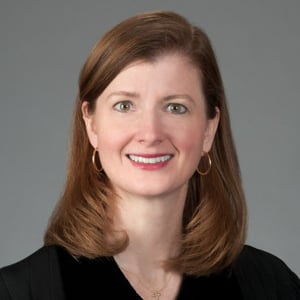
Judge, United States Court of Appeals, Eleventh Circuit
On March 20, 2018, Judge Elizabeth L. Branch (Lisa) was sworn in as a United States Circuit Judge for the Eleventh Circuit.
Judge Branch attended and graduated from Davidson College in North Carolina (B.A., cum laude, 1990), and Emory University School of Law (J.D., with distinction, 1994).
After graduating from law school, Judge Branch served as a federal law clerk to The Honorable J. Owen Forrester of the U.S. District Court for the Northern District of Georgia from 1994 to 1996. Following her clerkship, Judge Branch joined the litigation department of Smith, Gambrell & Russell, LLP in Atlanta as an associate and then a partner.
From 2004 to 2008, Judge Branch was a senior official in the Administration of President George W. Bush in Washington, D.C. She served first as the Associate General Counsel for Rules and Legislation at the U.S. Department of Homeland Security and then as the Counselor to the Administrator of the Office of Information and Regulatory Affairs at the U. S. Office of Management and Budget.
She returned to Smith Gambrell in 2008 as a litigation partner. Judge Branch then was appointed to the Court of Appeals of Georgia by Governor Nathan Deal, taking office on September 4, 2012, where she served until March 19, 2018.
Judge Branch is a member of the Board of Advisors of the Atlanta Lawyers Chapter for the Federalist Society for Law and Public Policy Studies.
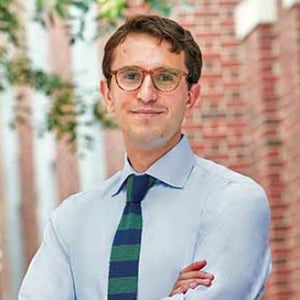
Professor, New York University School of Law

Laurence H. Silberman Chair in Constitutional Governance, American Enterprise Institute; Executive Director, Antonin Scalia Law School’s C. Boyden Gray Center for the Study of the Administrative State
Adam J. White is the Laurence H. Silberman Chair in Constitutional Governance and senior fellow at the American Enterprise Institute, where he focuses on the Supreme Court and the administrative state. He also directs the Antonin Scalia Law School’s C. Boyden Gray Center for the Study of the Administrative State.
He writes on regulation and constitutional government for a variety of publications. He practiced law in Washington, D.C., after clerking for the D.C. Circuit's Judge David Sentelle. He also has been chairman of the ABA's Administrative Law Section.
In 2021, he served on the Presidential Commission on the Supreme Court of the United States, where he criticized “Court packing” and other efforts to restructure the Supreme Court.
Tazewell Taylor Professor of Law and William H. Cabell Research Professor, William & Mary Law School
Jonathan H. Adler joined the William & Mary law faculty as the Tazwell Taylor Professor of Law and William H. Cabell Research Professor in 2025. Prior to joining the faculty, he was the inaugural Johan Verheij Memorial Professor of Law and the founding Director of the Coleman P. Burke Center for Environmental Law at the Case Western Reserve University School of Law.
Professor Adler is the author or editor of seven books, including Climate Liberalism: Perspectives on Liberty, Property and Pollution (Palgrave, 2023), Marijuana Federalism: Uncle Sam and Mary Jane (Brookings Institution Press, 2020), Business and the Roberts Court (Oxford University Press, 2016) and Rebuilding the Ark: New Perspectives on Endangered Species Act Reform (AEI Press, 2011).
His articles have appeared in publications ranging from the Harvard Environmental Law Review and Yale Journal on Regulation to the Wall Street Journal, New York Times, and Washington Post. He has testified before Congress a dozen times, and his work has been cited in the U.S. Supreme Court. A 2024 study identified Professor Adler as the seventh most cited legal academic in administrative and environmental law from 2019 to 2023.
Professor Adler is a contributing editor to Civitas Outlook and a regular contributor to the popular legal blog, The Volokh Conspiracy. A regular commentator on constitutional and regulatory issues, he has appeared on numerous radio and television programs, ranging from the PBS Newshour and National Public Radio to the Fox News Channel and Entertainment Tonight.
Professor Adler is a senior fellow at the Property & Environment Research Center in Bozeman, Montana. In 2018, Professor Adler was elected to membership in the American Law Institute and helped co-found the organization Checks and Balances. In 2024, Professor Adler was appointed a public member of the Administrative Conference of the United States.
Professor Adler clerked for the Honorable David B. Sentelle on the U.S. Court of Appeals for the District of Columbia Circuit.
Interim Dean, Florida International University College of Law
Dan Epstein was Vice President at America First Legal and an Associate Professor of Law at St. Thomas University in Miami, Florida. He also advises individuals and small businesses in affirmative and defensive actions against government overreach. Previously, he advised startups on regulatory matters as Director at a venture capital firm. His federal service includes being a Special Assistant to and Senior Associate Counsel to the President and a counsel for the House of Representatives Committee on Oversight and Government Reform. Earlier in his career, Mr. Epstein founded and ran Cause of Action, where he represented clients in government investigations and litigated regulatory, constitutional, political, and public law matters.
He holds a Ph.D. from George Washington University in Political Economy, a J.D. from Emory University School of Law, and a B.A. from Kenyon College. He is active in the Palm Beach community as a member of the Fourth Court of Appeals Judicial Nominating Commission in Florida, a transition team member to Florida Attorney General James Uthmeier, and the Chairman and Trustee of Palm Beach State College.
Ralph V. Whitworth Professor in Law, Georgetown University Law Center
Professor Nourse is one of the nation’s leading scholars of Congress, the separation of powers, and statutory interpretation. In addition to her scholarship, she has practiced as an attorney in the White House, the Department of Justice, the Senate, and in private practice. The story of her pioneering work on gender equality is told in Equal: Women Reshape American Law.
Her most recent book is “The Impeachments of Donald Trump: An Introduction to Constitutional Argument” (West 2021). In 2016, Harvard Press published her Misreading Law, Misreading Democracy, on the limits of textualism. She is one of the most-cited scholars on interpretation in the country and has recently co-authored Yale’s revised leading casebook, Statutes, Regulation & Interpretation (West 2024).
Professor Nourse has published widely on the power of the President and the separation of powers, Reclaiming the Constitutional Text from Originalism: The Case of Executive Power, 106 Calif. L. Rev. 1 (2018), and constitutional rights, In Reckless Hands (Norton 2008), the story of Skinner v. Oklahoma and American eugenics.
President Biden appointed Professor Nourse to serve as Vice-Chair of the United States Commission on Civil Rights in 2023, with her term expiring in 2029.
Professor Nourse previously served as Chief Counsel to then Vice President Biden under the Obama Administration. Prior to that role, she practiced as an appellate litigator in the Department of Justice and as Special Counsel to the Senate Judiciary Committee.
Professor Nourse has held chairs at Emory University and the University of Wisconsin. She has been a visiting professor at Yale, NYU, University of Maryland, and Northwestern.
She began her legal career in New York, clerking for legendary trial judge of the Southern District of New York, Edward Weinfeld, and practicing at Paul, Weiss, Rifkind Wharton & Garrison. She left private practice to serve as junior counsel to the Senate-Iran Contra Committee. After serving on the appellate staff of the Civil Division, she was hired as a legal expert for then Senator Joseph Biden.
Professor Nourse is the co-Founder of the Supreme Court Interpretation Lab, which uses big data to analyze trends in Supreme Court analyses. She formerly served as Executive Director of the Georgetown Law Center on Congressional Studies.
Vice President, Practice Groups, The Federalist Society
Deputy Director, Regulatory Studies Center, George Washington University
Will Yeatman is deputy director of the GW Regulatory Studies Center. A lawyer, he has spent almost two decades working on federal regulatory policy, with an emphasis on administrative law.
Yeatman has testified many times before Congress and state legislatures, and his scholarly work has appeared in such academic journals as Georgetown Law Journal, Administrative Law Review, and the (forthcoming) Catholic University Law Review. His popular writing has appeared in The Wall Street Journal, Foreign Policy, and Bloomberg.
Yeatman came to the RSC from the Pacific Legal Foundation. Previously, he had been at the Cato Institute’s Center for Constitutional Studies and the Competitive Enterprise Institute. From 2004 to 2006, he served as a Peace Corps volunteer in the Kyrgyz Republic.
Yeatman holds a BA in environmental sciences from the University of Virginia, an MA in international studies from the Denver University Graduate School of International Studies, and a JD from the Georgetown University Law Center. He is a member of the Washington, DC Bar.

Senior Fellow and Director of Constitutional Studies, Manhattan Institute
Ilya Shapiro is a senior fellow and director of constitutional studies at the Manhattan Institute and a contributing editor of City Journal. Previously he was executive director and senior lecturer at the Georgetown Center for the Constitution, and before that a vice president of the Cato Institute.
Shapiro is the author of Lawless: The Miseducation of America’s Elites (2025) and Supreme Disorder: Judicial Nominations and the Politics of America’s Highest Court (2020), coauthor of Religious Liberties for Corporations? (2014), and editor of 11 volumes of the Cato Supreme Court Review (2008-18). He has contributed to a variety of academic, popular, and professional publications, including the Wall Street Journal, Harvard Journal of Law & Public Policy, Washington Post, Los Angeles Times, USA Today, National Review, and Newsweek. He also regularly provides commentary for various media outlets, writes the Shapiro’s Gavel newsletter on Substack, and once appeared on the Colbert Report.
Shapiro has testified many times before Congress and state legislatures and has filed more than 500 amicus curiae “friend of the court” briefs in the Supreme Court. He lectures regularly on behalf of the Federalist Society, is a member of the board of fellows of the Jewish Policy Center, was an inaugural Washington Fellow at the National Review Institute, and has been an adjunct law professor at the George Washington University and University of Mississippi. He is also the chairman of the board of advisers of the Mississippi Justice Institute, a barrister in the Edward Coke Appellate Inn of Court, and a former member of the Virginia Advisory Committee to the U.S. Commission on Civil Rights.
Earlier in his career, Shapiro was a special assistant/adviser to the Multi-National Force in Iraq on rule-of-law issues and practiced at Patton Boggs and Cleary Gottlieb. Before entering private practice, he clerked for Judge E. Grady Jolly of the U.S. Court of Appeals for the Fifth Circuit. He holds an AB from Princeton University, an MSc from the London School of Economics, and a JD from the University of Chicago Law School.
Patrick Hotung Professor of Constitutional Law, Georgetown University Law Center
Randy Barnett is the Patrick Hotung Professor of Constitutional Law at Georgetown University Law Center. He has argued before the United States Supreme Court, tried murder cases to juries as a prosecutor in Chicago, and appeared as a prosecutor in the feature film Inalienable. He is the author of numerous books, including Restoring the Lost Constitution, The Structure of Liberty, Our Republican Constitution, and The Original Meaning of the Fourteenth Amendment. He has published two memoirs, A Life for Liberty: The Making of an American Originalist, and Felony Review: Tales of True Crime and Corruption in Chicago. He is currently working on a new book, Freedom and Flourishing: Libertarianism for the Real World.
Judge, United States Court of Appeals, Eleventh Circuit
On March 20, 2018, Judge Elizabeth L. Branch (Lisa) was sworn in as a United States Circuit Judge for the Eleventh Circuit.
Judge Branch attended and graduated from Davidson College in North Carolina (B.A., cum laude, 1990), and Emory University School of Law (J.D., with distinction, 1994).
After graduating from law school, Judge Branch served as a federal law clerk to The Honorable J. Owen Forrester of the U.S. District Court for the Northern District of Georgia from 1994 to 1996. Following her clerkship, Judge Branch joined the litigation department of Smith, Gambrell & Russell, LLP in Atlanta as an associate and then a partner.
From 2004 to 2008, Judge Branch was a senior official in the Administration of President George W. Bush in Washington, D.C. She served first as the Associate General Counsel for Rules and Legislation at the U.S. Department of Homeland Security and then as the Counselor to the Administrator of the Office of Information and Regulatory Affairs at the U. S. Office of Management and Budget.
She returned to Smith Gambrell in 2008 as a litigation partner. Judge Branch then was appointed to the Court of Appeals of Georgia by Governor Nathan Deal, taking office on September 4, 2012, where she served until March 19, 2018.
Judge Branch is a member of the Board of Advisors of the Atlanta Lawyers Chapter for the Federalist Society for Law and Public Policy Studies.
Laurence H. Silberman Chair in Constitutional Governance, American Enterprise Institute; Executive Director, Antonin Scalia Law School’s C. Boyden Gray Center for the Study of the Administrative State
Adam J. White is the Laurence H. Silberman Chair in Constitutional Governance and senior fellow at the American Enterprise Institute, where he focuses on the Supreme Court and the administrative state. He also directs the Antonin Scalia Law School’s C. Boyden Gray Center for the Study of the Administrative State.
He writes on regulation and constitutional government for a variety of publications. He practiced law in Washington, D.C., after clerking for the D.C. Circuit's Judge David Sentelle. He also has been chairman of the ABA's Administrative Law Section.
In 2021, he served on the Presidential Commission on the Supreme Court of the United States, where he criticized “Court packing” and other efforts to restructure the Supreme Court.
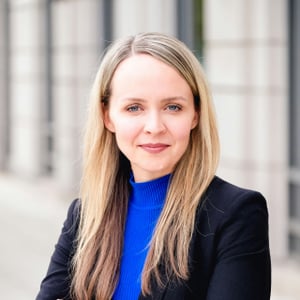
Professor of Law and Faculty Director for the Georgetown Center for the Constitution, Georgetown University Law Center
Stephanie Barclay is a Professor of Law at Georgetown Law School, and the Faculty Director of the Georgetown Center for the Constitution. Her research focuses on the role our different democratic institutions play in protecting minority rights, particularly at the intersection of free speech and religious exercise. Barclay‘s work is published or is forthcoming in leading journals such as the Harvard Law Review, the Chicago Law Review, the University of Pennsylvania Law Review, and the Yale Law Journal Forum. One of her articles was also selected for the 2020 Stanford/Harvard/Yale Junior Faculty Forum. Her work has been featured in many media outlets, including The New York Times, The Wall Street Journal, The Washington Post, USA Today, Bloomberg BNA, The Hill, and Law 360. And her work has also been cited by the U.S. Supreme Court.
Prior to joining Georgetown, Barclay was twice voted Professor of the Year. Barclay has also litigated constitutional cases at both the trial and appellate level, including before the U.S. Supreme Court. Barclay served as a law clerk to Judge N. Randy Smith on the U.S. Court of Appeals for the Ninth Circuit, and to Justice Neil M. Gorsuch of the U.S. Supreme Court.
Barclay is a Faculty Affiliate at the Constitutional Law Center at Stanford Law School; and she is a Nootbaar Fellow at the Nootbaar Institute on Law, Religion, and Ethics at Pepperdine University. She currently serves as the Chair for the AALS Law and Religion Section and as a Member of the Executive Committee for the AALS Constitutional Law Section. She graduated summa cum laude from BYU Law School, where she was elected to the Order of the Coif. She is completing a Ph.D. in Law at Oxford University as a Clarendon Scholar and a Tang Scholar.
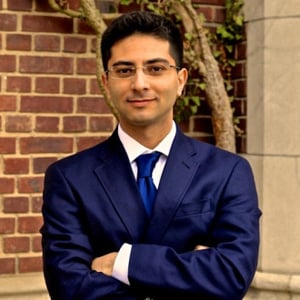
Associate Professor of Law, University of Notre Dame Law School
Sherif Girgis joined Notre Dame Law School in 2021. Prior to joining Notre Dame Law, Sherif practiced law at Jones Day in Washington, D.C., where he focused on appellate and complex civil litigation. Before that, Girgis served as a law clerk to Justice Samuel Alito, Jr., of the U.S. Supreme Court and Judge Thomas B. Griffith of the U.S. Court of Appeals for the D.C. Circuit. Now completing his Ph.D. in philosophy at Princeton, Girgis earned his J.D. at Yale Law School, where he served as an editor of the Yale Law Journal and won the Felix S. Cohen Prize for best paper in legal philosophy. Before law school, he earned a master's degree (B.Phil.) in philosophy from the University of Oxford as a Rhodes Scholar, and his bachelor's degree in philosophy from Princeton, Phi Beta Kappa and summa cum laude. Girgis is coauthor of What Is Marriage? Man and Woman: A Defense, cited in a dissent in United States v. Windsor, and Debating Religious Liberty and Discrimination, released by Oxford University Press in 2017. His work at the intersection of philosophy and law--including criminal law, constitutional liberties, and jurisprudence--has appeared in academic and popular venues including the Yale Law Journal, the Virginia Law Review, the University of Pennsylvania Law Review, the Harvard Journal of Law and Public Policy, the American Journal of Jurisprudence, the Cambridge Companion to Philosophy of Law, The New York Times, and The Wall Street Journal.

Kean Family Dean & Peter J. Liacouras Professor of Law, Temple University Beasley School of Law
Rachel Rebouché is the Kean Family Dean of Temple University Beasley School of Law and the Peter J. Liacouras Professor of Law. Prior to her appointment as Dean, she was the Associate Dean for Research, a position she held from 2017 to 2021. She is also a Faculty Fellow at Temple’s Center for Public Health Law Research.
Dean Rebouché is a leading scholar in reproductive health law and family law. She is an author of Governance Feminism: An Introduction and an editor of Governance Feminism: Notes from the Field. She is also the editor of Feminist Judgments: Family Law Opinions Rewritten, published by Cambridge University Press, and an author of the sixth edition of the casebook, Family Law. In addition, she will join the fifth edition of the casebook, Contracts: Law in Action and recently co-edited a collection of essays for Law & Contemporary Problems on the pandemic’s effects on contract law.
Dean Rebouché has served as a co-investigator on two grant-funded research projects related to reproductive health, one housed at the Emory University Rollins School of Public Health and another funded by the World Health Organization. Her recent research also includes articles in law reviews and in peer-reviewed journals on abortion law, relational contracts, gestational surrogacy, prenatal genetic testing and genetic counseling, collaborative divorce, parental involvement laws, and international reproductive rights.
Dean Rebouché received a J.D. from Harvard Law School, an LL.M. from Queen’s University, Belfast, and a B.A. from Trinity University. Prior to law school, she worked as a researcher for the Northern Ireland Human Rights Commission and the Human Rights Centre at Queen’s University, Belfast. After law school, Dean Rebouché clerked for Justice Kate O’Regan on the Constitutional Court of South Africa and practiced law in Washington, D.C., where she served as an associate director of adolescent health programs at the National Partnership for Women & Families (formerly, the Women’s Legal Defense Fund) and as a Women’s Law and Public Policy Fellow at the National Women’s Law Center.
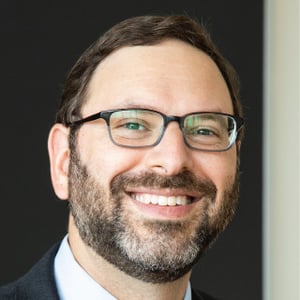
Antonin Scalia Professor of Law, Harvard Law School
Stephen E. Sachs is the Antonin Scalia Professor of Law at Harvard Law School, where he teaches civil procedure, conflict of laws, and seminars on constitutional law. His research focuses on the law and theory of constitutional interpretation, the jurisdiction of state and federal courts, the history of procedure and private law, and the role of the general common law in the U.S. legal system.
Sachs has authored numerous articles, essays, and book chapters. He is an elected member of the American Law Institute, an adviser to the ALI’s project on the Restatement of the Law (Third), Conflict of Laws, a former member of the Judicial Conference’s Advisory Committee on Appellate Rules, and a founding member of the Academic Freedom Alliance.
In 2020, Sachs received the Federalist Society’s Joseph Story Award, which recognizes a young academic who has demonstrated excellence in legal scholarship, a commitment to teaching, a concern for students, and who has made a significant public impact in a manner that advances the rule of law in a free society.
Sachs previously taught at Duke University School of Law and as a visiting professor at the University of Chicago Law School. Before entering academia, he practiced in the Washington, D.C., litigation group of Mayer Brown LLP, and he clerked for Chief Justice John G. Roberts Jr. as well as for Judge Stephen F. Williams of the U.S. Court of Appeals for the D.C. Circuit.
Sachs received his J.D. from Yale Law School, where he was executive editor of the Yale Law Journal and served both as executive editor and articles editor of the Yale Law & Policy Review. A Rhodes Scholar, he graduated from Oxford University with a first-class BA (Hons) degree in philosophy, politics, and economics. He received his A.B. degree summa cum laude in history from Harvard University, earning the Sophia Freund Prize.
Sachs is a licensed attorney in Massachusetts and the District of Columbia, and he is authorized to practice before the D.C. Circuit, the Second Circuit, the Seventh Circuit, and the Supreme Court of the United States.
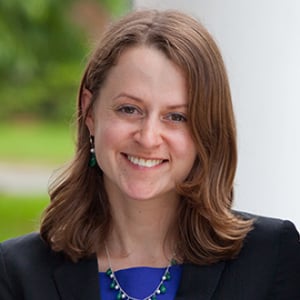
Stearns Weaver Miller Professor, Florida State University College of Law
Mary Ziegler is the Stearns Weaver Miller Professor at Florida State University College of Law. She specializes in the legal history of reproduction, the family, sexuality, and the Constitution. In the spring of 2022, she is visiting at Harvard Law School.
Her most recent book, Abortion and the Law in America: A Legal History, Roe v. Wade to the Present, was published by Cambridge University Press in 2020, and received positive reviews in outlets from the Washington Post to the Christian Science Monitor. Her new book, Dollars for Life: The Antiabortion Movement and the Fall of the Republican Establishment, will be published by Yale University Press in the summer of 2022. She also has a forthcoming book with Routledge, Reproduction and the Constitution.
Ziegler's first book, After Roe: The Lost History of the Abortion Debate, was published by Harvard University Press in 2015 and won the 2014 Harvard University Press Thomas J. Wilson Memorial Prize for best first manuscript published by the press in any discipline. Her second book, Beyond Abortion: Roe v. Wade and the Fight for Privacy, was published by Harvard University Press in 2018.
Her law review articles have appeared in leading journals, and she has served as a commentator for or been quoted in leading mass media outlets, including The Atlantic, CNN, Fox News, NBC, MSNBC, the New Republic, Newsweek, The New Yorker, The New York Times, NPR, PBS, Politico, Time, and The Washington Post. She has chaired committees for major legal history organizations, including the American Society for Legal History, the American Association of Law Schools Legal History Section and the American Bar Association’s Committee on Historic Commemorations. She is currently a member of the board of directors of the American Society for Legal History. She has also received recognition for her work in the classroom, including the 2016 Florida State University Teaching Award and the 2015 Transformation Through Teaching Award.

You’re Fired! Trump, Tenure Protection, and the Future of Humphrey’s Executor
Jonathan H. Adler, Daniel Z. Epstein, Victoria Nourse, Elizabeth Slattery, Will Yeatman
The recent flurry of firings in the federal government has sparked new questions surrounding the...
You’re Fired! Trump, Tenure Protection, and the Future of Humphrey’s Executor
Jonathan H. Adler, Daniel Z. Epstein, Victoria Nourse, Elizabeth Slattery, Will Yeatman
The recent flurry of firings in the federal government has sparked new questions surrounding the...
You’re Fired! Trump, Tenure Protection, and the Future of Humphrey’s Executor
Free Speech, DEI, and the Crisis in Legal Education
New Mexico Lawyers Chapter
Albuquerque, NMOpen Minds: Prof. Randy Barnett & Prof. Joshua Kleinfeld Part III
Joshua Kleinfeld, Randy E. Barnett
In Part Three of Open Minds with Prof. Randy Barnett and Prof. Joshua Kleinfeld, Prof....
What the Supreme Court Gets Wrong About Rights
Tampa Bay Lawyers Chapter
Tampa, FLOpen Minds: Prof. Randy Barnett & Prof. Joshua Kleinfeld Part II
Randy E. Barnett, Joshua Kleinfeld
In Part Two of Open Minds with Prof. Randy Barnett and Prof. Joshua Kleinfeld, Prof....
DC-Wide FedSoc Rupe Debate: Are Independent Agencies Constitutional?
Lisa Branch, Noah Rosenblum, Adam White
Registration is now closed. Join The Federalist Society’s local DC Young Lawyers Chapter and the Georgetown...
DC-Wide FedSoc Rupe Debate: Are Independent Agencies Constitutional?
Washington, DCLuncheon Panel: Abortion Law After Dobbs
San Francisco, CA