
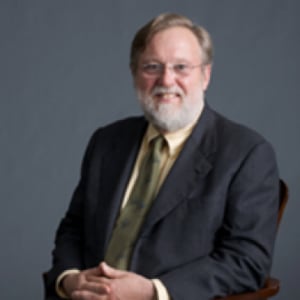
John Hampton Baumgartner, Jr. Professor of Real Property Law; Faculty Director, Georgetown Environmental Law and Policy Program; Faculty Director, Georgetown Climate Resource Center, Georgetown Law Center
Professor Byrne joined the Law Center faculty in 1985. After graduation from the University of Virginia law school, he served as a law clerk to Judge Frank Coffin and U.S. Supreme Court Justice Lewis Powell and then worked as an associate with the D.C. firm of Covington & Burling. He teaches and writes in the areas of Property, Land Use, Constitutional Law, and Higher Education Law and Policy. He served as Associate Dean for the JD Program from 1997 to 2000. He was John Carroll Research Professor in 1996-97.
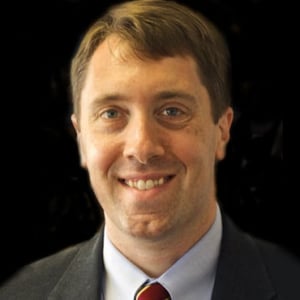
Professor of Law, Antonin Scalia Law School, George Mason University
Eric R. Claeys is Professor of Law at the Antonin Scalia Law School, George Mason University. He has written widely in the fields of property, private law, and constitutional law. Professor Claeys’s current research interests focus on flourishing- and labor-based natural rights justifications for property—in American property theory, in intellectual property, and in contemporary regulation of shale gas exploration and hydraulic fracturing. He is a member of the American Law Institute, he serves on the ALI’s Members’ Consultative Group for the first Restatement of Copyright, and he also serves as an adviser to the Restatement (Fourth) of the Law of Property.
Professor Claeys received his JD from the University of Southern California Gould School of Law. He received his AB from Princeton University, and he is a former visiting fellow and current member of Princeton’s Politics Department’s James Madison Program in American Ideals and Institutions. After law school, Professor Claeys clerked for the Hon. Melvin Brunetti, U.S. Court of Appeals for the Ninth Circuit, and the Hon. William H. Rehnquist, Chief Justice of the United States.
Professor Claeys’s main teaching interests include Property, Torts, Jurisprudence, and Intellectual Property. In recent years, he has also taught Water Law, Remedies, Estates and Trusts, Trade Secrecy, Constitutional Law, Torts, and Oil and Gas law. Spring 2018, he is teaching Torts and Jurisprudence as a Visiting Professor at Harvard Law School.
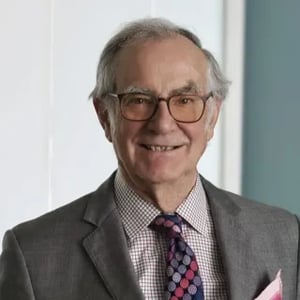
Of Counsel, McElroy, Deutsch, Mulvaney & Carpenter, LLP
WESLEY W. HORTON is Of Counsel in the Firm’s Hartford, Connecticut office. Mr. Horton’s appellate practice covers a wide variety of legal issues, from constitutional matters, to domestic relations, insurance, personal injury, and land use. He began his law career as the law clerk to Justice Charles House of the Connecticut Supreme Court (1970 to 1971). Building on that experience, he has participated in some of the most notable cases in Connecticut, representing individuals and corporations. The list of cases on which he appears as counsel, either at argument or on the brief, spans 50 years and numbers in the hundreds. He has argued more than 135 cases to the Connecticut Supreme Court and is well-known for representing the City of New London in Kelo v. New London before the U.S. Supreme Court in 2005.
Mr. Horton consults with counsel at the trial level to assist with complicated legal matters or in preparation for possible appellate issues. Such cases include representation of insurers and plaintiffs, contract questions, coverage issues and divorce litigation involving multi-million dollar estates.
He has been a Fellow of the American Academy of Appellate Lawyers since 1991. Membership in the Academy is by invitation only. Mr. Horton served as President of the American Counsel Association (2008-2009), of which he has been a member since 1991. He has been President of the Connecticut Supreme Court Historical Society since its founding in 2005.
Mr. Horton represents lawyers on ethical matters. He also testifies as an expert witness in Connecticut trial courts on ethical and malpractice matters as well as with regard to attorney’s fees. He served as the Chair of the Connecticut Bar Association’s Professional Ethics Committee (1997 through 2007), and has been a member of the Committee since 1976.
Mr. Horton is a graduate of Harvard College and the University of Connecticut School of Law, and the author or co-author of several scholarly publications and articles on legal topics. He is the recipient of many professional awards, including the University of Connecticut Law School Alumni Association’s Medal of Excellence; and currently serves on the Board of Editors for the Connecticut Law Tribune, and as a Lecturer and Adjunct Professor at the University of Connecticut School of Law . He has been co-author since 1978 of the annually published Connecticut Appellate Rules Annotated and the Connecticut Superior Court Rules Annotated, both published by Thomson/West. He also co-authored the “Connecticut Appellate Review,” an annual review of Connecticut Supreme and appellate Court cases, from1980 to 2022. Mr. Horton authored the History of the Connecticut Supreme Court, published by West Publishing. He also wrote The Connecticut State Constitution, an in-depth study of each provision of the Connecticut Constitution. Mr. Horton taught Appellate advocacy at the University of Connecticut School of Law most years from 1980 to 2023 and frequently lectures on constitutional and appellate issues.
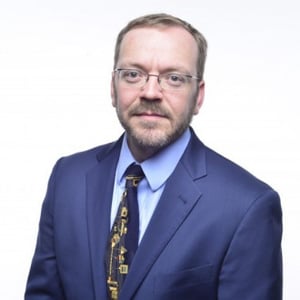
Vice President for Legal Affairs, Goldwater Institute

Professor of Law, Antonin Scalia Law School, George Mason University
ILYA SOMIN is Professor of Law at George Mason University and the B. Kenneth Simon Chair in Constitutional Studies at the Cato Institute. His research focuses on constitutional law, property law, democratic theory, federalism, and migration rights. He is the author of Free to Move: Foot Voting, Migration, and Political Freedom (Oxford University Press, revised and expanded edition, 2022), Democracy and Political Ignorance: Why Smaller Government is Smarter (Stanford University Press, revised and expanded second edition, 2016), and The Grasping Hand: Kelo v. City of New London and the Limits of Eminent Domain (University of Chicago Press, 2015, rev. paperback ed., 2016), coauthor of A Conspiracy Against Obamacare: The Volokh Conspiracy and the Health Care Case (Palgrave Macmillan, 2013), and co-editor of Eminent Domain: A Comparative Perspective (Cambridge University Press, 2017). Democracy and Political Ignorance has been translated into Italian and Japanese.
Somin’s work has appeared in numerous scholarly journals, including the Yale Law Journal, Stanford Law Review, Northwestern University Law Review, Georgetown Law Journal, Critical Review, and others. Somin has also published articles in a variety of popular press outlets, including the New York Times, Washington Post, Wall Street Journal, Los Angeles Times, CNN, NBC, The Atlantic, USA Today, Boston Globe, US News and World Report, South China Morning Post, National Law Journal and Reason. He has been quoted or interviewed by the New York Times, Washington Post, Wall Street Journal, Time, Newsweek, The Economist, the Christian Science Monitor, the Financial Times, The Guardian, the Associated Press, CBS, MSNBC, NPR, BBC, Reuters, the Canadian Broadcasting Corporation, the Australian Broadcasting Corporation, Radio Free Europe/Radio Liberty, Al Jazeera, and the Voice of America, among other media.
Somin’s writings have been cited in decisions by the United States Supreme Court, multiple state supreme courts and lower federal courts, and the Supreme Court of Israel. He is co-counsel for the plaintiffs in VOS Selections, Inc. v. Trump, a case challenging the constitutionality of President Trump’s “Liberation Day” tariffs. Somin has testified on the use of drones for targeted killing in the War on Terror before the US Senate Judiciary Subcommittee on the Constitution, Civil Rights, and Human Rights. In 2009, he testified on property rights issues at the United States Senate Judiciary Committee confirmation hearings for Supreme Court Justice Sonia Sotomayor. Somin writes regularly for the popular Volokh Conspiracy law and politics blog, now affiliated with Reason magazine (previously affiliated with the Washington Post from 2014 to 2017). From 2006 to 2013, he served as Co-Editor of the Supreme Court Economic Review, one of the country’s top-rated law and economics journals.
Somin has served as a visiting professor at the University of Pennsylvania Law School. He has also been a visiting professor or scholar at the Georgetown University Law Center, the University of Hamburg, Germany, the University of Torcuato Di Tella in Buenos Aires, Argentina, Uriel Reichman University in Israel, and Zhengzhou University in China. He is a University Affiliate of the Schar School of Policy and Government at George Mason University, and an affiliated faculty member of the George Mason University Institute for Immigration Research. Before joining the faculty at George Mason, Somin was the John M. Olin Fellow in Law at Northwestern University Law School in 2002-2003. In 2001-2002, he clerked for the Hon. Judge Jerry E. Smith of the U.S. Court of Appeals for the Fifth Circuit. Professor Somin earned his B.A., Summa Cum Laude, at Amherst College, M.A. in Political Science from Harvard University, and J.D. from Yale Law School.
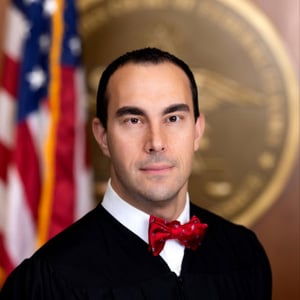
U.S. Court of Federal Claims and Jurist-In-Residence Professor of Law, The University of Akron School of Law
Judge Ryan T. Holte was sworn in as a judge on the United States Court of Federal Claims in July 2019. Prior to confirmation he served as the David L. Brennan Professor of Law and Director of the Center for Intellectual Property Law and Technology at The University of Akron School of Law (2017-2019) and an assistant professor of law at Southern Illinois University School of Law (2013-2017). Judge Holte has written and presented widely on patent law subjects and empirical legal studies of Federal Circuit and district court patent law cases. His most recent articles were published in the Iowa Law Review (2019), George Mason Law Review (2018), and Washington Law Review (2017).
In practice, Judge Holte served for six years as general counsel and partner of an electrical engineering technology company and is co-inventor of multiple patents related to Systems and Methods for Countering Satellite-Navigated Munitions. Prior to entering academia, Judge Holte practiced as a litigation attorney at the Federal Trade Commission and an associate in the Intellectual Property Practice Group at Jones Day. Prior to practice, he served as a law clerk to Judge Stanley F. Birch, Jr. on the United States Court of Appeals for the Eleventh Circuit and as a law clerk to Judge Loren A. Smith on the United States Court of Federal Claims.
Judge Holte received his JD from the University of California Davis School of Law and his BS, magna cum laude, in engineering from the California Maritime Academy where he was a First Class graduate of the Corps of Cadets Third Engineering Division and sailed as a U.S. Merchant Marine oiler.

Founder and Principal, Rose Communication & Coaching LLC
Kristine Simmons has a passion for public service and has dedicated her professional life to making government more effective for the people it serves.
Kristine is the founder of Rose Communication and Coaching LLC, a consulting firm that helps clients communicate with and about government.
Prior to founding her consulting firm, Kristine was the Vice President for Government Affairs at the Partnership for Public Service, a nonpartisan, nonprofit organization dedicated to building a better government and a stronger democracy. During her tenure at the Partnership, Kristine developed and executed strategies that resulted in over 50 pieces of government reform legislation becoming law. She helped launch the Partnership’s Center for Presidential Transition, which provides resources, data and hands-on support to promote a smooth transfer of power between presidential administrations. Kristine has testified before Congress as an expert witness on government effectiveness.
From 2001 to 2002, Kristine served as a Special Assistant for Domestic Policy to President George W. Bush. In this role, she advised the President on issues pertaining to the civil service, government operations, federalism, arts and humanities, the postal service and the District of Columbia, and participated in our government’s response to the 9/11 and anthrax attacks.
Prior to her time with the Bush administration, Kristine served as the staff director for the U.S. Senate Subcommittee on Oversight of Government Management, Restructuring and the District of Columbia. In that capacity, she served as the primary advisor to chairman Sen. George Voinovich (R-OH) on government operations, intergovernmental relations, and the management of human capital.
Kristine began her career as a professional staff member for the U.S. House of Representatives Committee on Government Reform and Oversight, where she managed issues related to federalism, government reform and inspectors general. She also served as a professional staff member for the U.S. Senate Committee on Governmental Affairs under committee chairman Sen. Fred Thompson (R-TN).
Kristine earned a Bachelor’s degree in Professional and Technical Communication from the Rochester Institute of Technology in Rochester, NY.
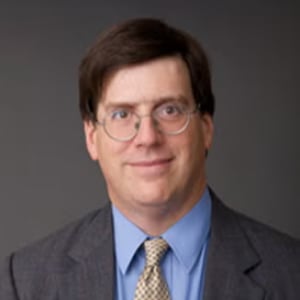
Carmack Waterhouse Professor of Law and Economics, Georgetown University Law Center
David A. Super’s research focuses on Administrative Law, Constitutional Law, Legislation (including the federal budget), Local Government Law, and Public Welfare Law. He teaches these subjects as well as Civil Procedure, Contracts, Evidence, Property, and Torts. In addition to Georgetown, he has also taught law at Columbia, Harvard, Howard, Maryland, Penn, Washington & Lee, and Yale. Prior to entering the legal academy, he served for several years as the general counsel for the Center on Budget and Policy Priorities and worked for the National Health Law Program and Community Legal Services in Philadelphia. He also was a recipient of the Frank F. Flegal Excellence in Teaching Award in 2018.
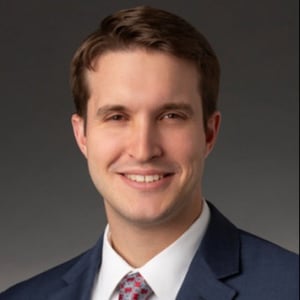
Senior Managing Associate, Sidley Austin LLP
Manuel Valle represents clients in a broad range of appeals, regulatory disputes, complex commercial litigation, and government enforcement actions. Manuel has experience representing clients at each level of the federal judiciary, as well as before federal administrative agencies and in state courts.
Before joining Sidley, Manuel served as a law clerk for Associate Justice Clarence Thomas of the United States Supreme Court during October Term 2021. Manuel also served as a law clerk for The Honorable Judge Joan L. Larsen of the United States Court of Appeals for the Sixth Circuit and The Honorable Judge Edith H. Jones of the United States Court of Appeals for the Fifth Circuit.
Manuel earned his law degree with high honors from the University of Chicago Law School, where he was a Rubenstein Scholar and served as the book review and symposium editor for the University of Chicago Law Review. He received his B.A. in Latin and English from Hillsdale College, where he graduated summa cum laude.
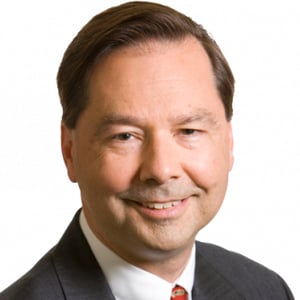
Senior Legal Fellow, Edwin Meese III Institute for the Rule of Law, Advancing American Freedom

Tazewell Taylor Professor of Law and William H. Cabell Research Professor, William & Mary Law School
Jonathan H. Adler joined the William & Mary law faculty as the Tazwell Taylor Professor of Law and William H. Cabell Research Professor in 2025. Prior to joining the faculty, he was the inaugural Johan Verheij Memorial Professor of Law and the founding Director of the Coleman P. Burke Center for Environmental Law at the Case Western Reserve University School of Law.
Professor Adler is the author or editor of seven books, including Climate Liberalism: Perspectives on Liberty, Property and Pollution (Palgrave, 2023), Marijuana Federalism: Uncle Sam and Mary Jane (Brookings Institution Press, 2020), Business and the Roberts Court (Oxford University Press, 2016) and Rebuilding the Ark: New Perspectives on Endangered Species Act Reform (AEI Press, 2011).
His articles have appeared in publications ranging from the Harvard Environmental Law Review and Yale Journal on Regulation to the Wall Street Journal, New York Times, and Washington Post. He has testified before Congress a dozen times, and his work has been cited in the U.S. Supreme Court. A 2024 study identified Professor Adler as the seventh most cited legal academic in administrative and environmental law from 2019 to 2023.
Professor Adler is a contributing editor to Civitas Outlook and a regular contributor to the popular legal blog, The Volokh Conspiracy. A regular commentator on constitutional and regulatory issues, he has appeared on numerous radio and television programs, ranging from the PBS Newshour and National Public Radio to the Fox News Channel and Entertainment Tonight.
Professor Adler is a senior fellow at the Property & Environment Research Center in Bozeman, Montana. In 2018, Professor Adler was elected to membership in the American Law Institute and helped co-found the organization Checks and Balances. In 2024, Professor Adler was appointed a public member of the Administrative Conference of the United States.
Professor Adler clerked for the Honorable David B. Sentelle on the U.S. Court of Appeals for the District of Columbia Circuit.
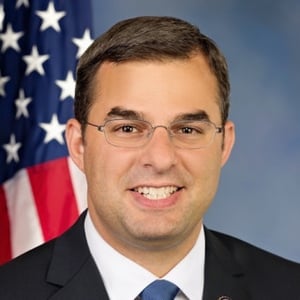
United States House of Representatives, Michigan
Representative Justin Amash represents Michigan's Third District in the 112th United States Congress. Justin serves on the House Budget Committee and the House Oversight and Government Reform Committee. He was elected to his first term on November 2, 2010.
Justin was born in Grand Rapids, Michigan, and raised in the city of Kentwood. He received his bachelor's degree with High Honors in Economics from the University of Michigan and his Juris Doctor from the University of Michigan Law School. Justin worked as a business lawyer and a Michigan state representative before his election to Congress.
Justin has been a leader in the incorporation of Facebook and other social media into his work as a public official. He also set new standards for transparency and accountability in the Michigan state House.
In October 2010, TIME Magazine named Justin one of its "40 under 40 - Rising Stars of U.S. Politics."
Justin lives in Cascade Charter Township with his wife Kara, a graduate of Calvin College and a former elementary school teacher. Justin and Kara have three children, Alexander, Anwen, and Evelyn.
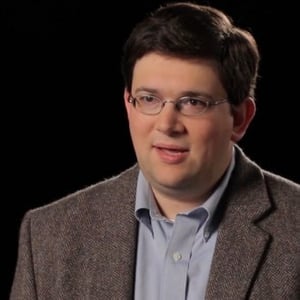
Professor of Law, Cornell Law School
Josh Chafetz received his B.A. from Yale University, his doctorate in Politics from Oxford (where he studied as a Rhodes Scholar), and his J.D. from Yale Law School. Following law school, he clerked for Judge Guido Calabresi of the United States Court of Appeals for the Second Circuit.
His research interests include structural constitutional law, American and British constitutional history, legislation and legislative procedure, American political development, and the intersection of law and politics. His second book, Congress's Constitution: Legislative Authority and the Separation of Powers, was published by Yale University Press in 2017. He is also the author of Democracy's Privileged Few: Legislative Privilege and Democratic Norms in the British and American Constitutions (Yale University Press, 2007) and is a co-editor (along with William N. Eskridge, Jr., Elizabeth Garrett, and James Brudney) of the leading casebook in Legislation, Cases and Materials on Legislation and Regulation: Statutes and the Creation of Public Policy, published by West.
His scholarship has been published in a number of top law reviews, including the Harvard Law Review, Yale Law Journal, University of Chicago Law Review, University of Pennsylvania Law Review, Duke Law Journal, Notre Dame Law Review, and Yale Journal of Law & the Humanities, among others. He has also written for a number of popular press outlets, including the New York Times, the Washington Post, Politico, Slate, and the New Republic. He is currently a Contributing Writer for the Capitol Hill newspaper The Hill.
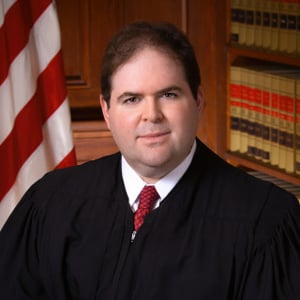
Judge, United States Court of Appeals, Eleventh Circuit
On November 19, 2019, Judge Robert J. Luck was appointed to the United States Court of Appeals for the Eleventh Circuit by President Donald Trump. Prior to serving on the federal bench, he was appointed to the Florida Supreme Court by Governor Ron DeSantis on January 14, 2019. He previously served on the Third District Court of Appeal in Miami after his appointment there by Governor Rick Scott in March 2017.
Earlier, Judge Luck served on the Eleventh Judicial Circuit Court of Florida from September 2013 to March 2017. He presided in the Criminal, Civil, and Appellate Divisions. Judge Luck, in his years as a trial court judge, tried seventy jury trials, and heard dozens of appeals from the county court and municipal agencies. Judge Luck was appointed to the circuit court in 2013 and was elected by the voters of Miami-Dade County to retain his seat in 2016.
Prior to his service on the bench, Judge Luck was an Assistant United States Attorney for the Southern District of Florida. In his years as a federal prosecutor, he was assigned to the Appeals, Major Crimes, and Economic Crimes Sections of the U.S. Attorney’s Office. Judge Luck tried nineteen jury trials before the federal district court and argued three appeals to the United States Court of Appeals for the Eleventh Circuit. In his final year in the Office, he was a Deputy Chief in the Major Crimes Section.
Earlier in his career, Judge Luck was a legislative correspondent for two United States Senators, a law clerk and staff attorney to Circuit Judge Edward E. Carnes on the United States Court of Appeals for the Eleventh Circuit, and a part of the Greenberg Traurig firm’s appellate section. Judge Luck received his Juris Doctor from the University of Florida Levin College of Law magna cum laude and was asked to join the Order of the Coif. Judge Luck also served as Editor-in-Chief of the Florida Law Review. Judge Luck received his Bachelor of Arts in Economics from the University of Florida with highest honors.
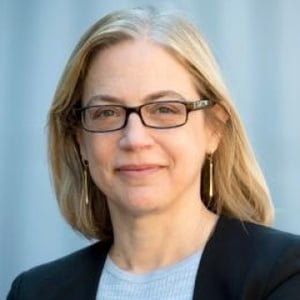
Harlan Fiske Stone Professor of Constitutional Law, Columbia Law School
A leading administrative and constitutional law scholar, Gillian Metzger ’96 writes and teaches in the areas of administrative law, constitutional law, and federal courts, with an emphasis on federalism and privatization. In 2023-2024, she served as Acting Assistant Attorney General and Deputy Assistant Attorney General in the Office of Legal Counsel in the Department of Justice.
Metzger's recent work covers topics ranging from constitutional attacks on the administrative state to appropriations, administrative law under the Roberts Court, and the role of administrative agencies in a polarized world. In 2015, Metzger won the American Bar Association Administrative Law Section Annual Scholarship Award for “The Constitutional Duty to Supervise,” which examined presidential control and oversight of the modern administrative state. She is a co-editor of Gellhorn & Byse’s Administrative Law: Cases and Comments, 13th ed. (Foundation Press, 2023), a seminal administrative law casebook.
Professor Metzger was recently elected to the American Academy of Arts & Sciences and is a Senior Fellow of the Administrative Conference of the United States. In 2020, she was awarded Columbia University's Faculty Mentorship Award and in 2014, the Law School’s graduating class awarded Metzger the Willis L.M. Reese Prize for Excellence in Teaching, recognizing, among many other accomplishments, her commitment to mentoring new generations of law students.
In 2012, Metzger helped launch Columbia Law School’s Center for Constitutional Governance (CCG)—where she now serves as faculty director—a nonpartisan legal and policy organization devoted to the study of constitutional structure and authority. CCG brings together a diverse group of constitutional scholars to explore policy areas such as health care, civil rights, immigration, financial regulation, and national security.
Metzger also has co-authored and filed numerous amicus briefs in major constitutional and administrative law challenges before the Supreme Court and other courts. Most recently, Metzger filed a brief in Seila Law Center v. CFPB, a separation of powers challenge, and in Kisor v. Wilkie, a case involving judicial deference to agencies. She has also filed briefs in cases involving reproductive rights and the Affordable Care Act, among others.
Previously, Metzger served as vice dean of intellectual life at Columbia Law School. Before joining the Law School, she worked as an attorney with the Brennan Center for Justice. Metzger also clerked for U.S. Supreme Court Justice Ruth Bader Ginsburg ’59 and Judge Patricia M. Wald of the U.S. Circuit Court of Appeals for the District of Columbia. In 2018, Metzger moderated a panel discussion with Justice Ginsburg on impact litigation at Columbia Law School.
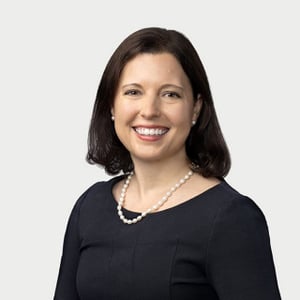
Of Counsel, Gibson Dunn & Crutcher
Amanda H. Neely is of counsel in the Washington, D.C. office of Gibson, Dunn & Crutcher and is a member of the Public Policy, Congressional Investigations, White Collar, and National Security practice groups.
Ms. Neely has extensive experience working on Capitol Hill. She leverages that expertise to advise clients regarding their interactions with Congress and the executive branch. Over the course of ten years, Ms. Neely held several senior staff positions in Congress. She served as Director of Governmental Affairs for the Senate Homeland Security and Governmental Affairs and General Counsel to Senator Rob Portman. Under Senator Portman’s chairmanship, she also served as Deputy Chief Counsel for the Permanent Subcommittee on Investigations. In those roles, she managed Senator Portman’s regulatory reform agenda and led oversight of federal government agencies and investigations into private entities. She previously served in several other Capitol Hill offices including as Oversight Counsel for the House of Representatives Committee on Ways and Means.
Congressional Investigations: At Gibson Dunn, Ms. Neely has represented clients undergoing investigations by numerous congressional committees, including the Senate Permanent Subcommittee on Investigations; Senate Finance Committee; Senate Judiciary Committee; Senate Health, Education, Labor, and Pensions Committee; House Committee on Oversight and Accountability; House Judiciary Committee; and the House Energy and Commerce Committee. In the course of those representations, Ms. Neely assists clients in all stages of investigations, including responding to letter requests and subpoenas to preparing witnesses for interviews, depositions, and congressional hearings. She also has assisted clients appearing before independent commissions such as the Financial Crisis Inquiry Commission and the Commission on Wartime Contracting.
Public Policy: Ms. Neely also works with clients to advance their legislative interests on Capitol Hill by gathering intelligence, formulating strategic plans, and executing lobbying campaigns. In those matters, she has represented a wide range of clients from the fields of technology, healthcare, finance, and energy.
Regulatory Counseling: Ms. Neely regularly advises clients regarding their interests before regulatory agencies. Her expertise in the CHIPS and Science Act allows her to help clients comply with the Department of Commerce’s regulations and assist them in commenting on agency rules and applying for funding. She also works with clients to engage in the rulemaking process at agencies ranging from the Consumer Financial Protection Bureau to the Commodity Futures Trading Commission to the Securities and Exchange Commission.
Ms. Neely also has participated in a variety of litigation matters before state and federal trial and appellate courts, including several class action defense and False Claims Act cases.
Ms. Neely clerked for the Honorable David B. Sentelle, then-Chief Judge of the United States Court of Appeals for the District of Columbia Circuit. She earned her law degree cum laude from Duke University School of Law, where she served as the Articles Editor for both the Alaska Law Review and the Duke Journal of Constitutional Law & Public Policy. She was a member of the Duke Law Moot Court Board and served on the executive board of the Duke Law Federalist Society.
Ms. Neely graduated cum laude from Princeton University, where she majored in English and earned a certificate in Medieval Studies. She served for two years on United States Senator Elizabeth Dole’s staff as a legislative correspondent, focusing on banking, housing, budget, and tax issues. Ms. Neely is admitted to practice law in the District of Columbia and before the United States Courts of Appeals for the District of Columbia Circuit.
Tazewell Taylor Professor of Law and William H. Cabell Research Professor, William & Mary Law School
Jonathan H. Adler joined the William & Mary law faculty as the Tazwell Taylor Professor of Law and William H. Cabell Research Professor in 2025. Prior to joining the faculty, he was the inaugural Johan Verheij Memorial Professor of Law and the founding Director of the Coleman P. Burke Center for Environmental Law at the Case Western Reserve University School of Law.
Professor Adler is the author or editor of seven books, including Climate Liberalism: Perspectives on Liberty, Property and Pollution (Palgrave, 2023), Marijuana Federalism: Uncle Sam and Mary Jane (Brookings Institution Press, 2020), Business and the Roberts Court (Oxford University Press, 2016) and Rebuilding the Ark: New Perspectives on Endangered Species Act Reform (AEI Press, 2011).
His articles have appeared in publications ranging from the Harvard Environmental Law Review and Yale Journal on Regulation to the Wall Street Journal, New York Times, and Washington Post. He has testified before Congress a dozen times, and his work has been cited in the U.S. Supreme Court. A 2024 study identified Professor Adler as the seventh most cited legal academic in administrative and environmental law from 2019 to 2023.
Professor Adler is a contributing editor to Civitas Outlook and a regular contributor to the popular legal blog, The Volokh Conspiracy. A regular commentator on constitutional and regulatory issues, he has appeared on numerous radio and television programs, ranging from the PBS Newshour and National Public Radio to the Fox News Channel and Entertainment Tonight.
Professor Adler is a senior fellow at the Property & Environment Research Center in Bozeman, Montana. In 2018, Professor Adler was elected to membership in the American Law Institute and helped co-found the organization Checks and Balances. In 2024, Professor Adler was appointed a public member of the Administrative Conference of the United States.
Professor Adler clerked for the Honorable David B. Sentelle on the U.S. Court of Appeals for the District of Columbia Circuit.
United States House of Representatives, Michigan
Representative Justin Amash represents Michigan's Third District in the 112th United States Congress. Justin serves on the House Budget Committee and the House Oversight and Government Reform Committee. He was elected to his first term on November 2, 2010.
Justin was born in Grand Rapids, Michigan, and raised in the city of Kentwood. He received his bachelor's degree with High Honors in Economics from the University of Michigan and his Juris Doctor from the University of Michigan Law School. Justin worked as a business lawyer and a Michigan state representative before his election to Congress.
Justin has been a leader in the incorporation of Facebook and other social media into his work as a public official. He also set new standards for transparency and accountability in the Michigan state House.
In October 2010, TIME Magazine named Justin one of its "40 under 40 - Rising Stars of U.S. Politics."
Justin lives in Cascade Charter Township with his wife Kara, a graduate of Calvin College and a former elementary school teacher. Justin and Kara have three children, Alexander, Anwen, and Evelyn.
Professor of Law, Cornell Law School
Josh Chafetz received his B.A. from Yale University, his doctorate in Politics from Oxford (where he studied as a Rhodes Scholar), and his J.D. from Yale Law School. Following law school, he clerked for Judge Guido Calabresi of the United States Court of Appeals for the Second Circuit.
His research interests include structural constitutional law, American and British constitutional history, legislation and legislative procedure, American political development, and the intersection of law and politics. His second book, Congress's Constitution: Legislative Authority and the Separation of Powers, was published by Yale University Press in 2017. He is also the author of Democracy's Privileged Few: Legislative Privilege and Democratic Norms in the British and American Constitutions (Yale University Press, 2007) and is a co-editor (along with William N. Eskridge, Jr., Elizabeth Garrett, and James Brudney) of the leading casebook in Legislation, Cases and Materials on Legislation and Regulation: Statutes and the Creation of Public Policy, published by West.
His scholarship has been published in a number of top law reviews, including the Harvard Law Review, Yale Law Journal, University of Chicago Law Review, University of Pennsylvania Law Review, Duke Law Journal, Notre Dame Law Review, and Yale Journal of Law & the Humanities, among others. He has also written for a number of popular press outlets, including the New York Times, the Washington Post, Politico, Slate, and the New Republic. He is currently a Contributing Writer for the Capitol Hill newspaper The Hill.
Judge, United States Court of Appeals, Eleventh Circuit
On November 19, 2019, Judge Robert J. Luck was appointed to the United States Court of Appeals for the Eleventh Circuit by President Donald Trump. Prior to serving on the federal bench, he was appointed to the Florida Supreme Court by Governor Ron DeSantis on January 14, 2019. He previously served on the Third District Court of Appeal in Miami after his appointment there by Governor Rick Scott in March 2017.
Earlier, Judge Luck served on the Eleventh Judicial Circuit Court of Florida from September 2013 to March 2017. He presided in the Criminal, Civil, and Appellate Divisions. Judge Luck, in his years as a trial court judge, tried seventy jury trials, and heard dozens of appeals from the county court and municipal agencies. Judge Luck was appointed to the circuit court in 2013 and was elected by the voters of Miami-Dade County to retain his seat in 2016.
Prior to his service on the bench, Judge Luck was an Assistant United States Attorney for the Southern District of Florida. In his years as a federal prosecutor, he was assigned to the Appeals, Major Crimes, and Economic Crimes Sections of the U.S. Attorney’s Office. Judge Luck tried nineteen jury trials before the federal district court and argued three appeals to the United States Court of Appeals for the Eleventh Circuit. In his final year in the Office, he was a Deputy Chief in the Major Crimes Section.
Earlier in his career, Judge Luck was a legislative correspondent for two United States Senators, a law clerk and staff attorney to Circuit Judge Edward E. Carnes on the United States Court of Appeals for the Eleventh Circuit, and a part of the Greenberg Traurig firm’s appellate section. Judge Luck received his Juris Doctor from the University of Florida Levin College of Law magna cum laude and was asked to join the Order of the Coif. Judge Luck also served as Editor-in-Chief of the Florida Law Review. Judge Luck received his Bachelor of Arts in Economics from the University of Florida with highest honors.
Harlan Fiske Stone Professor of Constitutional Law, Columbia Law School
A leading administrative and constitutional law scholar, Gillian Metzger ’96 writes and teaches in the areas of administrative law, constitutional law, and federal courts, with an emphasis on federalism and privatization. In 2023-2024, she served as Acting Assistant Attorney General and Deputy Assistant Attorney General in the Office of Legal Counsel in the Department of Justice.
Metzger's recent work covers topics ranging from constitutional attacks on the administrative state to appropriations, administrative law under the Roberts Court, and the role of administrative agencies in a polarized world. In 2015, Metzger won the American Bar Association Administrative Law Section Annual Scholarship Award for “The Constitutional Duty to Supervise,” which examined presidential control and oversight of the modern administrative state. She is a co-editor of Gellhorn & Byse’s Administrative Law: Cases and Comments, 13th ed. (Foundation Press, 2023), a seminal administrative law casebook.
Professor Metzger was recently elected to the American Academy of Arts & Sciences and is a Senior Fellow of the Administrative Conference of the United States. In 2020, she was awarded Columbia University's Faculty Mentorship Award and in 2014, the Law School’s graduating class awarded Metzger the Willis L.M. Reese Prize for Excellence in Teaching, recognizing, among many other accomplishments, her commitment to mentoring new generations of law students.
In 2012, Metzger helped launch Columbia Law School’s Center for Constitutional Governance (CCG)—where she now serves as faculty director—a nonpartisan legal and policy organization devoted to the study of constitutional structure and authority. CCG brings together a diverse group of constitutional scholars to explore policy areas such as health care, civil rights, immigration, financial regulation, and national security.
Metzger also has co-authored and filed numerous amicus briefs in major constitutional and administrative law challenges before the Supreme Court and other courts. Most recently, Metzger filed a brief in Seila Law Center v. CFPB, a separation of powers challenge, and in Kisor v. Wilkie, a case involving judicial deference to agencies. She has also filed briefs in cases involving reproductive rights and the Affordable Care Act, among others.
Previously, Metzger served as vice dean of intellectual life at Columbia Law School. Before joining the Law School, she worked as an attorney with the Brennan Center for Justice. Metzger also clerked for U.S. Supreme Court Justice Ruth Bader Ginsburg ’59 and Judge Patricia M. Wald of the U.S. Circuit Court of Appeals for the District of Columbia. In 2018, Metzger moderated a panel discussion with Justice Ginsburg on impact litigation at Columbia Law School.
Of Counsel, Gibson Dunn & Crutcher
Amanda H. Neely is of counsel in the Washington, D.C. office of Gibson, Dunn & Crutcher and is a member of the Public Policy, Congressional Investigations, White Collar, and National Security practice groups.
Ms. Neely has extensive experience working on Capitol Hill. She leverages that expertise to advise clients regarding their interactions with Congress and the executive branch. Over the course of ten years, Ms. Neely held several senior staff positions in Congress. She served as Director of Governmental Affairs for the Senate Homeland Security and Governmental Affairs and General Counsel to Senator Rob Portman. Under Senator Portman’s chairmanship, she also served as Deputy Chief Counsel for the Permanent Subcommittee on Investigations. In those roles, she managed Senator Portman’s regulatory reform agenda and led oversight of federal government agencies and investigations into private entities. She previously served in several other Capitol Hill offices including as Oversight Counsel for the House of Representatives Committee on Ways and Means.
Congressional Investigations: At Gibson Dunn, Ms. Neely has represented clients undergoing investigations by numerous congressional committees, including the Senate Permanent Subcommittee on Investigations; Senate Finance Committee; Senate Judiciary Committee; Senate Health, Education, Labor, and Pensions Committee; House Committee on Oversight and Accountability; House Judiciary Committee; and the House Energy and Commerce Committee. In the course of those representations, Ms. Neely assists clients in all stages of investigations, including responding to letter requests and subpoenas to preparing witnesses for interviews, depositions, and congressional hearings. She also has assisted clients appearing before independent commissions such as the Financial Crisis Inquiry Commission and the Commission on Wartime Contracting.
Public Policy: Ms. Neely also works with clients to advance their legislative interests on Capitol Hill by gathering intelligence, formulating strategic plans, and executing lobbying campaigns. In those matters, she has represented a wide range of clients from the fields of technology, healthcare, finance, and energy.
Regulatory Counseling: Ms. Neely regularly advises clients regarding their interests before regulatory agencies. Her expertise in the CHIPS and Science Act allows her to help clients comply with the Department of Commerce’s regulations and assist them in commenting on agency rules and applying for funding. She also works with clients to engage in the rulemaking process at agencies ranging from the Consumer Financial Protection Bureau to the Commodity Futures Trading Commission to the Securities and Exchange Commission.
Ms. Neely also has participated in a variety of litigation matters before state and federal trial and appellate courts, including several class action defense and False Claims Act cases.
Ms. Neely clerked for the Honorable David B. Sentelle, then-Chief Judge of the United States Court of Appeals for the District of Columbia Circuit. She earned her law degree cum laude from Duke University School of Law, where she served as the Articles Editor for both the Alaska Law Review and the Duke Journal of Constitutional Law & Public Policy. She was a member of the Duke Law Moot Court Board and served on the executive board of the Duke Law Federalist Society.
Ms. Neely graduated cum laude from Princeton University, where she majored in English and earned a certificate in Medieval Studies. She served for two years on United States Senator Elizabeth Dole’s staff as a legislative correspondent, focusing on banking, housing, budget, and tax issues. Ms. Neely is admitted to practice law in the District of Columbia and before the United States Courts of Appeals for the District of Columbia Circuit.

Patrick Hotung Professor of Constitutional Law, Georgetown University Law Center
Randy Barnett is the Patrick Hotung Professor of Constitutional Law at Georgetown University Law Center. He has argued before the United States Supreme Court, tried murder cases to juries as a prosecutor in Chicago, and appeared as a prosecutor in the feature film Inalienable. He is the author of numerous books, including Restoring the Lost Constitution, The Structure of Liberty, Our Republican Constitution, and The Original Meaning of the Fourteenth Amendment. He has published two memoirs, A Life for Liberty: The Making of an American Originalist, and Felony Review: Tales of True Crime and Corruption in Chicago. He is currently working on a new book, Freedom and Flourishing: Libertarianism for the Real World.
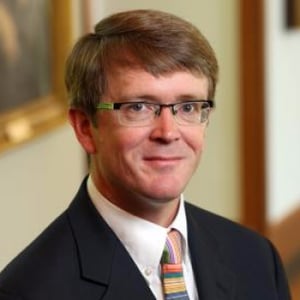
Samuel H. McCoy II Professor of Law, University of Virginia School of Law
John F. Duffy is the Samuel H. McCoy II Professor of Law and Class of 1966 Research Professor of Law at the University of Virginia School of Law, where he teaches administrative law, torts and intellectual property. Professor Duffy has published articles on a wide range of administrative law and regulatory issues in journals such as University of Chicago Law Review, Yale Law Journal, Stanford Law Review, Virginia Law Review, Columbia Law Review, Texas Law Review, Northwestern University Law Review, NYU Law Review, University of Pennsylvania Law Review and the Supreme Court Review. His 1998 article Administrative Common Law in Judicial Review, 77 Tex. L. Rev. 113 (1998), was one of the first articles to criticize the Chevron doctrine as being irreconcilable with § 706 of the APA; it won the American Bar Association’s Scholarship Award in Administrative Law. His 2008 article “Are Administrative Patent Judges Unconstitutional?” was covered on National Public Radio), in the New York Times (Adam Liptak, In One Flaw, Questions on Validity of 46 Judges, May 6, 2008), and in the Wall Street Journal (Dan Slater, Patently Unconstitutional, May 6, 2008). The NYT and WSJ agreed that he was “a different kind of law professor,” “one of the lucky few” whose “writings actually wind up changing the law.”
As an attorney in the courts, Duffy has twice successfully convinced the Supreme Court to overturn lower court doctrines that had been applied in many cases over decades but that were unanimously held to be irreconcilable with Supreme Court precedents. See TC Heartland v. Kraft Foods Group Brands, 581 U.S. 258 (2017); KSR v. Teleflex, 550 U.S. 398 (2007).
Prior to entering legal academics, Duffy clerked on the D.C. Circuit for Stephen Williams and on the Supreme Court for Antonin Scalia. While clerking, he became known as Justice Scalia’s “hapless law clerk,” who had been tasked with unearthing three-quarters of a century of legislative history that made “no difference” to the outcome in an otherwise forgettable case. See Conroy v. Aniskoff, 507 U.S. 511, 527-28 (1993) (Scalia, J., concurring in the judgment).
In earlier days, Duffy enjoyed being a professional blackjack player unwelcome in all Atlantic City casinos and a semi-professional road runner (best marathon time 2:24:33). He holds an A.B. in physics from Harvard and a J.D. from the University of Chicago.

Professor of Law, Washington University in St. Louis
Professor Daniel Epps teaches first-year criminal law, upper-level courses in criminal procedure, and a seminar on public law theory. His research lies at the intersection of constitutional law and theory, criminal law and procedure, and federal courts. His scholarship has appeared or will appear in the Harvard Law Review, the Yale Law Journal, the Michigan Law Review, the NYU Law Review, the University of Pennsylvania Law Review, the Southern California Law Review, and the Vanderbilt Law Review, and his writing for popular audiences has appeared in the New York Times, the Washington Post, The Guardian, The Boston Globe, Vox, The Atlantic, and the Washington Monthly.
Professor Epps is a nationally recognized expert on the Supreme Court who is regularly quoted in the media. He has particular expertise in Supreme Court reform, where his work is influencing major policy debates. After Presidential candidate Mayor Pete Buttigieg endorsed his and Ganesh Sitaraman’s proposal to restructure the Supreme Court, the plan received widespread attention from the popular press. A pioneering legal podcaster, he currently co-hosts (with William Baude) Divided Argument, a podcast that analyzes the Court’s decisions. Professor Epps is also an experienced Supreme Court litigator; his notable practice experience includes serving as co-counsel for the defendant in Ocasio v. United States, which addressed the scope of criminal conspiracy liability for public-sector extortion, and the successful petition for certiorari and merits briefing in Walden v. Fiore. He also served as co-counsel on the brief of Prof. Stephen E. Sachs as amicus curiae in Atlantic Marine Construction Co. v. U.S. District Court, which The Green Bag Almanac & Reader included on its list of “Exemplary Legal Writing” for 2013.
Professor Epps received his A.B. summa cum laude with highest distinction in Philosophy from Duke University and his J.D. magna cum laude from Harvard Law School, where he was Articles Co-Chair of the Harvard Law Review and won the John M. Olin Law & Economics prize. After law school, he clerked for Judge J. Harvie Wilkinson III of the U.S. Court of Appeals for the Fourth Circuit and for Justice Anthony M. Kennedy of the Supreme Court of the United States. He then spent several years as an appellate specialist at King & Spalding LLP in Washington, D.C. While in practice, he also co-taught Supreme Court Decisionmaking at the University of Virginia School of Law. Immediately prior to joining Washington University Law, he was a Climenko Fellow and Lecturer on Law at Harvard Law School.
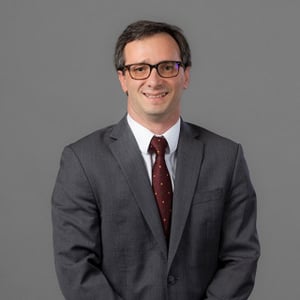
Assistant Professor of Law, George Mason University, Antonin Scalia Law School
Robert Leider is an Assistant Professor of Law at Antonin Scalia Law School, George Mason University. His scholarly interests are in criminal law, criminal procedure, and constitutional law, especially concerning questions about the use of force and the rule of law. He has written on the law of self-defense, the constitutional allocation of military power, and gun control. Among other places, he has published in the Florida Law Review (forthcoming), the Indiana Law Journal, and the Wall Street Journal.
Before joining Antonin Scalia Law School, Professor Leider was at Arnold & Porter in Washington, DC. He was previously with Mayer Brown LLP and was an Olin-Searle-Smith Fellow at the University of Pennsylvania Law School. He has clerked for Judge Diane S. Sykes, of the U.S. Court of Appeals for the Seventh Circuit, and Justice Clarence Thomas. Professor Leider earned a BA, summa cum laude, from The George Washington University, a JD from Yale Law School, and a PhD in Philosophy (dissertation defended with distinction) from Georgetown University. While at Yale, he served as an articles editor for the Yale Law Journal.
Professor Leider teaches criminal law and torts.
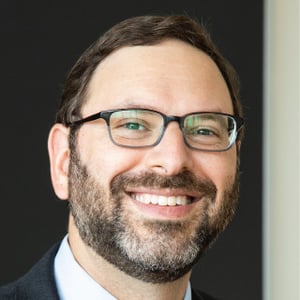
Antonin Scalia Professor of Law, Harvard Law School
Stephen E. Sachs is the Antonin Scalia Professor of Law at Harvard Law School, where he teaches civil procedure, conflict of laws, and seminars on constitutional law. His research focuses on the law and theory of constitutional interpretation, the jurisdiction of state and federal courts, the history of procedure and private law, and the role of the general common law in the U.S. legal system.
Sachs has authored numerous articles, essays, and book chapters. He is an elected member of the American Law Institute, an adviser to the ALI’s project on the Restatement of the Law (Third), Conflict of Laws, a former member of the Judicial Conference’s Advisory Committee on Appellate Rules, and a founding member of the Academic Freedom Alliance.
In 2020, Sachs received the Federalist Society’s Joseph Story Award, which recognizes a young academic who has demonstrated excellence in legal scholarship, a commitment to teaching, a concern for students, and who has made a significant public impact in a manner that advances the rule of law in a free society.
Sachs previously taught at Duke University School of Law and as a visiting professor at the University of Chicago Law School. Before entering academia, he practiced in the Washington, D.C., litigation group of Mayer Brown LLP, and he clerked for Chief Justice John G. Roberts Jr. as well as for Judge Stephen F. Williams of the U.S. Court of Appeals for the D.C. Circuit.
Sachs received his J.D. from Yale Law School, where he was executive editor of the Yale Law Journal and served both as executive editor and articles editor of the Yale Law & Policy Review. A Rhodes Scholar, he graduated from Oxford University with a first-class BA (Hons) degree in philosophy, politics, and economics. He received his A.B. degree summa cum laude in history from Harvard University, earning the Sophia Freund Prize.
Sachs is a licensed attorney in Massachusetts and the District of Columbia, and he is authorized to practice before the D.C. Circuit, the Second Circuit, the Seventh Circuit, and the Supreme Court of the United States.
John Hampton Baumgartner, Jr. Professor of Real Property Law; Faculty Director, Georgetown Environmental Law and Policy Program; Faculty Director, Georgetown Climate Resource Center, Georgetown Law Center
Professor Byrne joined the Law Center faculty in 1985. After graduation from the University of Virginia law school, he served as a law clerk to Judge Frank Coffin and U.S. Supreme Court Justice Lewis Powell and then worked as an associate with the D.C. firm of Covington & Burling. He teaches and writes in the areas of Property, Land Use, Constitutional Law, and Higher Education Law and Policy. He served as Associate Dean for the JD Program from 1997 to 2000. He was John Carroll Research Professor in 1996-97.
Professor of Law, Antonin Scalia Law School, George Mason University
Eric R. Claeys is Professor of Law at the Antonin Scalia Law School, George Mason University. He has written widely in the fields of property, private law, and constitutional law. Professor Claeys’s current research interests focus on flourishing- and labor-based natural rights justifications for property—in American property theory, in intellectual property, and in contemporary regulation of shale gas exploration and hydraulic fracturing. He is a member of the American Law Institute, he serves on the ALI’s Members’ Consultative Group for the first Restatement of Copyright, and he also serves as an adviser to the Restatement (Fourth) of the Law of Property.
Professor Claeys received his JD from the University of Southern California Gould School of Law. He received his AB from Princeton University, and he is a former visiting fellow and current member of Princeton’s Politics Department’s James Madison Program in American Ideals and Institutions. After law school, Professor Claeys clerked for the Hon. Melvin Brunetti, U.S. Court of Appeals for the Ninth Circuit, and the Hon. William H. Rehnquist, Chief Justice of the United States.
Professor Claeys’s main teaching interests include Property, Torts, Jurisprudence, and Intellectual Property. In recent years, he has also taught Water Law, Remedies, Estates and Trusts, Trade Secrecy, Constitutional Law, Torts, and Oil and Gas law. Spring 2018, he is teaching Torts and Jurisprudence as a Visiting Professor at Harvard Law School.
Of Counsel, McElroy, Deutsch, Mulvaney & Carpenter, LLP
WESLEY W. HORTON is Of Counsel in the Firm’s Hartford, Connecticut office. Mr. Horton’s appellate practice covers a wide variety of legal issues, from constitutional matters, to domestic relations, insurance, personal injury, and land use. He began his law career as the law clerk to Justice Charles House of the Connecticut Supreme Court (1970 to 1971). Building on that experience, he has participated in some of the most notable cases in Connecticut, representing individuals and corporations. The list of cases on which he appears as counsel, either at argument or on the brief, spans 50 years and numbers in the hundreds. He has argued more than 135 cases to the Connecticut Supreme Court and is well-known for representing the City of New London in Kelo v. New London before the U.S. Supreme Court in 2005.
Mr. Horton consults with counsel at the trial level to assist with complicated legal matters or in preparation for possible appellate issues. Such cases include representation of insurers and plaintiffs, contract questions, coverage issues and divorce litigation involving multi-million dollar estates.
He has been a Fellow of the American Academy of Appellate Lawyers since 1991. Membership in the Academy is by invitation only. Mr. Horton served as President of the American Counsel Association (2008-2009), of which he has been a member since 1991. He has been President of the Connecticut Supreme Court Historical Society since its founding in 2005.
Mr. Horton represents lawyers on ethical matters. He also testifies as an expert witness in Connecticut trial courts on ethical and malpractice matters as well as with regard to attorney’s fees. He served as the Chair of the Connecticut Bar Association’s Professional Ethics Committee (1997 through 2007), and has been a member of the Committee since 1976.
Mr. Horton is a graduate of Harvard College and the University of Connecticut School of Law, and the author or co-author of several scholarly publications and articles on legal topics. He is the recipient of many professional awards, including the University of Connecticut Law School Alumni Association’s Medal of Excellence; and currently serves on the Board of Editors for the Connecticut Law Tribune, and as a Lecturer and Adjunct Professor at the University of Connecticut School of Law . He has been co-author since 1978 of the annually published Connecticut Appellate Rules Annotated and the Connecticut Superior Court Rules Annotated, both published by Thomson/West. He also co-authored the “Connecticut Appellate Review,” an annual review of Connecticut Supreme and appellate Court cases, from1980 to 2022. Mr. Horton authored the History of the Connecticut Supreme Court, published by West Publishing. He also wrote The Connecticut State Constitution, an in-depth study of each provision of the Connecticut Constitution. Mr. Horton taught Appellate advocacy at the University of Connecticut School of Law most years from 1980 to 2023 and frequently lectures on constitutional and appellate issues.
Vice President for Legal Affairs, Goldwater Institute
Professor of Law, Antonin Scalia Law School, George Mason University
ILYA SOMIN is Professor of Law at George Mason University and the B. Kenneth Simon Chair in Constitutional Studies at the Cato Institute. His research focuses on constitutional law, property law, democratic theory, federalism, and migration rights. He is the author of Free to Move: Foot Voting, Migration, and Political Freedom (Oxford University Press, revised and expanded edition, 2022), Democracy and Political Ignorance: Why Smaller Government is Smarter (Stanford University Press, revised and expanded second edition, 2016), and The Grasping Hand: Kelo v. City of New London and the Limits of Eminent Domain (University of Chicago Press, 2015, rev. paperback ed., 2016), coauthor of A Conspiracy Against Obamacare: The Volokh Conspiracy and the Health Care Case (Palgrave Macmillan, 2013), and co-editor of Eminent Domain: A Comparative Perspective (Cambridge University Press, 2017). Democracy and Political Ignorance has been translated into Italian and Japanese.
Somin’s work has appeared in numerous scholarly journals, including the Yale Law Journal, Stanford Law Review, Northwestern University Law Review, Georgetown Law Journal, Critical Review, and others. Somin has also published articles in a variety of popular press outlets, including the New York Times, Washington Post, Wall Street Journal, Los Angeles Times, CNN, NBC, The Atlantic, USA Today, Boston Globe, US News and World Report, South China Morning Post, National Law Journal and Reason. He has been quoted or interviewed by the New York Times, Washington Post, Wall Street Journal, Time, Newsweek, The Economist, the Christian Science Monitor, the Financial Times, The Guardian, the Associated Press, CBS, MSNBC, NPR, BBC, Reuters, the Canadian Broadcasting Corporation, the Australian Broadcasting Corporation, Radio Free Europe/Radio Liberty, Al Jazeera, and the Voice of America, among other media.
Somin’s writings have been cited in decisions by the United States Supreme Court, multiple state supreme courts and lower federal courts, and the Supreme Court of Israel. He is co-counsel for the plaintiffs in VOS Selections, Inc. v. Trump, a case challenging the constitutionality of President Trump’s “Liberation Day” tariffs. Somin has testified on the use of drones for targeted killing in the War on Terror before the US Senate Judiciary Subcommittee on the Constitution, Civil Rights, and Human Rights. In 2009, he testified on property rights issues at the United States Senate Judiciary Committee confirmation hearings for Supreme Court Justice Sonia Sotomayor. Somin writes regularly for the popular Volokh Conspiracy law and politics blog, now affiliated with Reason magazine (previously affiliated with the Washington Post from 2014 to 2017). From 2006 to 2013, he served as Co-Editor of the Supreme Court Economic Review, one of the country’s top-rated law and economics journals.
Somin has served as a visiting professor at the University of Pennsylvania Law School. He has also been a visiting professor or scholar at the Georgetown University Law Center, the University of Hamburg, Germany, the University of Torcuato Di Tella in Buenos Aires, Argentina, Uriel Reichman University in Israel, and Zhengzhou University in China. He is a University Affiliate of the Schar School of Policy and Government at George Mason University, and an affiliated faculty member of the George Mason University Institute for Immigration Research. Before joining the faculty at George Mason, Somin was the John M. Olin Fellow in Law at Northwestern University Law School in 2002-2003. In 2001-2002, he clerked for the Hon. Judge Jerry E. Smith of the U.S. Court of Appeals for the Fifth Circuit. Professor Somin earned his B.A., Summa Cum Laude, at Amherst College, M.A. in Political Science from Harvard University, and J.D. from Yale Law School.

Senior Fellow and Director of Constitutional Studies, Manhattan Institute
Ilya Shapiro is a senior fellow and director of constitutional studies at the Manhattan Institute and a contributing editor of City Journal. Previously he was executive director and senior lecturer at the Georgetown Center for the Constitution, and before that a vice president of the Cato Institute.
Shapiro is the author of Lawless: The Miseducation of America’s Elites (2025) and Supreme Disorder: Judicial Nominations and the Politics of America’s Highest Court (2020), coauthor of Religious Liberties for Corporations? (2014), and editor of 11 volumes of the Cato Supreme Court Review (2008-18). He has contributed to a variety of academic, popular, and professional publications, including the Wall Street Journal, Harvard Journal of Law & Public Policy, Washington Post, Los Angeles Times, USA Today, National Review, and Newsweek. He also regularly provides commentary for various media outlets, writes the Shapiro’s Gavel newsletter on Substack, and once appeared on the Colbert Report.
Shapiro has testified many times before Congress and state legislatures and has filed more than 500 amicus curiae “friend of the court” briefs in the Supreme Court. He lectures regularly on behalf of the Federalist Society, is a member of the board of fellows of the Jewish Policy Center, was an inaugural Washington Fellow at the National Review Institute, and has been an adjunct law professor at the George Washington University and University of Mississippi. He is also the chairman of the board of advisers of the Mississippi Justice Institute, a barrister in the Edward Coke Appellate Inn of Court, and a former member of the Virginia Advisory Committee to the U.S. Commission on Civil Rights.
Earlier in his career, Shapiro was a special assistant/adviser to the Multi-National Force in Iraq on rule-of-law issues and practiced at Patton Boggs and Cleary Gottlieb. Before entering private practice, he clerked for Judge E. Grady Jolly of the U.S. Court of Appeals for the Fifth Circuit. He holds an AB from Princeton University, an MSc from the London School of Economics, and a JD from the University of Chicago Law School.
U.S. Court of Federal Claims and Jurist-In-Residence Professor of Law, The University of Akron School of Law
Judge Ryan T. Holte was sworn in as a judge on the United States Court of Federal Claims in July 2019. Prior to confirmation he served as the David L. Brennan Professor of Law and Director of the Center for Intellectual Property Law and Technology at The University of Akron School of Law (2017-2019) and an assistant professor of law at Southern Illinois University School of Law (2013-2017). Judge Holte has written and presented widely on patent law subjects and empirical legal studies of Federal Circuit and district court patent law cases. His most recent articles were published in the Iowa Law Review (2019), George Mason Law Review (2018), and Washington Law Review (2017).
In practice, Judge Holte served for six years as general counsel and partner of an electrical engineering technology company and is co-inventor of multiple patents related to Systems and Methods for Countering Satellite-Navigated Munitions. Prior to entering academia, Judge Holte practiced as a litigation attorney at the Federal Trade Commission and an associate in the Intellectual Property Practice Group at Jones Day. Prior to practice, he served as a law clerk to Judge Stanley F. Birch, Jr. on the United States Court of Appeals for the Eleventh Circuit and as a law clerk to Judge Loren A. Smith on the United States Court of Federal Claims.
Judge Holte received his JD from the University of California Davis School of Law and his BS, magna cum laude, in engineering from the California Maritime Academy where he was a First Class graduate of the Corps of Cadets Third Engineering Division and sailed as a U.S. Merchant Marine oiler.
Founder and Principal, Rose Communication & Coaching LLC
Kristine Simmons has a passion for public service and has dedicated her professional life to making government more effective for the people it serves.
Kristine is the founder of Rose Communication and Coaching LLC, a consulting firm that helps clients communicate with and about government.
Prior to founding her consulting firm, Kristine was the Vice President for Government Affairs at the Partnership for Public Service, a nonpartisan, nonprofit organization dedicated to building a better government and a stronger democracy. During her tenure at the Partnership, Kristine developed and executed strategies that resulted in over 50 pieces of government reform legislation becoming law. She helped launch the Partnership’s Center for Presidential Transition, which provides resources, data and hands-on support to promote a smooth transfer of power between presidential administrations. Kristine has testified before Congress as an expert witness on government effectiveness.
From 2001 to 2002, Kristine served as a Special Assistant for Domestic Policy to President George W. Bush. In this role, she advised the President on issues pertaining to the civil service, government operations, federalism, arts and humanities, the postal service and the District of Columbia, and participated in our government’s response to the 9/11 and anthrax attacks.
Prior to her time with the Bush administration, Kristine served as the staff director for the U.S. Senate Subcommittee on Oversight of Government Management, Restructuring and the District of Columbia. In that capacity, she served as the primary advisor to chairman Sen. George Voinovich (R-OH) on government operations, intergovernmental relations, and the management of human capital.
Kristine began her career as a professional staff member for the U.S. House of Representatives Committee on Government Reform and Oversight, where she managed issues related to federalism, government reform and inspectors general. She also served as a professional staff member for the U.S. Senate Committee on Governmental Affairs under committee chairman Sen. Fred Thompson (R-TN).
Kristine earned a Bachelor’s degree in Professional and Technical Communication from the Rochester Institute of Technology in Rochester, NY.
Carmack Waterhouse Professor of Law and Economics, Georgetown University Law Center
David A. Super’s research focuses on Administrative Law, Constitutional Law, Legislation (including the federal budget), Local Government Law, and Public Welfare Law. He teaches these subjects as well as Civil Procedure, Contracts, Evidence, Property, and Torts. In addition to Georgetown, he has also taught law at Columbia, Harvard, Howard, Maryland, Penn, Washington & Lee, and Yale. Prior to entering the legal academy, he served for several years as the general counsel for the Center on Budget and Policy Priorities and worked for the National Health Law Program and Community Legal Services in Philadelphia. He also was a recipient of the Frank F. Flegal Excellence in Teaching Award in 2018.
Senior Managing Associate, Sidley Austin LLP
Manuel Valle represents clients in a broad range of appeals, regulatory disputes, complex commercial litigation, and government enforcement actions. Manuel has experience representing clients at each level of the federal judiciary, as well as before federal administrative agencies and in state courts.
Before joining Sidley, Manuel served as a law clerk for Associate Justice Clarence Thomas of the United States Supreme Court during October Term 2021. Manuel also served as a law clerk for The Honorable Judge Joan L. Larsen of the United States Court of Appeals for the Sixth Circuit and The Honorable Judge Edith H. Jones of the United States Court of Appeals for the Fifth Circuit.
Manuel earned his law degree with high honors from the University of Chicago Law School, where he was a Rubenstein Scholar and served as the book review and symposium editor for the University of Chicago Law Review. He received his B.A. in Latin and English from Hillsdale College, where he graduated summa cum laude.
Senior Legal Fellow, Edwin Meese III Institute for the Rule of Law, Advancing American Freedom

20 Years Later: Kelo v. City of New London
J. Peter Byrne, Eric R. Claeys, Wesley W. Horton, Timothy Sandefur, Ilya Somin
In June of 2005, the U.S. Supreme Court held in Kelo v. City of New...
20 Years Later: Kelo v. City of New London
Is Mandatory CLE Good for the Profession? feat. Prof. Rima Sirota
Atlanta Lawyers Chapter
Atlanta, GAA Conversation with Ilya Shapiro - "Lawless: The Miseducation of America's Elites"
Mobile Lawyers Chapter
Mobile, ALPlenary 2: DOGE and the Future of the Federal Workforce
Ryan T. Holte, Kristine I. Simmons, David A. Super, Manuel Valle, Hans A. Von Spakovsky
On January 20th, 2025, President Trump established the Department of Government Efficiency (DOGE) by executive...
Plenary 2: DOGE and the Future of the Federal Workforce
Washington, DCThirteenth Annual Executive Branch Review Conference — EBRXIII
Theories of Presidential Power
Washington, DCPanel II: Congress and the Constitution: The Separation of Powers in Action
Jonathan H. Adler, Justin Amash, Josh Chafetz, Robert J. Luck, Gillian E. Metzger, Amanda H. Neely
Featuring: Prof. Jonathan H. Adler, Johan Verheij Memorial Professor of Law and Director of the...
Panel II: Congress and the Constitution: The Separation of Powers in Action
Jonathan H. Adler, Justin Amash, Josh Chafetz, Robert J. Luck, Gillian E. Metzger, Amanda H. Neely
Featuring: Prof. Jonathan H. Adler, Johan Verheij Memorial Professor of Law and Director of the...
General Law and Applied Topics
Randy E. Barnett, John F. Duffy, Daniel Epps, Robert Leider, Stephen E. Sachs
What role does general law play in shaping constitutional interpretation, and how does it apply...