

Professor, University of Minnesota Law School
Ilan Wurman is the Julius E. Davis Professor of Law at the University of Minnesota, where he teaches administrative law and constitutional law. He previously taught at Arizona State University. He writes primarily on the Fourteenth Amendment, administrative law, separation of powers, and constitutionalism. His academic writing has appeared in the Yale Law Journal, the Stanford Law Review, the University of Chicago Law Review, the University of Pennsylvania Law Review, the Virginia Law Review, the Duke Law Journal, the Minnesota Law Review, the Notre Dame Law Review, and the Texas Law Review among other journals.
Professor Wurman is the author of a casebook, Administrative Law Theory and Fundamentals: An Integrated Approach (Foundation Press 2d ed. 2024). He is also the author of A Debt Against the Living: An Introduction to Originalism (Cambridge 2017), and The Second Founding: An Introduction to the Fourteenth Amendment (Cambridge 2020). His next book, The Constitution of 1789: A New Introduction, is also forthcoming with Cambridge University Press.
Professor Wurman practices law with the firm Tully Bailey. He has litigated a variety of administrative law and constitutional law cases, including cases involving COVID-19 restrictions, transmission lines, and Appointments Clause challenges. He also devised winning public nuisance theories to force city governments to address the increasingly challenging public camping crises throughout the country.
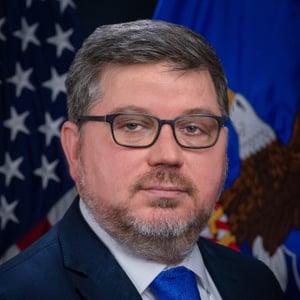
Associate Attorney General, Department of Justice
Stanley E. Woodward, Jr. was nominated by President Donald J. Trump and confirmed by the U.S. Senate to serve as the Associate Attorney General of the United States in October 2025. As the third highest-ranking official at the Department of Justice, Mr. Woodward assists the Attorney General and Deputy Attorney General with overseeing DOJ civil matters and components, including the Antitrust, Civil, Civil Rights, and Environmental and Natural Resources Divisions, as well as the Department’s grant-making components. Prior to his confirmation as Associate Attorney General, Mr. Woodward served as Counselor to Attorney General Pam Bondi. Before his tenure at the Department of Justice, Mr. Woodward served as Assistant to the President and Senior Counselor to President Donald J. Trump at the White House. Prior to entering federal service, Mr. Woodward was in private practice as a high-profile litigator and co-founder of Brand Woodward Law, LP where he represented numerous prestigious clients in complex, high-stakes litigation, including multiple federal jury trials. Previously, he worked at a top international law firm where his experience included the representation of multiple international corporations in defense of alleged violations of the U.S. Foreign Corrupt Practices Act as well as serving as coordinating counsel to companies involved in nationwide federal litigation.
Mr. Woodward has served as an adjunct professor with The Catholic University of America, Columbus School of Law, where he taught labor and employment law, trial advocacy, and complex civil litigation. Mr. Woodward began his legal career clerking for multiple judges on the D.C. Court of Appeals and the D.C. Superior Court. Mr. Woodward obtained his Juris Doctor from the Catholic University of America Columbus School of Law and earned a Bachelor of Arts and a Master of Science from American University.
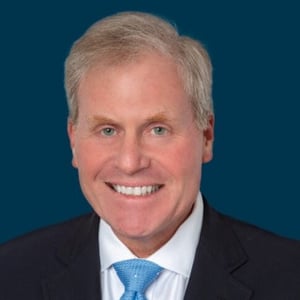
Director, ENRD, Pacific Legal Foundation
Mark Miller is the Director of the Environment and Natural Resources practice group at Pacific Legal Foundation, where he leads the firm’s efforts to protect individuals and small businesses from government overreach in matters involving land and water, and its efforts to encourage America to better harness its abundant natural resources, including energy resources, minerals, timber, and grazing lands. Mark first joined PLF in 2014.
A seasoned appellate specialist, Mark has litigated several high-profile cases for PLF, including Weyerhaeuser v. United States Fish & Wildlife Service, U.S. Army Corps of Engineers v. Hawkes Co., and United States v. Robertson, all of them unanimous Supreme Court of the United States wins for property owners fighting federal overreach via the Clean Water Act and Endangered Species Act.
In 2020, Mark left PLF to serve as General Counsel and later Chief of Staff for then-South-Dakota Governor Kristi Noem. As Noem’s longest-serving chief of staff, he worked behind the scenes to advance limited government, cut red tape, defend individual rights, and promote free-market principles. In 2023, he returned home to PLF.
A frequent commentator and public speaker, Mark regularly appears in print, on radio and TV, and before legislative committees across the country. His commentary and work has been featured in The Wall Street Journal, CBS News, The View, CBN, and Fox News. He is a regular guest each Thursday morning on SiriusXM’s POTUS channel, offering insight on Supreme Court cases and trends.
Mark earned both his undergraduate and law degrees with honors from the University of Florida. He clerked for U.S. District Judge Henry Lee Adams, Jr., and Florida state appellate Judge Emerson R. Thompson, Jr.—two mentors who deepened his commitment to the Bill of Rights, especially the Fourth, Fifth, and Fourteenth Amendments.
Mark serves on the Board of Trustees for the University of Florida College of Law, and he is a member of the boards of directors for both Americans United for Life, the nation’s oldest pro-life non-profit law firm, and Farm of the Child USA, a nonprofit that supports an orphanage and school for children in need in Honduras called La Finca del Niño.
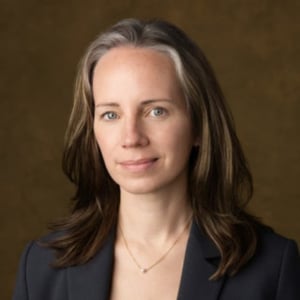
Senior Fellow in Executive Power, Cato Institute
Molly Nixon is a senior fellow at the Cato Institute, where she focuses on the scope, use, and history of executive power as well as its limits under the Constitution. Molly was previously an attorney with Pacific Legal Foundation’s separation of powers practice, where she litigated cases challenging congressional delegations of legislative power and executive branch overreach. Before that, she served as an Attorney-Advisor at the Department of the Interior and as Legislative Counsel for Congressman Justin Amash.
Molly holds a J.D. from New York University School of Law and a B.A. in History and International Relations from Boston University. She clerked for the U.S. District Court for the District of Alaska and practiced law at a firm in New York City for several years before moving to Washington, D.C.
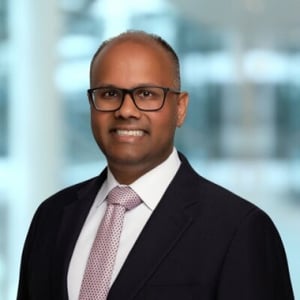
Partner, Holtzman Vogel Baran Torchinsky & Josefiak PLLC
Abhishek (Abhi) Kambli is a partner at Holtzman Vogel who represents clients in high-stakes appellate and complex litigation, constitutional challenges, and matters involving state attorneys general and federal agencies. He is one of a handful of lawyers nationally who has both led federal litigation from inside the Department of Justice and multi-state coalition work from a State Attorney General’s office—giving clients a 360-degree perspective on government enforcement, regulatory challenges, and constitutional advocacy.
Prior to joining Holtzman Vogel, Abhi served as Deputy Associate Attorney General at the United States Department of Justice, where he acted as lead counsel in high-priority matters for the Trump Administration, oversaw the Department’s civil components on behalf of the Associate Attorney General, advised the White House Counsel’s Office and federal agencies on litigation risk and strategy, and developed the Department’s national affirmative civil litigation strategy.
Earlier, he served as Deputy Attorney General and Division Chief of the Special Litigation and Constitutional Issues Division at the Kansas Attorney General’s Office, where he launched the division and led multi-state coalitions in trial and appellate courts nationwide, including the United States Supreme Court. He began his career as an Assistant United States Attorney in the Southern District of Indiana, prosecuting more than 100 federal cases from investigation through appeal.
Abhi is also a Lieutenant Colonel in the United States Air Force Judge Advocate General's Corps, having served on active duty and in the reserves since 2013. His military service includes criminal trials as both prosecutor and defense attorney, appellate representation before the Court of Appeals for the Armed Forces, and representation of a high-profile detainee before the Military Commissions at Guantánamo Bay.
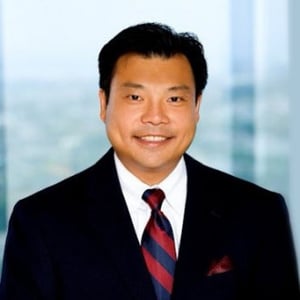
Attorney and Legal Commentator
John Shu is an attorney and legal commentator. His focus areas include constitutional law, securities & corporate law, antitrust law, administrative law, politics, and international affairs. Mr. Shu has lectured and published on a wide variety of issues.
Mr. Shu served President George H.W. Bush and President George W. Bush. He also served Judge Stanley Sporkin, U.S. District Court for the District of Columbia, who was Director of Enforcement at the U.S. Securities & Exchange Commission and General Counsel at the Central Intelligence Agency, and Judge Paul Roney, U.S. Court of Appeals for the Eleventh Circuit, who was Presiding Judge of the Foreign Intelligence Surveillance Court of Review.
Mr. Shu is a member of the National Committee on U.S. - China Relations, the Pacific Council on International Policy, and the Foreign Policy Association.
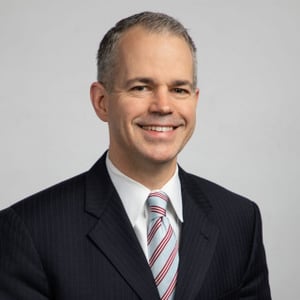
Senior Attorney, Institute for Justice
Michael Bindas is a senior attorney with the Institute for Justice (IJ) and leads IJ’s educational choice team. In this role, he oversees a talented group of IJ attorneys who help policymakers design constitutionally defensible educational choice programs and who defend educational choice programs in courtrooms nationwide. He joined IJ in 2005.
Michael was part of IJ’s litigation team in Espinoza v. Montana Department of Revenue, in which the U.S. Supreme Court held the exclusion of religious options from Montana’s educational choice program unconstitutional, and he led IJ’s defense of the Choice Scholarship Program for elementary and secondary students in Douglas County, Colorado. He also successfully challenged Washington’s denial of special education services to children in religious schools, as well as the state’s exclusion of sectarian options from its state work study program. Currently, he leads IJ’s team in Carson v. Makin, challenging Maine’s exclusion of religious options from its educational choice program.
Prior to leading IJ’s educational choice team, Michael litigated extensively to secure economic liberty, property rights, and freedom of speech throughout the nation. He was counsel of record at the U.S. Supreme Court for Kimbrough Fine Wine & Spirits in Tennessee Wine and Spirits Retailers Association v. Thomas, a successful challenge to Tennessee’s durational residency requirements for retail liquor licenses. He also led successful challenges to the municipal sign codes of St. Louis, Mo. and Norfolk, Va., after those cities attempted to silence protests of their abusive eminent domain practices.
Prior to joining IJ, Michael spent three years as an attorney with Perkins Coie LLP. He is a former law clerk to Judge Rhesa Hawkins Barksdale of the U.S. Court of Appeals for the Fifth Circuit and served as an engineer officer in the United States Army and Pennsylvania Army National Guard before beginning his legal career.
Michael received his law degree cum laude from the University of Pennsylvania Law School in 2001, where he served as Articles Editor for the Journal of Constitutional Law and was elected to the Order of the Coif. He received his undergraduate degree from the United States Military Academy at West Point in 1995.
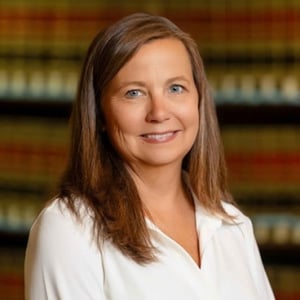
John P. Murphy Foundation Professor of Law and Associate Dean for External Engagement, University of Notre Dame Law School
Nicole Stelle Garnett is the John P. Murphy Foundation Professor of Law at Notre Dame Law School, where she also serves as the Associate Dean for External Engagement and directs the Notre Dame Education Law Project. Her teaching and research focus on education law and policy, religious liberty, and topics related to property law (especially land use and urban development policies). In addition to dozens of articles on these subjects, she is the author of Lost Classroom, Lost Community: Catholic Schools' Importance in Urban America (University of Chicago Press, 2014) and Ordering the City: Land Use, Policing and the Restoration of Urban America (Yale University Press, 2009).
Garnett received her B.A. with distinction in Political Science from Stanford University and her J.D. from Yale Law School. After law school, she clerked for the Honorable Morris S. Arnold of the United States Court of Appeals for the Eighth Circuit and for Associate Justice Clarence Thomas of the Supreme Court of the United States. Before joining the law school faculty in 1999, she worked for two years as a staff attorney at the Institute for Justice, a non-profit public-interest law firm in Washington, D.C., where she helped to defend the constitutionality of the nation's first private-school-choice programs.
At Notre Dame, Garnett is a faculty fellow in the Institute for Educational Initiatives, Kellogg Institute for International Studies, Fitzgerald Institute for Real Estate, and deNicola Center for Ethics and Culture. She also is an elected member of the American Law Institute and a Senior Fellow at the Manhattan Institute.
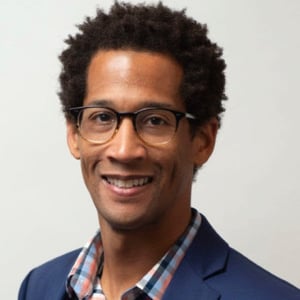
Senior Fellow, American Federation for Children
Shaka Mitchell serves as a Senior Fellow for the American Federation for Children.
He brings experience from several high-performing charter school networks, including Rocketship Education and LEAD Public schools, that serve over 2,500 students in Nashville.
Shaka began his career in education as the Associate Director of Policy and Planning at the D.C.-based Center for Education Reform. He then led outreach efforts at the Institute for Justice, a constitutional law firm based in Arlington, VA.
He is an alumnus of Belmont University where he teaches American Government and Constitutional Law as an adjunct faculty member. He earned his Juris Doctorate from the Wake Forest University School of Law where he sits on the Board of Advisors for the Journal of Law and Policy. Shaka is a co-founder of MoreMarrowDonors.org, a non-profit committed to providing scholarships to bone marrow donors who are matches for patients with various blood diseases. Shaka is the Chair of the Tennessee State Advisory Committee to the U.S. Commission on Civil Rights.
He is a member of the American Enterprise Institute’s Leadership Network and Aspen Institute Civil Society Fellowship. Shaka and his wife Stephanie are members of Edgefield Church in Nashville and are active in several non-profit organizations.
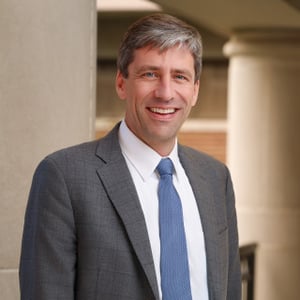
Associate Professor and C. Boyden Gray Distinguished Scholar, University of North Carolina School of Law
Mark Storslee joined the Carolina Law faculty in 2025 and serves as Associate Professor and C. Boyden Gray Distinguished Scholar. His teaching and research interests include constitutional law, civil procedure, administrative law, and federal courts. Among other topics, his scholarship focuses on constitutional history, religious freedom, and First Amendment law generally. Storslee’s work has appeared in publications such as the University of Chicago Law Review, the University of Pennsylvania Law Review, the University of Virginia Law Review, Vanderbilt University Law Review, and the Journal of Law & Religion.
Storslee holds a J.D. from Stanford Law School and a Ph.D. in Religious Studies (ethics) from the University of Virginia. He also holds masters degrees from Duke University and the University of Edinburgh and a B.A. from Furman University. After law school, Storslee clerked for Judge Diarmuid O’Scannlain on the United States Court of Appeals for the Ninth Circuit, and later for Associate Justice Neil Gorsuch on the United States Supreme Court. He previously taught at Penn State Law School and Emory Law School, and served as the Executive Director of the Constitutional Law Center at Stanford Law School. He also worked as an appellate litigator at Williams & Connolly LLP.
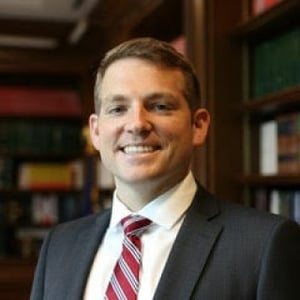
Chief Counsel, Arizona Chamber Law Center
Prior to joining the Chamber, Nate was an Attorney at the Texas Public Policy Foundation (TPPF) and an Assistant Attorney General for the State of Arizona. At TPPF, he brought cases seeking to limit federal government overreach. As an Assistant AG, he practiced criminal appeals in Arizona appellate courts, the Ninth Circuit Court of Appeals, and the U.S. Supreme Court. He began his legal career as a clerk at the Arizona Supreme Court for Justices Clint Bolick and John Lopez before going on to clerk at the U.S. District Court for Judge Susan Brnovich.
Nate earned his J.D. from the University of Arizona, where he was an Articles Editor for the Arizona Law Review and President of the Federalist Society. He is licensed to practice law in Arizona and the United States Court of Appeals for the Fifth, Sixth, Ninth, and DC Circuits.
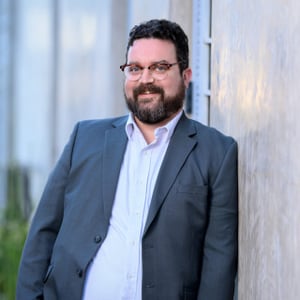
Director, Children's Law Clinic, Center for the Rights of Abused Children
Tom Jose is a lawyer who protects the rights of abused children throughout the foster care process and beyond.
Tom heads up our one-of-a-kind pro bono Children’s Law Clinic, where he represents abused children, foster parents, kinship placements, and biological parents in dependency and severance proceedings to ensure that the state respects their rights. He litigates to protect the rights of abused children throughout the foster process and beyond. Tom also represents transition-aged youth in a variety of matters to give them their best chance at starting adult lives.
Tom’s passion for protecting abused children was ignited while working for an appeals court, shortly after he graduated from law school. He was shocked at the sheer volume of abused children who passed through—and remained in—the foster system every year and how little was being done to protect the rights of these innocent children. Since then, he has spent his legal career helping abused children in Arizona.
Before joining the Center for the Rights of Abused Children, Tom worked for the Arizona Attorney General’s Office in its Child and Family Protection Appeals Unit. He handled hundreds of appeals, filed over 75 substantive briefs, and had five oral arguments before the Arizona Supreme Court and the Arizona Court of Appeals. In 2020, the Attorney General’s Office presented Tom with an award for Outstanding Appellate Advocacy.
Tom holds a bachelor’s degree in philosophy and a law degree from Arizona State University. He lives in Mesa, Arizona, with his son Eric, where he enjoys collecting (and playing) vintage video games and going camping around our beautiful state.

Vice President for Litigation & General Counsel, Goldwater Institute
Jon Riches is the Vice President for Litigation for the Goldwater Institute’s Scharf-Norton Center for Constitutional Litigation and General Counsel for the Institute. He litigates in federal and state trial and appellate courts in the areas of economic liberty, regulatory reform, free speech, taxpayer protections, public labor issues, government transparency, and school choice, among others.
Jon has developed and authored several pieces of legislation, including the landmark Right to Earn a Living Act, which provides some of the greatest protections in the country to job-seekers and entrepreneurs facing arbitrary licensing regulations. He also developed legislation eliminating deference to administrative agencies in Arizona—a first-of-its-kind regulatory reform that can serve as a model for the rest of the country.
His work at the Institute has been covered by national media, including the Wall Street Journal, New York Times, CBS This Morning, Bloomberg News, and Politico. Jon is also a member of the Federalist Society’s Regulatory Transparency Project: State and Local Working Group.
Prior to joining the Goldwater Institute, Jon served on active duty in the U.S. Navy Judge Advocate General’s (JAG) Corps. While on active duty, Jon represented hundreds of clients, litigated dozens of court-martial cases, and advised commanders on a vast array of legal issues.
He previously clerked for Sen. Jon Kyl on the U.S. Senate Judiciary Committee, worked for the Rules Committee in the Arizona State Senate, and clerked in the Office of Counsel to the President at the White House. Jon received his B.A. from Boston College, where he graduated magna cum laude and Phi Beta Kappa. He earned his J.D. from the University of Arizona, James E. Rogers College of Law.
Jon served as a presidentially appointed Panel Member on the Federal Service Impasses Panel. He is an officer in the U.S. Navy Reserve and an Adjunct Professor at Arizona State University School of Law. Jon is a native of Phoenix.
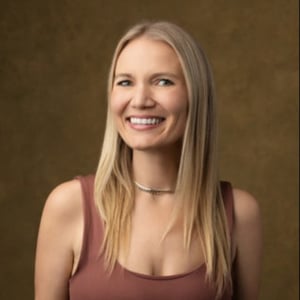
Constitutional Scholarship Director and Senior Legal Analyst, Pacific Legal Foundation
Anastasia Boden is Director of Constitutional Scholarship at Pacific Legal Foundation, where she leads the organization’s Supreme Court commentary and directs scholarly analysis in support of the firm’s litigation. She has represented entrepreneurs and small businesses nationwide in challenges to onerous licensing regimes, anti-competitive titling restrictions, Certificate of Need (“competitor’s veto”) laws, and other forms of unnecessary red tape that block economic opportunity.
Prior to this role, Anastasia developed nearly a dozen constitutional challenges to Certificate of Need laws across the country, helping spur legislative reform in Montana, Pennsylvania, and West Virginia. Her victories include a ruling invalidating Houston’s busking restrictions, multiple appellate decisions expanding access to the courts for civil rights plaintiffs, and the legislative repeal of Virginia’s happy-hour advertising ban.
Her writings on law and liberty have been featured in USA Today, The Washington Post, The Wall Street Journal, the Los Angeles Times, the Chicago Tribune, Forbes, and more, and she has appeared on Headline News, CBS News, Fox News, ReasonTV, Newsmax, and John Stossel. In 2020, she was featured on Libertarian Party presidential candidate Jo Jorgensen’s Supreme Court shortlist.
Anastasia earned her BA with dean’s honors from the University of California, Santa Barbara, and her JD from Georgetown University Law Center, where she was research assistant to Professor Randy E. Barnett—the “intellectual godfather” of the constitutional challenge to Obamacare. She is the co-creator of the podcast Dissed, about infamous Supreme Court dissents. She authors the biweekly newsletter SCOTUS Scoop and the column, “In Dissent” for SCOTUSblog.
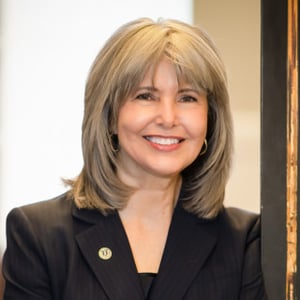
Associate Justice, Tennessee Supreme Court
Sworn in by Governor Bill Haslam in September 2014, Tennessee Supreme Court Justice Holly Kirby is the first graduate of the University of Memphis ever to sit on Tennessee’s highest court. A career jurist, Justice Kirby has authored well over a thousand opinions from appeals all across the state.
Prior to her appointment to the Supreme Court, Justice Kirby served for almost 19 years on the Tennessee Court of Appeals, Tennessee’s intermediate appellate court for civil cases. She represented a gender milestone on the Court of Appeals—when she was appointed in 1995, she became the first woman ever to sit on that Court.
A lifelong Tennessean, Justice Kirby was born in Memphis and graduated from high school in Columbia, Tennessee. As an undergraduate at the University of Memphis, she held a number of student leadership positions and graduated in 1979 with high honors, with a B.S. in mechanical engineering.
In 1982, Justice Kirby graduated from the University of Memphis School of Law with high honors. Upon graduation, she served as a judicial law clerk on the U.S. Court of Appeals for the Sixth Circuit.
After her clerkship, Justice Kirby joined the Memphis law firm of Burch, Porter & Johnson, where she was active in politics and community service. When she was selected as partner in 1990, she became the firm’s first female partner.
From the time of her appointment to the Court of Appeals in 1995 to the present, Justice Kirby has won 5 statewide elections, in 1996, 1998, 2006, 2014, and 2016.
Justice Kirby was chosen as Outstanding Young Alumna for the University of Memphis in 1996, Outstanding Alumna for the University of Memphis College of Engineering in 2002, and Special Distinguished Alumna for the School of Law in 2016. She is married to Memphis businessman Russell Ingram and has two grown children. The family belongs to Idlewild Presbyterian Church.

The Constitution of 1789: A New Introduction
North Dakota Lawyer Chapter
Grand Forks, NDIn Memoriam: Gordon Wood
The Federalist Society mourns the loss of Gordon S. Wood, one of the great historians...
Young Lawyer & Summer Associate Social
Washington, DCProperty Rights and How the Founding Fathers Saw Them as the Foundation for Every Other Right
Fresno Lawyer Chapter
Fresno, CAArticle II Unleashed: The Constitutional Limits of Executive Power
Alaska Lawyer Chapter
Anchorage, AKFireside Chat on the BigLaw EOs with Abhishek Kambli and John Shu
Orange County Lawyer Chapter
Irvine, CAHow Did the Founders View the Role of Education?
The Founders Gave Us the Tools Series
2026 SCOAZ Review
Phoenix Lawyer Chapter
Phoenix, AZSupreme Court Preview - NM
New Mexico Lawyer Chapter
Albuquerque, NMA Conversation with Justice Kirby
Nashville Lawyer Chapter
Nashville, TN