Lessons From John Adams: Defending Unpopular Clients from the Founding Era to the Present
The Founders Gave Us the Tools Series

Event Video




In this Federalist Society America 250 series, experts analyze modern legal and policy debates through the lens of the Founding generation. The Founders gave us the tools to answer many contemporary questions; join us as we explore those answers.
American lawyers have long been defined by a commitment to represent even the most unpopular clients—a tradition that traces back to the Founding. When John Adams defended the British soldiers after the Boston Massacre, he did so in the face of intense public hostility, underscoring a simple but enduring principle: the right to counsel does not turn on public approval. This webinar revisits that moment to examine the lawyer’s role in an adversarial system—not as an endorsement of a client’s conduct, but as a safeguard of the legal system itself.
That principle has been under strain in recent decades. Lawyers representing controversial clients or causes have faced increasing public backlash and, in some cases, professional consequences. Similar pressures surfaced during the Red Scare, when attorneys representing alleged subversives were themselves subject to suspicion. As criticism shifts from clients to the lawyers who represent them, the question becomes harder to ignore: what happens to the legal system when representation itself is treated as suspect? Join our panel as they discuss what the Founding-era commitment to principled representation means for lawyers today.
Featuring:
- William Creeley, Legal Director, The Foundation for Individual Rights in Education
- Erin E. Murphy, Partner, Clement & Murphy PLLC
- Prof. Richard Samuelson, Associate Professor of Government, Hillsdale College, Washington, D.C. Campus
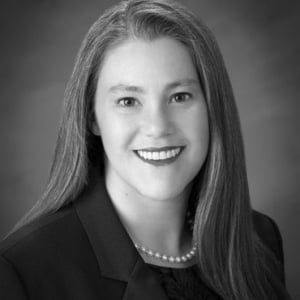
- (Moderator) Hon. Jennifer Perkins, Judge, Arizona Court of Appeals, Division One
CLE
This event has been approved for
1.00 Total CLE Hours
Approved specialty credit (DEI, Civility, Ethics, etc.) is included on the State Approval Status chart below.
In order to receive CLE credit for this webinar, attendees must attend the Zoom Webinar and have access to the chat box. This event's accreditation is highly predicated upon interactivity and verification measures that are only available via the webinar.
If you join via audio, calling in, SIP, or H.323, you will not be eligible to receive CLE Credit.
Questions? Check out our CLE FAQ page.
*******
As always, the Federalist Society takes no position on particular legal or public policy issues; all expressions of opinion are those of the speaker.