
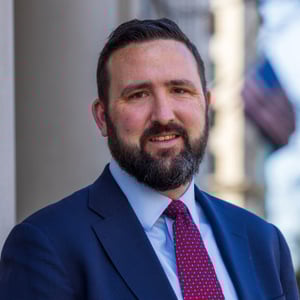
Partner, First & Fourteenth PLLC
Michael Francisco is a public and commercial litigator with extensive appellate experience who often serves as a strategic advisor to clients facing acute legal challenges. He has represented clients nationally for public impact litigation, bet-the-company lawsuits, and in defense of constitutional rights. Michael served as a law clerk to Supreme Court Justice Neil Gorsuch and Judge Timothy Tymkovich of the United States Court of Appeals for the Tenth Circuit.
Michael regularly takes on challenging matters where citizens must rely on the judiciary to vindicate their rights. His experience runs the gambit from successfully seeking injunctive relief, winning critical legal motions, defending judgments on appeal, overturning multi-million-dollar judgments, and obtaining discretionary high court review. He relishes the opportunity to develop a well-crafted legal strategy to solve the most novel and complex problems that may arise.
Michael has deep experience with political litigation representing candidates, voters, political parties, and advocacy organizations for ballot access, election administration, campaign finance, and for the unfortunate trend of criminalization of political activity.
After deciding to pursue a legal career to defend religious liberty, Michael has regularly engaged in constitutional litigation under the religion clauses and the free speech clause. He has been involved in many recent U.S. Supreme Court cases involving these core freedoms, including Groff v. DeJoy, 303 Creative v. Elenis, Masterpiece Cakeshop v. Colorado Civil Rights Commission, National Institute of Family & Life Advocates v. Becerra, Trinity Lutheran Church v. Pauley, and similar cases in lower courts on topics ranging from the ministerial exception, church property disputes, to religious land use disputes.
As an appellate advocate Michael frequently handles matters before the U.S. Supreme Court, federal courts of appeals, and Colorado appellate courts. He has argued four times before the Colorado Supreme Court and briefed 19 cases before the U.S. Supreme Court.
Michael also frequently advises clients on strategic public matters challenging federal government authority and overreach. He has regularly litigated business disputes, employment matters, as well as represented clients before state and federal administrative agencies or arbitration panels.
Prior to joining First & Fourteenth, Michael was a partner at McGuireWoods, LLP in Washington D.C., representing litigation, white collar, and government investigation clients.
At home Michael is married with four children and he enjoys many outdoor activities, ranging from competitive shooting to fixing his jeep.
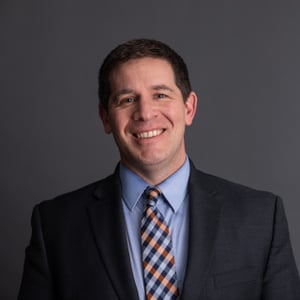
Vice President for Legal Strategy, Stand Together
Casey Mattox is Vice President for Legal Strategy at Stand Together and Senior Advisor at
Americans for Prosperity. In these roles he advocates for and creates strategies and
partnerships to ensure a constitutionally limited government that protects the civil liberties of all
Americans. Prior to joining Stand Together and AFP Casey’s legal career focused on defending
the First Amendment rights of students, faculty, healthcare workers and religious organizations.
Casey has a J.D. from Boston College School of Law and an undergraduate degree from the
University of Virginia. You can find him on Twitter at @CaseyMattox_ and on LinkedIn at
@Casey-Mattox-ST.
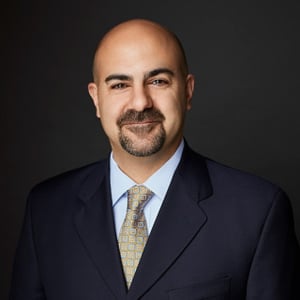
Special Counsel, Campus Advocacy, Foundation for Individual Rights and Expression (FIRE)
One of FIRE’s longest-serving employees, Robert Shibley began at FIRE straight out of Duke Law School in 2003, with the intention of doing nonprofit work for a couple of years before finding a permanent job. This lasted 19 years, including six as FIRE’s executive director. During his time at FIRE, Robert launched FIRE’s first major litigation initiative, traveled to dozens of campuses to speak about the First Amendment and Title IX issues on campus, and oversaw FIRE’s expansion into off-campus issues before a stint representing students and faculty members in private practice at the firm of Allen Harris PLLC.
Having realized things on campus were even worse than he had believed, Robert returned to FIRE as Special Counsel for Campus Advocacy in order to finish the job he started: restoring free speech and due process to America’s college campuses. Robert is the author of Twisting Title IX, from Encounter Books. His writing has appeared everywhere from The Wall Street Journal to The Washington Post, USA Today, and TIME, and he has appeared on national and international broadcasts including the BBC and NPR, The O’Reilly Factor, CNN Tonight, Tucker Carlson Tonight, and (perhaps most famously) Dr. Phil.
Partner, First & Fourteenth PLLC
Michael Francisco is a public and commercial litigator with extensive appellate experience who often serves as a strategic advisor to clients facing acute legal challenges. He has represented clients nationally for public impact litigation, bet-the-company lawsuits, and in defense of constitutional rights. Michael served as a law clerk to Supreme Court Justice Neil Gorsuch and Judge Timothy Tymkovich of the United States Court of Appeals for the Tenth Circuit.
Michael regularly takes on challenging matters where citizens must rely on the judiciary to vindicate their rights. His experience runs the gambit from successfully seeking injunctive relief, winning critical legal motions, defending judgments on appeal, overturning multi-million-dollar judgments, and obtaining discretionary high court review. He relishes the opportunity to develop a well-crafted legal strategy to solve the most novel and complex problems that may arise.
Michael has deep experience with political litigation representing candidates, voters, political parties, and advocacy organizations for ballot access, election administration, campaign finance, and for the unfortunate trend of criminalization of political activity.
After deciding to pursue a legal career to defend religious liberty, Michael has regularly engaged in constitutional litigation under the religion clauses and the free speech clause. He has been involved in many recent U.S. Supreme Court cases involving these core freedoms, including Groff v. DeJoy, 303 Creative v. Elenis, Masterpiece Cakeshop v. Colorado Civil Rights Commission, National Institute of Family & Life Advocates v. Becerra, Trinity Lutheran Church v. Pauley, and similar cases in lower courts on topics ranging from the ministerial exception, church property disputes, to religious land use disputes.
As an appellate advocate Michael frequently handles matters before the U.S. Supreme Court, federal courts of appeals, and Colorado appellate courts. He has argued four times before the Colorado Supreme Court and briefed 19 cases before the U.S. Supreme Court.
Michael also frequently advises clients on strategic public matters challenging federal government authority and overreach. He has regularly litigated business disputes, employment matters, as well as represented clients before state and federal administrative agencies or arbitration panels.
Prior to joining First & Fourteenth, Michael was a partner at McGuireWoods, LLP in Washington D.C., representing litigation, white collar, and government investigation clients.
At home Michael is married with four children and he enjoys many outdoor activities, ranging from competitive shooting to fixing his jeep.
Vice President for Legal Strategy, Stand Together
Casey Mattox is Vice President for Legal Strategy at Stand Together and Senior Advisor at
Americans for Prosperity. In these roles he advocates for and creates strategies and
partnerships to ensure a constitutionally limited government that protects the civil liberties of all
Americans. Prior to joining Stand Together and AFP Casey’s legal career focused on defending
the First Amendment rights of students, faculty, healthcare workers and religious organizations.
Casey has a J.D. from Boston College School of Law and an undergraduate degree from the
University of Virginia. You can find him on Twitter at @CaseyMattox_ and on LinkedIn at
@Casey-Mattox-ST.
Special Counsel, Campus Advocacy, Foundation for Individual Rights and Expression (FIRE)
One of FIRE’s longest-serving employees, Robert Shibley began at FIRE straight out of Duke Law School in 2003, with the intention of doing nonprofit work for a couple of years before finding a permanent job. This lasted 19 years, including six as FIRE’s executive director. During his time at FIRE, Robert launched FIRE’s first major litigation initiative, traveled to dozens of campuses to speak about the First Amendment and Title IX issues on campus, and oversaw FIRE’s expansion into off-campus issues before a stint representing students and faculty members in private practice at the firm of Allen Harris PLLC.
Having realized things on campus were even worse than he had believed, Robert returned to FIRE as Special Counsel for Campus Advocacy in order to finish the job he started: restoring free speech and due process to America’s college campuses. Robert is the author of Twisting Title IX, from Encounter Books. His writing has appeared everywhere from The Wall Street Journal to The Washington Post, USA Today, and TIME, and he has appeared on national and international broadcasts including the BBC and NPR, The O’Reilly Factor, CNN Tonight, Tucker Carlson Tonight, and (perhaps most famously) Dr. Phil.
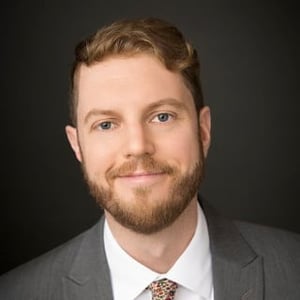
Legal Director, Foundation for Individual Rights and Expression
Will began defending student and faculty rights for FIRE in 2006 after graduating from New York University School of Law, where he served as an associate executive editor for the New York University Law Review. Will has appeared on national cable television and radio on behalf of FIRE and has spoken to students, faculty, administrators, and attorneys at events across the country. Will’s writing has been published by The New York Times, the Wall Street Journal, The Washington Post, the Chronicle of Higher Education, Jurist, Inside Higher Ed, Daily Journal, the Charleston Law Review, and many other outlets. Will edited the second edition of FIRE’s Guide to Due Process and Campus Justice, co-edited the second edition of FIRE’s Guide to Free Speech on Campus, and has coauthored amicus curiae briefs submitted to a number of courts, including the Supreme Court of the United States and the United States Courts of Appeals for the Third, Ninth, and Eleventh Circuits. Will has taught FIRE’s Continuing Legal Education programs in New York, Pennsylvania, and online. A member of the New York State Bar and the First Amendment Lawyers Association, Will serves as Co-Chair of the Education Subcommittee of the American Bar Association’s Section of Administrative Law and Regulatory Practice.
Will graduated magna cum laude from New York University’s Gallatin School of Individualized Study in 2003. A proud native of Buffalo, New York, Will now lives in New Jersey with his wife and two children.
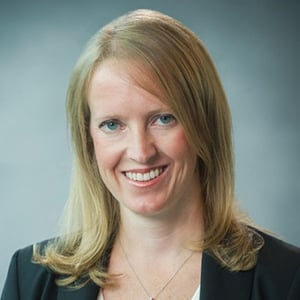
Partner, Clement & Murphy, PLLC
Erin Murphy is founding partner of Clement & Murphy, PLLC. She is widely recognized as one of the nation’s leading Supreme Court and appellate advocates. She has argued dozens of cases in appellate and trial courts throughout the country, including the Supreme Court and nearly all of the federal courts of appeals. Erin has long been ranked by Chambers & Partners rankings as a leading appellate practitioner, and the National Law Journal has named her one of the nation’s “Outstanding Women Lawyers.” Erin also has an active pro bono practice, through which she has successfully represented many religious organizations and adherents, criminal defendants, asylum applicants, adoptive parents, and more.
Erin is an adjunct professor at her alma mater the Georgetown University Law Center, a member and former officer of the Edward Coke Appellate Inn of Court, and a frequent speaker on topics relating to the Supreme Court and appellate advocacy. In her spare time, Erin serves on the board of directors of Street Law.
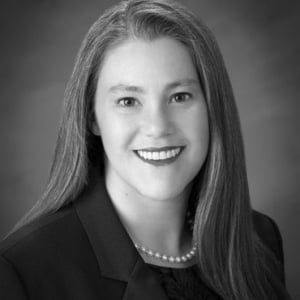
Judge, Arizona Court of Appeals, Division One
The Honorable Jennifer M. Perkins began service on the Arizona Court of Appeals, Division One, on October 30, 2017. At the time of her appointment by Governor Douglas Ducey, Judge Perkins was Assistant Solicitor General for the State of Arizona.
Judge Perkins was born in Portales, New Mexico, and primarily raised in Albuquerque. She attended the prestigious Albuquerque Academy from 1988-1995, before moving to Washington D.C. to attend the Elliott School of International Affairs at the George Washington University as a National Merit Scholar. Therafter, she relocated again to Dallas, Texas, and earned her juris doctor from the SMU Dedman School of Law, graduating cum laude in 2002.
Judge Perkins started her career at the law firm of Browning & Peifer (now Peifer, Hanson, Mullins, and Baker) in Albuquerque, New Mexico. While there, she litigated complex commercial matters including class action plaintiff and defense work, and assisted with employment and contract litigation. In 2003, the judge accompanied the Honorable James O. Browning in transitioning to the federal district court bench, serving as his first law clerk.
After her clerkship, Judge Perkins moved to Arizona to work for the Institute for Justice, Arizona Chapter, a public interest law firm. She spent five years with IJ-AZ litigating civil rights cases in Arizona and across the country. In 2009, the judge became Disciplinary Counsel for the Arizona Commission on Judicial Conduct, where she reviewed and prosecuted ethics complaints against state court judges throughout Arizona. After five years serving the state in this capacity, Judge Perkins entered private practice by joining an appellate law firm in Phoenix. While there, she worked on state and federal appeals involving a wide range of legal subjects, including complex business disputes, property rights, judicial ethics, and personal injury matters.
In January 2015, Judge Perkins joined the Office of the Arizona Attorney General to serve as the first Assistant Solicitor General; in that capacity, she was responsible for oversight of Attorney General Opinions and served as ethics counsel to the entire office. In addition to these two primary roles, the judge assisted on a variety of matters including trial and appellate litigation of election-related matters; federal appellate litigation with the Federalism Unit; state criminal appeals; and drafting amicus briefs on behalf of Arizona in state and federal courts.
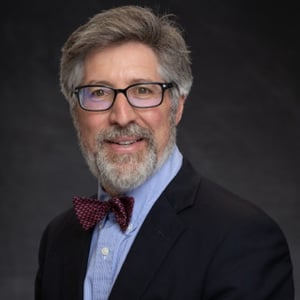
Associate Professor of Government, Hillsdale College, Washington, D.C. Campus
Richard Samuelson is an Associate Professor of Government at Hillsdale College’s Washington, D.C., campus. Dr. Samuelson is an historian of the American founding and of American politics and constitutional thought. He graduated from Bates College and received his MA and PhD in American history from the University of Virginia. Dr. Samuelson taught at California State University San Bernardino from 2007 to 2022. He was the 2009-2010 Garwood Visiting Fellow at Princeton University’s James Madison Program.
Dr. Samuelson has written extensively on John Adams and on the Adams family of Massachusetts, and on the constitutional politics of the founding more largely. His work also connects the founding with more contemporary issues, with a particular focus on religious liberty, and the challenge the modern American state, and contemporary civil rights laws present to religious liberty.
His essays and reviews have appeared in The Review of Politics, The William and Mary Quarterly, Commentary, The Claremont Review of Books, The Public Interest, National Review, and other publications. He has also contributed many essays and reviews to such online publications as Mosaic, Law and Liberty, Realclearpolitics, and other platforms.
Legal Director, Foundation for Individual Rights and Expression
Will began defending student and faculty rights for FIRE in 2006 after graduating from New York University School of Law, where he served as an associate executive editor for the New York University Law Review. Will has appeared on national cable television and radio on behalf of FIRE and has spoken to students, faculty, administrators, and attorneys at events across the country. Will’s writing has been published by The New York Times, the Wall Street Journal, The Washington Post, the Chronicle of Higher Education, Jurist, Inside Higher Ed, Daily Journal, the Charleston Law Review, and many other outlets. Will edited the second edition of FIRE’s Guide to Due Process and Campus Justice, co-edited the second edition of FIRE’s Guide to Free Speech on Campus, and has coauthored amicus curiae briefs submitted to a number of courts, including the Supreme Court of the United States and the United States Courts of Appeals for the Third, Ninth, and Eleventh Circuits. Will has taught FIRE’s Continuing Legal Education programs in New York, Pennsylvania, and online. A member of the New York State Bar and the First Amendment Lawyers Association, Will serves as Co-Chair of the Education Subcommittee of the American Bar Association’s Section of Administrative Law and Regulatory Practice.
Will graduated magna cum laude from New York University’s Gallatin School of Individualized Study in 2003. A proud native of Buffalo, New York, Will now lives in New Jersey with his wife and two children.
Partner, Clement & Murphy, PLLC
Erin Murphy is founding partner of Clement & Murphy, PLLC. She is widely recognized as one of the nation’s leading Supreme Court and appellate advocates. She has argued dozens of cases in appellate and trial courts throughout the country, including the Supreme Court and nearly all of the federal courts of appeals. Erin has long been ranked by Chambers & Partners rankings as a leading appellate practitioner, and the National Law Journal has named her one of the nation’s “Outstanding Women Lawyers.” Erin also has an active pro bono practice, through which she has successfully represented many religious organizations and adherents, criminal defendants, asylum applicants, adoptive parents, and more.
Erin is an adjunct professor at her alma mater the Georgetown University Law Center, a member and former officer of the Edward Coke Appellate Inn of Court, and a frequent speaker on topics relating to the Supreme Court and appellate advocacy. In her spare time, Erin serves on the board of directors of Street Law.
Judge, Arizona Court of Appeals, Division One
The Honorable Jennifer M. Perkins began service on the Arizona Court of Appeals, Division One, on October 30, 2017. At the time of her appointment by Governor Douglas Ducey, Judge Perkins was Assistant Solicitor General for the State of Arizona.
Judge Perkins was born in Portales, New Mexico, and primarily raised in Albuquerque. She attended the prestigious Albuquerque Academy from 1988-1995, before moving to Washington D.C. to attend the Elliott School of International Affairs at the George Washington University as a National Merit Scholar. Therafter, she relocated again to Dallas, Texas, and earned her juris doctor from the SMU Dedman School of Law, graduating cum laude in 2002.
Judge Perkins started her career at the law firm of Browning & Peifer (now Peifer, Hanson, Mullins, and Baker) in Albuquerque, New Mexico. While there, she litigated complex commercial matters including class action plaintiff and defense work, and assisted with employment and contract litigation. In 2003, the judge accompanied the Honorable James O. Browning in transitioning to the federal district court bench, serving as his first law clerk.
After her clerkship, Judge Perkins moved to Arizona to work for the Institute for Justice, Arizona Chapter, a public interest law firm. She spent five years with IJ-AZ litigating civil rights cases in Arizona and across the country. In 2009, the judge became Disciplinary Counsel for the Arizona Commission on Judicial Conduct, where she reviewed and prosecuted ethics complaints against state court judges throughout Arizona. After five years serving the state in this capacity, Judge Perkins entered private practice by joining an appellate law firm in Phoenix. While there, she worked on state and federal appeals involving a wide range of legal subjects, including complex business disputes, property rights, judicial ethics, and personal injury matters.
In January 2015, Judge Perkins joined the Office of the Arizona Attorney General to serve as the first Assistant Solicitor General; in that capacity, she was responsible for oversight of Attorney General Opinions and served as ethics counsel to the entire office. In addition to these two primary roles, the judge assisted on a variety of matters including trial and appellate litigation of election-related matters; federal appellate litigation with the Federalism Unit; state criminal appeals; and drafting amicus briefs on behalf of Arizona in state and federal courts.
Associate Professor of Government, Hillsdale College, Washington, D.C. Campus
Richard Samuelson is an Associate Professor of Government at Hillsdale College’s Washington, D.C., campus. Dr. Samuelson is an historian of the American founding and of American politics and constitutional thought. He graduated from Bates College and received his MA and PhD in American history from the University of Virginia. Dr. Samuelson taught at California State University San Bernardino from 2007 to 2022. He was the 2009-2010 Garwood Visiting Fellow at Princeton University’s James Madison Program.
Dr. Samuelson has written extensively on John Adams and on the Adams family of Massachusetts, and on the constitutional politics of the founding more largely. His work also connects the founding with more contemporary issues, with a particular focus on religious liberty, and the challenge the modern American state, and contemporary civil rights laws present to religious liberty.
His essays and reviews have appeared in The Review of Politics, The William and Mary Quarterly, Commentary, The Claremont Review of Books, The Public Interest, National Review, and other publications. He has also contributed many essays and reviews to such online publications as Mosaic, Law and Liberty, Realclearpolitics, and other platforms.
Legal Director, Foundation for Individual Rights and Expression
Will began defending student and faculty rights for FIRE in 2006 after graduating from New York University School of Law, where he served as an associate executive editor for the New York University Law Review. Will has appeared on national cable television and radio on behalf of FIRE and has spoken to students, faculty, administrators, and attorneys at events across the country. Will’s writing has been published by The New York Times, the Wall Street Journal, The Washington Post, the Chronicle of Higher Education, Jurist, Inside Higher Ed, Daily Journal, the Charleston Law Review, and many other outlets. Will edited the second edition of FIRE’s Guide to Due Process and Campus Justice, co-edited the second edition of FIRE’s Guide to Free Speech on Campus, and has coauthored amicus curiae briefs submitted to a number of courts, including the Supreme Court of the United States and the United States Courts of Appeals for the Third, Ninth, and Eleventh Circuits. Will has taught FIRE’s Continuing Legal Education programs in New York, Pennsylvania, and online. A member of the New York State Bar and the First Amendment Lawyers Association, Will serves as Co-Chair of the Education Subcommittee of the American Bar Association’s Section of Administrative Law and Regulatory Practice.
Will graduated magna cum laude from New York University’s Gallatin School of Individualized Study in 2003. A proud native of Buffalo, New York, Will now lives in New Jersey with his wife and two children.
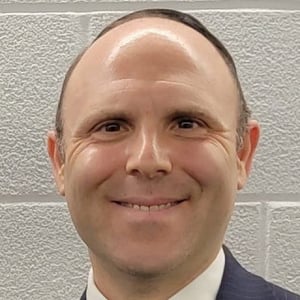
Special Counsel, Sullivan & Cromwell LLP
Aharon Friedman is Special Counsel at Sullivan & Cromwell LLP. He is also a Visiting Scholar at the Hoover Institution. He formerly served as senior counsel to the House Ways and Means Committee, senior adviser to the U.S. Treasury Department and as a law clerk for Israel’s Supreme Court.
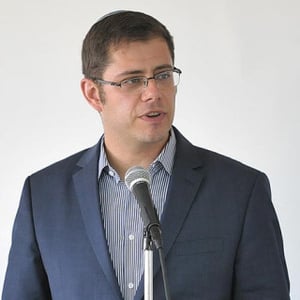
Professor of Law and Director, Center for the Middle East and International Law, George Mason University Antonin Scalia Law School
Professor of Law Eugene Kontorovich is one of the world’s preeminent experts on universal jurisdiction and maritime piracy, as well as international law and the Israel-Arab conflict. He is also the Director of Scalia Law School's Center for the Middle East and International Law. Professor Kontorovich joined the Scalia Law School from Northwestern University Pritzker School of Law where he was a Professor of Law from 2011 to 2018 and an Associate Professor from 2007 to 2011. Previously, he was a Visiting Professor at the University of Chicago from 2005 to 2007 and an Assistant Professor at George Mason School of Law from 2003 to 2007.
Professor Kontorovich has published over thirty major scholarly articles and book chapters in leading law reviews and peer-reviewed journals in the United States and Europe, including the American Journal of International Law, International Review of Law & Economics, Stanford Law Review, California Law Review, University of Pennsylvania Law Review, and Virginia Law Review. His scholarship has been cited in leading foreign relations and international law
His expertise is often sought out and quoted by major news organizations such the New York Times, Wall Street Journal, NPR News, The New Yorker, Los Angeles Times, and numerous television and radio programs. Prof. Kontorovich’s popular writings have appeared in the New York Times, Wall Street Journal, Los Angeles Times, POLITICO, Commentary, Haaretz, and numerous other leading publications. He is also a regular contributor to the Washington Post’s Volokh Conspiracy legal blog.
He attended the University of Chicago for college and law school. After law school, he clerked for Judge Richard Posner on the United States Court of Appeals for the Seventh Circuit. He has been honored with a fellowship at the Institute for Advanced Study in Princeton, in 2011-12, and with the Federalist Society’s prestigious Bator Award, given annually to a young scholar (under 40), for outstanding scholarship and teaching.
Partner, First & Fourteenth PLLC
Michael Francisco is a public and commercial litigator with extensive appellate experience who often serves as a strategic advisor to clients facing acute legal challenges. He has represented clients nationally for public impact litigation, bet-the-company lawsuits, and in defense of constitutional rights. Michael served as a law clerk to Supreme Court Justice Neil Gorsuch and Judge Timothy Tymkovich of the United States Court of Appeals for the Tenth Circuit.
Michael regularly takes on challenging matters where citizens must rely on the judiciary to vindicate their rights. His experience runs the gambit from successfully seeking injunctive relief, winning critical legal motions, defending judgments on appeal, overturning multi-million-dollar judgments, and obtaining discretionary high court review. He relishes the opportunity to develop a well-crafted legal strategy to solve the most novel and complex problems that may arise.
Michael has deep experience with political litigation representing candidates, voters, political parties, and advocacy organizations for ballot access, election administration, campaign finance, and for the unfortunate trend of criminalization of political activity.
After deciding to pursue a legal career to defend religious liberty, Michael has regularly engaged in constitutional litigation under the religion clauses and the free speech clause. He has been involved in many recent U.S. Supreme Court cases involving these core freedoms, including Groff v. DeJoy, 303 Creative v. Elenis, Masterpiece Cakeshop v. Colorado Civil Rights Commission, National Institute of Family & Life Advocates v. Becerra, Trinity Lutheran Church v. Pauley, and similar cases in lower courts on topics ranging from the ministerial exception, church property disputes, to religious land use disputes.
As an appellate advocate Michael frequently handles matters before the U.S. Supreme Court, federal courts of appeals, and Colorado appellate courts. He has argued four times before the Colorado Supreme Court and briefed 19 cases before the U.S. Supreme Court.
Michael also frequently advises clients on strategic public matters challenging federal government authority and overreach. He has regularly litigated business disputes, employment matters, as well as represented clients before state and federal administrative agencies or arbitration panels.
Prior to joining First & Fourteenth, Michael was a partner at McGuireWoods, LLP in Washington D.C., representing litigation, white collar, and government investigation clients.
At home Michael is married with four children and he enjoys many outdoor activities, ranging from competitive shooting to fixing his jeep.
Vice President for Legal Strategy, Stand Together
Casey Mattox is Vice President for Legal Strategy at Stand Together and Senior Advisor at
Americans for Prosperity. In these roles he advocates for and creates strategies and
partnerships to ensure a constitutionally limited government that protects the civil liberties of all
Americans. Prior to joining Stand Together and AFP Casey’s legal career focused on defending
the First Amendment rights of students, faculty, healthcare workers and religious organizations.
Casey has a J.D. from Boston College School of Law and an undergraduate degree from the
University of Virginia. You can find him on Twitter at @CaseyMattox_ and on LinkedIn at
@Casey-Mattox-ST.
Special Counsel, Campus Advocacy, Foundation for Individual Rights and Expression (FIRE)
One of FIRE’s longest-serving employees, Robert Shibley began at FIRE straight out of Duke Law School in 2003, with the intention of doing nonprofit work for a couple of years before finding a permanent job. This lasted 19 years, including six as FIRE’s executive director. During his time at FIRE, Robert launched FIRE’s first major litigation initiative, traveled to dozens of campuses to speak about the First Amendment and Title IX issues on campus, and oversaw FIRE’s expansion into off-campus issues before a stint representing students and faculty members in private practice at the firm of Allen Harris PLLC.
Having realized things on campus were even worse than he had believed, Robert returned to FIRE as Special Counsel for Campus Advocacy in order to finish the job he started: restoring free speech and due process to America’s college campuses. Robert is the author of Twisting Title IX, from Encounter Books. His writing has appeared everywhere from The Wall Street Journal to The Washington Post, USA Today, and TIME, and he has appeared on national and international broadcasts including the BBC and NPR, The O’Reilly Factor, CNN Tonight, Tucker Carlson Tonight, and (perhaps most famously) Dr. Phil.
Legal Director, Foundation for Individual Rights and Expression
Will began defending student and faculty rights for FIRE in 2006 after graduating from New York University School of Law, where he served as an associate executive editor for the New York University Law Review. Will has appeared on national cable television and radio on behalf of FIRE and has spoken to students, faculty, administrators, and attorneys at events across the country. Will’s writing has been published by The New York Times, the Wall Street Journal, The Washington Post, the Chronicle of Higher Education, Jurist, Inside Higher Ed, Daily Journal, the Charleston Law Review, and many other outlets. Will edited the second edition of FIRE’s Guide to Due Process and Campus Justice, co-edited the second edition of FIRE’s Guide to Free Speech on Campus, and has coauthored amicus curiae briefs submitted to a number of courts, including the Supreme Court of the United States and the United States Courts of Appeals for the Third, Ninth, and Eleventh Circuits. Will has taught FIRE’s Continuing Legal Education programs in New York, Pennsylvania, and online. A member of the New York State Bar and the First Amendment Lawyers Association, Will serves as Co-Chair of the Education Subcommittee of the American Bar Association’s Section of Administrative Law and Regulatory Practice.
Will graduated magna cum laude from New York University’s Gallatin School of Individualized Study in 2003. A proud native of Buffalo, New York, Will now lives in New Jersey with his wife and two children.
Partner, Clement & Murphy, PLLC
Erin Murphy is founding partner of Clement & Murphy, PLLC. She is widely recognized as one of the nation’s leading Supreme Court and appellate advocates. She has argued dozens of cases in appellate and trial courts throughout the country, including the Supreme Court and nearly all of the federal courts of appeals. Erin has long been ranked by Chambers & Partners rankings as a leading appellate practitioner, and the National Law Journal has named her one of the nation’s “Outstanding Women Lawyers.” Erin also has an active pro bono practice, through which she has successfully represented many religious organizations and adherents, criminal defendants, asylum applicants, adoptive parents, and more.
Erin is an adjunct professor at her alma mater the Georgetown University Law Center, a member and former officer of the Edward Coke Appellate Inn of Court, and a frequent speaker on topics relating to the Supreme Court and appellate advocacy. In her spare time, Erin serves on the board of directors of Street Law.
Judge, Arizona Court of Appeals, Division One
The Honorable Jennifer M. Perkins began service on the Arizona Court of Appeals, Division One, on October 30, 2017. At the time of her appointment by Governor Douglas Ducey, Judge Perkins was Assistant Solicitor General for the State of Arizona.
Judge Perkins was born in Portales, New Mexico, and primarily raised in Albuquerque. She attended the prestigious Albuquerque Academy from 1988-1995, before moving to Washington D.C. to attend the Elliott School of International Affairs at the George Washington University as a National Merit Scholar. Therafter, she relocated again to Dallas, Texas, and earned her juris doctor from the SMU Dedman School of Law, graduating cum laude in 2002.
Judge Perkins started her career at the law firm of Browning & Peifer (now Peifer, Hanson, Mullins, and Baker) in Albuquerque, New Mexico. While there, she litigated complex commercial matters including class action plaintiff and defense work, and assisted with employment and contract litigation. In 2003, the judge accompanied the Honorable James O. Browning in transitioning to the federal district court bench, serving as his first law clerk.
After her clerkship, Judge Perkins moved to Arizona to work for the Institute for Justice, Arizona Chapter, a public interest law firm. She spent five years with IJ-AZ litigating civil rights cases in Arizona and across the country. In 2009, the judge became Disciplinary Counsel for the Arizona Commission on Judicial Conduct, where she reviewed and prosecuted ethics complaints against state court judges throughout Arizona. After five years serving the state in this capacity, Judge Perkins entered private practice by joining an appellate law firm in Phoenix. While there, she worked on state and federal appeals involving a wide range of legal subjects, including complex business disputes, property rights, judicial ethics, and personal injury matters.
In January 2015, Judge Perkins joined the Office of the Arizona Attorney General to serve as the first Assistant Solicitor General; in that capacity, she was responsible for oversight of Attorney General Opinions and served as ethics counsel to the entire office. In addition to these two primary roles, the judge assisted on a variety of matters including trial and appellate litigation of election-related matters; federal appellate litigation with the Federalism Unit; state criminal appeals; and drafting amicus briefs on behalf of Arizona in state and federal courts.
Associate Professor of Government, Hillsdale College, Washington, D.C. Campus
Richard Samuelson is an Associate Professor of Government at Hillsdale College’s Washington, D.C., campus. Dr. Samuelson is an historian of the American founding and of American politics and constitutional thought. He graduated from Bates College and received his MA and PhD in American history from the University of Virginia. Dr. Samuelson taught at California State University San Bernardino from 2007 to 2022. He was the 2009-2010 Garwood Visiting Fellow at Princeton University’s James Madison Program.
Dr. Samuelson has written extensively on John Adams and on the Adams family of Massachusetts, and on the constitutional politics of the founding more largely. His work also connects the founding with more contemporary issues, with a particular focus on religious liberty, and the challenge the modern American state, and contemporary civil rights laws present to religious liberty.
His essays and reviews have appeared in The Review of Politics, The William and Mary Quarterly, Commentary, The Claremont Review of Books, The Public Interest, National Review, and other publications. He has also contributed many essays and reviews to such online publications as Mosaic, Law and Liberty, Realclearpolitics, and other platforms.
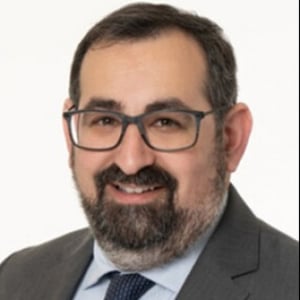
Research Scholar in Law and Executive Director, Center for Academic Freedom and Free Speech, Yale Law School
Joe Cohn is a research scholar in law at Yale Law school and the executive director of the Center for Academic Freedom and Free Speech (CAFFS).
Cohn has served as a staff attorney at the AIDS Law Project of Pennsylvania, a staff attorney for the Court of Appeals for the 3rd Circuit, an adjunct professor of law at the University of Pennsylvania Law School, where he supervised law students representing clients in litigation in state and federal courts, and as the interim legal director for ACLU affiliates in Nevada and Utah.
A majority of Cohn’s career has been dedicated to defending civil liberties on college campuses and free expression in society at large. As the Foundation for Individual Rights and Expression’s (FIRE’s) founding legislative and policy director, from 2012 to 2023, he testified on numerous occasions in legislatures across America and in Congress, drafted legislation on campus free speech, campus due process, and academic freedom that has been enacted in states across the country. Immediately before joining CAFFS, Cohn advocated for open inquiry, viewpoint diversity, and constructive disagreement in higher education as Heterodox Academy’s director of policy.
Cohn writes extensively on civil liberties, with articles published in a wide array of media outlets, including the Wall Street Journal, the Washington Post, Newsweek, the Hill, the New York Daily News, the Chicago Tribune, the Las Vegas Review Journal, the Minnesota Star Tribune, the Chronicle of Higher Education, Inside Higher Ed, and the Volokh Conspiracy.
He earned his bachelor of arts from the University of Nevada at Las Vegas in 2000. He is a 2004 graduate of the University of Pennsylvania Carey School of Law and the Fels Institute of Government Administration, where he earned his J.D. and M.A. in Government Administration.
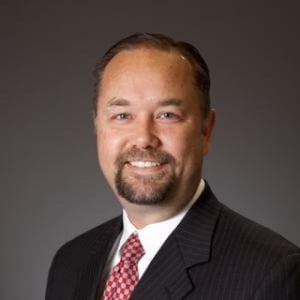
Senior Counsel, Director of Center for Academic Freedom, Alliance Defending Freedom
Tyson Langhofer serves as senior counsel and director of the Center for Academic Freedom with Alliance Defending Freedom.
Langhofer represents students and faculty at public high schools and colleges in defending their First Amendment rights. For example, in Denton v. Hecht, he successfully defended a Florida State University student after he was removed as Student Senate President simply for sharing his Catholic views in a private group chat. In Cross v. Loudoun County Public Schools, he successfully defended an elementary school gym teacher after the school suspended him for peacefully sharing his views on a proposed policy at a public school board meeting.
Langhofer has extensive experience in civil litigation and constitutional law. Before joining ADF, Langhofer was a partner with Stinson LLP, where he worked as a commercial litigation attorney from 2000 until he joined ADF in 2015.
Langhofer is Peer Review Rated AV® Preeminent in Martindale-Hubbell. He is a sought-after speaker on legal and cultural issues. He regularly comments on free speech issues in television, radio, and print media. He has appeared as a guest and written pieces for numerous major media outlets, including The Washington Post, The Washington Times, USA Today, Townhall, The Federalist, and The Daily Wire.
Langhofer earned his Juris Doctor from Regent University School of Law in 1999, graduating cum laude. Langhofer is admitted to practice in multiple states, the Supreme Court, and numerous federal district and appellate courts.
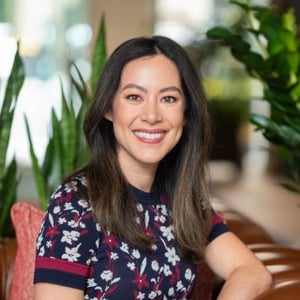
Director, Independent Women's Law Center; Owner, MPL Strategies
Vice President for Legal Strategy, Stand Together
Casey Mattox is Vice President for Legal Strategy at Stand Together and Senior Advisor at
Americans for Prosperity. In these roles he advocates for and creates strategies and
partnerships to ensure a constitutionally limited government that protects the civil liberties of all
Americans. Prior to joining Stand Together and AFP Casey’s legal career focused on defending
the First Amendment rights of students, faculty, healthcare workers and religious organizations.
Casey has a J.D. from Boston College School of Law and an undergraduate degree from the
University of Virginia. You can find him on Twitter at @CaseyMattox_ and on LinkedIn at
@Casey-Mattox-ST.
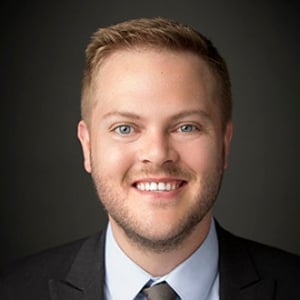
Lead Counsel, Government Affairs, Foundation for Individual Rights and Expression (FIRE)
Tyler is a 2010 graduate of Indiana University – Bloomington with dual degrees in political science and history. He was a member of Sigma Phi Epsilon and a director on IU’s largest student programming board, helping plan events such as Culture Fest and Homecoming activities. After spending time working as a program facilitator at Camp Miniwanca in Michigan, he enrolled at Michigan State University College of Law and graduated in May 2015. At MSU Law, he participated in the school’s First Amendment Clinic and was president of MSU Law’s chapter of the Federalist Society.
In his free time, Tyler enjoys hiking, soccer, and playing a variety of games on Playstation 4, though typically not simultaneously. He is an avid supporter of the Indianapolis Colts, Chelsea FC, and the Indiana Hoosiers.
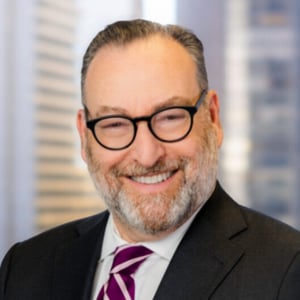
Founder, Chairman, and CEO, Louis D. Brandeis Center for Human Rights Under Law
Hon. Kenneth L. Marcus is an internationally recognized expert in civil and human rights, as well as a leader in the fight against anti-Semitism on and off university campuses. He is the Founder, Chairman, and CEO of The Louis D. Brandeis Center for Human Rights Under Law, the leading civil rights legal organization fighting against anti-Semitism. The New York Times has called him “The Man Who Helped Redefine Campus Anti-Semitism.” He been described, in that paper, as “the single most effective and respected force” to combat anti-Semitism.
During his public service career, Marcus served as Assistant U.S. Secretary of Education for Civil Rights; Staff Director at the U.S. Commission on Civil Rights; and General Deputy Assistant U.S. Secretary of Housing and Urban Development for Fair Housing and Equal Opportunity.
In academia, he serves as Professorial Lecturer in Law at George Washington University. He formerly held the Lillie and Nathan Ackerman Chair in Equality and Justice in America at the City University of New York’s Bernard M. Baruch College, served as Visiting Research Professor of Political Science at Yeshiva University, and was a Board of Visitors member George Mason University and Distinguished Senior Fellow at that university’s law school. He is a member of the editorial board of the Journal of Contemporary Antisemitism and previously served as Associate Editor of the Journal for the Study of Anti-Semitism.
Marcus is also author of The Definition of Anti-Semitism (Oxford University Press) and Jewish Identity and Civil Rights in America (Cambridge University Press). He has published widely in academic journals as well as in more popular venues such as The Wall Street Journal, Washington Post, Newsweek, USA Today, and Politico. He is a graduate of Williams College and the University of California at Berkeley School of Law.
Earlier in his career, he was a litigation partner in two major law firms, where he conducted complex commercial and constitutional litigation. He also serves as Chairman emeritus of the Executive Committee of the Federalist Society for Law & Public Policy Civil Rights Practice Group.
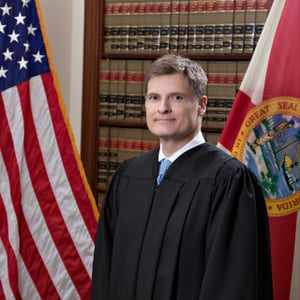
Chief Justice, Florida Supreme Court
Justice Carlos G. Muñiz was appointed to the Florida Supreme Court by Governor Ron DeSantis on January 22, 2019, becoming the 89th Justice since statehood was granted in 1845. Previously, he served as general counsel for the United States Department of Education, where he led the Office of the General Counsel and provided legal and policy advice to the United States Secretary of Education and to other senior department officials.
Justice Muñiz has wide-ranging legal and policy experience from his years as an attorney and consultant in private practice. He served for three years as the deputy attorney general and chief of staff to Florida Attorney General Pam Bondi. In that capacity he was responsible for managing a 400-lawyer staff and overseeing duties that included enforcement and litigation, legislative affairs, and communications.
During this time, Justice Muñiz worked with state attorneys general throughout the country and developed substantial experience in multistate enforcement actions, consumer protection issues, government investigations, and disputes between the states and the federal government.
In addition to his service in the Attorney General’s Office, Justice Muñiz held positions of responsibility throughout Florida state government. He served as deputy general counsel in the Office of Governor Jeb Bush, as a deputy chief of staff and counsel in the Office of the Speaker of the Florida House of Representatives, and as general counsel of the Florida Department of Financial Services.
Justice Muñiz is a graduate of the University of Virginia and of Yale Law School. Upon receipt of his law degree, he clerked for Judge José A. Cabranes of the U.S. Court of Appeals for the Second Circuit and for Judge Thomas A. Flannery of the U.S. District Court for the District of Columbia.
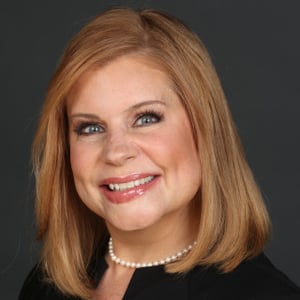
Vice President & Senior Legal Fellow, Defending Education
Sarah Parshall Perry is vice president and senior legal fellow at Defending Education.
Before coming to Defending Education, Sarah served as a Senior Legal Fellow for the Edwin Meese III Center for Legal and Judicial Studies, part of the Institute for Constitutional Government at Heritage, where her work centered on civil rights and the proper role of the courts.
Sarah joined Heritage after serving as Senior Counsel to the Assistant Secretary for Civil Rights at the U.S. Department of Education where she focused on policy reform, technical guidance, and the Office for Civil Rights’ (OCR) annual report to Congress. While at OCR, she was appointed by the Acting Assistant Secretary to co-chair the Employment Engagement, Diversity, & Inclusion Council and, in coordination with the Deputy Assistant Secretary for Enforcement oversee the hiring of dozens of attorneys for OCR’s 12 regional offices nationwide. Prior to her tenure at the Department of Education, she spent six years at the Family Research Council in Washington, D.C. where she was Senior Fellow for Education Reform and later, became the regular substitute host for the “Washington Watch” radio show. Her work at the Family Research Council also included the building and oversight of multiple policy coalitions geared toward the fight against antisemitism in academia, curbing tech censorship, and protecting religious liberty.
Before joining FRC, Sarah was in-house counsel and director of development for a Baltimore advertising agency, providing management of all new business transactions from pitch to contract execution for the multi-million-dollar enterprise. She began her practice at the litigation firm of Simms Showers, LLP where her work included Title VII employment discrimination, maritime/admiralty, and False Claims Act (“Qui Tam”) law. Sarah has a law degree from the University of Virginia School of Law, where she was an editor of the Virginia Journal of International Law, a recipient of the American Jurisprudence award, a Phi Delta Phi honor society member, and a student practitioner in the appellate litigation clinic where she argued before the 4th Circuit Court of Appeals. She holds a B.S. in Journalism with honors from Liberty University.
Her commentary and analysis have appeared in media outlets across the country, including the AP, BBC, Fox News, NPR, The Hill, Washington Post, Washington Times, and the New York Times. She is the mother of three children, and the author of just as many books on the trials and triumphs of parenting children on the autism spectrum. Sarah is a member of the Kirkpatrick Society at the American Enterprise Institute, and makes her home north of Baltimore, Maryland.

Professor of Law, Antonin Scalia Law School, George Mason University
ILYA SOMIN is Professor of Law at George Mason University and the B. Kenneth Simon Chair in Constitutional Studies at the Cato Institute. His research focuses on constitutional law, property law, democratic theory, federalism, and migration rights. He is the author of Free to Move: Foot Voting, Migration, and Political Freedom (Oxford University Press, revised and expanded edition, 2022), Democracy and Political Ignorance: Why Smaller Government is Smarter (Stanford University Press, revised and expanded second edition, 2016), and The Grasping Hand: Kelo v. City of New London and the Limits of Eminent Domain (University of Chicago Press, 2015, rev. paperback ed., 2016), coauthor of A Conspiracy Against Obamacare: The Volokh Conspiracy and the Health Care Case (Palgrave Macmillan, 2013), and co-editor of Eminent Domain: A Comparative Perspective (Cambridge University Press, 2017). Democracy and Political Ignorance has been translated into Italian and Japanese.
Somin’s work has appeared in numerous scholarly journals, including the Yale Law Journal, Stanford Law Review, Northwestern University Law Review, Georgetown Law Journal, Critical Review, and others. Somin has also published articles in a variety of popular press outlets, including the New York Times, Washington Post, Wall Street Journal, Los Angeles Times, CNN, NBC, The Atlantic, USA Today, Boston Globe, US News and World Report, South China Morning Post, National Law Journal and Reason. He has been quoted or interviewed by the New York Times, Washington Post, Wall Street Journal, Time, Newsweek, The Economist, the Christian Science Monitor, the Financial Times, The Guardian, the Associated Press, CBS, MSNBC, NPR, BBC, Reuters, the Canadian Broadcasting Corporation, the Australian Broadcasting Corporation, Radio Free Europe/Radio Liberty, Al Jazeera, and the Voice of America, among other media.
Somin’s writings have been cited in decisions by the United States Supreme Court, multiple state supreme courts and lower federal courts, and the Supreme Court of Israel. He is co-counsel for the plaintiffs in VOS Selections, Inc. v. Trump, a case challenging the constitutionality of President Trump’s “Liberation Day” tariffs. Somin has testified on the use of drones for targeted killing in the War on Terror before the US Senate Judiciary Subcommittee on the Constitution, Civil Rights, and Human Rights. In 2009, he testified on property rights issues at the United States Senate Judiciary Committee confirmation hearings for Supreme Court Justice Sonia Sotomayor. Somin writes regularly for the popular Volokh Conspiracy law and politics blog, now affiliated with Reason magazine (previously affiliated with the Washington Post from 2014 to 2017). From 2006 to 2013, he served as Co-Editor of the Supreme Court Economic Review, one of the country’s top-rated law and economics journals.
Somin has served as a visiting professor at the University of Pennsylvania Law School. He has also been a visiting professor or scholar at the Georgetown University Law Center, the University of Hamburg, Germany, the University of Torcuato Di Tella in Buenos Aires, Argentina, Uriel Reichman University in Israel, and Zhengzhou University in China. He is a University Affiliate of the Schar School of Policy and Government at George Mason University, and an affiliated faculty member of the George Mason University Institute for Immigration Research. Before joining the faculty at George Mason, Somin was the John M. Olin Fellow in Law at Northwestern University Law School in 2002-2003. In 2001-2002, he clerked for the Hon. Judge Jerry E. Smith of the U.S. Court of Appeals for the Fifth Circuit. Professor Somin earned his B.A., Summa Cum Laude, at Amherst College, M.A. in Political Science from Harvard University, and J.D. from Yale Law School.

The First Amendment and White House Press Access
Michael Francisco, Casey Mattox, Robert Shibley
On September 18, President Trump announced that he was "banning" CNN, MS NOW, and Politico...
The First Amendment and White House Press Access
Michael Francisco, Casey Mattox, Robert Shibley
On September 18, President Trump announced that he was "banning" CNN, MS NOW, and Politico...
The First Amendment and White House Press Access
Lessons From John Adams: Defending Unpopular Clients from the Founding Era to the Present
William Creeley, Erin E. Murphy, Jennifer Perkins, Richard Samuelson
In this Federalist Society America 250 series, experts analyze modern legal and policy debates through...
Lessons From John Adams: Defending Unpopular Clients from the Founding Era to the Present
William Creeley, Erin E. Murphy, Jennifer Perkins, Richard Samuelson
In this Federalist Society America 250 series, experts analyze modern legal and policy debates through...
Lessons From John Adams: Defending Unpopular Clients from the Founding Era to the Present
The Founders Gave Us the Tools Series
Academic Freedom and the First Amendment: Who Decides What Is Taught?
Federal Efforts to Combat Antisemitism: Restoring Campus Civil Rights or Infringing Academic Freedom?
Washington, DC2025 Education Law and Policy Conference
Federal Executive Power and Education
Washington, DCDefining Antisemitism: A Debate on Free Speech and Civil Rights
William Creeley, Aharon Jeffrey Friedman, Eugene Kontorovich
Congress is currently debating the Antisemitism Awareness Act. This proposed legislation aims to provide a...