
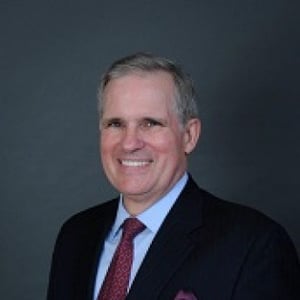
Mr. Fortney is a co-founder of Fortney & Scott, LLC, a Washington, D.C.-based law firm counseling and advising clients on the full spectrum of work-place related matters, including employment discrimination and labor matters, compliance programs, government contracting, international dispute resolution and counseling matters, and developing strategies for avoiding or responding to workplace-related crises.
Mr. Fortney has a broad-based practice representing and counseling employers and executives in employment and labor matters, including equal employment opportunity requirements, wage and hour matters, federal contractor's affirmative action and non-discrimination obligations, collective bargaining, and workplace health and safety. He brings experience from the public and private sectors in advising clients on these issues, and he frequently represents clients before federal and state agencies, including the U.S. Department of Labor's agencies, the Equal Employment Opportunity Commission, and the National Labor Relations Board.
Mr. Fortney has been widely recognized for his professional accomplishments, including being named one of the leading employment lawyers in Washington, D.C. by the CHAMBERS USAsurvey of America’s Leading Lawyers for Business in all years from 2005 through 2015. He was selected for inclusion in the 2008 through present editions of The Best Lawyers in America, Washington D.C.’s, Washington D.C.’s Best Lawyers, and Super Lawyers. Mr. Fortney was also awarded an AV rating (the highest level) by Martindale-Hubbell.
Before co-founding the firm, Mr. Fortney previously served as the chief legal officer of the U.S. Department of Labor in Washington, D.C. during the term of President George H.W. Bush. As Acting Solicitor of Labor, he was responsible for enforcing over 140 laws regulating the nation's workplaces and managing an agency with 800 attorneys and support staff. He advised Secretaries of Labor Elizabeth Dole and Lynn Martin and the Department of Labor agencies on a broad range of legal, policy, legislative, regulatory and enforcement issues.
Mr. Fortney has testified before the U.S. Congress on several occasions and a state legislative committee on wage and hour matters.
Mr. Fortney is a frequent lecturer and writer on employment-related topics, including appearances on CNN, CBS and Fox News. Mr. Fortney is the co-editor of the Federal Employment Law Insider monthly newsletter, Chapter Editor of The Family and Medical Leave Act (2006) published by BNA Books, co-author of the Military Leave Compliance Kit (2001), published by M. Lee Smith Publishers, and lead author of the Guide to Employee Leave(1997), published by Warren, Gorham & Lamont.
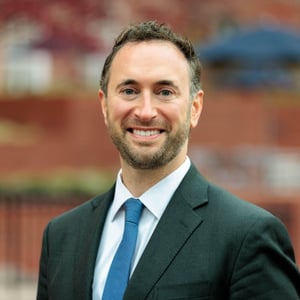
Associate Dean for Academic Affairs, The George Washington University Law School
Aram A. Gavoor is the Associate Dean for Academic Affairs and an internationally recognized scholar in American administrative law, national security, and federal courts. His co-authored work was cited by the U.S. Supreme Court in Department of Commerce v. New York (2019). His scholarship has earned placement in the Florida Law Review, Indiana Law Journal, Ohio State Law Journal, and other law journals. He has briefed and argued over a dozen high-profile public law cases before a majority of the U.S. Courts of Appeals and numerous cases before almost a third of the 94 U.S. District Courts. Associate Dean Gavoor frequently shares his national security, artificial intelligence policy, and federal courts expertise with international news media, including CNN, BBC World News, Wall Street Journal, NBC News, and ABC (Australia) World News. In 2021, the National Law Journal named Associate Dean Gavoor a Rising Star (top 40 under 40) honoree.
Earlier in his career, Associate Dean Gavoor served as Senior Counsel for National Security in the Civil Division of the U.S. Department of Justice, as third-in-rank Counselor to the Administrator of the Office of Information and Regulatory Affairs in the White House Office of Management and Budget, and in private practice. He received the Attorney General's Award for Distinguished Service in 2019, the Civil Division Special Commendation Award in 2020, 2019, and 2018, and a Commendation from the Human Rights and Special Prosecutions Section of the Criminal Division in 2018.
Associate Dean Gavoor previously served on the law school’s part-time faculty from 2008-2017 before accepting a term-limited position as Visiting Associate Professor from 2017-2019. He received GW Law’s Distinguished Adjunct Faculty Teaching Award from the 2020 and 2017 graduating classes. He currently teaches Constitutional Law II, Administrative Law, National Security Law, and Federal Courts.
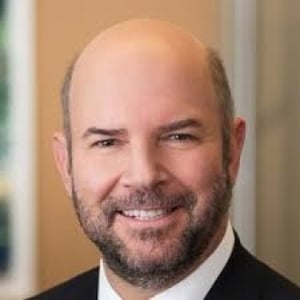
Partner, Morgan, Lewis & Bockius LLP
Philip A. Miscimarra is the former Chairman of the National Labor Relations Board (NLRB). Phil leads the firm’s NLRB special appeals practice and is co-leader of Morgan Lewis Workforce Change, which manages all employment, labor, benefits, and related issues arising from mergers, acquisitions, startups, workforce reductions, and other types of business restructuring. He represents clients on a wide range of labor and employment issues, with a focus on labor-management relations, business acquisitions and restructuring, and employment litigation. Phil is also a Senior Fellow at the University of Pennsylvania's Wharton School and the Wharton Center for Human Resources. He is admitted in Illinois only, and his practice is supervised by DC Bar members.
Phil was named Chairman of the NLRB by President Donald J. Trump on April 24, 2017, after previously serving as Acting Chairman and a Board Member. He was appointed to the NLRB by President Barack Obama on April 9, 2013, and was approved unanimously by the Senate Committee on Health, Education, Labor, and Pensions on May 22, 2013. He was confirmed by voice vote in the US Senate on July 30, 2013, and served from August 7, 2013, to December 16, 2017. Upon the completion of his term, Phil served on the NLRB longer than 26 other board members over the past 30 years.
Phil is the author or co-author of several books involving labor law issues, including The NLRB and Managerial Discretion: Subcontracting, Relocations, Closings, Sales, Layoffs, and Technological Change (2d ed. 2010) (by Miscimarra, Turner, Friedman, Callahan, Conrad, Lignowski and Scroggins); The NLRB and Secondary Boycotts (3d ed. 2002) (by Miscimarra, Berkowitz, Wiener and Ditelberg); and Government Protection of Employees Involved in Mergers and Acquisitions (1989 and 1997 supp.) (by Northrup and Miscimarra); and other publications. He has also testified on labor and employment law issues in the United States Congress.
Chambers USA named Phil one of the leading lawyers for employment law in the United States from 2004 to 2012, based on the views of clients, peers, and other industry professionals. He has been described as a "fantastic lawyer" and "prolific writer," with clients admiring his "multilayered abilities and business savvy" and his "high level of integrity."
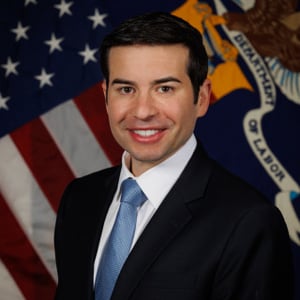
Deputy Secretary of Labor, U.S. Department of Labor
Keith E. Sonderling was confirmed by the U.S. Senate on March 12, 2025 to be the 38th United States Deputy Secretary of Labor.
As the United States Deputy Secretary of Labor, Sonderling is the second-highest-ranking official and serves as the Department's Chief Operating Officer, overseeing the agency’s $14 billion dollar budget and 16,000 employees. The Deputy Secretary oversees key operational functions such as: strategic planning; budget formulation; financial management; information technology; and human resource management. Additionally, the Deputy Secretary provides the leadership and management of DOL’s agencies necessary to support the Secretary and the Department’s mission.
Prior to becoming Deputy Secretary, he was previously confirmed by the United States Senate to serve as the Commissioner of the U.S. Equal Employment Opportunity Commission (EEOC) from September 2020 until August 2024. He also served as the Commission’s Vice-Chair from 2020-2021.
During his tenure at the EEOC, one of Sonderling’s highest priorities was ensuring that artificial intelligence and workplace technologies are designed and deployed consistent with long-standing laws. He published numerous articles on the benefits and potential harms of using artificial intelligence-based technology in the workplace and spoke globally on artificial intelligence’s impact on the workplace.
Sonderling previously served at the US Department of Labor as the Acting and Deputy Administrator of the U.S. Department of Labor’s Wage and Hour Division from 2017-2020. During his tenure, the Division accomplished back-to-back record-breaking enforcement collections and educational outreach events. Sonderling also oversaw the development and publication of large-scale deregulatory rules and authored numerous Opinion Letters, Field Assistance Bulletins, and All Agency Memorandums. Additionally, he was instrumental in developing the Division’s first comprehensive self-audit program, which collected more than $7 million for nearly eleven thousand workers.
Before his government service, Sonderling was a partner at one of Florida’s oldest and largest law firms, Gunster. At Gunster, he counseled employers and litigated labor and employment disputes. In 2012, then-Governor Rick Scott appointed Sonderling to serve as the Chair of the Judicial Nominating Committee for appellate courts in South Florida. Sonderling was also active in the community, serving on the Board of Directors for Morse Life Health System, the Boca Raton Chamber of Commerce, and Leadership Florida.
Sonderling also serves as a Professional Lecturer in the Law (Adjunct Professor) at George Washington University Law School, teaching employment discrimination.
Sonderling received his B.S., magna cum laude, from the University of Florida and his J.D., magna cum laude, from Nova Southeastern University.
Deputy Secretary of Labor, U.S. Department of Labor
Keith E. Sonderling was confirmed by the U.S. Senate on March 12, 2025 to be the 38th United States Deputy Secretary of Labor.
As the United States Deputy Secretary of Labor, Sonderling is the second-highest-ranking official and serves as the Department's Chief Operating Officer, overseeing the agency’s $14 billion dollar budget and 16,000 employees. The Deputy Secretary oversees key operational functions such as: strategic planning; budget formulation; financial management; information technology; and human resource management. Additionally, the Deputy Secretary provides the leadership and management of DOL’s agencies necessary to support the Secretary and the Department’s mission.
Prior to becoming Deputy Secretary, he was previously confirmed by the United States Senate to serve as the Commissioner of the U.S. Equal Employment Opportunity Commission (EEOC) from September 2020 until August 2024. He also served as the Commission’s Vice-Chair from 2020-2021.
During his tenure at the EEOC, one of Sonderling’s highest priorities was ensuring that artificial intelligence and workplace technologies are designed and deployed consistent with long-standing laws. He published numerous articles on the benefits and potential harms of using artificial intelligence-based technology in the workplace and spoke globally on artificial intelligence’s impact on the workplace.
Sonderling previously served at the US Department of Labor as the Acting and Deputy Administrator of the U.S. Department of Labor’s Wage and Hour Division from 2017-2020. During his tenure, the Division accomplished back-to-back record-breaking enforcement collections and educational outreach events. Sonderling also oversaw the development and publication of large-scale deregulatory rules and authored numerous Opinion Letters, Field Assistance Bulletins, and All Agency Memorandums. Additionally, he was instrumental in developing the Division’s first comprehensive self-audit program, which collected more than $7 million for nearly eleven thousand workers.
Before his government service, Sonderling was a partner at one of Florida’s oldest and largest law firms, Gunster. At Gunster, he counseled employers and litigated labor and employment disputes. In 2012, then-Governor Rick Scott appointed Sonderling to serve as the Chair of the Judicial Nominating Committee for appellate courts in South Florida. Sonderling was also active in the community, serving on the Board of Directors for Morse Life Health System, the Boca Raton Chamber of Commerce, and Leadership Florida.
Sonderling also serves as a Professional Lecturer in the Law (Adjunct Professor) at George Washington University Law School, teaching employment discrimination.
Sonderling received his B.S., magna cum laude, from the University of Florida and his J.D., magna cum laude, from Nova Southeastern University.
Mr. Fortney is a co-founder of Fortney & Scott, LLC, a Washington, D.C.-based law firm counseling and advising clients on the full spectrum of work-place related matters, including employment discrimination and labor matters, compliance programs, government contracting, international dispute resolution and counseling matters, and developing strategies for avoiding or responding to workplace-related crises.
Mr. Fortney has a broad-based practice representing and counseling employers and executives in employment and labor matters, including equal employment opportunity requirements, wage and hour matters, federal contractor's affirmative action and non-discrimination obligations, collective bargaining, and workplace health and safety. He brings experience from the public and private sectors in advising clients on these issues, and he frequently represents clients before federal and state agencies, including the U.S. Department of Labor's agencies, the Equal Employment Opportunity Commission, and the National Labor Relations Board.
Mr. Fortney has been widely recognized for his professional accomplishments, including being named one of the leading employment lawyers in Washington, D.C. by the CHAMBERS USAsurvey of America’s Leading Lawyers for Business in all years from 2005 through 2015. He was selected for inclusion in the 2008 through present editions of The Best Lawyers in America, Washington D.C.’s, Washington D.C.’s Best Lawyers, and Super Lawyers. Mr. Fortney was also awarded an AV rating (the highest level) by Martindale-Hubbell.
Before co-founding the firm, Mr. Fortney previously served as the chief legal officer of the U.S. Department of Labor in Washington, D.C. during the term of President George H.W. Bush. As Acting Solicitor of Labor, he was responsible for enforcing over 140 laws regulating the nation's workplaces and managing an agency with 800 attorneys and support staff. He advised Secretaries of Labor Elizabeth Dole and Lynn Martin and the Department of Labor agencies on a broad range of legal, policy, legislative, regulatory and enforcement issues.
Mr. Fortney has testified before the U.S. Congress on several occasions and a state legislative committee on wage and hour matters.
Mr. Fortney is a frequent lecturer and writer on employment-related topics, including appearances on CNN, CBS and Fox News. Mr. Fortney is the co-editor of the Federal Employment Law Insider monthly newsletter, Chapter Editor of The Family and Medical Leave Act (2006) published by BNA Books, co-author of the Military Leave Compliance Kit (2001), published by M. Lee Smith Publishers, and lead author of the Guide to Employee Leave(1997), published by Warren, Gorham & Lamont.
Associate Dean for Academic Affairs, The George Washington University Law School
Aram A. Gavoor is the Associate Dean for Academic Affairs and an internationally recognized scholar in American administrative law, national security, and federal courts. His co-authored work was cited by the U.S. Supreme Court in Department of Commerce v. New York (2019). His scholarship has earned placement in the Florida Law Review, Indiana Law Journal, Ohio State Law Journal, and other law journals. He has briefed and argued over a dozen high-profile public law cases before a majority of the U.S. Courts of Appeals and numerous cases before almost a third of the 94 U.S. District Courts. Associate Dean Gavoor frequently shares his national security, artificial intelligence policy, and federal courts expertise with international news media, including CNN, BBC World News, Wall Street Journal, NBC News, and ABC (Australia) World News. In 2021, the National Law Journal named Associate Dean Gavoor a Rising Star (top 40 under 40) honoree.
Earlier in his career, Associate Dean Gavoor served as Senior Counsel for National Security in the Civil Division of the U.S. Department of Justice, as third-in-rank Counselor to the Administrator of the Office of Information and Regulatory Affairs in the White House Office of Management and Budget, and in private practice. He received the Attorney General's Award for Distinguished Service in 2019, the Civil Division Special Commendation Award in 2020, 2019, and 2018, and a Commendation from the Human Rights and Special Prosecutions Section of the Criminal Division in 2018.
Associate Dean Gavoor previously served on the law school’s part-time faculty from 2008-2017 before accepting a term-limited position as Visiting Associate Professor from 2017-2019. He received GW Law’s Distinguished Adjunct Faculty Teaching Award from the 2020 and 2017 graduating classes. He currently teaches Constitutional Law II, Administrative Law, National Security Law, and Federal Courts.
Partner, Morgan, Lewis & Bockius LLP
Philip A. Miscimarra is the former Chairman of the National Labor Relations Board (NLRB). Phil leads the firm’s NLRB special appeals practice and is co-leader of Morgan Lewis Workforce Change, which manages all employment, labor, benefits, and related issues arising from mergers, acquisitions, startups, workforce reductions, and other types of business restructuring. He represents clients on a wide range of labor and employment issues, with a focus on labor-management relations, business acquisitions and restructuring, and employment litigation. Phil is also a Senior Fellow at the University of Pennsylvania's Wharton School and the Wharton Center for Human Resources. He is admitted in Illinois only, and his practice is supervised by DC Bar members.
Phil was named Chairman of the NLRB by President Donald J. Trump on April 24, 2017, after previously serving as Acting Chairman and a Board Member. He was appointed to the NLRB by President Barack Obama on April 9, 2013, and was approved unanimously by the Senate Committee on Health, Education, Labor, and Pensions on May 22, 2013. He was confirmed by voice vote in the US Senate on July 30, 2013, and served from August 7, 2013, to December 16, 2017. Upon the completion of his term, Phil served on the NLRB longer than 26 other board members over the past 30 years.
Phil is the author or co-author of several books involving labor law issues, including The NLRB and Managerial Discretion: Subcontracting, Relocations, Closings, Sales, Layoffs, and Technological Change (2d ed. 2010) (by Miscimarra, Turner, Friedman, Callahan, Conrad, Lignowski and Scroggins); The NLRB and Secondary Boycotts (3d ed. 2002) (by Miscimarra, Berkowitz, Wiener and Ditelberg); and Government Protection of Employees Involved in Mergers and Acquisitions (1989 and 1997 supp.) (by Northrup and Miscimarra); and other publications. He has also testified on labor and employment law issues in the United States Congress.
Chambers USA named Phil one of the leading lawyers for employment law in the United States from 2004 to 2012, based on the views of clients, peers, and other industry professionals. He has been described as a "fantastic lawyer" and "prolific writer," with clients admiring his "multilayered abilities and business savvy" and his "high level of integrity."
Deputy Secretary of Labor, U.S. Department of Labor
Keith E. Sonderling was confirmed by the U.S. Senate on March 12, 2025 to be the 38th United States Deputy Secretary of Labor.
As the United States Deputy Secretary of Labor, Sonderling is the second-highest-ranking official and serves as the Department's Chief Operating Officer, overseeing the agency’s $14 billion dollar budget and 16,000 employees. The Deputy Secretary oversees key operational functions such as: strategic planning; budget formulation; financial management; information technology; and human resource management. Additionally, the Deputy Secretary provides the leadership and management of DOL’s agencies necessary to support the Secretary and the Department’s mission.
Prior to becoming Deputy Secretary, he was previously confirmed by the United States Senate to serve as the Commissioner of the U.S. Equal Employment Opportunity Commission (EEOC) from September 2020 until August 2024. He also served as the Commission’s Vice-Chair from 2020-2021.
During his tenure at the EEOC, one of Sonderling’s highest priorities was ensuring that artificial intelligence and workplace technologies are designed and deployed consistent with long-standing laws. He published numerous articles on the benefits and potential harms of using artificial intelligence-based technology in the workplace and spoke globally on artificial intelligence’s impact on the workplace.
Sonderling previously served at the US Department of Labor as the Acting and Deputy Administrator of the U.S. Department of Labor’s Wage and Hour Division from 2017-2020. During his tenure, the Division accomplished back-to-back record-breaking enforcement collections and educational outreach events. Sonderling also oversaw the development and publication of large-scale deregulatory rules and authored numerous Opinion Letters, Field Assistance Bulletins, and All Agency Memorandums. Additionally, he was instrumental in developing the Division’s first comprehensive self-audit program, which collected more than $7 million for nearly eleven thousand workers.
Before his government service, Sonderling was a partner at one of Florida’s oldest and largest law firms, Gunster. At Gunster, he counseled employers and litigated labor and employment disputes. In 2012, then-Governor Rick Scott appointed Sonderling to serve as the Chair of the Judicial Nominating Committee for appellate courts in South Florida. Sonderling was also active in the community, serving on the Board of Directors for Morse Life Health System, the Boca Raton Chamber of Commerce, and Leadership Florida.
Sonderling also serves as a Professional Lecturer in the Law (Adjunct Professor) at George Washington University Law School, teaching employment discrimination.
Sonderling received his B.S., magna cum laude, from the University of Florida and his J.D., magna cum laude, from Nova Southeastern University.
Mr. Fortney is a co-founder of Fortney & Scott, LLC, a Washington, D.C.-based law firm counseling and advising clients on the full spectrum of work-place related matters, including employment discrimination and labor matters, compliance programs, government contracting, international dispute resolution and counseling matters, and developing strategies for avoiding or responding to workplace-related crises.
Mr. Fortney has a broad-based practice representing and counseling employers and executives in employment and labor matters, including equal employment opportunity requirements, wage and hour matters, federal contractor's affirmative action and non-discrimination obligations, collective bargaining, and workplace health and safety. He brings experience from the public and private sectors in advising clients on these issues, and he frequently represents clients before federal and state agencies, including the U.S. Department of Labor's agencies, the Equal Employment Opportunity Commission, and the National Labor Relations Board.
Mr. Fortney has been widely recognized for his professional accomplishments, including being named one of the leading employment lawyers in Washington, D.C. by the CHAMBERS USAsurvey of America’s Leading Lawyers for Business in all years from 2005 through 2015. He was selected for inclusion in the 2008 through present editions of The Best Lawyers in America, Washington D.C.’s, Washington D.C.’s Best Lawyers, and Super Lawyers. Mr. Fortney was also awarded an AV rating (the highest level) by Martindale-Hubbell.
Before co-founding the firm, Mr. Fortney previously served as the chief legal officer of the U.S. Department of Labor in Washington, D.C. during the term of President George H.W. Bush. As Acting Solicitor of Labor, he was responsible for enforcing over 140 laws regulating the nation's workplaces and managing an agency with 800 attorneys and support staff. He advised Secretaries of Labor Elizabeth Dole and Lynn Martin and the Department of Labor agencies on a broad range of legal, policy, legislative, regulatory and enforcement issues.
Mr. Fortney has testified before the U.S. Congress on several occasions and a state legislative committee on wage and hour matters.
Mr. Fortney is a frequent lecturer and writer on employment-related topics, including appearances on CNN, CBS and Fox News. Mr. Fortney is the co-editor of the Federal Employment Law Insider monthly newsletter, Chapter Editor of The Family and Medical Leave Act (2006) published by BNA Books, co-author of the Military Leave Compliance Kit (2001), published by M. Lee Smith Publishers, and lead author of the Guide to Employee Leave(1997), published by Warren, Gorham & Lamont.
Associate Dean for Academic Affairs, The George Washington University Law School
Aram A. Gavoor is the Associate Dean for Academic Affairs and an internationally recognized scholar in American administrative law, national security, and federal courts. His co-authored work was cited by the U.S. Supreme Court in Department of Commerce v. New York (2019). His scholarship has earned placement in the Florida Law Review, Indiana Law Journal, Ohio State Law Journal, and other law journals. He has briefed and argued over a dozen high-profile public law cases before a majority of the U.S. Courts of Appeals and numerous cases before almost a third of the 94 U.S. District Courts. Associate Dean Gavoor frequently shares his national security, artificial intelligence policy, and federal courts expertise with international news media, including CNN, BBC World News, Wall Street Journal, NBC News, and ABC (Australia) World News. In 2021, the National Law Journal named Associate Dean Gavoor a Rising Star (top 40 under 40) honoree.
Earlier in his career, Associate Dean Gavoor served as Senior Counsel for National Security in the Civil Division of the U.S. Department of Justice, as third-in-rank Counselor to the Administrator of the Office of Information and Regulatory Affairs in the White House Office of Management and Budget, and in private practice. He received the Attorney General's Award for Distinguished Service in 2019, the Civil Division Special Commendation Award in 2020, 2019, and 2018, and a Commendation from the Human Rights and Special Prosecutions Section of the Criminal Division in 2018.
Associate Dean Gavoor previously served on the law school’s part-time faculty from 2008-2017 before accepting a term-limited position as Visiting Associate Professor from 2017-2019. He received GW Law’s Distinguished Adjunct Faculty Teaching Award from the 2020 and 2017 graduating classes. He currently teaches Constitutional Law II, Administrative Law, National Security Law, and Federal Courts.
Partner, Morgan, Lewis & Bockius LLP
Philip A. Miscimarra is the former Chairman of the National Labor Relations Board (NLRB). Phil leads the firm’s NLRB special appeals practice and is co-leader of Morgan Lewis Workforce Change, which manages all employment, labor, benefits, and related issues arising from mergers, acquisitions, startups, workforce reductions, and other types of business restructuring. He represents clients on a wide range of labor and employment issues, with a focus on labor-management relations, business acquisitions and restructuring, and employment litigation. Phil is also a Senior Fellow at the University of Pennsylvania's Wharton School and the Wharton Center for Human Resources. He is admitted in Illinois only, and his practice is supervised by DC Bar members.
Phil was named Chairman of the NLRB by President Donald J. Trump on April 24, 2017, after previously serving as Acting Chairman and a Board Member. He was appointed to the NLRB by President Barack Obama on April 9, 2013, and was approved unanimously by the Senate Committee on Health, Education, Labor, and Pensions on May 22, 2013. He was confirmed by voice vote in the US Senate on July 30, 2013, and served from August 7, 2013, to December 16, 2017. Upon the completion of his term, Phil served on the NLRB longer than 26 other board members over the past 30 years.
Phil is the author or co-author of several books involving labor law issues, including The NLRB and Managerial Discretion: Subcontracting, Relocations, Closings, Sales, Layoffs, and Technological Change (2d ed. 2010) (by Miscimarra, Turner, Friedman, Callahan, Conrad, Lignowski and Scroggins); The NLRB and Secondary Boycotts (3d ed. 2002) (by Miscimarra, Berkowitz, Wiener and Ditelberg); and Government Protection of Employees Involved in Mergers and Acquisitions (1989 and 1997 supp.) (by Northrup and Miscimarra); and other publications. He has also testified on labor and employment law issues in the United States Congress.
Chambers USA named Phil one of the leading lawyers for employment law in the United States from 2004 to 2012, based on the views of clients, peers, and other industry professionals. He has been described as a "fantastic lawyer" and "prolific writer," with clients admiring his "multilayered abilities and business savvy" and his "high level of integrity."
Deputy Secretary of Labor, U.S. Department of Labor
Keith E. Sonderling was confirmed by the U.S. Senate on March 12, 2025 to be the 38th United States Deputy Secretary of Labor.
As the United States Deputy Secretary of Labor, Sonderling is the second-highest-ranking official and serves as the Department's Chief Operating Officer, overseeing the agency’s $14 billion dollar budget and 16,000 employees. The Deputy Secretary oversees key operational functions such as: strategic planning; budget formulation; financial management; information technology; and human resource management. Additionally, the Deputy Secretary provides the leadership and management of DOL’s agencies necessary to support the Secretary and the Department’s mission.
Prior to becoming Deputy Secretary, he was previously confirmed by the United States Senate to serve as the Commissioner of the U.S. Equal Employment Opportunity Commission (EEOC) from September 2020 until August 2024. He also served as the Commission’s Vice-Chair from 2020-2021.
During his tenure at the EEOC, one of Sonderling’s highest priorities was ensuring that artificial intelligence and workplace technologies are designed and deployed consistent with long-standing laws. He published numerous articles on the benefits and potential harms of using artificial intelligence-based technology in the workplace and spoke globally on artificial intelligence’s impact on the workplace.
Sonderling previously served at the US Department of Labor as the Acting and Deputy Administrator of the U.S. Department of Labor’s Wage and Hour Division from 2017-2020. During his tenure, the Division accomplished back-to-back record-breaking enforcement collections and educational outreach events. Sonderling also oversaw the development and publication of large-scale deregulatory rules and authored numerous Opinion Letters, Field Assistance Bulletins, and All Agency Memorandums. Additionally, he was instrumental in developing the Division’s first comprehensive self-audit program, which collected more than $7 million for nearly eleven thousand workers.
Before his government service, Sonderling was a partner at one of Florida’s oldest and largest law firms, Gunster. At Gunster, he counseled employers and litigated labor and employment disputes. In 2012, then-Governor Rick Scott appointed Sonderling to serve as the Chair of the Judicial Nominating Committee for appellate courts in South Florida. Sonderling was also active in the community, serving on the Board of Directors for Morse Life Health System, the Boca Raton Chamber of Commerce, and Leadership Florida.
Sonderling also serves as a Professional Lecturer in the Law (Adjunct Professor) at George Washington University Law School, teaching employment discrimination.
Sonderling received his B.S., magna cum laude, from the University of Florida and his J.D., magna cum laude, from Nova Southeastern University.
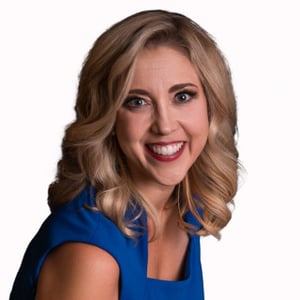
Founder, BrighterSideHR, LLC
Stephanie Holmes is an experienced labor and employment lawyer. She started her legal career at a large, international law firm where she represented employers in a wide variety of labor and employment matters, ranging from single plaintiff to complex class action cases. She then worked as an in-house counsel for a Fortune 500 company for almost a decade. As in-house counsel, Stephanie handled all labor and employment matters in both union and non-union environments. She worked closely with HR, business leaders, and executives on a myriad of employment issues, including policy development and implementation, workplace investigations, hiring processes, reorganizations, training, and questions around the ADA, FMLA, Title VII, FLSA, ADEA, and other federal and state laws.
Stephanie received her B.A. in Political Science and American Studies from Illinois Wesleyan University and her J.D. from The Catholic University of America Columbus School of Law. She is also a trained mediator through the Northwestern University School of Professional Studies and has years of experience helping resolve workplace conflict. Coming from a family of small business owners, Stephanie decided to start her own company and transitioned to consulting.
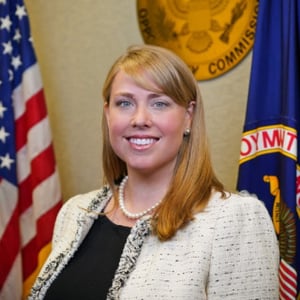
Chair, United States Equal Employment Opportunity Commission
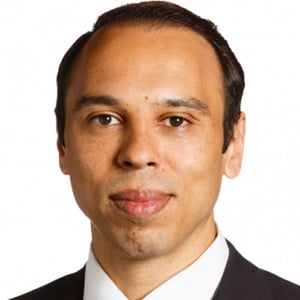
Vice President of Domestic and Economic Policy, The Heritage Foundation
Roger Severino is Vice President of Economic and Domestic Policy, and the Joseph C. and Elizabeth A. Anderlik Fellow at The Heritage Foundation.
Severino is a national authority on civil rights, conscience and religious freedom, the administrative state, and information privacy, particularly as applied to health care law and policy. Find his tweets at @RogerSeverino_.
Severino spearheaded the HHS Accountability Project while a Senior Fellow at EPPC from 2021 to 2023. Previously, Severino was Director of HHS’ Office for Civil Rights, where he led a team of over 250 staff enforcing our nation’s civil rights, conscience and religious freedom, and health information privacy laws. He served from 2017 to 2021 and was the longest-serving OCR director of the past three decades.
Prior to joining HHS, Severino served for two years as Director of the DeVos Center for Religion and Civil Society at Heritage, advocating for life, family, and religious-freedom policies. Before that, he was a trial attorney for seven years at the U.S. Department of Justice’s Civil Rights Division where he enforced the Fair Housing Act and the Civil Rights Act of 1964. Severino started his legal career at the Becket Fund for Religious Liberty, where he was Legal Counsel and Chief Operations Officer and defended the rights of people of all faiths under federal and international law.
Severino has been profiled in The New York Times, The Atlantic, The Wall Street Journal, and The Hill and has appeared on Fox News, CNN, MSNBC, NPR, and PBS, among others. In 2020, The New York Times dubbed him and his wife Carrie, “a conservative power couple” to be reckoned with.
Severino holds a JD from Harvard Law School, a master’s degree in public policy, with highest distinction, from Carnegie Mellon University, and a bachelor’s degree in business from the University of Southern California. He was appointed by President Trump to the Administrative Conference of the United States and is a member of the District of Columbia and the Commonwealth of Virginia bars.
As OCR director, Severino founded the federal government’s first division dedicated exclusively to conscience and religious freedom compliance and enforcement. He enforced the Weldon Amendment for the first time against a state (California) after it coerced families and religious organizations into paying for abortion insurance coverage, leading to a $200 million federal funding disallowance. He also enforced laws protecting pro-life pregnancy resource centers from discrimination by states hostile to their message and enforced laws prohibiting forced participation in abortions by medical professionals.
With respect to civil rights, Severino protected older persons and people with disabilities from being denied life-saving care due to discriminatory “quality of life” judgments, especially during the COVID-19 pandemic. He also achieved a landmark sexual harassment resolution with Michigan State University in the wake of the Larry Nassar sexual assault scandal and protected the rights of non-English speakers to have equal access to health and human services.
In the area of health privacy, he secured the largest HIPAA monetary settlement in history and achieved the largest number of enforcement resolutions both in a single year and across four years. He also facilitated the transformational use of Skype, Zoom, and Facetime for delivery of telehealth during the COVID-19 pandemic and beyond.
His regulatory reform activities resulted in a comprehensive conscience protection regulation and proposed a life-affirming disability rights regulation. He achieved regulatory savings of $3.6 billion in health care industry costs over five years and identified and proposed an additional $3.2 billion in cost savings from the repeal of ineffective and unnecessary regulatory burdens.
Severino is a Spanish speaker who teaches salsa and west coast swing in his spare time.
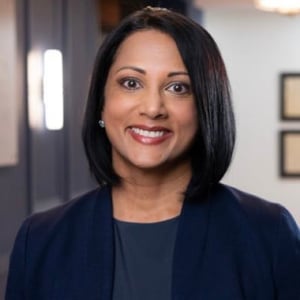
Vice President of Legal Professional Affairs, Blackstone Legal Fellowship

Topics
The Problem with AI Licensing & an “FDA for Algorithms”
Last year, we released a study for the Federalist Society predicting “The Coming Onslaught of...
Topics
A Bug in the Logic: Regulators try to solve the workplace “AI problem” before finding any problem to solve
Earlier this month, the Biden administration published a “request for information” on artificial intelligence in...
Topics
The Supreme Court Hears Oral Argument in Groff v. DeJoy
Background On April 18, 2023, the Supreme Court heard oral argument in the case of...
Deep Dive Episode 259 - AI & Antidiscrimination: AI Entering the Arena of Labor & Employment Law [Panel Discussion]
David Fortney, Aram A. Gavoor, Philip A. Miscimarra, Keith E. Sonderling
Artificial Intelligence (AI), once the stuff of science fiction, is now more than ever a...
Deep Dive Episode 258 - AI & Antidiscrimination: AI Entering the Arena of Labor & Employment Law [Keynote Address]
Keith E. Sonderling
Artificial Intelligence (AI), once the stuff of science fiction, is now more than ever a...
AI & Antidiscrimination: AI Entering the Arena of Labor & Employment Law
David Fortney, Aram A. Gavoor, Philip A. Miscimarra, Keith E. Sonderling
Artificial Intelligence (AI), once the stuff of science fiction, is now more than ever a...
AI & Antidiscrimination: AI Entering the Arena of Labor & Employment Law
Regulatory Transparency Project
Washington, DCTopics
Nine Agencies Propose Regulations for Partnerships with Faith-Based and Neighborhood Organizations
On January 13, 2023, nine agencies issued a notice of proposed rulemaking (NPRM) titled “Partnerships...
Topics
Religious Liberty Update on U.S. Congress and Executive Branch Actions
Congress SENATE 1. On January 24, 2023, Sen. Ted Cruz (R-TX) introduced S.29, “AMERICANS Act,”...
Work Different: Finding the opportunities that match your priorities
2022 National Lawyers Convention
Washington, DC