Suing Religious Employers: The Extent of Exemptions in Title VII
Religious employers are exempt under §§ 702(a) and 703(e)(1), 42 U.S.C.2000e—1(a) and 2000e—2(e)(1), when sued under Title VII of the Civil Rights Act of 1964, as amended. However questions can still arise when Religious employers undertake actions that would allegedly be problematic under Title VII for non-religious employers. What is the scope of the exemption? What is the definition of religion? What is the definition of a religious employer able to invoke the exemption?
Additionally, is the exemption waived if the employer is a recipient of federal financial assistance? How does the exemption in Title VII compare with other defenses available to the employer such as the ministerial exception (Church Autonomy Theory), Religious Freedom Restoration Act, and the First Amendment’s free-speech and free-exercise clauses? What if the religious employer is sued in a similar claim under a state or municipal human rights act?
Experts Sharon Gustafson, Jennifer Goldstein, and Carl Esbeck will discuss some of these questions in this webinar on the extent of exemptions extended to religious employers under Title VII.
Featuring:
R. B. Price and Isabelle Wade & Paul C. Lyda Professor Emeritus of Law, University of Missouri School of Law
Carl H. Esbeck is R.B. Price Professor and Isabelle Wade & Paul C. Lyda Professor of Law emeritus at the University of Missouri. After attending Cornell University School of Law where he served as an editor on the Cornell Law Review, he held a judicial clerkship with the Honorable Howard C. Bratton, chief judge of the U.S. District Court in New Mexico.
Professor Esbeck publishes widely in the area of religious liberty and church-state relations. He is recognized as the progenitor of "Charitable Choice," an integral part of the 1996 Federal Welfare Reform Act, later made a part of the faith-based initiative and equal-treatment regulations under presidents George W. Bush and Barack Obama. In addition, he has taken the lead in recognizing that the modern Supreme Court has applied the Establishment Clause not as a personal right, but as a structural limit on the government's authority in disputes involving church governance. While on leave from 1999 to 2002, Professor Esbeck directed the Center for Law & Religious Freedom (CLRF) and later served as Senior Counsel to the Deputy Attorney General at the U.S. Department of Justice. While directing the CLRF, Professor Esbeck was a central part of the congressional advocacy behind the Religious Land Use and Institutionalized Persons Act of 2000 (RLUIPA). While at the Department of Justice one of his duties was to direct a task force to remove barriers to the equal-treatment of faith-based organizations applying for social service grants. He is the author of Disestablishment and Religious Dissent: Church-State Relations in the New American States, 1776 - 1833 (U. of MO Press, 2019).
Associate General Counsel, Equal Employment Opportunity Commission

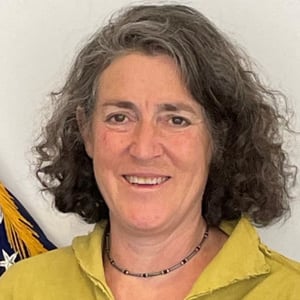
Jennifer Goldstein is the Associate General Counsel at the Equal Employment Opportunity Commission where she leads the Office of General Counsel’s Appellate Litigation Division. In that role, she oversees the filing of Commission party and amicus briefs in the U.S. Courts of Appeals on a range of issues arising under the federal anti-discrimination statutes, including religious discrimination. Prior to her tenure with the EEOC, Ms. Goldstein was a law clerk to Judge Stephanie K. Seymour of the U.S. Court of Appeals for the Tenth Circuit. Ms. Goldstein is a graduate of the University of Chicago Law School.

Principal, Sharon Fast Gustafson, Attorney at Law, PLC
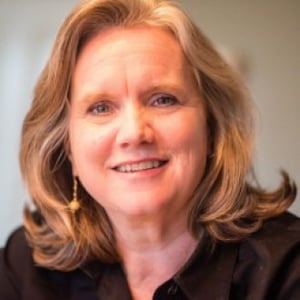
SHARON FAST GUSTAFSON is the immediate past General Counsel of the U.S. Equal Employment Opportunity Commission (EEOC), where she enforced Title VII of the Civil Rights Act of 1964, the Americans with Disabilities Act, and the Age Discrimination in Employment Act.

Ms. Gustafson graduated with honors from Georgetown Law Center in 1991 and has concentrated her practice in employment law. She worked for four years in the labor and employment law group at Jones, Day in Washington, D.C. Since that time, she has had a broad-based solo practice advising and representing employers and employees in handling all aspects of the employment relationship, in compliance with federal and state workplace laws, and in designing and implementing sound employment policies and practices.
Ms. Gustafson is an experienced litigator in federal and state courts; before administrative agencies, including the EEOC, state and local civil rights offices, and the Department of Labor (DOL) Wage and Hour Division; and in mediation and arbitration. She is admitted to practice in state and federal courts in Virginia, Maryland, and the District of Columbia, and in the United States Supreme Court.
Ms. Gustafson successfully litigated a pregnancy discrimination case, Young v. UPS, 575 U.S. 206 (2015), from EEOC intake to a successful outcome at the U.S. Supreme Court. In 2016, she received the Metropolitan Washington Employment Lawyers Association’s “Lawyer of the Year” award “in recognition of outstanding dedication to Civil Rights, Equality, and Justice.”
Ms. Gustafson represents both employers and employees in matters relating to employment law.