
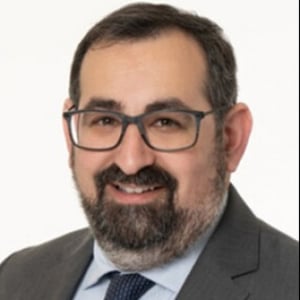
Research Scholar in Law and Executive Director, Center for Academic Freedom and Free Speech, Yale Law School
Joe Cohn is a research scholar in law at Yale Law school and the executive director of the Center for Academic Freedom and Free Speech (CAFFS).
Cohn has served as a staff attorney at the AIDS Law Project of Pennsylvania, a staff attorney for the Court of Appeals for the 3rd Circuit, an adjunct professor of law at the University of Pennsylvania Law School, where he supervised law students representing clients in litigation in state and federal courts, and as the interim legal director for ACLU affiliates in Nevada and Utah.
A majority of Cohn’s career has been dedicated to defending civil liberties on college campuses and free expression in society at large. As the Foundation for Individual Rights and Expression’s (FIRE’s) founding legislative and policy director, from 2012 to 2023, he testified on numerous occasions in legislatures across America and in Congress, drafted legislation on campus free speech, campus due process, and academic freedom that has been enacted in states across the country. Immediately before joining CAFFS, Cohn advocated for open inquiry, viewpoint diversity, and constructive disagreement in higher education as Heterodox Academy’s director of policy.
Cohn writes extensively on civil liberties, with articles published in a wide array of media outlets, including the Wall Street Journal, the Washington Post, Newsweek, the Hill, the New York Daily News, the Chicago Tribune, the Las Vegas Review Journal, the Minnesota Star Tribune, the Chronicle of Higher Education, Inside Higher Ed, and the Volokh Conspiracy.
He earned his bachelor of arts from the University of Nevada at Las Vegas in 2000. He is a 2004 graduate of the University of Pennsylvania Carey School of Law and the Fels Institute of Government Administration, where he earned his J.D. and M.A. in Government Administration.
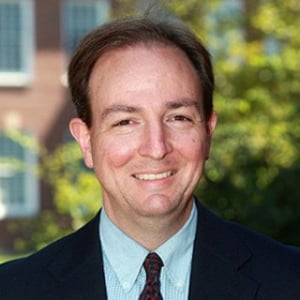
Political Science, Professor and Department Chair, University of Nebraska Omaha
Carson Holloway is Department Chair and Professor of Political Science at the University of Nebraska, Omaha and a Washington Fellow in the Claremont Institute’s Center for the American Way of Life. He is the author most recently of No Liberty to Libel: The Constitutional Case Against New York Times v. Sullivan (Encounter Books, 2026). He is co-editor, with Bradford P. Wilson, of The Political Writings of Alexander Hamilton (Cambridge University Press, 2017) and The Political Writings of George Washington (Cambridge University Press, 2023). He has held visiting fellowships in Princeton University’s James Madison Program in American Ideals and Institutions and at the Heritage Foundation. His scholarly articles have appeared in the Review of Politics, Interpretation, and Perspectives on Political Science, and he has written public commentary for The New Criterion, First Things, National Affairs, Public Discourse, National Review, Law and Liberty, The Federalist, the American Spectator, and the American Conservative.
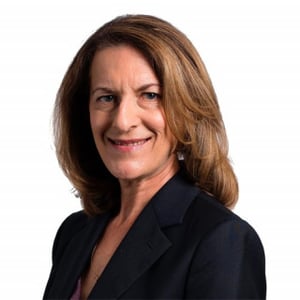
Partner, Thomas & LoCicero PL
Carol is the managing partner in TLo's Tampa office. She practices at the trial and appellate levels, handling litigation concerning defamation and privacy, the Public Records Act, the Government in the Sunshine Law, court access and cameras in the courtroom. She leads advocacy efforts on media issues, including cameras in the courtroom, and sealed court records.
Carol is a nationally-recognized media lawyer routinely sought after as a speaker on media issues at national and statewide conferences. She often leads statewide advocacy efforts on media issues, most recently involving access to Florida courts and Florida’s anti-SLAPP law. Carol regularly renders pre-and post-publication advice on investigative news stories. She handles issues concerning newsgathering and technology – including smartphones, social media and drones. Carol has litigated many cases resulting in published opinions. In addition to media law, Carol is experienced in marketing law, web law and intellectual property matters. She manages trademark portfolios, policing programs and litigation for sophisticated corporations.
Carol is the Immediate Past Chair for the First Amendment Foundation's Board of Trustees. She is a former board member of the Junior League of Tampa, former vice-chair of the Media Law Committee of The Florida Bar, and is a governing committee member of the ABA Forum on Communications Law. She has litigated capital habeas cases with other lawyers in the firm. Carol also serves as the Program Coordinator for End 68 Hours of Hunger – Tampa, a charity dedicated to eradicating hunger among school children. She is an active member of Hyde Park Presbyterian Church.
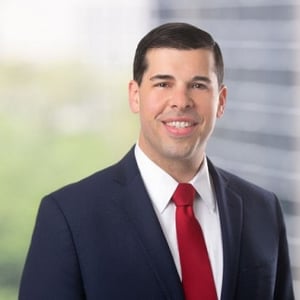
Partner, Boies Schiller Flexner LLP
Jesse, the former third-ranking official at the U.S. Department of Justice, helps clients with their most difficult litigation and regulatory issues─whether that means defending against an enforcement action, pursuing high-stakes litigation and appeals, navigating regulatory thickets at federal and state agencies, or crafting a comprehensive strategy to manage a crisis. He approaches these problems with the knowledge gained both from his broad private-practice experience and from having served at the highest levels of federal and state government.
Jesse has experience across a range of substantive and regulatory areas. He has sued the federal government and has also been one of its top law-enforcement officials; he has represented states and has also navigated their regulatory agencies on behalf of clients; and he has represented companies in business disputes, both as defendants and plaintiffs.
Before joining the firm, Jesse was the Acting Associate Attorney General at the United States Department of Justice. In that role, he oversaw the civil and criminal work of the Antitrust, Civil, Civil Rights, Environment and Natural Resources, and Tax Divisions. During Jesse’s tenure, the Associate’s office closely managed the Department’s most significant litigation, including matters involving large financial institutions, healthcare companies, automakers, energy companies, and state and local governments. In addition, Jesse served as Chair of DOJ’s Regulatory Reform Task Force and Vice Chair of DOJ’s Task Force on Market Integrity and Consumer Fraud. Jesse regularly provided legal and strategic advice to the highest-level decision makers in the federal government, including the Attorney General and Deputy Attorney General, general counsels across the spectrum of federal agencies, and White House officials.
Jesse served for three years as the secretary of Florida’s labor, economic-development, and land-use agency, the Florida Department of Economic Opportunity. Before that, he served as Governor (now Senator) Rick Scott’s general counsel.
Jesse maintains offices in both Washington D.C. and Florida. From Washington, he focuses on federal litigation and crisis management. In Florida, in addition to federal litigation, Jesse employs his knowledge of state government and regulation to help clients in courts across the state, from trial through the Florida Supreme Court.
Jesse currently serves on the Florida Supreme Court Judicial Nominating Commission, the body that provides the governor with nominees for appointment to the Florida Supreme Court. Jesse is also a fellow at the Center for the Study of the Administrative State at the Scalia Law School at George Mason University, where he writes and speaks about administrative law.
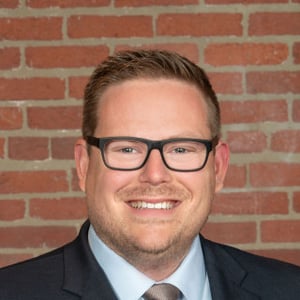
Counsel, Clare Locke
Jered is an experienced litigator relied upon by his clients to deliver practical and exacting legal advice guided by sound business judgment. He has spent his career representing clients ranging from Fortune 500 companies to controversial high-profile figures in sensitive and sometimes existential crises requiring extraordinary discretion.
Prior to joining Clare Locke, Jered was the chief legal officer of media non-profit Project Veritas, through which he managed a team of lawyers working on reputational risk. During his time at Veritas, Jered and his team obtained over five dozen corrections and retractions and avoided countless more inaccurate articles. Jered also oversaw a portfolio of defamation lawsuits, including Project Veritas’ lawsuit against The New York Times in which Clare Locke defeated The Times’ motion to dismiss – the first defamation case to survive New York’s newly-expanded anti-SLAPP law.
Jered has successfully represented clients in litigation and appeals in federal and state courts across the country. Throughout his career, Jered has handled a variety of matters, including media liability, fraud and deceptive trade practices, financial services, construction and real estate, bankruptcy, and harassment. Jered served as lead trial counsel in securing one of 2019’s top 50 highest bench awards in the United States in a real estate dispute, and in obtaining a first-of-its-kind national injunction and receivership over a fraudster leading to federal incarceration and a permanent restraining order.
Research Scholar in Law and Executive Director, Center for Academic Freedom and Free Speech, Yale Law School
Joe Cohn is a research scholar in law at Yale Law school and the executive director of the Center for Academic Freedom and Free Speech (CAFFS).
Cohn has served as a staff attorney at the AIDS Law Project of Pennsylvania, a staff attorney for the Court of Appeals for the 3rd Circuit, an adjunct professor of law at the University of Pennsylvania Law School, where he supervised law students representing clients in litigation in state and federal courts, and as the interim legal director for ACLU affiliates in Nevada and Utah.
A majority of Cohn’s career has been dedicated to defending civil liberties on college campuses and free expression in society at large. As the Foundation for Individual Rights and Expression’s (FIRE’s) founding legislative and policy director, from 2012 to 2023, he testified on numerous occasions in legislatures across America and in Congress, drafted legislation on campus free speech, campus due process, and academic freedom that has been enacted in states across the country. Immediately before joining CAFFS, Cohn advocated for open inquiry, viewpoint diversity, and constructive disagreement in higher education as Heterodox Academy’s director of policy.
Cohn writes extensively on civil liberties, with articles published in a wide array of media outlets, including the Wall Street Journal, the Washington Post, Newsweek, the Hill, the New York Daily News, the Chicago Tribune, the Las Vegas Review Journal, the Minnesota Star Tribune, the Chronicle of Higher Education, Inside Higher Ed, and the Volokh Conspiracy.
He earned his bachelor of arts from the University of Nevada at Las Vegas in 2000. He is a 2004 graduate of the University of Pennsylvania Carey School of Law and the Fels Institute of Government Administration, where he earned his J.D. and M.A. in Government Administration.
Political Science, Professor and Department Chair, University of Nebraska Omaha
Carson Holloway is Department Chair and Professor of Political Science at the University of Nebraska, Omaha and a Washington Fellow in the Claremont Institute’s Center for the American Way of Life. He is the author most recently of No Liberty to Libel: The Constitutional Case Against New York Times v. Sullivan (Encounter Books, 2026). He is co-editor, with Bradford P. Wilson, of The Political Writings of Alexander Hamilton (Cambridge University Press, 2017) and The Political Writings of George Washington (Cambridge University Press, 2023). He has held visiting fellowships in Princeton University’s James Madison Program in American Ideals and Institutions and at the Heritage Foundation. His scholarly articles have appeared in the Review of Politics, Interpretation, and Perspectives on Political Science, and he has written public commentary for The New Criterion, First Things, National Affairs, Public Discourse, National Review, Law and Liberty, The Federalist, the American Spectator, and the American Conservative.
Partner, Thomas & LoCicero PL
Carol is the managing partner in TLo's Tampa office. She practices at the trial and appellate levels, handling litigation concerning defamation and privacy, the Public Records Act, the Government in the Sunshine Law, court access and cameras in the courtroom. She leads advocacy efforts on media issues, including cameras in the courtroom, and sealed court records.
Carol is a nationally-recognized media lawyer routinely sought after as a speaker on media issues at national and statewide conferences. She often leads statewide advocacy efforts on media issues, most recently involving access to Florida courts and Florida’s anti-SLAPP law. Carol regularly renders pre-and post-publication advice on investigative news stories. She handles issues concerning newsgathering and technology – including smartphones, social media and drones. Carol has litigated many cases resulting in published opinions. In addition to media law, Carol is experienced in marketing law, web law and intellectual property matters. She manages trademark portfolios, policing programs and litigation for sophisticated corporations.
Carol is the Immediate Past Chair for the First Amendment Foundation's Board of Trustees. She is a former board member of the Junior League of Tampa, former vice-chair of the Media Law Committee of The Florida Bar, and is a governing committee member of the ABA Forum on Communications Law. She has litigated capital habeas cases with other lawyers in the firm. Carol also serves as the Program Coordinator for End 68 Hours of Hunger – Tampa, a charity dedicated to eradicating hunger among school children. She is an active member of Hyde Park Presbyterian Church.
Partner, Boies Schiller Flexner LLP
Jesse, the former third-ranking official at the U.S. Department of Justice, helps clients with their most difficult litigation and regulatory issues─whether that means defending against an enforcement action, pursuing high-stakes litigation and appeals, navigating regulatory thickets at federal and state agencies, or crafting a comprehensive strategy to manage a crisis. He approaches these problems with the knowledge gained both from his broad private-practice experience and from having served at the highest levels of federal and state government.
Jesse has experience across a range of substantive and regulatory areas. He has sued the federal government and has also been one of its top law-enforcement officials; he has represented states and has also navigated their regulatory agencies on behalf of clients; and he has represented companies in business disputes, both as defendants and plaintiffs.
Before joining the firm, Jesse was the Acting Associate Attorney General at the United States Department of Justice. In that role, he oversaw the civil and criminal work of the Antitrust, Civil, Civil Rights, Environment and Natural Resources, and Tax Divisions. During Jesse’s tenure, the Associate’s office closely managed the Department’s most significant litigation, including matters involving large financial institutions, healthcare companies, automakers, energy companies, and state and local governments. In addition, Jesse served as Chair of DOJ’s Regulatory Reform Task Force and Vice Chair of DOJ’s Task Force on Market Integrity and Consumer Fraud. Jesse regularly provided legal and strategic advice to the highest-level decision makers in the federal government, including the Attorney General and Deputy Attorney General, general counsels across the spectrum of federal agencies, and White House officials.
Jesse served for three years as the secretary of Florida’s labor, economic-development, and land-use agency, the Florida Department of Economic Opportunity. Before that, he served as Governor (now Senator) Rick Scott’s general counsel.
Jesse maintains offices in both Washington D.C. and Florida. From Washington, he focuses on federal litigation and crisis management. In Florida, in addition to federal litigation, Jesse employs his knowledge of state government and regulation to help clients in courts across the state, from trial through the Florida Supreme Court.
Jesse currently serves on the Florida Supreme Court Judicial Nominating Commission, the body that provides the governor with nominees for appointment to the Florida Supreme Court. Jesse is also a fellow at the Center for the Study of the Administrative State at the Scalia Law School at George Mason University, where he writes and speaks about administrative law.
Counsel, Clare Locke
Jered is an experienced litigator relied upon by his clients to deliver practical and exacting legal advice guided by sound business judgment. He has spent his career representing clients ranging from Fortune 500 companies to controversial high-profile figures in sensitive and sometimes existential crises requiring extraordinary discretion.
Prior to joining Clare Locke, Jered was the chief legal officer of media non-profit Project Veritas, through which he managed a team of lawyers working on reputational risk. During his time at Veritas, Jered and his team obtained over five dozen corrections and retractions and avoided countless more inaccurate articles. Jered also oversaw a portfolio of defamation lawsuits, including Project Veritas’ lawsuit against The New York Times in which Clare Locke defeated The Times’ motion to dismiss – the first defamation case to survive New York’s newly-expanded anti-SLAPP law.
Jered has successfully represented clients in litigation and appeals in federal and state courts across the country. Throughout his career, Jered has handled a variety of matters, including media liability, fraud and deceptive trade practices, financial services, construction and real estate, bankruptcy, and harassment. Jered served as lead trial counsel in securing one of 2019’s top 50 highest bench awards in the United States in a real estate dispute, and in obtaining a first-of-its-kind national injunction and receivership over a fraudster leading to federal incarceration and a permanent restraining order.
Professor, School of Civic Leadership, University of Texas, Austin
Yonatan Green, an Israeli-American attorney, is a Professor at the School of Civic Leadership at the University of Texas, Austin, where he also serves as Director of The Ackerman Program on Jewish and Western Civilization. He is the author of the acclaimed book Rogue Justice: The Rise of Judicial Supremacy in Israel (Academica Press, 2025). He was previously a Fellow at the Georgetown University Center for the Constitution. Yonatan is co-founder and former Executive Director of the Jerusalem-based Israel Law & Liberty Forum, a project of the Tikvah Fund inspired by the Federalist Society. He holds a degree in Law and Communications from the Hebrew University of Jerusalem.
Associate Professor of Government, Van Andel Graduate School of Government, Hillsdale College in Washington, DC
Bradley C.S. Watson is Associate Professor of Government at the Van Andel Graduate School of Government of Hillsdale College in Washington, DC. Professor Watson’s books include Progressivism: The Strange History of a Radical Idea (Notre Dame, 2022/2020), Progressive Challenges to the American Constitution: A New Republic (Cambridge, 2020/2017), and Living Constitution, Dying Faith: Progressivism and the New Science of Jurisprudence (ISI, 2020/2009).

Tammy McCutchen is a leading authority on federal and state wage-hour laws and prevailing wage laws. She counsels businesses on wage-hour compliance, including conducting internal audits on independent contractor status, overtime exemptions, and other pay practices. She also represents employers during investigations by the U.S. Department of Labor and serves as an expert witness in wage-hour class actions. She was a founding officer of ComplianceHR, a law and technology company, where she created AI-based applications to evaluate independent contractor and overtime exempt status.
Ms. McCutchen served as Administrator of the U.S. Department of Labor’s Wage and Hour Division, appointed by President Bush and confirmed by the Senate in 2001. She was the primary architect of the 2004 revisions to the overtime exemption regulations, the first major changes to the regulations in 55 years.
Before joining DOL, she was senior counsel for the Hershey Company in Hershey, Pennsylvania.
Ms. McCutchen has been a volunteer leader of the Federalist Society since 1989. She served in leadership roles for the Northwestern Student Chapter and Chicago Lawyers Chapter. She currently serves in leadership for the Labor & Employment Practice Group, the Regulatory Transparency Project, and the Knoxville, TN Lawyers Chapter. She served on the Editorial Advisory Board of Law360, the Labor Committee of the U.S. Chamber of Commerce, the Small Business Legal Advisory Board of the National Federation of Independent Business, and a Policy Fellow at the ACU Foundation.
Ms. McCutchen is a graduate of Western Illinois University and Northwestern University School of Law. She clerked for the Hon. Daniel Manion on the U.S. Court of Appeals for the Seventh Circuit.
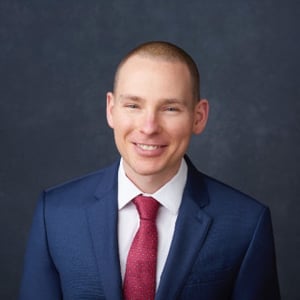
Shareholder & Co-Chair of the Workplace Policy Institute, Littler Mendelson P.C.
Alexander T. MacDonald advises employers on all aspects of the employment and labor landscape, focusing on emerging legislation and regulation. He has extensive experience advising businesses on worker classification, arbitration, the administrative and regulatory process, and the future of work. He frequently writes, publishes, and speaks on these subjects. His work has been cited by scholars and appellate courts. He is a recognized voice for the management perspective.
Alexander is a co-chair of the Workplace Policy Institute (WPI) team. With WPI, he advises employers on legislative, administrative, and regulatory developments at the state and federal level. He advocates for employers in the regulatory and administrative process. He also helps employers protect their businesses by understanding and anticipating cutting-edge legal developments.
Alexander also has extensive experience in traditional labor law. He represents management in all aspects of labor-management relations, including unfair labor practice charges, grievance arbitrations, representation elections, contract negotiations, and related litigation, including litigation in the U.S. courts of appeals.
Before joining Littler, Alexander served as the director, future of work, for a major technology company. He also worked in a national labor and employment law firm and a major public-sector general counsel’s office. He was a law clerk to the senior judges in the District of Columbia Court of Appeals.
He is also a veteran of the U.S. Air Force. He served in Operations Enduring Freedom and Iraqi Freedom. In law school, he graduated first in his class

Topics
School Policies Hiding Students’ Gender Identities Face Different Legal Fates
In the United States, approximately 1,044 school districts (impacting more than 10 million students) have...
Topics
The Major Questions Doctrine Is Not About Delegation, but Usurpation—And That Matters
This post was originally published at the Yale Journal on Regulation’s Notice & Comment blog....
Topics
New Guidance Documents from the Department of Education and Department of Justice Address Race-Based Decision-Making by Schools
In June 2023, the U.S. Supreme Court announced its decisions in SFFA v. Harvard and...
Panel I: New York Times v. Sullivan
Joe Cohn, Carson Holloway, Carol Jean Locicero, Jesse Panuccio, Jered Ede
In 1964, the U.S. Supreme Court issued its opinion in New York Times v. Sullivan...
Panel I: New York Times v. Sullivan
Joe Cohn, Carson Holloway, Carol Jean Locicero, Jesse Panuccio, Jered Ede
In 1964, the U.S. Supreme Court issued its opinion in New York Times v. Sullivan...
The Peculiar Case of the Israeli Legal System
Yonatan Green
The Israeli legal system often draws a great deal of confused and excited attention from...
What Is Conservative Constitutionalism? A Fractured History Reveals an Uncertain Path Forward
Bradley C. S. Watson
A review of Johnathan O’Neill, Conservative Thought and American Constitutionalism Since the New Deal (Johns Hopkins...
Topics
A Federal Gestational Age Abortion Ban is the Wrong (and Unconstitutional) Hill for the Pro-Life Movement to Die On
In Dobbs v. Jackson Women’s Health Organization, decided in June 2022, the Supreme Court overruled...
Topics
Is the Administrative State Inevitable? Loper, Chevron, and the “Abnegation” of Law
Last month, the Supreme Court granted cert in Loper Bright Enterprises v. Raimondo. Though the case...
The War on Independent Work: Why Some Regulators Want to Abolish Independent Contracting, Why They Keep Failing, & Why We Should Declare Peace
Tammy Dee McCutchen, Alexander T. MacDonald
There is a war on independent contracting. Martial metaphors are often overworked in the law....