
Founder, Original Jurisdiction
David Lat is a lawyer turned writer. He publishes Original Jurisdiction, a newsletter on Substack about law and legal affairs, and he writes for newspapers and magazines, including the New York Times, Washington Post, and Wall Street Journal. Prior to launching Original Jurisdiction, David founded Above the Law, one of the nation's most widely read legal news websites, and Underneath Their Robes, a popular blog about federal judges that he wrote under a pseudonym. He is also the author of a novel set in the world of the federal courts, Supreme Ambitions. Before entering the media world, David worked as a federal prosecutor in Newark, New Jersey; a litigation associate at Wachtell, Lipton, Rosen & Katz, in New York; and a law clerk to Judge Diarmuid F. O’Scannlain of the U.S. Court of Appeals for the Ninth Circuit. David graduated from Harvard College and Yale Law School, where he served as an editor of the Yale Law Journal.
Associate Justice, Alabama Supreme Court
James L. “Jay” Mitchell was elected to the Alabama Supreme Court in 2018.
Prior to serving on the Supreme Court, Justice Mitchell was an accomplished litigation attorney with Maynard, Cooper & Gale, P.C. During his time in private practice, he tried a number of complex cases to verdict, successfully handled appeals, and obtained favorable settlements for clients. He was rated as one of the top litigators in the United States and Alabama, and received the highest possible rating for professional ethics. He also served on Maynard, Cooper & Gale’s executive committee, helping to lead strategic and growth initiatives for the firm.
Justice Mitchell was born in Mobile and grew up in South Alabama and in Homewood. He is a graduate of Homewood High School and received his Bachelor of Arts with honors from Birmingham-Southern College, where he graduated Phi Beta Kappa, served as president of the student body, and played forward on the school’s 1995 national championship basketball team. He holds a Master of Arts from University College in Dublin, Ireland, and received his law degree from the University of Virginia School of Law.
Justice Mitchell has long been active in organizations that benefit the community and enhance the legal profession. In addition to his service with other organizations, he is a member of the Rotary Club of Birmingham and serves on the board of directors at Cornerstone School, an inner city Christian school. He is also a member of the Federalist Society.
Justice Mitchell and his wife, Elizabeth, have been married for 20 years and have four children. They reside in Homewood and are longtime members of Church of the Highlands.
President, JCN
Carrie Campbell Severino is the president of the JCN, and co-author with Mollie Hemingway of the bestselling book Justice on Trial: The Kavanaugh Confirmation and the Future of the Court. As a go-to expert on the confirmation process, Mrs. Severino has been extensively quoted in the media. She regularly appears on television, including FOX, CNN, MSNBC, C-SPAN, and ABC’s This Week.
Severino writes and speaks on a wide range of judicial issues, including the constitutional limits on government, the federal nomination process, and state judicial selection. She has testified before Congress on constitutional questions and briefed Senators on judicial nominations, and regularly files briefs in high-profile Supreme Court cases. She was a law clerk to Supreme Court Justice Clarence Thomas and to Judge David B. Sentelle of the U.S. Court of Appeals for the D.C. Circuit, and is a graduate of Harvard Law School (J.D.), Duke University (B.A., Biology), and Michigan State University (M.A., Linguistics).

Judge, United States Court of Appeals, Eighth Circuit
David Stras became a judge on the United States Court of Appeals for the Eighth Circuit on January 31, 2018. Before serving on the Eighth Circuit, Judge Stras was an Associate Justice of the Minnesota Supreme Court, a position he occupied from July 1, 2010 until his appointment to the Eighth Circuit.
Prior to becoming a judge, Stras was a member of the faculty of the University of Minnesota Law School from 2004 through 2010. He taught and wrote in the areas of federal courts and jurisdiction, constitutional law, criminal law, and law and politics.
Judge Stras received his Bachelor of Arts degree, with highest distinction, in 1995 and his Master of Business Administration in 1999, both from the University of Kansas. He also received his law degree from the University of Kansas School of Law in 1999, where he served as Editor-in-Chief of the Criminal Procedure Edition of the Kansas Law Review.
Following law school, Stras clerked for The Honorable Melvin Brunetti of the United States Court of Appeals for the Ninth Circuit and then for The Honorable J. Michael Luttig of the United States Court of Appeals for the Fourth Circuit.
From 2001 to 2002, he practiced white-collar criminal and appellate litigation with the Washington, D.C., office of Sidley Austin Brown & Wood. Following his year in practice, he clerked for The Honorable Clarence Thomas of the Supreme Court of the United States.
Chief Judge, United States Court of Appeals, Fifth Circuit
Jennifer Walker Elrod is the Chief Judge of the United States Court of Appeals for the Fifth Circuit. She was nominated to the Fifth Circuit in 2007, and she served as a Circuit Judge on the court until assuming the role of Chief Judge in October 2024. Prior to serving as a Circuit Judge, Chief Judge Elrod was appointed and then twice elected Judge of the 190th District Court of Harris County, Texas, where she spent over five years presiding over more than 200 jury and non-jury trials.
Chief Judge Elrod graduated cum laude from Harvard Law School, where she was an active member of the Harvard Federalist Society, an Ames Moot Court finalist, and a Senior Editor of the Harvard Journal of Law & Public Policy. She clerked for the Honorable Sim Lake in the Southern District of Texas. Before serving as a judge, Chief Judge Elrod worked in private practice, focusing on civil litigation, antitrust, and employment matters.
She has been repeatedly recognized for her work as a jurist, as well as for her pro bono work and contributions to the community. She has been named the 2022 Texas Review of Law & Politics’ Jurist of the Year, the 2018 Harvard Federalist Society’s Alumni of the Year, the 2016–17 Texas Association of Civil Trial and Appellate Specialists’ Appellate Judge of the Year, and the 2008 Mexican-American Bar Association of Texas’s Judge of the Year.
Chief Judge Elrod is actively engaged in the academic and legal communities. Chief Judge Elrod currently serves on the Board of Directors and as the Jurist-in-Residence at the South Texas College of Law, where she teaches civil procedure and First Amendment law. She is also a member of the American Law Institute and of the Board of Advisors for the Harvard Journal of Law & Public Policy, and she is a former member of the Board of Regents of her alma mater, Baylor University, and the Board of Visitors at Brigham Young University Law School. She previously served as the Chair of the Codes of Conduct Committee for the Judicial Conference of the United States. She has also served as the M.D. Anderson Visiting Public Service Professor at the Texas Tech University School of Law and as Jurist-in-Residence at Brigham Young University Law School, and she has taught legal writing at the University of Houston Law Center. She presented the Lewis F. Powell, Jr. Distinguished Lecture at the Washington and Lee University School of Law and is a frequent speaker on the topics of trial and appellate procedure, ethics, employment law, and constitutional law. Chief Judge Elrod also serves on the board of the Garland R. Walker Inn of Court, and co-produces an annual musical CLE, for which her pupilage group has won multiple national awards.
Chief Judge Elrod’s publications include: Trial by Siri: AI Comes to the Courtroom; Don’t Mess with Texas Judges: In Praise of the State Judiciary; For Good: Enriching Your Practice and Your Life Through Pro Bono and Community Service; Is the Jury Still Out?: A Case for the Continued Viability of the American Jury; and W(h)ither the Jury? The Diminishing Role of the Jury Trial in our Legal System.
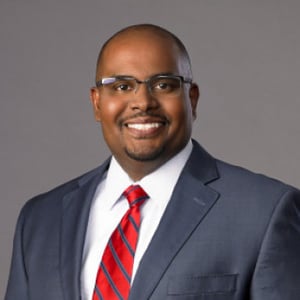
Principal, Kyle George Law Group
Kyle George previously served as Nevada’s First Assistant Attorney General under Attorney General Aaron Ford, where he supervised over 100 attorneys across 9 divisions responsible for legal representation of Nevada’s State Agencies, Boards, and Commissions, as well as civil litigation and regulatory and administrative proceedings.
George has served as General Counsel to the Nevada Governor, counsel and policy advisor to two Members of Congress, a Chief Deputy District Attorney, and as a litigator in private practice. He currently advises clients on state and federal regulatory matters, and government affairs and relations.
George earned his J.D. from Georgetown University Law Center, and he holds bachelor’s and master’s degrees in Chemistry from the University of Nevada, Las Vegas. While at UNLV, he was active in student government and served as President of the Graduate and Professional Student Association.
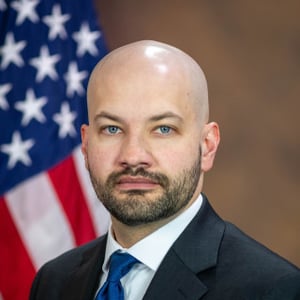
Deputy Assistant Attorney General, U.S. Department of Justice
Eric Hamilton serves as the Deputy Assistant Attorney General for the Federal Programs Branch of the Civil Division. He previously served as the Solicitor General for the State of Nebraska and as an Assistant Solicitor General in the Texas Attorney General’s Office. During the first Trump Administration, Eric worked as an Associate Counsel to the President in the Office of White House Counsel. Earlier in his career, he was in private practice in Washington, D.C. and clerked for Judge Thomas M. Hardiman on the U.S. Court of Appeals for the Third Circuit.
Eric is a graduate of Stanford Law School, where he served on the Stanford Law Review. He holds an undergraduate degree from the University of Nebraska-Lincoln.

Professor of Law, University of Michigan Law School
Christopher J. Walker is a Professor of Law at the University of Michigan. Prior to joining Michigan law faculty in 2022, he spent a decade teaching at The Ohio State University Moritz College of Law. He previously clerked for Justice Anthony Kennedy of the U.S. Supreme Court, worked on the Civil Appellate Staff at the U.S. Department of Justice, and served on the Senate Judiciary Committee staff for the Gorsuch Supreme Court confirmation. Professor Walker’s research focuses on administrative law, regulation, and law and policy at the agency level. Outside the law school, he chaired the American Bar Association’s Section of Administrative Law and Regulatory Practice in 2020-21 and served as one of forty Public Members of the Administrative Conference of the United States from 2016-2022, and he continues to serve in both organizations in various capacities. He also works of counsel at the U.S. Chamber Litigation Center. In 2022, he received the Federalist Society’s Joseph Story Award.
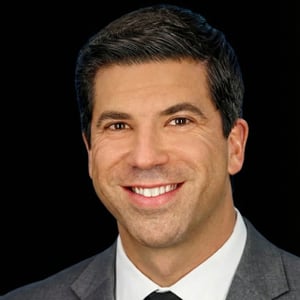
Judge, United States District Court, Southern District of Florida
On April 4, 2019, Judge Altman was confirmed to a seat on the U.S. District Court for the Southern District of Florida. At 36, he became the youngest federal district court judge in the country—and the youngest federal judge ever appointed in the Southern District of Florida.
Judge Altman received a BA from Columbia University, where he played quarterback on the football team and pitched for the baseball team—earning All-Ivy honors. Judge Altman received his JD from the Yale Law School, where he was projects editor of the Yale Law Journal. After law school, the Judge clerked on the 11th Circuit Court of Appeals for the Honorable Stanley Marcus.
Judge Altman then became a federal prosecutor at the U.S. Attorney’s Office in Miami, where he twice received the Director of the Executive Office of U.S. Attorneys’ Award for Superior Performance by a federal prosecutor. In 2013, Judge Altman was named “Federal Prosecutor of the Year” by the Miami-Dade Chiefs of Police and the Law Enforcement Officers’ Charitable Foundation.
In 2014, Judge Altman became a partner at the Miami law firm of Podhurst Orseck, where he represented the victims of airplane crashes and bank fraud conspiracies.
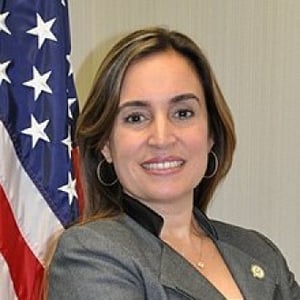
Chief Judge, Florida Eleventh Judicial Circuit
Chief Judge Ariana Fajardo Orshan was appointed to the Circuit Court of the Eleventh Judicial Circuit of Florida in April 2012 and was sworn in as the Court's Chief Judge in July 2025. She has also served as a judge in the Criminal Division. Prior to her appointment, Judge Fajardo Orshan was a partner in her law firm where she specialized in the area of Family and Matrimonial Law. Judge Fajardo Orshan began her legal career as an Assistant State Attorney in Miami-Dade County and also worked in the area of civil litigation with the firm of Wilson Elser Moskowitz Edelman & Dicker LLP.
Throughout her legal and judicial career, Judge Fajardo Orshan has been involved with numerous civic and professional organizations, and in many, she assumed leadership positions. She continues to remain involved with Big Brothers Big Sisters, the Cuban American Bar Association, the Dade County Bar Association, the Federalist Society and Kidside. As a member of the judiciary, Judge Fajardo Orshan is also involved with the Eleventh Judicial Circuit Professionalism Committee, the Florida Conference of Circuit Judges, the Florida Bar Family Law Rules Committee, and the Florida Supreme Court Steering Committee on Families and Children.
Judge Fajardo Orshan also enjoys grooming future lawyers as adjunct professor at Florida International University College of Law where she teaches Family Law.
Judge Fajardo Orshan has been a member of the Florida Bar since 1996 and is a member of the Federal Bar for the Southern District of Florida. Judge Fajardo Orshan graduated from Nova Southeastern University Shepard Broad Law Center and received a Bachelor's in Science degree from Florida International University.
Judge, United States District Court, Southern District of Florida
Rodolfo “Rudy” Armando Ruiz II is a District Judge of the United States District Court for the Southern District of Florida. Prior to his judicial commission on May 3, 2019, Ruiz was a Circuit Court Judge for the Eleventh Judicial Circuit of Florida from 2014 through 2019, and a Miami-Dade County Court Judge from 2012 through 2014. Ruiz also served as an Assistant County Attorney with the Miami-Dade County Attorney’s Office and an associate with White & Case LLP.
Ruiz received a Bachelor of Science in Economics from Duke University and earned his Juris Doctor from Georgetown University. After graduating from law school, he was a law clerk to the Honorable Federico A. Moreno of the United States District Court for the Southern District of Florida.
Managing Partner and Co-Founder, EducationCounsel
With extensive background in providing legal, policy, strategic planning, and advocacy services to educators throughout the country, Mr. Coleman focuses principally on issues of access, diversity, inclusion, and institutional quality in post-secondary education.
Mr. Coleman is a 1984 honors graduate of Duke University School of Law and a 1981 Phi Beta Kappa graduate of the University of Virginia. Mr. Coleman served as Deputy Assistant Secretary of the U.S. Department of Education’s Office for Civil Rights from June 1997 until January 2000, following his tenure as Senior Policy Advisor to the Assistant Secretary for Civil Rights. He has testified before the U.S. Senate and the U.S. Commission on Civil Rights; he has served as an adjunct professor at two law schools and at two graduate schools of education. He currently teaches at the USC Rossier School of Education.
He is a current member of GLSEN’s Board of Directors; a Board member of the National Council for State Authorization Reciprocity (NC-SARA); and a Board member of the Lab School of Washington, which serves students with learning differences. He is a past Chairperson of the Board of Directors for the Institute for Higher Education Policy. Mr. Coleman leads the legal and policy work of the College Board's Access and Diversity Collaborative that he helped establish in 2004, and has been a principal author of numerous amicus briefs filed in federal courts on issues associated with the educational benefits of student diversity and the consideration of race in admissions, as well as the rights of transgender students to a non-discriminatory school environments.
State District Judge, Austin, Texas
Cory Liu is a state district judge in Austin, Texas. He previously served as assistant general counsel to Texas Governor Greg Abbott. Mr. Liu clerked for Judge Andrew Oldham on the U.S. Court of Appeals for the Fifth Circuit and Judge Danny Boggs on the U.S. Court of Appeals for the Sixth Circuit. He was Editor-in-Chief of the Harvard Journal of Law & Public Policy and is a graduate of Harvard Law School and the University of Chicago.
Founder, Chairman, and CEO, Louis D. Brandeis Center for Human Rights Under Law
Hon. Kenneth L. Marcus is an internationally recognized expert in civil and human rights, as well as a leader in the fight against anti-Semitism on and off university campuses. He is the Founder, Chairman, and CEO of The Louis D. Brandeis Center for Human Rights Under Law, the leading civil rights legal organization fighting against anti-Semitism. The New York Times has called him “The Man Who Helped Redefine Campus Anti-Semitism.” He been described, in that paper, as “the single most effective and respected force” to combat anti-Semitism.
During his public service career, Marcus served as Assistant U.S. Secretary of Education for Civil Rights; Staff Director at the U.S. Commission on Civil Rights; and General Deputy Assistant U.S. Secretary of Housing and Urban Development for Fair Housing and Equal Opportunity.
In academia, he serves as Professorial Lecturer in Law at George Washington University. He formerly held the Lillie and Nathan Ackerman Chair in Equality and Justice in America at the City University of New York’s Bernard M. Baruch College, served as Visiting Research Professor of Political Science at Yeshiva University, and was a Board of Visitors member George Mason University and Distinguished Senior Fellow at that university’s law school. He is a member of the editorial board of the Journal of Contemporary Antisemitism and previously served as Associate Editor of the Journal for the Study of Anti-Semitism.
Marcus is also author of The Definition of Anti-Semitism (Oxford University Press) and Jewish Identity and Civil Rights in America (Cambridge University Press). He has published widely in academic journals as well as in more popular venues such as The Wall Street Journal, Washington Post, Newsweek, USA Today, and Politico. He is a graduate of Williams College and the University of California at Berkeley School of Law.
Earlier in his career, he was a litigation partner in two major law firms, where he conducted complex commercial and constitutional litigation. He also serves as Chairman emeritus of the Executive Committee of the Federalist Society for Law & Public Policy Civil Rights Practice Group.
General Counsel, Mountain States Legal Foundation
William E. Trachman is General Counsel for Mountain States Legal Foundation, where he protects the rights of individuals to live freely and securely under the U.S. Constitution. Previously, he was appointed to serve in the Department of Education as Deputy Assistant Secretary in the Office for Civil Rights. Prior to his appointment, he served as General Counsel to the Douglas County School District, where he helped litigate the fight for school choice in the school district. Presently, Mr. Trachman serves as Chair of the Colorado Federalist Society and the Vice Chair of the U.S. Commission on Civil Rights’ Colorado Advisory Board. He previously taught as an Adjunct Professor at the University of Denver, Sturm College of Law. He attended U.C. Berkeley for both undergraduate and law school, and then clerked for the Honorable Harris Hartz on the 10th Circuit Court of Appeals. Mr. Trachman is licensed in Colorado, California, and Washington, D.C.
Managing Partner, Boyden Gray PLLC
Michael Buschbacher is the managing partner of Boyden Gray PLLC. He represents public and private companies, trade associations, non-profits, and individuals in high-stakes litigation and administrative proceedings, with a particular focus on environmental and energy matters.
In addition to trial-level work, Mr. Buschbacher maintains an active appellate practice, both as merits counsel and as counsel for amici curiae. He has written amicus briefs quoted by the Seventh and Ninth Circuits. And his Supreme Court advocacy has been cited by The New Yorker, The New York Times, and E&E News. Mr. Buschbacher’s commentary on legal issues has been published in The Wall Street Journal, Newsweek, and The American Conservative.
Before joining the firm, Mr. Buschbacher served at the U.S. Department of Justice as counsel to the Assistant Attorney General for the Environment and Natural Resources Division. There, he advised senior Department leadership, served as the lead attorney on several lawsuits, and helped draft policy memoranda for the Department on the proper scope and procedure for environmental enforcement. Prior to serving in the government, Mr. Buschbacher was an associate in the D.C. office of Sidley Austin.
Mr. Buschbacher is a former clerk to Judge Alice M. Batchelder of the U.S. Court of Appeals for the Sixth Circuit and to Magistrate Judge Paul R. Cherry of the U.S. District Court for the Northern District of Indiana.
Mr. Buschbacher holds a B.A. in Music and Germanic Studies from Indiana University and a J.D., magna cum laude, from Notre Dame Law School.
2L, Notre Dame Law School
Managing Partner and Co-Founder, EducationCounsel
With extensive background in providing legal, policy, strategic planning, and advocacy services to educators throughout the country, Mr. Coleman focuses principally on issues of access, diversity, inclusion, and institutional quality in post-secondary education.
Mr. Coleman is a 1984 honors graduate of Duke University School of Law and a 1981 Phi Beta Kappa graduate of the University of Virginia. Mr. Coleman served as Deputy Assistant Secretary of the U.S. Department of Education’s Office for Civil Rights from June 1997 until January 2000, following his tenure as Senior Policy Advisor to the Assistant Secretary for Civil Rights. He has testified before the U.S. Senate and the U.S. Commission on Civil Rights; he has served as an adjunct professor at two law schools and at two graduate schools of education. He currently teaches at the USC Rossier School of Education.
He is a current member of GLSEN’s Board of Directors; a Board member of the National Council for State Authorization Reciprocity (NC-SARA); and a Board member of the Lab School of Washington, which serves students with learning differences. He is a past Chairperson of the Board of Directors for the Institute for Higher Education Policy. Mr. Coleman leads the legal and policy work of the College Board's Access and Diversity Collaborative that he helped establish in 2004, and has been a principal author of numerous amicus briefs filed in federal courts on issues associated with the educational benefits of student diversity and the consideration of race in admissions, as well as the rights of transgender students to a non-discriminatory school environments.
State District Judge, Austin, Texas
Cory Liu is a state district judge in Austin, Texas. He previously served as assistant general counsel to Texas Governor Greg Abbott. Mr. Liu clerked for Judge Andrew Oldham on the U.S. Court of Appeals for the Fifth Circuit and Judge Danny Boggs on the U.S. Court of Appeals for the Sixth Circuit. He was Editor-in-Chief of the Harvard Journal of Law & Public Policy and is a graduate of Harvard Law School and the University of Chicago.
Founder, Chairman, and CEO, Louis D. Brandeis Center for Human Rights Under Law
Hon. Kenneth L. Marcus is an internationally recognized expert in civil and human rights, as well as a leader in the fight against anti-Semitism on and off university campuses. He is the Founder, Chairman, and CEO of The Louis D. Brandeis Center for Human Rights Under Law, the leading civil rights legal organization fighting against anti-Semitism. The New York Times has called him “The Man Who Helped Redefine Campus Anti-Semitism.” He been described, in that paper, as “the single most effective and respected force” to combat anti-Semitism.
During his public service career, Marcus served as Assistant U.S. Secretary of Education for Civil Rights; Staff Director at the U.S. Commission on Civil Rights; and General Deputy Assistant U.S. Secretary of Housing and Urban Development for Fair Housing and Equal Opportunity.
In academia, he serves as Professorial Lecturer in Law at George Washington University. He formerly held the Lillie and Nathan Ackerman Chair in Equality and Justice in America at the City University of New York’s Bernard M. Baruch College, served as Visiting Research Professor of Political Science at Yeshiva University, and was a Board of Visitors member George Mason University and Distinguished Senior Fellow at that university’s law school. He is a member of the editorial board of the Journal of Contemporary Antisemitism and previously served as Associate Editor of the Journal for the Study of Anti-Semitism.
Marcus is also author of The Definition of Anti-Semitism (Oxford University Press) and Jewish Identity and Civil Rights in America (Cambridge University Press). He has published widely in academic journals as well as in more popular venues such as The Wall Street Journal, Washington Post, Newsweek, USA Today, and Politico. He is a graduate of Williams College and the University of California at Berkeley School of Law.
Earlier in his career, he was a litigation partner in two major law firms, where he conducted complex commercial and constitutional litigation. He also serves as Chairman emeritus of the Executive Committee of the Federalist Society for Law & Public Policy Civil Rights Practice Group.
General Counsel, Mountain States Legal Foundation
William E. Trachman is General Counsel for Mountain States Legal Foundation, where he protects the rights of individuals to live freely and securely under the U.S. Constitution. Previously, he was appointed to serve in the Department of Education as Deputy Assistant Secretary in the Office for Civil Rights. Prior to his appointment, he served as General Counsel to the Douglas County School District, where he helped litigate the fight for school choice in the school district. Presently, Mr. Trachman serves as Chair of the Colorado Federalist Society and the Vice Chair of the U.S. Commission on Civil Rights’ Colorado Advisory Board. He previously taught as an Adjunct Professor at the University of Denver, Sturm College of Law. He attended U.C. Berkeley for both undergraduate and law school, and then clerked for the Honorable Harris Hartz on the 10th Circuit Court of Appeals. Mr. Trachman is licensed in Colorado, California, and Washington, D.C.
Managing Partner and Co-Founder, EducationCounsel
With extensive background in providing legal, policy, strategic planning, and advocacy services to educators throughout the country, Mr. Coleman focuses principally on issues of access, diversity, inclusion, and institutional quality in post-secondary education.
Mr. Coleman is a 1984 honors graduate of Duke University School of Law and a 1981 Phi Beta Kappa graduate of the University of Virginia. Mr. Coleman served as Deputy Assistant Secretary of the U.S. Department of Education’s Office for Civil Rights from June 1997 until January 2000, following his tenure as Senior Policy Advisor to the Assistant Secretary for Civil Rights. He has testified before the U.S. Senate and the U.S. Commission on Civil Rights; he has served as an adjunct professor at two law schools and at two graduate schools of education. He currently teaches at the USC Rossier School of Education.
He is a current member of GLSEN’s Board of Directors; a Board member of the National Council for State Authorization Reciprocity (NC-SARA); and a Board member of the Lab School of Washington, which serves students with learning differences. He is a past Chairperson of the Board of Directors for the Institute for Higher Education Policy. Mr. Coleman leads the legal and policy work of the College Board's Access and Diversity Collaborative that he helped establish in 2004, and has been a principal author of numerous amicus briefs filed in federal courts on issues associated with the educational benefits of student diversity and the consideration of race in admissions, as well as the rights of transgender students to a non-discriminatory school environments.
State District Judge, Austin, Texas
Cory Liu is a state district judge in Austin, Texas. He previously served as assistant general counsel to Texas Governor Greg Abbott. Mr. Liu clerked for Judge Andrew Oldham on the U.S. Court of Appeals for the Fifth Circuit and Judge Danny Boggs on the U.S. Court of Appeals for the Sixth Circuit. He was Editor-in-Chief of the Harvard Journal of Law & Public Policy and is a graduate of Harvard Law School and the University of Chicago.
Founder, Chairman, and CEO, Louis D. Brandeis Center for Human Rights Under Law
Hon. Kenneth L. Marcus is an internationally recognized expert in civil and human rights, as well as a leader in the fight against anti-Semitism on and off university campuses. He is the Founder, Chairman, and CEO of The Louis D. Brandeis Center for Human Rights Under Law, the leading civil rights legal organization fighting against anti-Semitism. The New York Times has called him “The Man Who Helped Redefine Campus Anti-Semitism.” He been described, in that paper, as “the single most effective and respected force” to combat anti-Semitism.
During his public service career, Marcus served as Assistant U.S. Secretary of Education for Civil Rights; Staff Director at the U.S. Commission on Civil Rights; and General Deputy Assistant U.S. Secretary of Housing and Urban Development for Fair Housing and Equal Opportunity.
In academia, he serves as Professorial Lecturer in Law at George Washington University. He formerly held the Lillie and Nathan Ackerman Chair in Equality and Justice in America at the City University of New York’s Bernard M. Baruch College, served as Visiting Research Professor of Political Science at Yeshiva University, and was a Board of Visitors member George Mason University and Distinguished Senior Fellow at that university’s law school. He is a member of the editorial board of the Journal of Contemporary Antisemitism and previously served as Associate Editor of the Journal for the Study of Anti-Semitism.
Marcus is also author of The Definition of Anti-Semitism (Oxford University Press) and Jewish Identity and Civil Rights in America (Cambridge University Press). He has published widely in academic journals as well as in more popular venues such as The Wall Street Journal, Washington Post, Newsweek, USA Today, and Politico. He is a graduate of Williams College and the University of California at Berkeley School of Law.
Earlier in his career, he was a litigation partner in two major law firms, where he conducted complex commercial and constitutional litigation. He also serves as Chairman emeritus of the Executive Committee of the Federalist Society for Law & Public Policy Civil Rights Practice Group.
General Counsel, Mountain States Legal Foundation
William E. Trachman is General Counsel for Mountain States Legal Foundation, where he protects the rights of individuals to live freely and securely under the U.S. Constitution. Previously, he was appointed to serve in the Department of Education as Deputy Assistant Secretary in the Office for Civil Rights. Prior to his appointment, he served as General Counsel to the Douglas County School District, where he helped litigate the fight for school choice in the school district. Presently, Mr. Trachman serves as Chair of the Colorado Federalist Society and the Vice Chair of the U.S. Commission on Civil Rights’ Colorado Advisory Board. He previously taught as an Adjunct Professor at the University of Denver, Sturm College of Law. He attended U.C. Berkeley for both undergraduate and law school, and then clerked for the Honorable Harris Hartz on the 10th Circuit Court of Appeals. Mr. Trachman is licensed in Colorado, California, and Washington, D.C.
U.S. Attorney, Middle District of Tennessee, U.S. Department of Justice
Braden Boucek was sworn in on December 24, 2025, as the United States Attorney for the Middle District of Tennessee. Prior to becoming United States Attorney, Mr. Boucek served as the senior vice president of litigation at the Southeastern Legal Foundation having previously served as the vice president of legal affairs at the Beacon Center. Mr. Boucek has extensive experience as a prosecutor, starting his career at the Tennessee Attorney General’s Office before serving for two years as an Assistant District Attorney General in Williamson County. He was a federal prosecutor for ten years, first serving as an Assistant United States Attorney in the Western District of Tennessee from 2005 to 2011. From 2011 to 2015, Mr. Boucek was an Assistant United States Attorney in the Middle District of Tennessee, the district he now leads as the United States Attorney.

Professor, Cleveland State University College of Law
Professor Christa Laser comes to Cleveland Marshall after nearly a decade of practice experience as an intellectual property litigator at the law firms WilmerHale and Kirkland & Ellis LLP. She has deep expertise in patents, trademarks, copyrights, false advertising, pharmaceutical litigation and regulation, and technology law. She has represented leading life sciences and technology companies in all stages of trial and appellate matters and consulted on legislative changes to intellectual property laws.
Professor Laser's research focuses on intellectual property and innovation. Her patent law scholarship has been cited by numerous scholars, by judges of the U.S. Court of Appeals for the Federal Circuit, and in briefs to the U.S. Supreme Court. Her research envisions an intellectual property system that supports innovation, investment, and competition across all technology areas.
Professor Laser was the World Champion of the Lachs Space Law Moot Court Competition. Prior to law school, she worked as a scientific researcher, where her work studying protein dynamics of photosynthesis using genetically modified bacteria and laser spectroscopy was published in the prestigious journal Science.
Senior Associate, Intellectual Property Litigation, WilmerHale; Associate, Kirkland & Ellis LLP; judicial intern for Chief Judge Randall R. Rader, U.S. Court of Appeals for the Federal Circuit, and Judge Roger W. Titus, U.S. District Court for the District of Maryland; Scientific Researcher, The BioDesign Institute at Arizona State University, Department of BioOptical Nanotechnology.
J.D., The George Washington University Law School (World Champion, International & North American Lachs Space Law Moot Court Competition; Research Assistant, Professor Lawrence Cunningham; Notes Editor, American Intellectual Property Law Association Quarterly Journal); B.S., Arizona State University, Barrett Honors College (Beckman Scholar; Biochemistry Award).

Associate Attorney, Gibson, Dunn & Crutcher LLP
Laura Stanley is an associate in the Washington, D.C. office of Gibson, Dunn & Crutcher. She practices in the firm’s Litigation Department and is a member of the Environmental Litigation and Mass Tort Practice Group. Laura previously served as an economist at the U.S. Environmental Protection Agency where she developed regulations under the Resource Conservation and Recovery Act and the Comprehensive Environmental Response, Compensation, and Liability Act.
Laura graduated with high honors from The George Washington University Law School and was awarded Order of the Coif. Laura served as an Articles Editor of the George Washington Law Review, and she was awarded the ABA Gellhorn-Sargentich Award for the best student essay in administrative law. Laura received a Master of Arts degree in Economics from George Mason University and a Bachelor of Arts degree in Economics from James Madison University.
She previously served as a law clerk to the Honorable Ryan D. Nelson of the United States Court of Appeals for the Ninth Circuit and the Honorable Stephen S. Schwartz of the United States Court of Federal Claims.
She is admitted to practice law in the District of Columbia and before the United States Court of Appeals for the Ninth Circuit.
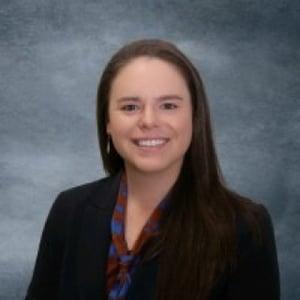
Senior Legal Fellow, Advancing American Freedom
Amy Swearer is a leading national expert on a wide range of public policy, legal, and constitutional issues, including the Second Amendment, criminal justice, and mental health policy. She has long been a respected conservative voice on gun policy and is routinely asked to testify before state and federal legislative bodies. Her work on birthright citizenship, meanwhile, has been featured extensively in litigation over the meaning of the Fourteenth Amendment’s Citizenship Clause.
Swearer was formerly a Senior Legal Fellow in the Edwin Meese III Center for Legal & Judicial Studies at the Heritage Foundation. At Heritage, she ran the Defensive Gun Use Database and was the primary author of the e-book “The Essential Second Amendment.” She was also a driving force behind the organization’s School Safety Initiative.
She was the 2022 recipient of the Heritage Foundation’s Joseph Shattan Award for “writing that presents conservative ideas in a powerful and compelling fashion to policymakers and the American people.” She was also named the Second Amendment Institute’s 2022 Gun Rights Champion.
Swearer received her law degree from the University of Nebraska College of Law and was a member of the Nebraska Law Review. She holds a B.S. in Criminology & Criminal Justice from the University of Nebraska, where she was a Chancellor’s Scholar and a goalkeeper on the women’s soccer team
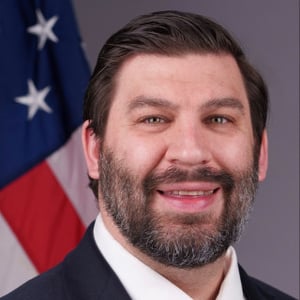
Deputy Counsel, the President
Gary currently is the Deputy Counsel to the President. He was previously a partner at the Dhillon Law Group and worked at the Department of the Interior and Federal Election Commission. He is a native of Virginia, and earned his B.A. and J.D. from the University of Virginia.

Originalist Perspectives on Ethics and the Supreme Court
2023 National Lawyers Convention
Washington, DCDo States Enjoy a Special Solicitude?
2023 National Lawyers Convention
Washington, DCTopics
Procedure in Practice: Culley v. Marshall and the Future of Civil Asset Forfeiture
Experts on both sides of the civil forfeiture debate—Robert Johnson from the Institute for Justice...
Utah Supreme Court Grapples With Public Recreational Access to Public Waters via Private Property
Michael Buschbacher, Andrew Olson
In Utah Stream Access Coalition v. VR Acquisitions, LLC (USAC II), the Utah Supreme Court...
¡Oye! in the Court
Miami Student Chapter
Coral Gables, FLCollege Admissions After SFFA
Art Coleman, Cory R. Liu, Kenneth L. Marcus, William E. Trachman
On Thursday, June 29, 2023, the U.S. Supreme Court issued its decision in Students for...
College Admissions After SFFA
Art Coleman, Cory R. Liu, Kenneth L. Marcus, William E. Trachman
On Thursday, June 29, 2023, the U.S. Supreme Court issued its decision in Students for...
College Admissions After SFFA
Topics
Ethics and the U.S. Supreme Court: Originalist Perspectives
On Thursday, November 8, 2023, from 1:45 to 3:15 pm, in the Grand Ballroom at...
A Seat at the Sitting - November 2023
Braden H. Boucek, Christa Laser, Laura Stanley, Amy E. Swearer, Gary Lawkowski
Each month, a panel of constitutional experts convenes to discuss the Court’s upcoming docket sitting...