

Founder and Co-Director, James Wilson Institute
Hadley Arkes joined the faculty of Amherst College in 1966. He became the Edward Ney Professor of Jurisprudence in 1987, and held that chair until he retired officially in July 2015. But he has not retired from writing and speaking. He has carried that teaching into a new phase; he has become the Founder and Director of the James Wilson Institute on Natural Rights and the American Founding in Washington, D.C. He has written eight books, mostly with Princeton and Cambridge University Presss. Among the books at Princeton have been: The Philosopher in the City (1981), First Things (1986), Beyond the Constitution (1990), and The Return of George Sutherland (1994). With Cambridge Press he has done Natural Rights and the Right to Choose (2002), and Constitutional Illusions & Anchoring Truths: The Touchstone of the Natural Law (2010). His most recent book, with Regnery Press is Mere Natural Law (2023) His articles have appeared in professional journals, but apart from his writing in more scholarly formats, he has become known to a wider audience through his writings in the Wall Street Journal, National Review, Civitas and First Things, a journal that took its name from his book of that title.
He was the main advocate, and architect, of the bill that became known as the Born-Alive Infants’ Protection Act. The account of his experience, in moving the bill through Congress, is contained as an epilogue or memoir in his book, Natural Rights & the Right to Choose. Arkes first prepared his proposal as part of the debating kit assembled for the first George Bush in 1988. The purpose of that proposal was to offer the “most modest first step” of all in legislating on abortion, and opening a conversation even with people who called themselves “pro-choice.” Professor Arkes proposed to begin simply by preserving the life of a child who survived an abortion–contrary to the holding of one federal judge, that such a child was not protected by the laws. Professor Arkes led the testimony on the bill before the Judiciary Committee of the U.S. House in July 2000, then again in July 2001. The legislative calendar was upended in the aftermath of September 11th, but in March 2002, the bill was brought to the floor of the House, where it passed unanimously. To the surprise of Professor Arkes, the bill was brought to the floor of the Senate on July 18 by the Deputy Majority Leader, Harry Reid, and passed in the same way. On August 5, President Bush signed the bill into law with Professor Arkes in attendance.
Professor Arkes was the founder, at Amherst, of the Committee for the American Founding, a group of alumni and students seeking to preserve, at Amherst, the doctrines of “natural rights” taught by the American Founders and Lincoln. That interest has been carried over now to the founding of a new center for the jurisprudence of natural law, in Washington, D.C.: the James Wilson Institute on Natural Rights and the American Founding, named for one of the premier minds among the American Founders. Professor Arkes has drawn to this project a cluster of accomplished federal judges who have wanted to get a firmer hold on the natural law, and brought them together with some gifted teachers of philosophy and law. The new institute will be sponsoring lectures and seminars in Washington and other parts of the country. The purpose of this new James Wilson Institute is to teach anew, to lawyers, judges, and students those principles of law that furnished the guide to the American Founders as they set about framing a Constitution. And the hope is to restore, to a new generation, the furnishings of mind of the men who formed this regime.
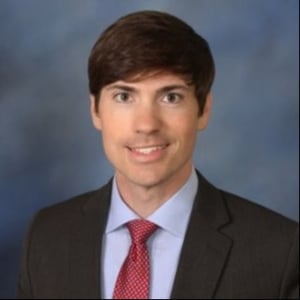
Deputy Attorney General and Director of the Civil Rights Enforcement Division, Office of the Tennessee Attorney General

Judge, Arizona Court of Appeals, Division One
The Honorable Jennifer M. Perkins began service on the Arizona Court of Appeals, Division One, on October 30, 2017. At the time of her appointment by Governor Douglas Ducey, Judge Perkins was Assistant Solicitor General for the State of Arizona.
Judge Perkins was born in Portales, New Mexico, and primarily raised in Albuquerque. She attended the prestigious Albuquerque Academy from 1988-1995, before moving to Washington D.C. to attend the Elliott School of International Affairs at the George Washington University as a National Merit Scholar. Therafter, she relocated again to Dallas, Texas, and earned her juris doctor from the SMU Dedman School of Law, graduating cum laude in 2002.
Judge Perkins started her career at the law firm of Browning & Peifer (now Peifer, Hanson, Mullins, and Baker) in Albuquerque, New Mexico. While there, she litigated complex commercial matters including class action plaintiff and defense work, and assisted with employment and contract litigation. In 2003, the judge accompanied the Honorable James O. Browning in transitioning to the federal district court bench, serving as his first law clerk.
After her clerkship, Judge Perkins moved to Arizona to work for the Institute for Justice, Arizona Chapter, a public interest law firm. She spent five years with IJ-AZ litigating civil rights cases in Arizona and across the country. In 2009, the judge became Disciplinary Counsel for the Arizona Commission on Judicial Conduct, where she reviewed and prosecuted ethics complaints against state court judges throughout Arizona. After five years serving the state in this capacity, Judge Perkins entered private practice by joining an appellate law firm in Phoenix. While there, she worked on state and federal appeals involving a wide range of legal subjects, including complex business disputes, property rights, judicial ethics, and personal injury matters.
In January 2015, Judge Perkins joined the Office of the Arizona Attorney General to serve as the first Assistant Solicitor General; in that capacity, she was responsible for oversight of Attorney General Opinions and served as ethics counsel to the entire office. In addition to these two primary roles, the judge assisted on a variety of matters including trial and appellate litigation of election-related matters; federal appellate litigation with the Federalism Unit; state criminal appeals; and drafting amicus briefs on behalf of Arizona in state and federal courts.

Executive Vice President, Goldwater Institute
Christina Sandefur is the Executive Vice President at the Goldwater Institute. She develops policies and litigates cases advancing healthcare freedom, free enterprise, private property rights, free speech, and taxpayer rights.
Christina is a co-drafter of the Right to Try initiative, now federal law, which protects terminally ill patients' right to try safe investigational treatments that have been prescribed by their physician but are not yet FDA-approved. She has won important victories for property rights in Arizona and works nationally to promote the Institute's Private Property Rights Protection Act, a state-level reform that requires government to pay owners when regulations destroy property rights and reduce property values.
Christina is the co-author of the book Cornerstone of Liberty: Private Property Rights in 21st Century America (2016). She is a frequent guest on national television and radio programs, has provided expert legal testimony to various legislative committees, and is a frequent speaker at conferences. She is the recipient of the 2018 Buckley Award in recognition of her leadership in the freedom movement, and she is an Advisory Board Member of the Network of enlightened Women. Christina serves on the board of the Phoenix Lawyers Chapter of the Federalist Society and is a member of the executive committee for the Federalist Society's Regulatory Transparency Project: FDA & Health.
Christina is a graduate of Michigan State University College of Law and Hillsdale College.
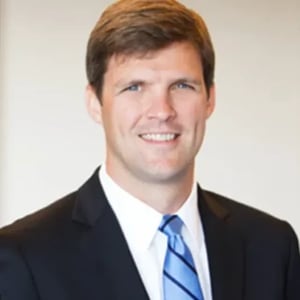
Judge, United States District Court for the Western District of Kentucky
Prior to joining the bench, Judge Beaton was a Partner at Squire Patton Boggs LLP, where he co-chaired the firm’s Appellate & Supreme Court practice group. Judge Beaton’s represented clients engaged in complex commercial litigation in Federal and State courts, and before administrative agencies. Judge Beaton also served as an adjunct professor at the University of Louisville Brandeis School of Law, where he taught constitutional interpretation. Before joining Squire Patton Boggs, Judge Beaton practiced in the Washington, D.C. office of Sidley Austin, LLP, and also served as a legal fellow with the International Justice Mission in Kampala, Uganda. Upon graduation from law school, Judge Beaton served as a law clerk to Justice Ruth Bader Ginsburg of the United States Supreme Court, and to Judge A. Raymond Randolph of the United States Court of Appeals for the D.C. Circuit. Judge Beaton earned his B.A., summa cum laude, from Centre College, and his J.D. from Columbia Law School, where he served as an Articles Editor on the Columbia Law Review.

Associate Dean for Research and Intellectual Life, McKnight Presidential Professor in Law, Distinguished McKnight University Professor, Harlan Albert Rogers Professor in Law, Associate Director, Corporate Institute, University of Minnesota Law School
Professor Kristin E. Hickman is the McKnight Presidential Professor in Law, a Distinguished McKnight University Professor, and Harlan Albert Rogers Professor in Law at the University of Minnesota Law School. She also has taught at Harvard Law School and Northwestern University School of Law. Professor Hickman teaches and writes primarily in the areas of administrative law, tax administration, and statutory interpretation. Her articles on these topics have appeared in the Columbia Law Review, Cornell Law Review, Virginia Law Review, Duke Law Journal, and other publications. She also co-authors the Administrative Law Treatise with Richard J. Pierce, Jr., and a casebook on federal administrative law with Pierce and Christopher J. Walker. Her scholarly work has been cited several times in opinions of the United States Supreme Court as well as regularly in lower court judicial opinions and court briefs.
In 2018-19, Professor Hickman served as Special Adviser to the Administrator of the Office of Information and Regulatory Affairs in Washington, D.C. She presently serves as a Senior Fellow, and previously served as a public member and chair of the judicial review committee, for the Administrative Conference of the United States. She also is a Fellow of the American College of Tax Counsel.
Professor Hickman received her B.S. degree in business administration with a concentration in accounting and a secondary major in history from Trinity University in San Antonio, Texas. After practicing for several years as a certified public accountant, Professor Hickman earned her J.D. degree, magna cum laude, from Northwestern University School of Law, where she was awarded the Raoul Berger Prize and the Lowden Wigmore Prize for her scholarly writings. Following law school, Professor Hickman clerked for The Honorable David B. Sentelle of the United States Court of Appeals for the District of Columbia Circuit and practiced law as an associate with the Chicago office of Skadden, Arps, Slate, Meagher & Flom, concentrating on corporate and international tax transactions and matters.
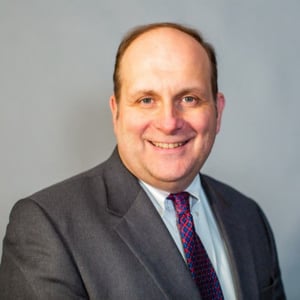
Senior Litigation Counsel, New Civil Liberties Alliance
Mr. Vecchione is a Senior Litigation Counsel for the non-profit New Civil Liberties Alliance representing clients against the Administrative State. He was previously President and CEO of the non-profit Cause of Action Institute, also advancing the constitutional order. He practiced at a number of D.C. area firms, including the eponymous John J. Vecchione Law, PLLC. Mr. Vecchione focuses his practice on strategic litigation in the federal district and appellate courts, including the Supreme Court of the United States. He is an experienced trial and appellate advocate having tried cases and argued appeals across the country. He is a member of the bars of the State of New York, the District of Columbia, and the Commonwealth of Virginia, as well as the Supreme Court of the United States and many federal courts. His cases are reported in scores of published opinions. He has also published pieces advancing the freedom agenda and constitutional order in the Wall Street Journal, the Washington Times and many other forums. He lives in Virginia with his wife Rebecca, sons Tommy and Joe.
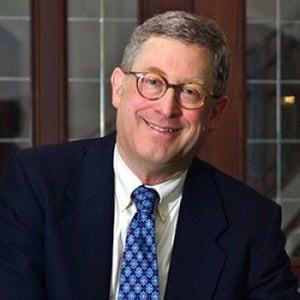
William R. Orthwein Distinguished Professor of Law, Washington University in St. Louis School of Law
Professor Ronald M. Levin is a nationally known scholar who specializes in administrative law and related public law issues. He is the co-author of a casebook on state and federal administrative law, now in its third edition, as well as a nutshell on administrative law and process, now in its fifth edition. Formerly the law school's associate dean, he has published numerous articles and book chapters on administrative law topics, including judicial review, rulemaking, and legislative reform of the regulatory process. He also has written about the law of legislation, lobbying, and legislative ethics. Among his professional affiliations, Professor Levin has chaired the ABA Section of Administrative Law and Regulatory Practice and served as the ABA's advisor to the drafting committee to revise the Model State Administrative Procedure Act. He also has chaired the Section on Administrative Law and the Section on Legislation of the Association of American Law Schools (AALS). Currently a public member of the Administrative Conference of the United States (ACUS), he previously served as a consultant to ACUS and to the Supreme Court of Indonesia. Before joining the law faculty, Professor Levin clerked for the Hon. John C. Godbold, U.S. Court of Appeals for the Fifth Circuit, and practiced for three years in Washington, D.C., with the firm of Sutherland, Asbill & Brennan.
Associate Dean for Research and Intellectual Life, McKnight Presidential Professor in Law, Distinguished McKnight University Professor, Harlan Albert Rogers Professor in Law, Associate Director, Corporate Institute, University of Minnesota Law School
Professor Kristin E. Hickman is the McKnight Presidential Professor in Law, a Distinguished McKnight University Professor, and Harlan Albert Rogers Professor in Law at the University of Minnesota Law School. She also has taught at Harvard Law School and Northwestern University School of Law. Professor Hickman teaches and writes primarily in the areas of administrative law, tax administration, and statutory interpretation. Her articles on these topics have appeared in the Columbia Law Review, Cornell Law Review, Virginia Law Review, Duke Law Journal, and other publications. She also co-authors the Administrative Law Treatise with Richard J. Pierce, Jr., and a casebook on federal administrative law with Pierce and Christopher J. Walker. Her scholarly work has been cited several times in opinions of the United States Supreme Court as well as regularly in lower court judicial opinions and court briefs.
In 2018-19, Professor Hickman served as Special Adviser to the Administrator of the Office of Information and Regulatory Affairs in Washington, D.C. She presently serves as a Senior Fellow, and previously served as a public member and chair of the judicial review committee, for the Administrative Conference of the United States. She also is a Fellow of the American College of Tax Counsel.
Professor Hickman received her B.S. degree in business administration with a concentration in accounting and a secondary major in history from Trinity University in San Antonio, Texas. After practicing for several years as a certified public accountant, Professor Hickman earned her J.D. degree, magna cum laude, from Northwestern University School of Law, where she was awarded the Raoul Berger Prize and the Lowden Wigmore Prize for her scholarly writings. Following law school, Professor Hickman clerked for The Honorable David B. Sentelle of the United States Court of Appeals for the District of Columbia Circuit and practiced law as an associate with the Chicago office of Skadden, Arps, Slate, Meagher & Flom, concentrating on corporate and international tax transactions and matters.
William R. Orthwein Distinguished Professor of Law, Washington University in St. Louis School of Law
Professor Ronald M. Levin is a nationally known scholar who specializes in administrative law and related public law issues. He is the co-author of a casebook on state and federal administrative law, now in its third edition, as well as a nutshell on administrative law and process, now in its fifth edition. Formerly the law school's associate dean, he has published numerous articles and book chapters on administrative law topics, including judicial review, rulemaking, and legislative reform of the regulatory process. He also has written about the law of legislation, lobbying, and legislative ethics. Among his professional affiliations, Professor Levin has chaired the ABA Section of Administrative Law and Regulatory Practice and served as the ABA's advisor to the drafting committee to revise the Model State Administrative Procedure Act. He also has chaired the Section on Administrative Law and the Section on Legislation of the Association of American Law Schools (AALS). Currently a public member of the Administrative Conference of the United States (ACUS), he previously served as a consultant to ACUS and to the Supreme Court of Indonesia. Before joining the law faculty, Professor Levin clerked for the Hon. John C. Godbold, U.S. Court of Appeals for the Fifth Circuit, and practiced for three years in Washington, D.C., with the firm of Sutherland, Asbill & Brennan.
Senior Litigation Counsel, New Civil Liberties Alliance
Mr. Vecchione is a Senior Litigation Counsel for the non-profit New Civil Liberties Alliance representing clients against the Administrative State. He was previously President and CEO of the non-profit Cause of Action Institute, also advancing the constitutional order. He practiced at a number of D.C. area firms, including the eponymous John J. Vecchione Law, PLLC. Mr. Vecchione focuses his practice on strategic litigation in the federal district and appellate courts, including the Supreme Court of the United States. He is an experienced trial and appellate advocate having tried cases and argued appeals across the country. He is a member of the bars of the State of New York, the District of Columbia, and the Commonwealth of Virginia, as well as the Supreme Court of the United States and many federal courts. His cases are reported in scores of published opinions. He has also published pieces advancing the freedom agenda and constitutional order in the Wall Street Journal, the Washington Times and many other forums. He lives in Virginia with his wife Rebecca, sons Tommy and Joe.
Judge, United States District Court for the Western District of Kentucky
Prior to joining the bench, Judge Beaton was a Partner at Squire Patton Boggs LLP, where he co-chaired the firm’s Appellate & Supreme Court practice group. Judge Beaton’s represented clients engaged in complex commercial litigation in Federal and State courts, and before administrative agencies. Judge Beaton also served as an adjunct professor at the University of Louisville Brandeis School of Law, where he taught constitutional interpretation. Before joining Squire Patton Boggs, Judge Beaton practiced in the Washington, D.C. office of Sidley Austin, LLP, and also served as a legal fellow with the International Justice Mission in Kampala, Uganda. Upon graduation from law school, Judge Beaton served as a law clerk to Justice Ruth Bader Ginsburg of the United States Supreme Court, and to Judge A. Raymond Randolph of the United States Court of Appeals for the D.C. Circuit. Judge Beaton earned his B.A., summa cum laude, from Centre College, and his J.D. from Columbia Law School, where he served as an Articles Editor on the Columbia Law Review.

James Madison Distinguished Professor of Law and Class of 1941 Research Professor of Law, University of Virginia School of Law
Professor John C. Harrison is the James Madison Distinguished Professor of Law and Class of 1941 Research Professor of Law at the University of Virginia School of Law. He joined the faculty at University of Virginia in 1993 as an associate professor of law after a distinguished career with the U.S. Department of Justice. His teaching subjects include constitutional history, federal courts, remedies, corporations, civil procedure, legislation and property. In 2008 he was on leave from the Law School to serve as counselor on international law in the Office of the Legal Adviser at the U.S. Department of State.
A 1977 graduate of the University of Virginia, Harrison earned his law degree in 1980 at Yale, where he served as editor of the Yale Law Journal and editor and articles editor of the Yale Studies in World Public Order. He was an associate at Patton Boggs & Blow in Washington, D.C., and clerked for Judge Robert Bork on the U.S. Court of Appeals for the District of Columbia Circuit. He worked with the Department of Justice from 1983-93, serving in numerous capacities, including deputy assistant attorney general in the Office of Legal Counsel (1990-93).

Levin, Mabie & Levin Professor of Law, University of Florida Levin College of Law
Professor Gary Lawson joined the University of Florida Levin College of Law faculty on July 1, 2024, after twenty-four years at Boston University School of Law and eleven years at Northwestern University School of Law. While at Boston University, he was named a William Fairfield Warren Distinguished Professor in 2022 – the highest faculty honor within the university. He has authored or co-authored nine editions of a textbook on administrative law, a textbook on constitutional law, five university press books, one popular press book, and more than one hundred scholarly articles on topics ranging from aspects of constitutional theory and history to the proof of legal propositions. His works have been cited in more than twenty opinions of United States Supreme Court justices. He is a founding member, and serves on the Board of Directors, of the Federalist Society for Law and Public Policy Studies and is on the Editorial Advisory Board of the Heritage Guide to the Constitution.
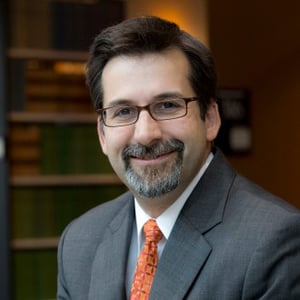
Dean and Anthony B. Buzbee Endowed Dean's Chair, Texas A&M University School of Law
A graduate of Princeton University's Woodrow Wilson School of Public and International Affairs and Yale Law School, Robert B. Ahdieh served as law clerk to Judge James R. Browning of the US Court of Appeals for the Ninth Circuit before his selection for the Honor's Program in the Civil Division of the US Department of Justice.
While still in law school, Ahdieh published what remains one of the seminal treatments of the constitutional transformation of post-Soviet Russia: "Russia's Constitutional Revolution—Legal Consciousness and the Transition to Democracy." Ahdieh's work has also appeared in the Boston University Law Review, Michigan Law Review, theMinnesota Law Review, the NYU Law Review, and the Southern California Law Review, among other journals.
Ahdieh’s scholarly interests revolve around questions of regulatory and institutional design, especially in the financial arena. His particular focus has been on various non-traditional regulatory structures and modes of regulation, including those grounded in dynamics of coordination. Though relatively less studied in the legal literature, the framework of coordination holds significant promise both in helping us theorize existing regulatory patterns and in defining new regulatory constructs for the future.
Ahdieh has explored regulatory and institutional design in a variety of transactional areas, including corporate and securities law, international trade and finance, and contracts. Within these, his work has emphasized two particular patterns of coordination. The first—intersystemic governance—draws on domestic regimes of federalism and transnational regimes of global governance and subsidiarity to highlight the potential benefits of complex systems of overlapping jurisdiction. The second draws on the dynamics at work in so-called “coordination games” to highlight distinct occasions for potential regulatory intervention, as well as various non-traditional regulatory forms, in our modern economic, social, and political order.
During the 2007–2008 academic year, Ahdieh was a visiting professor and the Microsoft/LAPA Fellow at Princeton University's Program in Law and Public Affairs. In Spring 2014, he served as Douglas McK. Brown Visiting Chair in Law, University of British Columbia. He has also visited at Columbia and Georgetown law schools, as well as numerous law schools overseas.

Texas Supreme Court
Justice Jimmy Blacklock was appointed to the Texas Supreme Court in January 2018 by Governor Greg Abbott. Before that, Jimmy served as Governor Abbott’s General Counsel and in the Attorney General’s Office under then-AG Abbott. While at the AG’s Office, he handled appeals and trials of constitutional cases in state and federal court involving matters such as federalism, religious liberty, and the separation of powers. As Deputy Attorney General for Legal Counsel, he oversaw the Open Records and Opinions divisions of the AG’s Office. Earlier in his career, Jimmy was appointed by President George W. Bush to serve in the Civil Rights Division of the U.S. Department of Justice, and he worked in private practice in Houston and Austin. He clerked for Judge Jerry Smith on the U.S. Court of Appeals for the 5th Circuit after graduating from U.T.-Austin (B.A., Plan II/History) and Yale Law School. He was born in Houston and now lives in Austin with his wife and three daughters.
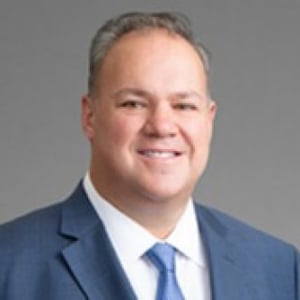
Costa is a partner in Gibson Dunn’s Houston office and co-chair of the firm’s Trials Practice Group. Mr. Costa offers clients a unique perspective as the only former federal trial and appellate judge trying cases and leading investigations. His broad experience—having handled complex civil and criminal matters, at trial and on appeal, as advocate and judge—allows him to offer invaluable skills and strategic insights.
Before joining Gibson Dunn, Mr. Costa served for more than ten years as a federal trial and appellate judge. He served on the U.S. Court of Appeals for the Fifth Circuit from 2014 to 2022. After his nomination by President Obama, the Senate confirmed him by a vote of 97-0. No federal appellate judge nominated since has received more votes. Mr. Costa first served as a district judge for the Southern District of Texas from 2012 to 2014. When appointed to the bench, he was the youngest-sitting federal judge at age 39. Mr. Costa presided over thirty federal trials in four different venues (he continued handling district court matters while serving on the court of appeals). He wrote precedential opinions in almost every area of the law, including antitrust, intellectual property, class actions, international arbitration, securities fraud, bankruptcy, conflicts of law, labor and employment, oil and gas, False Claims Act, administrative law, constitutional law, and criminal law. In press accounts of his tenure, he was described as an “exceptionally gifted jurist” with a “towering intellect” who was “respected by all sides.” The Federal Judicial Center invited Mr. Costa on multiple occasions to teach new federal district judges.
Before taking the bench, Mr. Costa was an Assistant U.S. Attorney in Houston from 2005 to 2012. As a prosecutor, he tried more than 15 jury trials, including serving as a lead prosecutor of Allen Stanford, the head of Stanford Financial Group, for orchestrating a multibillion-dollar international fraud scheme. Mr. Costa is featured in a documentary about the case, The Man Who Bought Cricket. A Reuters article about the trial quotes a victim who said that Mr. Costa’s closing argument “brought her to tears.” For his work on the Stanford case, Mr. Costa received the John Marshall Award for Trial of Litigation and the Assistant Attorney General’s Award for Exceptional Service. He also prosecuted cases involving kickbacks in the energy industry, public corruption, the Foreign Corrupt Practices Act, securities fraud, internet fraud, and counterfeit technology products. During his time as a federal prosecutor, Mr. Costa served as the Southern District of Texas’s Deputy International Affairs Coordinator, during which he assisted with investigations in more than a dozen countries.
Mr. Costa is a frequent speaker and author on legal topis, including writing for the ABA’s Litigation Journal on various trial-related issues. He also taught Federal Jurisdiction at the University of Houston Law Center, where he was named an Honorary Alumnus.
After college, Mr. Costa taught elementary school for two years in the Mississippi Delta through Teach for America. He has remained involved in the Delta and in education, launching a nonprofit in Mississippi, serving on the board of the Houston Urban Debate League, and helping teach Government at a Houston‑area charter school.
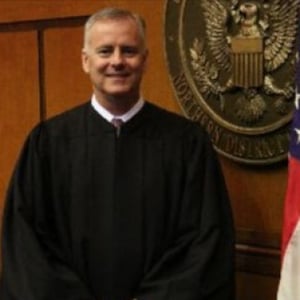
U.S. District Court for the Northern District of Texas
Reed Charles O'Connor is a federal judge on the United States District Court for the Northern District of Texas. He joined the court in 2007 after being nominated by President George W. Bush.
A native of Houston, Texas, O'Connor graduated from the University of Houston with his bachelor's degree in 1986 and from South Texas College of Law with his J.D. in 1989.

Executive General Counsel, First Liberty Institute
Hiram Sasser is Executive General Counsel for First Liberty Institute, where he oversees First Liberty’s litigation and media efforts. Sasser’s practice focuses on First Amendment and other constitutional and civil rights issues relating to religious liberty. Sasser served as co-counsel in seven victories before the United States Supreme Court, including Groff v. DeJoy (landmark case overturning the “de minimis cost” test for Title VII in place almost 50 years), Kennedy v. Bremerton (landmark case overturning 50 years of Establishment Clause precedent), Carson v. Makin (overturning 40 years of Maine’s discrimination against parents choosing faith-based schools), American Legion v. American Humanist Association (landmark case ending Establishment Clause attacks on veterans’ memorials with religious imagery), Klein v. Oregon Bureau of Labor and Industries (granted, vacated, and remanded (twice) in religious wedding service case), and Sause v. Bauer (summary reversal revoking qualified immunity for police who ordered a citizen not to pray in her own home).
In addition to his legal duties, Sasser develops, coordinates, and implements successful media strategies on behalf of his clients. This includes numerous appearances on ABC, NBC, CBS, Fox News, CNN, and the BBC as well as being heard on various radio stations throughout the United States, Asia, Africa, and Europe.
In 2016, Sasser took a leave of absence to serve a temporary assignment as the Chief of Staff for the Attorney General of Texas. He currently serves as an Adjunct Professor of Law at both The University of Texas at Austin School of Law (teaching Religious Liberty) and Oklahoma City University School of Law (teaching Civil Rights Procedure).
Regional Deputy General Counsel, North America and Lead Counsel, Treasury, Willis Towers Watson

Executive Vice President and General Counsel, National Football League
Ted Ullyot serves as Executive Vice President and General Counsel for the National Football League and is the founder of Highway 50 Ventures, LLC, an investment and advisory firm. A lawyer by background, Ullyot was General Counsel of Facebook from 2008 to 2013. He served in the administration of President George W. Bush, including in the White House as an Associate Counsel and as Deputy Staff Secretary, and in the Justice Department as Chief of Staff to Attorney General Gonzales.
Ullyot began his career as a law clerk, first for Judge J. Michael Luttig of the U.S. Court of Appeals for the Fourth Circuit and then for U.S. Supreme Court Justice Antonin Scalia. He was a litigation partner in the Washington, D.C., office of Kirkland & Ellis LLP.
At other points in his career, Ullyot served as General Counsel of ESL Investments, Inc.; as General Counsel of AOL Time Warner Europe; as a board member at AutoZone Inc.; and as a partner in the venture capital firm Andreessen Horowitz.
He is a member of the board of visitors of the Federalist Society; a member of the University of Chicago Law School Council; and a board member of the U.S. Supreme Court Historical Society.
Ullyot graduated from the University of Chicago Law School, after doing his undergraduate work at Harvard. He and his family live in Northern California.
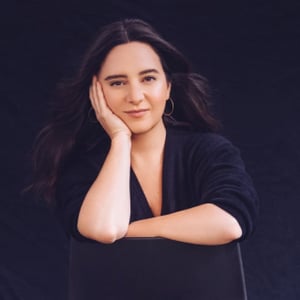
Founder & Editor, The Free Press
Bari Weiss is the founder and editor of The Free Press and host of the podcast Honestly. From 2017 to 2020 Weiss was an opinion writer and editor at The New York Times. Before that, she was an op-ed and book review editor at The Wall Street Journal and a senior editor at Tablet Magazine.
Weiss is the winner of the LA Press Club's 2021 Daniel Pearl Award for Courage and Integrity in Journalism. She is also the winner of the Reason Foundation’s 2018 Bastiat Prize, which honors writing that “best demonstrates the importance of freedom with originality, wit, and eloquence.” In 2019, Vanity Fair called Weiss the Times's "star opinion writer."
Weiss is a proud Pittsburgh native. Her first book, "How to Fight Anti-Semitism," was the winner of a 2019 National Jewish Book Award. She lives with her wife and daughter in Los Angeles.

Judge, United States Court of Appeals, D.C. Circuit
Judge Randolph was confirmed by the Senate and appointed to the United States Court of Appeals for the District of Columbia Circuit by President George H. W. Bush in July 1990.
Judge Randolph received his B.S. degree in 1966 from Drexel University, majoring in economics and basic engineering. At Drexel, he was president of the debate society, vice president of the Student Senate, and a member of the varsity wrestling squad. In 1969, he received his J.D. from the University of Pennsylvania, summa cum laude. Judge Randolph ranked first in his law school class all three years and was managing editor of the Law Review.
After graduation, Judge Randolph served as a law clerk to Judge Henry J. Friendly of the United States Court of Appeals for the Second Circuit in New York.
Admitted to the California Bar in 1970 (and to the District of Columbia bar in 1973), Judge Randolph worked as Assistant to the Solicitor General, U.S. Department of Justice, in Washington, D.C., 1970-1973.
After two years in private practice, Judge Randolph was named Deputy Solicitor General of the United States, a position he held from 1975-1977.
In 1979, Judge Randolph was appointed Special Counsel to the Committee on Standards of Official Conduct (the Ethics Committee) of the United States House of Representatives, remaining in this position until 1980.
In the 1980s, Judge Randolph held a number of positions while in private practice, including Special Assistant Attorney General for the states of New Mexico (1985 90), Utah (1986-1990) and Montana (1983-1990). He also served as a Member of the Advisory Panel of the Federal Courts Study Committee.
From 1971-1990, Judge Randolph argued 23 times in the United States Supreme Court, winning 20 of his cases.
As an Adjunct Professor of Law at Georgetown University Law Center from 1974-1978 he taught courses in civil procedure and injunctions. In 1992 he taught a course in constitutional law. He is a Distinguished Adjunct Professor of Law at George Mason School of Law and for the past ten years has been teaching First Amendment law. He also serves on the Judicial Advisory Board of the George Mason University Law and Economics Center.
From 1993 through 1995 Judge Randolph was a member of the Committee on Codes of Conduct of the Judicial Conference of the United States, and from 1995 to 1998 served as the Committee's chairman. He also served as the judicial liaison to the American Bar Association’s Administrative Law Section.
Judge Randolph is a member of the Board of Visitors at Drexel University Law School and was named to the “Drexel One Hundred” as a leading alumnus. In 2002 he was presented the James Wilson Award by the University of Pennsylvania Law School. In November 2005 he delivered the Fifth Annual Barbara K. Olson Memorial Lecture at the Annual Lawyers Convention of the Federalist Society. He has published numerous articles, the most recent of which is in the June 2006 issue of the Harvard Journal of Law and Public Policy.
Judge Randolph is married to the Honorable Eileen J. O’Connor, formerly Assistant Attorney General, Tax Division, U.S. Department of Justice. His son John Trevor Randolph is an investment banker in New York. His daughter Cynthia Lee Randolph is an artist living in San Francisco.



Panel IV: Mandates, Medicine, and Liberty: The Legal Battle Over Bodily Autonomy and the Right to Choose
Hadley P. Arkes, Steven J. Griffin, Jennifer Perkins, Christina Sandefur
Featuring: Prof. Hadley P. Arkes, Founder and Director, The James Wilson Institute Mr. Steven Griffin, Deputy Attorney...
SOC! SIDEBAR: March Madness
Benjamin Beaton
The Federalist Society's Student Division, Penn Law School Chapter, & University of Virginia School of...
Loper Bright & Relentless - Post-Decision SCOTUScast
Kristin E. Hickman, John J. Vecchione, Ronald M. Levin
On June 28, 2024, the Supreme Court issued its 6-2 decision in Loper Bright Enterprises v....
Courthouse Steps Decision: Loper Bright & Relentless
Kristin E. Hickman, Ronald M. Levin, John J. Vecchione
Chevron v. NRDC (1984) and subsequent precedents held that courts should defer to agency interpretations...
Panel III: The Judicial Power and Evaluating Judicial Supremacy
Benjamin Beaton, John C. Harrison, Gary Lawson, Jeannie Suk Gersen, Amanda L. Tyler
New presidential administrations start with a flurry of administrative actions. These fresh rules, guidelines, and...
Panel Discussion: The Consequences of Disruption
Robert B. Ahdieh, James Davis Blacklock, Gregg Costa, Reed O'Connor, Hiram Sasser, J. Ammon Smartt
Collegiality and the presumption that opposing counsel work together in good faith are bedrocks of...
22nd Annual Barbara K. Olson Memorial Lecture
Theodore W. Ullyot, Bari Weiss
(Ticketed event) On September 11, 2001, at the age of 45 and at the height...
Federal Permitting Reform: Now or Never?
In 2020, the Trump administration finalized a major overhaul of the regulations implementing NEPA, the...
Hon. Robert H. Bork Memorial Lecture
A. Raymond Randolph
The 2022 National Lawyers Convention will take place November 10-12, 2022 at the Mayflower Hotel in...
Hon. Robert H. Bork Memorial Lecture
A. Raymond Randolph
The 2022 National Lawyers Convention will take place November 10-12, 2022 at the Mayflower Hotel in...