
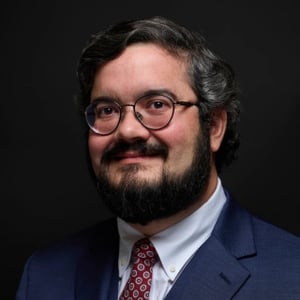
Partner, Torridon Law PLLC
Mike Fragoso is an experienced legal and policy strategist who represents clients before all three branches of the federal government. Most recently he served as chief counsel to the Senate Republican Leader, Mitch McConnell (R-KY). He has negotiated consequential legislation, managed successful congressional oversight, and prepared individuals for the most contentious Senate hearings.
As chief counsel to Leader McConnell, Mike was the Leader’s primary legal advisor and managed the “last mile” of any legislation touching on the Senate Judiciary Committee. He ran the 2024 reauthorization of FISA Section 702 and was involved at the highest levels of the appropriations and budget-reconciliation processes. Mike also repeatedly represented Leader McConnell as counsel of record at the Supreme Court. Leader McConnell said of Mike that he’s “equally at home in the high-minded philosophical discourse of the legal community and the urgent pragmatism of congressional dealmaking,” and that he “maintains a firm grasp on the realm of the possible” but “knows which screws to twist.” He observed that Mike “is so exceptionally competent that he often produces from his desk the work that would normally require, literally, teams of outside counsel.”

President, JCN
Carrie Campbell Severino is the president of the JCN, and co-author with Mollie Hemingway of the bestselling book Justice on Trial: The Kavanaugh Confirmation and the Future of the Court. As a go-to expert on the confirmation process, Mrs. Severino has been extensively quoted in the media. She regularly appears on television, including FOX, CNN, MSNBC, C-SPAN, and ABC’s This Week.
Severino writes and speaks on a wide range of judicial issues, including the constitutional limits on government, the federal nomination process, and state judicial selection. She has testified before Congress on constitutional questions and briefed Senators on judicial nominations, and regularly files briefs in high-profile Supreme Court cases. She was a law clerk to Supreme Court Justice Clarence Thomas and to Judge David B. Sentelle of the U.S. Court of Appeals for the D.C. Circuit, and is a graduate of Harvard Law School (J.D.), Duke University (B.A., Biology), and Michigan State University (M.A., Linguistics).
Solicitor General, West Virginia
Michael Williams is the Solicitor General for the State of West Virginia. In that role, Michael represents the State in appeals before state and federal courts, including the U.S. Supreme Court. Michael also coordinates strategic affirmative litigation on the State’s behalf, including litigation against the federal government.
Before joining the Attorney General’s Office, Michael co-led the complex briefing and appeals group at a Michigan boutique firm, representing Fortune 50 companies and others in actions across the country. He also practiced in the litigation groups of two Washington, D.C. firms and clerked with the Appellate Division of the U.S. Attorney’s Office for the District of Maine.
Michael’s work has been honored with a Best Brief Award from the National Associationof Attorneys General and a Leader in the Law Award from Michigan Lawyers Weekly. He often speaks and writes on appellate-related issues.
Michael clerked twice in the Fourth Circuit: once with then-Chief Judge Deborah Chasanow of the U.S. District Court for the District of Maryland and later with Judge G. Steven Agee of the U.S. Court of Appeals for the Fourth Circuit. He attended George Washington University Law School and Bates College.
Senior Litigation Attorney, EarthRights International
Rick Herz is a 1993 Order of the Coif graduate of the University of Virginia School of Law, where he served on the Virginia Law Review. In 1994, he clerked for the Hon. Raymond A. Jackson, U.S. District Judge for the Eastern District of Virginia. Rick was the 1997-1998 Natural Resources Law Institute Fellow at Northwestern School of Law of Lewis and Clark College, where he wrote”Litigating Environmental Abuses Under the Alien Tort Claims Act: A Practical Assessment” , an article about suing multinational corporations for environmental abuses under the Alien Tort Claims Act. He is a member of the New York State Bar. At ERI, Rick directs our work on cases against multinational corporations for international human rights and environmental abuses. As such he is co-counsel for the plaintiffs ERI’s past and ongoing litigation, including Doe v. Unocal, Bowoto v. Chevron, Sahu v. Union Carbide, Wiwa v. Royal Dutch Petroleum, Maynas v. Occidental Petroleum, Doe v. Chiquita, and API v. SEC. He has also filed amicus briefs in the United States Supreme Court and various U.S. Circuit and District courts on behalf of NGOs and law professors in important human rights cases, and he advises human rights and environmental activists and lawyers on international law.
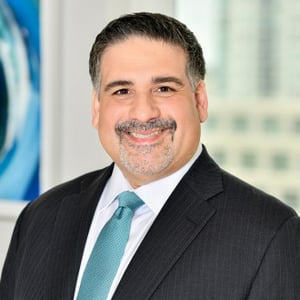
Partner, Jones Day
Eliot Pedrosa is a first chair litigator and trial lawyer with 20 years of experience representing businesses in complex and challenging litigation involving international disputes, financial institutions, securities, and products liability.
Eliot has served as first chair in more than a dozen jury trials and arbitrations and defended clients under investigation by federal and state regulators. Eliot, who is a native Spanish speaker, has in-depth knowledge of Latin American law and recently completed a term as the Senate-confirmed Executive Director of the Inter-American Development Bank (IDB), the largest source of development finance for Latin America and the Caribbean.
Prior to joining Jones Day, Eliot successfully represented clients from around the world, including a German medical device manufacturer, an Israeli software company, the largest sugar producer in Nicaragua, a Spanish language radio station and media company regarding broadcast rights for Mexican soccer matches in the United States, a music company in litigation regarding the sale of a salsa music catalog, a financial services firm in an action alleging improper handling of credit card transactions, and a tobacco company in individual Florida Engle cases.
Eliot has been committed to providing pro bono legal services throughout his career, including representing human trafficking victims, an unaccompanied minor seeking asylum, and a First Amendment challenge to the Florida High School Athletic Association's decision to prohibit use of a stadium loudspeaker for a prayer at a high school football championship game between two private, Christian schools.
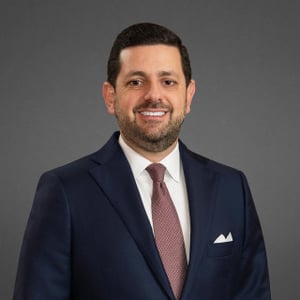
Of Counsel, DLA Piper LLP (US)
Harout J. Samra – a Board Certified Specialist in International Law – focuses his practice on international dispute resolution and arbitration matters, including international civil litigation in US courts.
Harout has represented clients from both the public and private sectors, including foreign governments, public officials and clients from a variety of industries. He has experience in international arbitrations administered under the International Chamber of Commerce (ICC), International Centre for Dispute Resolution (ICDR), United Nations Commission on International Trade Law (UNCITRAL), China International Economic and Trade Arbitration Commission (CIETAC), Bogota Chamber of Commerce, Madrid Court of Arbitration and International Centre for Settlement of Investment Disputes (ICSID) arbitration rules.
Harout currently serves as a member of the Florida Supreme Court Judicial Nominating Commission, by appointment of Governor Ron DeSantis. He previously served, by appointment of Governor Rick Scott, as a member of the Florida Third District Court of Appeal Judicial Nominating Commission, and was elected as Chair of the Commission from 2018-2019.
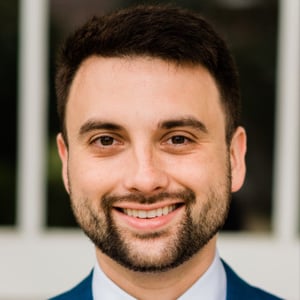
Roberto is a 2018 graduate of the University of Chicago Law School.
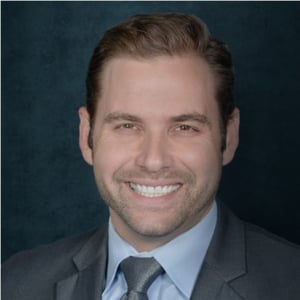
Vice President for the Program on Technology, Criminal Justice and Civil Liberties, Lincoln Network
Arthur Rizer is the Vice President for the Program on Technology, Criminal Justice and Civil Liberties at Lincoln Network. In addition to his work at Lincoln, Arthur is a visiting lecturer at University College London, and an adjunct professor at George Mason University’s Antonin Scalia Law School. Arthur is also a member of Columbia University Justice Lab’s Executive Session for the Future of Justice Policy, the Federalist Society’s Executive Committee of the Criminal Law Practice Group, the Virginia Advisory Committee to the U.S. Commission on Civil Rights, and other advisory bodies.
Before joining Lincoln, Arthur was founding director of the R Street Institute’s program on criminal justice and civil liberties. Prior to that, Arthur taught at West Virginia University’s College of Law, and was a visiting professor at Georgetown University Law Center. He also served as a trial attorney with the U.S. Justice Department, primarily as a federal prosecutor in the Criminal Division, where he targeted command-and-control drug cartel leaders and narco-terrorists. He also served as a prosecutor in the U.S. Attorney’s Office for the Southern District of California and in the civil division. Earlier in his career, Arthur served in the U.S. Army, originally enlisting as a private before later receiving a commission. He served as an armor officer, later becoming the commander of a military police company and a Reserve Officers’ Training Corps assistant professor. He deployed to Fallujah, Iraq, with the mission to train the Iraqi Infantry and served as an MP acting battalion commander and executive officer. He retired as a lieutenant colonel from the U.S. Army (WVNG). During his Army career, Arthur received the Bronze Star, Purple Heart, Meritorious Service and Iraq Campaign medals.
Arthur is the author of three books: Lincoln’s Counsel (2010); The National Security Implications of Immigration Law (2013); and Jefferson’s Pen: The Art of Persuasion (2016).
Arthur earned his bachelor’s degree in political science from Pacific Lutheran University; a master of laws, with distinction, from Georgetown University’s Law Center; and his JD, magna cum laude, from Gonzaga University School of Law. He is also a graduate of the U.S. Marine Corps’ Command Staff College. He is in the final stages of a doctorate at the University of Oxford, Faculty of Law, Centre of Criminology that focuses on policing.
Brett Tolman, the former U.S. Attorney for Utah and former chief counsel for crime and terrorism in the U.S. Senate Judiciary Committee, founded the Tolman Group and focuses on public policy and reforming government.
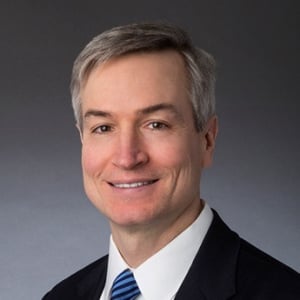
Partner, Sidley Austin LLP
Robert Keeling is an experienced litigator whose practice includes a special focus on electronic discovery matters. He represents both plaintiffs and defendants in complex civil litigation throughout the nation and conducts internal investigations in the United States and throughout the world. Robert handles a wide variety of commercial disputes in state and federal court. He is experienced in multi-district litigation, false claims act litigation, commercial litigation, securities class actions, contract disputes, RICO and fraud actions, insurance coverage litigation and many other types of cases.
Robert is a co-chair of the firm’s E-Discovery Task Force. Robert is experienced with technology-assisted review, predictive coding and other applications that can enable clients to significantly reduce e-discovery costs while maintaining the defensibility of the review.
Robert also has substantial experience conducting investigations both, in the United States and abroad. He has represented numerous clients in international investigations with respect to the Foreign Corrupt Practices Act, and advises companies on the implementation of effective compliance programs related to the FCPA. Robert also has handled internal investigations involving allegations of healthcare fraud and abuse, embezzlement, accounting irregularities and violations of securities and banking regulations.
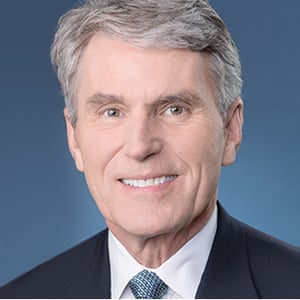
Tim has had a multifaceted and storied career. For many years, Tim was a national trial lawyer with the firm of Shook, Hardy and Bacon. He handled mass tort cases for pharmaceutical, medical device and chemical companies. Tim was lead counsel in a number of high-profile trials for clients around the country and served as lead counsel in a medical device MDL. While in private practice, he was named a Leading National Products Liability Lawyer by Chambers USA, one of the Top 500 Litigators in America by Lawdragon, and one of the Best Lawyers in America. Tim taught at the National Institute for Trial Advocacy for many years and was a frequent speaker on legal topics, trial tactics and litigation strategy.
In 2008, Tim was recruited to become General Counsel and Corporate Secretary of Boston Scientific, a multinational medical device company. While there, Tim served on the Company's Executive Committee and was responsible for worldwide management of the company's Legal organization, Global Compliance, Government Affairs, Aviation, Global Security and other functions. He was also heavily involved in diversity and inclusion initiatives, the Boston Scientific Leadership Academy and innovative outside counsel management initiatives. Over his years at Boston Scientific, Tim was repeatedly awarded for his performance. In 2013, he was recognized by The Legal 500 and named to the "Corporate Counsel 100" list, which identifies the top most powerful corporate legal advisers in the United States. In 2016 he was honored by The Burton Awards as a “Legend in Law.” In 2016, he was flattered to receive the Valued Ally Award from Diversity Best Practices for his work in advancing diversity and inclusion.
Tim's work and influence is not limited to his work at Shook, Hardy and Boston Scientific. He has also worked with a number of organizations. Tim was on the Board and Executive Committee of AdvaMed, the trade association for the medical device industry. He is active in the prestigious and invitation-only Federation of Defense & Corporate Counsel (FDCC), where he served as President and Chairman. He currently serves as President of Lawyers for Civil Justice (LCJ), a group interested in improving the civil justice system in the United States. He had been a member of the boards for DRI and the New England Legal Foundation.

Laurence A. Tisch Professor of Law and Director, Classical Liberal Institute, New York University School of Law; Senior Fellow, The Civitas Institute, University of Texas at Austin
Richard A. Epstein is the inaugural Laurence A. Tisch Professor of Law at NYU School of Law. Prior to his joining the faculty, he was a visiting law professor at NYU from 2007 through 2009. He served as the Peter and Kirstin Bedford Senior Fellow at the Hoover Institution from 2000 to 2024. Since 2024 to the present he is a senior lecturer at the Civitas Institute at the University of Texas—Austin. Epstein is also the James Parker Hall Distinguished Service Professor of Law Emeritus and a senior lecturer at the University of Chicago. His initial law school appointment was at the University of Southern California from 1968 to 1972. Epstein received an LL.D., h.c. from the University of Ghent, 2003. He has been a member of the American Academy of Arts and Sciences since 1985 and was a Senior Fellow of the Center for Clinical Medical Ethics at the University of Chicago Division of Biological Sciences, also from 1983. to 2022 He served as editor of the Journal of Legal Studies from 1981 to 1991, and of the Journal of Law and Economics from 1991-2001. From 2001 to 2010 he was a director of the John M. Olin Program in Law and Economics at the University of Chicago.
His newest book, The Myth of Birthright Citizenship: What the Fourteenth Amendment Really Says was published in 2026 (Encounter Books). Prior to that he has published many books including, The Dubious Morality of the Modern Administrative State (Roman & Littlefield 2020).Earlier he published th Classical Liberal Constitution: The Uncertain Quest for Limited Government (Harvard 2014) iHis previous books include Design for Liberty: Private Property, Public Administration and the Rule of Law (Harvard 2011); The Case Against the Employee Free Choice Act (Hoover 2009); Supreme Neglect: How to Revive the Constitutional Protection of Property Rights (Oxford 2008); Antitrust Decrees in Theory and Practice: Why Less is More (AEI 2007); Overdose: How Excessive Government Regulation Stifles Pharmaceutical Innovation (Yale University Press. 2006); How Progressives Rewrote the Constitution (Cato 2006); Cases and Materials on Torts (Aspen Law & Business; 8th ed. 2004); Skepticism and Freedom: A Modern Case for Classical Liberalism (University of Chicago, 2003); Torts (Aspen Law & Business 1999); Principles for a Free Society: Reconciling Individual Liberty with the Common Good (Perseus Books, 1998): Mortal Peril: Our Inalienable Rights to Health Care (Addison-Wesley, 1997); Simple Rules for a Complex World (Harvard, 1995); Bargaining With the State (Princeton, 1993); Forbidden Grounds: The Case Against Employment Discrimination Laws (Harvard , 1992); Takings: Private Property and the Power of Eminent Domain (Harvard, 1985); and Modern Products Liability Law (Greenwood Press, 1980). He has also edited(with Catherine M. Sharkey) Cases and Materials on the Law of Torts (10th edition 2012).
Professor Epstein has written numerous articles on a wide range of legal and interdisciplinary subjects. He has taught courses in administrative law, antitrust law, civil procedure, communications, constitutional law, contracts, corporations, criminal law, employment discrimination law, environmental law, food and drug law health law and policy, legal history, labor law, property, real estate development and finance, jurisprudence, labor law; land use planning, patents, individual, estate and corporate taxation, Roman Law; torts, and workers' compensation.
Professor Epstein also writes a regular column for Civitas Institute, which also sponsors his podcast, The Libertarian with Charles C.W. Cooke, and Law Talk, with Cooke and John Yoo. He also does a podcast with John Batchelor. And appears regularly on the Freedom File with Judge Andrew Napolitano.
With a practice at the intersection of law, economics, domestic politics and international relations, John Herrmann represents clients before all U.S. trade agencies. He counsels U.S. producers of steel, metal, chemical and agricultural products in antidumping and countervailing duty proceedings, and represents clients in major litigation arising from such proceedings. Mr. Herrmann advises on customs-related matters such as classification, duty drawback and civil penalty issues. Mr. Herrmann also counsels clients regarding export control and sanctions-related issues, as well as the preparation and implementation of internal compliance policies and procedures.
Mr. Herrmann returned to Kelley Drye in 2009 following service in the administration of President George W. Bush, including work at the White House on the National Security Council staff. Mr. Herrmann worked as the Special Assistant to the President and Senior Director for International Trade, Energy and Environment. In that position, he was responsible for advising the President on international trade and investment issues and for the international aspects of energy and environmental policy.
At the White House, Mr. Herrmann’s work on key issues included the WTO Doha Round negotiations, efforts to conclude and secure Congressional approval of free trade agreements, overseeing activities of the President’s Interagency Working Group on Import Safety and representing the National Security Council at meetings of the Committee on Foreign Investment in the United States (CFIUS). Mr. Herrmann was also involved in export control and sanctions issues and preparing for meetings of the cabinet-level U.S.-E.U. Transatlantic Economic Council, the U.S.-India Economic Dialogue and CEO Forum, and the U.S.-China Strategic Economic Dialogue, including preparation for the November 2008 G-20 financial summit. Mr. Herrmann was one of only a handful of senior National Security Council staff asked to carryover with the administration of President Barack H. Obama to assist on transition activities.
In addition, Mr. Herrmann served as a senior advisor to the Assistant Secretary of Commerce for Import Administration at the U.S. Department of Commerce, where he advised the Assistant Secretary on issues raised in antidumping, countervailing duty and textile-related proceedings and policy matters before the agency. Mr. Herrmann also worked as a law clerk to former Chief Judge Gregory W. Carman at the United States Court of International Trade, as well as a legal intern to the Chairman of the U.S. International Trade Commission. He began his career at the White House as the Executive Assistant to the Assistant to the President for Economic and Domestic Policy.
Chair, International Trade & National Security Practice Group, Buchanan Ingersoll & Rooney
Mr. Pickard counsels U.S. and international clients on the laws and regulations governing international trade, with particular emphasis on import remedy, anti-bribery, national security, and export control issues. He represents and advises clients in matters related to trade remedy investigations (including antidumping, countervailing duty, and safeguard cases), U.S. economic sanctions, export controls, anti-boycott measures, and the Foreign Corrupt Practices Act (FCPA). Mr. Pickard provides comprehensive international trade law compliance guidance, including assessing and resolving sensitive national security matters; developing corporate compliance programs; establishing compliance with the National Industrial Security Program (NISP) and mitigating Foreign Ownership, Control, or Influence (FOCI) issues; conducting internal investigations relating to potential violations; and appearing before the relevant agencies in connection with investigations, licensing, and enforcement actions. He also teams with the firm’s Election Law & Government Ethics Group to provide guidance pertaining to the Foreign Agents Registration Act (FARA).
Mr. Pickard represents clients before the U.S. International Trade Commission (ITC), the U.S. Department of the Treasury’s Office of Foreign Assets Control (OFAC), the U.S. Department of Justice (DOJ), the U.S. Department of State’s Directorate of Defense Trade Controls (DDTC), the U.S. Department of Commerce’s Bureau of Industry and Security (BIS) and International Trade Administration (ITA), the U.S. Department of Defense’s Defense Security Service (DSS), the Committee on Foreign Investment in the United States (CFIUS), the U.S. Court of International Trade, and the U.S. Court of Appeals for the Federal Circuit.
Professor of Law, Georgetown University Law Center
Alvaro Santos is Professor of Law and Director of the Center for the Advancement of the Rule of Law in the Americas (CAROLA) at Georgetown University. He teaches and writes in the areas of international trade, economic development, drug policy, transnational labor law and the future of NAFTA.
Professor Santos is co-editor of Law and the New Developmental State: The Brazilian Experience in Latin America (2013) and The New Law and Economic Development: A Critical Appraisal (2006). He is also the author of a number of articles and book chapters, including “Carving Out Policy Autonomy for Developing Countries in the World Trade Organization: The Experience of Brazil and Mexico” in the Virginia Journal of International Law (2012), and "Three Transnational Discourses of Labor Law in Domestic Reforms" in the University of Pennsylvania Journal of International Law (2010). In 2016, he contributed to a research manifesto authored by working group at the Harvard Institute for Global Law and Policy, examining the role of law in global value chains. Professor Santos serves on the editorial boards of the American Journal of Comparative Law, the Journal of International Economic Law, the Law and Development Review, and the Latin American Journal of International Trade Law. He regularly teaches at Georgetown's WTO Academy and Harvard's Institute for Global Law and Policy (IGLP) and has also taught at the University of Texas, Tufts University, Melbourne Law School, and the University of Turin. Santos received a JD with high honors from Universidad Nacional Autonóma de México and an LLM and SJD from Harvard Law School.
With a practice at the intersection of law, economics, domestic politics and international relations, John Herrmann represents clients before all U.S. trade agencies. He counsels U.S. producers of steel, metal, chemical and agricultural products in antidumping and countervailing duty proceedings, and represents clients in major litigation arising from such proceedings. Mr. Herrmann advises on customs-related matters such as classification, duty drawback and civil penalty issues. Mr. Herrmann also counsels clients regarding export control and sanctions-related issues, as well as the preparation and implementation of internal compliance policies and procedures.
Mr. Herrmann returned to Kelley Drye in 2009 following service in the administration of President George W. Bush, including work at the White House on the National Security Council staff. Mr. Herrmann worked as the Special Assistant to the President and Senior Director for International Trade, Energy and Environment. In that position, he was responsible for advising the President on international trade and investment issues and for the international aspects of energy and environmental policy.
At the White House, Mr. Herrmann’s work on key issues included the WTO Doha Round negotiations, efforts to conclude and secure Congressional approval of free trade agreements, overseeing activities of the President’s Interagency Working Group on Import Safety and representing the National Security Council at meetings of the Committee on Foreign Investment in the United States (CFIUS). Mr. Herrmann was also involved in export control and sanctions issues and preparing for meetings of the cabinet-level U.S.-E.U. Transatlantic Economic Council, the U.S.-India Economic Dialogue and CEO Forum, and the U.S.-China Strategic Economic Dialogue, including preparation for the November 2008 G-20 financial summit. Mr. Herrmann was one of only a handful of senior National Security Council staff asked to carryover with the administration of President Barack H. Obama to assist on transition activities.
In addition, Mr. Herrmann served as a senior advisor to the Assistant Secretary of Commerce for Import Administration at the U.S. Department of Commerce, where he advised the Assistant Secretary on issues raised in antidumping, countervailing duty and textile-related proceedings and policy matters before the agency. Mr. Herrmann also worked as a law clerk to former Chief Judge Gregory W. Carman at the United States Court of International Trade, as well as a legal intern to the Chairman of the U.S. International Trade Commission. He began his career at the White House as the Executive Assistant to the Assistant to the President for Economic and Domestic Policy.
Chair, International Trade & National Security Practice Group, Buchanan Ingersoll & Rooney
Mr. Pickard counsels U.S. and international clients on the laws and regulations governing international trade, with particular emphasis on import remedy, anti-bribery, national security, and export control issues. He represents and advises clients in matters related to trade remedy investigations (including antidumping, countervailing duty, and safeguard cases), U.S. economic sanctions, export controls, anti-boycott measures, and the Foreign Corrupt Practices Act (FCPA). Mr. Pickard provides comprehensive international trade law compliance guidance, including assessing and resolving sensitive national security matters; developing corporate compliance programs; establishing compliance with the National Industrial Security Program (NISP) and mitigating Foreign Ownership, Control, or Influence (FOCI) issues; conducting internal investigations relating to potential violations; and appearing before the relevant agencies in connection with investigations, licensing, and enforcement actions. He also teams with the firm’s Election Law & Government Ethics Group to provide guidance pertaining to the Foreign Agents Registration Act (FARA).
Mr. Pickard represents clients before the U.S. International Trade Commission (ITC), the U.S. Department of the Treasury’s Office of Foreign Assets Control (OFAC), the U.S. Department of Justice (DOJ), the U.S. Department of State’s Directorate of Defense Trade Controls (DDTC), the U.S. Department of Commerce’s Bureau of Industry and Security (BIS) and International Trade Administration (ITA), the U.S. Department of Defense’s Defense Security Service (DSS), the Committee on Foreign Investment in the United States (CFIUS), the U.S. Court of International Trade, and the U.S. Court of Appeals for the Federal Circuit.
Professor of Law, Georgetown University Law Center
Alvaro Santos is Professor of Law and Director of the Center for the Advancement of the Rule of Law in the Americas (CAROLA) at Georgetown University. He teaches and writes in the areas of international trade, economic development, drug policy, transnational labor law and the future of NAFTA.
Professor Santos is co-editor of Law and the New Developmental State: The Brazilian Experience in Latin America (2013) and The New Law and Economic Development: A Critical Appraisal (2006). He is also the author of a number of articles and book chapters, including “Carving Out Policy Autonomy for Developing Countries in the World Trade Organization: The Experience of Brazil and Mexico” in the Virginia Journal of International Law (2012), and "Three Transnational Discourses of Labor Law in Domestic Reforms" in the University of Pennsylvania Journal of International Law (2010). In 2016, he contributed to a research manifesto authored by working group at the Harvard Institute for Global Law and Policy, examining the role of law in global value chains. Professor Santos serves on the editorial boards of the American Journal of Comparative Law, the Journal of International Economic Law, the Law and Development Review, and the Latin American Journal of International Trade Law. He regularly teaches at Georgetown's WTO Academy and Harvard's Institute for Global Law and Policy (IGLP) and has also taught at the University of Texas, Tufts University, Melbourne Law School, and the University of Turin. Santos received a JD with high honors from Universidad Nacional Autonóma de México and an LLM and SJD from Harvard Law School.

Is the Federal Judicial Center Putting a Thumb on the Scale for A Climate Agenda?
Michael Fragoso, Carrie Campbell Severino, Michael R. Williams
The Federal Judicial Center describes itself as “the research and education agency of the judicial...
Foreign Sovereign and International Organization Immunity in U.S. Courts: Recent Developments and the Way Forward
Richard Herz, Eliot Pedrosa, Harout J. Samra
The Foreign Sovereign Immunities Act and its lesser-known sibling, the International Organizations Immunities Act, enacted...
Topics
New Study Supports Federal Expert Evidence Rule Reform
A new study conducted by Lawyers for Civil Justice (LCJ) reveals that federal courts inconsistently...
Topics
Federal Judiciary Advisory Committee Proposes Amendments to Expert Testimony Rule
The federal judiciary’s Advisory Committee on Evidence Rules has published proposed amendments to Federal Rule...
Negative Legislation
Roberto J. Borgert
Modern commentators have spilled much ink on the undemocratic nature of congressional delegations to executive...
Seeking Success: Reforming America’s Community Supervision System
Arthur Rizer, Brett Tolman
Note from the Editor: The Federalist Society takes no positions on particular legal and public...
Lightning Strikes: A Successful Appeal in the Opioid MDL and Whether We Will See More Interlocutory Appeals in MDLs
Robert D. Keeling, Timothy A. Pratt
Earlier this year, the United States Court of Appeals for the Sixth Circuit did something...
The Supreme Court Tackles Patent Reform: Inter Partes Review Under the AIA Undermines the Structural Protections Offered by Article III Courts
Richard A. Epstein
Note from the Editor: This article criticizes Justice Clarence Thomas’ opinion in Oil States. It...
Re-Negotiating NAFTA: Non-National Tribunals and the Constitution
John M. Herrmann II, Daniel B. Pickard, Alvaro Santos
Chapters 11 and 19 of the North American Free Trade Agreement (NAFTA) provide for international...
Re-Negotiating NAFTA: Non-National Tribunals and the Constitution
International & National Security Law Practice Group Teleforum
Teleforum