
Chief Counsel, Constitutional Accountability Center
Brianne is Constitutional Accountability Center’s Chief Counsel. Brianne joined CAC from private practice at O'Melveny & Myers (OMM), where she was Counsel in the firm’s Supreme Court and appellate practice. From 2009-11, prior to joining OMM, Brianne was an Attorney-Adviser in the Office of Legal Counsel at the U.S. Department of Justice. She also served as a law clerk for Justice Stephen Breyer on the U.S. Supreme Court, a law clerk for Judge Robert A. Katzmann on the U.S. Court of Appeals for the Second Circuit, and a law clerk for Judge Jed S. Rakoff on the U.S. District Court for the Southern District of New York. Brianne’s academic writings have appeared in the Yale Law Journal, the Duke Law Journal, the Northwestern University Law Review, the Washington Law Review, the American University Law Review, and the Yale Law & Policy Review. Brianne received her J.D. from Yale Law School and her M.A./B.S. from Emory University. Her master's thesis in political science examined judicial behavior on the U.S. Supreme Court.

Professor of Law, Georgetown University Law Center
Nicholas Quinn Rosenkranz teaches constitutional law and federal jurisdiction, and he writes articles for the Harvard Law Review and the Stanford Law Review.
He is currently developing a new theory of constitutional interpretation and judicial review. The first installment, entitledThe Subjects of the Constitution, was published in the Stanford Law Review in May of 2010, and it is among the most downloaded articles about constitutional interpretation, judicial review, and/or federal courts in the history of SSRN. The second installment, The Objects of the Constitution, was published in May of 2011, also in the Stanford Law Review. And the comprehensive version is forthcoming as a book by Oxford University Press.
Rosenkranz has served and advised the federal government in a variety of capacities. He clerked for Judge Frank H. Easterbrook on the U.S. Court of Appeals for the Seventh Circuit (1999-2000) and for Justice Anthony M. Kennedy at the U.S. Supreme Court (October Term 2001). He served as an Attorney-Advisor at the Office of Legal Counsel in the U.S. Department of Justice (November 2002 - July 2004). He often testifies before Congress as a constitutional expert—most recently before the House Financial Services Oversight Subcommittee, regarding the Obama Administration's use of bank settlement agreements to circumvent the Appropriations Clause. He has also filed briefs and presented oral argument before the U.S. Supreme Court. His most recent Supreme Court brief, in Los Angeles v. Patel, was cited by Justice Alito in dissent.
Rosenkranz is a member of the New York Bar and the U.S. Supreme Court Bar. He is a Senior Fellow at the Cato Institute. He serves on the Board of Directors of the Foundation for Individual Rights in Education (FIRE). He is a founding member of Heterodox Academy and a member of its Executive Committee. He also serves on the Board of Directors of the Federalist Society and as the faculty advisor to the Georgetown chapter.
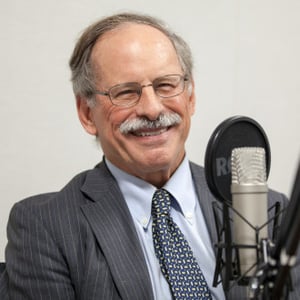
Freelance Journalist and Author
Stuart Taylor, Jr. is a Washington writer focusing on legal and policy issues and a National Journal contributing editor. He occasionally practices law.
Taylor has coauthored three books. All have been acclaimed by commentators across the ideological spectrum. In January 2017, KC Johnson and Taylor authored The Campus Rape Frenzy: The Attack on Due Process at America's Universities. In 2012, Richard Sander and Taylor authored Mismatch: How Affirmative Action Hurts Students It's Intended to Help, and Why Universities Won't Admit It. In 2007, Taylor and Johnson authored Until Proven Innocent: Political Correctness and the Shameful Injustices of the Duke Lacrosse Rape Fraud. Sander and Taylor have also filed amicus briefs in Supreme Court cases involving admissions preferences.
Since 1980, Taylor has done reporting and commentary about issues ranging from the biggest Supreme Court cases to race, voting rights, mindlessly excessive criminal penalties, guilt-presuming campus rape processes, journalistic bias, the death penalty, war powers, gerrymandering, guns, polarization, civil liberties, national security, torture, campaign finance, education, impeachment, and other issues. He has often been called one of the nation's best legal journalists and is known for challenging both liberal and conservative conventional wisdom.
Taylor was a reporter for The New York Times from 1980-1988, covering legal affairs and then the Supreme Court. He wrote commentaries and long features for The American Lawyer, Legal Times and their affiliates from 1989-1997, and for National Journal and Newsweek from 1998 through 2010. He has written (less often) on a freelance basis for numerous publications since 2010. He has written op-eds for The Washington Post, The New York Times, The Wall Street Journal, The Los Angeles Times, USA Today, and The New York Daily News and longer commentaries for RealClearPolitics, The Atlantic, The New Republic, the (late) Weekly Standard, National Review, Slate, The Daily Beast, Harper’s, Reader’s Digest, Time and other magazines. He has been interviewed on all major television and radio networks. He taught “Law and the News Media” at Stanford Law School in 2011 and 2012 and practices law on occasion.
Taylor graduated from Princeton University in 1970 with an A.B. in History. After working as a reporter for the Baltimore Evening Sun and Sun from 1971-1974, he moved to Harvard Law School, was a Harvard Law Review note editor, and graduated in 1977 at the top of his class, with high honors. He also won a Frederick Sheldon Traveling Fellowship and traveled around the world in 1977-1978 while studying freedom of the press in the United Kingdom and Kenya.
Taylor practiced law with Wilmer, Cutler & Pickering, in Washington, D.C., from 1977-1980 before returning to journalism in 1980 by joining the Washington Bureau of The New York Times.
Taylor's journalism honors include the 2009 Northern California Innocence Project Media Award for his work on the Duke lacrosse rape fraud; a 2002 National Headliner Award for best special magazine column on one subject; and a share of The American Lawyer’s National Magazine Award for a March 1990 special issue on the drug war. He was a National Magazine Award finalist in 1993 and 1997 and was nominated by The New York Times for a Pulitzer Prize in 1988.
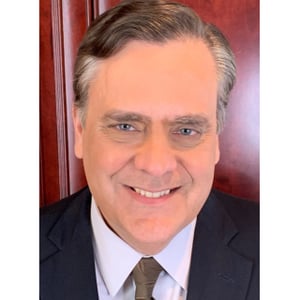
J.B. and Maurice C. Shapiro Professor of Public Interest Law; Director of the Environmental Law Advocacy Center; Executive Director, Project for Older Prisoners, The George Washington University Law School
Jonathan Turley is a nationally recognized legal scholar who has written extensively in areas ranging from constitutional law to legal theory to tort law. After a stint at Tulane Law School, Professor Turley joined the GW Law faculty in 1990, and in 1998, became the youngest chaired professor in the school’s history.
He is the founder and executive director of the Project for Older Prisoners (POPS). He has written more than three dozen academic articles that have appeared in a variety of leading law journals including those of Cornell, Duke, Georgetown, Harvard, and Northwestern Universities, among others. He most recently completed a three-part study of the historical and constitutional evolution of the military system.
Professor Turley has served as counsel in some of the most notable cases in the last two decades, including his representation of the Area 51 workers at a secret air base in Nevada; the nuclear couriers at Oak Ridge, Tennessee; the Rocky Flats grand jury in Colorado; Dr. Eric Foretich, the husband in the Elizabeth Morgan custody controversy; and four former U.S. Attorney Generals during the Clinton impeachment litigation. Professor Turley also has served as counsel in a variety of national security and terrorism cases, and has been ranked as one of the top 10 lawyers handling military cases.
He has served as a consultant on homeland security and constitutional issues, and is a frequent witness before the House and Senate on constitutional and statutory issues as well as tort reform legislation. He also is a nationally recognized legal commentator; he ranked 38th in the top 100 most cited ‘public intellectuals’ in a recent study by Judge Richard Posner and was found to be the second most cited law professor in the country.
He is a member of the USA Today board of contributors and the recipient of the “2005 Single Issue Advocate of the Year” – the annual opinion award for the Aspen Institute and The Week magazine. More than 400 of his articles on legal and policy issues regularly appear in national newspapers. He also has worked as the CBS and NBC legal analyst, respectively, during national controversies.
Associate Professor of Law, Southwestern Law School
Combining his training in law and medicine, Ryan Abbott has served as a consultant on health care policy and regulation, intellectual property, health care financing, and clinical research design for international organizations, academic institutions and private enterprises including the World Health Organization, World Intellectual Property Organization and University of California, Los Angeles. A licensed physician, attorney, patent agent and acupuncturist, he has considerable experience in the fields of public health, food and drug law, as well as technology transfer and development. Beginning with the Fall 2012 academic year, he brings that expertise to the Southwestern faculty.
After earning both his undergraduate and Master of Traditional Oriental Medicine degrees, summa cum laude, Professor Abbott went on to complete his M.D. degree at the University of California, San Diego School of Medicine, where he received the Weiss Medical Research Scholarship for research in Preventive Medicine. He also pursued his law degree at Yale Law School, where he was Editor and Submissions Editor of Yale Journal of Law and Technology and Yale Journal of Health Policy, Law, and Ethics, and the recipient of the Kirby Simon Fellowship for International Human Rights Work.
Just prior to joining Southwestern, Professor Abbott was a Resident Physician in Internal Medicine at Santa Clara Valley Medical Center, and recently served as Director of Research and Project Management at Nova Worldwide Consulting, a firm specializing in technical assistance and advice to governments and international organizations on the design and implementation of legislation and programs with respect to international trade, industrial development and intellectual property rights, and as Principal Investigator of biomedical research studies at UCLA.
Professor Abbott enjoys sharing his experience with his students. "As someone with a background in both law and medicine, I hope to provide students with a multidisciplinary approach to considering the complex issues they will face as attorneys," Professor Abbott explains. "This will help students to consider client issues from a variety of perspectives. Health care law is an important subject for lawyers; health care spending now makes up more than 18 percent of GDP, and a growing number of attorneys are finding health care related employment."
Professor Abbott has published widely on issues associated with health care law and intellectual property protection in legal, medical and scientific peer-reviewed journals. His current research is in the field of Bioinformatics, focused on the intellectual property implications of innovations related to human biological processes.

Laurence A. Tisch Professor of Law and Director, Classical Liberal Institute, New York University School of Law; Director, Classical Liberal Institute, Civitas Institute University of Texas at Austin
Richard A. Epstein is the Laurence A. Tisch Professor of Law, at New York University, a senior research fellow at the Civitas Institute at the University of Texas Austin, and a senior Lecturer, the University of Chicago. He received an LL.D., h.c . from the University of Ghent, 2003 , and an LLD h.c . from the University of Siegen in 2018 and the Bradley Prize in 2011. He has been a member of the American Academy of Arts and Sciences since 1985. He has edited both the Journal of Legal Studies (1981-1991) and the Journal of Law and Economics (1991-2001). He is also a founder and director of the Classical Liberal Institute at NYU Law School. His most recent book is The Classical Liberal Constitution: The Uncertain Quest for Limited Government (2014). His other books include Takings: Private Property and the Power of Eminent Domain ( 1985); Bargaining with the State (1993); Simple Rules for a Complex World (1995); Principles for a Free Society: Reconciling Individual Liberty and the Common Good (1998); Skepticism and Freedom: A Modern Theory of Classical Liberalism (2003); Design for Liberty: Private Property, Public Administration and the Rule of Law (2011), and most recently, The Myth of Birthright citizenship—and Beyond (2026). He has taught courses in , administrative law, antitrust, constitutional, contracts, environmental law, land use planning; real property, torts and water law. He has written and spoken extensively on a wide range of topics, and is writes a regular column for Defining Ideas.
Dean and CEO, Southwestern Law School
A legal education trailblazer many times over, Susan Westerberg Prager is Southwestern's 11th Dean and Chief Executive Officer, and the first woman in the history of the law school to serve in the post. She joined Southwestern in Fall 2013 following five years as Executive Director and Chief Executive Officer of the Association of American Law Schools (AALS). Dean Prager previously served in several leadership positions in higher education, including 16 years as Dean of UCLA School of Law.
"Southwestern is a remarkable place, with a rich tradition of making a difference in the futures of its students," Dean Prager said. "The law school's innovative and collaborative spirit is part of its DNA. The faculty and countless graduates are committed to helping today's students contribute to the complex and challenging worlds they will occupy as professionals. I feel privileged to have been asked to lead Southwestern Law School at this challenging and exciting time in legal education."
Early in her career, Dean Prager worked for California's senior U.S. Senator and minority whip Thomas Kuchel, Congressman Pete McCloskey, and California Assemblyman John Veneman from Modesto. She went on to complete her J.D. degree at UCLA School of Law, where she served as Editor-in-Chief of theUCLA Law Review.
Dean Prager practiced law in North Carolina and then returned to her alma mater in 1972 as a member of the UCLA law faculty, teaching in the areas of community property, family law, wills and trusts, and historic preservation. When she was named Dean a decade later, she was the first female law dean in the University of California system and one of only two women serving in that capacity in the entire country. She served from 1982 to 1998, the longest tenure of any law dean in UCLA history, and was also the first UCLA graduate to serve in the post.
Dean Prager worked with the UCLA law faculty and university administration to strengthen the intellectual environment and operation of the law school. She cultivated a culture of excellence in both research and teaching, furthered diversity within the student body, and oversaw the appointment of dynamic new faculty and endowed chair holders. She enhanced the curriculum in areas such as international, environmental, public interest, entertainment and corporate law, and spearheaded the expansion of the clinical program. Her legacy includes two major building projects, the Clinical Wing and the Hugh & Hazel Darling Law Library, as well as major advancements in technology, the launch of the law school's first major fundraising efforts, and the successful completion of one of the University of California's first major building project public-private partnerships. Upon her departure from the deanship, the law school established a named faculty chair in her honor.
While at UCLA, Dean Prager became the second woman ever elected as President of the AALS, and also served on the governing boards of the Law School Admission Council and the Council of the American Bar Association Section of Legal Education and Admissions to the Bar.
In 1999, Dean Prager left the legal academy to pursue other opportunities in higher education, serving as Provost of Dartmouth College and as President of Occidental College in Los Angeles. In 2008, she was named Executive Director and Chief Executive Officer of the AALS, the nation's principal representative of America's law schools and the scholarly society of the law teaching profession. As the top administrator of the organization, she worked with the volunteer executive board and faculty committees in evaluating schools for membership and providing programs designed to enhance law deans, faculty and administrators' effectiveness, including the AALS Annual Meeting, the largest gathering of law professors in the world. Under her leadership, the AALS furthered its core values; brought issues of importance to law schools before legislative bodies, courts and administrative agencies; and influenced the debate over the standards for law school accreditation.
Dean Prager was a trustee of Stanford University for 14 years, and has been a member of the Board of Directors of the Pacific Mutual Holding Company (Pacific Life) since 1979, the Access Group (non-profit student loan corporation) and the American Council on Legal Education, and was a member of the California Commission on Campaign Financing and the California Community Colleges Commission on Innovation. An outspoken advocate for intellectual and racial diversity throughout her career, Dean Prager has counseled community groups and legislators and testified before congressional subcommittees in the affirmative action debate.
The recipient of the Los Angeles Mexican American Legal Defense and Education Fund's (MALDEF) 1997 Legal Services Award, Dean Prager was honored with the Los Angeles Israel Cancer Research Fund's Women of Action Award (1996), and the Madrina Award of the UCLA Latino Alumni Association (1998). On the occasion of the conclusion of her tenure as Dean, the UCLA Law Alumni Association presented her with its first Lifetime Achievement Award. She later received The Edward A. Dickson Award, the highest award of the greater UCLA Alumni Association.
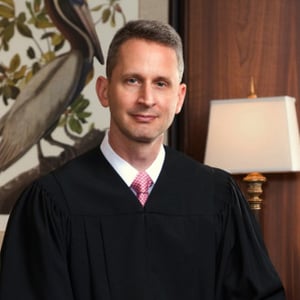
Judge, United States Court of Appeals, Fifth Circuit
Judge Duncan received his B.A. from Louisiana State University in 1994, his J.D. from the Paul M. Hebert Law Center at Louisiana State University in 1997, and his LL.M. from Columbia Law School in 2004.
After graduating from law school, he clerked for Louisiana-based Circuit Judge John Malcolm Duhé Jr. of the United States Court of Appeals for the Fifth Circuit.
From 2008–2012, Duncan served as Appellate Chief for Louisiana's Attorney General's office. From 2012–2014, he served as general counsel of the Becket Fund for Religious Liberty. From 2004-2008, he was an assistant professor of law at the University of Mississippi School of Law.
Before becoming a judge, Duncan practiced at the Washington, D.C. firm of Schaerr Duncan LLP, where he was a founding partner. He was appointed by President Trump to the United States Court of Appeals for the Fifth Circuit on May 1, 2018.
Senior Fellow, Governance Studies, The Brookings Institution
William A. Galston holds the Ezra K. Zilkha Chair in the Brookings Institution’s Governance Studies Program, where he serves as a senior fellow. A former policy advisor to President Clinton and presidential candidates, Galston is an expert on domestic policy, political campaigns, and elections. His current research focuses on designing a new social contract and the implications of political polarization.
He is also College Park Professor at the University of Maryland. Prior to January 2006, he was Saul Stern Professor and Acting Dean at the School of Public Policy, University of Maryland, director of the Institute for Philosophy and Public Policy, founding director of the Center for Information and Research on Civic Learning and Engagement (CIRCLE), and executive director of the National Commission on Civic Renewal, co-chaired by William Bennett and Sam Nunn. A participant in six presidential campaigns, he served from 1993 to 1995 as Deputy Assistant to President Clinton for Domestic Policy. From 1969 to 1970 Galston served as a member of the United States Marine Corps and was honorably discharged.
Galston is the author of eight books and more than 100 articles in the fields of political theory, public policy, and American politics. His most recent books are Liberal Pluralism (Cambridge, 2002), The Practice of Liberal Pluralism (Cambridge, 2004), and Public Matters (Rowman & Littlefield, 2005). A winner of the American Political Science Association’s Hubert H. Humphrey Award, he was elected a Fellow of the American Academy of Arts and Sciences in 2004.
Galston has appeared on all the principal television networks and is a frequent commentator on NPR. He writes a weekly column for the Wall Street Journal.
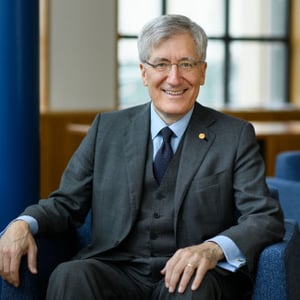
McCormick Professor of Jurisprudence; Director, James Madison Program, Princeton University
Robert P. George is McCormick Professor of Jurisprudence and Director of the James Madison Program in American Ideals and Institutions at Princeton University. He has several times been a Visiting Professor at Harvard Law School. He has served as Chairman of the U.S. Commission on International Religious Freedom and on the U.S. Commission on Civil Rights and the President’s Council on Bioethics. He has also served as the U.S. member of UNESCO’s World Commission on the Ethics of Scientific Knowledge and Technology. He was a Judicial Fellow at the Supreme Court of the United States, where he received the Justice Tom C. Clark Award. A Phi Beta Kappa graduate of Swarthmore, he holds the degrees of J.D. and M.T.S. from Harvard University and the degrees of D.Phil., B.C.L., D.C.L., and D.Litt. from Oxford University, in addition to twenty-one honorary doctorates. He is a recipient of the U.S. Presidential Citizens Medal, the Honorific Medal for the Defense of Human Rights of the Republic of Poland, the Canterbury Medal of the Becket Fund for Religious Liberty, the Bradley Prize, the Irving Kristol Award of the American Enterprise Institute, and Princeton University’s President’s Award for Distinguished Teaching. His books include Making Men Moral: Civil Liberties and Public Morality and In Defense of Natural Law (both published by Oxford University Press), as well as The Clash of Orthodoxies and Conscience and Its Enemies (both published by ISI Books).
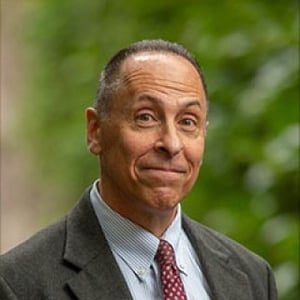
John Paul Stevens Professor of Law, Northwestern University School of Law
Andrew Koppelman is John Paul Stevens Professor of Law, Professor (by courtesy) of Political Science, and Philosophy Department Affiliated Faculty at Northwestern University. He received the Walder Award for Research Excellence from Northwestern, the Hart-Dworkin award in legal philosophy from the Association of American Law Schools, and the Edward S. Corwin Prize from the American Political Science Association. His scholarship focuses on issues at the intersection of law and political philosophy. He has written more than 100 scholarly articles and eight books, most recently Burning Down the House: How Libertarian Philosophy Was Corrupted by Delusion and Greed, (St. Martin’s Press). His column appears regularly at The Hill. You can find his recent work at andrewkoppelman.com.
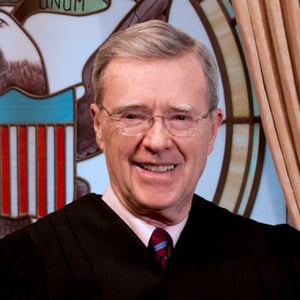
Judge, United States Court of Appeals, Ninth Circuit
Judge O’Scannlain was appointed United States Circuit Judge for the Ninth Circuit by President Reagan on September 26, 1986. He received a J.D. degree in 1963 from Harvard Law School and a B.A. in 1957 from St. John’s University. He also earned the LL.M. (Judicial Process) degree at University of Virginia Law School in 1992. He was awarded the LL.D. (honoris causa) degree by the University of Notre Dame in 2002, the LL.D. (honoris causa) degree by Lewis & Clark College in 2003 and the LL.D. (honoris causa) degree by the University of Portland in 2011.
As a judge on the U.S. Court of Appeals for the Ninth Circuit, Judge O’Scannlain has participated in over 6,000 federal cases and has written hundreds of published opinions on a broad range of subjects including constitutional law, international law, securities law, administrative law, and criminal law. He hears appeals in San Francisco (court headquarters), as well as in Los Angeles (Pasadena), Portland, Seattle, Anchorage and Honolulu. The late Chief Justice Rehnquist appointed Judge O'Scannlain to the Federal Judicial Center's Advisory Committee on Appellate Judge Education. In 2009, Chief Justice Roberts appointed Judge O’Scannlain to the International Judicial Relations Committee of the U.S. Judicial Conference and subsequently appointed him Chairman in 2010.
President George W. Bush appointed Judge O’Scannlain to the Board of Trustees of the James Madison Memorial Fellowship Foundation in 2004. Pope Benedict XVI conferred the Order of Saint Gregory the Great on Judge and Mrs. O’Scannlain in 2007.
Judge O’Scannlain’s professional interests also include judicial administration and reform, and continuing legal education. Judge O’Scannlain is former Chair of the Judicial Division of the American Bar Association and has previously chaired the ABA’s Appellate Judges Conference, its Committee on Appellate Practice, and its 9th Appellate Practice Institute. He has testified before the Senate Judiciary Committee on several occasions, the House Judiciary Subcommittee on Courts and Intellectual Property, and the Commission on Structural Alternatives for the Federal Courts of Appeals on the subject of court reorganization. In addition to serving as a faculty member at numerous federal appellate practice seminars for judges and attorneys, including New York University Law School’s Institute for Judicial Administration, Judge O’Scannlain is an Adjunct Professor at Lewis & Clark Law School where he teaches a seminar on the Supreme Court. He has served as a Moot Court Judge at distinguished law schools across the United States including Harvard, Yale Stanford, Boalt Hall (Berkeley Law), Virginia, Cornell, Notre Dame, Fordham, Alabama, University of Southern California, King Hall (U.C. Davis) and Loyola Marymount University and in China at Xiamen and Renmin Universities.
Between graduation from Harvard and investiture as a federal judge, Judge O’Scannlain was primarily engaged in private law practice. Between 1969 and 1974, he was consecutively the Deputy Attorney General of Oregon, the Public Utility Commissioner of Oregon, and Director of the Oregon Department of Environmental Quality. He retired from the U.S. Army Reserve in 1978 as a Major after 23 years Reserve and National Guard service, including four years as an enlisted man.
A first generation Irish-American son of immigrant parents from Sligo and Derry, Judge O’Scannlain is married to the former Maura Nolan and has eight children: Sean, Jane, Brendan, Kevin, Megan, Christopher, Anne, and Kate, and nineteen grandchildren. His chambers are in the Pioneer Courthouse in Portland, Oregon.
Judge, United States Court of Appeals, Fifth Circuit
Judge Duncan received his B.A. from Louisiana State University in 1994, his J.D. from the Paul M. Hebert Law Center at Louisiana State University in 1997, and his LL.M. from Columbia Law School in 2004.
After graduating from law school, he clerked for Louisiana-based Circuit Judge John Malcolm Duhé Jr. of the United States Court of Appeals for the Fifth Circuit.
From 2008–2012, Duncan served as Appellate Chief for Louisiana's Attorney General's office. From 2012–2014, he served as general counsel of the Becket Fund for Religious Liberty. From 2004-2008, he was an assistant professor of law at the University of Mississippi School of Law.
Before becoming a judge, Duncan practiced at the Washington, D.C. firm of Schaerr Duncan LLP, where he was a founding partner. He was appointed by President Trump to the United States Court of Appeals for the Fifth Circuit on May 1, 2018.
Senior Fellow, Governance Studies, The Brookings Institution
William A. Galston holds the Ezra K. Zilkha Chair in the Brookings Institution’s Governance Studies Program, where he serves as a senior fellow. A former policy advisor to President Clinton and presidential candidates, Galston is an expert on domestic policy, political campaigns, and elections. His current research focuses on designing a new social contract and the implications of political polarization.
He is also College Park Professor at the University of Maryland. Prior to January 2006, he was Saul Stern Professor and Acting Dean at the School of Public Policy, University of Maryland, director of the Institute for Philosophy and Public Policy, founding director of the Center for Information and Research on Civic Learning and Engagement (CIRCLE), and executive director of the National Commission on Civic Renewal, co-chaired by William Bennett and Sam Nunn. A participant in six presidential campaigns, he served from 1993 to 1995 as Deputy Assistant to President Clinton for Domestic Policy. From 1969 to 1970 Galston served as a member of the United States Marine Corps and was honorably discharged.
Galston is the author of eight books and more than 100 articles in the fields of political theory, public policy, and American politics. His most recent books are Liberal Pluralism (Cambridge, 2002), The Practice of Liberal Pluralism (Cambridge, 2004), and Public Matters (Rowman & Littlefield, 2005). A winner of the American Political Science Association’s Hubert H. Humphrey Award, he was elected a Fellow of the American Academy of Arts and Sciences in 2004.
Galston has appeared on all the principal television networks and is a frequent commentator on NPR. He writes a weekly column for the Wall Street Journal.
McCormick Professor of Jurisprudence; Director, James Madison Program, Princeton University
Robert P. George is McCormick Professor of Jurisprudence and Director of the James Madison Program in American Ideals and Institutions at Princeton University. He has several times been a Visiting Professor at Harvard Law School. He has served as Chairman of the U.S. Commission on International Religious Freedom and on the U.S. Commission on Civil Rights and the President’s Council on Bioethics. He has also served as the U.S. member of UNESCO’s World Commission on the Ethics of Scientific Knowledge and Technology. He was a Judicial Fellow at the Supreme Court of the United States, where he received the Justice Tom C. Clark Award. A Phi Beta Kappa graduate of Swarthmore, he holds the degrees of J.D. and M.T.S. from Harvard University and the degrees of D.Phil., B.C.L., D.C.L., and D.Litt. from Oxford University, in addition to twenty-one honorary doctorates. He is a recipient of the U.S. Presidential Citizens Medal, the Honorific Medal for the Defense of Human Rights of the Republic of Poland, the Canterbury Medal of the Becket Fund for Religious Liberty, the Bradley Prize, the Irving Kristol Award of the American Enterprise Institute, and Princeton University’s President’s Award for Distinguished Teaching. His books include Making Men Moral: Civil Liberties and Public Morality and In Defense of Natural Law (both published by Oxford University Press), as well as The Clash of Orthodoxies and Conscience and Its Enemies (both published by ISI Books).
John Paul Stevens Professor of Law, Northwestern University School of Law
Andrew Koppelman is John Paul Stevens Professor of Law, Professor (by courtesy) of Political Science, and Philosophy Department Affiliated Faculty at Northwestern University. He received the Walder Award for Research Excellence from Northwestern, the Hart-Dworkin award in legal philosophy from the Association of American Law Schools, and the Edward S. Corwin Prize from the American Political Science Association. His scholarship focuses on issues at the intersection of law and political philosophy. He has written more than 100 scholarly articles and eight books, most recently Burning Down the House: How Libertarian Philosophy Was Corrupted by Delusion and Greed, (St. Martin’s Press). His column appears regularly at The Hill. You can find his recent work at andrewkoppelman.com.
Judge, United States Court of Appeals, Ninth Circuit
Judge O’Scannlain was appointed United States Circuit Judge for the Ninth Circuit by President Reagan on September 26, 1986. He received a J.D. degree in 1963 from Harvard Law School and a B.A. in 1957 from St. John’s University. He also earned the LL.M. (Judicial Process) degree at University of Virginia Law School in 1992. He was awarded the LL.D. (honoris causa) degree by the University of Notre Dame in 2002, the LL.D. (honoris causa) degree by Lewis & Clark College in 2003 and the LL.D. (honoris causa) degree by the University of Portland in 2011.
As a judge on the U.S. Court of Appeals for the Ninth Circuit, Judge O’Scannlain has participated in over 6,000 federal cases and has written hundreds of published opinions on a broad range of subjects including constitutional law, international law, securities law, administrative law, and criminal law. He hears appeals in San Francisco (court headquarters), as well as in Los Angeles (Pasadena), Portland, Seattle, Anchorage and Honolulu. The late Chief Justice Rehnquist appointed Judge O'Scannlain to the Federal Judicial Center's Advisory Committee on Appellate Judge Education. In 2009, Chief Justice Roberts appointed Judge O’Scannlain to the International Judicial Relations Committee of the U.S. Judicial Conference and subsequently appointed him Chairman in 2010.
President George W. Bush appointed Judge O’Scannlain to the Board of Trustees of the James Madison Memorial Fellowship Foundation in 2004. Pope Benedict XVI conferred the Order of Saint Gregory the Great on Judge and Mrs. O’Scannlain in 2007.
Judge O’Scannlain’s professional interests also include judicial administration and reform, and continuing legal education. Judge O’Scannlain is former Chair of the Judicial Division of the American Bar Association and has previously chaired the ABA’s Appellate Judges Conference, its Committee on Appellate Practice, and its 9th Appellate Practice Institute. He has testified before the Senate Judiciary Committee on several occasions, the House Judiciary Subcommittee on Courts and Intellectual Property, and the Commission on Structural Alternatives for the Federal Courts of Appeals on the subject of court reorganization. In addition to serving as a faculty member at numerous federal appellate practice seminars for judges and attorneys, including New York University Law School’s Institute for Judicial Administration, Judge O’Scannlain is an Adjunct Professor at Lewis & Clark Law School where he teaches a seminar on the Supreme Court. He has served as a Moot Court Judge at distinguished law schools across the United States including Harvard, Yale Stanford, Boalt Hall (Berkeley Law), Virginia, Cornell, Notre Dame, Fordham, Alabama, University of Southern California, King Hall (U.C. Davis) and Loyola Marymount University and in China at Xiamen and Renmin Universities.
Between graduation from Harvard and investiture as a federal judge, Judge O’Scannlain was primarily engaged in private law practice. Between 1969 and 1974, he was consecutively the Deputy Attorney General of Oregon, the Public Utility Commissioner of Oregon, and Director of the Oregon Department of Environmental Quality. He retired from the U.S. Army Reserve in 1978 as a Major after 23 years Reserve and National Guard service, including four years as an enlisted man.
A first generation Irish-American son of immigrant parents from Sligo and Derry, Judge O’Scannlain is married to the former Maura Nolan and has eight children: Sean, Jane, Brendan, Kevin, Megan, Christopher, Anne, and Kate, and nineteen grandchildren. His chambers are in the Pioneer Courthouse in Portland, Oregon.

Tazewell Taylor Professor of Law and William H. Cabell Research Professor, William & Mary Law School
Jonathan H. Adler joined the William & Mary law faculty as the Tazwell Taylor Professor of Law and William H. Cabell Research Professor in 2025. Prior to joining the faculty, he was the inaugural Johan Verheij Memorial Professor of Law and the founding Director of the Coleman P. Burke Center for Environmental Law at the Case Western Reserve University School of Law.
Professor Adler is the author or editor of seven books, including Climate Liberalism: Perspectives on Liberty, Property and Pollution (Palgrave, 2023), Marijuana Federalism: Uncle Sam and Mary Jane (Brookings Institution Press, 2020), Business and the Roberts Court (Oxford University Press, 2016) and Rebuilding the Ark: New Perspectives on Endangered Species Act Reform (AEI Press, 2011).
His articles have appeared in publications ranging from the Harvard Environmental Law Review and Yale Journal on Regulation to the Wall Street Journal, New York Times, and Washington Post. He has testified before Congress a dozen times, and his work has been cited in the U.S. Supreme Court. A 2024 study identified Professor Adler as the seventh most cited legal academic in administrative and environmental law from 2019 to 2023.
Professor Adler is a contributing editor to Civitas Outlook and a regular contributor to the popular legal blog, The Volokh Conspiracy. A regular commentator on constitutional and regulatory issues, he has appeared on numerous radio and television programs, ranging from the PBS Newshour and National Public Radio to the Fox News Channel and Entertainment Tonight.
Professor Adler is a senior fellow at the Property & Environment Research Center in Bozeman, Montana. In 2018, Professor Adler was elected to membership in the American Law Institute and helped co-found the organization Checks and Balances. In 2024, Professor Adler was appointed a public member of the Administrative Conference of the United States.
Professor Adler clerked for the Honorable David B. Sentelle on the U.S. Court of Appeals for the District of Columbia Circuit.
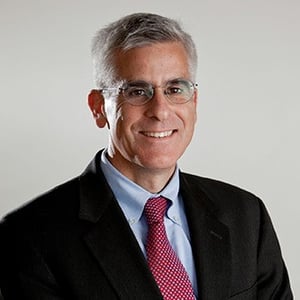
Resident Fellow and Milton Friedman Chair, American Enterprise Institute
James C. Capretta is a resident fellow and holds the Milton Friedman Chair at the American Enterprise Institute (AEI), where he studies health care, entitlement, and US budget policy, as well as global trends in aging, health, and retirement programs.
Concurrently, Mr. Capretta serves as a senior adviser to the Bipartisan Policy Center and, since 2011, as a member of the Advisory Board of the National Institute for Health Care Management Foundation.
He spent more than 16 years in public service before joining AEI. As an associate director at the White House’s Office of Management and Budget from 2001 to 2004, he was responsible for all health care, Social Security, welfare, and labor and education issues. Earlier, he served as a senior health policy analyst at the US Senate Budget Committee and at the US House Committee on Ways and Means. From 2006 to 2016, Mr. Capretta was a fellow, and later a senior fellow, at the Ethics & Public Policy Center.
Mr. Capretta is also a contributor to RealClearPolicy, where he regularly publishes commentary on public policy issues.
He is the author and coauthor of many published essays and reports, including “Toward Meaningful Price Transparency in Health Care” (AEI Economic Perspectives, 2019); “Increasing the Effectiveness and Sustainability of the Nation’s Entitlement Programs” (AEI, 2016) and “Improving Health and Health Care: An Agenda for Reform” (AEI, 2015). In addition, his book chapters include “Medicaid” in “A Safety Net That Works: Improving Federal Programs for Low-Income Americans” (AEI Press, 2017) and “Reforming Medicaid” in “The Economics of Medicaid: Assessing the Costs and Consequences” (Mercatus Center, 2014).
Mr. Capretta has been widely published in newspapers, magazines, and trade journals, including Health Affairs (where he is a member of the Editorial Board), The JAMA Network, National Affairs, National Review, The New York Times, and The Wall Street Journal. His television appearances include “PBS NewsHour,” Fox News Sunday, C-SPAN’s “Washington Journal,” CNBC, and Bloomberg Television.
Mr. Capretta has an MA in public policy studies from Duke University and a BA in government from the University of Notre Dame.
Senior Fellow, Center for Equal Opportunity
Eastland is an accomplished journalist who was editor of The Virginian-Pilot in Norfolk, Va., before working in the Reagan administration as a speechwriter for Attorney General William French Smith and as director of public affairs for Attorney General Edwin Meese.
Eastland was later a resident scholar at the Ethics and Public Policy Center and the editor of Forbes MediaCritic. In 2001, he became publisher of The Weekly Standard and, in 2013, an executive editor. He is now a contributing editor at the magazine. Eastland has published seven books, including two on race preferences, Counting by Race (1979) and Ending Affirmative Action (1996). "The Center has done exceptional work on matters involving race and ethnicity," said Eastland, "and I look forward to contributing to its efforts in behalf of equal protection under the law."
CEO president and general counsel Roger Clegg recalled his work with Eastland during their days together in the Reagan Justice Department: "Terry is an expert on the media, a skilled editor, and a brilliant writer." CEO chairman and founder Linda Chavez said, "Eastland's writing on affirmative action has been among the most incisive and compelling on the issue over the years and will add depth to CEO's work in this arena."
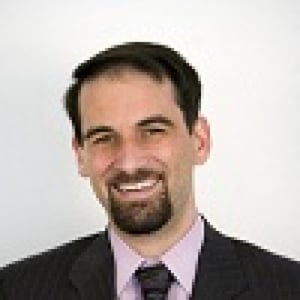
Senior Policy Analyst, Constitutional Policy, Center for American Progress
Ian Millhiser is the Senior Constitutional Policy Analyst for American Progress, where his work focuses on the Constitution and the judiciary.
Ian previously was a Policy Analyst and Blogger for ThinkProgress, held the open government portfolio for CAP’s Doing What Works project, and was a Legal Research Analyst with ThinkProgress during the nomination and confirmation of Justice Sonia Sotomayor to the United States Supreme Court. He also clerked for Judge Eric L. Clay of the United States Court of Appeals for the Sixth Circuit, and has worked as an attorney with the National Senior Citizens Law Center’s Federal Rights Project, as assistant director for communications with the American Constitution Society, and as a Teach For America corps member in the Mississippi Delta.
He received a B.A. in philosophy from Kenyon College and a J.D., magna cum laude, from Duke University, where he served as senior note editor on the Duke Law Journal and was elected to the Order of the Coif. Ian is a frequent speaker on constitutional topics, and has spoken at numerous law schools including Yale, Michigan, Georgetown, Berkeley, New York University, and Boston College. His writings appeared in a diversity of legal and mainstream publications, including The New York Times, the Los Angeles Times, U.S. News and World Report, The Guardian, AOLNews, The American Prospect, Politico, Huffington Post, Slate, The National Law Journal, The Yale Law & Policy Review, and The Duke Law Journal. He has been a guest on CNN, MSNBC, Al Jazerra, and Fox News, and many radio stations including NPR and the BBC.
Tazewell Taylor Professor of Law and William H. Cabell Research Professor, William & Mary Law School
Jonathan H. Adler joined the William & Mary law faculty as the Tazwell Taylor Professor of Law and William H. Cabell Research Professor in 2025. Prior to joining the faculty, he was the inaugural Johan Verheij Memorial Professor of Law and the founding Director of the Coleman P. Burke Center for Environmental Law at the Case Western Reserve University School of Law.
Professor Adler is the author or editor of seven books, including Climate Liberalism: Perspectives on Liberty, Property and Pollution (Palgrave, 2023), Marijuana Federalism: Uncle Sam and Mary Jane (Brookings Institution Press, 2020), Business and the Roberts Court (Oxford University Press, 2016) and Rebuilding the Ark: New Perspectives on Endangered Species Act Reform (AEI Press, 2011).
His articles have appeared in publications ranging from the Harvard Environmental Law Review and Yale Journal on Regulation to the Wall Street Journal, New York Times, and Washington Post. He has testified before Congress a dozen times, and his work has been cited in the U.S. Supreme Court. A 2024 study identified Professor Adler as the seventh most cited legal academic in administrative and environmental law from 2019 to 2023.
Professor Adler is a contributing editor to Civitas Outlook and a regular contributor to the popular legal blog, The Volokh Conspiracy. A regular commentator on constitutional and regulatory issues, he has appeared on numerous radio and television programs, ranging from the PBS Newshour and National Public Radio to the Fox News Channel and Entertainment Tonight.
Professor Adler is a senior fellow at the Property & Environment Research Center in Bozeman, Montana. In 2018, Professor Adler was elected to membership in the American Law Institute and helped co-found the organization Checks and Balances. In 2024, Professor Adler was appointed a public member of the Administrative Conference of the United States.
Professor Adler clerked for the Honorable David B. Sentelle on the U.S. Court of Appeals for the District of Columbia Circuit.
Resident Fellow and Milton Friedman Chair, American Enterprise Institute
James C. Capretta is a resident fellow and holds the Milton Friedman Chair at the American Enterprise Institute (AEI), where he studies health care, entitlement, and US budget policy, as well as global trends in aging, health, and retirement programs.
Concurrently, Mr. Capretta serves as a senior adviser to the Bipartisan Policy Center and, since 2011, as a member of the Advisory Board of the National Institute for Health Care Management Foundation.
He spent more than 16 years in public service before joining AEI. As an associate director at the White House’s Office of Management and Budget from 2001 to 2004, he was responsible for all health care, Social Security, welfare, and labor and education issues. Earlier, he served as a senior health policy analyst at the US Senate Budget Committee and at the US House Committee on Ways and Means. From 2006 to 2016, Mr. Capretta was a fellow, and later a senior fellow, at the Ethics & Public Policy Center.
Mr. Capretta is also a contributor to RealClearPolicy, where he regularly publishes commentary on public policy issues.
He is the author and coauthor of many published essays and reports, including “Toward Meaningful Price Transparency in Health Care” (AEI Economic Perspectives, 2019); “Increasing the Effectiveness and Sustainability of the Nation’s Entitlement Programs” (AEI, 2016) and “Improving Health and Health Care: An Agenda for Reform” (AEI, 2015). In addition, his book chapters include “Medicaid” in “A Safety Net That Works: Improving Federal Programs for Low-Income Americans” (AEI Press, 2017) and “Reforming Medicaid” in “The Economics of Medicaid: Assessing the Costs and Consequences” (Mercatus Center, 2014).
Mr. Capretta has been widely published in newspapers, magazines, and trade journals, including Health Affairs (where he is a member of the Editorial Board), The JAMA Network, National Affairs, National Review, The New York Times, and The Wall Street Journal. His television appearances include “PBS NewsHour,” Fox News Sunday, C-SPAN’s “Washington Journal,” CNBC, and Bloomberg Television.
Mr. Capretta has an MA in public policy studies from Duke University and a BA in government from the University of Notre Dame.
Senior Fellow, Center for Equal Opportunity
Eastland is an accomplished journalist who was editor of The Virginian-Pilot in Norfolk, Va., before working in the Reagan administration as a speechwriter for Attorney General William French Smith and as director of public affairs for Attorney General Edwin Meese.
Eastland was later a resident scholar at the Ethics and Public Policy Center and the editor of Forbes MediaCritic. In 2001, he became publisher of The Weekly Standard and, in 2013, an executive editor. He is now a contributing editor at the magazine. Eastland has published seven books, including two on race preferences, Counting by Race (1979) and Ending Affirmative Action (1996). "The Center has done exceptional work on matters involving race and ethnicity," said Eastland, "and I look forward to contributing to its efforts in behalf of equal protection under the law."
CEO president and general counsel Roger Clegg recalled his work with Eastland during their days together in the Reagan Justice Department: "Terry is an expert on the media, a skilled editor, and a brilliant writer." CEO chairman and founder Linda Chavez said, "Eastland's writing on affirmative action has been among the most incisive and compelling on the issue over the years and will add depth to CEO's work in this arena."
Senior Policy Analyst, Constitutional Policy, Center for American Progress
Ian Millhiser is the Senior Constitutional Policy Analyst for American Progress, where his work focuses on the Constitution and the judiciary.
Ian previously was a Policy Analyst and Blogger for ThinkProgress, held the open government portfolio for CAP’s Doing What Works project, and was a Legal Research Analyst with ThinkProgress during the nomination and confirmation of Justice Sonia Sotomayor to the United States Supreme Court. He also clerked for Judge Eric L. Clay of the United States Court of Appeals for the Sixth Circuit, and has worked as an attorney with the National Senior Citizens Law Center’s Federal Rights Project, as assistant director for communications with the American Constitution Society, and as a Teach For America corps member in the Mississippi Delta.
He received a B.A. in philosophy from Kenyon College and a J.D., magna cum laude, from Duke University, where he served as senior note editor on the Duke Law Journal and was elected to the Order of the Coif. Ian is a frequent speaker on constitutional topics, and has spoken at numerous law schools including Yale, Michigan, Georgetown, Berkeley, New York University, and Boston College. His writings appeared in a diversity of legal and mainstream publications, including The New York Times, the Los Angeles Times, U.S. News and World Report, The Guardian, AOLNews, The American Prospect, Politico, Huffington Post, Slate, The National Law Journal, The Yale Law & Policy Review, and The Duke Law Journal. He has been a guest on CNN, MSNBC, Al Jazerra, and Fox News, and many radio stations including NPR and the BBC.
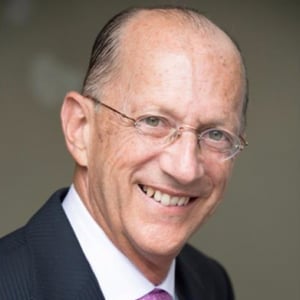
President, Cass & Associates, PC
Ronald A. Cass is Dean Emeritus of Boston University School of Law (where he was Dean from 1990-2004), President of Cass & Associates, PC, former Vice-Chairman and Commissioner of the U.S. International Trade Commission, former faculty member at Boston University School of Law and the University of Virginia Law School, and Distinguished Senior Fellow at the C. Boyden Gray Center for the Study of the Administrative State. Dean Cass also sits as an arbitrator for commercial, international, and intellectual property rights disputes, and is a former United States member of the Panel of Conciliators of the International Centre for Settlement of Investment Disputes. He is a member of the Council of the Administrative Conference of the United States and has received seven presidential appointments, spanning Presidents Ronald Reagan to Donald J. Trump.
As a law professor, lecturer, and scholar, Dean Cass has been teaching and writing about a wide array of legal issues on topics such as administrative law and regulation, antitrust, constitutional law, communications, intellectual property, international trade, separation of powers, and legal process. He has published more than 160 scholarly books, chapters, articles, and papers, including a leading casebook on administrative law. Dean Cass has taught judges as well as students in schools of law, economics, business, and public policy and has held academic appointments in the United States, Europe, and Latin America.
In addition to his academic work, Dean Cass has participated in numerous important legal cases as an amicus, consultant, or expert, and has advised businesses, law firms, investment funds, and government agencies on a range of trade, antitrust, intellectual property, and regulatory issues. He has a broad range of affiliations with professional groups, and has received numerous honors, fellowships and awards.
Dean Cass is a graduate of the University of Virginia and the University of Chicago Law School.
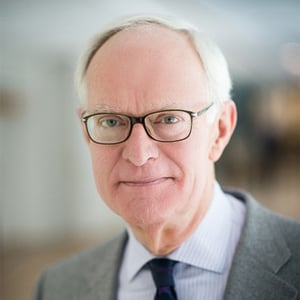
Distinguished Fellow, Hudson Institute
Christopher DeMuth is a distinguished fellow at Hudson Institute. He was president of the American Enterprise Institute for Public Policy Research (AEI) from 1986 to 2008 and was the D.C. Searle Senior Fellow at AEI from 2008 to 2011.
Mr. DeMuth was raised in Kenilworth, Illinois, and attended the Lawrenceville School (1964), Harvard College (A.B. 1968), and the University of Chicago Law School (J.D. 1973). He served as staff assistant to President Richard M. Nixon from 1969 to 1970, working first for Daniel P. Moynihan (then assistant to the President for Urban Affairs) on urban policy matters and then as chairman of the White House Task Force on Environmental Policy. Following law school, he practiced regulatory, antitrust, and general corporate law with Sidley & Austin in Chicago (1973-1976) and was associate general counsel of the Consolidated Rail Corporation (Conrail) in Philadelphia (1976-1977).
From 1977 to 1981, Mr. DeMuth was lecturer in public policy at the Kennedy School of Government at Harvard University, and director of the Harvard Faculty Project on Regulation. There he taught courses on law, economics, and regulatory policy and conducted and sponsored research on health, safety, environmental, and economic regulation.
Returning to Washington in 1981, Mr. DeMuth served as administrator for information and regulatory affairs in the U.S. Office of Management and Budget, and as executive director of the Presidential Task Force on Regulatory Relief during President Ronald Reagan’s first term of office. From 1984 to 1986, he was managing director of Lexecon Inc., a law-and-economics consulting firm; in 1986, he was also publisher and editor-in-chief of Regulation magazine. He was elected president of the American Enterprise Institute in December 1986.
Many of Mr. DeMuth’s articles, lectures, and occasional talks are posted on his website (https://www.ccdemuth.com).

Judge, United States Court of Appeals, Third Circuit
Judge Hardiman was appointed to the United States Court of Appeals for the Third Circuit on January 9, 2007 and was confirmed by the Senate (95-0) on March 15, 2007. Prior to becoming an appellate judge, Judge Hardiman served as a trial judge on the United States District Court for the Western District of Pennsylvania as of November 1, 2003. In 2008, Chief Justice John Roberts appointed Judge Hardiman to the Information Technology Committee of the Judicial Conference of the United States. Judge Hardiman was appointed Chairman of the IT Committee in 2013 and served in that capacity until September 2021. In 2021 he was appointed by the Director of the Administrative Office of the United States Courts to serve as Chair of the Judiciary IT Security Task Force, which completed its work in fall 2023. Chief Justice Roberts appointed Judge Hardiman to the Board of the Federal Judicial Center to serve from March 2020 until March 2024. As part of his work with the Center, Judge Hardiman now serves as Editor in Chief for the Manual for Complex Civil Litigation, Fifth.
Before entering judicial service, Judge Hardiman handled a wide variety of litigation matters in state and federal trial and appellate courts as a partner at Reed Smith LLP (1999-2003), a partner at Titus & McConomy LLP (1996-1999), and as an associate with its predecessor firm, Cindrich & Titus (1992-1996). Judge Hardiman began his legal career as an associate in the Washington, D.C. office of Skadden, Arps, Slate, Meagher & Flom (1990-1992).
A 1987 honors graduate of the University of Notre Dame, Judge Hardiman received his law degree in 1990 from the Georgetown University Law Center, where he served as a Notes and Comments Editor on the Georgetown Law Journal. In 2012, Judge Hardiman was elected as a member of the American Law Institute and was elected to its Council in 2019 and its Executive Committee in 2025. Judge Hardiman regularly teaches a seminar on Advanced Constitutional Law at Duquesne University School of Law and a one-week course entitled “Constitutional Law: the First and Second Amendments” at Georgetown University Law Center.
A native of Waltham, Massachusetts, Judge Hardiman has chambers in Pittsburgh, Pennsylvania. He and his wife Lori married in 1992 and have three children.
Robert L. Willett Family Professor of Law, Washington and Lee University School of Law
Timothy Stoltzfus Jost, J.D., holds the Robert L. Willett Family Professorship of Law at the Washington and Lee University School of Law. He is a coauthor of a casebook, Health Law, used widely throughout the United States in teaching health law and now in its sixth edition. He is also the author of Health Care at Risk, A Critique of the Consumer-Driven Movement, Health Care Coverage Determinations: An International Comparative Study, Readings in Comparative Health Law and Bioethics, and many articles and book chapters on health care regulation and comparative health law and policy. He has written numerous monographs on legal issues in health care reform for national organizations and blogs regularly for Health Affairs on regulatory issues. He is a consumer representative to the National Association of Insurance Commissioners and a member of the Institute of Medicine.

Associate Justice, Supreme Court of the United States
Associate Justice Brett Kavanaugh was born in Washington, D.C., on February 12, 1965. He married Ashley Estes in 2004, and they have two daughters - Margaret and Liza. He received a B.A. from Yale College in 1987 and a J.D. from Yale Law School in 1990. He served as a law clerk for Judge Walter Stapleton of the U.S. Court of Appeals for the Third Circuit from 1990-1991, for Judge Alex Kozinski of the U.S. Court of Appeals for the Ninth Circuit from 1991-1992, and for Justice Anthony M. Kennedy of the U.S. Supreme Court during the 1993 Term. In 1992-1993, he was an attorney in the Office of the Solicitor General of the United States. From 1994 to 1997 and for a period in 1998, he was Associate Counsel in the Office of Independent Counsel. He was a partner at a Washington, D.C., law firm from 1997 to 1998 and again from 1999 to 2001. From 2001 to 2003, he was Associate Counsel and then Senior Associate Counsel to President George W. Bush. From 2003 to 2006, he was Assistant to the President and Staff Secretary for President Bush. He was appointed a Judge of the United States Court of Appeals for the District of Columbia Circuit in 2006. President Donald J. Trump nominated him as an Associate Justice of the Supreme Court, and he took his seat on October 6, 2018.
President, Cass & Associates, PC
Ronald A. Cass is Dean Emeritus of Boston University School of Law (where he was Dean from 1990-2004), President of Cass & Associates, PC, former Vice-Chairman and Commissioner of the U.S. International Trade Commission, former faculty member at Boston University School of Law and the University of Virginia Law School, and Distinguished Senior Fellow at the C. Boyden Gray Center for the Study of the Administrative State. Dean Cass also sits as an arbitrator for commercial, international, and intellectual property rights disputes, and is a former United States member of the Panel of Conciliators of the International Centre for Settlement of Investment Disputes. He is a member of the Council of the Administrative Conference of the United States and has received seven presidential appointments, spanning Presidents Ronald Reagan to Donald J. Trump.
As a law professor, lecturer, and scholar, Dean Cass has been teaching and writing about a wide array of legal issues on topics such as administrative law and regulation, antitrust, constitutional law, communications, intellectual property, international trade, separation of powers, and legal process. He has published more than 160 scholarly books, chapters, articles, and papers, including a leading casebook on administrative law. Dean Cass has taught judges as well as students in schools of law, economics, business, and public policy and has held academic appointments in the United States, Europe, and Latin America.
In addition to his academic work, Dean Cass has participated in numerous important legal cases as an amicus, consultant, or expert, and has advised businesses, law firms, investment funds, and government agencies on a range of trade, antitrust, intellectual property, and regulatory issues. He has a broad range of affiliations with professional groups, and has received numerous honors, fellowships and awards.
Dean Cass is a graduate of the University of Virginia and the University of Chicago Law School.
Distinguished Fellow, Hudson Institute
Christopher DeMuth is a distinguished fellow at Hudson Institute. He was president of the American Enterprise Institute for Public Policy Research (AEI) from 1986 to 2008 and was the D.C. Searle Senior Fellow at AEI from 2008 to 2011.
Mr. DeMuth was raised in Kenilworth, Illinois, and attended the Lawrenceville School (1964), Harvard College (A.B. 1968), and the University of Chicago Law School (J.D. 1973). He served as staff assistant to President Richard M. Nixon from 1969 to 1970, working first for Daniel P. Moynihan (then assistant to the President for Urban Affairs) on urban policy matters and then as chairman of the White House Task Force on Environmental Policy. Following law school, he practiced regulatory, antitrust, and general corporate law with Sidley & Austin in Chicago (1973-1976) and was associate general counsel of the Consolidated Rail Corporation (Conrail) in Philadelphia (1976-1977).
From 1977 to 1981, Mr. DeMuth was lecturer in public policy at the Kennedy School of Government at Harvard University, and director of the Harvard Faculty Project on Regulation. There he taught courses on law, economics, and regulatory policy and conducted and sponsored research on health, safety, environmental, and economic regulation.
Returning to Washington in 1981, Mr. DeMuth served as administrator for information and regulatory affairs in the U.S. Office of Management and Budget, and as executive director of the Presidential Task Force on Regulatory Relief during President Ronald Reagan’s first term of office. From 1984 to 1986, he was managing director of Lexecon Inc., a law-and-economics consulting firm; in 1986, he was also publisher and editor-in-chief of Regulation magazine. He was elected president of the American Enterprise Institute in December 1986.
Many of Mr. DeMuth’s articles, lectures, and occasional talks are posted on his website (https://www.ccdemuth.com).
Judge, United States Court of Appeals, Third Circuit
Judge Hardiman was appointed to the United States Court of Appeals for the Third Circuit on January 9, 2007 and was confirmed by the Senate (95-0) on March 15, 2007. Prior to becoming an appellate judge, Judge Hardiman served as a trial judge on the United States District Court for the Western District of Pennsylvania as of November 1, 2003. In 2008, Chief Justice John Roberts appointed Judge Hardiman to the Information Technology Committee of the Judicial Conference of the United States. Judge Hardiman was appointed Chairman of the IT Committee in 2013 and served in that capacity until September 2021. In 2021 he was appointed by the Director of the Administrative Office of the United States Courts to serve as Chair of the Judiciary IT Security Task Force, which completed its work in fall 2023. Chief Justice Roberts appointed Judge Hardiman to the Board of the Federal Judicial Center to serve from March 2020 until March 2024. As part of his work with the Center, Judge Hardiman now serves as Editor in Chief for the Manual for Complex Civil Litigation, Fifth.
Before entering judicial service, Judge Hardiman handled a wide variety of litigation matters in state and federal trial and appellate courts as a partner at Reed Smith LLP (1999-2003), a partner at Titus & McConomy LLP (1996-1999), and as an associate with its predecessor firm, Cindrich & Titus (1992-1996). Judge Hardiman began his legal career as an associate in the Washington, D.C. office of Skadden, Arps, Slate, Meagher & Flom (1990-1992).
A 1987 honors graduate of the University of Notre Dame, Judge Hardiman received his law degree in 1990 from the Georgetown University Law Center, where he served as a Notes and Comments Editor on the Georgetown Law Journal. In 2012, Judge Hardiman was elected as a member of the American Law Institute and was elected to its Council in 2019 and its Executive Committee in 2025. Judge Hardiman regularly teaches a seminar on Advanced Constitutional Law at Duquesne University School of Law and a one-week course entitled “Constitutional Law: the First and Second Amendments” at Georgetown University Law Center.
A native of Waltham, Massachusetts, Judge Hardiman has chambers in Pittsburgh, Pennsylvania. He and his wife Lori married in 1992 and have three children.
Robert L. Willett Family Professor of Law, Washington and Lee University School of Law
Timothy Stoltzfus Jost, J.D., holds the Robert L. Willett Family Professorship of Law at the Washington and Lee University School of Law. He is a coauthor of a casebook, Health Law, used widely throughout the United States in teaching health law and now in its sixth edition. He is also the author of Health Care at Risk, A Critique of the Consumer-Driven Movement, Health Care Coverage Determinations: An International Comparative Study, Readings in Comparative Health Law and Bioethics, and many articles and book chapters on health care regulation and comparative health law and policy. He has written numerous monographs on legal issues in health care reform for national organizations and blogs regularly for Health Affairs on regulatory issues. He is a consumer representative to the National Association of Insurance Commissioners and a member of the Institute of Medicine.
Associate Justice, Supreme Court of the United States
Associate Justice Brett Kavanaugh was born in Washington, D.C., on February 12, 1965. He married Ashley Estes in 2004, and they have two daughters - Margaret and Liza. He received a B.A. from Yale College in 1987 and a J.D. from Yale Law School in 1990. He served as a law clerk for Judge Walter Stapleton of the U.S. Court of Appeals for the Third Circuit from 1990-1991, for Judge Alex Kozinski of the U.S. Court of Appeals for the Ninth Circuit from 1991-1992, and for Justice Anthony M. Kennedy of the U.S. Supreme Court during the 1993 Term. In 1992-1993, he was an attorney in the Office of the Solicitor General of the United States. From 1994 to 1997 and for a period in 1998, he was Associate Counsel in the Office of Independent Counsel. He was a partner at a Washington, D.C., law firm from 1997 to 1998 and again from 1999 to 2001. From 2001 to 2003, he was Associate Counsel and then Senior Associate Counsel to President George W. Bush. From 2003 to 2006, he was Assistant to the President and Staff Secretary for President Bush. He was appointed a Judge of the United States Court of Appeals for the District of Columbia Circuit in 2006. President Donald J. Trump nominated him as an Associate Justice of the Supreme Court, and he took his seat on October 6, 2018.
Partner, Baker & Hostetler LLP
Lee A. Casey focuses on federal environmental, constitutional and international law and Alien Tort Statute issues. He also advises clients on compliance issues under the Foreign Corrupt Practices Act (FCPA), U.S. trade sanctions regimes, and federal ethics requirements. Mr. Casey’s practice includes federal, district and appellate court litigation, as well as matters before federal agencies. Prior to joining BakerHostetler, Mr. Casey was an associate with Hunton & Williams, practicing in international, environmental and constitutional law. From 2004 through 2007 he served as an member of the United Nations Subcommission on the Promotion and Protection of Human Rights.
From 1986 to 1993, Mr. Casey served in various capacities in the federal government, including the Office of Legal Policy (1986-90) and the Office of Legal Counsel (1992-93) at the U.S. Department of Justice and served as Deputy Associate General Counsel at the U.S. Department of Energy (1990-92). The Office of Legal Counsel is responsible for advising the Attorney General and the White House on issues of constitutional law and statutory interpretation. The Office of Legal Policy served as a strategic “think tank” for the Reagan Justice Department and was responsible for reviewing candidates for appointments to the federal bench.
Before joining the government in 1986, Mr. Casey was an associate in the Los Angeles firm of Mitchell, Silberberg & Knupp, practicing in the litigation section, with an emphasis on copyright, contract and First Amendment issues. From 1984 to 1985, Mr. Casey served as Law Clerk to the Honorable Alex Kozinski, then Chief Judge of the United States Claims Court. From 1982 to 1984, he practiced at the Detroit firm of Dykema Gossett, focusing on corporate, securities, commercial and intellectual property litigation, and from 1990 through 1994, he served as an Adjunct Professor of Law at George Mason University School of Law in Arlington, Virginia.
Among the chapters, articles and papers that Mr. Casey has authored or co-authored are: “International Law and the Nation-State at the U.N.,” Reclaiming the Language of Freedom at the United Nations: A Guide for U.S. Policymakers, The Heritage Foundation (2006) (with David B. Rivkin, Jr.); “The Dangerous Myth of Universal Jurisdiction,” A Country I Do Not Recognize (ed. Robert H. Bork) (2005) (with David B. Rivkin, Jr.); “Leashing the Dogs of War,” The National Interest (Fall 2003) (with David B. Rivkin, Jr.); “The Limits of Legitimacy: The Rome Statute’s Unlawful Application to Non-State Parties,” 44 Va.J.Int’l L. 63 (Fall 2003) (with David B. Rivkin, Jr.); “Devil’s Advocates: The Danger of Judging Lawyers By Their Clients,” Policy Review (Feb. and Mar. 2002) (with David B. Rivkin, Jr.); “The Case Against the International Criminal Court,” 25 Fordham Int’l L.J. 840 (2002); “Europe in the Balance: The Alarmingly Undemocratic Drift of the European Union,” Policy Review (June and July 2001) (with David B. Rivkin Jr.); “Against an International Criminal Court,” Commentary, May 1998 (with David B. Rivkin, Jr.); “Federalism (Cont’d.),” Commentary, December 1996 (with David B. Rivkin, Jr.); “Presidents and War Powers: Another View,” Common Sense, Winter 1996 (with David B. Rivkin, Jr.); “How Binding Are Contracts?” The American Enterprise, Nov./Dec. 1993 (with David B. Rivkin, Jr.); and “Pirate Constitutionalism: An Essay in Self-Government,” 8 J. of L. & Politics 477 (1992).
Mr. Casey is a member of the California, Michigan and District of Columbia Bar Associations.

Dr. John Eastman is the former Henry Salvatori Professor of Law & Community Service and former Dean at Chapman University's Dale E. Fowler School of Law, where he had been a member of the faculty since 1999, specializing in Constitutional Law, Legal History, and Property. He is a founding director of the Center for Constitutional Jurisprudence, a public interest law firm affiliated with the Claremont Institute that he founded in 1999. He has a Ph.D. in Government from the Claremont Graduate School and a J.D. from the University of Chicago Law School, and a B.A. in Politics and Economics from the University of Dallas. He serves as the Chairman of the Board of the National Organization for Marriage.
Prior to joining the Chapman law faculty, Dr. Eastman served as a law clerk to the Honorable Clarence Thomas, Associate Justice, Supreme Court of the United States, and to the Honorable J. Michael Luttig, Judge, United States Court of Appeals for the Fourth Circuit and practiced law with the national law firm of Kirkland & Ellis. Dr. Eastman has also represented numerous clients in important constitutional law matters and has argued before the Supreme Court. On behalf of the Claremont Institute Center for Constitutional Jurisprudence, he has participated as amicus curiae before the Supreme Court of the United States, U.S. Courts of Appeals, and State Supreme Courts in more than one hundred cases of constitutional significance, including Boy Scouts of America v. Dale, Zelman v. Simmons-Harris (the school vouchers case), Kelo v. New London, Ct. (eminent domain), and Van Orden v. Perry (the 10 Commandments case). He has also appeared as an expert legal commentator on numerous television and radio programs, including C-SPAN, Fox News, PBS, NewsHour, and The O'Reilly Factor.
Lecturer in Law, University of Chicago Law School
Robert Gasaway is a Lecturer in Law at the University of Chicago Law School. He was formerly a Partner at Kirkland & Ellis LLP in their Washington office. He has represented and advised corporate clients on a wide variety of matters before federal courts, state courts, federal administrative agencies, and federal and state legislative bodies. Mr. Gasaway focuses his practice on appellate litigation, representing clients in the preparation of integrated, multiforum trial and appellate strategies in high-risk sets of related cases.
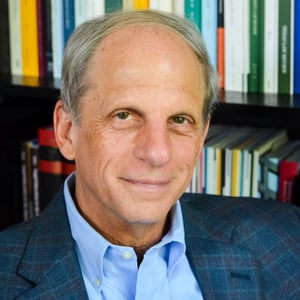
University Professor of Law and Political Science, Vanderbilt Law School
Edward Rubin is University Professor of Law and Political Science at Vanderbilt University. He specializes in administrative law, constitutional law and legal theory. He is the author of Soul, Self and Society: The New Morality and the Modern State (Oxford, 2015); Beyond Camelot: Rethinking Politics and Law for the Modern State (Princeton, 2005) and two books with Malcolm Feeley, Federalism: Political Identity and Tragic Compromise (Michigan, 2011) and Judicial Policy Making and the Modern State: How the Courts Reformed America's Prisons (Cambridge, 1998). In addition, he is the author of two casebooks, The Regulatory State (with Lisa Bressman and Kevin Stack) (3rd ed., 2019); The Payments System (with Robert Cooter) (West, 1990), three edited volumes (one forthcoming) and The Heatstroke Line (Sunbury, 2015) a science fiction novel about the fate of the United States if climate change is not brought under control. Professor Rubin joined Vanderbilt Law School as Dean and the first John Wade–Kent Syverud Professor of Law in July 2005, serving a four-year term that ended in June 2009. Previously, he taught at the University of Pennsylvania Law School from 1998 to 2005, and at the Berkeley School of Law from 1982 to 1998, where he served as an associate dean. Professor Rubin has been chair of the Association of American Law Schools' sections on Administrative Law and Socioeconomics and of its Committee on the Curriculum. He has served as a consultant to the People's Republic of China on administrative law and to the Russian Federation on payments law. He received his undergraduate degree from Princeton and his law degree from Yale.
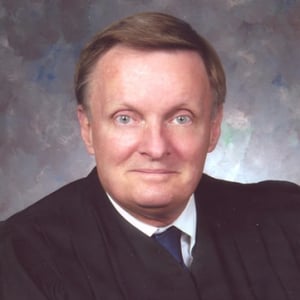
Judge, United States Court of Appeals, Fifth Circuit
Judge Smith was appointed U.S. Circuit Judge for the Fifth Circuit by President Reagan and entered on duty in January 1988. He attended public schools in Lubbock, Texas, and graduated from Yale University, receiving a B.A. in 1969 and a J.D. in 1972.
Judge Smith was a Law Clerk to U.S. District Judge Halbert Woodward, Northern District of Texas, 1972-1973; with the Houston law firm of Fulbright & Jaworski as an Associate, 1973-1981, and as Partner, 1981-1984; and as City Attorney, City of Houston, 1984-1988. He was Chairman, Civil Service Commission, City of Houston, 1982-1984; and a Director, Harris County Housing Authority, 1978-1980.
Judge Smith lives in Houston and is married to Mary Jane Smith and has four children: Ruth Ann, Clark, J.J., and Brandon. He formerly was Chair of the Advisory Committee on Federal Rules of Evidence of the Judicial Conference of the United States. He assists LexisNexis/Matthew Bender & Co. in periodic revisions of several chapters of Moore’s Federal Practice.
Partner, Baker & Hostetler LLP
Lee A. Casey focuses on federal environmental, constitutional and international law and Alien Tort Statute issues. He also advises clients on compliance issues under the Foreign Corrupt Practices Act (FCPA), U.S. trade sanctions regimes, and federal ethics requirements. Mr. Casey’s practice includes federal, district and appellate court litigation, as well as matters before federal agencies. Prior to joining BakerHostetler, Mr. Casey was an associate with Hunton & Williams, practicing in international, environmental and constitutional law. From 2004 through 2007 he served as an member of the United Nations Subcommission on the Promotion and Protection of Human Rights.
From 1986 to 1993, Mr. Casey served in various capacities in the federal government, including the Office of Legal Policy (1986-90) and the Office of Legal Counsel (1992-93) at the U.S. Department of Justice and served as Deputy Associate General Counsel at the U.S. Department of Energy (1990-92). The Office of Legal Counsel is responsible for advising the Attorney General and the White House on issues of constitutional law and statutory interpretation. The Office of Legal Policy served as a strategic “think tank” for the Reagan Justice Department and was responsible for reviewing candidates for appointments to the federal bench.
Before joining the government in 1986, Mr. Casey was an associate in the Los Angeles firm of Mitchell, Silberberg & Knupp, practicing in the litigation section, with an emphasis on copyright, contract and First Amendment issues. From 1984 to 1985, Mr. Casey served as Law Clerk to the Honorable Alex Kozinski, then Chief Judge of the United States Claims Court. From 1982 to 1984, he practiced at the Detroit firm of Dykema Gossett, focusing on corporate, securities, commercial and intellectual property litigation, and from 1990 through 1994, he served as an Adjunct Professor of Law at George Mason University School of Law in Arlington, Virginia.
Among the chapters, articles and papers that Mr. Casey has authored or co-authored are: “International Law and the Nation-State at the U.N.,” Reclaiming the Language of Freedom at the United Nations: A Guide for U.S. Policymakers, The Heritage Foundation (2006) (with David B. Rivkin, Jr.); “The Dangerous Myth of Universal Jurisdiction,” A Country I Do Not Recognize (ed. Robert H. Bork) (2005) (with David B. Rivkin, Jr.); “Leashing the Dogs of War,” The National Interest (Fall 2003) (with David B. Rivkin, Jr.); “The Limits of Legitimacy: The Rome Statute’s Unlawful Application to Non-State Parties,” 44 Va.J.Int’l L. 63 (Fall 2003) (with David B. Rivkin, Jr.); “Devil’s Advocates: The Danger of Judging Lawyers By Their Clients,” Policy Review (Feb. and Mar. 2002) (with David B. Rivkin, Jr.); “The Case Against the International Criminal Court,” 25 Fordham Int’l L.J. 840 (2002); “Europe in the Balance: The Alarmingly Undemocratic Drift of the European Union,” Policy Review (June and July 2001) (with David B. Rivkin Jr.); “Against an International Criminal Court,” Commentary, May 1998 (with David B. Rivkin, Jr.); “Federalism (Cont’d.),” Commentary, December 1996 (with David B. Rivkin, Jr.); “Presidents and War Powers: Another View,” Common Sense, Winter 1996 (with David B. Rivkin, Jr.); “How Binding Are Contracts?” The American Enterprise, Nov./Dec. 1993 (with David B. Rivkin, Jr.); and “Pirate Constitutionalism: An Essay in Self-Government,” 8 J. of L. & Politics 477 (1992).
Mr. Casey is a member of the California, Michigan and District of Columbia Bar Associations.
Dr. John Eastman is the former Henry Salvatori Professor of Law & Community Service and former Dean at Chapman University's Dale E. Fowler School of Law, where he had been a member of the faculty since 1999, specializing in Constitutional Law, Legal History, and Property. He is a founding director of the Center for Constitutional Jurisprudence, a public interest law firm affiliated with the Claremont Institute that he founded in 1999. He has a Ph.D. in Government from the Claremont Graduate School and a J.D. from the University of Chicago Law School, and a B.A. in Politics and Economics from the University of Dallas. He serves as the Chairman of the Board of the National Organization for Marriage.
Prior to joining the Chapman law faculty, Dr. Eastman served as a law clerk to the Honorable Clarence Thomas, Associate Justice, Supreme Court of the United States, and to the Honorable J. Michael Luttig, Judge, United States Court of Appeals for the Fourth Circuit and practiced law with the national law firm of Kirkland & Ellis. Dr. Eastman has also represented numerous clients in important constitutional law matters and has argued before the Supreme Court. On behalf of the Claremont Institute Center for Constitutional Jurisprudence, he has participated as amicus curiae before the Supreme Court of the United States, U.S. Courts of Appeals, and State Supreme Courts in more than one hundred cases of constitutional significance, including Boy Scouts of America v. Dale, Zelman v. Simmons-Harris (the school vouchers case), Kelo v. New London, Ct. (eminent domain), and Van Orden v. Perry (the 10 Commandments case). He has also appeared as an expert legal commentator on numerous television and radio programs, including C-SPAN, Fox News, PBS, NewsHour, and The O'Reilly Factor.
Lecturer in Law, University of Chicago Law School
Robert Gasaway is a Lecturer in Law at the University of Chicago Law School. He was formerly a Partner at Kirkland & Ellis LLP in their Washington office. He has represented and advised corporate clients on a wide variety of matters before federal courts, state courts, federal administrative agencies, and federal and state legislative bodies. Mr. Gasaway focuses his practice on appellate litigation, representing clients in the preparation of integrated, multiforum trial and appellate strategies in high-risk sets of related cases.
University Professor of Law and Political Science, Vanderbilt Law School
Edward Rubin is University Professor of Law and Political Science at Vanderbilt University. He specializes in administrative law, constitutional law and legal theory. He is the author of Soul, Self and Society: The New Morality and the Modern State (Oxford, 2015); Beyond Camelot: Rethinking Politics and Law for the Modern State (Princeton, 2005) and two books with Malcolm Feeley, Federalism: Political Identity and Tragic Compromise (Michigan, 2011) and Judicial Policy Making and the Modern State: How the Courts Reformed America's Prisons (Cambridge, 1998). In addition, he is the author of two casebooks, The Regulatory State (with Lisa Bressman and Kevin Stack) (3rd ed., 2019); The Payments System (with Robert Cooter) (West, 1990), three edited volumes (one forthcoming) and The Heatstroke Line (Sunbury, 2015) a science fiction novel about the fate of the United States if climate change is not brought under control. Professor Rubin joined Vanderbilt Law School as Dean and the first John Wade–Kent Syverud Professor of Law in July 2005, serving a four-year term that ended in June 2009. Previously, he taught at the University of Pennsylvania Law School from 1998 to 2005, and at the Berkeley School of Law from 1982 to 1998, where he served as an associate dean. Professor Rubin has been chair of the Association of American Law Schools' sections on Administrative Law and Socioeconomics and of its Committee on the Curriculum. He has served as a consultant to the People's Republic of China on administrative law and to the Russian Federation on payments law. He received his undergraduate degree from Princeton and his law degree from Yale.
Judge, United States Court of Appeals, Fifth Circuit
Judge Smith was appointed U.S. Circuit Judge for the Fifth Circuit by President Reagan and entered on duty in January 1988. He attended public schools in Lubbock, Texas, and graduated from Yale University, receiving a B.A. in 1969 and a J.D. in 1972.
Judge Smith was a Law Clerk to U.S. District Judge Halbert Woodward, Northern District of Texas, 1972-1973; with the Houston law firm of Fulbright & Jaworski as an Associate, 1973-1981, and as Partner, 1981-1984; and as City Attorney, City of Houston, 1984-1988. He was Chairman, Civil Service Commission, City of Houston, 1982-1984; and a Director, Harris County Housing Authority, 1978-1980.
Judge Smith lives in Houston and is married to Mary Jane Smith and has four children: Ruth Ann, Clark, J.J., and Brandon. He formerly was Chair of the Advisory Committee on Federal Rules of Evidence of the Judicial Conference of the United States. He assists LexisNexis/Matthew Bender & Co. in periodic revisions of several chapters of Moore’s Federal Practice.

Suspension of Laws: What are the Limits of Executive Authority?
Brianne Gorod, Nicholas Quinn Rosenkranz, Stuart S. Taylor, Jonathan R. Turley
Second Annual Executive Branch Review Conference
From enforcing and defending the Defense of Marriage Act, implementing the Affordable Care Act, enforcing...
FDA Involvement in Off-Label Drug Use
Ryan Abbott, Richard A. Epstein, Susan Prager
Southwestern Student Chapter
On January 13, 2014 the Southwestern Law School Federalist Society student chapter hosted a debate...
Religious Liberties: Religious Liberty & Conflicting Moral Visions
Stuart Kyle Duncan, William A. Galston, Robert P. George, Andrew Koppelman, Diarmuid F. O'Scannlain
2013 National Lawyers Convention
In a variety of contexts, from the HHS preventive services mandate to same-sex marriage, differing...
Religious Liberties: Religious Liberty & Conflicting Moral Visions
Stuart Kyle Duncan, William A. Galston, Robert P. George, Andrew Koppelman, Diarmuid F. O'Scannlain
2013 National Lawyers Convention
In a variety of contexts, from the HHS preventive services mandate to same-sex marriage, differing...
Implementation of the Affordable Care Act
Jonathan H. Adler, James C. Capretta, Terry H. Eastland, Ian Millhiser
First Annual Executive Branch Review Conference
On June 11, 2013, the Federalist Society's Executive Branch Review Project held its First Annual...
Implementation of the Affordable Care Act
Jonathan H. Adler, James C. Capretta, Terry H. Eastland, Ian Millhiser
First Annual Executive Branch Review Conference
On June 11, 2013, the Federalist Society's Executive Branch Review Project held its First Annual...
Administrative Law: The Administrative State After the Health Care Cases
Ronald A. Cass, Christopher C. DeMuth, Thomas M. Hardiman, Timothy S. Jost, Brett M. Kavanaugh
2012 National Lawyers Convention
The Administrative Law & Regulation Practice Group hosted this panel on "The Administrative State After...
Administrative Law: The Administrative State After the Health Care Cases
Ronald A. Cass, Christopher C. DeMuth, Thomas M. Hardiman, Timothy S. Jost, Brett M. Kavanaugh
2012 National Lawyers Convention
The Administrative Law & Regulation Practice Group hosted this panel on "The Administrative State After...
Federalism: The Spending Clause After the Health Care Decision
Lee A. Casey, John C. Eastman, Robert R. Gasaway, Edward L. Rubin, Jerry E. Smith
2012 National Lawyers Convention
The Federalism & Separation of Powers Practice Group hosted this panel on "The Spending Clause...
Federalism: The Spending Clause After the Health Care Decision
Lee A. Casey, John C. Eastman, Robert R. Gasaway, Edward L. Rubin, Jerry E. Smith
2012 National Lawyers Convention
The Federalism & Separation of Powers Practice Group hosted this panel on "The Spending Clause...