

Patrick Hotung Professor of Constitutional Law, Georgetown University Law Center
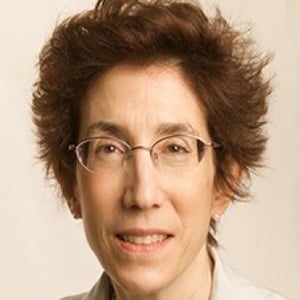
Randy Barnett is the Patrick Hotung Professor of Constitutional Law at Georgetown University Law Center. He has argued before the United States Supreme Court, tried murder cases to juries as a prosecutor in Chicago, and appeared as a prosecutor in the feature film Inalienable. He is the author of numerous books, including Restoring the Lost Constitution, The Structure of Liberty, Our Republican Constitution, and The Original Meaning of the Fourteenth Amendment. He has published two memoirs, A Life for Liberty: The Making of an American Originalist, and Felony Review: Tales of True Crime and Corruption in Chicago. He is currently working on a new book, Freedom and Flourishing: Libertarianism for the Real World.
U.S. Court of Appeals, Ninth Circuit
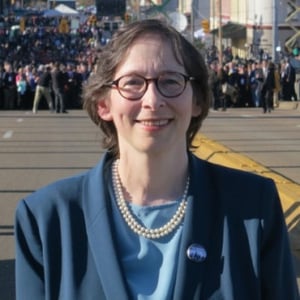
Sandra Segal Ikuta was confirmed as a judge of the U.S. Court of Appeals for the Ninth Circuit on June 19, 2006. She filled a judgeship vacant since September 1, 2000, when Chief Judge Emeritus James R. Browning took senior status.
Before becoming a U.S. Circuit Judge, California Gov. Arnold Schwarzenegger appointed her to be deputy secretary and general counsel of the California Resources Agency in January 2004.
Prior to her political appointment, Judge Ikuta was a partner at the Los Angeles office of O'Melveny & Myers LLP. She joined the law firm in 1990 as an associate and became a partner in 1997. She specialized in environmental and natural resources law and co-chaired the firm's environmental practice group. She previously served as a law clerk for U.S. Supreme Court Justice Sandra Day O'Connor, 1989-90, and Judge Alex Kozinski of the U.S. Court of Appeals for the Ninth Circuit, 1988-89.
Prior to her legal career, Judge Ikuta took an unorthodox career path, which included serving as the first female editor-in-chief of a national martial arts magazine.
She received her J.D. from the University of California at Los Angeles School of Law and a Master of Science from Columbia University School of Journalism. She earned her undergraduate degree from the University of California at Berkeley in 1976.
In addition to her duties as an active U.S. Circuit Judge, Judge Ikuta was an appointed member of the Judicial Conference of the U.S. Advisory Committee on Bankruptcy Rules.
Kenneth and Harle Montgomery Professor of Public Interest Law and Co-Director, Supreme Court Litigation Clinic, Stanford Law School
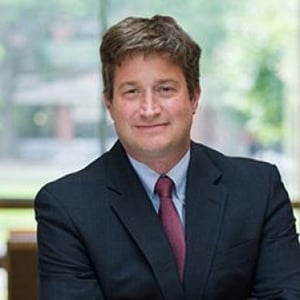
A productive scholar and an award-winning teacher, Pamela S. Karlan is co-director of the school’s Supreme Court Litigation Clinic, where students litigate live cases before the Court. One of the nation’s leading experts on voting and the political process, she has served as a commissioner on the California Fair Political Practices Commission, an assistant counsel and cooperating attorney for the NAACP Legal Defense Fund, and a Deputy Assistant Attorney General in the Civil Rights Division of the U.S. Department of Justice (where she received the Attorney General’s Award for Exceptional Service – the department’s highest award for employee performance – as part of the team responsible for implementing the Supreme Court’s decision in United States v. Windsor). Professor Karlan is the co-author of leading casebooks on constitutional law, constitutional litigation, and the law of democracy, as well as numerous scholarly articles.
Before joining the Stanford Law School faculty in 1998, she was a professor of law at the University of Virginia School of Law and served as a law clerk to Justice Harry A. Blackmun of the U.S. Supreme Court and Judge Abraham D. Sofaer of the U.S. District Court for the Southern District of New York. Karlan is a member of the American Academy of Arts and Sciences, the American Academy of Appellate Lawyers, and the American Law Institute.

Laurence A. Tisch Professor of Law and Director, Classical Liberal Institute, New York University School of Law; Director, Classical Liberal Institute, Civitas Institute University of Texas at Austin
Richard A. Epstein is the Laurence A. Tisch Professor of Law, at New York University, a senior research fellow at the Civitas Institute at the University of Texas Austin, and a senior Lecturer, the University of Chicago. He received an LL.D., h.c . from the University of Ghent, 2003 , and an LLD h.c . from the University of Siegen in 2018 and the Bradley Prize in 2011. He has been a member of the American Academy of Arts and Sciences since 1985. He has edited both the Journal of Legal Studies (1981-1991) and the Journal of Law and Economics (1991-2001). He is also a founder and director of the Classical Liberal Institute at NYU Law School. His most recent book is The Classical Liberal Constitution: The Uncertain Quest for Limited Government (2014). His other books include Takings: Private Property and the Power of Eminent Domain ( 1985); Bargaining with the State (1993); Simple Rules for a Complex World (1995); Principles for a Free Society: Reconciling Individual Liberty and the Common Good (1998); Skepticism and Freedom: A Modern Theory of Classical Liberalism (2003); Design for Liberty: Private Property, Public Administration and the Rule of Law (2011), and most recently, The Myth of Birthright citizenship—and Beyond (2026). He has taught courses in , administrative law, antitrust, constitutional, contracts, environmental law, land use planning; real property, torts and water law. He has written and spoken extensively on a wide range of topics, and is writes a regular column for Defining Ideas.
President, University of Pennsylvania Student Chapter
Dean and Bernard G. Segal Professor of Law, University of Pennsylvania Law School
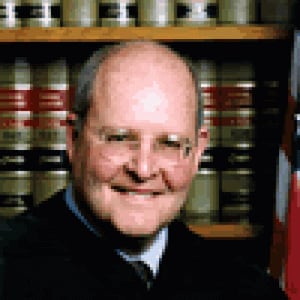
Theodore Ruger brings fresh insight to the study of some of the oldest questions of American law – namely the theoretical justifications for, and empirical contours of, the application of judicial authority. In exploring these issues, Ruger supplements traditional legal analysis with the methods of other disciplines, including history and political science. His work has appeared in the Harvard Law Review, the Columbia Law Review, the University of Pennsylvania Law Review, the University of Pennsylvania Journal of Constitutional Law, the Northwestern Law Review, and as the centerpiece of a symposium in Perspectives on Politics, a leading peer-reviewed political science journal. In addition to his interests in constitutional law and legislation, Ruger also teaches and writes in the area of health law and pharmaceutical regulation. His current research in that field draws on his broader work on judicial power and constitutionalism, and addresses the manner in which American legal institutions – including the U.S. Supreme Court – have shaped the field of health law over the past two centuries.
U.S. Court of Appeals, Third Circuit
Anthony J. Scirica, Chief Judge of the United States Court of Appeals for the Third Circuit, is currently the chair of the Executive Committee of the Judicial Conference of the United States. Chief Judge Scirica is the former chair of the Standing Committee on Rules of Practice and Procedure of the Judicial Conference of the United States and was a member of the Advisory Committee on Civil Rules. He was also chair of the Judicial Conference Working Group on Mass Torts. He is a former member of the Judicial Panel on Multi-District Litigation.
Chief Judge Scirica practiced law in Pennsylvania, where he also served as an ssistant district attorney and a judge of the Court of Common Pleas. He was a member of the Pennsylvania Legislature and also served as chair of the Pennsylvania Sentencing Commission. In 1984 he was appointed to the United States District Court for the Eastern District of Pennsylvania, and in 1987, to the Court of Appeals. He is a member of the American Law Institute.
Laurence A. Tisch Professor of Law and Director, Classical Liberal Institute, New York University School of Law; Director, Classical Liberal Institute, Civitas Institute University of Texas at Austin
Richard A. Epstein is the Laurence A. Tisch Professor of Law, at New York University, a senior research fellow at the Civitas Institute at the University of Texas Austin, and a senior Lecturer, the University of Chicago. He received an LL.D., h.c . from the University of Ghent, 2003 , and an LLD h.c . from the University of Siegen in 2018 and the Bradley Prize in 2011. He has been a member of the American Academy of Arts and Sciences since 1985. He has edited both the Journal of Legal Studies (1981-1991) and the Journal of Law and Economics (1991-2001). He is also a founder and director of the Classical Liberal Institute at NYU Law School. His most recent book is The Classical Liberal Constitution: The Uncertain Quest for Limited Government (2014). His other books include Takings: Private Property and the Power of Eminent Domain ( 1985); Bargaining with the State (1993); Simple Rules for a Complex World (1995); Principles for a Free Society: Reconciling Individual Liberty and the Common Good (1998); Skepticism and Freedom: A Modern Theory of Classical Liberalism (2003); Design for Liberty: Private Property, Public Administration and the Rule of Law (2011), and most recently, The Myth of Birthright citizenship—and Beyond (2026). He has taught courses in , administrative law, antitrust, constitutional, contracts, environmental law, land use planning; real property, torts and water law. He has written and spoken extensively on a wide range of topics, and is writes a regular column for Defining Ideas.
President, University of Pennsylvania Student Chapter
Dean and Bernard G. Segal Professor of Law, University of Pennsylvania Law School
Theodore Ruger brings fresh insight to the study of some of the oldest questions of American law – namely the theoretical justifications for, and empirical contours of, the application of judicial authority. In exploring these issues, Ruger supplements traditional legal analysis with the methods of other disciplines, including history and political science. His work has appeared in the Harvard Law Review, the Columbia Law Review, the University of Pennsylvania Law Review, the University of Pennsylvania Journal of Constitutional Law, the Northwestern Law Review, and as the centerpiece of a symposium in Perspectives on Politics, a leading peer-reviewed political science journal. In addition to his interests in constitutional law and legislation, Ruger also teaches and writes in the area of health law and pharmaceutical regulation. His current research in that field draws on his broader work on judicial power and constitutionalism, and addresses the manner in which American legal institutions – including the U.S. Supreme Court – have shaped the field of health law over the past two centuries.
U.S. Court of Appeals, Third Circuit
Anthony J. Scirica, Chief Judge of the United States Court of Appeals for the Third Circuit, is currently the chair of the Executive Committee of the Judicial Conference of the United States. Chief Judge Scirica is the former chair of the Standing Committee on Rules of Practice and Procedure of the Judicial Conference of the United States and was a member of the Advisory Committee on Civil Rules. He was also chair of the Judicial Conference Working Group on Mass Torts. He is a former member of the Judicial Panel on Multi-District Litigation.
Chief Judge Scirica practiced law in Pennsylvania, where he also served as an ssistant district attorney and a judge of the Court of Common Pleas. He was a member of the Pennsylvania Legislature and also served as chair of the Pennsylvania Sentencing Commission. In 1984 he was appointed to the United States District Court for the Eastern District of Pennsylvania, and in 1987, to the Court of Appeals. He is a member of the American Law Institute.
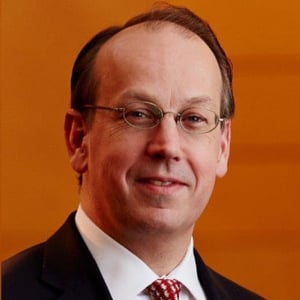
Partner, Clement & Murphy, PLLC
Paul served as the 43rd Solicitor General of the United States from June 2005 until June 2008. Before his confirmation as Solicitor General, he served as Acting Solicitor General for nearly a year and as Principal Deputy Solicitor General for over three years.
Paul has argued over 100 cases before the United States Supreme Court, including McConnell v. FEC, Tennessee v. Lane, United States v. Booker, MGM v. Grokster, Hobby Lobby v. Burwell, Epic Systems Corp. v. Lewis, Rucho v. Common Cause, Facebook v. Duguid, and TransUnion v. Ramirez. Paul has argued more Supreme Court cases since 2000 than any lawyer in or out of government. He has also argued many important cases in the lower courts, including Walker v. Cheney, United States v. Moussaoui and NFL v. Brady.
Paul’s practice focuses on appellate matters, constitutional litigation and strategic counseling. He represents a broad array of clients in the Supreme Court and in federal and state appellate courts. Last year, for example, he successfully argued Supreme Court cases involving significant issues of energy regulation, statutory interpretation, state sovereign immunity and Article III standing, and successfully argued a trademark appeal in the Fourth Circuit, and a constitutional appeal before the en banc Eleventh Circuit.
Paul focuses on high-stakes appeals. In recent years, he successfully defended a $1.2 billion jury verdict for clients in a Tenth Circuit case, while securing the reversal of an over $2 billion jury verdict for another client in the Seventh Circuit and the approval of a nearly $1 billion dollar class action settlement in the Third Circuit. He has initiated major administrative law challenges and constitutional litigation against the federal government, such as the successful challenge to the HHS drug-pricing rule and threatened challenges that led to the withdrawal of the Treasury Department’s proposed cryptocurrency regulations. He also counsels clients on a variety of strategic legal questions, whether arising from pending legislation, government inquiries or ongoing litigation.
Paul has undertaken substantial pro bono engagements in the Supreme Court, such as twice successfully representing the defendant in Bond v. United States and successfully representing the Omaha Tribe in Nebraska v. Parker, the guardian ad litem in Adoptive Couple v. Baby Girl, the defendant in Sekhar v. United States, a high school football coach in Kennedy v. Bremerton, and the Little Sisters of the Poor. Paul’s pro bono representation also precipitated the federal government’s confession of error in United States v. Rojas.
Following law school, Paul clerked for Judge Laurence H. Silberman of the U.S. Court of Appeals for the D.C. Circuit and for Associate Justice Antonin Scalia of the U.S. Supreme Court. After his clerkships, he went on to serve as Chief Counsel of the U.S. Senate Subcommittee on the Constitution, Federalism and Property Rights.
Paul is a Distinguished Lecturer in Law at the Georgetown University Law Center, where he has taught in various capacities since 1998. He also serves as a Senior Fellow of the Law Center’s Supreme Court Institute. He is the Justice Joseph Story Distinguished Practitioner in Residence at the Gray Center at Scalia Law School.

Former President & CEO, The Federalist Society for Law and Public Policy Studies
Eugene B. Meyer, former President and CEO of the Federalist Society, has served as Executive Director, CEO, and/or President of the organization for more than 40 years. He is responsible for shepherding the organization from a small group of law students to a community of 90,000 lawyers, law students, academics, judges, and others interested in the rule of law. The Society now includes a Student Chapter at nearly every ABA-accredited law school in the country and Lawyers Chapters in 220 major cities across the nation. Gene earned his B.A. in history at Yale in 1975 and his M.A. in political science from the London School of Economics in 1976. Gene currently serves on the boards of the U.S. Chess Center, the Holman Foundation, the Sarah Scaife Foundation, and the advisory board of the Adam Smith Society. He holds the title of International Chess Master.

Professor of Law, Georgetown University Law Center
Nicholas Quinn Rosenkranz teaches constitutional law and federal jurisdiction, and he writes articles for the Harvard Law Review and the Stanford Law Review.
He is currently developing a new theory of constitutional interpretation and judicial review. The first installment, entitledThe Subjects of the Constitution, was published in the Stanford Law Review in May of 2010, and it is among the most downloaded articles about constitutional interpretation, judicial review, and/or federal courts in the history of SSRN. The second installment, The Objects of the Constitution, was published in May of 2011, also in the Stanford Law Review. And the comprehensive version is forthcoming as a book by Oxford University Press.
Rosenkranz has served and advised the federal government in a variety of capacities. He clerked for Judge Frank H. Easterbrook on the U.S. Court of Appeals for the Seventh Circuit (1999-2000) and for Justice Anthony M. Kennedy at the U.S. Supreme Court (October Term 2001). He served as an Attorney-Advisor at the Office of Legal Counsel in the U.S. Department of Justice (November 2002 - July 2004). He often testifies before Congress as a constitutional expert—most recently before the House Financial Services Oversight Subcommittee, regarding the Obama Administration's use of bank settlement agreements to circumvent the Appropriations Clause. He has also filed briefs and presented oral argument before the U.S. Supreme Court. His most recent Supreme Court brief, in Los Angeles v. Patel, was cited by Justice Alito in dissent.
Rosenkranz is a member of the New York Bar and the U.S. Supreme Court Bar. He is a Senior Fellow at the Cato Institute. He serves on the Board of Directors of the Foundation for Individual Rights in Education (FIRE). He is a founding member of Heterodox Academy and a member of its Executive Committee. He also serves on the Board of Directors of the Federalist Society and as the faculty advisor to the Georgetown chapter.
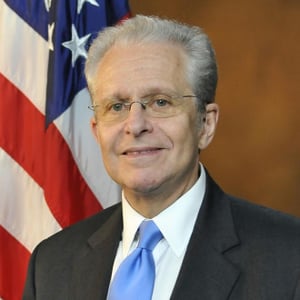
Carl M. Loeb University Professor, Harvard Law School
Laurence H. Tribe, the Carl M. Loeb University Professor and Professor of Constitutional Law at Harvard, has taught at its Law School since 1968 and was voted the best professor by the graduating class of 2000. The title “University Professor” is Harvard’s highest academic honor, awarded to just a handful of professors at any given time and to just 68 professors in all of Harvard University’s history. Born in China to Russian Jewish parents, Tribe entered Harvard in 1958 at 16; graduated summa cum laude in Mathematics (1962) and magna cum laude in Law (1966); clerked for the California and U.S. Supreme Courts(1966-68); received tenure at 30; was elected to the American Academy of Arts and Sciences at 38 and to the American Philosophical Society in 2010; helped write the constitutions of South Africa, the Czech Republic, and the Marshall Islands; has received eleven honorary degrees, most recently a degree honoris causa from the Government of Mexico in March 2011 that was never before awarded to an American and an honorary D. Litt. From Columbia University; has prevailed in three-fifths of the many appellate cases he has argued (including 35 in the U.S. Supreme Court); was appointed in 2010 by President Obama and Attorney General Holder to serve as the first Senior Counselor for Access to Justice; and has written 115 books and articles, including his treatise, American Constitutional Law, cited more than any other legal text since 1950. Former Solicitor General Erwin Griswold wrote: “[N]o book, and no lawyer not on the [Supreme] Court, has ever had a greater influence on the development of American constitutional law,” and the Northwestern Law Review opined that no-one else “in American history has… simultaneously achieved Tribe’s preeminence… as a practitioner and… scholar of constitutional law.”
Partner, Clement & Murphy, PLLC
Paul served as the 43rd Solicitor General of the United States from June 2005 until June 2008. Before his confirmation as Solicitor General, he served as Acting Solicitor General for nearly a year and as Principal Deputy Solicitor General for over three years.
Paul has argued over 100 cases before the United States Supreme Court, including McConnell v. FEC, Tennessee v. Lane, United States v. Booker, MGM v. Grokster, Hobby Lobby v. Burwell, Epic Systems Corp. v. Lewis, Rucho v. Common Cause, Facebook v. Duguid, and TransUnion v. Ramirez. Paul has argued more Supreme Court cases since 2000 than any lawyer in or out of government. He has also argued many important cases in the lower courts, including Walker v. Cheney, United States v. Moussaoui and NFL v. Brady.
Paul’s practice focuses on appellate matters, constitutional litigation and strategic counseling. He represents a broad array of clients in the Supreme Court and in federal and state appellate courts. Last year, for example, he successfully argued Supreme Court cases involving significant issues of energy regulation, statutory interpretation, state sovereign immunity and Article III standing, and successfully argued a trademark appeal in the Fourth Circuit, and a constitutional appeal before the en banc Eleventh Circuit.
Paul focuses on high-stakes appeals. In recent years, he successfully defended a $1.2 billion jury verdict for clients in a Tenth Circuit case, while securing the reversal of an over $2 billion jury verdict for another client in the Seventh Circuit and the approval of a nearly $1 billion dollar class action settlement in the Third Circuit. He has initiated major administrative law challenges and constitutional litigation against the federal government, such as the successful challenge to the HHS drug-pricing rule and threatened challenges that led to the withdrawal of the Treasury Department’s proposed cryptocurrency regulations. He also counsels clients on a variety of strategic legal questions, whether arising from pending legislation, government inquiries or ongoing litigation.
Paul has undertaken substantial pro bono engagements in the Supreme Court, such as twice successfully representing the defendant in Bond v. United States and successfully representing the Omaha Tribe in Nebraska v. Parker, the guardian ad litem in Adoptive Couple v. Baby Girl, the defendant in Sekhar v. United States, a high school football coach in Kennedy v. Bremerton, and the Little Sisters of the Poor. Paul’s pro bono representation also precipitated the federal government’s confession of error in United States v. Rojas.
Following law school, Paul clerked for Judge Laurence H. Silberman of the U.S. Court of Appeals for the D.C. Circuit and for Associate Justice Antonin Scalia of the U.S. Supreme Court. After his clerkships, he went on to serve as Chief Counsel of the U.S. Senate Subcommittee on the Constitution, Federalism and Property Rights.
Paul is a Distinguished Lecturer in Law at the Georgetown University Law Center, where he has taught in various capacities since 1998. He also serves as a Senior Fellow of the Law Center’s Supreme Court Institute. He is the Justice Joseph Story Distinguished Practitioner in Residence at the Gray Center at Scalia Law School.
Former President & CEO, The Federalist Society for Law and Public Policy Studies
Eugene B. Meyer, former President and CEO of the Federalist Society, has served as Executive Director, CEO, and/or President of the organization for more than 40 years. He is responsible for shepherding the organization from a small group of law students to a community of 90,000 lawyers, law students, academics, judges, and others interested in the rule of law. The Society now includes a Student Chapter at nearly every ABA-accredited law school in the country and Lawyers Chapters in 220 major cities across the nation. Gene earned his B.A. in history at Yale in 1975 and his M.A. in political science from the London School of Economics in 1976. Gene currently serves on the boards of the U.S. Chess Center, the Holman Foundation, the Sarah Scaife Foundation, and the advisory board of the Adam Smith Society. He holds the title of International Chess Master.
Professor of Law, Georgetown University Law Center
Nicholas Quinn Rosenkranz teaches constitutional law and federal jurisdiction, and he writes articles for the Harvard Law Review and the Stanford Law Review.
He is currently developing a new theory of constitutional interpretation and judicial review. The first installment, entitledThe Subjects of the Constitution, was published in the Stanford Law Review in May of 2010, and it is among the most downloaded articles about constitutional interpretation, judicial review, and/or federal courts in the history of SSRN. The second installment, The Objects of the Constitution, was published in May of 2011, also in the Stanford Law Review. And the comprehensive version is forthcoming as a book by Oxford University Press.
Rosenkranz has served and advised the federal government in a variety of capacities. He clerked for Judge Frank H. Easterbrook on the U.S. Court of Appeals for the Seventh Circuit (1999-2000) and for Justice Anthony M. Kennedy at the U.S. Supreme Court (October Term 2001). He served as an Attorney-Advisor at the Office of Legal Counsel in the U.S. Department of Justice (November 2002 - July 2004). He often testifies before Congress as a constitutional expert—most recently before the House Financial Services Oversight Subcommittee, regarding the Obama Administration's use of bank settlement agreements to circumvent the Appropriations Clause. He has also filed briefs and presented oral argument before the U.S. Supreme Court. His most recent Supreme Court brief, in Los Angeles v. Patel, was cited by Justice Alito in dissent.
Rosenkranz is a member of the New York Bar and the U.S. Supreme Court Bar. He is a Senior Fellow at the Cato Institute. He serves on the Board of Directors of the Foundation for Individual Rights in Education (FIRE). He is a founding member of Heterodox Academy and a member of its Executive Committee. He also serves on the Board of Directors of the Federalist Society and as the faculty advisor to the Georgetown chapter.
Carl M. Loeb University Professor, Harvard Law School
Laurence H. Tribe, the Carl M. Loeb University Professor and Professor of Constitutional Law at Harvard, has taught at its Law School since 1968 and was voted the best professor by the graduating class of 2000. The title “University Professor” is Harvard’s highest academic honor, awarded to just a handful of professors at any given time and to just 68 professors in all of Harvard University’s history. Born in China to Russian Jewish parents, Tribe entered Harvard in 1958 at 16; graduated summa cum laude in Mathematics (1962) and magna cum laude in Law (1966); clerked for the California and U.S. Supreme Courts(1966-68); received tenure at 30; was elected to the American Academy of Arts and Sciences at 38 and to the American Philosophical Society in 2010; helped write the constitutions of South Africa, the Czech Republic, and the Marshall Islands; has received eleven honorary degrees, most recently a degree honoris causa from the Government of Mexico in March 2011 that was never before awarded to an American and an honorary D. Litt. From Columbia University; has prevailed in three-fifths of the many appellate cases he has argued (including 35 in the U.S. Supreme Court); was appointed in 2010 by President Obama and Attorney General Holder to serve as the first Senior Counselor for Access to Justice; and has written 115 books and articles, including his treatise, American Constitutional Law, cited more than any other legal text since 1950. Former Solicitor General Erwin Griswold wrote: “[N]o book, and no lawyer not on the [Supreme] Court, has ever had a greater influence on the development of American constitutional law,” and the Northwestern Law Review opined that no-one else “in American history has… simultaneously achieved Tribe’s preeminence… as a practitioner and… scholar of constitutional law.”
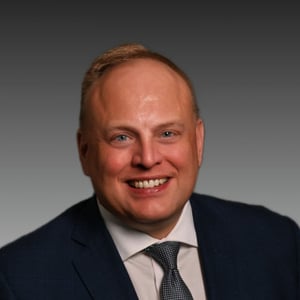
Executive Vice President and Director of Litigation, EdChoice Legal Advocates
Before founding a public interest law firm at EdChoice, Tom Fisher served as Indiana’s first Solicitor General from 2005-2023. Fisher has argued dozens of high-profile cases before both the Indiana Supreme Court and the Seventh Circuit U.S. Court of Appeals and five cases before the U.S. Supreme Court. A two-time recipient of the National Association of Attorneys General Best Brief Award, Fisher is a Fellow of the American Academy of Appellate Lawyers and a Sagamore of the Wabash. Fisher is a graduate of Wabash College and Indiana University Maurer School of Law, where he serves as an Adjunct Professor of Law.
Distinguished Professor and Lawrence A. Jegen III Professor, Indiana University Robert H. McKinney School of Law
Gerard N. Magliocca is a Distinguished Professor and the Lawrence A. Jegen III Professor at the Indiana University Robert H. McKinney School of Law. Professor Magliocca is the author of five books on constitutional law. His next book will be about Justice Robert Jackson’s landmark concurring opinion in Youngstown Sheet and Tube Company v. Sawyer. His biography of Justice Bushrod Washington won the Erwin N. Griswold Prize from the Supreme Court Historical Society.
Professor Magliocca received his undergraduate degree from Stanford and his law degree from Yale. He joined the faculty in 2001 after two years as an attorney and one year as a law clerk for Judge Guido Calabresi on the United States Court of Appeals for the Second Circuit. In 2008, Professor Magliocca held the Fulbright-Dow Distinguished Research Chair of the Roosevelt Study Center in Middelburg, The Netherlands. He was a Fellow at the Washington Library at Mount Vernon from 2019-2021.
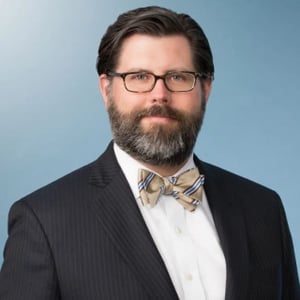
Partner, Faegre Drinker Biddle & Reath LLP
Brian J. Paul is an appellate lawyer and leads law teams in high-stakes commercial litigation. He has briefed and argued everything from weighty abstract constitutional issues to dollars-and-cents business issues and everything in-between, both on appeal and in trial courts around the country. A member of the American Law Institute, recent past-president of the Seventh Circuit Bar Association and top-tier ranked Chambers appellate lawyer, Brian had one client say about him: “Brian is one of the most respected and skilled appellate lawyers, not only in Indianapolis but across the country. He is trusted to deliver timely guidance on complex issues.” Another said: “He is excellent. I enjoyed working with him. He is able to put things into layman’s terms and explains things really well. His written and oral advocacy are short, crisp and to the point.”
Clients hire Brian to digest the complex, and make the complex simple and compelling for busy, generalist judges. In his writing, he strives to cut through jargon and legalese, and distill things down to what’s important. In his oral advocacy, by intense preparation, he strives to be the advocate whom judges trust for the right answers. In the dozens of cases he has argued, Brian has helped clients win on both sides of the “v.” His recent representations include:
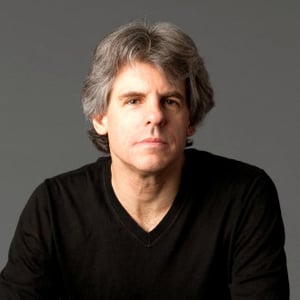
Carmack Waterhouse Professor of Health Law, Policy, and Ethics; Co-Director, Georgetown-Johns Hopkins Joint Program in Law and Public Health, Georgetown University
M. Gregg Bloche, M.D., J.D., is Professor of Law at Georgetown University and author of The Hippocratic Myth: Why Doctors Are Under Pressure to Ration Care, Practice Politics, and Compromise Their Promise to Heal. He is a nationally and internationally recognized expert on health law and policy. Bloche’s writing has appeared in a wide range of venues, including the New England Journal of Medicine, Health Affairs and the Journal of the American Medical Association; leading law reviews; and the New York Times, Washington Post, & other media outlets. He has also been a frequent commentator in national broadcast media. He was a health care advisor to President Obama’s 2008 campaign, as well as the presidential transition, and he spoke frequently for the campaign as a “surrogate.” Bloche has held teaching and research appointments at the University of Chicago, UCLA, and Columbia law schools, as well as the Brookings Institution, and the Harvard School of Public Health. He is a graduate of the law and medical schools at Yale, and he completed a residency in psychiatry at Columbia-Presbyterian Medical Center in New York. His awards and honors include a Guggenheim Fellowship and a Robert Wood Johnson Investigator Award in Health Policy Research. Bloche serves on several editorial boards and has advised governments and non-profits in the U.S. and abroad on a wide range of health policy issues. He lives in Washington, D.C.
Associate Professor of Medicine, General Internal Medicine, University of Chicago
Dr. Curlin is a hospice and palliative care physician, researcher, and medical ethicist. As founding Co-Director of the Program on Medicine and Religion, Dr. Curlin is working with Dr. Dan Sulmasy and colleagues from the Pritzker School of Medicine and the University of Chicago Divinity School to foster inquiry into and public discourse regarding the intersections of religion and the practice of medicine.
After graduating from the University of North Carolina School of Medicine, Curlin moved to the University of Chicago where he completed internal medicine residency training and fellowships in the Robert Wood Johnson Foundation Clinical Scholars Program and the MacLean Center for Clinical Medical Ethics. He joined the faculty in 2003.
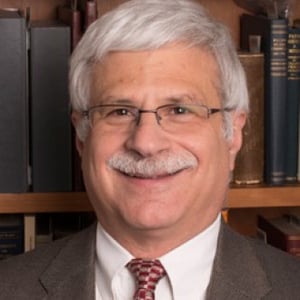
Professor of Law, Catholic University of America
Robert Destro served as Assistant Secretary for the Bureau of Democracy, Human Rights, and Labor (DRL). He has a long history as a human rights advocate and civil rights attorney with expertise in elections, employment, and constitutional law. Destro has served on the faculty at Catholic University’s Columbus School of Law since 1982 and served as its interim dean from 1999 to 2001. He was founding director of the Interdisciplinary Program in Law and Religion and served as the Director of the Institute for Policy Research and Catholic Studies from June 2017 to September 2019. He served as a commissioner on the U.S. Commission on Civil Rights from 1983-1989. His legal work includes collaboration with the Peace Research Institute Oslo in a fifteen-year dialogue among Muslim, Christian, and Jewish leaders in the legal, business, and religious fields in the United States and the Middle East as well as efforts promoting the release of political prisoners and prisoners of conscience in the Middle East. He has served as voting rights counsel for the Ohio Secretary of State and has advocated for the first amendment rights of individuals and organizations.
He earned a B.A. from Miami University, Ohio, and a J.D. from the University of California at Berkeley. He is an active member of the Bar in Ohio and California.
The rest of his bio including his publications are available on the Catholic University Faculty page linked here.
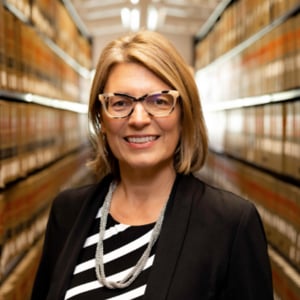
Associate Dean and Professor of Law, Case Western Reserve University School of Law
Jessie Hill’s teaching and scholarship focus on constitutional law, civil rights, reproductive rights, and law and religion. Her articles have been published in the Michigan Law Review, Duke Law Journal, Georgetown Law Journal, and Texas Law Review, among others. She has also appeared in numerous local and national press outlets, including CNN, the New York Times, Ms. Magazine, and NPR.
She is the founding director of the Reproductive Rights Law Initiative at the School of Law, which provides education and legal support relating to reproductive rights. Her work was recently profiled in the Case Law-Med magazine. She is a recipient of the university’s Distinguished Research Award. She has also been appointed a Nootbaar Fellow in Law and Religion at Pepperdine University Caruso School of Law. In 2023, she received both the Black Law Students Association Faculty Award and the Champion for Women Award from the Cuyahoga Democratic Women’s Caucus, and she has been recognized by the ACLU of Ohio for her reproductive rights advocacy.
Professor Hill joined the faculty in 2003 after practicing First Amendment and civil rights law with the firm of Berkman, Gordon, Murray & DeVan in Cleveland. Before entering private practice, Professor Hill worked at the Reproductive Freedom Project of the National ACLU office in New York. She also served as law clerk to the Honorable Karen Nelson Moore of the United States Court of Appeals for the Sixth Circuit. She received her JD, magna cum laude, from Harvard University and her AB, magna cum laude, from Brown University.
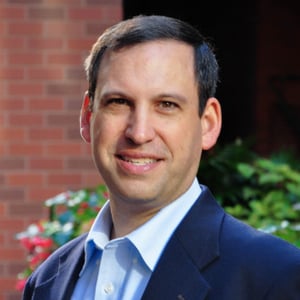
President, Becket Fund for Religious Liberty; Professor of Law and Co-Director of the Center for Religious Liberty, Catholic University; Visiting Professor, Harvard Law School
Mark joined the Becket team in 2011 and splits his time as Associate Professor at The Catholic University of America, Columbus School of Law, and as Visiting Professor at Harvard Law School. Mark teaches constitutional law, religious liberty, torts, and evidence. He has been voted Teacher of the Year three years in a row by the Law School’s Student Bar Association.
Mark has broad experience litigating First Amendment religious exercise and free speech cases. He has represented the winning parties in a variety of Supreme Court First Amendment cases including Hobby Lobby, Little Sisters, Wheaton College, and Holt. In January 2014, Mark argued before the Supreme Court in McCullen v. Coakley, a First Amendment challenge to a Massachusetts speech restriction outside of abortion clinics. The Justices ruled in favor of his clients 9-0. Mark also led a successful eight-year litigation battle against Governor Blagojevich’s effort to force religious pharmacists to distribute the morning-after and week-after pills.
Mark’s academic writing focuses on the First and Fourteenth Amendments, and has appeared in a variety of prestigious journals, including the Harvard Law Review.
Mark is a widely sought after speaker on constitutional issues, particularly concerning abortion and the First Amendment. Professor Rienzi has been invited to discuss these issues at Harvard Law School, Columbia University Law School, Georgetown University Law Center, Boston College Law School, Notre Dame Law School, the National Press Club, and the Capitol. He has been quoted on constitutional law issues on NPR, in the Washington Times, The New York Daily News, and the Chicago Sun-Times. Mark has also been featured on the Kelly File, Fox News Sunday, Your World with Neil Cavuto, Geraldo at Large, CNN Tonight, CNN Live, Andrea Mitchell Reports, and Wall Street Journal Live.
Prior to joining Becket, Mark served as counsel for the litigation department and the intellectual property litigation practice group of WilmerHale LLP. His practice focused on complex civil and appellate litigation with a particular emphasis on intellectual property and First Amendment issues. Prior to joining WilmerHale, he served as law clerk to the Hon. Stephen F. Williams, senior circuit judge for the U.S. Court of Appeals for the D.C. Circuit. Prior to that, Mark was an editor of the Harvard Law Review, and earned his J.D. from Harvard Law School and B.A. from Princeton University, both with honors.
Carmack Waterhouse Professor of Health Law, Policy, and Ethics; Co-Director, Georgetown-Johns Hopkins Joint Program in Law and Public Health, Georgetown University
M. Gregg Bloche, M.D., J.D., is Professor of Law at Georgetown University and author of The Hippocratic Myth: Why Doctors Are Under Pressure to Ration Care, Practice Politics, and Compromise Their Promise to Heal. He is a nationally and internationally recognized expert on health law and policy. Bloche’s writing has appeared in a wide range of venues, including the New England Journal of Medicine, Health Affairs and the Journal of the American Medical Association; leading law reviews; and the New York Times, Washington Post, & other media outlets. He has also been a frequent commentator in national broadcast media. He was a health care advisor to President Obama’s 2008 campaign, as well as the presidential transition, and he spoke frequently for the campaign as a “surrogate.” Bloche has held teaching and research appointments at the University of Chicago, UCLA, and Columbia law schools, as well as the Brookings Institution, and the Harvard School of Public Health. He is a graduate of the law and medical schools at Yale, and he completed a residency in psychiatry at Columbia-Presbyterian Medical Center in New York. His awards and honors include a Guggenheim Fellowship and a Robert Wood Johnson Investigator Award in Health Policy Research. Bloche serves on several editorial boards and has advised governments and non-profits in the U.S. and abroad on a wide range of health policy issues. He lives in Washington, D.C.
Associate Professor of Medicine, General Internal Medicine, University of Chicago
Dr. Curlin is a hospice and palliative care physician, researcher, and medical ethicist. As founding Co-Director of the Program on Medicine and Religion, Dr. Curlin is working with Dr. Dan Sulmasy and colleagues from the Pritzker School of Medicine and the University of Chicago Divinity School to foster inquiry into and public discourse regarding the intersections of religion and the practice of medicine.
After graduating from the University of North Carolina School of Medicine, Curlin moved to the University of Chicago where he completed internal medicine residency training and fellowships in the Robert Wood Johnson Foundation Clinical Scholars Program and the MacLean Center for Clinical Medical Ethics. He joined the faculty in 2003.
Professor of Law, Catholic University of America
Robert Destro served as Assistant Secretary for the Bureau of Democracy, Human Rights, and Labor (DRL). He has a long history as a human rights advocate and civil rights attorney with expertise in elections, employment, and constitutional law. Destro has served on the faculty at Catholic University’s Columbus School of Law since 1982 and served as its interim dean from 1999 to 2001. He was founding director of the Interdisciplinary Program in Law and Religion and served as the Director of the Institute for Policy Research and Catholic Studies from June 2017 to September 2019. He served as a commissioner on the U.S. Commission on Civil Rights from 1983-1989. His legal work includes collaboration with the Peace Research Institute Oslo in a fifteen-year dialogue among Muslim, Christian, and Jewish leaders in the legal, business, and religious fields in the United States and the Middle East as well as efforts promoting the release of political prisoners and prisoners of conscience in the Middle East. He has served as voting rights counsel for the Ohio Secretary of State and has advocated for the first amendment rights of individuals and organizations.
He earned a B.A. from Miami University, Ohio, and a J.D. from the University of California at Berkeley. He is an active member of the Bar in Ohio and California.
The rest of his bio including his publications are available on the Catholic University Faculty page linked here.
Associate Dean and Professor of Law, Case Western Reserve University School of Law
Jessie Hill’s teaching and scholarship focus on constitutional law, civil rights, reproductive rights, and law and religion. Her articles have been published in the Michigan Law Review, Duke Law Journal, Georgetown Law Journal, and Texas Law Review, among others. She has also appeared in numerous local and national press outlets, including CNN, the New York Times, Ms. Magazine, and NPR.
She is the founding director of the Reproductive Rights Law Initiative at the School of Law, which provides education and legal support relating to reproductive rights. Her work was recently profiled in the Case Law-Med magazine. She is a recipient of the university’s Distinguished Research Award. She has also been appointed a Nootbaar Fellow in Law and Religion at Pepperdine University Caruso School of Law. In 2023, she received both the Black Law Students Association Faculty Award and the Champion for Women Award from the Cuyahoga Democratic Women’s Caucus, and she has been recognized by the ACLU of Ohio for her reproductive rights advocacy.
Professor Hill joined the faculty in 2003 after practicing First Amendment and civil rights law with the firm of Berkman, Gordon, Murray & DeVan in Cleveland. Before entering private practice, Professor Hill worked at the Reproductive Freedom Project of the National ACLU office in New York. She also served as law clerk to the Honorable Karen Nelson Moore of the United States Court of Appeals for the Sixth Circuit. She received her JD, magna cum laude, from Harvard University and her AB, magna cum laude, from Brown University.
President, Becket Fund for Religious Liberty; Professor of Law and Co-Director of the Center for Religious Liberty, Catholic University; Visiting Professor, Harvard Law School
Mark joined the Becket team in 2011 and splits his time as Associate Professor at The Catholic University of America, Columbus School of Law, and as Visiting Professor at Harvard Law School. Mark teaches constitutional law, religious liberty, torts, and evidence. He has been voted Teacher of the Year three years in a row by the Law School’s Student Bar Association.
Mark has broad experience litigating First Amendment religious exercise and free speech cases. He has represented the winning parties in a variety of Supreme Court First Amendment cases including Hobby Lobby, Little Sisters, Wheaton College, and Holt. In January 2014, Mark argued before the Supreme Court in McCullen v. Coakley, a First Amendment challenge to a Massachusetts speech restriction outside of abortion clinics. The Justices ruled in favor of his clients 9-0. Mark also led a successful eight-year litigation battle against Governor Blagojevich’s effort to force religious pharmacists to distribute the morning-after and week-after pills.
Mark’s academic writing focuses on the First and Fourteenth Amendments, and has appeared in a variety of prestigious journals, including the Harvard Law Review.
Mark is a widely sought after speaker on constitutional issues, particularly concerning abortion and the First Amendment. Professor Rienzi has been invited to discuss these issues at Harvard Law School, Columbia University Law School, Georgetown University Law Center, Boston College Law School, Notre Dame Law School, the National Press Club, and the Capitol. He has been quoted on constitutional law issues on NPR, in the Washington Times, The New York Daily News, and the Chicago Sun-Times. Mark has also been featured on the Kelly File, Fox News Sunday, Your World with Neil Cavuto, Geraldo at Large, CNN Tonight, CNN Live, Andrea Mitchell Reports, and Wall Street Journal Live.
Prior to joining Becket, Mark served as counsel for the litigation department and the intellectual property litigation practice group of WilmerHale LLP. His practice focused on complex civil and appellate litigation with a particular emphasis on intellectual property and First Amendment issues. Prior to joining WilmerHale, he served as law clerk to the Hon. Stephen F. Williams, senior circuit judge for the U.S. Court of Appeals for the D.C. Circuit. Prior to that, Mark was an editor of the Harvard Law Review, and earned his J.D. from Harvard Law School and B.A. from Princeton University, both with honors.
Earl Warren Professor of Public Law (Emeritus), UC Berkeley School of Law
Jesse Choper served as law clerk to Chief Justice Earl Warren of the U.S. Supreme Court following graduation from law school. He taught at the Wharton School of the University of Pennsylvania from 1957 to 1960, and at the University of Minnesota Law School from 1961 to 1965. He joined the Berkeley Law faculty in 1965. Choper has been a visiting professor at Harvard Law School, Fordham Law School, University of Milan, Free University in Amsterdam, Autonoma University in Barcelona, University of New South Wales in Sydney, University of Lucerne in Switzerland, and Catholic University of Portugal in Lisbon and Porto. He served as Berkeley Law’s dean from 1982 to 1992.
From 1979 to 1998, Choper was one of the three major lecturers at U.S. Law Week’s Annual Constitutional Law Conference in Washington, D.C. He has delivered 20 titled lectures at major universities throughout the country, including the Cooley Lectures at Michigan, the Stevens Lecture at Cornell, the Baum Lecture at Illinois, and the Lockhart Lecture at Minnesota. He has served on the executive committee of the Association of American Law Schools, and on the executive council of the American Academy of Arts and Sciences (of which he was vice president for more than ten years). He was national president of the Order of the Coif and is a member of the American Law Institute. In 1998 he received the UC Berkeley Distinguished Teaching Award and the Rutter Award for Teaching Distinction at Berkeley Law in 2006. In 2005 the Berkeley Law Alumni Association presented Choper with the Faculty Lifetime Achievement Award and the University of Pennsylvania Law School gave him the James Wilson Award, its highest award for alumni.
Choper’s major publications include the books, Judicial Review and the National Political Process: A Functional Reconsideration of the Role of the Supreme Court, which received the Order of the Coif Triennial Book Award in 1982, and Securing Religious Liberty: Principles for Judicial Interpretation of the Religion Clauses. His recent publications include the thirteenth edition of his Constitutional Law casebooks; the eighth edition of his Corporations casebook; the second edition of The Supreme Court and Its Justices; “The Political Question Doctrine: Suggested Criteria,” in Duke Law Journal (2005); “Wartime Process: A Dialogue on Congressional Power to Remove Issues From the Federal Courts,” in California Law Review (2007) (co-author); and “Who’s Afraid of the Eleventh Amendment? The Limited Impact of the Court’s Sovereign Immunity Rulings,” in Columbia Law Review (2006) (co-author).
Laurence A. Tisch Professor of Law and Director, Classical Liberal Institute, New York University School of Law; Director, Classical Liberal Institute, Civitas Institute University of Texas at Austin
Richard A. Epstein is the Laurence A. Tisch Professor of Law, at New York University, a senior research fellow at the Civitas Institute at the University of Texas Austin, and a senior Lecturer, the University of Chicago. He received an LL.D., h.c . from the University of Ghent, 2003 , and an LLD h.c . from the University of Siegen in 2018 and the Bradley Prize in 2011. He has been a member of the American Academy of Arts and Sciences since 1985. He has edited both the Journal of Legal Studies (1981-1991) and the Journal of Law and Economics (1991-2001). He is also a founder and director of the Classical Liberal Institute at NYU Law School. His most recent book is The Classical Liberal Constitution: The Uncertain Quest for Limited Government (2014). His other books include Takings: Private Property and the Power of Eminent Domain ( 1985); Bargaining with the State (1993); Simple Rules for a Complex World (1995); Principles for a Free Society: Reconciling Individual Liberty and the Common Good (1998); Skepticism and Freedom: A Modern Theory of Classical Liberalism (2003); Design for Liberty: Private Property, Public Administration and the Rule of Law (2011), and most recently, The Myth of Birthright citizenship—and Beyond (2026). He has taught courses in , administrative law, antitrust, constitutional, contracts, environmental law, land use planning; real property, torts and water law. He has written and spoken extensively on a wide range of topics, and is writes a regular column for Defining Ideas.
Senior Fellow, Cato Institute
Doug Bandow is a senior fellow at the Cato Institute, specializing in foreign policy and civil liberties. He worked as special assistant to President Reagan and editor of the political magazine Inquiry. He writes regularly for leading publications such as Fortune magazine, National Interest, Wall Street Journal, and Washington Times. Bandow speaks frequently at academic conferences, on college campuses, and to business groups. Bandow has been a regular commentator on ABC, CBS, NBC, CNN, Fox News Channel, and MSNBC. He holds a J.D. from Stanford University.
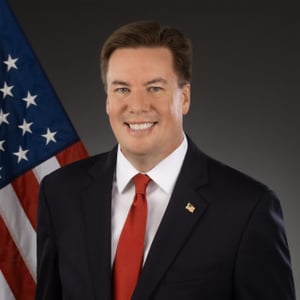
Associate Professor of Lawyering Process, Florida Coastal School of Law
James J. Woodruff II, Esq. is currently an Associate Professor of Lawyering Process at Florida Coastal School of Law. He has also been appointed to serve on the Florida Bar's Small Claims Rules Committee (2010-2013).
Professor Woodruff is a graduate of Texas A&M University and South Texas College of Law. While at South Texas College of Law he served as Editor-in-Chief of Currents: the International Trade Law Journal. He also won the Chester James Taylor Memorial Award for Writing Excellence. Professor Woodruff is a member of Phi Delta Phi (Legal Honors Fraternity).
He has accumulated years of experience in litigation (insurance, consumer, personal injury and commercial) and business law. Professor Woodruff has handled cases at both the trial and appellate levels during his career. His current legal practice focuses on Political law.
Professor Woodruff has published articles in various legal journals including the Tulane Maritime Law Journal and theCorporate Counsel Review. His articles have examined constitutional law, maritime law and international litigation. He is a member of the Florida Bar, the State Bar of Texas, the Jacksonville Bar Association,the United States District Court for the Middle District of Florida, the United States District Court for the Southern District of Texas and the Fifth Circuit Court of Appeals of the United States.

Debate: The Constitutionality of the Affordable Care Act
Randy E. Barnett, Sandra Segal Ikuta, Pamela S. Karlan, Michael Reynolds
2012 National Student Symposium
This debate will focus on the constitutionality of the Affordable Care Act. While specific attention...
Is the Affordable Care Act Constitutional?
Richard A. Epstein, Daniel Pollack, Theodore Ruger, Anthony J. Scirica
Pennsylvania Student Chapter
On February 22, 2012, the University of Pennsylvania Student Chapter of the Federalist Society hosted...
Is the Affordable Care Act Constitutional?
Richard A. Epstein, Daniel Pollack, Theodore Ruger, Anthony J. Scirica
Pennsylvania Student Chapter
On February 22, 2012, the University of Pennsylvania Student Chapter of the Federalist Society hosted...
Fourth Annual Rosenkranz Debate and Luncheon
Paul D. Clement, Eugene B. Meyer, Nicholas Quinn Rosenkranz, Laurence H. Tribe
2011 National Lawyers Convention
RESOLVED: Congress Acted Within Its Authority in Enacting the Patient Protection and Affordable Care Act...
Fourth Annual Rosenkranz Debate and Luncheon
Paul D. Clement, Eugene B. Meyer, Nicholas Quinn Rosenkranz, Laurence H. Tribe
2011 National Lawyers Convention
RESOLVED: Congress Acted Within Its Authority in Enacting the Patient Protection and Affordable Care Act...
A Debate Over the Constitutionality of the Health Care Reform Act
Thomas M. Fisher, Gerard N. Magliocca, Brian J. Paul
Indianapolis Lawyers Chapter
On October 25, 2011, the Indianapolis Lawyers Chapter of the Federalist Society hosted a debate...
New Conscience Regulations from the Department of Health & Human Services: Do They Strike the Right Balance Between Conscience and the Medical Profession?
M. Gregg Bloche, Farr A. Curlin, Robert A. Destro, Jessie Hill, Mark L. Rienzi
Religious Liberties Practice Group and Georgetown Student Chapter
The protection of conscience for health care providers has, in some arguments, been pitted against...
New Conscience Regulations from the Department of Health & Human Services: Do They Strike the Right Balance Between Conscience and the Medical Profession?
M. Gregg Bloche, Farr A. Curlin, Robert A. Destro, Jessie Hill, Mark L. Rienzi
Religious Liberties Practice Group and Georgetown Student Chapter
The protection of conscience for health care providers has, in some arguments, been pitted against...
Debate on Obamacare
Jesse H. Choper, Richard A. Epstein
California-Berkeley Student Chapter
On March 10, 2011, the California-Berkeley Student Chapter hosted this debate on Obamacare between Prof. Richard Epstein of NYU School...
The Patient Protection and Affordable Care Act
Doug Bandow, James J. Woodruff
Jacksonville Lawyers Chapter & Florida Coastal Student Chapter
On March 10, 2011, the Jacksonville Lawyers Chapter and the Florida Coastal Student Chapter co-hosted...