
Senior Fellow, Cato Institute
Doug Bandow is a senior fellow at the Cato Institute, specializing in foreign policy and civil liberties. He worked as special assistant to President Reagan and editor of the political magazine Inquiry. He writes regularly for leading publications such as Fortune magazine, National Interest, Wall Street Journal, and Washington Times. Bandow speaks frequently at academic conferences, on college campuses, and to business groups. Bandow has been a regular commentator on ABC, CBS, NBC, CNN, Fox News Channel, and MSNBC. He holds a J.D. from Stanford University.
Associate Professor of Lawyering Process, Florida Coastal School of Law
James J. Woodruff II, Esq. is currently an Associate Professor of Lawyering Process at Florida Coastal School of Law. He has also been appointed to serve on the Florida Bar's Small Claims Rules Committee (2010-2013).
Professor Woodruff is a graduate of Texas A&M University and South Texas College of Law. While at South Texas College of Law he served as Editor-in-Chief of Currents: the International Trade Law Journal. He also won the Chester James Taylor Memorial Award for Writing Excellence. Professor Woodruff is a member of Phi Delta Phi (Legal Honors Fraternity).
He has accumulated years of experience in litigation (insurance, consumer, personal injury and commercial) and business law. Professor Woodruff has handled cases at both the trial and appellate levels during his career. His current legal practice focuses on Political law.
Professor Woodruff has published articles in various legal journals including the Tulane Maritime Law Journal and theCorporate Counsel Review. His articles have examined constitutional law, maritime law and international litigation. He is a member of the Florida Bar, the State Bar of Texas, the Jacksonville Bar Association,the United States District Court for the Middle District of Florida, the United States District Court for the Southern District of Texas and the Fifth Circuit Court of Appeals of the United States.

Tazewell Taylor Professor of Law and William H. Cabell Research Professor, William & Mary Law School
Jonathan H. Adler joined the William & Mary law faculty as the Tazwell Taylor Professor of Law and William H. Cabell Research Professor in 2025. Prior to joining the faculty, he was the inaugural Johan Verheij Memorial Professor of Law and the founding Director of the Coleman P. Burke Center for Environmental Law at the Case Western Reserve University School of Law.
Professor Adler is the author or editor of seven books, including Climate Liberalism: Perspectives on Liberty, Property and Pollution (Palgrave, 2023), Marijuana Federalism: Uncle Sam and Mary Jane (Brookings Institution Press, 2020), Business and the Roberts Court (Oxford University Press, 2016) and Rebuilding the Ark: New Perspectives on Endangered Species Act Reform (AEI Press, 2011).
His articles have appeared in publications ranging from the Harvard Environmental Law Review and Yale Journal on Regulation to the Wall Street Journal, New York Times, and Washington Post. He has testified before Congress a dozen times, and his work has been cited in the U.S. Supreme Court. A 2024 study identified Professor Adler as the seventh most cited legal academic in administrative and environmental law from 2019 to 2023.
Professor Adler is a contributing editor to Civitas Outlook and a regular contributor to the popular legal blog, The Volokh Conspiracy. A regular commentator on constitutional and regulatory issues, he has appeared on numerous radio and television programs, ranging from the PBS Newshour and National Public Radio to the Fox News Channel and Entertainment Tonight.
Professor Adler is a senior fellow at the Property & Environment Research Center in Bozeman, Montana. In 2018, Professor Adler was elected to membership in the American Law Institute and helped co-found the organization Checks and Balances. In 2024, Professor Adler was appointed a public member of the Administrative Conference of the United States.
Professor Adler clerked for the Honorable David B. Sentelle on the U.S. Court of Appeals for the District of Columbia Circuit.
Max E. Greenberg Professor of Contract Law, New York University School of Law
Professor Clayton Gillette joined the New York University School of Law faculty in 2000. For the prior eight years, he was the Perre Bowen Professor of Law at the University of Virginia School of Law. Professor Gillette began his teaching career at Boston University where he served as the Warren Scholar in Municipal Law and Associate Dean, and has been a visiting professor at the University of Michigan and the University of Virginia as well as at NYU School of Law.
Professor Gillette earned his J.D. from the University of Michigan in 1975 and a B.A. from Amherst College in 1972. After law school, he clerked for Judge J. Edward Lumbard of the United States Court of Appeals for the Second Circuit, and was associated with Cleary, Gottlieb, Steen and Hamilton in New York City.
Gillette's scholarship concentrates on commercial law and local government law. He is the author of casebooks on Local Government Law (with Lynn Baker) and Payment Systems and Credit Instruments (with Alan Schwartz and Robert Scott), and a textbook on Municipal Debt Finance Law (with Robert S. Amdursky). Gillette's numerous articles include studies of long-term commercial contracts, initiatives, relations between localities and their neighbors, privatization of municipal services, and judicial construction of contracts governing homeowners associations. He has also served as the Reporter for the ABA Intersectional Task Force on Initiatives and Referenda and has consulted in litigation ranging from the Agent Orange Products Liability Litigation to the default on municipal bonds by Orange County, California and the Washington Public Power Supply System.
Judge, United States Court of Appeals, District of Columbia Circuit
Judge Katsas was appointed to the D.C. Circuit in December 2017. He graduated from Princeton University and Harvard Law School, where he was an executive editor on the Harvard Law Review. Between 1989 and 1992, he served as a law clerk to Judge Edward Becker on the Third Circuit, to then-Judge Clarence Thomas on the D.C. Circuit, and to Justice Thomas on the Supreme Court. Between 1992 and 2001, he was an associate and then partner in the Washington office of Jones Day, where he specialized in appellate and complex civil litigation. Between 2001 and 2009, he served in many senior positions in the Department of Justice, including as Assistant Attorney General for the Civil Division and as Acting Associate Attorney General. In 2009, he returned to Jones Day. From January to December 2017, he served as Deputy Assistant to the President and Deputy Counsel to the President.
Before joining the bench, Judge Katsas argued more than 75 appeals, including three cases in the Supreme Court, 13 cases in the D.C. Circuit, and cases in every other federal court of appeals. By appointment of the Chief Justice, he served on the Advisory Committee on Appellate Rules from 2013 to 2017. In 2016, he was elected to membership in the American Academy of Appellate Lawyers.

George C. Dix Professor in Constitutional Law, Northwestern University Pritzker School of Law
John O. McGinnis is a graduate of Harvard College and Harvard Law School where he was an editor of the Harvard Law Review. He also has an MA degree from Balliol College, Oxford, in philosophy and theology. Professor McGinnis clerked on the U.S. Court of Appeals for the District of Columbia. From 1987 to 1991, he was deputy assistant attorney general in the Office of Legal Counsel at the Department of Justice. He is the author of Accelerating Democracy: Transforming Government Through Technology (Princeton 2013) and Originalism and the Good Constitution (Harvard 2013) (with M. Rappaport). He is a past winner of the Paul Bator award given by the Federalist Society to an outstanding academic under 40. He has been listed by the United States on the roster of panelists who may be called upon to decide World Trade Organization Disputes.
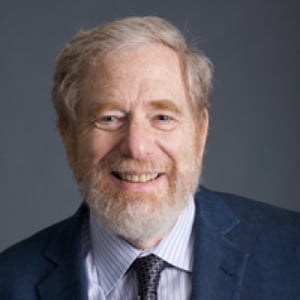
Carmack Waterhouse Professor of Constitutional Law, Georgetown Law
After graduating from Harvard Law School in 1971, Professor Seidman served as a law clerk for J. Skelly Wright of the D.C. Circuit and U.S. Supreme Court Justice Thurgood Marshall. He then was a staff attorney with the D.C. Public Defender Service until joining the Law Center faculty in 1976. He teaches a variety of courses in the fields of constitutional and criminal law. He is co-author of a constitutional law casebook and the author of many articles concerning criminal justice and constitutional law. His most recent books are Silence and Freedom (Stanford 2007), Our Unsettled Constitution: A New Defense of Constitutionalism and Judicial Review (Yale 2001) and Equal Protection of the Laws (Foundation 2002).
Tazewell Taylor Professor of Law and William H. Cabell Research Professor, William & Mary Law School
Jonathan H. Adler joined the William & Mary law faculty as the Tazwell Taylor Professor of Law and William H. Cabell Research Professor in 2025. Prior to joining the faculty, he was the inaugural Johan Verheij Memorial Professor of Law and the founding Director of the Coleman P. Burke Center for Environmental Law at the Case Western Reserve University School of Law.
Professor Adler is the author or editor of seven books, including Climate Liberalism: Perspectives on Liberty, Property and Pollution (Palgrave, 2023), Marijuana Federalism: Uncle Sam and Mary Jane (Brookings Institution Press, 2020), Business and the Roberts Court (Oxford University Press, 2016) and Rebuilding the Ark: New Perspectives on Endangered Species Act Reform (AEI Press, 2011).
His articles have appeared in publications ranging from the Harvard Environmental Law Review and Yale Journal on Regulation to the Wall Street Journal, New York Times, and Washington Post. He has testified before Congress a dozen times, and his work has been cited in the U.S. Supreme Court. A 2024 study identified Professor Adler as the seventh most cited legal academic in administrative and environmental law from 2019 to 2023.
Professor Adler is a contributing editor to Civitas Outlook and a regular contributor to the popular legal blog, The Volokh Conspiracy. A regular commentator on constitutional and regulatory issues, he has appeared on numerous radio and television programs, ranging from the PBS Newshour and National Public Radio to the Fox News Channel and Entertainment Tonight.
Professor Adler is a senior fellow at the Property & Environment Research Center in Bozeman, Montana. In 2018, Professor Adler was elected to membership in the American Law Institute and helped co-found the organization Checks and Balances. In 2024, Professor Adler was appointed a public member of the Administrative Conference of the United States.
Professor Adler clerked for the Honorable David B. Sentelle on the U.S. Court of Appeals for the District of Columbia Circuit.
Max E. Greenberg Professor of Contract Law, New York University School of Law
Professor Clayton Gillette joined the New York University School of Law faculty in 2000. For the prior eight years, he was the Perre Bowen Professor of Law at the University of Virginia School of Law. Professor Gillette began his teaching career at Boston University where he served as the Warren Scholar in Municipal Law and Associate Dean, and has been a visiting professor at the University of Michigan and the University of Virginia as well as at NYU School of Law.
Professor Gillette earned his J.D. from the University of Michigan in 1975 and a B.A. from Amherst College in 1972. After law school, he clerked for Judge J. Edward Lumbard of the United States Court of Appeals for the Second Circuit, and was associated with Cleary, Gottlieb, Steen and Hamilton in New York City.
Gillette's scholarship concentrates on commercial law and local government law. He is the author of casebooks on Local Government Law (with Lynn Baker) and Payment Systems and Credit Instruments (with Alan Schwartz and Robert Scott), and a textbook on Municipal Debt Finance Law (with Robert S. Amdursky). Gillette's numerous articles include studies of long-term commercial contracts, initiatives, relations between localities and their neighbors, privatization of municipal services, and judicial construction of contracts governing homeowners associations. He has also served as the Reporter for the ABA Intersectional Task Force on Initiatives and Referenda and has consulted in litigation ranging from the Agent Orange Products Liability Litigation to the default on municipal bonds by Orange County, California and the Washington Public Power Supply System.
Judge, United States Court of Appeals, District of Columbia Circuit
Judge Katsas was appointed to the D.C. Circuit in December 2017. He graduated from Princeton University and Harvard Law School, where he was an executive editor on the Harvard Law Review. Between 1989 and 1992, he served as a law clerk to Judge Edward Becker on the Third Circuit, to then-Judge Clarence Thomas on the D.C. Circuit, and to Justice Thomas on the Supreme Court. Between 1992 and 2001, he was an associate and then partner in the Washington office of Jones Day, where he specialized in appellate and complex civil litigation. Between 2001 and 2009, he served in many senior positions in the Department of Justice, including as Assistant Attorney General for the Civil Division and as Acting Associate Attorney General. In 2009, he returned to Jones Day. From January to December 2017, he served as Deputy Assistant to the President and Deputy Counsel to the President.
Before joining the bench, Judge Katsas argued more than 75 appeals, including three cases in the Supreme Court, 13 cases in the D.C. Circuit, and cases in every other federal court of appeals. By appointment of the Chief Justice, he served on the Advisory Committee on Appellate Rules from 2013 to 2017. In 2016, he was elected to membership in the American Academy of Appellate Lawyers.
George C. Dix Professor in Constitutional Law, Northwestern University Pritzker School of Law
John O. McGinnis is a graduate of Harvard College and Harvard Law School where he was an editor of the Harvard Law Review. He also has an MA degree from Balliol College, Oxford, in philosophy and theology. Professor McGinnis clerked on the U.S. Court of Appeals for the District of Columbia. From 1987 to 1991, he was deputy assistant attorney general in the Office of Legal Counsel at the Department of Justice. He is the author of Accelerating Democracy: Transforming Government Through Technology (Princeton 2013) and Originalism and the Good Constitution (Harvard 2013) (with M. Rappaport). He is a past winner of the Paul Bator award given by the Federalist Society to an outstanding academic under 40. He has been listed by the United States on the roster of panelists who may be called upon to decide World Trade Organization Disputes.
Carmack Waterhouse Professor of Constitutional Law, Georgetown Law
After graduating from Harvard Law School in 1971, Professor Seidman served as a law clerk for J. Skelly Wright of the D.C. Circuit and U.S. Supreme Court Justice Thurgood Marshall. He then was a staff attorney with the D.C. Public Defender Service until joining the Law Center faculty in 1976. He teaches a variety of courses in the fields of constitutional and criminal law. He is co-author of a constitutional law casebook and the author of many articles concerning criminal justice and constitutional law. His most recent books are Silence and Freedom (Stanford 2007), Our Unsettled Constitution: A New Defense of Constitutionalism and Judicial Review (Yale 2001) and Equal Protection of the Laws (Foundation 2002).

Patrick Hotung Professor of Constitutional Law, Georgetown University Law Center
Randy Barnett is the Patrick Hotung Professor of Constitutional Law at Georgetown University Law Center. He has argued before the United States Supreme Court, tried murder cases to juries as a prosecutor in Chicago, and appeared as a prosecutor in the feature film Inalienable. He is the author of numerous books, including Restoring the Lost Constitution, The Structure of Liberty, Our Republican Constitution, and The Original Meaning of the Fourteenth Amendment. He has published two memoirs, A Life for Liberty: The Making of an American Originalist, and Felony Review: Tales of True Crime and Corruption in Chicago. He is currently working on a new book, Freedom and Flourishing: Libertarianism for the Real World.
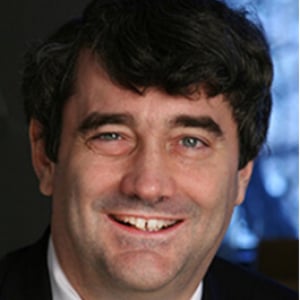
Clayton J. and Henry R. Barber Professor of Law, Northwestern University Pritzker School of Law and Co-Chairman, Board of Directors, The Federalist Society
STEVEN GOW CALABRESI is the Clayton J. & Henry R. Barber Professor at Northwestern Pritzker School of Law. He has also co-taught in the Fall semester at Yale Law School from 2013 to the present. Calabresi clerked for Justice Antonin Scalia and Judges Robert H. Bork and Ralph K. Winter. He was a Special Assistant to Attorney General Meese from 1985 to 1987 and worked with Ken Cribb as his deputy in 1987 on the second floor of the West Wing of the Reagan White House. Calabresi has written books on presidential power and comparative constitutional law and the origins of judicial review. He and Gary Lawson are the co-editors of a casebook on U.S. Constitutional Law, and Calabresi is also the co-editor of a casebook on comparative constitutional law. He has written over seventy law review articles since 1990.
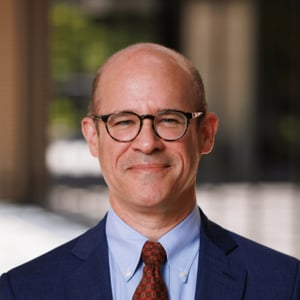
Professor of Law, Stanford Law School
Orin S. Kerr is a Professor of Law at Stanford Law School, where he teaches and writes in the areas of criminal procedure and computer crime law. Kerr earned mechanical engineering degrees from Princeton University and Stanford University before graduating with a J.D. from Harvard Law School. He is a former law clerk to Justice Anthony M. Kennedy at the United States Supreme Court and Judge Leonard I. Garth of the U.S. Court of Appeals for the Third Circuit.
Patrick Hotung Professor of Constitutional Law, Georgetown University Law Center
Randy Barnett is the Patrick Hotung Professor of Constitutional Law at Georgetown University Law Center. He has argued before the United States Supreme Court, tried murder cases to juries as a prosecutor in Chicago, and appeared as a prosecutor in the feature film Inalienable. He is the author of numerous books, including Restoring the Lost Constitution, The Structure of Liberty, Our Republican Constitution, and The Original Meaning of the Fourteenth Amendment. He has published two memoirs, A Life for Liberty: The Making of an American Originalist, and Felony Review: Tales of True Crime and Corruption in Chicago. He is currently working on a new book, Freedom and Flourishing: Libertarianism for the Real World.
Clayton J. and Henry R. Barber Professor of Law, Northwestern University Pritzker School of Law and Co-Chairman, Board of Directors, The Federalist Society
STEVEN GOW CALABRESI is the Clayton J. & Henry R. Barber Professor at Northwestern Pritzker School of Law. He has also co-taught in the Fall semester at Yale Law School from 2013 to the present. Calabresi clerked for Justice Antonin Scalia and Judges Robert H. Bork and Ralph K. Winter. He was a Special Assistant to Attorney General Meese from 1985 to 1987 and worked with Ken Cribb as his deputy in 1987 on the second floor of the West Wing of the Reagan White House. Calabresi has written books on presidential power and comparative constitutional law and the origins of judicial review. He and Gary Lawson are the co-editors of a casebook on U.S. Constitutional Law, and Calabresi is also the co-editor of a casebook on comparative constitutional law. He has written over seventy law review articles since 1990.
Professor of Law, Stanford Law School
Orin S. Kerr is a Professor of Law at Stanford Law School, where he teaches and writes in the areas of criminal procedure and computer crime law. Kerr earned mechanical engineering degrees from Princeton University and Stanford University before graduating with a J.D. from Harvard Law School. He is a former law clerk to Justice Anthony M. Kennedy at the United States Supreme Court and Judge Leonard I. Garth of the U.S. Court of Appeals for the Third Circuit.
Patrick Hotung Professor of Constitutional Law, Georgetown University Law Center
Randy Barnett is the Patrick Hotung Professor of Constitutional Law at Georgetown University Law Center. He has argued before the United States Supreme Court, tried murder cases to juries as a prosecutor in Chicago, and appeared as a prosecutor in the feature film Inalienable. He is the author of numerous books, including Restoring the Lost Constitution, The Structure of Liberty, Our Republican Constitution, and The Original Meaning of the Fourteenth Amendment. He has published two memoirs, A Life for Liberty: The Making of an American Originalist, and Felony Review: Tales of True Crime and Corruption in Chicago. He is currently working on a new book, Freedom and Flourishing: Libertarianism for the Real World.
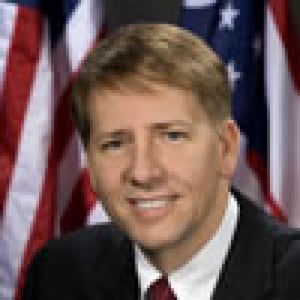
Ohio Attorney General
Richard Cordray was elected Ohio Attorney General in 2008.
Since his election, he has sought to use the power of his office to speak up for ordinary citizens and to battle the ills that weaken our society.
In the wake of the economic crisis, Cordray has taken action to hold Wall Street accountable for wrongdoing. His office is managing several major lawsuits against notable Wall Street firms such as AIG, Bank of America and Merrill Lynch, and these efforts have resulted in more than $2.5 billion in settlements to date.
Cordray aggressively pursues scammers who try to make a buck at the expense of Ohioans. He has filed dozens of cease and desist orders against foreclosure rescue scams, which exploit Ohio homeowners who are desperate for help. Ohio consumers filed a record number of consumer complaints with his office in 2009 - more than 30,000 of them - and the office responded by recovering millions in restitution, fines and other compensation. Cordray also opened the office's consumer complaint process to small businesses and nonprofits for the first time, providing new tools to protect them against vendors that do not play by the rules.
As one of Ohio's leading law enforcement officials, Cordray has stressed the importance of working with local law enforcement agencies to fight crime and protect Ohioans. Under his administration and with the help of local law enforcement agencies, Ohio became the first state in the nation to fully implement the sex offender registration provisions of the federal Adam Walsh Act. Through the office's Bureau of Criminal Identification and Investigation, Cordray and his staff have reduced the number of pending cases for laboratory and other tests that law enforcement officials and prosecutors rely on to make their cases and pursue justice for Ohioans.
A strong advocate for veterans, Cordray proposed a service bonus for veterans of the Persian Gulf, Afghanistan and Iraq wars. More than seven in 10 voters approved the bonus in November 2009.
During his accomplished legal career, Cordray has personally argued seven cases before the U.S. Supreme Court. Among them was a case he argued as attorney general in 2009, when he won a unanimous Supreme Court decision to reinstate the death sentence of a man convicted in a hate-inspired shooting spree that killed three people.
Cordray previously served as Ohio treasurer, Franklin County treasurer, state representative and as Ohio's first solicitor general. He also was a law clerk for U.S. Supreme Court Justices Anthony Kennedy and Byron White.
For his service to Ohioans, Cordray has been honored with numerous awards, including the National Community Reinvestment Coalition's Henry B. Gonzalez Award for partnering with community nonprofits to help traditionally underserved people build wealth and economic opportunity; the Ohio Children's Defense Fund's Children's Champion Award for fighting to ensure a level playing field for all children; the Vietnam Veterans of America Buckeye State Council's Presidential Citation Award for supporting veterans; the Better Business Bureau Serving Northwestern Ohio and Southeastern Michigan's Award of Appreciation for promoting an ethical marketplace; and the NeighborWorks America's Government Service Award as the foremost national leader in state government for working to prevent foreclosures.
Cordray earned a master's degree with first-class honors from Oxford University in England and a law degree from the University of Chicago Law School, where he was editor of the Law Review. He lives near Grove City with his wife, Peggy, and their twins. His earliest claim to fame was as an undefeated five-time champion on the "Jeopardy!" TV show.
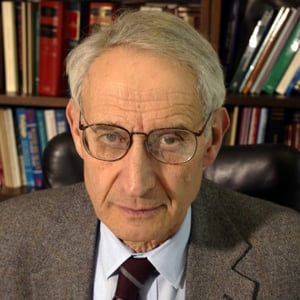
Beneficial Professor of Law, Harvard Law School
Educated at Princeton, Oxford and Columbia Law School, Charles Fried, the Beneficial Professor of Law, has been teaching at Harvard Law School since 1961. He was Solicitor General of the United States, 1985-89, and an Associate Justice of the Supreme Judicial Court of Massachusetts, 1995-99. His scholarly and teaching interests have been moved by the connection between normative theory and the concrete institutions of public and private law. During his career at Harvard he has taught Criminal Law, Commercial Law, Roman Law, Torts, Contracts, Labor Law, Constitutional Law and Federal Courts, Appellate and Supreme Court Advocacy. The author of many books and articles, his Anatomy of Values (1970), Right and Wrong (1978), and Modern Liberty (2006) develop themes in moral and political philosophy with applications to law. Contract as Promise (1980), Making Tort Law (2003, with David Rosenberg) and Saying What the Law Is: The Constitution in the Supreme Court (2004) are fundamental inquiries into broad legal institutions. Order & Law: Arguing the Reagan Revolution (1991) discusses major themes developed in Fried's time as Solicitor General. In recent years Fried has taught Constitutional Law and Contracts. During his time as a teacher he has also argued a number of major cases in state and federal courts, most notably Daubert v. Merrell Dow Pharmaceuticals, in which the Supreme Court established the standards for the use of expert and scientific evidence in federal courts.
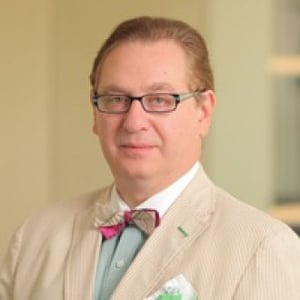
Partner, Baker Hostetler LLP
David Rivkin is a member of the firm's litigation, international and environmental teams and is co-leader of the firm's national appellate practice. He has extensive experience in constitutional, administrative and international law litigation and has been involved in numerous high-profile cases. With his prior experience in the government sector, David draws on a wealth of knowledge when providing compliance advice to companies and handling enforcement proceedings before government agencies on issues arising out of multilateral and unilateral sanctions, the Foreign Corrupt Practices Act (FCPA), anti-boycott issues, bankruptcy and financial fraud matters, and environmental and energy issues.
David has developed and implemented legislative, regulatory and litigation initiatives for two presidential administrations. Over the years, he has published hundreds of articles, op-eds, book reviews and book chapters on a variety of international, legal, constitutional, defense, arms control, foreign policy, environmental and energy issues for various newspapers and magazines, including The Wall Street Journal, The Washington Post, The New York Times, USA Today and The Los Angeles Times, and has been a frequent commentator and guest on TV and radio shows including ABC, CBS, NBC, CNN, Fox News, NPR and PBS.
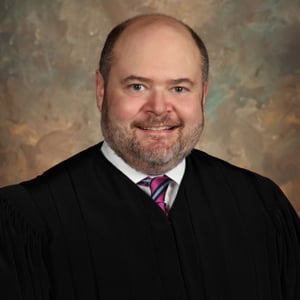
Judge, United States Court of Appeals, Eighth Circuit
David Stras became a judge on the United States Court of Appeals for the Eighth Circuit on January 31, 2018. Before serving on the Eighth Circuit, Judge Stras was an Associate Justice of the Minnesota Supreme Court, a position he occupied from July 1, 2010 until his appointment to the Eighth Circuit.
Prior to becoming a judge, Stras was a member of the faculty of the University of Minnesota Law School from 2004 through 2010. He taught and wrote in the areas of federal courts and jurisdiction, constitutional law, criminal law, and law and politics.
Judge Stras received his Bachelor of Arts degree, with highest distinction, in 1995 and his Master of Business Administration in 1999, both from the University of Kansas. He also received his law degree from the University of Kansas School of Law in 1999, where he served as Editor-in-Chief of the Criminal Procedure Edition of the Kansas Law Review.
Following law school, Stras clerked for The Honorable Melvin Brunetti of the United States Court of Appeals for the Ninth Circuit and then for The Honorable J. Michael Luttig of the United States Court of Appeals for the Fourth Circuit.
From 2001 to 2002, he practiced white-collar criminal and appellate litigation with the Washington, D.C., office of Sidley Austin Brown & Wood. Following his year in practice, he clerked for The Honorable Clarence Thomas of the Supreme Court of the United States.
Patrick Hotung Professor of Constitutional Law, Georgetown University Law Center
Randy Barnett is the Patrick Hotung Professor of Constitutional Law at Georgetown University Law Center. He has argued before the United States Supreme Court, tried murder cases to juries as a prosecutor in Chicago, and appeared as a prosecutor in the feature film Inalienable. He is the author of numerous books, including Restoring the Lost Constitution, The Structure of Liberty, Our Republican Constitution, and The Original Meaning of the Fourteenth Amendment. He has published two memoirs, A Life for Liberty: The Making of an American Originalist, and Felony Review: Tales of True Crime and Corruption in Chicago. He is currently working on a new book, Freedom and Flourishing: Libertarianism for the Real World.
Ohio Attorney General
Richard Cordray was elected Ohio Attorney General in 2008.
Since his election, he has sought to use the power of his office to speak up for ordinary citizens and to battle the ills that weaken our society.
In the wake of the economic crisis, Cordray has taken action to hold Wall Street accountable for wrongdoing. His office is managing several major lawsuits against notable Wall Street firms such as AIG, Bank of America and Merrill Lynch, and these efforts have resulted in more than $2.5 billion in settlements to date.
Cordray aggressively pursues scammers who try to make a buck at the expense of Ohioans. He has filed dozens of cease and desist orders against foreclosure rescue scams, which exploit Ohio homeowners who are desperate for help. Ohio consumers filed a record number of consumer complaints with his office in 2009 - more than 30,000 of them - and the office responded by recovering millions in restitution, fines and other compensation. Cordray also opened the office's consumer complaint process to small businesses and nonprofits for the first time, providing new tools to protect them against vendors that do not play by the rules.
As one of Ohio's leading law enforcement officials, Cordray has stressed the importance of working with local law enforcement agencies to fight crime and protect Ohioans. Under his administration and with the help of local law enforcement agencies, Ohio became the first state in the nation to fully implement the sex offender registration provisions of the federal Adam Walsh Act. Through the office's Bureau of Criminal Identification and Investigation, Cordray and his staff have reduced the number of pending cases for laboratory and other tests that law enforcement officials and prosecutors rely on to make their cases and pursue justice for Ohioans.
A strong advocate for veterans, Cordray proposed a service bonus for veterans of the Persian Gulf, Afghanistan and Iraq wars. More than seven in 10 voters approved the bonus in November 2009.
During his accomplished legal career, Cordray has personally argued seven cases before the U.S. Supreme Court. Among them was a case he argued as attorney general in 2009, when he won a unanimous Supreme Court decision to reinstate the death sentence of a man convicted in a hate-inspired shooting spree that killed three people.
Cordray previously served as Ohio treasurer, Franklin County treasurer, state representative and as Ohio's first solicitor general. He also was a law clerk for U.S. Supreme Court Justices Anthony Kennedy and Byron White.
For his service to Ohioans, Cordray has been honored with numerous awards, including the National Community Reinvestment Coalition's Henry B. Gonzalez Award for partnering with community nonprofits to help traditionally underserved people build wealth and economic opportunity; the Ohio Children's Defense Fund's Children's Champion Award for fighting to ensure a level playing field for all children; the Vietnam Veterans of America Buckeye State Council's Presidential Citation Award for supporting veterans; the Better Business Bureau Serving Northwestern Ohio and Southeastern Michigan's Award of Appreciation for promoting an ethical marketplace; and the NeighborWorks America's Government Service Award as the foremost national leader in state government for working to prevent foreclosures.
Cordray earned a master's degree with first-class honors from Oxford University in England and a law degree from the University of Chicago Law School, where he was editor of the Law Review. He lives near Grove City with his wife, Peggy, and their twins. His earliest claim to fame was as an undefeated five-time champion on the "Jeopardy!" TV show.
Beneficial Professor of Law, Harvard Law School
Educated at Princeton, Oxford and Columbia Law School, Charles Fried, the Beneficial Professor of Law, has been teaching at Harvard Law School since 1961. He was Solicitor General of the United States, 1985-89, and an Associate Justice of the Supreme Judicial Court of Massachusetts, 1995-99. His scholarly and teaching interests have been moved by the connection between normative theory and the concrete institutions of public and private law. During his career at Harvard he has taught Criminal Law, Commercial Law, Roman Law, Torts, Contracts, Labor Law, Constitutional Law and Federal Courts, Appellate and Supreme Court Advocacy. The author of many books and articles, his Anatomy of Values (1970), Right and Wrong (1978), and Modern Liberty (2006) develop themes in moral and political philosophy with applications to law. Contract as Promise (1980), Making Tort Law (2003, with David Rosenberg) and Saying What the Law Is: The Constitution in the Supreme Court (2004) are fundamental inquiries into broad legal institutions. Order & Law: Arguing the Reagan Revolution (1991) discusses major themes developed in Fried's time as Solicitor General. In recent years Fried has taught Constitutional Law and Contracts. During his time as a teacher he has also argued a number of major cases in state and federal courts, most notably Daubert v. Merrell Dow Pharmaceuticals, in which the Supreme Court established the standards for the use of expert and scientific evidence in federal courts.
Partner, Baker Hostetler LLP
David Rivkin is a member of the firm's litigation, international and environmental teams and is co-leader of the firm's national appellate practice. He has extensive experience in constitutional, administrative and international law litigation and has been involved in numerous high-profile cases. With his prior experience in the government sector, David draws on a wealth of knowledge when providing compliance advice to companies and handling enforcement proceedings before government agencies on issues arising out of multilateral and unilateral sanctions, the Foreign Corrupt Practices Act (FCPA), anti-boycott issues, bankruptcy and financial fraud matters, and environmental and energy issues.
David has developed and implemented legislative, regulatory and litigation initiatives for two presidential administrations. Over the years, he has published hundreds of articles, op-eds, book reviews and book chapters on a variety of international, legal, constitutional, defense, arms control, foreign policy, environmental and energy issues for various newspapers and magazines, including The Wall Street Journal, The Washington Post, The New York Times, USA Today and The Los Angeles Times, and has been a frequent commentator and guest on TV and radio shows including ABC, CBS, NBC, CNN, Fox News, NPR and PBS.
Judge, United States Court of Appeals, Eighth Circuit
David Stras became a judge on the United States Court of Appeals for the Eighth Circuit on January 31, 2018. Before serving on the Eighth Circuit, Judge Stras was an Associate Justice of the Minnesota Supreme Court, a position he occupied from July 1, 2010 until his appointment to the Eighth Circuit.
Prior to becoming a judge, Stras was a member of the faculty of the University of Minnesota Law School from 2004 through 2010. He taught and wrote in the areas of federal courts and jurisdiction, constitutional law, criminal law, and law and politics.
Judge Stras received his Bachelor of Arts degree, with highest distinction, in 1995 and his Master of Business Administration in 1999, both from the University of Kansas. He also received his law degree from the University of Kansas School of Law in 1999, where he served as Editor-in-Chief of the Criminal Procedure Edition of the Kansas Law Review.
Following law school, Stras clerked for The Honorable Melvin Brunetti of the United States Court of Appeals for the Ninth Circuit and then for The Honorable J. Michael Luttig of the United States Court of Appeals for the Fourth Circuit.
From 2001 to 2002, he practiced white-collar criminal and appellate litigation with the Washington, D.C., office of Sidley Austin Brown & Wood. Following his year in practice, he clerked for The Honorable Clarence Thomas of the Supreme Court of the United States.
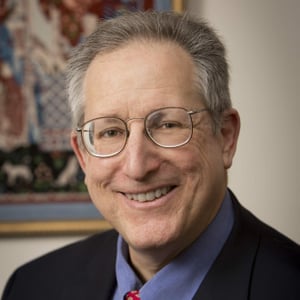
Knight Professor of Constitutional Law and the First Amendment, Yale Law School
Jack M. Balkin is Knight Professor of Constitutional Law and the First Amendment at Yale Law School. He is the founder and director of Yale’s Information Society Project, an interdisciplinary center that studies law and new information technologies. He also directs the Abrams Institute for Freedom of Expression, and the Knight Law and Media Program at Yale. Professor Balkin is a member of the American Academy of Arts and Sciences, and founded and edits the group blog Balkinization (http://balkin.blogspot.com/). He is the author of over 100 articles and the author or editor of eleven books. His scholarship ranges over many different subjects, including constitutional theory, technology and Internet law, freedom of speech, jurisprudence, cultural evolution, the theory of ideology, and musical and legal interpretation. His most recent books are Democracy and Dysfunction (University of Chicago Press, 2019)(with Sanford Levinson); Living Originalism (Harvard, Belknap Press, 2011), and Constitutional Redemption: Political Faith in an Unjust World (Harvard University Press 2011).
Patrick Hotung Professor of Constitutional Law, Georgetown University Law Center
Randy Barnett is the Patrick Hotung Professor of Constitutional Law at Georgetown University Law Center. He has argued before the United States Supreme Court, tried murder cases to juries as a prosecutor in Chicago, and appeared as a prosecutor in the feature film Inalienable. He is the author of numerous books, including Restoring the Lost Constitution, The Structure of Liberty, Our Republican Constitution, and The Original Meaning of the Fourteenth Amendment. He has published two memoirs, A Life for Liberty: The Making of an American Originalist, and Felony Review: Tales of True Crime and Corruption in Chicago. He is currently working on a new book, Freedom and Flourishing: Libertarianism for the Real World.
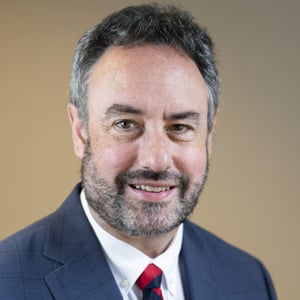
Research Director, Independence Institute
David B. Kopel is Research Director at the Independence Institute; Adjunct Scholar at the Cato Institute; and Senior Fellow at the University of Wyoming College of Law, Firearms Research Center. He received his B.A. in history with Highest Honors from Brown University and his J.D. magna cum laude from the University of Michigan Law School.
He is the author of over 20 books, including the textbook Firearm Law and the Second Amendment: Regulation, Rights, and Policy (Aspen Pubs. 4th ed. forthcoming 2026). His scholarship and briefs have been cited 7 Supreme Court cases--including Heller, McDonald, and Bruen--and in 140 lower courts opinions. He is the author of 120 scholarly articles. His shorter articles often appear on The Volokh Conspiracy blog, hosted by Reason magazine. His topics of interest include the right to arms throughout history, the Colorado Constitution, and law enforcement policy.
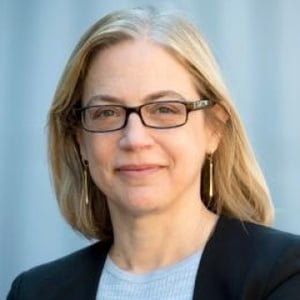
Harlan Fiske Stone Professor of Constitutional Law, Columbia Law School
A leading administrative and constitutional law scholar, Gillian Metzger ’96 writes and teaches in the areas of administrative law, constitutional law, and federal courts, with an emphasis on federalism and privatization. In 2023-2024, she served as Acting Assistant Attorney General and Deputy Assistant Attorney General in the Office of Legal Counsel in the Department of Justice.
Metzger's recent work covers topics ranging from constitutional attacks on the administrative state to appropriations, administrative law under the Roberts Court, and the role of administrative agencies in a polarized world. In 2015, Metzger won the American Bar Association Administrative Law Section Annual Scholarship Award for “The Constitutional Duty to Supervise,” which examined presidential control and oversight of the modern administrative state. She is a co-editor of Gellhorn & Byse’s Administrative Law: Cases and Comments, 13th ed. (Foundation Press, 2023), a seminal administrative law casebook.
Professor Metzger was recently elected to the American Academy of Arts & Sciences and is a Senior Fellow of the Administrative Conference of the United States. In 2020, she was awarded Columbia University's Faculty Mentorship Award and in 2014, the Law School’s graduating class awarded Metzger the Willis L.M. Reese Prize for Excellence in Teaching, recognizing, among many other accomplishments, her commitment to mentoring new generations of law students.
In 2012, Metzger helped launch Columbia Law School’s Center for Constitutional Governance (CCG)—where she now serves as faculty director—a nonpartisan legal and policy organization devoted to the study of constitutional structure and authority. CCG brings together a diverse group of constitutional scholars to explore policy areas such as health care, civil rights, immigration, financial regulation, and national security.
Metzger also has co-authored and filed numerous amicus briefs in major constitutional and administrative law challenges before the Supreme Court and other courts. Most recently, Metzger filed a brief in Seila Law Center v. CFPB, a separation of powers challenge, and in Kisor v. Wilkie, a case involving judicial deference to agencies. She has also filed briefs in cases involving reproductive rights and the Affordable Care Act, among others.
Previously, Metzger served as vice dean of intellectual life at Columbia Law School. Before joining the Law School, she worked as an attorney with the Brennan Center for Justice. Metzger also clerked for U.S. Supreme Court Justice Ruth Bader Ginsburg ’59 and Judge Patricia M. Wald of the U.S. Circuit Court of Appeals for the District of Columbia. In 2018, Metzger moderated a panel discussion with Justice Ginsburg on impact litigation at Columbia Law School.
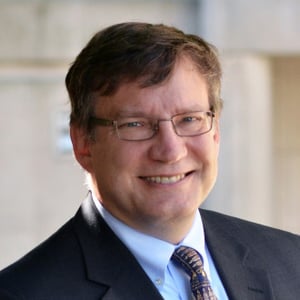
Chairman and Founder, Institute for Free Speech; Josiah H. Blackmore II/Shirley M. Nault Designated Professor of Law, Capital University Law School
Senior Fellow, Cato Institute
Doug Bandow is a senior fellow at the Cato Institute, specializing in foreign policy and civil liberties. He worked as special assistant to President Reagan and editor of the political magazine Inquiry. He writes regularly for leading publications such as Fortune magazine, National Interest, Wall Street Journal, and Washington Times. Bandow speaks frequently at academic conferences, on college campuses, and to business groups. Bandow has been a regular commentator on ABC, CBS, NBC, CNN, Fox News Channel, and MSNBC. He holds a J.D. from Stanford University.
Trinity College Dublin School of Law
Neville Cox LL.B., Ph.D. is a Fellow of Trinity College Dublin and a practising barrister. He is the author of Blasphemy and the Law (2000) and co-author of Sport and the Law (2004). He is also published on a wide variety of topics in law journals and books. He lectures in the areas of tort law, comparative law and sport and the law. He has been a visting professor in the University of San Francisco and in Autumn of 2006 he will be a scholar-in-residence in Washington & Lee University in Virginia. In 2005 he was awarded a Provost's teaching award.
Harry T. Ice Professor of Law, Indiana University Maurer School of Law
Professor Cripps, an internationally acclaimed scholar and teacher, became the first holder of the Harry T. Ice Chair of Law at Indiana University in 2000. She specializes in intellectual property law and biotechnology. Her book Controlling Technology: Genetic Engineering and the Law, published in 1980, was the first comprehensive treatment of the legal implications of biotechnology. She is also the author of other books, including The Legal Implications of Disclosure in the Public Interest, now in its second edition, and more than 40 articles on intellectual property, privacy law, and biotechnology.
In addition to her years in the faculty of law at Cambridge University, she has regularly taught as a visiting professor at the Cornell Law School and also at the University of Texas at Austin as well as in Paris. Professor Cripps is a barrister in both England and New Zealand, and has served as an advisor on intellectual property law and biotechnology to the House of Lords, on biotechnology issues to the New Zealand Government, on constitutional matters to the Sri Lankan Ministry of Justice, and as a consultant on intellectual property to various law firms and corporations. Her research on bioethics and cloning was cited in the most recent issue of the Harvard Law Review and in "Why can't you buy a kidney to save your life?" Boston Globe, July 1, 2007.
James Louis Calamaras Professor of Law, Indiana University Maurer School of Law
Professor Fidler specializes in international law. He is one of the world's leading experts on international law and global health. Professor Fidler is also an internationally recognized expert on biosecurity threats posed by biological weapons and bioterrorism, the international legal and policy implications of "non-lethal" weapons, counterinsurgency and rule of law operations, and the globalization of baseball.
In addition to his teaching and scholarly activities, Professor Fidler has served as an international legal consultant to the World Bank (on foreign investment in Palestine), the World Health Organization and the U.S. Centers for Disease Control and Prevention (on global health issues), the U.S. Department of Defense's Defense Science Board (on bioterrorism), the Scientists Working Group on Biological and Chemical Weapons of the Center for Arms Control and Non-Proliferation, U.S. Joint Forces Command (on rule of law issues in complex operations), the Interagency Afghanistan Integrated Civilian-Military Pre-Deployment Training Course organized by the Departments of Defense, State, Agriculture and the U.S. Agency for International Development, and various initiatives undertaken by non-governmental organizations in the areas of global health and arms control. He was also the editor for the Insights publication series of the American Society of International Law from 2007-2009.
Senior Fellow, Cato Institute
Doug Bandow is a senior fellow at the Cato Institute, specializing in foreign policy and civil liberties. He worked as special assistant to President Reagan and editor of the political magazine Inquiry. He writes regularly for leading publications such as Fortune magazine, National Interest, Wall Street Journal, and Washington Times. Bandow speaks frequently at academic conferences, on college campuses, and to business groups. Bandow has been a regular commentator on ABC, CBS, NBC, CNN, Fox News Channel, and MSNBC. He holds a J.D. from Stanford University.
Trinity College Dublin School of Law
Neville Cox LL.B., Ph.D. is a Fellow of Trinity College Dublin and a practising barrister. He is the author of Blasphemy and the Law (2000) and co-author of Sport and the Law (2004). He is also published on a wide variety of topics in law journals and books. He lectures in the areas of tort law, comparative law and sport and the law. He has been a visting professor in the University of San Francisco and in Autumn of 2006 he will be a scholar-in-residence in Washington & Lee University in Virginia. In 2005 he was awarded a Provost's teaching award.
Harry T. Ice Professor of Law, Indiana University Maurer School of Law
Professor Cripps, an internationally acclaimed scholar and teacher, became the first holder of the Harry T. Ice Chair of Law at Indiana University in 2000. She specializes in intellectual property law and biotechnology. Her book Controlling Technology: Genetic Engineering and the Law, published in 1980, was the first comprehensive treatment of the legal implications of biotechnology. She is also the author of other books, including The Legal Implications of Disclosure in the Public Interest, now in its second edition, and more than 40 articles on intellectual property, privacy law, and biotechnology.
In addition to her years in the faculty of law at Cambridge University, she has regularly taught as a visiting professor at the Cornell Law School and also at the University of Texas at Austin as well as in Paris. Professor Cripps is a barrister in both England and New Zealand, and has served as an advisor on intellectual property law and biotechnology to the House of Lords, on biotechnology issues to the New Zealand Government, on constitutional matters to the Sri Lankan Ministry of Justice, and as a consultant on intellectual property to various law firms and corporations. Her research on bioethics and cloning was cited in the most recent issue of the Harvard Law Review and in "Why can't you buy a kidney to save your life?" Boston Globe, July 1, 2007.
James Louis Calamaras Professor of Law, Indiana University Maurer School of Law
Professor Fidler specializes in international law. He is one of the world's leading experts on international law and global health. Professor Fidler is also an internationally recognized expert on biosecurity threats posed by biological weapons and bioterrorism, the international legal and policy implications of "non-lethal" weapons, counterinsurgency and rule of law operations, and the globalization of baseball.
In addition to his teaching and scholarly activities, Professor Fidler has served as an international legal consultant to the World Bank (on foreign investment in Palestine), the World Health Organization and the U.S. Centers for Disease Control and Prevention (on global health issues), the U.S. Department of Defense's Defense Science Board (on bioterrorism), the Scientists Working Group on Biological and Chemical Weapons of the Center for Arms Control and Non-Proliferation, U.S. Joint Forces Command (on rule of law issues in complex operations), the Interagency Afghanistan Integrated Civilian-Military Pre-Deployment Training Course organized by the Departments of Defense, State, Agriculture and the U.S. Agency for International Development, and various initiatives undertaken by non-governmental organizations in the areas of global health and arms control. He was also the editor for the Insights publication series of the American Society of International Law from 2007-2009.

The Patient Protection and Affordable Care Act
Doug Bandow, James J. Woodruff
Jacksonville Lawyers Chapter & Florida Coastal Student Chapter
On March 10, 2011, the Jacksonville Lawyers Chapter and the Florida Coastal Student Chapter co-hosted...
Panel II: Federalism and Interstate Competition
Jonathan H. Adler, Clayton Gillette, Gregory G. Katsas, John O. McGinnis, Lauren Prieb, Louis Michael Seidman
2011 National Student Symposium
This panel will assess American federalism as a competitive institution that offers a marketplace of...
Panel II: Federalism and Interstate Competition
Jonathan H. Adler, Clayton Gillette, Gregory G. Katsas, John O. McGinnis, Lauren Prieb, Louis Michael Seidman
2011 National Student Symposium
This panel will assess American federalism as a competitive institution that offers a marketplace of...
Luncheon Debate: The Constitutionality of the Individual Mandate
Randy E. Barnett, Steven G. Calabresi, Orin S. Kerr
13th Annual Faculty Conference
Prof. Randy E. Barnett, Georgetown University Law Center Prof. Orin S. Kerr, The George Washington...
Luncheon Debate: The Constitutionality of the Individual Mandate
Randy E. Barnett, Steven G. Calabresi, Orin S. Kerr
13th Annual Faculty Conference
Prof. Randy E. Barnett, Georgetown University Law Center Prof. Orin S. Kerr, The George Washington...
Litigation: Debating the Constitutionality of the Federal Health Care Legislation
Randy E. Barnett, Richard Cordray, Charles Fried, David B. Rivkin, David R. Stras
2010 National Lawyers Convention
Prof. Randy E. Barnett, Carmack Waterhouse Professor of Legal Theory, Georgetown University Law Center Hon....
Litigation: Debating the Constitutionality of the Federal Health Care Legislation
Randy E. Barnett, Richard Cordray, Charles Fried, David B. Rivkin, David R. Stras
2010 National Lawyers Convention
Prof. Randy E. Barnett, Carmack Waterhouse Professor of Legal Theory, Georgetown University Law Center Hon....
The Individual Health Care Mandate and Enumerated Powers
Jack M. Balkin, Randy E. Barnett, David B. Kopel, Gillian E. Metzger, Bradley A. Smith
Faculty Division
Shortly after the health care reform bill was signed into law, the attorneys general of...
The Great Health Care Debate: Is Nationalized Health Care the Cure for America?
Doug Bandow, Neville Cox, Yvonne Cripps, David Fidler
Indiana - Bloomington Student Chapter
The Federalist Society, Black Law Students Association, and Health Law Society co-hosted this debate panel...
The Great Health Care Debate: Is Nationalized Health Care the Cure for America?
Doug Bandow, Neville Cox, Yvonne Cripps, David Fidler
Indiana - Bloomington Student Chapter
The Federalist Society, Black Law Students Association, and Health Law Society co-hosted this debate panel...