
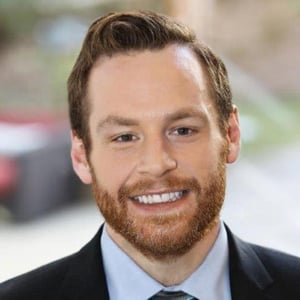
Deputy Director - Center for Effective Public Management; Senior Fellow - Governance Studies, The Brookings Institution
John Hudak is deputy director of the Center for Effective Public Management and a senior fellow in Governance Studies. His research examines questions of presidential power in the contexts of administration, personnel, and public policy. Additionally, he focuses on campaigns and elections, legislative-executive interaction, and state and federal marijuana policy.
John’s 2016 book, Marijuana: A Short History, offers a unique, up-to-date profile of how cannabis emerged from the shadows of counterculture and illegality to become a serious, even mainstream, public policy issue and source of legal revenue for both businesses and governments. In it, he describes why attitudes and policy have changed, and what those changes mean for marijuana's future place in society.
His 2014 Presidential Pork: White House Influence over the Distribution of Federal Grants demonstrates that pork-barrel politics occurs beyond the halls of Congress. Presidents capitalize on their discretionary funding authority to target federal dollars to swing states in advance of presidential elections. His other work explores how agency staffing, expertise, and institutional structure facilitate or hinder presidential power and influence. This research explores the balance between political control and bureaucratic expertise in the delivery of public policy.
John’s work has been recognized for its quality and contribution by the Midwest Political Science Association and the American Political Science Association’s Presidency Research Group. His work has been supported by institutions including the National Science Foundation.
Prior to joining Brookings, John served as the program director and as a graduate fellow at the Center for the Study of Democratic Institutions. He holds a B.A. in political science and economics from the University of Connecticut and an M.A. and Ph.D. in political science from Vanderbilt University.
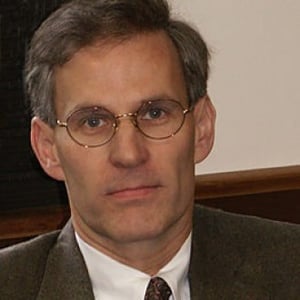
Director of Economic Studies, Cato Institute
Jeffrey Miron is director of economic studies at the Cato Institute and the director of undergraduate studies in the Department of Economics at Harvard University. His area of expertise is the economics of libertarianism, with particular emphasis on the economics of illegal drugs.
Miron has served on the faculty at the University of Michigan and as a visiting professor at the Sloan School of Management, M.I.T., and the department of economics at Harvard University. From 1992-1998, he was chairman of the department of economics at Boston University. He is the author of Drug War Crimes: The Consequences of Prohibition and The Economics of Seasonal Cycles, in addition to numerous op-eds and journal articles. He has been the recipient of an Olin Fellowship from the National Bureau of Economic Research, an Earhart Foundation Fellowship, and a Sloan Foundation Faculty Research Fellowship.
Miron received a BA, magna cum laude, from Swarthmore College in 1979 and a PhD in economics from MIT in 1984.
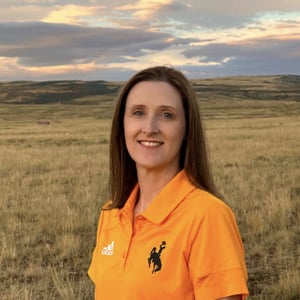
Alton C. and Cecile Cunningham Craig Professor of Law, The University of Alabama School of Law
Julie Andersen Hill is the Alton C. and Cecile Cunningham Craig Professor of Law at the University of Alabama School of Law where she teaches banking and commercial law. Her scholarly work focuses on the unwritten rules of banking regulation. She often examines how regulators respond to financial innovation. Before entering the legal academy, Professor Hill practiced law in the Washington, D.C. office of Skadden, Arps, Slate, Meagher & Flom LLP. As part of the litigation group, she represented large financial institutions in government investigations. She also clerked for Judge Wade Brorby on the United States Court of Appeals for the Tenth Circuit. Professor Hill earned her undergraduate degree in economics summa cum laude from Southern Utah University and her J.D. summa cum laude from the J. Reuben Clark Law School at Brigham Young University.
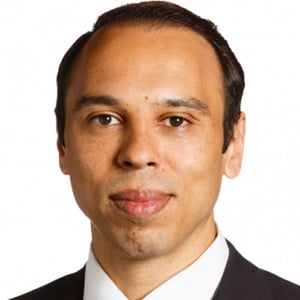
Vice President of Domestic and Economic Policy, The Heritage Foundation
Roger Severino is Vice President of Economic and Domestic Policy, and the Joseph C. and Elizabeth A. Anderlik Fellow at The Heritage Foundation.
Severino is a national authority on civil rights, conscience and religious freedom, the administrative state, and information privacy, particularly as applied to health care law and policy. Find his tweets at @RogerSeverino_.
Severino spearheaded the HHS Accountability Project while a Senior Fellow at EPPC from 2021 to 2023. Previously, Severino was Director of HHS’ Office for Civil Rights, where he led a team of over 250 staff enforcing our nation’s civil rights, conscience and religious freedom, and health information privacy laws. He served from 2017 to 2021 and was the longest-serving OCR director of the past three decades.
Prior to joining HHS, Severino served for two years as Director of the DeVos Center for Religion and Civil Society at Heritage, advocating for life, family, and religious-freedom policies. Before that, he was a trial attorney for seven years at the U.S. Department of Justice’s Civil Rights Division where he enforced the Fair Housing Act and the Civil Rights Act of 1964. Severino started his legal career at the Becket Fund for Religious Liberty, where he was Legal Counsel and Chief Operations Officer and defended the rights of people of all faiths under federal and international law.
Severino has been profiled in The New York Times, The Atlantic, The Wall Street Journal, and The Hill and has appeared on Fox News, CNN, MSNBC, NPR, and PBS, among others. In 2020, The New York Times dubbed him and his wife Carrie, “a conservative power couple” to be reckoned with.
Severino holds a JD from Harvard Law School, a master’s degree in public policy, with highest distinction, from Carnegie Mellon University, and a bachelor’s degree in business from the University of Southern California. He was appointed by President Trump to the Administrative Conference of the United States and is a member of the District of Columbia and the Commonwealth of Virginia bars.
As OCR director, Severino founded the federal government’s first division dedicated exclusively to conscience and religious freedom compliance and enforcement. He enforced the Weldon Amendment for the first time against a state (California) after it coerced families and religious organizations into paying for abortion insurance coverage, leading to a $200 million federal funding disallowance. He also enforced laws protecting pro-life pregnancy resource centers from discrimination by states hostile to their message and enforced laws prohibiting forced participation in abortions by medical professionals.
With respect to civil rights, Severino protected older persons and people with disabilities from being denied life-saving care due to discriminatory “quality of life” judgments, especially during the COVID-19 pandemic. He also achieved a landmark sexual harassment resolution with Michigan State University in the wake of the Larry Nassar sexual assault scandal and protected the rights of non-English speakers to have equal access to health and human services.
In the area of health privacy, he secured the largest HIPAA monetary settlement in history and achieved the largest number of enforcement resolutions both in a single year and across four years. He also facilitated the transformational use of Skype, Zoom, and Facetime for delivery of telehealth during the COVID-19 pandemic and beyond.
His regulatory reform activities resulted in a comprehensive conscience protection regulation and proposed a life-affirming disability rights regulation. He achieved regulatory savings of $3.6 billion in health care industry costs over five years and identified and proposed an additional $3.2 billion in cost savings from the repeal of ineffective and unnecessary regulatory burdens.
Severino is a Spanish speaker who teaches salsa and west coast swing in his spare time.

Executive Vice President, Goldwater Institute
Christina Sandefur is the Executive Vice President at the Goldwater Institute. She develops policies and litigates cases advancing healthcare freedom, free enterprise, private property rights, free speech, and taxpayer rights.
Christina is a co-drafter of the Right to Try initiative, now federal law, which protects terminally ill patients' right to try safe investigational treatments that have been prescribed by their physician but are not yet FDA-approved. She has won important victories for property rights in Arizona and works nationally to promote the Institute's Private Property Rights Protection Act, a state-level reform that requires government to pay owners when regulations destroy property rights and reduce property values.
Christina is the co-author of the book Cornerstone of Liberty: Private Property Rights in 21st Century America (2016). She is a frequent guest on national television and radio programs, has provided expert legal testimony to various legislative committees, and is a frequent speaker at conferences. She is the recipient of the 2018 Buckley Award in recognition of her leadership in the freedom movement, and she is an Advisory Board Member of the Network of enlightened Women. Christina serves on the board of the Phoenix Lawyers Chapter of the Federalist Society and is a member of the executive committee for the Federalist Society's Regulatory Transparency Project: FDA & Health.
Christina is a graduate of Michigan State University College of Law and Hillsdale College.
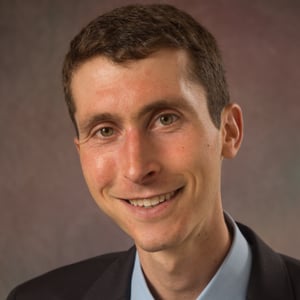
Professor of Law, University of Chicago Law School
Daniel Hemel’s research focuses on taxation, nonprofit organizations, administrative law, and federal courts. His academic work has appeared in the California Law Review, Cornell Law Review, Columbia Law Review, Georgetown Law Journal, Journal of Legal Analysis, National Tax Journal, NYU Law Review, Supreme Court Review, Tax Law Review, Texas Law Review, University of Chicago Law Review, and Yale Law Journal, and has been cited by the US Supreme Court as well as the Ninth Circuit and Federal Circuit Courts of Appeals. His op-eds and other writing have appeared in the New York Times, Washington Post, Wall Street Journal, Atlantic, Politico, Slate, TIME Magazine, and Vox. He also has provided on-air legal analysis for CNN, MSNBC, and NPR.
Daniel graduated summa cum laude from Harvard College and received an MPhil with distinction from Oxford University, where he was a Marshall Scholar. He then earned his JD from Yale Law School, where he was editor-in-chief of the Yale Law Journal. Before joining the University of Chicago Law School faculty, he was a law clerk to Associate Justice Elena Kagan on the US Supreme Court. He also clerked for Judge Michael Boudin on the US Court of Appeals for the First Circuit and Judge Sri Srinivasan on the US Court of Appeals for the District of Columbia Circuit, and served as visiting counsel at the Joint Committee on Taxation. He has held visiting professorships at Harvard Law School and Stanford Law School.
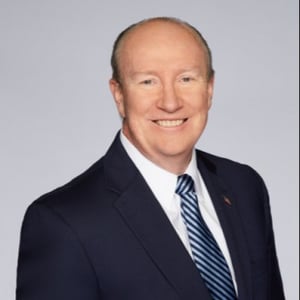
Senior Fellow, National Review
Bestselling author Andrew C. McCarthy is a contributing editor at National Review, a senior fellow at National Review Institute, and a Fox News contributor. He is a former Chief Assistant United States Attorney in the Southern District of New York and led the terrorism prosecution against the “Blind Sheikh” (Omar Abdel Rahman) and eleven other jihadists for conducting a war of urban terrorism against the United States that included the 1993 World Trade Center bombing and a plot to bomb New York City landmarks. During is 20-year career as a prosecutor, he received numerous honors, including the Justice Department’s highest awards. Andy speaks and writes widely on law and national security, radical Islam, politics, and culture. He has testified before Congress as an expert on issues of constitutional law, counterterrorism, and law-enforcement. He is a columnist for The Hill, and his essays and book reviews appear frequently at The New Criterion. His most recent New York Times bestselling book is Ball of Collusion (Encounter Books, 2019), about the Russiagate controversy (an updated version was published in 2020). His other books include Willful Blindness (2008), The Grand Jihad (2010), Spring Fever: The Illusion of Islamic Democracy (2012), and Faithless Execution (2014). He has also written several pamphlets in the Broadside series published by Encounter Books, most recently Islam and Free Speech (2015).
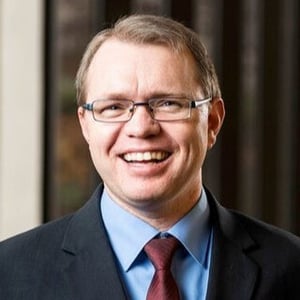
Charles I. Francis Professorship in Law, University of Texas at Austin School of Law
Professor Aaron Nielson lectures and writes in the areas of administrative law, civil procedure, and federal courts. Before joining the faculty, he served as Solicitor General of Texas and represented Texas before the U.S. Supreme Court and the Texas Supreme Court, as well as overseeing all appellate litigation for the State. Earlier in his career, he was a professor at Brigham Young University and an appellate and antitrust partner in the Washington, D.C. office of Kirkland & Ellis LLP. He also clerked for Justice Samuel A. Alito, Jr. of the U.S. Supreme Court, Judge Janice Rogers Brown of the U.S. Court of Appeals for the D.C. Circuit, and Judge Jerry E. Smith of the U.S. Court of Appeals for the Fifth Circuit.
As Solicitor General, Professor Nielson successfully defended against a First Amendment challenge Texas’s law requiring online pornographers to institute age verification. In 2020, the U.S. Supreme Court appointed him to defend the constitutionality of a federal agency. He currently serves as a Senior Fellow of the Administrative Conference of the United States after completing a six-year term as an appointed public member and chair of the Conference’s Administration & Management Committee.
Nielson’s research focuses on administrative law, federal litigation, and the separation of powers. He has published (or soon will publish) in the Harvard Law Review, Columbia Law Review, University of Chicago Law Review, University of Pennsylvania Law Review, Duke Law Journal, Georgetown Law Journal, Cornell Law Review, and Northwestern University Law Review, among others. Nielson has been recognized for teaching for teaching and scholarship and in 2021 received the Federalist Society’s Joseph Story Award, which recognizes a young academic for excellence in legal scholarship, a commitment to teaching, and a concern for students, and who has made a significant public impact in a manner that advances the rule of law in a free society. He is also an elected member of the American Law Institute.
Professor Nielson received his J.D. magna cum laude from Harvard Law School and an LL.M from the University of Cambridge, where he focused his studies on the institutions that regulate global competition and commerce. He received his undergraduate degree summa cum laude from the University of Pennsylvania, majoring in economics and political science.
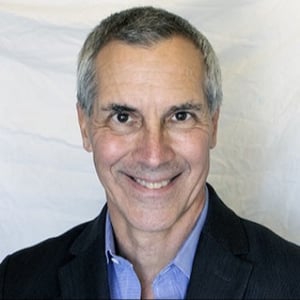
Assistant Professor of Law, University of Akron School of Law
Professor Horvath joined the Akron faculty as an assistant professor of law in 2020. His scholarly interest focus on the ways in which constitutional, statutory, and regulatory inputs intersect with the health care enterprise to determine the access to and quality of U.S. medical care. His teaching includes Torts and various topics in Health Care law. Prior to joining the Akron faculty, Professor Horvath was a post-doctoral Fellow in Public Law at the University of California, Berkeley, School of Law. He also clerked for Judge John T. Noonan, Jr. on the Ninth Circuit Court of Appeals. Professor Horvath earned his J.D. at Berkeley Law, where he served as Editor-in-Chief of the California Law Review. He earned his M.D. at Temple University Medical School.
Professor Horvath's scholarship has explored gaps in the regulation of drug-device combination products through FDA approval and tort law, statutory and regulatory determinants of FDA-approved high-risk medical device failures, and ways in which drug labeling might be improved. His work has been published in Washington Law Review, BYU Law Review, California Law Review, Albany Law Review, Cincinnati Law Review, and the Annals of Health Law and Life Sciences.
Prior to his legal career, Professor Horvath was a cardiologist who specialized in the treatment of heart rhythm disorders. He authored or co-authored over twenty article that were published in the Journal of the American College of Cardiology, Circulation, Archives of Internal Medicine, and other medical journals.
Distinguished Professor of Law, Rutgers Law School
Michael A. Carrier is a leading authority in antitrust and intellectual property law with expertise in the pharmaceutical, high-technology, and music industries. He has been quoted more than 1000 times in media outlets including ABC News, Bloomberg, CBS News, Chicago Tribune, CNBC.com, CNNMoney, Consumer Reports, ESPN, Financial Times, Forbes, Fortune, Fox News, Huffington Post, Los Angeles Times, Nature, NBC News, New York Times, NPR, Philadelphia Inquirer, San Francisco Chronicle, Seattle Times, USA Today, Wall Street Journal, and Washington Post.
Professor Carrier is a co-author of the leading IP/antitrust treatise, IP and Antitrust Law: An Analysis of Antitrust Principles Applied to Intellectual Property Law (3d ed. 2017, with Hovenkamp, Janis, Lemley, and Leslie). He also is the author of Innovation for the 21st Century: Harnessing the Power of Intellectual Property and Antitrust Law (Oxford University Press 2009, paperback 2011) and the editor of Critical Concepts in Intellectual Property Law: Competition (Edward Elgar Publishing 2011).
He has written more than 95 book chapters and law review articles in leading journals including the Stanford Law Review, Michigan Law Review, University of Pennsylvania Law Review, Duke Law Journal, Vanderbilt Law Review, Minnesota Law Review, Iowa Law Review, Notre Dame Law Review, Emory Law Journal, and Wisconsin Law Review, as well as online journals at Harvard, Yale, Stanford, NYU, Penn, Northwestern, Minnesota, and Wisconsin.
Professor Carrier’s scholarship has been cited in opinions of the U.S. Supreme Court, California Supreme Court, D.C. Circuit, Second Circuit, Third Circuit, Fourth Circuit, district courts, International Trade Commission, and Federal Trade Commission, as well as in congressional hearings, government officials’ speeches, and congressional and government agency reports.
Carrier has testified before the U.S. Senate Judiciary Committee (Subcommittee on Antitrust, Competition Policy and Consumer Rights), National Academies (Board on Science, Technology, and Economic Policy), and U.S. Food and Drug Administration, and given talks to the Canadian Competition Bureau, U.S. Department of Justice, Federal Trade Commission, and state attorneys general.
He is a Contributing Editor of the Antitrust Law Journal; member of the Board of Advisors of the American Antitrust Institute; former participant on the ABA Antitrust 2016 Presidential Task Force; past chair of the Executive Committee of the Antitrust and Economic Regulation section of the Association of American Law Schools (AALS); and has written and submitted amicus briefs on behalf of antitrust/consumer organizations and hundreds of professors in the U.S. and California Supreme Courts and Federal, First, Second, and Third Circuits.
Professor Carrier is a summa cum laude graduate of Yale University and a cum laude graduate of Michigan Law School, where he was Book Review Editor of the law review. Before entering academia, he clerked for the Honorable John D. Butzner, Jr. on the U.S. Court of Appeals for the Fourth Circuit and litigated antitrust, civil, intellectual property, and sports cases at Covington & Burling, in Washington, D.C.
Ohio Attorney General
As Attorney General, Mike DeWine’s priority is protecting Ohio’s families.
To better protect our kids, Attorney General DeWine created a special Crimes Against Children Unit to help identify, arrest, and convict sexual predators. He has also increased training for law enforcement and educators to help improve school safety, as well as human trafficking, child abuse, missing children, bullying and the needs of foster youth.
Attorney General DeWine is working to rebuild Ohio’s neighborhoods, investing $75 million from the national mortgage settlement to help demolish abandoned and blighted properties. He has also made commitments to support anti-gun violence programs and community groups that are working to repair our hardest-hit communities.
On his first day in office, Attorney General DeWine joined in the federal lawsuit challenging the constitutionality of Obamacare. In addition he is working hard to make sure his office provides cutting-edge criminal investigation and law enforcement training services, is rooting out public corruption, and helping to create a legal climate in Ohio that encourages businesses to invest in the state and create jobs.
DeWine has also devoted resources to fighting Ohio’s prescription drug abuse and heroin problems, increased the number of criminal prosecutions in consumer fraud cases, and dramatically decreased the turn-around time for testing of DNA evidence. He has dedicated resources to testing all of Ohio’s old sexual assault kits, which is leading to the convictions of sexual predators.
Attorney General DeWine has a long and distinguished career in public service focusing on protecting Ohio children and families. DeWine served as Greene County Prosecuting Attorney, in the Ohio State Senate, in the United States House of Representatives, as Ohio Lieutenant Governor and in the United States Senate.
Mike DeWine grew up in Yellow Springs, Ohio and married his high school sweetheart, Frances Streuwing, while both were students at Miami University. The DeWines, who have resided in Cedarville Township since Mike graduated from law school, are the parents of eight children and 22 grandchildren.
Partner, Ashbrook Byrne Kresge Flowers LLC
Ben Flowers, a partner at Ashbrook Byrne Kresge Flowers LLC, is an accomplished litigator with experience briefing, arguing, and winning high-stakes cases in courts throughout the country.
Before joining the law firm, Ben served as Ohio's 10th Solicitor General. In that role he regularly represented the State of Ohio before the Supreme Court of the United States, the United States Court of Appeals for the Sixth Circuit, and the Supreme Court of Ohio. Most prominently, in National Federation of Independent Business v. Department of Labor, Ben led a multi-state challenge to OSHA's vaccine mandate, ultimately prevailing before the Supreme Court.
Ben is a graduate of The Ohio State University and the University of Chicago Law School. Following law school, Ben clerked for Judge Sandra Ikuta of the U.S. Court of Appeals for the Ninth Circuit and for Justice Antonin Scalia of the Supreme Court of this United States. Ben lives in Upper Arlington, Ohio with his wife Denise and their three very active children.
Warren County Prosecutor, State of Ohio
David P. Fornshell was sworn-in as the 38th Prosecuting Attorney of Warren County on February 17, 2011. David comes to the Prosecutor's Office after most recently serving as a partner in the litigation department at Dinsmore & Shohl LLP in Cincinnati. David started his legal practice with Dinsmore in 1999 and still maintains an Of Counsel affiliation with the firm. From 1999-2007, David also served as Prosecuting Attorney for the City of Blue Ash, Ohio.
David is actively involved in the community and serves as a member of the FBI Joint Terrorism Task Force, Ohio Prosecuting Attorney’s Association Executive and Legislative Committees, Warren County Drug Task Force Policy Board, Child Advocacy Center of Warren County Steering Committee, Ralph J. Stolle Countryside YMCA Board of Directors, and various other volunteer boards and committees. David is also the former Chairman of the Warren County Board of Elections, former Chairman of the Warren County Republican Party, former Secretary of the Warren County Board of MR/DD, and former Admissions Committee Chairperson of the Warren County Bar Association.
Since becoming Warren County Prosecutor, David has expanded the Prosecutor’s Office’s community outreach efforts. Most recently, David developed and conducted training for board members, officers, and volunteers of charitable, church, booster, youth sports, and other not-for-profit organizations on how to protect against internal organizational theft. He has also developed and conducted age-appropriate presentations for numerous Warren County high school, junior high school, middle school, and elementary school students on topics such as school threats, sexting, date rape, and juvenile decision-making.
David has prosecuted cases receiving international and national attention, including cases profiled by the BBC documentary series Life and Death Row, Good Morning America, Fox News, CNN, MSNBC, The Washington Post, The New York Times, The UK Daily Mail, and numerous other international and national publications. David also served as a legal consultant for a network television series crime drama.
A seventh-generation Warren County resident, David grew up in the Lebanon/Turtlecreek Township area where he graduated from Lebanon High School. David graduated summa cum laude from Ohio University where he received degrees in Finance and Business Prelaw. David received his Juris Doctor from Pepperdine University School of Law in Malibu, California, finishing in the top 10% of his graduating class. While at Pepperdine, David served on the Pepperdine Law Review, Pepperdine Moot Court Board, and also worked as a legal research and writing teaching assistant. David also won the Best Advocate Award at both the 1998 National Moot Court Competition (Los Angeles) and the 1999 Sutherland Cup National Constitutional Law Competition (Washington, D.C.), and received the American Jurisprudence Award for Civil Procedure I and Civil Procedure II.
David and his wife Amy reside in the Lebanon area with their three children. Over the past decade, David has served as volunteer coach for Lebanon youth football, basketball, baseball, and fast-pitch softball organizations. He and his family are active in Lebanon Presbyterian Church.
Judge, United States Court of Appeals, Sixth Circuit
Eric Murphy has been a Judge on the United States Court of Appeals for the Sixth Circuit since March 2019. He previously served as the ninth State Solicitor of Ohio. In that role, Eric briefed and argued appellate cases on behalf of Ohio and its state agencies and officers in the U.S. Supreme Court, the U.S. Court of Appeals for the Sixth Circuit, and the Ohio Supreme Court. Before his appointment as State Solicitor, Eric practiced appellate litigation at Jones Day. After graduation from law school, he served as a law clerk for Justice Anthony M. Kennedy of the Supreme Court of the United States, and Judge J. Harvie Wilkinson III of the United States Court of Appeals for the Fourth Circuit. He received his law degree from the University of Chicago and his undergraduate degree from Miami University.
Attorney General, State of Ohio
Dave Yost was re-elected as Ohio’s 51st attorney general on Nov. 8, 2022, receiving more votes than any other attorney general in the state’s history.
During his first term as the state’s chief legal officer, he quickly gained a national reputation as a fearless advocate for the rule of law — or, as he puts it, “the same rules for everybody.”
Yost’s goal is to “do big good” for the people of Ohio by protecting consumers, rooting out corruption, defending the environment, ensuring an open and competitive marketplace, and fulfilling the many other duties of the Ohio Attorney General’s Office.
Yost began his public-service career as Delaware County auditor, later winning election as that county’s prosecutor. From 2011 through 2018, he served as Ohio’s auditor of state and, in January 2019, began his first term as attorney general.
Yost earned his bachelor’s degree from The Ohio State University and law degree from Capital University. He and his wife, Darlene, live in Franklin County; they have three grown children and five grandchildren.

Medical Marijuana and Money Laundering
John Hudak, Jeffrey Miron, Julie Hill
Short video featuring John Hudak, Jeffrey Miron & Julie Hill
Medical marijuana may be legal in many states, but federally, it is still illegal. This...
Conscience and Religious Freedom Division
Roger Severino
Religious Liberties Practice Group Teleforum
On January 18, the Department of Health and Human Services (HHS) announced the creation of...
Off-Label Promotion and Free Speech in Medicine
Christina Sandefur
Regulatory Transparency Project Teleforum
Federal regulation strictly limits how pharmaceutical companies share information about the legal use of their...
Topics
Docket Watch: Covenant v. State Farm
In 1972, the Michigan Legislature enacted the Michigan no-fault insurance act,[1] which became effective on...
The ACA and Appropriations: Does the Administration Have the Authority?
Daniel Hemel, Andrew McCarthy, Aaron Nielson
Administrative Law & Regulation Practice Group Teleforum
Last month the Trump Administration announced that it will end the Affordable Care Act's government...
Topics
Docket Watch: Biggs v. Betlach: Protecting Taxpayer Rights
The Supreme Court’s 2012 decision National Federation of Independent Business v. Sebelius held that the...
Coventry Health Care of Missouri, Inc., v. Nevils - Post-Decision SCOTUScast
George Horvath
SCOTUScast featuring George Horvath
On April 18, 2017, the Supreme Court decided Coventry Health Care of Missouri, Inc., v....
Antitrust Implications of Pharmaceutical Pricing: from Martin Shkreli to EpiPen - Podcast
Michael A. Carrier
From Martin Shkreli to the Epipen, decisions about pharmaceutical pricing and distribution have been very...
Topics
Fixing How FDA Regulates Diagnostic Lab Tests
Diagnostic laboratory tests play a central role in the implementation of precision medicine. It is...
Fighting Federal Encroachment
Mike DeWine, Benjamin M. Flowers, David P. Fornshell, Eric E. Murphy, Dave Yost
Inaugural Ohio Chapters Conference
In our nation's federalist system, the federal government's powers are limited to those that have...