

This event has concluded.

Here are the latest events.





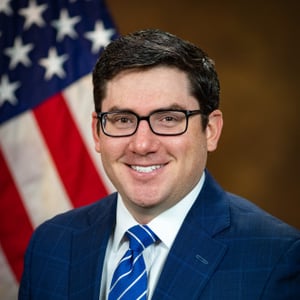
Partner; Firmwide Chair, Appeals, Issues & Strategy Practice, Perkins Coie LLP
Michael Huston is co-chair of the Appeals, Issues & Strategy practice at Perkins Coie LLP, where he counsels some of the World’s leading companies on appellate matters and all aspects of litigation strategy.
Michael is a former Assistant to the Solicitor General at the United States Department of Justice. In that role, he represented the federal government before the Supreme Court of the United States. Michael has argued nine cases before the Supreme Court and briefed hundreds more. He is a member of the Edward Coke Appellate Inn of Court.
Michael previously practiced appellate and administrative law at Gibson, Dunn & Crutcher LLP in Washington, DC. He served as a law clerk to the Honorable John G. Roberts, Jr., Chief Justice of the United States, and to the Honorable Raymond M. Kethledge of the United States Court of Appeals for the Sixth Circuit.
Michael graduated first in his class from the University of Michigan Law School, where he received the Henry M. Bates Memorial Scholarship Award—the law school's highest honor. He served as an editor on the Michigan Law Review.
Michael graduated summa cum laude from the University of Arizona with a bachelor's degree in political science and philosophy. He was elected Phi Beta Kappa.
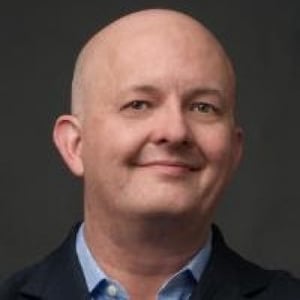
Department Chair, Associate Professor of Politics, Dean of Social Sciences, Wheaton College
Dr. McGraw has always had an interest in the normative and philosophical aspects of politics and started learning about political theory in graduate school. He is particularly interested in the ways modern states seek to establish and enforce their own normative visions and how religion plays into that process. He has taught previously at the University of Georgia, Notre Dame, and Pepperdine University. His first book was published by Cambridge University Press, and he is beginning a project on pluralism, law and religion, and political theology. Professor McGraw and his wife Martha, a practicing neurologist, live in Wheaton with their three children. They enjoy gardening, all manners of outdoor activities, and perfecting the art of pulled-pork BBQ sandwiches.
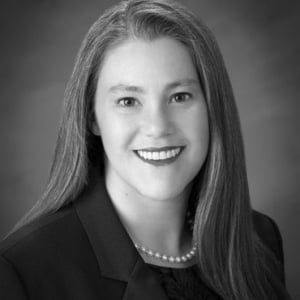
Judge, Arizona Court of Appeals, Division One
The Honorable Jennifer M. Perkins began service on the Arizona Court of Appeals, Division One, on October 30, 2017. At the time of her appointment by Governor Douglas Ducey, Judge Perkins was Assistant Solicitor General for the State of Arizona.
Judge Perkins was born in Portales, New Mexico, and primarily raised in Albuquerque. She attended the prestigious Albuquerque Academy from 1988-1995, before moving to Washington D.C. to attend the Elliott School of International Affairs at the George Washington University as a National Merit Scholar. Therafter, she relocated again to Dallas, Texas, and earned her juris doctor from the SMU Dedman School of Law, graduating cum laude in 2002.
Judge Perkins started her career at the law firm of Browning & Peifer (now Peifer, Hanson, Mullins, and Baker) in Albuquerque, New Mexico. While there, she litigated complex commercial matters including class action plaintiff and defense work, and assisted with employment and contract litigation. In 2003, the judge accompanied the Honorable James O. Browning in transitioning to the federal district court bench, serving as his first law clerk.
After her clerkship, Judge Perkins moved to Arizona to work for the Institute for Justice, Arizona Chapter, a public interest law firm. She spent five years with IJ-AZ litigating civil rights cases in Arizona and across the country. In 2009, the judge became Disciplinary Counsel for the Arizona Commission on Judicial Conduct, where she reviewed and prosecuted ethics complaints against state court judges throughout Arizona. After five years serving the state in this capacity, Judge Perkins entered private practice by joining an appellate law firm in Phoenix. While there, she worked on state and federal appeals involving a wide range of legal subjects, including complex business disputes, property rights, judicial ethics, and personal injury matters.
In January 2015, Judge Perkins joined the Office of the Arizona Attorney General to serve as the first Assistant Solicitor General; in that capacity, she was responsible for oversight of Attorney General Opinions and served as ethics counsel to the entire office. In addition to these two primary roles, the judge assisted on a variety of matters including trial and appellate litigation of election-related matters; federal appellate litigation with the Federalism Unit; state criminal appeals; and drafting amicus briefs on behalf of Arizona in state and federal courts.
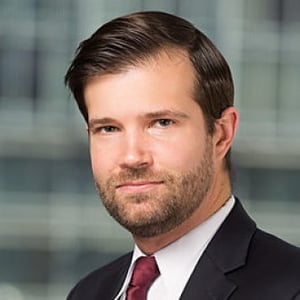
Research Fellow, CATO Institute
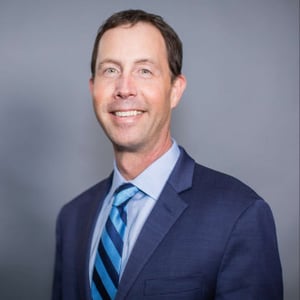
Jay Schweikert is a research fellow with the Cato Institute’s Project on Criminal Justice. His research and advocacy focuses on accountability for prosecutors and law enforcement, plea bargaining, Sixth Amendment trial rights, and the provision and structuring of indigent defense.
Before joining Cato, Schweikert spent four years doing civil and criminal litigation at Williams & Connolly LLP. He holds a JD from Harvard Law School, where he was an articles editor for the Harvard Law Review, and chaired the Harvard Federalist Society’s student colloquium program. Following law school, Schweikert clerked for Judge Diane Sykes of the U.S. Court of Appeals for the Seventh Circuit and Judge Laurence Silberman of the U.S. Court of Appeals for the DC Circuit.
He holds a BA in political science and economics from Yale University.
Senior Litigation Counsel, New Civil Liberties Alliance
Justice, Supreme Court of Arizona
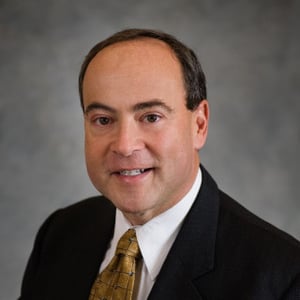
Clint Bolick was appointed by Governor Doug Ducey in January 2016 to serve on the Arizona Supreme Court and was retained by the voters in 2018 and 2024.
Prior to joining the Court, Justice Bolick litigated constitutional cases in state and federal courts from coast to coast, including the U.S. Supreme Court. Among other positions, he served as Vice President for Litigation at the Goldwater Institute and as Co-founder and Vice President for Litigation at the Institute for Justice. He has litigated in support of school choice, freedom of enterprise, private property rights, freedom of speech, and federalism, and against racial classifications and government subsidies.
Justice Bolick received his Juris Doctor degree from the University of California at Davis, where he has been recognized as a distinguished alumnus, and his Bachelor of Arts degree magna cum laude from Drew University. He serves as a research fellow with the Hoover Institution. Among other honors, he was named one of the 90 Greatest DC Lawyers in the Last 30 Years by Legal Times in 2008, received a Bradley Prize in 2006, and was recognized as one of the nation’s three lawyers of the year by American Lawyer in 2002 for his successful defense of school vouchers in Zelman v. Simmons-Harris.
Justice Bolick is a prolific author of a dozen books and hundreds of articles. Among his most recent books are Unshackled: Freeing America’s K-12 Education System: Immigration Wars: Forging an American Solution, co-authored with former Florida Governor Jeb Bush; and David’s Hammer: The Case for an Activist Judiciary. Bolick serves as an adjunct professor of constitutional law at Arizona State University’s Sandra Day O’Connor School of Law and has served as a lecturer at Harvard University’s John F. Kennedy School of Government.
Shareholder, Greenberg Traurig, LLP
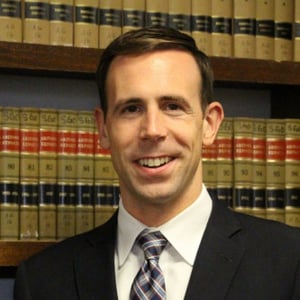
Dominic E. Draye has litigated at every level of the state and federal judiciary—from state trial court to the Supreme Court of the United States. His practice focuses on constitutional, regulatory, and environmental matters, and he has represented clients in both the public and private sectors. In the federal appellate courts, Mr. Draye has represented clients in the Second, Fifth, Seventh, Ninth, and D.C. Circuits.
Before joining Greenberg, Mr. Draye served as the Solicitor General of Arizona, where he briefed and argued the State’s highest-profile civil and criminal appeals and served as lead counsel for several multi-state coalitions litigating over agency rulemaking in the D.C. Circuit. Prior to government service, Mr. Draye was a litigator in the Washington, D.C., office of Kirkland & Ellis LLP, where his practice focused on legal issues and appeals.
Mr. Draye is a sought-after speaker on topics of administrative and constitutional law. He clerked for Hon. Edith H. Jones on the United States Court of Appeals for the Fifth Circuit and attended the University of Pennsylvania Law School.
Director of Attorney Recruiting and Diversity, Snell & Wilmer
Director, ENRD, Pacific Legal Foundation
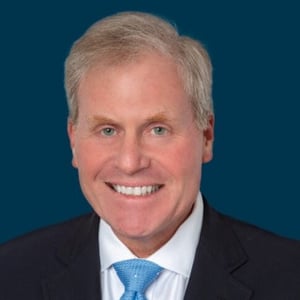
Mark Miller is the Director of the Environment and Natural Resources practice group at Pacific Legal Foundation, where he leads the firm’s efforts to protect individuals and small businesses from government overreach in matters involving land and water, and its efforts to encourage America to better harness its abundant natural resources, including energy resources, minerals, timber, and grazing lands. Mark first joined PLF in 2014.
A seasoned appellate specialist, Mark has litigated several high-profile cases for PLF, including Weyerhaeuser v. United States Fish & Wildlife Service, U.S. Army Corps of Engineers v. Hawkes Co., and United States v. Robertson, all of them unanimous Supreme Court of the United States wins for property owners fighting federal overreach via the Clean Water Act and Endangered Species Act.
In 2020, Mark left PLF to serve as General Counsel and later Chief of Staff for then-South-Dakota Governor Kristi Noem. As Noem’s longest-serving chief of staff, he worked behind the scenes to advance limited government, cut red tape, defend individual rights, and promote free-market principles. In 2023, he returned home to PLF.
A frequent commentator and public speaker, Mark regularly appears in print, on radio and TV, and before legislative committees across the country. His commentary and work has been featured in The Wall Street Journal, CBS News, The View, CBN, and Fox News. He is a regular guest each Thursday morning on SiriusXM’s POTUS channel, offering insight on Supreme Court cases and trends.
Mark earned both his undergraduate and law degrees with honors from the University of Florida. He clerked for U.S. District Judge Henry Lee Adams, Jr., and Florida state appellate Judge Emerson R. Thompson, Jr.—two mentors who deepened his commitment to the Bill of Rights, especially the Fourth, Fifth, and Fourteenth Amendments.
Mark serves on the Board of Trustees for the University of Florida College of Law, and he is a member of the boards of directors for both Americans United for Life, the nation’s oldest pro-life non-profit law firm, and Farm of the Child USA, a nonprofit that supports an orphanage and school for children in need in Honduras called La Finca del Niño.

Thomas M. Siebel Senior Fellow, The Hoover Institution, Stanford University; Gary T. Schwartz Distinguished Professor of Law Emeritus, UCLA School of Law
Eugene Volokh is the Thomas M. Siebel Senior Fellow at the Hoover Institution (Stanford), as well as the Gary T. Schwartz Distinguished Professor of Law Emeritus and Distinguished Research Professor at UCLA School of Law. He recently retired from teaching at UCLA, after 30 years there, and is now focusing on research.
Volokh is the author of the textbooks The First Amendment and Related Statutes (8th ed. 2023), and Academic Legal Writing (5th ed. 2016), as well as over 100 academic law journal articles, mostly on First Amendment law. He is a member of The American Law Institute; the editor-in-chief of the Journal of Free Speech Law; and the creator and coauthor of The Volokh Conspiracy, a leading legal blog founded in 2002 (hosted at the Washington Post from 2014 to 2017 and now at Reason Magazine).
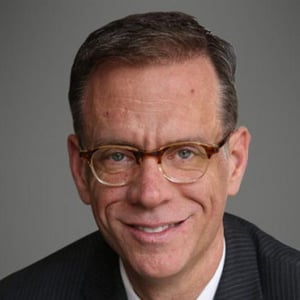
Judge William Hawley Atwell Chair of Constitutional Law, SMU Dedman School of Law
Professor Carpenter is the Judge William Hawley Atwell Chair of Constitutional Law. He previously served as the Charles J. and Inez Wright Murray Distinguished Visiting Professor of Law at SMU, teaching Constitutional Law I as well as LGBT Rights and the Law. This fall he will teach Constitutional Law II.
Prior to joining SMU, Professor Carpenter taught for 16 years at the University of Minnesota, where he served as a Distinguished University Teaching Professor and the Earl R. Larson Professor of Civil Rights and Civil Liberties Law. He won multiple teaching awards. He is also an editor of Constitutional Commentary.
The Texas native received his B.A. degree in history, magna cum laude, from Yale College and received his J.D., with honors, from the University of Chicago Law School, where he was editor-in-chief of the University of Chicago Law Review. After serving as a law clerk for Fifth Circuit Judge Edith Jones, he practiced at the firms Vinson & Elkins LLP in Houston, and at Howard, Rice, Nemerovski, Canady, Falk & Rabkin, P.C. in San Francisco.
As the author of numerous articles and an award-winning book —FLAGRANT CONDUCT: THE STORY OF LAWRENCE V. TEXAS (W.W. Norton & Co., 2012), about the landmark U.S. Supreme Court case that invalidated America's sodomy laws — he is often asked by the media to comment on constitutional law, the First Amendment, and LGBT Rights and the Law. Since 2005, he has been an active blogger on the popular legal blog, The Volokh Conspiracy, which is hosted by the Washington Post.
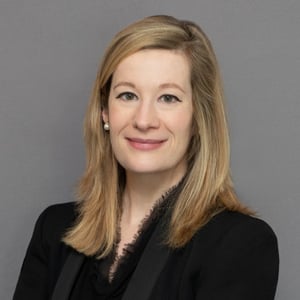
Partner, Williams & Connolly
Sarah Harris is a partner in Williams & Connolly’s Supreme Court and Appellate practice, where she represents clients in high-stakes appeals in the U.S. Supreme Court and federal and state appellate courts across the country. She has argued five cases before the U.S. Supreme Court, and she has presented many arguments in federal courts of appeals and state appellate courts. Her cases have run the gamut of substantive areas, including constitutional law—especially First Amendment and separation-of-powers issues—as well as administrative law, arbitration, class actions, antitrust, False Claims Act litigation, commercial litigation, and federal civil procedure.
Sarah is widely recognized for her appellate advocacy. Chambers USA has recognized her as “Up and Coming” in Appellate Law. She has been named to Bloomberg Law’s 40 Under 40 list of top lawyers nationwide and to Benchmark Litigation’s “40 & Under Hot List,” as well as a an appellate “Rising Star” by The National Law Journal and Law360, a “Next Generation Lawyer” by The Legal 500, and as one of Bloomberg Law’s “Five Fresh Faces to Know in Appellate.”
Sarah clerked for Justice Clarence Thomas on the Supreme Court of the United States, Judge Laurence Silberman on the United States Court of Appeals for the D.C. Circuit, and Judge Sandra Lynch on the United States Court of Appeals for the First Circuit. Before joining Williams & Connolly, she served as a Deputy Assistant Attorney General in the Department of Justice’s Office of Legal Counsel.
Sarah received her undergraduate degree summa cum laude from Princeton University, and her J.D. magna cum laude from Harvard Law School. She also holds a Ph.D. and M. Phil. from the University of Cambridge.

Laurence A. Tisch Professor of Law and Director, Classical Liberal Institute, New York University School of Law; Director, Classical Liberal Institute, Civitas Institute University of Texas at Austin
Richard A. Epstein is the Laurence A. Tisch Professor of Law, at New York University, a senior research fellow at the Civitas Institute at the University of Texas Austin, and a senior Lecturer, the University of Chicago. He received an LL.D., h.c . from the University of Ghent, 2003 , and an LLD h.c . from the University of Siegen in 2018 and the Bradley Prize in 2011. He has been a member of the American Academy of Arts and Sciences since 1985. He has edited both the Journal of Legal Studies (1981-1991) and the Journal of Law and Economics (1991-2001). He is also a founder and director of the Classical Liberal Institute at NYU Law School. His most recent book is The Classical Liberal Constitution: The Uncertain Quest for Limited Government (2014). His other books include Takings: Private Property and the Power of Eminent Domain ( 1985); Bargaining with the State (1993); Simple Rules for a Complex World (1995); Principles for a Free Society: Reconciling Individual Liberty and the Common Good (1998); Skepticism and Freedom: A Modern Theory of Classical Liberalism (2003); Design for Liberty: Private Property, Public Administration and the Rule of Law (2011), and most recently, The Myth of Birthright citizenship—and Beyond (2026). He has taught courses in , administrative law, antitrust, constitutional, contracts, environmental law, land use planning; real property, torts and water law. He has written and spoken extensively on a wide range of topics, and is writes a regular column for Defining Ideas.
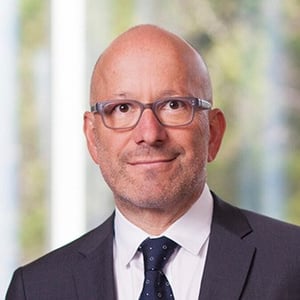
Partner, Vinson & Elkins LLP
Eric Groten is an accomplished Clean Air Act practitioner with nearly 35 years of experience navigating state and federal air quality laws. His work covers the full array of legal work generated by air quality laws, including defending enforcement actions, applying for the permits they require, transacting emissions rights, counseling clients on compliance and lobbying to change rules and the laws themselves. He has represented upstream, midstream and petrochemical facilities, power generators, and extractive industries in enforcement actions brought by EPA, by state agencies and by citizen groups.
Chambers USA described Eric as “a highly experienced air emissions lawyer, distinguished in the market by the sizable volume of contested air permitting work he undertakes,” and “creative in thinking through how to find an interpretation that’s going to get you the result you need” (2019). Indeed, Eric relishes the opportunity to help a client that’s willing to actively defend itself when it believes it has operated within the law. And to find a way through permitting disputes that stand in the way of capital projects that modernize our industrial base.
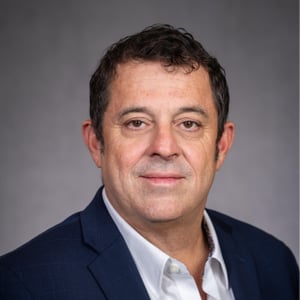
Senior Fellow for Law, Economics, and Technology, The Heritage Foundation; Professor, Florida International University
Mario Loyola is a Senior Fellow for Law, Economics, and Technology at The Heritage Foundation.
Loyola served in the Trump Administration as Associate Director for Regulatory Reform at the White House Council on Environmental Quality. In that role, he was one of the principal drafters of the One Federal Decision policy, which helped to streamline the permitting and environmental review of large infrastructure projects. While at CEQ, he was a member of the U.S. delegation to the USMCA free trade negotiations with Mexico and Canada, as well as the United Nations conference on biodiversity on the high seas. Loyola initially joined the White House in February 2017 as a Presidential Speechwriter, employing his expertise in many areas of foreign and domestic policy.
After beginning his career in M&A and corporate finance law, Loyola served in the Bush 43 Administration as a special assistant to the Undersecretary of Defense for Policy. He left that position to start writing on national defense issues in magazines such as National Review and The Weekly Standard, reporting from the front lines of the war on terrorism in Lebanon, Israel, and Iraq. He finished the Bush Administration as Foreign and Defense Counsel to the U.S. Senate Republican Policy Committee, then under the chairmanship of Senator Kay Bailey Hutchison of Texas. He subsequently moved to Texas and joined the Texas Public Policy Foundation, where he specialized in energy, environment, and federalism.
Loyola is a frequent contributor to The Wall Street Journal, National Review, and The Atlantic, among others. He teaches environmental and administrative law at Florida International University, where he is Founding Director of the Environmental Finance and Risk Management program in FIU’s prestigious Institute of Environment. He received a bachelor’s degree in European history from the University of Wisconsin–Madison and a J.D. from Washington University School of Law.
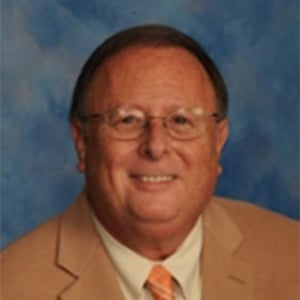
Professor Emeritus of Law and C. William Trout Senior Fellow in Public Interest Law, Shepard Broad College of Law, Nova Southeastern University
Joel Mintz has been a faculty member at Nova Southeastern University Shepard Broad College of Law since 1982. He teaches courses in Environmental Law, Torts, and Environmental Enforcement, and he has taught courses and seminars in Land Use Planning, State and Local Government Law, and Comparative Environmental Law.
Professor Mintz’s scholarship focuses primarily on environmental law and policy, environmental enforcement, sustainable development, regulation of hazardous wastes, and state and local taxation and finance. Mintz is the author of a well-received monograph, Enforcement at the EPA: High Stakes and Hard Choices (University of Texas Press, 1995) (revised edition, 2012), and a treatise on the federal environmental liabilities of state and local governments; and he has co-authored two casebooks, a “law-in-a-nutshell” work, and a handbook for attorneys on municipal finance. His law review articles have appeared in numerous journals and his articles and book contributions have been widely cited, quoted, and excerpted in texts, scholarly books, and articles. He has also published op-ed articles, perspective pieces, book reviews, and other works.
Prior to joining the College of Law faculty, Professor Mintz was an attorney and chief attorney with the U.S. Environmental Protection Agency in Chicago and Washington, D.C. He is an elected member of the American Law Institute, a Fellow of the American Bar Foundation, a member scholar of the Center for Progressive Reform and the President of the Board of Directors of the Everglades Law Center, a not-for-profit environmental public interest law firm.
Mintz received his B.A. from Columbia University, his J.D. from N.Y.U. School of Law, and his LL.M. and J.S.D. from Columbia Law School. He serves as the newsletter editor of the Association of American Law School’s Section on State and Local Government Law, and he is an elected member of both the Commission on Environmental Law of the International Union for the Conservation of Nature and the International Council of Environmental Law. He is also a member of the bar of the State of New York and of several federal courts.
Professor Mintz’s outside interests include spending time with his family, canoeing, bicycling, reading, and attending concerts, films, and sporting events.

Shareholder, Maynard Nexsen
Jenny McCain is a Shareholder of Maynard Nexsen and Co-Chair of the firm’s Banking Practice. She also is President of Stonegate Real Estate Investments, LLC, a multi-state commercial real estate company. Ms. McCain is also the Founder, Director, and President (2013-2015) of Scholarships for Kids, Inc.
Ms. McCain provides specialized regulatory and general corporate advice to financial institutions of all sizes, including public and private banks, savings associations, credit unions, insurance companies, and other non-depository financial institutions. Ms. McCain’s clients include many of the nation’s largest banking corporations, insurance companies and credit unions based on asset size, as well as numerous community banks.
In 2010, Ms. McCain led the corporate reorganization/restructuring of a privately owned, $100 million commercial real estate company and has served for the past seven years as its President. Ms. McCain is active in both local and regional philanthropic initiatives. In 2013, Ms. McCain founded Scholarships for Kids, Inc. a nonprofit organization that provides scholarships to low income children throughout the state of Alabama. Ms. McCain actively ran the organization from 2013 until 2015, during which time Scholarships for Kids raised over $18 million, partnered with 36 schools throughout the state, and provided more than 3400 scholarships to kindergarten to 12th grade students in Alabama. A twenty-year veteran of the Federalist Society, Ms. McCain has served in leadership positions with the organization since the early 2000s.
Ms. McCain has earned numerous professional and personal accolades, including recognition by both Chambers USA and America’s Best Lawyers as a Leading Practitioner in the area of Banking and Finance. In 2015, Ms. McCain was selected as a member of the inaugural class of the Presidential Leadership Scholars, a national leadership program created by the George W. Bush, William J. Clinton, George H.W. Bush and Lyndon B. Johnson Presidential Libraries.
Ms. McCain is a graduate of the University of Virginia and the University of Texas School of Law. She was born and raised in Birmingham, Alabama.